
 Ask ChatGPT

- Podcasts
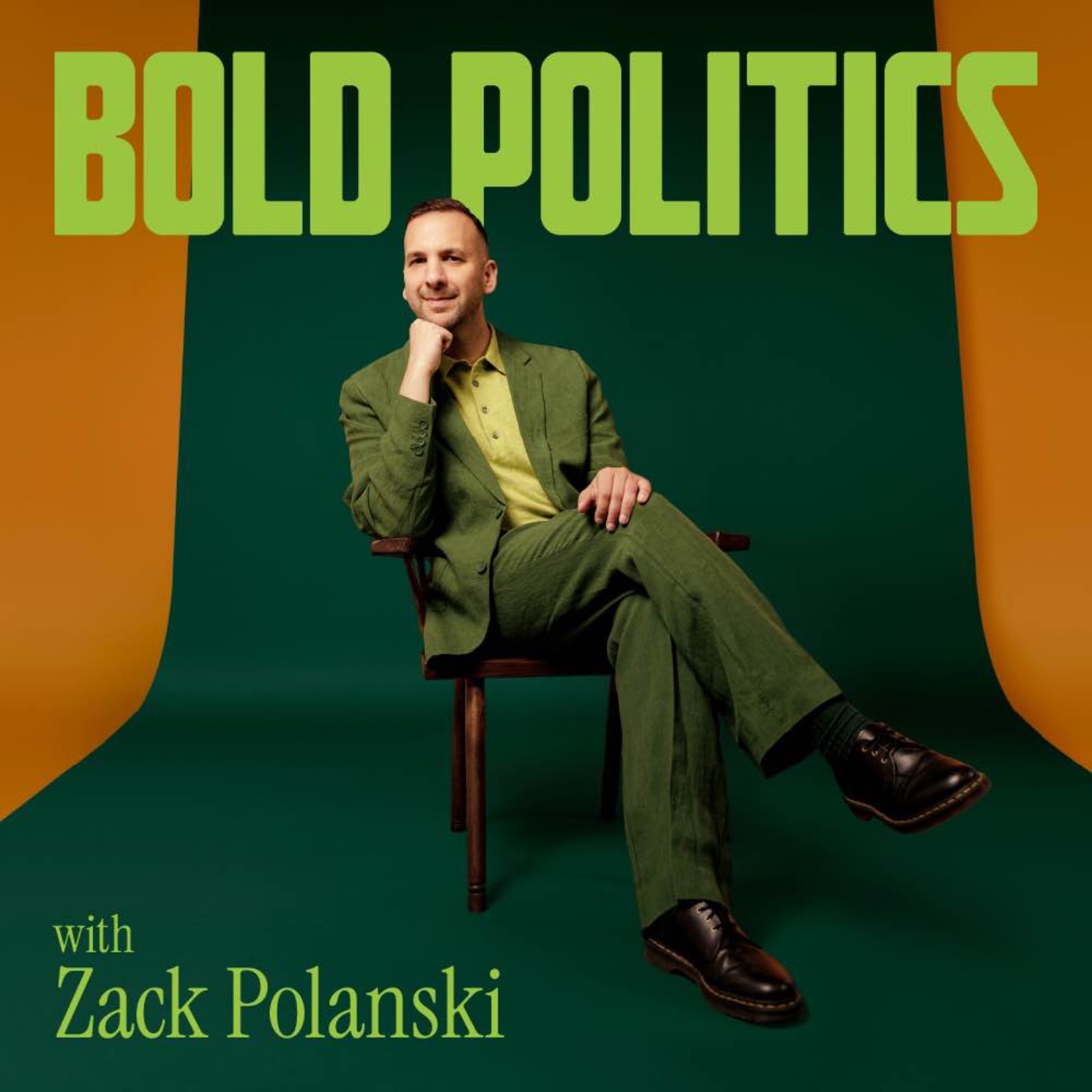
- Bold Politics with Zack Polanski
- Why The Rich Get Richer
Bold Politics with Zack Polanski18 Feb 2026 · 41m · 18 chapters

Why The Rich Get Richer | Faiza Shaheen | Zack Polanski
In short
In this episode, Zack Polanski engages in a thought-provoking discussion with Faiza Shaheen regarding wealth taxation, inequality, and the far-right political rhetoric. The conversation delves into the implications of current tax policies, the necessity of a wealth tax, and how grassroots activism can combat systemic inequality and injustice.
Written by AI. May contain mistakes.
Chapters
1:35
Political Maneuvering: The Mansion Tax
Discussion on the Labour Party's mansion tax and its implications.
“It doesn't kick in until towards the end of this parliament.”
2:49
The Flaws of Council Tax
Analysis of the council tax system and proposals for reform.
“and they didn't want to really address all kinds of ways in which income and wealth are unfairly taxed at different rates.”
5:03
The Case for a Wealth Tax
Arguments for implementing a wealth tax to address inequality.
“They said, oh, it's such a big, difficult thing.”
7:34
Addressing Inequality and Far-Right Rise
Exploring the connection between economic inequality and the rise of far-right rhetoric.
“And it's something that has really stuck in the minds of the public that this isn't just a theoretical economic policy, right?”
9:23
Community Engagement and Hope
Discussion on community meetings and the importance of grassroots activism.
“And so I think that's the way to describe it as well.”
14:01
The Influence of Wealth on Politics
Explore how wealthy individuals influence political systems to avoid taxes.
“Where are they going to put their money?”
14:41
Building Community Connections
Discover the importance of community meetings and grassroots movements.
“I want to flip the other side to hope, actually, because one of the most hopeful things I've seen, in fact, that I went to last year was a meeting that Yumi and Zahra Sultana were at.”
16:49
Challenges in Grassroots Activism
Understand the realities of building grassroots activism over time.
“And we built this friendship and the sense of community.”
19:19
Learning from Zoran Mandani's Campaign
Discuss the importance of community infrastructure in political movements.
“And so I want to talk about Zoran briefly, actually.”
22:19
The Impact of Palestinian Struggles
Delve into how the Palestinian struggle influences global activism.
“partly because they have this history of the African-American community there and activism on civil rights.”
Show all 18 chapters
24:49
Empowering Young Voices
Learn why it's vital for young people to take ownership of their power.
“And this is always something that's been at the heart of conversations within our community.”
28:01
Molding a Different Future
Discussion on the need for young people to shape a better political future.
“But I think for young people, you know, they're here for longer and they need to mould that future.”
29:11
The Power of Lobbying
Exploration of how powerful interests manipulate political decisions.
“We need to tell them about what's going on in the background.”
30:27
Public Perception of Politicians
The shift in public sentiment towards politicians and the far right's influence.
“You know, it's because people are so fed up with them and they can see them a mile off that when someone comes that's authentic and a bit more genuine and rooted in their communities, then, you know, it's refreshing.”
31:35
The Dangers of Academisation
Discussion on the implications of privatising education and its accountability.
“we saw pictures of him and BlackRock together and the kind of asset management influence.”
33:17
The Myth of Meritocracy
Debunking the myth that hard work guarantees success in a skewed system.
“It sounds like a ludicrous question for me to be asking, but I'm just interested in your thoughts.”
36:39
Intersection of Inequality and Identity
How different identities intersect with economic inequality in society.
“But I think what you're giving clearly there is actually, again, I don't know answer the question for you.”
37:42
Hope Through Community Action
Finding hope in grassroots movements and community efforts against inequality.
“So in this country, how less likely you are to have wealth if you are from a Pakistani community or the Afro-Caribbean community.”

Ask about this episode
Get the gist, explore an idea or ask about something said.
 Claude
On Bold Politics with Zack Polanski, what are the key points of this episode?
Searching your listeningTranscript
Automatic transcript. May contain errors.
0:00In 2024, I remember seeing a really distressing interview on BBC Newsnight, and that was Faiza Shaheen. Pfizer was a Labour candidate. She's smart, she's articulate, she's an economist. She cares deeply about her community. One night she got a phone call telling her she wasn't going to be able to run to be a Labour candidate. She was a new mother, she'd worked really hard for her community, and one of the reasons that she'd been told she was suspended was because she'd liked a tweet by Caroline Lucas. Since being suspended, she then ran as an independent. She's been doing lots of community work in her community of Chingford and Woodford Green.
0:33She has been a staunch advocate of her community, hosting regular community meetings and making sure that she's really been in touch. And I'm delighted that today I'm joined in the studio by Pfizer Sheen.
0:48Zach, I'm so excited about this year. EcoTalk has new land coming for rewilding and habitat restoration. And we're bringing back beavers. Any week now, yes, I'm also going to start live streaming the garden birds from my home. And all of this happens because EcoTalk has customers. That's people who pay their mobile phone bills to us. They make a call, they send a text, or they just surf the net and British wildlife gets a boost. That's it. No shouting. Just go to ecotalk.co.uk slash bold politics to find out more.
1:35awful story that happened with the Labour Party and the fools that let you go if it's okay with you though I don't want to retread that because you're so much more than that you have so much more to offer than that and I think that's absolutely their loss and the rest of the world's gain so the Labour Party are offering a mansion tax which they're saying are wealth tax are they trying to fool us yeah they are and one of the things when you look at the details around this tax is that you see it doesn't kick in partly because of bureaucracy. It doesn't kick in until towards the end of this parliament.
2:05It doesn't raise much money. When you look at the specifics, you see that it starts at two million and it only goes up to a kind of five million threshold over which you're going to be paying the same amount. So, you know, of course, that's a lot of housing wealth, but it's actually quite small in terms of what is there. And it doesn't touch the very richest. It actually doesn't really affect those with their penthouses and Hyde Park corner. You know, those are worth£175 million. So it's a way, really, it was a political manoeuvre from them. They didn't want to do the bold move and actually look at the council tax system and make sure it's not regressive because it still is going to be regressive in all kinds of ways.
2:51and they didn't want to really address all kinds of ways in which income and wealth are unfairly taxed at different rates. But they did want to be able to say, oh yes, we are freezing income tax thresholds, but we are also taxing the rich more. But put it this way, the amount of money they're going to raise from freezing thresholds is over£8 billion. This measure, which I think will get caught in even more bureaucracy and appeals probably won't happen this parliament is only meant to raise about under half a billion. So, you know, when you put it in that scale, you realise it was just a political manoeuvre, a way in which they could talk about the budget and say that it hits the richest when it really doesn't.
3:35Makes total sense. You mentioned council tax there. Something that really strikes me is almost every single political party, including I'd even say the Tories at this point, agree that council tax just doesn't work in terms of it's messy, it's bureaucratic, and I imagine we would argue it's regressive. Do you have in mind what we should be replacing it with or what a better system would look like? Yeah, so there's a few ideas out there. I mean, one of the things that people say is that it should be proportional to the cost of your home. I mean, we haven't looked at the values of people's homes or revalued people's homes since the early 90s.
4:06And a lot has changed since then right so um you get all these kinds of discrepancies like i noticed um that if i lived in the neighboring uh borough which starts at the end of my road council tax would be lower even in the same house and so it there's all these anomalies you know people in blackpool are paying more for the same size house than people in london even though their house is worth a lot more money it's it's absolutely wrong and we need some kind of proportional system and to make up for the fact that that could mean some councils are getting a lot less because it's proportional to the value of the homes.
4:41We need to find a way to redistribute the money back to those areas that need it most. The cowardice of this government and others to not actually do it. And meanwhile, actually Wales and Scotland, the devolved governments are looking at this. Wales in particular has been good at revaluing their homes. So it's not like it can't be done. And when I pushed with the Treasury and said, why don't you do this? They said, oh, it's such a big, difficult thing. we'd have to have it in a manifesto in order to do it. So it's definitely been kicked down the road. And you've been a brilliant advocate, along with many, for a wealth tax.
5:14You've been all over TV and media for a long time kind of pushing for this. And we've heard the same arguments over and over again, won't the wealthy just leave, people listing countries where it hasn't worked. If you kind of could encapsulate the reason why we need a wealth tax and why all these arguments are essentially nonsense, what would you say the big pitch for a wealth tax is? We have to put a break on the exponential growth of wealth at the very top of society. I wasn't the biggest advocate of taxes as a way to solve our inequality crisis. When I first started working on inequality really 15, 20 years ago now, I was much more focused on things like public ownership, redistributing income and wealth before it gets to the point that you need to use a tax system.
5:57But what's happened in that time is that that concentration has got so much wealth. We need to find a way in which to break that because it's damaging our economy. It's damaging our politics. We know that the very richest have more and more influence on our political systems. Look, I know when I ran as a candidate and within days of being selected, you know, Bupa emails me, Barclays emails me. You know, that's these companies and individuals with lots of money that have huge influence. And it's breaking down our social glue in society because these very riches are putting their money into divisive narratives.
6:35So we have, you know, for me, people talk about the raising revenue point. Of course, we need to have a good tax system that raises revenue from the right places and is progressive. But for me, it's really just a start to say we're not going to accept these levels of wealth concentration. And can you spell out that argument a little bit more? Because sometimes I think these podcasts are best when I'm getting a briefing from someone I admire and I would have done it privately. But I'm actually like, I can ask you questions I really want to get better answers to and all the audience can hear to.
7:03So on Laura Koonsberg, I think it was Victoria Derbyshire a few weeks ago, she was asking me about a wealth tax. And I was explaining because she was saying it might not raise that much revenue. And I was saying, well, first of all, it's between about 12 to 24 billion pounds, which is much more than half a billion pounds you're talking about about mansion tax. but also wealth tax is not just about raising revenue it's about tackling the fundamental inequality and the hoarding of assets um is there more to that though or are there other ways you would explain that or some other arguments you would push with that i mean i think it's interesting how some on the left themselves saying like oh why are we focusing so much on a wealth tax and my answer to those people is that yes a two percent tax or one percent you know it's not even going to keep up with the level of which their wealth is increasing because of the ways in which their wealth begets more wealth.
7:52But it's a start. And it's something that has really stuck in the minds of the public that this isn't just a theoretical economic policy, right? We actually need to get people on side. And it's part of a broader attempt to deal with wealth inequality. So one of the things I would say as well, sort of to that contingent of the left, is that, yeah, it doesn't solve everything, but people get it, people support it. It gives us an opportunity then to build a road to do other things as well. So, and to the likes of Victoria Dubeshire, I do think it's worth saying those two things. I do think it's worth saying that, look, at a time when people are looking at their bank accounts every month, seeing their wages come in and seeing it just go out, especially, you know, if you have children trying to buy a house.
8:38I mean, it's just absolutely outrageous. Student loans, you know, there's been a lot of discussion recently about student loans and how much young people are paying on those how can we be taxing income more and more and not seriously looking at this accumulation of wealth um you know the the very richest the billionaires in this country had 250 billion pounds of wealth in 2010 that's now over 600 billion right so how can we not be taxing that more. Meanwhile, incomes have raised has risen about 14 pounds in medium wages over that period since 2010 over the whole period. So they're getting hundreds and thousands of pounds a week, we're getting a few pennies.
9:18Right. So the focus of the conversation has to be on wealth now, we've just gone as far as we can on income, in fact, in some places too far. And so I think that's the way to describe it as well. It's it's not just a policy about the economics is a policy about politics. And if you're advising the chancellor right now, I mean, not the Rachel Reid, I think, is listening to anyone. But what other kind of measures would you want to see for a fairer economy, I suppose, or to tackle inequality? Well, yeah, I mean, in general, they do need to look for, like, at really the fundamental reasons why we're in this place.
9:55And it's really scary for me. I feel like I've been saying a lot of the same things for 20 years. But in so many ways, things have got worse. And I look at the economy, I look at how the far right are doing in this country and really at the heart of it is inequality. And it's the fact that the way in which our economy has worked and accumulated so much capital and the returns on basically, you know, buying a house or buying property versus actually trying to produce goods and create jobs. Those have just fallen away. There's more and more of a gap in taking those different pathways. So, you know, to her, I would say anything you can do to undermine this incentive to put all your money into assets that already exist.
10:46Right. So because those aren't productive, they aren't creating jobs. So, you know, again, things like equalizing capital gains tax, yes, a wealth tax, incentivizing investment in the sorts of job creation, putting lots of money into green, green technology, green energy. and the broader piece here is housing, right? Housing is so fundamental, we don't do enough about it. And so, you know, they'll say that they're making investments in housing, but the way they're making investments in housing is through the private sector and private developers. We know when we look at how that model has worked, we know it doesn't work.
11:26So investing more to build lots of social housing and housing that people can afford to buy that is going to be the sorts of things that we have to do. The problem is in some places where this government would say they are doing it, they're doing it at a scale, right? You need to do it at a scale 100. They're doing it at a scale 3. That is so frustrating because they haven't seemed to really clock just how bad things are, the scale of the problem, and therefore the scale of the action that needs to take place. And you mentioned just then the rise of the far right, which we're obviously seeing through Tommy Robinson, and I'd argue through Nigel Farage as well, in terms of the kind of rhetoric putting.
12:05What is the very clear link here between the inequality we're facing and then the rise of kind of the worrying kind of rhetoric, not just rhetoric action that we're seeing on our streets? Yeah, multiple. I mean, there's a way in which people lose hope in societies where they can't find work, where families are broken up and don't have the money, where men feel emasculated by the economy because they can't fend for their families because they can't buy a house. It leaves this void in people's lives and they want to blame someone or something. And unfortunately, that is where the far right and the likes of Nigel Farage can step in and tell a story, you know, a very coherent story of the reason why your life is hard is because of immigration.
12:56It's because they're taking all the money. And it's quite simple. It's a trick that's tried, you know, throughout history and in many different countries. I was really lucky for a couple of years. I was working with a number of left and center left governments around the world. And we lost so many governments, including countries like South Korea, that actually ethnically very homogenous, because the right there were able to say the reason that you young men are finding it hard to buy a house and get jobs is because of young women. Right. And so they'll find a way. they'll find a way in Costa Rica we lost the left government there because the right has this story of they only care about the gays because they'd got through gay marriage and so they'll find a way to divide us when they want to avoid addressing these wealth inequalities and when governments and centrist governments don't address the fundamentals or are too slow in doing so and the second thing is this very direct political influence and lobbying power that the very rich have They look at the situation, they see a movement growing that says we're going to tax you more.
14:00And they see a movement growing of blaming immigrants. Where are they going to put their money? And we see this with fascists in Italy. We see this with the Nazis. They will put their money behind the people that will avoid them having to pay more taxes. It's not a surprise that the likes of Elon Musk put their money behind Trump and find money and ways to support the far right around the world. And that's what we're seeing. And some of the work that we're doing at Tax Justice UK with academics and investigative journalists is looking at some of the ways in which this money is both avoiding taxes and then coming into our political system.
14:40Makes sense. Now, I'm asking you about lots of grim and depressing subjects. I want to flip the other side to hope, actually, because one of the most hopeful things I've seen, in fact, that I went to last year was a meeting that Yumi and Zahra Sultana were at. And you run these community meetings quite regularly in Chingford and Woodford Green. I'm laughing because I always want to say wood green and I know how much your residents hate it. So that's why I slowly walked into it. And the reason why I found it hopeful was, one, the kind of love and respect that the community so clearly have for you.
15:07And as your friend, it's the same love and respect I had for you. And so it's amazing to see how well that translates to your community. But also the fact that it really doesn't feel like it's about you. It's when you're there. It's about the power that I don't want to talk for you. Why are you doing these community meetings? Now, as I was saying, I've been working on this issue for a long time. And I think at some point I realised that doing the research and the stats and going on TV even wasn't cutting it. And I wanted to get involved much more in how we build grassroots movement, because there's no way to counter the very rich and powerful and influence they're having on our system without a really strong movement.
15:49and big P and little piece. I mean, like something that supports political actors like yourself, but also that builds that grassroots energy that means that our politicians can't get away with it. And I think one of the things that we can learn from, you know, the period with Jeremy Corbyn, for instance, is there's no shortcut to that. You can't just expect, you know, a great leader to come along and say the right things on TV, which is brilliant because, you know, it gives people a signal. It gives them a poll of where to go to. but that on its own won't work. And it's interesting also talking to contacts I have in New York around Zoran Mandani's campaign and hearing actually the truth is it was amazing grassroots organisations that were built over years, decades.
16:34And so when Zoran Mandani came along, they were ready. And so, yeah, obviously it started for me as a political campaign but since then has become much more about the community connections. and the more you get to know your community the more beauty you find in it and I'm sure that's true of anywhere really you know there's always people that are just doing the most incredible things um in their spare time often really busy you know often I found a lot of um women really active in their communities and fighting for each other and it's an incredible thing to see and in my community we've just over the years found those nodes you know all around the place people working on housing, people working on special needs education, the mums that got really angry about the way the primary school was being affected by academisation.
17:22And we built this friendship and the sense of community. And what we do pretty much every month is to have a speaker like yourself. And I'm really lucky to be connected to people to ask them to come. And we really lean into the politics of the day. And then we also think about what it means for our community and how we're kind of connecting the national and international to what we can do locally. But yeah, I mean, the thing that I would say to everyone is that it's just the most rewarding thing. It's always my favourite, my favourite night of the month. And there's just so much love in that room.
17:54And some great food as well. Well, sometimes, yeah. I mean, people, I mean, this is the thing. You'll find someone locally that just loves baking cakes and bringing cakes along. It really is worth the effort, but it does take effort. I hear a lot of people on the left talk about grassroots activism. And the reality is that you can't build that overnight.
18:18Hey, Zach, guess what? EcoTalk has tripled the number of customers that it's got in just the last six months. Now, that's got to come down to the fact that when people are paying their mobile phone bills, they like helping nature. Of course, they like the service, too. They've got the best network coverage in the UK. It's powered by green energy. And when they engage with our customer service, guess what? Well, that's powered by real people. Yes. Martin, Susan, Nemesher have all contacted Trustpilot and said that making that switch was much easier because they were speaking to those real people.
18:57And of course, we're very excited because we've got more land. We're going to be doing more restoration, more rewilding. more replanting. We're going to be making the UK a much better place for wildlife. So why not join us on EcoTalk? Just go to ecotalk.co.uk slash boldpolitics and we'll see you there.
19:25And so I want to talk about Zoran briefly, actually. So I think I can caveat by saying for both of us we're huge fans and love the work that he's doing. and I do think it's a problem that very often I hear it in this country people go if we just replicate if we just have a Zora and a one person who's just kind of going to go and make videos or make the arguments on TV that's all going to fix things and I don't know if you'd agree with this but I felt when Jeremy Corbyn came along if we'd had deeper infrastructure he would have been able to mobilize that in a way but it felt like a lot of those grassroots organizations were having to spring up as a result of the Jeremy Corbyn moment and it feels like we all need to be doing work in our communities to create that infrastructure that's outside of a political movement or outside of a political party that can align with the political party but only as much as it's getting what it needs and if it's not getting what it needs then it's happy to say actually i don't need you and um i said we weren't going to talk about the labor party but we're not going to buy the party and you but the labor party more generally strikes me as the worst manifestation of this which is where they will use communities um up until the point they need the community and demand their vote but then there's not really an accountability mechanism afterwards sorry there's lots of questions there but no absolutely i think that's true starting with the labour party and i used to get told that it didn't matter that i was local why am i talking to local people like genuinely the people that really want love a top-down system and love the power that creates for themselves they obviously hate this sort of thing they hate having active you know party members and active communities because they have to listen and they don't want to listen right for them, they've got the answers.
20:59And in a sense, you know, the type of inequality that we have now in the extremes of inequality, it demands a new politics. Yes, a bold politics, but it demands a different way of doing politics. And it's a politics that they are absolutely not wedded to, that they hate. They hate that. We need to build that. And it needs to be less about necessarily getting someone into a political office and more about we're going to support each other and make this community stronger and we're going to get on better and we're going to make sure that we are are you know picking up on um anything that's happening on the ground that we're where we're worried about young people whether it be you know knife crime whether it be turning to the far right and um or drugs you know i've been into schools um locally where young people pulled me aside and said listen there's this big problem we've got in this school because of these drugs and you know had to go back to the police and talk about that but that's the sort of thing it's not it's not just about um it's not just about getting the right politicians that's important too it's actually just doing it for the sake of community power and i think people can tell when it's real and it's authentic and i i was lucky enough to live in new york for a little while for a couple of years between 2021 and 2023 and um i could see that so many groups were there partly because they have this history of the African-American community there and activism on civil rights.
22:28But it's all kinds of things. So my Jewish friends there and what they were doing on Palestine, already organising. And I remember one day there was a horrible incident on the subway where a homeless man had got strangled and they hadn't arrested the man that had done it. And within hours there was people standing on the actual rails demanding and people are just ready to go and when i came back i was talking to someone who was sort of deriding america and new york and i said listen new york's right for revolution both in terms of these long queues you see of people trying to get an apartment and that there's an activist base they're ready to go and so it's more that way around and then someone comes around comes in and then you can support them rather than um you know starting from scratch someone comes in and then inspires it i mean that's i mean it's hard to do it to do it the other way around so you know we are where we are but what i would say to people is like yeah look in your communities and do as much as you can makes sense my um one of my press officers angela is going to new york next week and she just keeps saying i'm going to mandani land which i'm just very much enjoying as a phrase and you mentioned palestine there and obviously there's been this horrific genocide that's been going on for years now in terms of its international impact or more specifically, it's British impact.
23:47And in New York, indeed. It feels like that's created a space, though, where people have organised who might not have met in that space and you're starting to see different groups come together. And despite the kind of horrendous circumstances that's happened in, that feels like it's been a productive thing for the left in terms of how to organise across issues. Yeah, I mean, again, you know, I saw this in the UK. I've been going to Palestine protests since my late teens, early 20s. I mean, it's been amazing to see it grow. And even when I was in the US, there were some protests about stuff happening in West Bank.
24:22And yeah, I remember people saying to me there, we've never seen this energy. We've never seen so many people turn out. And it certainly has brought people together. It's really distressing because in a way, if you think about it, it's like we all woken up. It's like Palestinians are being oppressed. and you know people talk about Palestine being free and it's like we are being freed by that struggle in our minds so many people have said to me that it's changed them fundamentally in the way that they see how politics is working and who it's working for and the way in which we have these double standards in the world whether it be Ukrainians versus Palestinians right and I think it's been so important and yeah building community and bringing people together and you know can speak for my community in the Muslim community.
25:09And this is always something that's been at the heart of conversations within our community. But when you go out to protest, it's not the case that it's just Muslims or that it's even mainly Muslims. And so it is this incredible multi-racial and multi-age community of people that can see that this is wrong. And so I think it has given us somewhere to also place politics about changing the economy. But that work has to be done. But also just in general, people questioning our political system and the way that it doesn't work. It doesn't listen to us. I heard Miss Rachel, who is the people that don't know, who don't have small kids and don't know, who's the incredible educator.
25:59This is a video of her and Mum Dani together, right? Yeah, there's that. But there's something else that she said that I think is really important. She said, you know, politicians think, and I'm butchering her words, but politicians kind of think that we don't see Palestine, that we don't connect to those people. But actually it's our politicians that aren't connected to us. They don't understand us. And I found that so much in the Labour Party when I try and push back, you know, on internal calls and say like this position on Palestine is not going to work and being told that people would forget, right?
26:34Being told outright that the Muslim community will forget and, you know, just with the Iraq war and this complacency. They're not listening, they're complacent and they need to have a shock. They need to have a shock to their system to realise that they cannot take us for granted and that they do, our politicians do need to connect to us and the things that we care about. This reminds me of something that you might not remember actually, But when me and Zora came to the community meeting, the very last question was from a young person. And I can't remember what the question was, but I remember Zora answered it and I answered it.
27:04And I think our answers were fine. But then you had the final word and you just lit up answering this young person's question. And ultimately, you were giving a speech, which I wish I could remember exactly what you said now, but was essentially saying to this young person, people aren't going to go out there and do it for you. You need to take your power and you need to own it. It sounds like a silly question, but why is it so important that young people own their power? And why is it so important to you? Yeah, I mean, one is that you need to understand that the very rich and powerful, they hate it.
27:29They hate us coming out. They hate us, you know, standing together. They hate to see it and they are really worried about it. And if we don't get involved, if your voice isn't involved, then you just can't shape it. And the idea is to cause despair, is to make us feel hopeless and to think, well, nothing can be done and nothing changes. Because otherwise, people, if they think it can change and they will get more involved. So, you know, it's absolutely important. It's the only way to counter the system as it is and the status quo. But I think for young people, you know, they're here for longer and they need to mould that future.
28:10And it's been molded in a really horrifying way. Like I just, you know, with all the news of Trump and his various different imperial expeditions around the world and a world in which, you know, we are appeasing that. That's another reason for us to make sure that we have a really active base of people willing to vote for something different. and we've referred to this a couple of times but about connecting our struggles when you talked about um standing up for past and people speaking out saying for the first time they've seen how our political system is broken and how people are silenced and some views are acceptable and some views are deemed completely unacceptable and then those are broken down what can we do with that energy in terms of um making sure that people can see how the political system i guess we're talking about vested interests more than anything uh the powerful vested interests that so often corrupt or dismantle community power in our politics?
29:10Well, we need to tell them. We need to tell them about what's going on in the background. I mean, there's this Davos meeting that's been happening, all these global, super rich and powerful coming together. And what do you think is happening there? They're making deals, right? And they make deals behind us. It's like they have their own trade union. They hate trade unions, but they have their own trade union where they protect each other and they help each other out. But we need to be telling the stories of the ways in which different companies and actors are playing us that are having these meetings.
29:44Right. Why didn't we get instead of increasing income taxes or this freeze on the thresholds? Why didn't we get an increase in the banking levy? Right. And the reason for that is Goldman Sachs, the CEO of Goldman Sachs, went in and had a meeting with Rachel Reeves. that's their lobbying power and people need to understand and that would have raised about the same amount of money around eight billion a year as this freezing of personal income tax threshold so you know it's we have to get people to see the ways in which these meetings and conversations are happening i mean i do i do think that people have woken up um and people detest politicians and it's kind of like understandable or the mainstream ones at least.
30:30And so... I feel like you saved yourself there. Yeah. No, but I think it's, you know, if you are seen as different, I mean, that was the beauty of like someone like Mamdani or why, you know, the collective effort in my seat meant that even as an independent with just four weeks, we got 12 and a half thousand votes. You know, it's because people are so fed up with them and they can see them a mile off that when someone comes that's authentic and a bit more genuine and rooted in their communities, then, you know, it's refreshing. We really don't have a lot of time now to get this right, both in terms of the climate, of course, but just where we are and the rise of the far right.
31:11And if you have a situation where it's Trump and then if he goes, whoever will replace him and Nigel Farage, you know, the US and UK have a huge amount of influence in the world at places like the World Bank, at the UN, to shape the system. And we are heading towards that unless we really, really push in the next few years to get it right. And then in one of the first months of Starmer's new government, we saw pictures of him and BlackRock together and the kind of asset management influence. What's going on there? Yeah, I mean, he was literally telling on himself. I mean, the tweet was like, we're open for business and like as if he was really proud of it.
31:51And a lot of these politicians at the top are more excited and more impressed by these sorts of execs than they are from community organizers. But BlackRock, Blackstone, I mean, they own huge amounts of stakes in key companies. They're buying up property. if you just open your doors to them then you will you will get a situation where you have more wealth concentration more inequality and they have more influence on our political system and what was interesting about when he tweeted that is that underneath the comments weren't just from the left they were also from the right as well and so it's interesting like how again that i think with voters looking to reform or even further to the to the right that there is a way to reach some of them with a politics that is about taking on the establishment.
32:47And I was surprised when I ran as an independent that people would say to me on the doorstep, oh, I'm glad that you've got independent because I was going to vote for a reform, but now I can vote for you, which was like so striking because I was like, well, I'm the opposite of reform in my policy positions. But yeah, they just want to, you know, put their finger up to the system, some of them, not all of them. And so having, you know, the Green Party in some alternative to that. In terms of education as well, so you were talking about academisation earlier on. Why is it so important that we make sure that education is publicly owned and not given away to private companies?
33:21It sounds like a ludicrous question for me to be asking, but I'm just interested in your thoughts. No, I know. Do you know what? So much of our public services have been privatised in one way or have been. And even like part of the student loans debacle is because the student loans were privatised. housing right sold off water energy I mean the trains it all gets the heart of why things have got so much more expensive and dysfunctional and academization it sort of happened almost by stealth but essentially what it meant is that our public land was sold off forever to these academy trusts Now, some of them, I think, do a pretty good job.
34:03Others don't. And they don't have the same levels of accountability. And so it's really important for our social assets to have as much accountability and transparency and be shaped by the public as much as possible. And so I think, to be fair, there's some things that the Labour government's doing to sort of halt the ways in which academies have been behaving, some of the bad behaviour. But in essence, they should never have been academies. They should always have been local authority schools. And there'll be people who listen to this who completely get the point about inequality and say, yes, that's exactly right.
34:41I think maybe they're not listening to this or maybe they are. There'll be people, though, who aspire to wealth. They aspire to kind of get on to the next ladder, whether it be the housing ladder. And they sometimes hear some of this conversation and go, oh, but what about my wealth, my community wealth? How do we make sure we're reaching out to those people and make them included? Yeah, I mean, it's completely understandable. I mean, especially if you're on a low or even middle income, like it's a struggle. Of course, of course, you don't want all the problems of the world to be yours. You want to be rich and escape it.
35:10And, you know, in a way, in the society that has told us to look after just ourselves, it's inevitable. But the thing I would say is that it's a racket. It's a lie. The idea that anyone can make it. And I wrote a book about this, you know, that the idea that inequality is just the outcome of how much, how hard you work. I mean, even the political system. Years ago, I did this documentary for the BBC where we were looking at the likelihood of a working class black prime minister. And when I broke down the stats and did the probabilities, it was like for someone to have gone to Oxford or Cambridge and then become an MP, like David Cameron or Boris Johnson was like one in 10 ,000.
35:56For a black working class person, it was one in 10 million. now why should anyone have to work a thousand times harder that that's insane and so you you might want to escape but really the reality is they tell you that story in order to keep you in your place in order for you to say okay I'm just going to look after myself and I'm not going to demand that the system changes um for everyone and I'm just going to keep trying to like you know crawl out of this difficult um ditch that i'm in um and so we have to you know we have to really tell that story to people about the realities of social mobility and what it really does in terms of our mindset and it's really interesting because someone listening to that could go oh they're doing identity politics again and there's been this whole conversation about the difference between tackling inequality and protecting minority or racialized groups and i I worry that sometimes on the left, people have heard that as race doesn't matter or gender doesn't matter.
36:56And it's just about inequality. But I think what you're giving clearly there is actually, again, I don't know answer the question for you. But these things are inequality, like identity does matter to a point. Other things matter as well. Yeah, absolutely. Look, the way in which historically and globally they've been able to maintain these levels of inequality is through dehumanisation of different groups. And so it will be because you're working class. It will be because you're black. It will be because you're a woman. And those things come together. This is exactly how an immigrant, right? You're right.
37:25This is exactly how they maintain the hierarchy. It's not just about telling you that you can make it if you really want. They at the same time will say, well, those people are poor because they are lesser beings. They are lazy. And they will paint that in any which way. And, you know, in my research work, it's so striking how much these things overlap. Right. So in this country, how less likely you are to have wealth if you are from a Pakistani community or the Afro-Caribbean community. But that's a global issue. Everywhere we've done the work and we did the work in about 40 countries and low income, middle income, high income.
38:04everywhere you did it, you saw that the group that faces the most prejudice is also the poorest. So those things come together, right? And it's, I mean, we can talk about racial capitalism and the rest of it, but like capitalism and hierarchy and inequality, it needs us to have this hierarchy of humans as well. So we have to fight that. Before we end, I know that pretty much every comment in this podcast is going to be, when's Pfizer going to be a Green MP? When's she going to be Chancellor? And I just want to say to the audience, I've not brought you on the podcast to harangue because I've asked you plenty of times, both privately and publicly, and totally respect the fact you're taking some time out and you're just working on your community at the moment.
38:40So I just want to end really with what's giving you hope? Like where are things going to go and how can we make sure that we don't allow this country to land in the lap of Nigel Farage or indeed Keir Starmer at this point if he carries on the path he's taking us on? Yeah, I draw a lot of hope from people. I draw a lot of hope from when I went on Question Time in Bradford, how people reacted to Matthew Goodwin, who was on and taking this line. The answer to every question being mass uncontrolled immigration and just how people started groaning and really disliking that. And it just really gave me hope.
39:15And quite honestly, people like you are giving me hope, Zach, that there are more voices out there. I think it felt at a time, you know, 15, 20 years ago that people weren't really talking about inequality and that has fundamentally shifted. and that and I just think if I look at my own community and the people around me and their willingness to to fight that is what we need and that's the energy we need and that is where I that's where I see hope I'm certainly not putting any hope in this political system or some kind of change in leadership of the Labour Party as I said there's no there's no shortcuts to this we have to have a movement of people who are ready to fight and to ensure that our politicians are kept in check.
39:59Thank you. Every time I talk to you, I always leave feeling really renewed and ready to go. So thanks for coming on Pfizer.
40:11Zach, final words for me. If you're paying a phone bill anyway, like nearly all of us are, of course, why not pay a phone bill that funds rewilding, reintroducing and replanting, the three R's. You can even watch it happening on your phone. That's bloom scrolling, not doom scrolling. To find out more and to join the thousands of people helping British wildlife, go to ecotalk.co.uk slash bold politics. Join the bloom scholars and the blooming nature revolution.
From the publisher
How can we reimagine wealth taxes so that they’re less a politics of envy and more about just not paying wealthy people to become more wealthy? Why do we accept student loans as a tax on graduates whilst paying huge amounts of interest to asset holders? Where does tax avoidance, the far right and inequality intersect?
Zack Polanski speaks to Faiza Shaheen, economist and director of Tax Justice UK.
Get your tickets for Zack and Caroline Lucas at Brighton Dome on 23rd February.
Bold Politics Live is at Crossed Wires Festival in Sheffield on July 5th.
Join Nature's Network and switch to Ecotalk, the only network service provider that gives all its profits to nature restoration: ecotalk.co.uk/boldpolitics
Email: [email protected]
Hosted on Acast. See acast.com/privacy for more information.
More from Bold Politics with Zack Polanski
All episodesWe use cookies.They keep VO running smoothly and help us improve it. Privacy policy