
 Ask ChatGPT

- Podcasts
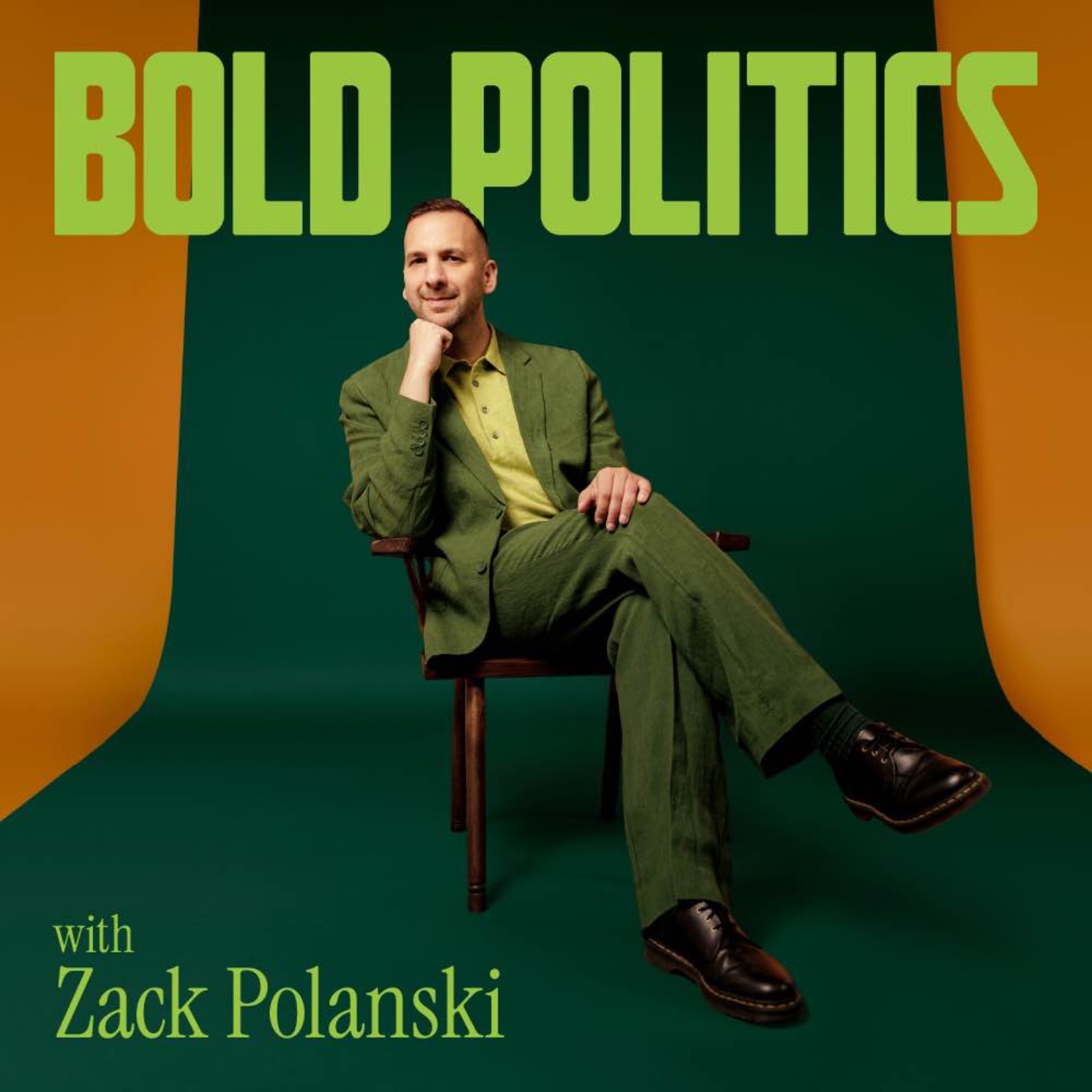
- Bold Politics with Zack Polanski
- Why The War On Drugs Is A Huge Failure
Bold Politics with Zack Polanski30 Jun 2026 · 45m · 13 chapters

Why The War On Drugs Is A Huge Failure | Kojo Koram
In short
Kojo Koram argues the “war on drugs” has failed and that the UK should legalize and regulate drugs to reduce harms, deaths, and racialized mass incarceration while avoiding a shift to “mass commercialization.”
Guest background
Kojo Koram is a professor of law and political economy at Loughborough University. He researched drug legalization/regulation across jurisdictions and wrote The Next Fix: The Winners and Losers in the Future of Drugs.
Key claims
Drug prohibition has increased drug use and drug deaths (UK among highest in Europe) and contributes to mass imprisonment; UN estimates 20% of prisoners are held for drug offenses. Legalization fears (youth use, mental health harms) haven’t materialized in places like Colorado/Oregon/Canada/Uruguay. Regulation differs from commercialization; examples show multiple regulatory models.
Notable examples
2012 Washington/Colorado cannabis legalization; Oregon study (small use/disorder increases, youth use down). Switzerland heroin prescription model; Colombia proposed tiered coca/cocaine/crack frameworks. Germany’s cannabis law (home growing and social clubs, no North America-style storefronts). UK medicinal cannabis (2018) led to limited NHS access and a private industry. History: US-led prohibition tied to racialized propaganda and UN treaties (1961 Single Convention), enforced via US power (e.g., Plan Colombia).
Written by AI. May contain mistakes.
Chapters
0:59
History of Drug Legalization
Kojo discusses the history of drug legalization and its global implications.
“And so over the past decade, we've seen a real transition in how drugs are governed in a number of different jurisdictions around the world.”
3:18
War on Drugs: A Failed Experiment
Kojo explains the failures of the war on drugs and rising drug deaths.
“Starting in 2012 with Washington and Colorado state, we've seen the legalization and commercialization, different from regulation, of cannabis.”
5:05
Regulation vs. Commercialization
Discussion on the difference between drug regulation and commercialization.
“on the green party's legalization and regulation policy um around the gorton and denton by-election was relying on this kind of slippage or um confusion about the relationship between regulation and commercialization.”
7:16
Cannabis Legalization and Mental Health
Exploration of cannabis legalization and its effects on mental health.
“And so there is a vast array of different forms that legalization can take.”
11:00
The Origins of the War on Drugs
Kojo explores the historical context of the war on drugs and its motivations.
“But I think what we can say is we can look at legal regulation that has happened and actually see what has been the impact.”
14:00
The Historical Context of Drug Prohibition
Explore the evolution of drug prohibition from the early 20th century to the present.
“And, you know, many of the institutions that still dominate the global economy now, HSBC, P &O ferries, a lot of these got their start in the trade of opium across the British East Indies.”
19:30
Commercialization vs. Criminalization of Drugs
Discuss the dangers of transitioning from criminalization to commercialization in drug policy.
“And then going to the future, we've heard the history of the League of Nations and everything that was going on, but now we're at the point where Donald Trump is fast-tracking drug bills.”
24:19
Racialized Policing and Drug Enforcement
Analyze the impact of racial inequality in drug enforcement and future implications.
“The narrative is going to be completely incoherent.”
28:00
State Approaches to Cannabis Legalization
Learn about the various state-level models for cannabis legalization and their social equity implications.
“There is also initiatives even happening in places like the USA.”
30:46
Regulatory Control and Drug Education
Discover the importance of regulation and drug education in the context of drug policy reform.
“Regulation is the point that I think really needs to be emphasized.”
Show all 13 chapters
34:28
The Hypocrisy of Drug Policy
Examine the disconnect between political rhetoric on drug policy and the realities of drug use among politicians.
“Yeah, and the thing about it's a hypocritical media as well.”
37:46
The Failures of the War on Drugs
Analyze the catastrophic impacts of the war on drugs and the need for a new regulatory framework.
“By its own metrics, the war on drugs promised, and you can see this, you know, in all the rhetoric that surrounds the first international laws, the speeches on the war on drugs by Ronald Reagan, Richard Nixon.”
42:05
Understanding the Drug Policy Debate
Explore the connection between drug issues and social inequality.
“But what I think you've done brilliantly is point out that the drugs issue is an issue of inequality, is an issue of cost of living.”

Ask about this episode
Get the gist, explore an idea or ask about something said.
 Claude
On Bold Politics with Zack Polanski, what are the key points of this episode?
Searching your listeningTranscript
Automatic transcript. May contain errors.
0:00I'll never forget the privilege of having my face on a van that was driven around Gorton and Denton, the constituency where the Green Party won with Hannah Spencer. One of the things that was on that van, one of the Labour Party's repeated attack lines during that election, was that myself or Hannah were going to want to sell crack to children in playgrounds. I'm a politician, so I get attacked and criticised a lot, and that's part of the role. but I thought it was pretty disgusting to see a party of government trivializing and demonizing such an important issue. The UK have one of the highest drug deaths in the whole of Europe and in fact every year for the last 13 years more people are dying from our so-called war on drugs.
0:41But I can say all of this but what we really need to hear is an expert in drug policy. So I'm delighted today to be joined by Kojo Karam. this episode is sponsored by crowdfunder bring your bold idea to life at crowdfunder.co.uk forward slash bold okay jay thank you very much for for being in the studio thank you so much for having me the place i want to start and it just makes sense to pick your brain on this is that green party policy is to legalize and regulate drugs and the media kind of lost their mind over this yes they often talk about this has never been tried anywhere and it's some kind of big experiment but you're probably the man to ask about the history of drug legalization and regulation yeah um so with the the new book what i actually did was go through a lot of different jurisdictions that have implemented some form of drug legalization and regulation over the past decade and actually looked at what were the consequences who were the winners who were the losers and how it actually related to some of the fear and paranoia that preceded the actual legal reform in terms of what actually then ends up happening.
1:46And so over the past decade, we've seen a real transition in how drugs are governed in a number of different jurisdictions around the world. The war on drugs, which itself is an experiment, you know, it's an experiment around 100 years old. You know, a lot of these drugs that we try and police through the war on drugs have been used by human society since time immemorial. Go back 5 ,000 years and you'll find Amerindians in the Andes using ayahuasca or coca. But over the past century, particularly since the 1909 Shanghai Opium Commission, the very first attempt to prohibit drugs, we've had this emergence of this architecture of what we now call the war on drugs.
2:27And so that was seen as kind of the norm. And I think all of us grew up in a world where that was seen as almost common sense that, you know, certain drugs are bad. And so we prohibit and we criminalize those drugs in order to hopefully create what the UN at least described as a drug-free world. So first of all, we can see that that clearly hasn't manifested. We've seen the use of drugs go up. We've seen drug death rates go up, particularly in the United Kingdom, which has one of the highest drug death rates in all of Europe. And we've seen an entire system of criminalization and mass incarceration being propped up by this war on drugs.
3:05You know, the UN estimates that 20 % of all prisoners in the world are in there because of drug offenses. And that translates as two and a half million people around the world. So that was the norm that we all grew up with. But over the past decade, we've started to see that norm really fragment. Starting in 2012 with Washington and Colorado state, we've seen the legalization and commercialization, different from regulation, of cannabis. And now half of the US states have legal commercial cannabis markets. We've seen Australia reschedule psychedelics, psilocybin and MDMA. So legal psychedelic therapy is now legal in Australia.
3:45Even in Colombia, legislative bills being put through the parliament there to legalize and regulate the trade of cocaine. And so we've had the past decade, a huge transition in how drugs are governed, so much so that we now have a Republican conservative president in Donald Trump sitting in the Oval Office, you know, the same Oval Office where Ronald Reagan week after week warned the country about the dangers of drugs and it being number one public menace in the United States. We now have Donald Trump, you know, sitting in the Oval Office flanked by Joe Rogan and Robert F. Kennedy signing executive orders to fast track psychedelic treatment.
4:26This is the transition that's happened all around the world and I think that the UK has really been behind this conversation and I think that is part of what we're seeing in terms of the impacts the drugs still have within our society. We still have you know a massive drug death rate numbers, we still have huge amounts of people being imprisoned for drugs with the prison population, the overcrowded prison population according to the Ministry of Justice and I think it's time for the UK to really try and engage with this conversation that's happening globally. There's so much to and pick there um if i start with just the technicality we talked about the difference between regulation and then commercialization you okay to spell out what the differences are yeah absolutely i think so much with the backlash that happens when labor try to force a spotlight on the green party's legalization and regulation policy um around the gorton and denton by-election was relying on this kind of slippage or um confusion about the relationship between regulation and commercialization.
5:23So they were like, you know, the Green Party want, you know, crack cocaine to be sold in Tesco next to your crunchy nut cornflakes with this idea that the options that you have apart from criminalization is mass commercialization and commodification, turning things that used to be contraband into commodities that can be bought on a retail consumer basis. When in reality, when you look at the way legal regulation has been rolled out all around the world. There is a huge variety in the different forms of regulatory vehicles that can be put forward. And so one example we might think about with drugs that have a higher risk factor, you know, your opiates and the derivatives would be things like a heroin prescription model.
6:08So Switzerland, hardly a kind of radical hippie state, they've had legal heroin prescription for years now, where if you have acute dependency issues, you're able to receive the drug from a state-based provider, a doctor, whilst also being supported with some of the issues that might be in your life that might be feeding that dependency, whether that might be housing, whether that might be mental health, whether that might be employment issues. We look at the bills that were put forward in Colombia for the legalization of coca and coca-related products. They had what was a three-tiered structure for how this might roll out.
6:47So they would have the coca tea, you know, more caffeine based stuff as being something that might be commercially available that people might be able to buy in stores. But for more dangerous drugs like cocaine, they would have a more prescription pharmacist based model. And then for the acutely dangerous drugs, you know, things like crack cocaine, they would have something very similar to that kind of overdose prevention and prescription treatment that you see with things like heroin in countries like Switzerland. And so there is a vast array of different forms that legalization can take. Even things like legalization of cannabis has taken vastly different forms across the different US states.
7:27Some states have been hyper commercial advertising, putting all the efforts into kind of growing the consumer market. There's other states that have taken what's known as a social equity pathway forward, where the priority has been on trying to repair some of the damages of the war on drugs. And so guaranteeing in the law in places like New York State or Chicago that a high percentage of the tax revenue that the state collects is spent on over-policed communities, on communities that have been left behind and punished during the war on drugs. And even in other countries, you might think about Germany, which also legalized cannabis over the past few years.
8:06When it announced it initially, the Traffic Light Commission announced the legalization of cannabis. People thought this was going to be a new commercial model. But by the time it was passed through in 2024, whilst they legalized cannabis, they didn't allow for the kind of dispensary storefront model that we see in North America. Instead, what they legalized was the right for people to grow their own cannabis at home and for people to form what's known as cannabis social clubs, where, you know, people might get together and learn how to cultivate and use a substance, but not be able to kind of buy it in the way you might buy something in a shop.
8:40And so it's kind of the difference between the kind of community vegetable garden and going into Tesco and buying your food from there. And so I think that having the conversation about what legalization look like is a conversation that's going to take a lot of time. And, you know, there will be some things that are tried and might not work. And that might be the one advantage of the UK being so far behind in this debate is that we can learn from what the Canada do what did Uruguay do what did Germany do what worked what didn't and put something together but I think the first argument that needs to be had before is to make people aware that so many of the harms that they fear might happen with legalization are already happening with criminalization and prohibition we're already seeing drug death rate spike we're already seeing people with dependency issues spiking we're already seeing associated crime going through the roof.
9:32And so thinking about what has prohibition done over the last hundred years, I think is where we need to start in the UK. And then we can look at the different forms of regulation for different substances. I want to dive into prohibition at the moment and the history of that and particularly how racialized it's been. We'll go there in a moment. Still sticking with legalization and regulation at the moment. You mentioned cannabis a few times. I know that whenever I've spoken about this on the media, people inevitably talk about mental health issues people might have and the difference between correlation and causation with cannabis.
10:01Just to ask what sort of evidence is out there and then how would you respond to someone who's worried about that? I understand people's fear around the relationships in cannabis and mental health. And I think that, first of all, I'm a professor of law and political economy, so I'm not a scientist. You know, I don't research things like schizophrenia, so I wouldn't claim to have a kind of definitive analysis of that. But I have read, you know, the research of people like, you know, Dr. Matthew Hill, who's in Calgary in Canada, who has looked at this in much greater depth. And again, it's that understanding of, well, is there a relationship between causation and correlation?
10:35Is there an idea that people who have a propensity towards mental health issues also find cannabis as something that might calm potential? And that's why there might be a relationship between those who use cannabis and mental health issues, or is it that cannabis causes those mental health issues. I think that these are things that are still to be really determined. And anyone who says they have an understanding of all the intricacies of the human endocannaboid system and how it reflects on different plant strains, I think is definitely misleading the population. But I think what we can say is we can look at legal regulation that has happened and actually see what has been the impact.
11:14Because so much of the fears that people expressed in the UK that there's going to be a huge spike in youth use, there's going to be a huge spike in mental health issues. This just hasn't been borne out in the United States, which, you know, 2012, Colorado legalized cannabis. And so we've had over a decade now of this experimentation. And, you know, places like Oregon, where they had a study on this, they found that with legalization, there was a slight increase in use, around 4 % increase and a very slight increase in kind of cannabis use disorders around 2%, but there wasn't this explosion that people would talk about.
11:51And in terms of actual youth use, that went down. That went down also in Canada and in Uruguay, because not surprisingly, a legal dispensary is going to check an ID in a way that, you know, a street provider is not. And so if you are below the age, it's going to be much harder to access these substances in a legally regulated framework. And so somewhere like Colorado, which has had legalization for over a decade. At the decade point, it had a poll with its residents to see who thought that it was a positive development and who was a negative development. 71 % of residents voted that it was a positive development in terms of the impacts on society and obviously in terms of some of the tax revenue that is also probably being spent across the state as well.
12:38And so I think a lot of the fears and paranoias are understandable but i think that we do need to actually look at the evidence and we need to start having the conversation in the uk about drug legal reform in a way that recognizes this is happening across the world we don't have to reinvent the wheel we just need to learn what works and what doesn't and try and do better than what we're doing right now which i don't think is working for anybody what i want to look at you've used this phrase a few times uh the war on drugs which i think people are very familiar with Hopefully it's not too broad a question, but why did the war on drugs start?
13:12Well, I think this is such a really interesting question. And it's something that almost feels counterintuitive because we've been so bombarded with this propaganda around particular drugs that it seems like it's almost natural. and that, you know, the idea of prohibiting and stigmatizing these particular substances is something that's just a natural human response to, particularly what drug policy scholars would call the big three, cannabis, coca-produced products, and opiate-produced products. When in reality, we go back just 150 years, even in this country, the United Kingdom, these substances were seen as part of legitimate commercial trade.
13:49Britain famously fought an entire war against the Qing dynasty of China for the right to sell opium. Like the idea of prohibiting the trade of opium at that time, people can read the work of people like John Stuart Mill on this, was seen as a sign of a kind of backward and uncivilized society to think that you can interrupt the free exchange of commodities by prohibiting the trade of opium. And, you know, many of the institutions that still dominate the global economy now, HSBC, P &O ferries, a lot of these got their start in the trade of opium across the British East Indies. And so whether we might think about the production of coca in Dutch-controlled Indonesia, whether we might think about the commodification of cannabis in places like the Caribbean, alongside the commodification of other psychoactive substances, which are now really integrated in the European diet, coffee, tobacco, sugar.
14:51And so up until the early 20th century, we don't see this distinction between drugs in the same way that we do today. But what really changes is the emergence of the United States of America as the hegemonic power within the international arena. And drug prohibition becomes really their flagship policy, which they get the European empires, which were having a great time commercializing and trading these drugs to actually start to agree with what is a kind of internal US issue, something that's really tied to a particular moral panic in the turn of the 20th century. alcohol was also prohibited we forget that in the usa and it's not that alcohol was this failed experiment and drug prohibition is this logical rational public health approach they were seen as the same thing at that moment the same organizations the same temperance movements that were championing alcohol prohibition were also pushing the very first laws prohibiting drugs and i think that some of the differences between the way the europeans look to drugs and the way that the US looked at drugs is due to maybe evolving ideas about what it meant to be a healthy human, evolving ideas about what it meant to be a kind of coherent society.
16:04But also we have to recognize the very real and naked references towards racial hierarchy and demonization of particular communities that drove the prohibition of drugs in the early days of early 20th century. Viewers can go on their Google or on their iPhone and look up some of the articles that surrounded the prohibition of drugs, cannabis, cocaine in the early 20th century in the US. People like the New York Times and the San Francisco Chronicle are very helpful in digitizing all of their archives. And so you can see some of the headlines like Negro cocaine fiends of the new Southern menace, which is a story the New York Times published the same year the Harrison Act was passed, which is the first federal prohibition of drugs.
16:50And this story is, and it might sound ridiculous to viewers, but it's a story about how cocaine was making black people in the American South impervious to bullets. And so they were taking cocaine, they were being shot by police, and they were just running through them like Neo in the Matrix. And there are associations between marijuana and Mexican communities. And this idea that the point of prohibiting drugs is to try and protect a potentially delicate, purified idea of white America from this invasion of these substances and associated peoples. And so you get that in the kind of first half of the 20th century, and then you get it really kind of crystallized when America takes the reins of the institutions of international law with the emergence of the united nations the very first um un treaties that prohibit drugs the un convention on single narcotic drugs in 1961 and these are the the treaties that still determine drug prohibition even deep into the 21st century so the uk's misuse of drugs act in 1971 is the domestic implementation of the un single convention on narcotic drugs and all around the world you see these countries, you know, it wasn't by happenstance that countries from Jamaica to Colombia to Afghanistan to Ghana to, you know, South Africa all suddenly decide in the mid 20th century, oh, we want to prohibit drugs.
18:18This is something that was really enforced by the United States through soft and hard power, through funding counter-narcotics enforcement programs like Plan Colombia in Colombia, the Meridian Initiative in Mexico, and by ensuring that if countries wanted to be part of this new system of international law, they needed to sign up to the US's war on drugs. It was a requirement of becoming a member of the League of Nations to actually sign up to the Hague Opium Convention of 1912. And so what's really interesting about thinking about this topic now in 2026 is if so much of the war on drugs was really maintained by the US's hard and soft power, what is the world that we're moving into where the United States is also still trying to criminalize drugs?
19:07You know, Nicolas Maduro will say that they definitely are still criminalizing drugs, but they're also simultaneously trying to commercialize drugs. They're also simultaneously having Donald Trump sign executive orders rescheduling cannabis so that it can open up, tax breaks to a lot of these very lucrative cannabis companies that are dominating this new emerging market. And so what's going to happen over the next few decades, I think is something that's really interesting to think about. Yeah, that's an amazing history there. And then going to the future, we've heard the history of the League of Nations and everything that was going on, but now we're at the point where Donald Trump is fast-tracking drug bills.
19:41What's the danger of what happens next, particularly in the UK, if we don't kind of win the argument on evidence grounds? The real danger is thinking about simply moving from a world of mass criminalization to a world of mass commercialization. And we're already, I think, seeing that in a certain stance with the UK. So the UK legalized medicinal cannabis in 2018. And, you know, that was legalized through a campaign led by mothers of desperately sick children who had complex epileptic issues and who had found going to other countries that medical cannabis was one of the few treatments that helped them manage and treat those issues.
20:21And so they campaigned and eventually created enough pressure for the government to change the laws in order for them to be able to access the treatment that they needed. But this hasn't been made widely available on the NHS. And so what we've had instead is the explosion of a quite expensive private cannabis industry, which, you know, anyone taking the tube or looking at billboards across London will see some of these adverts of these companies starting to pop up framed as very kind of relaxed wellness treatments. But these are going to be the big winners of legalization in the UK, unless we think about how might we use these regulations to shape the industry in a slightly different way.
21:02And I think you're also seeing that in the US. Again, you're seeing the very first companies that have become billion dollar companies through the legalization of cannabis in the same world in which we still have the death penalty for drug trafficking, you know, in countries like Indonesia and Singapore and Iran. And so we're now in this strange world where you can become a billionaire doing exactly the same thing that you can get literally shot by firing squad for in another part of the world. And I think that when we talk about who's going to own this new sector, We talk about who is going to be the big beneficiaries of this new sector.
21:39That is where we need to try and intervene in this conversation right now, rather than wait for a couple of generations when a lot of these laws and a lot of these companies are crystallized in terms of dominating this particular sector. Because I think often we look at the way and say tech has led to a massive oligarchic class and huge drivers of inequality. We might look at the way that fossil fuels have led to an oligarchic class and drivers of inequality. And we try to think about what kind of regulatory reforms might we pass in order to make these industries operate on a different medium.
22:16But there's an industry emerging right now that often where, because of the stigma, because of the association of it as a kind of a cultural issue rather than ultimately an economic issue, we avoid the conversation. And we might find ourselves too late when we find that that conversation has already been claimed by the Donald Trumps, the Peter Thiels, the Elon Musk of the world. And now a quick break with our friends from Crowdfunder. We're stronger when we're together. But the reality is there's been a deliberate shift to make us forget about the things that matter in life. Kindness, community, looking out for each other.
22:53Decades of austerity and growing regional inequality has left so many towns, districts and villages with community projects underfunded. Green spaces neglected. Vulnerable people slipping through the cracks. And the flip side of that is, if we're only looking out for ourselves, it's only going to get worse. That's why Bold Politics have partnered with Crowdfunder to inspire people across the country do something amazing for their communities. Whether you want to create a local litter picking group, start a community garden,
23:34or turn an unused building into something useful, like a food bank. And whether you've got a big idea that needs a lot of money, or you just need a little bit, Crowdfunder have raised over£300 million for charities, projects and communities. and there's a crowd of people out there waiting to turn your bold idea into reality. Hey, we'll even give you 50 quid towards your first project if you raise£250 from at least five donors. What could you do for your community? Turn your bold idea into a reality at crowdfunder.co.uk forward slash bold.
24:15You've talked about the history of the war on drugs and particularly how racialized that's been. But we also know in terms of enforcement that if you're a young black person, for instance, I think you're sometimes 8 to 18 times more likely to be stopped and searched depending on where you live in the country compared to a white peer who is no more likely or less likely to be carrying drugs. How are governments going to, I mean, are they going to carry on, it's impossible for you to have a crystal ball, but how they could carry on this racialized policing or enforcement of it at the same time as commercializing drugs?
24:45The narrative is going to be completely incoherent. I mean, the narrative is incoherent, but I don't think that's ever stopped at Donald Trump before. And that is literally what we have been seeing, you know, over the course of the second Trump administration. We've seen a real embrace of commercial potential of particularly psychedelics and cannabis. And also, you know, not just partnering up with Silicon Valley investors who have commodified a lot of these areas, buying the patents that mean they have exclusive ownership over the drugs that are then placed on market for a certain period, but also simultaneously using drugs as an architecture for expansive enforcement of a draconian state you know ice is still snatching up anybody with a hispanic name and sending them to a black side in el salvador and saying well they're a narco trafficker and so you can have criminalization and commodification at the same time and for me that's the most dystopian of all worlds but i think now is the opportunity to try and intervene in that discussion and talk about well, what we want to prioritize, what we want to put forward is public health, harm reduction, community ownership, all of these different mechanisms that might create a very different future, particularly around drugs, than the current present.
26:00And if we are able to do something in this particular sector, if we're able to normalize things like cooperative production, normalize things like the protection of global self-producers within this new market, then what example might that give to these other industries, whether it's fashion, whether it's production of coffee? You know, I was kind of ended the book by going to Ghana, which is, you know, where my family's from, which was the last place I would ever imagine. You know, Ghana's often cited as one of the most Christian societies in the whole world. And it would be the last place I would imagine to engage in drug policy reform.
26:35But because of the potential tax revenue that's available in 2023, they legalized the cultivation of cannabis. Is this going to be simply the same as, you know, Ghana's big export is cocoa? You know, any chocolate people might have, look at the back of it, it'll probably be from Ghana or Cote d 'Ivoire, but that doesn't actually help the farmers on the ground who are actually cutting the cocoa pods. Is cannabis going to be simply a replication of that? Or can we do things differently where they get a greater share of the actual value of the supply chain? And if we are able to do it with cannabis, then I think that that creates an example for these other industries.
27:12And is there any work that's being done that you know of to protect farmers, particularly in global health communities, that's working? Is there any country that is kind of taking a global supply chain and doing it ethically? So I don't think there's anywhere that's got it perfect at the moment. But I think that there's really interesting initiatives that are being implemented across different jurisdictions. And so there is, you know, Morocco will also legalize cannabis cultivation. And that, you know, started with the mass forgiveness of criminal charges that were placed on thousands of farmers who'd been living in the informal economy and fearful of the punishment of criminalization.
27:48You know, the king there managed to pardon thousands of people. And I think that that's transformative for local communities. There's initiatives in the Caribbean to, again, try and protect the kind of cultural rights of these plants that are associated with particular communities. There is also initiatives even happening in places like the USA. And so because it's a state by state model, I think what's really interesting is different states have taken different approaches with how cannabis legalization is rolled out. And so there have been states that have been, it's been all about commercialization, you know, in Alaska or Nevada, where there's people still serving out cannabis trafficking sentences at the same time as you have a legal Silicon Valley backed cannabis dispensary down the road doing the same thing.
28:34And that's very different than states like Illinois or New York that have really emphasized what is known as a social equity model of legalization. And so that is trying to think about how can you use legalization, still a commercial market, but how can you use the commercial market in order to try and repair some of the devastation that the war on drugs did, especially to particular communities. And so they have commitments that are baked in the law for the access of, you know, licenses to people who've either been arrested and incarcerated for the war on drugs or had family members incarcerated for the war on drugs.
29:10They have the commution and expungement of sentences. You know, often we talk about criminalization, we just talk about prison numbers and people might say, oh, we've only got this many people in prison. It's still huge in the UK, but we've only got this many people. But that's not the end of criminalization. You get a criminal record, that is going to impact your ability to be able to access work, to be able to get a visa, to travel abroad. All of these issues that people were dealing with sometimes decades after criminalization were expunged in a lot of these states that pursued a social equity model.
29:42and a commitment as well to spending some of the tax revenue. So in New York, in the bill is a commitment to spending 80 % of the tax revenue that's accrued by the New York state on specific communities that were over-policed and over-criminalized during the war on drugs. And so these are very different models depending on what decisions you make at the point of regulation. It definitely isn't perfect in New York, and there's been a lot of ups and downs in the process of how that's rolled out over the last few years. but I think that this is one of the few benefits that we have here in the UK is again looking at all these different jurisdictions around the world and almost being like you know do we want to have the kind of this club model of places like Barcelona or Germany do we want to look at the kind of state-based dispensary model in somewhere like Uruguay do we want to have a social equity model like in New York you know do we want to have a hyper-commercialized model places like Nevada so there's so many different decisions to be made in many ways i felt like the book was almost like you know just a super boring the most boring investigation into drugs ever because it's all about like what's the licensing structures here you know what's the different ways in which tax revenues distributed but these are the questions that are going to decide what drugs look like in the future because i think if we hand this whole sphere of the economy to the private market what we're going to do is not only create a new vehicle for inequality, but it's also going to expedite some of the harms that are associated with these, you know, admittedly risky products.
31:13Regulation is the point that I think really needs to be emphasized. Drugs are not regulated when you have a prohibited market, a criminalized market, and everything is more dangerous when it's unregulated. You know, this glass of water I wouldn't drink if you told me, oh, it's actually gone through no regulatory checks. There's been no safety. There's been no regulatory oversight over who the producers are. I wouldn't even drink that. So when we talk about risky products, we need to think about what type of regulation we're going to bring in. And I think that we can learn from all these drug policy reform initiatives that are happening all across the world right now.
31:50And just to push back on your own book, I think the nuts and bolts sounds incredibly fascinating and actually what we need. People frequently say they enjoy this podcast because we kind of, we do the bigger picture stuff but we very quickly get into actually how would you physically do this and what might be the barriers and so i think uh there's been a long time space for a book that deals with exactly that so i think be nicer and kinder to yourself this might be a very specific question it's about the behaviors that people might display when they use drugs so it's slightly different to the drug and one of the ones i think is trickier to deal with in terms of the media landscape is ghb particularly around drugs that are used for spiking people's drinks and things like that do you have a sense or has any research been done into like the consequences of legalizing drugs where people might behave in pretty abhorrent ways utilizing the drug not because of the drug but actually that drug gives them a space in which to do it so i think this is one of the like you say the more thorniest and more difficult issues when we talk about potentially having different regulatory controls over particular substances i think first of all like i mentioned i think the point to be made when you think about something like the legalization of a drug like ghb is legalization doesn't mean greater availability and so again so many people make the presumption that by prohibiting something you're going to reduce the availability of it in terms of the availability of it you know for anybody to pick up that is not what the evidence has shown us you know we've had decade after decade of drug prohibition and just say no campaigns and sniffer dogs at airports and all of these efforts and we've seen drugs and drug use go up and the availability of drugs also go up and so prohibition doesn't mean a reduction in availability and a reduction in use and also what it doesn't allow for is a recognition of greater drug education and so i don't know the drug education you might have got to school but i think i got the same that everybody got which is if you look at a drug your heart will explode and die don't have a look at a drug and you know that's that is all you can have there's no education about recognizing its impacts on particular people.
33:47There's no education about recognizing when somebody you're with might have been spiked or might have been damaged or what should you do. Rehibition also creates the context where people are afraid to approach authorities with potential issues they might have with the use of drugs because they're afraid about the potential consequences as well. And so when we think about what moving beyond the war on drugs might allow for, I think greater regulatory control about the production and the availability of something only becomes possible once you start using those regulatory tools and also greater education about the impacts of drugs, about the way drugs might impact society, about they might impact a person, then also becomes possible.
34:28And in terms of, you know, the abhorrent relationships between things like GHB and things like sexual assault, I think that so often in society, we tend to blame like the drug because the drug is a useful explanation for for for all these social problems when we have a much deeper problem around misogyny around sexual consent which we need to have a much broader education on but it's so much easier to blame the drug than it is to actually look at society and i think that is really what the use of drugs has been you know i had an example of it just just the other day where um a few days ago i've got a little seven-year-old girl and um you know we were walking through the underground and somebody who was you know street homeless she asked me why would someone be homeless and i'm trying to give her this like complicated explanation about you know the housing shortage right to buy you know her little eyes are going everywhere she's this poor seven-year-old and she had no idea what i was talking about and then a few days later i remember i was walking on my own and i was behind a mother and a young son and had almost the same conversation as my daughter and was saying you know why people homeless and the mother just went oh they're all on drugs and just moved on simple explanation like and i think that that is what drugs have allowed people to do rather than deal with complex issues things like sexual assault things like you know street homelessness things like mental health it's given us an easy scapegoat to blame and i think part of what the point of drug policy reform should be is to actually open up those conversations on a much broader level part of the problem here right is that we have a reactionary media um who look for quick answers to things and the answer you gave was woven and textured and evidence-based and it's trying to find ways to communicate that against kind of are the narratives that are very intuitive, even if they aren't true.
36:10Yeah, and the thing about it's a hypocritical media as well. Like, we have a media that is aware that the drug policy doesn't work and also is aware that in terms of, you know, the kind of backlash that I think has been given the Green Party's actual evidence-based policy on legal regulation, I think it's so striking that a lot of that has come from a conservative political class that has been, in terms of their own personal life, far more associated with these substances than the tea tollers like yourself. You know, there was a recent Conservative Party leadership election, I remember, where every single contender from Michael Gove with his admission about cocaine to Rory Stewart talking about taking opium in the Afghan mountains, it all had themselves admitted use of drugs.
36:58But yeah, we're talking about this draconian, crackdown, tough on drugs policy. And what's really interesting about what we've seen in the US is that we've seen how quickly politicians will move from criminalization and war on drugs rhetoric to profiting from the actual commodification. People like former Speaker of the House John Bayer plays a leading role in cannabis companies, despite having, you know, been banging the drum for the war on drugs, you know, for years on years. And so I think that that is something that we need to really call out this hypocrisy around drug policy you know at the very top of british society and they know that the criminalization of drugs isn't going to impact them it's not going to impact westminster there's not going to be stopping searches of people for you know drug use or randomized drug tests in westminster and so they know it's only going to impact particular communities and i think that it's those communities that we need to say this isn't working for us and we want to learn from what's going on all around the world and try and do something different and that's what i try to do really with this book yeah and also the in parliament the traces of drugs in bathrooms i can't remember the exact stat but it was massive in terms of the amount of drug use that was potentially going on not what's going on the traces were there no absolutely and in terms of concluding what what do you want to see happen next where do we need to go from here um so i think that the first thing we need to do is to try and recognize that the war on drugs has failed and really make that point unreservedly.
38:27By its own metrics, the war on drugs promised, and you can see this, you know, in all the rhetoric that surrounds the first international laws, the speeches on the war on drugs by Ronald Reagan, Richard Nixon. If we implement this, and it was an experiment, this hadn't been done in human history, this experiment of criminalizing, you know, incarcerating, stigmatizing people who use drugs in people who fall into the supply of drugs, this will lead to drug deaths going down, drug use going down, the harms of drugs going down. And that has been the opposite as we've seen around the world. And that's not just in places like the UK and the US.
39:02I mean, the devastation that the war on drugs has done in places like Colombia, where I went for this book, the war on drugs is a metaphor here that people use to try and sound tough in places like Mexico, in places like Colombia, it's no metaphor. You know, the death rate is larger than some UN resolution recognized wars. The environmental impact has completely devastated agricultural land through aerial fumigation policies, crop eradication policies have made huge amounts of land that have been used by agrarian communities unusable for generations. You know, corrupting of political system. There's been a devastating impact in huge amounts of places around the world.
39:44And yet we've seen the use of drugs, the deaths from drugs continue to go up. And so I think emphasizing that this has failed should be the first point of call and trying to dismantle this system of criminalization around trying to manage the admittedly risky and potentially negatively impactful use of particular substances. And so once that has been dismantled, I think then we get into a much longer and much slower conversation about what is the type of regulatory framework we want to build that might really emphasize public health, really emphasize things like community repair and minimize things like mass commercialization and mass profiteering that we've seen with other drugs, because the drugs that are prohibited are not the only drugs that have been globalized over the past century.
40:35You know, we've seen huge profiteering around a vast range of different pharmaceutical drugs. And we don't simply want to transition things like cannabis and psychedelics into that same old model. And so what I think that initiatives around, you know, do we want to allow for new forms of cooperative production? Do we want to pass policies which include things like the cultivation of these substances have to be held in lands that are registered as a commons? Do we want to have things like seed banks that are available for farmers in the global south to be able to access the seeds that they require?
41:10Do we want to have things like, you know, open access around patents so that we can't have big Silicon Valley backed pharmaceutical companies establish a legal monopoly over these substances and be able to extract rentier profits from them for the next generation? These are all options that are open to us and I'm sure that it will take a bit of trial and error, a bit of things working here and a little bit of changing there. But I think we need to really emphasize that what we're doing now hasn't worked and we need to learn from what's going on all around the world. A lot of the fears that surrounded legalization in places like the USA just haven't materialized.
41:47Even the director of the National Institute of Drug Abuse, Nora Volko, said in Congress, I thought the legalization would lead to a massive growth in use use of cannabis and that hasn't happened it simply hasn't happened and so we can understand that a lot of the fears and stigma i think come from a genuine place in people but we need to look at what's gone on around the world understand what works what doesn't and try to move our entire drug policy away from this myths of the 20th century and onto things that are actually evidence-based and what actually works i've learned so much during this conversation and one thing that's really stood out to me is I think when this is used as a political attack, the issue of drugs more widely, it's often to take away from the kind of central message of inequality and cost of living to try and get us on a kind of quote-unquote culture war issue.
42:38But what I think you've done brilliantly is point out that the drugs issue is an issue of inequality, is an issue of cost of living. Absolutely, absolutely. And we can see that the way in which spikes in terms of substance abuse disorders are correlated with places that have suffered with de-industrialization, with economic abandonment, whether we think about Scotland and its drug death rates, whether we might think about the Rust Belt in the United States and the impact of the opioid crisis over there. If you leave communities devastated and abandoned and you leave people isolated and without any hope of any kind of economic stability, you create the idealized conditions for the types of increasing drug use and increasing substance abuse issues that we've seen over the past few decades.
43:24And so trying to use this moment of transition, not to simply create a new hyper-commercialized, pedophile-backed commodities industry, I think is a really rare opportunity. And we might actually try and shape a different form of economy that recognizes the risks of these substances, recognizes their potential harm, and maybe uses that to justify different forms of production, distribution and consumption than the kind of, yeah, the hyper-commercialized, compulsive consumption that so much of capitalism tries to accelerate. If people want to find out more about you and your work, how can they find you?
44:03I'm a professor at Loughborough University. So I have a new book out called The Next Fix, The Winners and Losers in the Future of Drugs. And so check out that book. I'm going to start a sub stack because everyone's doing that now um and yeah just the look of kojo cram on or or i don't have any inventive like handles it's just kojo cram i mean that worked at one point it sounds like you wanted people to rock up to leftbury university but i'm assuming that's not the invite kj thank you so much really really appreciate it this episode was brought to you by crowdfunder what's your bold idea start it at crowdfunder.co.uk forward slash bold
44:44Thank you.
From the publisher
What prompted the U.S. to implement the war on drugs? What’s the modern history of the legalisation and regulation of drugs? Why do the media expect simple answers to complex questions around drug policy?
In this week’s episode, Zack Polanski speaks to author and professor, Kojo Koram.
_____
What's your bold idea? Bring it to life with Crowdfunder: https://www.crowdfunder.co.uk/bold?utm_source=boldpolitics&utm_medium=referral&utm_campaign=cf_boldpolitics_spotify
_____
Pre-order the new book, Hope Is Here now.
Email: [email protected]
Bold Politics Live is at Crossed Wires Festival in Sheffield on July 5th.
Pre-order the new book, Hope Is Here now.
Email: [email protected]
Hosted on Acast. See acast.com/privacy for more information.
More from Bold Politics with Zack Polanski
All episodesWe use cookies.They keep VO running smoothly and help us improve it. Privacy policy