
 Ask ChatGPT

- Podcasts
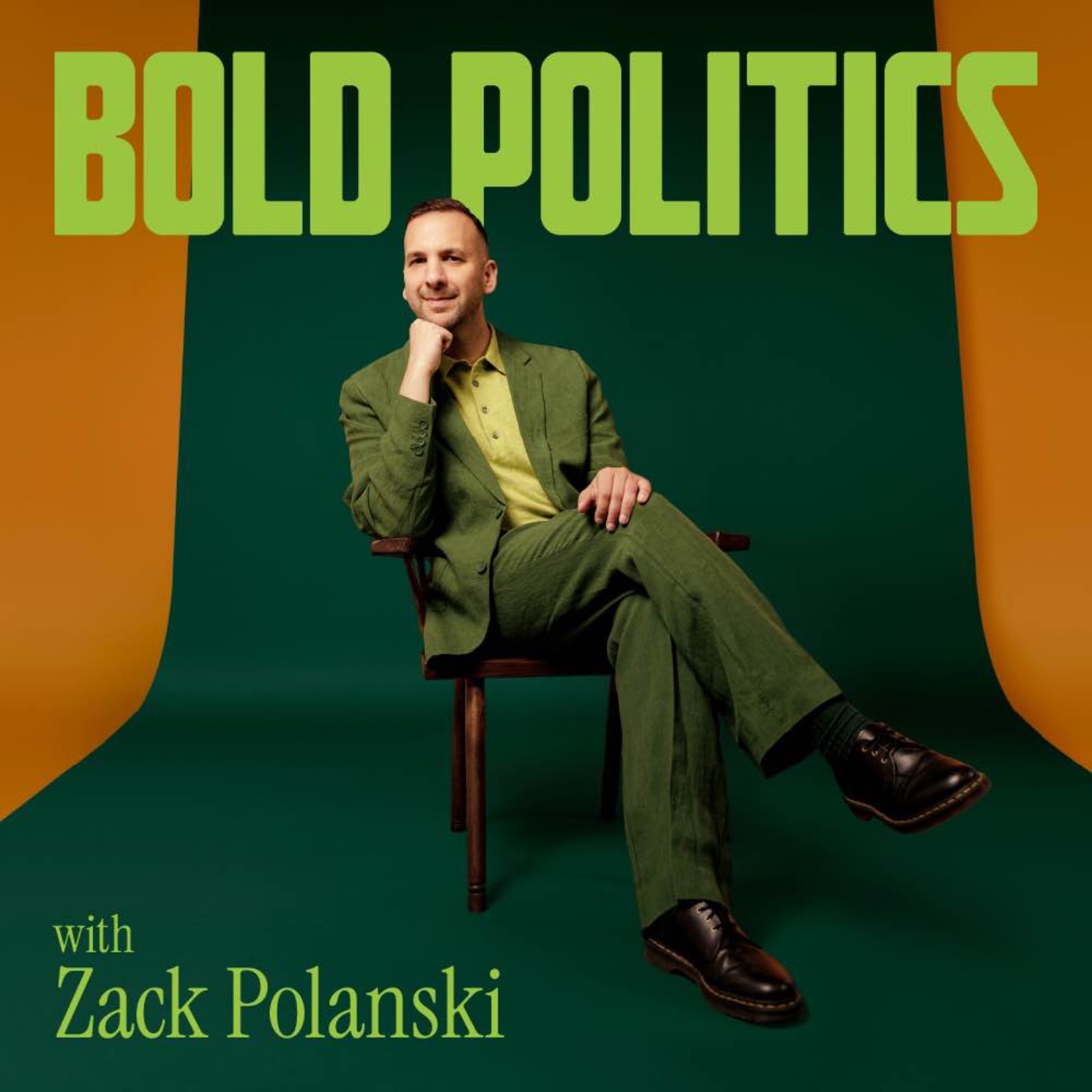
- Bold Politics with Zack Polanski
- Why We Should Want Our Politicians To Be Flawed
Bold Politics with Zack Polanski14 Oct 2025 · 33m

Why We Should Want Our Politicians To Be Flawed | Chlöe Swarbrick | Zack Polanski
In short
Guest: Chlöe Swarbrick, Co-Leader of The Green Party of Aotearoa New Zealand
In this episode, Zack Polanski engages in a thought-provoking conversation with Chlöe Swarbrick, addressing the interconnectedness of environmental, social, and economic justice. The discussion challenges the notion of political perfection and emphasizes the importance of authentic leadership in progressive politics.
Written by AI. May contain mistakes.

Ask about this episode
Get the gist, explore an idea or ask about something said.
 Claude
On Bold Politics with Zack Polanski, what are the key points of this episode?
Searching your listeningTranscript
Automatic transcript. May contain errors.
0:00Leadership comes from all sorts of places. Workers, teachers, carers, cleaners, people I meet on the street. And indeed, the leaders of political parties that aren't in this country too. One person who's been on my radar for a long time is Chloe Swartbrick, the co-leader of the New Zealand Greens, Altaroa. Chloe epitomises bold politics. She's authentic, she's clear, and she's not afraid to listen too. Here's my conversation with Chloe.
0:30hey zach chris packham here i just want to tell you about something really exciting eco talk it's a phone company that helps restore nature and it's brilliant you can find out more about it at ecotalk.co.uk
0:52Kia ora. Kia ora. No, you're doing great. I'm amazing. I'm really, really pleased. Absolutely delighted to have you on. Now, some of our audience will know exactly who you are and some will go, I know nothing about New Zealand politics. So I guess, how would you like to introduce yourself? Well, kia ora, Zach. Thank you for having me. And congratulations, mate. It's phenomenal, the position that you're in and the kaupapa or the values that you ran on to get to that position, and I'm sure I'll unpack that soon. But my name is Chloe Swarbrick. I am the co-leader of the Green Party of Aotearoa New Zealand and the Member of Parliament for Auckland Central, which is the city centre of our largest city in the country, and I also represent a few of our Hauraki Islands, like Aotea, Great Barrier and Waiheke Island.
1:34I've been in Parliament for a better part of a decade now, so I was elected when I was 23 years old, raged against the machine so hard, somehow ended up inside it. But yeah, I think at the end of the day, hopefully people have a really clear sense of how my values haven't only remained the same, but in fact have become, yeah, all more apparent and stronger, especially in the face of the challenges that we are dealing with, not only at home in Aotearoa, but internationally. And if I was to sum up the work that you've been doing, and I'm probably going to sum this up horribly, but I would put it into three big strands that I've really seen, is campaigning for a wealth tax.
2:12justice for Palestinians and all oppressed people around the world and also drug legalisation. Yeah, that is a pretty good bunch of baskets. So my first time in Parliament 2017 to 2023 very much was coloured by that work for drug law reform. And that came about, I never intended to go to Parliament to advocate for drug law reform, but Julianne Genter, who is one of our Green MPs, became a minister in that government. And as a minister, you can't progress a member's bill. So she passed her member's bill on legalising medicinal cannabis to me. And then I just ended up getting into the weeds, excuse the turn of phrase.
2:48But the more that I uncovered, the more that I learnt that, you know, drug policy is one of those areas that is actually some of the most profoundly anti-evidence and anti-compassion policy that we have going for us. And funnily enough, we operate off the back of something called the Misuse of Drugs Act 1975, which is largely a carbon copy of you guys' Misuse of Drugs Act 1972. too. It's just anti-evidence compounds harm, no one's going to put their hand up and ask for help if they risk going away in handcuffs. As things progressed, I was also on the Environment Select Committee, so was charged with passing the Zero Carbon Act, which set up our framework for our Climate Change Commission.
3:26And then through my second term became a local MP, which was all about connecting the dots from the work that we were doing in Parliament back to a really local constituency and trying to build up a sense of understanding within my communities that we actually can do politics on a day-to-day basis and take back a sense of control and power in our lives and that those kind of microcosms of hope by practising our values can grow and grow and grow and that's how we change the world around us. And then, yeah, this term I became our co-leader and have very much set my sights on economic reform And obviously as an undercurrent to all of that, yeah, with the genocide in Palestine, I think that anybody who would like to call themselves a political leader has a responsibility to stand up for human rights and justice.
4:16That kind of just seems like common sense to me. Quite. And can I specifically what you're doing around Palestine? Yeah, so our whole party has obviously been questioning the government on this since actually it was the last government prior to the election in November 2023 and the formation of the new government. But after a year plus of holding the government's feet to the fire and trying to get them to put in place sanctions, special category visas, help with regard to aid or otherwise, and then consistently saying we're doing everything that we can as they sit on their hands. I in December 2024 put the unlawful occupation of Palestine sanctions bill into the biscuit tin or the members ballot a very unique form of New Zealand's democracy where if you're a backbench or non-executive MP the only way to get a bill or a draft law onto the floor of the house is literally through a ballot system and that ballot system is facilitated through a literal biscuit tin that was bought at Decker which is a store that used to exist in the 1980s and we all have these chips assigned to it But there's a way to bypass that biscuit tin if you get 61 non-executive members to support your bill onto the floor of the House.
5:25So that's where I worked across the aisle with Te Paati Māori, the Māori Party and the Labour Party to get 55 MPs, non-executive MPs in support, which is where the point that we need only 68 Government MPs to effectively cross the floor or to sign their name to get that bill onto the floor of the House. I was giving a speech to that effect a few weeks ago and the Speaker took issue with how I characterised it in terms of if we could find just six of 68 Government MPs with a spine, then we can sanction Israel for its war crimes. And I think that kind of backfired on them because we ended up getting a little bit more of a spotlight on the issue.
6:05That's amazing. I love bypassing the biscuit tin as well. Yeah, I mean, it's been a rule that's been in place since 2020, but unfortunately, because of how partisan our politics are, I don't know if you know this, but we're the most whipped parliament in the Western world. I know I didn't know that. Yeah, there's probably a few different reasons for that. But yeah, we're trying to have parliamentarians, particularly of the three parties on the government side, understand that some things are kind of bigger than our partisan allegiances. Yeah, absolutely. I want to ask you a silly question. The question I've been asked more than anything is, why are you not talking about the environment?
6:40The old classic. Yeah. Oh, my gosh. So many different answers for this. I think so core to the Green Party Charter all across the world. Right. I mean, what differentiates us in Aotearoa is a commitment to Te Turite o Waitangi, our founding text between Tangta Whenua, Maori and the colonising force of the Crown, who, since that has been signed, has done absolutely everything to shred it. But recognition of Te Triteo Waitangi and our historical need to address that for sake of reparations and justice moving forward. But from that, our Green Parties, as with all Green Parties across the world, have the same four core things in common.
7:20First is known as ecological wisdom, recognition of the fact that resources are finite, even resources that do regenerate need time and space and God forbid some planning in order to regenerate. If you accept that as the first premise, the next one makes a heck of a lot of sense, logically, known as social responsibility or derogatorily on the internet as social justice. That is, if you accept that there are somewhat finite or limited resources in society, then we need to ensure that everybody has basic access to those resources such that we're able to have this thing called democracy working properly.
7:51The third is non-violence. Of course, we're hippies and we don't like going to war. But I think if you dig into that a little bit deeper, it's about how do you create systems that don't neglect people who further down the track go, hey this thing doesn't look like or feel like or represent me and then of course appropriate decision making where we're nerds for local government we like to volume decision making powers down to the level where it actually affects people and if you think about all four of those pillars of how we as green parties operate that to me is what a more sustainable and regenerative system and way of doing things looks like it is the exact same system that is exploiting the planet which is also exploiting people.
8:29And I find it really funny that the people who frequently will wag their finger and say you're not talking about the environment anymore really don't give a shit when we are. That answer is incredible. Can we borrow you in this country? I just want to wheel you out. I am actually a British citizen. Oh, really? Oh, amazing. Before we went on there, we were talking about, I hope you don't mind me quoting it, but you said that you had this belief that if everyone just had enough information and democracy would... We'd make rational decisions. Yeah, exactly. What changed that belief and where are you at now?
8:58Yeah, so I mean, I've always been a real nerd. And yeah, I remember just being a kid and reading about the state of the world and going, why the hell is everything so cooked? And then, you know, I got involved in kind of some student journalism and I was interviewing all these different politicians and community leaders and experts and researchers. And I couldn't understand the gulf between the people who had dedicated their lives to solving these problems and what they were saying was necessary. and then the umming and ahhing and deflecting and nonsense that the politicians would say about how this is just the way that things are.
9:30And this is where I think that there's actually a lot of wisdom in children and in young people. When young people look at homeless people sleeping rough outside of luxury stores or they read about turtles choking on plastic and they go, why is this happening? And the best that we can kind of proffer them as adults is, that's just the way that the world works. Well, maybe we need to dig a little bit deeper because the world's not working as it should. So I just thought that if we were to outline the information to people and people had time to sit with that, then we'd all come to the rational conclusion that we should do things differently.
10:11Because very clearly what we're doing right now isn't working. It's producing climate change. It's producing these maddening inequalities and it's actively eroding our democracy. But funnily enough, that earnest belief that people will change their mind when confronted with the evidence has a lot of parallels with the nonsense of the rational man in Economics 101, doesn't it? Right. And after years and years and years of trying to provide people with the evidence and hope that we're all just going to spontaneously organise ourselves to do the right thing in the interests of our common good, you know, sure, making some headway.
10:47I kind of came to the conclusion that actually you can spend all this time trying to formulate the most perfect argument and collect all of this evidence, but there is no point being right if we're left clinging to our mountains of evidence when the last tree is cut down. And we therefore have a lot more work to do a lot faster in terms of building trust. and trust looks like in a political sense and particularly in an electoral politics sense it looks like not only turning up when there's votes to be won it looks like genuinely caring about the lives that people live and doing everything that you can to try and improve those lives so this is where again as we were talking about before we came on I think that proof of concept for people that the Greens are not just going to turn up in election time and you know hopefully get more people into parliaments which then means that we can change public policy but also demonstrating and practicing our values on the daily where we show people that through organizing on street corners we can save our local park so we can make sure that our kids are being fed or you know safer speeds or whatever the case may be and i think i'm to say this on air, you're in the UK, you're also in the next few days meeting Yanis Varoufakis, you just had a meeting with Gary Stevenson, you're meeting Jeremy Corbyn, Zora Sultana, we're having this conversation now.
12:18Do you think there's something happening in the world right now on the left and progressive politics where we're all going, shit, it's time to mobilise? Yeah, I do. I think that we are in a really interesting time, which is a classic political turn of phrase that means everything and nothing at the same time, isn't it? This is the most important election of all time, the politician says every bloody election. I mean, I look at it from firstly a Aotearoa New Zealand perspective, which is that if you look at the chronology of our political and economic history, it has been the case that we've been through a form of economic transformation every 40 or 50 years or so.
12:58So in the 1930s and 40s, post-World Wars and the Great Depression and some of the worst atrocities at that point in time known to mankind we decided that we would create the welfare state and pay for that by high taxes on those who had profited handsomely during a time of hardship for many we created public health care public education public housing and all of these things that were impossible once upon a time right it's also a really interesting point to make to people whenever they say that the idea of you know properly free health care or dentistry is impossible these days And then in the 80s and 90s, we had the advent of neoliberalism and privatisation and basically the shredding of that social safety net.
13:34And now in 2025, we're 41 years on from the advent of neoliberalism in Aotearoa. And that really mirrors the experience of the UK, the US, Canada, and many other places around the world where people are seeing the wheels fall off. And these promises, these lies that we were sold for so long, well the scales are falling off of our eyes and I actually think that you know the utter horrors and atrocity that is being live streamed to us through our cell phone screens every single day in Gaza is one of those conscientising moments where people are understanding that all of these things are so deeply interconnected you know the same system that is asking you to turn away from man-made suffering and starvation and genocide in Gaza is exactly the same system that is asking you to ignore the pollution in your waterways, is exactly the same system that asks you to step over your fellow human beings who are sleeping rough on the street.
14:39All of these things are so deeply interconnected, and I think that that's why there's maybe a bit of a pull for all of us who hold these positions of privilege internationally to knock our heads together because not only right now is there a need for a searing critique of what is happening, but we need to build the house that we want to move into. And if you look at, I don't know, the appeal to the shock doctrine from Naomi Klein or whatever else, the right are so good at using crises to further their agenda. And I think on the left, we've been so obsessed with being right or having everything be perfect or fighting amongst ourselves on that basis that we haven't quite articulated in a coherent way what the alternative is.
15:29And people need that right now. They need something to believe in and something to work towards and a game plan. We're not experts, Zach. We are politicians. We are people who've put ourselves forward because we really care about things. But we can't hold ourselves out to know absolutely everything. You know, any politician who does is either lying to you or completely lacking self-awareness. And I'm not sure which of those is worse. What our job is, is to be clear about our values, to surround ourselves and go into communities that will challenge us. And to work with people, being really clear about our values as our guiding star, to try and come up with these solutions and then just move forward and do the damn thing.
16:14It doesn't need to be perfect, but right now our people are struggling at such scale that we need to show that change is possible, not just talk about it, we have to show it. Do the damn thing. Do the damn thing, yeah. I love it.
16:33Hello, Zach. Chris Packham here. I hear you're being politically bold. Well, we at EcoTalk are being equally bold. It's the best service going, I've got to say. Best network coverage in the UK. Lots of different deals, lots of packages. And if you get any trouble, you don't speak to a bot. You speak to a real human. But you know the best thing? The best thing is that the profits are going into nature conservation for beavers and badgers and birds and butterflies and lots of other things which don't begin with bee. So, Zach, I'm telling you, if you want to talk bold, mate, you'd better be doing it on EcoTalk.
17:09And you can switch really easily at ecotalk.co.uk.
17:18Leadership. So you've been co-leader for a year. Nearly two years. I'm sorry, I just took a year off you. I don't know if you'd want to give advice or maybe apphrase it as things you've learned. What are the kind of key lessons? I would refer to something which I've said so many times before, which is that politicians are tools mate and I mean that in the sense that but we you know we are in such immense positions of privilege and we should only be here so long as we can actually be useful so I think being clear about understanding whose voice you're going to listen to as to you know trying to ascertain whether that usefulness is expiring or indeed you know getting bigger I think that that's really important I think that also as we were talking about before kind of that humility and not being dogmatic and being willing to challenge yourself because that also can strengthen your views through that process of self-challenge but yeah I think our biggest job is to ensure that we are reflecting the people who put us in these positions and just to do the damn thing which every day means that we get to inch closer to the world that we deserve to live in.
18:39So I think it's about not fussing around making sure that everything is absolutely perfect in terms of the rhetoric but it's actually actively getting our hands dirty and building the world that we want to live in. And then on the wealth tax conversation, it's not a new conversation to the UK but it's really come into prominence in the past year or two I'd say because of the Green Party, because of Gary Stevenson, because of various campaign groups. Has this been a conversation for a long time in New Zealand? Because I think you said before you've been talking about it for a decade. Yeah. So we are the only country in the OECD that do not have a capital gains tax, stamp duty, inheritance tax, or any other form of tax that intentionally addresses those issues with regard to redistribution.
19:21So we're an outlier. And what that means is that our domestic economy has been characterised by some economists, luckily, as a housing market with bits tacked on the side. and there are certain measures or metrics that you can take that mean that we have some of the most unaffordable housing in the world. So our tax conversation domestically is actually kind of light years behind where it is in a lot of other jurisdictions, where it seems as though pretty much every other party, Bar the Greens, is stuck on the idea of whether we should implement capital gains tax or not. So we decided to just get ahead of that and deal with the fact that we are seeing inequality compound at a rate that is occurring internationally.
20:00If you look at Piketty's work, you know, 5-7 % per annum for those at the top. We just wanted to deal with that and arrest that and arrest the fact that we also have a$200 billion infrastructural deficit and obviously need to pay for the infrastructure to fix all of these societal ills or we continue to watch things degrade. And in 2020, we first put a wealth tax on the table and then we went out with it again in 2023. And the really interesting thing about that is that the constituency, my constituency, my community that I represent, Auckland Central, is kind of a map of some of the big issues that we have in the country in this kind of microcosm, right?
20:39So we have some of the highest rates of homelessness, highest rates of renters, but we've also got$3 million suburbs. And I was told by so many people who counted us out of winning that electorate because it was the first time that the Greens ended up winning an electorate in 20 years that by running on a wealth tax there's no way in hell that we would win and what I found is that by going out there and standing on street corners in those three million dollar suburbs and talking directly to the people who didn't necessarily fancy themselves wealthy but you know had a variety of different explanations as to why they'd ended up in the situation that they did well the more that you impact it and had them understand that they are part of society and that all of these social ills, be it crime or poverty or a lack of educational achievement from certain sectors of society that very clearly are impacted by poverty, which is driven by inequality, we spend time with people and you help them understand these things, not only from the information and the evidence perspective, but also the trust that you build in those conversations and in that dialogue that we're doing this damn thing together.
21:46Well, we ended up winning. you know and I think that that was where my major takeaway from that election was that in order for the Greens to win electorates or constituencies and not just list places we needed to have candidates who you know could directly connect with the community bold policies and a big ground game and yeah that I think is where we saw that you know now we're in a position where wealth tax popularity is polling well above half of the population is in favour of it the problem is the rest of the mainstream politicians of course and how are you getting over i don't know if it's the same um dynamic but people who aspire to wealth yeah kind of hear it and go oh i'm no i'm not in that bracket but one day i want to be earning that much money or holding that much money yeah i mean i think that we've got to say america's got a lot to answer for in terms of our cultures hey I have been trying to address that by having people understand that we live in a society you know very few people individually have the net wealth to be able to afford to build a school or a hospital or even to pay for the real world cost of a loved one's cancer treatment that's why we build society because together we can pull out resources and decide what we want to do with those resources that's kind of the foundation of democracy.
23:07So that's where I say that we're not 5 million people all running around competing with each other. We are New Zealanders. And in fact, we have a situation right now where our country is the wealthiest that has ever been on a macro scale. Yet for some reason, we have the greatest rates of wealth inequality on record. More than 191 New Zealanders are leaving the country every single day. Half a million New Zealanders are using food banks every single month. This doesn't come from nowhere. we don't live in a game of monopoly. We can and we should change the rules when they don't work for the majority of us.
23:39And I think that's part of people understanding that politics doesn't just happen to us. We have an opportunity to shape our politics. I mean, and this is probably quite glibly, I say if you don't do politics, politics is going to do you. Right. I always love the phrase, if you're not at the table, you're on the menu. Yeah, 100%. Doing the same thing. With that being said, You're phenomenally articulate, smart, charismatic, all of the compliments. Thank you very much. And you're a young woman. And you're so much more than just a young woman. But it's really striking that we don't have many young women like you in our British political system.
24:19Is it more common in New Zealand? Are you fighting against? Well, you are definitely fighting against the system. But I'm just interested. Yeah, I mean, it was really interesting. So I was the youngest MP in 40 plus years or so when I was elected at 23 years old. But I've now been blown out of the water by Hannah Maipi-Clark, who is a phenomenal, phenomenal young woman. And it's really interesting when she got elected, a lot of people asked me what advice I would give to her. She's of Te Parti Māori. You may know her from the viral moment in which the Libertarian Right Wing Act Party was trying to pass the Treaty Principles Bill to undermine our founding constitutional agreement.
25:00And Hana ripped the document up and gave her a hoca. And I could only say to these journalists who are asking me, I couldn't possibly seek to give Hana any advice. She knows who she is because she's so imbued in te ao Māori and the Māori worldview. and that comes with such a sense of purpose and collective identity from you know the day that you were born but I still in terms of my personal experience I think that when you don't look or sound like the archetype of what the system expects or anticipates you should be in order to occupy a position of power and I don't think you have to look very far to understand what the archetypes of people who tend to be in politics.
25:43I think that you have to work a little bit harder in order to be considered as valid or legitimate in those spaces. And for me, you know, that has looked like the better part of a decade now, trying to have all of the facts at my fingertips. And I don't think I've had a scandal. I mean, beyond obviously when they've tried to come for me a few times over from the river to the sea and my stance on Palestine um but yeah I think the system comes down on you like a ton of bricks if you're trying to change that system and that's where it's I have I think immense privilege to know that I don't do this alone and that's why to all of the young activists particularly those who were organizing several years ago around the likes of school strike for climate you know they would come to me when we had had tens of thousands of people march down Queen Street in Auckland Central and go, why didn't everything change, you know?
26:38And I kind of had to explain the difference between a tactic, that moment or that event of having, you know, all of those people coming together and demanding this thing and a strategy and a strategy being a combination of those tactics, but obviously very intentionally orienting ourselves towards a goal and potentially reverse engineering to create the plan to get to that goal and it's part and parcel of that it's really important that people particularly young people who are really invested in change that they understand that they can't carry the weight of the world on their shoulders because no one person changes the world alone in fact it's quite a neoliberal idea to think that we can so we need to understand ourselves in relation to other people and who we are in the context of this movement and I think that that's the best way to to minimize the burnout and to make this thing more sustainable because god knows we need it to be sustainable if we're to create that change yeah absolutely and i want to caveat my question as well that we've got lots of young women in politics totally uk like kala daniel nadia whittem's ares ultana like they're doing incredible work but they'll be exception not the rule we see this kind of strongman leadership from donald trump nigel farage how do you resist And three men in charge of my country as well.
27:46Right, for sure. How do you resist being a... Because we do need figureheads, right? We need people who are there, who are recognisable, who are saying the things that people want to say to connect to a country, but also constantly building that movement. How kind of aware of that and what do you do to resist kind of being the cult of personality? Yeah. It's such a head muck. you know I it's it's so buzzy so we're obviously individual people who have all of our flaws and I actually said in my maiden speech that I thought that it was really important that the role of politicians was to present ourselves as our full humans which included that our flaws intact but the more that I experienced the reality of politics the more that I realized just how earnest a proposition that is because you present the smorgasbord of all of these different things including your flaws and of course your enemies will rake over that so there is always this tension between who you are as an individual and then the kind of concept of self right which people can project a lot onto for better or for worse and i just kind of come back to these really this really basic idea of what inspiration actually is because being in the privileged positions that we are I'm sure you find and I definitely do that these incredible people will come up to me and be like oh you're an inspiration and I'm like I'm just trying to do my best with the information that I have available to me I and all inspiration really is at the end of the day is a mirror it's you seeing in somebody else something that you actually admire about yourself and that should be an invitation to participate in this bigger thing because it's a point of connection.
29:32Inspiration is not a reason to put something on a pedestal and go, that person's going to solve all of the world's problems. Because as we've just explored, that's not how change works. Look back at the archives of history and sure, well, you'll be able to identify the people who gave the real six speeches or who we have statues of these days or have books written about them. They would have been absolute lunatics if they weren't part of this bigger movement and there wasn't millions of regular people who are also participating so I think it's just again about understanding that all of us are necessary this may be naive too but I think if you own your flaws your enemies can try and attack you but actually what they're attacking you for you've already owned it yeah I would agree and I think that that's also where English people New Zealanders New Zealanders are so much smarter than most politicians give them credit for you know people can see they can smell they absolutely understand the lies that spill out of most politicians mouths and that's why so many people end up so turned off from politics which is why I guess our task becomes a lot harder right because we're trying to engage people with something that for most of their lives has told them that they are not worthy and that they don't have a role to play in shaping society so for a moment I thought you were going to say New Zealanders are so much smarter than I was like that's a brave with my dual heritage um no I think yeah I just think in general most people and this is where I come back to that point that you know we also and I understand that this might sound like quite an out there proposition in the context of just how polarized things are at the moment I'm increasingly aware obviously of what's happening here in the UK but I just there are so many more things that unify regular people if you just look at like the conception of Maslow's hierarchy of needs we all need somewhere to live we all need food to eat god forbid we also have someone who we love who loves us back and if we can unify and create solidarity across all of these different experiences and you know geographies and communities on those basic things that should be common sense that all of us are entitled to as citizens, as people of this country, of this world, then that is an incredibly powerful force.
32:02And that's the feeling that I always get, you know, when I'm at rallies is you look across this sea of hundreds if not thousands of people and you kind of go, huh, there's so many things that so many politicians could point to that would divide the people in this crowd. yet there is something that is so much bigger that's brought them all together today and that sense of feeling that we have in those spaces when we share that breath and that purpose and that understanding of what it is that we have in common we have to find ways to mobilize outside of those moments. I take your point about being inspired by other people being a reflection of ourselves but I feel incredibly inspired and I don't like to predict too much what people write in comments but I'm seeing a lot already of I didn't know Chloe before why is she not running the world not that we believe in global rulers we believe in localized democracies thank you so much for coming on thank you mate this has been awesome and I mean it thank you for what you're doing to help inspire people to understand their power yeah this is a global movement
33:08Hey Zach it's Chris Packham again I'm ringing to ask if you've switched to EcoTalk yet. Come on, come on, come on! The beavers are waiting for you and you can go and have a look at
From the publisher
What is the point in seeking environmental justice without seeking social, racial and economic inequality at the same time? What links the core values of Green Parties around the world apart from a commitment to the protection of the planet? Is the global left movement conceding to the right by striving for perfection over equality?
Zack Polanski speaks to co-leader of The Green Party of Aotearoa New Zealand, Chlöe Swarbrick about the similarities and differences in leading socialist parties on different sides of the planet.
Join Nature's Network and switch to ecotalk, the only network service provider that gives all its profits to nature restoration: ecotalk.co.uk.
Email: [email protected]
YouTube: @boldpoliticswithzack
Instagram: @_boldpolitics
X: @_boldpolitics
Tik Tok: @boldpolitics
Disclaimer: Zack does not endorse any automated advert programmed into this content. We have blocked ads from certain categories where possible to try and ensure advertisers align with Zack's values, but cannot absolutely control which adverts you may hear. As such, we're sorry if you hear an advert from a company which is at odds with our principles, and encourage you to skip through them!
Hosted on Acast. See acast.com/privacy for more information.
More from Bold Politics with Zack Polanski
All episodesWe use cookies.They keep VO running smoothly and help us improve it. Privacy policy