Ask ChatGPT

 Brand Master Podcast
3 Nov 2026 · 50m · 22 chapters
How brands can learn from real customers “in the wild” instead of relying on dashboards and synthesized/scraped data; includes a practical qualitative research workflow (moments, meaning, mechanics), interview techniques, and how to synthesize findings.
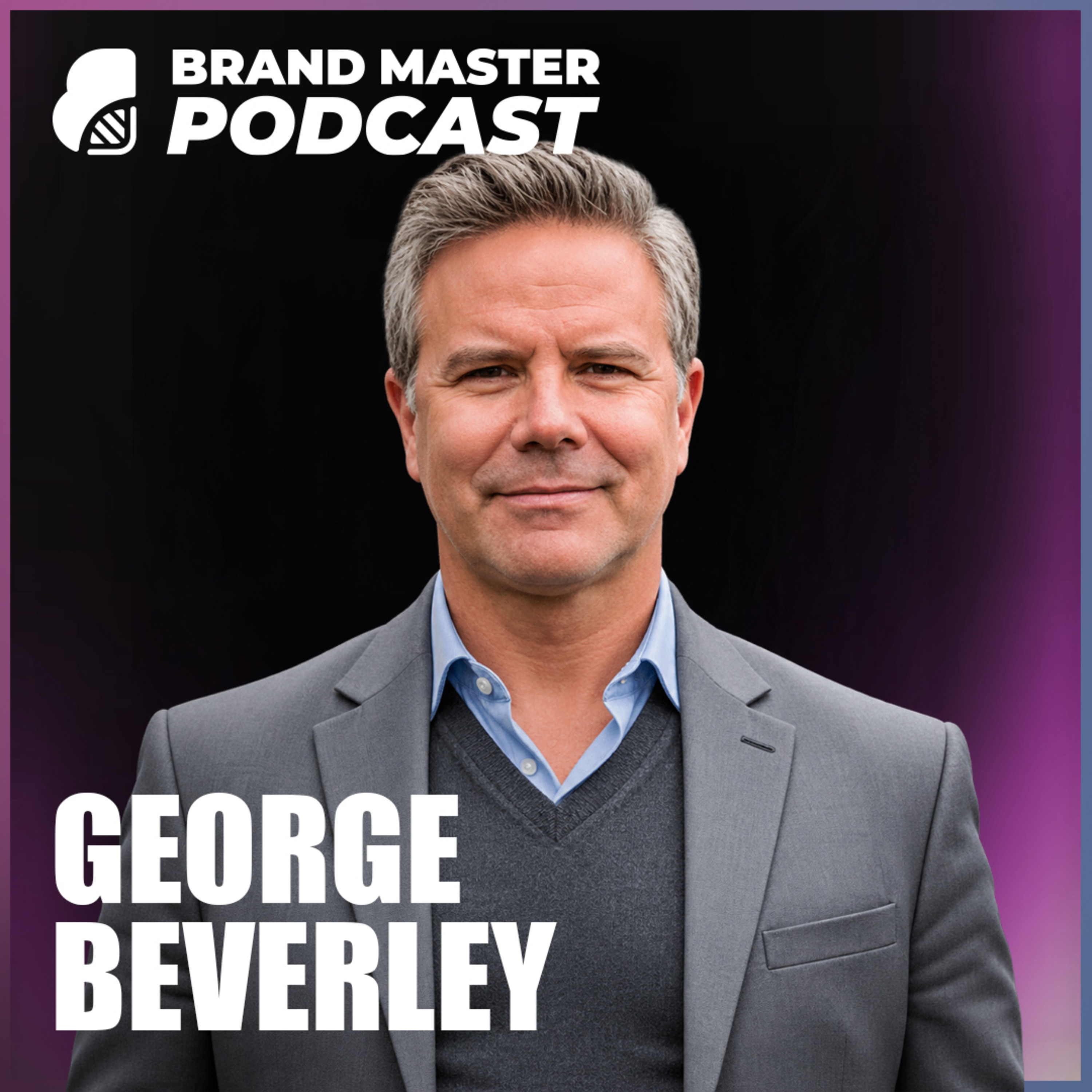
George Beverley trained as a designer, became an art/creative director in advertising, then moved into research (including a master’s). He wrote Research for Growth after years talking face-to-face with customers in cafes and pubs. He’s worked with the NHS and helped a financial services brand realize people didn’t actually know what the FTSE 100 was despite discussing it daily.
Marketing teams are in a “bubble” over-reliant on behind-screen metrics; real conversations reveal truths dashboards miss; behavior matters more than what people say; synthesized data should be tested against primary research.
“Pub crawl” research ordered ads; a trigger example where someone starts thinking about a product when they see the John Lewis Christmas ad; “magic wand” questions for designing products/services; minimum six interviews (10–12 minutes each).
Written by AI. May contain mistakes.
Discussion of George Beverley's background and his transition from design to research.
“I had quite an immature relationship with it.”
George shares insights on the value of engaging with customers in real-world settings.
“We have perhaps become, in my opinion, over reliant on dashboards, on data, on stuff that we can see behind screens.”
Exploration of how insights from customers can impact branding and advertising strategies.
Discussion on how creativity and research can coexist and enhance marketing efforts.
“It's become very daunting for those folks who don't have a background in research.”
George reflects on his evolving view of research throughout his career.
George outlines a practical approach to conducting market research effectively.
“What's the key insight I need to leverage in this ad?”
Discussion on the importance of validating assumptions and gut feelings with research.
Learn about the importance of understanding customer perceptions and behaviors.
“That's often what I would suggest you do is you say to them, look, that sounds really interesting.”
Explore how to identify critical moments in the customer journey.
“The real concept behind what do they actually think the brand is relevant to them for?”
Discover techniques for uncovering triggers that prompt customer decisions.
“Those are longer ways of doing, but that can be quite onerous.”
Learn how to build customer panels and gather valuable insights.
“to bring an external consultant in and i picked up the phone and i gave my friend george a call and I said, George, come in and help me with this brand.”
Understand the approach to conducting semi-structured customer interviews.
“Do you tend to have those different types of buckets?”
Explore the importance of asking the right questions during interviews.
Learn about the dynamics of conducting semi-structured interviews and the unpredictable nature of conversations.
Discover the effectiveness of the 'magic wand' question and how to elicit creative responses.
Understand how to gather meaningful data from customers and the importance of behavior over statements.
“They say that we want more of these types of playlists, but then when they're given them, they actually divert to something completely different.”
Learn how to structure conversations with customers to uncover valuable insights.
“So I think, first of all, aside from this, from the, um, the document you're right, you know, you semi-structured interview, you want to make sure that you're going to recruit the right type of people.”
Explore the process of synthesizing interview data and transforming it into actionable themes.
“Yeah, I like simple rules of thumb, to be honest, because they're easy to follow.”
Learn how AI can identify themes from customer interviews for actionable insights.
Explore the differences between synthetic data and real-world customer research.
“I wouldn't like folk to think I've got some type of drink problem here, Stephen.”
Understand the value of in-the-wild research and firsthand customer interactions.
“Thank you so much for taking the time to join us today.”
Find out how to connect with George Beverley and learn more about his work.
“I think it's a good time to actually get into this in the wild environment.”

Get the gist, explore an idea or ask about something said.
 Claude
On Brand Master Podcast, what are the key points of this episode?
Searching your listeningAutomatic transcript. May contain errors.
0:00George Beverley: We have become very much in a bubble as marketing folk over reliant on dashboards on data on stuff that we can see behind screens you can get real world Intel that you just can't get from the dashboard. George Beverley started as a designer then became a creative director and advertising before crossing into research. he wrote a book called research for growth after years spent talking to real customers face to face in cafes and pubs instead of hiding behind dashboards now he's done work for the nhs and he once helped a financial services brand realize nobody actually knew what the footsie 100 even was even though they were talking about it every day and now he helps brands to get back out into the wild.
0:46George Beverley: I had quite an immature relationship with it. When my ads bombed, I absolutely trashed the methodology. The boss said, I want you to go down the pub for a week. That's my kind of research, George. Who gets a job like that? Go on a pub crawl and do the research. It's the honest truth. What the hell is the footsuit? I've got no idea. What is the footsuit? It's not that these people are stupid. They don't live in that world. We think people understand when they don't invests in the uk's top 100 most favorite companies that ad i know went on to be a rip-roaring success you'd probably break it into three sections of the moments in in the journey the meaning and the mechanics so the moments are what do we think of the critical moments and then you dig into the meanings you really want a minimum of six conversations people get a little bit cognitive overload after 18 20 minutes it's mad because obviously ai has impacted all of us basically scraping core quora scraping reddit posts it really pains me to say it in the instances i've seen there's not much between the two of them there comes a moment in the interview around the eight nine minute mark either the floodgates will open and you'll hear lots of amazing stuff
2:13thank you Gemma for the recommendation for that George thank you so much for for taking the time to join us today not at all good to be here um now I've been chatting with George about how he could deliver his uh exceptional value to us and George uh said that he would be open to doing a presentation so if I'm not mistaken I believe you have something prepared for us George is that right well i thought that um my my plan of attack was just to sort of talk about
2:47George Beverley: you know i don't have a set of slides as such but what i want to do is set the scene on what i'd like to talk about today and just give you a quick sort of two minute summary yeah so hello all thanks for having me um yeah this is not a direct plug for anyone to go out and buy my book by the way but what i was going to say is that i did write a book and it was published a few months ago and that's a result of me spending probably the last three four even five years going out into the wild as you would call it and talking to my clients customers on behalf of them um and the book by the way is called uh research for growth you got it yes thank you um and so what i would what i thought i'd do is document everything that i learned from those years if you like and stick it all in a book because i think the context is and i know we'll probably talk about that in a wee while is i feel over the last two to three years we have become uh very much in a bubble as marketing folk.
4:00George Beverley: We have perhaps become, in my opinion, over reliant on dashboards, on data, on stuff that we can see behind screens. And what I saw from my time out there in the field is how much more you can get when you venture out and talk to those customers. You can get real world intel that you just can't get from the dashboard so that's the reason why i'm i'm sort of you know i'm very much an advocate to going out and talking to customers in the wild and that's really what the book's all about and is trying to encourage people they don't need to go and commission fancied and researchers this is something you can do yourself so that's really the setup of what I want to talk about.
4:49So give us give us the the kind of background journey to how you got to where you are and why you became so obsessed with researching customers in the wild and getting down into that nitty-gritty and you know the the folks that are with us in the room at the moment are brand nerds and when it comes to researching brands researching customers we're always looking to first of all we're we kind of nerd out in our our own way but we're always looking for ways that we can practically kind of bring more of of what's out there to to to do our jobs better so bring us through the journey that that uh you know from the beginning to to where you are now yeah sure so i actually i trained as a designer uh and then i went on and
5:40George Beverley: for quite a few years worked as a art director in an ad agency uh then became a creative director so so research kind of followed me around but i had a quite an immature relationship with it in so much as i love that i love that when my ads went in for testing and they tested positively i thought research was the best thing since sliced bread right when my ads bombed i absolutely trashed methodology and said this is ridiculous we need to be more brave you know we need to go out and make decisions without the data so I had a very I had a very biased view of research and and as my career sort of progressed and I got more into less into marketing and advertising more into user experience product and brand development I got to sort of see the inner workings of research and then sort of picked it up and learned it and thought, oh, hang on a minute.
6:38George Beverley: This is a really, really powerful tool because I think the research, forgive me if there's any research folks on the call and I'm not going to offend them, but I don't think the research fraternity has done itself any favours because it's become very technical. It's become very daunting for those folks who don't have a background in research. It's difficult for people to engage with it. And I wanted to kind of change that. And so that's what sort of brought me up to, you know, really getting into it and understanding the science behind it. I did my master's and that gave me some grounding in that area.
7:17George Beverley: And then I thought, well, there was one thing that I did learn back in the ad agency days. And that was when my boss, my then creative director, said, look, we were we were working on a very famous beer brand. that I probably shouldn't mention, but he said, I want you to go down the pub for a week. That's my kind of research, George. This is good, isn't it? It's not Guinness, is it? It wasn't Guinness, but it did have a very heavy head on the top. Right. It was quite prevalent in the 90s. I want you to go down the pub, and I want you to drink this beer, and I want you to watch other people, and I want you to give yourself an idea of who those people are.
7:58George Beverley: and we did myself and my partner that's what we did we went to the pub we chose a different pub every day of the week and we just watched that's you're you're making that up no who gets a job like that go on a pub crawl and do the research it's the honest truth but at the end of it what happened was that when we wrote the ads the boss said well look you've seen these people are they going to respond to that ad is the ad written in the same lexicon that they talk in is it going to reflect their values you know you've seen them is it going to work and it was a good lesson in how to go out and get some good exposure with the audience that you're ultimately going to serve and if you fast forward today that's really sort of a me revisiting that technique that i learned all those years ago yeah that's uh yeah look i mean you know that kind of feet on the ground uh research uh there's nothing quite like it because what what one person will tell you they would do in a given circumstance versus what they do in a given circumstance it's it's it's often very very different um but uh but yeah that it's obviously a great way to to to kind of pick it up and and learn from ground zero and i think what you said before um kind of really hit home a very immature relationship with research because i think a lot of people uh who kind of enter that world because research really is this dry kind of analytical uh space and and most of us that are dealing with that space come from this creative background most of the people on here many of the people on here anyway have that kind of research or that kind of design creative background so to kind of cross into that other world is is very very different in terms of how you went from the creative side over to the research side what was that kind of tipping point because obviously at one point creativity and design was was your passion but at what point did you kind of see research as this growing kind of uh you know passion to kind of go and follow yes good question i mean that in many ways the research and creativity that they're sort of brother and sister but also distant cousins aren't they depending on which way you look at at them and one of the things that I used to consistently moan about when I was a creative and a creative director was I always used to say well this this brief is useless you know the timings are bad and there's not enough money those were always the traditional things I moaned about and the thing I moaned about most was well what's the truth that I that I need to somehow I'll, you know, put some creative dressing on.
10:59George Beverley: What's the key insight I need to leverage in this ad? You know, what are we actually trying to say as well as the brand clothes and the brand livery that the communication will wear? What's the driving heart behind the communication? What's the truth? And that was often, not always, but often very weak. and that was the bit that I when I became and moved over jumped over the fence if you will when I saw those insights it really sparked my brain I thought oh my goodness if I was if I was 15 years younger and I had my time again I could I could do some great stuff with this insight because I can see exactly what those customers are thinking and feeling and doing about this category but no one else is saying it so it lights up the parts of your brain that we get excited about when it comes to creativity is leveraging some type of human emotional behavior that we can have fun with so it wasn't too much of a jump for me to be perfectly honest with you and and you're absolutely right one of the things I i have tried to do ironically is not use the word research is is talk about insights you know what do we know about these these customers how are they going to engage in the brand what do they currently do what's what's the status quo how do we change it i don't really nobody's interested in whether or not it's qualitative or quantitative we want the insights because we want to be able to leverage a creative idea that changes perceptional behavior off the back of it and that's really the driving heart behind it i think yeah yeah and look like i i talk a lot about insights and you're right like i actually just posted something yesterday about the the concept that workshops need a rebrand because there's they come with all these uh negative connotations that people think and just as you said you don't use the word research because it comes with that dry kind of we don't need that or or you know these these preconceived ideas and these negative uh conceptions about what it is but really when you when you get down to it when you are sitting there trying to put a strategy together for a brand if you don't have those insights from the field about what you could be to these people what's important to these people you're really just guessing um and to have those insights it's it's it's like ingredients for a chef you know you you have to be able to work with something concrete so it let's let's kind of pull it back a little bit georgia in of practicality right so what would a rigorous kind of market research workflow look like for you well it starts off with um lots of lots of questions actually because i think a lot of the time if we're taking a brief one of the questions that we might ask is what do you already know or what do you already think and that's really important because i think a lot of the time we can dismiss we can dismiss that information and creative people brand owners marketing folk have got good gut feel now it might not be proven but gut feel and hypothesis are great because what you can do is go out and prove them so one of the things i'd look out for first of all is what what do you think is already going on you know because it might be what you think is going on is exactly the truth of what's happening in the customer behavior it just hasn't been validated it might be wildly off but it the truth might be somewhere in the middle so we'd probably try and work out what do you think is going on at the moment and then try and establish what's what's the pattern here what is the behavior and I would often you know to be simplistic about it you'd probably break it into three sections of the moments in in the journey the meaning and the mechanics so the moments are what do we think are the critical moments at which point our brand either becomes relevant to the prospect the consumer or not you know what the moments when all of a sudden they're they're in market i mean i don't use buzzwords but marketing folk might call it the category entry point at what point do people pop up metaphorically as they realize they have a problem yeah exactly what what's the problem i need and what's the default how do i get that problem solved at the moment and it might be a workaround it might be the brand leader it might be someone you never heard of um so once you've got the moments you you can dig away at that and And then that's really asking those folks to put that journey into some type of timeline.
16:17George Beverley: That's often what I would suggest you do is you say to them, look, that sounds really interesting. When you're buying X, Y and Z in category A, B and C, you know, just talk me through how that works. What's the timeline? Where does it start? What are the interactions? You know, where might it end? So you get you establish what those moments are within that journey and then you dig into the meaning. So how they what they think and feel around it. Is it important to them? Is it not? The real concept behind what do they actually think the brand is relevant to them for? And then you look at the mechanics.
16:52George Beverley: So that would be digging into how they actually use something, how they actually buy it, how they choose it, how they consider it. So you think of those roughly those three moments of moments, sorry, moments, meaning and mechanic are quite a good way of breaking down how you're going to approach the research. Yeah. And it yeah, it's a really not like the way you touched on on moments there. Yeah, that's that would be seen wider as as those category entry points. And I think understanding those and mapping those correctly with all the emotions involved are a really, really good way to kind of reverse engineer what your position should be because you're starting with what's most important to them, those critical tipping point moments.
17:48What can you tell us about digging into that and really kind of, because going down the pub and observing, an entry point for that category is kind of walking in and ordering your pint. But, you know, throughout different markets, you know, you want a way to really uncover how we can kind of get into those critical entry point moments. What kind of techniques or processes do you have to really get into that regardless of the category?
18:23George Beverley: Gotcha. Well, let me just give you an example of a study that I did a few weeks ago, actually. I mean, I can't talk too much about the brand, but I'll talk to you about the trigger. I said to this, I sat in a coffee shop with this particular customer, which, by the way, is a fantastic place to go and talk about stuff like this. Neutral territory, coffee, tea, whatever you like. It's a good place to have these types of conversations. And I said to them, when do you think you're going to start thinking about, you know, this product? And she said, well, it's easy. It's the minute I see the Christmas ad from John Lewis.
19:08George Beverley: So the moment in that person's mind where they think the minute that happens, I'll start thinking about that. That's a very conscious reaction, by the way. And there might be some more other examples. And I know they are that are unconscious. But that it might be something that's completely unrelated to the category or sector that you're actually in. it might be something that just triggers them to go i'm going to start thinking about that or and the other one this is interesting as well was sometimes it's sparked by other brands you know the minute i hear the jet to add for the january sale i'll start thinking about this particular brand and category and so often it's these small triggers that you might pick up small behaviors and the triggers might be external as we've just said adverts or internal which is you know i really need to get the lawn cut or you know i've got a christmas party coming up i probably need to get my nails done these are internal things that can trigger that decision where all of a sudden they walk in metaphorically into the category and the way to do that is just by doing what exactly what we're doing now is you just have a very very normal conversation and you just pick away and say tell me what you thought about that and what was the part where you really started to think i've got to do something like that or did you just not bother so you're just you're just probing away and just listening i mean if you've got more time there's a slightly longer more ethnographic way of doing it called diary studies which you may have heard where you ask people to physically write a diary about you know a week or a few days in terms of what they thought around a particular category or product.
21:02George Beverley: Those are longer ways of doing, but that can be quite onerous. But having conversations can unlock those small little nuggets that might help you think, oh, hang on a minute. We can start leveraging our message, our brand relevance when we get to this point. Yeah. Yeah. Yeah, so in terms of the starting point for, so put your research only hat on, because I mean, research comes in at one stage of the process and serves that very, very specific function. You know, brand strategists tend to do this themselves, unless, of course, they're working with bigger budgets, they bring in external resources.
21:46um so a lot of this you know you're you're kind of doing yourself whether it's uh picking up the phone and speaking to a customer or doing that kind of guerrilla research online but if you were kind of brought in let's say uh let's say i was working with a bigger brand and i had the opportunity to bring an external consultant in and i picked up the phone and i gave my friend george a call and I said, George, come in and help me with this brand. What would be the first steps that you would take with my customers for this particular brand? What would be the top three things that you would do in terms of maybe you'd want to get access to a bunch of our customers?
22:31Maybe what would be the first few things that you would do?
22:34George Beverley: I think exactly as you've just described there, I would say, look, is there an opportunity for me to talk to, you know, a broad range of your customers? So, you know, existing customers, maybe ones who renewed, for example, maybe maybe we'll even try and track down ones who have lapsed. So you've got a good broad range of views from those customers. and actually a great way to to think about this is and and guys out there you you can do this as well is almost build your own panel but build a little mini panel of customers that you can you can talk to you know and you can start off with a simple study you know what what do you think about this um get a get a broad range of views from them and then have a look at what you've got back and then start to look at okay what the patterns here what's everybody saying what's the big problem here and can we validate that with uh we've got uh product returns or we're getting lots of um uh service and support tickets log in this particular issue lots of complaints lots of one star reviews talking about that so grab a bunch of customers understand broadly how they think and feel about the brand and then spot the patterns you know what what are we looking at here what what should we be really focusing on in terms of um you know priorities one two and three so that's that's probably the first step you know it's almost like a like a triage if you will you know what are we dealing with here you'll think of it as the triage as if you're going heaven forbid and I hope you don't going into you know hospital someone checks you over oh it looks like we've got a problem here this looks okay this needs further investigation but this bit here I'm going to tackle that one right now so do a little bit of triage work and then and then go from there because I think the tendency is you'll try and do everything with one study or you'll become completely overwhelmed because you'll just have too much information coming back so i think it's triage would be the first thing to do okay and when you sit down with these uh these people obviously you do your research before in terms of what it is that you really want to know from these people but do you find that those questions tend to fall into buckets um you know buckets for you know what actually happens the moment you decide that you need to take action And what are the emotions that you feel when you go through that?
25:24Do you tend to have those different types of buckets? And what would those buckets be?
25:29George Beverley: Yes, you do. So before anything, you would generally write what we call a discussion guide or a topic guide. So these are a bunch of semi-structured questions that are designed specifically to elicit, don't want to sound too technical, data points. What we want to get is a real data point. And what I mean by that is these are usually what, when, how and who type of questions. So what did you think about that? Or what you want to do is eliminate the immediate emotional subjectivity. And that sounds counterproductive, because what will happen is when you ask someone something, their instant reaction is going to be emotional because they they'll say, oh, it's awful.
26:17George Beverley: oh this brand is terrible this brand is amazing and you get these superlatives and that's great but it's not a data point so what you want to come back with if they say the brand's fantastic you need to say what exactly is it about that brand that you love talk to me about that how did you get to see that when did you see it and when did you first start thinking about it so you want these hows these whens these where's gives you a clue as to the media you know where did you see that at where did you first come across this brand and what you want to do is leave the why question right at the end because when you ask someone why initially it can be quite confrontational you want to get the why question in at the end once you've established a little bit of dialogue and some rapport with that person and some trust that they think i can tell this person exactly what I feel about this brand because I trust them so you want to get those data points in and then once you've got you know you'll you'll feel you've got enough texture to work with you can then think about what those answers have just been given and then start to drill into them a bit you can say just a few moments ago you mentioned this about the brand just tell me a bit more about that and then you start to dig away so start with easy questions first and then start to dig yeah so so you really have to become a detective don't you like as long as you know what your end goal is then you just allow the questions to kind of bring you there depending on the answers they give you you there there is no set way you kind of find the key to unlock as you go exactly that so that's why they call it semi-structured interview and it is very much semi-structured and by the way don't be at all surprised or freaked out if the conversation takes a very very different route because it may well do yeah but that's the interesting bit and you can be honest and say do you know what i didn't expect to hear that yeah just tell me about that a bit more because i need to understand this you know and once you once you show the interest they will then open up well it's a bit like this and you know when we first did that it was a bit like that and oh okay keep talking just keep talking and then usually i always there comes a moment in the interview and it's probably around the eight nine minute mark right where either the floodgates will open and you'll hear lots of amazing stuff or it will just stay as it is right so i think you need to expect that you're not always going to get great stuff right you're going to get some amazing interviews and then you're going to get ones where to be honest people just don't care that much about that category or product to tell you anything more interesting than well it's all about the price isn't it yeah so you know people are people and you have to be prepared for that yeah i'd say in the pub research it was more like the 1am time stamp instead of the nine minute time that was the most interesting to have one did did you did you ever have a question in an interview where afterwards you were like i'm never going to ask that question again yeah yes many times but it but but it's a question excuse me i feel like i always want to ask right i always call it it's like the magic wand question often and i think i've seen a message in the chat by the way um who someone talked about what if you you don't have a product how do you do that and and this what i'm about to say might be related to that question in the chat i think i saw it pop up okay so uh so that was tyler yeah tyler yeah that thanks for that i did see it pop up but i was in the middle of talking so often and we've done this when when you're looking to validate a product that doesn't yet exist or maybe there's an mvp of it or maybe there's a service someone wants to design or a product but they haven't yet done it um the question would be something along the lines of um if you had a magic wand how would you design this so it fits exactly what you need you know what's everybody getting wrong what don't they include that you think should be there and what you do is you open up the conversation to the other person you give them some agency in terms of how would you design this now either you're going to get some fantastic ideas there and often you do and you can dig away at them and you can say tell me about that idea where have you seen that somewhere before is there a brand that does that particularly well that you can remember or you're going to get you know a sort of seven to eight minute diatribe from somebody about how o2 should be better at billing for example you know so you you need to be prepared for what you're going to get back yeah i i like that though it's it's it's a real joker yes you know it's a real joker card because depending on the person that the the personality they have You know, they might be creative with their ideas.
31:41You just might get something that you never expected. And that's kind of, I suppose, what you're looking for with the magic wand. Because it's aptly named. You're looking for that little bit of magic, right?
31:54George Beverley: Yeah, absolutely. And often you'll get it. And sometimes you get it towards the end of the conversation, depending on how long you've spoken to them for. Yeah. You might say something and they'll say something like, oh, I didn't realise you wanted to hear about that stuff. Right. Oh, well, I think actually, do you know what? If you just did that so that when I logged in, I didn't get that, that would be absolutely fantastic. I didn't think you needed that. Right. So you have to open folk up to give them enough empowerment that they can say absolutely everything and anything to you. And I really like that because I am a person of structure.
32:38Like I love structure, but you can have structure in the way you ask your questions as long as you leave the questions open for creative responses. Yeah. Because that will give you the ability to cover all angles through your structure, but also the ability for anything to come up the way you deliver the question and open it up for that creative response, right?
33:00George Beverley: Yeah, absolutely. yeah it's a good thing and the other the other thing just to add we might be wandering into a slightly different topic area here forgive me if we are but you mentioned it earlier Stephen and that is the difference between what someone says and what someone does the gold standard is behavior right we want someone to go out and either buy or review or or become an advocate for a brand that that's the gold standard that's what we'll get measured on is behavior what they say about the brand is important but you're absolutely right these two things in my experience rarely correlate yeah and there's so much data out there to kind of corroborate that as well that you know people because there are more and more sas products now where we can actually see behaviors and it was difficult to see that in the past but customers will say well we I think Spotify is a great example.
33:59They say that we want more of these types of playlists, but then when they're given them, they actually divert to something completely different. So there are so many examples out there. But yeah, given that kind of creativity for them to answer the way they want to answer, I think you're more likely to get data that's more reliable because you've given them the freedom them to give you whatever they want to give you. In terms of those conversations that you have with clients or with customers of brands, how long do you typically spend with each customer and how many conversations would you want to have with customers before you kind of box off and say, I've got enough now?
34:50George Beverley: Yeah, sure. Okay. So I would always go for, you really want a minimum of six conversations okay uh and i would like like to think and i that you would start to see repeatable patterns after conversation number five i mean the golden rule with qual qualitative in other words interviews what we're talking about here is the more the better okay um but but the people you're talking to have got a time limit you guys are busy everyone's busy right so you've got to get enough time to get enough of a conversation and the minimum amount of time I would suggest is probably going to be you know 10 minutes and it might be 10 minutes is all you're going to get I mean we we do a lot of work with the c-suite you know chief execs cmos and we'd be very lucky to get 10 12 minutes because these people are incredibly busy difficult to get hold of so i think that's where you've got a sort of um you know in your discussion guy got to work out i would give yourself five key questions what are the five things that you want to find out in in that entity in that interaction anything more than that is it is a bonus but generally speaking with qual people get a little bit cognitive overload after 18 20 minutes yeah the quote the quality of data you capture will go down they'll get fatigued they'll be thinking oh god i've told this person everything he keeps asking me the same question so so what you want to do really is in your sweet spot of simple questions first that we talked about earlier yeah by which time you would have established some trust and rapport with that person you're going to get by sort of minutes 10 to 12 hopefully some really really good data in in term i'm just going back to what you said earlier on about um i can't remember the term you used um the semi uh what was it semi-structured semi-structured so yeah so if we were to put together our own um kind of framework for asking questions uh to customers of the brands that we're working for how can we put something like that together to give us the the ability to deviate when we need to deviate to uh to to drill down when we need to drill down what kind of guidelines could you give us there?
37:26George Beverley: So I think, first of all, aside from this, from the, um, the document you're right, you know, you semi-structured interview, you want to make sure that you're going to recruit the right type of people. That's the big, big thing is making sure that you've got, you know, people who aren't necessarily a customer of the brand, but they're in that category. So make sure you've got the right people who are prepared to give you um you know sort of warts and all uh you know 10 15 20 minutes of their time so that's the first thing so in terms of of structure you you probably just want to get that easy question out the way which is you know what in this in this category you know what what brands do you know of which brands do you buy just start really simple you know which ones and And why did you buy those?
38:21George Beverley: And why did you consider some but didn't consider the other? So you really want to start quite wide. And then and then as the conversation develops, it gets a little bit narrow, assuming and accepting that it may well, you know, go around the houses a wee bit based on the personality you're talking to. so when you've got a really simple question like that you can then just you've got enough to dig at which is oh so you let's pretend that the example here is phones oh so you did think about Vodafone but you went for O2 just tell me why that was what happened there what did they do oh okay right that's interesting and then that'll take you down a little route and then once you've covered off enough reasons as to why one brand was preferred over the other in this case let's assume it was o2 you can then start to dig away at o2 just tell me a little about the o2 brand you know what do you think of when you think of o2 you know what what are the values okay what do they do that's a lot better and more differentiating from the others so start wide and and go narrow So that's sort of how I would tackle that type of conversation.
39:35Yeah, I like simple rules of thumb, to be honest, because they're easy to follow. And, you know, when you throw broad questions out there, it can go in any different direction. And it removes the problem of the researcher guiding the conversation too much and putting in too many restraints. because, you know, at the end of the day, you don't know what's under there. And there could be some kind of gold that's waiting for you and you don't want to get in the way of that.
40:05George Beverley: Yeah. In terms of then wrapping up what, and guys, I'm going to open the floor for you to put your hands up. So you can put your hands up from now for any questions that you have. But I've got another one first for you, George, just in terms of how you take the information that you have gathered. So you've done all of these calls, you've asked all of these questions, you've got all of this data, and then you're going to want to synthesize that and you're going to want to pull out the patterns. What does that kind of look like in terms of process for you? And what's the output of that, the report maybe?
40:43George Beverley: Yeah, sure. So generally speaking, what you want to do is find a way of recording these conversations. And by the way, before you do that, you must ask for their consent because some people get funny about that. So if you're doing a video call like we are, there'll be consent will bob up. So get consent. It's much, much easier to record these than take notes. I mean, I had been out there when people say, don't record this. I don't want you recording this. And I've had to take notes. It's hard, but doable. So if you can record it, you will then transcribe it. and these days with ai i mean ai is absolutely fantastic at analyzing these types of things so once you've got your raw transcripts and all your conversations you want to do what we call um we code them so in the old day in the old days before we had ai two three years ago yeah in the old days back in 2021 exactly we would it's called coding not coding as in tech sas coding but coding as in every single line of transcript you assign it a code which is really a way of summarizing what the person said so this person thinks o2 is a bit o2 is the best because of its add-ons yeah that's the code um and then what you would do is um ai can now look at all of the codes and then it gives you what we call themes so themes are the basic areas of you summing up what all of these interviews all of them together here are the overall themes so theme number one might be loyalty add on some o2 more powerful than any other uh this brand believes that the telecoms market is overpriced and you know undervalued so you get these overall themes and the themes are the things that you then write your report and then you talk to the clients and then say right how do we work with this how do we action this let's say for example the the add-ons come out particularly favori for o2 well no surprise in the comms we want to talk more about our add-ons so you pinpoint the insights that can be actioned and that's really important i don't like to come up with stuff that cannot be actioned a lot of time we report data that no one can do anything with yeah we've got to be able to look at something and go okay right so the audience thinks this how can the brand respond be more relevant be more differentiating ah so we can use this this and this to do this either develop the product change the comms or maybe you know develop more messaging in a slightly different area so that's the workflow so transcription put it into your llm it will code the transcript and generate what we call thematic analysis themes generate themes and then that's going to give you it's brilliant this you'll go overall this is what that cohort thing can feel around this category yeah yeah it's it's mad because obviously ai has impacted all of us um and and when i think back when i think back to the days of guerrilla research that that i was doing back in 2015 uh you know i would literally go through uh competitors uh facebook accounts and go through their comments and look for all and record them all in spreadsheets and then look for the patterns like it was this wasn't even based off a customer research call it was just from from comments and now when you're able to feed all of that information into llms that's what they're so good at is pattern matching and being able to see things in the code that we can't see in the language and and absolutely uh yeah it that's a massive jump forward in terms of in terms of research i just just want your thoughts it's it's just popped to mind because more and more we're seeing synthetic data and synthetic research yes what do you know of it um what can you tell us about it what's your what are your thoughts on it what do i know synthetic data just research obviously obviously it's it's you know it's a different ball game going into a pub and watching people uh in their own natural habitat versus asking GPT to tell us about this person who goes in and drinks in this natural habitat.
45:28George Beverley: I wouldn't like folk to think I've got some type of drink problem here, Stephen. It was purely for research purposes. But, okay, let me take one step back and answer that as sensibly as I can. If we think about data as simply inputs and outputs, And if we think in the way that we're talking about, we're going to get data inputs from real live discussions from participants who might well be either customers or prospects for the brands in which we serve. Right. So those are the inputs and the outputs are out, you know, insights, data, information. the inputs from synthesized data as i understand it are basically scraping core quora scraping reddit posts now that's not to say that data is bad or poor but it's secondhand if you want it's not primary data yeah and so what i would say is if if that's if that's all you've got and i don't mean to demean it then go for it but what i would also advocate for is is test it against real data that's what we do is we we have used synthesized data and in some instances it's really quite good but what we also do is compare it to you know primary data of which we've captured ourselves and to be absolutely fair and it really pains me to say it in the instances i've seen there's not much between the two of them yeah what what the primary search gives me is confidence when i debrief the client yes because i can tell them exactly the body language of the person who told me that quote because i've spoken to them yeah it gives me a bit more confidence i have less confidence in in the synthesized stuff because i just don't know where it's come from yeah yeah it's totally understandable as well like yeah it's that opposite a person and that and you know they've told you from their own mouth, this is how they feel, then you can trust that, obviously.
47:32It's not scraped from somewhere. George, it's been super insightful. Thank you so much for taking the time to join us today. I've never actually sat down and done the kind of in-the-wild research, but your story about the pub environment, I think I might take that on as my first passion project this Christmas. I think it's a good time to actually get into this in the wild environment. So I think that's the top of my list to get out there and do that. Where can people get in touch with you and learn more about you and more importantly, get your book?
48:14George Beverley: Well, probably the best place is if you guys are all on LinkedIn, you know, track me down on LinkedIn. I'm normally there quite a lot posting stuff, as Jem has just mentioned. So, yeah, track me down on LinkedIn. It'd be great to connect with you. You know, if there's any other questions or clarifications or anything else or anywhere else I can signpost you to, then I'll do my very best. But, yeah, try and hit me up on LinkedIn if that sounds OK. Absolutely. I'll share your link out in with these show notes. Brilliant. Again, thank you for joining us so close now to Christmas. I hope, are you all set?
48:55I think I'm all set.
48:56George Beverley: Yeah, I've got some unwrapped presents just off camera over here that I'm about to tackle. Yes, I've got presents to tackle tonight. We've got an eight-hour drive across France on Saturday, which I'm not looking forward to. So all the wrapping has to be done tonight. There will be some Guinness. There will be some Baileys, but all part of market research. Absolutely. thank you once more and thank you all for uh for joining us great to see you all and i'll talk to you all again soon we really hope you enjoyed today's episode thanks so much for listening if you want to learn more brand strategy techniques to level up your skills make sure you check out brandmasteracademy.com there's plenty of free resources and premium content via the download and get you going if you enjoyed this content please be sure to give us an honest review on iTunes, Stitcher, or wherever you listened, and make sure you tune in for the next episode of the Brandmaster Podcast.
Meeting customers in the wild reveals insights dashboards and data alone can’t show. George Beverley explains how real-world customer research uncovers the moments, meanings, behaviours and language that shape brand decisions — and how strategists can turn those insights into stronger positioning, messaging and customer experiences.
You’ll learn: