Ask ChatGPT

 Brand Master Podcast
15 Sep 2026 · 48m · 20 chapters
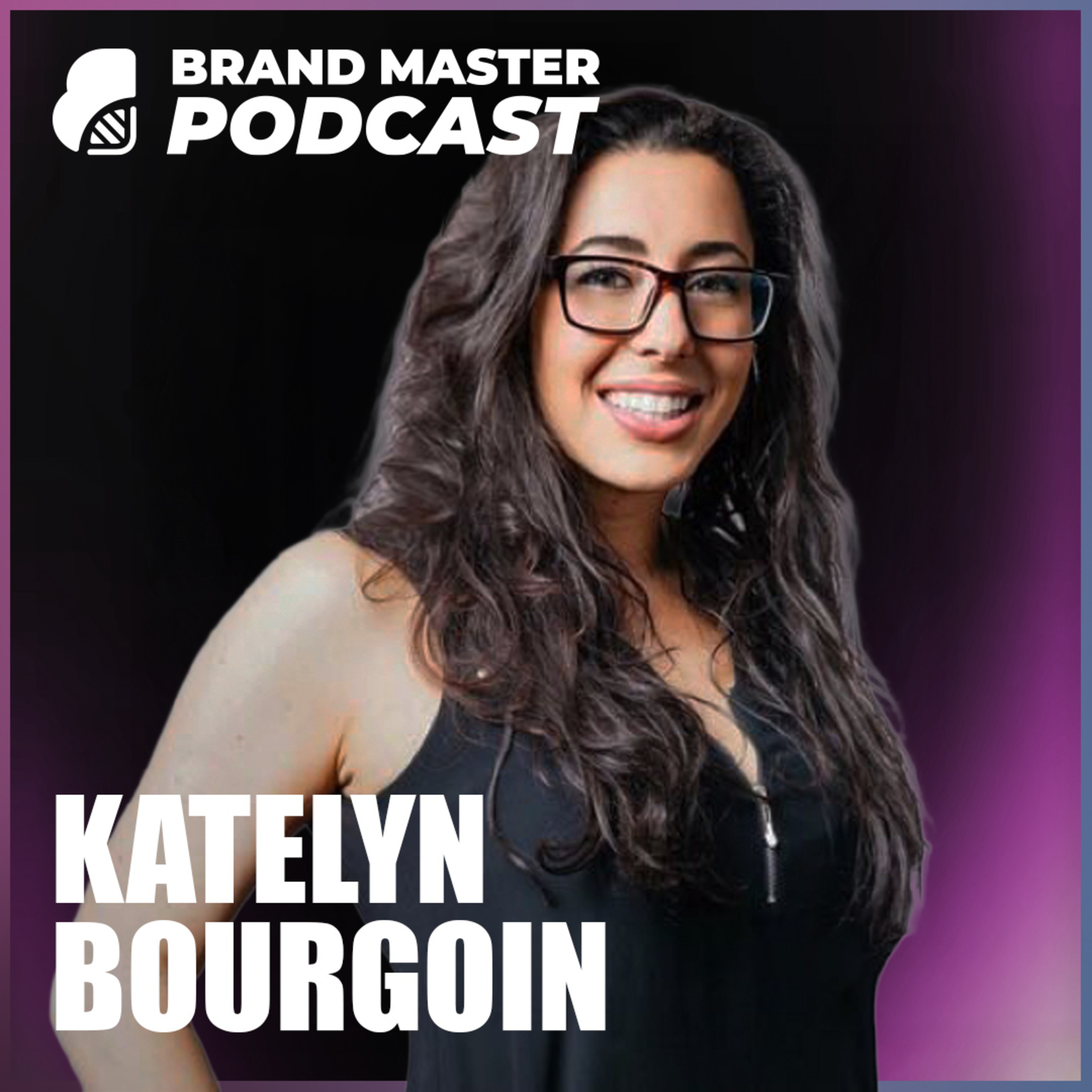
Why customers buy isn’t about demographics or who they are; it’s about the “job” they’re trying to get done when something in their world changes. Katelyn Bourgoin argues brands get remembered by finding one ownable idea (mental real estate) and packaging buyer psychology into memorable messaging. She also discusses how AI and synthetic research change customer insight workflows, but why empathy and real voice-of-customer context still matter.
Katelyn Bourgoin founded Why We Buy and Unignorable. She spent a decade studying buyer psychology for founders selling to Tesla and NASA. She ran a personal brand challenge with 1,900 participants.
Personas/attributes don’t explain purchase; jobs-to-be-done do. Make decisions with research, but synthetic research can bridge “guessing” vs deep interviews. Personal brand may become a competitive moat.
Founder’s “customers are anyone selling online with 10–500 employees” insight; Gym Launch vs later verticals (insurance/dentists) failure; “chocolate-covered almonds” content packaging; using watering holes (Reddit/YouTube comments) and switch interviews.
Written by AI. May contain mistakes.
Exploration of why customers buy and the importance of understanding their behavior.
“I think the personal brand is going to be one of the only competitive moats going forward.”
Katelyn shares her background in branding and the lessons learned from her tech startup failure.
“and had never really connected the dots of how important it is to understand the behavioral science element of why people buy to actually be effective marketers.”
Introduction to the 'jobs to be done' framework and its significance in marketing.
“I was like, I want to start a productized insights agency.”
Discussion on how to make academic marketing research more engaging for audiences.
“Most of the work that we were, we were sharing was done by behavioral scientists and it was, had been locked up in these like boring scientific archives.”
Insights on how marketing strategies have evolved and the impact of competition.
“Especially the ones that are based on demographics and psychographics, you know, Mary, the marketing manager who drives a BMW kind of thing.”
Final thoughts on the importance of understanding and connecting with customers' needs.
“It's not because they're, you know, women who recently had moms who recently had kids who are like, that's who they are.”
Learn why businesses must identify their unique value proposition.
“People are able to start much easier than they used to be able to start.”
Discover how to focus on solving real customer problems instead of targeting lucrative markets.
“So I tell people to focus on the problem, right?”
Understand the importance of empathy in addressing customer needs across different markets.
“So when Alex Hermosi had this huge win with Gym Launch, if anybody's followed his story, he built Gym Launch into this very successful company.”
Learn about the impact of AI on gathering customer data and insights.
“And when you think of where we are now with AI, and I suppose that's probably a good segue into this.”
Explore how research methods have changed with technology and how it improves efficiency.
“What has changed now in the world of AI and what are the challenges that we're kind of facing there?”
Examine the trade-offs between using synthetic data and conducting thorough customer interviews.
“And it feels now like it was a time like 30 years ago, but it's not.”
Understanding the limitations and alternatives to traditional customer feedback methods.
“So I'm like, I kind of think that's bullshit.”
Exploring how new tools can analyze real customer conversations and feedback.
“i think it comes down to the the stakes of the decision you're making right like if you're making a make or break decision in your business that is then do the really intensive piece because it's worth it, right?”
Katelyn discusses her transition to focusing on personal branding and its significance.
“Let's really kind of figure out who these people are beyond just the kind of standard AI stuff.”
Techniques to discover and develop a unique and compelling brand message.
“and help them figure out, I think the piece that is the biggest advantage, which is your ownable idea.”
Discussing the importance of confidence in delivering unique brand messages.
“because now we're talking about an individual.”
Learn how to build confidence in clients while shaping effective messaging strategies.
“So part of the work is like being a, you know, helping to build their confidence.”
Discover insights on the importance of selling and shaping offers based on real client feedback.
“But unless I can figure out the actual methodology and like really systematize it, then I can't scale the company.”
Wrap-up of the episode with a focus on ongoing learning and client collaboration.
“Caitlin, thank you so much for taking the time to join us.”

Get the gist, explore an idea or ask about something said.
 Claude
On Brand Master Podcast, what are the key points of this episode?
Searching your listeningAutomatic transcript. May contain errors.
0:00Brent McClure: People don't buy things because of who they are.
0:02Katelyn Bourgoin: Mary, the marketing manager who drives a BMW.
0:05Brent McClure: It's not why they buy.
0:06Katelyn Bourgoin: Katelyn Bourgoin is the founder of Why We Buy and Unignorable. She spent a decade inside the heads of buyers for founders selling to Tesla and NASA. 1 ,900 people have been through her personal brand challenge, and now she helps experts to find the one idea they become known for.
0:24Brent McClure: Then I decided I was going to start a tech company, raised a bunch of venture capital, ended up going bankrupt. Forbes had said we were building the next LinkedIn for women. Inside, everything is going to shit. One time, a founder looked me square in the eye and he said, our customers are anyone that's any business that sells online through a sales team with between 10 and 500 employees. And I was like, huh? Like, so everybody? I think the personal brand is going to be one of the only competitive moats going forward. I sell mental real estate.
0:56Katelyn Bourgoin: There isn't a straight answer, but there is a
0:59Brent McClure: answer that I think will, it comes down to.
1:04Katelyn Bourgoin: I just want to thank you for taking the time to join us today and to share your valuable time and your valuable wisdom. Well, thank you,
1:14Brent McClure: Stephen, for having me. And thank you y 'all for showing up and being here live and chatting with me and Stephen.
1:20Katelyn Bourgoin: I want to get stuck into it straight away. You work in a discipline where I have an absolute fascination. Anything got to do with psychology, why we do what we do. You know, I don't know why. I think we're all kind of a little bit inherently like that. Some a little bit more obsessively than others. But how did you get into it? What was your journey into this fascinating world?
1:49Brent McClure: I love that question. And it's kind of like not the most obvious one. So back when I'd been running, I previously had a branding agency. So, you know, love of brand forever and had never really connected the dots of how important it is to understand the behavioral science element of why people buy to actually be effective marketers. But I remember reading Jonah Berker's book, Contagious, years ago. And I was like, it just stuck with me in this incredibly powerful way. And then I decided I was going to start a tech company, went off, raised a bunch of venture capital, ended up like going bankrupt.
2:25Brent McClure: That's another story. But I was like, coming out of building this tech company, Forbes had said we were building the next LinkedIn for women. Inside, everything is going to shit. But the one thing we were really good at was understanding how to get users into the platform. We had to build a platform that was sticky that they actually kept using, but we knew how to get the man. And so when that company ended up winding down, my original investors came to me and they were like, hey, we've got this portfolio of great companies. Most of the founders are technical. They are not great at marketing. Can you help them?
2:58Brent McClure: And I was like, absolutely, because I really need some money because I am so broke. And so I went and I sat down with all of these brilliant entrepreneurs and many of them were building like game changing technology. technology some of them had customers like Tesla and NASA and like I would ask them the question that we need to understand as marketers and that was tell me about your customers and I was just shocked how rarely I could get a good answer out of these folks like one time a founder looked me square in the eye and he said our customers are anyone that's any business that sells online through a sales team with between 10 and 500 employees and like he like felt like it was a mic drop moment.
3:38Brent McClure: Like he just nailed it. Like he was like, boom. And I was like, huh? Like, so everybody, like essentially everybody. And so that led me down this trail where I was like, why is this such a common problem? Because I'd seen this in my agency too, right? Clients would come to me, they'd want to like jump right to campaign stuff. And I talked to them and realized that we couldn't start there because they just didn't understand who they were targeting and why those people bought. And so I had the bright idea. I was like, I want to start a productized insights agency. I want to work with clients primarily.
4:11Brent McClure: I was thinking SaaS companies at the time and do research with their client, with their customers and like desired customers using jobs to be done style investigation. I'm not sure if your listeners are familiar with jobs to be done. So I'll share that more in a minute, but, and understand who their customers are. And to me being a clever marketer, I was like, okay, like I'm going to build this through like referrals and network, but I want to eventually make this thing bigger. I want to build a pipeline. And so I just decided to start this little newsletter as a way of building pipeline for the business.
4:44Brent McClure: And I thought, okay, nobody wants to read a newsletter about research. It's usually a pretty boring topic for folks. It's usually a project. I want to get them to open my newsletter every week. So I want to write about something that'll be interesting to them. And I was like, well, if somebody hires an agency to help them with research, what are they actually trying to get done? What job are they trying to get done? They want to understand why customers buy. And if they're not going to read a newsletter about research, because I know for many, it would be boring. What's another way to understand why customers buy?
5:12Brent McClure: Behavioral science, buyer psychology. So that was really kind of the key strategic decision that led me to focus on that with no intent of ever making that my thing but it just became so clear so quickly that that was what people were excited about and the pandemic happened and like suddenly we were all at home and like I was just like this I want to lean into this so I wish I could say that it was like just this like very structured thing but it was more of a strategic whim but it was the right one
5:44Katelyn Bourgoin: yeah yeah and I absolutely love that because it was it sounds to me like it was kind of more an organic pull than a decision to kind of go you know i'm going down that this this road and i love the question that you you kind of asked you know because you're right the the idea of customer research you know or research in general it it doesn't really get people excited it's not sexy science is sexy and and we and psychology is sexy and then and and this is for for anybody dealing with brand and with customers when you kind of talk about what you're doing and why you're doing it through that lens through the lens of science through the lens of psychology then people's ears prick up because we're as i said we're we just kind of feel inherently interested in that um in terms of what you saw from customers out there in what you were writing and what you were kind of serving up to them what was it that really got people most excited because you know we're still in a kind of big world of psychology and and and you know and science what what was it in particular that really kind of pulled people in what was that hook that really got them interested
7:02Brent McClure: so I think that the thing that we did that was really smart is like remember this is back in 2020 chat GPT is not a thing yet. Most of the work that we were, we were sharing was done by behavioral scientists and it was, had been locked up in these like boring scientific archives. And what we did is we made it fun. We took these studies, we broke them down. We using very clear examples. People could put themselves in the kind of like the minds of the buyer. And we found marketing examples of like how you might be able to apply this to inspire ideas. And so my goal with it was always how do we take this really dense boring academic stuff and package it in a way that marketers and entrepreneurs that are doing their marketing can actually get the most value from it and we'll want to open this thing every week and so I always thought about it I had a chat with um Jay Klaus on his podcast a couple years ago I've always thought about what we do as like chocolate covered almonds because I think so often when it comes to the content game people think there's like two tracks it's like you're either education or you're entertainment and like you should try to make education entertaining but like you know don't give up the quality of the education just to make it fun and like don't make it clickbaity and like I'm like fuck that like I'm like there's you if you want people to consume anything today you need to make it palatable and so you have to think about how do I actually get to educate people how do I get to reach them and make it interesting and fun for them.
8:29Brent McClure: So I'd say that was the strategic move that worked. And so I always thought about everything from a lens of like, what can we do to make this more fun?
8:37Katelyn Bourgoin: Yeah, yeah. I love that chocolate colored almonds. You know, you deliver the goodness through the sweetness. And the word that you use there is super interesting to me, packaging, because it is quite common if you look at content and you look at the idea of hooks on YouTube, if you think about packaging, you think about the thumbnail and the title and how they combine together to package it up. But really, that's what we're doing with everything, right? Because at the end of the day, when it comes to branding, we're trying to connect the business with a consumer. When it comes to how we market, we're trying to connect the product with the person on the other end through that messaging.
9:24Katelyn Bourgoin: And the packaging of how we do it, it all hooks in to psychology. So if you're someone that's looking at this for the first time, because we all know about customer profiles, right? Especially the ones that are based on demographics and psychographics, you know, Mary, the marketing manager who drives a BMW kind of thing. Useless in one sense. What makes a customer profile that we would typically think about into something that's really actually very insightful and that we can actually use with our customers, with our brands?
10:03Brent McClure: I love that question. And as I started off kind of in the beginning talking about jobs to be done, this really was a foundational shift in how I think about marketing, product design. And it came after my own tech startup had failed. And I looked back on the decisions that we'd made and realized we didn't understand the job that people had been hiring our software for. And had I, I think if I'd learned about this sooner, ideally before starting to build that company, I may not have built it. I may, I definitely would have done it differently. But the concept of jobs to be done, it's that people don't buy things because of who they are, right?
10:37Brent McClure: As marketers for so long, we used those personas. They were attribute based. It was like they all, you know, all of our buyers share these common traits. And while that can often be true that a company's buyers do share common traits and why it strategically makes sense for us as marketers to target people who share common traits, it's not why they buy, right? People buy things because there's something going on in their world. Something has changed. Something has triggered them to recognize that whatever they're doing today to get a specific job done isn't working and they need something better.
11:09Brent McClure: And so they begin the journey of looking for alternate solutions. And sometimes those solutions might be businesses that you think of as a direct competitor to you, right? So if you're a copywriter, and somebody has a problem with like, they want to have their website better, maybe they are just launched a new business or they need website copy, they might look at other copywriters that could be a direct competitor, right? But they could also buy a course on how to learn copywriting. Today, a lot of them are going to try to use AI and save money and just use AI to write their website copy. They could say, I'm not even going to worry about the website right now.
11:45Brent McClure: I'm just going to go out through my whole network and promote my business to them and just get warm referrals. I don't even need a website, right? So it really, as entrepreneurs, I think it's so important for us to understand where we actually fit in the competitive landscape, what job we can do better than alternative solutions out there, and then design backwards to who we serve from that. And oftentimes that will still end up being people who share common traits, but that's not why we're targeting them. It's not because they're, you know, women who recently had moms who recently had kids who are like, that's who they are.
12:22Brent McClure: It's not why they buy. And you need to know both.
12:26Katelyn Bourgoin: and what do you think has changed in the past well put ai aside for a second we'll get you get into that big ball of wool in a little bit uh but uh in terms of you know when when you approach because you started to look at things through a different lens because you saw it as this this boring space that you know was really important but it wasn't very palatable what What has changed really in the way we kind of pick apart how we can get into the heads and the hearts of our customers? You know, aside from that, those demographics and psychographics, what has changed in the past few years about how a business or a brand might approach that?
13:13Brent McClure: Well, if we're not going to have the AI conversation, because it certainly is part of the, like, that's one of the changes. because the work that I used to do was incredibly tedious and it took time. And that's why people often didn't want to do it. Because if you think about it from a jobs to be done perspective, if you're hiring somebody to do research, it's because you want to be able to make decisions, right? You want to be able to make better decisions. Well, guess what the alternative is to hiring somebody who's going to run a six-week, 12-week research project? Just deciding and trying something, right?
13:45Brent McClure: So oftentimes, I was competing against just the decision of just doing something, just making the decision without research. And so I'd say what has changed in the last few years, well, there's a lot more competition, right? People are able to start much easier than they used to be able to start. And therefore, if you're not able to really understand why your solution deserves to exist, And I say deserves to exist because I think a lot of us have kind of bought into there's this big online kind of like rah-rah around everybody should be an entrepreneur and like you should live your dream and don't go work in somebody else's crappy company.
14:21Brent McClure: But guess what? That might be true. You still don't deserve to make money unless you can figure out how to solve a problem and create value in a way that's not being created now, right? That's why your company should exist. And so to do that, you need to understand your customers. But we always think about our customers' problems from our own lens because that's just natural, right? That's the way that we approach how we think about them. And so it takes a lot of constraint to say, I'm going to try to go into this, look at things from their perspective, look at the never-changing aspirations that people have as humans and figure out how to connect my thing back to that.
15:01Brent McClure: what I often encourage companies to do is don't just think about the niche that you want to serve because most discussions around niche often come from a self-serving place it's like oh I want to go after you know entrepreneurs that make seven figures a year in this space and it's because they I want to get them to pay me a lot and so I need to focus on people who make a lot of money if I want them to pay me a lot of money that's not around them that's not about service that's not about how you solve their problems. So I tell people to focus on the problem, right? What is the problem that people are having that's painful and expensive and not well served through other solutions?
15:37Brent McClure: And how can you do a better job of solving that narrow problem? And that will often lead you to a really, you know, a very lucrative niche. But it's not starting from what can I get out of this customer and it's starting from what how can i serve that customer yeah i like that
15:56Katelyn Bourgoin: because we we talk a lot about segmentation and targeting and positioning and obviously that whole stp model starts from understanding the different slices that exist in a market and then deciding
16:09Brent McClure: which slice of this market am i going to target them you know i do like to talk about relevance
16:15Katelyn Bourgoin: how relevant are you to those people not just how profitable could it be but i like the approach of really understanding the customer sorry really understanding the problem and then kind of reverse engineering it from that you you spoke uh before about um you know some of the you or you hinted at least that some of the mistakes that that people make when kind of putting together a profile or targeting in this way, what are some of the biggest mistakes you see when it comes to researching the market, picking a target in that way, or just really researching your customer? What are the biggest mistakes that you're seeing?
16:57Brent McClure: I think that some of the biggest ones is that, again, they think they're being strategic. And so they target based on what they see as opportunistic for them as a company, but not necessarily where they can add the most value. So for me, I could theoretically say, okay, lawyers make a lot of money. I'm going to start a website design company. I'm going to only target lawyers, right? Well, I have no insight into the world of lawyers. I don't have a lot of friends who are lawyers. Like, realistically, I can go out and I can research that and I could probably still build a great agency serving lawyers.
17:28Brent McClure: But is that the right approach? Or should I start from a place where I can bring unique insight and value because I understand the context of their situation? And should I start from trying to build as much empathy as I can for their situation so that I can deliver that unique value? I think about Alex Hermosi, right? So when Alex Hermosi had this huge win with Gym Launch, if anybody's followed his story, he built Gym Launch into this very successful company. But before Gym Launch, before he committed to specifically serving gym owners, who he knew really well because he'd been a gym owner, he'd built multiple gyms, sold gyms, had lots of experience in that world.
18:03Brent McClure: he found a he started serving gyms and he goes gyms aren't the best customer they're like they don't have that much money the payback period's slow for them this thing that i'm doing for gyms that's working pretty good he's like i'm gonna do that for insurance agents and i'm gonna do that for i think he had like um dentists he had a couple different verticals because he was like they make more money i'm gonna serve them i'm gonna do the same thing and guess what it fell apart because not only was he splintering his efforts by trying to serve these different markets that had very different problems.
18:32Brent McClure: But because he didn't have the context and the empathy for the chiropractors and the dentists, it didn't work. And then he went back to just focusing on gyms and that worked really well. So I think it's like, you can't, if you are going to target multiple segments, do so because they all share a common problem that you can solve exceptionally well and know that you're making a sacrifice because you won't be able to speak as coherently to dentists and chiropractors and gym owners with like one message so you're going to triple your effort right and in his case it was like yeah he could help them get like generate leads which was the service he was selling at the time but they had very different problems when it came to leads like dentists their problem was less about not being able to get leads and it was more about that patients don't show up and that costs a lot of money and dentists don't have a fee that if you don't show up and so a lot of dentists are actually sitting with blank spaces every day and that was their problem totally different problem than gym owners who need to get people in to commit to a subscription and need to get them ultimately to pay more up front so that they can afford to expand and spend more on marketing because if they just go month to month that's it's too slow and so like you look at the problems and then the more that you focus on a specific target you'll see whoa they have very explicit and unique problems and you can design a solution that serves those so well that the rest of the competitors who are being unwilling to narrow that much can't compete because they don't understand their problems as well so it's about the problem not about the vertical or the segment but it's but targeting a specific segment often means the problems are
20:14Katelyn Bourgoin: very hyper specific yeah and you know you're preaching to the choir on on that one and uh you know the the the getting down into that nitty-gritty detail where you can actually uh speak to that audience in a in a in a way that nobody else can that's where the the the messaging starts to write itself because you know you're not speaking to that broader uh that broader kind of group and everything that you just said there spoke through the lens of relevance that I just spoke about before you know if you're relevant if you're relevant to this group of people uh even if if that's from the point of view of you know our our family had a business in this space so I I kind of know these people I I you know I know what we're talking about and you can speak to them on the same level that goes a such a long way than somebody who's talking to them who has no relevance who doesn't have that kind of connection.
21:13Katelyn Bourgoin: I had a little giggle earlier on when you spoke about your old processes and how you used to do things because I can only imagine when going back, I would say eight, nine years ago, I just remember going through Facebook and looking at comments and writing down patterns and trying to do it that way. And when you think of where we are now with AI, and I suppose that's probably a good segue into this. I was going to talk about your processes, but they will most definitely involve AI at this point. So why don't we have that conversation and kind of unravel that ball of wool? What has changed now in the world of AI and what are the challenges that we're kind of facing there?
21:57Brent McClure: Great question. And so there was a couple of different ways when I used to do research for clients, and we're talking about research specifically, that I would approach this. So I would do interviews because there's you can get depth in an interview that you just will never get through a survey. You won't get it through just looking at kind of like the broader market research. You can get some great stuff from what I call a customer watering hole. So if like a lot of people who are your target customer hanging out on Reddit or, you know, the YouTube comments, you can get some great stuff there.
22:26Brent McClure: But you get depth in an interview that you won't get anywhere else. and so the job molesta who's one of the co-creators of jobs to be done he teaches this thing called a switch interview which is essentially you talk to a customer who has recently switched to either your product or maybe a direct competitors right because then you get to learn about that tension of like what was going on in their world that actually led them to making that buying decision so rather than just asking them about their opinion or what they think or like their problems broadly, you're actually examining in great detail an actual buying journey.
22:59Brent McClure: And the insights that can come out of this is just incredible. But the way that I used to do this would be, you know, I did it for a newspaper that was looking at making a big strategic pivot. And I had to reach out to 100 of their current subscribers, you know, 20 of them respond back, you schedule a call with them, you conduct the call, you take the train, the video, you use a transcription service to turn it into text then I would go through and I would do what's called coding so I had kind of particular things that I was looking for I was looking what were their goals what were the jobs they're trying to get done what were their pains what were the alternative solutions they were considering and so I would go through and read the transcript in detail and code it and like make copies and they'd be like goal and then I have to take all of those put those into another document and then I would try to synthesize and find patterns it was tedious It was valuable, but it was tedious.
23:50Brent McClure: And a lot of people didn't do the work because of how tedious it was. And today it's so much easier. You can have a conversation, record it and fathom. Then you can query fathom and you can be like, hey, what did they say about this? Then you can take all those transcripts and you can put them in a document. You can throw them up. And like, so it's so much easier. Now that solution, of course, comes with sacrifice because part of the process of synthesizing is that you just get a level of depth and empathy for that particular customer of that particular product that is really powerful that you don't get just from reading an AI summary.
24:25Brent McClure: And things get missed because, you know, the AI tools often don't understand sarcasm or they don't understand tone. And so things get missed in that process. But when you look at the trade-offs around, you know, it would take weeks and weeks to go through 20 interviews. but the insights of those interviews were so powerful. But weeks and weeks compared to days is a worthwhile trade-off in most environments.
24:54Katelyn Bourgoin: Yeah, yeah. It's absolutely crazy. And it feels now like it was a time like 30 years ago, but it's not. It's only, you know, it's not so long ago before we had all of this stuff. And it does feel like it was, you know, it was, you know, ancient times where we didn't have this kind of technology and we had to do all of this stuff manually. um in terms of the the process itself and you spoke to the value of the process there and that's what we we all speak about now because going through the brand building process with your clients has a level of value there that ai will not be able to replace because there is so much learning and as you said so much empathy that goes on so much buy-in to the the the brand and and belief that goes into the brand in building it that way.
25:51Katelyn Bourgoin: So the value of the process is huge, hugely valuable, as, as you just said there, but in terms of synthetic data now, and what we're, because of course, if you talk to a customer and you have that opportunity to kind of, because a conversation can go anywhere with a customer and you can learn things that you just wouldn't have expected in terms of the value of, of synthetic data now how much are we going down the road where we're you know we're 25 50 75 relying on synthetic data versus doing the work picking up the phone and speaking with actual people where where are we sitting with that now where do you see it going it's an interesting
26:40Brent McClure: question because it's like so just so that listeners um if if people have kind of been following along my journey they may know that I'm not doing um like why we buy my original newsletter and the buyer psychology stuff I've made a bit of a strategic pivot and so I'm focused now on unignorable which is an agency that helps experts find their ownable idea the thing that they've become known for so my work today is a bit different but I still have strong opinions on this because they come from this world um and so when I I remember years back my one of my friends Pep Leja, he had started his company that is now Winter.
27:15Brent McClure: And I remember being somewhat critical of their approach because what Winter did is they identified the same problem, which was that customer insight is so important to be able to have high converting brands and assets. And he ran CXL and then they have an agency where they did conversion optimization testing. And so insight was everything, but getting these insights was really tedious and painful. And so they started winter to have a different approach. And what winter does is essentially you, they started with message testing. So if you say my target customer are maybe marketing managers inside of AI companies, you can get, they'll build a panel of people that have that profile, not necessarily people who are your customers, not necessarily people who are in the market to buy the thing that you sell, but they will put together a panel of what they like represent your ideal customer and they'll show them your message and they'll gather feedback from them i remember being pretty critical of that because i was like i don't really think that that's the same like i think that the people who are willing to get paid to take a survey aren't going to represent all your ideal customers and these are people who are not in the market to buy your solution so they don't have the context of having probably considered, even if just at a high mental level, buying in your category.
28:36Brent McClure: So I'm like, I kind of think that's bullshit. But of course I was trying to sell this incredibly tedious,
28:40Katelyn Bourgoin: like very in-depth thing.
28:43Brent McClure: And over the years, my position on that changed because I said, you know what, for a lot of companies, they'll never invest to do what I do. And so their option is either guess or this other incredibly intensive thing that they won't do, that they don't have the time and resources or expertise to do. and winter can be a good solution in the middle right between guessing and this really in-depth intense thing um so the way that i think about synthetic research i share that story because i think it comes down to the the stakes of the decision you're making right like if you're making a make or break decision in your business that is then do the really intensive piece because it's worth it, right?
29:26Brent McClure: If you're trying to decide how to plan some campaigns and what your targeting might be like looking like and some tweaks you want to make to like your like meta ads in the next three months, you might be able to get by with some synthetic research just because the speed of learning will come also from the response to the ads. So you'll get a good starting place. And you'll also just rapidly have a feedback loop from customers. I'd say that there's, you know, I think that good is the enemy, like, you know, what is the saying? Perfection is the enemy of good. Yeah. I think that the synthetic data, as long as, because here's the other thing that you can do now, which is really cool, with a lot of these tools that have web app access, like Perplexity and Claude, you can actually have them go off and scan Reddit communities.
30:12Brent McClure: You can send them to pages where there's a whole bunch of reviews, and you can have them analyze all of that. So you can actually find a lot of real words from real customers or real potential customers that just exist online and analyze those. So as long as these synthetic research tools are leveraging real voice of the customer data to build the insights, I still think it's better than guessing.
30:38Katelyn Bourgoin: yeah yeah 100 and the what we can do now with uh these tools to go out and actually grab the data that lives out there because really i don't know how in depth your uh processes go or went before but uh you know i scraped manually uh you know websites and comments and And, you know, I used to grab, I used to go into blog posts and copy all of the comments in the blog post, put them into Word and search for specific words in there. So the stuff that we used to do and what you can actually do now with prompts to go out there, get that information, cross-reference it, filter it, ask deeper questions, it's huge.
31:28Katelyn Bourgoin: And a lot of the information that's out there are real people. the real buyers having real conversations so as much as yeah there is synthetic uh data out there it's also real people and real conversations as well um there's lots of chatter going on in the
31:44Brent McClure: yeah there i can see great questions great i can see them all talking about synthetic data and
31:50Katelyn Bourgoin: sensory data and stuff like that and i'm going to throw it out to the group in a little bit uh for you guys to throw your hands up and you can talk directly uh to caitlin as well before uh i hand it over i want to talk to you about your your processes now because obviously from start to finish what you used to do five six years ago versus now it's a completely different a different kettle of fish so in terms of engaging a brand a business owner a team a group of people getting in there doing that work what would that look like for you on a day-to-day basis in terms of all right, now I know who this company is.
32:32Katelyn Bourgoin: Let's really kind of figure out who these people are beyond just the kind of standard AI stuff. What into the weeds stuff do you get into and what does that process look like?
32:43Brent McClure: So if you had asked me this six months ago, I would have said I'm not doing any client work because I wasn't. But as of recently, so I've made a shift in my business. So some of the folks here might know, but previously I had co-hosted the Unignorable Challenge with the team at Demand Curve. And so it was a group challenge that helped entrepreneurs build their personal brand. And I loved doing the challenge. I wanted to be, I considered kind of like going all in on it and like stepping back from why we buy. And I grappled with that decision. And ultimately, about six months ago, maybe more now, almost a year ago now, I made the decision.
33:21Brent McClure: I was like, I want to go all in on unignorable. I think the personal brand is going to be one of the only competitive moats going forward. because when everybody can create stuff very quickly, the difference is like who can actually get distribution and who can get people to care about their stuff. And I think we want to buy more from people we trust than from faceless companies. So I was like, I want to go all in on an ignorable, but I don't want to build, I don't want to build a cohort-based learning experience. I want to actually be able to go head deep with people and help them figure out, I think the piece that is the biggest advantage, which is your ownable idea.
33:55Brent McClure: so in going through having 1900 people go through the original unignorable challenge the last exercise was one where we had them to identify what might be at the time i was calling it their big idea and so i'll kind of demonstrate quickly what a big idea is and if you'll um play with me so when i say 100 when i say solopreneur is there anybody who comes to mind uh lots of people in this room but anybody who you think of as like having ownership over that idea uh solopreneur no okay interesting i think um for some people i've this is i've played this game with a few folks they often think justin welsh justin welsh is who comes to mind yes so what about um uh boring businesses or buy boring businesses buy boring businesses all right in the chat guys
34:49Katelyn Bourgoin: Does anybody spring to mind for buy boring businesses? Neil Patel, Cody Sanchez.
34:56Brent McClure: Yeah, Lori got it. It's Cody Sanchez. What about start with why? This is an oldie but a goodie.
35:04Katelyn Bourgoin: We all know this one. If you don't know this one.
35:08Brent McClure: Yeah, Simon Sinek, right? And so these are kind of the shorthand of what I call an ownable idea. And an ownable idea, it is kind of like the mental real estate that you own, that you're strategically trying to claim in the minds of your target customers. And it's something that if you do it correctly, it becomes so connected to you. Like when anybody else says that, it sounds like an echo coming from them. And so what I saw when you look at the people who really break through with their personal brands versus the ones who kind of get some traction, it's the ones that have a really strong and provocative, vulnerable idea.
35:40Brent McClure: And so the work that I'm doing now is I work with consultants, coaches, agency owners, basically experts. And these are people who sell their thinking in one way or another. And for many of them, they have a number of different strong opinions that could become the argument they build from and that kind of helps their personal brand break through. And I help them to identify the one that has the most potential to be that launchpad and then shape that into the messaging, the specific words, and the way that they can actually share that on social media so that they become known for it. So I started doing this work about three months ago with clients.
36:20Brent McClure: And my current process about how I go into understanding their target audience looks different than it used to when I was working with companies where I was planning, like, shaping the brand strategy for the company. because now we're talking about an individual. They are the face of their company, but we're talking about building their personal brand. And so the work that I do now is more focused on really digging in and understanding like what do they believe that is, what's their differentiated viewpoint on their world and the work that they do? How do they do things differently? And then how do I take that and shape that and match that to what their target market doesn't know they want to hear?
37:03Brent McClure: And those two things need to come together and that becomes the ownable idea. So to figure out, I've pulled the insights out of the expert. And so we do a workshop where I have them like answer all of these questions. I do a bunch of research on their market and their competitive landscape and what other people are saying, what the kind of like common cliches and assumptions are in their space. And I have them react to those. And I hear like, well, what do you think differently? And what's your different approach? And I'm listening for what could be the beginnings, the seeds of like a really compelling, ownable idea.
37:34Brent McClure: and then I go out and I do a bunch of market research and we look primarily at kind of like watering holes where their target customers are we look at research that's relevant to their space so we might scan reddit or we might look at their competitors reviews but I'm not doing customer interviews at this point because so much of the feedback that we're going to gather will also come from them creating content because one of the beautiful things that I learned as you know as I started creating content, and I'm sure you're learning this too, Stephen, is that you get immediate feedback. It's not like when you put your website up and you go, I hope people like it, right?
38:09Brent McClure: That's when you can use a great tool like Winter and do message testing. But when you post something on social, you get immediate feedback. And if you want to get that feedback faster, you can promote that thing. You can use a thought leader ad on LinkedIn and get your thing in front of more people. And you can get that feedback from them quicker and hear what they're like what makes them lean in, what questions they ask. And so that's the work that I'm doing today. I haven't perfected our, like I look at it as like target audience research and competitive landscape research. Because if you want to have a great ownable idea, you can't say buy boring businesses exactly the way that Cody Sanchez says it because that's not going to stand out, right?
38:47Brent McClure: So that's the way I'm doing it today. And it looks a lot different than what I used to do for companies. But a lot of companies were also using the work that we would do to shape their offers and their products. And while that might come downstream of the work I do with my clients now, that's not what I'm selling.
39:05Katelyn Bourgoin: Yeah, it sounds like a super interesting process that you go through with them. And something that kind of sprung to mind was the concept of the enemy. So knowing or picking a fight with, you know, an enemy out there in the market does any of your processes kind of dig into well what are these things that are pissing our clients off or or 100 % that I can that I can take an opposing view and kind of go all at it and go out there because what I've noticed myself is that there are a number of topics in and around what we do archetypes are one of them and you know I've been on the front lines of of archetypes and I've gotten into many um skirmish with uh you know different uh different voices out there in the market but i love that i love the debates i love i love kind of not being the nice guy and and just saying everything that that uh you know everybody wants to hear but kind of throwing things out there that you know it's going to be a grenade you know that people are going to jump on it and and have a go and that's all right because i like that kind of debate do you go through any of that as part of your process to really kind of uh ask what are the grenades that we can throw into our market.
40:20Brent McClure: Yeah, absolutely. I asked them like, you know, what are your strongest opinions that like you're scared to say, right? I asked them all of these questions to extract this from them. Here's what's interesting too, is that when it comes to like what I've found so far, so I'll be transparent, like I did 1900 people went through the unignorable challenge, but it was a group learning experience. They weren't sharing their homework with me. I wasn't seeing what they were coming up with. Now I get to work in depth one-on-one with these clients. And so far I've only done, we did five um five client projects as the first batch so i could see is there a there there can i even is this even viable and now we're doing our next batch of another uh we've got another six coming in and so i the thing that we get them to do is like what most people often need is for one they sometimes don't even realize how dope and relevatory the shit that they're saying is because to them it's commonplace so they need somebody often just to put a mirror up to them and to be hearing them talk and they'll say something kind of offhand casually and i'll be like wait a minute what like say that again like that's that's amazing and like they're like oh well yeah like i've always wondered why nobody else does it this way because it's so obvious to me and i'm like yeah why are we not talking about that so like oftentimes they won't even realize the thing that they're doing differently is so different and compelling that's the thing that comes up sometimes they have really strong opinions about what needs to be done differently but they're swirmish about basically calling out how the rest of the industry is doing it.
41:49Brent McClure: And so instead, they kind of just parrot what their peers are saying. So then part of my work becomes giving them the confidence to recognize how powerful their message is, and showing them the market research and the buyer research to show them how clearly their target audience needs to hear it. And that gives them the confidence to go out and start saying it. So part of the work is like being a, you know, helping to build their confidence. And then the, you know, the real big part is helping to take the many different angles that we could use and distill down to a couple different directions.
42:20Brent McClure: So what I do is I basically extract all this good stuff from them, figure out what's being said in the market, what their competitors are saying, what buyers desperately want, where there's a gap, where this current solutions and the default approach isn't working. and then I map that back and I shape their what they are saying into an argument their buyers need to hear and I present two different directions the process of narrowing it down is one that people really benefit from and they won't do it for themselves like they they are afraid to commit and so what you'll see oftentimes is I'll see somebody if this happened with unignorable I'd have I'd see somebody come up with this brilliant plot like um ownable idea direction.
43:00Brent McClure: I'd be like, that's so good. And I'd see them write a few posts about it. And the posts were really good. And I'm like cheering them on. And then I look back like two months later, and they've never talked about it again. Because I think that we don't realize we get sick of our own message so much faster than our target audience does. And so part of what we do is the if you want to own an idea, you have to commit to saying that thing over and over, you have to find an idea that gives you a big enough foundation to build from. And that's another problem. People will be like, I kind of think it might be this little thing.
43:31Brent McClure: And I'm like, that's cool. But that's like, that's not a platform we can build from. That's like, that's a post. That's not a platform. So like what we do is we help take their ideas and figure out how to shape it. So it becomes a platform. So it's, it's a work in process. It's something that I'm still figuring out how to do because so much of it comes from like, just, I guess, just like gut instinct as to how this works. I'm still in the process of like trying to codify it and like simplify it so that I can teach others to do it so I can build a team to do this. So I don't want to be the one doing it ultimately long term.
44:04Brent McClure: But unless I can figure out the actual methodology and like really systematize it, then I can't scale the company. So that's my that's my big work right now.
44:14Katelyn Bourgoin: Yeah, yeah. And look, at the end of the day, if when you get a methodology like that, and you're able to iron out all of the chinks, you know, in the process, and you've got something that's that's your baby that's your that's you know that's that's the whole that's the holy grail and look at the end of the day we're we are working with humans and what you probably know more than anyone is that you know it's all well and good saying that you know we want to be we want to be big we want to be bold we want to be different but then when it when it comes time to having the balls to commit to a direction yeah that you know the the same people who are puffing their chests earlier they they kind of they start to cower away so finding the idea is one thing as you said having that external lens to be able to put a bow on the stuff that you say often but it's you know you don't you don't see it that's that's one part of the process committing to that and following through on that that's that's the next part of the process as well so you know there's it's there's 101 different ways to do that and yeah everybody's different every market's different and uh you know pulling out those insights and running with that there's so much value in that for going through that i'm sure that there are a lot of people going to be uh listening to this who are are thinking what caitlin does is exactly what i need and what i want uh linkedin is obviously uh the the the place to get you where you're you're kind of uh mixing it up in the feed there.
45:52Katelyn Bourgoin: But do you have a place to go to a landing page or anything like that, where there's there's stuff that people can learn a bit more about, you know, that we can direct people as well.
46:01Brent McClure: So the if you go to be unignorable.com, you'll have the option to opt into our newsletter. And the newsletter is where we're teaching kind of how individual thought leaders have been doing this, you can see that us break down their strategies and approaches. It's also where we share details when we do open up applications for becoming a client. So you have to be on the newsletter to learn about that. I will eventually have a landing page where we talk about this, just so anybody who's listening who's in the earlier stages, I'm a big believer, go out and get people to pay for your stuff and learn and use that to shape the marketing message.
46:36Brent McClure: So a lot of folks make the mistake of like spending all their time perfecting their like website and stuff. And before they sell anything, I'm like selling stuff and figuring out how to shape it into what people want so I'm sure your audience probably doesn't make that mistake but a lot of folks do so right now we're very much in that messy phase of like figure out exactly what the offer is exactly how to shape it exactly what the deliverables are and I'm learning by actually doing the work with clients not by thinking I can just figure it out on my own well it sounds like
47:04Katelyn Bourgoin: you're pressure pressure testing something there and I've no doubt that there'll be some diamonds on the other side. Caitlin, thank you so much for taking the time to join us.
47:16Brent McClure: We'll be sharing this out in the feed
47:19Katelyn Bourgoin: and we'll see you all there in the chatter.
47:22Brent McClure: Bye everyone.
47:23Katelyn Bourgoin: Thanks Caitlin. Bye bye. Thanks everyone. Bye bye. We really hope you enjoyed today's episode. Thanks so much for listening. If you want to learn more brand strategy techniques to level up your skills, make sure you check out brandmasteracademy.com. There's plenty of free resources and premium content for you to download and get you going. If you enjoyed this content, please be sure to give us an honest review on iTunes, Stitcher, or wherever you listened, and make sure you tune in for the next episode of the Brandmaster Podcast.
Grab the Pro Brand Strategy Blueprint and start building your brand ecosystem→
https://brandmasteracademy.com/pro-brand-strategy-blueprint-fb
Buyer psychology reveals why customers actually buy — and why some brands become impossible to forget. In this episode, Katelyn Bourgoin breaks down how Jobs-to-be-Done, customer research, and “ownable ideas” help brands uncover what buyers really care about and build memorable positioning around it.
You’ll learn: