Ask ChatGPT


 Brand Master Podcast
27 Oct 2026 · 44m · 17 chapters

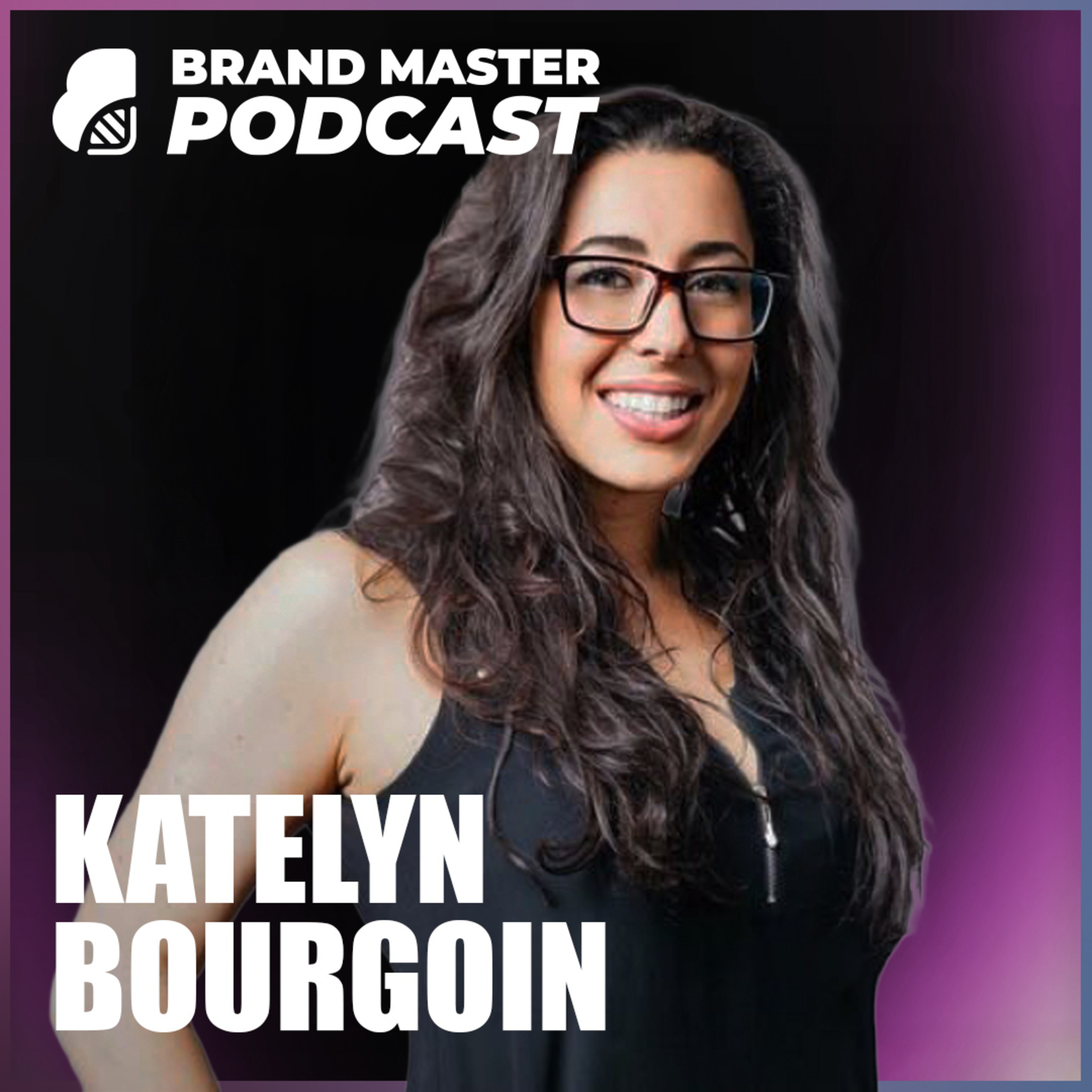
Episode 321 features Ilana Golan, who discusses “becoming a category of one” by building authority and reinventing careers amid AI-driven disruption. She recounts a career shock: after raising capital for her startup, her co-founder took the money and kicked her out within 24 hours, leaving her with no job, salary, company, or investment. Golan previously served as an F-16 flight instructor in the Air Force and became the first woman to command in her field; she later moved into engineering (Intel) and startups, including a $350M exit (as part of a team). She founded Leap Academy, which she says bootstrapped to $1M in its first year and became Startup of the Year for 2023.
reinvention isn’t taught; success now depends on adaptability quotient (AQ); “pattern interrupts” must be fast and significant; portfolio careers require an umbrella brand.
Richard Branson (mentor; CEO Magazine island), and Leap Academy’s podcast guests including Branson, Airbnb and Wikipedia founders, and Gary Vaynerchuk.
Written by AI. May contain mistakes.
Ilana shares her experience of building a successful startup and the challenges she faced when ousted by her co-founder.
“There's going to be hundreds of millions of people that will need to reinvent themselves.”
Ilana discusses how losing her business led her to reinvent herself and start Leap Academy.
“So, yeah, so I started, I guess it's pretty unique for this environment.”
Exploring the necessity of career reinvention in today's changing job market.
“And suddenly I was starting from scratch.”
Ilana explains the importance of developing a portfolio career and how to manage multiple income streams.
“It's kind of pulling the rug out from everybody and everybody's kind of scrambling to make sense of it all.”
Learn about the concept of portfolio careers and their impact on income and authority.
“So talk to me about what a portfolio career is through your lens and how somebody who is dependent on clients can kind of look at that differently.”
Discover how to build authority by leveraging diverse experiences and opportunities.
“selling your services or your consulting or your coaching or whatever it is, right?”
Understand the common challenges faced by driven individuals seeking career growth.
“Look, at the end of the day, you know, the opportunities that are there, that are out there now, you know, going back three years ago, there are entire disciplines that exist now that didn't before.”
Explore why rapid progress and significant changes are crucial in today's career landscape.
“And I think this is where we get really confused because society sometimes expects us to go a certain route.”
Learn about the concept of pattern interrupts and their role in achieving rapid success.
“So for us, what we did is we brought the whole notion of venture capital, startup accelerators.”
Learn how pattern interrupts can boost visibility and authority in branding.
“They had to be either a multi-billion dollar company or founder, president, CEO, or have millions of followers, et cetera.”
Explore steps consultants can take to enhance their personal brand.
“So that idea of a hack, that kind of interests me.”
Discover the importance of networking and investing in proximity to influential people.
“So the very first thing that I would, you know, really try to understand is what would your audience be impressed by, right?”
Hear Ilana's insights from her time with Richard Branson and how it shaped her perspective.
“And what value do you put on that level of networking?”
Understand the changing factors of success in today's corporate environment.
“Just on that, what was your biggest takeaway from the Richard Branson Island?”
Learn about the future of work and the importance of personal branding in a changing economy.
“So first of all, the entire factors of success has changed, which I think is really important to understand, like how if execution becomes so easy, the biggest factor is how fast can we make decisions?”
Learn about the impending job displacement and the need for personal branding.
“There's a roughly 90 million job that will be displaced and the only in the next couple of years.”
Discover how to engage with Ilana Golan and access her resources.

Get the gist, explore an idea or ask about something said.
 Claude
On Brand Master Podcast, what are the key points of this episode?
Searching your listeningAutomatic transcript. May contain errors.
0:00Within 24 hours, my co-founder decided to take the money, throw me out of the business. No salary, no company, no investment. It was a very dark place. Ilana Golan was an F-15 flight instructor before she ever touched marketing, and the first woman to command in her field. She helped build a startup to a$350 million exit, and then lost everything when her co-founder pushed her out within 24 hours. She then built Leap Academy from nothing into Startup of the Year, interviewing guests like Richard Branson and the founders of Airbnb and Wikipedia on her own podcast. And now she helps people reinvent their careers before the market forces them to.
0:39I'm doing the same steps again and again. We crossed a million in the very first year completely bootstrapped. We became startup of the year for 2023. There's going to be hundreds of millions of people that will need to reinvent themselves. I don't know why we don't teach reinvention. What was the challenge that you saw that needed to be solved? How do you become a category of one? Don't be afraid of paying to be in the right rooms. Richard Branson is one of my biggest mentors in my life. He turns to me completely random and he asks me, do you have a book? In five minutes, I learned more than four years of college.
1:14That's when the podcast was born. The book was born. What are you seeing at the moment with everybody that you're talking to? I would say three things. Entire factors of success have changed. Right now, it's AQ. adaptability quotient how do you package yourself well to rise above the noise but the last thing i would say is thank you for taking the time to join us on the show today we're super excited to uh to have someone of uh your stature and your expertise and i really want to kind of dig into your journey specifically just to kind of kick off because you've got a pretty unique story and a pretty unique journey.
1:53For those of you, for those who are listening, who don't know your journey, can you give us a kind of quick update as to the journey to where you are now? Because I know it's had some twists and turns along the way and it's kind of been the making of you, but give us a little bit of insight as to the journey that you've been on to get to where you are. Yeah, such a beautiful question. And thank you for having me here. It was your crew here. So, yeah, so I started, I guess it's pretty unique for this environment. I started in the Air Force of all places as an F-16 flight instructor, flight simulator instructor, was the first woman to ever become a commander in my field.
2:39So that was kind of a fun breaking barriers, giving a little bit of a boost of confidence, I guess. And then I moved into engineering. I fell in love with technology and went into engineering, Intel, then startups. I had decent enough English to bring Israeli startups into the US. So that became, you know, I've been in one startup and they went IPO and then had a pretty significant$350 million exit and another startup that raised a lot of money and then decided to create my own. And that had a whole gambit of roller coaster of its own. So I can take the conversation wherever you want. Yeah, absolutely.
3:24So why don't we start at that? Because a$350 million exit is nothing insignificant. So why don't you talk to us about that kind of journey? And I know that along the way, you've had some kind of highs and lows and moments that you needed to pivot. But so kind of take us through how that came about, because kind of getting into a place where you've kind of built a business up for that kind of exit, you know, there would have been some skinned knees along the way, no doubt. Yeah, yeah, yeah. So there's multiple companies that I was part of, and then there's companies that I created on my own. So the 350 I was part of, like, I can't take full responsibility.
4:14We were a whole team. um but yeah just in terms of what it took so um i mean entrepreneurship is one of the hardest thing in in the world like i really think that it's a little bit of understatement of how hard it is i think we we tend to create a lot of uh simplest you know like we tend to figure you know give the four-hour work week and all sort of like things that i think are our myth um i i think it is all about how hard are you willing to work and how much you're willing to stomach um i did have a very significant loss in the entrepreneurship uh journey if i'm happy to share a little bit because i think it is part of that so i at that point i was already vp in a very significant company we've done a lot and i wanted to start my own company i was a friend that i knew very well and worked on it day and night to prove myself.
5:16I live in Silicon Valley, California. Steve Job Garage is right here. I'm literally pointing to it. So there's this whole inspiration thing. You have to raise capital. Otherwise, you're almost like you don't exist. So I went to raise capital and even that worked well. So within a few weeks, there it was. They were evaluating our little baby at like almost$5 million. dollars. I remember looking at the term sheet thinking, oh my God, like I, I did it. I did it. That's it. Like I picked the boxes of success. Um, I let everybody know in the VP world that I, like in my VP role that I'm going to be leaving and I'm going full time on this company and we raised the money within 24 hours.
5:59It was insane. It was in 24 hours. My co-founder decided to take the money, throw me out of the business. And then I was left with nothing, no job, no salary, no company, no investment. And I think one of the hardest thing is that it was the first time I realized my entire identity was attached to my company, to the title. I never built myself. And that's why I'm so passionate about what you're doing, right, was brand strategy, because I never thought of it. My brand was never a thing. I was just working hard, putting my head down and doing whatever it took to build those companies. So even though we had these amazing successes, you're right.
6:43I never thought about it. I never talked about it. I never built my brand around it. And suddenly I was starting from scratch. And that was one of the hardest moments in my life. I actually have a background in finance. I was a stockbroker at one stage of my life and I was in and around the mergers and acquisition space. And your story, unfortunately, is not unique. The amount of times I've heard people being kind of with corporate sabotage, being kind of helped out of their own business just by greed and stuff like that. Anyway, I'm sure you would talk for days on that particular journey. But you are where you are today, and it pushed you along, and you've created Leap Academy, and you look at your reel, and you see the names speaking about the journey that you've been on.
7:42Richard Branson, Gary Vee, Russell Brunson. These are all people who I massively looked up to. So what kind of led to the creation of that? And what's your passion now and message to the world in terms of the value you bring? Oh, such a good question. So yeah, first of all, it is not that uncommon.
8:11But I think what people usually don't talk about is the low moments, right? like how low is low right and and i think when you lose your identity uh you lose yourself of self-worth you lose your meaning in life you lose your purpose you you know and that took a toll on everything my sleep my relationships my yeah it's a dark place it was a very dark place and i think at that point i did look for solutions i'm like how do i find my career direction how do i find my next thing and i did search for everything and and i couldn't find a way out and i think at that point i also didn't believe anyone or anything can get me out of the dark place and that became almost like i didn't realize it then but it did it did become a purpose um and your trust in people i i'd imagine was shattered as well i think everything shatters like i think at that point You shattered yourself.
9:12You betrayed your, you let yourself down. And I think it's really hard to get out and claw your way out. I did eventually start a tech startup. It was acquired. And I started leaping again. Again, I started joining some advisory and public speaking and board seats and investments. And it was interesting because only like after a couple of years, I was like, this is so interesting. I'm actually leaping and reinventing myself and leaping again and again. where was this when I needed this so bad and I literally almost lost everything in my life and and what I realized eventually I'm a geek you know like a geek as a geek I'm a you know engineer and eventually I realized I'm doing the same steps again again I'm just getting better at those steps so that I can leap faster and higher that's the only thing that changed so as a geeky engineer I was like can I wrap this can I help a couple people there wasn't a big goal like if you're asking if leap academy was like a big goal no it was just like is there anybody else crazy out there that feels lost and that could be doing more in their life in their career can i help them right and so it started with a very small little thing it didn't start as a big audacious goal um but apparently it you know ticked an incredible box um we crossed a million in the very first year completely bootstrap.
10:37We became startup of the year for 2023 and now one of the fastest growing private companies in America. But I think it is because that engineered process just works. And in fact, I think right now we're looking at a cliff that actually really scares me. I see it very vividly from Silicon Valley. There's going to be hundreds of millions of people that will need to reinvent themselves. And I don't know why it's not taught anywhere. I don't know why we don't teach reinvention. I don't know why we don't teach the whole concept of portfolio careers. People will have multiple streams of income ventures.
11:13We don't teach that anywhere except for in Leap Academy. It should be taught in schools, honestly. Right? And I think there's this whole need, you know, especially in the era of AI, everything is changing. So... Yeah, that's a pretty big disruptor right there. It's kind of pulling the rug out from everybody and everybody's kind of scrambling to make sense of it all. And so when you kind of went into this world, because we're all kind of branding nerds here and what we think about and the way we think is, all right, what's the challenge that needs to be solved? Who are the people that need that challenge solved?
11:57And how do we position the meaning of solving that problem within the context of how they're feeling. So what was the challenge that you saw that needed to be solved? And what was it that you were bringing to them? Yeah, it's a great question. So I would say it's a few things. So first of all, in the corporate world, there used to be a whole notion of put your head down, don't brand yourself. In the entrepreneurial world, I think we're more, you know, we understand the concept of branding. We understand the importance of it. I think in the corporate world, that was not a thing. So we completely missed the fact that in 2007, we all became a media company.
12:38We were not living that. So first of all, there was this whole notion of an entire brand of people that never bothered to reinvent themselves. I think beyond that, now that we're starting to look at portfolio careers and everybody wants some kind of multiple streams of income ventures, whether it's advisory or coaching, consulting uh you know like fractional work board seats you know there's just so much on the menu but nobody teaches you then if i want to do multiple things how do i brand myself i don't want to sound all confused how do i create what i call an umbrella brand that just fits all of these things how does how do you package yourself if you're especially right now when it's hard to rise above the noise how do you become a category of one so i think there's like a lot of different um as we were progressing we were we're seeing harder and harder problems to solve and for us it was it became like the big thing of how do you package yourself really well especially right now to rise above the noise but also that it doesn't sound confused when you build a multiple streams of income ventures which is basically what a lot of people will do right now yeah yeah absolutely and i want to dig into that with you as well i mean when you talk about umbrella branding and uh you know for for us that's kind of our bread and butter we we talk about that from a corporate perspective uh looking at a pair of brands and their and their their sub-brands underneath them but i want to talk talk about uh a topic that you raised there that you speak a lot about which is a portfolio career um and through the lens of client dependency Because, you know, certainly for those in the consulting world, you know, you can arrive at a place where you are quite heavily dependent on clients.
14:33So talk to me about what a portfolio career is through your lens and how somebody who is dependent on clients can kind of look at that differently. Yeah, I mean, first of all, I think it's an incredible time that we live in. There's just a lot of ways to make money these days, right? So portfolio career is basically multiple streams of income, ventures, experiments that you're running kind of together in order to fast track your career or, you know, and create not just the paycheck, but the life that you want with the paycheck. And I think that's the beautiful piece of it. Now, sometimes it is about extra income and sometimes it's not.
15:16Sometimes it's about a shortcut to close gaps, to volunteer to different things. If you don't have the experience that you need, sometimes it's about more authority related. So how can I focus on certain ventures that will, you know, make me be perceived in a different elevated area, like if you will, of authority. So it is, you can use it in a really beautiful way. and for me if you use it well it actually creates a snowball of impact and that's where it becomes really interesting because for me it's not about just how can i make the most money here but how can i actually create a ripple effect so that more opportunities come away and if i am selling to corporates etc now i'd be perceived as more of authority i get the doors will open up faster i I can, you know, charge more, et cetera, et cetera.
16:09It just creates this incredible snowball effect if you use it right. Now, if you don't use it right, you kind of stay broke and you're all confused. And I think that that's where it becomes really dangerous. And I've done both. So I was the confused that stayed broke and gave everything for free. And, you know, it took me time to realize that there's a way to do this right. and I'm happy to elaborate everywhere but yeah and look you're kind of we're kind of stumbling into our area of interest here because I mean you know who you are and what you're doing it's a little left of center to some of the more kind of brand strategy specific specialists we talk about but you've been able to go out there and kind of create this platform of authority through a personal brand in multiple different segments.
17:08And that's what I'm super interested in because it's kind of atypical, you know, because what you're taught and what we even teach is that, you know, you stay in your lane, you are consistent, you build your brand, you build your authority in and around this space, and that makes sense. But you've been able to kind of build that authority while, as you say, leaping across different sectors. So talk to me about your concept of building authority through that lens and how somebody can kind of put themselves out there to start to make those big jumps in terms of their own authority, their own profile and their own personal brand.
17:54Yeah, such a great question. Thank you for this. So I'll say there's a few elements when you're looking to overall reinvent, leap your career. I'll just kind of package it and then we'll talk about the branding piece. So the very first thing, again, you want to kind of package yourself, especially if you're selling your services or your consulting or your coaching or whatever it is, right? You first want to kind of package yourself as that category one. Then you want to start opening, like learning how to open doors and create almost like an opportunity magnet, right? And there's like a formula that how do you magnet, like how do you get opportunities to come your way and open doors faster?
18:32But then there's an authority piece, which I think is some of what you're talking about. How do you create such an authority that people will have you top of mind and continue bringing those opportunities to you? Because again, all these opportunities float in the air all the time. The question is who thinks about you when you're not in the room and will bring you in, right? So how do you create this ecosystem? And when you learn how to do that well, those opportunities start coming your way and you can charge more. you can open more doors, et cetera, et cetera. And I think where it became really, really interesting is for me, it was about how do you create this umbrella that create a ripple versus become all confused, right?
19:15So if I would do, I don't know, like together with Leap Academy, I don't know, help a kindergarten and maybe it doesn't, you know, it doesn't quite float, right? But if I, you know, help professionals reinvent Leap their careers, and then I add, you know, some, an incredible podcast that will speak to some of the biggest leaders of our time, like Richard Branson and Gary Vee, like you said, and all the people, you know, all the founders of Airbnb and Wikipedia, suddenly you have these blueprints of careers that everybody wants to hear because now there's, you know, sharing challenges and pivots that they never share anywhere else.
19:51And people can start learning about these pivots. So I'm giving more value and I'm becoming more of an authority. Now more corporates want to pay us to bring Leap Academy into corporates and help when they need a placement or need elevation of leadership. So it created what I call basically a snowball or a flywheel. And I think all of us, when we need to start thinking a little more strategic about it's more like a chess game versus checkers, right? Like what is the next move that I can make? Like, how does that, you know, how am I perceived? What kind of opportunities that open up? What can I leverage out of it?
20:33And how can I take the next step in the chess game? And for me, that's where it becomes really strategic and really fascinating. And it's an incredible time because there's so many ways to create income and impact and legacy and fun. Yeah, yeah. Yeah, absolutely. Look, at the end of the day, you know, the opportunities that are there, that are out there now, you know, going back three years ago, there are entire disciplines that exist now that didn't before. In terms of when people come to you with a particular challenge, has something kind of gone on in their lives? Mostly we kind of in part build businesses to help other people with challenges that we've had ourselves.
21:24And a lot of businesses are created that way. But what's the common thread between the people that kind of come across your path in terms of the journey they're on and, you know, what they, the challenge or the circumstance they go through to then need your help? And then what's the process that you take them on to get them to where they need to go? Yeah, such a good question. So, yes, you're right. Many times it is based on personal life. And for me, it's that low moment. So our audience, and again, we're talking about thousands a year. So it's a pretty big magnitude in terms of how many people we help.
22:10But in general, the people that come are very driven. So they're not people that are looking to just lurk mojitos on the beach all day, maybe eventually. But, you know, they are very driven. then maybe they feel like they fell off the horse of success somehow, or they feel like they could be going a lot faster and create more impact and legacy and more passion in their life and more brand, you know, like they want to fast track their career, not just create, you know, and maybe they want to land a next job, but also sometimes it's like they want the next executive level. They want to start a revenue generating business.
22:47They want to create portfolio careers. So they might want different things, but they all very driven. And they know they're meant for a lot more. And for me, this is where, first of all, just to understand what is more for them. And I think this is where we get really confused because society sometimes expects us to go a certain route. But that's the wrong career route for us. So first of all is what is more? What are you known for? Success leaves clues. We need to find them. And after that, it's like, okay, so if this is what you want, let's go chase that, right? And then how do we package ourselves if you've never packaged yourself or you package yourself in the wrong way or you package yourself for a different type of job or a different type of career?
23:32How do you repackage yourself now and reinvent yourself, if you will? And then how do you open the right doors, not based on where you've been, but where you want to go? And how do you build an authority according to where you're going, not where you've been? So I think it's basically how do you fast track this in a big way? and you know if I'm you know if I'm gonna share maybe the number one thing that makes all the difference I I think it's just gonna hope I I think in today's world what people are doing which does not work is a very slow progress so there used to be this myth about you know just you know become one percent better and eventually it's gonna work and maybe it's still sort of true But the truth is in today's world, when it's so hard to rise above the noise, if you become just 1 % better, the truth is it's probably not enough.
24:24And what happens is that people will change a LinkedIn banner or change the title and nothing happens. And then they get defeated. And what happens today is, you know, it's almost like if you think of a kid, you see them every single day, you don't notice the difference, but you see them after a year, you're like whoa what just happened to you and what we need to create in this era when it's so hard to rise above the noise and there's so much noise we need to create a pattern interrupt and when we can create a pattern interrupt in how you see yourself but also how people see you everything changes because suddenly it's like whoa i didn't realize this person should be a leadership i didn't realize i can bring them to the board i didn't realize i can you know So that pattern interrupt is probably where most people get it wrong.
25:12They change too slow and too little. And if you can squeeze. So for us, what we did is we brought the whole notion of venture capital, startup accelerators. I used to teach in some of the biggest startup accelerators in the world, like Google and Segularity University and Carnegie Mellon. And if you think of startup accelerators, it's probably the biggest transformation I've ever seen. They take basically driven professionals or driven people. And within a few weeks, they become theoretically a CEO of a potentially multi-million dollar company. Right. And that transformation is something I haven't seen anywhere else.
25:52And the only difference is that we brought the whole concept of startup accelerators, but we brought this to careers. So now we have basically two accelerators. We have one for job seekers. We have one for revenue generating businesses. and portfolio careers and that's it and it just increases time and tilts the scale of what's possible yeah yeah the startup accelerators i mean you know when when you think about the caliber of people in that room you know it's it's it's like the the the room is full of fuel and it just needs a spark and you know it just runs from there you you mentioned pattern interrupt and And that's something that, you know, in my research of you and your work, it's something that you're, you know, you're pretty adamant on in terms of the power of a pattern interrupt.
26:44Talk to me about your concept of a pattern interrupt and what it takes to kind of find what pattern interrupt you need for you and what that kind of involves. Yeah, so it's a great question. So pattern interrupt, again, from what I mean is a, you know, like significant change in a short amount of time. So first of all, like that, that's, you know, if I need to sum it out, it's basically that. But it's also just becoming really intentional, strategic with every move you make. So I can bet anyone that the reason why Leap Academy has grown to startup of the year for 2023 and, you know, like, you know, one of the fastest growing private companies in terms of revenue.
27:29um it was all because it was fast so i believe if i would have made the same steps exactly but it would have taken me 15 years instead of five it would not it would not caught catch by surprise everybody and it you know it didn't we wouldn't create that level of impact same thing with a podcast so when we launched the podcast um again we already had some of the biggest ceos and leaders of our time. It was very specific in terms of like, what is the criteria? They had to be either a multi-billion dollar company or founder, president, CEO, or have millions of followers, et cetera. So we had a very specific criteria.
28:16But what's interesting was that within three months, we already topped charts. And that, again, people will tell you it's impossible to create. And the reason why I believe it worked is because they created such a pattern interrupt in people's head of like, how is this unknown thing shoots up to top charts? What is it, right? And suddenly Maria Shriver is talking about it and like all these people are mentioning it. And it's like, I think that flywheel or that incredible traction is happening because of the pattern interrupt. So I'm a big believer in pattern interrupt. We see it also in our clients because suddenly in a really short time they can move two titles or three titles up or suddenly they you know they get to the first million really fast so they get to board seats even though they weren't c-suite so but they're able to create that pattern interrupt in people's head of wow i didn't realize they can do x and sometimes it's a shortcut like with authority like mentoring and startup accelerators sitting you know on being being advisor in companies like there's like ways to shortcut and create these like, you know, a little bit of a hack, if you will, to make it better.
29:28Yeah, yeah. So that idea of a hack, that kind of interests me. And, you know, to make it relevant to the listeners, you know, let's imagine a consultant who is running a branding agency and, you know, they have, you know, aspirations of kind of being a circuit speaker or kind of getting their name out there more as a personal brand. Or they might want to look at diversifying their revenue streams. They've got all these different options out there. What would be the first step where you would kind of engage with them and say, okay, well, let's get the lay of the land here. Let's understand where your strengths are, where we need to follow.
30:19what we need to do to kind of make those significant leaps. Because, you know, a lot of people listening will, you know, they would try and follow the advice. But as you said, it might not be within the time period that's needed to make those significant leaps. So what would somebody in that position need to do in order to first understand what leaps they need to make and then what to do in order to make them? Yeah, that's a great question. So the very first thing that I would, you know, really try to understand is what would your audience be impressed by, right? Or what would move the needle to your audience, right?
30:59What is your audience even acknowledging as something worthy versus not worthy, right? Because I think sometimes it's a lot about that. Like you said, if you're a consultant in corporate of, I don't know, like, some of the biggest corporations are looking at very different things than startups versus, you know, very specific like marketing agency. Like it really depends on what would make a difference. Sometimes it's more about awards. Sometimes it's speaking on stages. Sometimes it's about being on podcasts. Sometimes it's about writing in Forbes. Sometimes it's like, it could look different for different people and for different audiences.
31:41So I think this is where the chest comes in is to really understand what would move the needle in a big way how will i be perceived in a big way if i'm associating myself um the other thing that i would say don't be afraid of paying to be in the right rooms um i think that is like i think paying for um you know for either being in the right rooms or for proximity is worth it every single time like For me, Richard Branson is one of my biggest mentors in my life. I will pay whatever I need to cycle with him in India. And we're heading to Iceland now. And we're doing a lot for... And he's been incredible for me.
32:27Russell Branson. So don't be afraid of paying your way to proximity because it's amazing what you're going to get out of it. and and i think just leveraging these things in a way that makes you unique and and and and more valuable if you will again don't try to take take take it's really more about giving first and then you know leveraging it later um and then what again this is just one of the pieces in the chess game like what what should come next right and it could be as simple as writing you know like if you've been on a really interesting podcast writing it in your signature or writing somebody that in the corporate world is like oh my god I just talked about what you you know the problems that you have in this podcast guess what most likely they're not even going to listen but the fact that you were on the podcast is already giving you a few a few points extra right so it really depends on how you play that game but for me it's more how do you start just being really intentional strategic with every move you make that's the bottom line yeah yeah and and as you said it does it does all add up i i uh i often liken a brand to uh you know a banking institution you know you you have deposits and you have withdrawals and every kind of uh good move that you you may get there in the market it kind of builds up your equity over time and and that's pretty much what we're doing uh in terms of building brands um i've got uh i've got one or two questions in the background i might might pass it pass it over in a second um but just just to kind of dig down on what you said earlier on don't be afraid to pay to kind of uh you know to to to get in the room with the right people so how would we are are we talking about uh paying to be in specific masterminds here or what kind of strategies would you have to get that kind of exposure to uh to be rubbing shoulders with the right people, making those types of connections?
34:28And what value do you put on that level of networking? Yeah, that's such a good question because I wish I knew that a lot earlier in my career. If I'm being really honest, I had absolutely no idea that this is even slightly interesting. And I think I was also looking at things very transactional. Like if I can't, if this is not gonna help me sell my company or this is not going to help me grow my company, I don't see a reason to go, right? Like I was very transactional, unfortunately, admitting mistakes. And it took me time to learn to look at it in a very different way of what, how can I become a better version of myself just by being surrounded by these people?
35:14So you change your questions, you're kind of forced to change the way you're going to get out of it. So I think one of the first times that I paid my way in was actually was Richard Branson. And I, the CEO magazine organized, you know, a handful of people that will go to his private island. And it was a pretty hefty ticket for me. And I was like, I don't know, can I afford it? Can I, you know, and, and I remember somebody asking me a question that changed, changed the trajectory of my life, I think, I mean, because they basically said, okay, let's assume that you said no to this paternity. And Richard Benson has been a mentor of mine, like a role model for me, if you will, for a long time.
35:59And he portrayed those kind of leaders that are also fun and adventurous and, you know, et cetera. But the bottom line, she basically said, hey, let's fast forward a year. And you're looking at your bank account. You have their 30K extra, you know, whatever in the bank. but you said no to this opportunity what's the biggest regret and the minute she said that my entire ass you know stomach just squeezed and i'm like you know what regret for me or living a life of minimum regrets is a really big motivator for me and i just knew i had to say yes but i think then the question is what do you do with it and and for me there was a lot of fear like i'm not there to just be on the beach all day like what like how do i and again i'm i'm thinking transaction instructional, in retrospect, it completely changed the way I look at impact, the way I see companies, the way I see leaders, like completely changed my world.
36:57And since then, I paid a lot more money to a lot more people. So it was also the most expensive thing that I've done in my life, but worth it throughout, completely shifted everything. So be surrounded, like figure out, like again in my vicinity i was surrounded by people that appreciated me and always kind of pet me on the back way to go try to find the the areas where you're going to feel small but in a beautiful way so not in like not not in a ego way but in a like again in a really nice way i felt small for the first time in a long time and it inspired me at a whole different level so So if you can find the rooms that will make you reach for more, these are your rooms.
37:45Yeah, I love it. Just on that, what was your biggest takeaway from the Richard Branson Island? Can you remember? So first of all, since then, I've been chasing him to South Africa multiple times to Ireland. I already paid my... You're a stalker. We are friends now, I would consider. I mean, we definitely WhatsApp. He's blurbing my book. He's been on my podcast. So he's definitely changed my life. But I would say that one of the biggest things, it's just, it's not usually from the contents. It's usually from the things that happen in between. So first of all, he is one of the most fun people I've ever worked, like I've ever been around.
38:28And there's some leaders that you're like, once you meet them, it's like, oh, that's not quite what I thought. Don't meet your heroes. In his case, it was opposite. Like it was like more than I expected. But the one thing that I'll say from him is like, you know, somebody asked him about impact and he shared a story about how we helped Saddam Hussein, like bring some hostages. It was under the radar. Nobody heard about it. We have it on our podcast. It's worth listening. And suddenly I realized his level of impact is to be able to reach anyone in the world. that's a different level of impact than anything i even had in my brain and i think even just realizing that that level of impact exists is is a whole different level and and since then like i went with him to india i mean sarah blakey was there the founder of spanks the grander daughter of warren buffett the husband of kate winslet like from titanic like suddenly you're surrounded by people you're like where were these people and what am i doing there and i think it's just a really good place to just keep pushing yourself yeah yeah richard branson is you know he's easy i remember i read his autobiography i think i was very early 20s and you know just the story of uh you know virgin records and the the you know he's just a unique character and a very i'd imagine a very lovable a lovable uh guy to be around as one of the nicest humans you've ever seen yeah he just loves humans he definitely comes across that way before i let you go alana because i do value your time and we're coming up onto the air now we've we've uh we've squeezed a lot of value out of you what are you seeing at the moment with everybody that you're talking to with with all of the change that's going on because that's such such an important topic what are you seeing in terms of the obvious one is AI but but how are people approaching it what are the the trends that keep coming up in the conversations that you're having that we should be looking out for oh so important so important I would say three things um one just to make sure everybody is aware the entire factors of success have changed so if you looked a couple decades ago it was all about iq um and then it changed at some point to eq right emotional intelligence and in fact like you know richard was one of the first ones that said eq is probably more important than iq etc etc if you're going to check right now it's aq adaptability quotient and your ability to learn fast experiment fast adapt fast is actually more important than anything right now.
41:17So first of all, the entire factors of success has changed, which I think is really important to understand, like how if execution becomes so easy, the biggest factor is how fast can we make decisions? So we are the bottleneck. And the faster that you know that you need to get out of the being at the bottleneck and how can you make decisions faster, run faster, experiment faster, the better it is. How to rise above the noise. Again, it's kind of that pattern interrupt becomes really, really important. How do you package yourself well to rise above the noise? But the last thing I would say is I think we, you know, the corporate ladder is burning a little bit and whether we like it or not, it's just a fact.
41:58I just came back from the World Economic Forum and World Bank. The numbers are clear. There's a roughly 90 million job that will be displaced and the only in the next couple of years. The only argument that I heard is whether it 300 million after that or 600 million after that so the the the the corporate ladder will not look the same and every individual will have to start becoming an economy of one and basically their own economy and how do you become your own economy how do you learn to package yourself and sell it brand yourself etc so that becomes an incredibly important skill for the future work so yeah yeah it is it is absolutely um you know you can look at it we look at it as an opportunity we we look at it through the lens of fear that's a choice that we get but it's coming and you know as you said it you know we just have to to to roll with the punches to to learn on our feet to adjust and to make the most of it as we go alana it's been an absolute pleasure thank you so much for taking the time to join us um and yeah so if if anybody wants to catch up with you where's the best place to get a hold of you to uh to get your book to to to get involved with what you're doing where's the best place for them to to do that yeah um linkedin ilan golan or leap academy.com we have free trainings we have you know stephan we can also you know offer you guys specifically like a free you know we we have kind of a challenge a three-day um more specific free you know experience that you can go through um and just anywhere elana at leapacademy.com 100 yeah i'll i'll definitely follow you follow up on that and and we'll leave those links in the show notes elana thank you so much you have a great day ahead enjoy uh richard branson the next time you see him and uh no doubt we'll see you in the feed thanks alana we really hope you enjoyed today's episode thanks so much for listening if you want to learn more brand strategy techniques to level up your skills make sure you check out brandmasteracademy.com there's plenty of free resources and premium content for you to download and get you going if you enjoyed this content please be sure to give us an honest review on itunes stitcher or wherever you listened and make sure you tune in for the next episode of the Bram Master Podcast.
Becoming a category of one means building authority around where you’re going—not just where you’ve been. Ilana Golan reveals how to reinvent your career, create a powerful umbrella brand, and use strategic “pattern interrupts” to rise above the noise. Discover how to turn your experience, relationships, and opportunities into a career flywheel. AA Ilana Golan Become Category …
You’ll learn: