Ask ChatGPT

 Brand Master Podcast
10 Nov 2026 · 1h 4m · 25 chapters
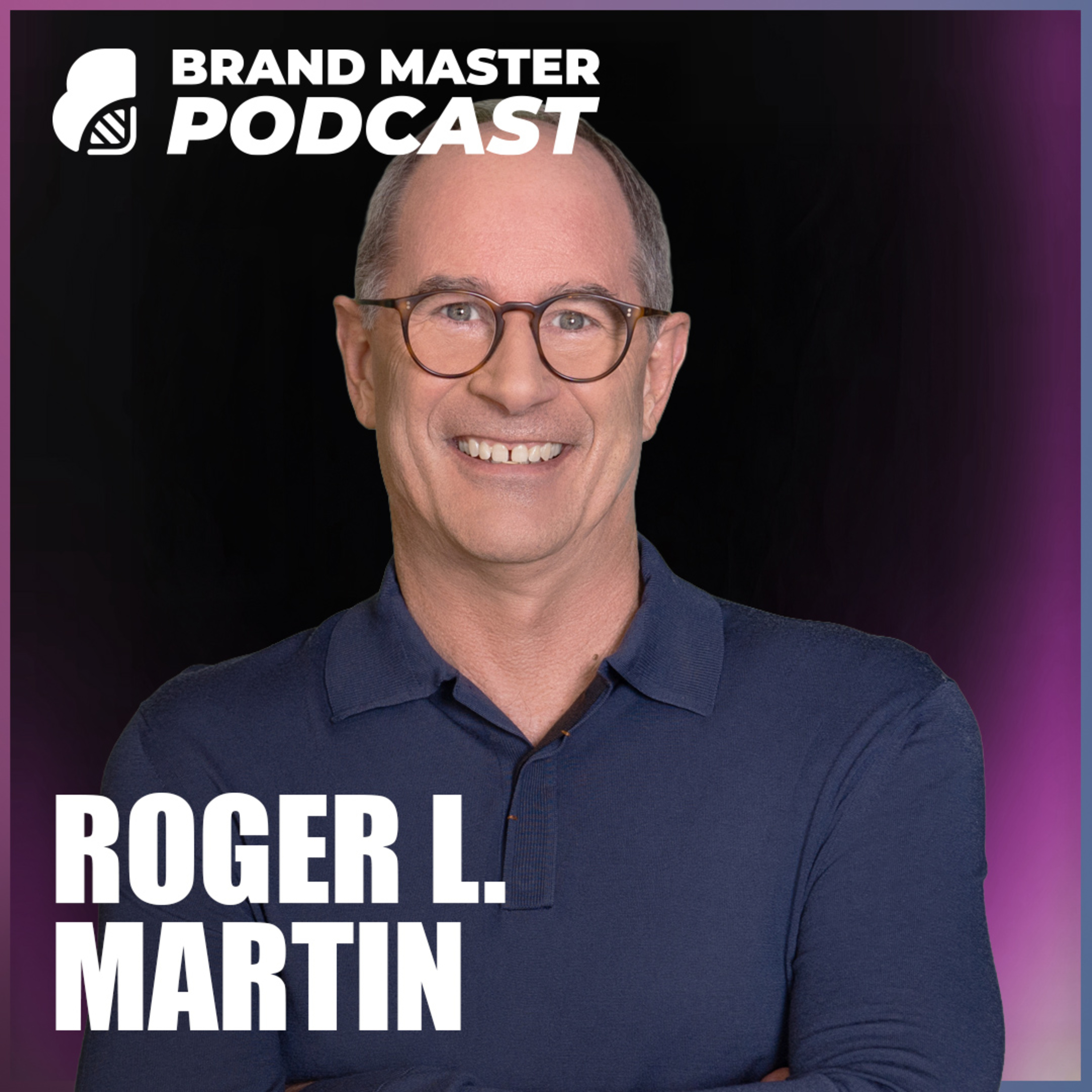
Roger L. Martin argues that most “strategy” is actually planning, and that strategy and marketing are the same integrated set of choices aimed at compelling customer action. He also warns that AI is best used for “mode” (common answers), not “tail” (rare, novel insights), and urges strategists to focus on anomalies.
Roger L. Martin is co-author of Playing to Win, former dean of the University of Toronto’s business school (15 years), and previously worked at Procter & Gamble in the 1980s. His weekly strategy essays have 3M+ reads; he later published Playing to Win practitioner insights on Medium/Substack.
Strategy = integrated choices that compel desired customer action; planning = lists of initiatives under company control. There are five integrated choices: winning aspiration, where to play, how to win, must-have capabilities, and enabling management systems. Strategy and execution are both choice-making (no useful separation). AI is a mode-seeking device; tail tasks should be ignored.
Four Seasons Hotels empowering frontline staff (e.g., bellhop can compensate with champagne after delays). Newspaper industry failing by locking into an old “where to play/word of play,” while Financial Times shifted to digital distribution. P&G diaper turnaround: Deb Henretta given a “choice charter” (problem framing and guardrails) rather than a fixed solution.
Written by AI. May contain mistakes.
Discussion on the ineffectiveness of current strategic planning practices.
“It's insanity that you have marketing professors and strategy professors in business school.”
Roger challenges the separation between strategy and execution.
“Using AI for tail purposes will result in massive modal outcomes.”
Roger outlines the five key choices in the 'Playing to Win' strategy framework.
“But it is now the equivalent of over seven playing to wins.”
Roger discusses the role of AI in recognizing strategic patterns and mistakes.
“And obviously, a creative mind like you, a writer like you, you know, you get to kind of crystallize that.”
Insights on how noticing anomalies can drive strategic thinking.
“And then at the end of the year, then management says to the board, well, the board says to management, why didn't it happen?”
Roger reflects on his writing journey and the impact of his insights.
“That was a Word of Play that worked for 100 years, but it stopped working.”
Discussion on the differences between effective strategy and mere planning.
“So that cascading effect that you mentioned, you know, and how everything is integrated, that's, you know, one doesn't work without the other.”
Learn about the historical development of strategy and marketing's relationship with competition and consumers.
“And so strategy started out as about us in competition.”
Discover how strategy and execution are interconnected and why they should not be viewed as separate.
“But then, you know, turning that into systems to go out there and actually meet the customer on the front lines through execution, through action.”
Understand the significance of allowing team members to make choices that align with overall strategy.
“or the big brain strategists, they've made all the big brain choices.”
Learn how the metaphor of Russian dolls illustrates the nested structure of strategic choices.
“And people will say things like the following, like it's a sort of a commonly used kind of phrase is a mediocre strategy, well executed, will always beat a great strategy, poorly executed.”
Explore how strategic choice chartering facilitates effective handoffs and goal alignment in diversified companies.
“We're helping you not do something that would screw things up.”
Learn how effective strategy leadership involves clear communication and guidance.
“And I see these kind of problems and challenges that say they're not exactly accomplishing that now.”
Discover how defining brand roles is crucial for reclaiming market leadership.
“That is fantastic executive strategy practice in chartering the choice, not just saying, Deb, I've put you in charge, fix it.”
Understand the necessity of guardrails to maintain brand integrity across disciplines.
“And so the bigness just overwhelms them.”
Explore the significance of integrative decision-making over specialized silos.
“They're famous for saying that, tech people.”
Examine the failures in integrative roles due to lack of preparation and training.
“There are no specialized outcomes, there are just business outcomes.”
Get insights on key books that address integrative thinking in strategy.
“I've also written a Substack piece on strategy and integrative thinking, which I could also direct people to.”
Learn how to effectively question experts to ensure sound decision-making.
“Yep, and I'll drop those links in the notes.”
Learn how to effectively challenge expert opinions and seek clarity in their reasoning.
“and it has to have these three words in it.”
Discover the advantages and risks of using AI tools in strategic decision-making.
“But I had to do this like all the time as dean, right?”
Explore the distinctions between modal and tail tasks in AI and their implications for brands.
“I could ramble on with you and go down every rabbit hole.”
Explore the risks of relying on AI for strategic insights and its tendency to reinforce trends.
“It's not off the cliff and it's finished.”
Roger L. Martin shares crucial insights on recognizing and valuing anomalies in data.
“I just wouldn't go near AI for a tail question, and I'll happily use it for the mode.”
Learn how to follow Roger L. Martin on social media and engage with his content.

Get the gist, explore an idea or ask about something said.
 Claude
On Brand Master Podcast, what are the key points of this episode?
Searching your listeningAutomatic transcript. May contain errors.
0:00Probably 90 % of what's called strategic planning is a lost, if not dying, art form. It isn't actually taught usefully in business schools.
0:09Stephen Houraghan: Roger L. Martin co-wrote Playing to Win, one of the most widely read strategy books of the past decade. Before that, he spent 15 years as dean of business school at the University of Toronto after cutting his teeth inside Procter & Gamble in the 1980s. His weekly strategy essays have been read more than 3 million times, and now he's telling strategists why almost none of what they call strategy is actually strategy. Give us controversy, Roger. We like to ruffle feathers, especially of the marketing purists. I do not believe that there is a useful distinction to be made between what is called strategy and what is called execution.
0:48Strategy and marketing have converged. They are the same thing. It's insanity that you have marketing professors and strategy professors in business school. There are no marketing decisions. There are no tax decisions. There are no accounting decisions. There are only business decisions. Four Seasons Hotels is the best hotel chain on the face of the planet. If a bellhop screws up and takes twice as long as he should have to get the person's car, he can order a bottle of champagne up to their room with a big, I'm sorry. He invented the category and we've given up market share leadership to Kimberly clear.
1:21Can you break down the core framework of playing to win? There are five key choices that you have to make in an integrated fashion. What's your winning aspiration? Where are you going to play? How are you going to win? What are the must-have capabilities? And what are you seeing as the biggest risks? What you should think of AI as is a mode-seeking device. You're a moron if you give it to a person. AI will find the mode for you faster, cheaper, and more accurately. If you give it a tail task, you've made a mistake. The only thing you should do after giving it a tail task is ignore the answer. The argument that they came back with was the answers.
2:02Using AI for tail purposes will result in massive modal outcomes. What would be your one piece of wisdom? Pay a lot of attention to anomalies. The future, in my view, comes from people noticing anomalies that don't fit. LLM will never tell you that.
2:32Stephen Houraghan: Roger, thank you for taking the time to join us today. I believe I read Playing to Win. Oh, my goodness. I'd say it's easily 10 years now. And obviously, the book itself, your work, you've had such a big impact on strategy in our space. You've influenced a lot of people. But it was, was it 2013 that the book came out? The book came out 2013. Yeah. And in 2015, we put out with, again, with Harvard Business School Press, a playing to win toolkit to kind of help people with it. And then in the fall of 2020, I started this playing to win practitioner insights series on Medium. I've switched over to Substack.
3:25But it is now the equivalent of over seven playing to wins. wow so and so and it's been a bit of a revelation to me because because i sort of started into it saying well there's playing to win and that's 67 000 words of strategy um but you know people ask me quite well what about this what about that and i started writing in response to uh questions the first one was the role of management systems in strategy because people said well that last box why is that so important roger and i just wrote a piece on it people liked it and so i said i will just keep doing this for a while but i never imagined it would be every monday for five and a half five and a half years and what it tells me is that there's just a lot of implicit sort of practice oriented things in my head about uh playing to win and it's been a bit of a joy to to get that all out of my head uh uh for posterity so that you know if i got hit by a truck tomorrow it would be it would be out there and i've done it for free like it's free it's uh my my sub stack is not a paid sub stack it's just a free sub stack so that's been for what it's worth more thrilling and exciting for me than uh the book playing to win uh is having that body of work yeah out there and there have been more than three million views of it and you know and over a million full reads and uh and the like and so people are engaging with it quite a bit which
5:07Stephen Houraghan: makes it it's funny you should say that in in the build-up to this interview the the the term body of work is exactly um what i use to to kind of do the research on on everything that you've done because yeah i love the the idea of you know you you've got your foundation and you've got your principles but then everybody has their own nuanced granular questions and that allows you to sharpen your axe and really kind of define in granular detail what your philosophy is. And obviously, a creative mind like you, a writer like you, you know, you get to kind of crystallize that. So as you said, if you do get hit by a bus, at least we've got your goodies.
5:53Stephen Houraghan: For those who need a refresher or who haven't read it at all, can you break down the core framework of playing to win? and what actually separates good strategy from just regular old planning? Sure. Well, for starters, if I just ask the strategy versus planning question and then the framework, my definition of strategy is it's an integrated set of choices that compels desired customer action. Okay. So it's integrated. It pulls together all the strands in a company into one integrated and what set of choices. Strategy is a set of choices. And the object of strategy should be to compel customer action, which is why strategy and branding there's there, in my view, very much the same thing.
6:54Because that's what branding is attempting to do. So compelling customer action. Why is the compelling customer action so important? it's because that's the thing you don't control you control how much you you spend uh like you control in marketing terms the four p's they're all completely under your control you can do whatever you damn well please on that front but what you don't control is when the customer says i'm going to pull i'm going to pull this out of my pocket who am i going to give it to you you have no control over that they have in control so what it's about is compelling them to give it to you at the price you'd like them to pay not somebody else planning instead is a list of laudable and doable initiatives in areas under the company's control and unfortunately at least 85 probably 90 percent of what's called strategic planning or strategy is actually planning it's just making a list it's getting the people around the table and saying okay manufacturing guy or gal what what do you want i want to build a new factory okay marketing guy or gal what do you want i need a new campaign and hr we need to do this or that and you whittle it down to a list of all things that are laudable none of them are stupid uh and and then you write them down and go to the board and say here's our strategic plan but all it is is a list of initiatives and at the end of the and then the the cfo or the finance people make predictions about what kind of income and revenue and and uh earnings you're going to get out of it then you go do this set of initiatives and it doesn't happen.
8:45And then at the end of the year, then management says to the board, well, the board says to management, why didn't it happen? And you say, well, you approved it. We did what you said. And here's how we did on all those things. But the object was not that together they would compel the customer action that you're looking for and that's the that's the tricky part of of strategy and it's just it's poorly practiced it's a lost the lost if not dying uh art form uh it isn't actually taught usefully in business schools it's not now practiced at the major so-called strategy consulting firms who do other things like post-merger integration and overhead cost reduction and the like and so so it's a bit of a a lost art but the integrated set of choices to the framework that you asked about what i say is that there are five key choices that you have to make in an integrated fashion where they fit together and reinforce to have a strategy and that is what's your winning aspiration one two where are you going to play on what playing field are you going to plop yourself down on what customer what geography what product or or service what distribution channel what vertical stage those wear choices and then how are you going to win what's your theory of how you will be more compelling than your competition and then what are the must-have capabilities you have to have this set of capabilities to generate that win where you've chosen play to meet your winning aspirations and finally what are the enabling management systems what management systems do you have to put in place uh to build and maintain the capabilities to win where you've chosen to play to meet your winning aspirations and i've repeated that going both directions a couple times to emphasize the point that it all has to fit together and what what's probably the greatest you know animative strategy is people who who lock and load on one uh at a time and they don't it isn't a system that works overall and probably the biggest mistake is locking and loading on where to play before thinking about how to win you say oh this would be a great place to play okay we've decided that we've decided on our aspiration okay now let's see how do you win there and then there's no way to win there for you the the company but you've locked and loaded on it and people stick with where to plays long after they make sense that's what's killed the newspaper industry their where to play is oh we're going to have reporters we're going to have big printing presses reporters are going to write stories we're going to put them on ink and sell them door-to-door subscription or on newsstands.
11:50That was a Word of Play that worked for 100 years, but it stopped working. And the ones that said, no, our Word of Play is digitally distributed like the Financial Times. And now I think it's at least 80. It might be up to 90 % of now is there and they're prospering because they said, no, no, Word of Play isn't immutable and we can figure out a different way to play to go with our how to win.
12:16Stephen Houraghan: Yeah, and I have to say that I've definitely experienced that with clients who get locked and loaded on the marketing side of things. Where are we going to play? What media? Where are we going to spend our marketing budget? Long before they've decided how they're going to win, they've decided on their positioning. And then there's also the other side of those who lock into their positioning. This is who we are. And then they have no way to kind of decide or kind of zero in on where they're going to play. So that cascading effect that you mentioned, you know, and how everything is integrated, that's, you know, one doesn't work without the other.
13:03No, and it's a real problem, I think, for both the strategy and marketing disciplines in companies. 100%. And I'm of the view, and there are some people in marketing who don't like me at all for saying it, but I say strategy and marketing have converged. They are the same thing.
13:27Essentially, strategy started from military strategy. That was the sort of the origin of it. And in military strategy, if you think who the actors are, it's us and the enemy.
13:42Stephen Houraghan: Right? Those are the two things that matters. Are we stronger than the enemy or not? Where's the consumer? The consumer is just implicit. Right? It's sort of like if somebody is attacking the homeland, they'll want us to defend. or it'll be good for us if we conquer this country and steal all their resources, whatever. They're just sort of implicit in it. And so strategy started out as about us in competition. And if you think of the very first strategy, the first great strategist was Bruce Henderson, Boston Consulting Group. And he said, here's how you win. You've got to get ahead of your competition on cumulative volume so that you will have lower costs so that you can always price ahead of them price ahead of the learning uh the learning curve and you will win who are the actors there you and the competition where's the consumer there's just this notion that that a consumer will be out there and wanting what you offer uh and if you give them a lower price they'll they'll want it right yeah marketing started out with with company and customer right the four p's are company and customer where's competition in that it's not right and and i know this absolutely because i was working in the 80s for the number one marketing company on the face of the planet probably procter gamble and competition was only vaguely vaguely in the background right it was about us and our relationship with the with the customer and so at that point you had two disciplines yeah there was one discipline which was how company and competition interacts and that's uh that's the strategy people and then there's one about how the company and consumers interact customers interact and those people were going to call marketing people but in due course like when mike porter came along and said you know what there's another thing in 1980s called differentiation is understanding the customer well enough that you can differentiate with them and suddenly it was company, competition, and customer.
15:57And during the 80s, in part, I was influential with this as Procter & Gamble, but it just evolved where marketing people thought more consciously about competition. When marketing people and strategy people added the third leg to their proverbial previously two-legged stools, they were the same. and they are the same and it's and it is insanity in my in my humble estimation it's it's insanity that uh uh that you have marketing professors and strategy professors in business school it's one discipline converge them and that should be one discipline in companies as well yeah and
16:43Stephen Houraghan: another tension that that we we see time and again is the tension between strategy and execution You know, pure brand strategists or purist brand strategists, as I like to call them, are really good at defining the who, you know, the who, the what, what we do, who we are, what we believe, the approach to going out into the market. But then, you know, turning that into systems to go out there and actually meet the customer on the front lines through execution, through action. That's, you know, there's an art form in and of itself to that. Can you give me your translation between the two? Yeah, this again.
17:30And again, as I say, I tend to be controversial on many of these things. Give us controversy, Roger.
17:35Stephen Houraghan: We like to ruffle feathers, especially of the marketing purists. Yes. Well, I do not believe that there is a useful distinction to be made between what is called strategy and what is called execution. Right. So let's just think about this. So if we, I think all agree that strategy is about making choices, and I would say fewer marketing is about making choices. It's who's the who and what are we going to do for them, right? It's about making choices. We do some things and not other things, okay? So if there's another thing that we're going to give another name to, you know, the general convention in life is that if two things are exactly the same, we use the same word to describe them if they're significantly different we give two different you know we say that's an orange and that's an apple but if they if they were if they were a big orange and a little orange we'd say they're oranges right yeah okay so it must be then that if the central feature of strategy the absolutely central feature which i described earlier is choice and then we have another word to describe another set of activities that other people in the organization do the important thing about it must be that there are no choices because if it's also about choice we use the same word so is execution choice free so it's really it's really it's no but i am asking you it's definitely it's definitely you know choice laden yes it's choice laden so what i say is is that execution is an unhelpful word because it suggests that once those what you call pure pure marketers after the pure marketers have made their set of choices, essentially you don't want the next set of people to be told and feel like, oh, the big brain pure marketers or the big brain strategists, they've made all the big brain choices.
19:56Now you peon, go and execute it. Instead, if you're a really good strategist or a really good marketer, you say to those people i've made this set of choices at my level now you've got a job and you need to make a set of choices at your level that are consistent with mine i think of like russian nesting dolls they've got to be nested under under uh mine um and here's here's why i've made the choices i've made and here's what i'm trying to uh accomplish with the consumer let's say if you're the pure marketing person that you don't know here's what i want the consumer to feel these consumers not other consumers i want them to feel this way and have this effect on them and now i need you to make a set of choices that would bring that to fruition and you are in charge of of i don't know let's just say you're you're in charge of uh distribution channel you're in charge of retail trade and making it let's say it's procter and gamble you're in charge of of the walmart relationship and what here's what for the brand we need to have happen at at walmart and you might also talk to the manufacturing people to say okay these are the characteristics that this product has got to have uh and uh and you need to make a set of choices that get us that set of characteristics in my view they're not executing a damn thing right they're making choices just like you've made choices and if you treat them that way in my experience they do awesome work if instead you treat them as essentially mere Yeah, subordinates and mere executors, then they don't like it.
22:00Stephen Houraghan: So it is yin and yang, really. One can't exist without the other. You can have a beautiful strategy that, as you said, the big brain has decided upon. But without those more granular decisions or choices on the other side, you don't get that balance. No, no. And people will say things like the following, like it's a sort of a commonly used kind of phrase is a mediocre strategy, well executed, will always beat a great strategy, poorly executed. Right. That's you've heard that many times. Yeah. So I always ask the people who say that they'll say that to me and I'll say, oh, could you just help me understand how you would know a strategy was great if it was poorly executed?
22:53Because what you're saying is a great strategy poorly executed has a crummy result as opposed to a mediocre strategy well executed, which has a better result. So that crummy result, so all you know is that it's a crummy result. How would you actually be able to discern that in fact the strategy was awesome? And of course they have no answer. Nobody's ever been able to give me even a moderately useful answer to that. And it's because the only way you can reasonably infer that a strategy was great, right, is if it wins in the marketplace. That is the only, if it doesn't, then it wasn't a good one.
23:36So the so-called great strategy that was poorly executed, in my view, was a strategy that was, in essence, unexecutable, right? it wasn't that the peons did a bad job it's your strategy didn't imagine this entire flow from the very top all the way down right to the very to the very bottom um and that's why four seasons hotels is the best hotel chain on the face of the planet which is that they they know that the bellhop the front desk person waiters and waitresses in the in the restaurants have to make choices right and they've actually empowered them to make choices so if a bellhop screws up and takes twice as long as he should have to get the person's car right mm-hmm he can order a bottle of champagne up to their room with a big, I'm sorry.
24:42That's, and if you call that execution, you ain't going to get it. If you instead call that making sure our strategy is felt by the customer, which is, which is we make mistakes, but after we make a mistake, we treat the person who suffered from the mistake so well, they forget about it. And they think maybe next time, hopefully somebody will make a mistake. because I'll get another free bottle of champagne or opera tickets or baseball tickets or, or whatever, all consistent with the strategy.
25:16Stephen Houraghan: I love, I love your, your, your visual on the kind of Russian dolls and the idea that it's nested because that's, that's really a great visual to, to bring to life, you know, how I, I think we all, I'm assuming, understand how strategy actually works. You know, it's, it's, it's a smaller choice inside of a bigger choice inside of a bigger choice and and essentially that's that's that's how it works yeah and and another aspect of it that i like for i'm glad you like the the sort of imagery or the metaphor is that the the those outer dolls should protect the inner dolls yeah right it's a it it should both constrain and and protect it's it's like We're shielding you.
26:03Yes.
26:04Stephen Houraghan: Yeah. Yeah. Yeah, exactly. We're helping you not do something that would screw things up. So where do you see the key handovers? I don't know if that's the right word in your language, but let's say the Russian dolls, you know, the bigger set of Russian dolls are all blue. When do they turn red? What are the key handovers when it goes from, as you said, big brain kind of strategy work into kind of the next level? What are those key handovers or typical key handovers that you might think of? Well, often in modern big companies, they are diversified. They have many businesses and within each business, they may have multiple brands.
26:51And so you'll have a handoff that says, like if I'm just thinking Procter & Gamble, It's sort of, you know, Shailesh will, the CEO will say, here's the strategy for P &G and it involves winning in this general way and in this set of categories. And then Sundar Rahman, who runs the laundry and home business, he would, the handoff is to say, okay, this is how we're trying to win that P &G overall. Laundry and home have got their own dynamics to a certain extent. You've got to figure out that. And then Sundar goes to the laundry person and he goes to the home person and says, okay, laundry and home has to deliver this as part of that.
27:35And here's what we want to stand for in laundry and home. And you and laundry, here's your marching orders. To me, the glue that hangs it all together for me is a process that I call strategic choice chartering. Right. So Shilash has got a charter of choice. He's got to say, here's what I need laundry to accomplish, laundering home to accomplish for P &G or beauty or health. Here's what I needed to accomplish. And I see these kind of problems and challenges that say they're not exactly accomplishing that now. And I need you to figure out how to accomplish those things. I'll help you out to the extent you want come talk to me anytime you you want but it's your choice that's chartering a set of uh of choices and giving them giving them the form of the answer like I give you an example back in 2001 when AG took over diaper business was doing terribly and he brought Deb Henretta who over from laundry to diaper which upset lots of the the you know baby care people because it was an outsider.
28:49And I was there when he sat her down and said, here's the problem. We invented the category and we've given up market share leadership to Kimberly Clark. That's unacceptable. And they seem to have taken the premium parts of it, pull-ups, little swimmers, swaddler, blah, blah, blah, away from it. And it feels to me as though we've become inflexible and our cost structure is out of line, forcing us to price higher. so deb you've got to figure out how to win we need to take market share leadership back we need to stop seeding the the higher end we've got to figure out what our good costs to invest in versus what are are not go get them so he gave what the answer needed to look like the features of the answer without saying what the answer was because he didn't know the answer deb needed to go off and work away at it.
29:41And he said, come back anytime you want while you're working on this. You don't have to come back with a final answer right away. I'll help you to the extent you want. If you don't need my help, that's totally fine too. I got lots of other stuff to do. That is fantastic executive strategy practice in chartering the choice, not just saying, Deb, I've put you in charge, fix it. That's too vague in my view. It's not being the biggest doll. right? It's not saying, here's what we're trying to do at P &G. We're trying to win in this way, which he defined. And here's the role I think that baby care should play in that win.
30:23It's not now. And I want it to be. And here's what it would look like. Yeah.
30:31Stephen Houraghan: And there's a parenting aspect to that as well. Absolutely. it's it's like the the the parent um doll should be say you know you you slowly you you give it a bit more freedom but within guardrails um to not allow it to go too far uh you know off the beaten track because you know we every choice needs to be loyal to the brand and that's that's the integration uh that we're talking about um and the best companies the best companies do that they have they have that as a practice i would say that is a it's a practice is it always followed at procter and gamble no but it's followed more often than not all the way down right to gain you know whatever gain or swiffer like they would have gotten a charter down here's what swiffer has to do for home for uh laundering home for procter and gamble right here's what gain has to do for laundry for da da da da da uh all all the way up and and you know one of the reasons i would argue why the capital markets are splitting companies up right they're just they're saying j and j you got to get rid of consumer you know there's no value to be added with you being in they're doing that ge you split into into a bunch of a bunch of pieces i think it's because they don't do good choice chartering.
31:55And so the bigness just overwhelms them. You use guardrails several times here. I think it's a good description. It's sort of, you didn't have any guardrails, so you went off and did that stuff. And it's not at all synergistic with what we're trying to accomplish at GE. And the capital market says, well, knock it off. Just get rid of it. You can't manage it. Get rid of it. With good choice chartering, I think you can keep companies together that deserve to be together and should be together and take advantage of the breadth of the company rather than being dragged down by the breadth of the company.
32:32Stephen Houraghan: And I think though the choice chartering, as you call it, the guardrails, I think that's such a big problem that brands, particularly small brands, I mean right the way up as well, are dealing with because you've got so many different disciplines within branding, you know, from advertising to content to SEO, and everybody has their own creative spin on what we're doing. And it's very easy for choices to kind of take the wrong path. And without those guardrails, you know, you disconnect from the brand. There's no true line going from brand all the way down to the front lines where the customer actually is.
33:15Stephen Houraghan: you know they they all kind of um you know go off in their own direction and and that's what i like to call a frankenbrand you know all of these different pieces kind of mesh together with everybody's speciality claiming to be the right way to go and and you know what are your thoughts on on brand guardianship you know in terms of you know somebody who who is there as an overseer of the brand. I know that more and more CBOs are having more of an impact, but that idea of integrated ownership from a top level, being able to see right from the top all the way down to the front lines, have you come across these types of brand guardians in action?
34:06well yes but uh one i think you're pointing at an extremely important thing so to the extent that i can give you any encouragement keep pointing at it uh in in your work um the need for a person to be able to think integratively because you're right there are the you know the world has gotten ever more specialized and ever more siloized the seo guy says to you oh steven you know, you just wouldn't understand, right? You know, and, right? They're famous for saying that, tech people. But finance people will say the same thing, manufacturing people will say it.
34:45Stephen Houraghan: And everybody protects their own discipline as a piece of magic that other people can't possibly understand. Yes, no, that's exactly right. That is the world we now inhabit. And it's encouraged at university, right? Where you're encouraged to specialize. maybe less in your country than in America. But so then, and then they go into companies that are, guess what, broken into specialized silos. And so, and it turns out, and Peter Drucker said this so eloquently, he said, there are no marketing decisions, there are no tax decisions, there are no accounting decisions, there are only business decisions.
35:30There are no specialized outcomes, there are just business outcomes. So despite all of that training and organization, in the end, you have to make integrated decisions. And it turns out, and this is something I did, you know, when I did this 15-year stint as dean of a business school, because I believed we had to actually teach people how to integrate, right? How to say marketing told me X and manufacturing told me not X, right? We should do this. No, we shouldn't. We should, we shouldn't, we should, we should. Is there a better way to, to operate than to just say, I'm going to side with marketing and tell manufacturing to co-pound sand?
36:18Is there a better way? So I was teaching, I was teaching that, but what, what happens in the world of business is because it's untaught, integration is untaught and people come up as specialists they either teach themselves or not and the ones who can't teach themselves flame out at their first what i call integratively intensive job so let's say you're a good you know you're a good plant manager you manage one plant then you get given 10 plants that you give 100 plants then somebody says oh well why don't we give him him or her this product line to manage. That's suddenly an integrative job. It's not just manufacturing, it's a product line.
37:06The failure rate at that level, the initial integrative job, in my view, is monumental. It's huge because there's no preparation, there's no training, there's no nothing. It's back to Tom wolf and the right stuff you send them up in the in the as a test pilot and if they uh don't crash
37:27Stephen Houraghan: they're a test pilot if they're if they crash they didn't have the right stuff that is that is what we do with the with the entry-level integrative tasks and so yes there are integrative brand managers that that i've been aware of but but but there's this gigantic survivor bias they're the ones not up on the wall uh in in in the right stuff movie of the of the pilots who went up and and and crashed and and burned and so my my my whole a huge thrust of my entire life's work is trying to make that a more systematic activity where you learn to be integrative and i've written books about that and a whole bunch of my strategy work is actually oriented towards that not being a chance activity that very few people become because i think you've been trained people so so what would be your go-to um your your go-to book on system systematic activity because this this points to something that i'm you know that i've been speaking about a lot especially when it comes to brand brand guardianship and and a term that i've been using more often brand operator um you know that they're they're disciplined fluent but agnostic at the same time so you you need to have the fluency of uh the the discipline but also have no biases towards one or another now that's hard to do it doesn't mean that you need to be a specialist in every single area to the point of being able to do that job as well as a specialist could but you need to understand it enough.
39:15Stephen Houraghan: And if you couple that with that kind of system-based approach, curiosity, knowing the information you need to know to make an informed decision without kind of leaning one way or another, can you give me a breakdown of what are the things that we would need to know in order to be both curious, discipline fluent agnostic and be able to make informed decisions at the same time well the the what i point people to are two books i i wrote on the subject one is called the opposable mind in 2007 and then i followed up that with creating great choices co-written with a wonderful colleague named jennifer real um and those books uh are about the fundamental technique for integrating across disciplines that don't necessarily fit and answers that don't necessarily fit.
40:20I've also written a Substack piece on strategy and integrative thinking, which I could also direct people to. Yep, and I'll drop those links in the notes. Perfect. And I guess the other thing I would just say is that the skill that you have to there's there's a kind of skill and a discipline right one discipline is the the rule that i use is if an expert can't explain to me as a non-expert in their field their expertise on a given point their point of view expertise based point of view I ignore it because because people who are experts who can't explain themselves to a non-expert are faux experts in my head.
41:15They hide behind terminology. Yeah. And good experts can explain it to to anybody. I love that. And so that's a discipline I have. But the skill is interrogating experts. Right. it's to be able to say okay Mr. SEO guy or gal it's mainly guys I think SEO guy you're telling me that you know it has to have I don't know be this short or has to have this just explain to me explain to me why in this particular situation that is is true and what are the what are sort of the boundary conditions around that you say it has to be three words and it has to have these three words in it. Is it really true? Or actually would it be these five or something like that?
42:10Like they tend to over, they tend to exaggerate the precision of their advice. It's like life on the planet will end unless you do exactly this. And you just asked them, it's, you know, are those the boundary conditions?
42:25Stephen Houraghan: How do you push back on that? Excuse me. How do you push back on that? How do you deal with... an expert where they're telling you that this is 100 % the way. You don't have that level of expertise to 100 % push back on them. And you're in that moment where you question their ideas. But so what's the balance there? What are we looking for in order to make it okay that their advice is sound? Boundary conditions, right? There aren't many scientific theories that actually work everywhere all the time, right? Like an economist will tell you, well, you know, if you do this, that will happen. And my question to him always is, all the time?
43:24like literally in every situation that the world has ever seen that will happen uh and then they'll say well no no no oh okay okay okay so so what what are the boundary conditions are and are we are how confident are you that the situation you're now telling me i have to do this or life as we know it on the planet will end is actually within those boundary conditions or not and so So in some sense, I treat the experts as the experts they desire me to think they are by asking them to make their reasoning explicit. Don't give me the end answer. Give me the trail of reasoning that gets you to the end answer.
44:12Now, that drives a lot of them crazy because they often, one, they feel like you're not respecting them. I think it's actually the ultimate respect. I really want to get inside your reasoning. so that I understand it better. But then again, they're defensive and then you shouldn't listen to them. You don't listen to defensive people is one of my rules.
44:32Stephen Houraghan: Ego plays a big role in that. Mm-hmm, yeah. And so it's almost like the Toyota five whys. Just keep asking, okay, why, why, why, why, why? You got five of them. You will have a better understanding of the degree to which their expertise is aimed intelligently at the problem at hand rather than in some vague expertise that they're just saying, well, you know, I think it kind of works this way. And so I'm going to tell Stephen that it works this way in this situation. I know it works this way in this situation. No, I want to find out whether there's any kind of theory behind that. It takes some time and people have got to get used to you.
45:22But I had to do this like all the time as dean, right? Like, you know, a dean, there is an extremely integrative activity that deans engage in. In most universities, it might not be this way in all universities, but in the University of Toronto, like most universities, the dean of a faculty is the chair of all tenure and promotion committees. So I have to sit there with one day, it's a production and operations management professor, all the things they've written, a bunch of POM professors around the table, plus a couple of others from other fields, and actually be an intelligent commentator on that.
46:06I'm deciding their life, right? They either get tenure or fired. If they get tenure, they have a job for 30 years that they can't get fired from unless they become an axe murderer. or they're fired. And everybody in the entire occupational world knows that they've been fired. And so they can only work for some crappy place relative to University of Toronto. I'm making a gigantic decision, not entirely by myself, but I'm chairing it. So I had to get good at saying, I don't know really dick about production and operations management, but I've got to be able to interrogate it well enough to say, is that meritorious, sensible stuff or not?
46:55But that's a classic general management job. That was a general, even though it's a bizarro academic general management job, it still is a general management job because I got to do it. Then that afternoon, then I got to have a finance tenure committee. Yeah.
47:12Stephen Houraghan: I love your principle of being able, getting them to explain it to you in the most simple way possible, because it doesn't allow people to hide behind terminology or bloated sentences. It's really the distillation of exactly what they're saying. So let's say a 12 year old could understand it. And I think that's a really, really good way of getting to it. It's what we do with branding as well. At the end of the day, we're trying to help our customers to understand the meaning of what our brand is going to do in their lives in the simplest way possible. And that distillation, it's a beautiful thing.
47:51Stephen Houraghan: It's so hard to do because when you arrive there, it's like, well, it seems so easy. But it's deceptively difficult to do that. I could ramble on with you and go down every rabbit hole. I would have expected to get to AI before this point, but I definitely want to have a brief chat with you before time is up on AI because everybody has GPT now or CLAWD, and it's so easy to go and get answers to questions and devise strategies. Of course, there is such value there to be had in the use of AI, but there's also the big risk of that you let go of the reins and then everybody kind of walks into this Frankenbrand world where everything's disconnected.
48:40Stephen Houraghan: You know, nobody knows what's what. What are you seeing as the real benefits of what we can use AI for within strategy now? And what are you seeing as the biggest risks? Sure. Okay, so if you step back, and when we use AI in the modern term, we are referring to LLM AI. It's like chat code and chat GPT. There are other kinds of AI that I am not addressing in this. And the reason is that's the kind that we're all into. So if you think about LLM AI, what I encourage people to do is don't think of it as a magic box or a human like thing. Right. It's it is an algorithm. Right. It's a computer guided by an algorithm.
49:34And and what. And so it's got five billion words in some large language model. and you ask it a question, there has to be an algorithmic way of it deciding what to come back with. If it comes back with the 5 billion words, you're going to say, that wasn't exactly useful. I wanted some useful words that mean something. And so it needs to have a search mechanism that would tell it, Stephen made this prompt, what's a useful word, paragraph, set of paragraphs to come back with and the mechanism is what's most frequent and you kind of know this you've had ai working for you if you use word uh right it gives sentence completion and what's the next word automatically right what word do they give you the one that's most frequently uh found after what you've just typed right and so and so essentially what you should think of ai as is a mode seeking device it's even more specific than mean or median it's mode it's what's the modal answer if you ask it a question it returns with what have I found most frequently as an answer to the question Stephen has posed for me.
51:07And so when I think of the use and misuse of AI, I think in terms of mode and tail. So if there's something where you would like the modal answer, if you have the choice between giving the search for that modal answer to a human or an ai it's a no-brainer already it's a complete no-brainer you're a moron if you give it to a person because ai will find the mode for you uh faster cheaper and more accurately full stop and so if you want to say uh you know what do consumers eat on wednesdays at two o 'clock in london yep it'll tell you it'll tell you that and it might take a human months and months and months to come up it'll tell you that in five minutes or less or or less for not not that many tokens and so cheap fact fact the problem is if you want the tail of the distribution the right tail not the left tail not the stupid tales, the good tale where you want the most unique thing, the newest thing, the thing that hasn't been kind of thought up before.
52:29It has no way of doing that. In fact, it will give you a bad answer, right? Because it can't do it. But AI, as you probably have figured out already, is unbelievably dutiful. If you give it a task, it'll give you an answer. even if it's stupid and it'll be very confident in its answer super confident in the answer I like the Pure Owl movies and so Galaxy Quest which was I don't know if you've ever seen it with Tim Allen and Sigourney Weaver and Sigourney Weaver's only job on the ship is the computer talks and she repeats to the crew what the computer said and in this very highly stressed moment where they're under stress.
53:15They're all around the boardroom and they ask the computer something. Computer says something and then Sigourney Weaver repeats it dutifully. And one of the crew members says, we all heard the computer. This is driving me nuts when you repeat it. And she says, I have one job on this ship. It's a stupid job, but I'm going to do that job. And so that's it. It's just a metaphor for life. It's a good one as well. So, so AI is like, you know, I may have a stupid job here, one that I cannot do, but I'm, I'm going to, I'm going to give it to you. So that's, that's my simple way of understanding the use and misuse of AI.
53:58If you give it a tail task, you've made a mistake. The only thing you should do after giving it a tail task is ignore the answer. If you've given it a modal task, you're a modern man or a woman. you have figured out a new better technology for finding modes yeah and and there are hundreds probably trillions of dollars of useful things that ai can do to find modes for human beings faster cheaper and more more accurately so it's going to be absolutely transformational because in many cases, that's what you want. Go draft me a purchase and sale agreement for this house. Do you want the tail of the distribution?
54:49No, you want to know what a bajillion, you know, purchase and sale agreements are.
54:55Stephen Houraghan: The problem is, and I 100 % agree with you, the problem is that so many people are now using, people in charge of small brands medium-sized brands big brands are using ai for tail questions and using the output as because it's so confident in giving you that answer and it will lead you down the wrong path with its confidence because as you know we're we're hardwired to follow confidence because confidence suggests competence suggests safety and we're we're we're seeing a load of brands just sleepwalking their way off a cliff so you know well and often and they do two things uh i i think what they do is often as walk off a cliff is is walk to the center yes so they all converge that they rage sim which in essence for a small brand is walking is off the cliff but but the off the the aspect of off the cliff that isn't that isn't quite as accurate as is it's not like the AI takes them to a strange place.
56:01It takes them to the bog standard.
56:06Stephen Houraghan: It's a slow death as well. It's not off the cliff and it's finished. It's a slow death. There was a great HBR online article a couple of months ago by these people who tested all the, I think, seven or eight most prominent AI models on a bunch of strategy thing. and the argument that they came back with was the answers that got were, I love it, trend slop, which was whatever was the trendy answer, all of the AI models came back with it because that's what people are talking about. Was it the right answer, like a good answer, a useful answer? No, but it was trendy. And so that, I think that's going to be, I think using AI for tail purposes will result in massive modal outcomes, which is more convergence to the same thing.
56:59And I mean, I sort of feel it's like a redux of the internet. In the 90s, people all said, this is going to democratize knowledge. Right now, New York Times and Wall Street Journal are these big, and the news channels, they absolutely have control over it. and it's going to be totally democratized. A million voices will be heard. What happened? Facebook and Google control kind of our lives completely and utterly. And what they say is what we read. It did the opposite. Yeah. I think the same thing is likely to happen with AI, which is a convergence on the same kind of reasoning. And it'll be kind of recursive.
57:48It's sort of like if in the first instance you go and it returns with the modal answer, and then that modal answer gets built into the training models, it'll come in with it even more firmly and thoroughly and the like. So that's how I think about it. I just wouldn't go near AI for a tail question, and I'll happily use it for the mode.
58:14Stephen Houraghan: that's 100 uh my my thinking on that and i'll i'll be uh i'll be delighted to uh to spread this as a soundbite as well i've got one passing or a parting question yeah roger you've been so generous with your time and it's truly been uh enlightening entertaining if you had one piece of parting wisdom that you wanted to uh to to give strategists now who are looking at the market thinking well you know where's my value now that it's been replaced um by ai with everything that's going on what would be your one piece of wisdom looking into the the coming few years where they can continue to add value um and uh you know and and show up as you know a difference maker um pay a lot of attention to anomalies so so what i would say it's happened in the world of management over the last 30 40 years is the coming of r squared right which is which is if you would have said to a board of directors in the 70s well we've done this study and the r squared is 0.7 or something they would have kicked you out and said you're some useless geek now it's if you don't have it they if you haven't done some regression to say what what is really happening uh then then you then you get kicked out for that um and so but what does that way of thinking do it it focuses you on the regression line and it focuses you around data that's on the line and you start to think that that's all that matters.
59:58The future, in my view, comes from people noticing anomalies that don't fit the data, the regression line, and then ask themselves the question, well, what model of how the world works would have that on the regression line? and i think that's that's what you can be useful in because one an llm will never tell you that and uh and i was i was talking i was talking about this too one of the world's leading probably three or four or five he'll he'll get the nobel prize someday autism spectrum disorder researchers.
1:00:51Stephen Houraghan: Okay. And he explained to me, he said, my, how it is I get all these nature and science articles is I pay attention to anomalies. And he said to me, Roger, you think there was a big project called the Human Genome Project that sequenced the human gene, don't you? I said, duh, yes, of course it did. He said, it didn't. I said, what do you mean, didn't? He said, they took 700 human genomes kind of merged them together to create a composite genome and chopped off all anomalous things so they had one consistent genome and then they sequenced it so they sequenced an artificial composite mean genome he said all of my research comes from asking what they threw out and trying to explain why you know he said he said someone why god left that there there must have been some reason why that thing was still there and that's that's how i figure out everything and so it's interesting i've always had this anomaly thinking about anomalies uh uh uh thing um um and that's what i would that's what i would recommend pay attention pay attention to anomalies and try and figure out what they mean before anybody else would and the reason they wouldn't is because they aren't even looking that's what would be my advice beautiful stay curious and find the anomalies roger it's been an absolute pleasure um thank you so much for being generous with your time and sharing your your your wisdom the way you have um and uh if anybody wants to to catch uh catch up with you uh follow you on on uh the the feed or sub stack where is the best place to to to follow you where you're most active i'm most active on on sub stack so just join my sub stack it's for free but i'm also on on x uh so i'm just at roger l martin uh and uh i would say those those two uh places and i'd love to love to hear from you read my articles comment on them i try to answer all uh comments uh on my on my articles so if you go into the comments section of of substack uh i will answer so you ask i answer beautiful roger thank you so much for your time thanks for having me this was fun this was fun absolutely cheers roger thanks everybody all the best bye bye all right bye and make sure to let me know when this goes up and i will and i will promote it on x and linkedin and everything will indeed i'll be in touch all righty you take care cheers roger bye bye yeah bye we really hope you enjoyed today's episode thanks so much for listening if you want to learn more brand strategy techniques to level up your skills make sure you check out brandmasteracademy.com there's plenty free resources and premium content for you to download and get you going if you enjoyed this content please be sure to give us an honest review on itunes stitcher or wherever you listened and make sure you tune in for the next episode of the brand master podcast
Most businesses get strategy wrong because they confuse strategic planning with actually winning in the market. In this episode, Roger L. Martin joins Stephen Houraghan to challenge conventional thinking about business strategy, brand strategy, execution, and AI. Discover why real strategy is about making integrated choices that compel customers to choose you over your competitors.You’ll learn: