
In short
Breaking Beauty Podcast Episode Summary
Episode Title
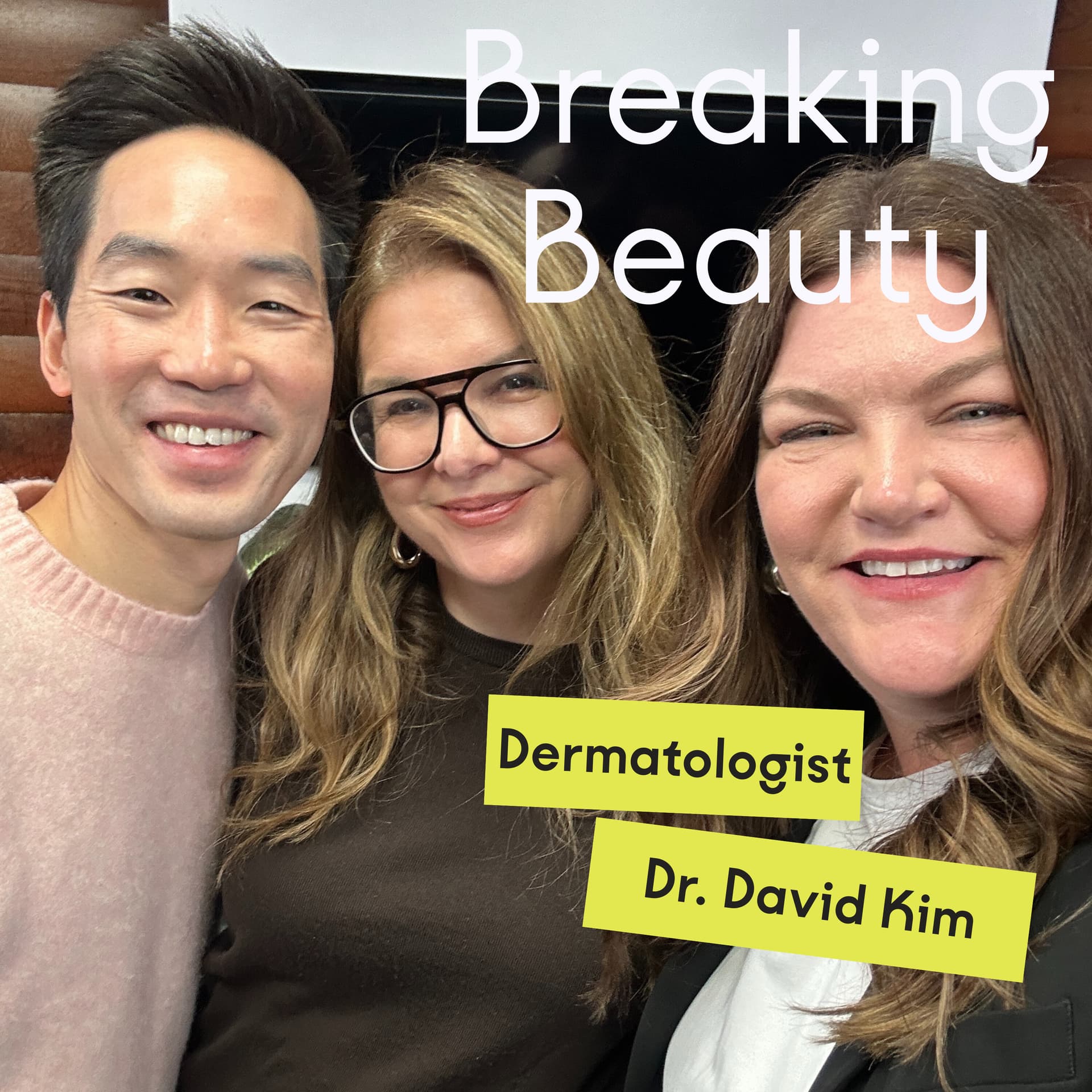
The Exact K-Beauty Skincare and Treatments That are Worth Your Money with Dermatologist Dr. David Kim
Hosts
- Jill Dunn
- Carlene Higgins
Episode Overview In this episode, Jill and Carlene welcome Dr. David Kim, a board-certified dermatologist who specializes in merging Korean aesthetics with Western dermatology. The discussion focuses on K-Beauty trends, effective skincare treatments, and innovative ingredients that are prevalent in South Korea but may not yet be mainstream in North America.
---
Key Topics Discussed
- Cultural Differences in Skincare
- Prevention vs. Correction:
- In South Korea, young adults start preventive treatments in their 20s.
- In North America, there is often a "fix-it" mentality, where treatments are sought only after visible issues arise.
- Aesthetic Preferences:
- Korean beauty standards favor softer, heart-shaped facial features ("V-Line").
- In the West, the trend is towards sharper, more contoured looks.
- Innovative Ingredients
- PDRN (Salmon Sperm DNA):
- Proven to enhance skin hydration and improve joint recovery.
- A viral trend in K-Beauty, but has a decade-long history in South Korea.
- Tranexamic Acid:
- An effective oral solution for melasma, which can alter pigmentation safely.
- Requires careful screening for clot formation risk before use.
- Trending Treatments
- Pico Laser:
- Used for treating skin texture and pigmentation issues.
- Zerf Treatment:
- A radiofrequency-based lifting treatment with minimal downtime, gaining popularity for natural results.
- Spicules:
- Microscopic structures used to enhance the delivery of skincare products into the skin, effective for those with large pores.
- Dr. David Kim's Recommendations
- Top K-Beauty Staple:
- The Auto Barrier 365 Cream from Estura, recommended for sensitive skin, is highlighted as a must-try product.
- Personal Experience with Treatments:
- Dr. Kim shares insights from his personal use of treatments like salmon sperm DNA combined with microneedling and Zerf.
- Building a Skincare Routine
- A solid skincare routine is essential; consistent use of products can lead to better skin health.
- Emphasizes the importance of understanding what works for individual skin types rather than following fleeting trends.
- Launch of Dr. Kim's Brand
- Lightsaver: An SPF brand launched by Dr. Kim, designed to offer effective sun protection without irritation.
- The brand emphasizes mineral-based formulations that feel smooth and include skincare benefits.
---
Key Takeaways
- Preventive Care: Early intervention in skincare can lead to better long-term results.
- Effective Ingredients: Look for scientifically-backed ingredients like PDRN and tranexamic acid for specific skin concerns.
- Customized Treatments: Individualized skincare routines and treatments yield better and more sustainable results.
- Education on Skincare: Understanding the science behind products is crucial for effective skincare choices.
---
Social Media and Additional Resources
- Follow the hosts on social media for updates and discussions:
- [Breaking Beauty Podcast on Instagram](https://www.instagram.com/breakingbeautypodcast/?hl=en)
- [Breaking Beauty Podcast on TikTok](https://www.tiktok.com/@breakingbeautypodcast)
- [Breaking Beauty on YouTube](https://www.youtube.com/@breakingbeautypodcast)
- For Product Mentions: Visit the [Breaking Beauty Podcast website](https://breakingbeautypodcast.com/episode-recaps/) for links and more information on the products discussed.
---
Conclusion This episode delves into the world of K-Beauty through expert insights from Dr. David Kim, providing listeners with both education and actionable recommendations to enhance their skincare routines. Tune in for an expert perspective on the evolving landscape of beauty and skincare treatments.
Written by AI. May contain mistakes. Listen to the episode to check what was said.
Chapters
Tap a time to open that second in VOIntroducing Dr. David Kim
0:45 to 2:37
Introduction of Dr. David Kim, his background, and expertise in K-Beauty.
“We're all about covering trends, but we need the expert voices, right?”
Comparing K-Beauty and US Beauty Standards
2:37 to 4:35
Dr. Kim discusses the differences in beauty ideals and treatment approaches between Korea and the US.
“There are a lot of similarities and differences.”
The Science Behind Treatments
4:35 to 6:28
Exploration of various treatments like salmon sperm DNA and how they are used in K-Beauty.
“And as it goes down to the chin, that is a little bit narrower because it's a little bit more feminine when you look at that face.”
Topical vs Injectable Treatments
6:28 to 8:06
Discussion on the efficacy of topical versus injectable forms of beauty treatments.
“So they're actually injecting into joints for hip replacement surgeries or any trauma to the joints to see if it can help accelerate the recovery.”
Product Recommendations for K-Beauty
8:06 to 9:55
Dr. Kim shares his favorite K-Beauty products and what makes them special.
“So have you ever brought back a PDRN product that you like?”
The Aspirational Glass Skin
11:12 to 13:20
Discussion on the concept of glass skin in K-Beauty and how to achieve it.
“Have you ever heard the saying, tell me what you eat and I will tell you who you are.”
Treating Pigment Disorders
13:20 to 14:01
Insights into managing skin conditions like melasma through lasers and skincare.
“Everyone, a lot of people do it in Asia.”
Understanding Melasma Treatment Options
14:01 to 14:36
Learn the importance of a careful skincare routine over laser treatments for melasma.
“Instead of just blasting someone's face, which can potentially make your melasma a lot worse.”
The Role of Tranexamic Acid
14:37 to 15:40
Discover how tranexamic acid can be effective for melasma and its potential risks.
“Because Jill, you were saying you were on the Olive Young website, right?”
Screening for Clot Risks
15:41 to 16:58
Understand the importance of genetic screening before taking tranexamic acid.
“It's all the stuff that we've already known.”
Show all 20 chapters
Usage and Effects of Tranexamic Acid
16:59 to 18:09
Learn how to properly use tranexamic acid for melasma management.
“And it's usually subclinical, meaning people will go through their entire lives without knowing that they have that mutation.”
Evaluating Skincare Ingredients
18:10 to 21:01
Explore the effectiveness and longevity of various skincare ingredients.
“They are prescription only, but they are available.”
Exploring Spicules in Skincare
24:02 to 26:05
Discuss the benefits and uses of spicules in enhancing skincare absorption.
“So 100 means it's designed for you to use every day.”
Comparing Exfoliation Methods
26:06 to 28:00
Understand the differences between gentle and harsh exfoliation techniques.
“But I want to ask you, okay, there was a time when, you know, the apricot scrubs.”
Exploring Effective K-Beauty Treatments
28:00 to 37:30
Learn about various K-beauty treatments, their effects, and personal experiences.
“I mean, at this point, I've been doing this for 20 years.”
Creating Effective Mineral Sunscreens
39:41 to 42:00
Understand the journey behind developing a user-friendly mineral sunscreen.
“But this all goes back to when I was in medical school, really.”
Launching a Mineral Sunscreen
42:00 to 43:39
Learn about the journey of creating a mineral sunscreen and its mission.
“with a small card and I sent it off to Condé Nast Allure.”
The Importance of Professional Treatments
43:39 to 44:37
Discover the significance of understanding dermatological treatments and procedures.
Recommended K-Beauty Product
44:37 to 45:45
Get insights on a highly recommended K-beauty product for sensitive skin.
“There's a product, there's a brand called Estra.”
Connection Through Toronto
45:45 to 46:41
Hear about shared experiences and connections in Toronto between the hosts.
“We have so many more questions that we don't have time to ask you.”
Transcript
Automatic transcript. May contain errors.0:00The following podcast is a dear media production.
0:08Welcome to Breaking Beauty, the podcast all about the breakthrough people, products, and moments in beauty. We're your hosts, Jill Dunn and Carlene Higgins.
0:21Welcome back to Breaking Beauty podcast, everyone. We're two beauty editors turned beauty podcasters here every Wednesday with the breakthrough people, products, and moments in beauty. Hey, Carlene. We are here again, another Wednesday together. We're excited today because we're diving into a topic that our listeners are obsessed with. We are obsessed with. We can't get enough of it. Constantly trending. And that is K-Beauty. What else? We're all about covering trends, but we need the expert voices, right? To be able to shed light on what is actually happening, because there's so much noise on the internet about K-Beauty.
0:55And to break down and separate the science from the fluff, we have an amazing expert. We are thrilled to welcome a guest who truly bridges the worlds of dermatology and Korean aesthetics, and that's Dr. David Kim. Yes, and Dr. Kim is a board-certified dermatologist and expert in lasers, fillers, toxins. He received his medical degree from Stanford University and holds a Master in Public Health Nutrition from Columbia University as well. And he's really known for his signature subtle improvements that make a big natural difference. And as a native Korean, he travels to Seoul frequently to immerse himself in the newest techniques and treatments, bringing that innovation back to his Manhattan practice and on the Today Show, where I see him quite often.
1:40Yes, his mission is to educate the public about year-round sun protection. And that's what inspired him to create his award-winning SPF brand. It's called Lightsaber, and it launched on Sephora.com as well. And of course, we have to mention the big news. Dr. Kim is imminently opening his own highly anticipated practice called Soho Derm. So that's majorly exciting as well. And for our listeners who are tuning in to us, maybe for the first time, fans of Dr. Kim Discovering Our Show, we also are publishing this episode on YouTube. So follow us there, which is Breaking Beauty Podcast. So with all of that, welcome, Dr.
2:18David Kim. Thank you so much for having me. Thank you. So nice to meet you all. Yeah, you too. Let's start at the beginning with your unique perspective. You're going between Manhattan and Seoul. What is the biggest difference in K-Beauty's core principles and approach to beauty compared to what you see here in New York? There are a lot of similarities and differences. I feel like when it comes to K-Beauty or people in Korea who seek these treatments regularly, they are very focused on prevention. So they start from a very early age, mid to late 20s, early 30s. They start playing with different types of treatments.
2:56And there are so many treatments that are available overseas that are not available here, right? I feel like the U.S. is usually one of the last places to get the FDA approval, to get the devices here. They start with a little bit of injectables, like Regeron is so hot right now with the salmon sperm DNA. Everyone's doing it. Everyone's skin is so glowy and plump and hydrated. People start with a little bit of laser, like Pico laser for pigment or like a very gentle lifting devices like Zerf, Thermage, probably less Ultherapy. Ultherapy, people start doing it in their early 30s, mid 30s. in the US, I feel like people start to come see a dermatologist when they have a problem, or if there's something that they want to fix or improve.
3:38And a lot of people will actually, in the past two years, I will say more people have been coming in sooner, late 20s, early 30s, and they start wanting to learn more about different treatments and different options that are available and see what's appropriate for them. I think another big difference is in Asia, the looks that they want are a little bit different. They like more egg-shaped, heart-shaped, cuter, little fuller looks. Whereas in the States, they want more sharp, contoured, snatched looks. Whether it's the cheekbones, the jawline, the chin, or the lips. It's all about that bone structure.
4:13Yeah, exactly. So it's all about the bone structure. And I think the aesthetic goals are a little bit different. That's like carve out the cheek, all of that. It's like V, what do they call it in South Korea? I think the V-line V-shaped. Yeah, V-line sculpting. Which is not that different from here. But I think that's what everyone wants. They want their heart, their face to be heart-shaped. So it's a little bit wider. And as it goes down to the chin, that is a little bit narrower because it's a little bit more feminine when you look at that face. Well, it's interesting because I remember hearing one plastic surgeon on social media and they were talking about how actually if you look at a lot of really famous women actresses who in history have been thought of being conventionally really beautiful he was saying how if you actually cut off their eyes and just looked from the mouth down they actually have very broad jaw very broad jaw line yeah and i didn't realize that and then i kind of started doing that and i realized oh yeah that's a very that actually it's that back to that bone structure which to me is like the opposite of the the b shape yeah it is and it isn't because you need structure in your jaw to keep things more lifted right and so there's a balance and so if you if you over augment the jaw then you're going to masculinize your face but if you weaken the jaw by doing too much masseter botox for example to thin your face then you're not going to have the support and you're going to start developing jowls and so what is that delicate balance between using all different and lasers, and injectables to achieve that perfectly balanced look that gives you that shape, that gives you that distinct sharp jawline without masculinizing your face, if that's what you want, and then without having heavy gels.
5:57That's where you have to kind of balance different treatments. Right. Have you personally done the salmon sperm facial? On my face? Yes. I have done it, not as an injectable, but in combination with microneedling. Okay. But I was really, I didn't, I really wanted to do it. I just didn't have time to do it this past October when I was in Korea. And what's your review? It's so interesting. So Salmon's from DNA sounds new, but it's actually not new. It's been around in Korea since 2014. So it's been around for 10 plus years. And there's so much research around it. And they're actually now looking into other things more than skin, hair, joint health.
6:32So they're actually injecting into joints for hip replacement surgeries or any trauma to the joints to see if it can help accelerate the recovery. And there's a lot of research happening in Southeast Asia, actually Thailand, Indonesia, Vietnam. And they're looking at how that PDRN can stimulate fat cells to produce younger fat skin cells, fat cells. And that's actually really interesting, too. And so it's not this like new trendy thing that started, came out of nowhere on TikTok. It's been really well studied. And it's by a pharmaceutical company called Pharma Research in Korea. And the Regron is a brand within that company.
7:12and they're heavily, heavily invested in innovation and research. And it's really impressive, actually. Do you think topically in a cream it's doing anything? So very good question. So even within Ridgeron, and I'm not paid by Ridgeron to see any of this. I'm not sponsored. But the injectable form is called polynucleotide. And then the cosmetic form is polydeoxyribonucleotide. So they're slightly different. And then the molecular size is slightly smaller for the cosmetics so that it will actually get absorbed onto the skin. And then Rigeron has their own patent on something called a DOT technology.
7:50I think it's called DNA optimizing technology where they've done studies and designed the molecules to a size that will actually get absorbed to the skin. And so that's why polynucleotide has to be injected into skin. But PDRN can be applied topically. Okay. Okay. So have you ever brought back a PDRN product that you like? Of course. Like what? I mean, there's several different types. So Rigeron has a really good product called the Dual Effect Ampoule. I love that product. It's super hydrating. It's lighter in texture than most of their products. And it gives you a really nice glow. And it's not heavy.
8:27I have very oily, acne-prone skin. So I always look for products that are fast-absorbing, that doesn't feel sticky on the skin, that doesn't make my skin greasy and suffocated. And it's really hard to find products like that. I'm very particular. I can tell right away within five seconds if I like the product or not. So Regerol has a really good one. Dr. Regerol is another brand that went viral last year. It's developed by a pharmacist in Korea and their product is really excellent too. And they have this retinol cream that you can use at night that's also mixed with trinacemic acid, PDRN and retinol.
9:03And it's really gentle on the skin. So it's great for people who have sensitive skin. I think those two are my favorites right now. I need those. Yeah, I need. Sold. Yeah, you really did. Well, can you get them here? Can you get them here? Yeah, Amazon. Yeah, can you get them on Amazon? Say less. So affordable. That's the thing too about K-Buty. It's what's amazing.
9:37Skims is one of our show partners this week. Okay, story time, everybody. I must fill you in on the lore behind the Skims Fits Everybody collection. As someone who has a D cup, I was a little skeptical at first that a bra truly could be Fits Everybody, but I am in love with the Scoop Bralette from Skims. The full name is the Fits Everybody Scoop Bralette. First of all, I love how size inclusive it is. And I really love how shade inclusive it is as well. So everybody can find their version of naked or neutral. And it's just so comfortable. The fabric is buttery soft. It has a second skin effect.
10:16And the band, it's snug enough that you feel like you're really supported, but it doesn't dig into you. It doesn't feel uncomfortable ever. and the straps themselves. They're really skinny and they are adjustable. So they don't dig into you at all and you can get your exact fit. I love to wear it underneath sweaters. And I also appreciate that you can wear it all season long, even if you have tank tops. It's just a brilliant design. Honestly, I love this bra so much. I have it in like three colors. So if you want to try Skims yourself, you can shop Skims Fits Everybody Collection at skims.com.
10:52After you place your order, be sure to let them know we sent you select podcast in the survey and be sure to select our show that's Breaking Beauty in the drop down menu that follows. And if you're looking for the perfect gift for your Valentine or for yourself, the Skims Valentine shop is now open. We'll link to this URL in our show notes and on our website. Now back to the show. Have you ever heard the saying, tell me what you eat and I will tell you who you are. I'm Katie Lee Beagle and I'm food obsessed. Tune into my podcast All on the Table and get to know celebrities, bold-faced names, and industry insiders in an all-new way as they share the ingredients that make their recipe for life.
11:32I want to know it all, from the favorite childhood birthday cake to the breakfast they eat every day, an engagement meal in Paris, or a guilty pleasure fast food indulgence. You can tell a lot about a person by what's in their fridge. And hey, everybody's got to eat. Make sure to tune in every Thursday and follow so we can devour every last morsel together. We're putting it all on the table.
12:06So let's talk a little bit about glass skin. Is that still an aspirational thing to have in K-Beauty? Yeah, yeah. Or is it kind of that? Is that dating now? It's going to be on to something else. Yeah. I feel like glass skin is always going to be in. I feel like it was in when my parents were in their 20s. I think it would always be around. It just means like glowy, even, plump skin, hydrated skin, right? Who doesn't want that? I want that. I don't want to look shiny and greasy, but I want to look plump and hydrated and rejuvenated, right? And I think that's what always people want. And it's going to require a combination of different skincare and treatments to really achieve that.
12:45but I think one ingredient exactly there's no not one ingredient right there's no trick there's no one treatment that will get that give that to you you have to do your research you have to do you have to use the products and find the products that really work for your skin yeah I do find that for myself like the lasers have been game-changing in the way of like evening out my tone yeah I do the XLV and broadband light. And I feel like those have been game changers. You mentioned Pico laser. What's that? I need to do that. What is that? Pico laser is great. Do I need to do that? I think everybody does.
13:24Everyone, a lot of people do it in Asia. It helps with pore size, also helps with pigment. So, you know, when you have pigmentary disorders like melasma, it's really hard to do laser treatments in general because any heat and trauma can actually make melasma worse. So number one, you have to prep your skin. You have to be on a brightening skincare regimen, especially if you have darker skin, at least for two to three weeks so that your skin's prepped. And then you can do a gentle laser and then eventually work your way up. That's what I do. That's how I approach it. I start with a conservative treatment.
13:57And then the second time, the third time, I will increase the energy each time because now I have a reference point, right? Instead of just blasting someone's face, which can potentially make your melasma a lot worse. And when you have a lot of pigment, you have to be really careful. Sometimes laser is actually not the answer. Having a really good skincare routine with prescription creams and over-the-counter creams can make your melasma a lot better than doing laser treatments because laser treatments can actually make it worse. And there are so many other things. Trinazomic acid, you can take it as a pill as well, which is so widely done in Asia and Europe too.
14:31and more people are doing it here today in the States too. Have you heard of transomic acid as a pill? Yes. Not as a pill, I'm sorry. We were going to ask you about this. Yeah. Because Jill, you were saying you were on the Olive Young website, right? And they had like a whole section for... On transomic acid. Yeah, whereas it feels like, well, just like supplements and stuff, whereas it feels like Sephora has kind of been like, we're out, not interested. So there's definitely a distinction there. Yeah, it's interesting. supplements we definitely need more evidence there's just no like clear science behind it but i'll tell you i have a like a 78 year old uncle in korea who takes supplements collagen supplements every day yeah he looks great yeah it's all anecdotal really more than research based but we all know food diet lifestyle makes a huge difference right so i think the key here is to not look for a quick supplement or a quick fix because that never really works.
15:31It's not sustainable. You really have to really change your lifestyle. You have to exercise, eat healthy, stay out of the sun, wear sunscreen every day, have a skincare routine, whether it's three steps or 10 steps and then really be consistent with it. I feel like that's key. So boring, but yeah. It's all the stuff that we've already known. I know, but nobody wants to listen. We're like, we need a quick fix in the supplement, please. Do you take any of those supplements? Like the transexamic? I don't know if I said that. Transexamic acid. So transexamic acid is actually a prescription pill. Oh, it's a prescription.
16:03Yeah, it's a pill. And it actually works incredibly well for melasma. So if you've done laser treatments or if you don't want to do laser treatments, you've done hydroquinone, but hydroquinone irritates your skin. Transexamic acid as a pill is a game changer. I even had a patient earlier today who was struggling with melasma. and the only thing that's worked for her is transomic acid. But, and all the dermatologists know this, but transomic acid can increase your risk for clot formation. So you have to do a screening test. You have to make sure that you are not genetically predisposed to forming clots.
16:37And some people don't do that. I think it's really crucial that you do these screening tests because I had a patient who was very healthy. She was a young female, struggled with melasma. And I did my routine test. And sometimes I do think, is this an overkill? Is this really necessary? And she had a mutation called Factor V Leiden mutation, which is a pretty rare mutation. And it's usually subclinical, meaning people will go through their entire lives without knowing that they have that mutation. But if they go on birth control, smoke, have history of migraines, or go on a medication like trinthemic acid, it can tip them over and it can increase your risk for clot formation.
17:16And you don't ever want to take that risk, right? So then do the screening test. if you are clear, then you can take this medication and you don't take it all year round. You just take it during the peak summer months. So June, July, August, September. Oh, interesting. And it will prevent your melasma from getting darker, bigger, worse. And then when you come off of it, it will have lingering effects and your melasma will get so much better. Whether it's on your cheeks, on your forehead, on your mustache area. And then obviously you have to be consistent with the skincare too, but that will make a big difference.
17:49Yeah, so that's by prescription only. Prescription only, yeah. I wonder if it's in Canada as well. Do you know? I'm sure it is. Yeah. I'm sure it is. Yeah, because it's available here. I haven't heard a lot about it. That's great. I know people with melasma really have trouble finding a solution. But you will see it in skincare a lot. Oh, definitely. Topically. Topically, exactly. Yeah, that's interesting. I'm literally Googling the Health Canada right now. Available, yeah. They are prescription only, but they are available. Okay. It's usually 650 milligrams once a day. Yeah. Okay. Very cool. oh oh interesting it also helps with nosebleeds yeah okay and that's why it increases your risk for clot formation yeah because it clots your blood right yeah so is it like essentially reducing the blood supply to like the melanocytes or something yeah and and then it's like not going to pop up she's so smart my gosh well you made that connection like right away on the spot that was quite incredible actually yeah because we don't know exactly how it works and why it works for melasma.
18:48But one of the theory is exactly that, that it will reduce circulation to your melanocytes. And that's why they're not as active. Yeah. Okay. Okay. Good tip. Well, we're going to keep going on the ingredient train. I do want to ask you about glutathione though, because is it a master antioxidant in your mind when it comes to a skincare ingredient? I did get sent a line by a doctor like a year ago or something it was all around glutathione which was pretty unique yeah and actually one of the products that it included was a spray that you were meant to spray i guess like on your stomach or something for stress marks or for no for like trans absorption like yeah like the way that dr dandy sprays magnesium on her belly right okay it was like that oh no way how does that work i don't know you tell me it must be the formulation right like i guess yeah it goes back to the size of the molecule but and it's a liposomal encapsulated molecule so that it gets absorbed better on the skin yeah but it's interesting that it maybe the spray must be just a delivery that it's easier to apply that way but because for things to be transdermally absorbed better usually it comes in this form of patch yeah right because it has to stick to your skin for a while because things don't get absorbed right away right but glutathione is an ingredient i think it's a great ingredient it does have brightening effects no one knows exactly what you know how it says transomic acid four percent glutathione doesn't have like a very specific range of percentages that that it should be required to have the brightening effect clinical yeah yeah as much but i think it's like i mean And now you see NAD, like in skincare.
20:35And I think it's just a very buzzy, trendy ingredient. But guess what we were going to ask you next. But is it going to really stay and stick around? I don't know because there's not. Traditionally, if you look at all the ingredients like vitamin C, niacinamide, retinol, transomic acid, PDRN, the ingredients that stick around are the ones that are really well studied. It's based on evidence and science. All the other ones are just very trendy. They come and go. Even snail mucin, people don't use it as much anymore. It was so hot for five years, three to five years. It doesn't have as much research as all the other ingredients.
21:11So it does have skincare benefits, but does it have longevity? I'm not sure, right? Yeah, well, all the ingredients had to start somewhere. So I feel like you're right. We just don't know yet. Have you guys read the original papers for SkinCeuticals vitamin C study? If you look at the original study, it was done at Duke. and by a scientist and in the 90s and there are multiple papers like vitamin C, YL, ascorbic acid and then they add vitamin E and ferulic acid and they, it's like so easy to follow because this was so beautifully well designed and that's why it has this longevity. People are obsessed with it and they use it and they have a cult following and it makes sense because it's based on science.
21:52All the other ingredients, maybe they will have that robust research and evidence eventually, but time will tell.
22:08Nutrafol is one of our show partners this week. At the start of every year, people are hit with the same message, new year, new you. But what if you didn't have to reinvent anything? What if real change was already happening quietly, naturally from within? And that's exactly what Nutrafol believes, that hair growth doesn't come from quick fixes or unrealistic timelines. It comes from building a routine that nourishes your body with what it needs consistently over time. And Nutrafol is the number one dermatologist recommended hair growth supplement brand trusted by over one and a half million people.
22:44Plus so many dermatologists on our show over the course of many years have recommended Nutrafol as well as tons of hairstylists. And I personally love the fact that when I'm on my Nutrafol routine, I take the women's formula. I notice less shedding, absolutely. So the hair that I have, I keep it for longer and it looks visibly thicker. And Nutrafol's hair growth supplements are peer-reviewed, NS certified for sport and clinically tested to measure improvements in growth, quality and strength. Love to see those clinical tests. So if you want to try it for yourself, we have a very special promo code.
23:22See thicker, stronger, faster growing hair with less shedding in just three to six months with Nutrafol. For a limited time, Nutrafol is offering our listeners $10 off your first month subscription and free shipping when you go to Nutrafol.com and enter the promo code BREAKING. Find out why Nutrafol is the best-selling hair growth supplement brand at Nutrafol.com spelled N-U-T-R-A-F-O-L.com promo code BREAKING. That's Nutrafol.com promo code BREAKING. We'll link to this offer in our show notes and on the website. Now back to the show.
24:01let's talk about spicules okay is this legit the cica read all of it all bt cosmetics the cica the spicules yes it's it's legit but you have to be really careful because they have like five different strengths like 50 100 300 700 and i think there may be a thousand so i can only personally tolerate 50 and 100. So 100 means it's designed for you to use every day. 50, I think it's twice a day, morning and night. And the spicules do go into the skin and they're designed to be smaller than the size of your pores and they will help deliver the products better. And can we just get a recap on what the spicule is?
24:41If you look at it under microscope, it looks like a needle. Yeah, daggers. Yes, exactly. Yeah. But like little needles, it's not going to have the same effect as doing an in-office treatment with microneedling or microneedling with radiofrequency. But if you have large pores, if you have really sebaceous skin, if you have oily skin, and if you want to deliver your skincare products better, then it does help. You just can't overwhelm your skin with that and retinol and salicylic acid and benzoyl peroxide and all these things all at once. You got to rotate and you got to give your skin a break. So the spicules one, are they all made from that sponge or are they made from different things?
25:20Oh, I actually don't know where they're made from. Because there's one that we tried that was the spicules were made from some kind of sponge. Oh, I think you're right. It's like a freshwater sponge. And that's what creates sort of those little. Crystalline. Yeah, yeah, yeah. And that's why they say like it's safe for the skin or whatnot. The one that we did was like a professional line, but then they had an at-home one. And so it was the different degrees, like you said. What did it feel like? The one that I, so this is what I'm wondering for you, because I tried the professional one with an esthetician and it was like, it felt like crushed glass.
25:55Like she was massaging it in my skin. And I was like, I swear to God, my face is bleeding. Like it felt like crushed glass. But what about you? What are these things feel like? These Riedel shots? They're very spicy. Yeah. you feel just spickly you have this like spickly spickly is that a word let's go there let's go with it sensation and it tingles and it lingers on for a little bit and i have but it does not feel like crushed glass no no not to that extent maybe if you use a really strong one i'm just like i'm just not gonna go there the 700 i think you're supposed to use it once a week but i am a strong believer in doing something that's gentle more consistently than doing something really harsh and aggressive once a week.
Read the full transcript
26:39A thousand percent. A thousand percent. But I want to ask you, okay, there was a time when, you know, the apricot scrubs. Oh my gosh. And the derms were like, do not, you're scratching your face. It's like physical harm. How is it that you can apply something that feels like crushed glass on your skin and that is not going to create microscopic tears or be damaging to your skin. Riddle me that. The apricots. Riddle me that? I thought riddle me that. Sorry, it's there for the taking. I love it. You're on the roll today. Dad jokes. Oh my gosh. The apricot scrub, that one's a physical exfoliant. You can actually feel the beads, right?
27:26And you can tell right after you apply it. It's like your skin's so dry, like squeaky dry, right? And that's never a good sign. That means it's just too strong on your skin. The real shot, it's so microscopic. And that's why I think the biggest mistake people can make is trying to be overly eager and using a product that's too harsh for the skin. But if you're using a product that's really gentle, that's microscopic, and that's smaller than the size of the pores on the skin, it's not going to really damage your skin. But you just have to use a product that's right for your skin. Yeah. I mean, at this point, I've been doing this for 20 years.
28:05I just go with my gut on certain things. That one's a no for me. But that's just me. How did that feel after? How did your skin look afterwards? Terrible? Red. Red. For how long? But they were like, that's normal. But I have like low grade rosacea. Yeah. Like 24 hours later, it was probably fine. But the day of it looked like I was in a sauna. It was quite dry. The thing was that they said from the get-go, and I think you experienced it, Carleen, was like, it was quite drying. you were flaking off. You were flaking off? No, okay. Like a few days later. Oh, wow. So it felt like more like a chemical peel.
28:39Yeah. Yeah. Oh, yeah. These don't feel like the one. Liquid micrometal. And also like two days later, you would touch your skin. You could still feel like it inside. Oh, no way. Okay. Yeah. So I think it was just like professional treatment. Yeah. Versus the backhand ones. Having tried both now, because at the time I had only tried that one. I think it was called Beyond Miracles. Okay. I then subsequently tried microneedling properly. And I would say the microneedling, I had less downtime. But at the same time, they are numbing your face. Yeah, exactly. And the liquid microneedling from Beyond Miracles, you could do it on active acne.
29:13That was the other thing. Whereas microneedling, you can. You can. It's a whole thing. Yeah. I wouldn't do anything on active acne. Yeah. Yeah. Yeah. I would not do that. The doctor has spoken. Yeah. Everyone. Let's talk about Korean skincare and the idea of how you apply it. Finger patting or slapping. Does it really make a difference, honestly? I don't know. That was going to be my question. I think it's just like a routine. Like that's what we grew up seeing our moms too and our dads too. They apply and they tap to let it dry quicker. What people don't talk about is how we actually layer skincare.
29:46And I don't do this myself, but a lot of Koreans will apply a thin layer of moisturizer, wait for it to dry, and apply another layer. So they apply multiple layers. And I think that's what makes it actually more unique because then you can apply more products more evenly instead of doing like five pumps and applying all over, doing like one layer at a time. I think that's actually more beneficial than tapping or any of that. See, this is what, I can't remember who I brought this up with before, but yeah, there's like different schools of thought. So some estheticians will be like, you want to get your steps on quickly because if you put on your, let's say toner or essence, you want to get your serum on quickly because it's going to help with absorption is the thought, the thinking.
30:27And then same thing, you want to get the moisturizer on on top of that serum. It's going to help to basically suck it in so you don't have a dry sponge. It's not picking up anything. But then I feel like there's another school of thought that's like you actually want to apply it, go away and do something and let it dry and then reapply. So what say you as a derm? I don't really know if either really makes a difference. Honestly, let's just start with having a solid skincare routine to begin with. Okay. Yeah. Sounds good. Yeah. And I think if you have consistent routine, I think that's what's most important.
31:06Yeah. There's no studies to back this up. Yeah, exactly. Yeah. But if you slap, like sometimes I will slap my face. If I had a really like salty meal the night before and I look puffy, then I will slap for sure with cold water. That was me last night. Why I cannot stop drinking this water. I love it. But other than that, day to day, I'm not sure. What is the number one question? Because you're seeing patients all day and we're so grateful you're spending time with us today. Oh my gosh, I'm so happy to be here. What are they asking you about in your practice from a K-Beauty point of view? Because you are the expert around...
31:39Oh, from K-Beauty? Yeah, like just I'm curious because you're the expert around this town in this subject matter. Yeah, right now, there are two main things that I get consistently asked. One is, is salmon sperm DNA real? And is it safe? Is it effective? When is it going to get a FD approved? And I think we already addressed that it's safe, it's effective. The other question that I get is, how do I get a lift without any downtime? I don't want to get a facelift. Also, a lot of people have been asking me about facelifts. When is the right time to get a facelift? I'm seeing all this posts on social media and the news about facelift.
32:16And really, like, the one standout moment was I have a 65, 66-year-old female who's a breast cancer survivor. Beautiful. And she was like, Dr. Kim, every time I open social media, I see something about a facelift and I feel pressure to get a facelift. That's the algorithm for you. But I'm also like, if you're a 66-year-old breast cancer survivor and you feel pressure to get a facelift, there's a problem there, right? And she's not someone who's obsessed with looking a certain way. She's a very minimal. She will come see me three to four times a year. And we always have a lovely chat. And she's not the person who cares about the tiniest little fine lines.
33:02She's not obsessed. So I was really shocked to hear that from her specifically. And then the conversation always shifts to like, what are the non-surgical things that you can do? So there's a new treatment that just got FDA cleared in the United States. It's called ZERF, X-E-R-F. It's a radiofrequency-based lifting treatment with minimal downtime and minimal pain. I don't know if you've heard of Thermage. Thermage, super popular. A lot of people do it once a year, but it's very painful. It is effective, but it is very, very painful. And then, so Zurf got approved in Korea two years ago. And it made a splash because it has minimal downtime.
33:41And the pain level is like one out of 10. You don't need topical numbing. You can come in and you can start right away. And what makes it unique is that it uses two different frequencies. So it can give you tightening on the superficial level and the deep level. So it's all the rage right now in Korea. And it just made it over here. now I do so many zerfs really? because people want of course I'm googling the before and afters everyone damn and people love that treatment and then because now it's it's all about how do I maintain and how do I lift my face without impressive injectables I'm seeing can you do your neck?
34:19you can do your neck can I do my yeah absolutely yeah you can do your neck you can do your double chin jowls look at this jowling around the mouth that's gone yeah wow That's not surgery. That's crazy. Yeah, that's pretty crazy. Yeah, it's pretty crazy, right? How long would that last, that result? Usually it's six months. So I recommend patients to do it twice a year or so. The recommendation varies. And I think in Korea, they do recommend people to do it one month apart. In my opinion, that's too close. And I think you can like wait a little bit longer and you can do the second treatment anywhere between four to six months.
34:49And then you will have equally good results and maybe potentially for longer. And you can, when you do a treatment like that and you're stimulating your skin cells to produce more collagen, sometimes you'd still need injectables, right? But you need less injectables because you're now tweaking it. Guys, you're saving money. You're saving money. You can tell your husbands. You can space it out, you know, do treatments like Ultherapy or Zerf or Thermage first, wait, you know, six to eight weeks, tweak a little bit with a little bit of filler and then you're really set for the rest of the year. And that way it looks so natural.
35:25You don't look puffy. and again, you require less products by doing it that way. Yeah. Have you done it yourself? Zerf? Yeah. Funny story. So when I was in Korea in October, I met with the people who built the device. I met the scientists. It's by a company called Ultronics Sign-A-Shore. And I met the scientists who designed the device and I got treated by the lady who created the treatment guidelines that all the doctors use. She's done like 2 ,000 treatments. And I was like, pushing the treatment guideline aside, I was like, give me the real tips. Give me the tips that you learned from. So the way I do it is slightly different because she gave me all these like nuanced tips that's not in the treatment guidelines because treatment guidelines have to be very conservative and easy to follow.
36:11But there's a beauty and art into creating something that's more custom and different, right? And I asked them, can you just treat the right side of my face? I did. No way. In the name of science. I was like, I'm going to try it on my face first. And I'm going to do just one half of my face. And I'll show you the photos. I posted on my Instagram. Hundreds of people voted. I said, which side did I treat? And 65 % guessed right. And it was the right side. It was sharper. It was more lifted. This was a little bit. So a quick way to look at it is look at the distance between your mouth and the jaw.
36:46Is it narrow or is it wide? Because when we sag, when we have laxity, the distance between the corner of your mouth and jaw will be wider. and it kind of masculinizes your face. And if it's lifted and sharp, then it will be narrower. And you can see the position of my cheekbones and my jaw is sharper and smoother. And it was really interesting. It was a really fun exercise. And so when I came back six weeks later, I treated myself on the other side to balance it up. But that was really fun. That was like, I was like, wow, I really see the difference. And after the treatment, it feels different.
37:17I don't know how to explain it other than to say your face does feel lifted. Yeah. Okay, cool.
37:30today's episode is brought to you in part by one skin so i love hearing about the trending ingredients in skincare but when it comes to my personal routine at home i really go for products that have ingredients that have stood the test of time that are science-backed one of those ingredients is definitely peptides now not all peptides are built the same so one of my go-to brands is OneSkin. We interviewed the founder about a year ago. You can go back and have a listen. It tells you all about the whole science behind this brand. The before and afters are incredible. You can have a look on their site, on their Instagram, and they're really known for cult favorite formulas like OS1 Body, OS1 Face, and OS1 Eye.
38:13I use the body cream on a regular basis. I'm just getting back into the face cream again. And OneSkin stands out for their science first approach to aging. It's validated in four separate clinical studies to deliver hydration, barrier strengthening, and visible improvements to the skin with every product. Now, for me, because I have sensitive skin, I love that every formula is certified safe for sensitive skin, dermatologist tested, free from over 1 ,500 known irritating ingredients, and it's been awarded the National Eczema Association Seal of Acceptance. So you're getting these powerful results without the irritation or harsh side effects.
38:51That's the perfect ideal that I am going for. So no wonder OneSkin's products have over 10 ,000 five-star reviews. Born from over 10 years of longevity research, OneSkin's OS1 peptide is proven to target the cells that cause the visible signs of aging, helping you unlock your healthiest skin now and as you age. And we have a special promo code for a limited time. One Skin is making it even easier to stay consistent with 15 % off when you use code breaking beauty at oneskin.co slash breaking beauty. That's 15 % off with code breaking beauty. After you purchase, they'll ask where you heard about them.
39:31Please support our show and tell them that we sent you.
39:40we have to ask you about your sunscreen oh yeah it's called lightsaber lightsaber yes and of course korean sunscreens are famous here in north america so tell us how you kind of but we also know that like we don't have the filters here that they have in korea so how did you go about creating yours what do we need to know so i really wanted to make a mineral sunscreen that felt really smooth and silky and that didn't feel chalky. But this all goes back to when I was in medical school, really. When I was in medical school, I was very actively involved within the Department of Dermatology, an initiative called SunSport.
40:19And this is why I love my mentors back at school. There was an initiative called SunSport and the goal was to educate NCAA athletes about the importance of sun protection. So we would offer free skin cancer screening to all NCAA athletes at Stanford every year. And without fail, at least one or two 18, 19 year olds would have skin cancer. Yeah. Anywhere from basal cell, squamous cell to melanoma. And so, and what's interesting is a lot of the athletes know they should wear sunscreen, but they just didn't want to because they hated the way it felt. They hated the way it smelled and they have to reapply it.
40:59And they're like, no. Or it stings when you're sweating, gets in your eyes. So that was a real moment in my mind when I was a student. I was like, I really want to become a dermatologist. And one day create a sunscreen that people actually want to wear. So that was the inspiration. And fast forward like 10 years later, that's when I decided to actually do something. It was like during COVID. And I was like, okay, now I have time and the flexibility, let's look into this. and I wanted it to be mineral. I wanted it to be gentle, unsensitive skin. So all our products are National Eczema Association approved, which was really important to me.
41:33And every product required at least 12 to 13 iterations because it just takes time to get the formula right. And I also wanted the sunscreen to actually have skincare ingredients and clinical levels, not marketing levels, but clinical levels. So our activated mineral sunscreen prior to launch, I submitted for Allure Best of Beauty. This was pre, we didn't exist. Lightsaber did not exist. I submitted the sample in a white lab sample tube with a small card and I sent it off to Condé Nast Allure. And I literally never thought anyone would find it, get it, read it, use it. And then it was amazing to find out that we won the award.
42:18Like even before we launched, Yeah, just based on a lab sample. So it's not like they were taken away by the beautiful packaging. Yeah, no packaging. Like Lysavor did not exist even then. But I think they really understood the mission that we wanted to make mineral sunscreen. And we are working on chemical sunscreens too. But initially, we want to make mineral sunscreen feel really nice and velvety. That gave a sheer tint that actually has skincare benefits too. And I think they appreciated the mission and the dedication that went into formulating this product. Amazing. I need to try it. Oh my gosh, I brought you a sample.
42:54Oh, you did? I also need to ask about your news. Like we're publishing this a little later. So you have some news around your clinic? Oh my gosh, my clinic. I know. I'm so excited. It's called Soho Dermatology. It's going to be in Soho, obviously. And it's going to be state-of-the-art facility. I'm going to bring all the best products and treatments from Korea that are FDA approved that we can safely administer here. And I go to Korea all the time to learn different techniques from my derm colleagues there and we exchange information. So I want this to be a hub where you can really come learn about the latest, greatest innovations and try different treatments and have a customized plan that's perfect for your skin type.
43:38what I'm known for just like very minimalistic approach so I never push products or treatments that people are not comfortable with it's a place for you to come educate yourself and learn and just understand what treatments are even available because it's so overwhelming right like what is micro kneeling what's micro with radio frequency all the lasers yeah and I think more people are understanding well I think the FDA coming out with that not warning but uh this is warning about the radio frequency yeah like how these devices are administered and i think more and more people are like i'm only going to go to a dermatologist for these types of treatments because you understand the frequency dialing it up dialing it down you're doing it on yourself exactly i i treat myself before i bring anything to the office i do it on myself first yeah and i do it multiple times because it's you have to get the settings right right and you have to play with the settings and you have to that's what makes you an expert right like you're not just following a manual you have a manual as a reference but you you know better so you tweak it the way it makes sense yeah and there are so many terrible stories that you don't hear about you know yeah yeah if someone's listening and they want to buy one cool k-beauty product that you think is like so good oh my gosh what do you recommend that's a hard question i know i'm putting you right on the spot.
45:04But it's really easy for me. There's a product, there's a brand called Estra. Okay. Have you heard of it? Estura? Oh, you say Estura. Is that how you say it? Estura? No, it's probably not. We could be wrong. My patients all love this brand. It's a number one derm recommended brand in Korea for sensitive skin. Yeah. Their Auto Barrier 365 cream is a phenomenal product. It's used, it was initially used only in hospitals and clinics. And because it was such a good product and people were asking for it, it became more commercialized. And now you can hear it. You can get it on Sephora now too. Yeah, on Amazon.
45:40It's like we always say it's the LaRouche-Posay of Korea. It's unscented. And we love that line as well. So we will link to that, guys. We have so many more questions that we don't have time to ask you. And what that means is that you have an invitation to come back. Oh my gosh. We would absolutely have you come back. And I'm just noticing because I'm looking at your Instagram right now. We're based in Toronto and I see you have a little Canadian flag. Yes, I grew up in Toronto. We're Canadian. You did? Yeah. North York. Hey, are you serious? I went to York. No idea, really. Yeah. Oh my gosh, yeah.
46:15I grew up in Toronto. I moved from Korea when I was 14. Hey, yeah. I love Toronto. Like my teachers were so lovely. I was in ESL for like five years. Oh my goodness. Never got bullied. Everyone was so nice to me. I got invited to all the parties even though my English was broken. and I just have the best memories of Toronto. My family, my parents, my brother still lives there. So I love going back. My best friends, a lot of my best friends are still in Toronto. I love Canada. That's so cool. Well, thank you so much. Thank you so much for having me. Yeah, everybody follow Dr. David Kam and we'll see you next time.
46:53Thanks for listening. You can find details on every product mentioned in today's episode, along with our exclusive promo codes on our blog at breakingbeautypodcast.com. While you're there, be sure to sign up for our newsletter. Every episode will be delivered directly to your inbox so you won't miss a single thing. And get social with us. Let us know what you think of the episode. You can follow us on Instagram at Breaking Beauty Podcast. And did you know we also have a private Facebook group? Just search Breaking Beauty Podcast chat room. You can even leave us a voicemail at any time with questions or feedback at 1-844-227-0302.
47:28And don't forget to subscribe to us wherever you get your podcast fix. Spotify, Stitcher, Google Podcasts, and Apple Podcasts, where you can show us some love by writing a review. See you next Wednesday.
47:56Please note that this episode may contain paid endorsements and advertisements for products and services. Individuals on the show may have a direct or indirect financial interest in products or services referred to in this episode. Thank you.
From the publisher
Salmon Sperm! Spicules! A Surgery-Free Face Lift! This week, it’s a K-Beauty extravaganza as we sit down with board-certified dermatologist Dr. David Kim to unpack it all. Dr Kim is a Korean native with a newly-minted Manhattan practice, Soho Derm, that blends the best of cutting edge Korean aesthetics and western dermatology. Dr. Kim has over 1 million followers across social media and he’s often featured as an expert on The Today Show.
Tune in to hear about:
- Prevention vs. correction: Why patients in South Korea start treatments in their 20s compared to the “fix-it” mentality often seen in North America
- The “V-Line” vs. sculpted esthetic: Comparing the desire for heart-shaped, “feminine” facial features in Asia versus the "snatched" jaws in the West.
- PDRN (Salmon Sperm DNA): The science behind the viral ingredient, its 10-year history in Korea, and how it’s being used for everything from joint recovery to glowy skin.
- The melasma solution: Why tranexamic acid (as an oral Rx) is a game-changer for pigment and the safety precautions you need to know
- Spicules - friend or foe? What to know about the “Reedle” shots you see all over Tiktok and which one Dr. Kim is personally a fan of
- The treatments to know now: From Pico Laser to treat texture and dark spots to the Xerf tightening treatment that combats laxity, Dr. Kim shares his own personal experience as a guinea pig on what really makes a difference
- What’s on a derm’s top shelf: Stay tuned to the end to hear about the one K-beauty skincare staple Dr. Kim believes everyone should own
- From derm-to-founder: What makes Dr. Kim’s SPF brand, Lightsaver, different. Pssst - We have a special promo code: head to https://www.lightsaverskin.com and use code Breaking20 for a 20% discount!
Get social with us and let us know what you think of the episode! Find us on Instagram, Tiktok,X, Threads. Join our private Facebook group. Or give us a call and leave us a voicemail at 1-844-227-0302. Sign up for our Substack here. Subscribe to our YouTube Channel to watch our episodes!
For any products or links mentioned in this episode, check out our website: https://breakingbeautypodcast.com/episode-recaps/
Related episodes like this:
- Your Ultimate #DamnGood K-Beauty Shopping Guide is Here! Featuring Guest Host and Korean Skincare Expert Ava Lee AKA @GlowWithAva
- #DamnGood Special! Gothamista’s Renée Chow Spills the Secrets of Her At-Home Skincare Routine
- How a K-Beauty Esthetician Gets Her Skin So Glassy with Peach & Lily Founder Alicia Yoon
PROMO CODES: When you support our sponsors, you support the creation of Breaking Beauty Podcast!
Nutrafol
Nutrafol is the #1 dermatologist-recommended hair growth supplement brand, trusted by over 1.5 million people. See thicker, stronger, faster-growing hair with less shedding in just 3-6 months with Nutrafol. For a limited time, Nutrafol is offering our listeners $10 off your first month’s subscription and free shipping when you go to Nutrafol.com and enter the promo code BREAKING.
Skims
Shop SKIMS Fits Everybody collection at SKIMS.com. After you place your order, be sure to let them know we sent you! Select “podcast” in the survey and be sure to select our show in the dropdown menu that follows. And if you are looking for the perfect gift for your Valentine or for yourself - the SKIMS Valentine’s Shop is now open!
#skimspartner
One Skin
OneSkin’s OS-01 Peptide™ is proven to target the visible signs of aging, helping you unlock your healthiest skin now and as you age. For a limited time, get 15% off OneSkin with the code BREAKINGBEAUTY at https://www.oneskin.co/BREAKINGBEAUTY #oneskinpod.
*Disclaimer: Unless otherwise stated, all products reviewed are gratis media samples submitted for editorial consideration.*
Hosts: Carlene Higgins and Jill Dunn
Theme song, used with permission: Cherry Bomb by Saya
Produced by Dear Media Studio
See Privacy Policy at https://art19.com/privacy and California Privacy Notice at https://art19.com/privacy#do-not-sell-my-info.


