
In short
Podcast Notes: Bred To Lead | Dr. Jake Tayler Jacobs
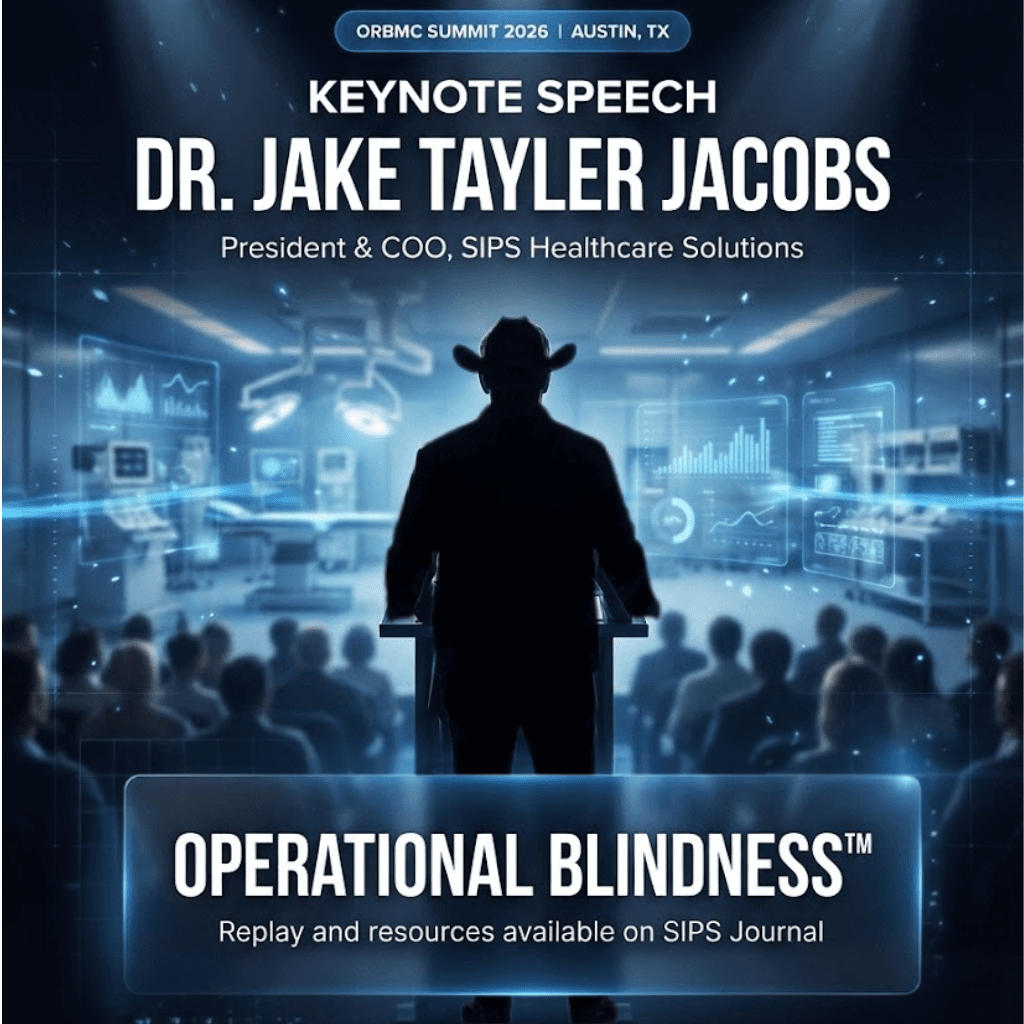
Episode Overview In this special keynote episode, Dr. Jake Tayler Jacobs presents on the concept of Operational Blindness™ at the ORMBC Summit 2026. He explores how outdated beliefs, broken structures, and lack of visibility in healthcare operations lead to costly inefficiencies, particularly in the operating room and sterile processing departments.
Key Concepts
- Operational Blindness™: A state where leaders are accountable for results they cannot see or influence, even with data at their disposal.
- The significance of understanding how legacy beliefs and poor communication can create operational gaps.
- Inclusive Leadership: Emphasizes that leadership potential is developed through experience rather than being an innate quality.
---
Section 1
Why "Bred to Lead" Matters
- Leadership is not an exclusive trait but a skill that can be cultivated through intentional growth.
- Importance of mentorship, adversity, education, and practice in developing leadership capabilities.
- The analogy of champions who are made through relentless training echoes the journey of becoming an effective leader.
Key Points
- Forged Through Adversity: Learning from failures is crucial for growth.
- Purposeful Development: Opportunities for responsibility and mentorship accelerate leadership growth.
- Mindset: A relentless pursuit of improvement and a commitment to personal development drives effective leadership.
---
Section 2
Understanding Operational Blindness
- Definition: Leaders struggle to manage outcomes due to a lack of visibility and understanding of underlying issues.
- Statistics:
- 99.5% of leaders surveyed are operationally blind.
- 50.8% feel unable to predict problems before they arise.
- 40.7% of leaders report metrics do not match operational realities.
Causes of Operational Blindness
- Siloed departments lead to disconnection and miscommunication.
- Lack of assessment and true understanding of processes.
- Over-reliance on data without actionable insights.
---
Section 3
The Impact of Culture and Systems
- Cultural Dynamics: Leadership fatigue and morale injuries stem from environments where people feel unsupported and overburdened.
- Systemic Issues: Outdated systems hinder effective operation, leading to reactive management styles rather than proactive governance.
Requirements for Change
- Transition from managing departments to governing systems.
- Emphasis on real-time visibility and predictive insights to prevent operational mishaps.
- Build a culture of collaboration and accountability across departments.
---
Section 4
Solutions and Frameworks
- Programmatic Approach: Establish a structured framework that includes:
- People Development: Continuous training, mentoring, and assessment.
- Process Optimization: Streamlining operations to avoid redundancy.
- Technology Integration: Ensuring that technology supports the existing structure rather than complicating it.
Steps for Implementation
- Conduct thorough assessments before implementing new tech.
- Develop a clear communication strategy to bridge gaps between departments.
- Foster an inclusive environment where every team member understands their role in the larger system.
---
Conclusion Dr. Jake Tayler Jacobs emphasizes that operational blindness is not due to incompetence but arises from systemic failures. By redefining leadership and creating robust systems, healthcare operations can become more predictable, governable, and sustainable. He invites listeners to challenge their beliefs and consider the implications of their operational structures for both their organizations and the patients they serve.
---
Further Resources
- For more insights on leadership and operational excellence, visit [Bredtolead.com](https://bredtolead.com).
- Dr. Jake Tayler Jacobs offers a free copy of his book on Operational Blindness for those interested in deepening their understanding of these concepts.
Written by AI. May contain mistakes. Listen to the episode to check what was said.
Chapters
Tap a time to open that second in VOAnxiety and Motivation in Healthcare
0:30 to 3:07
Dr. Jacobs shares his anxiety when speaking to healthcare professionals and reflects on the importance of their work.
“I'll take the lead Since the age of 12 I've been about my father's business At the age of 30 He sent me to his venue Can y 'all hear me?”
Challenging Assumptions with a Personal Story
3:08 to 7:07
Through a personal story about cooking, Dr. Jacobs illustrates how long-held beliefs can limit progress.
“We like to chase the most difficult problems and solve them.”
The Importance of Diverse Perspectives
7:08 to 12:30
Dr. Jacobs discusses how different experiences shape perspectives on common questions, highlighting that all viewpoints can be valid.
“Yeah, you look like you from Dallas, brother.”
The Synergy in Healthcare Teams
12:31 to 14:01
Explaining the roles within healthcare organizations, Dr. Jacobs emphasizes the importance of every position in achieving success.
“with an amazing pit crew with a terrible garage.”
Understanding Operational Blindness in Healthcare
14:01 to 17:46
Learn about the crucial roles within hospital operations and the impact of poor communication.
“What we found out, I'll share with that later with you.”
Case Study: Transforming a Hospital's SPD
17:47 to 23:06
Discover how a hospital improved its Sterile Processing Department through strategic changes.
“more than 78 percent of the revenue comes from surgeries coming from private sector one of the things that we value most was not just the sales team, but also customer support and service delivery team.”
The Need for Systematic Change and Assessment
23:07 to 28:00
Explore the importance of assessing healthcare systems before implementing changes.
“You just kind of threw it under the bus.”
The Burden of Heroism in Healthcare
28:00 to 29:20
Discusses the societal pressure in healthcare to be a hero and its consequences.
“But we live in a society, not just in health care, but all over the world, because we need notoriety and we need acceptance and we need the vision of everyone to see us.”
The Hidden Costs of Leadership Stress
29:20 to 31:00
Explores the unseen strain on healthcare leaders and its impact on personal life.
“Everyone has intelligence and everyone has technology and And all of a sudden, all of these 30 year old companies now the same systems and programs are now intelligent all of a sudden.”
The Flaws of Current Healthcare Systems
31:00 to 33:00
Analyzes the shortcomings of existing healthcare operational architectures.
“keep score, you know the stress is taking years off of your life.”
Show all 26 chapters
The Reality of Operational Blindness
33:00 to 34:30
Shares insights from a study revealing the operational blindness among healthcare leaders.
“As you can tell, I am a doctor, but I'm not a doctor.”
Challenges of Staffing and System Failures
34:30 to 36:20
Discusses issues with staffing, system performance, and ongoing operational challenges.
“If I lose my key at home and I keep losing my key, I'm not going to put a tracker on my key fob.”
Assessing Healthcare Leaders and Performance
36:20 to 37:40
Explores how healthcare leaders are assessed and the implications for performance.
“Because how we build an organization is all programmatic.”
Building Effective Healthcare Systems
37:40 to 42:00
Describes an approach to create effective management systems in healthcare.
“This is how we're able to progress throughout the organization.”
Introduction of Sharon Green-Golden
42:00 to 43:48
Learn about Sharon Green-Golden's extensive experience and insights into sterile processing.
“She's seen every evolution of sterile processing.”
The Challenges of Operational Leadership
43:48 to 45:53
Understanding the difficulties faced in transitioning from technician to operational leader.
“And then turning around hospital systems moving forward.”
Understanding Operational Blindness
45:53 to 47:01
Explore the concept of operational blindness and its impact on healthcare leaders.
“Every one of you is going to get a free book, free copy.”
Symptoms of Operational Blindness
48:21 to 50:13
Identify the signs that indicate a healthcare organization may be suffering from operational blindness.
“So they just say, hey, hey, if something come up, then let me know.”
Leadership Challenges in Healthcare Systems
50:13 to 51:58
Discuss the leadership paradox and communication issues within healthcare systems.
“Everybody remember IBM was about to go bankrupt?”
Developing Effective Organizational Structures
51:58 to 54:33
Explore how to create effective organizational structures to improve healthcare services.
“From 1969 to 2013, you know how long that gap is from being even thought about being in a conversation of patient safety?”
The Importance of Training and Development
54:33 to 56:00
Understand the role of continuous training and development in healthcare leadership.
“So it's not about SOPs, but if I go and ask your person to show me what that SOP looks like, why do we ever want to do different things?”
The Importance of Development in Leadership
56:00 to 57:12
Explore how consistent training and development shape effective leaders.
“ideology and concepts over and over again practices and procedures over and over again to ensure that that person is great.”
Layering Technology and Manual Processes
57:12 to 58:07
Learn why establishing manual processes is crucial before implementing technology.
“We have something before we layer our technology into a company or in a hospital.”
Building Value in Non-Managerial Roles
58:07 to 59:18
Discover how to recognize and reward non-managerial contributions in the workplace.
“Some people are specialists, and I want to keep you there.”
Evolving Healthcare Systems for Modern Challenges
59:18 to 1:00:18
Understand the need for evolving systems in healthcare to meet current challenges.
“Now you have a new technician that sees value in their organization.”
Shifting the Blame: System vs. Individual
1:00:18 to 1:00:41
Realize that operational failures stem from outdated systems, not individual failures.
“So that means that if we're operating in a whole new world, we need to actually create new systems that can support the new world.”
Transcript
Automatic transcript. May contain errors.0:00Hey, this is Dr. Jake Taylor Jacobs, host of Bread to Lead. And this episode is something different. I think it'll be extremely special. This is me speaking at RMBC Conference, their business summit on operational blindness. This is a keynote edition of the Bread to Lead podcast. If you like more episodes like this, I would love to be able to give you all just an earshot of what goes on when I speak on the stage. I hope you enjoy it and let us know if you want more of this. Thanks.
0:36I'll take the lead
0:42Since the age of 12 I've been about my father's business At the age of 30 He sent me to his venue Can y 'all hear me? Yeah Now I'm gonna sit down for a second because I kind of get anxiety When I start to speak I've spoken on you can hear the shakiness in my voice a little bit I've spoken on some of the largest stages tens and thousands of people TEDx, done all the works but when I talk to you healthcare folk it just gets me all angry, y 'all get me anxious these judgy eyes what's this next smart guy got to say And the truth is, y 'all made me go talk to my counselor. I went and told on y 'all.
1:42When I asked my counselor, I said, why with this group of people do I get so anxious? They're the nicest people I've ever met, some of the most thoughtful leaders of any industry that I participated in. Why? And my counselor said, after a decade of being a counselor, I think you finally found an industry that matters to you. So when you speak, you know that motivation or a concept or a thought, theory, a structure, a system, a programmatic way of doing something, somebody can take it, go implement it in their hospital, and it can ultimately save a life. or home one. It's not the same as talking to the entrepreneur that owns a tissue or toilet tissue business.
2:33And get them amped up, go clean butts.
2:40They make a mistake. You just have some stains in your underwear, that's it. But it's nothing that truly, truly, truly can affect the life of a human being.
2:58Before coming into healthcare, my team, as you guys can see, I'm not going to act like he doesn't exist. This is my head of marketing, Ignacio. And we're known, my little ragtag group, we're known as ambulance chasers. Tornado chasers, if you will. We like to chase the most difficult problems and solve them. You can call it because I'm the Y kid. I got a bunch of whoopings not for being bad just because I asked why all the time. And what I came to find out, no matter what organization, no matter what industry we participated in, why just irritates people. Because the truth is we don't understand why.
3:42So it's easier to not address the problem at hand. That's what happens. Give you a story. I think my anxiety is gone now.
3:58I was at my mother's house and she cooks mean fried chicken. I'm talking about the type of chicken that'll make you want to slap your mama. Unfortunately, it's my mom cooking it.
4:18And she cooks this fried chicken in a cast iron skillet. Small. She's chefing away. And one day I said, Ma, it's a thousand of us in this house. Why are you cooking all of this chicken in a small cast iron skillet? It's taking you forever to do the same thing that you can do with a bigger cast iron, at least. She said, baby, because this is just, she started to make up this excuse. Because when it's smaller, you know, it heats up faster and it keeps it hot. And that's how I get it crispy. And your grandma and great grandma, they all did the same thing. And I said, yeah, told you I was the white kid.
5:15So I can cook a little bit too. I went home and I got me a cast iron skillet, but a bigger one. Because I just wanted to test the theory. Is mama right? Or is this one of them folk glory folk tales that you just say because you don't know the answer to my question?
5:39Lo and behold, not only did I cook more chicken, it was golden and crispy, just like mama and grandma made it. So I went back to my mom and I said, well, mom, I thought you said that the smaller cast iron skillet heats up more and it's the only way that you can keep brown, even, and all those things. She said, you know, I just never thought to get a bigger skillet. So I go to my grandma. Hey, G-Lady. I'm her favorite. She said, hey, baby. I said, why do y 'all use small cast iron skillets? Her response was different. She said, well, it's because it cooks down to the meat faster. I said, well, that's strange.
6:36Mama says something different. Well, where did y 'all get it from? My mama. So is my great-grand. Well, my great-grandma has passed, but my Aunt Barbara is still around, her best friend, her sister. And I said, Aunt Barbara, why did y 'all use small cast iron skillet? She said, baby, that's all we can afford. So imagine three generations having this concept that this is how you put something only to find out when you keep asking why they just use the skillet that they can afford and kept it. And so what it had me thinking is that organizations all around the country have these isms, these myths of how things have always been because they've been passed down from generation to generation, and nobody has taken the time to ask, what am I going to say?
7:31Oh, y 'all read my notes today. It's feel like church.
7:38Anybody from Austin? Anyone? Anyone from Austin here? Anyone from Dallas? From Dallas here? You from Dallas? Yeah, you look like you from Dallas, brother. Got a little drip to you. I see the socks, feng shui. How long does it take to get from here in Dallas to Houston, to Austin? From Austin to Dallas? Three and a half. Eight. Three and a half hours. Say it like you're proud. Three and a half. Did y 'all hear what he said? What did he say? Three and a half hours. He said it with confidence, no question. If I take that same question I ask somebody that's never driven a car, only walked, never been on the bus, Never been on a plane, never been on a scooter, only walked.
8:29How long does it take to get from here in Dallas to Austin? They'll say three to four weeks walking. The question is, who's right? They're both right. The only difference is the vehicle. The next question I ask someone, I say, hey, that's driven a car all their life, never a plane, never a bus, a car. How long does it take to get? He said the thing. Three and a half hours. If I go to a middle class American community, they fly. They don't really travel by bus or by car or by walking or bike. How long does it take to get from here in Dallas to Austin? They'll say about an hour and a half, give or take, getting through the terminal to get on a plane to get to Austin.
9:17The question is, who's right? They're all right. The only difference is the what? vehicle. Now if I take that same question to the Orchard wealthy that have only flown jet, how long does it take to get from here in Dallas to Austin? What do you think they're gonna say? 30 minutes on a hop-off. They always like to make it sound like real different. It's just a little small plane. It's really not really cool especially when you go into states that I got a lot of turbulence you're on the plane think you're gonna die you just wishing that it was a bigger plane but imagine this concept same destination same place but the only difference is how fast you get there in the most efficient way possible and with every way that you get there it takes more time more resources more finances more money but the experience gets better when you start to question sacred cows that we've addressed this entire time and so for just a moment I want us just today to just act like you, my friend.
10:24I'm not going to sell you anything. You won't see a thing that's going to say just for two ninety nine. Change your life. You hear that enough? Today is about talking about belief. In changing concepts that you hold held so dear, that's actually destroying your organization is honestly destroying your own peace. you came into health care to make a difference and sometimes when i look in some of you all's eyes all over the country seems like you feel like you're fighting but that spirit of optimism and joy is just dying and i get it so i just want to challenge us to think something different so i want to ask you something any nascar people here All right, sister, I got one.
11:16So in NASCAR, we have the driver. They run the race. All eyes are on the driver. We know the drivers. They have the pit crew, the pit lane, the garage team, the hauler. See, the driver's the star. Pit crew on race day, those are the ones that are...
11:48When you see them in slow motion, it looks like butter. They're fixing the car in less than 11 seconds, and that car is hitting the road. It's a beautiful sight. Then you have your pit lane. That's the track where the action happens. You have your garage behind the scenes. They prepare the car, inspect every component. Without them, it seems like the driver doesn't race in the hauler, delivers the race-ready car to the pit lane on time, every time. All of these positions are important. Wouldn't you agree? You can't have an amazing pit crew with a terrible driver. It doesn't work, right? You can't have an amazing driver with a terrible pit crew.
12:28It doesn't work. And you can't have an amazing driver with an amazing pit crew with a terrible garage. Does that work? No. And then your Your transporter, your hauler, they have to care about the car too. Imagine if everything is perfect, but every time they haul the car, they mess up the driver's car. So it's crazy what it takes to have a flawless organization. Everyone has to actually care about the roles that you play. And the positions that we have, because each position matters. Now there are some positions, just quite naturally, they get paid more because they're taking the most risk. but it doesn't mean they're more important
13:13so when I look at the surgical service line and I'm so proud about this because when I came into the industry the very first thing I did didn't sell a soul me and Donnie are my co-partner my CEO there she's been with the company for 20 years started as a volunteer and worked her way up now she's the CEO after 20 years later and her and the founder of the company, found our ragtag group and had to convince us to come over here to healthcare. And the question I asked them, I said, it's not about money because we're fine. Can we make an impact? Is there true change that can be made or are people stuck in their ways and you can't create anything different?
13:52She said, no, transformation is needed. Hospitals are asked to actually operate a profitable hospital and nobody's actually been training on how to run a profitable business. So there's change that's needed. So I said, okay, we went all over the country for the first year and you'll see in a little bit and we one-on-one surveyed more than 180 people leaders periop leaders c-suite executives uh spd leaders you name it we've done it one-on-one not a survey not an email blast not a text message one-to-one person to person face to face because it matters. What we found out, I'll share with that later with you.
14:35But here we have the surgical service line is the surgeon. They run the case, all eyes on them, but they can only run one case at a time. Your OR team, that's your pit crew. Get in there and just like the pit crew. the track that's the OR that's where everyone gets to shine you get your your lights on sterile processing is behind the scenes that's your garage the black box everyone forgets about but complains about when the rubber hits the remote road and then your case cart that's the delivery transport team the garage isn't support the garage is part of the operation Not the evil stepchild. It's a part of it is the part of the group.
15:29And the driver knows that if the car isn't ready, they lose. The driver respects the mechanics. Because winning depends on them. The crew chief coordinates garages, the garage and pit crew as one integrated team. The team owner invest in the garage because they understand the ROI. Everyone's on the same team. Everyone shares the same goal. Everyone contributes. Visible and valuable. Country piece is visible and valuable. But imagine if NASCAR operated like most hospitals.
16:03Just imagine, just imagine all the things that we could be. Who knew Barney was my favorite singer? Imagine all the places we can go and see. Imagination's fun for you and me. I just want us to imagine the driver shows up on race day and expects the car to be ready but never talked to the mechanic or the pit crew and it shows up like hey we're racing today let's go what car is going to be ready if you do get a car it's going to be a shabby car the mechanic finds out which car the driver wants to race 30 minutes before the green flag When the car breaks down mid-race, the driver blames the garage, but the garage isn't on the radio.
16:54It's not a part of your huddle. We'll just send information down and them people downstairs and figure it out because we're busy up here. The team owner cuts the garage budget because they don't generate revenue. The driver does. So the team owner says, man, what's the matter is the pit crew and the driver. So we're going to cut this garage, slice it up in pieces, and say, hey, I'm going to get what I need. Because we just need to make sure we have the best driver and the best pit crew. Anybody can be a mechanic with this group. But that's not necessarily true. And after a loss, the debrief, everyone except, is a part of it except for the mechanics.
17:33This team will never win. and every minute your garage costs your driver is a minute of revenue that's gone forever just like in surgeries i'm not going to bore you with these statistics because i think you all already know it how much it costs to run a hospital in case you didn't know a lot of hospital systems more than 78 percent of the revenue comes from surgeries coming from private sector one of the things that we value most was not just the sales team, but also customer support and service delivery team. They're just as important as the people that sell. Why? Because you can sell the moon, promise the world, but if you have no one to help you deliver it, the result of that is catastrophic in healthcare.
18:24Selling tissue, you just jump in the shower. because anything else is different. Every minute, every cancellation, every delay actually matters. So we talk about the health care servers. The connection is completely crazy, and it's kind of crazy because what we did with the hospital system that we were supporting was we convinced the C-suite of a hospital system to just give us two years with their SPD. And we talked to the VP of Periop, the ACNO of the hospital system and said, listen, we're not here to tell you all what to do. I just want to fix the relationship.
19:17They said, yes. What happened? In 18 months, we took a hospital that's historically known to be terrible in the Midwest. The SPD was the number one reason for causes of delay. Now they're last. Sterile processing department went from over budget 1.5 to under budget 1.5. We took them from having 36 FTEs to 24 FTEs and they operate in the home. And now in that same city, that SPD department, most SPD folks work two jobs, multiple hospitals because they don't get paid enough. So what did we do? We shrunk the team, made them more efficient, and paid them what they were worth. The highest paid SPD in the city.
20:00Hey, hey. They don't have to work one job. They're happy. They have respect from the OR. We bridge that relationship. And guess what's most important? The surgeons are happy because they can increase their volume. Because what we told the C-suite, we said, listen, if the SPD is not involved in revenue creation conversations, there's no way that we can actually help you. there's no way so we did it and we changed it and after that now we talked to the president ceo like we're best friends and buddies the first thing i told him i said brother i don't want to be your friend i don't want to act like i'm your friend but i do want you to go home and know that when you leave your hospital that it's all in the right hands i know we get tired of those vendors that act like they're your friends they ask you about your family and hey buddy hey buddy just love you then you sell them you sign you don't hear from them until they want to upsell yeah that's not what we want so before we talk about what it costs your hospital you wake up at 2 a.m not because something's wrong but because you don't because you don't know something you don't wake up at 2 a.m not because something went wrong because you don't know something went wrong you're waiting on the call uh-uh let me go back you're waiting on the call, the email, the text, because you know something is going to go wrong.
21:22Imagine having anxiety going to work every day. You can imagine it because a lot of us live it.
21:31And then the doubt starts to creep in. I've been doing this 20 years. I should have known this. Why do I feel like I'm always one step behind? You start to wonder if you're actually good at this or if you've just been lucky. I'm going to give you a little something, a little fun, fun small fact I found. 1969, that's when the OR actually was standardized. 1969, that's when regulation actually happened. Do you know when regulation, the idea of regulation happened with SPD? Anyone? 2006. ST79 came about in 2006. We have some SPD leaders that are managing, running SPD that have been a part of a world where they learned the majority of their nuances, their trade in an unregulated environment.
22:23Do you know when Joint Commission made it their priority to say every time we visit a hospital, we're going to SPD? Anyone know the year? 2010? You're close. 2013. What year is it? How many years is that? 13 years that SPD has been a part of the conversation 13 and we wonder why there's mayhem so before you create a change we have to assess something and here's the craziest thing you say man I've been here 20 years I should know this how can you know something when it never was the priority. You're never part of conversations. You just kind of threw it under the bus. OR is upset at SPD. SPD is mad because they just need to be mad because you mad.
23:17You know how we get mad. I'm mad because you mad because we mad together. But what happens is when you realize your counterparts that you need and depend on every day haven't had the same amount of time or regulatory standards that you've had in the development of training, you have a little bit more empathy and wanting to make something work with them. So when I brought this to the C-suite's attention, it's funny what research and facts do. It kind of just brings things to life. Then we walked around. C-suite said, come downstairs. Now the president comes to SPD every single day. And can I tell you something?
23:50Metrics and numbers do lie. For an example, you hire somebody that's been at SPD 30 years. They say, man, I took all the travelers out and we're now staffed internally. It sounds good on paper. You cut the traveler's cost. Now it's all local on paper, localized on paper. But your skill mix is wrong. You have 10 percent of your team that what we call a blue belt can operate in multiple zones. But 90 percent are under three years. yeah it looks good that we cut the cost but the organization is absolutely going to struggle because the skill mix is off well when you think about it you roll it back it sounds simple but when there's high pressures to cut costs and not observe the system first these are the things that we do we do patchwork we get this tech we get this system we get that product we go to discomforts we take that process and we don't actually think about reconstructing the entire system because we've never been prone or pushed to and we're wondering why this hyena and lion relationship is always conflicting and like i tell anybody you can get new technology all you want there's a lot of great vendors here but you can't put new wood on the termite infested for because the new term, the term rights are going to eat the what?
25:16The new world. You can't slap lipstick on a pig and say it's a sheep. It's still oinks. But when we look at it, we say, man, they got to catch up. Let's just give them a budget. Let's approve them. SPD, what do you need? they don't know what they need so that you get them what they need and it doesn't work now you say i'm never going to get you what you need and it gets worse they get an agency in that promises they're going to change it but they're just a bunch of patchwork people doing the same thing hrs do do all to call all around the country charge your hospital arm and leg to have people that are underperforming this is the truth hey brother hey what's your name hey chad how are you pretty good So these are the things that we deal with on a daily basis.
26:12So I like to do things very simple. I like to take things biblical really quick. There's a favorite book I got. It's Genesis. We may know about this book or not. But in Genesis, the creator of this world, being politically correct, Donnie, am I doing good? Yes. The creator of this world, in this book of Genesis, the first thing this creator did, it did not say, let there be light first. That's what everyone talks about. You know what he did? he hovered the waters you know what waters mean in hebrew mayhem chaos he didn't bring light first he split the chaos first and darkness he assessed the problem before patching it before creating a world in a system he assessed what was going on so i look at an organization i like to say hey we need an assessment and the organization says hey no we just need staff and i say hey we don't want to work with you.
27:05And they say, hey, wait, wait. You don't want to work with us? I'm telling you, we need 10 techs. I'm telling you, there's a lot of other companies to go to. Because I don't want to deal with this hatchy, hatchy, getchy stuff. Came into healthcare to make a change. I want to work with the leaders that truly want to make changes. And if you knew what the problem was, why is there a problem in the first place? So he hovered the waters. Then he split chaos, the waters that could not be controlled. from the waters that could operate in the system. Then he said, let there be life.
27:41And before humans were even brought to this world, he built systems. Did y 'all know that? Systems that didn't have to need a human to run them. They just run on their own. Because this creator wanted to create a world where we didn't have to depend on how we would feed ourselves because the system, the ecosystem, actually could produce it itself so that we can realize the system will move with or without persons. But we live in a society, not just in health care, but all over the world, because we need notoriety and we need acceptance and we need the vision of everyone to see us. So we love to award heroism.
Read the full transcript
28:23When it's all on one person. And then we award that person, then the other person coming up after you says, I need to be a hero. but I don't know about you all I like to be a hero parent I don't want to be a hero at work I don't mind stretching the earth for my child my baby my boot day oh and my two sons but at work I shouldn't have to do that I want to operate in the system but we've been saying this for 20 years and now you carry this weight alone you can't admit it to the board you can't admit it to your peers you can't admit it to your team so you carry it alone and the more senior you get the more isolate the weight fields because if you do say that you have a problem as a VP, you think that that means that, hey, that means that I'm not fit for the job.
29:07So we patch it, we hide it, we patch it, we hide it, we patch it, we hide it, we patch it, we hide it. And before you know, we have a lot of an organization full of passwords with no system work. And the best way to build something is structure. So we talk about systems. Everyone has intelligence and everyone has technology and And all of a sudden, all of these 30 year old companies now the same systems and programs are now intelligent all of a sudden. New buzzword, new day is fine. But as an organization, you have to ask yourself it when there is no technology, how can we operate intelligently?
29:48when there is no technology or systems or structure how can we move in a way that allows for us to move according to ensuring that patients regardless of what type of surgery can get back home to their babies the same way that you want to so matters and we don't want you to carry this along because what happens is here's the cost that no one measures strain at home you're present but you're not present your spouse sees it your kids feel it you're at the dinner table but you're still at the hospital you're there but you're not there the loss of joy you got into health care to make a difference now you spend your days managing the aftermath of things that you never saw coming you hired a rock star and you thought that it would change and that rock star is not a rock star but you can't fire them so you just have to now create all these difficult ways to get them to quit but they won't quit we talk about the health cost blood pressure sleep weight the body keep score, you know the stress is taking years off of your life.
31:07The quiet fear, how long until this catches up to me? How long until there's a problem I can't recover from?
31:18And it's not your fault. That's what I want to tell you. It's not. The architecture of healthcare operations was never designed to give you the visibility that you need to lead at this level of complexity. It's not your fault. We just never had a system. And a system is just simply a series of programs that work succinctly together in order to produce an efficient outcome. And I'm sorry, the purpose of the lean belt system doesn't teach you how to restructure an organization from scratch. It teaches you how to make the current structure, assuming it is the most efficient structure efficient. So this is why you can have all the black belt lean on your team and still have mayhem.
32:11Because lean was created in a world, Toyota, that already had a flawless system and they just were making tweaks along the way. So what happens is you learn lean, you make it efficient and you make your workarounds efficient, but you don't deal with the symptom at hand. OR is underdeveloped or the SPD is underdeveloped. We have service techs or liaisons that have never been in SPD. The purpose of a liaison from SPD to OR is to have somebody that understands both worlds. And when you look at a pit crew, the most important person on the pit crew is the mechanic that worked the garage and also is great at working with the pit crew.
32:55That's a person that can liaison in between, communicate in between, talk in between. This is a systematic structure that are needed. So we did a study. As you can tell, I am a doctor, but I'm not a doctor. If you are sick, if you call me, you may end up dead. My doctor is in a business administration. So I like to tell people when your organization is sick, that's when you call me. I'm the person that makes your organization feel better. I'm not the person. That you come to for anything else, but if you want to change. And you're not alone. We actually measured it. Remember, I told you that we went and did a study with 185 leaders all over the country.
33:34Some of the larger hospital systems in the country we support. And even those leaders is absolutely scary. How many leaders would I talk to in confidence, told me the real truth that they feel like they couldn't tell their peers, their upline or their leaders? So we come with these fronts, with these masks on to conferences and talking to your peers. and imagine being in a space where you can't even be yourself and be honest about how much of a mess things are and how much of lack of a structure people have. So we did a study. Did you know that 99.5 % of the people that we did a study with scored at risk or operationally blind?
34:1399. 99%. And did you know these same 99 % actually had tracking systems? If tracking systems, how they currently stand actually worked, even in the hospitals, they have all the modules. Why are we still having the same issues that we had before the tracking system? It's not a tracking of instruments. If I lose my key at home and I keep losing my key, I'm not going to put a tracker on my key fob. I'm going to find a place and make it a routine and a behavior split in the same place every time. 50.8 percent lack early warning capability. Did you know that 50.8 percent feel like they can't see the problems that are coming and it just hits them like a like a ton of bricks every single time.
35:01Now imagine if you're a VP and every department feels that way. Just hide in your room and just get through the day and say there will always be a problem. 49.2 percent say solutions fail to fix persistent problems. Bring in a consultant. It works. They leave. It breaks. He brings back in the consultant. It works. They leave. It breaks. And we keep this cycle up. We keep the cycle up because the solution was never actually solved. And we've had a lot of hospitals because what most people didn't know with SIPs, when we do staff or we have staffed before, we actually built those leaders from scratch.
35:46Those technicians that we that we placed, a lot of them, we trained from scratch and got them certified. So they were a little different than when we placed them. The hospital, of course, says, hey, we want to cut costs. So we want the staff. We want the team. You get the team, you remove the system. Two years later, they call us back. Same team. I need an RFP. Cool. We do an RFP. They give our same team to another company. And that company, same team, same team, new company, overseeing it in the dumps. They bring us back. Same team. Our system, it works. Why? Because how we build an organization is all programmatic.
36:31When I'm hiring somebody from scratch, what is your program to take them from entry level to top performer in your organization? How do we decide the quality of a technician or nurse or surgeon? Is it just based on tenure?
36:49Man, the 10 years, man, I've seen it all. 10 years of interviews, you're a great interviewer. but when I ask your organization that you've come from what has happened you ran out of there when problems arise because you know there's a shortage all over the world and what I've learned about this consulting space is that when people underperform at their hospital they go work for a consultant company let it die down for a year or two pop back on the local hospital. This is just the structure. This is why fundamentally what we've done in the organization is it doesn't matter what your tenure is. Everyone gets assessed the same in giving some type of belt.
37:32We have a color-coded belt system. And based on how we assess you, I don't care if you're a 20-year vet, how you're assessed and you have to keep that belt status like karate. This is how we're able to progress throughout the organization. Why? Because building a system is a programmatic way, especially when humans are the main focus of the care or the delivery of the service. We don't assume what people know. And if you're offended that I test you because you've been in 10 years, you don't fit. Thank you, ma 'am. Thank you, sir. So you know what we did? I got it, brother. I know what you're thinking.
38:06We went to the healthcare system, the same one that I told you that we saved all this stuff. They wanted us to get a person that was a manager of 10 years. I said, no, we're not going to do it. They said, no, we want somebody of 20 years. I said, hey, see, sweet, remember? You told me you let us figure this out? This is already in Shalmers. Let us figure it out. We went and found a supervisor. There's never been a manager before. But they were 1 ,000 % committed to the system and development. You know what happened? They love her. They love her so much. They said, can we keep her? She said, oh, no, he can't keep me.
38:43because I don't have a system.
38:48Because the hospital thought, oh, it's the manager. But no, it's how we develop our leaders in our system. And when we saw this, I said, hey, man, come on. Come on, bud, let's come over here and let's do it. So we say here, 50 % of operations leaders are operating blind. The highest, this is the highest of any role that we assist. that operations leaders said, we have no clue what is going on anywhere. And we depend on reporting. Give me the dashboard. Give me the report. Give me the information. And it's crazy what happens when you sit with people one-on-one. You actually talk with them. They understand that you truly care about what's going on with them.
39:30You're not trying to sell them. It's crazy the type of truth that comes out. It's crazy what type of truth that comes out. And they say, Doc, I'm going to be honest with you. I know I go around and I say how well we're doing percentage wise, but. It's bad. And so I give the front, that's what one of them told me, I give the front that everything's great, the statistics are great. And I said, well, how are you measuring greatness with statistics? Well, I just measure where we where we come from. I said, well, where are you going? Well, we just want to keep incrementally getting better. I said, well, how do you know your organization is better?
40:04Yes, you're trending up and things are coming down. But at the end of the day, what is your metric that you're judging your organization against? He said, Dr. Jake, I never even thought about that. I just was proud to say that we've gotten better. And I said, there's nothing wrong with you getting better. But what are you getting better to? In comparison to whom? Based on what knowledge? We saw that. These stats are scary, you all.
40:3240.7 % said they're operating fully operationally blind. Metrics don't match reality. When they look at the dashboard, raise your hand if you looked at a dashboard and you said, but this doesn't feel like reality that I see. Especially with the vendors. I'm just going to be honest. We're vendors, so I can be, I can talk about the vendors. We give a dashboard. Wow, we want to stay. and you're looking at the dash like dude i just don't see it i just don't see it i don't see it why because the metrics aren't matching why because numbers do lie it just depends on how you want to tell the story so the great old additive that numbers don't lie put the facts the facts out there and they'll do that then i can ask them based on what you say man we cut down overtime.
41:21Well, let me see. If your organizational structure had not changed, you cut down overtime, but you increased in travelers. You're just moving the teams. It doesn't fundamentally work. So as an operations company, we look at the true structure of an organization. Forget all the fluff and all the names and certifications and all of this. So what we did when we first got on board, as we were building this, I'm a little bit of a radical transformations. But I'm not an idiot. So the first thing we did, we went and hired one of the best sterile processing vets on this side of heaven. Her name is Sharon Green-Golden.
42:03She's been the president of ISM, HSPA. She is a rock star. And she's a traditional SPD specialist. 40 years in the game. She's seen every evolution of sterile processing. She's on international boards. It's a rock star. Then I went and we hired an operations specialist that did sterile processing, but left to build his own business. And came back. Do y 'all know why I hired that person? Because that person had to learn how to build something from scratch. See, a lot of times when you grow up in a system and you've been programmed to be an operator, you don't know how to actually rebuild the structure or the program.
42:51You just kind of like make patchwork. You don't know how to reverse engineer and look at all the fail shoots and rebuild that structure from scratch. You just operate. So when I'm operating as an operator, I get promoted to director sometimes because of proximity. sometimes because they just like you or because you are a great clinician or a technician. You are really great at what you did. But fundamentally, being great at the job does not make you great as an operational leader. And we do that all the time. Man, this person is a great tech. I want to make you a manager. That's not how it works.
43:32So we looked at the structure. I said, OK, I'm going to get you. I'm going to get you and my team of ragtag crew the Y kids and we're going to deconstruct every theory myth methodology structure understanding any of that we're going to reconstruct that and we're going to actually build a system that's amazing we had a lot of fighting nights some wanted to quit including myself me calling Dunny saying this ain't worth it But every day coming back to the table, looking at what has historically worked for our company, looking at what hasn't worked with vendors come to organizations and what has worked, rebuilding that structure.
44:15And then turning around hospital systems moving forward. But when we look at this, this is why I say the metrics don't really match, because when we went to a hospital system, they had four vendors supporting one hospital. Yes, they were going through a third party. But anytime you have four staffing companies supporting your one company, each staffing company wants more staff. So they quite naturally do what? They sabotage each other. Because in their payroll, you get commissioned for upselling inside the organization. So now you say, man, we got a third party. They're doing all the work because we don't want to do it anymore.
44:57But then you're not asking the third party, how are they getting their staff? They just send emails to staffing companies to fill these gaps. So you're being filtered in from 10 different agencies and you're wondering why, because 10 different agencies have 10 different philosophies and 10 different methodologies and 10 different reasons why that they there. And you're wondering why you have help, but it feels like you have none. And now you can't go back to leadership and say you need more help because they finally gave you what you asked for. Now you're stuck again. And forty seven point six percent said we can't explain the root causes to execs.
45:35So we just kind of just. One of them literally said, Dr. Jake, we just dug it out. And I said, absolutely, it's crazy. So this is what we call operational blindness. I wrote a book entitled Operational Blindness. why healthcare leaders can't see what's costing them millions and how to finally fix it. Every one of you is going to get a free book, free copy. We'll send it to each and every one of you. I'm daring you to think about the way that we think. I'm challenging leaders to change the way you think. When I write books, historically, I've been doing it 10 years, 10 books, seven sectors, same result, change.
46:14You know, the reason I write books, not to make money, to invoke thought. Put this in your hands so that you can actually see it, understand it, maybe challenge some things that you're thinking about. So this guy right here that's making it really weird, he has a camera that's following me. He has, at the sales booth, he's going to find, he has a QR code, you can sign up for it, we're going to send you a free book, free copy, no cost, no hidden shipping fee or anything like that. I just want people to understand, operational blindness is when healthcare leaders are accountable for outcomes they cannot see, cannot govern or cannot influence in real time.
46:43Despite having data, despite having dashboards, despite having technology, it's not incompetence. It's not ignorance. It's not inevitability. The problem is systematic. Leaders have no knowledge or expertise, and it can be eliminated with the right architecture. So symptoms you may realize. This is how you know if you have are dealing with operational blindness. Reactive decision making. You're responding to problems after they've escalated rather than preventing them. Don't raise your hand. Just do it like this with Josh.
47:22Firefighting culture. This is how it's always been. You don't understand our... You don't understand how our hospital system is. Ours is different. That's fine. Culture different, people different, that's fine. But every hospital can't tell me the same thing.
47:44Morale injury. When you can't deliver outcomes you know are possible, it creates professional distress. Problems discovered too late. Issues surface. We were one of our health systems. And one of the people reported we have no Midas findings. findings. We said, well, that's a little scary. That means y 'all aren't reporting. Because I know that we've caught like 10 that should have been put on my list, but it wasn't. So if I look at the data as an executive and everything is moving fast, I say there are no findings. We are a perfect organization. And it's only because they just covered it up because if they actually tell you that they're underperforming, they're scared to lose their job because they know you're not going to give them the system or you're not going to defend them for the resource they need to rebuild the structure so that it can be able to help.
48:36So they just say, hey, hey, if something come up, then let me know. I'm going to fix it. Don't report it, though. Kind of like my culture growing up, they say, don't snitch. My daddy said, if you didn't do it, call the police immediately.
48:55It's very important. Here, leadership fatigue, constant firefighting depletes cognitive resources. You can't even think about being innovative because you're so busy putting out fires where you are. Leadership fatigue and executive burnout, high accountability, low visibility creates unstable environments. And it's kind of crazy. It's like this leadership paradox. We have more data than ever in less clarity.
49:26we have just so much information we get you data and just data board you and dashboard you you want to dash it up when you look at this thing you're going to be able to see everything that's happening but seeing everything that's happening doesn't help me like i you know i know we're sick like can you fix that so when you look at it's actually proven the more information you have without the tools and your tool belt to actually improve it, the more it bottles you up that you can't actually solve it. Now you get more anxiety because you have the information, but you don't have the skill set, the tools or the resources or the system that can actually bring about change.
50:08And this reminds me of IBM. Healthcare today is where IBM was in the 90s. Everybody remember IBM? Everybody remember IBM was about to go bankrupt? And everyone was scared. Everyone was terrified because this is America's company. If IBM dies, America dies. So they brought in a guy named Lou Gertzner. Never been in tech in his life. He's a Y kid like me. We went to the same school. The school of Y. and he came in asking simple questions why and what he realized was every or every department in the company was his own little business when i look at health care everything is siloed everything's apart everything's in pieces spd has its own system and technology that doesn't communicate with anything upstairs or has their own system in their own world and their own governance and their own leadership that doesn't talk with SPD.
51:09And if you do talk to SPD, you know, you kind of talk to SPD, but you really don't talk to SPD. You just make it a part of your rounding to talk to SPD, but it's not really SPD. And SPD doesn't want to talk to OR. Good OR is mean, but then they're not mean, because when I talk to OR, they want to be your friend. They just don't know how to be your friend. You know the guy that wants to be your friend and the guy that wants to be your friend? It's just weird for y 'all to get there. That's where it is. EVS, they've got their own metrics. And you know what everyone says? without us, nothing will work.
51:38I promise you, ask every department. They will mull you down that if we all boycott it right now, everything will be shut down. For some positions, it is true. For others, it is not. But the ones that it is not technically true, the reason why they are peacocking is because they haven't been included. From 1969 to 2013, you know how long that gap is from being even thought about being in a conversation of patient safety? And how many of those leaders that we have that were in leadership in a world with no true regulations that are directors of SPD, that are leaders of SPD?
52:23These are These are These are These are An organizational structure issue I want you to write this down If you're taking notes If you're taking blind notes Blinking And you just want to Close your eyes And blink to take a picture You can But it's not going to be on the board So I don't know how you're going to Blink and take a picture So just bring out your phone Take a note Write this down People Move Processes people move processes processes create systems systems create automation and automation influences scalability to through technology that's the order that's the order you can't bring in new gitchy gadgets in an infested world You have to rebuild, starting with the people.
53:18What is the fundamental development program that your people have that is innately in you? Like my mother, you remember I said about the skillet, cast iron skillet. My mother was taught to use a small cast iron skillet, not because she was told, but what she observed. That's the same way you develop organizational structure. And what we have here, the system level view. Who optimizes for this? If everyone is siloed in their own world, who ultimately is affected? The hospital business, the business of hospital, the business of health care. So this is not about working harder. If you ask everyone in health care, if you ask me, everybody in health care works hard.
54:05Everyone is on their feet. Everyone's back hurts. Everyone's brain hurts. So it's not about a matter of who works harder than the other. It's now the question is, how can we work in the most smart, the most efficient way possible so that when anomalies do come up, we have the brain with and the power and the energy to actually go and solve it? because it's my belief that when you actually structure a organization based on a real system that means people development process development not sops that sit in a binder that you say we have processes but if i ask five of your leaders the same question why do i get five different responses like i asked my auntie my mama my grandma about the cast iron skillet.
54:53So it's not about SOPs, but if I go and ask your person to show me what that SOP looks like, why do we ever want to do different things? And we wonder why that there is no structure. So we have to go from managing departments to governing systems. Say governing systems. Say governing systems. So we have to go from managing these departments to actually governing systems to predict, to have some type of predictive integrated structure. So we look at capabilities that eliminate blindness, real-time visibility. This is important. This is why technology is important. But getting technology without understanding how to properly use the tool is inefficient.
55:33So if you use any of these wonderful vendors out here, don't try to penny pinch. You're going to do it. Actually go about doing it. figure out how to actually make it work within your organization ensure that everyone has it because what training is not this is not considered training but historically you go to a conference like man we've been trained we have a vendor come in they teach you one hour for two hours you say my team has been trained that is not training training is the consistent recorrection of idei ideology and concepts over and over again practices and procedures over and over again to ensure that that person is great.
56:13Training is how you parent. Course correction every single day, frustrated or not, but the love that you have for your child will keep you up to continue to keep holding them accountable into the line. That is training. One of my favorite books, it says, if you train up a child in a way that they should go when they leave, they'll never depart from you. That is development. One of my favorite leaders of all time, they call him Jay. Before he sent the leader out, he worked with them for three years one-on-one he had 12 of them that went out and changed the world that's my big brother jay he's my mentor i love him so much but big brother jay spent time with his leaders he didn't train them one time do a miracle jump out a hallway and say go tell everybody he developed them he worked with them he curated them he had a development program for everyone and that's why he still has the greatest organization Jason all the time.
57:09He's the greatest leader ever. So predictive insight, know what's coming before it arrives. Intervene. We have something before we layer our technology into a company or in a hospital. We never layer our technology in a hospital until we have a manual process that mirrors what our technology does. Because if at any point the technology stops working, I want to make sure that the people in the organization can still operate with efficiency. If I allow for the technology to come over that and we don't develop the manual process and teaching them the why, then guess what? The technology is not beneficial to my organization.
57:46It handicaps us. So we fix the organization before we layer in the technology. So I said cool. Yes, it's cool. Does it have predictive stuff? Yes. Does it stop you from making mistakes when you have it? Yes. Because we built our technology not to track instruments, but to correct behaviors. you correct the behavior the instrument is going to be there if I if I check the instrument I know where it is but why is it there that's my question I know who did it did anybody stop who did it we can do that here architecture and intelligence equals visibility not just intelligence of technology architecture systems what is systems programmatic way of doing something over and over again from people development process development and you test and you assess over and over again what we did in our organization y 'all can take this down if you want within our built system we're able to work with hr got it approved that every time they they grew in a built that's when they got a raise so people can get raises without being managers because i told my team management shouldn't be the only way that you get paid more because everyone is not a manager.
58:56Some people are specialists, and I want to keep you there. So we run our organizations like Harry Potter. Put on a sword and hat, Gryffindor, Slytherin. Why? Because we want them to fit where they fit, and we don't want them to go into management not liking people. But they took the job because that was the only way they could get paid more. It's very crazy what happens when you actually start building structure. Now you have a new technician that sees value in their organization. Now you see a technician and we have the service techs too. So now you see the technician go from a tech to a service tech.
59:32They go from tech to materials. They go from tech to leadership, tech to OR liaison. And that leadership circle, we value it the same. Very important for us to understand this. So SIMS exists from operational blindness. We have our operational system. This is the people part. people in process then we have our technology that we layer on top this is the visual part and what what does this change it changes everything and we reframe we reframe uh the reframe that changes everything is the old belief is we're not executing well enough the new truth is your system just needs to evolve we're operating on a 20 year old system today in a totally different world can we agree that this world is totally different from before pandemic Can we agree?
1:00:19So that means that if we're operating in a whole new world, we need to actually create new systems that can support the new world.
1:00:30I lost two points. I know I'll get it back, bro. I'll get it back tonight when I party. I'll get it back. All right. So you are not failing. The system is failing. And I want you to understand this. Eliminating operational blindness is not a health is is how healthcare operations becomes predictable governable sustainable and all
1:01:00Since the age of 12 I've been about my father's business at the age of 30 he sent me to his
From the publisher
Dr. Jake Tayler Jacobs delivers a keynote on Operational Blindness™ at the ORMBC Summit 2026 in Austin, TX, showing how legacy beliefs, broken structures, and low visibility create the costly gaps hospitals keep calling “surprises” especially in the OR–Sterile Processing relationship.
Through stories and analogies like cast-iron skillets and NASCAR pit crews, he exposes how Operational Blindness™ allows two departments to run “fine” independently while failing together operationally.
He then shares benchmark findings and a programmatic playbook to eliminate Operational Blindness™ through assessments, people development, process redesign, and layered technology so leaders can predict issues, govern performance, and sustain safer, more efficient care.