In short
Podcast Summary: Bred To Lead | With Dr. Jake Tayler Jacobs
Podcast Overview Title: Bred To Lead Host: Dr. Jake Tayler Jacobs Episode: 036 - The Healthcare Parallel: Why Optimizing the OR Alone Never Works Description: This episode discusses "operational blindness," a condition in sterile processing that creates disconnections in healthcare operations, leading to inefficiencies and risks. By paralleling the situation with IBM, the host emphasizes the necessity of fixing upstream systems and metrics to improve perioperative performance.
---
Key Concepts & Discussions
- The Concept of "Bred to Lead"
- Leadership Development: Leadership is not innate; it is cultivated through experiences, challenges, and intentional growth.
- Universal Leadership Potential: Leadership potential exists in everyone, but realizing it requires a deliberate development process rather than solely relying on charisma or titles.
- Understanding "Operational Blindness"
- Definition: Operational blindness refers to the inability of leaders to see dysfunction within their operations due to inadequate visibility and measurement systems.
- Symptoms: Common symptoms include cost overruns, operational frustrations, and quality risks, with SPD (Sterile Processing Department) often viewed as a cost center rather than an essential function.
- The IBM Parallel
- Insight from IBM: Just like IBM’s turnaround showed that system issues were at the heart of their struggles, hospitals face similar systemic challenges:
- Metrics vs. Reality: Internal metrics may indicate success, while external realities reflect failure, resulting in a disconnect.
- Crisis Management: Organizations tend to manage crises within SPD rather than address systemic issues.
- The Importance of Upstream Operations
- Upstream vs. Downstream: Optimizing the operating room (OR) alone is ineffective without addressing upstream constraints (like SPD).
- The River Analogy: The OR is compared to a river flowing into the ocean; if there are dam-like constraints in the upstream, optimizing downstream performance is futile.
- Systemic Condition and Solutions
- Fixing the System: Leaders need to develop new performance metrics, feedback loops, and operating systems to enhance visibility and operational effectiveness.
- Sterile by Design: Introduction of a new operating system that aims to cure operational blindness by improving connections between SPD and OR, leading to measurable performance improvements.
---
Key Takeaways
- Leadership is a Process: It’s about continual growth and resilience, not a function of inherent traits.
- Operational Blindness is a Systemic Issue: It affects everyone in the organization differently and is not merely a matter of individual incompetence.
- Metrics Matter: What is measured influences what is seen and managed; disconnecting metrics from relevant outcomes leads to mismanagement.
- Upstream Improvements Drive Downstream Success: Addressing issues in supportive functions like SPD yields substantial overall performance improvements in patient care and operational efficiency.
- Call to Action: Leaders are encouraged to acknowledge the existence of operational blindness in their organizations and take steps to implement systemic changes for better outcomes.
---
Conclusion The episode emphasizes that effective leadership and operational excellence in healthcare depend on recognizing and addressing systemic issues. By overcoming the limitations of operational blindness, healthcare organizations can enhance both their internal operations and the quality of care they provide. Dr. Jake Tayler Jacobs invites listeners to engage with innovative solutions that can drive positive change across healthcare systems.
For more information on the topic and resources mentioned, please visit [Bredtolead.com](http://bredtolead.com) or [SipsHealthcare.com](http://sipshealthcare.com).
Written by AI. May contain mistakes. Listen to the episode to check what was said.
Chapters
Tap a time to open that second in VOThe Importance of SPD in Healthcare
2:27 to 4:19
Exploring the role of sterile processing departments and their impact on hospital performance.
“Now, before I go further, I need to address something.”
Understanding Operational Blindness
4:19 to 9:06
Discussion of operational blindness, its implications in healthcare, and how it affects performance.
“Hospital to hospital, system to system, region to region, the names change, the organization charts change, the specific complaints change, but the fundamental dynamic is identical.”
The Upstream-Downstream Dynamics
9:06 to 14:00
Examining the upstream and downstream dynamics in healthcare operations and why addressing SPD is crucial.
“And it's the hidden force destroying healthcare operations from the inside out.”
The NASCAR Analogy in Healthcare
14:00 to 16:42
Explore how collaboration in healthcare parallels a NASCAR team for optimal outcomes.
“And nobody has built a bridge that will let them see what you see.”
Understanding Operational Blindness
16:42 to 19:45
Learn about operational blindness and its impact on healthcare performance metrics.
“this disconnect between internal metrics and organizational experience, this is the core of operational blindness.”
The Systemic Nature of Blindness
20:21 to 23:04
Delve into why operational blindness is a systemic issue rather than individual failures.
“The financial hemorrhage is invisible to them.”
Curing Operational Blindness
23:04 to 25:08
Understand the steps needed to address operational blindness in healthcare systems.
“We play it also with the subtitle, Operational Blindness, and the subtitle, The Hidden Force Destroying Healthcare Operations from the Inside Out.”
Next Steps and Future Discussions
25:21 to 27:52
Recap of the episode and a teaser for the next discussion on invisible beliefs.
“Go to SipsHealthcare.com, request a demo, put out more information.”
Understanding Operational Blindness in Healthcare
28:58 to 31:51
Learn how operational issues in healthcare impact personal well-being.
“But most importantly, don't forget to be the bridge builder that the next leader needs in order to see that true, authentic, God-led leadership still exists.”
Transcript
Automatic transcript. May contain errors.0:00Let me describe a meeting that happens every week in hospitals across America.
0:30And when they turn to SPD directors and ask what exactly is happening, they get explanations like staffing challenges, volume spikes, supply chain issues, difficult surges. All of it is true. None of it satisfying. The meeting ends. Action items are signed. Everyone agrees to try harder. Six months later, same meeting, same conversation, same frustration. Last episode, I told you about IBM and how Luke Gertzner discovered that the problem wasn't the people. It was the system. Today, I'm bringing that lesson home because what happened at IBM is about is happening in your hospitals all across America right now.
1:11This is Bread to Lead. I don't take the lead.
1:18I don't take the lead.
1:25Since the age of 12, I've been about my father's business At the age of 30, he sent me to his venue I'm excited to be back here on this show again. I'm excited to welcome you back, Bridge Builders, to Bread to Lead. This is the business of developing amazing leaders of this generation and next to come. I'm your host, Dr. Jake Taylor-Jacobs, and this is episode 36, season three. And this is the read and teach series from my newest book, Operational Blindness. If you missed last episode, go back and listen. We laid the foundation, the IBM story, the Gershner insight on why changing people doesn't work when the system is broken.
2:07And today we're building on that. We're taking the IBM lesson and mapping it directly onto healthcare. And in this episode, I'm going to give you this condition, give this condition a name and a name that once you hear it, you won't be able to unsee it or unhear it. Let's get into it. Now, before I go further, I need to address something. Some of you listening are in health care. You're executives, operators, business leaders who found this podcast because you care about leadership, organizational transformation, operational excellence. And you might be wondering, why are we spending so much time talking about thorough processing departments?
2:46What does instrument reprocessing have to do with me? Here's why this matters to you. Every organization has its own version of SPD. Every organization has that upstream function, that support that support department, that back office operations, that leadership treats as overhead. a call center, a necessary evil, something to be managed, not optimized. And in every, in almost every organization, that overlooked function is quietly constraining the performance of everything downstream. And healthcare surgical services is the revenue engine. It's where the money is made. And SPD is the upstream constraint that determines whether that engine runs smoothly or sputters.
3:28You can optimize the OR all you want, better scheduling, faster turnovers, happier surgeons, but if the instruments aren't ready, none of it matters. So when I talk about SPD, I'm really talking about the constraint management. I'm talking about upstream, downstream dynamics. I'm talking about how organizations become blind to the functions that actually determine their performance. And if you're in manufacturing, your SPD might be supply chain or your maintenance department. If you're in tech, it might be infrastructure team or your QA process. If you're in professional services, it might be your back office operations or your knowledge management system, the principle is universal.
4:04The functions you overlook become the ceilings that you can't break through. And we focus on SPD because that's our expertise. That's where we spent 20 years. But the pattern we're going to discuss, they apply everywhere, all right? Now, let me bring this home to healthcare specifically. Here's what I've learned after more than a decade in operational turnaround and more than 20 years of our business, SIPPS Healthcare Solutions, being in healthcare operations turnaround, specifically supporting sterile processing and periop departments. The patterns are the same. Hospital to hospital, system to system, region to region, the names change, the organization charts change, the specific complaints change, but the fundamental dynamic is identical.
4:47A leadership knows something is wrong with SPD. They can feel it. They see the symptoms everywhere, cost overruns, OR frustrations, quality concerns. But when they try to get answers, they typically hit a wall. The SPD director has data that looks fine. The metrics are acceptable. The trades are getting processed and the fires are actually getting put out. So why does everything still feel broken? And this is the question I obsessed over for years. I've kept seeing talented SPD directors, smart, experienced, hardworking people who genuinely believed that they were doing well while the organization around them was drowning.
5:22They weren't lying. They weren't lazy. They were incompetent. They weren't incompetent. they just couldn't see what everyone else was seeing. And that's when I realized this isn't an execution problem. This isn't a training problem. This is a people's problem. This is a visibility problem. And that visibility problem, it has a name. And I'm gonna read to you a section in a book. In case you're following right now, I'm actually taking an excerpt. I'm taking time throughout every single episode to actually read an excerpt out of the book. And the beautiful thing about our book, operational blindness is that when you go to the table of contents, you actually have each one of the segments actually itemized out.
6:03And this is very important because a lot of people just put chapters and you put the title of the chapter and then the page of the chapter. And then when you're going back to try to get references of that chapter, you're trying to remember which subset in the chapter, what page and where was it? And so we've already pulled out each one of these little segments and we've created the table of contents to follow the segments. So if you fall in love with a segment, you can just notate in your table of contents so you don't have to always keep referring back and looking at colors as you speed pass each page trying to figure out where you last held your notes.
6:42So today we'll be reading out of page 24 through page 26 of our newest book, Operational Blindness, and it will be available here pretty soon. If you don't have access to it, You can get if you listen to this as a playback in this, the book is already out. You know exactly where to go. You can go to Amazon and actually go ahead and get this book. And if you are an executive, we're actually gifting this book to you. You just have to stay to the end of the episode to figure out exactly how you can get a free copy of this book yourself as our thank you to you. All right. So I've spent over a decade.
7:13I'm on page 24, the health care parallel going into page 25. I've spent over a decade in operations turnaround and over 20 years with our company, we've spent in health care operations and I've watched the same patterns. Gertzner observed an IBM play out and I watched the same pattern Gertzner observed at IBM play out in hospital after hospital. Ask any hospital executive about sterile processing and you'll hear variations of the same refrain. It's a cost center. It's always reactive. It's a necessary headache that we manage as best as we can. The expectations are low, and even those low expectations often go unmet.
7:54The explicit assumption behind all of this is clear. SPDs can't transform. They're not strategic assets. They're overhead. You contain the costs, manage the crisis, and hope for the best. That's simply the nature of sterile processing. Elephants can't dance. But here's what I've learned and over a decade of turnaround and with over 20 years that SIPP's healthcare has spent in the space, working in and around these departments, the limitation isn't real. It's a belief. It's just like IBM. That belief is invisible to people trapped inside it. The sterile processing director who tells you everything is under control isn't lying.
8:30They genuinely believe it. The metrics they track, turnaround times, volume process, productivity ratios, all look acceptable. The fires get put out, the trades get processed and the ORs keep running more or less. They can't see what you see. They can't see the surgeon's frustration. They can't see the case delays that cascade through the OR schedule. They can't see the cost overruns that show up on the CFO spreadsheet. They can't see the quality risk that keep the CNO awake at night. They're not hiding the truth from you. They're hidden from the truth themselves. And this is what I call operational blindness.
9:06And it's the hidden force destroying healthcare operations from the inside out. That was from our book, a segment from our book, Operational Blindness, page 24, 25. And I want you to think about how your organization talks about SPD, not in official documents, in real conversations, in the hallway, in the leadership meeting, when the SPD director isn't there. What do you have? It's a call center. It's always reactive. It's a necessary headache. We just have to manage it. The language reveals everything. When you cause something a necessary headache, you've already decided it can't be excellent.
9:48You already lowered your expectations. You've already accepted dysfunction as the baseline. And here's the thing. That acceptance becomes self-fulfilling prophecy. If you believe SPD will always be reactive, you don't invest in making it proactive. If you believe it's just a cost center, you don't treat it like a strategic asset. If you believe it's a headache to be managed, you don't give it the attention that will make it stop being a headache. The belief creates the reality it predicts. While SPD is the starting point for perioperative turnaround. Now, let me explain something that took years to fully understand.
10:27When health systems want to improve perioperative performance, where do they usually start? The OR. Makes sense, right? That's where the action is. That's where the revenue is generated. That's where the surgeons are. So they invest in OR scheduling software. They bring in consultants, optimize turnover times. They implement lean processes for room setup, and they get some gains, maybe 5%, 10 % of improvement. But then they hit a wall, the wall that everyone hits every single time, a ceiling that can't break through no matter what they try. You want to know why? It's because the OR is the downstream.
11:00You cannot optimize downstream performance when the upstream constraints is unaddressed. Think about it like a river. The OR is where the river flows into the ocean. That's where you see results. But SPD is upstream. It's where the water comes from. It's if there's a dam upstream and if there's a constraint blocking the flow, it doesn't matter how wide you make the river be downstream. The water isn't going to come. And SPD is that constraint. When instruments aren't ready, cases start late. When trays are incomplete, surgeons wait. When quality issues slip through, patient safety is compromised.
11:42When the OR can't trust SPD, they build workarounds that consume resources and create friction. All of those problems originate upstream. And all of those problems limit what's possible downstream. stream. This is why we always start with SPD when we do perioperative turnarounds, not because SPD is the most glamorous function, not because it's where the money is most visible, but because it's the constraint. And the theory of constraints tells us improving anything other than the constraint doesn't improve the system's performance. It just looks better. You can optimize the OR to perfection, but if SPD can't reliably deliver instruments, the OR will never perform at its potential.
12:25Fix SPD first, then harvest the downstream gains. Now, here's what gets interesting. The SPD director sitting in the leadership meeting, they're not hearing what you're hearing. They're not seeing what you're seeing. Their metrics look fine. Turnaround times are acceptable. Volume is being processed. Productivity ratios are in range from where they sit. The operation is working, but you're experiencing something different. The CFO sees cost climbing in ways that don't make sense. The COOC's OR efficiency stuck at a ceiling. The CNOC's quality risk that won't go away. The surgeons are complaining again.
13:03The OR director is frustrated still. Same organization, completely different realities. How is this possible? The answer is they can't see what you see. The SPD director isn't lying to you. They're not hiding problems. They're not being defensive just to protect their job. They genuinely don't know. The metrics they have access to, turnaround times, volume, productivity, those metrics measure activity. They measure what happens inside SPD. But the symptoms you're experiencing as an executive, cost overruns, OR delays, quality risks, those are outcomes. They happen outside the SPD downstream in the OR and the CFO's spreadsheets and the CNO's incident reports.
13:53And there's no connection between the two. The SPD director is measuring one thing. You're experiencing another. And nobody has built a bridge that will let them see what you see. Here's a side note. The SIP's hand. I don't have it on me right now. But our logo is literally the hand of upstream downstream connection. It is two hands actually shaking and working together. That's the OR and that's SPD. If they can work together and be on the same system that that where both transparency is seen and they realize that they're both on the same team, much like a NASCAR team. When you think about NASCAR, it's a beautiful experience.
14:33We actually look at the functionality of the actual workflow. You have the driver. The driver is like the surgeon. That driver is the star. Everybody knows. But guess what? The driver without a car that is functional, without a pit crew that is fast and that's on point will not be the greatest driver of all time. All things have to work collectively together. You can have an amazing driver. But if the car is crappy, the pit crew is crappy. It doesn't matter how good the driver is. The driver will still won't succeed. If the driver is good in a pit crew is good, but the garage is bad. The people that's actually getting the car ready to be on the lanes so that it can actually start on the track.
15:11OK, if that if the garage is tore up, then it doesn't matter how great, how fast the pit crew is, how smart the pit crew is and how on par they are with the with the with the driver. It still doesn't work. That's the same comparison as the surgeon with the OR. The OR is the pit crew. The garage is SPD. They all have to work simultaneously together in order to win every margin, every error, every moment matters when you're trying to win in 85 ,000. Every moment matters when you're trying to really win in the racing of cars. So when we're looking at the racing of health, truly getting that person back to where they need to be, that patient, everybody plays a part and everybody's part is different.
15:58But that's also okay. But the healthcare parallel to IBM is that IBM's division managers had metrics that looked fine by their internal measures. But customers were leaving. Market share was collapsing. The company was dying. The internal metrics said success. The external reality said failure. Same thing in healthcare. SPD's internal metrics say success. The organization's experience says failure. The metrics and the reality have become disconnected. And because the SPD director can only see the metrics, they can only manage the metrics while the real problem goes unaddressed. Now, let me pause here.
16:41What I just described, this disconnect between internal metrics and organizational experience, this is the core of operational blindness. And if you're an executive trying to understand what this is costing you financially, I put together a resource that goes deep on exactly that. And it's called our operational blindness white paper. It breaks down the hidden costs, the instrument damage, the premium labor trap, the revenue leak is the quality exposure. We're talking millions of dollars that never show up on a standard P &L, but are bleeding out of your organization every single year. It's free.
17:21Download it at SipsHealthcare.com. Go to blog. And if you are a CFO trying to explain cost overruns, you can't trace. This white paper will show you exactly where the money is going. If you are a COO trying to understand why OR efficiency has a ceiling, this will show you the upstream constraints. And if you are a CNO worried about quality risk that won't improve, this will show you the iceberg beneath the surface. for SipsHealthcare.com, and you can go to our blog and see the white paper. Pretty, shining, bright. All right, let's keep building. So the condition. What is this condition? Well, obviously, you know, we call it operational blindness, and I choose that term very deliberately.
18:08Operational because it's about how the operation functions, the processes, the measurements, the workflows. It's not a character flaw. It's not a competence issue. It's an operational malfunction. It's structural. Blindness because it's about visibility or the lack thereof. The SPD director isn't choosing to ignore problems. They literally cannot see them. The information doesn't exist. The feedback loops are not built. The connection between what they do and what the organization experiences isn't measured. Operational blindness is a systemic condition in which leaders cannot see the dysfunction in their own operations because the measurement systems, reporting structures, and feedback mechanisms don't surface it.
18:50Let me break that definition down. Systemic condition. This isn't about individuals. It's about the system. You can't replace every person in the department and still have operational blindness. Let me tell you this again. You can replace every person in the department and still have operational blindness if the system remains unchanged. Leaders cannot see the dysfunction. The people affected often have the skills, experience and motivation to fix problems. If only they could see them, the limitation isn't their ability to act. It's their ability to perceive. Measurement systems, reporting structures and feedback mechanisms don't surface it.
19:31What you measure shapes what you see, what you see shapes what you manage. And if your measurements are disconnected from outcomes that matter, you'll optimize for things that don't matter while critical problems still go unaddressed. So let me ask you something. Let me ask you, do you know why this matters for you? I want to make this practical. Whoever you're listening, whoever's listening to this. If you're a CFO. You've been chasing cost overruns you can't explain. You've been asking why instrument budgets keep climbing, why premium labor won't normalize, why the numbers don't add up. The SPD director gives you explanations that sound reasonable.
20:11It just changes nothing. Now you know why they can't see what you're seeing. The cost you're tracking don't appear on any report they receive. The financial hemorrhage is invisible to them. If you're a COO, you've been investing in ORI efficiency, scheduling systems, throughput initiatives, turnover optimization, but you keep hitting a ceiling. No matter what you do, performance won't break through. Now, you know why. You've been optimizing downstream while the constraint sits upstream blind. SPD is limiting what's possible in the OR, but nobody's measuring that connection. You're trying to make cars go faster while the factory can't produce enough engines.
20:53If you're a CNO, You've been watching quality metrics that concern you, near misses incidents that trace back to instrument issues, a baseline of risk that won't improve no matter how many corrective actions you implement. Now, you know why. The quality data you're seeing is the tip of the iceberg. Underneath are all of the catches, the workarounds, the problems solved before they become incidents. SPD can't see that iceberg any more than you can. If you are the SPD director, you've been working harder than anyone knows, putting out fires, managing crisis, hitting your metrics and still getting criticized, still feeling like nothing you do is ever enough.
21:33Now, you know why you've been managing what the system shows you, but the system doesn't show you what matters to the organization. You've been succeeding by the measures you have while failing by the measures others use. If you're a VP of Periop, Surgical Services, you're stuck in the middle. You see both sides. You hear the OR's frustration, you hear the SPD's explanations, and you can't reconcile them because the visibility doesn't exist that will show you the truth. Now you have a framework. You're not dealing with people conflict. You're dealing with a visibility gap, a system issue. Fix the visibility, restructure the system, or implement a new one, and the conflict resolves itself.
22:14A lot of people and a lot of organizations try to fix the people versus fixing the system. Fix the system, fix the problem. fix the system fix the system fix the problem fix the people send them to the same system same problem if you're a ceo or in the c-suite you've been watching this dynamic play out without understanding why it never gets better new directors get hired consultants come and go technology gets implemented and somehow you end up back in the same place now you know why you've been treating symptoms while the disease persisted. The disease is operational blindness, and until you cure it, the symptoms will keep reoccurring.
22:55We call the book Operational Blindness, While Healthcare Leaders Can't See, What's Costing Them Millions, and Finally How to Fix It. We play it also with the subtitle, Operational Blindness, and the subtitle, The Hidden Force Destroying Healthcare Operations from the Inside Out. I don't know which one we'll go with. Both are nice, but I think I like the destroying healthcare operations from the inside out, the hidden force. That's intentional. This isn't a loud problem. It's not a crisis that announces itself. There's no alarm that goes off. There's no red flashing light on the dashboard. It's quiet and visible, systemic.
23:35It accumulates in the background while everyone's busy fighting the fires they can see. The costs pile up in the line items that get explained away. The OR adapts with workarounds that become permanent. The quality risk grows in silence until someone or something goes wrong. And the whole time everyone's working hard, everyone's trying, everyone thinks they're doing their job, but the system is making success impossible while hiding the evidence of its own dysfunction. That's the hidden force. And once you name it, once you see it, you can start to fight it. So now you have the diagnosis, operational blindness.
24:12The question is, what do you do about it? You can't just tell people to see better. You can't fix a visibility problem when it comes to a system by trying harder. You need to build new systems, new metrics, new feedback loops, new infrastructure that connects what SPD does to what the organization experiences. And that's what Stereo by Design operating system is. Our Stereo by Design is the operating system that we built specifically to cure operational blindness. It's not a consulting engagement where someone shows up, writes a report, and disappears. It's a complete methodology, visible systems, operating rhythms, capability development that transforms how SPD functions and how it connects to surgical services.
24:50We've implemented it in community hospitals, academic medical centers, large health systems, and when you install it, things change. OR delays drop, costs normalize, quality improves, and SPD directors finally have the ability to see their real impact and manage for outcomes that matter. And if you want to see what this looks like, if you really want to see and understand how our Sterile by Design operating system is literally changing hospital systems and ASCs all over the country, please request a demo or some time to talk to us. Go to SipsHealthcare.com, request a demo, put out more information.
Read the full transcript
25:24We'll love to talk with you. No selling, just a conversation. We'll show you how the methodology works and where they should fit for your situation. I'm just going to be honest with you. We don't choose to work with everybody. I want to work with the hospitals and the leaders that want to dare to be different, that dare for change. I want to work with the hospitals and the leaders that actually want to do a full system upgrade. They want to change their entire infrastructure. And the truth is we're OK with timelines on infrastructure for buildings, but not OK with timelines for infrastructure inside the building that keeps the building up.
25:59That's the thing. True change and implementation doesn't happen in 13 week windows. Two change in implementation happens in the year cycles. A full commitment to actually developing new systems and infrastructure that can solve the issue of disconnect, operational blindness from the OR to SPD. When you fix the system, you fix the relationships because the system solves the issue. You can cure cancer out the body, but if my habits that got the cancer continue after the cancer is removed from my body, new cancer cells will be created. So it's the system of how I put things into my body, which helps me maintain and cure the elements that are inside of my body.
26:41This is episode 36, Bridge Builders, the healthcare parallel. Let me recap what we covered. The patterns that nearly destroyed IPM are playing out in healthcare, specifically in how we manage their process and perioperative services. SPD is the upstream constraint on surgical performance. You can't optimize the OR until you address what's limiting upstream. SPD leaders aren't lying. They aren't hiding problems. They genuinely cannot see what the organization is experiencing because the measurement system doesn't surface it. The condition has a name. It's called operational blindness, a systemic condition where leaders cannot see dysfunction because the feedback mechanisms do not exist.
27:21It affects everyone differently. The CFO sees unexplained costs. The COO sees efficiency ceilings. The CNO sees quality risk. The SPD director sees metrics that look fine while everyone else criticizes them. And you can't fix what you cannot see. And right now, most hospitals can't see the SPD clearly. Next episode, we're going to be diving even deeper when we're talking about the dangers, comfort of invisible beliefs. Oh, I can't wait for that. While the beliefs that trap us feel like facts and why they make them so hard to change. Here's what I need for you to do. One, subscribe, follow Nick's a new episode every week.
28:00Two, or every other, just depending on my flight cadence. Two, share this episode. You know someone who needs to hear this. A leader who's been frustrated with SPD for years, a director who's been drowning and doesn't know why, a perioperative executive stuck in the middle of a conflict they can't resolve. Send this to them. Tell them to start with episode 35. Don't forget to download our white paper at SIPPSHealthcare.com. Go to our blog section and see the white paper. and if you are ready to cure the blindness of your organization please schedule a demo for you to be able to see what our SIBS healthcare sterile by design operating system is about and how hospital systems are getting rid of legacy technology and systems that have been proven not to sustain in today's time and they want change if you want to join the community go to breadtolead.com exclusive content masterclass videos and a network of leaders who are building different bridge builders.
28:57The elephant can dance, but first we have to help it see. I'm Dr. Jake Taylor Jacobs. This is Bread to Lead. Go and build your legacy. But most importantly, don't forget to be the bridge builder that the next leader needs in order to see that true, authentic, God-led leadership still exists. I know that we are just salivating over all of the information that we're going to bring, but unless you get the book or unless you help us with our service, help us get with us with an assessment, we're going to be slow playing this whole season out. I'm so excited to help you identify the areas that are going on.
29:34If you are a leader out there, I want you to know something. A lot of the mistakes that are happening in healthcare are not your fault. You've been trained in a specific way. And a lot of times you're recommended on the very way that you are trained that the entire healthcare industry submits to. Visual learning, getting where you fit in and wonder why there is no order and no structure. In order to build true relationships, you need systems in place that manage those relationships from the OR to SPD or across the board. It's very key that we understand if you truly want change, you have to be able to be the one that provides that change.
30:10And last but not least, I want to tell you something. What happens at your job does affect you in your home life. We say this, what happens at your job does affect you at your home life. When you have operational blindness that you just settle for within your organization, not pushing or creating change, that disdain, that anxiety follows you home. Why? Because if you're a leader working for the healthcare systems, the organizations, and there There is some functions of blindness, which again, I'm telling you, it's not your fault. We're operating on old systems from 20, 30 years ago and a new modern world.
30:49It just doesn't work. It doesn't mean that it hasn't worked in the past. It means that that won't work today. So a lot of the issues that so many great leaders are dealing with are systemic issues that have to be dealt with, with a new system being implemented inside your organizations. And I'm not talking about new SOPs and policies and processes. It's a total new system that's needed. But if you are in that space where you're needing to understand, like, hey, I I'm trying to figure out why I have anxiety, why I can't sleep at night, why I'm just gaining weight. Why can I not lose weight? Why can I get my body together?
31:21Why can't I sleep right? I guarantee if you tie those functions of anxiety and disarray and crazy contentment over in your job, in your career, the thing that you love the most, the thing you said yes for when people say yes to health care. They don't say yes to becoming mega millionaires. They say yes to making an impact. But when the impact is now becoming your nightmare, there's something has to change. Because if it does not change, the only person that is affected by it is you. It's you. The better you feel going to do the thing that you love to do, the better you feel coming home to those who love you.
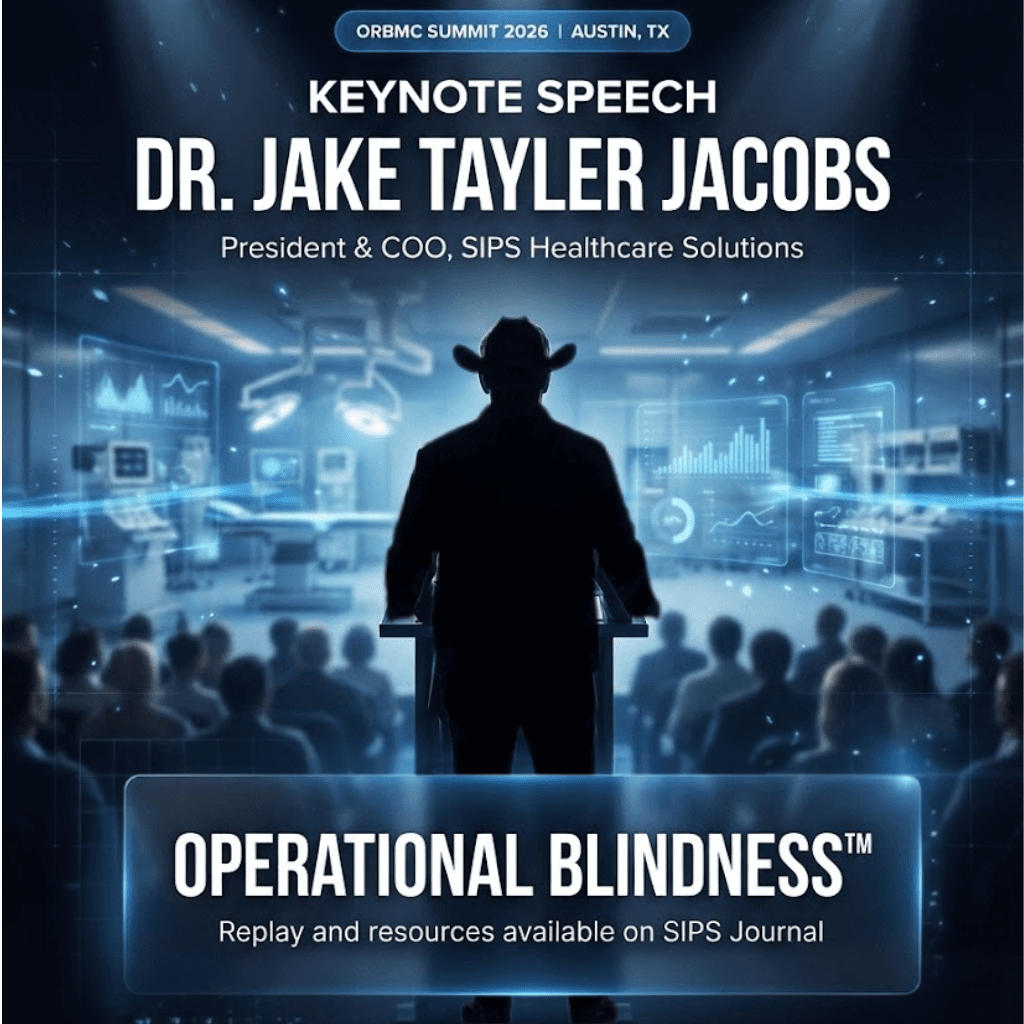
31:58I love you and there's absolutely nothing you can do about it. This is Bridge Builders. This is Bread to Lead, Bridge Builders, and I cannot wait to see you next time. This is a great year. If you're going to be in Arizona, January 29th through the 30th, I will be speaking at the Perriops Summit in Arizona. If you're going to be in Austin in February to the ORMBC Conference, I will be speaking there. We have a conference and a golf tournament coming up in Dallas. If you're interested in that, go to scrubball.org to find out more about our golf tournament and our leaders conference here that we have in Dallas.
32:33I love you. There's absolutely nothing you can do about it. Most importantly, go be great because that's what God ordained you to be. I won't take the lead. I won't take the lead.
32:49Since the age of 12, I've been bout my father's business At the age of 30, he sent me to his venue
From the publisher
This episode names and explains "operational blindness": the invisible visibility gap in sterile processing (SPD) that disconnects internal metrics from organizational outcomes, creating cost overruns, OR delays, and hidden quality risk.
Using the IBM parallel, the host shows how hospitals must fix upstream systems—not just people—by building new metrics, feedback loops, and an operating system (Sterile by Design) to restore transparency and unlock perioperative performance.