In short
Podcast Episode Summary: Bred To Lead | EP.037 The Hidden Beliefs That Keep Healthcare Stuck
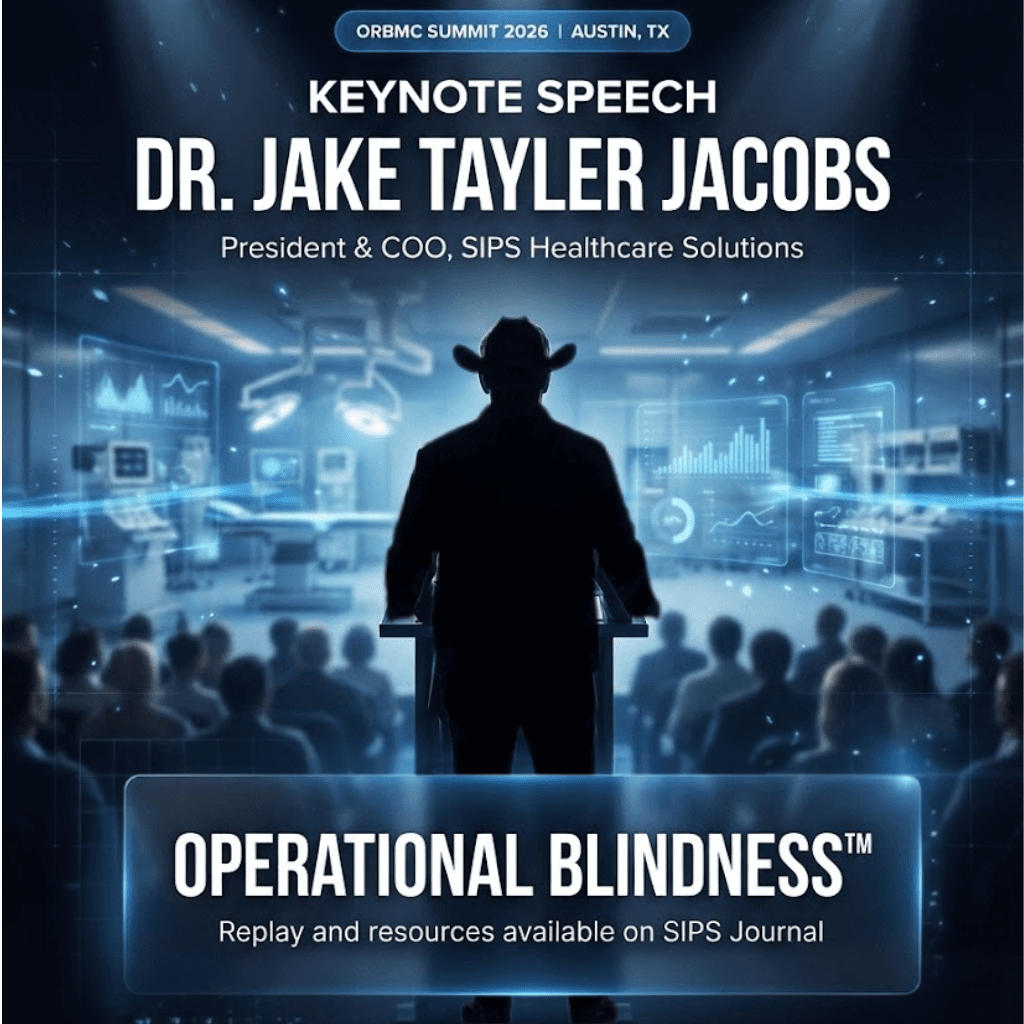
Overview In this episode of "Bred to Lead," Dr. Jake Tayler Jacobs explores the concept of "operational blindness" within healthcare organizations, particularly in sterile processing. He discusses how invisible beliefs masquerade as facts and hinder effective decision-making, leading to poor outcomes. The episode emphasizes the importance of recognizing and challenging these beliefs to facilitate transformation and enhance organizational performance.
Key Concepts
Operational Blindness
- Definition: A condition where leaders fail to see dysfunction due to inadequate measurement systems.
- Invisible Beliefs: Assumptions that feel like facts, shaping decisions and constraining possibilities.
The Cost of Comfort
- Danger of Comfort: Invisible beliefs provide a sense of certainty, which can prevent leaders from questioning the status quo.
- Self-Fulfilling Prophecies: Beliefs shape decisions, which in turn shape outcomes, subsequently reinforcing the original beliefs.
Limiting Beliefs in Healthcare Dr. Jacobs identifies four common invisible beliefs that bind healthcare organizations:
- SPD Will Always Be Reactive: Assumes that a reactive approach is inevitable, thus stifling proactive development.
- SPD is a Call Center, Not a Strategic Asset: Diminishes the role of sterile processing in enabling surgical revenue and operational efficiency.
- The OR Will Never Be Satisfied: Leads to a dismissal of feedback from the OR, fostering an adversarial relationship between SPD and surgical teams.
- We’re Doing the Best We Can with What We Have: Accepts dysfunction as normal, curtailing aspirations for improvement and excellence.
Techniques to Surface Invisible Beliefs Dr. Jacobs provides four techniques to uncover hidden beliefs within organizations:
- Listen for Certainty Language: Identify phrases that indicate a lack of questioning (e.g., "that's just how it is").
- Bring in Outside Perspectives: Utilize outsiders to challenge entrenched beliefs and assumptions.
- Ask Why Multiple Times: Dig deep into practices and assumptions to reveal underlying beliefs.
- Examine Measurement Gaps: Analyze what is not being measured to uncover assumptions about what is deemed important.
The Importance of Questioning
- Courage to Question: Challenging long-held beliefs requires bravery but is essential for transformation.
- Consequences of Inaction: Failing to address invisible beliefs can result in hidden inefficiencies and operational dysfunction.
Future Directions Dr. Jacobs hints at further discussions in upcoming episodes, focusing on each specific belief and strategies to break free from them. He invites listeners to engage with the material and consider how changes in belief can lead to improved organizational health.
Conclusion The episode underscores the premise that leadership is not an inherent trait but a cultivated skill. By identifying and challenging invisible beliefs, healthcare leaders can transform their organizations, enhance performance, and foster a culture of continuous improvement.
Additional Resources
- For further reading, access the white paper on operational blindness at [Sips Healthcare](https://sip2healthcare.com).
- To learn more about the insights shared in this episode, consider joining the Bred To Lead community for additional content and resources.
---
Call to Action
- Subscribe to the podcast for weekly insights.
- Engage with the community at [bread2lead.com](https://bread2lead.com).
Written by AI. May contain mistakes. Listen to the episode to check what was said.
Chapters
Tap a time to open that second in VOUnderstanding Operational Blindness
0:46 to 2:20
Exploration of how invisible beliefs shape decisions and hinder change in organizations.
“It's about beliefs, invisible beliefs that feel like facts, that shape every decision that you make, that determine what you think is possible and what you've already decided is impossible.”
Identifying Invisible Beliefs
2:21 to 4:25
Discussion on unexamined beliefs that feel like facts and their impact on healthcare operations.
“and gave the condition a name, operational blindness, after our book, of course.”
Metrics and Misconceptions
4:26 to 7:55
Analysis of how traditional metrics may mislead leaders in healthcare operations.
“The belief that IBM was a hardware company wasn't written in strategy document.”
Consequences of Invisible Beliefs
7:56 to 9:20
Exploration of how invisible beliefs create self-fulfilling prophecies in healthcare organizations.
“And the leaders responsible for fixing it can't see the failure because they're looking at the wrong dashboard.”
Unpacking Invisible Beliefs
10:21 to 14:00
A deeper dive into how invisible beliefs affect behavior and outcomes in healthcare.
“An opinion feels like, my gosh, everything's on point.”
The Impact of Invisible Beliefs in Healthcare
14:00 to 18:18
Explore how invisible beliefs shape the operations and outcomes in healthcare organizations.
“SPD operates reactively because you designed it to, because you resourced it to, because you measured it to.”
Identifying Common Limiting Beliefs
18:39 to 22:05
Discover four common beliefs that restrict healthcare operations and prevent improvement.
“The belief that reactive is inevitable isn't a fact.”
Techniques for Surfacing Invisible Beliefs
22:06 to 27:30
Learn actionable techniques to uncover and challenge invisible beliefs within your organization.
“We looked at the correlation between invisible beliefs, measurement systems, organization outcomes, visibility, and the findings actually validate everything I've been teaching you.”
The Cost of Dysfunction in Healthcare
27:31 to 28:00
Understand how dysfunction in healthcare negatively impacts leaders and the organization as a whole.
“He questioned what everyone else accepted and he saved the company.”
The Impact of Workplace Dysfunction on Life
28:00 to 29:52
Learn how chaos in the workplace affects personal life and well-being.
“Dysfunction at your job is breaking your body down, destroying your spirit, the optimism, the excitement that you used to have.”
Show all 14 chapters
Introducing Stereo by Design: A New Operating System
29:52 to 30:48
Explore an innovative approach to transforming healthcare operations.
“We have to reimagine what surgical operations, what it looks like.”
Changing Culture Through System Upgrades
30:48 to 31:44
Understand the necessity of changing systems to alter organizational culture.
“But in order to truly change culture, you have to upgrade and change the system.”
Invisible Beliefs in Healthcare and Their Impact
31:57 to 32:42
Learn about the beliefs that hinder progress in healthcare.
“You can always reach out to me on LinkedIn, Jake Taylor Jacobs.”
The Cost of Questioning Beliefs
32:42 to 33:39
Examine the risks of not challenging underlying assumptions in healthcare.
“They're comfortable because they reduce uncertainty, but the comfort comes at a cost of seeing reality clearly.”
Transcript
Automatic transcript. May contain errors.0:00Let me ask you something. how do you know the sky is blue? You don't think about it. You don't question it. You just know. You've always known. It's not an opinion. It's not a perspective. It's just reality. Now, what if I told you that some of the things that you know about your organization aren't facts at all? What if the beliefs that feel as certain as the color of the sky are actually assumptions? Assumptions that were never examined, never questioned, never tested. And what if those assumptions are the very thing keeping your organization stuck? Last episode, I introduced you to operational blindness, the condition where leaders can't see dysfunction because the measurement systems don't surface it.
0:45Today, we're going deeper because operational blindness isn't just about metrics and feedback loops. It's about beliefs, invisible beliefs that feel like facts, that shape every decision that you make, that determine what you think is possible and what you've already decided is impossible. And here's the dangerous part. The more comfortable a belief feels, the less likely you are to question it. Welcome back to Bread to Lead.
1:26Since the age of 12, I've been about my father's business at the age of 30. He sent me to his venue. What is going on, Bridge Builders? Welcome back to Bread to Lead, the business of health care. I'm your host, Dr. Jake Taylor Jacobs. Episode 37, season three, the read and teach series from my newest book, Operational Blindness. this is the hidden force that's destroying a lot of healthcare operations from the inside out. This is operational blindness. And this book here is really showing healthcare leaders that can't see the decisions that they're making or not making. It's costing them millions.
2:04If you're just now joining us, go back to episode 35. That's where this journey started. We laid the foundation with the IBM story. Hugh Liu, how Lou Gerstner discovered that the problems actually wasn't the people, it was the system. Episode 36, we brought that lesson into healthcare and gave the condition a name, operational blindness, after our book, of course. Today, we're peeling back another layer because the system that creates operational blindness it's built on something it's held together by something beliefs invisible beliefs that nobody talks about because nobody knows they're there so let's get into it i want to start off with the confession early in my career i had beliefs about what i had sworn were facts no opinions no perspectives facts and in this space of sterile processing there are some facts that based on beliefs have become facts, such as thorough processing will always be reactive.
3:07That's just the nature of the work. Or my organization will never be satisfied, no matter what we do. Or this portion of the business or the organization is a call center. You contain costs and manage problems. That's just the job. I didn't question these beliefs. I didn't even recognize them as beliefs. They were just how things were. The water I swim in, the air I breathe. Because I didn't question them, I couldn't really change them. Here's what I've learned over a decade in operational re-engineering, restructuring organizations to become more profitable or more efficient and producing a lot more cleanly.
3:48The beliefs you don't know you have are the ones that control you. When a belief is visible, when you know it's a belief, You can examine it, challenge it, test it, change it if the evidence says you should. But when a belief is invisible, when it feels like a fact, it becomes part of the architecture of your thinking. Every decision you make, every strategy you pursue, every expectation you set, all of it gets filtered through beliefs you've never examined. And if those beliefs are wrong, you'll keep making decisions that feel rational but produce the same disappointing results over and over again, and you won't understand why.
4:30This is exactly what happened to IBM. The belief that IBM was a hardware company wasn't written in strategy document. Nobody debated it in a meeting. It was just assumed, obvious, the way things were. Until Gerstner came, and from the outside saw what it takes, what it was, a belief, not a fact, and challenged it. The belief was wrong. The company's future was in services, not hardware. But nobody inside could see it because the belief was invisible. Healthcare has its own invisible beliefs. And until we surface them, examine them, and where necessary, reject them, transformation is impossible.
5:11I'm going to read you a section in this book. And if you're following right now, we're reading directly from the newest copy, Operational Blindness. This book will be available for the first run, just for executives only. If you want to know exactly how to get this book, you can reach out to us on SipsHealthcare.com and stay close to the site because we will be releasing here soon. It's January 21st as I'm recording this to date, not when this is going to be posted, but this book will be available very, very soon for executives to be able to get a copy of this book for free. And so and then after the executives period then we'll release it to the public for Everyone in the audience to get it.
5:55So if you're a healthcare executive You want to get a copy of operational blindness on us complimentary I'm stay tuned to the episodes and stay tuned to our sims healthcare.com site Because we will be releasing this i'm currently reading currently right now from page 26 and 27 Of the operational blindness book And the chapter or the subtopic of this book if in case you don't know I say it every episode, the table of contents, how it's built out is not built out by chapters. Our table of contents is actually built out by topics within the chapters so that you don't always have to just keep going back and trying to find the color highlighter that you used or that one spot that you left because your bookmark fell out.
6:35You can actually take notes in the table of contents, what you want to go back to because each of the subcategories are actually itemized out inside of the book. So this subcategory is the dangerous comfort of invisible beliefs. And we're still in chapter one of the book. Operational blindness isn't about bad people or poor intentions. It's about systems that don't surface the truth. Think about what the typical SPD actually measures. Turnaround times, how long it takes to process a trade, Volume, how many trays get processed per shift. Productivity, how much work each technician completes. These metrics all have one thing in common.
7:20They measure activity, not outcomes. Activity metrics are comfortable. They're easy to track. They show that people are working. They give leaders something to report in meetings. But they don't answer the only question that actually matters. Did the OR get what it needed when it needed it? You can have excellent turnaround times and still have cases delayed because the wrong trades were prioritized. You can have high productivity numbers and still have surgeons frustrated because instruments are missing. You can have impressive volume statistics and still have the CFO wondering why costs keep climbing.
7:56The metrics look fine. The operation is failing. And the leaders responsible for fixing it can't see the failure because they're looking at the wrong dashboard. This is exactly what Gershner discovered at IBM. The company was full of talented, hardworking people who believed they were doing their job well because by metrics they were measured on. They were. But those metrics were disconnected from what customers actually needed. IBM employees were optimizing for internal measures while customers went elsewhere. The same dynamic plays out in sterile processing every day. Sterile processing leaders optimize for internal measures, turnaround times, productivity, volume while the OR goes on group.
8:41The department hits its numbers. Surgical services suffers and nobody connects the dots because the visibility doesn't exist. This is why action plans fail. This is why new technology fails. This is why consultants fail. This is why leadership changes fail. All of these interventions assume the visibility problem doesn't exist. They try to transform what nobody can see. You cannot fix what you cannot see. And right now, most hospitals cannot see their SPD clearly. Matter of fact, in our StereoBio Design Operation Intelligence System, our technology actually tracks not only throughput turnover, but errors.
9:26how inefficient each technician is and how inefficient the department is as a whole. The next thing that our technology actually tracks is also efficiency, how efficient that person is. We built more than 15 ,000 algorithms in our technology, operational intelligence system, stir-by-design, OIS, over 15 ,000 algorithms in it to be able to predict and tell you exactly what the productivity is of the person who is in your organization. But that's neither here nor there. So I want to unpack what we just read. I think it's important for us to unpack. The reason invisible beliefs are so dangerous is because they don't feel like beliefs at all.
10:13Think about it. Think about how you experience an opinion versus a fact. An opinion feels like, man, this feels fire. An opinion feels like, my gosh, everything's on point. An opinion feels like, man, nobody can tell me anything because what I've seen is what I've seen and what I've experienced is what I've experienced. And nobody can re-justify or change the way that I'm looking at the thing. It is my opinion, my opinion alone. But think about how you experience an opinion versus a fact. An opinion feels like a choice. I prefer chocolate over vanilla. You know, other people might disagree. You know, it's subjective.
11:03You hold it loosely. A fact feels certain. Water boils at 212 degrees Fahrenheit. You don't question it. You don't expect disagreement. It's just true. Invisible beliefs feel like facts. They have the same certainty, that same solidity, that same, this is just how reality works quality. But they're not facts. They're assumptions that have been repeated so many times, reinforced so consistently that they've hardened into something that feels unquestionable. Let me give you a test. If you catch yourself saying any of the following phrases, you're probably expressing an invisible belief. One, that's just how it is.
11:48Two, it's always been this way. Three, that's the nature of the word. Four, you can't change that. Five, everyone knows that. Those phrases are belief markers. They signal that you've stopped questioning. you've accepted something as fixed reality when it might just actually be changeable. Now, here's the tricky part. Invisible beliefs aren't just invisible. They're comfortable. Why? Because they reduce uncertainty. If you believe SPD will always be reactive, you don't have to wrestle with the question of whether it will be proactive. The question is already answered. The uncertainty is resolved and you can stop thinking about it and move on.
12:29If you believe the OR will never be satisfied and you don't have to agonize over why they're frustrated or what you could do differently, the frustration is just a fact of life, nothing to be done. Move on. If you believe you're doing the best you can with what you have, you don't have to confront the uncomfortable possibility that you could be doing better, the ceiling is already set. Guess what? You reached it. Rest easy. Invisible beliefs are cognitive shortcuts. They simplify a complex world that gives us certainty in the face of ambiguity. That's exactly why they're so dangerous. Because the certainty is false.
13:11The simplification is a distortion. The comfort comes at the cost of seeing reality clearly. And here's where it gets insidious. Invisible beliefs don't just shape how you see the world. they shape how you act and how you act shapes outcomes and outcomes reinforce belief. It becomes a loop of self-fulfilling prophecy. Let me walk you through how this works with one of the most common invisible beliefs in healthcare. SPD will always be reactive. If you believe this, what do you do? You don't invest in proactive capabilities. Why bother if reactive is inevitable. You staff for crisis response, not provision, not prevention.
13:55You measure turnaround time and volume, not readiness in outcomes. You accept firefighting as normal. And what happens? SPD operates reactively because you designed it to, because you resourced it to, because you measured it to. Then you look at the reactive operation and say, see, I told you, SPD is always reactive. That's just the nature of the work. And the belief created the outcome and predicted, not because the belief was true, but because the belief shaped the decisions that made it true. This is the trap. The invisible belief becomes invisible evidence. The prophecy fulfills itself and the believer never questions it because the results seem to confirm what they already knew.
14:40And if you're starting to recognize some of these beliefs in your own organization, If you're realizing that some of what you thought were facts might actually be assumptions, I want you to point. I want to point you to a resource. I wrote a white paper called Operational Blindness. It's the white paper. It goes deep on these invisible beliefs, translate that beliefs to how they translate into hidden financial costs. We're talking millions of dollars leaking through reactive operations, premium labor traps, instrument damage or delays, all driven by beliefs that no one explain or examine. It's free.
15:15You can go to Sip2Healthcare.com. Go to our blog. You'll see the white paper right at the top. You can read it on your own. You can go see it at Sip2Healthcare.com. Click our blog tab. You'll be able to see the white paper there. As an operational engineer, it's almost my job to find all the fail shoots and beliefs, especially hidden beliefs. So if I'm saying that something in my operation is a matter of fact, that this is the most efficient version of it, My job is to re-engineer that version and find all the fail shoots to make them better. Now, here's the issue. And I talk about this later in the book because people say, hey, I've been through my lean.
15:55I went through my lean program. I got all my lean, all my black belts in lean. Lean only makes efficient what is already existing. It doesn't show you how to reconstruct and rebuild it to make it better. So for an example, if OR doesn't trust SPD and they created a workaround, they're storing stuff in their room, they're storing stuff upstairs, they're storing stuff in the surgeon's office because it just doesn't trust SPD, okay? Lean principles will make the workaround more efficient. How can we make the workaround more efficient? When we talk about re-engineering an entire structure of us turning a department around and implementing our stir-by-design operating system, we read the workarounds and we work straight directly with what is clogging the system upstream.
16:48That's the most important piece that I want us to understand, especially when it comes to beliefs. If what you believe is true, it should be able to stand the test of time of being pulled apart, examined, to determine if in fact that is a fact. The problem is that people never try to re-engineer what has been a philosophical belief that's turned into an operational fact. When in fact, there's no evidence that backs up the thing that you're doing now that is always going to be reactive. Just because something was built in one way doesn't mean it's the most optimal for that way. I can use the back of my of my boot, my heel of my boot as a hammer.
17:32It can hammer all day, but if it was not created to hammer in that way, it's not going to be the most optimal tool to use concurrently. So. Now we'll talk about the beliefs. Let's talk about the beliefs that bind. And let me get specific. There are four invisible beliefs that I see in almost every health care organization I work with. These beliefs bind organizations. They constrain what's possible before anyone ever tries. belief number one, SPD will always be reactive. That's just the nature of the word. This is a foundational belief that one that makes all others possible. If you believe reactive is inevitable, you don't pursue proactive.
18:18You don't invest in it. You don't measure it. You don't hold anyone accountable for it. But here's the truth. Proactive SPD operations are achievable. I've seen them. I've built them. They exist in hospitals right now. They're rare, not because they're impossible, but because most organizations have never seen them and can't imagine them. The belief that reactive is inevitable isn't a fact. It's a failure of imagination reinforced by a failure of investment. Belief two, SPD is a call center, not a strategic asset. This belief determines everything, how much attention SPD gets, how much investment, how it's positioned in the org chart, how leadership talks about it.
19:03But think about what SPD actually does. It directly enables surgical revenue. Every case that runs on time because instruments were ready, that's revenue protected. Every case that starts late because instruments weren't ready, that's revenue leaked. Every surgeon who takes their cases elsewhere because it can't trust the system, that's revenue lost. SPD isn't just a cost to be minimized. It's a constraint on your most profitable service line. Treat it as overhead and you'll get overhead performance. But if you treat it as a strategic portion of truly busting up your OR, propping it up, you'll unlock strategic value.
19:50Belief three, the OR will never be satisfied no matter what we do. I hear this one constantly and I understand why. OR teams are demanding surgeons have high expectations. Complaints are frequent. No matter what SPD does, someone is unhappy about something. So SPD leadership throws up their hands. They'll never be satisfied. Why bother trying? But here's what belief misses. The OR's dissatisfaction is a signal. It's information. It's telling you that something is broken. When you dismiss the signal as inevitable, when you decide the OR is just unreasonable, You cut off the feedback loop that could drive improvement.
20:30You poison the relationship. Once SPD decides the OR will never be satisfied and the OR decides that SPD will never be reliable, you get an adversarial dynamic. Both sides stop trying. Both sides blame the other. Nobody solves the underlining problem. And the belief that the OR will never be satisfied guarantees that they will never be satisfied. Belief four, we're doing the best we can with what we have. That one sounds humble, hardworking, realistic. What it actually means is we've accepted dysfunction as normal. When the best we can is the ceiling, you stop asking what excellence will look like.
21:10You stop imagining what might be possible with different resources, different systems, different approaches. The best we can becomes an excuse to stop trying. I'm not saying resources don't matter. They do. I'm not saying constraints aren't real. They are. But doing the best we can with what we have is often a belief that protects us from the uncomfortable work of asking for more, advocating for change or admitting that the current approach isn't working. It's comfortable and comfort is the enemy of transformation. Now, I've been talking about these beliefs as a pattern that I've observed over a decade in operational turnaround and SIPs has observed over 20 years in health care, sterile process and peri-op turnaround.
21:55But we didn't stop at observation. We just studied it. We conducted the operational blindness index study. We call it the OBITM. It's a comprehensive research, short comprehensive research initiative examining how these beliefs and visibility gaps manifest across healthcare organizations. We looked at the correlation between invisible beliefs, measurement systems, organization outcomes, visibility, and the findings actually validate everything I've been teaching you. And they quantify it in ways that would change how you think about your own organization. If you want a copy of the OBI 10 study, you can go to SipsHealthcare.com and request it.
22:35We'll send it directly to you. It's in the sales pitches, researches, data, evidence that we're talking about. What we're talking about isn't just theory, it's measurable reality. SipsHealthcare.com, request the OBI study and you'll be able to get to it. All right. Let's go on and bring this home for this episode. How to surface invisible beliefs. So how do you find beliefs? you don't know you have. Here are four techniques that work. Technique number one, listen for certainty language. When you hear yourself or others say things like always, never, just the way it is, can't change that, stop.
23:11Those phrases are markers of invisible beliefs. Ask, what if that's not true? What if it's a belief, not a fact? What would we do differently if we didn't hold that belief. Technique number two, bring in outside perspective. One reason Gertzner could see IBM's invisible beliefs is because it came from the outside. It didn't grow up in the culture. It hadn't absorbed the assumptions over decades. Find your outside perspective. It might be us, Sips Healthcare, as a consulting operations company coming in. It might be a new hire who ask dumb questions. It might be a peer from another organization who can look at your situation with fresh eyes.
23:53Whoever it is, give them permission to challenge what everyone else takes for granted. Because that's our overall goal. When we come into a hospital system, we're just challenging the sacred cows. We're challenging those invisible beliefs and we're making people have to prove that that is in fact the best way to do the thing. technique number three, ask why 5 ,000 times. This is a technique from lean manufacturing, but it works for beliefs too. When you encounter a practice or an assumption, ask why is it that way? Then why? Then ask why again? And then ask why again? And then keep going until you hit bedrock and you actually have full clarity.
24:34Either it is or it is not. Often you'll find that the practice is built on a belief that nobody has examined in years, maybe decades. A belief that makes sense once, but doesn't really make sense anymore. A belief that was never true in the first place. Here's the deal. One of the biggest things that we're realizing is that every hospital system that we've encountered that we did the OBI study for, every one of them are operating on systems, on systems that are 10, 20 years old. So as a company, we went from consulting, supporting, building things for the hospital and just leaving. And then we had our stint in staffing, just plugging those holes.
25:10But what we realized, consulting alone doesn't work. Staffing alone doesn't work. A new system is what's needed. A new system and an infrastructure that the department just runs on completely. Because you go in as a consultant, you give them all the books, you redo the program, you kind of train them on it, you leave. The moment a new hire comes in, all that's gone. Go into staffing. You send leadership, whatever they're just to plug the hole for the leaders that are there on site. If that leader on site that works for the hospital don't know what they're doing, we're going to be just plugging holes and running with our heads cut off and then being the ones that get blamed for not delivering a turnaround service when, in fact, we were not hired for a turnaround service.
25:45As a company, we've made the decision that either it's a full outsource where we can control the entire thing, the staff, the development of talent, as well as their operating system, or we're just implementing and overseeing the operating system. Outside of that, you need both metrics. You can't just have consulting. You just can't have staffing. You have to have a full new system and then build on top of the new system. We're operating on old beliefs. Technique number four, look at what you're not measuring. What you measure reveals what you believe matters. What you don't measure reveals what you have assumed.
26:20If you're not measuring OR readiness, you've assumed it can't be managed. If you're not measuring downstream impact, you've assumed it can't be connected. If you're not measuring surgical services satisfaction with SPD, you've assumed it can't be improved. The gaps in your measurement systems are windows into your invisible beliefs. The courage to question. Let me be real with you. Surfacing invisible beliefs is uncomfortable. When you start questioning what everyone takes for granted, you create a tension. And people who've built their careers on a certain assumption don't appreciate having those assumptions challenged.
26:55And you might discover that beliefs you've held for years, beliefs that shaped your decisions, your strategy, your identity as a leader were wrong. It's hard to face. But here's what I've learned. The discomfort of questioning is nothing compared to the cost of not questioning. Invisible beliefs are expensive. They cost you millions in hidden efficiencies. They cost you talented people who burn out fighting a system that makes success impossible. They cost you the future you could have had if you weren't trapped by assumptions from the past. The courage to question is the price of transformation.
27:31Gershner had the courage at IBM. He questioned what everyone else accepted and he saved the company. You can have that courage too. Now, maybe you're listening to this and thinking, okay, I can identify the beliefs. I can see how they've been limiting us, but how do I actually change them? How do I build a system that doesn't run on these broken assumptions. The first thing I want you to realize before we even get to the system, let's get to you. Most of you have no idea. Dysfunction at your job is breaking your body down, destroying your spirit, the optimism, the excitement that you used to have.
Read the full transcript
28:08Now you're cynical, snarky, sharp with the tongue. Think about how you're changing. This is what chaos brings. If you're raised in chaos, it makes you chaotic. If you're ready in system and structure, it helps you build patience. Now, there are some people that have the personality to be able to overcome anything crazy. But most people that I meet, most leaders that I meet become products of the system and the culture and the environment that they're in. And healthcare was never meant to be like private equity, sharp and shrewd. Yes, responsible for budgets and resources, but starting to look like Wall Street or the hedge fund when you talk to certain leaders in healthcare.
28:51Profitability is absolutely always a great thing, but we're in the business of care. We're in the business of healing. We're in the business of support. We're in the business of loving. We're in the business of saving. We have so many other things to think about, more innovations to create in healthcare. We're in about a system that's able to make sure everyone just does their job shouldn't be one of them. But what you're not understanding is how dysfunction at your job is carrying over to your life. Destroying marriages, separating children from parents, breaking your body down, sleep, anxiety, eating disorders, insomnia.
29:32And regardless of what anybody has told you, you cannot separate work from home, especially when you're in leadership. It just goes with you. It's always with you. What if you had a system? that can allow for you to be able to leave the facility and know everything's okay. We have to reimagine what surgical operations, what it looks like. The bridging of the gap. That's exactly why we built Stereo by Design, our operating system. It's an operating system built on different beliefs, beliefs that have been tested and proven. The proactive operations are achievable. That SPD can be strategic asset.
30:14that surgical services can become a collaborative partner. The visibility into outcomes change everything. It's not a philosophy, it's a methodology. Visibility systems, operating rhythms, capability development, a complete framework for replacing beliefs that trap you with systems that free you. We've implemented it across community hospitals, academic medical centers. When you install it, the belief starts to shift because people see evidence that the old assumptions were wrong. Here's the deal. A lot of people try to change culture by motivating people. But in order to truly change culture, you have to upgrade and change the system.
30:56When you think about a pro football or basketball team, if a team has talent but they can't win, it's because the culture is different. So you bring in a new coach with a new system. You don't bring in a new coach with the same system, the same philosophy, because that philosophy may not work. And a lot of organizations are needing a new system, a new framework, a new belief, a new structure that can be installed into your operational framework and bred and built from there. Not new, not more SOPs, not more policies, not more PDFs, not more books and binders, an operating system. And that new system, that new development, that new flow will breathe about a new culture of beliefs and change.
31:42If you want to see what that looks like, if you want to understand how Start By Design OS would address the specific beliefs holding your organization back, just schedule a demo. Go to stilltealthcare.com and reach out to us. You know where to find us. You can always reach out to me on LinkedIn, Jake Taylor Jacobs. I'm as involved with every inch of my company. The reason why we're able to offer our services and our systems at such an affordable cost to hospitals, one, because hospital leaders are in desperate need of something that's going to work and give them relief. The second thing, we're not bulky as a company so that we can stay affordable for the hospitals.
32:20Us as executives, our administrative team, none of us mind doing dirty work because you in the field and hospitals have to do multiple things to ourselves. And we stay lean as an organization for one reason, to stay affordable and to stay adaptable. So that's episode 37, Bridge Builders. The dangers of comfort of invisible beliefs. Let me recap what we covered. Invisible beliefs feel like facts. That's what makes them different. Dangerous. They're comfortable because they reduce uncertainty, but the comfort comes at a cost of seeing reality clearly. Invisible beliefs become self-fulfilling prophecies.
32:58The beliefs shapes decisions, decisions shapes outcomes, outcomes reinforce belief. Four beliefs that bind healthcare. SPD will always be reactive. SPD is cost center. The OR will never be satisfied and we're doing the best we can. And none of these beliefs are facts. They're assumptions that have never been examined. Surfacing invisible beliefs requires courage. But the cost of not questioning is far greater than the discomfort of questioning. Next episode, we're going to get even more specific. We're talking about the beliefs that bind. A deeper dive into each of the four beliefs, where they come from, what it takes to break free from them.
33:37And here's what I need from you. One, subscribe, follow the episode every week. Two, or when I'm available. I'm traveling a lot this week. If you're going to be in Arizona, it's currently July, January 21st, 2026. You're gonna be in Arizona. I'll be speaking at the Perioperative Summit. Matter of fact, I have the keynote workshop. and I am also speaking on stage along with Sharon Green-Golden at the Paradox of Summit in Arizona. We'll also be at RMBC, RMBC, excuse me, RMBC in Austin, February 9th through 11th. And then of course we have our conference, June 26th through the 28th, the scoreball conference, the leadership conference that you always hear us.
34:18And then of course, masterclasses. If you wanna join and get a part of our group where you get access to masterclasses and training, go to bread2lead.com b-r-e-d-t-o-lead l-e-a-d.com join our community because there we have all of the tools and masterclasses that we'll be posting there and also inside of bread2lead the community the actual video version of the podcast is going to be put there i know i told you all to be on YouTube. My team told me I was wrong. So the actual video content of this podcast, you want to see the visual version will be inside of our community, my bread to lead community.
35:04Okay. Exclusive content, masterclass videos, a network of leaders that we're trying to build that can work together. Bridge builders, the beliefs that feel like facts are the ones that control you. It's time to question everything. I am Dr. Jake Taylor Jacobs. This is Brett to lead. go and build your legacy, but most importantly, go and take back your life.
From the publisher
This episode exposes "operational blindness": invisible beliefs that feel like facts and drive poor decisions in healthcare, especially in sterile processing. Dr. Jake Tayler Jacobs explains how activity-based metrics mask real outcomes, causing delays, costs, and eroded trust.
He outlines four common limiting beliefs, shows how they become self-fulfilling, and offers practical techniques to surface and change them so organizations can become proactive, visible, and high-performing.