In short
Bred To Lead Podcast Episode Summary: Ep: 013 - The Power of Storytelling in Leadership
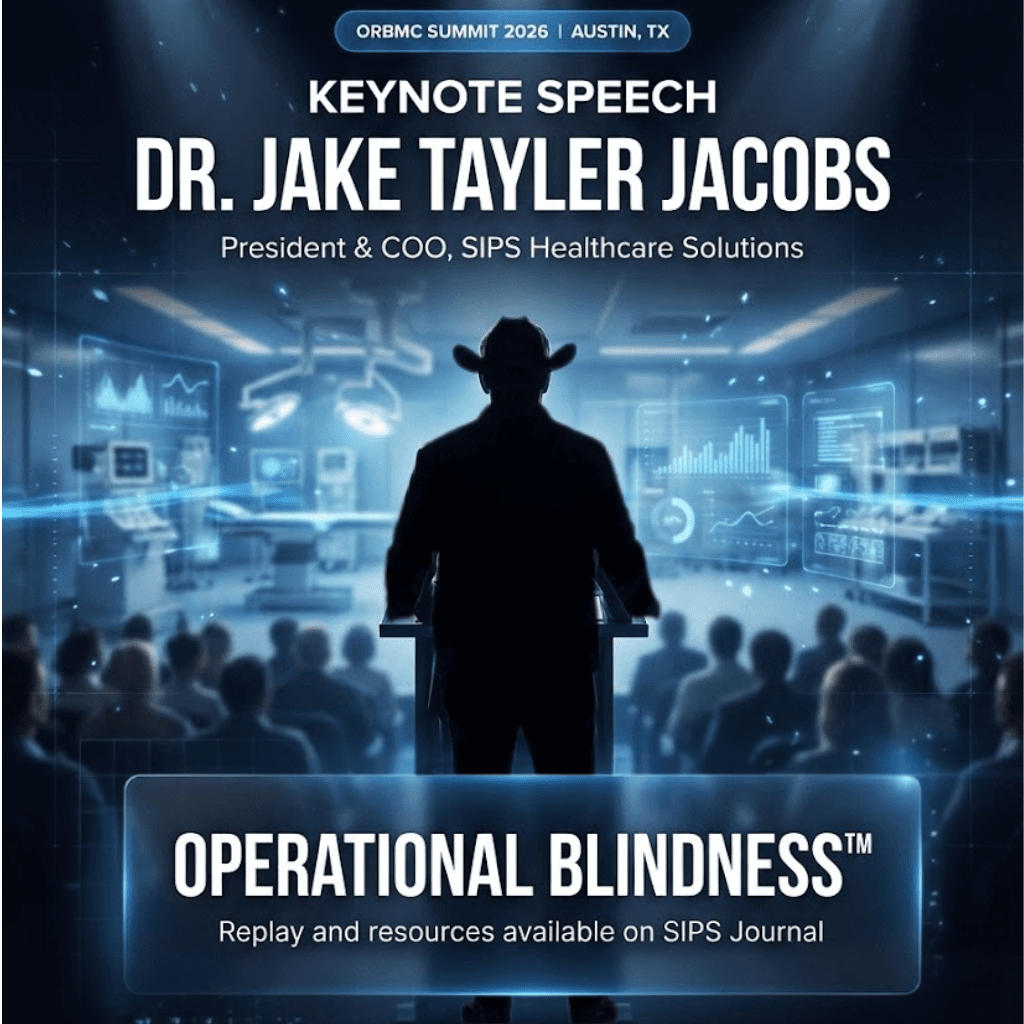
Podcast Overview The "Bred To Lead" podcast, hosted by Dr. Jake Tayler Jacobs, promotes the idea that leadership is cultivated through intentional practice and experience rather than being an innate quality. In Episode 013, Dr. Jake explores the transformative power of storytelling in leadership, emphasizing its capacity to inspire and connect with audiences.
Key Themes
The Importance of Storytelling in Leadership
- Human Connection: Storytelling is essential for engaging with others, making messages memorable, and inspiring action.
- Emotional Engagement: Neuroscience shows that stories activate emotional responses, leading to deeper connections than mere facts.
Why “Bred to Lead” is Central to Leadership
- Inclusive Leadership: The concept suggests that anyone can become a leader through growth and development, regardless of their starting point.
- Process of Refinement: Leadership is shaped through experiences, challenges, and mentorship rather than being an innate quality.
Why Storytelling Matters
- Memorability: Stories help ideas stick in people's minds better than dry facts.
- Emotional Connections: Stories resonate on a personal level, making messages more impactful.
- Clarification: They simplify complex ideas, making them easier to understand.
- Inspiration to Act: Compelling narratives can motivate individuals to change behavior.
- Trust and Credibility: Sharing personal stories fosters authenticity.
- Shared Meaning: Stories create a sense of identity and purpose within teams.
Key Strategies for Effective Storytelling
- Know Your Audience: Tailor stories to resonate with the interests and values of your audience.
- Have a Clear Purpose: Define the goal of your story—whether to inspire, teach, or motivate.
- Use a Simple Structure: Employ a three-act structure:
- Setup: Introduce context and challenges.
- Struggle: Describe the journey to confront challenges.
- Resolution: Share the outcome and lessons learned.
- Make it Personal and Authentic: Draw from personal experiences and challenges to create a relatable narrative.
- Focus on Characters: Relatable characters help the audience connect with the story.
- Show, Don’t Tell: Use vivid actions and experiences to illustrate points rather than just stating facts.
- Call to Action: End with a clear action step for the audience to relate to or act upon.
Practical Application
- Dr. Jake emphasizes using storytelling to effectively communicate the importance of tasks and inspire a collective sense of purpose among team members.
- He provides a practical example of using storytelling in a healthcare context to convey responsibility regarding patient care.
Conclusion Dr. Jake reinforces that mastering storytelling in leadership requires practice and a commitment to understanding one's audience. By integrating storytelling into leadership practices, individuals can enhance their influence and create a culture of engagement and purpose within their organizations. He encourages all listeners, regardless of their current leadership status, to embrace their potential to lead.
Call to Action Listeners are encouraged to implement storytelling techniques in their leadership practices and to view every experience as an opportunity for growth and connection.
For further insights and resources, visit [Bredtolead.com](https://bredtolead.com).
Written by AI. May contain mistakes. Listen to the episode to check what was said.
Transcript
Automatic transcript. May contain errors.0:28What's going on change agents? In a different way. The purpose of this podcast was to unlock your leadership potential and create lasting impact so we can explore and imagine what leadership looks like. reimagine. And I'm just so ecstatic. I think we topped the charts this past couple of weeks at 42, top 42 business and leadership podcasts in the entire country. So here at SIPPS Healthcare Solutions, I just want to say thank you so much for believing in us. And also thank you for sharing the information. But the key is not just sharing the information. The key is you're sharing the information, having conversations about how to become a much better leader in the organizations that you're serving every single day.
1:18That's the purpose of this podcast. I'm so, so, so super thankful that we all are sharing this information to make the world a better place. So all those health care solutions, we specialize in serving the health care systems all across the country and growing to all across the world. The beautiful thing is that principles can be taken and utilized with any organization, no matter what company or industry that you're in. So that's what we're thankful for. So before we get started, we have to play the theme song and I'm going to be back because listen, we're going to be talking about the power of storytelling and leadership and we have to get right into the game.
1:54Let's go.
2:14We'll be right back.
2:33So last week, I think, was part two of this little series on influence and persuasion in a way to galvanize people ethically, not immorally within your organization to do amazing things. And then last week we talked about the role of emotional intelligence in persuasion, self-awareness. We talked about self-regulation, empathy, social skills, motivation. We talked about all of these things, and we also gave tips on how you can actually get better. So if you have not listened to the previous podcast, please, please, please listen to the previous podcast so that you can make sure that you're not missing out on the game and the steps that it takes to be a great leader.
3:12I believe that with this podcast, one episode builds on the next episode. So, yes, you'll be able to get value from one episode alone. But if you really want to be able to grow, take these episodes one at a time. Think of this like your one on one coaching session with a leadership coach that literally has been exactly where you've been built. Amazing organizations and are literally trying to pull you. If you're new to this podcast, to this pod class, as I like to call it, this is not one of those typical podcasts where you're just interviewing cool people so that you can be able to sound cool and be cool.
3:46This is a podcast whose sole purpose is making sure that you grow as a leader. So we're teaching, we're growing, we're laughing, I'm yelling, I'm guiding, and I'm giving actionable tools that you can actually use and take to your organizations to become the most bomb leader in the world. Because the truth is, the highest paid position in the world is leadership. So if you can learn how to be a great leader and lead the multitude, people from diverse backgrounds, people from diverse environments, I'm telling you right now, your life will be changed. And it starts with part three of this series, which is mastering the art of storytelling for impact.
4:26I think it's very important that we understand the construct of mastering the art of storytelling and why it is so impactful, especially when it comes to our human nature. Think about it before we even get into it. Let's let's just process for a minute. What good is life without songs and movies and books? Even in scripture and some of people's holy Bibles and holy books and the Torah and the Koran and the Torah and the Bible and all these other religious books, stories. Right. When you think about your life and you're telling your history, you're not saying, hey, at this point, I did this. At that point, I said this.
5:09At this point, I did this. And that's my life. No, we always want to engage people in the intricate details of the story to make them actually see what you're seeing through the stories that you're giving. And the problem with a lot of organizations is that the leaders or people that are in management are telling people what to do versus giving them a visual of why what they do is important. See, the storytelling impact, it builds on what me and my business partner Ignacio created, which was the quadrant, the comprehensive quadrant. And we talk about why, what, when and how. Why is something important or what what makes something important?
5:55Excuse me. Then why is it important for the what the thing that you're doing? And then when should I implement the thing? And then how do I implement it in the most efficient way concurrently and consistently? When I'm trying to galvanize my organization to do something, I always start with the what what skills are needed, what is important for them, what commitment that is required. Then I build and tell them why it's important. You know, a lot of people like to say, hey, Dr. Jake, you're just you're just long winded. You like to talk a lot and, you know, a lot of people don't don't think that way.
6:26And, you know, some people want you to get straight to the point. But guess what? The number of people that want you to get straight to the point and can actually go out there and execute without any elaborate elaboration or any context that is given within the organization. This is typically what you see when people don't get things done correctly. when you when a lot of organizations say I told them what to do. Well, if telling them what to do was easy, everybody would be a great leader. So obviously there is something more about leadership than just telling somebody what to do. We have to learn the importance of
7:05context and storytelling. It brings about a color and a vigor that makes people want to jump through the walls for you. So as we continue our exploration of influence and persuasion, We come to one of the most powerful tools in a leader's arsenal is storytelling. Human beings are wired for stories. All we've been communicating and teaching and inspiring since the dawn of language. In fact, neuroscience research shows that our brains are more engaged by storytelling than cold hard facts. Did you know that when we hear a story, our brains react as if we're experiencing it ourself. We feel the emotions.
7:46We imagine the scenes. We connect with the characters. This makes storytelling an incredible, potent tool for influence and persuasion ethically. A well-told story can bypass our analytical defenses, connect with us on emotional level and inspire us to act and think differently. Here's why storytelling is so effective in context of leadership and influence. Stories make ideas memorable That's number one, write it down If you do not know about this podcast Let me just tell you this right now This podcast, I'm going to tell you what to write down I told you it is a pod class So it is time to take out your notepad Take out your pen Because Dr.
8:31Jake is about to go in If you have not taken time to go get the Bread to Lead actual book That's in Amazon Please, please, please almighty, please go and get the book because this podcast is an outward expression and deeper context based on our book, Bread to Lead. So if you want to really start a conversation within your organization, get that Bread to Lead book in there and start building those connections within your organization. Okay, back to the context of today's show. So we're going to give you a couple of reasons why storytelling is so effective. One, stories make ideas memorable. Information delivered as a story is more likely to be remembered than facts and figures alone.
9:16Two, stories create emotional connections. They engage our emotions, making the message more impactful and personally relevant. Number three, stories illustrate complex ideas. They can simplify and clarify complex concepts and making them more accessible and understandable. Number four, stories inspire action. A compelling story can motivate people to change their behavior or take action in ways that pure logic often can't. Number five, stories build trust and credibility. Sharing personal stories, y 'all, personal stories or case studies can establish your authenticity and your expertise. And then lastly, number six, stories create a shared meaning.
10:08They can help create a sense of shared identity or purpose within a team or organization. Here's the craziest thing. Some of the best organizations that I've built and I've been a part of building, being a corporate turnaround specialist now in health care, health care turnaround specialist. is when we get away from the extra preliminaries of, I got to know all your kids and grandkids and cousins for you to trust me. No, no, no, no, no. Sharing stories of being misused at work or not being valued or your ideas being taken or stolen and having camaraderie around those stories and building new stories together of success.
10:49You can build an amazing organization without ever having to share anything in your personal life. Did you know that? You can build an amazing organization without ever having to show or talk about anything in your personal life. Because I will see personally who you are in the workplace regardless if you show your personal life or not. We'll talk about that maybe in another part. So now the question is, how can we harness the power of storytelling and our influence efforts. I'm gonna give you a couple of key strategies. A, one, you have to know your audience. Write that down. The key strategy, one of the key strategies to harness the power of storytelling is knowing your audience.
11:37The most effective stories are tailored to the interests, needs, and values of your specific audience. Before crafting your story, consider who you're trying to influence and what will resonate with you. I love the scripture. And whether you're a believer or not, it doesn't really matter to me because I love all people. But I am a believer in Christ and everybody knows this that listens to the podcast. And there's a scripture in the Bible when Jesus was talking to his disciples. And when he was talking to disciples, the disciples were trying to figure out why on earth Why on earth are you using all of these parables?
12:27And why are you using all of these stories to talk to these people about all of this stuff? So it is actually Matthew 13, 10 and 12. If y 'all are actually looking at me right now in a podcast. Yes, I am pulling out my handy dandy Bible. If you're looking at this podcast right now. Yes, I mean, listening to it. Yes, I'm pulling out my handy dandy Bible. And then y 'all need to let me know if y 'all want to actually see the visuals of this podcast. I'm trying my best to just do audio, but sometimes a little bit of animated and a little bit of FaceTime kind of brings things to light. So Matthew 13, 10 and 12.
13:06If you don't like this part of this story or the podcast, you can just listen. So the disciples asked Jesus, why do you speak to them in parables? And he answered. He answered and said to them, to you, it has been granted to know the mysteries of the kingdom of heaven. But to them, it has not been granted for whoever has for whoever has to him shall be given more and he shall have in abundance. But whoever does not have even what he has shall be taken away. Therefore, I speak to them in parables, because while seeing they do not see and while hearing they do not hear, nor do they understand. So what he's saying is that the disciples you already know what i'm talking about so Here's a case in point when people say just talk to me straight Usually people that already know what to do and what you're talking about Those are the people that's like hey, just give me the information Give give me the information so I can go and do what I have to do.
14:06But here's the truth The exception is not the rule Just because with one person you can tell them something quick and they go get it done because they have the experience in that space. They know what they're doing, so they don't need a story because they already understand the importance of why they do it and they're not gonna cut corners. But when you're building an organization, when everyone is not at that level of thinking, you can't expect for everyone that's not at that level of thinking to just take short, quick answers and figure it out. You have to give stories to get them to understand the value of why you're saying what you're saying and getting them to do what you want them to do.
14:44So it resonates with them. So oftentimes, especially in the healthcare space, when we're talking to a lot of our staff that's in the field, and we're dealing in the central sterile processing space when we're cleaning instruments, right? And I can go to a person that's in that space and say, hey, listen, you need to clean the instruments, right? Because somebody is going to die if you don't do it. In their head, they'll say, well, the odds of them dying are slim. You know, there's just a little one particle. If they did get an infection, and they'll clean it. That's no big deal. Like, it's not like I'm not cleaning it at all.
15:16I'm just skipping a couple of steps. However, if I say, hey, listen, John, let me ask you this question. If your life was on the, if your grandma's life was on the line and she were to get the tray that you're creating for a right now to put in this case, to send it upstairs for the surgeon to be able to perform surgery with this case that you're building? Would you trust your grandmother to have surgery with the instruments that you're preparing right now for the doctor? That story, that being able to elaborate my point through a story to get them to see the value of what we do, he's going to say, you know what, Dr.
15:59Jake, no. I need to go and I need to make sure these things are good. Because if it were my grandmother, I will make sure every step is done. OK, well, upstairs, John, there is somebody's grandma up there that's depending on you to do every single case in every single trade correctly. Y 'all see how I said the same thing versus saying, hey, John, fix the instruments or else or fix the instruments. Make sure they're prepared right. And then don't send them upstairs unless they're ready. If you don't give context and get them to buy into why it's important, you're never going to get people to change anything.
16:31Now, the second strategy on why we need to harness the power of storytelling and influence is one. After I know my audience, the second thing I must do, I must have a clear purpose. Every story you tell should have a clear purpose that aligns with your influence goal. Are you trying to inspire, teach, build trust or motivate or motivate action? let this purpose let this person purpose guide your story selection and crafting so after I know my audience what's the purpose of me telling the story am I just talking and sharing stories to tell them or am I trying to get them to see a specific point and then after I able to decide the clear purpose okay I need John to understand that upstairs someone is depending on this tray so whether they know him see him or know or and understand that he did the tray or not that tray that he is doing, the instruments that he's preparing for that doctor to perform an 18 hour surgery is absolutely just as critical as any other piece to the pie of that surgery.
17:41Other than the doctor performing the miracle work that they do. Y 'all see that? Because I want him to understand that now I have to level with him and know my audience and then craft my story to fit them. So if they love sports, I need to learn a sports analogy. If they love their family, I need to learn a family analogy. If they learn if they love the moon, I need to figure out a way to tell them the same story using space analogies. This is why being a leader is so hard, because you have to be so broad in understanding all types of diversities of people to be able to connect with them in the ways that they imagine to be connected with.
18:20So if you don't want that responsibility as a leader, get out the hot seat because, yes, it takes work. Your job as a leader is to manage, develop, grow, lead and push people to the best that they can be for the glory and for the benefit of the organization and the job of your position. That's your job. So, yes, it's a hard job. Yes, you have to manage egos, but having a clear purpose and understanding this and learning all different types of ways to say the same thing is absolutely critical for your success. The third thing that you have to master is to use a simple structure. There are many storytelling structures, but one of the simplest, most effective ways is a three act structure.
19:03One, I want to set up the context and introduce the challenge or the problem. Two, I want to describe the struggle or the journey to address the challenge. And three, I want to share the resolution and the lessons learned or results achieved from handling the problem. It's very important. That simple structure. Set up the context and introduce the challenge. Hey, hey, John, I'm trying to get him to do his instruments better. Hey, John, let me ask you a question. if someone were upstairs and and it would happen to be your grandmother your mother your father someone you love so deeply and they had to get this tray that you built that's the context of the problem y 'all see that and it gets sent upstairs and you find out that your tray is the reason why that there's complications for your grandmother your mother or your father for the rest of their life.
20:01How would that make you feel, man? It would make me feel sad, man. I will, I will be so upset at myself, man. I couldn't imagine living with myself. So what can we do to ensure that you're the person that you love so much would never have to go through that from your tray. I need to do this, this, this, and that. Well, let me tell you something, John upstairs. It is someone's love person. And it is your job to ensure that that doctor has the best instruments in their hands so they can help save that person's life with as limited casualties as possible. You know what? Dr. Jake, you're right. Y 'all see this.
20:34Y 'all see how this flow of storytelling is happening. Now, four, D, got to make it personal and authentic. Y 'all see how we made it personal and authentic? The most powerful stories often come from personal experience. You can share your own challenges, failures, and successes. Hey, John, there was a time when I first came into the industry and I thought that I was just cleaning instruments because at one point they used to say that we just glorify dishwashers with instruments. And I took on that persona myself. And then when I found out that one of the trays that could have possibly been mine caused an issue with an infection with one of the people, the doctors perform surgery on, man, I could not live with myself.
21:24And because of that, I made it my vow that every tray I did, I would imagine that my daughter was on that bed. Or my son was on that bed. Or my wife was on that bed. And I promised myself I would never skip a step. And I was sure that every instrument, no matter how tired I was, was the best to my ability to be in the most perfect shape for that doctor to perform their miracle working surgeries. John, I don't want that to be you. Y 'all see that? Boom, pull them in. personal, authentic. We use vivid details. It engages the sense with the descriptive language. You see, we create tension in the story.
22:08A good story has elements of tension and conflict. This creates the audience to engage in and to be interested. The next one, we want to focus on characters. People connect with people. Center your story around relatable characters and their experiences, whether it's yourself, you put John in the story, You put Susan in a story, but you want to use these characters and metaphors and analogies to to make complex ideas more understandable and memorable. Isn't it funny how people can memorize movies and.
22:45Lyrics to songs. A whole lot faster than they can memorize things that actually can save people's lives. Why? because music movies tell a story you imagine yourself there
23:08you imagine yourself in the place the song I forgot who made it but it goes slow down I just wanna get to know you but don't turn around cause that pretty brown thing look good to me I know you're like brown thing, Dr. J. But just imagine a song. Slow down, I just want to get to know you. And immediately your mind can go like a woman's walking fast or a guy's walking fast. And you're like, oh, my God, slow down. I just want to get to know you. You're like, but don't turn around. It's a beautiful sight I see here. But just don't slow down, but don't slow down. I want to walk up to it. It gives you that imagery that you're there.
23:50That's important. we we want to learn how to show and not tell instead of just simply stating the facts show them through actions and experiences of the characters in your story even if the characters in your stories are yourself and you want to end it with an action call of action so john what can we do to ensure that this doesn't happen it's very important so we're gonna we're gonna go over like a brief example of how this will look so i want you to imagine that you're trying to persuade your team to embrace a new, more collaborative way of working. Instead of just presenting the benefits and process, you might want to share your story like this.
24:30A few years ago, I was leading a project that was absolutely crucial for our company's future. We had a talented team, a solid plan, and plenty of resources. But as we got deeper into the project, we started falling behind. Tensions were rising. People were working in silos. And it felt like we were spinning our wheels. I realized that if we didn't change something fast, we were going to fail. So I called the team together and did something that felt risky at the time. I admitted that I didn't have all the answers. I asked for their help in figuring out a better way forward. At first, there was silence.
25:17Then slowly, people started to open up. We spent the next few hours having the most honest and productive conversations we've ever had as a team. People shared their frustrations, but also their ideas. We started to see connections and opportunities that we'd been missing. And from that day on, we completely changed how we worked. We broke down silos, created cross-functional teams and made time for regular open discussions. It wasn't always easy, but the energy and the creativity in our team was incredible. Not only did we complete the projects on time, but the solution we developed was far better than anything we initially imagined.
26:07Our client was thrilled And our team felt a sense of pride and accomplishment like never before That experience taught me the true power of collaboration It showed me that the best solutions often come When we put aside our egos Break down barriers And truly work together And that's exactly what I'm asking us to do now With this new initiative I'm asking that we work together Y 'all see that? The story did several things. It's personal and authentic, sharing a real challenge and vulnerability. It illustrates the problem, the lack of collaboration and the solution in a concrete way. It engages emotions, the tension of potential failure, the nervousness of and or taking a risk.
26:59And the excitement of the breakthrough is showed the positive results of the change, both tangible project success and intangible team pride. And it links directly to the current situation in the desired action. By using storytelling in this way, you can make your ideas more compelling, memorable and inspiring. You're not just telling people what to do. You're helping them feel and understand why it matters. Remember, becoming a master storyteller takes practice. Start collecting stories from your own experiences and even from others in the organization, from books and articles. Look for opportunities to incorporate relevant stories into your communications and always be mindful of your audience and your purpose.
27:48When used ethically and skillfully, storytelling can be one of the most powerful tools in your influence arsenal. Helping you to not just inform minds, but to touch hearts and inspire action. Y 'all, can I tell you something? And I want to be honest with you. when I started to master the art of storytelling at far at first I thought it was um
Read the full transcript
28:19cheeky had a mentor Tony Steven senior and he would always just break out into a story and just like the disciples with Jesus I'm like yo Tony why why why tell me why ain't nothing But a heartache Tell me why Ain't nothing but a mistake Tell me why I never want to He say That's how I was feeling And he said The reason why I'm giving you stories Is to let you see the power Of the context If I just give you the content Without the context I'm You think the content alone is needed, but the context shows you the importance of the content. And the problem with sharing information and training is that if I only give you the content of what to do and not the context of context of how, how, why and when it's important to do it and who it affects when we don't do it, the content of what to do no longer matters because there's no incentive behind it.
29:36He said, imagine if somebody told you right now, you need to leave your office right now and sprint to your house. No question. You'd be like, wow, I'm not going to do that. But they said, hey, listen. You need to sprint from your office right now to your home. Because your house is on fire and your family is in that house. That context changes the trajectory of my emotions, which moves my physical action. storytelling it's not cheeky being short-winded or as they say i don't talk that long i get straight to the point imagine those people's organizations the people whose organizations where the leader just gets straight to the point typically has higher turnaround there's no connectivity and there's no human connection or limited it's important to remember that these skills are not about manipulating others or getting your way at any cost rather they're about creating alignment, inspiring action, and achieving mutual beneficial outcomes.
30:36It is your job as a leader to ensure that your team, they're getting the information that they need and the way that they can best digest it. And this is why I tell every single leader that I can, you better shape up because they need a leader and a leader who's kind. who is patient, who will sit there and give you as many examples as you need until you finally get it. Because when they get it, they will remember who gave it. And that's how you start to build that internal peace and become bread to lead. I am your host, Dr. Jake Taylor Jacobs, and I will tell you this one thing. If you just start implementing these things and do the work, you're going to see your organization change in ways you can't imagine.
31:31or you may be the person that says, hey, Dr. J, I'm not a leader right now. You are a leader. If you have a task that the company gave you, you're in lead in that position. And sometimes the greatest leaders lead from bottom up before they lead from top down. And when you understand that, this is when you'll realize an organization that has a bunch of people taking accountability to be a leader of themselves first will be an organization that has the autonomy to lead the world. I love you. And there's absolutely nothing you can do about it. See you next week on the next episode.
From the publisher
Welcome back to the Bread to Lead Podcast with your host, Dr. Jake Tayler Jacobs! In this exciting episode, Dr. Jake dives deep into the art of storytelling and its transformative impact on leadership. Drawing from his extensive experience with leaders across the globe, he shares actionable insights on how storytelling can unlock your leadership potential and create lasting impact.
Dr. Jake emphasizes the importance of understanding your audience, having a clear purpose, and using a simple structure to make your stories more compelling. He also highlights the emotional connections that stories can build, making your message more memorable and inspiring action within your organization.
Whether you're a seasoned leader or just starting your leadership journey, this episode offers valuable lessons on how to harness the power of storytelling to influence and persuade ethically. Tune in to learn how to become the most impactful leader in your organization!