In short
Podcast Episode Notes: Bred To Lead | With Dr. Jake Tayler Jacobs
Episode Title
Who Says Elephants Can't Dance? IBM’s Comeback and the Healthcare Lesson
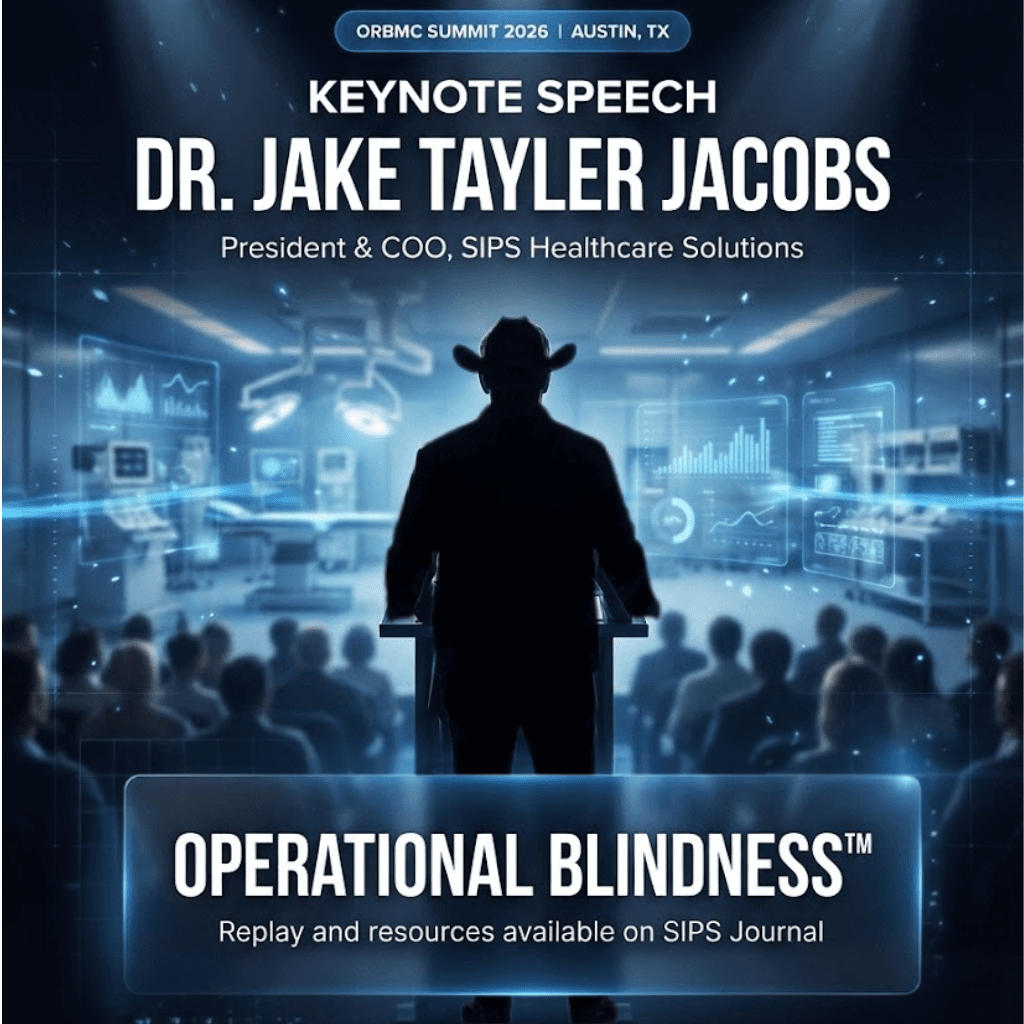
Episode Overview In this episode, Dr. Jake Tayler Jacobs discusses the remarkable turnaround of IBM under the leadership of Lou Gerstner in 1993. He draws parallels between IBM's history and the challenges faced in healthcare, particularly in sterile processing departments, positing that often it is not the people who fail but the systems and beliefs that constrain them.
---
Key Concepts
The Essence of Leadership
- Bred to Lead vs. Born to Lead: Leadership is developed through experiences, not an innate quality. It emphasizes the importance of resilience, commitment, and personal development.
IBM's Turnaround
- Context: IBM was on the brink of disaster with $8 billion in losses and a toxic culture.
- Gerstner’s Approach: He retained existing management but changed the belief systems and measurements that constrained them.
- Outcome: IBM’s successful transformation led to a profitable resurgence.
Operational Blindness
- Definition: A condition where organizations fail to see the root causes of their problems, often blaming people rather than recognizing systemic issues.
- Comparison to Healthcare: The healthcare industry, especially sterile processing departments, suffers from similar invisible beliefs that hinder performance.
---
Key Points from the Discussion
Invisible Beliefs at IBM
- Belief in Hardware Dominance: IBM thought their future lay in mainframes and PCs, ignoring the shift towards services.
- Decentralization as Strength: While they valued independence, this structure prevented integration and solving customer needs.
- Cultural Immutability: A pervasive belief that their culture could not change led to stagnation.
Application to Healthcare
- Healthcare's Similarity: Just like IBM, healthcare often blames personnel for failures when the systemic beliefs and structures are at fault.
- Examples of Beliefs in Healthcare:
- "SPD (Sterile Processing Department) will always be reactive."
- "SPD is just a call center, not a strategic asset."
- "OR (Operating Room) will never be satisfied."
---
Solutions Proposed
- Shift the Focus: Leaders should stop blaming individuals and start addressing the systems that create operational blindness.
- Empowerment Through Systems: Change the metrics, beliefs, and accountability structures to enable talented individuals to excel.
Resources
- Operational Blindness Assessment: A free resource designed for healthcare leaders to identify areas of operational blindness in their organizations.
- Stirr by Design: A proposed operating system aimed at curing operational blindness by transforming processes and enhancing visibility in operations.
---
Conclusion Dr. Jacobs emphasizes that leadership is about continuous growth and recognizing that change is possible. He calls on healthcare leaders to challenge existing beliefs and systems, highlighting that true transformation comes from addressing the underlying issues rather than cycling through personnel.
---
Call to Action
- Engagement: Listeners are encouraged to subscribe, share the episode with healthcare professionals, and actively participate in the free resources available at SipsHealthcare.com.
---
Final Thoughts The episode serves not only as a historical case study of IBM’s transformation but also as an urgent call for introspection and reform within the healthcare sector. The principles outlined by Dr. Jacobs resonate across various industries and highlight the universal need for systemic change in leadership and operational practices.
Written by AI. May contain mistakes. Listen to the episode to check what was said.
Chapters
Tap a time to open that second in VOIBM's Near Demise
0:00 to 0:44
Learn about IBM's catastrophic losses and corporate challenges in 1993.
“$8 billion in losses, the largest in American corporate history.”
The Elephant Everyone Forgot
2:10 to 4:04
Understanding organizational failure and the importance of reframing beliefs.
“I just released my newest book, Operational Blindness.”
The Problem with Blame
4:04 to 4:53
Discussion on how leaders often misidentify problems, blaming people instead of systems.
“Because here's what most leaders do when something isn't working.”
The Story of Lou Gerstner
6:03 to 8:04
Exploration of Lou Gerstner's leadership at IBM and the cultural beliefs that hindered progress.
“You don't have to put any information in.”
IBM's Cultural Shift
8:04 to 11:41
How IBM transformed its culture and beliefs under Gerstner's leadership.
“IBM had just posted an$8 billion loss, the largest in American corporate history at the time.”
Beliefs That Hinder Progress
11:41 to 14:01
Identifying the key beliefs that were detrimental to IBM's success and their implications.
“By the end of Gertzner's tenure, the company's market value had increased by over$100 billion.”
Invisible Beliefs at IBM
14:01 to 16:10
Explore the entrenched beliefs within IBM that hindered changes.
“IBM was proud of how independent their divisions were.”
Healthcare's Invisible Beliefs
16:10 to 21:06
Discuss the harmful beliefs in healthcare that impede progress.
“Have your OR director take it separately.”
Transforming Systemic Issues
21:06 to 22:30
Learn how to address systemic problems rather than blaming individuals.
“Now, some of you are listening to this and thinking, okay, Jake, Dr.”
Final Thoughts
27:30 to 27:45
Concluding thoughts on commitment to change.
Transcript
Automatic transcript. May contain errors.0:00In 1993, IBM was dying. $8 billion in losses, the largest in American corporate history. Analysts said, break it up, sell it for parts. The talent is gone, the culture is toxic, the elephant is too big, too slow, too stuck to survive. They were wrong. One man walked into that disaster and saw something no one else could see. He didn't fire everyone. He didn't blow it up. He kept most of the same managers who presided over the claps and turned them into the leaders of one of the greatest corporate turnarounds in the history of America. How? He changed the system, not the people, the system. And that lesson, the lesson that IBM taught the business world 30 years ago, is the exact same lesson the health care industry today is in dire need of.
0:50Welcome back to Bread to Lead.
1:08I'm excited to see you. And in this episode, things may be a little bit different. We're going to try for the rest of this season, rather long season, for full video view. If you want to see the full actual video of the podcast or class, as we call it, You can go to our YouTube at Dr. Jake Taylor Jacobs on YouTube. And we're excited to show more of a visual aspect of the show in my office at our research and training institute, our headquarters here in Dallas. So let's get to it. Welcome back Bridge Builders to Bread to Lead, the podcast built to build the greatest leaders of our next generation.
1:58I'm your host, Dr. Jake Taylor Jacobson. If you're new here, welcome to the family. If you've been rocking with us since season one, I appreciate you holding it down. This is episode 35, season three. And this season, we're doing something different. I just released my newest book, Operational Blindness. Why health care leaders can't see what's costing them millions and how to finally fix it. I'm excited about this. And instead of telling you to go and buy it and figure it out for yourself, I'm going to bring you inside every episode for the remainder of this season. I'm going to read directly from the book, word for word.
2:38And then I'm going to break it down, teach it, expand on it, give you the stories, the context and the application that didn't make it to the pages or else this book would have been a thousand pages. Think of it like a masterclass, which is what Bread to Lead is. You get the content, then you get the commentary. Now, if you want the full book, it will be available on Amazon soon and on our site everywhere. that the book can be sold. If you want a free copy of this book and you are an executive at a hospital, assume the qualifications, you have to be an executive at a hospital. We will be having very soon, potentially by episode 36 or 37, we will have very soon the operational blindness assessment that any leader running any organization can take it to see if you are indeed operationally blind and how we can help you fix that.
3:35So I'm excited about this. But if you don't ever go get it, the book, you're going to walk away from every episode this season with something you can use. So let's jump right into it. Today's topic is actually called The Elephant Everyone Forgot. I'm starting here for a reason because before I can teach you what operational blindness is, before I can show you what it's costing your organization, I need to reframe how you think about organizational failure. Because here's what most leaders do when something isn't working. They look for someone to blame. The department's underperforming. Fire the director.
4:17Metrics aren't hitting. Replace the manager. The complaints keep coming. It must be a people problem. And look, sometimes it very much is a people problem. I'm not naive, but more often than not, you got talented people just trapped in broken, old, antiquated systems. And this is what's causing the demise of so many organizations. Doesn't matter how many heads you swap out, the result will stay the same. And Lou Gertzner figured this out at IBM. And if you're a healthcare executive who's been cycling through SPD directors every two years wondering why nothing ever changes, you need to hear what he discovered.
5:00Now, before I get into reading a section of the book, let me tell you something. If the concept is hitting you, it's hitting home for you. If you're already thinking about your own organization and wondering how deep this goes, I put together a resource specifically for leaders who want to dive deeper and go deeper. It's called the Operational Blindness White Paper. It's a comprehensive breakdown of what the condition is, how to identify it and what it actually is costing health care organizations. And we're talking millions and hitting costs that never show up on a standard P &L. So the beautiful thing about the white paper is regardless of the industry that you're in, I know that we have several bridge builders that are from different industries that listen to this podcast.
5:48You still can take so many isms because the problems that health care are dealing with today are the same problems that every industry and every business, every market deals with. And the white paper is free. You can download it right now at SipsHealthcare.com. And if you go to blog on our page, you'll be able to see the white paper. You don't have to put any information in. It's absolutely free. You can actually read it to get up to speed. These are all free resources that you can access. You don't have the means to actually get the book or if there's any type of information through this series of shows that you want to, just kind of dive deeper and get context.
6:22And there's amazing writers that we use as sources to help us come up with the concept that we identify as operational blindness. And I'm gonna read this section from chapter one of Operational Blindness and it's called The Elephant Everyone Forgot. I want you to follow along if you go and get the book. If not, just listen. I'm gonna start at page 22 and I'm reading to page 24 live here. And I think this new iteration of the show, I think y 'all are gonna love it. If you do get the book, I do wanna tell you this, that in the table of contents, But it's not broken down like chapters, 12 chapters, 10 chapters in the title of the chapter.
7:08How it's broken down inside the book is the table of contents is actually by subcategories and topics. If you're newer to the pie class or the podcast, what I would say is fundamentally the structure of how I teach is in frameworks. They're like isms. They're like they're like parts, if you will, that allows for me to give you things or tools to add to your tool belt as a leader and be able to execute from the information versus as being fluff, motivational stuff. So all throughout the book, there's so many topics, over 100 semi-topics that you really can just expound on. And the purpose of the book is for you to read it, of course, through and then use it as a manual to be able to focus on taking care of some of the operational blindness areas that you have.
7:56So we're going to go to page 22, the elephant everyone forgot. And on page 22, here we go. In 1993, Lou Gertzner became the CEO of IBM, a company that virtually everyone had written off as dead. The numbers were catastrophic. IBM had just posted an$8 billion loss, the largest in American corporate history at the time. Its stock had collapsed. Its best people were leaving. Industry analysts, competitors, and even some of IBM's own board members had reached near universal consensus. the company was too big, too slow, too bureaucratic to survive in the fast-moving personal computer era. The only rational path forward was to break IBM into smaller, more agile pieces and sell them off.
8:47After all, elephants can't dance. Gertzner, who had spent his career at American Express and RJR Nabisco, he wasn't a technology executive. He didn't have deep relationships in the industry. When his appointment was announced, skeptics questioned whether an outsider could possibly understand a company as complex as IBM, let alone save him. But Gertzner had one advantage that the insiders lacked. He could see. He wasn't blinded by decades of internal assumptions. He wasn't trapped in the belief systems that have calcified over generations of IBM's culture. he could look at the company with fresh eyes, ask questions that no one inside had thought to ask or had been afraid to ask.
9:35What he discovered changed everything. IBM didn't have a strategy problem. The company was drowning in strategies. Every decision, every division had turnaround plan. Every business unit had a deck. Every manager had a vision of how things could be different and be better. If strategies could save the company, IBM would have been invincible. IBM had a culture problem. More specifically, IBM had a belief problem. The company believed it was a hardware company, that its destiny was tied to selling mainframes and personal computers when the future actually belonged to services and solutions. The company believed that its famous independence and decentralization were strengths when they had actually become weaknesses that prevented IBM from serving customers who needed integrated solutions.
10:27The company believed that its best days were behind it, that the culture was too entrenched to change, that the elephant really couldn't dance. These beliefs weren't written in any policy manual. They weren't discussed in strategy meetings. They were simply the water that IBM Fish swam in. So pervasive, so fundamental that nobody questioned them. They were invincible. And because they were invincible, they were almost impossible to change. Gertzner's genius was recognizing that the beliefs were the problem, not the people, not the technology, not the competition, the beliefs. He kept IBM together when everyone said to break it apart.
11:09He bet the company on services when everyone said hardware was the core business. He drove integration when everyone said decentralization was sacred. And he did it not by replacing all of the people. Most of IBM's transformations were was executed by the same employees who had presided over his decline. But by replacing the beliefs that made excellence impossible. The results were historic. Within a few years, IBM had returned to profitability. By the end of Gertzner's tenure, the company's market value had increased by over$100 billion. The elephant had learned to dance. Gertzner later wrote a book about the experience.
11:54He called it Who Says Elephants Can't Dance? A Direct Challenge to the conventional wisdom that had nearly destroyed the company. The title of the book wasn't just clever marketing. It was the thesis. The limitation wasn't real. It was belief. And beliefs absolutely can change. All right, let's break this down. The setup, why IBM matters. IBM in 1993 is the perfect case study for what I see in healthcare every single day. Here you have a company that dominated its industry for decades. The best talent, the best technology, the best reputation. And then almost overnight, they're hemorrhaging money.
12:36$8 billion in losses. Stock collapsed. Best people leaving. And what does everyone say? The people are the problem. Complacent. Arrogant. Out of touch. Doesn't that sound familiar? How many times have you heard someone say that about sterile processing department? They just don't get it. They don't care about OR. They're not working hard enough. Gerson walks in, an outsider, by the way, which is how I feel, which is important. And he sees something completely different. He sees talented people, some of the best in the industry, people who desperately want to succeed, people who are working hard, but they're trapped, trapped in beliefs.
13:21they can't see, trapped in systems that make failure inevitable, trapped in metrics that measure the wrong things, beliefs that trapped IBM. Let me give you three beliefs that were killing IBM. Make sure you write this down. One, we're a hardware company. IBM believed their future was mainframes and PCs. That's where the money had always come from. That's what they knew. That's what they measured themselves by. But the world had shifted. The future was services and solutions, integrated offerings that solve customer problems. IBM couldn't see it because they were measuring themselves by the old game while the new game was being played around them.
14:01Two, decentralization is our strength. IBM was proud of how independent their divisions were. Each business unit did its own thing. They thought that was agility. That was entrepreneurship. But customers didn't want five different IBM salespeople calling them with five different products that didn't work together. Customers wanted solutions and IBM's structure made integrated solutions impossible. Three, the culture can't change. This is the killer. Everyone inside of IBM, most people outside believed IBM's culture was too entrenched to change. That's just how it got here. That's just how it is here.
14:39You can't fight the bureaucracy. The elephant can't dance. When you believe change is impossible, you stop trying. And when you stop trying, you prove yourself right. Now, here's the critical insight. These beliefs weren't written in any policy manual. Nobody put a poster that said we believe decentralization is sacred. it. Nobody sent a memo saying we will always be a hardware company. These beliefs were invisible. They were the water that the fish swim in, so pervasive, so fundamental that nobody questioned them. And because they were invincible, they were almost impossible to change. Let me ask you something.
15:20As I'm describing these invisible beliefs, these systems that trap talented people, are you thinking about your own organization? Are you wondering, do we have operational blindness? How bad is it? What is actually costing us? Here's the thing. You don't have to guess. We built a free assessment specifically for health care leaders who want to know where they stand. It's called operational blindness assessment. Very simple. It takes about 10 minutes. You answer some questions. Be absolutely honest about your SBD operations or any of your operations. Your visibility and your visibility into outcomes.
15:55your relationship between sterile processing and surgical services. And at the end, you get a score. You get a clear picture of how severe your operational blindness is and where the biggest gaps are hiding. No cost, no commitment, just clarity. Go to simshealthcare.com forward slash assessment. Take it yourself. Have your SPD director take it. Have your OR director take it separately. And compare answers. That alone will tell you something. At least knowing where you're blind or the fact that you are blind will allow for you to see that in most cases, not the people, most people want to do a good job.
16:31In most cases, it's because we're operationally blind somewhere. And the metrics that we have been fundamentally using for 20 or 30 years may not be the right metrics to go by. Now, the healthcare parallel with IBM, because I have to bring this home back to healthcare, particularly in sterile processing, we have our own invisible beliefs. And that's just That's deadly, honestly SPD will always be reactive I hear this constantly all over the country That's just the nature of the work Instruments come in, you process them, fires happen You put them out, that's the job But it's not true Proactive SPD operations are possible We've done it, we run them They're just rare Because most organizations have never seen them And can't imagine them SPD is a call center, not a strategic asset This belief determines everything How much attention SPD gets how much investment, how much respect.
17:25But think about it. SPD directly enables surgical revenue. It's not an opinion. It's a fact. Every case delay, every frustrated surgeon, every quality event has a financial impact. The department isn't just a cost. It's a constraint on your most profitable service line. The OR will never be satisfied. And this one poisons the relationship between SPD and surgical services. It creates an adversarial dynamic where both sides stop trying because they've decided the problems are unsolvable. But the OR's dissatisfaction is a signal, not a character flaw. It's telling you something is broken. Dismissing it as inevitable guarantees it will never be fixed.
18:05And what Gerstner did and what you need to do, Gerstner didn't fire everyone. He didn't bring in an army of outsiders. He kept most of the existing management team, but he changed the system that they operated in. He challenged the beliefs. He changed the measurements. He restructured the organization. He created new accountability mechanisms. He made the systems the target, not the people. And that's what's key. And here's what happened. Many of the same managers who had presided over IBM's decline became leaders of its turnaround. talking all across the world today about their involvement in this historic turnaround.
18:44Their capabilities hadn't changed. Their circumstances had. And let me let me say that again, because this is the whole point. The same people who looked incompetent in the broken system looked excellent in the fixed system. The people didn't change. The system changed. Your application. So here's what I want you to take for this. Your application. What do I want you to take from this? Your application. If you're an executive, stop looking for people to blame. Start looking for systems to fix. The next time your SPD is underperforming, before you fire the director, ask yourself, does this person have visibility into their real impact?
19:26Do they have the resources to succeed? Is the measurement system showing them what actually matters? If the answer to you to any of these things are no, you don't have a people problem. You have a system problem. If you're an SPD leader, this should be liberating. The dysfunction you've been drowning in is not your fault. You've been operating in a system designed to fail. Anyone in your position would struggle. But in this is important. Liberation is not the same as absolution. Once you understand it's a system problem, you have a responsibility to advocate for a system change. You can't just throw up your hands and say, hey, it's the system while continuing to operate the same.
20:05If you are in surgical services, your frustration is valid, but your SPD colleagues aren't your enemy. They're trapped in the same broken system that you are. The question isn't why can't SPD get it together? The question is what system is preventing all of us from succeeding together? When Lou Gerstner wrote his memoir and the IBM turnaround, you know what he called it? Who says elephants can't dance? The title is a direct rebuke to everyone who said it couldn't be done. Everyone who said IBM was too big. Everyone who said they were too stuck. Everyone who said it was bureaucratic to transform.
20:43They were wrong. And everyone who says your SPD can't transform. Everyone who says reactive operations are inevitable. Everyone who says elephants can't dance, they're wrong too. The elephant can dance. But first, you have to find the stake it's chained to, the invisible beliefs, the broken system, the metrics that measure the wrong things and remove it. And that's what this book is about. That's what this season is about. Now, some of you are listening to this and thinking, okay, Jake, Dr. Jake, okay, I get it. The system is the problem. So what's the solution? How do I actually fix it? And that's actually why we built what we call Stirr by Design.
21:29Stirr by Design is an operating system that cures operational blindness. It's not a consulting engagement where someone comes in and gives you a report and leaves. It's a complete methodology, visibility systems, operating rhythms, capability development that transform how your SPD operates. We've implemented it in community hospitals, academic medical centers, ASCs, and now large health systems. And the result speaks for themselves. OR delays cut in half, instrument costs cut down by 20-30%, premium labor is normalized, and SPD directors who finally have the tools to succeed instead of just survive are thriving.
22:11And if you want to see what this looks like for your organization, schedule a demo. It's a conversation. No pressure. We'll show you exactly how Sterile by Design addresses the specific gaps you're facing. Go to SipHealthcare.com. Schedule a demo. Talk to our team. See if it's a fit. Because here's the truth. You can't keep cycling through directors. You can keep implementing action plans that don't stick. You can keep hoping things get better on their own or you can fix the system. So let's have a conversation and see if we can fix your operational blindness. That's episode 35, Bridge Builders, The Elephant Everyone Forgot.
22:53Next episode, we're going deeper into the healthcare parallel. Why the same patterns that nearly destroyed IBM are playing out right now in hospitals all across America and what you can do about it. Let me recap what we covered today. Lou Gertzner proved that elephants can dance, that large, stuck organizations can transform. The problem at IBM wasn't the people. It was invisible beliefs and broken systems that made talented people look incompetent. Healthcare has its own invisible beliefs, that SPD will always be reactive, that it's just a call center, that the OR will never be satisfied. None of these beliefs are true.
23:32They're just invisible. And invisible beliefs are the hardest to change. If you're getting value from this series and you do get value from this series, here's what I'm going to need you to do. One, subscribe, follow. Whatever your platform you like, follow. We drop episodes biweekly, sometimes weekly. Share the episode with a healthcare leader. We drop an episode when I have time to get one done in between our busy schedule. We have a lot of system implementations and I spend a lot of time making sure I'm on site personally helping with these implementations because we believe that in order to show a client that you care and you truly care about one, their career.
24:15When people say yes, they're saying yes to you helping them with their career, supporting them. We want to make sure that you're good with that. And for those that are newer to the show, please go back and listen to a couple of more episodes. This was just an entry episode into a topic change for the year. I wasn't sure if I was going to actually drop operational blindness this year, but we actually needed it to be dropped because it goes hand in hand and coincides directly with our system. and we need to be able to start identifying these needs, especially since there are a lot of things changing, especially in funding for hospitals and healthcare all over the country.
24:58And my team, they're telling me to make sure I tell you to subscribe, share this episode with anyone in healthcare that needs to hear it. Take the free operational blindness assessment at sibshealthcare.com assessments. We will have that up pretty soon, the assessments, the next episode of the week, episode after. Download the white paper. You can go to SipsHealthcare.com, click blog on our site, and you'll see the white paper right firsthand. Follow us on LinkedIn, go to SipsHealthcareSolutions on LinkedIn, and follow me, Dr. Jake Taylor Jacobs, J-A-K-E-T-A-Y-L-E-R, Jacobs on LinkedIn, and our YouTube will be on the Jake Taylor Jacobs YouTube and the Sips Healthcare YouTube.
25:44Sorry, I had to brain fart. This is the end of today's pod class. This is Dr. Taylor Jacobs. This is Bread to Lead. And go build your legacy. Go be a true bridge builder. And I'm excited about this season. I'm excited about this pivot. I'm excited I got this book together and got it ready. Once I finished the white paper, I was like, I should go ahead and just drop the book. And so every year you all will notice I will be dropping a white paper in a book. I usually do it a year or twice a year. I've been doing that for the last maybe six, seven years. So can't get one now. It's fine. You can follow on the episode on the show.
26:27And I just wanted to let you know how much we appreciate you, how much we care about you. Most importantly, how much we love being here and growing together with you. And if you like the show, rate it, let people know about it. This is to make sure that healthcare comes back to the top with the best leaders in the world. And if other people from other industries get value from this podcast, we humbly welcome you. But thank you for helping us become and stay in the top 50 podcasts in the country, all categories, and the top 10 and 15 consistently week after week in the business category. We love you and there's absolutely nothing that you can do about it.
27:03But most importantly, remember that with all things that require change, commitment to change is what matters most. When you're committed to change, no obstacle in your way will stop you. And remember that if as long as you put God first, there's nothing, nothing on earth that you cannot do if he's granted you the power, the wisdom, and the ability to do it. I'll see you all on the very next episode. I won't take the lead
27:34I won't take the lead
Read the full transcript
27:40Since the age of 12 I've been bout my father's business at the age of 30
From the publisher
In this episode Dr. Jake Tayler Jacobs recounts Lou Gerstner’s 1993 turnaround of IBM—how he saved the company not by firing people but by changing the underlying beliefs, measurements, and systems that trapped talent.
He draws direct parallels to healthcare, especially sterile processing, arguing that invisible beliefs and broken systems—not staff—are often the root cause of failure and wasted resources.
The episode introduces the concept of operational blindness, previews the book "Operational Blindness," and points listeners to free resources and assessments to identify and fix systemic problems.