Ask ChatGPT
 Broken Record with Rick Rubin, Malcolm Gladwell, Bruce Headlam and Justin Richmond
27 Oct 2026 · 54m · 22 chapters
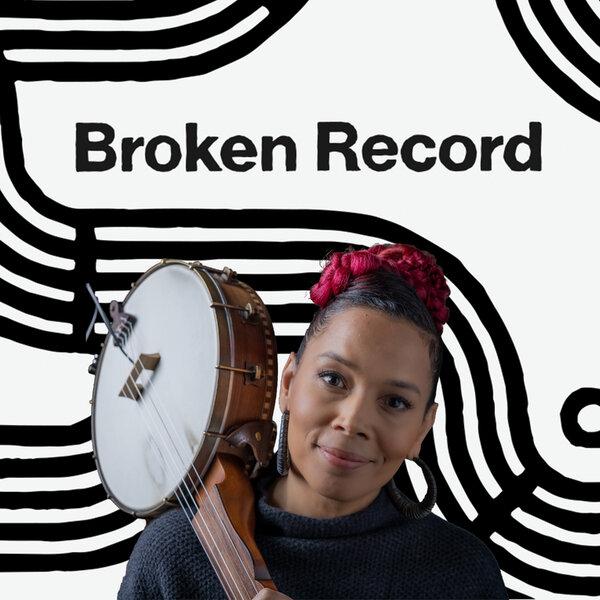
Rhiannon Giddens discusses her album Hope Is the Thing with Feathers and broader themes of “handmade” music, creative inspiration, and preserving African-American/Atlantic musical lineages. She also covers her book Go Back and Fetch It (Sankofa), her approach to recording (live-in-room sessions), and how historical sources shape her work.
Rhiannon Giddens (American musician, singer, and banjo player; known for roots/folk and African-American musical traditions; has worked with groups like The Carolina Chocolate Drops and has collaborated widely, including with major artists). Interviewer: Jacob Goldstein.
Inspiration arrives when she stops trying to control outcomes; she “shepherds” tunes into existence. Music should stay human (not reduced to “zeros and ones”), and learning should be communal rather than purely commodified. Historical reconstruction is inherently creative because records are fragmentary; she emphasizes declaring her interpretive “lens.”
Emily Dickinson’s “Hope is the Thing with Feathers” (title track); guitarist Newell Tsumbu (Congo/Ireland influences) shaping the tune; recording in Dirk Powell’s warm studio without isolation booths; “Freight Train” by Elizabeth Cotton; “Cluck Old Hen” (old-time/porch music); “Ruby Are You Mad at Your Man” by Ola Belle Reed; Sankofa proverb behind Go Back and Fetch It; Joe Thompson apprenticeship and “Georgia Buck.”
Written by AI. May contain mistakes.
Rhiannon discusses her new album and its personal significance.
“And you're talking about your new album, Hope is the Thing with Feathers.”
Rhiannon talks about her collaboration with Newell Tsumbu.
“There's a whole other probably two records in what we made in addition to what we have today.”
Rhiannon shares the process of creating the title track of her album.
“Tell me about working with Newell because he has such a distinctive sound, such a distinctive way of playing.”
Rhiannon reflects on the spiritual aspect of songwriting.
“And he just has, I think he has a genius that is just of his own.”
Discussion on the challenges of creativity in today's society.
“And now what I'm chasing is, not chasing, but what I'm trying to do is to continue to let my brain be receptive in that way.”
Rhiannon talks about the recording environment for her album.
“This was one of those albums that when I listened to it, I thought I could hear the room.”
Rhiannon Giddens discusses her book on African-American music and its historical context.
“which is your amazing book of African-American music called Go Back and Fetch It.”
A conversation on the nuances of learning music and the importance of oral traditions.
“So it was actually a great – for both of us because she could use all of this that had been kind of cut from that book in this book.”
Discussion on how capitalism affects music creation and the cultural significance of music.
“That's not something they – I mean, they have hymnals, but that's not the primary way they do it.”
Discover the importance of being bad at something to eventually excel.
“And there's nothing like breaking yourself back down to basics and sucking at something, you know.”
Learn about the social skills and negotiations fostered through musical collaboration.
“And I think it's just great for the brain, you know.”
Explore the significance of vocal traditions in American music history.
“And so then you can apply it to other things.”
Understand the influences of African and European traditions on American music.
“No, I mean, that's been kind of part of my push.”
Learn about the rhythmic nuances in traditional folk music and their notation.
“But to know more about what's happening beforehand, you can really start to see, oh, that's really interesting.”
Delve into the life and influence of folk guitarist Elizabeth Cotton.
“My new book, The American Way of Killing, investigates America's gun violence crisis.”
Explore the deep connection to North Carolina music and traditions.
“And we actually did it all together last night.”
Discuss the influence of syncopation in traditional music and its origins.
“When I went back and listened to it, I thought, you know, I never really heard it that way.”
Discover the songwriting legacy of Ola Bell Reed and its cultural impact.
“And she just had this knack of making these songs that sound like they've been around forever.”
Learn about the distinctions between bluegrass and old-time music.
“You know, I mean, I always say like, we would call that old time.”
Explore how artists can connect audiences to emotions and history.
“You talk about people draw a lot from certain kinds of pop songs or opera or anything else you've explored.”
Rhiannon Giddens discusses her artistic journey and the spiritual nature of her work.
“Because he was in a very dangerous position.”
The hosts express their appreciation for Rhiannon Giddens and encourage listeners to support her work.
“And then they should go out and buy a concertina.”

Get the gist, explore an idea or ask about something said.
 Claude
On Broken Record with Rick Rubin, Malcolm Gladwell, Bruce Headlam and Justin Richmond, what are the key points of this episode?
Searching your listeningAutomatic transcript. May contain errors.
0:00Rhiannon Giddens: This is an iHeart Podcast. Guaranteed Human. This is Jacob Goldstein. When you're a business owner interested in expanding to new markets, there's a lot to consider and countless questions to answer before making the call. The most important one being, are you ready? That's where ChatGPT comes in. Give it a goal, add your files, and ask Chat to help you map out different scenarios for the future of your business. So when growth is on the table, you've got an expansion plan ready to implement. Get started today at chatgpt.com.
0:58Rhiannon Giddens: this podcast tells the stories that came before it. Listen to Before the Moment, a Lincoln Original Series, on the iHeartRadio app, YouTube, or wherever you get your podcasts. I met into New York City with the entire Richmond crew for a few days around Christmas, and I'm pretty excited about it. The plan is to keep it simple. Ice skating in Central Park, finding dinosaurs at the Natural History Museum, art at the Guggenheim, add in some great pizza, a trip to the Ice Cream Museum, a few Skyline views, and everyone's happy. If you're planning any upcoming trips, consider listing your space on Airbnb while you're away.
1:30Rhiannon Giddens: You could get travelers like me a place to land while they visit somewhere new and earn some extra cash at the same time. And with the Co-host Network, you can hire a local co-host to help manage reservations, guest communication, and even style your space. Find a co-host at Airbnb.com slash host.
1:56Rhiannon Giddens: So welcome, Rhiannon Gintz. Thank you so much for coming in.
2:00Bruce Headlam: Thanks for having me.
2:01Rhiannon Giddens: And you're talking about your new album, Hope is the Thing with Feathers. Tell me how that came about.
2:08Bruce Headlam: You know, it was just time to make that record. I mean, I've been in the industry for 20 years now, and I tend to work with the same folks kind of over and over again in kind of different configurations, and it's kind of a cyclical thing, you know. And it just felt like I needed to just bring as many people as I could from my musical family into the studio and just make some music. So we actually made a bunch of music. There's a whole other probably two records in what we made in addition to what we have today. But what's really beautiful about this collection is that it showcases my love and kind of rootedness in North Carolina through the people, the styles of music, and the choice of songs.
2:52Bruce Headlam: And it also really is an opportunity for me to have like the breadth of my musical collaborators all together. So from my sister, who I was singing with since children, to like my most recent collaborator, Newell Tsumbu from, you know, from the Congo who lives in Ireland, and everybody in between. And so I feel really lucky to be able to do that. And it is like it's been 20 years, so it is kind of one of the, it's like 20 years is a generation. So it is kind of that moment I'm going through menopause or I've been through it or whatever, going through this shift in my life and sort of looking back as I think about looking forward.
3:35Rhiannon Giddens: Tell me about working with Newell because he has such a distinctive sound, such a distinctive way of playing. How does that fit in with the way you do music? He's just a really singular musician.
3:50Bruce Headlam: I feel so lucky that he's happy to play along with my simple music because his brain is just off the charts. He's got a very unique harmonic sense because he's drawn from a lot of different traditions. Obviously, he's kind of an embodied researcher in terms of ethnomusicology. Like he's collected all these different old, you know, guitar styles that are kind of tied to the earlier instruments, you know, say in regions of the Congo. He carries that in his body. He's also played a lot of flamenco music. He's been in Ireland for years. He plays Irish music. And then he's got his own compositional sense, you know.
4:30Bruce Headlam: So the title track, Hope is a Thing With Feathers, which is obviously an Emily Dickinson poem, I sort of downloaded this tune for it in a hotel room somewhere and brought it to Newell. And I was like, what do you hear? I just started singing it. And he just started playing immediately what you hear, what you end up hearing on the record. And it just, as much as the melody came to me, that horror part came to him. And it so perfectly fit the words and the idea of, especially Emily's, if I can call her Emily, her punctuation. You know, so often she leaves things with a dash, you know, and you get this feeling that it's just, it's not over.
5:12Bruce Headlam: You know, there's always going to be another thought that you can't hear it, but, you know, it's being thought somewhere. And I love that about this poem because, I mean, that's hope really is that it can't ever stop. Even if it goes down to a low ebb for a while, it can't really, you can't really stop it, you know. And so his guitar just perfectly matches, you know, I feel like the words and the melody. And he just has, I think he has a genius that is just of his own.
5:40Rhiannon Giddens: You said that you downloaded it in a hotel room.
5:43Bruce Headlam: Yeah, like from the infinite, like the tune just came into my head.
5:48Rhiannon Giddens: Did it come with the words?
5:50Bruce Headlam: Like I saw the words, you know, on the internet. I don't know, I stumbled across the poem or whatever. You know, I'm in good company with this song, you know. I mean, Alice Randall wrote a song with that as the first line, the first line of that poem and thinking about that. So, you know, it's an obvious, like obviously great sentiment, you know. Like I said, I'm in good company with that. But I loved the whole poem. And I don't know, I just like heard the, well, Saul was reading the words almost for the first time again, you know, they just hit me in a different way. And I just sat there in the chair, I remember it, and just started singing the poem.
6:28Bruce Headlam: And so I recorded myself, you know, something like, you know, hope is a thing with feathers, it perches in the soul, it sings the tune without the words, it never stops at all, it never stops at all. It was kind of like a ballady kind of thing. And then, you know, when I started singing it with Niwell, it sort of found the rhythm, you know. We found that kind of together in the repetitions. But, yeah, that tune just really came. I didn't work on it. I didn't go, okay, let me try this upper note, lower note. It just came.
7:04Rhiannon Giddens: Does that happen to you a lot?
7:05Bruce Headlam: Happens sometimes. When it happens more and more, the kind of more I can get ego out of the way and get all this other crap out of the way and just kind of be in the moment. It has happened. And those are usually my favorite tunes. At the Purchaser's Option, which is a few records ago, it happened that way. The chorus just downloaded into my brain. And so I always say that those kind of songs, I shepherd them into existence. I like conduit. I'm a conduit for them. And it is really, I feel a very spiritual experience and I feel very lucky to have those moments. And now what I'm chasing is, not chasing, but what I'm trying to do is to continue to let my brain be receptive in that way.
7:54Bruce Headlam: And it's only receptive when I fully acknowledge how not in control I am. It's like none of this is mine. It's just mine for a while. and it's not about me. And the more that I situate myself in that, the more gifts, I look at them as gifts come, and I just feel really, really lucky.
8:18Rhiannon Giddens: Is that happenstance, or are there things you can do to reinforce those ideas?
8:24Bruce Headlam: It's like birdseed, you know. As soon as you put some birdseed in your hand and it's like you're staring at the seed, waiting for the bird to land, it's never going to happen. As soon as you look over here and just relax, the bird comes, you know. And as soon as you stop focusing on the outcome, stop – I mean, my mom told me this years ago. It's been something I've really tried to model my life after. If you're looking for a specific frame, you know, a specific outcome, a specific shape, size, color to whatever it is that you're trying to do, then you often miss the cooler thing over here that you couldn't see, you know.
9:03Bruce Headlam: And so I try to aim for a substance and then let how it looks or how it sounds come as it may. So for me, the substance is about trying to be as centered as I can, trying to use this life that I've been given as much as I can. It is a responsibility that I feel because what friction do I have in my life? So it behooves me to really use it to its utmost to do what I'm trying to do.
9:32Rhiannon Giddens: It's true, but modern society makes it very hard to not think about the outcome.
9:38Bruce Headlam: Yeah, it does. It is a discipline. It's a discipline. And we tend to focus on, I mean, I've done a bit of research, you know, it was for a project, but I just, I've been a fan of Thich Nhat Hanh for a while. And, I mean, this is not about wellness. Like, this is not the wellness industry, right? This is really about the discipline of trying to find the silence within so that it can be filled with other things, so that it can be receptive to inspiration or movement or whatever it is that we want to call God the infinite, whatever is bigger than ourselves. Even just the energy between two people is bigger than yourself.
10:18Bruce Headlam: Our culture is so much about commodification. So even the idea of meditation, even the idea of focusing on this discipline becomes a product and it becomes seven easy lessons and it becomes books and it becomes an industry. when really, like, of course there's writings that can help and there's people's wisdom that you want to take in. But it's really just you and yourself and you at the end of the day. And modern society is built to distract you from that because how can they sell you something if you don't need it? You know?
10:55Rhiannon Giddens: I don't know why this comes to mind, but when I was listening to the record, because you're talking about being centered and you were talking about silences, You taped this in different studios over the course of a year and a half? It was all in one studio. Oh, it was all in one studio. Okay.
11:11Bruce Headlam: We made several trips down there.
11:15Rhiannon Giddens: This was one of those albums that when I listened to it, I thought I could hear the room. Yeah. And maybe it was because they're quiet songs, they're loud songs, there are silences within the songs. But I really felt the room, which you don't always feel with records.
11:32Bruce Headlam: That's great. It's because that's what we want. We did a lot of live recording. There's only overdubs when there kind of have to be. Somebody can't play two instruments at once. And we try to be very sparing with that. My co-producer, Dirk Powell, is also his studio. It's kind of like a small house, a very old house that he sort of turned into a studio. So it's very warm, old wood. It's next to a bayou. It's on family land and all of this. So it's a very welcoming space. And I've been making music there for a long time with him. But for this one, there's moments like Angel Fire where there's like five people playing at once.
12:15Bruce Headlam: And so it's all being recorded. There's no isolation booths, none of that. It's literally like we're all in the room together. So we wanted the room to be its own, you know, I mean, obviously without being distracting, like, but it's kind of an extension of what I did last, the last record I released, which was made outside with the nature sounds and the locusts and the birds and everything. And this was obviously more of a studio recording, but still wanted that feel. Because for me, we're going further and further and like, look, we can go as far down the road as you want, you know, in terms of the elephant in the room of AI.
12:55Bruce Headlam: But in terms of music being something that for most of human existence is created by the hands and the voice and the human body and was unable to be separated from the human, right, until the recording industry, which was only 100 years old. And so when we do make recordings, for me, I'm more interested now at this point in my life in maintaining the humanness of it. so you don't forget this was people making this in a room, not some zeros and ones or whatever. So I'm kind of leaning into that because I'm like, the other stuff is covered. You know what I mean? Nobody needs me to do that. So this is what I'm good at is handmade music and reminding folks, if they need reminding, that this can also be a good thing.
13:52Rhiannon Giddens: If you're a music fan, I've got a new podcast you have to check out. It's called Before the Moment, a new series hosted by the legendary Niall Rogers. You know him as the producer, songwriter, guitarist, and co-founder of Chic. But in this series, he's hitting the road to sit down with some of today's most fascinating artists. From hitmakers like Miguel to rising stars like Alex Warren, Niall explores the stories behind the careers, the songs, and the moments that changed everything. Because every artist can point to that turning point. That moment before the breakthrough, before the success, before everything changed.
14:24Rhiannon Giddens: Through candid conversations and personal stories, you'll hear what happened before the moment that made them who they are today. Listen to Before the Moment, a Lincoln original series on the iHeartRadio app, YouTube, or wherever you get your podcasts. Michael Lewis here to tell you about my new book, Blockers, which gives you an inside look at the Trump administration and the public servants who stood in its way. These were people who were securing our most sensitive data, keeping the public safe from all sorts of threats, and engaged in life-saving scientific research until they were told they no longer belonged.
14:57Rhiannon Giddens: And the question to me is, if they can't survive in our government, then what does it say about us? Get Blockers at blockers.fm or wherever audiobooks are sold. Reminds me of another project you just did I wanted to talk about. And I happen to have it right here. which is your amazing book of African-American music called Go Back and Fetch It. First of all, can you explain the title for people who don't know it?
15:26Bruce Headlam: Yeah. Go Back and Fetch It is Sankofa, is a translation of Sankofa, which is an Akan proverb. And it means, you know, it's often represented by a bird walking forward but looking back, and sort of having a seed that it's looking back to get. And the idea is that you reach back and then you pull it forward. I first heard it from Sule Greg Wilson, who was in the Carolina Chocolate Drop universe back in the day. He's a great kind of folklorist and musician from Arizona. But the idea of, you know, it's not just enough to go back. You've got to fetch it and bring it forward. And so this book is really kind of the first, I hope, in a series of reframing the pieces that we have from early Atlantic, the Atlantic world.
16:19Bruce Headlam: Because really, it's not African-American. It's really also the Caribbean. It's the Atlantic world. We often don't, you know, in mainstream culture when we talk about history, we don't look at it as a world, but it was, you know, all of the seaboard and as many enslaved people were brought from the Caribbean up into North America, which were many from the very beginning 1600s, you know. So it is a constant sort of thing that needs to be remembered. But this book came out of my need of this book, actually, in this weird kind of way. Because the thing about if you're trying to research music made by enslaved people, it's very difficult because the historical record is very slim.
17:07Bruce Headlam: The historical record is slim for poor people in general. Like, especially back in the day, the historical record is usually negative for people who aren't part of the aristocracy or who have money. So by negative records, I mean court cases, runaway slave ads or self-emancipatory ads, whatever you want to call them, advertisements for people, wills. I mean, things like that where people are being left to other people in their will, right? These are negative sources. So it's sometimes really hard to find the voice of these folks, let alone their names. So what I was doing was I kept going to the websites that would post these scraps of, you know, here's a tune written down in 16-whatever, and here's a tune written down in 17-whatever.
17:53Bruce Headlam: And I kept, like, downloading the JPEG. And there was a Laurent Dubois and his group in Duke put up a website, and I kept going to that one. And then Christina Gaddy was the other who had collected all these things for her book, Well of Souls, about the early history of the banjo. And I just said to Christina, God, can you send me these JPEGs? She sent me some JPEGs. I was like, we just need to make a book and put them all in one book. And then here it is. It's just kind of wild. Oh, it's an amazing book. Yeah, thank you. I'm really, really proud of it. I mean, Christina is like doing the heavy lifting with the historical frameworks.
18:35Bruce Headlam: But luckily, she had already done a lot of that work. And it was just kind of had been – there wasn't space for it in Well of Souls. So it was actually a great – for both of us because she could use all of this that had been kind of cut from that book in this book. And then I engaged with each tune to make a tablature for banjo, which is, you know, kind of a simultaneous, you know, making it accessible for anybody who plays any kind of five string banjo. But then also a chance to explain some of the techniques that I've learned by studying 1850s banjo tutors. So I kind of took those techniques, which because I play a replica from 1858.
19:16Bruce Headlam: so they would have been gut strung and fretless and so it's a very different technique to the modern wire strung metal banjos that you know just just the mechanics of what you're doing with your hand is different and they called it stroke style and so I kind of extrapolated that backwards because I'm like that's coming from already a couple hundred years of acculturation on the banjo so there's clearly if I want to take it back and I was playing these tunes with the with that style and going, wow, it really works. So it is an act of creation, but an act of creation that's very rooted in the sources that we have.
19:56Rhiannon Giddens: It's a music book that reads like a detective story.
19:58Bruce Headlam: Yeah, I like that.
19:59Rhiannon Giddens: You're going through and you're like, oh, they're putting all this together. What you said about music being between people, this is like writing down things that were handed down.
20:10Bruce Headlam: Yeah, yeah. And also, it's very important to remember, you know, like there's a concept in quantum mechanics, right? The act of observing disturbs the observed because of the nature of the photon. Like it knocks the particle off, all that. And it's the same in cultural life, right? If you see something, the act of observing it often changes even the person playing it because they see they're being watched. That can change. if you're observing it and you write it down, you've already put your lens on it. So however you see it. So a lot of this music was written down by European observers. There's some that were written or from actual black sources.
20:50Bruce Headlam: There were some that were named something like Congo, but feel like we don't know where they're coming. So we say all of that in the book. Then I'm putting it in tablisher. So I'm bringing my own kind of lens onto it. So it's very important to declare your position, you know. Yeah. So my position is thinking about sitting knee to knee, right? I sat knee to knee along with the other original Chocolate Drops with Joe Thompson, you know, and as an apprentice. We were apprentices. He didn't charge us money, right? This was the old style, whereas like you carry on the lineage, that's the repayment.
21:28Bruce Headlam: So for him, the fact that we went down and played with him, the same tunes over and over and over again, that was what was in his culture. That's how you learn. Now, it was already one step out because we didn't grow up with him. My family is from that area, but I didn't grow up in Mebane, and I didn't grow up with him. So that's already one step out, but it was still here we are.
21:50Rhiannon Giddens: It's still a remarkable experience that you don't get much in the world anymore.
21:56Bruce Headlam: No, it's incredible. Like the older I get, the more I go, wow, we were so lucky. And we did do it. We did go. But we had that opportunity to go. We were young. We were unfettered. I wasn't married with kids. They were younger than me. And we had the opportunity to do that. We had enough. We had a car. We had the time. All of these things that not everybody has. And then we had the desire to go. And then we had Joe. All of that came together in a way that the older I get, the more I'm like, wow, obviously you can't go back in time. But how do you look at what's happening now? I'm very, like even the book is supposed to be a starting point.
22:38Bruce Headlam: You know, like if somebody came up to me and said, can I just sit with you and play Georgia Buck for an hour? I'd be like, sure. I'm not going to charge them for that. You know, that's why I don't teach. I'm not interested in teaching something to a student. Like I'll go to a, I've done a teaching week where, you know, you kind of teach a class for the week, whatever. I've experimented with that some. But if somebody came to me and said, you know, I want to learn a Joe tune, can I sit with you and learn it? I would sit and play with them. Like, that feels right to me. You know, nobody does that, which is interesting.
23:11Bruce Headlam: It's been very, very few people, you know, have reached out. And when they do, it's been great. You know, here, come to the gig. We'll sit for an hour, you know. And I can't do it all the time, obviously. I'm not even close to that, though, because it's been, you know. I think people are so used to purchasing a book, purchasing a lesson, purchasing a degree and learning music that way. It's like the academization of music, which is okay. I went to a conservatory. That's how I learned European art music. It's really important to say I'm not pooping on that. There's different ways of learning different things.
23:48Bruce Headlam: but I think that I would love to have a bit more nuance as to what is seen as a good way to learn things I think we just we look at the book learning and the classes as the only way and I because of the way that our economy is set up and the way that our life modern life is set up it doesn't offer a way of having that be a part of life it's that's hard you know and I get it
24:14Rhiannon Giddens: The institutions that used to make that possible, I mean, I guess people still learn gospel singing in church. That's not something they – I mean, they have hymnals, but that's not the primary way they do it. You're living in Ireland where I'm sure there are still people learning Irish tunes in the old way, but a lot less of it.
24:34Bruce Headlam: It is very interesting to be in Ireland because it's a very fascinating case study for traditional music. And the commodification of it, the institutionalization of it, and yet it's still being passed on in communities. It's also, you know, there's places where people come and they learn a tune for the week and then they go back home and, you know, do they pick up that instrument again? I mean, you know, it's a larger topic than I think we could get into. But I don't know what to think, to be honest. I guess that's why I'm not really articulate with this, even though I think about it a lot, is what we're doing to music and what music did for us for so long.
25:22Bruce Headlam: I just feel like we're getting, we're really getting away from it. It's like, even the idea of like playing tunes, it's like a lot of people just like collect all the, you just collect a bunch of tunes that they play. And I'm like, but what are we doing with those tunes? I mean, obviously, Joe Thompson came out of a period of history where music was a part of culture in a certain way, like handmade dance music. Obviously, World War II and after that, like television killed it all over the place, like killed these sort of these folk traditions and communities, storytelling, you know, dance music, all of this kind of stuff.
26:01Bruce Headlam: It really did a number on it. So I understand like music comes out of necessity. It comes out of culture. But I think we have a lot of choice in how we go forward. And I think it's just it would be really important to be intentional about what are we doing with this music. I think art has been taken out of people's everyday lives in a way that I find distressing. because it's not like everybody was a genius player and an artist like back in the day. Like there's variations always, you know. There's people who just have a knack for it. There's people who want to focus on it and like get really good.
26:44And there's people who just want to play, play a little bit, sing a little bit.
26:48Bruce Headlam: Everybody used to be able to sing a little bit, you know. And I really feel like there's so much focus on – I mean I have taught workshops of singing in the past, you know. The amount of people like, well, I was told I wasn't a good singer when I was in fourth grade, and you can just see the pain still. And it just makes me so sad. I'm like, who told them that and why? Well, because they didn't have a fantastic voice that maybe they could be a professional singer. Who gives a crap? You know what I mean? But music has been co-opted by capitalism in this. You know, there's only one reason to make music, and that's to be a professional music maker, a professional content provider, a professional thing maker.
27:28Bruce Headlam: I think that's unfair, you know? So, like, instead of making a bit of music, you, like, work the job, and then you go listen to the music, or you have the music on all the time, and you don't even notice it anymore. You know, the experience of listening to music has changed so much, you know? And all of this, of course, there's variation within this. Like there's – in general, like that is what you see. And I'm an advocate for picking up an instrument. I just picked up the concertina. I'm 49 years old. You know, it's a hard freaking instrument, you know. And there's nothing like breaking yourself back down to basics and sucking at something, you know.
28:06Bruce Headlam: Bruce DeBauer is a great photographer and his website is Permission to Suck. It's so good. I mean I've thought about that so much. I love the idea of just letting go and being bad because that's the only way to be good. Nobody starts good. Like there's a few geniuses that can just pick it up, right? But even then, they're not really good. You know what I mean? They still got to work. So my daughter does because she's one of those that just picks up shit and plays it. I'm like, yeah, but you'll never be actually really good unless you practice. And it's like I love it. I love learning something new because it just levels me out and takes me down all the pegs that I've climbed up thinking I'm so good.
28:49Bruce Headlam: And, you know, I'm such a good singer. I can't play a freaking, you know, tune on, like, I can't play Twinkle Twinkle Little Star on this thing. Like, what's going on, you know? And I think it's just great for the brain, you know. Well, a lot of what you're talking about is the social aspect of music that's been lost. The social aspect is really, I think, one of the biggest tragedies from singing in a choir. Because the other thing about, you know, or playing in a garage band or, you know, playing tunes with somebody. Because the other thing is that you have to negotiate. When you're in groups of people, you have to learn how to negotiate.
29:31Bruce Headlam: You have to be like, you know what? I don't like the way you did that. Okay, moving on. You know what I mean? You don't always like it. You don't always get on all the time. You know, you have to learn. And that's what we're in our sort of little isolated moments. Like we're losing the ability, and you see it in our discourse, of having a disagreement. So when you're in a band or you're in a choir and like you're like, I don't think we should sing it this way. You have to learn how to figure out how to get to a place where everybody is, maybe they're not ecstatic, but they're content, you know.
30:06Bruce Headlam: And I think those are skills that we're losing because I'll just keep to music. That used to be a really good place, a really safe place if you were lucky to work that stuff out. And if you do that from children, it works that muscle. And so then you can apply it to other things. But just push and play doesn't give you that.
30:29Rhiannon Giddens: Well, you also, the little playing I've done in ensembles, you have to watch other people.
30:35Bruce Headlam: Yes. It's a communication always. Always. And like to be a good ensemble player, I say this in the Silk Road Ensemble that I'm artistic director of. You have to listen louder than you play. That is the only way to be a good ensemble player because if you're so loud that you can't hear them, that's not a conversation. You're talking over somebody and it's the same when you're just having a chat. We're losing the ability to listen to people, you know. as much as we're gaining other things, right? It's always a push and a pull. But I just, I really feel like singing in a choir was so fundamental for me, singing with my sister, singing with my dad, you know, listening to music with my mom.
31:18Bruce Headlam: I mean, I didn't play any instruments, but like we sang all the time. And I am really grateful for that because I think it really has shaped, you know, how I look at things.
31:30Rhiannon Giddens: You know, I do love the emphasis, this is what the book is about, on instrumental music because so much, you know, when I think of, you know, Blues People, the famous book about African American music, it's very, very focused on vocal music. Yes. And so this is this whole history that people, I just don't think it's common currency for people.
31:55Bruce Headlam: No, I mean, that's been kind of part of my push.
31:58Rhiannon Giddens: My push. When you say, oh, a fiddler from 1830s, we know what we have in mind.
32:03Bruce Headlam: Yeah, yeah. And also when you look at the similarities and the differences between like what's happening. So like because I'm working on a book right now about the working class cultural collaborative nature of American music, right? So to understand what people were doing on this side of the ocean, you have to understand what they're coming from. And that has been a really interesting kind of enlightening thing. And it's like what traditions are happening here, what traditions are happening here. And you see some things like, you know, when I went to Africa, I went to the Gambia to study the Akanteng, which is like a banjo ancestor.
32:43Bruce Headlam: And I noticed that they never played without singing. They're playing and singing like constantly, right? And I started thinking about like other traditions like the Angoni, like these other like lute traditions. And then you think about traditional divisions from, say, the British Isles where you have ballads and then you have instrumental music or you have an accompanied. But the dance tunes with words, it's not really a thing. And so in America, you get that. All of Joe's tunes had words. Really? Most of them that I was taught by him, that's all I can say, had words. And they may have been like silly words or whatever, but they were words.
33:28Bruce Headlam: And that started making me think. I'm like, wow, there's all of these things that we take for granted here that could very well be born of these combos of, I say, like Africa and Europe. But like this combination in a way that has nothing to do with rhythm. Right. So it's like these are the things that I think are really interesting, but you have to like take into account what's happening before. You have to think about all the different instruments that are like all over West Africa like that would have been brought by the Arabs, which themselves they're getting them from China and India. There's like the instruments are making this long trek with people like over the continents and over the centuries.
34:11Bruce Headlam: So like it's just a constant thing. But to know more about what's happening beforehand, you can really start to see, oh, that's really interesting. Well, maybe this is that. I just have a degree in music opera performance. You know what I mean? And so all my stuff is self-taught and I rely heavily on academics. But I'm trying to find a way through where I can just – people who are never going to read those books to give them a different kind of way of looking at American music. That's not the sort of simplified narrative that we're given.
34:49Rhiannon Giddens: I have one more question, which is when you are in this book – and I promise we'll get to your album.
34:54Bruce Headlam: That's all good.
34:55Rhiannon Giddens: You said a lot of the tunes were probably in 12-8.
34:58Bruce Headlam: What I've discovered in engaging with this early material, whether it's from Caribbean sources or early American sources, is that the feeling of duple and triple that happens at the same time in music all over the world, but particularly you really feel it in a lot of different kind of African musics, is very present in these tunes. And the whole reason why I even got here is because when I started with the tunes from the Banjo Tudor in 1850, 1855, and I started playing with Francesco Teresi, who plays kind of North African Mediterranean percussion, I was like, oh, that kum-ka-ka-kum-ka really worked with some of them.
35:45Bruce Headlam: But then I also started playing with Niwell. And immediately it was like, whoa. Like the three versus two just, I just started playing. Like the emphasis popped out in a way that it hadn't before. And you really hear that in these tunes. And so just trying to think about how do you notate them for a Western notation to, So the 12-8 kind of gives you, in some ways, the feel of that. If you don't have a cultural feel for it, you're trying to put it so that people can approximate that. You know what I mean? But when you take the stroke style of banjo, eventually it becomes claw hammer banjo. Right.
36:31Bruce Headlam: And because it, you know, it has different cultural functions and it's in different communities, it eventually gets a little bit flattened. I don't want to say flattened because it's got its own complexities, but it loses very much that that feel, you know. And so for me, like just being able to try to articulate that into – that's why you don't see Jigs and Klauheimer banjo because there's no ambiguity anymore. Whereas in a lot of these tunes, it's like when I play them with Niwell, like I feel like he taps the three sometimes. You know, it's like we did Pompey Ranaway, you know, which is in here.
37:23Bruce Headlam: So he'll tap that. Oh, wow. And I'm playing.
37:32Bruce Headlam: Whoa. Right? It's the most simple tune. But all of that rhythmic complexity is in its DNA, which you don't know unless you play it on a minstrel banjo. Like you don't feel that on – I don't feel that on a modern banjo because there's just – The strings don't have to work, which is why embodied research is so important, right? It's important for me to take these tunes onto the instrument that it was made for and then have those discoveries. Play with a musician from Africa. There's no guarantee that he's going to feel a certain way because music has moved on. But he's also interested in what did they play because so many things have been destroyed in Congo, right?
38:13Bruce Headlam: So we're both making this sort of excavation and kind of meeting in the middle, which has been really beautiful.
38:43Rhiannon Giddens: Warren, Niall explores the stories behind the careers, the songs, and the moments that changed everything. Because every artist can point to that turning point. That moment before the breakthrough, before the success, before everything changed. Through candid conversations and personal stories, you'll hear what happened before the moment that made them who they are today. Listen to Before the Moment, a Lincoln original series on the iHeartRadio app, YouTube, or wherever you get your podcasts. Malcolm Gladwell here. My new book, The American Way of Killing, investigates America's gun violence crisis.
39:16Rhiannon Giddens: Why is the richest country in the world plagued by such lethal violence? Through a series of stories, interviews, and archival tape, I confront one of today's most urgent moral dilemmas and examine why the U.S. has never quite understood its own problem and why you can't fix what you refuse to see clearly. Get the American Way of Killing at pushkin.fm slash audiobooks or at Audible, Spotify, or wherever audiobooks are sold. This brings me to two of the songs on your album that you did. And I'm wondering how those traditions filtered down. And the first one is Freight Train by Elizabeth Cotton.
39:58Rhiannon Giddens: Now, you should tell the story of Elizabeth Cotton because anybody who plays the guitar had to play Freight Train at some point.
40:03Bruce Headlam: Yeah, isn't that interesting? Isn't that interesting? Like she's left-handed. She played the guitar upside down and backwards. Backwards to us, right for her, right? But the strings are swapped, you know? So nobody – you can't really play like her exactly. I have no idea how she played. Yeah, she's amazing. You know, she played guitar. I think she also played banjo when she was younger. But I do know that she went into domestic service and ended up, you know, working for the Seeger family, which is like if you're going to go into domestic service as a priceless treasure of folk guitar, go to the sneakers because then they'll immediately say, please go play the guitar and stop working for us, which is what they did.
40:45Bruce Headlam: Mike and Peggy in particular, I'm very grateful for that while also acknowledging that it's what a terrible thing that she had to go into service and not play guitar because so many women played in the home, but there was no outlet for them professionally. So she kind of galvanized so many guitarists during the folk revival, like just with her style. And she's so North Carolina, rooted in North Carolina in her playing. And also, I think because she hadn't played for a while, it's an older style of playing that I think people hadn't really been exposed to. I mean, this is just me kind of thinking about it.
41:19Bruce Headlam: You know, I'm not a scholar of Elizabeth Cotton. And to think that that tune made the round, that's why I never sang it. Because I'm like, everybody does Freight Train like we don't need to do Freight Train. I did Shake Shugary, you know, when I recorded one of her tunes. I've done Oh Baby, It Ain't No Lie. But it just kind of was like, well, maybe it's time. And, you know, Dirk is an amazing guitarist, and he has such an affinity and feel for that style. And what was really interesting is last night we actually performed it with Michelle Dorrance, who's from Chapel Hill. And she has a lineage of, like, you know, John D.
41:56Bruce Headlam: Holman and that kind of percussive dance that's very rooted in the Piedmont of North Carolina. And we actually did it all together last night. It was really special. Like, talk about rooting it in place. You know, here we are in New York, but like there's, you know, I mean, Dirk's very rooted in these traditions. And I'm obviously, you know, both of us from North Carolina, me and Michelle, rooted in the dance and the music of that area. And it really makes me think about how little we do that, you know. It's like I don't need to play the old time music of the country. I play North Carolina music, you know.
42:32Bruce Headlam: And like that's what we used to do. Like people didn't move all the time, you know. So they would be in one community and they would learn those tunes and they would just play those tunes over and over and over again because there was no constant influx. There was influx, but it wasn't anywhere near to the volume as it is now. So for me, this record is really about planting a flag again as I keep planting a flag in North Carolina and going, I'm very content to stay here. You know, obviously I play with different people. I've got Silk Road, but it's still I'm representing North Carolina within the context of those frameworks.
43:11Bruce Headlam: So when I think about what am I here for, I don't need to do all the things. I just need to do the things that make me feel like I'm offering something that is rooted, you know, in place. Even though I don't live in North Carolina anymore, I am of North Carolina.
43:30Rhiannon Giddens: What I love about your version, and maybe it's Dirk's playing, is how syncopated it is. Now hers is too. When I went back and listened to it, I thought, you know, I never really heard it that way. And I thought, this is embarrassing. I've never heard any of her other songs. So I started listening to her. She made a live album. She did an album that the Seegers helped her make. And her playing is so much more eccentric and so much more syncopated. Yes. It has a completely different feel. Is that the Piedmont tradition? Is that her? Where does that come from?
44:05Bruce Headlam: I mean, I think so. Again, it's not my area of expertise, you know, but that's what I've heard. You know, Piedmont style blues is, you know, it's hard to know sometimes what something, somebody's just called something something and then it becomes a self-fulfilling prophecy, right? So I can't really speak to the guitar too much. But when you think about Etta Baker, who was in Morganton, which is right next to the Piedmont, that style is very much that's syncopated, which itself is, I think, very probably banjo-influenced. You know, this is just me talking now. Don't quote me on this. But, you know, like Scott Joplin's parents played the banjo.
44:42Bruce Headlam: He played the banjo as well. Like those early rags were almost like I think some of the early rags were recorded on banjo. You know, so it's like the banjo has a fifth string. It is naturally a syncopated instrument. Like it has to be, you know. But Libba Cotton is, I think, such an influence on people. And it's really interesting your experience because I think it's kind of taken for granted at this point. And you kind of went back and, like, listened to it with, like, kind of fresh ears. Like, what is it that she's doing? And then you can hear why people were freaking out about what she was playing because it's just, like, that's something that eventually kind of will get, you know, cleaned up and sort of regulated and sort of turned into a style.
45:25Bruce Headlam: Whereas like she, and I, you know, how much of it is because she hadn't been playing. So she was kind of an amber, you know, of how she used to play in before or whatever. It doesn't really matter. But it is a really special thing. So Dirk has a very idiomatic and very kind of a dynamic style, which I think, you know, represents it while still being his own playing.
45:48Rhiannon Giddens: Mm-hmm. Another song you play is the Ola Bell Reed, who you describe as this great, great songwriter from North Carolina. Tell me about that.
45:58Bruce Headlam: Yeah, I mean, she's just cool. I did her Ruby Are You Mad At Your Man. I think that's the Ola Bell Reed song. And she just had this knack of making these songs that sound like they've been around forever. You know, her and like Hazel Dickens, like and Alice Gerard, they, you know, these women just rooted in the community, the life, the music and who can just make these incredible songs. So, yeah, it was just a great opportunity to I had the I had the guys to do it, you know, to make a make a version that kind of pulls on that high lonesome sound. You know, I mean, my dad's side of my family are, you know, obviously white and from the Piedmont area.
46:39Bruce Headlam: I mean, Piedmont means foot of the hill, so – or foot of the mountain. So, you know, we're right next to Appalachia. So, there's a lot of overlap, you know. And the sounds, I always kind of was like, why did that sound draw me? Like, I used to – I've done a lot of Sheila K. Adams' family's songs. You know, she's a friend of mine and a wonderful ballad carrier. But that high lonesome sound is something that's never been hard for me to get. You know, I mean, I would have heard a lot of like old country and bluegrass and stuff. My uncle was in a bluegrass band. So it's been a part of my cultural upbringing.
47:14Bruce Headlam: But also it's like, oh, like, you know, I was just on Finding Your Roots. Like so many folks from like, you know, that frame of mind. You know what I mean? So it's just kind of like, it's just great to just lean into it and go, I am a product of all of these things. and I'm not going to apologize for it.
47:33Rhiannon Giddens: They're a great song. And another one, you go back to listen to her album, she's such a character on her song. The way she introduces them, she's very funny. She's always talking to the audience. I think both those experiences for me were really sort of disarming.
47:51Bruce Headlam: Oh, I love that.
47:52Rhiannon Giddens: Yeah. Cool. It was wonderful.
47:53Bruce Headlam: Glad I can help.
47:55Rhiannon Giddens: So I want to talk about some of the other songs you did. Your duet with your sister. You do Chuck Old Hen. You do a classic. And it just becomes a great, I don't know if you'd call it bluegrass or porch music. I don't know what you'd call it.
48:08Bruce Headlam: Porch music works. Yeah. You know, I mean, I always say like, we would call that old time.
48:14Rhiannon Giddens: Yeah.
48:15Bruce Headlam: You know, it's called Hammer Banjo. I mean, I hate to get too labely, but because everything is called bluegrass these days, I kind of just say, you know, bluegrass is a commercial art form that came about in the 1940s and 50s. and it is based on older forms of music. And it has solos and it's a performance music. It doesn't mean you can't dance to it, but it's really meant for performing, whereas old time is a community music and that's different. You make the music together, it's trance music, it's not really meant to be put on performance stages. Now, the Chocolate Drops figured out ways to do that because we had a mission, but Cluck Old Hand is a dance tune.
48:53Bruce Headlam: And so that's why we included all the kind of chatter, you know because it's like that's how it was we just like got we just sat down and we're like alright let's rip one out like you know
49:04Rhiannon Giddens: it sounded like fun it was super fun you know so tell me a little bit about writing first of all Carolina Rain which is I guess as close as you get to what would I call a pop tune it's got drums
49:15Bruce Headlam: it's got drums yeah it's a fun song it's one that Dirk and I wrote some years ago and And it's a kind of reminder for me that you can inhabit different kinds of songs, you know, and it doesn't mean that that's all I'm going to do, you know, for my next record, right? It's just I can visit. I can visit and then go back to my corner, you know.
49:41Rhiannon Giddens: You've never, I mean, you did, you know, you played on the Beyonce record. it's not tempting to say what would that look like if I did something that was closer to the pop direction?
49:53Bruce Headlam: No.
49:54Rhiannon Giddens: No?
49:54Bruce Headlam: I mean we did You're the One which is kind of the closest I've ever been you know I've worked with a producer who's much more in that world lovely guy and it was still you know rooted in what I do but I don't know I just think there's so many people in the world making songs so many people making pop songs do does anybody need me to do that i don't think so you know what i mean like i just i'm not interested i don't so i don't really write personal songs very much because i'm just like i am not interesting what i do is interesting my life is not interesting you know and it's there's people who write songs that are personal that people draw great comfort from and it's not to say that i don't think that should happen And I don't need to do it.
50:42Bruce Headlam: I've enjoyed my share of pop music. But like I said, I don't think that's my strength. So I just don't want to waste any time chasing something. For what reason? Like if I really wanted to make a pop song, I would do it just because I wanted to make it. But I don't need to try to find more followers and more fans by appealing to a more mainstream whatever that is. Since I just want to stick to what I'm doing.
51:08Rhiannon Giddens: That's an interesting question. You talk about people draw a lot from certain kinds of pop songs or opera or anything else you've explored. What do you think people draw from your music?
51:22Bruce Headlam: Yeah, I don't know. I think a sense of connection because I'm always connecting to what came before, thinking about what's coming. I try to present an emotional conduit for folks. I feel like that is really what we're for, artists. And if we're performers, I feel like it is that way to help people touch their own sense of the infinite, you know. And then they can take that away and maybe they want to do something with that. You know, because it shouldn't just be a one-time thing. It should be, you know, something that makes us want to do something. Like when I'm touched, when I watch somebody play, I'm inspired to go do more.
52:08Bruce Headlam: And that's what I want for people. I want people to pick up the banjo. I want them to pick up. Even somebody was like, I'm going to get a concertina. I'm like, oh, my God, that's amazing. You know what I mean? That's what I want people to sing. I want them to go get a book and read up on something. I'm not interested in being the end terminus. I want it to be the beginning. So I just follow my muse or follow what I think I'm supposed to do. And whoever is touched by that comes along for the ride. It's not going to be for everybody. And that's okay. Because you talk about being a conduit for things in the past.
52:46Rhiannon Giddens: And that's a tricky thing to do. You're smiling. You know, I'm thinking particularly you did the opera, Omar, which won the Pulitzer Prize. Well-deserved.
52:59Bruce Headlam: Thank you.
53:00Rhiannon Giddens: A lot like this book, you were pulling from very fragmentary sources. In the case of Omar, now, he had written his life story. he had a narrative written in Arabic. Right.
53:09Bruce Headlam: Yeah, which has many layers to that, but yes.
53:13Rhiannon Giddens: But you had to fill in things around it, which is a tricky situation to be in because Omar, who was an enslaved Muslim from...
53:25Bruce Headlam: Senegal. He was from Senegal.
53:27Rhiannon Giddens: That's not a story that's been accurately told throughout history. Yeah. And so you have this story you want to tell. You want to tell it accurately, but you want to tell it imaginatively as well, which means sometimes, as you head to in this book, filling in some of the gaps.
53:46Bruce Headlam: The thing is, like, history is a creative endeavor always because we were not there. So it's always a creative endeavor, and the people who I respect and trust the most are the ones who admit that. These are the facts as we know them. Everything else is supposition. You know what I mean? Right. And even the facts can be incorrect, right? Yeah. What portrait is this from the Elizabethan area? Like even stuff like that where you go, of course it's this person, but we find out it's actually somebody completely different, like hundreds of years after the fact, right? So for me, like something like Omar, which already is so layered, Islam itself is a Kalanadzic religion that would have replaced the native religions that were in the area to begin with, right?
54:33Bruce Headlam: So Omar is learning Arabic to read the Quran. That is not his cultural language. His cultural language would have been, I don't know, Fula or Wolaf or whatever. Some variation, he probably would have had three or four languages that he knew, which most people do in that area. So like even the words that he wrote, he didn't learn Arabic to write an autobiography. He learned Arabic to read the Quran. So when you read what he wrote, so that's number one is going through that lens. Number two, he's got his enslavers looking over his shoulder. They can't read it, but somebody will, right? Somebody will translate it.
55:11Bruce Headlam: So what does he feel like he can say? You know what I mean? So there's all of these layers that go into it even before I set eyes on it and decided to turn it into something. And, you know, shout out to the Spillado Festival for commissioning me. And I brought Michael Ables into it. Absolute priceless collaborator. It was like the best thing I've done in my career. Just bring him in. But thinking about whenever I ran into a wall of like, what am I doing? Like, I'm just like this American woman. Like, who's non-denominational. Like, why am I telling this story? I kept going back to his words and his choice of Quranic verses.
55:54Bruce Headlam: His choice of verses actually became the way that he was talking to me. You know, because he was very deliberate in his choice of what he quoted. Because he was in a very dangerous position. You know, he had to be seen to convert. He was like 50 years. He's doing this walk. It's insane. Not being able to connect back to his community. So what does he choose to hold on to? That's how he talks to us. And anytime I got lost or frustrated, I just went back to that and thought about what is it that's going to allow what I feel like, what I've gained from his writings. It was a very spiritual, intense process that I don't still understand to this day.
56:46Bruce Headlam: There's some stuff I read it because I wrote the libretto. There's some stuff that I read and I'm like, I don't even know how I wrote that. I'm so steeped in the history, of course, but still it was just like, wow. And that's the kind of stuff that gives me hope, you know, because I'm like, I'm so honored to have brought that into the world and to found the right collaborators and all of that. That is when I'm reminded of this is not about me and it's never about me. And for me, the best stuff has nothing to do with me.
57:21Rhiannon Giddens: OK, well, hope is the thing with feathers is some of your best stuff. Thank you. Thank you so much for coming in. Everybody should listen to your album. Everybody should buy your book. And then they should go out and buy a concertina.
57:33Bruce Headlam: Yeah.
57:34Rhiannon Giddens: Thank you so much for coming in.
57:36Bruce Headlam: Thanks for having me. It was wonderful.
57:57Rhiannon Giddens: and ad-free listening for$4.99 a month. Look for Pushkin Plus on Apple Podcast subscriptions. And if you like this show, please remember to share, rate, and review us on your podcast app. Our theme music's by Kenny Beats. I'm Justin Richmond.
58:16Rhiannon Giddens: If you love music and great artist interviews, check out Before the Moment, hosted by Niall Rogers. This new series follows Niall as he travels across the country talking with some of today's most fascinating artists about the moments that shaped their lives and careers. From hit makers like Miguel to rising stars like Alex Warren, Niall explores the stories behind the careers, the songs, and the moments that changed everything. Because every musician remembers the point where everything changed, and this podcast tells the stories that came before it. Listen to Before the Moment, a Lincoln Original Series, on the iHeartRadio app, YouTube, or wherever you get your podcasts.
58:53Rhiannon Giddens: With ChatGPT, you can do more than get answers. You can get things done. Whether you're leading a big project, planning an elaborate trip, or trying to balance work and life, ChatGPT can help. Give it a goal, plus things like files, notes, or project plans, develop a trip itinerary with daily updates, or create a prioritized schedule so you can spend less energy sorting out the details and more on bringing your biggest ideas to life. Get started at ChatGPT.com. Michael Lewis here to tell you about my new book, Blockers, which gives you an inside look at the Trump administration and the public servants who stood in its way.
59:29Rhiannon Giddens: These were people who were securing our most sensitive data, keeping the public safe from all sorts of threats, and engaged in life-saving scientific research until they were told they no longer belonged. And the question to me is, if they can't survive in our government, then what does it say about us? Get Blockers at blockers.fm or wherever audiobooks are sold. This is an iHeart Podcast. Guaranteed Human
For more than 20 years, Rhiannon Giddens has explored the musical traditions that shaped American culture, often bringing overlooked Black musicians and their contributions into focus. On her new album, Hope Is the Thing with Feathers, she brings together collaborators from throughout her career for a collection of songs deeply rooted in her native North Carolina.
In this conversation with Bruce Headlam, Rhiannon talks about the making of the album, how Emily Dickinson’s poetry inspired the title track, and why preserving the human element of music is more important to her than ever. She also discusses her new book, Go Back and Fetch It, which explores the early history of Black music in America and the Caribbean, and the influence of musicians like Elizabeth Cotten and Ola Belle Reed. Along the way, Rhiannon reflects on the importance of making music with other people, the traditions we've lost along the way, and the creative process behind her Pulitzer Prize-winning opera, Omar.
You can hear a playlist of some of our favorite songs from Rhiannon Giddens HERE.
See omnystudio.com/listener for privacy information.