Ask ChatGPT

 Building The Brand with James Burtt
11 Nov 2026 · 1h 38m · 37 chapters
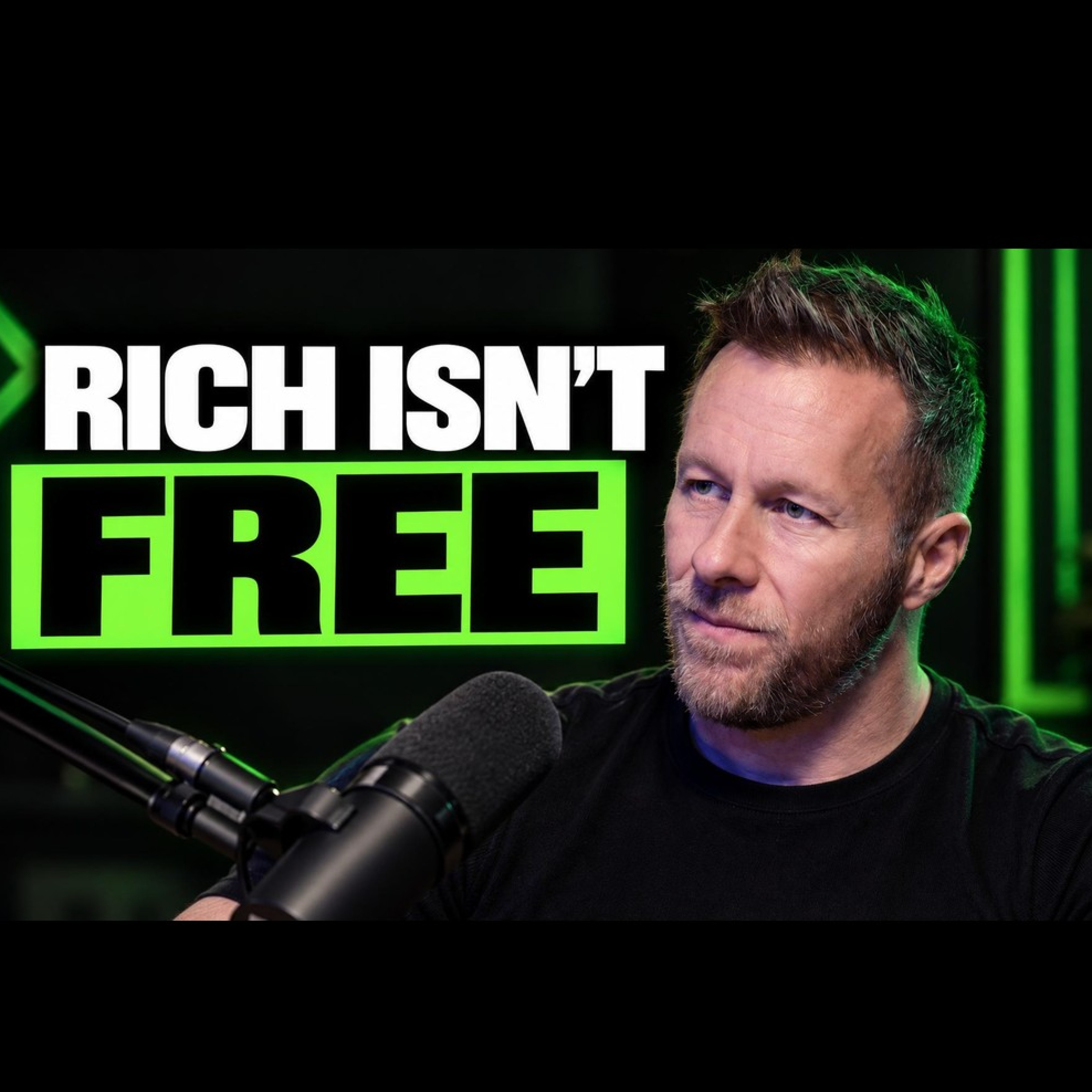
Jason Graystone argues that net worth tracking doesn’t equal freedom. True freedom comes from mental freedom (knowing who you are and making congruent decisions), plus financial freedom (enough runway/cash cushions to reduce scarcity), and business freedom (a business that feels like an extension of you, not a burden). He frames “freedom” as security rooted in childhood, and proposes a practical way to design life and business using math, delegation, and systems.
This episode is an interview with Jason Graystone (the guest). The host is not clearly identified in the transcript.
Jason is an electrical engineer by training, later became an investor/trader (options then mainly FX/indices/oil). He built a trading/investing path to replace income by about age 29, then created businesses and an education/academy focused on trading. He emphasizes engineering-style, math-driven decision-making.
Written by AI. May contain mistakes.
Explore the disconnection between financial worth and personal freedom.
“It's great to know your net worth and keep track of it, but it's not linked to freedom at all.”
Discussion on the fascination with net worth and its implications.
“Jason, when I Googled you this morning, the first search term, as soon as I put in Jason Greystone into Google, you know, does that like auto feel thing and sort of suggest what the question should be.”
Understanding the pitfalls of lifestyle inflation and societal pressures.
Personal anecdotes illustrating the complexities of wealth versus happiness.
“As adults, you might hear that story and go, oh, that's cute.”
Examining the multidimensionality of freedom beyond financial means.
“I don't think it was something I set out to do.”
The relationship between mental freedom and effective decision making.
“If there was of those sort of three things that hold up the sort of the pyramid of freedom, is there one that's more of a stronger underpinning or are they all equally like a pyramid or a triangle?”
Explore how external influences shape our decisions and the importance of self-identity.
“Because you get down the line, you think, I've done what everyone else told me to do, you know, and I'm not me.”
Delve into the complexities of imposter syndrome and how to align with your true self.
“And those are those elements and those moments.”
Learn how to rediscover freedom and contentment reminiscent of childhood aspirations.
“You ride your bike and all this kind of stuff, right?”
Discover how achieving contentment can shift your perspective on life.
“And it all, again, comes down to mental freedom.”
Learn about the importance of balancing personal fulfillment with business pursuits.
Explore the concept of building a business driven by passion rather than profit.
Understand how personal congruence affects business authenticity and success.
Learn how an engineering mindset can provide a structured approach to business.
Highlighting the power of clarity in defining personal and business goals.
“And that kind of gives you certainty in numbers.”
Explore the journey from engineering to trading and the strategies involved.
“on something that is so fundamentally important that we cannot let it pass without stopping to highlight it.”
Learn about the speaker's transition from engineering to trading and investment strategies.
Discover how having cash reserves can impact your business and personal life positively.
“So if you think of money as your oxygen, you're going to be a bit more careful about it, for one.”
Explore the relationship between risk, skill, and investment returns through different financial vehicles.
Gain insights into the challenges of trading and the misconceptions surrounding quick profits.
“If you'd like to get all of that, click the link that's in the show notes or the description, and you can join our Building the Brand exclusive newsletter.”
Understand why trading is often perceived as easy and the truth behind the actual learning curve.
“Process-oriented people who go, if I just follow these orders, you know, you get ABC does XYZ.”
You’ll learn about the challenges and time commitment associated with becoming a successful trader.
Explore how belief in oneself and community support can influence trading success.
“You think the only thing that kept me going was I was so sure that I could do it.”
Discover the balance between self-confidence and external pressures while pursuing goals.
“was just like, I was willing to just lose everything, mate.”
Learn about the importance of authenticity and transparency in teaching and trading.
“There was a question I wanted to ask and I've sort of crossed the mountain and said I'm not going to use any of them.”
Understand how to align your offerings with what customers truly want rather than just what they need.
“You know, we don't, I don't push anyone.”
Learn how to market effectively by focusing on desired outcomes rather than the means to achieve them.
“If you want to put a picture on the wall, you want the picture on the wall.”
Discover how showcasing your lifestyle can attract customers by demonstrating the freedom they desire.
Understand the importance of selling what customers want and how to align your offerings accordingly.
“Because she was doing it completely the opposite.”
Explore techniques to uncover your passions and how they can align with your business.
“You know, this is what I love about doing podcasts.”
Learn how mastering delegation can lead to greater freedom and efficiency in life and work.
Gain insights into what investors look for in businesses and how to enhance your investment appeal.
“Which has been an underpinning of the rest of your life.”
Learn how to assess investment ideas based on reputation and potential risks.
“That's kind of the subjective questions that I would ask myself around investing.”
Explore how to find fulfillment and motivation without traditional goal-setting.
“You just sort of go from thing to thing.”
Discover how tech and systems simplify content production and enhance creativity.
Discuss the impact of alternative education methods on children’s success and happiness.
“I think that's where, that's what it's about, you know, being there.”
Understand the importance of gratitude and self-reflection in personal and professional success.
“He don't pay a parking ticket and then it goes up and I know that he can't afford it.”

Get the gist, explore an idea or ask about something said.
 Claude
On Building The Brand with James Burtt, what are the key points of this episode?
Searching your listeningAutomatic transcript. May contain errors.
0:00Jason Graystone: It's great to know your net worth and keep track of it, but it's not linked to freedom at all. Unfortunately, that keep up with the Joneses is what keeps you trapped.
0:08James Burtt: You've mentioned already three or four times freedom. Why does freedom actually matter to you so much personally?
0:13Jason Graystone: We make 35 ,000 decisions every single day. Imagine if there's a little bit of someone else's values and opinions blended into every single one of those decisions. You get down the line and you think, I've done what everyone else told me to do, you know, and I'm not me. Like, I don't have any big goals. I don't have any goals or aspirations at all.
0:32James Burtt: Yeah, even when you said that, I'm like, what?
0:34Jason Graystone: I lost a lot of money on the foreign exchange markets, but I'd also learnt a lot of lessons. No one around me really believed in what I was doing. It was quite a lonely space. Probably the closest I've ever come to a divorce. What gave you that certainty? Because it was just maths. I believed in myself so much that it was like, they either come with me or they don't.
0:53James Burtt: I'm going. I was willing to just lose everything. You defined what freedom was.
0:58Jason Graystone: Yeah.
0:59James Burtt: And then literally built the life that you wanted based on maths.
1:03Jason Graystone: Yeah. If you can't master the art of delegation, Richard Branson says this, you'll never be free.
1:14James Burtt: So as you can see, we have got an amazing show lined up. But before we get into the main content, please, please, please do me a favour. I know I'm begging here, but all of the podcasters and YouTubers have to do it. Please subscribe if you're watching on YouTube. And if you're listening on Apple or Spotify, click the follow button at the top right hand corner of your app. And it will mean that you'll never miss an episode of Booing the Brand. And you'll be massively helping us out as well. Let's get into it. Jason, when I Googled you this morning, the first search term, as soon as I put in Jason Greystone into Google, you know, does that like auto feel thing and sort of suggest what the question should be.
1:49James Burtt: Is the first search is what is Jason Greystone's net worth?
1:53Jason Graystone: That's a very common one, isn't it?
1:55James Burtt: comes in do you does that annoy you that's the first thing that people are interested in or is
2:00Jason Graystone: it kind of come with the territory i think net worth maybe because the industry i'm in uh you know i talk about finances a lot um one of the things i never understand about net worth because my wife's a nightmare for that as well she's like she'll watch a program and she'll fall in love with the actors and all that and she'll like be searching them up and all this and i always say you can never tell someone's net worth from typing it into google especially if they're in the world of investing you know they've got cryptocurrency they've got businesses all over the world and they've got different investments um and it's almost impossible to know what someone's net worth is uh unless you are their financial advisor or their accountant um so it's all a bit of a
2:42James Burtt: it's all a bit rubbish a bit of smoke and mirrors what what is our i don't know whether it's a global thing obviously i can only talk from a uk lens what is our obsession with net worth so i
2:52Jason Graystone: say well it doesn't even mean anything there's such a great point a lot of people are so obsessed with net worth um you know the forbes have a list on it yeah the high net worth list and and it's it's it's no wonder that people do become fascinated with it and have it as some kind of milestone or measurement of wealth but actually what i've found in my life is it's not it's great to know your net worth and keep track of it but it's not linked to freedom at all you know there's people who are worth millions and millions of pounds on paper but they they have to they're really stressed they have to go to work to fund the upkeep and the maintenance of their house that they live in and their house sits empty every day um you know you've got people who who build things that have tremendous value but that doesn't you can't break a brick off of the house and pay for breakfast with it you know you have to go and you know unless it's they're illiquid assets it's either stuck in a business or it's stuck in a property or whatever and um you know how much your your net worth is doesn't really have any correlation to how much free freedom you have and what your calendar looks like and how you pay for your lifestyle you know a lot of people will raise their income and then raise their expenses within an at's cock of their income and then
4:15James Burtt: been there done it yeah of course of course most people make a bit of money like oh i'll get two
4:21Jason Graystone: aldis yeah exactly that and you end up just kind of creating a more expensive hamster wheel you're a slave to the stuff yeah i saw the the rock on on a uh a post the other day and he was like you know we've all got to pay our bills and all this kind of stuff and and there was a few people we don't know anything about paying bills i think it's all relative you know and unless you've been financially educated and you know how to manage money and buy assets and leverage your income a little bit you uh it's relative so it doesn't matter if you earn 10 grand 20 grand a month 500 grand a month you will raise your lifestyle you know approximate your lifestyle to within an inch of that income because that's just how most humans are wired they want the next thing you know we always want the next thing and i'm sure there's many listeners who have at one point for i'd love to have that car and then got that car and then they wanted another car yeah or one of the next one or you know a partner oh we're really i'm really happy in this relationship and then you start thinking oh well that's better there yeah better there and it's just the way that most human beings are wired and um unfortunately that keep up with the joneses and that kind of wanting the next best thing is uh is what keeps you trapped there's um there was a story which i wrote about in my book called the millionaire and the paper boy and it was about a true story it was about my friends my son's friend who had a paper round and he was earning 11 pound a week right and it was my next door neighbor who had about 19 grand disposable income every month right or post-tax income and uh he was like really depressed my neighbor he was out he was heavily drinking and all this and um my son's friend who had the paper round you know he was spending it on football stickers basically to fill up this football sticker book um and I said do you like football and he was like not not really but my you know everyone's collecting this book and I just want to be the first one to complete this book and I said well how much you know how much you have left over at the end of the week and he said about a pound I spend on you know sweets and I said so so four weeks four pound you've got you know disposable to spend on sweets and things after you've bought these stickers that you're trying to you know beat your friends to and um i looked at my neighbor and he was basically had you know three cars he had the members club the gym you know he had an au pair he had the gardeners coming around he had you know a yacht club membership and you know he was spending he basically was spending most of his disposable income and um and i did a quick calculation and i said right if you lost your income today based on your expenses and you know your lifestyle costs how much time could you buy into the future if you if you lost your income today and for the paper boy it was about 1.1 months and for the neighbor it was about one month because it you know and and when you see it like that it's like wow and the fascinating thing was the kid was buying stickers to impress his mates he didn't really like football that's a mad thing
7:28James Burtt: But we actually all do that. Yeah. As adults, you might hear that story and go, oh, that's cute. Oh, that's trite. But we're doing that.
7:36Jason Graystone: Yeah. All you have to do is divide your income, your post-tax income, by your expenses, and that's it. And it will give you a figure, and that is basically how much time you can buy into the future.
7:48James Burtt: There's a shocking stat, isn't there? Maybe it comes out of America, but I think most people have got less than a month's runway. Less than a month, yeah. So if they stop working within, I think it's maybe like 4.2 weeks. Weeks.
7:59Jason Graystone: Yeah, you have to drastically change your lifestyle.
8:01James Burtt: You have to change your lifestyle or you're underwater within a month.
8:04Jason Graystone: Yeah, yeah. And all that is is because you're not living within your means, you know, and you don't have any cash cushions to give you any head space. So as soon as you lose your job or you've always got the threat of losing, you know, you've got this thing in the back of your mind, it puts you in a different energy, puts you in a different like a scarcity mindset all the time.
8:23James Burtt: well i want to dive into the the personal brand of the business brands that you've built but but underpinning all of that you keep talking about and obviously your book is branded around it but you've mentioned already three or four times freedom why does freedom actually matter to you so much personally i've uh do you know there's a i'm still finding this out every day
8:45Jason Graystone: really and like yesterday i was in my gym with my personal trainer and i was in the glute machine
8:51James Burtt: and it's got like a oh that bar you have to do the push it's got like a seat belt thing yeah
8:56Jason Graystone: and i really feel anxious in that in that and it's because i'm trapped yeah yeah and any exercise where i feel like i'm trapped like a pull-up where i've got a belt on i hate and and you know it all stems back from when i was a kid my i had this big perception that i had a a void of security right because my real dad had left um it was just me and my mom and you know my mom would go to work she would drop me off at a house to be looked after by this girl named this woman named shirley her husband was a gangster called joey pile and and my whole day was just like there was chaos going on in this house and i'd just be left like with shirley don't worry you know and i'd hear like plate smashing and arguments going on all the time and um i just
9:47James Burtt: remember feeling very like there was no security um and obviously your character is really shaped
9:53Jason Graystone: by the time you're seven you kind of pick up on you know what you feel is negative and what you feel is positive and for me it was it was security so for me now like if i look back at that i think your perceived voids become your highest values. So I didn't know that money was necessarily the thing. Really what I was looking for is security. And I've navigated my life prioritizing means for security, right? So I don't like not knowing where my things are. Like I love to know, I hate losing things. That's a big problem. I don't like really being out or my family being out the house. I like to know where my things are i like to and that creates problems in itself because you become a little bit like um but appreciating it and knowing why you're like that is a is a is a great thing because you can have an open conversation about it rather than be all defensive and see it as i'm a bad person you know you can kind of appreciate who you are for why you are but freedom to me has stemmed from that and and it's not just freedom as in you know financial freedom It's being mentally free, knowing who you are, being really true to who you are, you know, being really congruent, being able to have a business that is part of you and not something that feels like it's against you or a bit of a burden or a bit of a resentment thing.
11:20Jason Graystone: um and then having the financial element in place so that if you need to stop doing what you love uh because you're injured or you need to look after a loved one or something you've also got that kind of underpinning of finances that you can just take your foot off the gas a little bit and i think um freedom is all of those things um and getting those right and i think a lot of people struggle to have uh all three and i think just as a natural byproduct of my childhood that's how I've managed to kind of build all three of those for like ultimate freedom. I don't think it was something I set out to do.
11:59Jason Graystone: I think it was just something that was in me.
12:02James Burtt: I think that's really interesting. And I think when people hear freedom, naturally, is it natural? I have to be careful with my language here because you're clearly someone who's quite self-aware and quite astute intellectually. But I think people, there's a perception that freedom is money. And that's maybe the foundation. Well, when I've got this, then that. But I think as soon as you, if you ever frame something with when this, then that, you're on a highway to fucking nowhere, quite frankly. Yeah. If there was of those sort of three things that hold up the sort of the pyramid of freedom, is there one that's more of a stronger underpinning or are they all equally like a pyramid or a triangle?
12:44James Burtt: They're all equally as important for the whole thing to be stable.
12:47Jason Graystone: I think mental freedom is the most important. Because if you don't, like, when I ask people what freedom is to them, they say it's, you know, doing what I want to do. That's the first thing. Wherever I want, with who I want, whenever I want. Right? Standard. It's kind of that freedom.
13:08James Burtt: They think, oh, the money will give me that.
13:10Jason Graystone: I go back to the first thing they said and I say, okay, what do you want to do? And they go, I don't know. I've got no idea.
13:16James Burtt: Yeah, so interesting.
13:17Jason Graystone: So it's like, well, that's just mental. That's just who you are. Like, if I gave you a million pound or a hundred million pound, what's the first thing you're doing on Monday morning? And they've never given that any thought, right? So unless you know, if you're not mentally free, you'll never be financially free because you'll always be told how to spend your money. You know, spend it with us, spend it with us, do this, do that. when I was 17 and I was learning to drive, I asked my stepdad, you know, should I learn an automatic or a manual car? And he said, learn in a manual, then you can drive both.
13:52Jason Graystone: And I didn't really question it, right? But it took me twice as long to pass a test because it was more difficult, twice as long in lessons, twice as much money on lessons. And when I passed my test, I drove an automatic and I've driven an automatic car all my life and now all cars are going automatic right so there's a tiny little bit of resentment for that decision where I didn't actually I just took his advice did what he said and now I'm thinking well tiny little bit of resentment right so we make 35 ,000 decisions every single day imagine if there's a little bit of someone else's values and opinions just blended into every single one of those decisions, that's when you end up having a midlife crisis.
14:38Jason Graystone: Because you get down the line, you think, I've done what everyone else told me to do, you know, and I'm not me. So had I gone back, I would have gone, okay, he's saying manual for that reason. What do I want? You know, do I actually like driving? What am I going to be, you know, what does my future kind of look like? So if you stop for a minute and question advice, and then you go, well, what do I want? You know, who am I? You know, what do I want in life? And then align the answer to that and maybe take it with a pinch of salt or use some of it. And, you know, I'll take that from him and that from him and, and, and whatever, you'll end up making decisions that are aligned to who you are.
15:15Jason Graystone: Right. But if you don't know who you are, then you've, you're going to struggle.
15:20James Burtt: So you took that advice, well-meaning advice from your stepdad gives you more choice you do that you can drive both options what's the from the you know the hundreds of thousands of people who watch your content and the thousands of people that you sort of trained directly and indirectly over the years what's the most common bad bit of advice you see other people taking i think um yeah uh you know don't come well there's there's loads
15:51Jason Graystone: looking up to people I think is a is a is a bad one you know I think um we're told to kind of look up to people and and study people some people say don't look up to people but but a lot of the time we're looking up to influential people and all this kind of stuff um and I think people get blinded by that highlight reel like we you know that is one snapshot of traits that you aspire to have but you're not seeing all of the traits that they've got that you've got that maybe you're even stronger than them in so therefore you've got them up there and as a result of putting them up you're now putting yourself down you know and you're you're below them and i think a lot of the time for me i've witnessed people really kind of not fulfill their own potential because they've got someone that they feel that they could never be rather than thinking well what do i have that they don't you know where what's the downsides of that person having all of those positive uh traits and you can really start to kind of neutralize your your view towards things and as i tell you that's all come from like investing and trading uh you know if i if i saw every loss as like a a really bad thing you know i'd end up severely depressed yeah um i actually have to see it as a as a lesson and a cost of doing business if you like um and the same goes for a win if i have a big win or a big you know i make a load of money i have to make sure i'm seeing the downsides of that as well you know and not be too cocky and start shooting from the hip you know because
17:36James Burtt: i've become gun-ho yeah you know believe me your own hype yeah you have to stay in the in your lane
17:42Jason Graystone: um and the best way that i can describe that exercise which i think everyone should should practice is like imagine your you know you find your partner cheating on you or something right your partner does something awful and then you know you have a bit of a fear of going out on the dating scene a trust issue and all this kind of stuff and then years later you bump into them on the high street and you say like was that the worst thing that ever happened you know they'll probably say no it's the best thing that ever happened but right then it was the worst thing ever happened right but it's taken 20 years to go from the worst thing to the best thing and the fact that it took 20 years is a complete inefficiency in emotion um so imagine if you could just see the good in the bad immediately yeah you know and i know that's that's kind of hard to do yeah yeah it's far-fetched but if you could practice it for sure you know if you can just go right this thing happened last week you know instead of going why me it's like well what's why was that absolutely necessary to happen in order for me to get to the next thing and become better or why did that have to happen to make me better now or you know what can I learn from it or how much has that earned me in the long run you know and all those sorts of questions so yeah long-winded answer but going back to your question it's like there's two sides of everything yeah and I think uh the worst advice is believing there's one way you know there's being polarized to one way uh i think just see both sides ask questions make sure whatever answer you go with is aligned to who you are as a person and then you'll feel much more uh you know in flow if you like rather than going against something i'm not sure about this yeah for sure resistance to it
19:31James Burtt: means that even if it's it's just not meant for you yeah exactly you know for other people it's
19:36Jason Graystone: just not meant for you yeah you i one of the like we've got these brilliant internal mechanisms like imposter syndrome and burnout and all these kind of things where you're just basically doing something that you you shouldn't be doing so we see those as things we should fight against or
19:51James Burtt: the weaknesses yeah i feel it burnt out well why exactly i feel imposter syndrome well why why now don't get me wrong there is an element i had a guy adam cox who you bumped into on the when he was leaving a minute ago and and he was talking about the sort of the imposter syndrome thing But sometimes in those, you have to not fake it till you make it, but you have to believe it until you achieve it, potentially. And those are those elements and those moments. He was talking about doing like stand-up comedy, which is not something that comes naturally to him at all. But he knew he needed to do that to put himself outside the comfort zone to achieve what is possible, to show himself what's possible.
20:25James Burtt: But then those moments of, I guess, momentary friction that you self-create. But if you're doing that all the time, yeah, he could stand up on a comedy stage for 15, 20 minutes, an open mic night a bunch of times and that's fine. But if you have that physiological response that you have on stage all day, every day, there's probably something there that's not aligned with what's meant for you. Exactly that.
20:52Jason Graystone: And you should listen to it. Yeah, exactly. there's uh i see a lot of creators go through burnout or have breaks and and i think well it's because you don't believe in what you're doing you're trying to be someone like a facade like a your character whereas like there's not enough hours in the day for me you know i could talk all day about what i talk about and i don't want it i don't want to stop um whereas you see certain people they're like i've had i'm having a break from youtube or i'm having a break from you know i'm feeling burnt out feeling tired and you think well you know that it's a break from life yeah you're probably not listening to yourself yeah there's there's some incongruency there in what the message you're pushing and what you actually feel and you believe um gary stevenson is is the one that i would i would mention you know he springs to mind because he's kind of he's had like four breaks from youtube yeah you think well there's a reason for that your message is you won't make it in life unless you've got a rich dad you know i don't think anyone really believes that yeah i don't think you're gonna you're gonna burn out promoting that message
21:59James Burtt: yeah 100 you know because it's not true where did you when's this level of self-awareness because i'm getting this like self-awareness and self-understanding thing that's coming through
22:09Jason Graystone: in a big way where did that stem from um practicing seeing the good and the bad and the bad and the good where that's them so that's something that i've i guess i've not well you talked about pressure uh having this feeling every day on stage of it you know i've i started a business when i was young um i had a high level of pressure from early on so that level of pressure stayed and then when it's there every day it sort of becomes you're acclimatized to it right and it's like it'll take it'll take a lot to piss me off you know uh i'm not one of these people that would get road rage and all that kind of stuff um but i have had a lot of experiences in my life where i've had perspective on other people's struggles um i'll give i'll give you one when you as a kid you know you're seven years old you uh you go out to play with your mates and you play football climb trees you know and then you run about you kick a ball about Yeah, the good old days.
23:14Jason Graystone: You ride your bike and all this kind of stuff, right? Climb hills. And when your parents call you in when the streetlights go on, you know, you think, oh, when I'm an adult, no one's telling me what to do. I'll be free. I'll be free.
23:26James Burtt: I'm staying out till nine. Yeah, I'll stay out.
23:27Jason Graystone: But the funny thing is, when you watch adults become adults, they become less free, you know? Yeah, yeah. And they also go further and further away from that seven-year-old who knew what they wanted every day, you know, and were inspired to do certain things. funnily enough last year i was invited to uh necker island i saw this on your instagram yeah right amazing it was amazing right and we was there with al barrett who started grenade yeah you know all these amazing people anyway i was invited there 40 entrepreneurs the perception of that is these are the pinnacle of entrepreneurship they're on the island billionaire island yachts all the rest of it yeah they want a life yeah yeah it was crazy right but when i looked at and kind of summarized what had happened that week these people who could do anything they want and go anywhere they want and had reached that status um had chosen to spend their time and money to be on an island playing tennis riding bikes climbing rocks uh you know dinner time stories and early bedtime they're all in bed by eight eight thirty right and you think you always had that so if that's the end game yeah right everyone's chase chase chase chase chase and uh to get back to what we had at seven to get to what you had at seven right so you was always free that's that's another kind of it was like you've always had that freedom you've always had that that goal um and what i see a lot of entrepreneurs doing or everyone in life is they the best way i can say it is like they're on like a train and the train's going forward and it's like i'll go to the next milestone i'll get the next pay rise i'll get the next million and then like the the train will stop at a station the doors will open and they'll look out and think oh it looks nice you know but then they go i'll get off on the next one you know i'll just get the next the next round number or whatever it is right and then what happens is the train derails this is what i've seen and before you know it the money's all over the place the relationships all over the place the health's down the pan and they think i would have been all right if i just got off back there and they're trying to look at contentment in hindsight and it's too late you know whereas what happened with me and i think this kind of plays a part in why i'm like i am is like i don't have any big goals i don't have any goals or aspirations at all i don't have anything anything and uh i think people
25:57James Burtt: struggle when i tell them that yeah even when you say that i'm like what right it's it seems to be
26:03Jason Graystone: received as like oh wow you know it's like a slap in the face but um what happened to me is i had this boss called george when i was uh about 19 i wanted this lexus is 200 car right yeah back in like i think it's about like 99 2000 or yeah and i was like um on this car and he was like how much is it and i said i don't know it's like 250 pounds 260 pound a month finance or whatever and he was like you know how much is it really and i was like what do you mean he said well you know the tires the mot the wear and tear the insurance the fuel the tax and all this right
26:37James Burtt: and i was like i don't i don't know how much that is don't ruin it george 250 a month i know and he
26:42Jason Graystone: was like well unless he said something that i've always remembered he said unless you've priced all that up you've never considered actually owning that car and you've just it's just a drink like you like the car right but you haven't actually considered owning it and i was like that's really you know that's fair so i went home and i priced it all up on this spreadsheet and i took it in and i said it's 650 pound a month or something you know on average and he said well do you still want it and i went actually no i don't value the car at 650 pound a month and he said but um but now you know exactly definitely how you could have that car if you weren't that extra amount a month right and i was like yeah so i've just became fascinated with this and i went back and i priced up all my ideal life i was like right what flat you know how much would my flat cost i was on like right move looking at the the flats and you know my shopping how much would i like to go away and what would that cost and i became like obsessed with like detailing out this ideal life at 19 i wasn't that ambitious it was like you know it was probably about 70 to 100 grand a year maybe right it was about 70 grand a year I think it was so when I I took that into him the next day and he was like you don't really want that you just want that because so and so's got it and I was like yes that's true and so I started crossing off a few George is like Yoda he was he was he was my first mentor he was incredible incredible guy and um yeah we used to have these big debates every morning you know and I'd always learn from them I love people like that yeah he's amazing but um anyway when i hit that ideal life it was like the milestone was in the future so when i hit it i had true gratitude for it it was like i've anything after this is a bonus you know anything because i've truly said that this is what i really want in my life so when i hit it it was like well everything from here is a bonus and and of course my values have change and i've upgraded uh naturally um but i think if you have contentment as a milestone in the future when you hit it you are truly content whereas if you if you think oh i would have been all right back there once before my life went to shit you know not many people can go back and be content it's it's much more difficult thing to do so i think that played a massive part in you know knowing where I was going.
29:05Jason Graystone: And it all, again, comes down to mental freedom. It's like, what will make me happy? Where do I want to go without anyone else's injected ideas and influence, which was massively down to George telling me to cross off some of those things. But will this truly make you happy? Yes, that is what I want. That's the number. That's exactly what I want. And then when you hit it, it's like true, true gratitude for it.
29:29James Burtt: I think there'd be so many people that will listen to this pod or watch this pod and be like, but how can that guy have no big goals and dreams and aspirations because you've built a life of genuine freedom from what i can see obviously we only see everyone's highlight as real not behind the scenes you're in great health great shape you seem like a happy guy super content i think people will be like almost like trying to juxtapose this guy who's attained all this stuff and he's still attaining this stuff but hasn't got the big goal so how do you you know like the the growing the youtube channel the academy that you've got helping all the people on the on the trading side things how do you do that without having the big goal yeah because i love the metric of contentment but how do you grow with contentment as the the carrot that you're not even really chasing you just sort of you know you get there when you get there kind of vibe which is what i get from you but yeah you can't attain the levels that you have you'll be you know you'll be
30:27Jason Graystone: surprised that what you can achieve when you're on a mission that's congruent to who you really are uh because you don't need one you're not copying anyone yeah sure two you're not um you know imitating anything yeah three you need no motivation whatsoever you know you don't need to watch motivational videos to get up and talk about what you love yeah um you're inspired from within you come out with your own ideas and concepts that people really buy into because they're you know they're real um and then there's obviously the technical side of business so when i was about 29 i was in a position where i didn't really need to work um but i wanted to i was lacking a little bit of fulfillment because you know clicking buttons on a screen and making money in in markets is is not really a purpose driven thing it's not you know it's not lighting you up every day yeah yeah and it's not altruistic yeah so you kind of again there's this balancing between
31:30James Burtt: narcissism and altruism where you're you know take take take but you need to give
31:35Jason Graystone: otherwise it's at some point equilibrium's off yeah exactly so i wanted that but i had the fortunate position to think well i don't want to create another job you know i've just spent years getting out of work now i need to uh figure out how i can create something that doesn't feel like work and it was really just like what would business look like if you didn't need money i think that's such a powerful question that is great what what would your business look like if you didn't need money you know what would you create what clients would you deal with and not deal with you know what staff would you employ and not employ what products would you create and um and i also wanted to create something that was leveraged and didn't you know i had the time to think well i don't want to do everything all the things myself i want to do the things that i'm good at and i love doing and i would choose to do uh and i'm also inspired to teach others to do and then everything else you know delegate automate systemize uh and and get rid of it so uh so that's what i did and and i think business should be an extension of you and we talk about congruency a lot of people are banning the word around congruent and and all this transparent and all that i always say like would you imagine you had a camera filming your life behind closed doors 24 7 and streaming it to instagram and and tiktok and that would you feel comfortable and a lot of the time people say no and i think if if you're not comfortable with that i'm not talking about like sacred bedroom time and all that i'm just talking about your life um usually it's because you're showing the world or you want the world to see something that's different from inside so you know what are you saying or doing behind closed doors that's different from what you're teaching out we were talking about this before the podcast people do that right they promote swan thing and they're talking completely different about it behind closed doors um and that's a lack of congruency in my opinion and and when you truly believe in something and you've you do what you say you do you know and you live and breathe it one it's very easy to talk about two you've got nothing to hide three people trust you and buy into you much more you don't need any uh sales team and you know you don't need people to convince people over the phone to buy stuff you can basically take your time and create really valuable products um you know and there's a whole podcast just on creating a business ecosystem which isn't you know which you're not a slave to basically which i think a lot of businesses do wrong maybe we can talk about that um but just starting as the business should be an extension of me what i love doing what i choose to do every day what i'm inspired to teach other people and then obviously is it monetizable everything's monetizable now so um so i just made sure it was one of those things um and then the deliberate approach that i took was just to speak as if i didn't want anything in return so it was like i want so i created this video on youtube and the question that we asked or i asked myself before i created it was like how can i create a video where no one will need me after this video you know how can i and the challenges that we set myself was like how let's create it in a way where we could not even there's not one question in the comment section you know so that there's i've answered every single question and that was the challenge that's how we that's the energy that went into this video and i'm telling you it has the complete opposite effect it's like people watch it they spend it was a two and a half hour video you know they spent two and a half hours with me and wanted to work with me or pay me or you know as as uh you know and there was a very very subtle call to action for like 297 quid after three months of that video uh going off on youtube it had had something like point it had 1.6 million views which was mental and then it had 0.4 percent of the people bought the thing which was like 5 000 people so they bought like 1.6 million pounds worth of a 300 pound product jesus which was all and then the 300 pound product was all automated so it was like a drip fed video every day for 30 days okay so even more extended perceived value over 30 days for 300 quid um and it just yeah it just really opened my eyes to content is just about getting people to spend time with you they'll always pay as long as you can get them to spend long enough with you and they trust you and they like you and they can see that congruency and they can see that you do what you say you do they will sell themselves on the product you haven't got to have sales team and ads we've never run an ad ever like i've never run an ad in my life um really no no we've never ever used ads we don't even have an ad account you know so we so we just build these kind of valuable products up this ramp and people just we work on organic so that they fall into the lowest commitment of that and then they just sell themselves up it and we don't we don't push or or sell or you know I've got two people in my team.
36:53James Burtt: This is wild right I've got so many questions now get rid of all the stuff I thought I was gonna ask so what was your prior background before
37:02Jason Graystone: engineer okay so I was an engineer uh electrical engineer right uh decent engineer I um you know probably come from you know that's where all of my uh trading and investing approach has derived from from my ability as an engineer so you invest and you build businesses like an engineer yeah
37:23James Burtt: engineering mentality it's very very logically minded everything's maths focused you know there's
37:29Jason Graystone: no subjectivity really it's just do this and get this you know it's and you've got this that's
37:35James Burtt: that's juxtaposed with then this like beautiful level of self-awareness and internal questioning and deep thinking so there you've almost got like the structure of an engineer and the thinking of a you know like a spiritual guru sort of like squashed together to to make up the stuff that you
37:54Jason Graystone: do which i think um you know i think serves me well i think it's a great great thing to have you know i don't yeah i don't i don't doubt that that isn't a a benefit to me or any or an edge even in business yeah yeah for sure um but yeah it is very much like that and uh i think the way that I build businesses again if you're looking at the economics of a business it just starts with what you want so you know your business is you're starting a bit no one starts a business because they want to do HR and email it's crazy quite the opposite you start everyone starts a business or gets a job to get paid to spend money on the things they value most yeah that's it it's really simple so if you're going to start a business have that in mind first what do you want you know how much do you want again like what i listed my ideal lifestyle out how much does your lifestyle cost what is the cost of that then that's not how much you've got to earn because that's the number that you're going to spend so after that you then need to factor in inflation the average inflation rate over 25 years or whatever um you know what you want to save and invest out of that you know what you want to spend on your development maybe or maybe that's in the the lifestyle cost and then once you factor that in you then know exactly what you've got to earn once you know what you've got to earn then you factor in a product cost and then opt-in rate and conversion rate and then you know how many leads you need to send to a website or how you know and how many views you need to get or what traffic you need and it just gives you certainty that if i get 2 000 people look at a landing page, I'll get 100 people convert and 20 people will buy the thing or whatever.
39:44Jason Graystone: And that kind of gives you certainty in numbers.
39:48James Burtt: Right. Let's take a pause there because Jason has touched on something that is so fundamentally important that we cannot let it pass without stopping to highlight it. The power of knowing what you actually want for your life. Do you, watching this video or listening to this audio, do you actually know what you want for your own life? I know that I've definitely had periods of my life where I didn't really know what I wanted. I was walking towards stuff, generally strolling in a direction, hoping that the answer would reveal itself. And sometimes you do just have to take a step in blind faith to get to the first step of the journey as such.
40:24James Burtt: But it's so much easier, as Jason has highlighted here, when you're very clear on what you want to do to the point where he's talking about he's working out on a spreadsheet exactly what his costs would be for the life that he truly wanted. And then break it down with, does he really want this? Or what does the apartment cost? Or what does the car cost? And he worked out, you know, he needed 70 grand to live this life. And actually, does he really want all of this stuff? That's another great part of the exercise. You might realise from going through the process that actually the stuff that, you know, the Ferrari, the six bedroom house, when you start to break it down and go, well, would I really want that?
40:56James Burtt: Would I really, if I got a six bedroom house, the council tax is two and a half thousand quid. I'm probably going to need to spend, two grand on the garden. I'm probably going to need a cleaner for it. It's probably going to cost me six grand a month just to run the thing. That's before the mortgage gets paid. So all of a sudden, I'm into it for 15 grand. Do I want it for 15 grand? Maybe you don't. Maybe that's a conversation that I've been having in my own head. There you go. I've just vicariously leaked out some of my internal dialogue. But it's really important to know this stuff and how many of us and how many of you watching and listening are going around hoping to find the answer to this stuff, hoping that the next step that you take, hoping that your journey is going to lead you to the outcome.
41:31James Burtt: But fundamentally, if you don't know where you're going, it's like a journey without a map. How are you ever going to know where you've got? You need to know. And it can be super powerful, just as Jason shared. Anyway, let's get back to it. Such an engineer mentality. Such an engineer mentality. So you do the engineering thing, you get to 29. Are you learning trading and financial sort of education? Since I was 22, yeah.
41:54Jason Graystone: So I was investing at 22, trading from about 25 was when i really started what sort of trading are you doing is it whole
42:02James Burtt: of market is it specifics is it derivative is it like a section or a vertical that you invested
42:08Jason Graystone: yeah i started in options and then i went to foreign exchange so i did a lot of foreign exchange some indices and some oil but mainly forex um and that's where i kind of found my feet but i was looking at like online poker at one point it was really just it was really just i was investing and I had a strategy to replace my income in like 20 years and then it was like how can I get that down so then I started um like ramping up my savings um increasing my income so I started my own business so I could control the amount that I threw into this pot that I was using my investments to grow and then sort of replace my income and I kind of got it down to about 10 years and then I was like well you know what if I look for kind of higher speculative skills that I can develop that will give a bigger return I was getting like 10 to 15 percent at the time it was pretty good I wanted like 15 to 25 percent yeah you know and I thought if I could get it to like 18 to 20 I could actually get it from 10 years down to about three and a half to match my income at the time which my income was like I know it wasn't a lot it was like six not a lot 60 grand maybe and uh i was like okay so i spent a lot of money like 40 grand learning and blowing money basically um and then i came good after about three years and then uh you know by the time i was 29 i matched what i was earning without having to go uh into a job so i just walked away from the from the industry the engineering industry so wait so when you're
43:41James Burtt: doing the the trading you say about the investing are you investing in other stuff as well because you are yeah an engineer at heart so i guess some sort of risk mitigation and stability and you you wanted security stability because of you know mum putting you at johnny parr's house joey parr's house yeah during the school day so you still got that overarching desire for that so you you putting stuff into like some property stuff first investment was just cash right and and people
44:12Jason Graystone: always say to me like well i've got cash in the bank you know what should i invest in i say well how much have you got and they say oh you know i don't know 10 grand and i say well what's your living costs and they say three grand and i say well that's only three months of your lifestyle costs you know and when you look at it like that i look at money as like life blood you know oxygen because you need food, shelter, water at the bottom of Maslow's hierarchy. They all cost money, right? So if you think of money as your oxygen, you're going to be a bit more careful about it, for one. But two, you'll realize the more you have of it, the more calm you'll be, you know?
44:49Jason Graystone: So I knew a builder once who was like, he'd done some work on someone's house, and the person rang him, and this guy had no money. He was like proper hamster wheel. You know, and this client rang him and said, like, I'll pay the rest of your invoice. I just want you to sort out these snags. And he got his back up. What do you mean? You know, my work's fine. He went around the house, all, you know, angry, bad kind of atmosphere. And he was like, oh, you know, and they ended up just like going, no, we'll just get someone else to do it. Right. Had he had six months living costs in the bank, it would have been a totally different conversation.
45:26Jason Graystone: So his energy would be down, like, better. he would have said no problem you know i'll come around i want to make sure that we've got a long term relationship here i want you to recommend me you know they probably would have tipped him they probably would have recommended him to all their friends he would have been inundated with work oversubscribed you know his rates would have gone up and uh there is an immediate return on investment by having cash in the bank yeah so so and that's the best example that i can like use but cash so having six nine months ideally 12 months if you can work towards that of just sitting in the bank yeah because it just means that you know that everything's going to be right and you're not you see more opportunities you come from a different energy you know yeah you speak different to your colleagues you know you're a better partner parent you don't snap uh and and it's the it's gonna you will come across as someone who people want to do business
46:25James Burtt: with who people want to it is just a different vicariously people will yeah exactly who will
46:31Jason Graystone: want to do more business with you exactly so that's the first thing and then i imagine investing like a like a pyramid of uh earning your right to higher degrees of risk so cash you don't need any skill you don't get a return on it really very low return low skill low time low risk low everything right and then you kind of imagine at the top would be to flip red or black on a roulette table right you know and that's the top that's the extreme uh and to do that you would need to be like have the david blaine skill of like spinning the wheel so that you know that it's got like some edge on the ball or whatever but um the higher the skill the higher the time commitment the higher the return the higher the risk up the top yeah and then you should learn things that you want to learn in terms of skill to earn your right to higher degrees of risk so if you're up all night looking at your phone because of bitcoin going up and down you've got too much money in bitcoin or you don't know enough about it or believe in it enough so you know learn something that you you understand uh so then it can go to things like index funds you know very very easy to understand a little bit more time you can set up an automation on your bank direct debit it goes out every month you're it's very it's lower return but it's higher than cash you know it's 10 a year uh year on year um great and then you get your feet wet and you kind of build up some like living costs in terms of maybe you got three six months in that and it's like right i'm building this kind of robust thing uh that if that topples over it doesn't affect me because i've got most of my money here and then as you go up this pyramid you might have etfs and then you might have some you know you might put some money into some individual stocks um and the more isolated and the more speculative it becomes the more you need to understand and the better the skill you have to have a bit like the best way i can describe it is like buy to let property is very passive and you don't really need to know a lot you just buy a property let it out leave it to up the agent whereas if you're flipping a property you're going to earn more money on the flip yeah but you need to know the area the mark who you're selling it to before you've even bought it you know how to do it up cheap and get it in you know the most efficient thing so you need a bit more skill a bit more um but you get the better rewards so if you're not interested in property don't try and learn how to flip property because you're going against yourself right if you're not interested in forex don't do it because because you you won't withstand the people that just get up and want to look at charts because they love it you know and they want to solve this puzzle you just won't compete with those people so um so i've done it all mate i've done everything you know i today i have you know crypto and property and angel investments and all sorts going on but it's it's very structured and very uh it's allocated so that it is a pyramid and there's times where your speculations will out like grow your account
49:37James Burtt: quicker than your your passives yeah and at which point you've got an upside down pyramid if you
49:43Jason Graystone: like like you can have a big cash event on a on an exit of a business yeah you know all of a sudden your account's like top heavy so that's when you do like a capital uh yeah rebalancing yeah rebalancing exactly and i always make sure that we do that so that we're not you know the because all that will affect is your equity curve of the whole lot being really volatile yeah and you don't
50:05James Burtt: want that if you're loving this conversation please do us a favor by clicking the subscribe button if you haven't yet done so click the follow button if you're listening on apple or spotify at the top right hand corner of your podcast plus if you're loving the learnings and lessons from this episode every single week as well as doing the video and the audio sort of things we also do a handwritten blog, and we do a breakdown of the key learnings and lessons as a blueprint that you can implement into your business as well. If you'd like to get all of that, click the link that's in the show notes or the description, and you can join our Building the Brand exclusive newsletter.
50:36James Burtt: What was it about sort of trading in Forex and that kind of, that thing that you found interesting to start with? Because you're an engineer, I imagine that you're, you know, you're only you know 19 to 22 we talked about you know george was seminal at 19 and helping you to align with what you actually wanted then by 22 you're sort of looking to go on we'll retire myself out of this or at least uh get my income or my my sort of investments to outweigh my income what was it about that specific vertical of investment you like yeah that's the thing i'm going to dive into had you looked at everything else or yeah they're just yeah so at that point
51:14Jason Graystone: um i had this plan to replace my income and part of that plan was to grow my income as i said you have to start your own business to grow your income because you're not going to outperform inflation at three percent getting pay rises you need i needed 10 per year increase so i had to start a business to at least take 10 more every year and um with that brings its own stress because if you're building a business to completely abuse the business by paying yourself as much as possible you have to build a good business yeah yeah but you don't have the cash in the business to do the right thing right yeah so it's like I need to employ a manager but I can't afford a manager you know and also when people start catching wind that the motive behind the old business is you to basically sod off the leadership goes a little bit yeah you know so you kind of got this boat that's about to sink right and it's like I need to jump off this boat before it really sinks so then it was like how can i you know ramp this up and that's when i was looking at online
52:18James Burtt: poker first of all so you were going to do poker as a trade yeah yeah so i was i was looking at
52:24Jason Graystone: poker because i thought that would be then the thing that i could do online um and be able to build a skill and and yeah and basically as i say i was looking for an overall return of about 18 per year on the whole pot right so so if any more money in the in the job you're allocating more
52:43James Burtt: towards your sort of like retirement or your freedom fund from the job yeah then you're gonna have and then so to look at really scaling up your money you realize that you need a business not a job yeah and you're thinking that the business can be poker yeah basically yeah yeah
53:00Jason Graystone: and uh i just didn't get on with it i think poker looking back now i think poker's uh very similar to trading the financial markets but i think it's harder uh and the only the reason i think it's harder is because um with poker you have to make a decision every 60 seconds right you have to yeah whereas trading you can take a little bit of a approval well actually yeah and you get a little bit more choice um so that really made it sounds like a little thing but that really made it hard for me um and then i was kind of doing both in tandem and then i lost a lot of money uh on the foreign exchange markets but i'd also learned a lot of lessons i paid for a lot of lessons i suppose you could say and i just stuck with it but at the time of kind of pushing that threshold there was a lot no one around me really believed in what i was doing it was quite a lonely space um probably the closest i've ever come to a divorce and uh a lot of my extended family just thought i was a gambler you know and really yeah yeah for sure even where you know my kids weren't sure in the end they were like what's going on you know so you're quite you're quite uh
54:14James Burtt: sort of transparent with what you're doing you're telling everyone what you're doing you're not trying to do any of it i had behind the scenes i had to because there was a point you know where
54:22Jason Graystone: it wasn't like it is now like if you take trading's just got this kind of grimy it's just full of like
54:30James Burtt: snake oil and instagram yeah it's not it wasn't like that when i got into it there was a few
54:36Jason Graystone: there was a couple of like big kind of showmen if you like that were like yeah you know run to the back of the room and that kind of stuff yeah um but i was fortunate enough to have uh someone who i knew called clive who was an institutional trader and he was kind of guiding me and saying look watch out for that that's not quite right and yeah put me in touch with a couple of communities that i was part of of real traders retail traders that have been trading way longer than me and i kind of fell my feet and i was really confident that i could do it um because it was just numbers it is literally just patterns you know yeah and then having the discipline to execute on very consistent sets of rules and that's it and that's how you make money and it's so boring.
55:18James Burtt: Perfect for engineers. Perfect for engineers.
55:20Jason Graystone: Exactly that. Engineers do well. IT background do well. Military do well. Process-oriented people who go, if I just follow these orders,
55:29James Burtt: you know, you get ABC does XYZ. That's it. The bad ones are the creatives who go, oh, I can see that wheel spins perfectly, but what if we had some diamantes to it? That's going to be even better. Yeah.
55:40Jason Graystone: A friend of mine, Daniel Priestley, he said I could never be a trader. He said, I'll blow the screen and try and push the the the fries but yeah i mean that that is what you find um so what so what was
55:52James Burtt: it about that that sort of period that those that were nearest and dearest you just couldn't see
55:58Jason Graystone: it was uh the perception of trading and it still is today is it's easier than it is right that is one of my questions actually so so everyone thinks it's easier than it is so when it's taking you three years to really get to like to break even you know um that's like for most people looking in who don't have a clue about trading is like yeah you're not gonna do it you know you can't you're doing the wrong thing most people are telling me that you can get rich trading you know in a week
56:32James Burtt: should learn it in 30 days there's a course for 10 bucks mate there's people that do courses in
56:36Jason Graystone: two days or whatever yeah you don't learn anything two days um really the minimum it's going to take you is like 18 months yeah to to the best traders that i've worked with personally i've seen have come through in 18 months but that's that's good you know yeah that's really good quick no no no methodology wants to tell everyone the realities though is it no no so yeah so towards that kind a second to third year is where it became really hard because it was like you know i've been doing this for two years work was stressful i kept going at it and um i suppose trading as well are you
57:13James Burtt: doing it like early morning and late at night you're setting your trades for the days you're doing the whole work thing and then you're doing this yeah sideline thing stealing all of your time from you know your wife and your kids but they're not seeing the reward of it
57:26Jason Graystone: yeah exactly i was running a business and i would get home 5 p.m spend some time with my family they'd go about at 10 and i'd stay up to like two in the morning one two in the morning like testing strategies and things like that i'd spend all saturday in costa coffee you know testing strategies and yeah and uh i did that for for a year like solid just that and um yeah takes its toll and then when everyone when the extended family like is your you know jay you're right that starts creeping in and doubts start creeping in everywhere and you're so alone at that point You think the only thing that kept me going was I was so sure that I could do it.
58:07Jason Graystone: Why? What gave you that certainty? Because it was just maths. And it was just like, well, I've tested 600 hours worth of strategies. And I know that the worst case performance over the last 100 trades and 10 years is this. And I know the best case is this. Even if I do the worst case, you know, I'll be all right.
58:28James Burtt: Yeah.
58:29Jason Graystone: So I know this can work. I just need to prove now going forward that I can replicate what happened historically. And that was it. It was like that last year was just me trying to replicate what happened historically. And of course, as soon as I opened my account, I go straight into a drawdown. Four weeks later, I've got less money in my account than I started with. But that was the turning point because I was part of a great community. And they were like, have you done everything that you was meant to do? Yes. You know, well, stick with it. so I stuck with it and then on fifth week I went into new equity hires in my trading account and that was the first time that I thought wow you know I trust it you know I've done it and um yeah and then I was much more positive and then six months went by eight months about nine months
59:15James Burtt: I was like um this is it I'm doing it in in that period of time where there's you've got that deep level of belief but there is the external pressures and even like say from well-intentioned wrong advice is still the wrong advice you know stuff is being said with love you know very rarely will it be said with malice like the the kids just want to spend more time they don't want you sat in Costa Coffee every Saturday you your wife's probably going well hang on a second like are you sure about this because you're saying that it's just maths and blah blah blah and you can you know give the 10 the thomas edison to 10 000 light bulbs analogy till the cows come home how was there was there a conversation in your world consciously or subconsciously where it's like you've got another six months to make this work you've got that deep sea to believe but your how much runway did you give yourself and how much runway i guess did
1:00:10Jason Graystone: did everyone else give you at that point it was i believed in myself so much that it was like they either come with me or they don't. Right, okay. I was like, it was again, another sinking ship thing. It was like, I'm just going to go.
1:00:23James Burtt: I'm going.
1:00:24Jason Graystone: I'm going and I have to lead by example. I have to believe in what I'm doing and then hopefully it will pay off. And it was like that last bit of the journey was just like, I was willing to just lose everything, mate.
1:00:33James Burtt: It's the digging for diamonds analogy, isn't it? The famous thing where the guy walked away with the pickaxe and the diamonds are just that much further underneath the ground. Because of the pressures, are you then just in yourselves you still got that level of self-confidence but are you just stopping telling everyone what's going on you try to almost like trade in secret are you trying to like almost like have an affair with the business like you sneak out of the bed
1:00:59Jason Graystone: so the missus don't know what i was the total opposite of that really you're just like i'm doing this fuck you lot yeah i had to i've seen that destroy people where they they're ashamed or yeah to admit what they're doing um i very early on said i'm doing this you know you can laugh at me when i when i fail right but um i'm just gonna go for it yeah and i thought it was really important to openly tell people what your intentions are and what yeah nice because that alone can stop you having that guilt or that yeah for sure you know that because you feel like you're doing something wrong yeah you feel like you come out you sort of chest it a little bit
1:01:34James Burtt: like i'm doing this yeah exactly get on board yeah i was i was even you know i was to the point where
1:01:39Jason Graystone: I was like I'm a I'm a trader you know I'm a I'm an investor that's what I do as you start labeling myself yeah it was like I'm a trader and uh yeah and I think that played a big part in in having the confidence to kind of push through because I was just there was a story that I heard the guy started um Coffee Nation um he sold it to Costa right but he I remember him telling in the story where he was trying to get investment for this thing and uh he was losing money losing money losing money but it in losing so much money had proven the concept so well that it gave him a confidence to go and pitch for this last bit of investment money and he went in like a ripped suit and all this to the to the meetings some thrift shop suit but because the confidence he had he secured the the deal and i think there's a lot to be said for having confidence in what knowing that you can do something yeah uh and and how that you know opens up opportunities for you
1:02:42James Burtt: i think sometimes as well the i don't know if it's like spirituality or religion or the universe whatever people believe but i honestly think there's there's like a universal energy and if you've got a deep-seated belief like i'm just gonna go and do this thing and i'm gonna i'm not trying to prove anyone else wrong i'm not trying to prove myself right i'm just so hell-bent on doing it the universe will chuck you a couple of little tests and go do you did you really mean that is a couple of curveballs a couple of road bumps and then when you you don't veer off course then the universe goes okay you you are serious aren't you there's the reward definitely you just have to you just never know when that reward's coming yeah or if it's gonna be a speed bump or
1:03:20Jason Graystone: or an open door yeah i think you're right i think there's a a brilliant equilibrium going on the whole time you know whenever you're too you know whenever like your partner for instance whenever you're you know down in the dumps your partner will go oh you know you speak negative about yourself they'll say no you're not you know you've got these good good traits and they're there to kind of lift you up a little bit yeah yeah but also when you think you're a bit cocky you think you're god's gift or whatever they'll go they'll pull you down a little bit yeah yeah and i love that you know i think a lot of people don't appreciate that and that's why you see these relationships break up but in actual fact it's like i see relationships as a constant challenge you know uh that's what it should be it's a it's a um praise and reprimand going on all the time to to help you both grow um yeah i think it's beautiful if you can see it for what it is
1:04:10James Burtt: so you so you make it work for yourself self. There was a question I wanted to ask and I've sort of crossed the mountain and said I'm not going to use any of them. But actually, the education industry in general has got a bad rep. Yeah. Does it deserve it? And do you ever get bored of having to defend your industry when you've seen what it could do for your life? Because you just, like I say, you don't do paid ads. You just organically show the stuff that you want to document in the way you want to do it. Yeah.
1:04:44Jason Graystone: Do you know what? I don't, I've never had any, uh, I've never had to defend. I've never had any reprimand. No. Um, the reason being is from day one, like when I started to do this, the reason I started to talk on, when I say do this, I say, I mean, talk about it online, you know, go on YouTube and stuff. The day I started doing that, um, the reason I did it is because I wanted to share with people what it was really, it really looked like I had nothing to sell. Like there was nothing to sell then um in fact the reason i started even talking to anyone online was because i was at home every day my wife was running errands my kids were at school my friends were at work and it was boring i was just visiting the fridge a little bit too often and i became a bloody good guitarist in that time but it was like it's not really much going on and um i thought how can i open this up a little bit and i saw what people were promoting these kind of gurus and i thought that's that's not right so we opened this wet this not a webinar it was like um it's called on novia it was like a almost like a webinar type thing you know like a a call where you could
1:05:50James Burtt: stream yeah yeah people could come in there'll be like a chat box kind of thing yeah and i said i'm
1:05:56Jason Graystone: just gonna let people watch me trade you know it was free i paid for it and everything and um i just opened it out these members started to join and i was like yeah this is it you know sitting there in my pants you know not a lot going on or some days loads going on and people like oh you know you haven't done anything today i'm like yeah this is this is what it's like i'm going to make a sandwich you know yeah and i and it was really real it was like a fly on the wall anyway we just got loads more people because it was like a breath of fresh air back yeah wow this guy's not telling us selling us anything and and um we just built this community and then in the end it got quite big and i was like you're gonna have to chip in for this because i'm gonna have
1:06:32James Burtt: to upgrade this webinar i said i'm not gonna be really my bandwidth i'm not paying for this yeah
1:06:38Jason Graystone: i'll pay for it no like yeah we'll pay for it that's the 30 quid or 20 quid or something and i was like yeah all right that'll be fine and then we just built it from there my whole approach has been truthful like be show the contrarian views on trading the financial markets tell most people they shouldn't do it you know go tell them what it's really like um and the matter the contrarian view is the truth yeah i know just the reality but it's like the opposite of what most people yeah of course tell you right and it's just grew from there so if you look at my first videos that i did on youtube they're probably saying exactly what i would say like on my last week's video yeah it's there's no change in message it's all the same thing and i think although it's taken me a long time to grow that because if I'd just been selling lambos and rolexes I probably would have gone to like 2 million subscribers in a month but um but I can sleep at night you know and look my kids in the eye and and uh have them be proud of me and and uh and know that I've helped people and helping people might have been steering people away from it that shouldn't be doing it instead of taking people's money so the way that the products evolved over time was people were asking me for stuff they were like well can do you teach more you know the more a lot more time people spend with you the more they want from you yeah it's like can you do a program on it can you do a course on it or do a mastermind or event on it or whatever and we've done all things over the years but we've built it in a way that's kind of low price low commitment from me so that i don't exchange start exchanging my time for money and creating a job for myself
1:08:21James Burtt: always free yeah exactly so the life that you want exactly so uh just basically creating
1:08:26Jason Graystone: businesses where people don't feel like i'm after their money so it's very low cost um but maximum value so then they go have you got anything else you know and then they just buy the next thing and they sell themselves rather than me having to employ loads of sales team and all that and then something's there for everyone. But we don't run ads. You know, we don't, I don't push anyone. I barely even tell people to go and buy the first thing.
1:08:54James Burtt: But you see what I said too? So, this conversation's come about because you're a lovely PR person called Lindsay. Lindsay, yeah. And I messaged her a couple of days ago and I said, I said, what's Jason going to want to talk about? You know, is there anything that he's pushing right now? Is there anything like books, programs? And she went, no, he just likes having conversations.
1:09:11Jason Graystone: I was like,
1:09:12James Burtt: yeah, okay, fine. I get that. But, I mean, there must be like, is there like a lead magnet or like a place to push you in? No, it would just chat. You know, just probably the concept of the book will come up. That's about it, really. He's got nothing to set. And I was like, it's so interesting because even my, if I look back retrospectively, my reaction was like, nah, fuck off. So I go straight on to Instagram. I'm like, I can't find many call to action. I can't find many, I can't see any ads. No. I can't see any like paid traffic. I'm like, oh, he actually just does talk about what he's doing and tries to help a bunch of people.
1:09:45James Burtt: who's got a really nice life off the back of it but you've built it intentionally to be that way
1:09:50Jason Graystone: so the the reason i think that the business works so well is because i don't try and sell people what they need i i show them what they want right yeah so So how can I explain it? If you want to put a picture on the wall, you want the picture on the wall. So you think, I want a picture there, so it looks nice. The fact that you need to know what raw plugs and screws and what drill and what drill bit, and you need to drill and you need a level and all this kind of stuff, you don't really care about that. You just want the thing on the wall. Yeah, yeah. But you need the drill and the drill bit and the raw plugs and the spirit level.
1:10:38Jason Graystone: When you try and sell the drill and the drill bit to someone who wants a picture on the wall, they tune out. So it's like, well, I don't know what you... If people knew what they needed, they wouldn't have the problem. Yeah. But they know what they want. So I see it as like a paracetamol and a vitamin. So if you've got a headache after a hangover or something, i could talk to you about the importance of taking vitamins and try and sell you vitamins and go if you take these you know you won't get headaches in the future because it will keep your chemical
1:11:07James Burtt: you know your salts and all that kind of stuff yeah or i could sell you a paracetamol you're
1:11:11Jason Graystone: gonna buy the paracetamol pretty easy right so you knew that you wanted this because it would take the pain away you didn't know that about these but they're the thing that you're going to need a lot of people try and sell the vitamins i'm the expert you're going to need you know mindset and this and that and the other if someone's telling me that they could get me a six-pack but i need to change my mindset and my shopping and all this kind of stuff and then there's this guy saying i can get your six-pack i'm just gonna go to the guys gonna get me a six yeah because i don't i'm tuned out to all of that it's not in my i'm not looking out for mindset and
1:11:45James Burtt: shopping bills and all that i'm looking at the guy's six-pack yeah so what i do all of my social media is just filled with me living my life yeah and going fishing playing guitar going hiking
1:11:59Jason Graystone: camping i'm not rubbing anything in anyone's face it's very humble lifestyle i'm at home people can see that i'm at home every day doing whatever the hell i want i haven't got to sell anything because that is what that's the picture on the wall people want that they just yeah they might not want to go fishing or hiking or play guitar but they want the freedom to choose what they do every day so naturally they will go i want that and then they will find whatever vehicle i use to get to that result because i'm just showcasing the result that they want so now they're going to go right bio you know what what what do they do you know and then they'll find the programs yeah i don't have to talk about the programs i don't have to sell the programs i don't have to sell anything i just show up congruently and do what i say i'm doing and people can see that i'm living the result it's one thing to do like a day in the life vlog and hire a lambo and hire a load you know you can do that once or twice but to actually show someone what i'm doing every day yeah like a fly on the wall is a very different thing to be able to do yeah and and as i say it's one thing to like fitness it's one thing to say oh this this is what i eat every day it's one thing to show that it's a very different thing to you're seeing them make that thing every day do you know what i mean day 38 he's eating the same meal every day like i've watched him do it every day it's
1:13:28James Burtt: very different from just saying i eat this do you know what i mean it's really interesting because there's this whole sort of marketing analogy and i'm thinking i actually said this to a client literally last week, I said that you need to sell them what they want and then give them what they need. Yeah. Because she was doing it completely the opposite. She was trying to sell them what they need. I was like, but nobody knows they need this stuff. No. She was talking about, without going into the specifics of it, she was going into P &L breakdowns and profit line skewed profitability. I went, no one fucking knows that they need it, but you're never going to sell them on that because they don't know that they need it.
1:14:06James Burtt: but yours your thing's even cleverer because it's not you know give them what they want then sell them what they need it's give them what they want and then let them sell themselves what they need
1:14:16Jason Graystone: yeah because because then you don't need stuff but but that's just as a leverage thing but i i um engineer again it's just leverage it's true though like i think um you know what what i see a lot of people trying to push down the throats of what they because they're the expert they get in the way of himself because they know too much about how to solve the problem yeah whereas like people won't listen to that they don't they don't know that you know i've done i've done over the years
1:14:48James Burtt: with the podcast they launched nearly 200 podcasts and people are like oh you're the podcast guy yeah but i used to you know two or three years ago my content was all about you know you need this
1:14:56Jason Graystone: cardio microphone but no one gives a shit mate they just want the exposure yeah can you get me a top 10 podcast you've done 197 of them yeah i could do that just say that just say that again and again do you know what breaking it down even simpler like no one wants to learn to trade no one wants to learn property no one wants to learn podcasting yeah no one wants to learn any of that what they want is more of what they want to spend their money on yeah yeah for sure and when you like see it that simply yeah or not even necessarily spend their money on but it's like more time or whatever that's why people are buying a property course but they don't want to learn property they don't even want to buy a property outcome that the property gives them they want what it gives them yeah exactly and if you can think about what that is you can explain your messaging a little bit more attractively i think i think you're exactly right but it also goes back
1:15:52James Burtt: to what you said right at the beginning which is most people don't actually know what they want i I want more of this. Exactly. But what is that?
1:15:59Jason Graystone: Exactly.
1:15:59James Burtt: You know, this is what I love about doing podcasts. People think it's about, you know, like creating great content and it is, it's the network effect that it gives. But I'm basically getting an hour and a half of your free coaching now. And you even just going about a question like, you know, well, people just don't know what they want. I'm like, yeah, they don't. You're right. So, you know, it's great insight for the podcast. I don't fucking know what I want to do. There's certain elements. Actually, you're learning this stuff, but it underpins everything, doesn't it? You just, you defined what freedom was yeah and then literally built the life that you wanted based on fucking maths yeah to create that if you hadn't done that you would have been probably running an engineering firm and scaling that up and having you know 50 blokes work if you're over there and doing the trading and doing you know paid ads for this trading academy and blah blah it's not the life you wanted you want to go hiking fishing yeah playing guitar yeah exactly what a
1:16:51Jason Graystone: great place to start from i think if there's anyone listening who really doesn't know who they are you know some great things that i think are fun to do or some questions you can ask yourself first of all you can go through your phone camera roll right and and just there'll be a common theme of what you've chosen to take photos of uh that's usually a good place to start it'll be like kids or the mountains or animals or ever you know fashion um and then if you combine that with like questions like if i rang your friend or your friends and i asked them who you're the person they go to for for a particular thing what would it be you know who are you the go-to person for what do you yeah what do you bring up in conversation all the time or what are you most reliable in you know those types of things uh you'll get kind of a common pattern there yeah and then like if i get you know if you didn't need if money was no object what would you what's the first thing you'd do you know what would you choose to do what would you love to do um those kind of questions are going to be really closely correlated to what you're here to do you know they're like your your soul your inner being like who you are as a person but for my wife it's animals for sure like she's out and out everyone will say that about her and then the mobility freedom so that's knowing who you are also letting go of all those kind of negative perceptions that you've got dragging through life that you saw as a bad thing we'll see the lessons in them let them go stop you know letting them inject fear into your future because you know fear of the unknown is rubbish.
1:18:20Jason Graystone: You can't fear the unknown. It's just an imagination based on what you've labeled negative. So it's like whether you saw it on a film or you saw it happen to someone, it's something that you're not seeing the positives in. So get rid of that. Then once you know yourself, the next step is to do what you want. So your business should be an extension of you, should just be doing the thing that is aligned to who that person is. That's a great place to start. Second of all, you want to make sure that you're doing jobs in that business that you love to do and are good at and you are inspired to help the business with and everything else should be delegated and automated and systemized so the the best thing you can do on that is like to do a time study first of all you know do a time study of your week so 168 hours every hour set an alarm on your phone or every 15 minutes if you can when it goes off just note down what you're doing do that for a whole week at the end of that you'll be presented with a real slap in the face list of how you spend your time you know scrolling for three hours or whatever and then uh what you what you can then do is score those things in terms of how inspired you are to do them and then also what it would cost to delegate that so what you find is you spend most of your time doing the most uninspiring stuff like emails or admin or whatever and that's the cheapest thing to delegate so then you've got a priority list of like right i'm gonna buy that time back because I don't like doing that so who can I get to do that and you and you start sacrificing some kind of short-term profit but you it's amazing what happens when you start freeing up that time and you do more of the stuff that you're really good at um this this all came from like when I was when I was 13 uh I lived on this estate and everyone used to moan about money right every Friday there was like a mother's meeting on the steps of our block and everyone moaning about money and the reason i picked up on it is because uh this guy called roy used to come down and get everyone's money and do a syndicate lottery and soon as he'd done that their face their eyes would light up and they'd be talking for the next 10 minutes about how amazing their life would be if they won the money and i remember thinking well they just said that money's like for evil rich and now they want the money right and i remember thinking that's weird but that year coincidentally i wanted this bmx bike for my my 14th birthday and um my my mom and my stepdad said look we can't afford the bike but we'll give you half if you can raise the other half so on your birthday we'll draw out half and you can go and pick up the bike and I was like yeah and we had this green in the middle of our estate and there was cars all parked around the green I thought I'll just wash cars right so I washed this first car this white golf for this lady called Lynn and she gave me five pound plus two pound tip and that night I'm in my room with my friend and I'm like oh this is gonna be easy yeah I'm gonna get this bike and and he was like I'll help you if you want and I was like I don't really want to pay you you know but my stepdad came in my room and said I'm going to the shop do you want anything and I just gave him the whole seven pound and I said just get me another bucket and sponge and the next day we washed four cars and then within four weeks I had four friends washing cars and I wasn't washing cars right so I was paying them all taking a little bit you know of the profit and I was just knocking on the doors collecting the money and booking the next washing and all this kind of stuff so I was doing more of what I enjoyed i was still going to get the bike but i just i knew that if i just delegated and like paid some other people to do the bits that i didn't really want to do i could still get the thing that i want and everyone's you know everyone's happy and i get the money and and it was like it's like i discovered fire i just remember thinking this must be why they don't like money
1:21:56James Burtt: they can't be using it right because it's just this is great insights it was very lucky and i
1:22:01Jason Graystone: I was very fortunate to experience that, but it was like I discovered fire, mate. It was those two things coincidentally happening that year made me think differently about money.
1:22:13James Burtt: Which has been an underpinning of the rest of your life.
1:22:16Jason Graystone: Yeah, I took it into work immediately. Yeah, for sure. Into the workforce. It was like, immediately, let's delegate the things that I don't want to do and I'm not good at and take up most of my time. And I think if you can't master the art of delegation, Richard Branson says this, you'll never be free. no you get 100 million you know i'll give you a hundred million pound and i go okay you know you go on holiday you've got to book your holiday because you haven't taught anyone else what holiday you want to go on right so you can't just go book me a holiday yeah so so you know it's a
1:22:47James Burtt: drastic uh example but no but it's a great example because like i say people think that that the freedom comes from the money yeah but it doesn't like i say if somebody gave you you know if you if you're watching this now, you're listening to this content now and you're having a challenge in your business, think, oh, if I just, you know, if I could raise a hundred grand, 200 grand, 300 grand, but what are you going to do with that money?
1:23:07Jason Graystone: Yeah.
1:23:07James Burtt: If you haven't, like you say, learned the art of delegation or you haven't learned the art of actually running the business in its most effective way. Exactly. And a lot of the time, all the money's ever going to do is add fuel to the fire. Yeah. Which if it's a positive fire that you're burning, brilliant. And if not, you just burn for that cash and you're in an even worse situation.
1:23:25Jason Graystone: And on that note as well, just from the other side as an investor if you're investing in loads of humans it's probably not it's not efficient so maybe don't like pitch that and also if you're just investing it to run ads to just grow the thing there's a capacity at how many people you can serve so that's like you can't spend enough money you know um so just a side note from an investment standpoint but and as an angel
1:23:51James Burtt: investor because of the methodology that you've built your life around are you looking for are you more likely to invest in leverage systemized process driven outcomes or do you invest in a
1:24:05Jason Graystone: person still i invest so both of those things but first of all the product and the business needs to be um exactly that logical data things i understand technology yeah um you know databases businesses things like that uh typically software um and then led by someone who has got a reputation at risk so if someone's built a very strong reputation um and they come to you of an idea they've got that on the line right so then that mitigates some of the risk for me because it's like that's their skin in the game basically yeah you know they're going to promote this product and talk about it on stages all over the world they don't want to lose that reputation so um i trust that person what i don't trust is people that come in and go this is the next uber we're gonna do you know because everyone's got the next uber of course um what what i like to see is that they've thought about the best case and worst case scenario um and you know what's the the worst way that this could go i like to see that they because you don't see that on a lot
1:25:10James Burtt: of pitch decks that's a big branson trait isn't it he always invests for he'll only invest to the level of loss that he can effectively swallow yeah exactly and then uh yeah i have to like the
1:25:23Jason Graystone: people that run it um i have to believe in the product i i would want to use it myself and i would want to be part of i always think would i want to be part of this business in 10 years even if it didn't pay me anything if the answer is yes that's usually a pretty good one and then uh trusting the person that's behind it and going to run it you know just reputation risk is a big one And if they're an influential person as it is, great. And then do you like them, trust them? That's kind of the subjective questions that I would ask myself around investing.
1:25:59James Burtt: You mentioned earlier, we'll wrap up here. I'm really intrigued by this. But you mentioned that you don't have big goals or big dreams or big aspirations. You just sort of go from thing to thing. but you have created a level of lifestyle and financial and geographical freedom for yourself. You've created, from what I can see and from what you've told me, the life that you and your family want. You're now investing in other people's businesses, which is by default, by proxy, enabling them to do the same thing as well. For someone like you, who is quote-unquote successful at the thing that you do, how do you look at what comes next without the shackles of setting big goals and aspirations i'm really intrigued by because you're obviously going somewhere or you're you're on a journey how do you define where that journey is going without it yeah being you know like a cage yeah
1:26:55Jason Graystone: so i've got um you know i've if i live every day like today and die you know i'll be a very happy person so I don't if I could live every day like today it'd be amazing um I am what I would say is I'm on a mission now to deliver and push out the information I believe creates happiness in people through always free so I will talk about that book and what's in that book and talk about some of the philosophies that I've you know spoken about on this podcast and being on that mission and being on a podcast will open up more podcasts and open up more opportunities and it's just an inevitable um milestones will be ticked off just inevitably as a result of sharing this this information but i'm not there going i've got to get on 10 podcasts this year i've got to hit a million subscribers i know we again with the youtube my son's my editor he's my full-time editor he's like been the brains behind my youtube we know that we're going to hit 750 by the end of the year you know a million next summer and that's it it's just like we're not going let's get it you know let's optimize this and optimize that let's just just show up and do the work consistently
1:28:11James Burtt: on a daily basis for the sake of the enjoyment of doing the thing knowing that the outcome will
1:28:16Jason Graystone: work itself out yeah so um you think that i do a lot of youtube i don't you know sunday i spend two hours just recording some stuff that i'm inspired to talk about and then that goes that's it he edits that throughout four videos for the week and yeah that's it that's mad yeah so it's again systems a lot of that has to do with tech like i'm a tech geek so we've got like a great setup where you press play all comes on yeah it gets explored he's producing it on the fly you know so there's minimal cutting yeah we've built all those systems so that it is highly leveraged you know and uh and then he gets a cut he gets a basic and a cut of the ad rev so he's like he's more incentivized than me to how old is he uh he's 18 now he's been doing it since he was 16 really yeah he's been doing editing since he was 14 but this is his full-time gig yeah wow
1:29:08James Burtt: yeah yeah yeah is this what lights him up the video editing loves it really yeah he's got his own channel he so i pulled him out of score at 14 right um gave him some guidance on you know how
1:29:20Jason Graystone: to figure out what you enjoy and stuff he just taught himself premiere pro you know he loved it really and he started learning um sketch animations and he was doing these amazing videos that's cool and then he was putting him on youtube he got like two and a half thousand subs on his own and like one of his videos got like 90 000 views and he was getting like fans they were like tuning in going that's so cool and and then and then my network of people were like can he do my reels and my shorts and all this i was like yeah yeah just contact it so he was earning like loads of money but by the time he was 16 right but we went to florida and i was like mate you need to stop working for these people and just do my youtube yeah yeah we'll just do something you know and uh and that's it we two years ago we sat down and just said right this is this is what we'll do for youtube and um he's been with me ever since that's amazing but yeah when he was 16 he was earning like more than his headmaster it was that's crazy it's crazy what did you why why
1:30:14James Burtt: pull him out of school and why at 14 what was what happened he wasn't in he wasn't he just found a
1:30:19Jason Graystone: couple of lessons interesting and the rest he was just disengaged and i thought well you know i think a lot of people don't want to send their kids to school but they don't have a choice because
1:30:28James Burtt: they've got to go work and their money so yeah i see it's six hours of free child care if i'm honest which is a bad way to look at it but it's true yeah and i think that's why a lot of people
1:30:38Jason Graystone: do it but we did i wasn't in that position and uh i thought you know you see either go to school for six and a half hours and spend four and a half hours wasted yeah or come home and learn what you actually want to do yeah like three hours a day yeah four hours a day you'll make way more progress yeah 100 % just been proof in the pudding yeah exactly and now he lives and breathes you know even when I give even when he gets paid he spends his own money on like sound
1:31:10James Burtt: effects for videos and yeah plugins he just loves it yeah he spends his personal money on it even though he could get it like through the business or whatever and he's uh yeah he just loves it so
1:31:19Jason Graystone: he's just gonna fly because naturally he doesn't need motivation doesn't need you know he gets up with ideas that he wants to create. Yeah, yeah. And it's just a great place to be. I think that's where, that's what it's about, you know, being there. It doesn't feel like work.
1:31:35James Burtt: The wider sort of like family unit or the wider sphere of influence at one point was trying to pull you back. Again, maybe with good intent going, you know, just be careful how close you're trying to fly to the sun, Icarus, because you're going to fall off and all that kind of stuff. Were those same people that have watched you do this and go, well, fucking, he actually smashed this, didn't he? Was there any of those same voices when you were pulling your boy out of school at 14 going, oh, I don't know about that? It was very... It was a bit unusual.
1:32:02Jason Graystone: Yeah, it was difficult for me. When he's coming to me and saying, look, I'm not... I really don't... I'm not happy. I don't... What year was he in?
1:32:11James Burtt: Like nine would it have been?
1:32:13Jason Graystone: Mate, I don't know. I'm so terrible at school. Like I don't remember what the years were. Right, yeah, okay. Year 12 is the last one, is it?
1:32:20James Burtt: Year 12 is the last one now. You have to go to like 18 now, don't you?
1:32:23Jason Graystone: Right.
1:32:23James Burtt: so it was in like year 10 i suppose oh okay so he's gone through quite a bit of education by
1:32:28Jason Graystone: this point yeah i just don't like it was just gcse time basically oh fine okay it's like i don't want to do re and geography and yeah and it's like we've they make you pick like three and then you've got to do some others and it's like well why why have you got to do others so i what i couldn't say to him is yeah i know it's crap mate but you've got to do it everyone does it because i didn't believe that you had to do it because i didn't do well at school yeah i didn't do well at school and um so i couldn't i didn't have that integrity i couldn't say now you've got to yeah because i didn't believe that you had to to do well in life so uh shit this has been a
1:33:04James Burtt: dangerous conversation for me wait till i get home both my boys are getting pulled out of school
1:33:09Jason Graystone: today it is like is i did a podcast on it why i pulled my son out of school and it's still today like all the stuff i teach that's still the number one downloaded podcast um but i was fortunately in a position again this is why i teach what i teach because i think everyone wants to be in this position that i could guide him on things that he was naturally inspired and then just push him slightly now i'm not saying it doesn't um you know there's other challenges right so i grew up with a lack of security so that's driven me if i if we go back to the first thing we said in this podcast if your perceived voids create your highest values you can it means for me if i had
1:33:52James Burtt: no security i've created ultimate security yeah my kids have been born with ultimate security so
1:33:58Jason Graystone: their perceived void is struggle they've got no struggle yeah so now they're going to seek struggle so like my eldest son for instance he will struggle he'll be like don't want dad's help he won't let me help him and it's like it's really hard to watch a kid struggle sometimes Of course, yeah. He don't pay a parking ticket and then it goes up and I know that he can't afford it. And I'm like, let me, come on, let me, let me, no, no, no. You know, and it's like, it's almost like they're trying to get struggle.
1:34:25James Burtt: Yeah.
1:34:26Jason Graystone: Why didn't you just pay the ticket?
1:34:27James Burtt: Yeah. Because he wants it to be more.
1:34:31Jason Graystone: Like, I believe that. And it's like, you're trying to attract things that you, you didn't have. So to balance you out. Right. Yeah. So now we've got that. It's that challenge. It's like you've got kids that now, are they really prepared for the world? And I'm trying my best to kind of teach them and to be balanced and to, you know, know what hard work is and everything. But it's tough. Like, I'm not going to pretend I know all the answers.
1:34:59James Burtt: Yeah. But that's where I'm at now, you know. I heard a brilliant, when I first had kids, this is like nine years ago, I remember there's a guy, he said, it never gets easier, it just gets different. Yeah. kids fatherhood never gets easier just get this so true such a good little analogy yeah there's no training for it is there so you are someone who uh achieves great things but you don't put too much pressure on the what's coming next and the goal setting no and for my kids i've always
1:35:25Jason Graystone: told them never to look up to me ever you know never ever try and do what i've done you are your own person you know i don't want them to look up to me at all so what comes next for you as we wrap this conversation up what are you what are you sort of i can't even say chasing in yours what are you strolling down the road towards um i love uh yeah i love tinkering about my house but i love um i love creating the content i love youtube um i think that's brilliant i'd love to create like a show for youtube like a proper show oh cool um you know that we've got some ideas where i'd love to do a couple of shows there's two ideas i've got and then another book you know so just basically just me talking and the same stuff that i'm talking about here and more of it uh in different medias and different mediums so yeah who knows what that will unlock but you really have just
1:36:18James Burtt: created the life that you wanted and just enjoy living it every day don't you yeah yeah what a
1:36:23Jason Graystone: lovely place to be no this is and we're not um you know i'm not ungrateful for it at all it's uh me and my wife actually daily uh reflect on it and and comment on it you know about how lucky we are
1:36:36James Burtt: i think that's a powerful underpinning of probably the success you've had and the reason why it will continue and carry on growing because of that i think it i think it is especially when i look
1:36:45Jason Graystone: back and i look at the journey and think you know there was some there's some rocky rocky times to
1:36:50James Burtt: have you're a long way from joey pile's house now god yeah and to have your wife say you know i
1:36:55Jason Graystone: really love the life that we've got and that means it means a lot well thank you for coming
1:37:02James Burtt: and doing this mate i thoroughly enjoyed it it's gonna be some food for thought might be some rocky times in our house in the next couple of weeks i'll decide that when kids are coming out of
1:37:10Jason Graystone: school i'm going to go read his book that's the reason why and where can people get in touch if
1:37:15James Burtt: they want to find out more about you i guess they'll just they'll naturally fall across all
1:37:19Jason Graystone: your stuff on youtube i guess be careful on the instagrams and all that because there's loads of like fake scammy accounts because of what i talk about unfortunately oh is there i was on like there was a catfished have you heard of catfished yeah whole episode where they'd use my pictures to scam some woman out of her some nigerians had like pretended to be me oh sent her photos yeah it's crazy um so so if you go to alwaysfree.com or jasongraystone.com you know you'll see all of the official official places things and yeah go and check the book out in the podcast that'd be great Amazing. Thank you so much for doing this.
1:37:53Jason Graystone: I love this conversation. Cheers, mate.
1:37:54James Burtt: Thank you so much for watching this episode of Boo and the Brand. I genuinely hope that you absolutely love this episode. If you want to click here, there's another great video that you can watch. Or this one here. Or I've picked it just for you. It's an absolute banger. Click that one right now. Go on. And I'll see you on the next one.
Net worth does NOT equal financial freedom. Jason Graystone reveals how to achieve financial freedom by designing a life around your values, not someone else's scoreboard.
James Burtt sits down with investor, trader and 600,000+ subscriber YouTuber Jason Graystone - author of Always Free and host of one of the UK's biggest financial education channels - for a tactical deep-dive on money, business and true freedom.
Jason shares how he became financially free at 30, why most people stay trapped on an expensive hamster wheel, and the engineer-like system he uses to build wealth, delegate everything, and live congruently.
If you're searching for how to achieve financial freedom, build a money mindset that lasts, and turn personal finance for beginners into long-term wealth building, this is your blueprint.
WHAT YOU'LL LEARN:-
- Why net worth is NOT linked to freedom (and what is)
- How to design your ideal lifestyle first, then price it and build backwards
- The "what would your business look like if you didn't need money?" test
- Content, trust and congruent marketing: why Jason never hard-sells
- Money as oxygen: cash reserves, risk management and earning the right to take risk
- Delegation, automation and building a business that's an extension of you
- Why Jason pulled his son from traditional school to learn self-directed skills
ABOUT JASON GRAYSTONE:
Jason Graystone is a UK investor, trader and financial educator with over 600,000 subscribers on YouTube, 1,000+ videos and millions of podcast downloads. Author of Always Free, he teaches trading, investing and wealth creation through transparent, congruent education.
Watch Jason on YouTube: https://www.youtube.com/c/JasonGraystone
Learn more: JasonGraystone.com
ABOUT BUILDING THE BRAND:
Building The Brand is the UK business podcast for people who don't just want inspiration - they want to understand how success is actually built. Hosted by James Burtt, each episode goes beyond the headline story with in-depth conversations and signature pause moments that tactically break down the strategy.
Subscribe for weekly interviews with founders, investors and creators building real businesses.