Ask ChatGPT
 Building The Brand with James Burtt
21 Oct 2026 · 1h 33m · 42 chapters
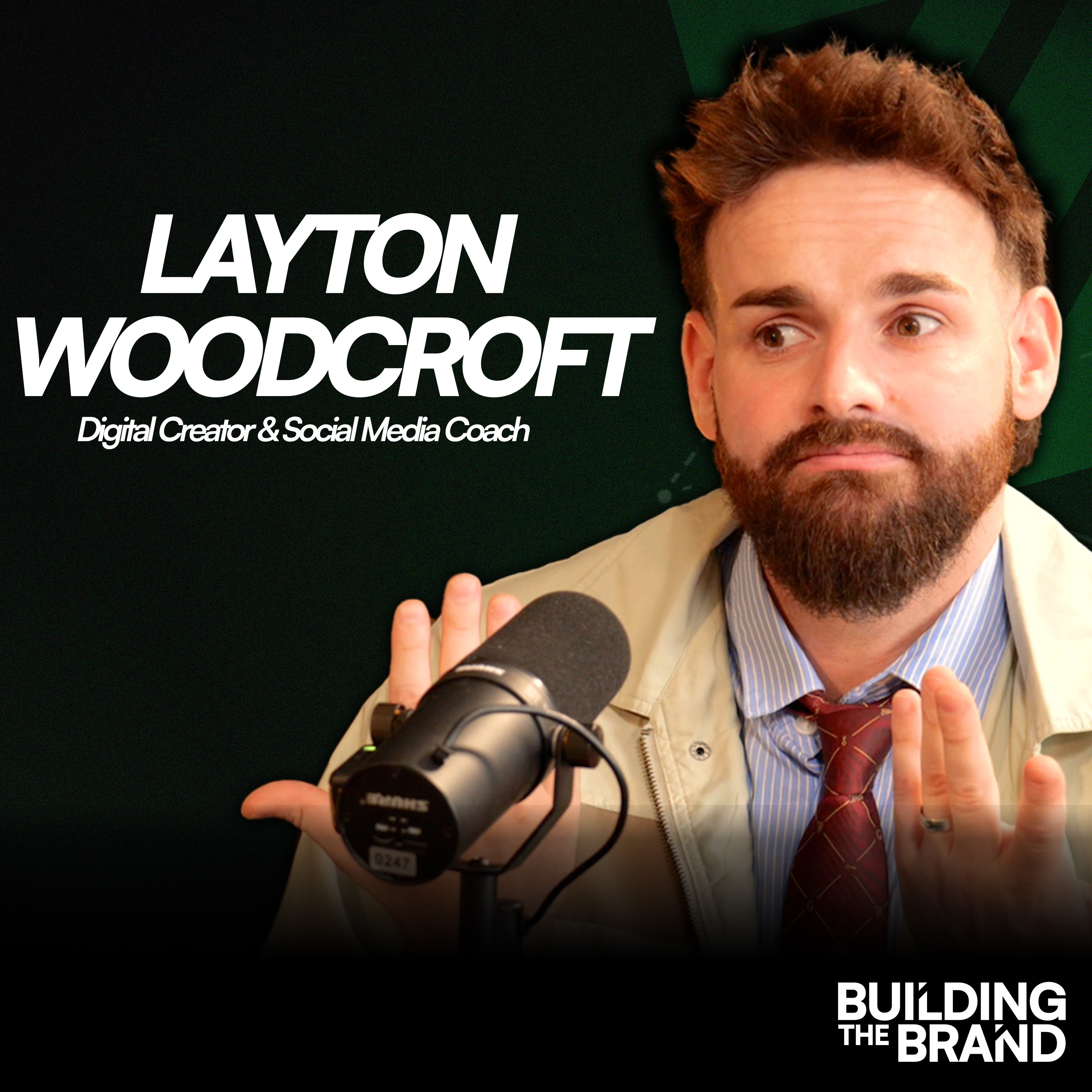
How to build a personal brand on Instagram/short-form video using daily content, learning-by-doing, and focusing on conversions and audience fit over raw views.
Guest (Layton Woodcroft / Layton Video) background: Started as an electrician in the UK (sparky), then traveled for months documenting the trip with cameras. During COVID he paused, later returned to videography via product/business videos. Went full-time around Jan 2022, then posted daily for 400 days. Built an educational brand: online course “Confident Content,” workshops, and later brand deals/advocacy (Sony; also mentions DJI and Adobe). Has ~250k Instagram followers (as referenced by host).
Written by AI. May contain mistakes.
Learn about the consistency and mindset behind creating content daily.
“Most of the day was like a new idea as well, which is so stupid.”
Understand the importance of audience engagement and spontaneity in content.
“But before we get into the main content, please, please, please do me a favour.”
Explore how psychological factors play a role in content creation and planning.
“Leighton, what are people getting most wrong about their video content in 2026 in your opinion?”
Discover how to define success beyond just views and focus on meaningful engagement.
“Because if you imagine you batch your content, you know, like a heartbreak monologue, it goes, bleep.”
Hear Layton's inspiring backstory and transition into a career in videography.
“So tell us how you actually got started in this, because you told us on the, me and you had a chat on the way from the tube to here.”
Learn about the moment Layton decided to return to videography after a break.
“plastic and you just like tying it and just i'll just get it done tosh it up it was very much like I didn't like that.”
Discover how Layton built his portfolio by creating free videos for local businesses.
“And I'm like, you know, I can't really defend it.”
Explore Layton's commitment to creating content every day for over a year.
“So I had no kind of inkling that I would do an online course.”
Layton shares how audience demand led him to create an online course.
“And then they were like - I needed you and now you need me.”
Discuss the challenges of confidence in creating and sharing content publicly.
“I've worked with massive brands and organisations that I've worked with, like one man, one woman bands who are just starting out.”
Understanding the value of persistence and growth in content creation.
“Also as well, I think people underestimated with that is in that 243 days when people found out about me, they saw I posted that many days in a row with nothing.”
Explore the shift from being a service provider to creating personal content.
“But I think that most people don't ever get started with the tactics and the strategies that Leighton's talking about because of fear.”
Learn how organizations are increasingly producing content in-house with less reliance on videographers.
“They just have more control, which I think they like, and they can get way more videos out.”
Explore how the speaker transitioned from videography to a focus on content creation and brand deals.
“Was it that you enough people landed on the landing page?”
Understanding the importance of patience in building an audience and monetizing content.
“So, you know, where people are like, yeah, yeah, yeah.”
Key insights on how to approach brand deals, pricing, and learning through experience.
“I've got to firebomb this thing, so I'm all in.”
Discover how the speaker's approach to content creation has evolved over time due to market demand.
“Was there, you mentioned the Sony deal that came for you, like, oh my God, that was the brand that I bought.”
Learn the importance of consistency in posting and building trust with your audience.
“Didn't know I was going to launch an online course because there wasn't demand for it at the time, but then there was.”
Examine the strategies of successful creators and the gaps in brand content creation.
“They've just bought Graze, the food brand, and they've just rebranded it.”
Explore how personal brands effectively engage audiences on social media.
“TikTok and Instagram then are like, oh, cool, this person's making good content.”
Learn how brands can leverage storytelling to connect with their audience.
“to like a, you know, like a generalized store, like a hardware store, what could a brand like that be doing content-wise that would engage an audience and doing it consistently so it builds brand, in your opinion?”
Understand the benefits of utilizing user-generated content for brand growth.
“Could you have that like emotional connection where people are like, oh yeah, I should do that.”
Discover strategies for negotiating successful brand deals and partnerships.
“Back in the day, it was sitting around a campfire with songs and stories and that's what we bought into.”
Delve into the practical aspects and considerations of collaborating with brands.
“If you'd like to get all of that, click the link that's in the show notes or the description and you can join our Building the Brand exclusive newsletter.”
Learn how to build your brand by choosing collaborations wisely.
“He basically started, I think, in a very similar situation, was making videos, got offered some free stuff.”
Discuss the effectiveness and future of talking head video content.
“Like he was talking to me about video content one minute ago.”
Understand the importance of credibility and experience in personal branding.
“A talking head video is as close as it gets to feeling like you're just having a conversation with somebody.”
Discover how to maintain authenticity while adapting to trends in content creation.
“So a lot of people holding a phone, I feel like you're FaceTiming.”
Explore how consuming too much similar content can dilute your own ideas.
“That is an extension of my body at this point.”
Learn how taking breaks from social media can enhance clarity and creativity.
“My best ideas come when I'm not on social media.”
Get practical tips on self-shooting and documenting daily activities effectively.
“But like I say, because what my plan was, I was going to listen to a podcast or, because I've got this big project I'm about to go start.”
Learn how to create compelling video content with effective shot variation.
“You're boiling the kettle for a coffee or a tea.”
Discover the impact of short-form content on audience attention and engagement.
“So for example, if I'm just doing shots of my day, that's probably going to do better.”
Understand how to balance entertaining and educational content to grow your audience.
“this is really super interesting so you're you're doing the sort of the stuff that works really well so the solo shot stuff.”
Explore key social media platforms for content creators and their unique advantages.
“People will look at my page now and be like, oh, okay, this guy.”
Evaluate the effectiveness of email marketing for conversions and audience engagement.
“TikTok seems to be like you're just always on the view page.”
Reflect on personal marketing experiences and the importance of data in decision-making.
“I think all salespeople are easy to sell to.”
Learn about the struggles and growth in networking for content creators.
“Where are you going to bump sell me or upsell me or side sell me?”
Understand the nuances within video content creation and its impact on branding.
“I just can't see that that works in this.”
Explore the importance of in-person workshops for content strategy learning.
“Same like social media used to be back in the day.”
Discover the value of taking action without a rigid long-term plan.
“What are you most looking forward to in the next 12 months?”
Find out where to connect with Layton Woodcroft for content assistance.
“As I get further into this, I might have to be a bit more clever and I have more of a plan in what I'm doing, but I have real faith in myself to just make it work.”

Get the gist, explore an idea or ask about something said.
 Claude
On Building The Brand with James Burtt, what are the key points of this episode?
Searching your listeningAutomatic transcript. May contain errors.
0:00James Burtt: I did 400 days in a row. Most of the day was like a new idea as well, which is so stupid. The confidence around content, I find, is something that really holds people back.
0:09Layton Woodcroft: And there'd be some days where I was really close to finishing. To be successful in anything, it really is just a case of like, how long can you hold your breath for? How long can you sit in that uncertainty? When people found out about me, they saw I posted that many days in a row.
0:21James Burtt: They're like, oh my god, this guy's posted 240 videos before this.
0:24Layton Woodcroft: Oh, this guy's posting regardless. I think what people are getting most wrong with their content is they want too much of a plan. You need to learn as you go. I think people need to trust themselves and trust the fact that you will make a video today. You will find something. It's about looking at anything in life, being like, that's a story. I still remember sitting in one of my classes and then somebody asked me, what university are you going to? And I said, I'm not going to uni. And they're like, why are you here then? I'm like, yeah, true.
0:47James Burtt: It can get really dark. Nothing's happening, but then it feels like this creator just posts anything and it f***ing works. Pops, yeah, yeah, yeah. But they built up that trust over time.
0:55Layton Woodcroft: Where I am now, this was not the plan at all. I did not think I'd be sitting here with you right now. The opportunities have just presented themselves. I don't really know what's coming. Does that excite you all? I love it. I have real faith in myself to make it work. And if it doesn't work out, I will find a other way to do it.
1:14James Burtt: So as you can see, we have got an amazing show lined up. But before we get into the main content, please, please, please do me a favour. I know I'm begging here, but all of the podcasters and YouTubers have to do it. Please subscribe if you're watching on YouTube. And if you're listening on Apple or Spotify, click the follow button at the top right hand corner of your app and it will mean that you'll never miss an episode of Boo and the Brand and you'll be massively helping us out as well. Let's get into it. Leighton, what are people getting most wrong about their video content in 2026 in your opinion?
1:42Layton Woodcroft: I think what people are getting most wrong with their content is they're trying, they want too much of a plan. They want too much of a plan and they're focusing way too much on the views. so a lot of people want to go into their content with 30 videos ready to go but the thing is you probably don't know what you're doing yet so let's say you make those 30 videos and you post three of them and they all flop and then you're like oh my god i've got 27 more of these to go yeah you need to learn as you go i think people need to trust themselves i made a video every single day and some days i'll be like i don't i don't know what i'm gonna make today but i would always find a way right because sometimes the most spontaneous ideas let's say like sometimes i would make a video about my dog's birthday.
2:23Layton Woodcroft: I'm like, right, that's the video today. I heard a lyric on a song and I'm like, that's it. I was making pancakes one day. I'm like, I'm going to make a video about me making pancakes. Like you're just, you're working that muscle. But you're doing it on the day. Yeah.
2:34James Burtt: So you're making it on the day, editing it on the day and publishing it on the day. I need to post a video today. I need to edit something and I need to post it. What have I got?
2:40Layton Woodcroft: And some days I'm just at home editing. I'm like, that's boring. What else am I doing? It's my dog's birthday. Cool. Let's do it. Let's show what I did in that day. And let me talk about the relationship between a man and his dog. What do you do for a dog's birthday? Basically what you would normally do, which make it a little bit more special. You might get him a special treat. You might take him, instead of like your normal walk, you take him down the beach. He doesn't know it's his birthday. He doesn't. It's mostly for you.
3:04James Burtt: Yeah, yeah, sure. I think a lot of people get that mixed up.
3:06Layton Woodcroft: They're like, oh, but he needs this because he's, you know, it's like, no, you enjoy a little bit of a burger. He doesn't need that. He's a dog. Yeah, yeah, yeah. He's fine. I think people try and like humanize that because I haven't got kids. So he's the closest I have to a baby. So I'm like, cool, this is your birthday.
3:19James Burtt: I'm going to make this special for you. But I think it's really important what you're saying there. So you're not, even though you're a video expert, you are not even in the sort of the understanding of content and the psychology of content that you've already got. You're not doing 30 videos and posting for the month. You are still batching maybe a bit further out now. But to start with, you are doing, I'm going to post something today and maybe you get two or three out of push ahead of time. But you're not trying to do a series of content. Because like I say, if you do three videos and you go, actually, this is really shit.
3:49James Burtt: I don't really like this. It's a bit boring. You've still got another 27 videos you've got to post or redo that work. It's about trusting yourself and also building up the muscle of consistency.
3:58Layton Woodcroft: Because if you imagine you batch your content, you know, like a heartbreak monologue, it goes, bleep. Yeah. If you don't do anything and then you do one day a month where you do all your videos, it just looks like that. You're not really making any progress. You're just batching it. You're not making it part of your life. Whereas if you make a video every single day. Instead of this, it looks like this. And you can imagine underneath all of this going up, you've got such a huge foundation here and you've built that consistency. I remember when I made, I think it was like day 40, I posted every single day.
4:28Layton Woodcroft: Day 39, I managed to make two videos in one day. First time I'd done it.
4:31James Burtt: And I was like, cool. Smashed it. I get to have one content. I get to have a day off tomorrow.
4:36Layton Woodcroft: Fantastic. And then I remember sitting there, right, day off. And then my brain was like, why are we not making a video? What are we doing? yeah it was giving me ideas and like it was like come on let's do this and then i knew right i've built that muscle of consistency took me like a month from then more outlandish videos or more ambitious videos they didn't seem as hard to do because you can think like the best video you're ever going to make and you're like oh that'll take me ages oh i don't know what to do but once you build that consistency it kind of frees up your brain because now you know what shots to get you know you know how you talk on camera what kind of style you like whereas you might be like i want to make this style of content.
5:13Layton Woodcroft: You do 30 of them. You're like, I hated that. Imagine if you were like, right, I'm going to start my podcast and you did 30 episodes in like a week. You'd be like, I don't want to do this. You've got to build up to it. You've got to like start and trust yourself and trust the fact that you will make a video today. You will find something. It's about looking at anything in life, being like, that's a story. Making pancakes, pretty boring, but I reckon I can make that quite interesting if I edit it this way. And I, you know, it's about trusting yourself to be able to make that video instead of just having all these plans ready to go.
5:44Layton Woodcroft: And then the other thing is the views as well. People are so obsessed with the views. And I think that's why mostly people stop when they do. They don't really know how far away they are from success. But I think a lot of people don't take into account the niche that they're trying to target. So I always use this example of like, if you show me a burger, that is a universal thing. Everybody knows what a burger looks like, what it tastes like. And if it looks just right, people are like oh i like i love that i'm going to share it to my friends like it's a universal yeah everyone understands it it's the same with puppies we are designed to look at a baby animal any kind of animal whether it's a squirrel or a dog or a baby elephant we're like oh my god that's so cute like we're just yeah designed to that like that is just a universal concept that everyone understands but if you're i don't know a baker in shepherd's bush and you're selling cakes it's a very small audience.
6:36Layton Woodcroft: Yeah, yeah, true. How many people want to have a sweet treat? A lot of people are on diets or they might be vegan. You know me? All these things are like... And they're not in Shepherd's Bush. How many people are in Shepherd's Bush?
6:45James Burtt: How many people can afford that? You've got such a small audience.
6:49Layton Woodcroft: So if you made a video about your cakes in Shepherd's Bush at your bakery and it got 5 ,000 views, imagine if 300 of those people came to your shop that day. You'd rake it in and you'd be like, that's a success. It's about defining what the success is. A lot of people can get loads of views and not convert into anything my videos of me doing six shots in 60 seconds where i run around like a lunatic it's cool it's entertaining but i've never had like a client come
7:13James Burtt: through that no it's not going to convert is it it's going to get you eyeballs and attention yes but it's not going to get you conversions like you're top of funnel stuff like you need
7:20Layton Woodcroft: that awareness for people to get to your page to understand who you are yeah and what you do but obviously as you go further down you need to like nurture those people give them value and then that's when they convert whereas people are thinking like oh this only got that many views It's like failure, but is it? Because some of my lowest performing content is the stuff that's got me paid. Most of the opportunities and the payments that I've got. So yeah, I think what people are doing wrong is planning too far ahead, not giving themselves the chance to kind of learn and trust themselves and also just focusing too much on the views.
7:49James Burtt: I think we're going to get a lot out of this conversation already, which is great. But before we go into more of the tactical stuff around video and brand building, utilizing content, which I want to definitely dive into, can you just give us a bit of sort of the origin story of you because i think people could be watching this and they can go into your instagram photo and go well he's got you know best part of a quarter of a million people that follow him and he's a he's a sony advocate he's an affiliate he's doing all these brand deals he's traveling around the world now making his craft and it could be i guess for somebody who doesn't know your backstory if they are not at that place in their journey it could be quite intimidating go well he's always been a videographer not the case No.
8:27James Burtt: So tell us how you actually got started in this, because you told us on the, me and you had a chat on the way from the tube to here. I'm like, no way. I had no idea, but I think this is so valuable and potentially inspiring for people that are looking to do something similar to what you've done. So when I left school,
8:43Layton Woodcroft: I had no idea what I wanted to do. I went to college and did A-levels because my mates were doing it, essentially. I remember, I still remember sitting in one of my classes and then somebody asked me, what university are you going to? And I said, I'm not going to uni. Like, what? And they're like, why are you here then? I'm like, yeah true i see why am i here great question went back and told my mom and my mom was like now you've started it so you're going to finish which at the time i was very frustrated with but looking back is actually quite a good lesson no matter what skills no matter what you do yeah you're gonna finish it a levels of two years after one year i failed every single one i was like i can't really carry on now mom they won't let me she's like okay cool so then my dad was like you need to get a trade son classic working class dad go get a trade so yeah whatever happens you can fall back on that I was like, cool, sweet.
9:25Layton Woodcroft: I'll go do that. Did my apprenticeship, became qualified, moved to Manchester. Really enjoyed it. Really enjoyed that job. I'm not going to sit here. You were a sparky. Yeah. So I was a sparky. Sorry, I didn't even say that, did I? I was an electrician just to keep people up. Yeah. And I did that for so many years and I really loved it. I just got real like camaraderie and banter and just, I really felt like I was part of something and I would, it was a very kind of, you would do something and there would be like the final product. Yeah.
9:51James Burtt: I think is where I kind of got like this whole video thing from. Yeah. I can make a video
9:54Layton Woodcroft: today edit it post it tonight i'm like wow i really did something today yeah it's pretty much the same with being an electrician but then met my wife in new zealand she moved over to manchester with me we lived in this like really stingy moldy flat in stockport like it was looking back the dream oh so did that dream come from new zealand it was good yeah i she didn't know what she'd done
10:15James Burtt: she's like oh my god we're going to somewhere really glamorous called stockport just don't
10:20Layton Woodcroft: Google it. Don't Google it. Ignore the reviews. Ignore the Reddit posts. It's a beautiful place. Beautiful place. But that was great because it was like our first place and the first bit of freedom. It was great. And then we decided that we wanted to go traveling, travel the world. And obviously when you're researching places to go, let's say you want to go to Thailand,
10:38James Burtt: top things to do in Thailand. There's all these influencers and travel YouTubers who are making
10:42Layton Woodcroft: these videos and you become familiar with these people. And then we were kind of like, we should do this. Not to be famous or anything like that, but we should really document this because we saved for so long to go on this trip. So long. And it was just like, ever since we met, it was like our main goal. The thing you were going to do together. We want to go and travel the world. Not for like two weeks, a month. Let's go for like eight months. Let's really do it. And then from there, like we, yeah, really dived into like cameras and gear and stuff like that.
11:08James Burtt: So you've never done this before? You had no interest in it? No.
11:11Layton Woodcroft: So our first like look into it, when we were in Manchester, my missus had a burger page called Little Miss Burger Buns.
11:18James Burtt: we would go and review burgers right started on an iphone it was back when instagram really was
11:23Layton Woodcroft: just photos yeah big long captions and people would actually read them yeah mental and then eventually we you know got invited to like some restaurants and try menus and like it was really cool so and then my wife was like right i want to up the quality here i'm going to get a camera and again nothing was clicking in me here i was just like yeah cool get a camera i have no interest in that cool do your thing and then she went to a one-day photography uh like a class at jessup's in Manchester. Okay. And she came back and she was like, right, I've learned all these things. And we went to the bridge in Stockport that goes over the M60.
11:53James Burtt: Yeah.
11:53Layton Woodcroft: And she was doing like a long exposure photo. So you know like when you'll see like a photo of like a motorway but all the lights are streaking. It's that. She was trying to show me that. So she showed me about like ISO and exposure and aperture. All these things. Still at the time I was like, that's great darling. That's really amazing. It's lovely. I don't care. I just didn't. Watch how nice the burgers are going to look for the long exposure. It was great. That was our first look into social media, I guess. And then, yeah, then we went traveling and I kind of made a few videos before I went.
12:20Layton Woodcroft: We went to the Lake District and we filmed that and just made a little vlog. Terrible video, but it was one of our first ones. And I remember when we actually went traveling then and we started in Thailand and we went so many places. Went to Malaysia, Singapore, Philippines, Japan, South Korea, China, India, Vietnam. Oh, you did it. You did it. All these amazing places. It was honestly like the dream trip but what i was doing in that time as i was planning filming editing a video every single day and i didn't have the burden of like a job i was just like putting all this time into it so i got
12:52James Burtt: really good at it really quick and i really did like fall in love with it i was like i i this
12:57Layton Woodcroft: lights something in me this is amazing i want to do this but then coming back to the uk this was around the time like covid started as well so i was kind of like right put it on the back burner
13:06James Burtt: yeah it's good while it lasted let's i'm gonna have to go be a sparky yeah because it's on the
13:11Layton Woodcroft: short skills list things like that and i was like okay cool i'll go and do that moved over to new zealand really didn't i enjoyed new zealand but i really didn't enjoy the work there was just things that kind of out of my control and i think out of control of new zealand really it just didn't quite just didn't quite happen so i was like you missed the camaraderie so you really
13:28James Burtt: liked the actual work of being a sparky in the uk but then over there just that vibe was missing or
13:35Layton Woodcroft: well there's little things like this is quite this is real boring for people watching but like it'll give you context in the uk there are things like metal conduit and metal tray right that you can take your time on and it can look yeah here we go real inside here and it can like you can really like i was really um proud of my work making something look nice and neat and all that but obviously when you're in new zealand just shipping things over is so expensive yeah of course so all of a sudden you've gone from like making everything look amazing and now everything's plastic and you just like tying it and just i'll just get it done tosh it up it was very much like I didn't like that.
14:05Layton Woodcroft: It still works.
14:06James Burtt: It was still great. It was still a job.
14:07Layton Woodcroft: Yeah. But that part I really loved about the job had kind of gone. And then like the banter, the camaraderie. I don't think this is anybody's fault. I just think when I got there, there was a real gap in humor, language, expressing yourself. Like it just didn't quite happen. And for that reason, I kind of got to a point where I was like, right, I'm going to pick up a camera again. I'm going to make this work. Had you put the camera down? We sold all our gear. Really? After traveling. We sold a camera, a couple of lenses, drone, tripod. Looking back, I'm like, I could have really done with that when I started back again.
14:40James Burtt: So what was it? It was almost like you almost segmented it off as like that was part of the traveling experience. Now we're back. Now we're going back to real life. We get rid of all of that. We've had our life affirming sort of trip of a lifetime. And now we get back to real life. Yeah. My brain was just like, well, that's done.
14:56Layton Woodcroft: Wow. I'm like, okay, cool. Not one part of me was like, you could go and do this.
14:59James Burtt: Or just for a hobby or just because you enjoy it so much.
15:02Layton Woodcroft: really i was just like right i'm going to new zealand also we're thinking of like money as well fine we could have to get a couple of gram for that okay okay makes sense so yeah and then i got to a point where i was like right i'm gonna pick up a camera again i was in a lucky position where i knew enough people who had businesses approached them said hey can i make a free video i did some product videos i did like an activewear brand a dog walking um business all these different things made like a little portfolio started posting stuff on social media and then i think it was January 2022 that I decided to do it.
15:33Layton Woodcroft: And then by that following January, I handed my notes in and I went full time. And then from then that kind of like gave me a little bit of freedom because I didn't want to post too much of myself while I was working as a Sparky because obviously it's like a conflict of interest. And I'd be like, what the hell is this? And I'm like, you know, I can't really defend it. So once I went full time, I was like, right, I'm going to start posting every single day. I think it was like probably, I don't know, four or five months after as I write, I'm going to start posting every single day because I've got some clients, but I haven't got enough.
16:01Layton Woodcroft: I need to get this off the ground. So I started making your own content
16:05James Burtt: to get leads as well. Yeah, that is where it started from.
16:09Layton Woodcroft: Where I am now, this was not the plan at all. I did not think I'd be sitting here with you right now. I just thought, right, I'm going to start posting. I'm going to get more clients. And the only way that I can do that is through social media. If I post every single day and people will see it, I'll get videos of my dog's birthday but also shoots that i'm doing maybe the gear that i'm using whatever it is um and and yeah i did 400 days in a row like every single day um and it was most of the day it was like a new idea as well which is so stupid looking back like i know how to make my content work for me a little bit more now but at the time i was like right has to be a fresh idea has to be this has to be that and there'd be you know some days where i was like really close to like really close to finishing right i'd be like in my car because i would do my voiceovers in my car because
16:50James Burtt: the audio is quite good.
16:51Layton Woodcroft: I'd be in my car doing a voiceover for a video I've done that day at like half 10 at night. And I'd try and get it posted for like 11, go to bed and then do it again. But through that time, because obviously at the time I didn't know what I was doing. When I first started, I was just putting these videos up and I was very like, look, I'm just trying to get clients. But obviously as you get further along into it, people start to notice and ask questions. I've only ever done things that have come from a proof of demand. So I had no kind of inkling that I would do an online course. But then people were like, how are you being so consistent?
17:19Layton Woodcroft: how are you doing this how did you get that shot and i'm like oh there's actual demand for this okay so then i planned for day 365 went to new york for the first time with my wife had an amazing time but i also launched my online course which was called confident content basically taking people through the whole process of me like how i thought of the idea how i scripted it go out and film it and edit it all in like real time so people really understood like okay what i was doing yeah um that was a huge success and that really opened my eyes to like oh okay we could really do something here there's a demand for it i think i have a a good skill of being able to take something that's quite complex and make it seem quite simple i think people when they talk to me they're like
17:58James Burtt: oh yeah of course like yeah you made that sound so real simple like for example if i'm doing like
18:03Layton Woodcroft: a day in the life video i say to people if you want a video to be 45 seconds you would need 15 clips that are three seconds long to make a day in the life video it's pretty doable yeah 15 clips if I told you to get 15 clips today. But yeah, I could do that. So I learned that there was like a demand for that kind of thing. And then I started doing more workshops. I started getting more brand deals. Sony got in touch. I started working with people like DJI, Adobe, all these brands that I was just like, I can't believe this. Like when Sony came knocking, I was like, this is literally the brand that I was like, this is it.
18:36Layton Woodcroft: The one. I've always used Sony cameras. Yeah. I'm obsessed with them. Yeah. And then they were like -
18:40James Burtt: I needed you and now you need me. Yeah. The power shift is real.
18:44Layton Woodcroft: Do you want to be an advocate? And I'm like, fuck yeah, I do.
18:47James Burtt: You're an advocate of it anyway.
18:49Layton Woodcroft: Yeah. And then here, like brands like DJI, like we, when we were traveling, we had a Sony camera and we had a DJI drone. And I'm like, what a fucking crazy full circle moment. That's so cool. But yeah, it took, yeah, 400 days.
19:03James Burtt: I think what's really interesting for people as well is the simplicity part of it, but also the thing that keeps coming up. and the thing that I've seen over the years, I've worked with massive brands and organisations that I've worked with, like one man, one woman bands who are just starting out. And whether it's the CEO of, I don't know, Ted Baker is a brand that we've worked with, or it's the CEO of like a person's first day of being self-employed, the confidence around content, I find is something that really holds people back. Have you found that to be the case as well? And what is it about the content process that gives them that lack of confidence?
19:43Is it just the lack of self-confidence in themselves
19:46James Burtt: appearing on a screen, or is it because they think too far into it, or they don't know the strategy behind it? I think it's mostly down to people's ability
19:55Layton Woodcroft: to just be uncomfortable and be uncertain. Because when you start on this content thing,
19:59James Burtt: there's so many days where nothing's going to happen.
20:01Layton Woodcroft: Yeah, yeah, yeah. There's so many videos you're going to go out there at first and you're not going to realise, but the mic wasn't plugged in, or you filmed it at a weird frame rate, or your phone wasn't even recording.
20:10James Burtt: I've had times where I've driven out to a location.
20:13Layton Woodcroft: I get there and I'm like, I've left my memory card at home. Oh, no. There's all these mistakes that you make at the beginning, which you quickly learn. You get over these things. But I think it's just, yeah, I think to be successful in anything, it really is just a case of how long can you hold your breath for? How long can you sit in that uncertainty? Because every single day I would post a video. I remember I didn't get a video on TikTok over 1 ,000 views for 243 days. 243 days of just like posting and nothing happening yeah nothing happening but every single day i'd say to my wife i'm like i think this is the one because i'd show her all my videos this is the one and 242 times i was completely wrong like nothing happened i think it's yeah just that people don't want to be bad at things yeah that's true and i think as well with content it's such a public thing like you could learn a skill you could learn how to dance and nobody would see how you learn how to dance you just turn up and like wow you can really dance wow because you don't have to document it when you're making content every single piece of work you put up is out there for everyone to see if they want to see it so yeah i think it's just the uncertainty not wanting to be bad at things but i tell people all the time like you are literally a month or two away and they really are aren't they just committing to yourself trusting yourself and just being like you know what i've got this i'm gonna do this because if you make that many videos and you learn from every single one you're gonna be a hell of a lot better by the end of You're going to be so much better talking on camera.
21:39Layton Woodcroft: I remember I used to hate looking at myself on camera. I used to hate how I spoke. Looking back at my old videos now, I hate them. Really? I hate them. I'm like, no wonder no one followed me. These are dog water. These are terrible. Knowing what I know now. But there's, yeah, it's just that uncertainty.
21:54James Burtt: You're just uncomfortable all the time. You can't get to where you are now without going through the uncertainty, can you? You had to do the first crap 200 videos to get to 201 being, oh, that's actually all right, to get to 243 and it pops on TikTok.
22:07Layton Woodcroft: Also as well, I think people underestimated with that is in that 243 days when people found out about me, they saw I posted that many days in a row with nothing. They're like, oh my God,
22:17James Burtt: this guy's been, this guy's posted 242 videos before this.
22:20Layton Woodcroft: Hang on. And then like my first video that I did is actually on quite a few views now because people are like, how did this start? You know, but I think with that, you build like a trust with the audience. Yeah.
22:30James Burtt: Because they're like, oh, this guy's posting regardless. He really wants this.
22:33Layton Woodcroft: He's really about that life. Whereas a lot of people, if you just post and it doesn't do well and you go away, or you only come back and do like the trends or you copy a viral format, like there's no connection there. There's no connection at all. But yeah, people are literally like a couple of months away. You really are just a couple of months away from just like that embarrassment. And the good thing is when you start, no one's watching the videos anyway.
22:52James Burtt: Yeah. It doesn't actually matter, does it? It's kind of like a free roll of the dice. You're just like, right, that's a throw
22:56Layton Woodcroft: at the dartboard or I don't know, a lottery ticket, however you want to kind of spin it. but you are literally just a couple of months away from completely changing everything right
23:04James Burtt: let's pause there my friends and excuse the casual attire i'm on my holly box i've taken a break from the pool to record this little message because i wanted to take the time to make sure we've understood what layton's talking about here look the underpinning of all this stuff psychologically you know logically even it makes a lot of sense you know document what you're doing put a camera up show people what you're doing and get people to buy into you because fundamentally people buy from people and they will not buy from you until they buy into you. But I think that most people don't ever get started with the tactics and the strategies that Leighton's talking about because of fear.
23:40James Burtt: That's the underpinning thing to all of this stuff is fundamentally based around fear, which is a sad thing. Because if you think about it on a day-to-day basis, the stuff that you get up to, and this is the psychology that you've got to get yourself into the mindset of, especially if you're building personal brand. If you're building a company brand or corporate organization, it's slightly different. But especially for personal brand, you need to get into the mindset and the mentality of documenting what it is that you do on a day-to-day basis. Again, to get people to buy into you. Now, what you do on a day-to-day basis might be really mundane, might feel really boring.
24:11James Burtt: But to those people who don't understand that, I would love to be in a position that you've got. I would love to have your level of knowledge. Obviously, the stuff that you do on the day-to-day that you don't even think about, that subconscious activity, is super powerful. Like Leighton, for example, is just putting a camera down, walking around, and he's going about his day-to-day business. He's testing out food. He's walking around London. He's seeing sites. He's teaching people about how to utilize cameras. That stuff is second nature to him. He's learned that. Likewise, with the stuff that I do around branding and podcasting, I've just been doing it for so long that I forget the amount of stuff that I know.
24:41James Burtt: And you'll be exactly the same watching this video. There'll be so much stuff that you fundamentally know that is the value of your knowledge that you could document on a day-to-day basis. Why do you do the things you do? How do you do the things you do? Who are you doing the things you do for. Now, obviously, if you're in a sort of a sector or a space where you need to have a little bit of secrecy, you know, we talked about it last week, for example, with Guy Phoenix, he's a perfect example. There'll be elements of the stuff that he can do that he's doing, so he won't be allowed to talk about because of privacy and because of security.
25:11James Burtt: But fundamentally, again, shift back to the Guy episode from last week, documenting what he does on a day-to-day basis, how he's doing the building on a consistent daily basis is what's built up the brand he's got and fundamentally brought people into him. So make sure you understand that what's holding you back most likely from any of the stuff that Leighton's going to talk about in this episode is the fear to get over just getting started.
25:34Layton Woodcroft: So please, I beg you, just get started. Now, let's get back to it.
25:37James Burtt: What was the biggest shift? Because obviously at one point you were sort of a standard videographer service provider. So you were doing, you know, make the food in the restaurant and I'll take the nice videos of it and all that kind of stuff. And then at some point you shift to doing your own content and that's the thing that makes you the money. You almost go from being a service provider to being your own service provider. You have to make the services as well as making the content then. What was that shift like? Because you've gone from being a Sparky to going, I don't like this as much as I used to like it.
26:07James Burtt: I'm going to try and do service provision. Then you do the service provider thing. and then the sort of, I guess, the reward financially and emotionally of making the content for a client is not as valuable as your time making content for yourself. But then there's that awkward shift of like, well, now I've got to make a course. I've got to have something to sell. What was that shift like of going from service provider to content creator?
26:29Layton Woodcroft: Yeah. Well, I think compared to when I first started, first started making videos compared
26:33James Burtt: to now, a lot more people are doing things themselves, a lot more stuff in-house, a lot
26:39Layton Woodcroft: more stuff with an iPhone because now iPhones are better than ever. So more people can make content than ever. So it doesn't really make sense for a lot of businesses to bring in a videographer who can maybe make, I don't know, six videos in a half day shoot for you, pay a lot of money because they've got all the best equipment and stuff like that. Or you could do it yourself, have an intern in-house. Obviously they need training. Who do they come to? They come to someone like me because I can tell them how to do that. So I don't think I kind of saw it come in, but I think I got a little bit lucky in the fact that now more than ever, more people are trying to make their own content.
27:14Layton Woodcroft: More brand owners are willing to be the face of something. They're more willing to hire an intern to make the content. So I just saw a bit of a gap in the market where I'm like, well, I can teach people. And that's actually way, like, you know, say if I was doing like a workshop, I just have to turn up with a HDMI cable on my laptop. If I was in London now doing videography shoots, having all my equipment on the tube, oh my God, that'd be a nightmare.
27:39James Burtt: Yeah. And people like hire stuff.
27:40Layton Woodcroft: Like it's so much going on.
27:42James Burtt: Yeah.
27:43Layton Woodcroft: But with that, I was like, that would actually be a really good use of my time, especially with like corporate gigs. People pay a good amount of money to train staff up to a good level. Cause then you have more, the business, they have more control over what goes out. They can see like more of a return on the investment. They just have more control, which I think they like, and they can get way more videos out.
28:05James Burtt: Yeah.
28:05Layton Woodcroft: So if you have an intern doing, I don't know, five pieces of content for you a day and you're not paying the same amount as a videographer that volume just goes up and obviously they get better with that i've done um i've done workshops for like auckland council where they had like auckland zoo and travel auckland uh the auckland stadiums they had all these like auckland art gallery all these people who were just making content on their phone so even even auckland council all this money they have they're not hiring videographers to come in yeah they're getting their staff to do it because they have more control they can get more volume and obviously they're just they're getting better and consumer technology is the best it's ever been you could pick up a camera put it on auto and you can call yourself a photographer the photo will be pretty good yeah you could pick up an iphone film a video and like it will look pretty good like i just think now more than ever the gaps people is way more they can also see the benefit of it whereas before when i first started trying to convince people convince people like this is good for you like there's brand awareness and there's a story and like this this is going to get you more customers people are always late to the party and now a few people have done it and they're like you need to be posting every single day you need to get an in-house team more people are jumping on that so instead of me being a videographer like oh nobody wants me to shoot because they're all doing it in-house I can be like hey I can teach your intern exactly how to do this so that's the yeah that's that was like the transition really but I still do a little bit of everything I still have my videography clients I still have workshops that I do okay right yeah so it's gone from like me just being a videographer to doing a little bit of that i do workshops brand deals udc yeah i do online courses all these different ways of like making money you said earlier that you sort of um
29:44James Burtt: you'll provide a supply that you know already exists so with that in that regard there do you how many sort of like brand deals or how many how many things for yourself did you see down the road you're like oh there's enough of a proof of concept there for you to dive into it or was it that you put something up on stand store and you sold five on day one you're like oh that's enough of a a signal to dive into it in more detail um i think yeah definitely releasing my
30:14Layton Woodcroft: course after a year that that's another thing i think as well i think a lot of people really are very impatient with making the money i went a whole year and i didn't give it i gave it all for free all this value everything i was doing people really saw the journey so when it came to actually doing it i think it did a lot better it was after a year it was everything that i'd done and it did really well but i think i'm trying to think what what it would have been
30:46that was that was the real eye-opener um and what and what was the eye was it the conversions
30:52James Burtt: were enough? Was it that you enough people landed on the landing page? You had enough sort of like positive social proof from it? What was the metric of you like? Oh, that's I can actually shift from 100 % videography or 90 % videography and 1 % content creator to, you know, like 80 % content creator and 20 % videography. I think the first little signal that it could do well was I started building my email list. So, you know, where people are like, yeah, yeah, yeah.
31:16Layton Woodcroft: So I gave a free shot list guide different shots you could get for your videos. And I did a free scripting template so people could download that, get it on the phone and they could type. So when they come to film, they're like, I know exactly what I need to get, what, all that sort of stuff. So I did a few videos on that and I built up my email list quite a lot. I remember when I first did my first one, I was like, no one's going to comment on it. I didn't have anything like auto DM, like a mini chat or anything like that. And I remember I had like thousands of comments and I went through each one.
31:46Layton Woodcroft: I went through that much that TikTok would be like, you've commented too much today. You can't. Oh, really? Instagram would be like, you've commented too much. So I'd have to wait. But then obviously when I come back to it, there'd be just as many there. It took me days to get through those. But that was a really good indicator of like, okay, this could work. And then obviously on launch day, when I was still in New York, I was really scared of what would happen. But then like it just, it started to come in. Because also anybody who signed up on that wait list, they got a little discount for it as well.
32:12Layton Woodcroft: so that's like the first few through the door and that still sells today i did that like over a year ago and i'll still get maybe like i don't know one or two a day or four in a week like it just keeps yeah trickling in you know and then i think from that brand deal started coming in i didn't really know how to price them to begin with to be honest they were just like you know this much and i'm like yeah i guess but obviously you're doing more and more yeah you get used like the negotiation of like i want this and they'll be like oh don't know but you'll kind of you'll find like the sweet spot yeah because sometimes you'll go this much and you think it's a lot and they'll go yeah sweet and you're like that went too early went too early i could have got a bit more out of that so i think i've really just i really just learned as i've gone it wasn't just a like right i'm stopping being a videographer i'm going to be a content creator now it was very much like okay my first brand deal how did that go okay cool i learned from that i'm gonna do that again and
33:09James Burtt: you're still doing the videography at the same time yes it's just over over time it's gone from
33:13Layton Woodcroft: like all videography yeah like it's that videography pie chart has just gotten a little bit
33:17James Burtt: yeah smaller that's all um but that's interesting and important for people to hear because i think sometimes you can watch what you're doing and go i'd love to do what he's doing i see all these cool shots he does this solo stuff which i love by the way around london he's doing like how he gets the shots himself and people don't believe that he's doing it like i can trust like it's here he's been doing it today already but oh i need to do that full time but actually no you want to do it full time but you don't need to do it full time no you can 100 have the security of the thing you're doing right now and allocate a percentage of your time take the netflix time that you would normally put in the evening to sitting down and watching shit tv not that netflix is shit but put that allocate that time into your own craft yes i think sometimes i've definitely been guilty with this before.
34:03James Burtt: I've got to firebomb this thing, so I'm all in. I'm going to burn the boats, blah, blah, blah. So actually, that's one way to operate, but it also puts you under immense pressure. It means that you probably pick up a crap brand deal for next to no money because you have to, because you've got to make it pay. But actually, if you take a little bit more time and you can step yourself out of it, as you incrementally raise your money in one sense, you can drop the money on the other sense and you get to a, I don't want to say the word equilibrium because it's like a knob, but you do get to that kind of place where you go, okay, now I can allocate more of my resource into that thing from a place of stability and security and positivity.
34:40James Burtt: Was there, you mentioned the Sony deal that came for you, like, oh my God, that was the brand that I bought. You love it. You're an advocate for it anyway. Like you love it as a consumer. What was the, can you remember what the first brand deal was and what the organization was and what the deal was?
35:00Layton Woodcroft: i don't even know if this what no wasn't a brand deal but i remember the first thing i got sent for free which was a box of like cookies that a baker which was great at the time i was like free cookies yeah yeah um but i think first paid one i actually cannot remember i cannot remember but it wouldn't have been for a lot i would have just been like well you want to pay me to make a
35:22James Burtt: video yeah absolutely you know but obviously as you get further into it you you kind of know
35:27Layton Woodcroft: your worth yeah what you're actually giving also now i feel like more than ever brands are taking a video and they're putting like loads of money into it yeah it used to be like okay brand deal you get everything from from that fault uh from that account and they're following but now there's like things like usage rights and like whitelisting and like okay am i going to be the only person so say if it was a camera brand it's like okay is there a deal where i can't talk about any other cameras yeah it's exclusive okay cool uh are you gonna be pushing out ads yes okay cool that ups the price like these things i didn't know at the beginning i'd just be like what 500 new zealand dollars for a video sweet you know like 200 quid awesome i thought that was the best thing yeah but obviously as you get further into it you you learn these things so i think again it kind of goes back to when i was talking about people being impatient they're already looking at like the finished product yeah whereas when i started what the intention i started with to now is completely different yeah of course the opportunities have just presented themselves else it's kind of similar to when people kind of freak out and say ai is going to take over it might but it will be so gradual it's not like we're going to wake up tomorrow and they've cut the cord and like robots are on the tube it's not going to be like that it's gradual like it just it happens like you just trust it like it's not going to be so like okay i've started and now i'm a successful creator getting all these brand deals and doing workshops and like all these things everything i do now i did not really see coming i didn't know i was going to do educational content there was just demand for that.
36:48Layton Woodcroft: Didn't know I was going to launch an online course because there wasn't demand for it at the time, but then there was. And then you start to notice things like, okay, with social media now, people probably have less of a community than ever. They're looking online for that community. There's nothing outside. What can I do? I could put on events because people are looking for that community outside of social media. Cool. So I'll do that. All these things that you can't really prepare for, but the opportunity to present themselves. And they wouldn't have happened if you hadn't have just started and trusted yourself.
37:16Layton Woodcroft: from like 100 % posting for 400 days. That's a lot. I mean, knowing what I know now, I could do that a lot less time.
37:22James Burtt: Yeah. There's a willingness to do those steps though, isn't it? Without even having an outcome for it, I'm just going to post for the sake of doing the posting. Yes.
37:31Layton Woodcroft: Because that's reps and sets. Yeah. Because that's just what it comes from. It would be like the same as anything. It's like, if you know, could you run a marathon tomorrow? No. Okay. Could you do a 1K? Yeah, I could do that. After a month, could you do a 5K? Probably. Six months, you might be able to do a marathon. You don't know. You just need to be prepared to go on your first run and be shit and out of breath and knackered.
37:53James Burtt: You know?
37:54Layton Woodcroft: Yeah. You need to trust yourself. But in six months, you will get that.
37:56James Burtt: It's such a good analogy because you can't. I've done a marathon and you actually, and I could not have done a marathon day one. I couldn't have done a marathon month three. But you have to do the training. You follow the training plan. And it all comes down to reps and sets, time on the legs. Even if you can go faster when you're training, which is the maddest thing. like you shouldn't go faster because you literally need three hours of pounding your legs. Yeah. Because that's the bit you're getting, but no one wants to get the medal for the marathon and the foil blanket after and the adulation of social media going, you're amazing, well done.
38:27James Burtt: But actually it's those, the dark months, the cold months, especially if you're training for a marathon over like a period of time, you're training the winter in the UK, which is fucking horrible. Yes. But it's also amazing because that's what actually builds up the resistance and the resilience to do the thing which i think is what you're talking about here with the the other thing i think you mentioned it a minute ago i wanted to i wrote it down so i wanted to come back to it i don't think unless you do the consistency of the posting you can shortcut the trust building part of it and i think these days people like to document the process they like to see the process documented you're seeing a lot of big creators and maybe they've not come across your radar because you've been in new zealand but there's a guy called jamie lang and he was on a tv show and Now he's got a bunch of companies.
39:09James Burtt: He's got a podcast agency. They've just bought Graze, the food brand, and they've just rebranded it. And they've done content every day for 100 days. So I thought when you said about doing posts every day, I was like, oh, that's interesting. Yeah. Are you seeing people like that are doing it? Exactly. And even brands like that are doing it. So is there any good examples of brands that are doing like the consistent video stuff that you've seen? You're like, oh, you guys are actually smashing it in the way that builds trust, builds consistency, builds sort of brand affinity with an audience?
39:39Layton Woodcroft: No brands I can actually think of. But I think that's because I'm not... What I try to do myself as a creator is actually consume the least content that I can. One, because if you find someone when you've started and there's someone like... Let's say you just started and then you see someone like me who's doing what I do, you'd be like, oh, he's so much better than me.
39:58James Burtt: Yeah.
39:59Layton Woodcroft: Yeah, but I was also bad once. It'd be, I don't know, let's say you started a car company and then you see like a post from Ferrari you're like oh we don't make Ferraris like it just
40:08James Burtt: gets in your head um I think what I try and do is just like really focus on what I'm doing there's
40:14Layton Woodcroft: so many creators who are in my niche who I've just I've just blocked them because every time I see something from them it makes me feel some type of way really that I'm not comfortable with and I'm like this is their content's great I think they're amazing uh props to them it's just how it makes me you feel it's a me problem yeah so i think yeah you can great level of self-awareness that is you
40:33James Burtt: can get really it can get really dark yeah it's obviously you're doing this thing and like nothing's happening but then it feels like this creator just posts anything and it fucking works yeah
40:41Layton Woodcroft: but they built up that trust over time it's the same way that people would start a youtube channel yeah i'm gonna do what mr beast does wouldn't work one you probably wouldn't have the money for it yeah number two he has done so many videos he's built up that audience that trust like people watch his videos regardless because he's done all the work it's the same i don't know logan paul probably back in the day could post anything and it would bang yeah because they've just got all those reps and that time in people spend so much time with them that they feel like they know them and if you look at any kind of big creators like you know obviously know who gary v is yeah he's on like 10 000 posts obviously he has the team behind him but he would have started at some point just on his own yeah and then there's people like alex hormose i think he's got 4 ,000 posts or something like that.
41:28Layton Woodcroft: And he's got like 5 million. Yeah. He's got like, I don't know, 8 million or no, like 15 million. I'm always on. But essentially like there's a correlation between how many posts you have and how many photos.
41:40James Burtt: Yeah. Cause it's just a numbers game. Yeah.
41:42Layton Woodcroft: I also think that the platforms want you to be consistent as well. Cause if you make a banger of a video and then you disappear for four months, it's not beneficial to TikTok or Instagram to push. No, of course not. Cause you're not turning up. But if you keep turning up and people spend more time with you and it eventually does better. People spend more time on your videos and your content and they know who you are as a person. TikTok and Instagram then are like, oh, cool, this person's making good content. People are quite liking it and they keep turning up. So we know that if they keep turning up and they keep providing value and people enjoying this, they're going to spend more time on our app.
42:12Layton Woodcroft: Let's push it out. Yeah. That's kind of how it works. But in terms, sorry, going back to your question, in terms of like brands, like making it kind of work, I can't really think of any off the top of my head.
42:22James Burtt: Are there any that came to mind for you? no i think graze is probably the best example actually what jamie lang and his business partner did with graze but again what's really interesting now i think about it is not the graze content i've been following it's them talking about graze so where i see there's a big gap in the market at the moment which i'd love to get your take on is there's not in that sort of like daily consistent post show turn up and show what you're doing and documenting the process i think a lot of personal brands do it you know Gary V's gone back into daily vlogging like he's not a man who needs to do a daily vlog he's got enough leads coming in for the business but he wants to do it or he knows he needs to do it or whatever it may be yeah but actually I don't see brands doing it I see founders of brands dragging the brand along with them um and I think if you look at like someone like a uh you know like a Stephen Bartlett for example in terms of like content creation And Diver CEO has got a couple of million followers, I think, on Instagram.
43:18Layton Woodcroft: Yeah.
43:19James Burtt: Whereas he's got eight, nine, 10 million. And he can show the behind the scenes of the stuff better than Diver CEO can have. And he gets more likes and more views and more engagement. So I think it's an interesting thing. What could a brand, let's go to, let's look at something like really generic. Let's look at, going back to your sparky days, something like Screwfix or a Wix. to like a, you know, like a generalized store, like a hardware store, what could a brand like that be doing content-wise that would engage an audience and doing it consistently so it builds brand, in your opinion? Or can it not be done?
43:55James Burtt: Do you just have to show, hey, we've got these products and this is the price and when they're ready, they will buy it at that price?
44:01Layton Woodcroft: That is where a lot of brands go. They're like, here's our product. It's on sale. You can get this deal. Come and buy it. Yeah. Come and buy it. Boring. No one cares. They might think of you, but probably not. I think what's most important is not just the product, but it's what it gives that person. What's the lifestyle change that people will see in that product? So, for example, let's say you were selling plumbing tape. Yeah. So I tape up a pipe. Could you have a video where someone's at home, they're about to go out on a date, and then all of a sudden the taps are leaking?
44:32James Burtt: Yeah.
44:32Layton Woodcroft: It's Friday night, plumbers aren't available. Okay. And they have this tape and they tape it up and they save the day. Could you have that? Could there be a video where, I don't know, there is a power cut in your house? Do you have a product or a generator that could get people still enjoying their evening or their life? It's more like people want to see like, okay, how could that actually affect my life? It's not like Coke Zero. People aren't like, oh, I'm going to drink that because it's no sugar. People are like, I'm going to drink that because I could drink way more of that and not feel guilty about it.
45:05Layton Woodcroft: That's the actual lifestyle change. yeah so i think with someone like yeah screw fix they could probably do like actual kind of
45:11James Burtt: actual real life scenarios yeah where people are like oh my god if that happened to me yeah they
45:16Layton Woodcroft: sell that so when they do come to that like oh my god what am i going to do they'll think of screw fix yeah that builds brand way more than just like here's our screws come and buy them here's like these four by two pieces of wood like who cares yeah who cares but could you do like with these pieces of wood, you can make a treehouse for your kids.
45:36James Burtt: Yeah.
45:36Layton Woodcroft: Could you have that like emotional connection where people are like, oh yeah, I should do that. Or if I was like, you know, going out on a date and my pipes burst, I would be in shit. Oh, okay. That's the solution. You know, I think making it more of like an actual lifestyle thing.
45:49James Burtt: So it's still storytelling, isn't it? It's storytelling
45:51Layton Woodcroft: with an outcome focus. Always. Always. I think if you can't do storytelling, then you need to do social proof. People buy from people. This is the reason like if it's just a brand, like we wouldn't care. we wouldn't be talking about greys if jamie lang hadn't bought it yeah we just wouldn't that's just how it is people don't care about brands because brands are always trying to sell you something whereas a human you can relate to them you know you can get with them on an actual level and you feel like you know them it's like if you were to see a billboard and there's like a new juice on a on a billboard like on the tube as you're coming up the stairs okay cool but if i said to you you've seen that new juice honestly best thing i've ever had you would be like i'm gonna try one of those yeah because the humans told you that yeah instead of a brand just being like buy our thing whatever you don't remember it i mean you might but i think with storytelling and like social proof like if you can you know that's why street interviews did so well yeah what's the best thing for this and they'll say and okay cool i'm gonna like if i uh i've been looking for like places to go in london am i right i want to go here and film where's the best coffee in that area i watched the first video someone says that car that cafe i don't even i just call swipe lock
46:56James Burtt: my phone i'm going there don't yeah because the humans like this is really good
46:59Layton Woodcroft: cool, okay, I don't care if they've been paid to say that or they're getting something from it. You trust people way more than the brand.
47:07James Burtt: So on that point then, should brands be utilizing UGC content, so user-generated content for those who don't know what UGC is, should they be utilizing that more in 2026? Because we've always bought from humans and we've always spread and disseminated information via storytelling. Back in the day, it was sitting around a campfire with songs and stories and that's what we bought into. We still buy into stories now. So for brands like a Screwfix, for example, where it is not so naturally person-led, but should we be buying or should brands be buying into those UGC opportunities that they can empower people to tell the business's story?
47:46James Burtt: Absolutely.
47:47Layton Woodcroft: Absolutely. Especially if it was Screwfix, if you could send some product to a guy who wants, like again, wants to build a treehouse for his daughter and you show that process, there's so much more like story there. There's so much more like connection. Like so many people want to provide for their kids. Tap on that pain point. If you come to Screwfix, this is everything you need to make your kid a treehouse and we'll show you how to do it. Whatever it would be. It'd be the same if, I don't know, let's say someone's got a parent who has a really old spice rack that they made from scratch, but it's just tattered and old.
48:20Layton Woodcroft: What if they could make a new spice rack for the mom and gift it to them? Again, that's just off the top of my head, but there's that real connection and story there that people are like i love that i can put myself in that person's shoes yeah that's something i would want to do yeah wow screw fixer that's really good really yeah i'm gonna go to screw fix whenever i need something you know i think that's basically how it works and i think we usually see as well for creators a lot more brands are instead of going for like one creator they're looking at people who've got like one to ten thousand followers yeah like eight of them a spread of them yeah like at the moment i'm getting so many adverts for Timberland and their new boots.
48:56Layton Woodcroft: These small creators that were doing outfit videos with them. I keep getting them. It works, but I think that's the angle that people need to take with UDC. Don't just send someone a product and be like, oh, I'm going to review this. Whatever. Can you make a story out of it? Can there be that personal connection with people?
49:11James Burtt: If you're loving this conversation, please do us a favor by clicking the subscribe button if you haven't yet done so. Click the follow button if you're listening on Apple or Spotify at the top right-hand corner of your podcast. Plus, if you're loving the learnings and lessons from this episode, every single week as well as doing the video and the audio sort of things, we also do a handwritten blog and we do a breakdown of the key learnings and lessons as a blueprint that you can implement into your business as well. If you'd like to get all of that, click the link that's in the show notes or the description and you can join our Building the Brand exclusive newsletter.
49:42James Burtt: So obviously when people get into the logistical part of doing brand deals and stuff for anyone who might be a content creator or they're thinking this could be an addition to what they're already doing. Obviously, when you first get a deal comes through, like the guy sends you the box of cookies, you're just grateful you eat the box of cookies and you shout out the box of cookies. I've got to send a coffee machine at the weekend from somebody who's hopefully going to come on the podcast. It's just really nice. And it's actually delicious coffee as well. It's got an amazing story around it. They make coffee balls.
50:09James Burtt: Is this enough? It gets rid of the pods. Yeah, yeah. Hashtag ad. But in that instance, they've just sent me the thing and I'm grateful because they're going to come on the podcast. I'll use the thing, talk about the thing, and I'll rate the thing because it's actually really good. But obviously for people who want to get paid for their opinion and want to get paid for the reach that they've got, what do they need to do? So they get that first brand deal comes through or someone goes, hey, can we send you this thing? Obviously you take the first view and you make the content and all the rest of it.
50:37James Burtt: But at a certain point you're going to have to go, yeah, I'd love to work with you on this, but I want paying for it. What's the logistics of brokering that deal? Now, obviously, you're doing it with bigger brands now, but when you got started, for those who are in that sort of UGC space, even if they got paid$100 to do something that they would have used anyway, what should they be asking brands for? What's the questions that they should be going into with if they're negotiating, quote unquote, a contract?
51:04Layton Woodcroft: Well, I think at first you need to decide if it actually makes sense. So, if somebody sent me a camera accessory, makes sense. Yes. I use camera equipment. So first of all, making sure that it makes sense. Also saying no to a lot of free stuff. You will get stuff all the time. People, because they're trying their luck. These marketing people want to get the most amount of content for the least amount of money. Yeah, sure. So they'll lowball you all the time. Never believe them. They have the money. If they really want you, they'll pay it. So I think saying no to as much free stuff as you can, unless it's a brand you really want to work with.
51:39Layton Woodcroft: Let's say like you were mad about that certain coffee machine and they offered you a free coffee machine. great because i was going to buy one anyway yeah fantastic but i think when you're going into negotiations always start like a little bit higher because i literally had one this week where they were like we'll give you this much and i'm like i want this much and they're like okay this much okay and it just it gets closer and closer and closer meets her in the middle yeah yeah always go a little bit higher because you can always negotiate it down don't just be like it's kind of like when you put someone on facebook marketplace you want to sell it for a tenner you put 12 quid because when someone says you take a tenner you're like sweet that's what i it anyway.
52:08Layton Woodcroft: It's kind of like that. Also ask about usage rights. So normally when you make the video, especially if it's like a UGC thing where you post it on your page, but you also give them the video, they can then run ads on that and put all the money into it. And they're going to be making sales off of that. So obviously you can normally have this by the amount that they're spending on the ads or the length of time. Again, as you get further into it, you'll know what's acceptable, like what's normal. You have to take into account obviously like your following, your engagement like how how good is the actual video like if you took really took your time on it it's a really professional video that's that's worth it for that company it's really worth a lot of money to them there's also things like are you going to be only promoting like that coffee machine you gave me that coffee machine can i talk about costa coffee or nespresso and they're like no okay there's money that comes with that but yeah you just you figure out as you go i'm still figuring out there's still things i learn on every brand deal where i'm like i kind of
53:02James Burtt: fuck myself over there yeah or actually they got a bit more out of me there or actually i probably
53:06Layton Woodcroft: overcharged for that you learn as you go and like it's always changing as well like back in the day it was like do you want to make a video yeah cool sweet that's it done and now there's all these different like add-ons yeah also if you wanted to get a little bit more money you could offer like okay if there's i don't know uh again a coffee brand if there's three types of coffee you can i can make three videos for you if you want and i'll do it for this rate there's so there's so much it's not just like a set like this is a brand deal this is how much it is you can really throw in anything you want because obviously like there's the video then there's like do you want a carousel post from that because carousels are doing really well at the moment you could offer them that there's obviously stories cross posting across uh tiktok instagram youtube on all of these things make up make up what a deal is so in terms of negotiating like just take all that into account don't just be like we're gonna offer you this and you go cool sweet which is what i imagine a lot of
53:54James Burtt: people do especially to start with you because when you start and you're like oh god i've never
53:57Layton Woodcroft: have done this before you just want to say yes yeah but just be patient because if one brand comes knocking the rest normally will as well yeah it's not just like a one-off if a brand approaches you there will be all the brands who are watching you as well and let's say every brand deal that i do i probably say no to about 20 because they just don't make sense or they don't want to pay enough or it's just a free product yeah i've had people who want like um i think two videos and they're like we can give you 80 us dollars what are you talking about but that's not that's too low to even negotiate yeah we're way off here yeah but then you'll get the odd one where you'll throw out a crazy price and they're like yeah cool and you're like holy shit that's like sweet holy shit like you can't believe it um but it all just comes with like yeah the experience and like you will have to do those first like free videos where you get like a yeah cool but with everything that you do as long as it kind of makes sense
54:51James Burtt: it's another thing you could put on your portfolio because if you go for a you say no to any big
54:55Layton Woodcroft: brand deals and then a brand come knocking they'll be like can we see some work that you've done similar in this niche can you show us how it's performed and then if you've got nothing
55:06James Burtt: They're probably like, oh, it's okay.
55:07Layton Woodcroft: They need to see at least you've done some brand deals for some companies.
55:13James Burtt: Yeah, because they all say they want to know that you could actually deliver. You might be a great content maker, but can you actually deliver a commercial message that has a return on their investment? Because like I say, that's what commercialized marketers are actually looking for. Yeah, we want great content. Yeah, we want brand affinity, blah, blah, blah. But there's got to be, at some point, there's a P &L in a department that goes, right, we spent X and we got this back. Now, I'm not saying your video. Is that necessarily that right? We put out 2 ,000 quid for this one video. Did it directly attribute towards sales?
55:42James Burtt: Maybe they're looking at it with that sort of finite detail, but most likely it's probably a broader, let's say, spread of content they're doing or a campaign that they're doing. But there has got to be a return on their investment. Have you ever read Sponsor Magnet? It's a brilliant book. Oh, you should get it.
55:56Layton Woodcroft: Yeah, yeah.
55:57James Burtt: I'm going to say it as a thank you for doing this. I'm going to send you that book, whether you like it or not. It's a brilliant, brilliant book, which is by a guy called Justin.
56:05Layton Woodcroft: I can't remember.
56:06James Burtt: He basically started, I think, in a very similar situation, was making videos, got offered some free stuff. He's like, this is unbelievable. And now he's broken hundreds of thousands of pounds worth of deals for him and his community of people. But his whole thing was about, to your point, say no to loads of stuff. Only take on stuff that really resonates with your audience. Because that's the other thing. you know, trust for a brand and you are building a brand. It takes, you know, 400 videos to build, but you can have one, you know. Today's video is sponsored by OnlyFans. What the fuck's Leighton talking about?
56:36James Burtt: Like he was talking to me about video content one minute ago. Now he's hunting OnlyFans. I can't follow OnlyFans.
56:41Layton Woodcroft: Yeah, yeah, yeah. He's mad. He's got a lovely feet.
56:44James Burtt: He's mad on the feet videos. Does talking head still work? Because your content is really beautifully shot. It's very polished. It's just got a lovely style. As soon as it comes up, I'm like, oh, that's a later video. Like I know it straight away. It's got that yellow font. It's quite bold. Your face has got like a slightly cinematic color palette to it, which I can't even describe. Which is why I'm just going like that with my hands,
57:08Layton Woodcroft: which is just weird because that's not what you do, you know?
57:10James Burtt: Yeah, good. But just like simple talking head stuff, if you're trying to build understanding, because I think content's got to inform, entertain, or engage people. but can it just inform can you just do the talking head thing and it still work to a certain extent or is that kind of content just had his day and is dead i think it's still got legs okay i think
57:31Layton Woodcroft: people are slowly probably getting a little bit bored of it like i've seen i've seen like things on threads or on instagram or tiktok and people being like when i see a talking head now i just scroll yeah because they're just bored of it yeah sure but kind of what i was talking about before where people don't really have that community outside of social media anymore like a lot of people just don't have that. A talking head video is as close as it gets to feeling like you're just having a conversation with somebody. I think as long as it's, like you say, as long as it's valuable, if it's educational, that's the thing people like to say that educational videos are dead.
58:00Layton Woodcroft: I think they are to a certain extent. I don't think it's so black and white as that, but I think if you can educate people through your experiences, that's the sweet spot. It would be like me trying to say on day five of posting every day, here's how to post every day. People are like, well, you haven't done it. Why am I listening to you? yeah yeah but when i get to day 400 it has legs like you need to you need to do things i think for it to have any weight you've got to qualify for the opinion you're going to share i guess any personal brand like they've done something pretty cool or they've done or they've committed their life to something or they know more about this thing a lot of people kind of i think i talk about it as talking to people not at them so a lot of people will get in front of a camera and they'll feel like there's pressure to be like an authority but it's like if you just started and
58:46James Burtt: haven't done anything yet it's not going to hit you know it's the difference between me being like
58:51Layton Woodcroft: this is why your videos are shit or me being like i posted this many videos and this is what i learned in that time to make my videos better people are way more like okay cool i'll listen to this a lot of people kind of yeah yeah get onto social media and they're like i'm gonna be this this person and they're gonna come with a lot of authority but it's like but you've got five posts and we don't know who you are. I'm going to tell you how to yap.
59:11James Burtt: Yeah. I've done three yap videos. Oh, please don't do that. Yeah, you've been doing this for a month, bro. Please don't do that.
59:17Layton Woodcroft: But I think people see, they see all the creators and they're like, I'm going to be like that. The reason that Gary Vee can get away with it is because he's got all this money and experience and companies behind him. So when he talks to you in quite a direct manner, you listen. He qualifies. He qualifies for it, you know? Whereas if someone has just started in business or they haven't even started a business yet, they just talk about it, people will be like, well who the fuck are you to tell me that yeah who are you what have you done um but yeah i think talking head videos i think it's been really good because it's got people in front of the camera in a kind of low effort way is it uh jesse i can't remember her second name but she did like the
59:53James Burtt: challenge oh she's brilliant yeah i know who you talk about i can't remember jesse jean jesse yes
59:58Layton Woodcroft: i think it is people know who we're talking about i think what she's done is phenomenal like yeah she really opened the doors for a lot of people to just get in front of the camera and just be themselves and she made a lot of money off of it yeah and even though she did she made a lot of money off that and people aren't like oh bitch fucking made millions like yeah people are like good because she's documented it as well yeah you deserve it because like we've you've given us so much value that like we're so glad you're winning that's that's the formula i think but i think obviously through that people kind of get a little bit bored of like the same stuff it's kind of like i always think you should just stay true to who you are so even when talking head videos like got big, I didn't film on my phone because it just didn't feel natural.
1:00:40Layton Woodcroft: So a lot of people holding a phone, I feel like you're FaceTiming. People like that's natural to people. When I'm way more nervous in front of my phone like this, then I am having that camera pointed. That is an extension of my body at this point. It is part of me. So that I will always film my camera because it feels right to me. If you're somebody who's like, right, I'm going to film on a camera. Oh, iPhone videos are doing better now. Shut the camera. I'm going to film on my iPhone. It just isn't that genuine yeah i think it feels like you're a bit of a trend chaser and i think people kind of pick
1:01:09James Burtt: up on that sort of stuff yeah i think you're right you said something earlier i meant to circle back to the time but i forgot until now so awful segue maybe my editors have to cut this in to make it make sense but you said that you don't consume a lot of content because you don't want to almost have your opinion of what you want to make sort of diluted or poisoned by the opinions of other stuff you're seeing so if you're not consuming content from a creative lens what do you consume i still consume content but not in my niche so if i'm ever watching stuff it's a lot of
1:01:40Layton Woodcroft: like my interest i watch all of like football content i watch of like comedians and stand-up stuff like that's the kind of stuff like it relaxes me and that's what i'm like into don't get me wrong there are still obviously some like videography or content creating things that come up but scroll scroll scroll yeah you watch a couple and it's like oh the algorithm is just giving me these now and i'll either go yeah whatever but i think if you watch too much of something in your niche, you can't help it. It's kind of like when you went to the cinema as a kid and there's a cool character. You would download their personality as you were watching that film in the cinema.
1:02:11James Burtt: And you'd come out and be a different person. You're like, what was that a couple
1:02:14Layton Woodcroft: of days ago?
1:02:14James Burtt: I thought I was Wolverine for a couple of days. I thought it was Richie Rich. Yeah, yeah, yeah. It makes no sense.
1:02:19Layton Woodcroft: I think it's kind of the same if you watch enough content in your niche and slowly start to become these people and you'll notice it. You'll be like, oh god. Yeah, that's what that person said. And then it isn't as are genuine in yourself but i think if you obviously watch content i'm not saying i don't have any screen time but most of my screen time is looking at how my video is doing that's what i'm mostly bothered about and replying to comments and things like that but yeah i watch a little bit of my niche but i know when it gets too much i'm just like i don't i'm not gonna watch it because that's what gets that's what has that um that's what builds a personal brand it's like what are you going through what is your perspective yeah yeah instead of just watching i hate when people are like take a video format that's doing well from a creator in your niche and just copy that i fucking hate that because you do just sound like them yeah of course and if you're a business person and you go on their page and you're like i can see it i'm like that's a gary v video they've just copied that i've seen that video i know you know i've seen a video before i'm like yeah they just copied that video they think no one can notice but like we can the amount of people i've seen people uh on videos and they'll be like it's not um what is it it's not um gary v has this line where it's like it's not a social economy it's an attention economy now he said that a couple years ago the amount of people i've seen say that and it's like bro we know we know where you got that from yeah it just takes it just takes anything out of it you got it 36 months ago and you're still banging that same drum yeah it's just like i think you need to yeah if you get out and experience the world, ideas will come to you.
1:03:55Layton Woodcroft: My best ideas come when I'm not on social media. And it's like when I'm on a run, when I'm in the shower, when I'm just aimlessly looking at the video on the tube, because I haven't got any kind of stimulation. Your brain will give you these ideas. And I'm like, oh, that's an original fucking thought. I'm going to make a video about that. They normally do all right. Whereas people are just like always stimulated at the moment. They've always got a podcast on or they're like, they're listening to music, whatever it is, or they're always scrolling. Like the amount of people on the tube I see and everyone's just like, That's crazy, isn't it?
1:04:22Layton Woodcroft: Mental. Yeah, it's crazy. Mental. And I feel like kind of superior because I'm just, really I haven't got signal, but I'm just like, yeah, I'm better than you. Yeah. Quietly judging everybody.
1:04:31James Burtt: I did it yesterday. I went for a walk yesterday afternoon and I said to my wife, I'm going, I'm not taking my phone. I'm back in 45 minutes. And I felt viscerally uncomfortable not having that device in my pocket. I even had that thing where you feel like your phone buzzes. Yeah. But it can't because your phone's not there, you weirdo. Like you're actually like physiologically wiring yourself. But actually I came back and I just felt so calm. And it was just a beautiful sunny day. And it was October. It was 22 degrees. I just walked. I said hello to everyone who's walking their dogs. And I just enjoyed listening to the birds.
1:05:07Layton Woodcroft: Yeah.
1:05:08James Burtt: And I sort of like walked, skipped back through the door like I was Mary Poppins or something. I was like, I just feel so good for that. But like I say, because what my plan was, I was going to listen to a podcast or, because I've got this big project I'm about to go start. I talked to ChatGPT like a life coach. And I get ChatGPT to just talk me through stuff. And it's a good coach if you know how to frame it and model it and prompt it in the right way to give you the right kind of answers that it can act like a coach. But I was like, or you could just go for a walk by yourself. And I came back with so many great ideas, so much clarity.
1:05:37James Burtt: Yeah. I just felt like a nicer human being. I was like, I should be doing that a bit more often. Definitely.
1:05:42Layton Woodcroft: I think as well with the social media now, there's so, like we shouldn't know how much people are earning. But people are like, here's how much I earn as a content creator. yeah yeah here's me in first class like all these like extreme top one percent that people are sharing their experiences and now we feel like that's the norm yeah people are actually thinking like a hundred thousand pound a year is nothing it's like so much compared to like the median or like the average person yeah because there's so much of this like this content we're comparing ourselves to like people we just shouldn't be comparing ourselves to yeah it's a very good point that's why we feel shit about ourselves because all that person's making that's many thousands off content creation that person's in business class again like they're
1:06:25James Burtt: on holiday like why am i not doing that but that's unusual yeah everyone's kind of going through what
1:06:31Layton Woodcroft: you're yeah yeah yeah you know and then i think yeah if you just get off of social media and like go for a walk and just like let these thoughts come in like these ideas are always coming in but it's like we've got like a little shield around us which is like this bullshit social media stuff and they just keep deflecting off like the universe is trying to give you these ideas
1:06:47James Burtt: yeah you just need to let them in i love that one thing i'd love to sort of as we work towards wrapping up i'd love to go through because again i'm i'm a genuine big fan of the content that you make i love the the sort of the self-shot stuff yeah even the way it's cut so i've got this really like nice music in this like you walk around and it just stops and there's you legging across the
1:07:07Layton Woodcroft: road to grab your camera again or there's you running halfway down the escalators go up the
1:07:10James Burtt: wrong way yeah which i always tell my kids not to do so i'm gonna have to ban them from watching your videos um but on a day like today for example we've come we've done a podcast we're in a studio in north london how would you uh because what i'd love to do is then cut the video in after the fact of what you've done yeah how would you document self-shoot style which is where most people are going to have to start off with because they haven't got you know enough budget for another shooter to come out and capture it for them and also it's not the kind of content that's someone else shooting it for you just gives you a completely different vibe so if you're going to self-shoot today logistically how are you doing it what what are you shooting what are the shots you're getting how you documenting it and to get the end result which people will be able to see on
1:07:54Layton Woodcroft: the video in the final version yeah yeah so i'll reference i'll reference a video that i've already
1:08:00James Burtt: done whilst i've been here okay just because i haven't finished this video yeah so i don't actually know how it's going to turn out.
1:08:06Layton Woodcroft: But essentially I'll take a day and I'm like, right, what are the things that I'm doing? You don't have to be doing anything interesting. Like the other day I went to Peckham, right? Started in my room, went for a run, went to the gym, and then got on the train to Peckham. I went for a coffee, I went for something to eat, and I went to a pub to finish. Just like three places I wanted to go. Take that and be like, right, what are the things I'm doing? And make a list of the things that you're doing. And then maybe limit yourself to two to three shots per thing. That's all you need. Because if you're doing four or five things, you have three shots, that's 15 shots.
1:08:42Layton Woodcroft: Each one's two seconds. You've got a 30 second video, probably all you need. Because the longer a video does, normally the worse it does. So with that in mind, get different shots, get close-ups, get mediums, get wides, and just keep mixing it up. In its most basic form, that's all it is. And also don't fall into the trap that you feel like you need to get a shot of absolutely everything. So in one of these videos, I go for a run, I go to the gym and then I actually went to Lidl and got some food shopping. I didn't capture that, but I showed me coming back in the door with the Lidl bag. No one's watching that and being like, where the fuck did that Lidl bag come from?
1:09:20Layton Woodcroft: Where's he been? I don't know what's going on. We know what's going on. You can fill the blanks quite easily. People will know what's happening. So if you have like, I don't know, you're in the shower. So you show up the shower head the water coming out and then you're just ready people aren't gonna be like how did we get here i don't know what's going on so i'm shower and i'm ready cool let's go because if you have too many shots people are like okay we get it especially if you're going to an event or something and you're like fucking ass 30 seconds in here i'm not even at the event yet yeah get to the point quickly um i think if you can so yeah plan what you're going to do and even if it's like the most basic thing like making a coffee you don't have to have a shot of pouring the the kettle boiling, pouring coffee.
1:09:58Layton Woodcroft: You'd have to have all those things. You could just have a shot of the kettle boiling. People know what's going on. You're boiling the kettle for a coffee or a tea. We know what's going on. So I think try and like, don't feel like you have to get a shot of absolutely everything because then you can end up with loads of shots. The video is going to be too long. The editing will be too quick, but it's basically make a note of what you're doing. Limit yourself to two or three shots per scene or thing that you're doing and get some variation of the shots. So don't just get wide shots don't just get close-ups get a variation of things and show that you're going somewhere show something that shows like so if you're on the tube get a shot of you waiting for the tube or you walking somewhere like show progression in the story um i think that's probably
1:10:41James Burtt: the basic way of putting it and then when you're sort of for the format of content that you make do you always think you have to have a voiceover explaining stuff would you sort of mix up with the talk ahead bit of like what you're doing today or would you just let the shots tell the narrative if that makes sense combined with the captions like for for like a podcast day you're gonna go i'm gonna go do this podcast with this person this is how we connected or is it just gonna be shots of the podcast and the capture is gonna be what a average monday looks like when you're building your own brand or something like that i'll be honest i don't know yet
1:11:16Layton Woodcroft: okay interesting i don't know but what i will say is when would you know when you've cut it together kind of yeah okay depends on the vibe of the video or if i if like i don't know we say something today i'm like oh that's an idea that's a really cool thing that he said or i might have said something really well where i'm like i'm gonna make a video about that because i think that'll be valuable to the audience yeah but something i think people need to bear in mind is with a video like that, depending on how you do it, you alienate audiences. So for example, if I'm just doing shots of my day, that's probably going to do better.
1:11:50Layton Woodcroft: Because as soon as you introduce things like talking, especially like the English language, that's going to eliminate quite a few people. Yeah, sure. They might not know English. They might not like how I talk. They might not like my accent. They might not understand what I'm talking about. Also, then you might make the video too long. if the video is quite long then just by default people are going to scroll off that video yeah videos i'm really enjoying i scroll off them i'm like what am i doing i have to go back because
1:12:13James Burtt: my yeah yeah wired to do that um isn't that wild that that's a thing that we've now like physiologically we are just so used to like i've watched my kids do it on they have like a little ipad if we go on like a flight or a long journey or something and they're just swiping i'm like this is this is watch that boring shit like yeah stop doing i've abandoned from like short-form content because it just i i honestly think it psychologically just ruins their attention span
1:12:41Layton Woodcroft: definitely there was a story i heard recently and it was about a dad who took his kids i think it was like barcelona or something and took them on holiday they had a great time and then a couple of months later his daughter was like are we gonna go on holiday again soon and he's like oh brilliant they i took them abroad showed them a bit of the world some culture and they loved it great that was that was a successful trip yeah of course we are what where do you want to go and see and his daughter was like yeah i just want to go on the ipad again because he gave them the ipad on the plane and like around the pool and stuff and he was like oh god the kids just want to be on the ipad because he didn't normally give them one yeah when they go on holiday they get the ipad and you're thinking like that's probably like a week and they probably spend what a total of let's be conservative like six hours probably in total let's say that's all it takes yeah that's all it takes this is as well why carousels do so well because you're taking people who are swiping up and we have that like there's like a little timer in your head of like i'm getting agitated now next thing next dopamine hit whereas when you have a carousel you're doing the same thing but you're going across so you're still kind of feeding that this is my theory i think that they're just doing well at the moment because people are reading it at their own pace so there's not really a chance for them to get bored.
1:13:50Layton Woodcroft: Because they're taking stuff in at their own pace and they're also scrolling at the same time and swiping. So I think when you're making a video, take into account that if you're speaking a particular language, that might alienate some people. If it's longer, that might lose some of the audience as well. Also, what you're talking about. So if I'm talking about being on a podcast, some people might be interested in that, but it's not really relatable.
1:14:12James Burtt: Yeah, yeah. Not many people get to come on podcasts like this. Yeah, yeah, yeah.
1:14:15Layton Woodcroft: Again, you're sacrificing with a video that does well. so like my reality is solo filming or six shots in 60 seconds i'm not saying anything but it's a universal thing that people can understand yeah i've left my camera people sense like the danger they probably want to do that themselves or they've done it themselves and then there's also the contrast between me being like looking all panicked and then doing like really smooth and then like running back to the camera there's like a contrast yeah people see that emotion and it's universal people understand what's happening but if i started to introduce like a voiceover and i'm talking about a particular thing like you lose with a video that does well you lose a lot of nuance and value and like the depth that you can go to with a follower and actually really help them they're really good for like awareness but then you also need your content that like really talks about the specific thing that you're solving um so yeah i would just bear in mind make the if you're going to do like a day in the life video with just shots make it as quick as you can like really don't give people a chance to yeah make it like two seconds per shot so one two next one one two next one or you might go one two one one two one three one like keep it in like these yeah just to keep people guessing because if the shots are all the same the same angle and they know that you're going to be cutting to the beat every single time and they know what's going to happen it's boring people are like whatever switch off yeah you need to keep people guessing i would say to people like the main thing that would make your video better is just edit it quicker the gaps in between what you're saying make them quicker because it takes a split second split second
1:15:40James Burtt: of like open air people are like gone it's mad isn't it mad but that's that's kind of what we're
1:15:45Layton Woodcroft: dealing with i would also say as well don't take it as offense to you if a video doesn't do well even if you think it's good because some people will see it and take real value from it but you're also dealing with people who just do not i mean they do have time because they're scrolling but
1:15:56James Burtt: like they just it's not what they're there they're wired to get to the next thing so with that i think this is really super interesting so you're you're doing the sort of the stuff that works really well so the solo shot stuff. Would you get it? I can't, I'm not a video person, I'm not a videographer. I have a bunch of video cameras that I don't really know how to use apart from just pointing them at somebody, make sure they're in focus and hit the go button. That's the extent of them. Yeah, that's pretty much it. But I can't, oh, that's fine then, I'm an expert. But I can't, I cannot go past one of those videos without watching it.
1:16:25James Burtt: I'm like, where's he going to go next? Where's he going to go next? And there's one, I think it was next to like Big Ben or somewhere and you were like walking across it. You leave the camera, you walk away from it no, you can't go that far. I'm actually sort of, I'm getting anxious about, I'm like, that you do the walk, I'm like, surely he's not going to walk that slow across the screen. He's fucking legged. So that sort of jeopardy is real. It's that contrast though.
1:16:47Layton Woodcroft: Exactly. Panic, smooth walking, music, and then bang.
1:16:51James Burtt: But in terms of, so those things, for example, I can see why people would just generally go, that's fucking great. That's entertaining content. It's quick. It's scroll stopping. You get a bit of jeopardy. It's quite funny. It's sort of irreverent. It doesn't take itself too serious. How do you then juxtapose that with going, I'm a content expert, give me some of your money for my expertise. Is there sort of like a ratio? Is it like a 10 to one ratio you do with the videos? Or is it like, I'm just going to keep entertaining you, get you onto my mailing list, and then I'm going to educate you somewhere else?
1:17:22James Burtt: How do you do that part?
1:17:24Layton Woodcroft: So my kind of strategy with it is, it depends where you are in your journey. Like if you're lucky enough to find a format that works, that people enjoy, for me, that's like my entertaining content. That's my widest reach. That's what gets people aware of me. Because if people aren't aware, you can make the best content ever, but if people aren't aware of you, they're not going to find out about you. So you need those kinds of videos to go out. Then when they get onto my page, they can decide if they want to follow me or not. My bio is very clear. I help people make better content. You'll know straight away if it's for you.
1:17:53Layton Woodcroft: You might watch another one of my videos, which is a more educational piece or me talking about something that I've done. People are like, okay, cool. I know what this guy's about. Cool. Okay. I'm going to follow. And then like every so often you might be like hey i'm doing this thing or i'm selling this or if you want to come
1:18:08James Burtt: to this event it's going to be xyz the the way it works is obviously like a funnel so watching
1:18:16Layton Woodcroft: something that's pretty low effort but entertaining like me walking from a big ben away from my camera that's low effort people are cool that's that was entertaining i really like that that was funny that was whatever yeah when you get down to like the oh i'm going to be doing this event i'm going be doing this course not everybody wants to be a content creator or at least the amount of people who want to be is way smaller than the amount of people who want to watch me oh yeah walk across the london bridge or whatever so i think you you need a little bit of everything obviously finding that high reach is is very difficult but it's yeah it literally just works like a funnel so it's like awareness do they fuck with you as a person and then do they want to buy yeah it's pretty much how it works i say in terms of percentage i would say it's 40 40 20 oh okay something like that yeah when i was starting and like i found a good format that worked it would probably be like 90 10 70 30 yeah 70 20 10 good math yeah um it might work like that it kind of depends on like where you are because yeah when you're starting you need to have these videos
1:19:22James Burtt: that do well to get your following you need the awareness piece first yeah because i think there's
1:19:26Layton Woodcroft: There's also a psychology of like, once you get past a certain amount of followers, I think once you hit 10K, people take you way more seriously.
1:19:31James Burtt: Yeah, for sure.
1:19:32Layton Woodcroft: People will look at my page now and be like, oh, okay, this guy. He's serious.
1:19:35James Burtt: He knows his stuff. Clearly knows what he's doing. But you need to build it up. Like the first 10K was the hardest.
1:19:40Layton Woodcroft: Like that was really hard to do. But then getting it to like 100 and 200, like it just kind of looks after itself, I'd say. What's your favorite platforms at the moment?
1:19:49James Burtt: So I know you sort of, it's still Instagram, is it? Yeah. Really?
1:19:53Layton Woodcroft: YouTube's good. Yeah. but I'm one of these people when I make a YouTube video like I put a lot of effort into it I made one that didn't do very well a few months back I need to kill myself making that video I put so much work into it and I was just like oh this just YouTube's its own thing and I think in the time I can make a YouTube video I can make like 20 pieces of short form content I think that's something I would look into in the future is like getting someone who can edit for me in terms of YouTube again different beast I know it's something I need to do I'll post on shorts and things like that but I do need to make that commitment.
1:20:26Layton Woodcroft: TikTok is good. I just don't think a lot of people are looking to like really learn a lot on there.
1:20:30James Burtt: They're looking more to like connect.
1:20:31Layton Woodcroft: Be entertained. Be entertained and connect something relatable. There's a certain type of content that does well on TikTok. Or it might just be like a seven second clip with like a little bit of text. That's the kind of stuff that does well, which is great. You found something that works, but there's no real value or I'm not really making a connection with people there.
1:20:48James Burtt: Yeah.
1:20:49Layton Woodcroft: So you can get something to do well, but there's not really that connection. People aren't really looking to buy. I don't find.
1:20:54James Burtt: Yeah.
1:20:56Layton Woodcroft: Instagram is definitely the platform, I think, if you want to do the kind of thing that I'm doing. I have a big audience on there, but I think people are just way more willing to learn and be a part of what you're a part of on there. TikTok seems to be like you're just always on the view page. So even the people you do follow, you just don't really see them. Instagram's kind of going that way, but I still think there's just more of your followers see your stuff on Instagram than they do on TikTok.
1:21:19James Burtt: So I'd say Instagram. If I was going to focus on one platform, it would be that. because obviously Instagram goes with hand in hand with Facebook as well. Yeah, of course. How powerful is your mailing list? Because I've been hearing great things about mailing lists from a lot of people recently. Do you still find that's a great conversion tool for you? Because by the time they've gone awareness, they've taken some form of action that have actually then got onto your mailing list. They've actually had to take a couple of steps to be there. And obviously then you have to do the double opt-in things, GDPR, blah, blah, blah, blah, all that stuff.
1:21:49James Burtt: But they've done a few steps to get there. do you use it for selling your courses and training and stuff and does it convert well or is that not what you're using the mailing list for not really honestly i don't use it that much
1:22:01Layton Woodcroft: i'm not as consistent as i should be with it because like email marketing is its own thing
1:22:05James Burtt: what do you use it for then so i'll use it to promote my course and fine give a little bit of
1:22:10Layton Woodcroft: value here and there yeah i'm just not that consistent okay i also find as well if i'm doing like events my audience is quite worldwide my people from america and the uk australia new zealand germany india like all these places so if i do something for an event like doesn't really make sense because a lot of these people are all over the world and they're like well i can't go yeah but if you do like an offer on a course or something like that it can work um i'm just not as in terms of like using my time i find if i post content on instagram it actually it converts better for me and i enjoy doing that sitting down and calling like an email marketing
1:22:45James Burtt: campaign like oh nothing nothing bores me more you know like i just do not want to do that yeah
1:22:52Layton Woodcroft: so i'm very much that i just keep posting content and it kind of sorts itself out which is great i think if people learn how to post consistently and make it make their content work for them you don't have to do as much outreach you don't have to do the boring things because yeah you're doing something like i'm good at making the content i should focus and you like it and i like it yeah i like it i'm gonna do it more so it makes sense for me to just focus on that i have a good email in this like a good amount of people but i'm just not consistent enough with it because i feel like i can sell i can sell just as much by just making the content there is this like i forgot what the figure is but like the email marketing like the conversion percentage is very high for that right but i don't know i always think of myself like i don't think i've ever clicked on
1:23:32James Burtt: an email and bought something oh really ever oh see i buy loads of shit from emails yeah yeah Really? I'm such a sucker. I think all salespeople are easy to sell to. Yeah. And fundamentally, as a marketer, I still look at it with a sales optic.
1:23:48Layton Woodcroft: I guess you know how it works as well. A lot of people are like, I'm not being sold to, but you're like, no, the game works. Yeah, I love it.
1:23:53James Burtt: I'm like, I love that it's made me stop and think. And then I also like to funnel hack. So I buy something and go, right, where are you going to take me next? Oh, that's an interesting landing page. Where are you going to bump sell me or upsell me or side sell me? Oh, that's interesting. Okay. Then how long does it take to get delivery? So I like that kind of stuff. But equally, it's interesting, isn't it? Because like you say, you don't buy in that way. So you don't make content in that way because you don't think it works in that way. Whereas I would go, oh yeah, 100 % it works, but it's all based on lived experience, I guess.
1:24:20James Burtt: Of course, it's the same with YouTube. People are like, you need to make a video that's this long.
1:24:23Layton Woodcroft: And I'm like, I'm not watching a video that long.
1:24:25James Burtt: Yeah.
1:24:26Layton Woodcroft: I'm watching a 40 minute video. You're mad. I can barely get through a 30 second one on Instagram.
1:24:30James Burtt: Yeah, yeah, yeah.
1:24:31Layton Woodcroft: But I think, yeah, I think it's like recognizing, like, don't just be like, well, I don't do that. So I'm not going to do it. it's very much like the data doesn't really lie but um yeah that's probably one of my weaknesses email marketing probably networking as well something that i struggle with i think that
1:24:46James Burtt: just comes from when i saw your video about it actually yeah that creator event yeah when i
1:24:51Layton Woodcroft: first started networking i i don't think i think what it was is i didn't really have much to give i was going into these rooms and being like i don't know what i'm doing right now if someone asked me what do i do i'm halfway in between a videographer and a content creator i haven't really got an offer yet like i don't know what i'm doing so you go into these rooms and like you don't really have like this is who i am this is what i do let's connect i didn't have that i think that's why a lot of people struggle with networking at the beginning it's like well you can't offer anything yet and no one's really in these events looking to give someone a leg up they're looking for like an equal opportunity i think um so i'm getting better at that because i feel like now i can i can be way more confident when i walk into a room i know what i'm about i know i can provide um but yeah networking was a a big weakness for me for a long time but i think it's a good thing to
1:25:35James Burtt: uh have that as an admission i think it's also good to still utilize networking in the right way because i think otherwise if you don't go into it with an intent of getting something from it you can just go to hand out business cards and it's a business card collection exercise which i just don't think in 2026 works you know i think the days frankly of and i hate me for saying it you know, those breakfast network meeting things that people used to go to. Oh, yeah. We have to farm out work to each other. I just can't see that that works in this.
1:26:04Layton Woodcroft: Oh, I can't remember what it's called. But yeah, somebody put me onto that in New Zealand. They're like, oh, it's amazing. I'm looking at it.
1:26:08James Burtt: B &I. That's what it's called. Yeah. And they're like, you get put in like a chapter
1:26:13Layton Woodcroft: and like it's random people. That's it, yeah.
1:26:14James Burtt: I'm like, I don't meet random people. That doesn't make any sense.
1:26:17Layton Woodcroft: Obviously it works. People get a lot from it. It's obviously an institution that is working. Yeah. But for me, I'm just like, I'd rather just make a video about something.
1:26:24James Burtt: I could probably get a lead that way. But what's also interesting is that, just for the context of people listening, you are a video expert in short-form content. What's become clear in this conversation is that even video itself is this one broad brushstroke thing. Same like social media used to be back in the day. I do social media. Do you what part of social media? Yes. Do you do inbound? Do you do paid ads? Do you do which platform is it? But even with video content, you can go, this guy's a video expert. But actually, you've said, I don't focus on the YouTube content. it's a different beast and actually the the tiktok video with a you know seven second scroll video with a or just a static video with some text that's a different kind so if you're going if you're looking at this or listening to this conversation broadly from a i want to get better video perspective great but which part of video which part actually serves to build your brand in a way because it might not be the short form content it might have to be more boring education longer form yeah it's got to be over seven minutes so the algorithm on youtube likes or whatever it may be but there's so much variance even within the vertical of something like a video yep what's the um talk about your courses because you're doing more training courses in person stuff which kind of ticks the box of building a network being around people etc yeah so where are those happening i actually don't know yet i'll hopefully be able to give you some okay click the link in video but it works out we'll tell people about it so i haven't got any dates yet but i am going to
1:27:56Layton Woodcroft: try and get a few more done before i go um basically it's a four-hour workshop that i'm doing that takes you through basically content strategy why it works what you should do different types of content like we're talking about before with funnels um but i think the the real magic of these is i keep them to a very small number so you really get that one-on-one time because i think with content, a lot of people, they'll watch enough of some content on a particular subject, but they'll always have these other questions because content creators are trying to serve the broadest audience in the shortest amount of time.
1:28:28Layton Woodcroft: So again, you lose a lot of nuance and value and actual depth that you can go into with the person. Whereas in these workshops, you get to ask me like one-on-one, you'd be like, I actually have this really, really specific problem. I don't, you know, whatever it might be, I can talk you through that. Because with pretty much anyone that comes into these workshops, any, problem they have i'm like i know exactly how you feel there done it i literally started from day one to where i am now it's like i've gone through all these things you've gone through and knowing what i know now i can cut your time like like a percentile of how long it took me because i know
1:29:00James Burtt: what i'm doing now how you support creators it was the what's the thing you enjoy doing most is it the sort of the video training course or is it like the in-person training do you get like a real buzz from in person really definitely i get the people person aren't you that like yeah that
1:29:15Layton Woodcroft: personal because you see that like that moment when they click yeah and they're like of course it's that or i didn't know that oh my god that changes everything yeah you know i mean you're like right this is your problem it's just xyz done and then i oh my god thank yeah like at the end of my uh my second workshop that i did here people were like you should be charging way more
1:29:35James Burtt: for this way more like people thanks for the feedback yeah yeah yeah in terms of like feedback
1:29:41Layton Woodcroft: though it was like people like this was just so packed with value you should be charged people pay a lot of money for this that's that's the signals you want to hear so i think that's what i get the most out of because again you don't again you don't really know what's going to come either but any question that someone asks me or any problem they have i can solve that for them and that's such a cool position to be in yeah people are like in their head and like i've got
1:30:01James Burtt: this real big problem what do i do i can't solve it and it's like it's like a balloon of pressure
1:30:05Layton Woodcroft: and I just come and pop it and go, it's just that. And they're like, oh my God.
1:30:08James Burtt: Yeah. Yeah. That's what I get a lot. Definitely. Definitely. Final question then. What are you most looking forward to in the next 12 months? Because I know you've got some big plans. There's some big life plans and work plans and content plans and brand building plans. So what are you most excited about in the next 12 months? Well, I don't really know what's coming. Does that excite you or? I love it. Really? Yeah.
1:30:33Layton Woodcroft: I've always been someone like, I don't have like a five-year plan, 10-year plan. Right.
1:30:37James Burtt: Okay.
1:30:37Layton Woodcroft: If I do the right things every single day, the opportunities will present themselves.
1:30:41James Burtt: Oh, okay. Nice. That's my kind of way of - Yeah, that is my plan. Basically, like if I just do the right thing. Be great today.
1:30:48Layton Woodcroft: I always use an analogy of putting a brick down today. So a lot of people, when they start, they're thinking about the finished house. But you don't really know what the finished house is going to look like yet. But if you just put a brick down today, and if that's a client meeting, it's a piece of content. you planned some you're doing the thing put a brick down every single day eventually you'll stand back and be like oh i've got a wall awesome keep going keep going eventually you'll have a house and you can change that house if you want like if you want to renovate it you can but you
1:31:15James Burtt: have a house whereas that other person is still there going like looking at the architect's
1:31:20Layton Woodcroft: drawings working yeah they're like which brick do i use there's a viable brick here somewhere
1:31:24James Burtt: which brick should i use you know what i mean and you're already way further ahead just because you truck that action.
1:31:29Layton Woodcroft: People talk about messy action. I think that is the key. As I get further into this, I might have to be a bit more clever and I have more of a plan in what I'm doing, but I have real faith in myself to just make it work. And if it doesn't work out, I will find other way to do it.
1:31:45James Burtt: Amazing. If people have enjoyed this conversation, which I have no doubt that they will have, where can they get more information? If they're like, I love this guy's videos. I need him to help me with my content. Where can they go and find more about you, mate?
1:31:55Layton Woodcroft: So Layton underscore video, L-A-Y-T-O-N underscore video on Instagram, Layton video on TikTok. Feel free to DM me. I have people DM me constantly and I'm always helping them out with anything they might be going through. I also have a stand store link in my bio, which has all my different courses and ways that I can help you. And yeah, my content is basically just helping people get over their fear of posting, the fear of starting, making the best content they can and being successful in the least amount of time possible. I've absolutely loved this conversation. I think it would have helped a load of people listening to this.
1:32:28Layton Woodcroft: Thank you for your time, Matt. I appreciate it. Thank you so much. Cheers, pal.
1:32:30James Burtt: Thank you so much for watching this episode of Brewing the Brand. I genuinely hope that you absolutely love this episode. If you want to click here, there's another great video that you can watch. Or this one here. Or I've picked it just for you. It's an absolute banger. Click that one right now. Go on. I'll see you on the next one.
What happens when you post a video every single day for 243 days and STILL can't break 1,000 views on TikTok?
Layton went from working as an electrician to building a successful personal brand, growing an audience of nearly 250,000 followers and securing brand partnerships with companies including Sony, DJI and Adobe.
But his success didn't happen overnight. He committed to posting content for 400 consecutive days, learning how to create better videos, build audience trust and turn social media attention into a profitable creator business.
Today, Layton helps entrepreneurs, founders and businesses master short-form video content, Instagram growth, storytelling and personal branding through online courses, workshops and brand collaborations.
In this episode of Building The Brand, Layton sits down with James Burtt to explain why most businesses get their content strategy wrong, why views don't necessarily equal sales, how to create engaging videos without expensive equipment and how he turned his content into multiple income streams.
He also shares the practical formula behind his viral videos, why brands should prioritise storytelling over selling, how to negotiate paid UGC and influencer brand deals, and why consistency is one of the most underrated tools in building a successful personal brand.
Connect with Layton:
Instagram: https://www.instagram.com/layton_video/
Want more from Building The Brand? Connect here:https://buildingthebrand.co.uk/newsletter
KEY MOMENTS:
0:00 — Posting 400 Days in a Row: The Reality of Building a Personal Brand
01:46 — Why Most Businesses Get Their Video Content Strategy Wrong
03:01 — Content Consistency vs Batching: How to Get Better at Making Videos
19:22 — Overcoming Camera Anxiety and the Fear of Posting Online
21:22 — 243 Days Without Going Viral: Why Persistence Builds Audience Trust
27:38 — How Businesses Can Create More Video Content In-House
30:13 — Monetising Your Personal Brand With Online Courses and Digital Products
35:15 — How to Get Brand Deals and Build Multiple Creator Income Streams
40:50 — How Consistent Content Builds Trust, Followers and Brand Awareness
45:11 — Brand Storytelling, Social Proof and UGC Marketing That Converts
51:45 — How to Negotiate Influencer Brand Deals, Fees and Usage Rights
54:26 — Do Talking Head Videos Still Work? Creating Authentic Content
01:04:30 — Finding Original Content Ideas and Avoiding Social Media Comparison
01:10:17 — How to Film Better Instagram Reels: The 15-Shot Video Formula
01:12:07 — Viral Videos vs Valuable Content: Building a Social Media Sales Funnel
01:22:35 — Instagram vs Email Marketing: What Actually Converts Into Sales?
01:30:43 — The One-Brick-a-Day Mindset for Building a Successful Business