Ask ChatGPT
 Building The Brand with James Burtt
1 Oct 2026 · 44m · 24 chapters
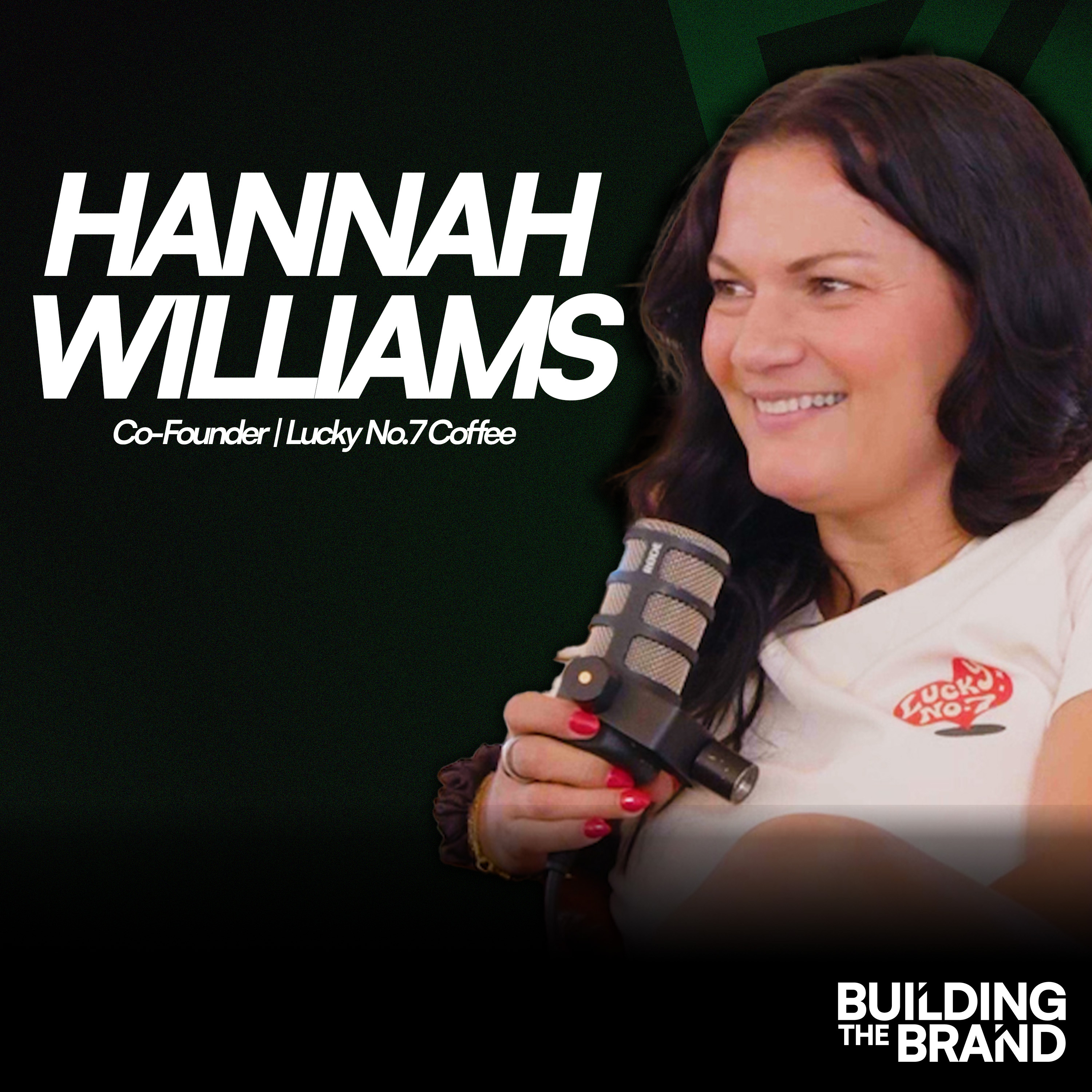
Hannah Williams discusses building Tiny Rebel from a small homebrew operation into a brewery scaled to about 120 staff, then stepping away to become a trustee at Alacrity (a Wales-focused talent-retention philanthropy/tech incubator network). She then explains launching Lucky Number 7 Coffee in four months, including brand origin, rapid growth, and plans for a Cardiff retail site and online expansion using geo-traction/AI-driven marketing.
Hannah is a chartered accountant turned entrepreneur; she served as CFO at Tiny Rebel. She later mentored/learned from leaders like Phil Doar (Gymshark) and Al Barrett (Grenade). Lucky Number 7 is co-founded with Mo (creative/branding).
She attributes success to will over skill, constant learning, aligned expectations, integrity, and asking mentors directly. She says she left Tiny Rebel when she felt she’d “capped” her value, not due to drama.
Tiny Rebel’s early “no marketing budget” decision; scaling from a 1,500 sq ft unit to 3,000 sq ft; buying a bar during a Monday night; Lucky Number 7’s name from blended families (seven kids) and rapid Cardiff store opening despite asbestos/listed-building planning hurdles.
Written by AI. May contain mistakes.
The host introduces guest Hannah Williams and sets the stage for their conversation.
“Before we start today's episode, I just wanted to give a massive shout out to everybody that was involved in this podcast.”
Hannah discusses her background, including her experience in accounting and brewing.
“Talking about brilliant brands and brilliant suppliers of Ideas Fest.”
Hannah narrates the story of starting Tiny Rebel and the challenges faced.
Hannah reflects on the naivety that fueled their entrepreneurial spirit.
Hannah shares insights on scaling Tiny Rebel and her decision to step away.
“So, Walkers Street, you said it was a bit of a whirlwind journey, but, you know, it scaled up to 120-odd staff.”
Hannah discusses her transition from Tiny Rebel to exploring tech and new ventures.
“So I'd reached out to Phil Doar, who was the CFO of Gymshark, and he became sort of a mentor.”
Learn about the importance of continual self-improvement and learning from others.
Discover the mission of Alacrity and its role in retaining talent in Wales.
“He'd moved to Canada when he was mid-twenties to be an engineer because he saw more potential out there.”
Hear the story of how the guest transitioned from Tiny Rebel to becoming a trustee.
“So you went to go and be a trustee on their board from the successes that you created at Tiny Rebel.”
Explore the essential traits and values sought in brands and individuals.
“you know, being a chief exec or a CEO when you're running a company is enough of a challenge.”
Learn how the guest developed confidence and navigated challenges in life.
“Have you always had such a deep level of, and I'm making my own assumptions and putting my own map of the world onto you here, but have you always had such a level of confidence?”
Understand the impact of family dynamics on the guest's view of success and work ethic.
Discover the origin story of the guest's new venture, Lucky Number 7, and its significance.
“partnership to do something well it's like a co-founder you don't see many people who've got a business and if they're on their own and they've driven it and they've scaled it on their own it's fucking hard yards.”
Learn about the creative process behind Lucky Number 7 and the importance of collaboration.
“And it was lucky that the seven of us got together.”
Learn how collaboration and trust in creativity led to successful branding.
“He gets his inspiration from different places.”
Discover the challenges and excitement of expanding into a physical store.
“It's been so much fun, even when it's been fucking hard.”
Explore the unconventional approach to business planning and market testing.
“To be honest, a lot's happened in four months.”
Understand the dynamics of scaling a business in a competitive sector.
“You're going into a challenging sector, and it's not your first rodeo, so you know kind of what you're getting into in terms of entrepreneurship.”
Learn about the values of hard work and responsibility being taught to children.
“So suddenly we sat across all these different verticals of sectors and not just, oh, you're a brewery.”
Hear about the ambitious plans for the coffee brand and community impact.
“You're helping get your little brother ready for school.”
Discover how technology is being integrated into the coffee business for growth.
“I know you don't spend a lot of time blue sky thinking, but let's play the game.”
Learn how businesses adapt to geo-traction and integrate AI for growth.
“and businesses' websites need to keep up with that really, really quickly.”
Discover the mindset of a successful entrepreneur and their self-reflection.
“Do you ever, final question, you seem very like grounded and down to earth and humble.”
A compelling introduction to Hannah Williams highlighting her achievements.
“I think you are an incredible entrepreneur.”

Get the gist, explore an idea or ask about something said.
 Claude
On Building The Brand with James Burtt, what are the key points of this episode?
Searching your listeningAutomatic transcript. May contain errors.
0:00I gave birth to my third child on a Monday. I'm back in the office on a Wednesday.
0:04James Burtt: You might have, in 25 minutes, become my favourite entrepreneur of all time. I'm sat here now because I went to an International Women's Day event with Fran, missed my last train home, decided to stay in a room. I hadn't met her before. He had two boys, I had three girls, and it was lucky that the seven of us got together. You really, really need that partnership to do something well. It's like a co-founder. You don't see many people who've got a business, and they've driven it and they've scaled it on their own. It's f***ing hard job. And they were like, it's never going to work unless you've got a marketing budget.
0:32We thought, sod you, we're going to do it anyway.
0:34James Burtt: What was the sort of the underlying confidence? You're like, oh no, we can do this. Babe, I don't think it was confidence. I think it was naivety. Whilst you say that you're winging it, you're growing it very quickly as you go as well. It probably looks like it from you, but from me, it doesn't. Do you ever look at yourself in the mirror and go, boy, you're half done well. Didn't think you would. No, because I think you can always do better.
0:58James Burtt: Before we start today's episode, I just wanted to give a massive shout out to everybody that was involved in this podcast. What you're about to watch and enjoy was filmed and shot live on location at Ideas Fest just a couple of weeks ago. So I wanted to give a big shout out to Ideas Fest. If you are an entrepreneur or a business owner, you need to make sure you get to Ideas Fest next I know I'm talking about 2027, which might be a little bit early, but really this is the Glastonbury of entrepreneurship. You have got to be there. So go and check out their website. Just Google Ideas Fest and you'll find out the details of what's coming up next year.
1:30James Burtt: I don't know what's coming up next year, but based on this year, it will be epic. I also want to give a big shout out to Lucky Number 7 Coffee, who are our coffee collaborators in our tent on site ideas. Everything about this brand is absolutely phenomenal. So go and check them out. They're a new business, four months old, and they are making big waves in the coffee industry. I think these guys are going to be on something big. It's just too good not to be big. And the final big shout out is to Under the Canvas. These guys were the creators of this amazing tent, the creators of the amazing space, the backdrop, the staging, the seating, the lovely rugs on the floor, everything you see here was created by Under the Canvas.
2:06James Burtt: It was our privilege and pleasure to just get to turn up with the cameras and stick a few lights up and stick a few mics on people and make great looking and sounding content. So big shout out to those guys as well. I'll put links to all of those amazing organisations, Ideas Fest, Lucky Number 7 Coffee and Under the Canvas in the show notes in the description. Let's get into the episode. I hope you enjoy this live from Ideas Fest. Let's go. Talking about brilliant brands and brilliant suppliers of Ideas Fest. We're also going to be having a conversation now with the lovely Hannah Williams from Lucky Number 7.
2:35James Burtt: This brand is only four months old. And I think you'll agree, if you look at the branding, the marketing, everything they're doing, it does not look like a four-month old company or brand. It's exceptional what they've built already. But we're going to be talking to Hannah all about that. Hannah, tell me about your background. So I thought we were going to talk about coffee and how you got to the understanding of creating an amazing brand so quickly and then you just drop into conversation that you're also a tech founder incubator legend as well tell us about your career please if you don't mind my career okay um i'm a chartered accountant are you yeah there's so many layers to you so many layers so in school i was told i was shit at maths are we allowed to swear on this by the way yeah fine oh fine um and i thought i'm gonna tell my math teacher that i can actually do something with math so i went to be an accountant just to defy my math teacher that i haven't seen since in like 35 years wow that was worth it i know um so once you skip a few uh chartered um got married the first time that's my second husband over there mo my first husband was into beer um so we set up a brewery called tiny rebel um oh my god i've heard of tiny rebel yeah it was like a big success wasn't it yes decent yeah it's good yeah um so that's the most well chance ever okay sure i won't do the accent out of uh gavin and stacy so you've done that as well yes wow we started, so my ex-husband started home brewing in our bath it drove me batshit crazy so my dad was like I'll clear out the garage and you can brew it Brad started brewing two years R &D I went on maternity leave from my full time job to have our first daughter and just did all business plans forecast, got funding well we didn't get funding we went to the bank with a business plan and we didn't put anything in for marketing and they were like you need a costing for marketing like a budget and i was like no no we're gonna do it on social media now this is 2011 so this is before yeah pre-social media really early social media and they were like it's never gonna work unless you've got a marketing budget we thought sod you we're gonna do it anyway so we went to bank of dad he lent us some money um within our we did our three-year forecast within nine months and we were able to pay him back and be like what the fuck has that nine months been it's like a whirlwind wow which was great because we went into a 1500 square foot unit it was tiny we thought it was gonna be massive um within six months we had to knock the wall down in between so then we had 3 ,000 square foot then we're taking over the car park and then we're pissing off the landlord and we had to find a premises so a lot happened in the 10 11 years i was there so what was your role like you're going to do social media we're going to do the marketing it's all going to be social media but you're an accountant so so i was cfo right um so that budget processes so we went from starting literally three of us to employing 127 people i think when i left wow and we had three bars yeah it was um a beast built brewery yeah it was um it was a roller coaster what what an amazing journey but what gave you the confidence to step out of an accountancy career and go okay he's got this passion for homebrewing beer in the bath it's pissing me off i could even get annoyed about it i can go along on the journey with it what was the what was the sort of the underlying confidence of the entrepreneurial confidence you're like oh no we can do this I don't think it was confidence I think it was naivety I think we were so naive when we were in our 20s they were like fuck it what's the worst gonna happen like if if if it doesn't happen if it doesn't work we go and get a job he was an electrician I was training to be an accountant so I did my full-time job um was had Maggie who was one um I was pregnant with Cleo doing my final exam so it was relentless she's got one kid one on the way you're doing your exams you're not qualified for the job that you're then going to go and do, and then you start a separate company?
7:00Yeah.
7:03James Burtt: Okay. So, Walkers Street, you said it was a bit of a whirlwind journey, but, you know, it scaled up to 120-odd staff. So, what happened in the end with Tiny, because I remember it was an absolute smash. It came about, correct me if I'm wrong, it was in the Brewdog era. It was the Brewdog era, yeah. It's Tiny Rebel and Brewdog with these big, like, Challenger, small batch, kind of, more cottage industry feeling breweries. It just popped. Yeah, so it came around because the boys at Brad and Gaz just were looking for beers, American style beers. And they couldn't get them in the UK. Like Indian pale ale kind of stuff.
7:40James Burtt: Yeah. And we'd been to America and they were drinking all these cool, fruity IPAs. And so we thought, oh, let's just make our own. and that's really what it was and it's like anything in market, you know, any business, you're looking to solve a problem, you're looking to do something that you like and if you breed that passion, you can just go along with it. So you start on that journey and you scale it up, what was the sort of, where did it end with? It's still going. Is it going to get bought out by a bigger brewery? No, still family owned. Is it really? Yeah, yeah. Oh wow, so you're still a shareholder?
8:13James Burtt: Yeah. Okay, interesting. in so i was cfo there and um it got to a point where i sort of capped i was just done i just felt done and what what what about the situation made you feel done like you thought you'd taken it to this i couldn't learn anymore really okay and i was um if anyone's got a family business you're just around literally around the table with family and i was really trying to reach out and just do stuff differently. So I'd reached out to Phil Doar, who was the CFO of Gymshark, and he became sort of a mentor. Al Barrett, who owned Grenade, I was super close to Al. And I was trying to learn from different businesses to implement all those learnings into Tiny Rebel.
8:58And it was just, I just was like, it just needed a change. And an opportunity came up to run the Alacrity Foundation. It was actually to go and be a trustee. The chief executive was leaving at the time, and I thought, I know fuck all about tech. I'll go and try that.
9:14James Burtt: You didn't know anything about brewing either, to be fair, did you? But all businesses work the same. So actually, you're just changing the mould for different sectors and that's it. Same as coffee. But you sort of drop in names quite easily then. I'll pick those names off the floor for you. But like Phil at Gymshark and Hour at Grenade, these are big name people and they now end up sort of like mentoring you or advising you. How do you open those kind of doors? Or was it because you guys were doing something so unique with Tiny Rebel that... No, I just asked them. I literally... And it was, honestly, it's that simple.
9:48I literally just asked them. And I was like, can I have a call with you? Can I just bounce some ideas off you? And that was it. And most people, if you ask, they will give their time. But people haven't got the... Not the confidence to ask, but just they... I think they're worried about people saying no.
10:04James Burtt: It is the confidence, though, isn't it? Yeah, but... It must be. Who's going to say no? But loads of people. But why? Do people just not say no to you? No. Fair enough. But if they do say no, well, you haven't lost anything. Yeah, that's true. So you're on to the next one. I don't see that as a problem. I don't see any barriers in that. So the tiny red ball thing, so you've decided that you want to step out. Yeah. Obviously, there's a whole thing with marriage and family there. Exiting without getting too deep into it, because we definitely die of a CEO-esque tears, but moving away from a family business that you're still a shareholder of walk us through that a little bit and the realization that your time on that journey was done and did you exit and take like money out or did you just keep like how did it all no no um it wasn't actually it wasn't anything dramatic it was it was i just felt like i needed a change and i'd like someone had put me into this cage and i was like i cannot grow in this cage and it was driving me nuts and I want to learn all the time.
11:06That's all I want to do is learn, help people make a difference.
11:11I'd taken it to a level where I was like, this is the level. Someone else needs to come in now and take it to a level. I think, and I'm very aware of that. I'm very aware of different parts of businesses where I can do that. I sit on many boards and for all of them, I will still sit as a non-exec to the chief exec and say, at any point you will say, right, change now and I'm more than happy to step away or I will give you the nod when it's time to step away. Because there's only so much value you can add. And if I'm not adding value, why the hell am I sat around the table? That's the way I see it.
11:42Or why am I involved in the business if I'm not adding value? Just to tick a box. So I'd got to that point where I was like, I need to do something different. I need to change. I need to meet different people. And it was the hardest thing. So I got divorced and me and Gaz still worked together. We worked together for a few years after we got divorced. But by far the hardest thing was leaving Tiny Rubble, which felt like my baby. it was really hard yeah really really hard but now at the time i was like a disaster like a fucking basket case and cried all the time and now i'm like best thing ever like the best thing ever and i think that was just the grief of leaving something i'd built from with a team from nothing and the change and processes to see what we'd built i mean on i gave birth to my third child Effie on a Monday I'm back in the office on a Wednesday because we were building the brewery
12:34James Burtt: You're an absolute beast But you love it You just don't think about it You just don't I got home from giving birth to Effie Monday morning got home in the evening my dad was like we built a house behind this she's lovely, congratulations do me a favour, pay those invoices my mum was like oh my god she hasn't even had a glass of champagne yet um but it that is i was brought up in that life my dad was um my dad set up a electrical business he was an electrician set up electrical business when i the year i was born actually 1986 and sold that when i was like 23 or four he retired for three months and got bored and then set up bought another business and has done the same thing again but scaled it to another level like another level so the way i see you do your first one you're like cool i've got a load of learnings from that and the next one is always the better one same as a marriage it's like moe's listening i know we'll raise the volume in the edit so he picks up next time he's too busy look at this the success over there um i want to i want to pick up on something you said that you always want to learn you just want to learn learn learn grow grow grow so why do you get to a point where you think you can't add any value sure is it not a case that you learn more to grow more or you've you know you're in that role as cfo a tidy rebel and then taking it to the next level why can't you learn to be the person to take it to the next level why do you let somebody else step in and do it because you learn from people around you and if they have capped themselves out and they're not they're like i'm i'm as i am and i'm not willing to or they don't maybe don't want to learn or don't want to change and they're happy just as they are that's fine i'm just that's not me i will listen to podcasts all day i read i can't tell you how many books um and i just want to absorb learn from different people and do new things to try stuff i don't feel like i've reached the full potential of what i can or what i'd like to achieve yeah okay so you leave tiny rebel um and then you are going to go and sit as a trustee yeah of of what's the what's the alacrity alacrity and what is alacrity for people who don't know alacrity means to move briskly so it was set up in um 13 years ago by sir terry matthews and the idea was to retain talent within wales so retain the brain drain from wales so we had graduates leaving to go to London.
15:12He set up a very successful... So he was born in Wales. He'd moved to Canada when he was mid-twenties to be an engineer because he saw more potential out there. He set up a company called Mitel. He sold Mitel, I think, the first time for£10.6 billion. And then he bought it back and then he sold it again. Mitel?
15:35James Burtt: Yeah. A telecoms company? Yeah. Right, OK. And then he set up Newbridge Networks. And now Alacrity is his philanthropy arm, and we're part of about 124 different businesses globally that he owns. So it's a nice, it's just different. It's a different sector to be in, and it's a great sector because there's a lot of contacts in that sector. Oh, my God. So you went to go and be a trustee on their board from the successes that you created at Tiny Rebel. Yeah. The CEO or the chief exec at the time is leaving. Did you just say, well, I could do that, I want to do that? or did you get hoodwinked into it?
16:12So it's a bit of a funny story. So I said to the previous CEO, can you come and be a trustee? And he was like, oh, I'm leaving. I was like, okay, who's taking your role? And he said, well, we don't know yet, but they've got a couple of different people. And I said, I might go for it. And they were like, that's not going to work. They want an academic. And I was like, oh, not an academic. I thought, oh, fuck it, I'm going to try it anyway. Went to my interview in a Rolling Stones t-shirt and a pair of Converse with, basically middle-aged men in suits.
16:41James Burtt: Short standard. And with the chairman, our chairman, who's Professor Simon Gibson, a guy called Alan Ockenden who owned a company called TXO, who he'd, unfortunately he passed away in December, but he'd, it was only 56, but he'd built this company TXO up to, I think he sold it for about 300 million about six months before he passed away. Super successful, serial entrepreneur, already set up a company called Endurance. He was just like a silent assassin. He'd sit in the board meetings, super quiet, and then come out with these golden nuggets of information. I was like, Christ, he was brilliant.
17:21And then I finished my interview, apparently left, and he said, if you want to change alacrity, she's the person. Because I was just different. Wow. Everyone around me was academics who'd gone for the interview, and I was just, I didn't know, I literally didn't know and still know fuck all about tech. But then you leave it to other people.
17:41James Burtt: Yeah, of course. So the role of someone as a, you know, being a chief exec or a CEO when you're running a company is enough of a challenge. But when you're sort of an incubator of talents, what is it that you look for in other brands and businesses that come to you guys that you want to support? Is there like a trait? Do you seem like you collect amazing people around you or you're magnetised or people are magnetised towards you, what do you look for in others that are building these standout unicorn brands that you're obviously part of the journey that they go on? Ooh, question. I think it's like anything else.
18:20When you build your team, it's loads of communication. And these are the things I've learned along the way. And really align your expectations always. So if you're in a meeting and you're not, you have to align expectations. You have to know what you're going to get from that person and what they should expect from you. Because things hit the fan, really, if that's not aligned. Yeah, loads of communication. And then just integrity of people. You can really see it. And if they want to work hard, it's will over skill. You can teach everyone the rest of the stuff. It was always, even at Tiny Rebel, it's always will over skill.
18:59If people are willing to work hard, I will give them all my time. Always.
19:33James Burtt: exclusive newsletter. Have you always had such a deep level of, and I'm making my own assumptions and putting my own map of the world onto you here, but have you always had such a level of confidence? Or have you had to grow a level of confidence? Do you seem like you're an absolute badass or just walk through any situation? Like, I could drop you into anything and it'd just kind of be all right. You know when they say, like, who would your mate be if you got arrested and sent to a jail in Panama? I imagine you're the person that a lot of people are calling to get to get out of the jail in Panama, which is a compliment, might not sound like one, but did you naturally have that?
20:08James Burtt: Did you learn it through your dad and you see what he had achieved or have you ever had to work to build it? Oh, work to build it. Really? Yeah, yeah. It was a bit of a yes person for a long time. Really? That didn't really work, yeah. Until what age? Like, what am I, 40, 39? 39, yeah. Hence why I'm here. No, I just don't see barriers. I don't see barriers in place. So, you know, people come to you with problems all the time or they'll always moan about something bad. Like, it could be pissing down with rain out and it could be no one else in the room and I'd still find something good about it.
20:45Like, it's... My life's completely changed. I don't care about stuff anymore. This is what I love. Like, conversations, people learning from other people, helping, that gives me so much satisfaction.
20:57James Burtt: Did you ever care about the stuff? Was that a driver at one point? Yeah, I think so. Like, I think that's when I was in school. Like, I used to buy dresses from Caramillin. At school? Yeah. Pretentious? But I worked. So I used to wash dishes when I was 13. That was my first job. Oh, really? And I'd do four shifts a week on top of school. Because I was like, wicked. I've got like 100 quid at the end of the week. Rich. You feel rich at that age, don't you? Not rich. I could pay for my old school dinners. I was like buzzing. and I didn't need to ask anyone for stuff. I quite liked that. So, yeah.
21:34It was part of that because I think kids who have successful parents
21:40James Burtt: can go all of two ways. It either inspires or intimidates. Watching what your dad had built, and then he started it from the ground up, and he was an electrician, then builds out that sort of mechanical engineering or the electrical engineering side of things. Did it inspire you, or did it... to the point that you i don't need your money because i'm doing four shifts a week and i've got 100 quid to buy my caramel in dress did you have that as a as a drive did it push you i guess did a successful dad push or pull you i don't i didn't see i don't class money a success at all ever i class success is you can help people around you and they look to you for if they need anything and that would when i died that's what i'd like to see people go she actually made a difference in my life or she helped me for something that's where i see it and i wouldn't say it was just my dad because my mum had a massive influence as well so they're still married and they had five children and they were working constantly but that's the life i only ever knew right so my dad would go to work in the mornings um super early my mum would take my little sister to school i'd make breakfast for me my brother would go and get the bus come home i'd make him dinner my mum would get home about seven o 'clock after picking the baby up from nursery my dad about eight my mum would still be ironing our uniforms at like 11 o 'clock at night yeah but that was but my dad could not have done that without my mum so even though he's working and the you know it was a joint business she had as much confidence in him even when um they had an electrical business and um the second time they bought the one they've got now um they were doing a big job for a business that was multi-billion um they were in in um in a job with them they owed them like quite a bit of money but still in terms within 30 decades business was open on a friday all sites were sites were shut on a monday and this was like a six billion pound construction company what went past over the weekend over the weekend they'd run out of cash so my dad went to the bank and said can you do me a favor we've been banking with you for 30 years can we have an overdraft for this facility here's our forecast to go out and they were like no wow um and he had to then remortgage his business he and his his house so and it's all the support like he couldn't have done that without my mum so i don't you need that partnership you really really need that partnership to do something well it's like a co-founder you don't see many people who've got a business and if they're on their own and they've driven it and they've scaled it on their own it's fucking hard yards.
24:19So same with Lucky Number 7, with Mo. He is the creative. He does all of the brand design and, like, pretty much everything. I do the boring shit in the background, which I love. The accounts, the covenants, sorting out leases and all that sort of shit. I do the... That's fun to me, though.
24:37James Burtt: Were you aware when your dad's company or your mum and dad's company or the family company when it was having a hard time, were you consciously aware of that as a kid? No. one Christmas we we had I remember so I remember this Christmas right so we were young I must have been about nine and it was the first Christmas we got a church over the road my dad had taken us to church I was like what the hell we hadn't we'd never been to church and then we each had one present and I had a pink cassette player with a boys to men cassette and I thought it was the best Christmas ever ever of all my Christmases right it's the only one I remember the only one and And it was the one where my mum and dad, I didn't realise until years later, they had no money.
25:20And my nan and granddad had to buy us our one gift each. Because they had to put all the money into the business. And it was going to go bust. And they didn't take a salary, they said, for like four months. So they were really, really stuck.
25:31James Burtt: How interesting that it's your favourite memory of a Christmas time. Isn't that ironic? Yeah, yeah. And that's what I mean about, it was that time with my dad. Because he sat then and we had not millions of gifts. We had one gift. And then we had loads of family time. And that's where the value was for me. and that's what I loved, absolutely loved. Is that what drives the fact that success to you is a money then? Is it those moments because they were so formative that that's the thing you still chase now in your own life? I see financial freedom is a nice position to be in but I wouldn't buy stuff with it.
26:06So we take our kids travelling. So at Christmas we usually take two weeks off when my office closed. We take a week either side. last year we we tracked them around sri lanka so we backpacks on oh really sri lanka yeah and we just we've literally bounced around like three or four days in a different place and there's lots of you isn't there as well there's yeah there's seven of us there's seven which we're going to
26:27James Burtt: get on to now so lucky number seven what a backstory by the way you might have in 25 minutes become my favorite entrepreneur of all time lucky number seven tell us about this because as i mentioned at the beginning obviously this is only four months old in reality maybe it's been a long time in the sort of the creative thinking process but what you guys have created in four months is just wild to me tell us about lucky number seven the origin of it and why lucky number seven i heard you talk about it yesterday but just for the podcast and for everyone listening why why seven Why seven? So seven is Mo and I got together.
27:08He had two boys. I had three girls. And it was, the kids just blended. And it was lucky that the seven of us got together. And that's really where the names come from.
27:17James Burtt: So you are the lucky number seven? The lucky number seven. You guys are the... It's super simple. And if it means something to you, that's what you go with. My first husband liked beer. We set up Tanya Rebel. My second husband liked coffee. We set up a coffee thing. It's literally, it's quite simple. but if you see something you like in market or you want to do then other people will want that as well so um the idea is we just lost you there for a second you're looking at customers when you you're looking at there's money there there's money there come on can sales to be conveyed let's hurry this podcast up no it's just i'm actually looking going i hope the repeat custom is really important to me and feedback on the brand is really important as well so a lot of People said they liked the design.
28:00Again, that's all Mo. He's just phenomenal. He gets his inspiration from different places. He had a fantastic illustrator. She did Tiny Rebels. Brandon, she's done Lucky Number 7 for us. We just trust her implicitly in her. What Mo equates as a concept, she can visualise and just designs. Bring it to life. Yeah, really brings it to life.
28:20James Burtt: That's an amazing skill tab. There's a lot of designers that I've worked with over the years, and it's very hard to get what's in your head out onto, you know, physical realities. They've done an exceptionally good job. It just feels to me like anyone else who sort of walked in here thought, I feel like I've seen this before. I feel like I know this brand already, which I obviously don't. But I think that's an amazing testament to what you've built. Thank you. So Mo wanted to do this. So we sat on the beach in Sri Lanka.
28:52and I'm quite a risk seeker. This doesn't faze me. I was like, just let's go and do it. Mo's always had roles in businesses, so he's always been employed. So this really took him out of his comfort zone. But it's getting your mindset to go, actually, you are employed just by your own business. So you will work harder naturally and you put more graft into it. And honestly, I just love it. It's been so much fun, even when it's been fucking hard. And, you know, we've been like, right, that's it. We're fucking done. No, you just go, OK, let's have a chat about it. Let's crack on, move forward. And what's next?
29:33Like, it's just fun. I like, it literally is just fun. I love the brand bit. So I've got the best job in the world, you know, working with graduates and businesses. and seeing these businesses flourish and these entrepreneurs that come in and they really want to make something cool. And then on our side hustle, we've just got a badass brand that's wicked. And it's just fun to see where it's going to go.
29:58James Burtt: Where do you think it's going to go? So you've now, you're about to take on a physical location in Cardiff. Yeah. As your first place. What's the, you know, you're a CFO. You're a data spreadsheet kind of girl. Oh, I love a spreadsheet. Love a spreadsheet. All accounts is love a spreadsheet. And I love a process. The truth's in the spreadsheet. The numbers never lie, as they say. Oh, no, it's creative accounting. Oh, is it? Okay, fine. Don't say that, Kate's H.Y.C. listening. What's the next 18 months, 24 months look like for this brand and business? To be honest, a lot's happened in four months.
30:34I can see that. I can see that. The graph behind it's been phenomenal. What's next? So we opened our Cardiff store in about six weeks. that's been a monster challenge in itself. You know, like I'm a bull in a china shop. I'm a Taurus. I want everything done yesterday. So I'm signing leases, going downstairs with the builders and they're like, there's fucking asbestos in the roof. And, you know, then it's all the background bollocks you've got to deal with of getting someone to remove an asbestos ceiling, which is really quite difficult in hazmat suits and all that rubbish.
31:08James Burtt: And expensive as well, isn't it? Yeah, and I'd signed the lease, so we were in. that was full repairing so that's on you is it oh I've learnt so much in the last four months I can't even tell you yeah yeah yeah and then I've got a listed building externally so now I've got to consult Cadu and put planning in so I've become a planner overnight as well apparently because I don't want to pay their fees then I've got to get an architect and suddenly I'm like oh my god I've learnt so much so the next place I will be more prepared this I've just got to fuck up the first one first a bit like a marriage that's quite that's quite a good way looking at it to be fair.
31:43James Burtt: So you guys have obviously, you've, what did you start with though? Was it the beans online? Was it always the, did you start with the intent of going into retail quite quickly? Did you start doing festivally stuff like this? Or what was the sort of the original plan? And what's it, or is this all part of the original plan? Um, I'm, even though I'm Hannah the planner, I, we just don't have like a business plan like normal people. And everyone says you need a business plan, you need a forecast. We're still winging it. and I think that's okay. So the plan was to do events to get the branding out, to get the feedback loop on people's, because we like the branding, but does everyone else, or do we like it because we like it?
32:25And it was that. And, you know, does everyone like the names? We come up with the names over a bottle of wine one night. So we've come up with seven different names of stuff that means something to us, but people might not resonate with. So it's just testing that out. What beans work, what doesn't, what equipment we needed. And Mo was brilliant at that because I swear he's OCD on and fanatical to go into the depth of knowing exactly what's right, what we need. Well, this is going to be perfect for the brand. His vision's exceptional. And that's why I think it works for this. Because mine's not as good.
32:55Why make the shit happen in the background.
32:56James Burtt: So you're sort of like testing the market. Again, this is in four months. I'm struggling to correlate all this stuff. So you're testing the market, but you're only four months into it. But retail obviously takes a bit of time. So did you go straight into, oh, we've got something here. Do you want an event? People liked it, bought into it. You're like, oh, come on, let's just go. We're going to go and do this. Let's just go. Let's go retail. Let's go bricks and mortar. That's a hard game, isn't it? Hospitality is hard. We were talking yesterday with James T. Clare about it on this podcast. Hospitality is difficult.
33:26James Burtt: You're going into a challenging sector, and it's not your first rodeo, so you know kind of what you're getting into in terms of entrepreneurship. But whilst you say that you're winging it, you're growing it very quickly as you go as well, aren't you? at the same time. Yeah, it doesn't feel like it. It probably looks like it from you, but from me, it doesn't. I want it to go faster. Do you? Yeah. I think you're going fast enough. Because, you know, you look back in a year's time and you see where you are and that's quite interesting. And we didn't do enough of that in Tiny Rubble. We didn't take stock and look back to go, oh, fuck, like, we've just hit like 10 million.
34:02We just hit 12 million. We just hit 15. And they were just, not for the military, but for the marks, Yeah, yeah, for sure. You know, and you take opportunities as they come, right? So I went out on the piss one night on a Monday with my sister. The liquidator, I'm in this barring card. If the liquidators come in and they were like, we're closing this bar down. And I was like, what are you doing with the one down the road? Literally down the road. So we supplied it. And he was like, that's going as well. I was like, brilliant, can we buy it off you? Now, we'd only set up Tiny Rebel like 10 months.
34:30So I rang my dad the next morning with a stinking hangover. I was like, I think I've just bought a bar. But it was the best thing that would have happened. It was far too early. and if we'd planned it, it wouldn't have happened.
34:39James Burtt: Yeah, sure. Because it was off the cuff and we were like, just make it happen, just see what happens, like see how it goes. It just, it went really well. And that was their cash cow then to grow the production facility. So it all worked out. So in that instance, you went into sort of like retail, bricks and mortar too early, but that actually worked so well that it cash flowed everything else you were building. Yeah. Interesting. Do you think that your need for speed is because you sit in that CEO role in a tech world, which is like so fast paced, like a year is a decade in other normal businesses.
35:16James Burtt: Do you think you bring a tech mentality into a real world brand? Yeah, well, more so I want to. Some of the businesses, the teams we're setting up now in Alacrity are, we can directly help Lucky Number 7, which is really interesting. So I want to see how we can implement a lot of their platforms into growing our e-commerce business and our B2C business. So wouldn't ordinarily sit in their realm of thinking. I love, everyone says you're in a sector. I don't see that because when we were at Tanya Rebel, we weren't sat in a sector. We were a brewery. So that's manufacturing. We were hospitality. We were online.
35:56So e-commerce, we exported. So suddenly we sat across all these different verticals of sectors and not just, oh, you're a brewery. Because it affected loads of other parts of the opportunity of what we could have done.
36:12James Burtt: So with a desire to go as fast as you like to do things, what's Mo like? Does he want to go as fast as you want to go or is it a push and pull? Do you know what? He always says... I glanced over then to see if he was listening. No, we're fine, we're fine. No, we're talking about you, not to you. Carry on. he always says slow down to speed up which I think is right that is good and when he used to say that to me and again like I'm a bully in a china shop I was like what do you mean like go go go but sometimes you just need to sit and take stock and what we haven't done enough of is that you know people talk about blue sky thinking and just having a bit of time to sit and reflect we haven't done enough of that over the last few months because we haven't had time to I'm not surprised but we will do and we do sit, you know, like normal couples and have dinner and just chat through it and come up with ideas.
37:02And in the morning, it's whatever works for you to get things moving. I like, I love a to-do list and I love ticking things off a to-do list and I love momentum because if you keep that momentum going then it feels like you're in the thick of it sometimes. You're so in the thick of it. A couple of months down the line you'll see why it was that way and all the opportunities that have sprung from it. I'm sat here now because I went to an International Women's Day event with Fran, missed my last train home, so I had to ring Mo and be like, I'm staying in London with Fran. I think I said Frankie.
37:36And he was like, who's Fran?
37:38James Burtt: Who is Frankie? I want to meet this Frankie. So I had to stay in a room with her. I hadn't met her before. Brilliant. And then get a train home the next morning, like in the same clothes. Then we went to India together, and now she's one of my closest friends. And I'm super proud of what she's built, So, yeah, it's opportunities and the connections and the network are really important. You talked earlier about the environment that you grew up in. Obviously, mum and dad are both super busy. You're helping get your little brother ready for school. You're off to school. You're doing the dinner. Your mum comes in at seven after picking up the baby.
38:13James Burtt: Dad comes in at eight o 'clock. Good memory. Are your kids being raised in that environment as well? Is that what they're sort of seeing and being surrounded by? Yeah, 100%. It's whirlwind. Luca's over there pouring coffees. Did he have a choice about being here today, by the way? Or did he just get dragged along? He got roped in. Looks like he don't mind, to be fair. No, he doesn't mind. No, to be honest, they're all in. They come to events with us. They'll be serving. But I want them to have that ethos of they have to work. And, you know, we always tell them it doesn't cost anything to be polite, have manners and just hard work.
38:47That's it. And I don't want them to have handouts. I don't want them to be these privileged kids that get given stuff. because then they won't know what the value of a pound is. I think that's really important to them.
38:57James Burtt: Did your mum and dad have that same attitude with you? Did you talk about the caramel in dress but you were having to earn it with four shifts at 13? Did they sort of give you, you know, you've got the safety of your human needs being met, like you're going to be fed and there's a roof over your head and you live in a nice environment. But in terms of anything you wanted outside of that, did your mum and dad make you go and work for it? So then you were instilling that in your lot. Yeah, they did and I'm glad they did. Because at the time, I was like, oh, why don't you give me stuff like everyone else gets given?
39:28You're rich, I just want to dress you. Everyone gets given stuff. And I always used to look at those kids, like, I don't know, one of the kids in school, one of his, his dad brought him a Porsche at like 18. And then he... What?
39:39James Burtt: That is a disaster waiting to happen. Well, it was, because he crashed into someone's kitchen. So it wasn't an absolute disaster. Then he went to prison at some point, I'm pretty sure.
39:49But then he didn't know the value of stuff. Yeah, of course. and then had to learn that further down the line. But if they learn it younger...
39:57James Burtt: From jail? What a place to learn the money. If you learn that younger, and it's really hard, right? You want to give your kids naturally everything all the time. But they actually quite like boundaries. They quite like to know. And, you know, what you see is what you become as well. So if they see hard work and they see graft, then I want them to have that. I don't want them to... And I don't care what they do, as long as they're happy doing it and they're the hardest working people in the room and they add value. Well, I've absolutely loved this conversation. I think that what you've built in four months is phenomenal.
40:30James Burtt: I have a feeling it's just the start of the journey as well. I can't wait to see where this goes. I'd love to do a follow-up in the actual coffee shop in Cardiff. Oh, yeah, come down. I'm definitely going to do that. I've just invited myself along. I know you don't spend a lot of time blue sky thinking, but let's play the game. Let's forecast five years' time. where is lucky number seven as a brand as a company as a family squad what does this look like in five years um we'd like to have quite a few outlets um around the uk i'd like to we really want to give back and we like really don't know how that looks yet but what it's not just going to be you know like are we going to plant a load of trees for every coffee or it's going to be something tangible but i want to make it meaningful and mo's massively into that as well and how we really give back in a different way and i don't know how we do that yet so that's going to be hugely massive on the agenda of what we do and online we've obviously talked about outlets and physical locations online online big aspirations for that as well and you've obviously got a bunch of beautiful beans and stuff that people can buy online yeah so um seo Traction is completely dead now.
41:47Everything's gone to geo-traction. We're doing a lot of that within Alacrity to understand how that changes. Two weeks ago, chat was pulling information from Reddit. Now it's completely changed that traction, so it's not pulling any information from Reddit anymore. So the sources of geo-traction are coming from different places now, and businesses' websites need to keep up with that really, really quickly. So one of the platforms which one of the teams are building are testing that at the moment. So I want to test that with Lucky Number 7. So see, put it in in the next couple of weeks, test it for two months and see what that's driven, revenue-wise, interaction-wise, traction through the geo bots now.
42:30James Burtt: Well, a great thing to be able to do, actually, to sort of like test these AI tech sort of fancy digital companies with a very tangible product-based business. It's actually very clever. More incubators should do this, actually. I think you've started something here. I think Y Combinator is going to nick your idea at some point. That's very clever. That's like the dream of just creating something different, putting a tech hub within Wales. Like more businesses using each other within the area, even within the UK, you know. The whole global market's completely changing. Everything's going away from America.
43:04I think we all know why, but we're doing a lot of, you know, we've got an office in Canada, so we do a lot with Canada, but how can we take the learnings from them from an economy that's grown so quickly in Estonia is a massive tech sector, huge, overnight, changed massively, growing faster than the UK by miles. Like how do we take the learnings from that and implement it back into what we're doing?
43:26James Burtt: Do you ever, final question, you seem very like grounded and down to earth and humble. Do you ever take a moment to take stock at the end of a busy week when you've been juggling CEO duties for 120 odd tech startups and this? Do you ever look at yourself in the mirror and go, cool, you're half done well. No. Didn't think you would. You probably should. No, because I think even all's do better. You are fascinating. I think you are an incredible entrepreneur. ladies and gentlemen the co-founder of Lucky Number 7 the CEO of a bunch of stuff I think probably maybe the future Prime Minister if I'm being brutally honest give it up for Hannah Williams everybody thank you so much for watching this episode of Boo and the Brand genuinely hope that you absolutely love this episode if you want to click here there's another great video that you can watch or this one here oh I've picked it just for you it's an absolute banger click that one right now go on and I'll see you on the next one
How do you help build one of the UK’s best-known challenger beer brands, walk away from the business you helped create and then start all over again in a completely different industry?
Hannah Williams helped build Tiny Rebel from a home-brewing experiment into a major independent brewery employing around 120 people, while acting as CFO and helping scale the company through rapid growth.
Today, she is CEO of the Alacrity Foundation, working with technology startups and entrepreneurs, while simultaneously building Lucky No.7 Coffee alongside her husband Mo.
And she’s doing it with many of the same principles that helped Tiny Rebel grow: move quickly, test the market, build a distinctive brand, surround yourself with great people and learn as you go.
In this live episode of Building The Brand from Ideas Fest, Hannah shares the entrepreneurial lessons behind building Tiny Rebel, launching a coffee brand, scaling a startup, building a team and creating a brand people actually remember.
Want more from Building The Brand?Connect here: https://buildingthebrand.co.uk/newsletter
In this episode, Hannah reveals:
How Tiny Rebel went from home brewing to employing around 120 people
Why they ignored advice that the business needed a traditional marketing budget and backed social media marketing instead
How Tiny Rebel hit its original three-year forecast within just nine months
Why Hannah believes naivety can sometimes be more powerful than confidence when starting a business
Why knowing when you are no longer adding value can be critical as a founder or senior leader
How simply asking successful entrepreneurs for help led to mentorship and advice from people behind businesses including Gymshark and Grenade
Why she hires for “will over skill” and believes attitude can be more valuable than experience
Why great businesses require partnerships, co-founders and complementary skill sets
How Hannah and Mo created the Lucky No.7 Coffee brand around their blended family of seven
Why Lucky No.7 used events to test its branding, products and customer response before expanding
Why moving into physical retail earlier than planned can sometimes create unexpected growth opportunities
How Hannah combines startup thinking, technology and ecommerce with a traditional physical product business
Hannah also explains the personal side of entrepreneurship: leaving Tiny Rebel after more than a decade, growing up around entrepreneurial parents, raising children around business and why financial success means less to her than creating experiences and making a difference to other people.
Lucky No.7 Coffee: https://www.instagram.com/lucky.no7coffee/
Alacrity Foundation: https://alacrityfoundation.co.uk/
Ideas Fest: https://ideasfest.uk/
Under The Canvas: https://underthecanvas.co.uk/
0:00 — From Tiny Rebel to Building Lucky No.7 Coffee
03:35 — How Tiny Rebel Started With Beer Brewed at Home
04:45 — Ignoring Traditional Marketing Advice & Betting on Social Media
05:25 — Hitting a Three-Year Business Forecast in Nine Months
06:30 — Why Naivety Can Be an Entrepreneurial Advantage
08:00 — Why Hannah Walked Away From Tiny Rebel
09:25 — How to Get Successful Entrepreneurs to Mentor You
11:00 — Knowing When You’re No Longer Adding Value to a Business
15:55 — “Will Over Skill”: Hannah’s Approach to Hiring Great People
22:00 — Why Entrepreneurs Need the Right Partner Around Them
26:45 — Building the Lucky No.7 Coffee Brand From Scratch
30:30 — Launching Into Retail Without a Traditional Business Plan
32:00 — Testing Your Brand Before Trying to Scale It
35:00 — Why Moving Too Early Can Sometimes Create Your Biggest Opportunity
36:25 — “Slow Down to Speed Up”: Balancing Momentum With Strategy
40:45 — Building a UK Coffee Brand Beyond Physical Stores
41:30 — AI Search, GEO & the Future of Ecommerce Discovery
43:25 — Why Hannah Never Feels Like She Has Done Enough