In short
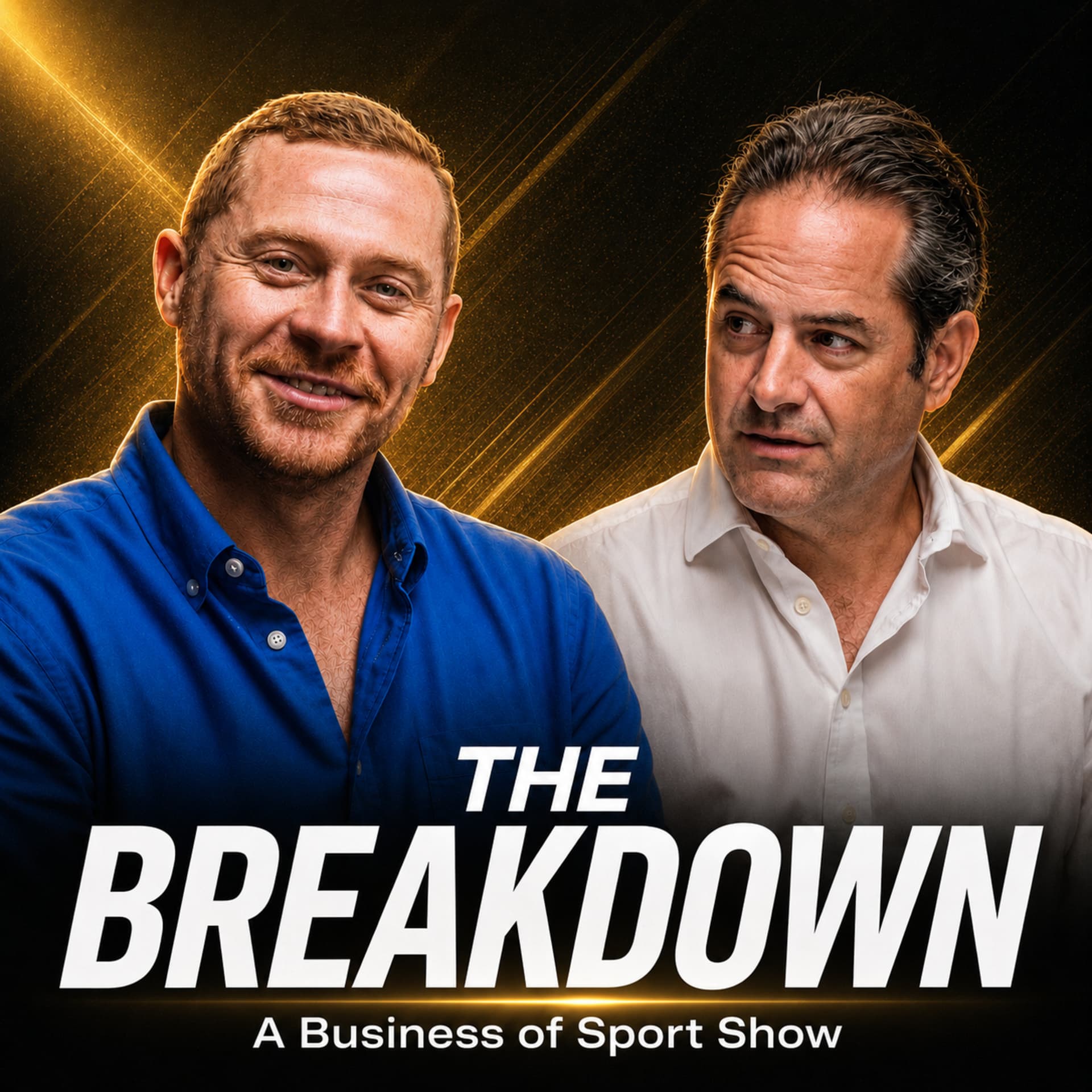
Business of Sport Podcast - Episode 106: Anthony Watson on Rugby’s BIG Problem: Player Welfare vs A Global Game
Episode Overview In this episode of the Business of Sport, host discusses player welfare and the challenges of balancing player health with the demands of a global game with Anthony Watson, a notable England rugby international and former British & Irish Lion. The conversation delves into Watson's journey through injuries, retirement, and forging a new identity post-rugby, alongside insights into coaching dynamics, the business of rugby, and the significance of innovation in the sport.
Key Themes
- Retirement, Injury & Identity
- Long injury spells prepared Watson for retirement.
- Transition from being an England international to facing silence was shocking.
- Discussed obsession with recovery and performance.
- Importance of establishing purpose beyond rugby, including media and business ventures.
- Coaching Dynamics with Eddie Jones
- Eddie Jones recognized as an effective man manager despite mixed opinions.
- The intense details and standards expected within the England setup.
- Reflections on what went wrong during the 2015 Rugby World Cup.
- The Business of Rugby & Innovation
- Need for radical innovation in the Premiership beyond just on-pitch strategies.
- Discussion on salary caps, squad depth, and financial sustainability.
- R360 initiative and the imperative for rugby to adapt and grow.
- Player Welfare vs. Global Growth
- Emphasis on the necessity of prioritizing player health while growing the sport.
- Tension between protecting athletes and enhancing rugby's global appeal.
- Questioning if rugby is too reliant on its superstars for growth.
Detailed Discussions
Retirement, Injury & Identity
- Long Injury Spells: Watson shared his experience of how significant injuries shaped his perspective on retirement.
- Shock of Silence: The transition from being in the spotlight to obscurity was difficult for Watson.
- Recovery Obsession: He reflected on the unhealthy focus on recovery and performance he developed during his career.
- New Ventures: Post-retirement, Watson has been active in media and other business pursuits, helping him maintain a sense of purpose.
Coaching Dynamics with Eddie Jones
- Man Management: Watson praised Jones for his effective management style, despite some players feeling differently.
- Preparation for Competition: He detailed the high standards and details required for England’s success.
- 2015 Rugby World Cup Reflections: Watson provided insights into the team's shortcomings during the tournament.
The Business of Rugby & Innovation
- Need for Change: Watson articulated the necessity for the Premiership to innovate, not just in gameplay but in business strategy.
- Financial Sustainability: Discussion on the implications of salary caps and the need for deeper squad investments.
- R360 and Disruption: The importance of adapting to stay competitive in the evolving landscape of rugby.
Player Welfare vs. Global Growth
- Balancing Act: Watson emphasized the challenge of promoting the sport without compromising player health.
- Long-term Health Risks: He expressed concern over the physical toll on players and the expectations to perform.
- Superstar Strategy: Discussion on whether rugby's reliance on top players is sustainable for the sport's growth.
Conclusion Anthony Watson's insights provide a nuanced perspective on the complexities facing modern rugby. His reflections on player welfare, the business side of the sport, and personal growth post-retirement enrich the conversation about the future of rugby. The episode underscores the delicate balance between the sport's growth and the health of its players.
Key Takeaways
- Transition Challenges: The impact of injuries on identity and the transition to life after professional sports.
- Effective Coaching: The role of strong coaching and management styles in player development.
- Need for Innovation: Urgency for the Rugby Premiership to innovate for financial and competitive sustainability.
- Player Welfare: The critical need to prioritize athlete health in the pursuit of global growth.
Acknowledgments Thank you to Anthony Watson for sharing his journey and insights with the Business of Sport audience, exploring vital questions about the future of rugby.
Written by AI. May contain mistakes. Listen to the episode to check what was said.
Chapters
Tap a time to open that second in VOAnthony Watson's Career Overview
0:45 to 1:57
Exploration of Anthony Watson's rugby career, injuries, and achievements.
“but I think he always did it in the best interest of the person and getting the best out of them for the team.”
Catching Up with Anthony Watson
3:46 to 4:50
Discussion on Watson's current activities and transition after retirement.
“I thought you were making up for a second.”
Navigating Post-Rugby Life
4:50 to 6:04
Insight into the challenges athletes face during their transition from sport.
“and what I needed following a rugby career or regimented career of, you know, 14, 15 years.”
Education and Injury Journey
6:04 to 8:13
Watson shares his experiences balancing education with professional rugby and dealing with injuries.
Support Systems in Rugby
8:13 to 10:07
The importance of support systems and coaching in pursuing education alongside sports.
“to balance your time um and to guess balance your energy levels you know being consumed by rugby was probably taking more out of me than giving me at some points.”
Personal Reflections on Pressure
10:07 to 11:30
Watson reflects on the pressures of being a young athlete and comparisons with his brother.
“I think at some clubs I've been at, it's generally been encouraged a little bit and discouraged in some other places.”
Developing Confidence Through Competition
11:30 to 14:04
Exploration of how Watson developed confidence through competition and overcoming challenges.
“I fell in love with football for a bit and I really enjoyed doing that for a couple of years.”
Transitioning to Men's Rugby
14:04 to 16:01
Learn about the challenges of entering the men's rugby environment and personal growth moments.
The Role of Representation in Sport
16:03 to 18:10
Explore the importance of having an agent and building trust in professional sports.
“You got an agent at this stage you picked up representation side I'd imagine ranks up when ramps up when you're starting to look at contracts etc?”
Understanding Career Opportunities
18:11 to 19:18
Discuss how early experiences shape a professional athlete's career outlook and decisions.
“advice or setting up things for every eventuality pretty early um but otherwise all that money would have been gone.”
Show all 27 chapters
First Impressions with England Rugby
19:19 to 20:32
Delve into the significance of being part of the England rugby setup and initial experiences.
“into camp and I definitely wasn't ready to play for England but I felt like I was.”
Coaching Impact on Player Performance
20:33 to 23:02
Analyze how coaching philosophies and team culture influence player performance.
“And I think that a lot can be said for how important it is for the quality of a person as well as the quality of a coach.”
Reflections on the 2015 Rugby World Cup
23:03 to 24:26
Reflect on the challenges faced during the 2015 Rugby World Cup and the lessons learned.
“We knew Australia was going to be hard, but you just had to win one of those.”
Current State of Premiership Rugby
24:27 to 28:00
Discuss the challenges and opportunities in Premiership rugby, focusing on quality and finance.
“But then it's all or nothing against Australia.”
Rugby's Need for Innovation
28:00 to 29:40
Discover the importance of innovating rugby to engage new fans.
“So you can't just raise the salary cap, make it even harder for them to become profitable.”
Improving the Rules of Rugby
30:44 to 34:16
Understand how rugby rules can be better communicated to fans.
“From a rules perspective, was there anything where you feel like, oh, we need to sharpen this up, this could be better?”
Balancing Player Welfare and Game Growth
34:16 to 36:53
Explore the tensions between player welfare and the need for star players.
“They want to pay to see a Marcus Smith, this, that, and the other.”
Cultural Shifts in Rugby
36:53 to 39:24
Examine how rugby culture is evolving towards individual expression.
“Rugby's been really bad at that and it's improving now.”
Coaching Philosophy Under Eddie Jones
39:24 to 42:00
Learn about Eddie Jones's coaching style and its impact on players.
“to the extent of, yeah, look, you see these videos type of thing going out and they are a real, like, a transition from anything that we've seen in the past.”
Experiences with Eddie Jones: Coaching and Humor
42:00 to 44:20
Learn how Eddie Jones' unique coaching style influenced player development.
“that I think that that group needed, especially given what happened in 2015.”
Injury Reflections: Lessons from Adversity
44:20 to 45:20
Discover the insights gained from overcoming injuries in professional rugby.
“But I think he always did it in the best interest of the person and getting the best out of them for the team.”
The Impact of Financial Incentives in Rugby
45:20 to 47:50
Explore how financial opportunities affect players' decisions and loyalty.
“As do a lot of rugby players, by the way.”
Commercial Appeal: Branding and Sponsorship
47:50 to 50:20
Understand the role of brand partnership and personal image in a player’s career.
“connotation attached to it because sport is is so dramatized and what comes with drama is emotion people feel that emotional connection to either a player or a team.”
Finding Balance: Dedication and Distraction
50:20 to 53:00
Learn about the importance of focus and balance in an athlete's career.
“How did the lads look at that when you rolled into Bath?”
Transferable Skills: Athletes in Business
53:00 to 56:00
Discover how skills from sports can translate to success in business environments.
“I think that you can gain real, real value.”
Athletes' Unique Perspectives in Business
56:00 to 57:24
Discover how athletes' experiences can provide fresh insights into traditional business environments.
“I think the other thing I would say is that their ability to get on with most people.”
The Transition from Rugby to Business
57:24 to 58:26
Learn about the challenges and ambitions of athletes transitioning from sports to business.
“but really we're just on the golf course, right?”
Transcript
Automatic transcript. May contain errors.0:28I spent long stints of my career in June. Marcus Smith, I just don't think it's fair for them to risk their bodies to grow a sport that could be doing so much more than not just relying on wearing these guys to the ground. My experience of Eddie Jones was that he was a brilliant man manager for me and that yes, some people got rubbed up the wrong way and some people didn't like the way he did things, but I think he always did it in the best interest of the person and getting the best out of them for the team. I definitely went through a phase just before I tore my Achilles where everything was going great and the commercial deals were flying i was playing for england sponsored by maserati life was nice it led me to one of the biggest realizations and lessons from my career which was hello and welcome to the business of sports the show that takes you behind the scenes with the industry's leading owners operators and athletes finally we've achieved it after numerous shows with players from wales new zealand south africa france we have ourselves and England international.
1:25And what a one to kick off the Red Rose Association. Anthony Watson is one of the game's biggest names over the last decade. He broke onto the scene young, played over 50 times for England, a double British and Irish Lion, and retired by 30. Injury prevented him from achieving even more, but as you'll hear, it also opened up other opportunities for him. From losing his way when first dealing with life in the spotlight, to university and master's degrees with a big future to look forward to, this is an incredible insight into how the world of elite sport can deliver big success both on and off the pitch.
1:56We're delighted to welcome Anthony to the Business of Sport. Picture this. You're a sporting director in a taxi heading to a board meeting. A player becomes unexpectedly available. The window to act is hours, not days. Can you access your latest scouting reports, your valuation model, see what your scouts and analysts think, collaborate seamlessly with your staff back at the training facility, all from your phone? If the answer is no, you're negotiating blind while your competitors are making informed decisions fast. Gemini Sports is the mobile-first command centre built for exactly this moment.
2:29AI-powered squad planning that puts every insight, every report, every critical piece of intelligence in your pocket. Not next week, not tomorrow, not in an hour, right now. In just eight months since launch, clubs across three continents have made Gemini their unfair advantage to win the transfer market. Visit geminisports.ai and see what your competitors are already using. Because the market moves at the speed of WhatsApp and your tools should too. Social media has become one of the most important marketing channels in sport. It demands more content across more formats at a faster pace without sacrificing brand standards or sponsor value.
3:08That's why over 90 % of professional sports teams in the US use Slate. Slate is the complete creation platform built specifically for social media teams and sport. Founded by former NFL social and video leaders, Slate was built to solve the exact problems teams face on game day and every day in between. It gives teams one place to create, collaborate and publish content across the entire week with brand standards and sponsor elements built directly into the workflow. Slate replaces fragmented tools with a system built for modern sports organizations. When content moves faster, engagement goes up and sponsorship opportunities follow.
3:45Slate helps sports teams create more content faster without the chaos Anthony welcome to Business of Sport mate great to have you here Thank you mate appreciate it thank you for having me Well long time in the making as we were laughing at before the last time you were meant to come in was just over a year ago and then my wife went into labour so I think I had to do a late bail out on it so firstly thank you for just coming back at all No you're right I think you're forgiven mate I think your excuse was valid Of all the excuses? Yeah, yeah, yeah. I thought you were making up for a second. It's the one thing you just can't get away with.
4:18Or you play a really long game and have to find some kid to fill in. So yeah, look, really happy. Oh my God. It's great. It's a perfect time as well because obviously there's lots of rugby at this time of year. So it's a nice chance to put it all together. For sure. What are you up to now? Obviously you've been out of the game for... I retired January 25. Was it? Okay, so last year. Yeah, yeah, yeah. Yeah, well, yeah. Was this time last? Yeah, it was, exactly. What am I doing now? Loads of little bits, to be honest with you. It's ideal for what I want to try and get into and what I needed following a rugby career or regimented career of, you know, 14, 15 years.
4:56This is what you've got to do then. You go to sleep then, eat this then. And, you know, I took things to the nth degree, to be honest with you. I was obsessed at some various points in my career. I got completely obsessed and consumed by doing all of that stuff. So to have complete flexibility now in what I do when I do it, it's just given me a bit of a lease of life, to be honest with you. So from working with the players union that manage the England players to doing some of the media stuff, whether it's TV, podcasts, that's almost like a joy, to be honest with you, just catching up with my mates.
5:30You have to say that now, don't you? It is like a joy. Yeah, and then trying to do something on my own with a good friend of mine. So that's just keeping me busy. I can't sit still. Yeah. I love being active. I love being out, meeting people, chatting about things. And just learning, to be honest with you, just feeling like you're making steps in the right direction. You know, that's when I get, not down, but that's when I'm like, just feel a bit flat is when you don't feel like you're progressing with anything in your life because, you know, you've only got one shot at it, don't you? It's great to hear because the transition is often something people really struggle with, particularly with athletes.
6:04But the ones we often find struggle with at the most are the ones that haven't been actively engaged in something away from the sport while they're playing yeah but you've you had things in you while you were playing that were keeping you busy so that that transition probably felt a little bit less scary knowing that there was some things that you could go into straight away for sure I mean look I'm not going to sit here and say that it's not um there aren't moments where you feel a bit scared or you're a bit sketchy it's it's inevitable but I think overall I was pretty level-headed about it because I spent long stints of my career injured and like we were talking about earlier in those stints you come to realize what retirement is kind of going to be like no one's talking about you no one's bothered what you're you're up to you're not in the papers all the you know commercial deals stuff like that they start disappearing because you're not flavor of the month you know you're injured and so I think you get a gist of what retirement is kind of going to be like in that it through those experiences and what I was fortunate enough to have around me was a support system that kind of channeled my energy into something else for those periods and particularly my mum who when i first started rugby i went to university for literally two weeks i went to um i went to royal holloway and literally showed up to one lecture sat at the front and said this isn't for me left went back to training and then when i did my achilles the first time my mum was like this might be over for you i was like obviously being 26 or whatever is you don't think it's the end it was like no no chance um but she was like you need to go to university now and you need to do something so then I went to uni which you know that took away a lot of the empty spaces thinking about your injury I was focused on this which was going to put me in a better stead for when I do have to stop playing rugby did that and then I finished and I said oh yeah you need to do a master's now as well she's making you pay yeah typical Nigerian mum that is um so yeah so then i i did that when i was out with my knee and then throughout i guess the net it probably took about more like two years so my knee plus you know a bit of the next season which was challenging but again really good to do from a learning perspective but also to be able to to balance your time um and to guess balance your energy levels you know being consumed by rugby was probably taking more out of me than giving me at some points.
8:24How was it balancing the two, like top level, professional and sport and education? This is probably a pretty bad answer, but at some points it was really hard, like the Lions Tour in 2021, you know, going to surf. I know it was COVID, but, you know, everyone's going off to their rooms or going to play golf or going to the spa. and I was joining the team school back in Bath to talk about financials. So it wasn't the most glamorous, but again, like I look at, and this is what got me through the period of, I guess, being reluctant to do the work was I knew that when I came through the other side, I would be in a better place.
9:06And I knew that all the hard work would be worth it in the long term when I've got a master's degree, which I was able to obtain whilst playing professional rugby. And so that kind of helped me. But yeah, there's 100%. And especially when you start, when you do it aligned with your injury, it's when you start getting close to being back fit. That's when you start putting it to the back burner when actually it's like you've just got to be relatively self-aware in that moment to be like, okay I just need to be careful with my time now and I can't just neglect the education because rugby's back in and now I feel like I'm you know a superstar again for want of a better word you got to balance it you do coaches CEOs of clubs you play for etc did they have any say in it did they support you doing it did it not really matter because you didn't feel like it ever really compromised you on a performance side I'll be honest you know I think at the start of my career it probably wasn't encouraged.
10:08I think at some clubs I've been at, it's generally been encouraged a little bit and discouraged in some other places. That's just the way it is. You know, sometimes I think in rugby, the idea is that you've got to be all in, but I'm not sure that that's necessarily appropriate for young men who are going into a sport that is so uncompromising. To not expect or not facilitate them developing themselves outside the sport is slightly unfair. So I think it should always be encouraged. My academy manager at London Irish was very understanding and he knew my parents well. So he knew that that was something that I wanted to do.
10:48At the same time, when I told him I dropped out after two weeks, he wasn't that surprised. But it was, you know, I don't want this to come across at all arrogant. It was slightly different because I was 18 and I was, you know, at some points of that year playing in the first team with London Irish and it became like, I was expecting, to be honest with you, that first couple of years at London Irish in the academy to be playing in the A-League, going on loan, this, that and the other potentially. And then I was playing in the first team and stuff like that. And that's when it's like, again, to my point, is when you get back to, when things come unexpected and you start levelling up almost, similar to getting back fit, the education takes the brunt of that.
11:29And that's why two weeks I said, see you later. Get out, yeah. Which would be always your thing? Yes and no. I fell in love with football for a bit and I really enjoyed doing that for a couple of years. Who's your team? Arsenal. Yeah, hopefully this comes out and we haven't bottled it. Yeah, I'm not going to edit that. Who'd you support? Chelsea. Come on. All my mates from school were Chelsea. Really? It was awful. Good lads. No, they weren't. Yeah, good guys. Like that. Yeah, you're doing well. Yeah. You're doing well. I'm just happy it was kept competitive. last weekend otherwise I do think it would be pretty much done now with the Man City Liverpool result that's yeah nine points would have been a stretch nine points would have been it would have been a lot I can't see you losing three more games than that yeah yeah yeah but I could see you losing one and then shitting the bed and then you've got to play them as well last game this season it was one of the last games yeah so it's okay so you grew up so you grew up surrounded by a load of really good guys new Chelsea fans loved your loved your football but I would say loved like I enjoyed playing football I was never one of those who was glued to the TV watching football.
12:36I loved playing football. I loved playing any sports with my mates. But, you know, I think in the same way that success kind of made me double down in rugby, it did that in football. Like I got picked up to play at Wimbledon Academy for a year. And I was playing football on the Saturday, rugby on the Sunday. And I was never good enough to play football, by the way. Rugby just came so much more naturally to me. Like I was doing things without thinking, playing rugby. whereas football I can always remember just feeling like I had to think about what I was doing. And what also cursed me was once I remember seeing a skill move on FIFA and then I tried doing it on the weekend and everyone started laughing.
13:14So that really got to me as well. Yeah, you follow it up with the dead fish celebration or something similar. You're like, I can do that. Did you have a lot of that kind of early pressure? I remember from when you were playing. I mean, we were pretty much the same age. I remember when you were coming through and there was so much of that kind of big language you use around you? Is that generational talent, someone that's massively ahead of where you'd expect them to be? Did that act as confidence? Does it weigh you down? Does it do a bit of both? How do you handle it when you're young? Yeah, it's hard when you're young.
13:46It's hard. I think I always compared myself to what my older brother had done, to be honest with you. He played England under 18, he played England under 20, he went on to play England sevens and so on. But when the one that I just wanted to outdo to be honest with you he was my competition you know if he played in under 18s I wanted to do it a year earlier than he did I never really felt that that external pressure yeah it probably gave me a little bit of confidence that people were were talking about you at that age um it was only really where when I got into the men's environment that things changed dramatically and you know I think that's where all the external noise and stuff would have got into my head I've come into men's rugby and I'm supposed to be able to you know do this and that and this and that and it's not working anymore and so that's when you have to go back to basics and you know I don't want to keep using the same word but double down on on what you know and and almost figure a way out of it that's where the growth was for me was was to just figure a way out of it and I was doing mad stuff mate when I was in the academy I was so nervous like I was I was positioning myself on the opposite wing so I would avoid kickoffs because I didn't want to drop the ball and like that type of stuff but again like I said you just have to work your way out of it and and um it wasn't overnight it took me a couple of years but you know I found a way big moment big shock when you take it from junior level into men's level it is it's mad like it's you know one day you're at school well to be honest with you I was at when I was still at school I was going in on Tuesdays to train with the men's team so I was I was pretty exposed to it to it early but imagine I'm as a 17 year old I'm sat in chemistry class on a Monday and then I've got to go into to train with these fully grown men whose job it is to play rugby on a Tuesday like it's not it's not the easiest transition in the world but again this is credit to my academy manager threw me in at the deep end and it's like sink or swim and find a way out of it and I'm very grateful for him for doing that but yeah some of the stuff you know you see in a I guess exposed to at that age was was eye-opening but yeah I wouldn't change it for the world.
16:02Who's looking after you? You got an agent at this stage you picked up representation side I'd imagine ranks up when ramps up when you're starting to look at contracts etc? For me it started at 17 pretty much had an agent at 17 because you know I kind of had signed a semi kind of professional contract with London Irish at that stage you know to come in and train once a week and you know have that organization with my school to be able to do that and then I guess the year after was negotiated as well so that was you know it was necessary for me to have an agent at that point um and it's the same the same agent i'm still with now doing commercial stuff that's a good sign yeah i i don't know i just think that trust especially in sport even in business to be honest with you i think that trust is something that can't be it can't be replicated in many other there's no amount of quality you can bring in another area of business or sport that can make up for a deficiency in trust and so i think that you know Yes, I had opportunities to leave.
17:05My agent almost did a couple of times, but I'm so grateful for the relationship I have with him and grateful that I never left because everyone always says the grass is greener, but I can have peace of mind knowing I did the right thing and trusted the right person throughout my career. And when you kind of signed those first contracts, do you have the point where you suddenly realise, right, this is my career. We joked about university and you're doing a few weeks, but there's a big difference between it being something you want to follow and something you can look at going yeah i can i can build a life i can support myself i can support what i want to achieve on and off the pitch i don't think i ever you know 17 18 i never looked at it and was thinking like oh you know the money i'm going to get from this is eventually going to turn into whatever or you know this could this could lead to xyz it was just like this is what your deal is now um and you know i i spent a fair bit of it i was pretty again lucky we talk about support systems that you know my dad and and the people around me put me on to to whether it was financial advice or setting up things for every eventuality pretty early um but otherwise all that money would have been gone.
18:22Spent on highly liquid assets. 100%. What's your watch? I'll put it on record there. Anthony got the tube here. Thank you, mate. There you go. But yeah, no, look, I don't think I ever looked at it as this is a two-year thing or a three-year thing. I was always thinking that I just want to see how far I can take this. Yes, obviously there's financial benefits benefits of being as good as you can be but I wasn't really thinking about all of that I was just thinking what's the next thing in terms of representation wise how early can I break into the first team how early can I then play for England the financial stuff was really it was kind of I'll be honest with you relatively secondary up to a point because England then came into it properly for you what in 2015 14 yeah I was in the squad in 2014 yeah I was probably 20 years old.
19:18I will always be grateful for Stuart Lancaster and what he did because he brought me into camp and I definitely wasn't ready to play for England but I felt like I was. Definitely wasn't, 100 % wasn't but I was kept in camp and I was kept in camp and I just felt like why am I not getting played and then eventually got my opportunity the 2015 Six Nations and was so grateful for having that experience of just being around it. I promise you if he had given me a debut in 2014 I would have had an absolute stinker no two ways about it well so the benefit being you get in and around the environment you understand that playing for England is about far more than 60 minutes that you may get on the pitch one and the detail the detail and how important every little bit of it you know I was again 20 years old and I had Andy Farrell doing the defense there and you know he knew the defense inside out and I was very much like oh yeah but you know yeah i was three steps off but you know in a game i'll be all right well no mate because you're creating habits now that are gonna come out in the game and so just being in around those coaches but also those players and seeing how they went about their business 100 it was it was the best thing for me so really interesting because uh we did a i did a talk before the six nations with corney laws and dan bigger last week and you know it's great obviously to get a welsh person on right now who does Wales because you can just absolutely it's good to learn yeah he's great Dan yeah um but I we we were talking a little bit about this year and he was saying Courtney was saying oh you know if England get up to France unbeaten with it on the line I fully expect Balfour to get it done and I was I was like quite quite surprised about that because he it wasn't just like I expect us to be able to handle the pressure whatever he specifically singled out coach impact he has tactically behind the scenes what is done for the that group of players being able to get them playing in a certain way in the right mental space not necessarily the easiest start and it just made it made me think a lot more about that coaching setup maybe over the last 10 years or so as you said where you've seen these different types and different styles and you also had eddie jones which obviously had a different style and approach right yeah but its own merits in the same way i think what steve's done really really well is is not blood youngsters I don't think it's the right it's not the right phrase for them is to build the squad depth that he's done you know you look across the back row in the back three in particular and I'm like there's more strength in depth in those two position groups in any other nation in the world you know you could maybe make an argument for the back three in South Africa but that's it you know I think that England have got such quality there and it's it comes from trusting players comes from rewarding boys for their performances in the Premiership and wherever instead of just track record which we've seen not from Steve but we've seen in England teams gone by rightly or wrongly I think he's got great he's got a great team behind him as well Steve you know I think Richard the guys I worked with at Leicester Richard Wiggersworth and Kev Simfield in particular I would single out as very good coaches.
22:25Kev and Wiggy, both good men as well. And I think that a lot can be said for how important it is for the quality of a person as well as the quality of a coach. Coaching is one thing, but what supports a good coach, in my opinion, is their ability and emotional self-awareness, their ability to communicate with players, understand what they're going through. And that's the makeup of a good man, in my opinion. so I think both go hand in hand and that's when you really get a culture behind a team I think Steve has done that both himself and with the group he's got around him Sounds a little bit like Arsenal now you just need to win something Don't do that bro No I'm scared Everyone's saying oh it's the best squad I've ever seen in a league you know a bit like this thing the best you know group players like yeah yeah now let's put some silver I'm hoping in one of those scenarios is right and it's not the Arsenal one we we uh we had a joke i suddenly realized coming in that you out of 100 and whatever shows and quite a few rugby shows you're actually the first england player that i've had in the scene which has been quite enjoyable because i've had to deal with too much welsh yeah we don't we don't but while we've had sam warburton and dan bigger gloating about that moment in 2015 you mentioned obviously coming into it what an earth was that about the worst 2015 rugby world cup we're up at halftime and feeling nice and confident as a fan and then we end up losing the game and going out of the home World Cup I mean without wanting to make you feel even worse about it thanks mate appreciate that it was you know do you want to do you want to make me feel better with anything no I would love to make you feel better but it was a that campaign wasn't the best start to finish it must have been I mean all jokes side it must have no it was horrific like the one thing that was okay with that game was that we still had to we still had to play Australia I'm pretty sure the week after we obviously felt we should have beat Wales at home.
24:23We knew Australia was going to be hard, but you just had to win one of those. But then it's all or nothing against Australia. So then to lose that game was awful, obviously. That's like, you're done. And then we had to play Uruguay in Manchester the week after in the Etihad Stadium. And that whole week was just... Everything came out. You know, it was just... Yeah, it was an absolute disaster, start to finish. Was that the first time in your career where things had probably gone wrong and you were suddenly seeing a different side to the game, having to learn how to handle major disappointment?
24:58At the level of scrutiny that we were facing, yeah, 100%. Because, you know, I'd been at London Irish when we lost sort of seven, eight games in a row, which isn't great. But I don't mean this in a disrespectful way, but there's levels to scrutiny that the Premiership have and International Rugby Home World Cup have. and yeah to be the first nation to get knocked out of a home world cup in the group stages with the squad that we had which was good it was just horrific was it your idea to kick to the corner i mean i was telling well clear as a 21 year old at that moment in time i was providing absolutely no insight into tactical decision making walter's response to it was brilliant it was like you kick with a corner you think you're gonna get over this line you think you're you arrogant and this is the same guy also that you know just says I love my dog Ledley and then you just see the eyes just light up like oh okay yeah he's coming yeah but yeah it was no it was bad it was bad but also I mean it was a tough group obviously everyone yeah I mean you had Pogok and Hooper who were absolutely monsters in that game against Australia I mean that was what I remember going into that game wasn't as in we can't do it but they were just on like they were on such great fall yeah obviously there's negativity and things to mental scarring to get over for you guys coming out of the game and you go and meet a team that's it's just tough anyway I don't need to drag it on sorry I'm getting that team was a joke that team was a joke I've moaned about that match more on this show than anything else oh mate there's a few moments I could moan about it's accountability right yeah yeah hey we talk a lot about the bridging of that international rugby into club rugby in lots of different ways club rugby and international rugby have such a gap at the moment between fans engagement or weekly engagement if you want and when the six nations are on it feels like rugby is at the heart of the social fabric of this country almost every day yeah then you know unless there's a major tournament it kind of goes back into oh yeah for the people that are interested it's huge but outside of it it's not how do you feel about prem rugby at the moment where do you think we're at we've got some exciting stuff that happened last year and in a few ways with people buying into it but then you've still got challenges around finances tendencies etc yeah look I think my my views on on where the premiership is I think that the standard in terms of the average quality of player if you could use a metric to grade the average squad player in the premiership I think four or five years ago it was better I think when you had you know a stacked Saracens team albeit with salary cap situation Bath team Northampton team when they would have you know when they had George North they'd have Sam and Manoa, they had internationals littered across the park.
27:41I think the average squad player was better then than now. I think now we're, and what I'm concerned with is ending up with a squad makeup that's maybe, you know, three, four England internationals and then squad players. And that comes down to the salary cap. But that's another issue because, you know, clubs have been, you know, losing money year on year. So you can't just raise the salary cap, make it even harder for them to become profitable. So I think that, in my opinion, I think there's just got to be ways to innovate the sport more. They've got to innovate the premiership more. I know that there's reasons as to why that can't necessarily be done easily in terms of decision-making processes and stuff like that.
28:27You mean like councils? Yeah, well, I didn't say you said that, not me. Go on. Yeah, thank you for the hospital pass. But no, I just think that, look, I think that Red Bulls will be good for the premiership. I think that looking at the premiership from a different lens, I think they've got the opportunity to do that and innovate in a space. How much freedom they're given to do is what I would potentially be worried about. But I think that, look, if they can't do it, I'm not sure anyone can. I think they've got to essentially rip up the playbook from an innovation standpoint for the premiership.
29:02And I mean, not just the product on the field. I mean the marketing, the broadcast, in my opinion, it all needs a fresh look to just make it more engaging and to make it all more connectable to people who are first time fans, just getting into it, never watch the sport. Like, do you know what I mean? It's got to address all of those issues because, you know, it's really hard to just turn on the TV, never watch rugby before and be like, I know what's going on, or even have an idea what's going on, you can't. So there's got to be ways to innovate it, to make it simpler for people just to pick it up.
29:45Seamless access to the ultimate premium hospitality experiences at the biggest sports and entertainment events. That is what Seat Unique is all about. Now, I'm really delighted to partner with them. I've known the business for a long time. The founders are incredible. The growth of the offering has been insane. The experiences they create are unmatched. Seat Unique brings all your favourite events into one place, with access to top-tier Premier League clashes, major finals, the world's biggest artists and the most iconic venues. If you're worried about fake tickets or scams, as I think most of us are, every ticket on Seat Unique is 100 % official and guaranteed, so customers can book with total confidence.
30:23And it doesn't matter if you miss out on general sale. Seat Unique gives fans secure access to events that are already sold out, so missing the drop doesn't mean missing the event. They know the concern around hidden fees and unclear pricing. What you see is what you pay. No nasty surprises at checkout. Discover your next premium experience by following the link in the description to seatunique.com. From a rules perspective, was there anything where you feel like, oh, we need to sharpen this up, this could be better? The actual rule book itself, I'm not sure how much they can do without it turning into another sport or changing dramatically.
31:00but I think that the way that it's explained to people, I think can be done better. The way that decision-making processes, the referee for example, how that's explained to the fans can be done better in a way that makes it easier to understand. Not everyone knows what the hand signs are that the referee puts up, to be honest with you. People who watch rugby week in, week out, might not even know that, let alone people who have just tuned in. So I think that just creating that connection between what I'm seeing and now what I understand is going to be really important for where the game needs to go.
31:34You played for big clubs, right? You had Bath, Irish Tigers, Leicester Tigers. When you're on that pitch, you've got great support in those clubs. Did it feel like that as a player? The stadium was the place where it had that value. Yeah, definitely. Bath and Leicester, undoubtedly, in my opinion, were the two best clubs in the country, to be honest with you. There's no disrespect to London Irish where I started. I loved that club as well, but it was definitely a lesser supported team. Probably didn't have the same infrastructure and history that the other two have. Bath and Leicester, you definitely felt like you were not part of something bigger.
32:09That's probably a bit exaggerated. But the whole city is kind of shut down, especially in Bath, for game day. And so you get that as a player, you feel like you're walking in to do something amazing. everyone's going to be there it's the talk of the town type thing so those places were were amazing and i think if there was if they could do even more in and around the city and in kind of there's no use me just sitting here and saying innovation innovation innovation with no ideas that is the key to unlocking a bigger picture for rugby calendar alignment make an influence in that now if we're looking at the simple ways where we can improve it not losing players international windows having a specific budgeted if you want for want of a better phrase set of time for for each tournament like that's a start keep your best players give the fans the opportunity to see the best players it was always the thing that to me just had it had to be fixed beyond anything because these sports are now built on superstars and people as much as anything else yeah you know someone's saying i'm going to the saints to watch henry pollock as much as i'm going to watch northampton saints yeah he's off on england duty i'm not as interested in going to saints yeah That's an emerging fan, not necessarily a legacy fan who will turn around and say, I'm an idiot for that.
33:24But in a world now where that happens a little bit more, making sure the best players are available for the clubs, that's a good step in the right direction, right? Yeah, 100%. I think that what we've got to be careful of is just saying all these things without looking at the negatives. And the negatives of a globalised calendar is that the community game would have to follow suit, in which case then you're now competing with potentially other sports. Let's just say, you know, there was England internationals or a big block of England internationals throughout the summer. Well, now we're competing with cricket and now we're expecting kids to choose cricket or rugby.
34:02And I just think that it opens up another can of worms. You just have to, it's like a pros versus cons exercise that would have to be done. I think it's definitely something to be considered, whether it's, whether it works and is feasible. you'd have to do a proper deep dive into it what is the what is the calendar alignment if we're going to use that as a as a theme what does that do for player welfare and look at you know just increased workloads and i ask you know you're someone that had as you've highlighted significant injuries throughout your career and had to battle with that and the impact that has on players we see the issue in football all the time more more more trying to squeeze it in cricket deals with it but let's be honest you know you can play a cricket match every time you see yeah well it's true i love cricket but it's a very very different proposition in rugby when you're trying to fit all of this in but make sure that you're looking after your players yeah it is look i think that player welfare has to be central to to what rugby is trying to do but again like this is why rugby is in such a not precarious situation but it's like everything has got two sides to it because if we want the game to grow, then players need to, you know, people want to pay to see a Henry Pollock.
35:18They want to pay to see a Marcus Smith, this, that, and the other. So to pull them out of these games on player welfare grounds, you could argue prevents the sport from growing because those guys are not playing as often as they should. But I think that the duty to grow the sport shouldn't compromise the players in doing so and I think that by encouraging or enforcing more games in a way to grow the sport I think is almost like not a cheap way to do it but it's like I just think it's not a fair way to to grow the sport and it's unfair to expect players to risk their bodies and the short careers for something that's going to materialize maybe in 20 years.
36:04Do you feel like you risked your body? Oh, 100%. I was happy with the risk, though. I knew what I signed up for. Did the risk fall on your plate, or was there a medical department who would be able to overrule or have a say if they really thought you shouldn't be on that pitch? Yeah, the medical department definitely could. but more often than not if you are extremely stubborn as a player and you really really want to play and you hide things and you do whatever then you can get back on the pitch I hate to be the person to say because I was never and I would have hated it to be taken out of my hands but it does need to be taken out of the players hands because you know they're competitors players want to play but I just don't think it's fair for them to risk their bodies and their long-term health to grow a sport that could be doing so much more that could be doing so much more to grow it and not just relying on wearing these guys to the ground yeah so basically you're saying that it's not well talent's a big opportunity there needs to be more to the appeal of the sport than just relying on your superstar superstars is the easy yeah way to evaluate whether something's successful or not now yeah but i mean look the superstars that's two-sided as well like yes the easy way is to blow them up, celebrate their individuality, this, that, and the other.
37:26Rugby's been really bad at that and it's improving now. What I'm saying though is that expecting those superstars to play week in, week out to grow the sport is not fair. By improving now, do you mean Borthwick's encouragement of TikTok culture? I actually hated that TikTok with a passion. So maybe on the art school. No, I would never have done that video, ever. Awful. dressing room uh acceptance of stuff like that comes up a lot it's come up a lot in the previous chats with you know why rugby struggled with the individual player putting their head above the parapet and the broader team's acceptance of people like that because the strength of rugby has often been in the collective culture when you were doing um your studies for example and everyone was out playing golf and doing their stuff what's that like if you have someone or an individual in that dressing room that bucks the trend from everyone else is it a hard place to be do you know what i don't think that education stuff was was necessarily frowned upon it wasn't like thought of as weird yeah no no no but yeah there's definitely there's definitely an element of of rugby um changing room that's like anything outside of the norm is going to be blown up into something that is it's not but it was definitely worse when i started playing 100 when i first got into that England set up I definitely felt like I had to fit in certain type of mould, act a certain type of way, look a certain type of way and I look at that squad now and I look at the squad as you know at the end of my career and it was very much like look we understand everyone's individuals here.
39:01There's things that are acceptable and not acceptable outside of that make smart choices and I think that that kind of trust in individuals to make those decisions is empowering and it builds into a situation like they've got now where people feel like they can be themselves, not be stupid, and it creates a tighter-knit group. It's a product of its environment today to the extent of, yeah, look, you see these videos type of thing going out and they are a real, like, a transition from anything that we've seen in the past. And you can imagine Martin Johnson looking at something like that from the team they had and then going, what the fuck is that?
39:36Yeah. What is that? But at the same time, it's kind of the broader culture we live in today and anyone who's 20 years old if they're not playing rugby and they had a different career that's kind of the thing that a lot of 20 year olds will do now so if you are looking at developing that sport and making yourself a little bit more available and accessible hey i thought it was interesting coming from a head coach because it's so rare that you see a head coach understand that those two things could go together that you could look at growing a game through them doing something that connects with a different audience yeah yeah yeah you know Steve is a very smart man yeah he is he is um yeah I think look I think the one good thing about the TikTok dance that came out I think is that the boys were felt safe enough and were encouraged enough in that environment to feel like they could put it out because you know if you rewind like we said five six years ago you might have filmed that type of thing or they may have filmed it but it would have never gone out and it would have been made sure by whoever that it never made it out so as much as i hated watching it and i felt i was sick in my mouth watching it i think that that's the one good thing to come from it is that they felt like they could post it can we um can we role play so you've just done that dance it's just gone on tiktok and you walk into training in i don't know 2019 and i'm eddie jones yeah mate honestly i'm not sure he says anything so okay so yeah was that was that start so just be like a yeah i'm getting removed from the whatsapp group there's a taxi waiting for me outside uh training ground and i'm gone you're just gone yeah probably but you know what eddie was eddie was i mean look maybe not the tiktok dance it might not have gone down too well but he was very forward thinking and a lot of stuff and he's he's been one that's very pro grow the game pro trying things so yeah the tick tock might have been a stretch but he was very encouraging of boys to to try stuff um whether it was recovery related or rugby related or anything to to improve but also to grow the game you know he wanted us to all have a voice when it came to negotiations and stuff with bigger picture stuff um and things like that so he was um very forward thinking and very appreciative of player voice.
Read the full transcript
41:55Did you enjoy him as a coach? I loved him. Did you? Yeah, I completely loved him. When he first came in, he gave us that independence that I think that that group needed, especially given what happened in 2015. And that kind of, again, ability to just be like, make smart choices. At the same time, with doing that outside of the training field, on the training field, it was like, okay, there's no room for any ambiguity here. We've all got to know what we're doing, how we're doing it. And it was simple to the point and it got the best out of us for that period. I think for me personally, he was just always challenging me to see where I could go, see how I could improve.
42:36He did it in a weird way with me. It wasn't like I wasn't getting the 6 a.m. texts or the meetings where he was screaming. I would just get the piss taken out of me. you know like there was one game where you know you've seen George Ford hit those drop goals I'm sorry those spiral bombs and how good he is but when he was playing for Leicester and I was at Bath he must have kicked six in a game and I dropped all six came into England camp it must have been the Six Nations so like around February time and Eddie was just ripping me for it the whole time ripping me ripping me ripping me and then like he would come stand next to me when George is kicking them for me at the end of training and he's just taking the piss out of whilst that's going but i knew that i had to improve in that area and this was his way of just being like encouraging me to continually drive to be better at it and it was a weird it's hard to explain the kind of relationship we had but it was very much just like nothing was that serious but we both knew it was serious to some extent but so that was him recognizing that the best way to communicate with you in that situation was to bring maybe a bit of humor into it rather than go and sit you down and go why the hell are you dropping all those kicks get under the ball better put you know 100 which is great man management 100 he is a great i think he was a brilliant man manager so why is he taking all the stuff yeah look i think everyone's experience is different and i think it's whilst i say i think he was a brilliant man manager there are some people who had different experiences and who am i to say that there's a wrong and my mind's right.
44:10My experience of Eddie Jones was that he was a brilliant man manager for me and that yes, some people got rubbed up the wrong way and some people didn't like the way he did things. But I think he always did it in the best interest of the person and getting the best out of them for the team. Was it rugby fun? Did I love the rugby itself? I loved competing on Saturdays and I loved working on my game and I loved that continual cycle of just trying to improve, to be honest with you. And even through all those injuries, you know, people are like, what the hell are you talking about when I say I wouldn't change them for the world because I learned so much through each of them.
44:52It feels like it gave me so much back. Did you feel like you recovered from them? No. So almost like each one you just felt took a little bit extra off? Yeah, look, I think if you rupt your Achilles twice, you're kind of counting your lucky stars that you're back playing. and then you do your ACL on the same side and it's like, right. Look, I think it was, I was always, you know, hurting. Yeah, I played through a lot of pain throughout a lot of my career. As do a lot of rugby players, by the way. It's not just me in particular, but I feel like once you've had, and this is backed by no science whatsoever, this is just my own theory, is once you have two, one, two big joint injuries in professional rugby, I feel like you're not on borrowed time, but it changes the dynamic.
45:41Up or battle. Change of tag. We've talked about a few innovation things. What do you think about R360 and the moves to disrupt the game like we've talked about from a player's perspective? Is that something that you looked at and went interesting? I think from a player's perspective. Cash. Yeah. Well, let's be honest. It's an important part of, it's their job. and I think it's not in a lot of other industries, let alone sport, we've seen similar things happen where you can't blame them. If someone offers you double your money in a 10-year career to go play in a league that sounds fun, sounds, I guess, novel, you'd be stupid to not consider it at the very least.
46:27I think what it's done is create a discussion about how rugby can improve and I think that that's good. I think rugby has to innovate. I'm not sure when you look across other sports or big sports in this country, I think that rugby is always the last to innovate and it's the last to implement things. It doesn't want to take a risk. And so I think that R360 has probably given us as rugby fans and whatever a bit of a nudge to be like, okay, we need to stand up here and really push this sport along because if we don't, then someone else will. Exactly. Tom Harrison, who was on a few weeks ago, CEO of the Six Nations, said it was a real disrupt or be disrupted moment.
47:11And while it shouldn't necessarily take something like this to happen, quite often it does. And let's be honest, that happens in lots of walks of life. But from a financial perspective, particularly people talk about football all the time and player salaries, but it's a very, very different game of rugby, as you say. You suddenly offer someone a minimum contract of a million. a season and you're traveling and you're traveling around in some amazing places and being a part of some exciting new project and all of that hey it's it's easy to sit here and go no you've got to stay loyal to your traditional yeah teams etc but it's like well that offer got put in front of you in that same situation you're probably taking exactly exactly sport has got a whole different connotation attached to it because sport is is so dramatized and what comes with drama is emotion people feel that emotional connection to either a player or a team.
48:05And so when these decisions are put in front of you, there's no longer, for people looking from the outside, there's no longer logic involved. There's an emotional attachment to a decision to be made. Whereas put yourself in their shoes, you have to have logic. Is it fair to put the players in positions where great opportunities are brought to them by legitimate bodies? and then the flip side is you can't play for England. You can't achieve everything that you've trained to achieve by taking an opportunity that is hugely valuable to you, not just now but moving forward. I understand both sides of the argument but I also feel like as an ex-player that's the reality of the situation and it's like I understand why the RFU have got it in place therefore I just have to make a decision as to what's right for me.
48:58And that might be to chase the money and, you know, earn as much as I physically can in a 12-month window, or it's to do what I've always wanted to do, which is play for England. Which, by the way, can also give you the same amount of financial security as going abroad. So I think that just becomes the reality of the situation for a player. and it's like you have to just make the right call for you. On profile then and exposure there, how was your kind of brand commercial appeal? I get a feeling from Monday, 2015 to 2022, if a brand was really after a rugby player wearing an England shirt, you'd probably been quite high up on that list.
49:39Did you notice it? You don't need to be modest. Yeah, it definitely did come into play more and again this is why having having worked with my agent for so long i'm surprised looking back on the now that he's still working with me because i i definitely went through a phase just before i tore my achilles um where you know everything was going great and the commercial deals were flying i was playing for england this that and the other i remember showing up to to baths training ground i was sponsored by maserati for a bit and stuff like that and it was life was nice. Okay, so you had a Maserati sponsor.
50:19So I'm guessing you got your pick of a car that you could have. Yeah, more or less. Within reason obviously. So that's a pretty great upside. How did the lads look at that when you rolled into Bath? Luckily if I had done that at Leicester, it probably wouldn't have gone down as well. At Bath, I was okay but... So who else you had? Maserati? I was with Sadie Daz throughout my whole career, they were unbelievable. I was with Maxi Muscle, and then I was just doing all kinds of things. I was speaking to my agent, why can't I get front row of this? Why can't I get front row? I thought I was the man at that stage.
50:59I honestly did. I was lost, which is why it led me to the biggest realization or one of the biggest realizations and lessons from my career, which was to not get distracted, because I ended up going to an event I shouldn't have gone to. And that's when I re-ruptured my Achilles. You know, I was four months into the rehab and I've gone to do something. Whether it had healed or not, that's kind of irrelevant at this stage. You know, the surgeon has obviously said that it's probably a good thing it happened. Irrelevant of that, I look at it like I shouldn't have been ever in that situation where I'm distracted from doing what I love doing and what I put so much value on doing, which was playing rugby.
51:42So like that stuff was all great and that then, but it can be gone like that. And it's so funny. You see when you're not in the international shop window for 13 months, how things just slip away. So that was a turning point. Big turning point, 100%. Was that when education came back into it? Was that when you were, yeah. Yeah, that was when I went back. Well, yeah, I went back to uni. That's when I started going so over the borderline insanity with how seriously I took recovery, getting the injury right. You know, like I wasn't going out, I wasn't drinking, I wasn't doing anything. I was either working, like university working, or I was working on my career, or I was recovering to be able to work.
52:29Like it was never, there was no in between. And yeah, I don't know how my missus at the time dealt with me because I was like, I was so obsessed. It was insane. To the point where it was unhealthy. So you can often go from one extreme to another. Yeah. And that's the value. And that's why I think that it shouldn't take what it took for me to have been able to figure it out, I don't think. I shouldn't have had to go to opposite ends of the spectrum. But I think by exploring that in a tighter window, I think that you can gain real, real value. and that experience either sides gives you the understanding of where the sweet spot is and and when you're drifting one way when you're drifting the other I think that builds self awareness and that builds a greater understanding of where you can best position yourself for success sport condenses reality and in a way very few things do just because of the profile you have at a certain age and you can look at that as good and bad but really you know you can then turn around and say well i'm 32 years old now and i've been through a major stage of my life where i've actually had everything it's not where i want to be and you've managed to flip that around come out the other side of it beyond it position yourself well to move forward and you're still only 32 that's a midlife crisis for a lot of people right it was a midlife crisis for me yeah but it is it's a mid-career crisis in a way right because you know your life again your sporting life that is your midlife crisis 100 i think that the experiences in sport are so high pressured it requires so much of you that i think that the lessons that you gain from that are so huge and and honestly i feel like the more that i dip my toe into the business side of it the more i see the parallels and the more i see how it crosses over and so yeah look i'm i'm just i'm just enjoying what i'm at right now sorry That's not really answered the question.
54:25Is there anything that you've seen transition really interestingly? It seems like a really basic question. I'll give an example. The one I'd noticed is an athlete's ability to take criticism versus a founder's ability to take criticism or someone in a business, a CEO's. Every time I've seen an athlete go into a company, they seek it. Yeah, yeah, yeah. Whether the CEO will completely, well, they'll run in the other direction to get away from it. 100 % yeah no that's that's for me that's a no-brainer to be honest with you because when you talk about margins in sport you know if there's if you're not selected for a game the first thing you need to do is go find out why and you know when your dreams and aspirations predicate on you being able to play in the game or be in the shop window week in week out you need to address the issues that the coach tells you so that you can fix so that you can do that so like the criticism side of it is massive and being able to understand and and learn take someone else's opinions and improve i think that the athletes bring that the other thing i would say is and i know that it's commonly used but i think the resilience piece being it being told no is something that happens loads in business and being able to trust that whether you've done the work or you trust in your product or you trust in the people around you to continue driving forward I think that athletes have got that in spades because you have to believe in yourself.
55:53You're going to be told you're not good enough, you're not big enough, you're not whatever. And you've got to have that internal self-belief to drive through that. I think the other thing I would say is that their ability to get on with most people. I think the athletes, again, especially team sport athletes have got that. Footballers get chucked into teams in Germany, Spain, Portugal, whatever, might not even speak the language and they've got to somehow forge a connection with a group of lads to get the best out of everyone in that environment so those are just three examples the list could go on to be honest with you yeah it's great just just by the experiences you've had you're automatically bringing something that is highly unlikely a lot of people in that traditional business world have ever had exposure to yeah at that level and the other thing is it's just fresh lenses do you know i mean like if you've been in professional sport for 12 years and you get given and something with zero relevance to what you've been doing.
56:49You don't understand the full picture. You can make a, I guess, a pretty rational decision with no emotion attached to it, just on how you're seeing something. And sometimes it might be wildly off, of course, and there might be intricacies to that process. But I think that having just someone who has no understanding necessarily of the lay of the land and the way that things have been done, and this is how we go through this A to B to C, I think gives a good perspective on things sometimes. So I think that's another thing that athletes can do. So after all this, you talk a great game and all that business stuff, but really we're just on the golf course, right?
57:25Yeah, of course, mate. Like honestly, if I could play five days a week and not do anything for the rest of my life, I would be extremely happy. So this is just, all of this is just a bit of a fallback. It's a means to an end, my friend. Next career? You're going to do a Gareth Bale? I would love to do a Gareth Bale. You need to get on like this icon series thing. If they need me, I'm there. But I am talking like that. But at some point, I do want to, like we were speaking before, I think the one itch I have to scratch is just to feel like you're progressing with something. And at the moment, golf is that because I feel like I'm improving and I'm kind of edging towards where I want to get to.
58:06But I also want to do that in a business context. And I want to see how far I can take whatever it is I want to do from the business side of things and where I can get my knowledge base to. So those are the, I guess that's the one thing I'm looking for from post-rugby. It's a great place to say that. Obviously, all of you out there who have stuff to offer, which we know that you do. So you've got a new person here to come and tap up. I'll leave it as the high impact ending. But in all seriousness, mate, thank you so much for coming. It's been great to chat. Appreciate you, mate. thank you thank you once again to Anthony for coming and joining us today another show with a top level rugby player in a sport that has so much opportunity to grab hold of I thought this showed another side of the game we haven't yet covered the importance of different personalities and influences and how important they are in shaping the careers of the players they work with in Anthony's case it was everyone from Stuart Lancaster to his mum I'm sure he won't be alone there thank you so much to him for joining us and I hope you enjoyed the show.
59:13Now, if you want to see more from today's show, you can do so by going to YouTube or any of our other social channels across Instagram and TikTok. There are more snippets to share and bite-sized chunks to consume. And while you're there, please do like, subscribe and follow the show. As you will hear from your other favourite pods, it makes a huge difference when bringing you the best guests and conversations from the world of sport, which is of course our endless aim. Thank you again for tuning in and we'll see you next week. Picture this, you're a sporting director in a taxi heading to a board meeting.
59:43A player becomes unexpectedly available. The window to act is hours, not days. Can you access your later scouting reports, your valuation model, see what your scouts and analysts think, collaborate seamlessly with your staff back at the training facility, all from your phone? If the answer is no, you're negotiating blind while your competitors are making informed decisions fast. Gemini Sports is the mobile first command center built for exactly this moment. AI-powered squad planning that puts every insight, every report, every critical piece of intelligence in your pocket. Not next week, not tomorrow, not in an hour, right now.
1:00:19In just eight months since launch, clubs across three continents have made Gemini their unfair advantage to win the transfer market. Visit geminisports.ai and see what your competitors are already using. Because the market moves at the speed of WhatsApp and your tools should too. Social media has become one of the most important marketing channels in sport. It demands more content across more formats at a faster pace without sacrificing brand standards or sponsor value. That's why over 90 % of professional sports teams in the US use Slate. Slate is the complete creation platform built specifically for social media teams and sport.
1:00:57Founded by former NFL social and video leaders, Slate was built to solve the exact problems teams face on game day and every day in between. It gives teams one place to create, collaborate and publish content across the entire week with brand standards and sponsor elements built directly into the workflow. Slate replaces fragmented tools with a system built for modern sports organizations. When content moves faster, engagement goes up and sponsorship opportunities follow. Slate helps sports teams create more content faster without the chaos. Seamless access to the ultimate premium hospitality experiences at the biggest sports and entertainment events That is what Seat Unique is all about Now I'm really delighted to partner with them I've known the business for a long time The founders are incredible The growth of the offering has been insane The experiences they create are unmatched Seat Unique brings all your favourite events into one place With access to top tier Premier League clashes Major finals The world's biggest artists And the most iconic venues If you're worried about fake tickets or scams, as I think most of us are, every ticket on Seat Unique is 100 % official and guaranteed, so customers can book with total confidence.
1:02:07And it doesn't matter if you miss out on general sale. Seat Unique gives fans secure access to events that are already sold out, so missing the drop doesn't mean missing the event. They know the concern around hidden fees and unclear pricing. What you see is what you pay. No nasty surprises at checkout. Discover your next premium experience by following the link in the description to seatunique.com. Thank you.
From the publisher
After numerous shows with players from Wales, New Zealand, South Africa, France, we have ourselves an England international. And what a way to kick off the red rose association.
Anthony Watson is one of the game’s biggest names over the last decade. He broke onto the scene young, played over 50 times for England, a double British & Irish Lion, and retired by 30. Injury prevented him from achieving even more, but as you will hear it also opened up other opportunities for him. From losing his way when first dealing with life in the spotlight, to university and masters degrees with a big future to look forward to, this is an incredible insight into how the world of elite sport can deliver big success both on and off the pitch. We’re delighted to welcome Anthony to Business of Sport.
Retirement, Injury & Identity:
Why long injury spells prepared Anthony for the reality of retirement.
The shock of going from England international to silence overnight.
The unhealthy obsession with recovery and performance that followed.
Building purpose beyond rugby through media, business and new ventures.
Eddie Jones, England & Elite Standards:
Why Eddie Jones was a better man manager than people realise.
The detail and intensity required to succeed in the England environment.
What really went wrong at the 2015 Rugby World Cup.
The Business of Rugby & Innovation:
Why the Premiership needs radical innovation beyond the pitch.
The reality of salary caps, squad depth and financial sustainability.
R360, disruption and why rugby cannot afford to stand still.
Player Welfare, Superstars & Growth:
Why growing the game cannot come at the expense of player health.
The tension between protecting athletes and building global appeal.
Whether rugby relies too heavily on its biggest names.
A huge thank you to our amazing partners on the show:
Gemini Sports
We empower the most confident sports organisations on Earth https://geminisports.ai/
Slate
The complete content creation platform for social teams https://slateteams.com/
Seat Unique
Discover your next premium experience https://wgl.io/s10it7