
 Business of Sport
6 Oct 2026 · 1h 27m

 Add vo to ChatGPT or Claude to ask about everything you hear
vo listened to this episode to put together the overview and transcript, so there may be the odd mistake.
Eddie Pepperell discusses the mental/physical complexity of elite golf, his path back to the DP World Tour via Q School, the financial realities of playing professionally, and his outspoken critique of LIV Golf’s motivations. He also explains why he’d turn down the PGA Tour, and shares detailed Masters experiences and psychological approaches to high-pressure moments.
Eddie Pepperell is a professional golfer and media personality (co-host of The Chipping Forecast). He has played on the DP World Tour for much of his career, returned to the tour after Q School, and has been an outspoken voice on LIV Golf while advocating for the DP World Tour.
0:00I think golfers are as psychopathic as sports people as you are probably going to find. It's a sport that you kind of end up a bit that way. That's what makes golf a particularly challenging sport. When you go back to me in 2018, which was the best year I ever had, there were pockets and weeks within that where I didn't play because I felt depressed. I didn't turn up to the French Open in July of that year because I couldn't get out of bed. Three weeks later, I nearly won the Scottish Open and nearly won at Carnoustie in the Open Championship. You can have an awful lot of chaos going on in the background, as Tiger did back in the mid-2000s, and still perform on an extremely high level in a sport like golf.
0:31I mean, major weeks are incredibly expensive. When I went to the Masters, the house alone was$20 ,000. You're spending$30 ,000,$40 ,000 one week alone to play a major championship. You know, I've always struggled a little bit to fully comprehend what that means to earn 500 grand in a week because it's such a departure from the life that I grew up as a part of and that most people do grow up as a part of. I do think you owe a responsibility to your industry if you spend enough time in it to leave it in a better place than you found it. and that's certainly how I feel about golf and the European Tour.
1:00And what I saw were people going to play lift golf simply for money. I found that very, very conflicting and difficult, frankly, to accept.
1:11Hello and welcome to The Business of Sport, the show that takes you behind the scenes with the industry's leading owners, operators and athletes. If you can believe it, today we welcome our first golfer to the show. A notoriously hard group to get hold of, I've wanted to get stuck into life as a professional for years. Eddie Pepperill is the perfect person to do that with. Fully open with his thoughts, super analytical, a media voice himself as co-host of the hugely popular podcast, The Chipping Forecast, and someone that has experienced both the highs and lows of a sport that tests your mental strength as much as any other.
1:42He has been an outspoken voice on Live Golf, as well as being very open about the need to protect and develop the DP World Tour. I absolutely love sitting down with him. Got the opportunity to nerd out, as you will see, when talking about the Masters and developed my understanding of what it's really like to call the golf course your home. So I'm delighted to welcome Eddie to the Business of Sport. As this episode is brought to you by Airwallex, I wanted to share a piece of content created to announce Airwallex's partnership with Arsenal earlier this year. Fans, players, Henri, Spike Lee, with partnerships now having a huge content impact, this is one of the best you'll see.
2:15Turn your video on or watch it separately from the link in the bio. Who's this new Arsenal partner then? Air Wallax. Air who? Air Wallax is an A-I-N-A-2-B-2-B financial platform. What? Built-in spend control.
2:32Eddie Pepperell: Non-deliverable forward. Infect. What? You don't even know your instant virtual iMac. Yo! Can we please just watch the match? Come on, you guys!
2:47Oh, hell no! If you weren't watching, that is the legendary director Spike Lee and Arsenal legend Thierry Henry at the end. So the business of sport is brought to you by Airwallex, the intelligent financial platform powering brands like McLaren Racing, Arsenal as you've just seen and the San Francisco Giants. From global accounts and cards to expenses and payouts, Airwallex helps the business of sport move money everywhere. Most sporting directors don't know they have a problem. They've got their scouts. They've got their analysts. They've got their systems. And it works, right? Until it doesn't.
3:16A player becomes available Tuesday. By Thursday, they're signed elsewhere because you were still hunting through email for the scout report. Or you make a signing that seemed good at the time, but buried in the contract was a clause that blows up your wage structure three months later. These aren't rare situations. They're happening at clubs every single window. The clubs that figured this out are already winning. Across England, France, Italy, Australia and Brazil, from championship sides to top-tier clubs, sporting directors are consolidating everything into Gemini. Scout reports, performance information, contract intelligence, budget impact, all available in one place.
3:51All on their phone. No more hunting. No more surprises. No more end of window panic. Visit GeminiSports.ai and see how Gemini bring together everything a sporting director needs to see the complete picture before making a decision that could define the next two seasons. Eddie Pepperall, welcome to the Business of Sport. It's great to have you in the studio. Thanks for having me. Pleasure to be here. how are you doing at the moment firstly because uh for people that may not know you were in ireland but you didn't make it to the starting tee box so we're a bit worried you got an injury yeah i am injured i've got a bit of a neck issue so if i'm a bit fidgety uh and or slow during this podcast that's because i've got a sore neck and i'm on some fairly strong medication but i'm going to do my very best for you and uh um yeah one of those it's one of those unfortunate things that sports people have to deal with how is it being on a different podcast now you've obviously taken on the world of media yourself.
4:43It's great. And it's funny because I used to do quite a fair bit of media before doing the podcast. And interestingly, well, over the last year, whenever now somebody asks me, would I like to do something, I invariably end up saying no. And primarily because I feel like I do so much with the chipping forecast that I don't need to say anything else. There's enough of my kind of views out there should people want to try and find them. But I'm a big fan of this show in particular, so it was always a pleasure and really an honour to come on the show and be with you, Charlie. That's great. We have been banging on about golf on our other show, The Breakdown, for, well, pretty much the whole time this year.
5:19And lots of different guises, but obviously mostly because of Liv. And I'm sure, you know, we'll touch on that. But also, it's kind of fed into the mystery that surrounds what it is actually like as a professional golfer living in an environment of elite competition all the time. The different types of tours, how you get to places, how you afford to compete on tour, like what it's really like on the inside. you've moved around in a career a huge amount but right now before we start looking at that whereabouts are you? So I've been on the DP World Tour this year and really my whole career which was that's 13-14 years or so and yeah I got my card back through Q School at the end of last year had a good finish there to get my card back a bizarre hour really because on the 15th hole at the final stage of Q School I was pre-resigned to my fate being another year in between tours and just being wholly frustrated and generally angry with myself and my game.
6:15Four holes later, four birdies later, I was playing on tour. And up until quite recently where I lost a bit of form and now this injury, things were looking very good to keep my card and, you know, try and get back on the upward curve. So, yeah, that's where I'm currently at with my game. What is Q School? Q School, qualifying school. So that's where you go to try and get your card back. Basically, you're playing rights back to play on the DP World Tour. there are three stages to it depending on how far or up the ladder you are i had to actually go back to second stage last year so this first second and third stage and then um i got through second stage and then i got through third stage too which is six rounds it's a it's the longest tournament in golf it is a bit it is a real marathon in fact i had to do it the last two years um sorry walker so so you have six round yeah six consecutive days of golf and there's a cut after four days where you go from roughly, I'm going to say 170, 80 guys to 60, 70 guys.
7:11And then across the final two rounds, you're playing for 20 spots. This year, it'll be 15 cards to get onto the main tour. So it's a heck of a challenge. It's, you know, it's very much the opposite to what you see when you watch Scottie Scheffler or in McElroy. You've not got, obviously, the standards. There's a significant difference in standard, but there is an acute pressure that is unlike anything else in golf, certainly that you feel at Q School. And when you get through it, there is a real sense of camaraderie and the other guys that get through you, you're congratulating and those that just miss out, you feel quite sorry for.
7:47So it's a real test. And what makes you have to go through Q School once you've had a card? Is it for a performance over the whole season on the European Tour where you haven't been high enough in a collective ranking system? Exactly right. So this year, if you're not in the top 100 of the rankings at the end of the season, you will have to go back to Q School. formerly that was 110 so I mean that sounds like a lot of golfers and it is but when you consider of those 100 this year probably 30 to 40 are going to be playing on the PGA Tour predominantly Rory McElroy's and they earn points in majors you're effectively being asked to finish inside the top 60 golfers in Europe out of pool of 150 so it's I would say it's less easy than you might imagine that being said it's you know not the it's not again it's not the Scottish Sheffield level But golf, as you know, playing it, it's a challenging game.
8:36The margins are fine and with a bit of confidence and improved form, it's amazing how quickly you can go from being down here to up there. So vice versa. I loved, I think we actually referenced it when we were talking about qualifying school or earning tour cards on the other show because we saw what you did. You mentioned that kind of late flurry. What was it? Four birdies in a row right at the end. and that got you the card. Exactly, yeah. So what were you thinking on hole 14? Well, hole 15, I had a 30-footer for birdie and I was kind of hacked off, having hit a fairly poor mid-iron to 30-foot and I was just resigned to my fate being on the challenge tour again for another year and just being quite fed up and feeling quite lost with my game and then I all of a sudden rolled in a long putt and didn't think too much of it.
9:23I didn't change my mindset a great deal but then hit a wonderful shot into the next hole and made a birdie and then I thought, right, I'm actually in this And I kind of just tried to make myself as aware as I could of the importance of the next 20, 30 minutes. So I took it on massively in my own mind, probably as much as I ever have done. And I think when I pulled it off, the amount of emotion that came pouring out of me, which is very, very rare. I'm not an emotional person, was not something that I've really experienced before. And it was just simply a reflection of, I think, you know, the outpouring was a reflection of how much I poured into it.
9:57So it was an important moment, I think, in my life and career, irrespective really of what happens from this point forward, just because when you go through something like that, where you recognize the enormity of a moment, relatively speaking, but come through it or fail, you learn a lot about yourself. So it was good. and jumping into the well I guess it is a heavy hitting thing straight away but actually I think that's probably massive for you considering that not long before that you had real troubles with your game right yeah absolutely last year was the most frustrating year I've probably ever had as a professional golfer there were just periods where the difficulty with last year was that I didn't feel like I was playing terribly and I always felt quite close to playing well but could never take that step.
10:43I was always making the mistake at the wrong time. It was, you know, one step forward, two steps back type thing. And it just became at times very acute and extremely frustrating and, you know, would have aspects of behavior that you would not find ideal as a sports person on the course. So I was having to deal with that. And then, I mean, that was also one of the things that I had to confront when I got my card back. You know, it was a quick realization of I'm putting myself back into the fire, the fire that I've been trying to kind of escape and almost longing for an escape from for a considerable period of time, because I've just found the game of golf so bloody difficult since certainly COVID.
11:21And even when I go back and reflect on the years where I played some of my best golf, there were still periods within the 12 months where you would say, wow, that's not a particularly stable mindset. So it's remarkable. People probably have very little idea and I don't think I'm unique you know I think the beauty of and sorry to ramble on a little bit but the beauty of having somebody like an Andy Murray come and talk on our podcast was for Andy Murray to recognize the kind of behavior that I've had to go through clearly very different levels but nonetheless there is always there are always far more similarities I think in between athletes than people maybe recognize irrespective of what you might see in terms of a result you get the point I'm trying to get to there well particularly individual athletes 100 yeah yeah you look at the pressures that you have on a weekly basis you don't have a poor performance on a saturday that you could maybe attribute to something the collective other if it's football 10 players are struggling with or didn't quite click and there's nowhere really it seems ever for you to hide i mean the reflection that you'll have when you get back to the hotel room is purely on on yourself absolutely i think that's you know the the nail on the head as what as to what makes an individual sport that much more difficult than a team sport.
12:35There will be other challenges, of course, that footballers and rugby players and whatnot and cricketers will have to confront. But I think you're right to say that as an individual sportsman, you're taking on an awful lot and it can become overbearing at times. And offloading some of that responsibility is important. I'm not very good at that. In fact, I'm terrible at that. I'm very much, I'm quite a single-minded individual and look to take on a lot of ownership across various aspects of my own profession. So, yeah, there's always that challenge that I'm confronted with. Did he say anything when you were speaking as an individual sportsman that you went, could use that, could harness that, hadn't thought about it like that?
13:16Not yet. But that's because, probably because I'm not a very good listener more than anything else. but just be you know having spent a little bit of time around andy he's uh yeah he loves his golf he loves his golf and um and he's a really personable guy actually and and uh i must say i enjoy his company so um yeah it's uh yeah i mean like i said tennis is an incredible sport i don't know if you saw roger federer's speech talk about it quite a bit uh i think must have been a few years ago now he was a um he was at graduation in the u.s and he was asked i mean he was basically explaining in the speech how he won all the time but when you look at the points percentage 54 of points he won i did see this yeah he won 80 something percent of the matches um this always seems about those moments when you have your putt on the 18 right it's the it's the old drive for dough putt sorry drive for show putt for dough piece yeah i think that's a reflection of two things one is the fine margins of top level sport but two the importance of walking through that door when that moment approaches.
14:22And that's a challenging thing to do. And I think there are various ways that you can approach it too. I was always struck when I read Michael Johnson's book, Slaying the Dragon, many years ago, one of my favorite books. And he would talk about slaying the dragon for him was confronting the moment head on, not backing down. And I think that's what I described at Q School. And it's so rewarding when you can do that and accomplish it. But there are also times where actually you can succeed with an opposite approach. You can take all the pressure off yourself you can say this doesn't matter as much as i'd like to think it truly does and you can still perform and i think you need to be a bit of a chameleon at times psychologically to succeed across time in a sport and i and i find when when you're starting to do really well and confidence then starts to grow that's when you can maybe then start to meet those moments more with the more slaying the dragon type mindset but yeah i that roger federer uh The graduation speech was fascinating to hear him describe it that way.
15:17Favourite sportsman of all time? Me too. Is he? Oh, okay. Well, that was the thing. When I met Andy, one of the first things I said to Andy was, what was it like to talk to me about Roger Federer? And I felt so awful. I didn't know how to phrase the question and not offend Andy. But I got the impression that Andy gets that quite a bit. And that's to take nothing away from Andy because he's to be admired in so many ways. But Roger Federer has just got that aura, hasn't he? That's what it is, right? It's an aura. It was the way he did things, as well as obviously being as successful as he was, I think captures people.
15:47It's not necessarily about the eventual numbers. It was a feeling. So what made you go on? What made you choose what I think is the hardest sport in the world to be a professional at as a thing you decided, right, young Eddie, that's what I'm going to do? Well, I played a lot of football as a kid as well. and was quite a good little footballer but i got to the age of about 12 and retired um because i hated the parents so and then i came out of retirement the general parents or your own parents i love my own parents uh most of the time but uh no you know what parenting in sport and particularly in football was just not something that i seemingly even at that age could tolerate very much of so i i loved the uh thing about golf being on your own i've always been quite comfortable in my own mind my own skin and so you know having that was was just uh an enjoyable thing for me and i love to practice so um i really found nothing about golf ever overly demanding you know we talk about sacrifices to me it was never a sacrifice because i simply loved uh i loved everything about golf how old were you when you started i started when i was four and i had a brother who was six who started so that was extremely you know that was a probably of immense help too, to have a slightly older brother who I was always trying to beat and get ahead of, I think really helped my competitive spirit as a kid.
17:10And then once I got better than Joe, which didn't take me long, about three weeks, I think from memory. Sorry, Joe. Sorry, Joe. And then I just, yeah, I was a good junior golfer. I often think the best I ever was at golf was when I was 16. Really? well i i that's uh that would be an in that would be an inaccurate memory of course but uh you know it's the game certainly felt simpler back then was it but if that's how you felt right and golf i mean that's where it is right it's upstairs if that's how you felt then there was probably just something in there which was your head was had the clarity yeah it wasn't uh tormented the way it is now i disagree slightly with you i don't think golf is all in the head i think it's still by and large a technical sport it's a sport that rewards skill first and foremost so in my view the biggest component to skill is technique so if you can if you can master your technique then I think you know and then of course the physical element and the psychological element I find the psychological element most fascinating because to me it's the most transient in the sport and it can fluctuate massively um but uh yeah I think that's what makes golf a particularly challenging sport it's the triad of those three things where you don't often see that maybe as broadly in other sports you know you can think of tennis where it's quite physical or football or rugby where you have some huge physical elements and there may be less of the mental but I think in golf there really is a you get pulled in all directions on different on those three different key fronts.
18:39Can we drill into that because I do think that's and I've just made it right then a lazy assumption or comment that people can make when trying to differentiate the top players why some people win a lot more than others and it is an easier thing that we do say it's like what's the difference in talent between the top 50 players in the world or you know should we say fine maybe maybe the top 10 people make a lazy assumption if those those guys are great but then you could go 20 to 100 the difference between what can make those ones very good is up here i think it's easy when you talk about technique to think of what's textbook so you could look at an Adam Scott for example and say there's textbook technique and yet he doesn't win nearly as many golf tournaments as Scotty Scheffler but the difference is is within golf two there is a really important component to technique that you could call repeatability and so in my view a Scotty Scheffler is more akin to a Jim Furyk you can see funky movements but their ability to repeat that movement is second to none and so once you get that good at repeating a move that is good enough then you can start to see confidence blossom i think of confidence as being like the icing and the cherry on top of the cake but it isn't the cake to bake a really nice fluffy cake there's an awful lot that goes into it and invariably in my in my experience a lot of that derives from good coaching good technical work and good physical work in conjunction with that and then you can start to grow okay so you have had massively successful moments in your career you've had very successful years in your career how happy if we take away the mental side of the game how happy would you say you are in the swing you create the repeatability that you've created in your golf from let's just say the physical perspective i don't think i've done a good job at that at all in the last few years.
20:33I think, ironically, I've probably done the worst job than I've ever done, even in spite of spending possibly even more time. It's not the time spent practicing. It's obviously it's the time spent practicing a specific thing that really matters. And that thing has to be the right thing too. And that's what makes golf even tougher. You can think you're working on the right thing for an extended period of time, go out and play in competition and soon realize, oh, I'm not nearly good enough. So then you have to go back to the drawing board and try and get better that way. So there's that constant evolution feedback loop that makes it harder for you to get it right.
21:07And things change, you know, injuries, I think in retrospect, looking back at my own career, injuries have had a bigger impact on my ability to swing the club the way I want to swing the club that I maybe would realize. I think Tiger Woods is also a really good example of that, the importance of having the physical ability to do something really matters in golf too. So yeah, I mean, it's a very complex thing. I also think that's the word I would use to describe golf above and beyond maybe any other word. It's the word complex, because there are always emerging things going on week to week, day to day, travel, lack of sleep.
21:42You know, I mean, I go back even a week ago to me in Ireland, you know, having had this injury, it's off the back really of being over-practiced, underslept, overstressed, just trying to think can figure things out and you get an injury and and so if you if you draw every thread back you realize there's there's kind of a dozen things there that's gone on and not to mention there could be personal things as well going on in one's life that you simply don't know so it's just the most complex um sport i think in terms of the set of circumstances that you have to put in place to get things right but then there's a broad there's a broad theme as well so i kind of touched on it earlier when you go back to me in 2018 which was the best year i ever had there were pockets and weeks within that where i didn't play because i felt depressed for example i turned up i didn't turn up to the french open in july of that year because i couldn't get out of bed i was just didn't want to get out of bed and that three weeks later i nearly won the scotch open and nearly won at carnoustie in the open championship so squaring that is a real challenge from a psychological standpoint but zooming out and looking in at what actually was happening within my game at that time there was an awful lot of good stuff um if that makes any sense i recognize i've rambled on a little bit there no you're not rambling i love it please keep going when that happens do you try and understand why it's happening or do you accept that it's happening and and let yourself feel that and wait for it to pass i i didn't wait for that to pass i wanted to understand why in hindsight and this might sound a bit odd but when i go back to that period i was drinking a lot of alcohol and I was eating a lot of sugar and I actually had a blood test two weeks after that the Scottish Open because I felt so out of sorts and I was pre-diabetic so the Scottish Open the week that I came second at Gullin in 2018 two weeks after waking up at the front the week of the French Open and just not feeling like I wanted to get out of bed you know I discovered I'm pre-diabetic and so it was a lifestyle it was just a series of lifestyle habits that I was clearly getting wrong now from that point I actually made a diet and lifestyle change and went on a keto diet for six weeks and but from that culminator won the british masters two months after so there's all of this quite unusual stuff happening beneath the surface let's just say in my mind and in my body and biology and whatnot chemistry but at the same time when you go back and look at my golf swing you know on camera it looked great there was some great impact positions and it was leading to the ball going pretty consistently in the right direction so you can have an awful lot of chaos going on in the background as Tiger did back in the mid 2000s clearly and still perform on extremely high level in a sport like golf because and I think that I think that proves the point I'm trying to make is because golf fundamentally rewards for the most part your skill set which Tiger Woods had in such abundance in the mid 2000s irrespective of all of the crazy stuff that was happening off the course which would have been causing some sort of chaos even in his mind irrespective of the level of psychopathy that he may or may not have.
24:40Yeah, but do you think then also it is golf is the escape from that rather than the focus? Well, I think golfers are as psychopathic as sports people as you are probably going to find. And interestingly, it's not that it's a sport that... I think it's a sport that you kind of end up a bit that way. You have to become a bit more of a, dare I say, psychopath to succeed in sport. And you kind of do see anybody that's spent time in and around successful golfers, not all of them, but many of them, you'll see very different personalities on the course, in and around competition to the ones you might meet on a Tuesday morning having a coffee with.
25:15Very, very different people. And it goes to show what the sport can do to an individual and the directions it can pull that person's mind. I asked this question from an average amateur golfer. Average is probably being kind. The pressures of golf, if you're playing for fun just against a mate and you're trying to win and you're standing over putts or you're standing on a tee box and if you start thinking about what could go wrong, the likelihood is it does go wrong.
25:38Eddie Pepperell: When it's your job, and let's pull it away from the Scotty Schefflers and the ones winning PGA Tours. When we're talking about, I need my tour card for the European tour, at the end of the day, this is your job, right? So this isn't just a nice to have because you want to play golf. It's an essential to have because you need to support your life and your family and all of this. What I'm really trying to ask, I guess, is when it becomes the career, the pressure of life coming into that and making it, that's probably why it may have that, if you say, psychopathic tendency because the cost of not having that is huge.
26:20Yeah, and I think in my experience, and I think in my case anyway, it leads to apathy because if you have enough of these experiences, at some point you stop feeling. Why? because to feel in that moment is to recognize too much of the enormity of the situation. And, you know, it's a coping mechanism fundamentally that we would all, I think, escape to. So, yeah, I think that's right. I think, you know, because if I reflect, even I go back to I lost my card in 2016 and I just moved house and took a fairly big mortgage at the start of 2017. I had to, you know, find a few grand a month to pay for the house.
27:00And midway through that year, I hadn't made a cut for ages, was down to not many thousands at all in the bank account when you're having to fund playing golf. And there's a lot of pressure that then comes in. And that was back in 2017. Now, I responded really well to that and went and had a great year in the end and went off on a great three-year run. But I think it was easier for me last year, and it's probably easier for me sat here now to approach these moments because I've been through them. You know, I've had two or three versions of that in the past. When I just turned pro, I had no money.
27:28You know, it's quite a common thing for a lot of professional sportsmen when they start out in golf to have no money. And then you have to do it. So I don't find that daunting. It kind of is what it is. It's a part of the sport that I love. I think it was one of the reasons why I was a bit pushy backy at the start on Live as well with Live Golf. And I don't need to get there just yet. But, you know, giving too many people too much at a young age is, in my experience, not the right thing to do from a motivation standpoint. Can you talk about what are, in rough numbers, the financial difference then for you playing on the Challenger Tour versus the European Tour for a season?
28:07Obviously appreciating you could go and win every tournament, but just in general. Well, the difference in expenditure actually won't be that great, to be honest. To spend a year playing on the Hotel Planner Tour is going to cost you, if you play 25 times, I'm struggling to see how you're going to do it on less than 75, 100 grand, frankly. And you're going to do well to earn that much. If you do earn 100 grand plus, you're going to get your Deeper World Tour card. So to play on the Hotel Planner Tour is, I think, effectively to say, I'm not making money here. It's a stepping stone, which is part of why you could make the argument that tour shouldn't be a place where people can make money because you should incentivize people to move forward and get better.
28:46And that's part of the reason why we don't play for, we don't want people to play for a million pounds a week on the Hotel Planet tour. But then on the DP World Tour, obviously the prize money is, I'm going to say 10, 15 times higher. But your expenditure will not be 10 or 15 times higher. You could play on the DP World Tour across a 12-month period and it's still going to cost you a minimum of 150 grand, I would say. But you're going to earn that. And in fact, now the DP will give you a stipend where they ensure that effectively you're not going to be out of pocket come year end if you missed every cut.
29:18Interesting. So a fixed, let's say, 50. Yeah, I think it's£120 ,000, which they will basically say, look, if you missed every cut, we're going to pay you this. A minimum salary. Exactly. But that's a new thing. And I've come around to accepting that that's probably a good thing, you know, because that wasn't in place pre-live. So when we talk about the things that Liv has, the alternative impacts or the ulterior impacts that Liv has had on the game, that's one of them. And I would say that's a positive to be fair. You've come around to it. Did you not originally think about it? No, I didn't. I didn't originally because I was okay with the fact that a player could miss 25 cuts and lose 100 grand in a year.
29:58As difficult as that might be, there's an awful lot that will be learned during that process. and so my kind of view was from a character development standpoint, well, it would be tough financially, but crikey, that's an unusual position to be in and that's going to teach you some pretty interesting lessons. So I wasn't automatically of the view. And me, in fact, good friend Laurie Cantor, who's played on Live, we butted heads on this argument because he was of the view, no, that you should be paid to play. And I've come around to his way of thinking on that, I will say. I think you could, and to use Charlie Metham's favourite phrase, two things could be true at the same time.
30:33Yeah. really successful people will often say well and one actually a guy called matt higgins wrote a book burn the boats and his philosophy is literally if you have a backup plan then the boat you're sitting in becomes far less important to keep afloat because there is a way out if you don't as you said when you were faced with a challenge to meet a mortgage repayment and all of this yeah you make sure you do the work that you need to to give it your absolute best shot yeah i i totally subscribed to that way of thinking and I think that's something that actually at the moment to bring it to the very present I maybe am finding a little different because for me now there is a bit of a plan b emerging because I'm doing the podcast and there's revenue there and you can start to see maybe I could start to envisage a future a bit more in the media and and so for the first time in my life there are what looks like it could be a plan b and and I won't lie there are weeks now on the golf course where if it doesn't go my way you kind of if you resign yourself a little bit earlier to to a potential fate so um i you know i subscribe to uh it was matt higgins you said yeah yeah no i think that that makes a lot of sense and that was why when i grew up and to me i was a golfer i was always only ever going to be a golfer and the the idea of failure was never even entered my mind and when i heard people talk of plan b's at the age of 16 or 18, I always thought that makes no sense to me.
31:55You know, why are you not all guns blazing in on becoming a golfer or doing what you want to do? And I've always taken the approach that if you are engaged and present along the journey, particularly in a sport like golf, even if you fail, when you fail, you're going to be highly employable because of the lessons that you've learned and, you know, the general wisdom that I think you will have acquired in that journey. Yeah, 150 grand of costs, let's just say, right? What is it? Accommodation, travel? The bulk of that will be made up of accommodation, travel, caddy costs. And there'll be one other in there.
32:31I actually wrote a recent substack on this, and I tried to dive into a bit more detail. But yeah, there are fixed costs like that that generally don't move a huge amount. And then there are some not fixed costs like a caddy percentage or a coaching percentage. And people would probably be fascinated to appreciate and realize the outgoings, the extent of the outgoings of a professional golfer. And particularly on coaching staff, you know, if you pay a coach, well, you start with a caddy, they get 8%. You then add a coach, swing coach, 5%, putting coach, probably 4%, physio, 2%, 3%, psychologist.
33:06You're soon up in the region of 20%. So if you earn a million quid in a year, well, 200 grand is just gone on percentage expenditure. And then you've got all your fixed costs on top. So that's on tax. And then, of course, you get taxed. So a rule of thumb, as it was explained to me when I first turned pro buyer, my accountant, and he was spot on, was you will see about a third of what you receive. And I think that's right. When all's said and done, it is about 33 % that you end up net profiting, which, of course, is still an awful lot of money during a good year as a professional golfer. from an intelligence level here, I'm going right onto the baseline just because I'm fascinated by it.
33:41You choose, I guess, what hotels you stay in, what quality, so you can make the call if you go in a really nice one or not. Right? You do it, let's just say, okay, let's run it into like an open. You're running into an open and there's obviously huge demand. Do they like reserve rooms for players because you've got, what, 200 ,000 people for a week coming in here. You guys need to make sure that you've got... Somewhere to stay. Somewhere to stay, some of that access. Yeah, they generally do. difficult i mean i've had open like for example carnoose when i did well in 2018 i only got in because of my performance the week before at the scottish open i had nowhere to stay there was nowhere on site so i jumped in with jordan smith who had a house booked and with all his coaching team and i shared a room that week with his physio rob rob hopkinson who actually ended up becoming my physio for a period of time and i was in this crappy little bed in four four far as i called it 40 minutes away from carnoose driving in every and and i i ended up making the cut i ended up Then staying at Carnoustie for the weekend, took Ian Poulter's room because he missed the cut.
34:39He had a lovely room with the balcony overlooking the 18. Naturally. But he missed the cut. So I took his room for the weekend and had a good finish. So yeah, those weeks are, I mean, major weeks are incredibly, incredibly expensive. You know, when I went to the Masters, the house alone was$20 ,000. So you're spending$30 ,000,$40 ,000 one week alone to play a major championship. i would say a minimum particularly augusta um which is why invariably you end up selling a lot of your ticket allocation just to help pay for the week yeah okay let's go there come on everyone wants to know what is it like you walk out into the masters as a player you don't seem to me like someone that would ever let themselves get too carried away but i'd imagine there are moments whether it's the open championship at a very special venue like a san andrews or Augusta that must sweep you away a little bit?
35:35A little bit. I'm not that kind of person. I think it's probably fair to say that is the one tournament, though, that's come closest to doing that. Maybe the Par 3 tournament more than anything. The Par 3 course there is really cool. The thing is, the irony with the Masters is that I found it a stressful week, you know, because there's lots to think about. Access is limited. I mean there was a rain delay one day and you can't so you don't have mobile phones and I was there with my family and a couple of friends and everyone's evacuated and I have no means of contact with the two friends who are being ushered out of the grounds and we've got no contingency plan as to where to meet them so you know I'm then running over to the security guy can I bring my friends in just so that you can come in the car with me lots of little things like that that make it a bit more of a stressful week than you might imagine that being said once you're playing the golf course particularly once you step foot on the 11th and the 12th and you start to play the back nine it is one of those places that um meets your expectations and and and that's such a rare thing because obviously you know in life generally what you imagine to be the case is is very different to the reality but the back nine at augusta is truly special and and it's also one of those experiences i had where you reflect more fondly on it across time which suggests it was a meaningful experience for me do you find much water in amen corner i hit it in the water i think every day on 13 second shot from the fairway i think it was three of the four rounds there was an incredible symmetry to i think it was a five iron nearly every time off that slope just didn't quite draw it enough each day each day will be different i couldn't lay out with a five iron but i kept hitting the water um but no my favorite my favourite little pocket of that corner of that course is from the 15th fairway when you've got that approach down and there's something so special about that shot into 15 you can see the 16th the crowds everywhere that was my favourite little to you special I mean sorry again nerding it out here but to anyone that doesn't know you basically on that hole it's a par five right you have you drive up and then it kind of goes left down a hill 15 is a fairly straight hole 13 goes left but 15 is fairly straight you're right it's up and over but it's a fairly straight okay so you're at top that and then it goes down and then you have the water yeah then you have the green but it's kind of it's not a deep green is it it's wide but it doesn't have the depth and then if you go long you're dropping off into the lake of the 16 so from again let's pull it back to the amateur i look at that every time and i'm like how on earth could you ever hit that shot i hate to say we've seen Sergio make I think a 13 on that hole we've seen Tiger yeah most guys at some point in their career if they spend if they go there 10 times they're gonna you know screw that 15th hole up at least once it and I think that's what I love even more so just to dive in a little more into the details of 15 and 16.
38:27Say you're hitting a five iron from memory I was hitting a long iron into 15 and the only thing that really mattered was the strike because it was wide but as you say fairly shallow as long as you struck it well you were going to be dry whereas then you get onto the 16th tee and it's the complete opposite challenge the strike is less important because it's such a long green but the direction is super important because it's very narrow so you've got those two iron shots completely juxtaposed with one another at a really important time of the round but yet both in if you get them right you can go eagle birdie in a heartbeat you get them wrong you can go bogey bogey or double bogey so there's so much volatility there it's just a brilliant brilliant design you played well didn't you I mean you were you tied 50th I made the cut on the number um which in and of itself actually added a lot of excitement to the week because then I got drawn out with the amateur scorer who was called Jeff Knox uh the famous Jeff Knox infamous speak Rory um I think at some point in his past didn't quite manage to beat me when I played him but it was a well I kind of was lucky when I played it was fairly soft quite benign.
39:30I played the Sunday with Bernhard Langer and he actually said that it's the slowest Augusta he's ever encountered. So I kind of guess I got lucky but at the same time would have loved to have you know I think it was this year, the first day this year where it was so so challenging. So it's really nice now when I watch Augusta, you know I can understand what the players are confronted with to some degree. Yeah, I mean it must be pretty cool when you go out with someone like Bernhard Langer and you know they've won it and I mean okay that's the other side. Do you talk? And it will depend on the players I'm sure but.
39:58Yeah Yeah, I would have chatted a little bit to Bernhard. I remember him being very nice, not particularly chatty, but he's German after all. But nice guy. Love you all tuning in from Germany, don't worry guys. In many countries I've offended on our own podcast. Don't worry, we do it all the time. No, it was, yeah, I had good draws throughout the week. I think I was with Charles Howell III and Charles Schwartzel on the first two days and Jeff Knox on the Saturday and then Bernhard Langer and Rafa Cabrera on Sunday. So I had a good draw across the week, yeah. From the positive side of this and that year in particular, you playing your best golf, which led to wins.
40:36You played really well at the Open. You came to sixth at Cano Stee. You've already said that you had the challenges, but when it is going right for you and it's not just you feeling good, but it actually starts to equate to results, does it change anything? When you start winning, and I mean around your life, around how people view you commercially maybe, how quickly do those things start to take effect i think i think they they can it's probably it's like it's going to be dependent on individual i would have changed somewhat during that period but i don't think you know i don't think my values changed or anything like that i don't think there was too much significant change for me i always struggled with the notion of earning the sort of money that i earned in 2018 i remember writing about this at the time when i used to blog you I've always struggled a little bit to fully comprehend what that means to earn 500 grand in a week because it's such a departure from the life that I grew up as a part of and that most people do grow up as a part of.
41:35So there are things like that that I think I've tried to explore a little bit what it means. But no, I wouldn't say ever really. The only time in my career that I've really actively tried to tell myself to act a certain way or the right way was actually what I've been struggling the most. Because I think when you're struggling, as long as you can still walk past people at a golf tournament and say, hello, be a good company, then I think you're, I just think it's the right thing to do. It's always felt like the right thing to do for me. I don't think it's that difficult to act up well when you're doing well.
42:07I just wonder, you finished third in the players as well, right? Yeah, so that was in 2019, the start of the year. Yeah, and that was a good example of a result born out of confidence. You know, we talk about this journey of confidence because I didn't really play that well but I'd had a series of good results wins high finishes and so my confidence was very very high my short game was good and my confidence was high and that third place just kind of came from nowhere it came to me and whereas a year previous I could have been playing better but I wouldn't have finished third because I wouldn't have quite had that level of confidence yet and so that's the point I try and make with confidence it's a journey that can it can lag it lags and it can kind of lead a bit um but yeah that was a good result for me for sure at the time 17 18 on that course looked like an absolute nightmare as well well that well that week's interesting i played the 17th and three under so it was that's a good hold for me the 17th and on the sunday i hold a really long putt um played with justin rose it was a great final day and and the crowd were going wild chanting my name and i didn't really know what to do or say it's uh an englishman in not new york but sawgrass but that's really i guess an additional part of what i meant even if you manage to keep yourself grounded and don't let things affect you we know what it's like in sport especially outside it doesn't take much for everyone to start changing their perceptions and suddenly they're going oh yeah eddie pepper he's finished sixth major championship he's now you know qualifying for major tournaments he's finished third and the players the fifth major if you if you want to call it that so amongst all of that internal stuff it's the pressures that can get exerted outside of it it is the fact let's be realistic you said that it's half a million seven hundred thousand dollars you get these checks and suddenly there's this different side to sport that comes in that you may not have had to deal with previously uh yeah i think that's right and i think you know you get um other people will see you differently that's for sure i think as i reflect now people want to know you when you're doing well and they might not want to know you when you're not doing so well but fundamentally for me i mean i my wife jen i haven't been married a couple years but i've been with her since i was 16 my family uh you know there's really not been any sort of i think thankfully for me and and i'm most grateful for it there's been so much um i've had such a solid home life that uh yeah and and with my twitter as well which i was doing a lot of at that time um i always found humor as my little kind of outlet and would happily take the piss out of myself irrespective of the good or the bad so and other players too so i think there were things that were in my life that kind of just kept me tethered to to the ground um thankfully i hope and your team how consistent have you been with the people around you yeah well i've not uh i haven't had i mean i have had quite a few coaches over the years, although really I wouldn't say I have at the same time.
44:54I mean, I've had conversations with many coaches, but I've really only ever spent extended periods of time with two coaches. I think the coach is the most important person for a golfer. That would probably be my view. I think when you look at guys like Rory, Scotty Scheffler, and I often use Jordan Smith as an example of this, a really good young English player too. When there is that consistency in terms of your background stuff, particularly with your technical coach swing coach um i think in the long run that is most beneficial you tend not to get lost you have somebody that could just be your guardrail you know that's something that i haven't had i've gone off i've gone off on too many tangents and though it's entertaining and it's interesting um it fundamentally doesn't really work because it pertains to performance which obviously is the thing that matters most in in all sports so um yeah the coaches are very important people and alongside that do you have the kind of physio locked in is it a physio as and when are they different ones that you will pick out and use how does that you can have your own physio and there's been a short periods in my career where i have but the the deep will tour offer a physio service every week so there's a team of probably half a dozen or so maybe eight or ten people even that rotate and travel year in year out so you can get to have relationships with them they can understand your body of course there's an integrated system so they can take notes and whatnot they invest a lot of money the tour in providing that for the players so um we're really covered well on that basis and i would say in general the dp world tour as the same will be with the pga tour they do a remarkably good job of covering a lot of those basic stuff for us guys okay let's get to it everyone thinks i have an unhealthy obsession and maybe maybe they're right live golf let's start from the beginning no uh it being being completely serious one of the most disruptive things that a sport has seen well maybe ever yeah we're now speaking with the benefit of hindsight looking back on a number of years rather than the impact that i remember it having right at the beginning when this news broke that there was going to be something that looked like it was going to disrupt a sport that had operated in a pretty singular way for for quite a long time and i want to understand you know that from someone that is actually inside it rather than me sitting outside it having a load of perspectives on on what it appeared to be so if we're just looking at like when it when it's kind of announced what's the ripple effect what were the original thoughts floating around the players like community it was a honestly i i struggled to remember i don't remember feeling that much about it until players started kind of playing on it and then I started it hit me the disruption that this was going to cause I didn't have too many views ahead of time with Liv from memory and then as I say once once it was clear that oh Phil Mickelson's going and then Cam Smith and Dustin Johnson and all these guys you start to realize the ramifications and how significant they could potentially be and indeed were for the sport or our sport and and then I think depending on how viscerally you feel that and for me it was pretty significant i i felt strongly that though this was going to be a real negative for our sport of which i'm a very very small constituent part of but a part nonetheless and i think i don't have too many values generally i don't live by too many ethics but one i think i would say of is that i do think you owe a responsibility to your industry if you spend enough time in it to leave it in a better place than you found it and that's certainly how i feel about golf and the european tour and what i saw were people going to play live golf simply for money at the potential um cost of the tour that provided them with an awful lot yeah in the years gone by and i found that very very conflicting and difficult frankly to accept did you find it conflicting because while it's easy for us again to sit here and have an opinion on it if if an offer was presented to you like some of them were presented an offer with this is always my side that's like well it's easy to sit here and say it when it's laid down in front of you whether it is whether it is the players that went to live whether it's jordan henderson who left liverpool to to go to saudi and play in the league for 700 000 a week you know where it happens in sport and it's life changing and there's a couple of occasions where i remember in football there was a transfer in 2014 from a guy called oscar who left chelsea to go and play in china and he just came out an interview afterwards and he said look that 20 million net a year i look after 31 people that changes life pretty much forever for us so how do you balance i guess the the reality of an offer like that being presented to someone while also as you said trying to grapple with the ethics of what you think is the right thing to do or the right thing people should do yeah i don't i don't agree with the idea that everybody will always make a decision for money you know i don't i fundamentally don't agree with that i still think there are a lot of people in this world that have principles that exceed and supersede money.
49:53I think I'm one of those people, frankly. And I say that with some degree of confidence. And I would go back to COVID for me, and we don't need to explore too much, but I was somebody that never got vaccinated during COVID. And so my life in 2021 and 2022, as a consequence of that, was made much more difficult, frankly. But I still maintained my position. And so I, only in the recent past pre-Liv recognized that I am capable of making a decision that though my inconvenience me nonetheless is one out of principle and I stuck to it and so irrespective of the details of that it was an example nonetheless of a principled act and so I think there are still many people that would have turned down offers for LivGolf there are still people that would have turned down expensive contracts at China or Saudi whatever and I so yeah I've never I've always pushed back a bit on that notion and i would maintain there was no amount of money that could ever have enticed me to go and play on live golf because i fundamentally thought that it was so bad for professional golf arguably more so than it turned out to even be but nonetheless i i thought it was uh was going to be bad why primarily because of the effects that it was having on formatting whether it be shorter events, shorter fields, lack of cuts, the disregard for a meritocratic entry system, which I think is integral to a game like golf, as we touched on at the very beginning with my journey through Q School.
51:19Primarily those things, and not to mention as well the characters initially that were involved would live, I thought, were quite flawed individuals. I think time may have borne that out to be true. I'm not trying to be overly pious when I say that i just think if you go back and look at greg norman and phil mickelson um you know greed kind of rules the day with those guys they had a vengeance against other parties and uh that to me i saw a lot of good people still on the side of the dp world tour on the pga tour and i kind of saw some people going over there who had question marks over maybe as it pertained to as i say character and personality so but that at the same time i don't want that to take anything away from the admiration and respect I have for them as golfers because I know as well as anyone just how difficult it is to have had the career that Lee Westwood has had Lee Westwood I admire as much as any golfer his longevity and consistency is second to none but I disagree fundamentally with obviously his decision to go and play on lift just to use one example has it been hard as players to have to kind of sit on this different divide when you still have the respect the friendships I mean you mentioned Laurie Cantor fundamentally there is a huge difference in beliefs and opinions for those that sit on the side but you can have your friends the people you've been around for years someone that you've idolized maybe like a lee westwood or a phil mickelson so then reconcile that kind of in a we have these differences but or you know you go into a ride of cups and you have rory on one side who's been obviously the advocate and then you have john rahm who's gone and been the big name that struck me as the hardest what must have been the hardest thing of this whole situation yes i mean you you'd have to say thankfully there hasn't been that many occasions where actually you've had to walk past one another in a locker room over the last four years such has been the divisions that have now that have been in place that's of course beginning to change and I think it's fine now because tensions are not high you know it's um it's not felt the way it was I recall in 2022 sitting in on a players meeting the Tuesday or the Wednesday of Wentworth week this very week three or four years ago and it was a it was a extraordinary meeting really because Keith Pelley was having to lay out his stool and in the room was Ian Poulter, Sergio Garcia, Westwood, every live player and it was acrimonious to say the very least and I was kind of sat there and I was sandwiched between some of these players and it felt awful and that's one of the biggest tournaments of our year and that's the environment on a Tuesday so it was you know it was a when you reflect now a very strange environment to be to compete as a golfer in it's not nearly that that um bad now so uh yeah i i mean my relationship with lori was certainly challenged and tested and we had massive massive disagreements and uh i would say a fallout on on live as well i mean we've we've kind of we got on great now there's no issue with it but um and we're also two characters that probably would butt heads with a number of different things so there's that natural inclination for that to occur anyway but uh yeah it's um it certainly was a strange try the only other thing i would say that i found a little maybe interesting i don't know what you think on this i think it points to something a bit more into our culture is how they use the term family to explain away an awful lot of their decision and to me that doesn't go far away enough from the self for it to actually make the impact i think they thought it would and i think that's a reflection of just how individualistic as a culture we've we've become and we've gotten used to becoming there are people in the past obviously figures that we remember and admire Martin Luther King just to think of one we remember and admire them because they stood up for something that made an impact for millions of different people to just use the family as an argument it's it's it's too it's too close it's too small a unit if you get the point I'm trying to make but I think it's become acceptable because of the individualistic nature of our society writ large and culture and that's something that I maybe think do you think they consciously dialed in on that because they were effectively saying golf as a sport has never been a family it hasn't had that feeling and it's actually something that could benefit from it so if we can start presenting this as something that we think the players would resonate with by collective values we're going to have a more powerful proposition well i think that did happen to the us against them mentality from the big picture level but i was talking more on the individual level for an individual explaining the way their decision to go and on live yeah i can go on to live and i can earn this amount of money and it looks after my family great i get the point i get it it became it becomes accepted in enough people's minds because to a lot of people now the family unit is deemed large enough for that to be an ethical and moral point and in my view it isn't it isn't it's it's it's not i don't blame the players for doing that it's a reflection i think of the culture and how again individualistic we've become that's the point i was trying to make that and that makes even more sense where i was actually just linking it into there and it's funny you said that because every time i hear people heard people referencing it particularly from the inside or a lot of the players on it, it was the live family.
56:06And I said this almost idea that we've kind of broken away to create this collective culture rather than we're going to go out every single week trying to beat you, my opponent. Yeah. And again, that's a perception that's very subjective rather than anything else. No, I think that happened too. And I think, however, that was inevitable when there was that much disdain and disgust, frankly, that was thrown the way of golfers that initially went to live. You are going to, we need to find a home. We're social beings, fundamentally. It's very hard to be on your own. So it really was no surprise, I think, in hindsight for them to use that us against them family type language.
56:50If golf is going to reflect on itself, right, the existing infrastructures that were most disrupted, whether this was the right or wrong thing, a lot of steps have been taken since to try and improve product prize pool etc but there does have to be that self-reflection okay well this did happen for a reason so while the alternative wasn't great do you do you see what it forced the golf industry to do or what it has for some of the change the golf and changes the golf industry to make you see that as a collectively now longer term benefit? Yes and no. I think the most interesting person in that story is Yasser Al-Rumayan because I think a lot of lift golf was his pet project and it could be his pet project because he plays golf and loves golf the same way you do.
57:42And there's really no other sport that an influential person like Yasser can do that. And so I think the disruption that he was responsible for was therefore made much larger because of his love for the game that is golf. So I think he's an interesting person to look at in that phenomenon. That being said, undeniably, there has been some things that have progressed as a consequence of Live Golf. Obviously, touched on it a little while ago with the stipends that are now in place, which I think on balance are good. But I do think, interestingly, though, PGA Tour, as they look out into 2028, going back to larger fields, going back to adding cuts into every event, you know, they're doing the full circle.
58:21I mean, you look at the way Liv evolved in the last 12 months, 72 holes. Look, I think they're new, from what I've heard, the new format is proposing larger fields with cuts. So, you know, they were a disruptor in some respects, but actually in far fewer than you would have certainly thought or even imagined when they first came into being. you know into being so um yeah and and i you know we have a mutual i'm sure acquaintance roger mitchell who often makes the point that jay monaghan wasn't paranoid enough i think that's an interesting concept i think as a leader clearly you have to have some degree of paranoia in terms of what could somebody come and do to upend what i've created here but at the same time i think charlie senior made this point recently or you may have done no one could ever have imagined the extent of the spend that the pif are going to throw at such a wasteful product and so you can you know i i don't think anybody could have fully foreseen what was coming do you think there was anything whether feasible or not as a belief or not that if this was going to happen charlie and i have talked about the better approach putting money into existing infrastructure existing tours to try and get it to be more competitive so that you had a balance within an industry where a european tour could have had the power to retain more of the top talent to compete with the pga to prevent a monopoly that essentially is always the downfall of some sports if they become too powerful and they control everything you know do you think that is having talked about it for the last six months i hope the answer is yes do you think that is something that you know could have been a better alternative absolutely the issue is and i think this is where there was a lot of misinformation around at the time was that there was a there was an idea that that was proposed to the dp world tour as an option and it kind of really wasn't you know live was always going to be its own thing and that was always going to be an issue not just for the pga tour but for the dp world tour too because if john rahm is playing on live golf 14 weeks a year he's only got another you know 28 i don't know poor maths probably 38 weeks to to do something with and and you know he's only going to play 20 times so this is where i fundamentally used to disagree with you know i think kevin peterson used to often refer to it as being like the ipl of golf well it isn't because the ipl is a is a is a small format it's a short format right it can happen in a condensed window of time in and of itself and each match can be over and done with quickly so it can kind of fit in with an incorporated bigger structure where you can get test cricket in two and one days and whatnot.
1:00:49Live Golf wasn't like that. If Live Golf had have been 10 exhibition events across a weekend in 10 major cities around the world, or even if it had just attempted to replace the World Golf Championships and maybe gone to six instead of four, I'm pretty convinced it would have taken off. And it would have had an awful lot of buy-in from not just Keith Pelley at the DPL Tour, but probably Jay Monaghan too, because the pressure from the top players would have been such that. Now we can add in these six tournaments. We've just lost our World Golf Championships, which were free money events but they didn't do that they went in with this live vision is 14 events and it was fundamentally too big for it to ever fit into the golfing ecosystem and so it was never going to work no matter and that was on them you know that wasn't on i i believe keith pelly when he used to say to me and us as members i would have taken a deal from the pif if it was a good deal but it wasn't and i believe him when he says that yeah actions have consequences right reintegration has become a major topic you've got players now that may not continue who are looking at where they go next but you've also spoken about how competitive the environment is the qualifying schools the challenge tour the you know getting your card on the european tour this must be a very difficult kind of topic to then look at what the right solution is if you are going to start opening up the tours that were left for a very specific set of reasons to a number of players who now have to deal with the fact that the tour they left it for isn't the same property.
1:02:22I don't actually suspect it's going to be as difficult as we may think it will be. I think all fundamentally the DP World Tour and the PGA Tour are going to have to do is just maintain the rules that are currently in place. And it's simple. If you want to come and play on either tour, you're going to have to find your way to it. You're going to have to qualify. And there are a number of lift players who still have some form of exemption to play on the DP World Tour, providing they clear their fines and i think they've now all cleared their fines that were outstanding so next year it's likely there'll be an influx of round about 10 golfers potentially who have been playing on live who will come and play on the dp world tour but to their and i have no issue with that because they've earned their right through historic performance that gained them exemption criteria onto the dp world tour so nobody's really giving anybody anything there they've earned it the question is going to be how many invites are then given out On top of that, two players who have no exemptive status.
1:03:14So a Joaquin Neiman might be a good example. Clearly a valuable golfer. When Joaquin Neiman plays the Irish Open, he's a great player. I enjoy watching Joaquin Neiman on the range. So, you know, I can imagine a lot of other players, people will enjoy watching him as well. So how do we integrate those players is the challenge for Guy Kinnings, the CEO and the executive team. And there are, of course, only so many invites that can be given out. But I do think on balance, they will use them wisely. and they will benefit the DP World Tour in 2027 would be my, I do have concerns about 2028 and beyond with the proposed changes coming for the PGA Tour, whether you want to get into it or not, it's up to you.
1:03:51But I think, I do think that's going to provide a really big challenge for the DP World Tour. Can you explain? With what they've got planned, yeah. So from 2028 onwards, my understanding is the PGA Tour is going to go to what they call a championship series and a challenger series. I would also add in as well, they've got the Corn Ferry Tour. So, you know, to think about that for a moment, if you add in the DP World Tour as well, so you've got four tours there that I've just talked about, roughly speaking, there's going to be around 120 players on every tour. And when you look at the prize money that's going to be played for, as predicted, and I think is expected, it's going to be in the region cumulatively of half a billion dollars across those four tours.
1:04:32So the PGA Tour, across their 15 championship events, will be playing for around 300 million if they're at$20 million events, for example, which they will be. I don't know how that is sustainable. 500 golfers of which maybe 50 provide genuine value to the outside world. I mean, you couldn't, if you were to meet, you probably would only recognize 10 golfers in the world, frankly, right? My gen watches Patrick Cantlay and still doesn't know who Patrick Cantlay is. And I'm like, well, he's been in the top 10 for many years. No, I'm weird, but yes, I get your point. Do you know what I mean? I find it unfathomable that that is a sustainable model that's going to continue to finance itself and fund itself.
1:05:10But if that is indeed the plan and it goes ahead, my big worry really for the DP World Tour is with the Challenger Series Tour. Because the Challenger Series Tour, which is going to sit beneath the Championship Series on the PGA Tour. I mean, the Championship Series is going to be incredible. Everybody's going to want to be there because they're going to be playing for$20 million, the best fields in golf. How the PGA Tour controlled, fundamentally, they control access into that tour. and it's going to be on them and up to them to decide how much access comes via the Challenger series and how much comes via the DP World Tour and as well as that they also have more and more control over the prize funds on the DP World Tour as per the strategic alliance.
1:05:49Why are they doing this? The PGA Tour? Well I think this is Brian Rolap's vision of what a future PGA Tour should look like. It has this pyramid scheme which I think is the right thing to look at. My concern though and this is what will be really interesting to see I think what happens and I try and say this wearing no hat and being objective as i can my view is that if everything was incorporated every product would improve i mean there would really be no dp will tour but at the same time there'd be no challenger series because that would become one and they would feed into the championship series so but that's going to mean certain things right that means a complete incorporation of businesses which is going to be challenging in and of itself but i think i think there's an integration of the challenger series and the dp world tour for the most part that gets elevated and then the championship series could even have the wentworths of the world and the scottish opens and the dubai desert classics and so that in and of itself becomes a better product in my mind it sells itself a bit more readily and easily globally but it's going to require brian rollap and specifically brian rollap to have that sort of vision appetite or it might even be necessitated just through sheer market forces that could occur in the next five years that mean something like that happens but yeah i don't know there's concern for the players in the structure there's also concern for fandom when you have a lot of this right you're always relying on people being interested and maintaining that level of interest that allows 500 million in prize money to even be feasible to distribute and partners to come in and broadcasters to get on board with it and there's a level of simplicity that often works within that allowing people to know exactly where they're going what they're watching who they're seeing and where they're going to see them next week there is also um the side of golf at the moment which maybe no sport has i would say converted and been as effective at managing itself from a content perspective with non-professional golfers being able to come into the sport now whether that's other sportsmen driving interest because we see now so many players whether it's formula one drivers or footballers etc and that brings some of their audience in we see golf content creators all over youtube right i mean it's incredible all your reels on instagram i'm constantly seeing people stinging shots into greens that look about 500 yards away um it's a sport that over the last few years has has seemed to kind of capture a breadth of that audience with a with a content strategy that hasn't necessarily had to come from the powers that be how do you view the whole content side of of what we've seen alongside the professional product well i think it's gonna and it's good that brought that up because i also think that's the other consideration for brian rolap is ironically his biggest challenge and competitor might not be any other dp or professional golf toy it could well be youtube um and bryson might well spearhead that we don't know time will tell so but that goes back to my point of he therefore needs to make the championship series and the challenger series as a product even better and in my view and in my estimation if everything came together it would be better so that would be another way of fighting what you know youtube could one day present as a challenge for me personally i don't watch any golf influencers on youtube um i'm just not interested in it but i get that the audience is just enormous and so i i kind of don't have too many views on it um if i'm being completely frank with you but i guess we can say look it's good for the game of golf absolutely because what we're really doing is we bring more people to that game it's you know some of the numbers uh some of the guys from the pga actually shared some of the numbers with me recently was fascinating to see just like the total participation outside of the u.s globally and how that had increased and the and the age profiles of some of the people engaged in it which of course in sport now it's one thing having a bucket load of viewers and participants it's another thing having a bucket load of young viewers and participants no absolutely and i do think that's a challenge for the for all of the tours how do they how do these guys who young lads who get into golf watching rick shields or whoever it may be how do they do they one day want to become a professional golfer you know that's i would hope in my mind they do because in my mind that was all i ever uh considered but i guess we're in a new world and and to me i still find it completely bizarre that someone would want to be an influencer um and not instead be brilliant at that particular endeavor um so yeah do you think at the moment we're and and you know what we're still i would say in what we would call the first gen let's say the golfing influencer my perception on those that have actually turned out to be whether it be a rick shields or some of the others is those people set out to be professionals didn't quite make the cut yeah and have been creative in how they've maintained golf yeah as a business for them rather than just go i say just never rather than going and being a coach or or something now what will be interesting is said in 10 years time 15 years time when you've had children growing up from the first time they pick up a club having a relationship with someone on youtube whether that's something that becomes an ambition rather than an outcome of them not achieving a card on a on a tour yeah no i mean it's it's completely feasible isn't it um it's uh you know i find it somewhat sad but it it doesn't really matter how i find it it's it's it's coming our way i guess so uh yeah i it's it It kind of is what it is.
1:11:07Okay. Back to you before we wrap it up. How do you goal yourself now? You're 35, right? You've had major successes. You've had big challenges as you've talked about. What do you look at moving forward?
1:11:26Well, yeah, I've never really been good at setting goals, which is probably why I've had the kind of career I've had, to be honest. The problem is, though, is goals I know I could have set one and it didn't mean anything. You know, for me, the trouble I have is finding genuine meaning in something, you know, because that's what I would struggle with. That would be my eternal struggle, meaninglessness, really. I kind of battle with that. So instead, I suppose I flip that and try and focus very much on the micro. And that's why I think I am infatuated with the golf swing, my golf swing, my technique.
1:12:00You know, because if you struggle to set goals and adhere to them in that respect, then you'll kind of end up over here on the opposite, which is where I think I am and have been for a long time. And then that comes with its own pitfalls, certainly. But at the same time, it comes with its own enjoyment because I, you know, I still enjoy trying to improve and practicing. If that wasn't in place, I think I would call it a day because, frankly, there's been so little to enjoy of playing it for a few years now as a game professionally. Why would you do it? Why would you go out there and just put yourself continually through what feels like a lot of suffering, which I don't wish to, you know, make that sound.
1:12:39I don't look for sympathy, certainly. Just that's how the game has felt for me. And I think that's how the game feels for a lot of golfers and probably other sports people, too. So you have to enjoy your daily sort of routine of practicing. And I still do. I find that invigorating. So as long as that remains, that's a key thing because that will drive a lot of my own well-being and self-fulfillment. but it's not necessarily I've never done this yet so until like you know I do that I mean you've played the tournaments and interestingly I just talked about the championship series like I have no ambition to go and play on the PGA Tour and I think that ties in a bit with the Liv stuff I think there are players too on Liv who played in America thought of it what I thought of it which is this isn't what it's cracked up to be much prefer being at home a bit more travelling in Europe or outside of the US as wonderful as the US is it's not maybe as great as everybody thinks it might be.
1:13:30So for me, you know, I want to be playing well on the DP World Tour. If you were to ask me, how do you want to feel about your next three years? That would probably be my blanket answer. I want to be playing well, feel as though I have control over my skill sets and what I'm doing and have a good degree of organisation across that and be performing at a good level on the DP World Tour because I think that would really make me feel pretty happy on a weekly basis. So if you had the choice between the two, you'd want to be... I wouldn't, interestingly, if I had the most remarkable end to the season and got one of the 10 cards, I would say with 95 % certainty that I would turn that down right now and stick to playing golf on the DP World Tour for another year.
1:14:10Because, and I say that as well, I love traveling in Europe. I love Europe personally, and I've grown to appreciate Asia a bit more. Min Jin had some wonderful trips down to Africa this year. And you just don't get that on the PGA Tour. And I think that is the side of playing golf on the DP World Tour that is just magical. What do you think people assume the PGA Tour is that it may be full short of? I think just the general glitz and the glam. You are playing for a lot of money. The events themselves on the PGA Tour are second to none. They're fabulous events. But, you know, it's very samey. Week in, week out, you stay on a pretty average hotel on the side of a motorway.
1:14:44You get your Starbucks at 6 a.m. on the way to the course. You go play. Everybody seems a bit depressed out there to me when I was there. I often thought none of these people seem that happy in spite of all the millions they're earning. and it just feels everything feels a bit more there you know whereas when you play on the dp world tour the vibrancy of experience is so much greater and i think ultimately this is what saddens me when i hear of scotty sheffler not wanting to travel as much and the americans who don't travel because to me all they're doing is limiting their experiences and their future self and and when you can be offered what they are currently being offered to go and play the game globally to turn that down i find just remarkable because i would have done it for free let alone the millions that they will be offered to travel to wherever it might be so um and there's huge history in the european tourism i mean that's again that was kind of a point that we've spoken about when looking at why it's an amazing investment opportunity because you've you've had seve balesteros winning multiple trophies and you could have grown up as a kid looking at that and going i have that tournament i could play and win the trophy of my idol as much as you do amazing courses and you go to great places and it's been you know it kind of it has everything other than maybe being the glitz and the glamour and the massive prize purse that a pga tour event has yeah you're right has the history i actually have a question for you i'm sorry i don't know how much time we're going on for here but uh you know because you talk about the history of the european tour and it's interesting you use the word european tour of course it's the dp world tour now back but but this is my question is because a few years ago when keith pelly sold the naming rights to DP World that brought in a lot of money which obviously benefited us and him by his you know remit set to him by the board but my view back then was that's a massive risk for the business moving forward in the long run because you lose an intangible there in terms of the naming rights and the goodwill that's attached to that and associated that you can really only sell once in my view this is your world not mine but what do when you now look at the DP World Tour you know from your perspective in the world of business like you it's good that you still find it valuable based on its history but i would imagine that association has become a bit more challenged because it's the dp world tour and so there's that naming what's your views i think yeah uh we often think changes happen a lot quicker than they do and so kind of coming back to the gulf influencer point to me i like the european tour is a thing and therefore the name change doesn't change that for me in my head when i'm first thinking of it i still think of it as the european tour whether dp will want to hear that or not as if that maintains as it currently is right now and I was 10, not 32, then my perception of the European tour is going to be the DP World Tour will be very different.
1:17:26In time, does that make a difference? Yeah, it will do to the history of that tour. For now, you have a huge number of people that the European tour is grounded in. It's, I would say, more old, traditional format. And personally, I don't think that's likely to change, which is why I've never got too worked up about things like naming rights or stadiums. Stadiums are another good example. I remember when Mike Ashley changed Newcastle to the sportsdirect.com arena. And of course, the heritage of that and what it means is horrendous to so many people. But everyone was still calling it St. James' Park.
1:18:06You still have the associations that you've probably grown up with around that. and it's an unfortunate part of sport in this day and age where heritage is often the thing that is most compromised by money. Yeah. And it's also cynical, isn't it? Because you know that that's what people are going to think. And I come back to Keith. Keith was a much, I think in the end, maligned CEO of the DP World Tour but actually I think he was quite forward-thinking in many ways. And this is an example and I think you've just helped me understand how forward thinking he was in appreciating the lack of relevance or importance in naming rights because to me that was a big issue but as you've just described and i think rightfully so it kind of isn't and so he brought in that money recognizing there's not going to be as much going out as you might think i think as with everything now you know we're so quick to make our minds up and jump on controversy and try and find the problems in some things i think particularly in sport as when you really just step back from some of it 80 % of the things that we like to complain about probably aren't really worth the brain space, the head space that we give them.
1:19:14And I also find it very hard. And it's amazing doing what we do here and sitting and chatting, having the number of conversations enough, a number of different sports. The thing I find the hardest is trying not to contradict myself in so many different ways, because I can speak about one thing in one sport and another in another, and they can potentially be completely opposite but it's very hard to sit here and say a tour should do things a certain way and should maintain its heritage and history but then it should also try and find a better balance to compete with something that is selling something that doesn't have the same challenges well i think that's the problem of growth isn't it if you're always trying to grow a contradiction is inevitable because you can only extract something from so many sources so often right and maybe we're at that point this is the point of the discussion i do find fascinating with sport more generally um it's media rights it's big big picture stuff where are we at in the landscape of sport because i certainly know how i feel about consuming sport i feel tired yeah much in the same way you would feel tired of consuming anything for 20 30 years and we have had a what call it a 20 25 year boom since the turn of the millennium with tv and sport and all this stuff i find it particularly cute for me with football i used to love watching the premier league and since covid i've never watched it really so um because i just think back to the days of thierry henry and bergkamp and that was when i loved watching football and modern football to me does nothing compared to that but i often think it's just i'm tired of it and i'm looking for something new and as you say in the modern world because everything is so readily available so newly available every day it's this rewiring of the brain that's occurring to us all which is making the old world frankly it's a thing well it is a thing of the past well you know what it is really it's a we now have choice yeah and previously yeah well exactly which you know previously you you didn't have the choice so what was on was watched um and this guy i'm sorry to just sorry to interrupt but i think this is the challenge to bring it try and bring it back to the goal from the point i was trying to make with the pga tour and the dp will turn the coming together at some point golf i think like all sports is going to have to choose to become smaller to become more profitable and to become more appealing to the average person and and when that's a really that's an almost impossible thing to do when growth is the goal if you know what i mean it's it's you've got to almost do it in reverse that's why i asked you um why you thought the pga tour was doing this because the u.s sporting ecosystem generally right has been built on i mean this is central because it's a pga tour but if you look at the the flagship sport in the world from a business perspective is the nfl right that's what everyone holds up and it is absolutely built on scarcity everyone looks at what you can take from it and they go wow isn't it amazing look at the size of the media deals look at the size of the fans how much money they make from them and football will then go and say oh great well here's another tournament or we've got another governing body that's going to go and put another thing on or as it could be another golf tournament or another the real learnings now is that i think you have to make people value yeah what you're putting on from a sporting perspective and just by human nature the more often you can access something the easier it is to access it the less valuable that can often become and so from a golfing perspective i agree there are going to be moments in golf that people who aren't necessarily diehard fans will probably always want to tune into the beauty of having four majors and some of the history around some of those which just almost goes beyond anything in in the majority of other sports it's how do you always how do you work around that because your moments in sport are easily sellable packaged and everyone gets behind that a good world cup campaign a master's win at whatever are we turning up for the weekly events that are going on are you following that athlete beyond the front line that you see them on like that to me is the bigger question of sport moving forward um but it's it's interesting because what you hope happens is the ones that do it best, the ones that acclimatize best, the ones that deserve to still be around.
1:23:14And in theory, all these things that we sit and criticize, it may take a tiny bit of time, but it's very unlikely that something that is hugely unpopular causes a lot of issues, survives. You just hope that it doesn't go and mess something up too big time in the middle before that happens. Let's tie a bow and let's go. Exactly. But look, honestly, I so appreciate you coming in and churning through that. it's great and also I don't mean it patronizing me at all but it's it's it's amazing to have an athlete feel confident to have conversations and have you know an opinion about things that that are so important to the sport that you participate in so it's great to see that and I love uh everything that you do on the the Chipping Forecast and um yeah I'm so pleased that you enjoy the show as well because it means means a lot when something that we really set up to do actually does part of the job that it's there for.
1:24:06So thank you for coming in. I've absolutely loved it. Thanks for having me. Pleasure to be here, as I said at the start, and I shall continue being a fan of the show. Brilliant. Hopefully you're still with us and didn't drop out during the highly technical section in the middle. How often do you get a chance to sit down and talk with someone who's played so many of these iconic courses? In all seriousness, I find that so fascinating to listen to from both a performance and mentality perspective. This is someone who has been at the top of their sport, but also clearly experienced the lows. This is something we do forget and rarely see explained so honestly.
1:24:40I hope you enjoyed it as much as I did. If you have made it this far, I'm going to guess that you did. Now, if you want to see more from today's show, you can do so by going to YouTube or any of our other social channels across Instagram, TikTok, and now, of course, Substack. There are more snippets to share and bite-sized chunks to consume. And whilst you're there, please do like, subscribe, and follow the show. As you'll hear from your other favourite pods it makes a huge difference when bringing you the best guests and conversations from around the world of sports which is of course our endless aim thank you again for tuning in and we'll see you soon as this episode is brought to you by airwallex i wanted to share a piece of content created to announce airwallex's partnership with arsenal earlier this year fans players henry spike lee with partnerships now having a huge content impact this is one of the best you'll see turn your video on or watch it separately from the link in the bio Who's this new Arsenal partner then?
1:25:33Air Wallachs. Air who? Air Wallachs is an A-I-N-A-2-B-2-B financial platform. What? Built-in spend control.
1:25:44Eddie Pepperell: Non-deliverable forward. In fact, what? You don't even know your instant virtual IMAT. No! Can we please just watch the match? Come on, you guys!
1:25:59Oh, hell no!
1:26:26And it works, right? Until it doesn't. A player becomes available Tuesday. By Thursday, they're signed elsewhere because you were still hunting through email for the scout report. Or you make a signing that seemed good at the time, but buried in the contract was a clause that blows up your wage structure three months later. These aren't rare situations. They're happening at clubs every single window. The clubs that figured this out are already winning. Across England, France, Italy, Australia and Brazil, from championship sides to top tier clubs, sporting directors are consolidating everything into Gemini.
1:26:56Scout reports, performance information, contract intelligence, budget impact, all available in one place, all on their phone. No more hunting, no more surprises, no more end of window panic. Visit GeminiSports.ai and see how Gemini bring together everything a sporting director needs to see the complete picture before making a decision that could define the next two seasons.
If you can believe it, today we welcome our first golfer to the show. A notoriously hard group to get hold of, I have wanted to get stuck into life as a professional for years. Eddie Pepperell is the perfect person to do that with. Fully open with him thoughts, super analytical, a media voice himself as co-host of the hugely popular podcast ‘The Chipping Forecast’, and someone that has experienced both the highs and lows of a sport that tests your mental strength as much as any. He has been an outspoken voice on LIV Golf, as well as being very open about the need to protect and develop the DP World Tour. I absolutely loved sitting down with him, got the opportunity to nerd out as you will see when talking about the Masters, and developed my understanding of what it’s really like to call the golf course your home. I’m delighted to welcome Eddie to the Business of Sport.
A huge thank you to our amazing partners on the show:
Airwallex
The intelligent financial platform for global businesses
https://www.airwallex.com/uk/
Gemini
We empower the most confident sports organisations on Earth
https://geminisports.ai/
If you’re interested in partnering with the show, please reach out to us at
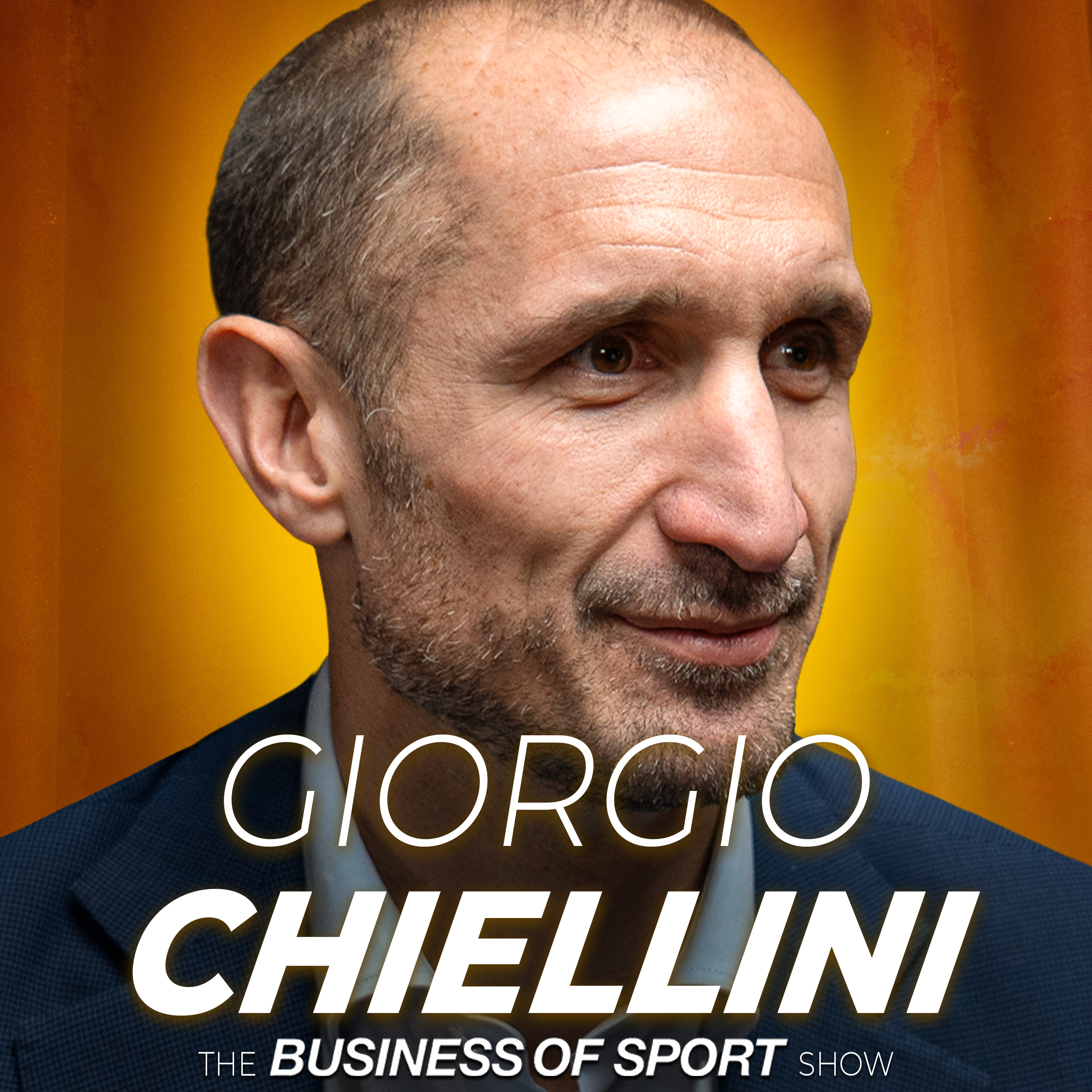
Scan the code with your iPhone camera
Listen in the app.