
 Business of Sport
13 Oct 2026 · 1h 19m

 Add vo to ChatGPT or Claude to ask about everything you hear
vo listened to this episode to put together the overview and transcript, so there may be the odd mistake.
Torquay United’s rescue from administration and the 10-day takeover window needed to keep the club in the football pyramid, then rebuilding finances, trust, and youth development to return to the EFL.
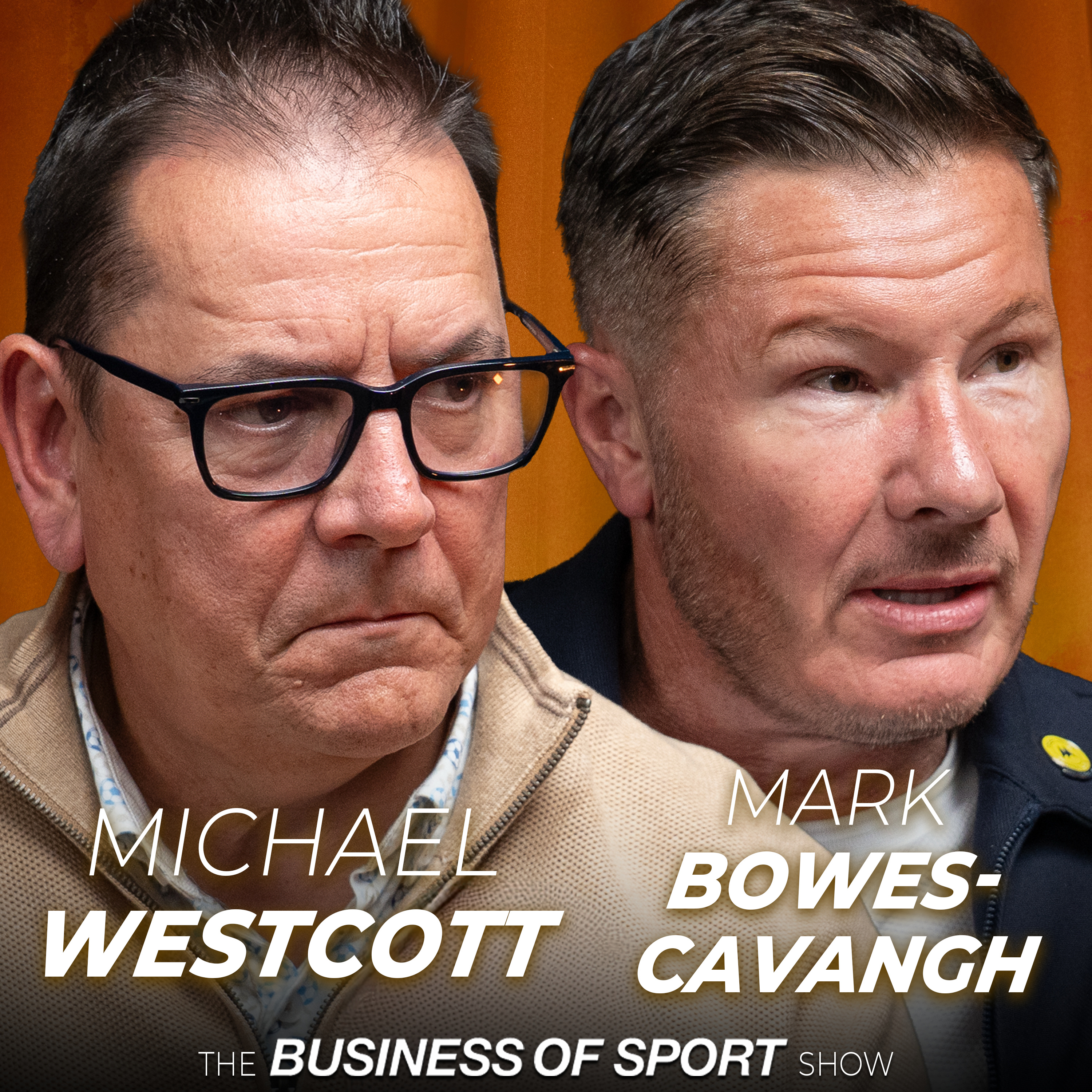
Michael Westcott and Mark Bowes-Cavanagh, co-chairs of a Torquay fan consortium. Both are business people with different skill sets (finance/management, media/communication, negotiation, and commercial expertise). They became involved after Torquay’s owner put the club into administration in February 2024.
0:00Michael Westcott: The trouble is when you buy a club out of administration, you're buying it essentially blind. We had 10 days in which to close the deal so we could scramble to make it to the National League AGM and keep our place in the pyramid. Torquay's main industry is tourism, hospitality, and that's been on a precipitous decline over the last 20, 30 years. And we felt if the football club goes, that felt to us like the final nail in the coffin for the community.
0:24Mark Bowes-Cavanagh: We're only custodians of this football club. It's got 125 years of editry. So therefore we've got to make sure this football club is here for another 125 years. And we're not here for ego. We're here to support the club.
0:35Michael Westcott: We've added a million quid to the top line of the business in two seasons. Fans have gone from being hostages to apostles. This is all new stuff that we've been allowed to create because the community's given us permission to do so. Your academy status shouldn't be determined where your men's first team is in the pyramid. And famously we sit there and look at Ollie Watkins, who's a Torquay boy, born in Torquay. could have been a talkie and I wasn't a talkie academy player. We shut the academy, went to Exeter, and Exeter have benefited the team of five, six million pounds.
1:04Mark Bowes-Cavanagh: We want success. We want to get up to the next level. Everyone knows that. But my God, we've come a long way. I'm going to say two words. Neil Warnock. Yeah.
1:16Mark Bowes-Cavanagh: Hello and welcome to The Business of Sport, the show that takes you behind the scenes with the industry's leading owners, operators and athletes. So what happens when a football club goes into administration? It's a fan's worst nightmare. An owner who decides they can no longer fund the club and as a result the community asset that has been the bedrock of many people's lives for over a century faces closure. That's exactly what happened with Torquay United. 125 years old with a long history of football league participation could not protect them from financial disaster. Then came Michael Westcott, Mark Bose-Kavanagh and their consortium of Torquay fans.
1:48Mark Bowes-Cavanagh: All business people who couldn't let their club disappear. Having two people in the chair opposite was a welcome change, both with different skills and experiences, but one single ambition. To restore this football club to the EFL and bring the community pride back to the team. The business reality of getting that done is another thing entirely, though. I love these stories, proper football conversations from the part of the pyramid that can often be overlooked. I'm delighted to welcome Michael and Mark to the Business of Sport. as this episode is brought to you by air wallax i wanted to share a piece of content created to announce air wallax's partnership with arsenal earlier this year fans players on re spike lee with partnerships now having a huge content impact this is one of the best you'll see turn your video on or watch it separately from the link in the bio who's this new arsenal partner then air wallax air who air willis is an aina to b2b financial platform what built-in spend control non-deliverable forward what you don't even know
2:48Michael Westcott: you're instant virtual iron man no can we please just watch the match come on you
3:00oh hell no
3:02Mark Bowes-Cavanagh: if you weren't watching that is the legendary director Spike Lee and Arsenal legend Thierry Henry at the end so the business of sport is brought to you by Airwallex the intelligent financial platform powering brands like McLaren Racing, Arsenal as you've just seen and the San Francisco Giants. From global accounts and cards to expenses and payouts, Airwallex helps the business of sport move money everywhere. Most sporting directors don't know they have a problem. They've got their scouts, they've got their analysts, they've got their systems and it works, right? Until it doesn't. A player becomes available Tuesday.
3:31Mark Bowes-Cavanagh: By Thursday, they're signed elsewhere because you were still hunting through email for the scout report. Or you make a signing that seemed good at the time but buried in the contract was a clause that blows up your wage structure three months later. These aren't rare situations. They're happening at clubs every single window. The clubs that figured this out are already winning. Across England, France, Italy, Australia and Brazil, from championship sides to top-tier clubs, sporting directors are consolidating everything into Gemini. Scout reports, performance information, contract intelligence, budget impact, all available in one place.
4:04Mark Bowes-Cavanagh: All on their phone. No more hunting. No more surprises. no more end of window panic visit GeminiSports.ai and see how Gemini bring together everything a sporting director needs to see the complete picture before making a decision that could define the next two seasons Gents, delighted to have you in the studio firstly for me I mean this is strange because it's two people on that side one on this side more often than not it's actually the other way around but to have both of you in the studio is fantastic as co-chairs we rarely get the opportunity so thank you for joining my pleasure how has it been uh i mean that's probably the best way to start isn't it firstly working together being co-chairs that that must provide its own entertainment and secondly getting into the mad world of football mad world of football yeah roller coaster very close the last couple of years obviously it's getting promoted but very proud of the way the consortium has been put together and that's been down very much to this gentleman to my left he did a great job persuading me to get involved when we first heard about talkie going into administration and we got the financial package it was definitely too big a job for me not necessarily the finance but the amount of time that was needed hence the reason for co-chairs and then there were various individuals who came forward who were lifelong talk united supporters successful in their own right and very proud now to be at a level where we've got seven top guys different skill sets whether it be in marketing whether it be in negotiation whether it be in just management and we've all come together and uh yeah we've created something quite amazing really in terms of where we are in terms of building up the support again building up the optimism sponsorship um bringing the supporters trust in making it a happy club so yeah it's fantastic we met the supporters trust got in contact with me said we got this guy called michael westcott have you heard about him and i went no the first thing i did was went on a computer who's michael westcott um and i kept getting a phone call from michael westcott and it was on a sunday i was like oh god stop phoning me out i thought one time i'm gonna have to answer it and then i answered it and he said Can I have a chat with you tomorrow?
6:21Mark Bowes-Cavanagh: And I said, yeah. And we had to get our proposition, our tender in to talk United. I think it was about three o 'clock, four o 'clock in the afternoon on Monday. And Michael had done a lot of work on the budgeting, et cetera, what was required. And then literally within half an hour, three quarters of an hour, it bit me. Couldn't let it go. Had to get involved in it. I thought there would be a lot more people involved in terms of putting in tenders to the football club. And there wasn't. And when I felt that we were, we know we weren't the last chance saloon, but I felt there wasn't enough people behind it in terms of supporters, in terms of finance and investment for what that club needed.
7:01Mark Bowes-Cavanagh: So we had to get involved. You said the administration, you said last chance saloon, probably the perfect time. Michael, for people that may not know. Yeah. Can you just give a little bit of background as to what has happened?
7:13Michael Westcott: Yeah, so if we rewind the clock to February 2024, Torquay, the previous season, so in 2022, we lost on penalties at Ashton Gate to get promoted back into the EFL after nearly an eight-year absence. Two years later, we dropped down another level. And on February the 24th, which is a date that is emblazoned on my mind, The then owner put the club into administration and said he's no longer able to financially back the club. Brought in the administrator, Begby's, who then went about trying to find someone to take on the club. And it was at that point that we got involved with the process. And we were half a dozen individuals that probably either were contacted by different people within the club network, by the club itself or by each other.
8:17Michael Westcott: And those are the first early days of the consortium coming together.
8:22Mark Bowes-Cavanagh: And just to be really clear, we're talking here about a club with huge heritage and value, not just to the community, but to football in this country, 125 plus years, if I'm right, a storied history in the football league to be in this position. It's not a good place for any football club to be. Yeah.
8:42Michael Westcott: No, and I 125 years is right, of which 80 years were spent straight in the EFL. And Torquay have always been really a League Two club that occasionally had the flirting and had the odd year in League One and then back down again. And we were part of the kind of the furniture, really part of the fabric of the EFL. We were most clubs favourite away day because you'd have a weekend at the on the English Riviera. People would come down and we're a quirky little club on the seaside. and I think when the club went to administration, it became really clear to us as fans how beloved the club was by the football fraternity, which I thought was really interesting.
9:25Michael Westcott: And we've had some high-profile players come and finish their careers with us over the years. You think of people like Chris Waddle and Bruce Reock and people like that. And we're this quirky little club and growing up as lifelong fans, it's particularly at that point since the advent of cheap travel to the continent Torquay's main industry is tourism hospitality and that's been on a precipitous decline over the last 20-30 years and we felt if the football club goes that felt to us like the final nail in coffin for the community and as someone that grew up in in we all grew up in tall in tall bay in the 70s and 80s and felt that we lived in paradise because it was by the sea it was fantastic it was booming and um and it's been sad to watch its decline and then if the football club went like what else is left yeah and uh and that was one of the my personal motivations like we can't let this die it means too much to the community a lot of fans if their football club
10:34Mark Bowes-Cavanagh: is in trouble would look at it and go i need to be able to do something i would love to be able to do something about it when you're in the position or you think you're in the position to do it and the club's been in such significant financial trouble how did you make the call that this was something and i mean here purely from a business perspective financially that you thought you could do because the mismanagement on the financial side that you were walking into i would imagine was a huge challenge that you had to fix from day one so you had to know from a business perspective that you were the right people that you were going to be able to do it not just on an entry part or anything that you were covering from day one but also that you had the continued investment capacity to fingers crossed i'm sure take the club back up to where you know it should be and it's it's really interesting that you say that because the package that came in the financial or package or how things stood on the finances was incorrect.
11:29Mark Bowes-Cavanagh: And it's taken us a year to cleanse that completely to understand what those costs are. What actual ticket receipts did we get from those? Or were they all freebies? How much money is actually coming to this football club? That took us a lot of time to cleanse all that process. And we knew that we could invest in the football club. We knew that we had to get involved. I think I can say this for all members of the consortium. We're here for the long term. And we're here to make sure that we get this club back to where we want to be. I think on the first day that we came out of administration, we did a speech to Sky Sports and we said we want to get this club back at least into the EFL.
12:04Mark Bowes-Cavanagh: And that is our mandate. That's what we've got to do. We're moving in the right direction. We've spoken about, you know, the investment that we're putting. But also we're going to use the skill sets of our business management to make sure that we bring that optimism on the ticket sales, that we have other options in terms of non-match day income, that we bring those sponsors into the football club, that we now have a system whereby we can bring in an academy or bring a player and we can get transfer fees for the football club if it's correct. So I think we've laid a lot of the foundations that were there.
12:38Mark Bowes-Cavanagh: You know, when you come out of administration, I mean, I saw you, you know, when you interviewed Robert Smethurst, and a lot of it is very similar, what he had to deal with at Macclesfield. When you come out of administration and you sign the final paperwork, you've got solicitors there. And they've almost got a, you know, a sign off. Those are the accounts. So you just have to take them as they are. Yeah, but what supporting evidence have you got here? How much, you know, how are you helping us out here? What happens if something goes wrong? Hey, you're signing it as it is. That is what it is.
13:06Mark Bowes-Cavanagh: That is how it is. you're signing to take over this football club so yeah a lot learned um a lot of improvements the efficiencies are much better within the football club they can still be improved but me michael and all the guys in the consortium we knew from day one that there was an investment initially to support the club stabilize the club but we have a we're only custodians of this football club it's got 125 years hereditary so therefore we've got to make sure this football club is here for another 125 years so we've got to make sure we lay that groundwork for other people if there comes a point that they want to come in and they're the right people good strategic investors to get us to the next stages then we're more than welcome we're not here for ego we're
13:52Michael Westcott: here to support the club so back then the administrator gave us a set of numbers which said the club turnover about 1.8 million and was losing about 1.1 million on annualized basis
14:02Mark Bowes-Cavanagh: and had done for the previous seven years one point what sorry just one point so that's incredible
14:09Michael Westcott: and over five years so so revenues were about 1.8 million and they were on a pnl basis losing about 1.1 million on an annualized basis and where was where was the slippage where was the ill discipline playing the usual play players two things playing budget um completely out of we think out of whack um and vastly under exploited revenue generation so the commercial operation was and the business was moribund it was under invested moribund and uh given the reach and the size of the club we felt commercially it was super under exploited so um we said about how can we right side to the cost base the playing budget clearly was overinflated and we felt that the commercial performance was significantly underperforming and uh and so we started set about a new model where rather than the playing budget being 70 80 percent of turnover it was closer to 35 to 40 45 percent of turnover and that's kind of where we are today and we can get into those numbers a bit later but but so we felt that can we can we recreate a more sustainable model there was the trouble is when you buy a club out of administration there's no diligence there's no warranties given to you you're buying it essentially blind and the clock is ticking we had a real deadline we had 10 days in which to close the deal so we could scramble to make it to the National League AGM and keep our place in the pyramid.
15:48Mark Bowes-Cavanagh: Financially. When you complete that deal, what were they requiring you to show? Existing cash day one for both, as you said, by and for the next three years. How detailed was it? Yeah.
16:01Michael Westcott: So they needed from us a cash flow forecast, a detailed P &L plan for the next three seasons. And they did their diligence on us. and we obviously went through the cva obviously we had to put cash on accounts yeah creditors in full and um yeah so they we had to provide proof of funds and that between us that we could fund the cash flow of the business yeah of going forward yeah uh on the basis on the current losses yeah but no but on the on the revised business plan that we submitted so the three business plan that we submitted to the national league and their their advisors they diligence that you've mentioned it now and i think let's go into it people would assume and it's the big
16:47Mark Bowes-Cavanagh: problem with football that if you get your cost base on the playing side to 35 to 40 percent that your performance is going to reflect that they're going to think you're going to be 50 percent worse on the pitch because of this illness that we've created within football that just directly attributes excessive spend careless spend reckless spend just because it's how the system works to success debunk that myth by doing what you've done yeah and um i think this is an opportune time to mention about paul one when he came in uh paul one we acquired from churro and he came in and on the first day he had one player signed off signed on sorry um and he brought in all these players by the deadline so we could compete and as you know in the first season we lost out by two goals from going up it was a tremendous achievement we were around about 650k i think it was and if i'm correct when we took over the club not including scouts management and everything just the playing the players it was about 1.3 so you can see and they were struggling in national league south they managed to just stay up so it's an incredible incredible uh journey to get to where we are and do you know what that's one of the things that i would say i've learned most about football is the fact that any one of those teams in national league south if they're at home they can beat you and they may have a budget of 400 000 500 000 they might be uh pe teachers playing football but every single club gives you a game it is tough out there and I love the name business in sport that you use because one of the things I said to Michael last night is we put ourselves down as we don't know enough about football or we don't know enough about what's going on within that football fraternity we do we're businessmen at the end of the day it is still a business and it has to be solvent and it has to be sustainable so you've got to try to match the pressure that a manager has given you and bearing in mind the manager has pressure because of his contract he has to be successful managers get sacked all the time so when they come in and say oh that team's spending this much money that team's spending that much money we're part of a ceo group and chairman's group and they'll tell you with us all we talk about things we talk about players we talk about managers and they'll tell you what their budgets are and what they're doing and it's nothing like what some of those people are saying and in fact as i said i'll call back to macrosville rob what he said he's not about what we're doing at the moment and you know where the figures are right so you've got to you've got to be hold your wits believe what you're doing and make sure you've got a great manager who has the contacts and the pool of players that can bring them in and paul did a wonderful job with that and we went close as i say in the first year and the foundations were built in the second year as well well twitch jimmy's now taken over okay so you would attribute
19:56Michael Westcott: sorry no please go yeah but you're saying about debunk the myth that you know is is playing budget related is there a direct line with performance well obviously yes and if you speak to any of our colleagues in the fl you can if you if you put the player wages budget against a league position they're pretty there's there are a few outliers but but they generally correlate at our level and especially when we're rescuing a business that was effectively bankrupt and trying to rebuild the cost base and fire up revenue channels. So the way for Talk United to spend more on players is to increase the top line of the business.
20:35Michael Westcott: And therefore, so 40 % of 1.8 is a lot smaller number than 40 % of 2.8, which it is now. And then I think then as you think about that, I think you, Mark, reference Paul Watton and why we recruited Paul Watton, our manager in the first season, because he, we knew that we needed to bring the wage budget down. We knew that he had geographic knowledge of the playing universe down in the southwest. And so we would, could recruit locally and we could, we could have a hybrid team of part time and full timers to keep a lid on wages while we set about growing the top nine of the, of the club. And also you wanted a coach and a manager that can recruit experience where you need it to make a difference and be smart about recruiting down the pyramid where you could bring in young talent that you can develop on lower wages to make the numbers add up.
21:35Michael Westcott: So I think it's that getting that balance right. But the truth is, and this is the reality of football, is that there is a direct correlation between investment and players' wages and performance in the league. Is it right? Not sure. But it is true, and it creates a problem for most of us, and that's why I think it's essentially a system. And in industry, it's effectively broken. um and what so and your next question is what so why are you all doing it is just because he's right i can go home football just gets in gets hold of you like nothing else does and it's it's mind-blowing because we're a group right they're involved and we've got a diverse series of interests on our board and our group you've got a guy that's a ceo of a one of the biggest financial institutions in the world publicly listed this guy next to me has grown one of the biggest medical and testing laboratory businesses in europe i've got extensive media background two guys that build huge businesses in the motor trade i've got a guy that's built a huge music industry business music tech entrepreneur of the year and all of that so we live in these other worlds right and then we have these crazy board meetings discussions where you look at these numbers and these decisions like why we why we why we you know in our world we would not make decisions like this but why are we why are we suddenly looking at each other like nodding like yeah this makes sense in the football world and and and I don't want to sound frivolous because the football club is so important to the community it serves and I don't want to feel that this is a play thing because it certainly isn't for us but it it's um i i i bristle when people say well the normal rules of football the normal rules of business don't apply in football and that there there is an element of that but that's both its attractiveness but also could could really you know that's the downside of football for me it's weird it's one of the ones i always
23:54Mark Bowes-Cavanagh: i'm very conscious when asking some of these questions you sit down and have these conversations on the level of judgment that you ever seem to share when you talk about some of this from a business perspective because it is so easy to sit outside of it and look with full impartiality saying well that's a mad decision that didn't make sense from the business perspective but as we all know that's probably only 10 of the story or the outcome of a very long process and what you have to go through when making a decision that may appear slightly crazy from the outside will most likely have a number of things that have happened before it that have led you even as experienced business people to making that decision and that is the hardest thing about football emotion versus sound business is why people get lost in the middle now is that excusing bad practice no we know the impact of owners who maybe don't have that feeling on clubs and do treat them more as a play thing they won't understand what the outcomes are and you were right on the next question of why do it the one i was going to ask or want to ask is how do you make your decisions have you found making decisions where you don't get driven by emotion where you have to keep a head on you because football from a fan versus football as an owner is a very different place or is it yeah so i think from a fan's perspective they look for communication transparency trust people they can rely on and a football team they can be proud of and be successful the figures almost are like immaterial okay long-term supporters yes stability a club etc so it's a different conversation to potentially coming in there from a business perspective and making it you know profitable etc or at least break even um it's it's it's very tough it's it's very tough you know i've in my own business i think you know my colleagues would say to me oh you're quite tough negotiator and everything else but then i could go up to the manager go to training he said i want that player and then immediately walk out of there and go have i giving him the yes that you can go and get that player it's it's a very very different type of emotion to a normal business because look we sit back and we see the history of football we see these clubs who managed to get success and move on to the next stage where it'd be an fa cup run etc and you dream of giving that to the fans and that emotion and giving them that opportunity and you think about how can you make this club be as successful as possible and obviously as michael said it does come down to finance sometimes and how much you can spend on playing budgets as well as coaching and so you sort of you sort of i'm trying to say that sometimes and i said business and sports really important don't put yourself down too much about that you haven't got the skill sets in football to be able to make those decisions because i think you you do get persuaded to do things that you wouldn't normally do in a business environment you know And the amount of times I've sat back and go, why have we signed that play?
27:04Mark Bowes-Cavanagh: Why have we done this? One of the successes we had in our first year with Paul, and I mentioned it earlier on in the conversation about having one player signed on, we brought players in. It's impossible to bring 21 players in and them all to be successful. When we had four or five players that weren't delivering, we were able to loan them out and move them and bring other players in. So one of the things they say in business, one of the best things about businesses and the way they grow is flexibility, enable to change decisions very quickly. And I think you need to do that with football clubs, move players out move players in etc so the one thing that i've learned and is to try and remove that emotion from it i'm a speechless person i i you know somebody comes up to me who's a support and says i can't afford my season ticket and everything else i'll probably go in and buy him it you know it's it's that difficult but you do have to like take it away sometimes and say we've got to move away from all this emotional side and get this back to normal you may have a few people coming up to you now going yeah yeah 3 ,980 but it's a bit like that i mean i'm the The first day when we came out, there was a guy who came to me and said, I can't afford my season ticket, etc.
28:04Mark Bowes-Cavanagh: I've been here for so many years. Is there anything that we can do on it? And you take it personally. You want to give everyone the opportunity to come and watch the club. And what can we do to help, especially in the current financial market, to help people to come to the football club? So it is very difficult. The responsibility is unbelievable for every individual in that football club. It would be staff, players, manager, everybody, supporters. is tough. You mentioned Paul a few times and you clearly attribute a lot of the success that you've had in the last two years to him but then to the point that you've just made and disassociating some of the emotion from it, he's no longer your manager.
28:38Mark Bowes-Cavanagh: When you have to make decisions like this and you're new to football ownership and you've still got that fandom, how do you do it? Because I'd imagine it is impossibly difficult and yet from the outside you're often the ones that look like the bad guys. Yeah.
28:53Michael Westcott: Yeah, and I... So the emotion of football, you know, trying to park your fan head at the door and put your business head as custodians of a football club, knowing that 24 months ago that ship was steered onto the rocks and nearly 125 years of heritage, and being part of the community nearly disappeared. So we pulled the ship off the rocks, and we were trying to set sail out to calmer waters and then sunnier waters, we hope. You don't forget, the reason we were in a position to be able to help save the club was the fact that we've made good decisions in business along the way to allow us that opportunity to do that.
29:33Michael Westcott: And so your business head does kick in around discipline. And particularly, you know, most successful businesses are built on the backs of farmers being able to make good decisions about people. And we felt that we made the right decisions on people at the time that we needed it. and then your business plan evolves, then you start looking a bit further down the road. So we're no longer looking over our shoulders thinking, are we going to get washed back on the rocks? It's like, no, we're out of the rip currents now and we're now steaming towards the horizon because everything feels solid. And then you need to know what comes next.
30:15Michael Westcott: Now we can feasibly contemplate building out other bits of the club, youth development, bringing the women into the club contemplating what does life look like in the next league above if we can get if we can envision promotion what does it look like in three to five years time where we might be back in the football league what type of people do want in place that could take us on that journey and so while decisions around people in any business are right but it we need the right people at the right time to be able to take us on that journey and and i and i think that why it's difficult because football's very visceral and particularly with the probably the one position in the whole business the football manager is the one that's the trickiest relationship to have because they tend to look quite short term we're trying to look long term and there's always a tension there and it's always around about well the budget says this but we also want to win on saturday because we've got a few injuries and the amount number of times we have those conversations and it's makes me chuckle because we just hang on a minute so we're having a conversation which to you it says we need to send our half on saturday to me that's a hundred thousand pound commitment over the next two years right and how we gone from watching every penny to literally having on the touch lines of a training ground a£100 ,000 conversation, which you expect an immediate answer.
31:49Michael Westcott: So how does that work? It shouldn't. And we've learned a lot around discipline, around budget, and how we should think about recruitment and how we put every pound in the budget, particularly towards people and players particularly, how we get a return from that.
32:10Mark Bowes-Cavanagh: Can I ask about that budget? When I was having a look beforehand and saw what you were budgeting for, it looked like there was no inclusion in there of cup runs. It looked like there was no inclusion in there of transfers. So to me, that was straight away, okay, that's the disciplined way to approach this. If we're looking at really how to manage anything else, we call it the football lottery, right? It's brilliant. And that can be hugely valuable for the club, but you can't rely on it. yeah and if you look at the deficit that we have at the moment so let's take it back to the beginning so we took over the club 1.1 million pound loss second year get it down to between 700 800 000 then we're getting it down to closer to 400 000 so how do we get that figure to a level of breaking even and there are a number of factors people through the door obviously getting attendances up which we're up to about an average last season what three six three seven we started off the season with 4-3, 4-1.
33:03Mark Bowes-Cavanagh: We'll probably be close if we could be successful to getting a 3-8 average again. Season tickets up again this season. Making sure that we can get feasible transfer fees if we are going to let players go. Non-match day income is really, really important. We're starting to do more events now. So sportsman's evenings, you know, tribute bands, all sorts of things going on at the football club. And then also sponsorship. So sponsorship, when we came and we've over doubled sponsorship within the football club it was around 2 30 we're about 500. I spoke to you earlier about the hospitality proposal our hospitality there is exceptional it's really really good at this level of football all the away directors and when they come along really enjoy coming to talkie etc so all those things if we can engineer and contribute to that we can get very close to where we need to be and I feel that this season with the amount we've spent on the budget for players we're in a good place we're in a really good place we've got good place we've got good potential salon fees if players perform we've got a good combination of experience etc so there's lots of really good seeds that have been put in place for this for this football club now i want to just ask on this then because it's the thread right that's going to get us here trust yeah day one i'd imagine because of the previous relationship with ownership doesn't matter who you two are and who the consortium is you've got a lot of trust building to do with a fan base who is pretty scarred from previous experiences correct you build that trust and you get that community value back people come through the door the attention turns positive in the club right yeah that turns into better financials yeah so as a you have the advantage you know you said it's a disadvantage as well but you have the advantage of i would imagine a catchment area a support of a community that if you're a talkie fan you're a talkie fan your businesses you're not going for the global payments platforms the people that you want partnering with the club are still going to be a local-ish businesses that are probably trading off that that's your biggest early challenge right if you can you rebuild that trust you get the community back on side the positivity feeds the appetite to come and partner with and sponsor and build relationships and have broader business or you you see the upside on the revenue and we all know what happens after you see the upside on the revenue you can invest more money back into the club and that's exactly what's happened in this year you know more sponsors have come in the suites are full everyone's coming to the football club to be honest everyone knows us locally and they they know you know action speaks louder than words as well since we've taken over the club in two years we've done our absolute best to communicate exceptionally well michael's involved in the media world.
35:51Mark Bowes-Cavanagh: We regularly have chairman chats. We have forums. We're very, very open. We've got a trust that's part of a shareholder within the football club. They know everything about the football club. We work with them very closely. We have a fantastic partnership. It's all about inclusion. And it's all about building those bridges that have been broken by the previous administration. And we've done that extremely well. And if it's one thing that I'm proud of, that would be what it is. you know we we want success we want to get up to the next level everyone knows that but my god we've come a long way and i'm i'm proud of the football club i'm proud of the way
36:26Michael Westcott: everyone's come together and and trust underpins any relationship and not least with with the football club and us and that starts with openness and honesty and transparency and day one mission was the the the fan base felt a bit disenfranchised from the club um we've we've built that trust as you say we built that engagement level with the community we're at 50 year highs in attendances at the point where our lowest ever level in the pyramid which says something about the value of trust right and and the value of the of a football club its community asset on the commercial side we've taken that to the bank where businesses have now seen riding on the coattails of brand talk united and what the new values of that brand mean to the local community as a as a halo effect they wanted they wanted a basket in the halo effect of that and that's taken us that's taken us from 200 something thousand to over half a million in just just stadium sponsorships kit sponsorships stuff like that it's great yeah it's great and it's a good base to build on however it's still a relatively small addressable market we live in quite an economically depressed area there are not oodles and oodles of businesses with big fat marketing budgets.
37:49Michael Westcott: And so if we want to start tapping into regional budgets or national budgets, we need to progress on the field so we can get more media exposure, get on telly and all of that stuff. And so we've gone, you know, we've covered a lot of yards quite quickly. We've added a million quid to the top line of the business in two seasons, which is going some on the back of 50-year, average home attendances. We haven't actually done anything on the pitch yet. We've come close twice. So progression is everything. But because fans are behind us, there is the pressure. Obviously, people want us to succeed, but they're also A, grateful that we've got a club.
38:32Michael Westcott: B, that the club, the values of the club they recognize and are helping. And they've gone from being, our fans have gone from being hostages to apostles and that has uh an incredible effect right through the community and everything that we do whether it's the commercial side um or whether it's and that's allowed us to bring youth development inside the club rather for the community sports trust which is why we've got now four five six hundred kids running around wearing talkie shirts from every age group from 7 to 18. Amazing. And allowed us to form new partnerships and create a new under-19s elite academy.
39:15Michael Westcott: This is all new stuff that we've been allowed to create because the community has given us permission to do so.
39:23Mark Bowes-Cavanagh: Academies are expensive though.
39:24Michael Westcott: They are.
39:25Mark Bowes-Cavanagh: You know, they're a commitment.
39:27Michael Westcott: They are. And listen, so what you have to do is partner with an education partner, right, which is what we've done because as we all know, we can't be an EPPP licensed academy. So we don't get any protection. So we can nurture talent from the age of seven to 17 and then Chelsea can come and take them tomorrow. We get no conversation because there's nothing. Probably be a bit younger than 17 if Chelsea... Yeah, no, no, probably. They'll probably get them at 11. No, no, but my point is, and so, you know, we have to look like where are we going to get return on our investments? so we do a lot of stuff with our college we do register some young players so they get men's football there's a we've got a defined pathway into the uh to the to the first team now um but this this is a bigger this is a bigger governance piece of football i think needs addressing is that when it comes to academy it shouldn't be deter your academy status shouldn't be determined where your men's first team is in the pyramid it should be around how well resourced are you what where does where does the board of the football club and football club put youth development where does it sit within the geography of the country yeah um what is its commitment financial and otherwise to nurturing young talent boys and girls it shouldn't be tied to it shouldn't be tied to your your men's first team league position and so i think that that needs uh there's an asymmetry there that I think needs to be addressed structurally within football because we would we would put proper money into academy if we get protection from day one yeah yeah um because it's needed and uh we want to otherwise you know you know famously talking I just shut this academy twice in the last 15 years and famously we sit there and look at Ollie Watkins who's a Torquay boy, born in Torquay, could have been a Torquay United, wasn't a Torquay Academy player.
41:28Michael Westcott: We shut the academy, went to Exeter, and Exeter have benefited a team of five or six million pounds. Yeah. And he should have been our player. So is this assistant brother? Kiefer Moore the same. Really? Yeah, Kiefer Moore the same. And these are local boys who were Torquay United lads, and we had to lose them because previously it was all fit to shut those academies.
41:55Mark Bowes-Cavanagh: This is an institution problem and there should be protections. It doesn't matter what league you're in, whether it's League 9 or the Premier League. If you're nurturing talent, if you have a catchment that gives you an opportunity to bring these kids in and you are putting the work in to develop them. and whoever created these rules it may well have worked 10, 15 years ago but we all know the competition has got even bigger at the bottom level we've seen all the clubs now and how many people want to get into the magic of the EFL etc but it's a lot more competition lower a lot more opportunity and therefore there should be considerations for that why?
42:34Mark Bowes-Cavanagh: why were these rules put in place? because to me I'm looking at it and what I hear more than anything else is it's the lower leagues asking for more money again from a lot of people who are, should we say, in the higher leagues. Well, this seems like a very natural business-like fairway to provide opportunities for lower league clubs to make some, as you've said with an ollie, what can sext it? Very good money.
42:55Michael Westcott: Good question. I can't tell you. And we've been in football for 24 months and we've had our head down trying to rescue and build the business. No, no, no. But I don't feel qualified to answer that. But all I do know is that to have a fully licensed academy, which attracts match funding from the Premier League, you have to be in the English Football League to do so. So whether that's the National League who are kind of parents need to go and do a better job of negotiating deals with the Premier League where we can set up where it's a meritocracy that you can get that EPPP status or match funding based on the validity of your plan and your program that you're running rather than based on where your men's first team is in the pyramid.
43:45Michael Westcott: It doesn't seem right because there should be other factors about, which I mentioned earlier, which is willingness for funding, where it sits in the priority list, to what extent your addressable market, what else is around in terms of down in the southwest. You know, you've got Plymouth and Exeter and that's it. Down in Dorset, Devon and Cornwall.
44:04Mark Bowes-Cavanagh: Also, player trading is one of the biggest opportunities to make money for any club. And that includes at the youth level. So you have 600 kids. Yeah. That's part of that. Again, as you said, whether your first team is in the Premier League or not, the fact that you could receive nothing from that just seems crazy. Anyway, as you said, I'm not asking you to. You would have thought there'd be some kind of fund that would come out of the Premier League or something over wages and things where they could put it into lower leagues and feed some of the seeds through there to these type of academies and maybe stretch it out internationally, north, south, etc.
44:41Mark Bowes-Cavanagh: etc because you know the disillusionment of supporters is one not being able to see their clubs at the top end and the second part is the the way these players are paid and how much money they are paid and you know isn't there a way of drip feeding some of that percentage maybe that comes out of that that could go down to the lower clubs to support academies to support the hand that feeds you I don't know it just seems ridiculous to us I think maybe the rules were created a few years ago where maybe it's not so competitive you know you had a lot of players who were part-time and football was their hobby but nowadays as you know and you'll know from your interviewing with different people the lower leagues now it's so competitive you know national league really is what an extension of the efl and you know and it just highlight that though because a couple of years ago when you didn't go up on the last day of the season i think we were talking about this before we came yeah but i said it was classed as the most competitive yeah league because you had six teams that could have fighting one point between it to go up it was it was absolutely crazy yeah it was crazy and to be fair to truro who went up they had one of their lower budgets and did actually go up but yeah it needs it needs a realignment it needs a realignment it's there's an unfairness there and you know here we are today we're talking to you and we're doing everything possible to invest in our local football club to do the best that we can but we realize that youth development's really important we realize inclusion's really important and surely the higher authorities should be thinking about this and drip feeding that down it just doesn't make any sense you know no one's asking for caps and things like that at this point but for me if you're a 20 year old who's playing for Chelsea and you're on 300 pound a week and you've signed a five-year contract what a better way to understand where you've come from and football and lower leagues to drip feed maybe some money out of that wage whether it's 10 000 pound a week or whatever a number of players who do that and build that level of football and help to get those academies being uh you know centralized because it is it is an issue it is an issue for us okay i'm gonna say two words neil warnock yeah what a legend yeah yeah it's quite what's it's quite hard to what a legend exactly but it's it's quite hard to accept with neil warnup because he's um one minute on sky sports and the next minute he's he's at talkie united watching us on a saturday afternoon but you know the story behind um neil is that uh me and michael were after we decided to put the proposal in to take talkie out with the administration we were thinking about who would be the manager who could help us with that and Neil Warnock came up Michael was I think traveling to London or traveling back from London walked in he said guess who's sitting in front of me and I said don't know he went Neil Warnock so I sent him a text I'll go and say hello to him and all that next minute he's coming to the game on Saturday and Neil Warnock's coming in and and actually Michael and Neil are very very close friends now so we're very fortunate to have him there exceptional guy um what's the role yeah it's i i like to think of him as a football consultant because i think he's as much as he's got all the experience of what's you know as a manager and everything else it can be quite a burden for a manager that you've got at the moment so he doesn't he's very clever he doesn't get too involved but he's always there if the manager wants some advice he's been for everything so he's there at the end of the phone or go to training or you know get involved with us about you know certain players maybe open up some contacts for us for players and things like that he's also great from a marketing perspective he supports us in the hospitality he goes into the suites talks to people he's you know having photos and things like that he's he's a lovely fella and uh as i say we're very privileged to have him around the club Well, for you.
48:44Michael Westcott: We often talk about football being a drug and often describe that Torquay United is Neil Warnock's methadone. To wean him off football. It's the next best thing. I don't know if that's a good thing, to wean him off football going to Torquay.
49:05Michael Westcott: Listen, he's become a really close friend, actually. and I think he's really enjoying his relationship with us. In the early days, Mark's right is that so it's like, damn, so we had this 10 minutes of, 10 days of crazy diligence in inverted commas of trying to get the club out of administration against the deadline that we had. And then we realised it's like, how many players we got? One. And even he ended up having to be terminated because he got done for betting. So we effectively had no players and no manager. And we were six weeks before the start of the season. Right. So and yeah, that March told the story, this this ridiculous sliding doors, herindipity moment of me getting on the literally we spoke the night before saying, Neil Walnut lives down our part of the world.
49:59Michael Westcott: He must be able to help us somehow find a manager that we need. and then it's like the kind of the boys upstairs were listening and i sat up from my laptop and and there was neil warnock sat in my carriage go on how did you do it and well first of all i googled his image just to make sure you know what i'm not looking like he just he just left aberdeen and i looked at my phone looked at my phone and go that is neil warnock and then there a lady sat next to him i said who's mrs warnock and that was sharon that's definitely her as well so i ran out to the back of the carriage and i rang him and said you're not gonna believe this but you know what we talked about last night he's only on our bloody train and he's like hang up now go and talk to him so um so we did and we just got you know this is 10 minutes into paddington down to the back to the west country and sat and talked to him all the way to exeter and he agreed that we come to uh the next go there's only about two or three games left of the season and he came along and uh and i said and we had lots of meetings with him i said we need a manager can you can you can you help us and that's where he said i want to introduce you to paul wotton and that was the start of that journey amazing well look
51:24Mark Bowes-Cavanagh: for you coming in the best thing obviously that good leadership can do is figure out where they're best placed and where they need the support and if you have someone like him who knows football i mean there's probably a few people in this country that know football better than he does have the networks that he does particularly you know at the levels of efl and below yeah yeah so that must have been an immense help or or should we say at least just a level of comfort yeah i was going to say reassuring comfort yeah um and i've said you've got to get the balance right by not taking any of the management decisions that are made but having him in the background for us as well you know it's almost I'm not saying a director of football or anything like that but he's been very very good at you know grounding us and you know some of the contact when we've had like last season we had a problem we need to get a goalkeeper in very quickly he got us a goalkeeper in the goalkeeper played extremely well I mean obviously we went very close to going up it was unfortunately we didn't but he's he's very good from that point of view um but he is a really really nice fellow and uh like you say he's got so many stories throughout his career he goes around he i think he enjoys talking to all supporters uh last the last game of last season he went over the pop side and he went to chat with supporters over there as well so this is a guy who's done everything in the game you know on a tuesday night he's commentating you know in the studio on efl football and all this kind of championship football unbelievable he's got football completely in the blood and uh yeah but it's a great fella and and really nice to have him about yeah and on a practical basis
53:01Michael Westcott: he loves nothing more than being around the players yeah so he loves going into the dressing room and even with jimmy ball now our new manager um he's got a relationship where jimmy says neil come in the dressing room and talk to them i was gonna say nice because that could be a bit of a if you're playing sixth tier of football for Torquay United and you've got one of the most decorated English football managers in history put his arm around his shoulder and say come on son get it done for us today you know how he is they walk 10 feet tall he loves coming to training now and again he'll drop into training because the manager will say Neil can you come and have a look at this give us a second opinion and this is all great stuff and and as mark said he's um he's a reassuring presence for the players he's a sounding board for the manager um it's uh for us it's great to sound as to check stuff with him because being on the manager's side you know and as as as director of the football club is like if you're in the manager's shoes what would you be thinking now and so he can help us understand how we should resource and communicate and deal with the manager because he's been on that side of the fence as well and he can tell us because he's been through 17 18 different boards and chairman is what did he like about the good ones what did he not like about the bad ones and and why and for us to better understand because there's no more important everyone's important in the club but the football manager is disproportionately important and um and so to have neil help us better understand um the dynamics of that particular
54:58Mark Bowes-Cavanagh: role the better have you tested that relationship yet have you guys had a moment where there's a disagreement because while this is working well it's great right and it sounds very nice but to be able to have disagreements and come through them is really the test of a top functioning and i think that's why he's still there you know this is a guy who can do whatever he likes you know you're all about somebody who's got nine promotions and relegations one of the most decorated and under estate underestimated managers in domestic football he is very forceful with his opinion which you'd expect because he's been successful i think that um definitely for my communications with him i respect his decision making and some of the ideas that i have he'll sort of say okay son you know let's just like move this over here and let's let's just let him do this and then we'll do this but he's very i think he's very clever at taking a number of bit of information from directors managers and other things and then bringing it all together and collectively then going through the right channels maybe just turning up to a training session and going have you tried uh what's his name here or have you done this have you done that so he's he's been around he's been worked with different chairmen and everything else so he knows his way around a football a football but we have tested that relationship with it because there's been twice that i can remember where um neil didn't didn't like or agree with
56:22Michael Westcott: decisions we've made you know one was an internal disciplinary issue which he didn't he he he was pretty upset that he wasn't consulted we felt that we we needed to deal with with a disciplinary issue in a certain way and the fundamental one was he didn't really agree with our decision to to part company with Paul Watton when we did which is interesting um and yet to be fair he took over from the next match for he looked after the team for three or four games but but so um but he's still there and he and he understands that and um yeah so listen i think ultimately we're super lucky to have him he's a force for good he brings um he's a reassuring presence that brings experience to the table that that is super helpful for us i'm very lucky i want to bring it around to kind
57:17Mark Bowes-Cavanagh: of the thing that underpins everything and really is i guess the root of why you're doing it because we've talked around it we know the importance of community the relationship that you have with talking in particular before we were speaking before you said you used to fly back from hong kong to see games you talked about the family relationship previously you know we can't underestimate how important these clubs are at every level and it's it almost seems too flippant to just say that he's a massive community asset sometimes because it does actually take away how much these things do mean you said something to me when we were on the phone yesterday uh just having a quick chat beforehand and that it stuck with me because it was just one the points was look it's about not selling heritage for promotion can you give from the community piece and from your experience could you tell like a little bit of that link and the important why you flew back you know what it is about football that grabs you yeah well i think it's for me and i think everyone
58:15Michael Westcott: you know everyone's got those of us that are football supporters probably can all relate to this but like many people i was brought to play more age three stuck on a vegetable box appear over the railings and and it only takes you only takes you probably takes you about six or seven years old where then that is your team and and and you work as you get older you walk you you go to different areas of the ground and it just gets embedded within you all through your teen years and it's the one thing that gives you a bit of structure you can identify with, it's part of your rhythm of your life, it's where you celebrate together, it's like communion, we talk about the were communing with your because um as you grow up you know there a lot of these institutions that used to belong to whether it was working men's clubs or going to church those have kind of gradually eroded family structures are broken down there isn't the extended families anymore and so football clubs everyone's equal you can stand shoulder to shoulder with people from every every level of the economic scale but you're all bound by one singular passion and that's the love for your football club because you think it it's something for you for you to get behind and i i don't need to explain that i think that's why football's the largest sport on the planet i think that's stating the obvious but for me is um even the the my career took me overseas for 16 years um the only result i ever cared about was it wasn't liverpool it wasn't england it was talk united and when we got to a semi-final of a playoff or an fa cup third round i would jump on a plane and i would come home and watch the game turn around go back to you and go back again because i had to be there and be part of it and for me it's the football club as well is you know my dad Dad was the stadium announcer voluntarily for 20 years.
1:00:22Michael Westcott: His ashes are under the home end goal. So every time we score a goal at the home end, I'd look upstairs and that was for you. And yeah, that was emotional. The day we took over the club and they literally handed us a bunch of keys. I went down to the goal end and was going, who would have thought this? That's incredible.
1:00:41Mark Bowes-Cavanagh: To get the keys to the club, your dad is that closely linked with the club. And I wasn't as closely linked as Michael to the football club. I would go there 15 games a season. I would take my nephews there. When my sister broke up from her husband, take them there, watch the football. And they were sending me texts when they went into administration. Can you support it? Can you do something with it? And, you know, you've heard Michael this afternoon talk about the football club and his passion. And when I spoke to him and he was telling me about his dad and everything, you know, as well as in business, being successful you need to have the empathy to support the people that are around you and what's important in your life and this is a traditional football club in the middle of a housing estate means so much to so many people after talking to michael after talking to friends my nephews and everything just couldn't walk away and now it's um of course it's difficult i mean i'm involved in eight other businesses but this one is like it's pulled me in beyond you know it's like a girlfriend i can't get away from it's it's it's it's it's it's a difficult one and uh i said to you earlier um the day that we came out of administration we did a presentation to the staff and we were sat in our main bar that's there the goals next and i said to them you know i want ian right in here I want Mark Lawrenson here I want Kelly Gates here whoever it is that match the day to be here and doing the draw because we got through the FA Cup and we're going to pull somebody out and you know when I you know see some of the interviews that you've done with people who've been you know successful in sport and everything that's that's what we dream for to bring those days back to the club so uh yeah fingers crossed that does happen you know we're close we're close But I want to ask, because all of this is, again, the key, but we are in danger now.
1:02:41Mark Bowes-Cavanagh: We are in danger of losing this because of the system that you're having to operate in. Yeah. And we nearly lost, if you talk to a lot of football supporters, the one thing that connects the top end of football to the bottom end of football is the FA Cup. And we're very close to losing the coverage of that. You know, you talk to people my age, they say to you, FA Cup day. You wake up at 11 o 'clock, you watch Football Focus, you watch it all. You see the coaches going to the stadium, what hotel they in, what shirts are they wearing in the FA Cup final. You know, the whole pedigree of that is the whole institution of football.
1:03:20Mark Bowes-Cavanagh: And we are, and we're losing it to money. We're losing it to money of what, six clubs? how many other I mean Leicester City probably the biggest shock in sport that I think we've seen in recent years the fact that they won the Premier League apart from that we pretty much know where that where the league is going and we'll probably pretty much know where the Champions League is going but that seems to be where all the revenue is I do worry about football because how many people is that affecting compared to those grassroots supporters who are there Division one championship division two national league lower leagues ismian league and everything else but it does what it worries me about the fabric of community but you said something interesting again before we came in about you seeing with a club like torquay an increase in interest fans coming more fans coming through the door and you potentially you know created a situation where they'd looked at it and gone maybe we're a bit disenfranchised with all of this all of this money all of this focus right at the top of the game.
1:04:21And actually, the community asset,
1:04:23Mark Bowes-Cavanagh: the club that you can walk into with anyone, that you can stand shoulder to shoulder with anyone, that's affordable, that's still a great product because the quality of players down in the sixth tier are still really good players. The product is there now. The product is there for your partner. The product is there for your family. The product is there, you know, if you're going on a stag do, hen do. We've got everything for everybody at the football club. And that's what makes us proud is the fact that we have that offering to everybody. I mean, I'm a massive Liverpool supporter. I used to go up to Anfield every other week, Devon Reds, get on the coach at 7 o 'clock.
1:04:52Mark Bowes-Cavanagh: Now I'm almost like not interested in what Liverpool are doing. Because, you know, it's important now, my community, my club. Just imagine how this affects tourism and the whole of Torbay if Torquay get promoted. How does that work with hotels? How does that work with income around the whole of that vicinity? It's going to be massive. and to see or on saturday afternoon from one o 'clock through to six seven o 'clock now because we got bands on and things like that to see all the happiness around there you can't buy that you can't buy that but i wonder how many owners of top end football clubs see all that i wonder how many of them do actually see those supporters and see how important they are in the fabric of the community you saw um a few years ago berry go out of football now they're coming back and you see all the scenes of that and they're getting like 10 000 fans going to watch berry whatever league they are what tier seven something like that incredible um so yeah it's a really really important part and i think we underestimate how important it is in the community and how important football plays a part in people's lives like michael said it was the word we used quite a over the past few days communion it's it's the way of getting their happiness for the week and uh it's we're happy to be part of that process it's quite it's quite interesting isn't it when for
1:06:14Michael Westcott: a few decades your average attendance has been two and a half thousand and we're getting closer to four albeit at our lowest ever levels i said earlier so then we dug into the data and so our fastest growing sort of persona is young families and they're not encumbered by 80 years in the football league they're not moaning that what are we doing at this level why are we still trawling along the bottom of the you know the sixth tier of football I remember the day where we were playing Brighton and Bournemouth in the league you know it's only a generation ago that they were our peers and look at them now and look how far we've fallen and how depressing is it and so there's that cohort they tend to be the noisy ones they're the ones on the forums and bemoaning the the demise of this you know the football club and I look at it from a perspective it's like hang on a second so we are at a 50 year high of attendances we're suddenly a bright light in an otherwise quite depressed community, suddenly families and businesses are rallying around this community asset.
1:07:24Michael Westcott: It's the largest, most visible place where people come together on a fortnightly basis, bar anything in the area. And businesses and brands are riding on the coattails of all these great values. And so we've created these new fans. And I remember that one of the most important parts of football is it's where uh friendships become enduring it's where you make where you commune with your with your fellow talk united supporters where you make memories with friends and family that will stay with you forever and that's an important part of the job it has to mean something so i think that as we think about where we invest in the club, it's very much every bit as part of the experience as it is about making sure we've got the right money that gives the level of performance.
1:08:22Michael Westcott: Yes, of course, we all want to enjoy success and that gets the endorphins going and that validates everything. Because football clubs, we are dopamine providers. That's the other part of what our job is. And so they come to us because you give me a dopamine hit on a Tuesday night or a Saturday. And I get pissed off with you if you don't win because you're depriving me of my dopamine. And in a life that otherwise is quite challenging and there's not a lot to be cheerful about. So if you don't give me my dopamine hit of the win, then I'm going to get my dopamine hit by bemoaning how crap I think the team is at the moment by getting likes for that on social media.
1:09:12Michael Westcott: And it's a really interesting time. But there are different, you know, there are different calls. But I am very encouraged by the fact that we're now creating a value proposition that's appealing to families. and they're also super commercially interesting audiences for brands and stuff and uh but not forgetting that we've got this hardcore um football um cohorts that have and their families have supported talk united through generations okay so everything we've
1:09:48Mark Bowes-Cavanagh: talked about is about improving the club as a whole because of where you picked it up from and that without doubt right was the most important thing that you had to do as we'll always laugh about we can sit and talk here about good good business forever yeah it's about what happens on the pitch at the end of the day you've now got the club on a positive trajectory the numbers are going in the right direction you seem to have the fans on side do you put pressure now on yourselves to go right okay? It's the time to look at the pitch now. I think it's our third year. Really, really important year.
1:10:25Mark Bowes-Cavanagh: And if you look at the infrastructure of where we put the investment this season in the playing squad, obviously we've increased that dramatically from last season. But also in terms of a system, we've got Darren Way there, got a great pedigree in football. We've got an analyst now involved. We've got a strengthening coach involved. We've got the physios already there before, the goalkeeping coach, etc. So the background, the football side of things is very, very professional. You know, apart from all the other aspects of nutrition, the training facilities, everything is very much first class.
1:10:59Mark Bowes-Cavanagh: So in answer to your question, we are doing absolutely, whether it be the preparation of staying overnight or what we're trying to do, we're doing everything possible to give that team the opportunity of getting promotion. I have learned over the past two years that is not necessarily an absolute trigger to us doing that but we're giving ourselves every chance you need a little bit of luck I think over 46 games you're going to get a lot of peaks and troughs etc we've spoken about the number of teams that are in this league and the capability of it so we've just got to be patient we've come very close I look at other aspects of other clubs I take on board in sport other people who've lost out getting so close and we have to learn from that and just try to be focused on the fact that this season we are going to do it this season when it comes to that last 20 minutes when we're 2-1 up we'll do it slightly differently to what we did before.
1:12:03Mark Bowes-Cavanagh: When we're in the final stretch, perhaps we'll give a little bit more momentum to it by adding a few, maybe at the last minute to try and get us over the line, et cetera. But we are doing everything possible on the playing side. And you've come up with a very good point about, you know, the investment that we've made, the foundations we've done in the football club. For me, for this club to go to the next stage where we look at accelerating non-match day income, accelerating the opportunity of academy etc success on the pitch is is imperative um so it's a key season for us and i'm not a fool in terms of being the custodian of the football club there'll be questions that are asked about change of management change of players change the sex and they've got every right to question that supporters but we must where possible try to get promoted although as you know it's very very toughly one side up one side through a playoff system that is so complicated.
1:13:00Mark Bowes-Cavanagh: It's unbelievable. And this is why the free up campaign is so important because it makes it so difficult for a club like us to get promoted. Needs addressing.
1:13:08Michael Westcott: Yeah. Yeah. Because the amount of the quality and the standard both in the National League and even in the National League South and North at that sixth tier is high. The budget's being spent on trying. And this what only having one up automatically is just accelerating this arms race for promotion and this is this is a constant tension is this not gambling for promotion and if we went back to probably the top of our conversation is there a straight line between playing budget and league position yes there is and so against that backdrop is how do you square those those two things and so the National League of which we've got fully behind by the way this three up campaign I just think that rather than a three you know what's what's amazing about British football why British football is probably the largest product in the world is this pyramid and it essentially is is free flowing apart from the EFL to the National League where it becomes an hourglass and a choke point and i think that if you had three up three down and we thought about that in a different way then i then i feel that that is more meritocratic it um allows clubs to be aspirational and it also allows them to behave sensibly um as well and i think it's in the is in the best interests of clubs that should be rewarded for trying to behave sustainably and with discipline responsibly.
1:15:01Mark Bowes-Cavanagh: I think if you're looking for the best way to round it all out, that's not bad. Firstly, two people doing it together is not easy. I think you've done a great job. Well done. Secondly, I think it is a fascinating story. that you are telling. And more importantly than anything else, I think it is great for the wider system to hear a little bit more about some of this, particularly at the levels with which you're operating in. Because whether it is reducing some of those budgets and still pushing, right? So even though you haven't quite achieved it yet, you know, you said you got very close, that belief that you can achieve and give yourself far better financial opportunity by being sensible is great and people need to hear it.
1:15:50Mark Bowes-Cavanagh: So on everything, I wish you the best of luck. I have lots of fingers crossed for you and honestly, well done for doing it. I can only imagine what it was like going through that process, but to get it where you are now, two years in, it's brilliant. So thank you for coming on and sharing it. Come on down as well. Come and see us. I will. I don't need to. to come to football. Thank you. That's very kind of you. Thank you. Brilliant. It's some story and you feel the best bits are yet to come. When you take over a club in distress, there's so much that needs to happen before you even consider performance on the pitch.
1:16:31Mark Bowes-Cavanagh: I think Mark and Michael highlighted that very well. I think they have now got the club to the place where performance on the pitch can be a focus and getting that club back up to the EFL would be a huge achievement. Let's see how they get on and we wish them all the success in doing so. Now, if you want to see more from today's show, you can do so by going to YouTube or any of our other social channels across Instagram, TikTok, and of course, now Substack. There are more snippets to share and bite-sized chunks to consume. And whilst you're there, please do like, subscribe, and follow the show.
1:16:59Mark Bowes-Cavanagh: As you'll hear from your other favourite pods, it makes a huge difference when bringing you the best guests and conversations from around the world of sport, which is of course our endless aim. Thank you again for tuning in, and we'll see you next week. As this episode is brought to you by Airwallex, I wanted to share a piece of content created to announce Airwallex's partnership with Arsenal earlier this year. Fans, players, Henri, Spike Lee, with partnerships now having a huge content impact, this is one of the best you'll see. Turn your video on or watch it separately from the link in the bio.
1:17:28Mark Bowes-Cavanagh: Who's this new Arsenal partner then? Airwallex. Air who? Airwallex is an A-I-N-A-2-B-2-B financial platform. What? Built-in spend control. non-deliverable forward what you don't even know
1:17:44Michael Westcott: your instant virtual i'm at no can we please just watch the match come on you
1:17:56oh hell no
1:17:58Mark Bowes-Cavanagh: if you weren't watching that is the legendary director spike lee and arsenal legend Thierry Henry at the end so the business of sport is brought to you by Airwallex the intelligent financial platform powering brands like McLaren racing arsenal as you've just seen and the san francisco giants from global accounts and cards to expenses and payouts airwallex helps the business of sport move money everywhere most sporting directors don't know they have a problem they've got their scouts they've got their analysts they've got their systems and it works right until it doesn't a player becomes available tuesday by thursday they're signed elsewhere because you were still hunting through email for the scout report or you make a signing that seemed good at the time but buried in the contract was a clause that blows up your wage structure three months later.
1:18:38Mark Bowes-Cavanagh: These aren't rare situations. They're happening at clubs every single window. The clubs that figured this out are already winning across England, France, Italy, Australia, and Brazil. From championship sides to top-tier clubs, sporting directors are consolidating everything into Gemini. Scout reports, performance information, contract intelligence, budget impact, all available in one place. All on their phone. No more hunting. No more surprises. No more end of window panic. Visit GeminiSports.ai and see how Gemini bring together everything a sporting director needs to see the complete picture before making a decision that could define the next two seasons.
What happens when a football club goes into administration? It’s a fans worst nightmare. An owner who decides they can no longer fund the club and as a result the community asset that has been the bedrock of many people’s lives for over a century faces closure. That is exactly what happened with Torquay United. 125 years old with a long history of Football League participation could not protect them from financial disaster. Then came Michael Westcott, Mark Bowes-Cavanagh, and their consortium of Torquay fans, all business people who couldn’t let their club disappear.
Having two people in the chair opposite was a welcome change, both with different skills and experiences but one ambition: to restore this football club to the EFL and bring the community pride back to the team. The business reality of getting that done is another thing entirely though. I love these stories; proper football conversations from the part of the pyramid that can often be overlooked. I’m delighted to welcome Michael & Mark to the Business of Sport.
A huge thank you to our amazing partners on the show:
Airwallex
The intelligent financial platform for global businesses
https://www.airwallex.com/uk/
Gemini
We empower the most confident sports organisations on Earth
https://geminisports.ai/
If you’re interested in partnering with the show, please reach out to us at


Scan the code with your iPhone camera
Listen in the app.