
In short
Coffeez for Closers Episode 48: Elevating Sportswear ft. TravisMathew CEO Ryan Ellis
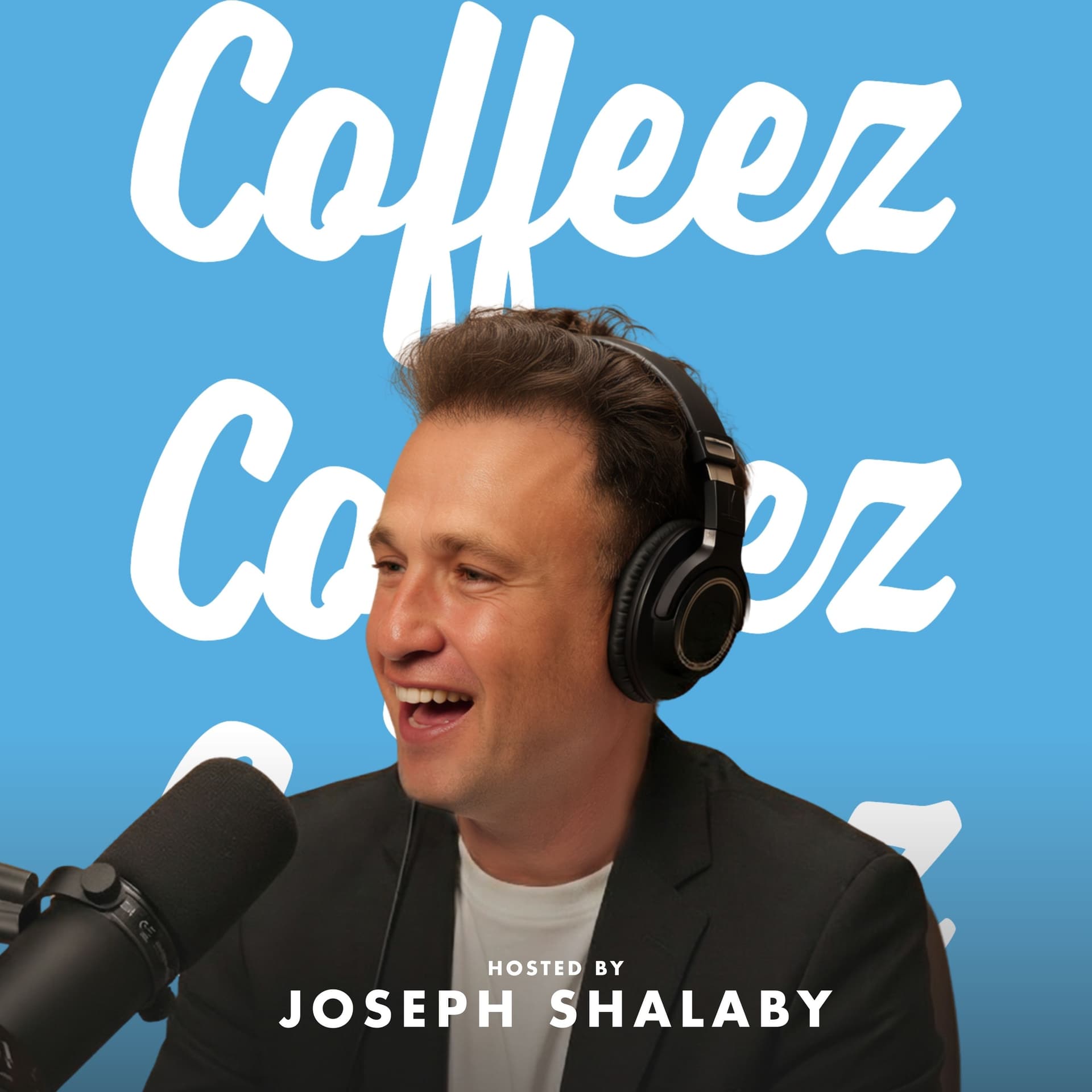
Podcast Overview Host: Joseph Shalaby, Broker and CEO of E Mortgage Capital Inc.
Guest
Ryan Ellis, CEO of TravisMathew Podcast Theme: Business insights from a family-owned perspective, focusing on leadership, innovation, and entrepreneurial journey.
Episode Highlights
Introduction
- Setting the Scene: The podcast is recorded at the TravisMathew Speakeasy, highlighting the brand's casual yet sophisticated atmosphere.
- Guest Introduction: Ryan Ellis, the first employee and now CEO, shares the evolution of TravisMathew from a golf apparel brand to a global lifestyle brand.
Ryan Ellis’s Morning Routine
- Wind Down: Phone put away by 8:30 PM to prepare for sleep.
- Early Rise: Wakes up between 3:30 and 4:00 AM, starts the day with a shower to avoid mindless scrolling.
- Productivity: The first two hours at the office are the most productive, allowing for significant accomplishments before the day begins.
Career Path to CEO
- Background: Ryan discusses his non-traditional upbringing and early career choices, emphasizing the importance of teamwork learned from basketball.
- Entry into Apparel: Transitioned from retail management into apparel sales, eventually landing at TravisMathew.
- Growth at TravisMathew: Started in sales and merchandising, taking on various roles over the years to understand the entire business process.
Transition from President to CEO
- Responsibilities Shift: Ryan outlines the differences between being a President and CEO, emphasizing the increased weight of accountability and decision-making.
- Company Culture: Highlights the importance of maintaining a connection with employees and fostering a supportive work environment.
Business Strategy and Branding
- Goals: Sets ambitious targets for the company, aiming for a billion-dollar valuation and expanding product lines.
- Adaptability: Stresses the need for adaptability in leadership and business strategy, especially in changing market conditions.
- Sustainability: Discusses the brand's commitment to sustainability and the challenges of balancing quality with eco-friendly practices.
Market Trends and Challenges
- Current Landscape: Insight into the activewear market's decline and the importance of adapting to consumer spending habits.
- Retail Strategy: Emphasizes the importance of a robust wholesale strategy alongside direct consumer sales to mitigate risk.
The Importance of Community and Family
- Personal Life: Ryan shares the challenges of balancing work and family life, underscoring the need to prioritize personal relationships.
- Raising Children: Discusses instilling discipline and commitment in his children through sports, reflecting his own competitive upbringing.
Final Thoughts
- Vision for the Future: Ryan concludes with a focus on nurturing talent within the company and the importance of maintaining a dynamic and youthful brand identity.
- Advice for Entrepreneurs: Encourages aspiring business owners to leverage wholesale channels and stay aware of market shifts.
Key Takeaways
- Leadership Attributes: Adaptability and decisiveness are crucial in navigating business challenges.
- Brand Evolution: A brand should evolve without losing its core audience while reaching out to younger demographics.
- Personal Commitment: Maintaining work-life balance is important, and creating family time is essential as children grow older.
Conclusion This episode provides a rich tapestry of insights into the evolution of a successful lifestyle brand and the personal journey of its CEO. Ryan Ellis illustrates the blend of hard work, strategic thinking, and personal dedication required to thrive in the competitive apparel market.
Written by AI. May contain mistakes. Listen to the episode to check what was said.
Transcript
Automatic transcript. May contain errors.0:03What's up everybody and welcome to another episode of Coffees for closers. Today we're at the Travis Matthews Speakeasy, set to interview a powerhouse in lifestyle and apparel. He started as the very first employee at a company that began with Golf Apparel and helped to transform it into a full-scale lifestyle brand, now thriving in all major retailers and expanding into new markets like denim and women's wear. The leader has driven innovation, ensuring the highest quality by personally testing every product and guiding the brand toward a half a billion dollar valuation. And now it's time to reveal the visionary behind the incredible success.
0:44Please welcome the long awaited interview, the CEO himself, Mr. Ryan Ellis, CEO of Travis Matthew. Thank you, Ryan, for being on the show. You are my new hype, man. I'm gonna have you do that everywhere I go I come home do it to my wife show how great I am I love it yeah wouldn't that be great if we just come home and tell our wives like look at look at look at the hype look at the announcement that I'm getting as I enter that I love it because I'm like I don't you call yourself humble you're not humble but I try to have humility and I'm all you know I go through phases of my career where I feel like I'm doing a great job and I'm doing a terrible job and so it's always funny hearing someone hype you up because it's like um am I really that you do you You built one of the coolest companies.
1:27I mean, for men, the coolest apparel brand in the world, in my opinion. And women's now. Don't forget. I know. We're going to talk about the women's line because the women's line is, in my opinion, much nicer than Viore or Lululemon or any of the other Ath Cash brands out there. So we're going to dive into it. I like to ask every guest on the show an opening question. And what is your morning routine? Yeah. So I start with the wind down routine. You know, you and I know David Meltzer. It's funny. He has a very similar routine. I didn't get it from him, but I certainly listened up when he did it.
2:03But really like, you know, try to as much as I can get my phone down at 830 and turn it upside down and don't look at it again. And then start to start that unwinding process. I go to sleep pretty early. So, you know, typically I wake up between 330 and four. And, you know, the best thing I can do when I wake up, I jump right into the shower. I don't think. I don't check my phone. I check my phone for the time. And then I jump in the shower. And the mindless scrolling and things in the morning, it just gets you lost. And then you get out of bed tired. So to me, it's like, get right in the shower.
2:33That wakes me up. I'm on it. And once I hit, you know, about 435, I'm firing on all cylinders. My, you know, first two hours in the office, I get more done than the next eight, obviously, meetings and things like that. But my brain is just functioning at a really high capacity those first two hours. So you're coming into the office at 6 a.m. every day? Generally, get in and over. closer to five. Um, yeah, I generally get up three 30 to four shower, get in here, try to get in here before five if I can. Um, I used to have a really good routine where I was getting in around four and I'd work from four to like six 30.
3:04Then I'd go work out, I'd shower and then sort of the day starts when everybody comes in. Uh, I'd like to get back to the workout routine, but the business has been so, so tough, so tough to, uh, to keep up with, with all the travel that now I'm just, I'm in, try to be in before five, get three hours of work before anybody wakes up or starts working. You've got a gym here. We do. I know. There's no excuse. There's no excuse. It's less the gym. It's more the, you know, when you travel, and I've been traveling a ton, it's so hard to keep your eating habits because everywhere you go, they don't have exactly what you need.
3:36You can't make your own food. And so once that starts to go, then it's like the working out starts to go. So I need to get back on the program for sure. Now let's reverse course here. Now you started, tell me a little bit about how you became the CEO of the number one apparel brand for men on the planet? Where do you want me to start? At the brand or from the beginning? From the beginning. So, you know, the shortest version I can give you at the beginning, you know, my career is equally impressive and unimpressive in terms of, like, I think I can give a lot of inspiration to people that, you know, I didn't come out of college with, I didn't go to a huge four-year big school that had all this academic, you know, accolades.
4:16You know, I came out, I played basketball in college. I really, like, had a competitive streak, learned how to win, learned how to win as a team. You know, I thought I was the hero player my first couple years in college. Then I realized I was more of a role player. And once I accepted that, I really thrived. And so it taught me, okay, if I can find my role in an organization, it doesn't have to be at the top. I can really grow and develop. And we ended up winning a national championship my senior year. I went to Concordia and Irvine. and so really solidified all that work I had put into basketball, all the sacrifice really being much more worth it than being the leading scorer on a team that didn't do anything, right?
4:52Were you a leading scorer on the basketball team? I was my first year of college, and I was probably the fifth my senior year, but what happened my senior year is I led the nation in three-point percentage. I shot 50 % on the dot and really specialized my craft instead of trying to be everything to everyone and be the go-to player. I really performed a really good role on that team. You're like a Steph Curry. More like a Clay Thompson. I wish I could say like a Steph Curry. I moved more like Clay. I didn't have the floaters from 20 feet and all the stuff Steph does, but yeah, definitely more like Clay Thompson.
5:21So propelled me into my career. Didn't do an internship. I'd really never worked. I mean, I swept the floor at my dad's office here or there and never worked. And I had an opportunity to work for my dad. Didn't really want to do that. I wanted to kind of carve my own path. He had a really, of all things, he runs a termite company. It's a really small business. He made it really successful. Ran it 30 years. He's retired now. My sister actually runs the company now. And I just wanted to carve my own path. It wasn't something I was inspired by. And so I wanted to get into clothing. I knew throughout high school and college that's what I wanted to do.
5:55I had a couple ideas and concepts on retail stores that I wanted to implement. So I started my career in retail and said, I'm going to start from the ground up. If I want to do something in retail long term, I need to start in retail and get an entry-level position. I started as a manager in training. I got promoted really fast, worked a lot. I ended up becoming the store manager for Abercrombie & Fitch in 2003, three months into the job. Had never worked retail as a store manager, managing a$5 million store. It was like 10 ,000 square feet. We had like 85 mannequins. I became store manager. We didn't have an assistant, and so I had to go hire.
6:32Well, there's a time period to go hire, right? I worked 90 days open to close, my first 90 days. and I hired somebody and she, God bless her. She's so sweet. She's 60 days in. She's not ready to open her clothes yet. And I'm like, I'm going to die. I'm 150 days open to close. I'm working. When people say they work 80 hours a week, I was working 95 hours a week. But I had just, and most people don't take that job seriously because it's like, well, where are you going to go? You're at Abercrombie. What's going to happen? But to me, it was like, this is my first chance to like prove myself in that world.
7:03So I'm just going to put everything I have into it. I was there six months, got promoted to a bigger store. We had a store opening in Cerritos Mall. A bigger store, more volume, was like a$10 million store. And then I sort of went through that cycle when a couple years later, I realized I just keep getting promoted in retail, and they're never going to let me out of retail. Not that that's a bad job. I just had other aspirations. So I took a job for about a quarter of the pay to get on the other side of the business, say, I'm going to start all over and do it again and just showcase my skill set.
7:31Ended up becoming a sales manager of that company and eventually a sales and merchandising manager. I was 25 and then turned 26 and they shut the business down. It was an Australian-based business. We had a$5 million building. They were bleeding over there. They called me. We shut the building out. We want you to run retail for us. We're going to open more stores. I'm like, I came on this to get out of the retail business. And so met the guys at Travis Matthews, like a volleyball game in Huntington Beach. And they were talking about this concept. And I'm like, golf, I don't, I'm in apparel. Golf apparel is not exciting.
8:03And they're like, exactly. Like, we have some ideas to make it exciting. And I'm like, I really didn't listen. And then they kept peppering me. And then about a month later, and I'm out of a job at this point too, but I had a lot of opportunities I was looking at. They called me a month later and said, why don't you do this? Here's a list of 20 accounts. Why don't you just call them or stop by and see what we're talking about? So I stopped in and I saw the white space, right? Like, whoa, there's nothing I would wear in this whole store. So there's a huge opportunity. How do we merge the gap between what people are wearing today and where we want them to go?
8:34How do we find something to start in the middle and really grow it? So in August of 2007, they hired me to run sales and merchandising. And then over the last 17 years, actually, in July or in August, excuse me, for me, our anniversary is 7707. That's like the cute, but we really started the company in August. I think I've had 12 titles of the company. So I started in sales, eventually ran sales and operations. Travis was very smart, could look from afar and go, hey, we got to get you out of operations. It was something I actually enjoyed. If I was still in operations, I wouldn't be with the company anymore.
9:11I don't enjoy it as much anymore. I like hiring people that are great at that to go do it. And so it really started to drive me into just brand driving, sales, marketing, product. And I really caught the niche for product and started spending probably 50 % of my time in product. and then I took over managing design. At one point, I was managing 70 % of the business, but when I say managing, we had like 20 people. So I was basically doing it all from our buy planning, and I hit every piece of the cycle. So I would help build it with the team. I would have to go sell it to our sales team. I would sell to our major customers, right?
9:48Then we'd go buy it, and I would buy it. Then I would look through selling throughout the process, and then at the end of the cycle, I'm responsible for the inventory because I have to go off price it. So it's kind of a weird deal where like normally you want a lot of checkpoints with like your head of design or product because it's like who's making sure and validating that this stuff's actually good and they're not driving us off a direction just because they like something. But I had that at every point, right? I had my buyers doing that. I had my reps doing it. And at the end of the day, I was accountable for the inventory.
10:16So really taught me the whole business. And so as I elevated and I never looked at myself. It's funny, I was president and it took me like two years to realize I was president. I became president in 2016 and I just watched how people were talking to me and it was so different. I always felt like I was just one of the people. And then I understood like, okay, I've got to elevate how I'm treating this business and how I'm treating people. Cause like when I say something now it has a profound impact. Like as president of the company, when you say something, people like really react to it. Um, and because I just started like as employee, number one, and Joey, our head of design, and I started at the same time, one and two.
10:54It took me a while to transition to really understand that this role is very different from a professionalism standpoint, from how you communicate. It has heavy weight on people, and so you have to transition and act differently. So I was in president role for four years. Then the pandemic hit, and I always joke it's not the case, but Travis was like, here, you can have it. Everything's a mess. he actually owned at least two golf courses and had to attend to that business and he was already he'd been grooming me to take that role but we had such a winning formula that I felt like do I need to like I'm president of the company I'm doing all the things I want to do I'm really you know controlling brand and product like what is the value of me going to CEO other than a title like I'm ambitious but to me Travis was dealing with the operational part of the business and I I thought, well, if I jump into ops and I'm doing that for 50 % of my time, I'm not very good.
11:48They're not going to like me there because I'm going to be mixing it up. Is that really what I should do? And, you know, sitting with the CEO of Topic of Callaway, he said, absolutely, all CEOs are different. And I'm a product and brand driving CEO. That's what you'll be. And we'll go hire the staff together, you know, to get you what you need. So what was that transition like? I mean, from president to CEO, seems like the job description, you know, wasn't too variant. You know, you just had to basically, you added the operations component. You were outside of the sales spectrum now. Now you're running ops, design.
12:21You were always running with the head of design. So it was just like now, just Travis bounce and it's all on you now? It's night and day. It's crazy. The way I would describe it, the best way I could describe it is, imagine trying to get somewhere and being the passenger in a car, right? Next time you go there, can you get there? Probably not, right? Imagine driving there. You can get there. You can find your way. So that's how big the gap is between president and CEO, at least how we were doing it, which is like the accountability piece for me, it's not what it is today. What it was as president was like, I'm gonna go make great product.
12:58I'm gonna go service our customers. I'm gonna build a great brand. But then, you know, the people side of it, everything still falls on the CEO. Like I've got my org, but like the whole thing, it's him. Every decision, they look to him. every time you're at a company event everyone wants to talk to you about their jobs and everything not that i wasn't having those conversations but the the weight of the ceo position versus president is is night and day as well as the interaction with the board and you know topgolf callaway and all and then cross-functional leaders the second become ceo everyone wants a one-to-one with you monthly i can only do so many one-to-ones right but everyone wants a piece of that action because you're at the top of it and you've got an emerging brand.
13:38And so, um, you know, those equal parts credit and equal parts blame, you know, for that position. So it definitely, it changed for me a bit, like very quick, like the weight of how I have to think about this position, you know, the responsibility I have to our people and our team. And ultimately if we don't hit our numbers, it's on me. It's not on the team. It's on me. I have to figure that out. So it's, it's a very different role. Who did you appoint to, you know, to be president after you departed? You know, it's a weird, I think of the size of our company. I don't know that a president and CEO makes sense.
14:13It made sense with Travis just because we had such different approaches. And I think he really wanted to empower me to say, hey, when I'm not here, Ryan's making the decisions. We've got a chief marketing officer who's phenomenal, who would be pretty similar to the role I was in, more on the marketing side than the product side. And then we've got a CFO who's fantastic, who actually manages ops for me, funny enough. And so I've got two, I've got an incredible leadership team, but those two really stand out as leaders that have kind of elevated into higher positions where, you know, we'll want them to become a president and eventually CEO.
14:46I think they both absolutely have the capability at the size of the business we're at. I don't think there's necessarily need to have a president. CEO, then what would that leave you? room for you? You'd be the next Travis? Well, I think you're always thinking about it. If you have good people under you, you're always looking at what's their next opportunity, and you need to be thinking about yours. The opportunity is, if I elevate, do they elevate? They can't elevate until I can, or I get let go. There's only two options there, right? We have a big organization at Topgolf Callaway, so there is opportunity to go up, but you know i think for me i'm i'm having a blast um you know i've been ceo now four years and so you know i am thinking about that for them though what is their next step and making sure i'm not impeding that step for them so what what do you what would be the ideal next step for you if you were to envision a next step you're already the ceo of the number one apparel brand on the planet like what would where's up from here what's so when you when you build your like long-range plans for a business we build you know we have a plan to 2030 the plan is a three-year plan 2030 it's like right i mean we have a vision of where we want to go what we want to get to for us to get within 10 to what 2030 looks like it'll be very difficult because it's a changing climate changing market we have to adapt and change with it um for me i got my sights on a billion i don't have a date to it but i want to get this company to a billion i'm absolutely committed um and because i don't have a billion in revenue billion in revenue quarterly or monthly court quarterly and monthly what i think what are we lululemon what are they doing like 10 billion um no i i want to get to a billion annual annually yeah 10 billion now you got me to 10 see you got me all twisted why are we stopping at a billion yeah i mean like you're dominating well maybe when we get closer to a billion i'll have a new goal then um but no that's it's such a i i don't know how many apparel companies are at a billion, I would guess, you know, in our relevant space, there's less than 25.
16:51So it would be at such a pedestal to get to a billion, especially being primarily North America. It's a lofty number, but it's achievable for us, and I'm committed to driving to those goals. Post that, you know, I don't see myself more, you know, it's possible, things change. You know, I'd like to help other businesses. I think I offer a lot to dive into a business that's probably in the$10 to$100 million range, even up to like$200,$300. There's a lot of pitfalls you can avoid. There's a lot of little nuances. There's a lot of structuring things within the business. I think I would see myself long-term probably in some type of role like that, helping other businesses.
17:32And I didn't know that you guys were just captive to just North America. I mean, golf is global. No, we're not captive. We're building a European business that's growing pretty substantially. we've got a really nice business in Japan. We've got four stores in Japan, two in Tokyo, one in Yokohama, one in Osaka. So we spend a ton of time there. It's fantastic. We're building a business in Korea that we just launched this year. We've got, obviously, North America, we've got a booming Canadian business. We've got a great business in Australia. And we've got some business in South America. Most of the international business is a little bit more golf-focused, because that's kind of how we started here.
18:09It takes time. But yeah, we see in that long-term plan, you know, international will be, you know, a little over 10%. Now, Travis Matthew is synonymous with golf apparel. But really, like, you guys, it's apparel for any sport, really. But is there any other derivative of sports that you want to dominate besides golf? Like, I know you guys obviously surf, skate. Yeah, I don't think there's a sport we want to dominate. I think, you know, we live in this active lifestyle space or athleisure space, whatever you want to call it. We live as a lifestyle brand in active. So when you think about our competitors, the Nikes, the Adidas, the Viores, I mean, they're very, very athletic.
18:54So we live in that space with that same person, which is multifunctional wear, but we live on the casual side of that. So no, I think we want to play almost everywhere, right? I mean, we've signed ambassadors from MLB, NBA, NFL, and some prominent ones. We've even signed actors. And so I think we're pretty well diversified. We don't want to kind of be everything to everyone, but we're close to that. We want to play in most sports, but I don't think there's a particular sport that we're driving and saying, hey, we want to dominate like golf. We're really proud of our roots in golf, but we think the brand is bigger than sport, and so we want it to be a full lifestyle brand.
19:30Yeah, I mean, as an Ath-Cash brand, it's phenomenal. I don't even know of any other men's clothing that has not just, it's Ath-Cash, but it's also clothes you can wear to church. It's clothes you can wear to a wedding. And you continue to come out with new concepts for athleisure that are just next level. I'm wearing Travis Matthew pants, and they're the Reggie Bush line. Looking sharp. Yeah, and it's tucked in with a shirt, and it's a jogger. But that's where we're going. To your point, I feel confident we've nailed that space. Yeah. But what we've done with our customers, we've led him, and now leading her to say, we've got his comfort level, now we need to push it.
20:16So Reggie's a great example of when we signed Reggie on, it's like, hey, the reason we want to do this, we want to collab with you. If you're not interested in collabing, it's probably not the right fit. and he was more than interested in collabing and like how he's put his outfits together showcases a totally different way to wear Travis Matthew and a totally different look. A lot of it, like he would wear that with a monochrome top, right, with a hat that matches and probably shoes that match and really style it out in a very different way. And so, you know, we really have the trust of our customer and now they're saying more.
20:45Give me more, give me new, give me fresh. And that's the big focus as we move forward to 25 and beyond is like you know really disrupting kind of our current mix while keeping the core similar. I mean you don't want to get a mortgage line where you can get all the mortgage professionals. So there's a lot of people trying to enter apparel space right now. What's the best piece of advice you would give someone who wants to enter the apparel space right now? Well I would say hurry up first because when you're we're not in a recession but whatever you want to call this it's a really challenging time right now for the apparel market.
21:19market, we're seeing the active and athleisure space over the past two, three months. We get all the earnest data and things like that. They're down close to 30 % year over year in their own direct consumer. Why do you think that is? The customer's not spending. It's conversion. We saw what in March of last year, people's bank accounts dried up. All that incremental income they had is gone. But everybody buys Travis Matthew on a credit card. It's just going on a credit card that they're not going to pay anyways. You know what? That's funny because the cash spending is way down this year too. We're seeing that, right?
21:53They are putting on a credit card. No, what we're seeing is a lot more looky-loos. We're seeing, we actually, the brand heat is still there. So we're seeing where mall traffic is down five, 8%. We're still seeing increases at two, 3 % in mall traffic for us in Travis Matthews stores. But we're seeing conversion down like 10%. Now they are trading up sometimes for better items like jackets and outerwear and things like that. But what we're seeing is the off-price channel is really thriving right now. And the full price channel is struggling. And we're in all the major retailers from Nordstrom to DSG and all that.
22:26And we see the data from them as well. And it's the data we can see. And no, the trend's consistent. It's consistently down. And the customer's trading down for price. And they're only purchasing when they have either a sale or there's some a reggie bush type item that's very very special you know we launched our our mlb collection it had a ton of success out of the gate but what's interesting is we didn't see a lot of incremental revenue on our own e-commerce even though that drove a ton of revenue they traded out of something else for that collection so back to the original question if you're starting a company today i would say um go now because all the bigger companies there's only a couple old Travis Matthews and Viore's that are like doing well and can sit through a difficult time.
23:11But there's going to be a lot of open space from some of the bigger brands because they're going to have to, where you're seeing it, layoffs and all these things are happening. The line's getting cut. Nike, you know, is coming out of golf for the most part. And so there's a great opportunity right now. And I would also say to up and coming companies, don't ignore the wholesale channel. The wholesale channel is amazing. And I think everyone wants to start their direct consumer business well the cost per click now is five times what it was you know eight ten years ago it's not the same market where you just prop up a website and you just start advertising itself the cost per acquisition is really really high so why would you not partner with a wholesale partner that can help get you free brand awareness and actually you make money off of them as well but social media and stuff is driving down some of that cost i mean because you can market all over all the different social media platforms to drive eyeballs outside of like cost per click and ios updates have hurt that.
24:05The privacy agreements are different now. And so it's just not the same game. And so you evolve with the game. We're a very fortunate business in that e-commerce is roughly close to a fifth of our business. So we're not dependent on e-commerce to go hit our numbers or grow our brand. We've got incredible wholesale partners that do that. We've got a corporate partner who does corporate staffing and outfitting who does a fantastic job. We've got diverse national accounts with the Nordstrom's that are purely lifestyle, the DSG's that are like sporting goods, and then the PGA Tour Superstore that's golf.
24:37And so we've set this business up purposely to be really well balanced. So when one channel goes up, one channel goes down, it evens out. And so we're not relying on one customer, one channel. Now, how is like margin compression with like cost of labor, cost of goods, cost of gas to get stuff over here how has that impacted the profitability of Travis Matthew over the last couple years it has because we we didn't take price um because we're really mindfully in consumer and kind of what we feel like the price thresholds are so it put a little bit of pressure on us um and then we were able to come up with more premium products that fit into those price points um but you know you manage it like everything else right it's like we have a very sophisticated year-long process that's our long-range planning process that and and our go-to-market process that all those things are factored in as we go the one thing I'll tell you is you know that was a huge issue in 22 when F price of cotton was going nuts everything was expensive but everyone was crushing it so the price it didn't really matter because you made a little less margin but you went and sold you know three times more than you thought things are stabilizing a bit just on the manufacturing front costing is coming back to normal.
25:52The price of cotton is back to 2019 levels. Things are coming back to normal. Freight has come way, I mean, we crushed our budget on freight because we had such a high freight budget because it was so high and it's dropped considerably. And so things are normalizing. Factory capacities are normal. So inflation is what it is, right? So our line and pricing has gone with inflation, probably a little less than inflation. So generally our margin structure today is, well, our margins are better today than they were two years ago, just because the volume is so much higher. So we're getting that consistency with volume with our factories.
Read the full transcript
26:27And then, you know, we have a lot of leverage because of our brand. And so we can utilize that leverage to say, no, obviously, you know, employee costs, all that goes up, but it's, it's all part of the planning process. Nothing, nothing's happened other than, you know, that, that big shift in 22 that, that we haven't been able to manage. Like I'll use the heater as an example one of the signature shirts It's like hasn't really went up too much in the last couple years It's been like it's always been like 60 bucks and one of the big things with heaters That's been really cool as we changed the fabrication To an eco-friendly fabric and that's been a big initiative of ours.
26:58What's tough about eco is You know every garment that you do eco for the most part It's gonna cost you another 50 cents to a dollar So heater was a huge win for the company where we're able to take a sustainable fabric in one of our core pieces which is hard to do to up that cost, and yet keep the price the same and still, and everyone's making good margin on it. So just one of those fortunate things where we found an incredible fabric at the right price, and obviously we hit a volume and have a great partner overseas that's given us the pricing we need to make that volume. Hopefully, what about acquiring those facilities yourself?
27:31Do you guys have any fabric distributors that you guys own, or you guys are all in the properties? No, you know, I think that gets really tricky. I think sometimes you got to look there was a time at Travis Matthew where we try to own everything like we had our own warehouse We did everything ourselves and I think as you get bigger. It's like You're better off specializing like it's a distraction What would happen was and I was actually talking to another apparel company who's thinking about buying theirs I just warned them because they're like the 40 million range in revenue And I said what I'd warn you of it all sounds good But is it really cheaper than 3p L-ing and if you 3p L how much headache does it you're talking about warehousing?
28:08do you want to take on 80 employees, 80 more employees? And that's not a job where the employee is like the most satisfied employee. Like they're trying to work into other jobs most of the time. And so, yeah, to me, it's like keep the eye on the prize. We have so much here to go grab. Let's just keep going for it. Now, what do you think when you became CEO, what do you think the biggest sacrifices that you made to become CEO of Travis Matthew? That's a good question.
28:41probably my personal life, to be honest with you. I think, um, you know, you, you really have time for family and you have time for work and there's just not much other time. Like it was, it's really interesting. My wife and my family were out of town a couple of weeks ago and it was the first time they've been out of town. I feel like ever. And I was like, what am I going to do with myself? Like, I don't, I never think about like, Hey, let's have a guy's night or let's, let's go, but let me call my buddy and go do this or do that. It's like, you just, you have to sacrifice that piece. To me, it's like family comes first always, work comes second, and then whatever the rest of it is, is what it is.
29:17You just, in this job to be successful, I'm sure some people do that well. It's not for me. I wouldn't feel right about not dedicating the appropriate time to both the other places, but it's not really a sacrifice for me because I get to hang with my family. I get to do a lot of fun stuff with work. I have great people and friends here at work, and it's like, you know, it's a sacrifice, but it's not one that I sit back and go, oh, I wish I didn't have to do that. I love it. Yeah, it's like, you know, you're living like a dream. Getting to travel, getting to make the coolest apparel, getting to meet amazing people.
29:49Who are some of the most amazing people you've met? I mean, Chris Pratt is like on speed dial for you. I'd say the coolest one we've ever met is Mark Wahlberg. We went to Mark's house and got to spend half a day with him. and one of the coolest dudes ever. And just, I won't repeat anything he said because he just went straight from the cuff and he was like totally real and just didn't, he wasn't a guy that you went, oh, he's holding back on us because like he might get in trouble or he might do this. Not that he said anything bad, but it was just more like he's sharing old stories of him and Leo hanging out and this and that.
30:22And then we walk up in the back, his backyard, just giant. And he's got this, you know, he's got like a three golf holes back there and you walk up these steps and he's got this target mat and he hits off it into the, and then he hit driver into the mountain. It's just the most insane thing. So Mark is definitely, I wasn't, I don't get starstruck, so I'm not like nervous around him, but I was definitely like driving home like with a big smile on face. That was freaking awesome. That's awesome. You went to his house in Vegas? No, in LA. Okay, yeah, he's in Vegas now. Is he still in Vegas? Yeah.
30:52I thought he's still in LA. I think he's in LA because he plays golf like every morning and maybe he's moved, but this was probably, I probably met with him like maybe four years ago, three, four years ago. Oh, okay. Yeah. And he's since started his own brand. So that was some of the conversation we were having about giving him some insights on apparel. A brand or an apparel brand? Apparel brand. Just to tie it to F40. He's got so many companies. The only thing I'll tell you, I follow him on Instagram, man. He is a plugger. He plugs everything. Every Instagram post is like, check out my underwear.
31:22Check out my shoes. It's pretty funny. My new gym. Well, give the guy credit. He's got tons of followers and they're interacting with the content and he's plugging his stuff. He's one of the best in the world at it. Yeah, yeah. I mean, he can't act forever. And, you know, when you became CEO, like, what do you think the best piece of advice is that you received? Hmm. That should be an easy question for me. I'm trying to think there's, I don't think there's like one piece of advice because I've kind of like, you've heard most of my career I kind of blaze my trail I never that's why I kind of laugh when people are like well my boss doesn't this right it's like go get it right and that's kind of always been my approach is go get it so I've been more like I'm gonna go seek feedback but also like I can do this and I've been I've always been on I'll figure it out right I'll ask I have a tight circle, you know, six, eight people I trust.
32:23I go to those people with, with all of those things. I get all the right responses and I form my own opinion, which doesn't match any of them. It just matches kind of my line of thinking. And so that served me so well that, you know, I've thought about having, you know, having a coach and all that, but you know, this is serving so well and we're thriving. So that I kind of, I like blazing the trail my own way. So it's, I don't think there was one piece of advice anyone gave me. I think it was more like, you know, six to eight people during, especially I took over in 2020. Pandemic hits were shut down.
32:55No one can come to the office. I mean, it was a nightmare from that perspective of like, I don't know if the company's going out of business tomorrow or, and we're going to be shut down for a year. I don't know if I'm going to have to let a hundred employees go tomorrow. So it was like, you had to have a good circle of people going and no one had experienced that. So it was like, who do I go to? I mean, you go to Callaway and they're like every big company, they have a big company playbook. Here's what you do during pandemic, but that's not me. I'm not going to take that playbook and go, okay, we just do this, this, this, this.
33:23There's some of that we have to do, but like, so what I did was I started like over communicating. So I started every week I would send a video, um, uh, you know, either of me talking through what's happening in the business so everyone could stay informed or we would have our videographers like professionally shoot a video that was funny. I got one of the videos was great. We, um, it was like, remember when no one could get toilet paper, that was like a thing and I had found a stash I was the only one coming in here and I found a stash of toilet paper like I don't know how many rolls and so we actually sent every employee toilet paper and did a video on it like just being funny and we sent them like our designer design like a coloring book just for their kids because you're at home you can't do anything so it's a super super cool deal so we totally took our own approach and you know did we do it perfectly no but like because of that approach.
34:13It was so authentic to us. Like our people, that's our culture. It really resonates in our people of like, we're not going to be robots. Like when I do something like this, we're going to be off the cuff, but we're going to be off the cuff within some parameters to stay professional. But at the end of the day, like this is what people expect from us. Like our culture is going to be, we're going to go get it. Now, one thing I admire about you, Ryan, is that you became CEO of this company. Is there any characteristics that one must have right now to really climb the corporate ladder and dominate?
34:44Yeah, I mean, the number one characteristic is adaptability, right? Like, that got me functionally through and navigated. And if I, you know, were to go to another company to become CEO, that would be the number one trait. It would be, okay, who is the team? What is the company? Okay, now I need to start adapting my behaviors to match what the company needs. So what I do for executive onboarding is I tell them, you're not making any decisions the first 120 days because the biggest mistake you can make, and I've made it, is you hire someone and you've needed that position for so long and then you start running.
35:17They're going to screw everything up because they don't know your people, they don't know your culture, they don't know your brand. And so number one trait is adaptability to say, when you come into a situation that you're unfamiliar with or you're not an expert, because you're not an expert, even if you're, I'm the CEO of Travis Matthew, if I jump to another company that's 400 million, I'm still, there's still a lot of expertise I don't have in who their brand is. So I need to listen, I need to learn, formulate a plan with the team. And then I would say be decisive, right? If you're adaptable, you've got your group, you're comfortable with your decision making.
35:50When you make it, people want you to be decisive. They don't want you to make it and go, oh, but what do you think about it? You should have already asked what I thought about it. You've already come to a conclusion. So ask the people, come to the conclusion and go, here's where we're going and be confident in it, knowing that not every decision is perfect. But as long as you follow that process, you're going to be really happy with the results. Now, I'm a CEO as well. And, you know, to your point, decisiveness is like imperative, especially in my organization. How fast do you have to decide being the CEO?
36:19Like, is it on the spot? So I'm like extreme extrovert. So I think out loud. I talk out loud. I can come to a conclusion on most things extremely fast. I'll come to the conclusion before you wake up. Put it that way. Right. I'm up at my four. I'm in the office. I've, I've probably asked the people that I know are up at that time. And it's like, I've already sent the email. Here's what we're doing. And you're just waking up. So that's how, that's how quick I move. Now, you know, we have a pretty robust executive team now. And so what you have to be careful of is you need to get inputs, right? As much as just because I'm decisive, decisive doesn't mean I'm right.
36:57And so, you know, you do need to bring the team along for the ride but when you do bring the team along for that we i did this with our company goals and it was just dragging dragging dragging and i just said hey guys i'm gonna do these we're all having a lot of conversation they need to get done they should have got done yesterday i'm gonna do them i appreciate all the inputs i'll put them down and i think there's a respect level to that because it's like i'm sure in their heads like yeah we couldn't get this to the finish line as a team rarely happens but when it does happen you step up and go i'll finish it and i guarantee those goals were done in like an hour and it probably took four weeks leading up to that to get there and it's like okay we can't figure out as a team someone's got to do it let's go now um you're coming from humble roots right you you grinded to become ceo and still grinding and still grinding i love it and what um one thing you and i both have are kids and one thing i always focus on with my kids is like i wasn't handed anything yeah i had to grind like crazy like I was grinding since I was like eight years old.
38:00How are you instilling that same level of grit and mindset that you have in your kids? It's hard. It's really hard because my dad was really tough on me. So then my tendency is like I start going down that road and I'm like, ooh, ease up, dude. You know how that felt on you, so chill out a little bit. So I think that part of it's hard. I think the biggest way that I've seen, and my kids are old enough now, is athletics. I think athletics are so important. Not necessarily you have to play college or whatever, but that really teaches you that discipline. And so my son, he plays travel basketball, so he's got practice Thursdays and Fridays, and then I have him training on Wednesdays and Saturdays for basketball.
38:43How old is he? 11. Man, he's grinding. That's how he learns. Yeah, he's grinding. Well, he's also in jujitsu Monday, Wednesdays. So we've got him booked, and he enjoys it. Like what we've done, this isn't like Ryan put him in basketball. No, no. We played baseball. We played football. We did it all. And then he says, well, I don't, baseball's too boring. I want to play. And he was a great baseball player. And I said, okay. So we're not going to play. What do you want to play? I want to play basketball. Okay. But if we're going to, if we're going to play basketball, you and I, we're going to have a handshake commitment here.
39:15We're going after it. So that means the days you were playing baseball, we're playing basketball. So now we're going to go from two days a week to four, potentially five. Is that what you want to do? Yes. Good. We signed up for it, and I'll remind him of that, and I do remind him of that, when he's having an off day with basketball. Hey, I get it, buddy, but we signed up for this. We're going to practice. This is the commitment we need to make. You made the commitment. We're going to live up to the commitment. My daughter's easy. She plays travel volleyball. She went from swimming, amazing. She's super tall.
39:43She's 5 '9 1⁄2 at 13. She's played travel softball, was an incredible swimmer, like backstroke with the long arms, but it was an individual sport, So like baseball for my son, she just didn't want to do it. So we made the commitment we're going to do volleyball, which we kind of knew we wanted to get to with her anyway. My wife played college volleyball. And she's got, you know, four days a week practices, tournaments that have like eight games. And she's already, she's more like me. My son is happy-go-lucky. And he just, he's like master, you know, jack of all trades, maybe not master of none.
40:17Like he just graded everything, but he doesn't like, he wants to jump. She's like locked in on volleyball. It's all she talks about. She gets done with her season. And she's like, I want to talk to you about what I'm going to do next year. And here's what I'm thinking. And she's locked in. So I don't have to worry about her. I don't have to worry about my son either. He's an incredible kid. But a little bit on the discipline piece to say, hey, we're sticking with this. We committed to it. At what age did you make him commit to basketball? Just a year ago. So, yeah, he had. Ten years old. Ten years old.
40:45We made the commitment. Yeah, it's a little. Again, you see, you know, he's been playing baseball since he was three. So you see all the crazies. And it's like, and I also, I've seen kids from three to 10 and I've seen the five-year-olds that are dominant that at 10, they're just caught up to. And it's like, give the kids a life. I mean, this is, you know, they only get one chance to be five. Like, let's not, let's not have them, you know, but they're at, at 10, 11, they're, the lights are on. You know, they know what's going on. And it is, it is time now to start teaching them like real discipline.
41:14And, and look, we're going to have our times to be a kid, but we're also going to like have some times that we start learning what serious things are. Yeah. And you're right. athletics do teach that to kids really young and it is of paramount importance for parents to make sure that their kids are locked in on sports and he's going in on 12 in october so not to scare anybody out there that's like 10 really it's i mean really for me it was almost 11 and now he'll be he'll be 12 in october awesome now as ceo of travis matthew do you have any big fears Oh, a million. Yeah. I mean. What's the biggest?
41:49Failure. That's not a possibility with Travis Matthew.
41:55Yeah. I mean, I think the fears with Travis Matthew are staying relevant as we age, right? So like I came into the business at 26. So pretty good perspective on like young people, you know, what's cool, all that. and then you know 43 now and you know luckily I've got kids that are keeping me young but at the end of the day like I don't want our customer aging with me right like if our target's 30 to 55 I don't want it tomorrow to be 31 or in a year to be 31 to 56 and then 32 I mean you saw that with Tommy Bahama how they kind of just had a great deal but then they just kept aging out and pretty soon like it's not appealing for a 25 year old guy for the most part to wear what a seven-year-old guy wants to wear because the seven-year-old guy is not thinking about style.
42:46He's like, I just want to wear something comfortable. I don't really care how it looks. Just give me something comfortable. I think that's probably the biggest fear that I think we overcome pretty well because we have it in the forefront of our minds all the time. We're always thinking about that when we're building product and building marketing and all that, but that would probably be the biggest fear is that we age out because we're in such a sweet spot for that guy right now. If we can stay in that lane, a billion's coming. And how are you like overcoming that fear? Like how are you staying so relevant to the youth?
43:19Well, I think one, bringing in more creative people that, you know, have a better perspective in both marketing, in product, on youth, right? So it's bringing the right people in. I think it's... Reggie Bush, that line was like, you know, hit the youth. Killed it, yeah. Yeah. And, you know, in bringing in doing that, like finding the right ambassadors that really represent the brand the right way. We've got, you know, if you think about retail, 56 retail stores, we've got an extremely youthful staff there. And just in general, the Travis Matthew team is very young. So, you know, we do a lot of company surveys and things like that.
43:58We do a lot of market research. So it's just a topic that's forever on mind. And we're the one thing we do obsessively, too, is we shop. We shop like crazy and we're always looking for what's in the market. And again, it's not Ryan shopping. I shop a lot. We've got a team of now we've got 25 designers and between PLM and merch, 15 merchandisers. So we've got a really robust team that all are out there bringing and presenting new ideas. So that's the key is like as much as we have a formula on what works is allowing the ideas to flow free and then the team collectively agreeing which ideas work.
44:38Now, having been running the company since, what, 26, now you're 43. That's 17 years. Yep. What do you think the biggest hurdle is that you've overcome in that time frame? The biggest hurdle was for sure the start. You know, we were, it's an interesting story, we were probably like a year in, and it was just Joey, our designer, and myself. And, you know, what was tricky is we had Travis Brasher, who was working at Seacliff Country Club as a pro because we couldn't afford him yet. He was kind of running financials. But it was a ship without a captain because I wasn't the captain. I was busy trying to get orders.
45:13I was getting orders, putting them in the system, shipping them. There was no one-year, two-year planning. What are we going to do? Where are we going to go? I'm just like, I got to sell more stuff. We got to make more product. Our investor was very wishy-washy on the brand at the time, as he should be. He's investing his money and we were doing, I think, half a million halfway through our second year. And Travis was a little unsure about me and about where this is going. He didn't work inside with me, so we didn't have a relationship at the time. We ended up developing an incredible relationship.
45:47And so I think our investor was very close to saying, this was fun. Got to make golf clothing for a year. I don't want to put any more money in this. And I was getting that sentiment because I could feel it through Travis of like, this is not going well. And I kept telling Travis, you've got one salesperson, me. We had a wholesale business. We didn't have e-commerce at the time. To go do half a million, the average order is like$2 ,500. You know how many doors I've had to kick down to do? That's great success. And I'm showing them sell-through stories. It's actually selling too. It's not just me.
46:18You guys made a product that I've cut up and chopped and sold to a customer that's actually, we've got something here. It's not perfect. Our neighbors, or excuse me, our investors next door neighbor comes to his house, head to toe Travis Matthew, has no idea he's the founder of Travis Matthew. Knocks on his door. Yeah, whatever, whatever's name. What's going on? I wanted to tell you, I just got this outfit from Travis Matthew. This is the best golf brand ever. Again, we were pretty much golf at the time. I love and just rants and raves and it's just the stroke of luck in life that that happens and then he comes in I don't know if it's a day the story's better if it's a day but a day or a month or you know two months later and his and sits Joey and I down is like gave us some additional ownership said he appreciate what we're doing he's like we're going cut a million dollar check and that was it but I promise you that it was teetering it could have easily the neighbor comes over and says this stuff sucks.
47:18I don't know what happens, but it is funny little things like that where probably the outside person's thinking really one guy, but that's kind of what it takes. Like how random is that, that your neighbor comes over and tells you how great something is, has no idea you're involved. Like you're onto something, dude. Like it's, this is, this is a real thing. Like we just got to invest more in it. And then I immediately, you know, with that money, hired a sales team and then it, you know, started going. So that would be, we've been lucky. I mean, that and the pandemic, if you take those out, you know, I wouldn't have said at year two, there's going to be a billion dollar company or even a hundred million dollar company.
47:50But like we've, we've had slow and steady success and we haven't pushed too hard. And so we've just, we had, I think we had an eight or nine year streak. We grew between 30 and 50 % every year. So just a model of consistency and not pushing too hard. I give Travis all the credit for that. He was a little bit more of a stop sign guy, and I'm like, green light, let's go. Like, I want to grow, grow, grow, grow, and he did a great job of slowing us down in times we could have done a lot more to grow at the appropriate speed. When were those times you could have grown a lot more?
48:25You know, probably 14 to 19, you know, somewhere in that range, 2014, 2019, the brand was super hot. And we could have gone harder on retail, and we should have, but when it's your money, retail is so scary. It could be up to a million dollars for a build-out. You hope for a three-year payback. That's just pay back. In a single investor company that doesn't have all the money in the world, it's a scary proposition. So it probably should have looked for outside funding to grow retail. We could have grown a lot faster and could have got probably a lot bigger valuation when we sold. And then, yeah, I just, you know, opportunity to hire quicker.
49:08We had an independent rep model that Travis and I, like, had a really good three-day session, and we realized we need to hire company reps. The independent rep model isn't working for us. Well, they're expensive, and you have to pay for their sample lines. You have to pay for their travel. So we did it very slowly. Like, we started one in SoCal, and it worked really well. So, like, a year later, we hired three more, and then And eventually, we got to, you know, now we have 35 company reps. But you can imagine that process was meticulous versus, hey, let's go do 10. Everything was built on ROI in the company, you know, up until, really, until probably I took over.
49:44And we still, for the most part, do that. But it's like, if we can't showcase getting our money back and getting it back quickly, we're not going to do it. So that was, so it wasn't just Travis put stop signs. I think he was speaking for the investor of like, you know, and I think it was appropriate. Again, even Travis, I don't think in 2017 would be like, this is going to be a$400 million brand. I think we all had sites on could we get it to 100 million, right? That was what our site was on. So I'm not a look back guy and go, man, I wish we could have done this different. Here we are today, right?
50:17Now you're on track to do a billion. But now the brand has more global recognition. Obviously, it's a huge national brand. And if you surveyed people and just you walk down the street, have you heard of Travis Matthews? One out of every two does. I've been doing it. That's great. That's great. You know how much opportunity is out there? If we have 50 % of people, we still got a hit? Know the brand. Well, 50 % don't, though. Yeah, exactly. A lot of growth there. But the fact that that many do, I feel like now is your opportunity to really, like, grow. Because now you can really dominate the market, you know?
50:49It's like if you were doing that kind of trajectory for the last couple years, like it's it's go mode now more than ever Yeah, I mean I would argue the Northeast is still a little bit of a challenging spot in terms of brand awareness You know a little less there. There's no golf Nowhere to golf there in the Northeast. They've got every private club you can ever imagine But they're private but it's not like as big as the weather. It's not like it. Oh, it's seasonal Yeah, for sure, but no, but it's it's golf is big out there and there's a lot of opportunity naturally being a west coast brand that doesn't make it to the northeast much like it's coming and it's slowly getting there but i 100 agree with you the the analogy i always use or not an analogy but i always say if i knocked on 100 doors of our guy's house of of a and there's a mint man in our range right which is i call it 18 to 80 um he would look good in travis matthew yeah like there's very few houses that you'd say no i think we hit them all so what does that mean that means like there's beyond i mean you look at what lululemon does in men's and no disrespect to lulu i think they do a fantastic job but our men's line is far superior to lululemon's men's they have the reach of her and so that's propelling our men's business because guess what's happening she's buying for him she's going home and then he's because i see him he comes to my office and he goes oh my wife bought me these lululemon pants look they have stretch and i'm like you've known about our brand for 17 years, we invented making pants with stretch.
52:15And you just learn this right now, but there's a lot of guys that aren't savvy out there. That's why women's is equally exciting. I think we've put such a good foot forward with the women's line, and it's her line, and it's her own, but I do believe she's going to shop for him in interest to a lot of customers that just, that man is maybe not going to a retail store, and he's not getting served in an ad and going to shop it on your website. That's where you guys need ambassadors is women's lines. And it should be like, I'm seeing it for me as a creator now, you should get a famous TikToker, a female.
52:53Yeah, well we have Molly Sims. Like Charli D 'Amelio or something to rock it. Yeah, well the one thing you learn about women's is because they move the needle, they are expensive. so the the and and honestly some of the in with us on the men's side with ambassadors a lot of the men we get like chris pratt they love to golf and so they're so into golf and they think our brand is the coolest brand in golf and then they see it translates out and it's like how do we just i'm already wearing it every day how do we just make something official here because i'm going to promote it whether you give me something or not and we've had really cool organic relationships little different on the women's side right so we're figuring that nuance out and again thinking Some women golf.
53:33They do. No, they do. And we went pretty hard after a female golfer who won five times, I think, at least five times this year, who's fantastic. And we were close, but, you know, unfortunately, we didn't get that done. But we're going to continue to look. And absolutely, I think, you know, we're doing the micro-influencer strategy. We have a heavy influencer strategy. That's absolutely, you know, women are following that. And we're listening. I mean, that's the big thing with women's is I have a whole entire women's team. And it's 95 % women. And so that's the exciting thing about women's too.
54:03It's me letting go a little bit. Like I'm letting them create and be creative and really listen to her and not have me jump in and go, I think we know what we should do with her, right? Like I have, you know, some impact on that team, but in general that team's running it and it's a female driven team. So they understand that customer really well. That's awesome. Now, I got a couple last questions for you. The first one is a personal question, but it's a three-prong question. Whoa. Okay, it's about goals. What's a personal goal that you have for yourself, a business goal that you have for Travis Matthew, and a family goal that you have for the family?
54:38And the personal goal can't be family. I mean, my personal goal is to try to make, it's funny because I'm contradicting myself, but my personal goal is definitely to try to make more time for more people outside of my family and outside of work. I think it's even my greater family I would put in that mix, like not my immediate family, my wife and kids. They see plenty of me. They're sick of me. But, yeah, I think a goal for me is to really like probably sit back at some point in the next few months and really write down like who are the people I want to make sure I get those consistent touch bases with, who are the people I want to make sure we're having a dinner here or there and that I keep close contact rather than just if I get a text from them, I reply back to them, right?
55:21What are the important relationships in my life that I really want to keep? So that would be the personal goal. The business goal, we already said a billion, so I'm not going to say a billion. I think the business goal would be, you know, I'd like to grow, you know, four or five directors at our company to VP. I think that's a huge jump. It really takes you from a really strong position to, like, write your ticket position wherever you want to go. And so I don't think we've done a good enough job doing that. we've we've hired externally most of our VPs and we've had you know there's there's I think three or four of us that have been promoted internally but that's happened you know three four years ago so yeah I'd really like to elevate and and really support three or four of our current directors at some point to get to VP level because it's just such a meaningful position but you know we've got a million business goals so that's one of many and then what was the last on family goal?
56:19Yeah, family goal. I haven't thought about that one. Again, probably like businesses, I probably got like 50. To narrow it down to one family goal would be tricky.
56:36I think, you know, it's not really a goal, but just consistency, I think is critical with family is just as my kids are getting older now they have friends right and it's a different world of like I think we're letting them kind of go where they want when they want and I think we need to create a little more consistency as a family of like hey like here's I hate the like family time because like my dad did that and it was always annoying and I didn't like it because it's like if you say hey on Sunday we're all hanging out as a family but I do think there's a little bit of that that has validity to say, hey, we're going to be busy all summer, but here's the things we want to do together and make sure that we get that appropriate time together.
57:18Because I think as the kids get older, it gets a little trickier. Two years ago, they just wanted to hang on my side and we did everything together. And now it's like, I'm trying to give them their space to do their things, but we need that time to bond together. These are really important years from 11 years old to 17 years old. This is kind of molds them and who they're going to be. Awesome. My last question, and I ask everybody this question. When you're in front of the pearly gates, what do you think God's going to tell you? Settle down. You can relax now. It's okay. Everything's going to be fine.
57:53You can slow it down two notches up here. We're not moving at that pace. That's awesome. I love high performers. They're just like, go mode. God bless you, man. It was awesome to have you on the show. I appreciate what you're doing with Travis Matthew. I appreciate the relationship we have. It's been awesome. I love coming here and getting the Travis Matthew discounts at headquarters. Don't tell everyone. That's only for exclusive people. VVIPs only. Yeah, that know the CEO of Travis Matthew directly, so it's not open to the public. Thank you. All right, thanks, bro. All right, thank you. That was great.
58:28Appreciate it. Travis Matthew, CEO, Ryan Allison. and if anyone wants to get in touch with you for any reason, is there a way to get in touch with you on social? No, there's not. I'm private. You know, you're a CEO of a company. You keep it private. All right, cool. I don't want to get in trouble. All right, thank you so much. All right, thank you.
From the publisher
A visionary leader who has transformed the sportswear industry, Ryan Ellis has pushed the boundaries of fashion as CEO of TravisMathew. He has expanded the brand globally while spearheading sustainability and innovation initiatives. From entrepreneurial beginnings to leading one of the most sought-after lifestyle brands, Ryan’s journey offers key insights into business success and shaping the future of sportswear.
For More Check Out our Playlist: https://music.youtube.com/playlist?list=PLgPwyhl8CkXiM0cBtuY8A_6JS60FueLz3&si=0_2dnoPkYV6jcSGw
Check Us Out on all Platforms!
Apple: https://podcasts.apple.com/us/podcast/coffeez-for-closers-with-joe-shalaby/id1726674707
Spotify: https://open.spotify.com/show/2KkQWRqHSHcCK3TVfsRKUK?si=hjTnUOjFS5eTDxBjgf4RwQ&preview=none
Amazon: https://www.amazon.com/Coffeez-Closers-Joe-Shalaby/dp/B0CRYLQRW6
Coffeez and Closers Socials & Website
Website: https://coffeezforclosers.com/
Instagram: https://www.instagram.com/coffeezforclosers/
TikTok: https://www.youtube.com/redirect?event=video_description&redir_token=QUFFLUhqbnU0T3RrLXdPbC1BR2NLc2lWcExqWklQaHlQUXxBQ3Jtc0tudi1GV2Zod3hRYzRhTkhONFBuMlptblNGSlJ1QzhpV0tzbHh5YThNR0R3Y2RnNnU5NV9ER3E5ZUhxMjdUUWp1UWo4MVl6Q2szeXo1cFh1OHNkYkxDR1F0MXZtMTZ6QnZoakdzSnJpVl9PcWZBOU9zZw&q=https%3A%2F%2Fwww.tiktok.com%2F%40coffeezforclosers&v=uXvk6LY9lS8
Facebook: https://www.youtube.com/redirect?event=video_description&redir_token=QUFFLUhqa2pLZ2pMaUxmSTh4dy1qazMtdlBjX2pVN1AxQXxBQ3Jtc0tua2RUTUNsRmJob0RKWlVqeDhNaUN4US1rdlRvUG9Fdm5SNk1jU1pQNzNLQnVmUmtGMGtMYUViZ2pLMXJkOVJUci1kMk9DN2poTThVV2NFd0tISWdDMzNwOEZ2c3pVb09lbEhjemJHblRsS1RKdHZqbw&q=https%3A%2F%2Fwww.facebook.com%2Fpeople%2FCoffeez-for-Closers-with-Joe-Shalaby%2F61556355642488%2F&v=uXvk6LY9lS8
Joe Shalaby Socials
Instagram: https://www.instagram.com/josephshalaby/
TikTok: https://www.youtube.com/redirect?event=video_description&redir_token=QUFFLUhqa3p6VlRzR1BWMkJQM1ZIaUdVZHhYVTYyak43QXxBQ3Jtc0tuUXVBOE1oZUJYTmZIZnNENUgxQkhjamk4RXJHb09MWU9OczJhLWpnX0JwN2pENzRhaV9NajJROW5nek1tQ1VvVE40ZFJuUUI2cnI0ajNKLXE4d1VMUUpkTGFHR0tGY0o5NUhnWnZnaXJoZXdEM0piaw&q=https%3A%2F%2Fwww.tiktok.com%2F%40josephshalaby&v=uXvk6LY9lS8
Facebook: https://www.facebook.com/josephshalaby
E Mortgage Capital Socials & Website
Instagram: https://www.instagram.com/emortgagecapital/
Website: https://www.emortgagecapital.com/
Twitter: https://twitter.com/Emortgagecap
#1 Mortgage Company on Social on 🌎
#1 Non Delegated Lender in the Country🌟
#1 Broker in CA
NMLS #1416824
"Mortgages Are What We Do Not Who We Are"™
https://finance.yahoo.com/news/learn-why-e-mortgage-capital-192000740.html
