
In short
Coffeez for Closers - Episode Summary
Episode Title
From NFL to CEO ft. Chris Hetherington
Host
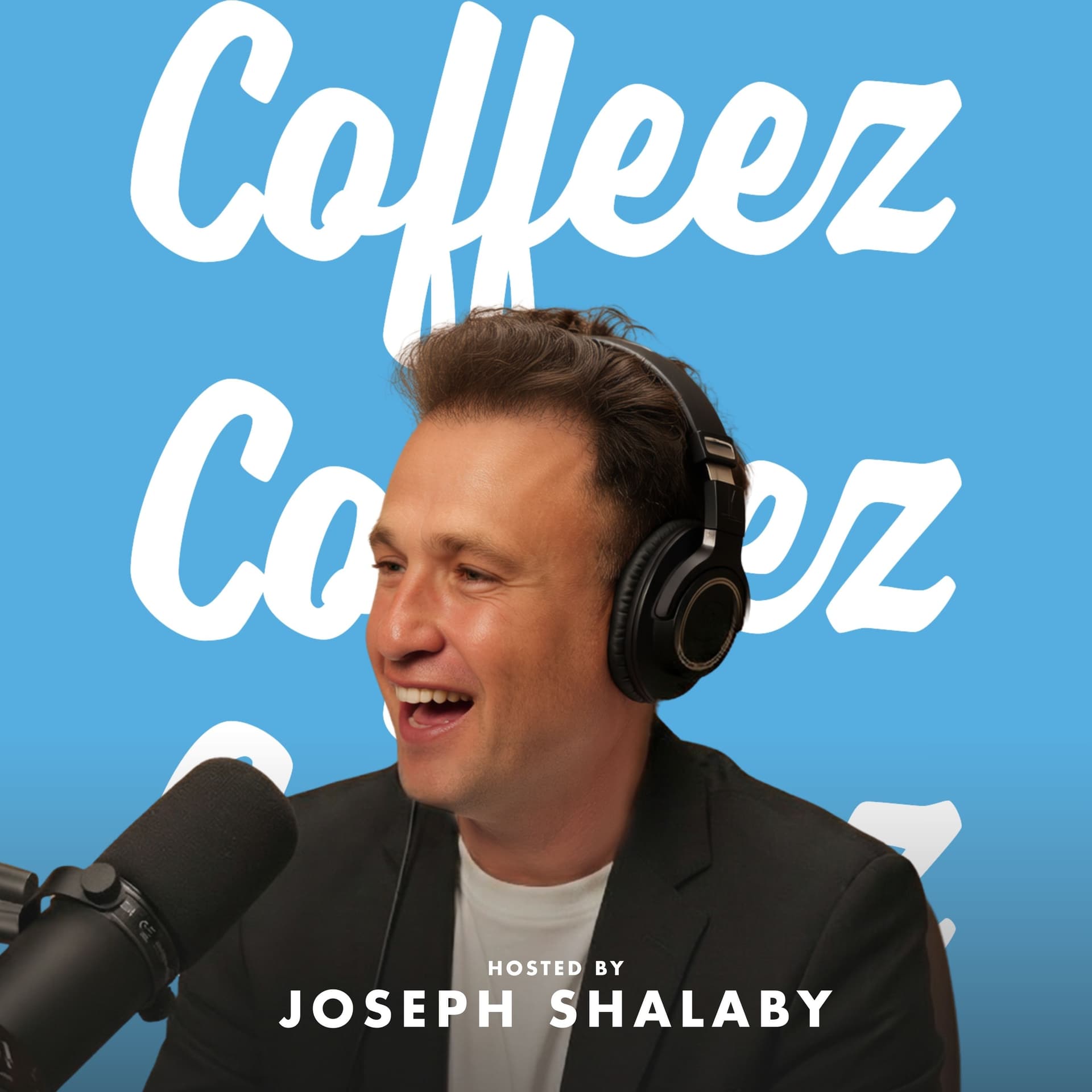
- Joseph Shalaby - Broker and CEO of E Mortgage Capital Inc.
Guest
- Chris Hetherington - Former NFL player and current CEO of Fathead.
Episode Overview In this episode, Joe Shalaby interviews Chris Hetherington, who shares his journey transitioning from being an NFL athlete to a successful CEO of Fathead. The discussion covers various topics, such as the mindset shift required for entrepreneurship, the challenges of financial literacy in sports, and personal experiences, including rebuilding after loss from a devastating fire.
---
Key Themes and Discussions
Transition from Athlete to Entrepreneur
- Mindset Shift: Chris emphasizes the mental adjustment required to move from being an athlete to a business leader.
- Rigorous Routine: He maintains a strict morning regimen that includes working out and meditation, showcasing discipline reflective of his athletic background.
Financial Literacy and Athlete Struggles
- High percentage of athletes (90%) struggle with financial management post-career.
- Chris highlights the importance of surrounding oneself with supportive and knowledgeable individuals to avoid common pitfalls.
Fathead's Rebranding and Future
- Acquisition of Fathead: Chris discusses how he came to lead Fathead and the potential he saw in the brand.
- Innovations: There are plans to infuse technology and cultural relevance back into the brand, including product innovations like collectibles, AI, and AR applications.
Personal Resilience and Family Values
- Chris shares his experience of losing his home in the Palisades fire and rebuilding his life in Newport Beach.
- He stresses the importance of being a present father and role model for his children, imparting lessons about hard work and perseverance.
Importance of Team and Culture
- Throughout the conversation, Chris emphasizes the importance of teamwork, culture, and having the right mentors in business and life.
- He reflects on the lessons learned from sports and how they translate into his leadership style at Fathead.
---
Key Takeaways
Entrepreneurial Mindset
- Grit and Resilience: Essential for both sports and business.
- Continuous Improvement: The goal is to show up better each day in all aspects of life.
Brand Strategy
- Focus on Customer Engagement: Through modern marketing strategies, including social media and partnerships.
- Diversification of Products: Fathead aims to expand beyond traditional decals into tech-driven collectibles and customized products.
Family and Personal Growth
- Value of a strong family unit and instilling work ethics in children through personal example.
- Embracing challenges as opportunities for growth.
---
Final Thoughts Chris Hetherington's story is a testament to resilience, hard work, and the importance of community and relationships in both business and personal life. His journey from NFL player to CEO encapsulates the potential for reinvention and the significance of maintaining fundamental values such as teamwork, integrity, and continuous learning.
Connect with Chris
- LinkedIn: [Chris Hetherington](https://www.linkedin.com)
- Instagram: [Chris Hetherington](https://www.instagram.com)
- Fathead: [Fathead Official Website](https://www.fathead.com)
---
Closing Remarks Joseph Shalaby thanks his guest, Chris Hetherington, for sharing insights and stories that inspire listeners, emphasizing the blend of personal and professional growth through shared experiences.
Written by AI. May contain mistakes. Listen to the episode to check what was said.
Transcript
Automatic transcript. May contain errors.0:00If you grew up in the 2000s, you knew what a Fathead was. Athletes didn't just play on your screen, they lived on your wall. But after years off the cultural radar, Fathead didn't just need a rebrand, it needed a comeback. Waking up every day and taking care of the blocking and tackling, understanding the exodus of the business in football terms, and we've set up pretty lengthy KPIs. Chris Hetherington isn't your typical CEO. He played 11 seasons in the NFL, came out of Yale, and rebuilt his life after losing everything in the Palisades Fire. In this episode, we talk grit, family, fatherhood, and the future of a brand that defines a generation.
0:44From the locker room to leadership. From rebuilding a brand to rebuilding a life. Welcome to Coffee. Quick break. Thinking of going independent? don't do it alone. At eMortgage Capital, our hybrid broker-banker model gives you real support, instant lead access, 160-plus lenders, and nationwide reach in 46 states. No hidden fees, no fluff, just a platform built for LOs who want freedom with firepower. Visit joinemortgagecapital.com and run your business your way.
1:25Joe, thanks for having me. Good to see you. Appreciate it. You're a friend. Our kids play ball together. It's great to have you. It's great to have you in Newport Beach now. We're blessed to have you in our city. Now, I like to start off my show the same way I ask every single one of my guests. Chris, what's your morning routine? I got a crazy morning routine, Joe. I wake up at 4.30, between 4.30 and 4.44 every morning. I go immediately in the cold plunge. I do the sauna. I meditate for about 20 minutes, work out for about 45 minutes, and then go back home and wake the kids up and get ready for school.
2:01So, you know, no option for me when that alarm clock goes off at 4.30 or 4.44, I'm up every morning. So I enjoy it. It enables me to, you know, I still train like I'm a professional athlete and I still treat my body like I'm a professional athlete because I think being an entrepreneur and a business person, You've got to take care of your mind and your body. It's worked for me. It's not easy, but I stick to it, and that's my routine. The demand of an entrepreneur and a professional athlete are pretty similar. That's why the transition for professional athletes is not that bad because they're used to such a rigorous grind.
2:42In all honesty, Joe, it's hard for a lot of athletes. The transition from being a pro athlete to the real world most of the time is very difficult in that you spend all this time and energy trying to live out this dream. And then when you're on this big stage and you're living your dream, you spend all the time and energy to stay there. For me in particular, I played 11 years in the NFL, and the chips were stacked against me. I came out, I was an undrafted rookie free agent out of Yale University, and I played quarterback in college. They made me a fullback in the NFL and was lucky enough to play for a long time.
3:18But once you retire, like, shoot, what am I going to do next, right? What am I going to pour that discipline and that passion and those traits you learn from being an athlete? You know, what's my next identity? Like, how am I going to define myself? And the reality is a lot of players really struggle with that. I feel lucky and blessed that I had a good education to fall back on and, you know, knew the game wasn't going to last forever. So I started to prepare early on in my career, whether it be internships, et cetera. But yeah, you're being told where to go and what time to be at meetings. You're getting paid to work out.
3:52You're getting paid to take care of your body. And once that's gone, you know, guys really struggle with that. Yeah, I know. We see a lot of failed athletes. I mean, we talked about this before. It's like a 90 % failure rate after they just dwindle a lot of their money away. Plus, it's only a two-year career for most. They played 11 seasons. I mean, that's a big deal. Yeah, I think the thing for me, you know, I made fullback money and didn't make quarterback money. And the money back in the late 90s and 2000 wasn't what it is today. But, you know, again, I had a good foundation to fall back on.
4:27And, you know, these athletes, you know, generally speaking, they tend to not surround themselves with the right people that are generally interested in their success after football. and they get involved in these get-rich-quick ideas or these investors or owners want to use their brand to kind of leverage what they're doing from a business perspective. Yeah, it's sad. It's sad to see some of these guys get in trouble and get poor advice and poor guidance. But it's hard. It's hard to start from a rookie again, right? When you're done with football, it's like, all right, what am I going to do? Some guys made a lot of money, and hopefully they take care of their money.
5:08and make good decisions. But in general, guys really struggle. You know, you're not a normal athlete. I mean, you went to Yale. That's a big deal. Then you went back to Harvard for some more certificates. Yeah. So you're a high-level, high-performing, high-achieving, high-intellectual athlete. It's not the standard. I mean, how many guys at that level in the NFL did you encounter? Not many Ivy League guys. I would say there's a little more these days, I think, with technology and scouting. If you're good enough to play, they'll find you. But yeah, I got lucky. I grew up right outside New Haven.
5:46I played Yale youth hockey as a kid. My brother was a great role model. He was 10 years older, went to Princeton. Neither one of my parents went to college. So I had these good role models. And academics were important to me from a young age. Obviously, I was lucky enough to be a great natural athlete. But school was definitely as important as athletics. and I'm sure we'll get into it, but I just get disappointed with some of these college athletes that are, I think there's great things around building your brand, but it's not necessarily about what school I'm going to go to and what kind of education I'm going to get.
6:19It's like how much money are you going to pay me to come to this school? So I think that's a challenging situation. And to your point earlier, improve their football IQ and understand defenses and they struggle. And sometimes it's surprising where you can be an outstanding college football player and come to the NFL and your game just doesn't transfer. And I think some of it's physical, but a lot of it's intellectual. So you're seeing now the demand, the game for college just totally has changed because of money, huh? It has changed. I think some people would argue it's changed for the better.
6:55I don't have a problem with these athletes getting paid. I think they're incredible assets to their universities and institutions. But I think the value of education has definitely been minimized. And that bums me out. Like, obviously, I had a different path. I went to a good Ivy League school and was lucky enough to play a long time. But I had that to fall back on. I mean, you can always go back to school. And, you know, I read LinkedIn and some people are arguing about this kid from Duke, whether he should stay at Duke or... You're talking about the basketball player? Basketball player. yeah but you know it's hard to argue that guaranteed money in the nba you can always go back to school yeah i mean he's we need him in the nba there's no other hot draft pick besides him he's the biggest thing that's coming out of yeah dallas got him in the lottery right dallas yeah yeah they just got him yeah i'm excited about cooper flag we don't have any big draft picks right now yeah he's gonna be good he's gonna be a good pro for sure so let's talk about your business now, you know, like successful business.
7:54How did you acquire Fathead? Good question. By luck. I, uh, look, I've, I've been involved in a lot of different businesses. I worked for a hedge fund for 11 years after I retired from football and was fortunate enough to have a bunch of different roles within that hedge fund. I was a trader for a couple of years. Uh, I ran a business in Tokyo into the big earthquake and tsunami in 2011, came back, help, uh, launch a co-invest fund. And we worked with that strategy for about five years. And then got more involved in the private equity venture capital side of our business. So I had a couple of CEO roles of companies we invested in.
8:26Fathead kind of fell into my lap, Joe, serendipitously. One of my close friends from Yale lives in Detroit, got to know the former owner and CEO, Tony. The story is Dan Gilbert owned this brand for a long time. And Dan had some health issues about five years ago. And so Tony took over the business. And essentially, I convinced him to sell it to us. I put together a really experienced group of partners and brand builders and operators and executives that had deep relationships in sports and entertainment culture. And, you know, it's funny. I reflect back in the story. I mean, we looked at this brand and we're like, you know, 194 licenses with some of the most epic IP in sports and entertainment, 2 million email subscribers, over 300 ,000 SMS subscribers.
9:08We're like, is this a melting ice cube or a sleeping giant? And the more we dug in, the more we realized the brand equity and the brand awareness and the own database and these exceptional products and the opportunity to expand from a product innovation standpoint and start to incorporate technology and automation and AI. You know, we have a really special opportunity. And now for us, it's about focus and execution. And there's just a lot of low-hanging fruit to this business. And I'm sure we'll get into it with the technology advancements we're making. But I feel very blessed. It's fun for me to be back in sports again and leverage these relationships I've built over the last 30 years and participating in these temple events that are happening in sports and culture.
9:55And it's fun. And you're getting back in the weeds. You're out on the field. You're making new business relationships. You're back in the sports entertainment world. I feel like it's – I'm saying this in a humble way, Joe, but I feel like it's everything I built my career towards was, was for this moment to, to, to be able to, to take hold of a really great brand and you know, bring it back to life in a big way and take it to new heights in a big way. And, and it's all about team, right? Like I, I, you know, really have spent a lot of time assembling the right team. And, and, we just hired a new CMO two weeks ago, Jared Duby, who's, who's a phenomenal guy with a ton of experience and expertise in sports and culture.
10:38And I have a really great COO, Jason Turner. Jen Beaver is our chief partnership officer. I've known her since my days at the Colts in the late 90s. And so, you know, team and culture is really important, as you know, as a business and organization. A lot of the stuff that I've learned from sports, you know, translates into what I'm doing now. And, yeah, we have a really big opportunity, and I'm excited to be on this journey. You know, a lot of my team members here, when I told them that the CEO of Fathead was coming, they were like, what? CEO of Fathead? Because the brand authority associated with Fathead is like, it's decades deep.
11:16Yeah. You know, it's. Yeah, there's a lot. It's, it's, it's, you know, they had a lot of nostalgia back in the day. Yeah. They came out with, you know, big decals and big moves and big statements and big athlete ambassadors. And, you know, to your point, the brand equity and brand awareness is phenomenal. And now it's our job to, you know, it's been out of the conversation, out of culture for the last four or five years. And, you know, we have an incredible opportunity to bring it back in a big way and make a big impact in culture. Youth sports is massive. So we're attacking that in a big way and, you know, really, really maximizing these licensed partners that we have and then starting to expand distribution, you know, potentially expand into other categories.
11:58outside of sports and entertainment. And so it's exciting, man. But at the end of the day, we're a brand, right? We're a brand, we're a product, and eventually we're a service. But nailing that brand and investing in brand is really our focus. We've been playing that bottom of the funnel kind of day trading, ROAS game, meta, Google. But now you've got to invest in brand. You've got to bring this brand back to culture in a big way, talk to people in the right way, live in those channels where consumers are at. And as you know, I mean, back in the day, it was all over TV and Super Bowl commercials and ESPN.
12:34Now it's social, social selling, live selling, affiliate partnerships, influencer partnerships. And so, you know, we treat that really serious. Yeah, it's all omnipresent now. You can't just be on one channel. No, got to be everywhere. Actually, TV doesn't matter. You don't even need TV anymore. Yeah. You need to be doing the podcast. You know, your social game needs to be tight. You need to be doing book releases, like everything. I tell my team, because what our company is, we're in the business of making companies. So everyone that belongs to E-Mortgage runs their own company. So they've got to basically continue to add more legs on their table.
13:13And I look at a leg as, this is Facebook. Another leg is Instagram. Another leg is LinkedIn. Another leg is TikTok. Another leg is Snapchat. Another leg is podcast. another leg is you know yeah so they got they need a hundred legs yeah and you just got to keep adding with your company i mean the sky's the limit because you could be everywhere yeah you could be everywhere now what kind of product innovations can you really roll out with fat head i mean it's a decal company like what is there to do like when when we talk about innovation like i'm curious myself like how do you innovate in that space well first of all we have we have a Great vision.
13:51We hired an incredible product team to help us make not only data-driven decisions currently, but also with our product innovation roadmap. We have goals of getting into collectibles, limited editions, one-of-ones, one-of-100s. But we bought a technology company early on and pretty robust tech stack and get into AI, AR, get into metaverse blockchain. But essentially, in the future, we want to create a fan engagement platform. And, you know, these decals have become portals to trigger content. And so we're really excited about that roadmap. But, you know, our total addressable market, Joe, is almost overwhelming.
14:29And, you know, we're known for our big life-size vinyl decals. They're incredible products, you know, removable, reusable. We have the minis, which haven't been marketed properly over the last several years. I think that's some of the most marketable products we have. You know, we have the cheering products or the big heads in the stadiums and arenas and ballparks. You know, those are kind of the licensed products, standouts and dry erase boards. We saw a lot of brackets for March Madness. We gamified that this year for the first time. So that's kind of your licensed products, all the major sports leagues, players associations, NASCAR, WWE.
15:04And then on the custom side, which I think is a massive growth opportunity, fatted yourself or, you know, your son wins, you know, our sons play together. Let's say they win the championship. They want to capture that moment with a decal or a product, you know, birthdays, graduations, bar mitzvahs. We sell a lot of pets. You know, that's really capturing these moments that are happening in life and in culture and, you know, families, if you will. And so, you know, the combination of these licensed products, these major partnerships with these iconic, you know, IP, and then the custom side of the business.
15:40you know like i mentioned earlier u sports is a big category 65 billion by 2030 right and uh so we're partnering with a lot of the biggest u sports organizations to make a real impact in your sports and that's our demo right uh your son or my son you know the day we bought the business i ordered my son a christian mccaffrey from the 49ers life-size decal he thought it was the coolest thing ever and then uh i made custom decals for my son's pally uh au all-star team I mean, a big life size and these minis, they can send a grandma and grandpa in Connecticut. They can put them on their refrigerator or Stanley's.
16:14And so the best brands innovate, as you know, right? So we have a lot of opportunities with the IP and license we have. And then a ton of opportunities on a custom side to innovate and come up with different product formats or et cetera. Yeah, that's cool. And I think there's like you're also skipping like corporate partnerships, too. Yeah, huge opportunity. You haven't even touched that space. Yeah, they did that historically. Insurance companies ordered$20 ,000 worth of product, or we're in a suite at an NFL game highlighting the sponsor of the game or the sponsor suite. There's a lot of things we can do as far as installations and stuff like that on the corporate side.
16:56But yeah, the sky's the limit. I think for me, our mantra around FATED is either hell yes or not yet. We have all these relationships and all these opportunities, But really for us, there's three to four core pillars that we're focused on, which are the big growth levers and the low-hanging fruit in the short term. Collectibles, especially now with the grading, the PSA grading is like dominating sports right now. And matter of fact, I actually, my son, I got him into sports collectibles and I actually enrolled him in a course. This is not a college course. This is like adults are in this Zoom every, you know, two times a week.
17:35and it's basically like adults who went from trading you know stocks now they're trading cards yeah you know and for a kid to understand the dynamics of business they have to really like it so he really likes sports so it's like yeah it translates over but i'm seeing this resurgence in collectibles like bigger than it's ever been like 100 times bigger so what are you guys doing in the sports collective world like that market is bananas it's like we're we're planning it out i think for us we're all about fandom right we're about celebrating fandom we're fans ourself right like i was a professional athlete but i'm a huge fan of sports and uh you know i admire what these athletes are doing i admire these successful organizations and what they're doing to build championship teams and but i'm also a fan of my kids and and you know my wife and so if i can capture those special moments, you know, through our products, it's really special.
18:33But we have, we have a lot of plans, Joe, uh, to really, you know, make an impact in that, in that space. I have a lot of friends in that space, uh, in the flexible space. Yeah. But it's, it's, it's, you know, kind of plan B or phase two of the business. You know, we have so many products to sell and, and to scale, to scale. And so, you know, we spent a lot of time over the last, I would say a year and a half, really cleaning up the business, optimizing the business, improving unit economics in a big way. I mean, you know, the only really way to meaningfully scale the business is to nail unit economics.
19:06And so we've amended some vendor agreements and got new partners in here. And now it's about growth, but it's about intentional and profitable and sustainable growth. And so starting to expand distribution, we've been 99 % DTC over the last several years. And so, you know, we'll expand distribution. We'll get into retail eventually. But you've got to have the resources and the infrastructure to support that move. And like I said, we have an opportunity to sell a lot of decals and a lot of big heads and a lot of minis and a lot of standouts. And, you know, that's what we're about these days. But big plans in the future for sure.
19:43I could definitely see a fathead store at like Irvine Spectrum. Yeah. 100%. That would be the cool store. Or in the lids store. You know, we're working with lids. I know. Next door to lids, you would just, you know, maybe a threat to them. Yeah. Yeah. It could be a partnership. We're working on that. But yeah. You plan something like that. You're thinking about having a fathead store, like just direct. Down the road. Yeah. I think there'll be a time and a place for that. You know, you got to you got to live where people people are. Like, you know, Walmart's doing Target, Amazon. You know, that's where people shop, at least the masses shop there.
20:19So you have to you have to be there. Yeah, the Irvine Spectrum play would be just a brand play just to get a couple hundred thousand views a day on more Fathead exposure. Yep, 100%. So, you know, Fathead's been, you know, such a staple in sports memorabilia. Right now, the innovation strategies you're implementing are technology. There's digital. You're planning to go consumer direct from a store perspective. And then how does AI play in that world? So AI is going to be a big part of our business. We're essentially, I won't give you the secret sauce, but we're essentially we engaged a company, a partner who has a patent on persona driven marketing.
21:05So just getting really smart about how we target the customer. Yeah, we're essentially creating this golden database or this single source of truth, which, you know, collects all of your Shopify information and all the information elsewhere to really, you know, help us create persona-driven marketing campaigns or it's email, SMS, organic, you know, et cetera. And we think that's going to provide a nice little lift to our business. You know, your landing experience, landing page experience will be different than mine and different than your wife or my 11-year-old son. And that's really the way to get smarter about targeting consumers.
21:40And I would say we have an interesting opportunity, Joe, because our return customer rate is only about 22%, 23%. And so through better data-driven marketing, we can really increase that. You know, your wife, who may or Theo, his favorite athlete on Christmas, didn't know that we also have products for your daughter. You know, so it's a way to really reach those consumers and drive up that return customer rate. But also, there's a lot of consumers that didn't know Fathead was still in business. We fell off for like a decade. Yeah, we fell off like four or five years, you know, six years. But we still have amazing products and amazing IP.
22:16And so we have a really great opportunity to capture new customers that aren't familiar with our brand. And once they see our brand and feel our brand and, you know, they love it, and then they're going to start to order more. And so it's all marketing, as you know, right? It's all investing in brand and having exceptional partnerships and having the right team and the right execution plan. But investing in brand is critical. Like I said, we do bottom of the funnel pretty well, kind of playing this ROAS game. But for us in particular, Fathead, that's been around for a long time, we need to invest in brand top of the funnel.
22:50Yeah, 23 % return rate on a brand like Fathead. what's going to be your retarget strategy to bring them back into your funnel ai yeah it shouldn't be a big drop-off unless they just don't need decals you know or whatever yeah different formats uh you know different ip and then customs like i said i mean customs is a no-brainer uh a return customer it's higher and customs is in license but uh yeah it's it's like i said getting involved and use sports. We're doing these big camps that are, we have a partner called FlexWorks Sports. We're working on a group called Base Sports. We're doing an activation at a tournament in Colorado over a 4th of July weekend where there's like 1 ,500 teams times 15 kids per team, these young girls playing softball.
23:39That's a really way to make consumers aware of our brand. And then once they see our products, they'll love them. But you got to participate in these events, It's NFL, NBA, NHL, MLB. We've got to show up in culture and bring this brand back to cultural relevance again. Do you have a team that goes to trade shows? I'm going to the licensing show next week with my partners. Yeah, we've got to show up there too. That's a good way to establish relationships and build on partnerships and create future partnerships. But yeah, you've got to show up at these events big time, Joe. In transitioning from the NFL and now CEO of Fadhead, what do you think has been one of the most valuable lessons you've learned?
24:22I've learned a lot of lessons. I think team is important for me. A lot of things I learned in sports is having the right team, having the right culture, having the right vision, getting everybody to buy into the vision, talk about the brand in the same way, be aligned with the KPIs and the goals. you know I've had some successes in my career I've had some failures and some mistakes and I think the best entrepreneurs learn from those mistakes and learn from those failures and grow from them and don't make the same mistake twice I think a thing that was a real game changer in my career was to be an open to having mentors in my life and and asking for help in my life has been crucial I'm a part of some really special communities and and you know surrounded by really successful people that are really have an authentic interest in your success.
25:14And I also, on the other side, I try to be a mentor of some of these young athletes and be transparent at what some of my challenges were and some of the things I've done well. But I think having a growth mindset has really been the key for me. Yeah, I think when it boils down to his team and culture and execution and focus. What's one thing that you could think of that a mentor told you that's like you live by frequently or daily? Surround yourself with people that add value to life. Yeah. I mean, especially being an athlete back in the day, you know, people want to be around athletes. And sometimes they're not there for the most authentic reasons.
25:53So I think, you know, in business and in life, right, your friend groups. And you've got to be around people that add value and not extract value all the time and have a genuine interest in your success. And I've been lucky. I think a lot of – I still talk to some of these kids I grew up with and a lot of people I went to high school with and college with and certainly keep in contact with a lot of guys I play with in the NFL. And, you know, I think it boils down to having the same values and being good people and, you know, cheering each other on. And some people get envious or jealous. And it's like, look, man, I'm just a normal dude trying to live out a dream and be a great dad and be a great husband.
Read the full transcript
26:38And, you know, there's some bad people out there, obviously, but not me. And I think it's important to surround yourself with the right people. And then, you know, being a role model for my kids is important to me. Having them see me work out like a maniac in the morning, get up at 430 and eat well. and have this keto diet that I follow religiously six days a week. And then Sundays I have some fun and eat pancakes and donuts with my kids. And you've got to live a little bit. But, yeah, it's important for me to be a good role model. It's important for me to teach my kids some of these things that I wasn't taught as a young kid about leadership and being a great teammate and being accountable and having a great attitude and effort and energy.
27:22And nobody taught me that I was a kid. So it's been special to try to, in a non-aggressive way, right? Like, I feel like my kids, I don't know if you've seen this being at baseball, but like, you know, Jack's old man played in the NFL for 11 years, and I think he has some inherent pressure. And so it's my job to make him feel that he doesn't have pressure. And I'm just, I'm proud of him. I want him to be a great player, but I want him to be a great kid and have a good attitude and be a great teammate and all that stuff. So it's been fun. He's a great kid. He's a great athlete, man. And the best athlete we've seen in Newport for a minute.
27:55Yeah, I appreciate it. He's a good kid. And he works hard. He's like me. It's hard to teach that. It's hard to teach kids to work hard. And, you know, he's on his iPad looking at baseball videos and instructional videos. It's hard to teach that, as you know. And I think youth sports are an incredible opportunity. You know, we talked about your son. Like, he's a great kid, too, man. And he's a great teammate. And hopefully he's having a great experience. But it's important for these kids socially to be involved in new sports and do things that maybe they're not used to doing or not great at. And so getting better every day.
28:32My son tries to get better every day, as I'm sure your son. But I think social. Sports, baseball especially, it's kind of like one of those year-round things. It is. Which sometimes I have a problem with. I think I was a better athlete and a better NFL player because I played multiple sports. I went to high school, this prep school in Connecticut, Avon, O 'Farms, and it was mandatory. We played three sports. And I thought that was great for me personally in my development as an athlete. Parents, as you know, are nuts these days. They get their kids focused on one sport and put a lot of pressure on them or try to live vicariously through them.
29:08And I think that's bad. You played three sports year-round? I played three sports in high school and two in college. I played football and baseball. I played baseball my first couple of years, and then I got hurt my junior in baseball. But yeah, I loved it, and it was who I was. But I will say I went to this prep school in Connecticut, like I said, and it really taught me how to manage my time and balance between athletics and academics. And I felt like when I went to Yale, I had somewhat of a head start where it was just semi-natural for me. Obviously, Yale was it was a tough place academically, but I think I learned how to manage my time effectively, you know, from that experience in high school.
29:51I mean, you were grinding young, actually, you know, kind of pivoting. I like to talk about family a little bit. And, you know, one thing and I don't know how you grew up, but, you know, fiscally, but now your kids are growing up in a different position fiscally. and having come from the roots that we've come from not not having the same resources it taught us a lot about grit it taught us a lot about time management taught us a lot about how to become the entrepreneurs and success stories we are today how are you instilling that that same mindset in your children now same level grit to grind you know you're doing a great job doing it yeah i think it's important.
30:34I mean, I grew up from pretty humble beginnings. My dad was always a very hard worker. My dad was a salesman and he owned a golf driving range on the side. And then my freshman year at Yale, he bought a municipal nine hole golf course. So I've always been around golf, but my dad was always a hard worker and I always had that role model. And then my brother, like I said, was 10 years older, went to Princeton. He's been working at Merrill Lynch since 1986 and does very well. So for me, it's, it's, it's teaching my kids the lessons like, look, you gotta, nothing is given to you. You gotta work hard, you know, and you gotta grind.
31:11And, uh, you know, my job as a parent or your job as a parent to put your kids in, and, you know, the right surroundings to hopefully set them up for success. But, but just cause you go to a great school or live in a great, you know, neighborhood or town, you know, you gotta put in the work. And so that's my biggest message to Cole and Jack is, you know, you're fortunate enough to be in this situation where you live in the sunshine and go to the good school. But you've got to work hard and you've got to grind. You've got to put in the work. Yeah, that's it. I mean, and it's hard to teach that.
31:43You talked about, you know, Jack putting in that work now, looking at videos on his iPad about instructional videos. And I mean, that's hard. That's hard for a kid to do and not want to play games. There's a lot of distractions now, right? These kids are gamers and social media. We didn't have social media when I was a kid. I didn't have social media when I played in the NFL. So there's a lot of distractions and there's a lot of companies and brands fighting for attention. But my job as a parent, and my wife does a great job of this too, is to really get our kids to focus on what's important. And our house burned down in the palisades, as you know, And I think that was a good example of a teaching lesson, a life lesson of like, look, we're healthy, we're safe, you know, we have each other.
32:31And that's the most important thing. These material things could be replaced or not important. But we have each other. We have our health and our safety. And we'll rebuild. We'll rebuild our life. But we've got to stay strong as a family unit. I'm really proud of my wife. She did an incredible job through that experience. And, you know, these are good lessons for our kids. It's like stuff happens in life. And it's how I'm a big fan of stoicism. And it's not necessary about, you know, don't worry about the things you can't control and just worry about the things you can't control. You can't control that our house burned down, but we control how we react to it and how we rebuild our life and how we remain a strong family unit.
33:11What a life lesson these kids learned. What a life lesson you learned, you know, from that experience. And by design, I've intentionally not wanted to address that subject. because it's a very, I mean, forget about emotional. I don't even know how to describe an experience like that. But what, you know, overcoming that tribulation must have been hard on you and the kids. How was that transition? It was tough. To be transparent, it was tough. When your community is gone, not only our house and our neighbor's houses, I mean 7 ,000 houses, but the thing about the Pacific Palisades, Joe, is it was a really special community.
34:00It was kind of a bubble in L.A. And to wake up one day and that's gone is tough and it's humbling. And some people can look at that as an opportunity to learn from and grow from, or you can go in the tank. and we made a decision as a family to, you know, focus on what are we going to do in the short term to provide some sense of normalcy for our kids. And that was, you know, we moved around a couple times and then we had some friends move to Corona Del Mar and we're like, wow, this seems great. This is a good short-term decision. You know, we'll get in a good community, get the kids back playing sports again, get them in a good school, surround ourselves with good people.
34:44And now we're like, all right, what's our long-term plan here? And that's what my wife and I are trying to figure out. But it was a bummer, man. Look, if it wasn't such a special community, it would be a little different, I think. Maybe not. But to really have that great community and have that being ripped away from you was hard, especially with two young kids. I mean, these kids have been through COVID, and then they've been through losing. I mean, they lost their school, their church, their sports facilities. All their friends are dispersed. It was nuts. You know, what's nice to see is the Palisades community here in Newport Beach as a community again.
35:24Yeah. You know, it's like another community of the Palisades here in Newport. And they're all amazing people. Yeah. Everybody there. And they've probably become more amazing from that experience just because it's such a humbling experience. Yeah, it is humbling. But I will say the people that we met in Newport have been so gracious and welcoming and empathetic. And the people that have moved to this area from Palisades are all good people. And they're going through hard times. And they want to try to find that community, which is important. And I think the people of Newport and Corona Del Mar have done an incredible job of welcoming us and opening up their homes or their sports teams and stuff like that.
36:08So it's been an easier experience, I will say. Opening up the sports teams is easy when all these stud athletes are coming. Parents are pros, you know, like you're just making our kids better. Yeah. You guys are trying. You know, it's, yeah, it's been a good experience. And, yeah, I mean, the kids are pretty good athletes. But they just want to be part of a team, man. It's important for them to get back on teams. And my son, Jack, my 11-year-old, is playing in the Pally All-Stars. So he'll get a chance to spend some time with his friends this summer, which he's super excited about. And again, these parents, we spend a lot of time with these parents.
36:51And we're lucky. They're really good people and inspiring people and fun to be around and successful people. And that's important, right? If you're spending so much time in the summer and dragging your kid to Simi Valley and Chino, it's been a great experience for me personally to be around these good people and watch our kids have so much fun. I don't know what's going to happen with the Palisades now or a lot of them, but I don't know if there's going to be a rebuild strategy for that city. It's going to take a long time. I think some people are very anxious about getting back and building, and some people are kind of sitting on the sidelines for a while.
37:29But I do think it's going to take a long time, Joe. And I don't know if that community will ever be the same. I hope so. I just don't know. So we'll see what happens. We'll be with you guys. A couple last questions I have for you. What's a personal goal that you have for yourself, a goal that you have for the family, and then a goal that you have for Fathead? My goal every day is to show up in the best way I can and get better every day. show up as a person for myself, show up as a dad, as a husband, as a friend, as a leader, as a teammate. I mean, that's really my goal every day is to show up in the best way I can.
38:09You know, long term, it's how do I want my legacy to be, right? And for me, that's, you know, being a good person, being a good friend, a good dad, a good husband, all that stuff. But, being an accountable human being and being a good human being. So I have goals professionally. I want to build Fathead to the moon and have a lot of fun doing it and make an impact in not only my team and my partners, my investors, but our fans and our customers. That's important to me too. And then one last question. Yep. Ask everybody this question. When you're in front of the pearly gates, What do you think God's going to tell you?
38:54Good job. Let's go. Chris, if people want to connect with you, how do they find you? I'm on LinkedIn. I'm on Instagram. I don't have a huge presence on X, but I'm on there. Not really on Facebook much. But yeah, LinkedIn's my platform for business. Instagram, personally. I think we talked about it. I got to build out my social platforms and want to hire some people that do that with me. Yeah, it's fun, man. It's fun doing these podcasts and telling my story and learning from you who's been a successful entrepreneur. Like, I enjoy this stuff and hopefully do a lot more of it. You know, I always learn from every one of my guests.
39:32And it's just a blessing to just be sitting here and just asking questions. Like, I don't even use my questions. Like, I just off the cusp. I just try to, you know, be a student. And it was a pleasure to have you. Thank you. God bless you. God bless your family. I hope you hit every one of your goals. And thanks for coming on this show. Appreciate it having me. It was a pleasure. Thanks, Chuck. All right. Chris Hetherington, a legend. Fathead, make sure to connect.
From the publisher
In this episode of Coffeez for Closers, we sit down with Chris Hetherington—former 11-year NFL veteran turned CEO of Fathead. From his early days as a Yale quarterback turned pro fullback, to his current role leading one of the most iconic sports brands of the last two decades, Chris shares the highs, lows, and real-life lessons that shaped his journey.
We talk about the mindset shift from athlete to entrepreneur, the hard truth about financial literacy in sports, and how Chris and his team are reinventing Fathead for a new generation—infusing tech, collectibles, and cultural relevance back into a brand loved by millions.
Chris opens up about losing his home in the Palisades fire, rebuilding his life and family structure in Newport Beach, and how being a present father and role model is the most important title he’ll ever hold.
This episode is about grit, reinvention, leadership—and doing what it takes to win in every season of life.
Top producers at E Mortgage Capital are earning more per deal—with faster closings, better tech, and no junk fees.
👉 Learn more: https://joinemortgagecapital.com
