
In short
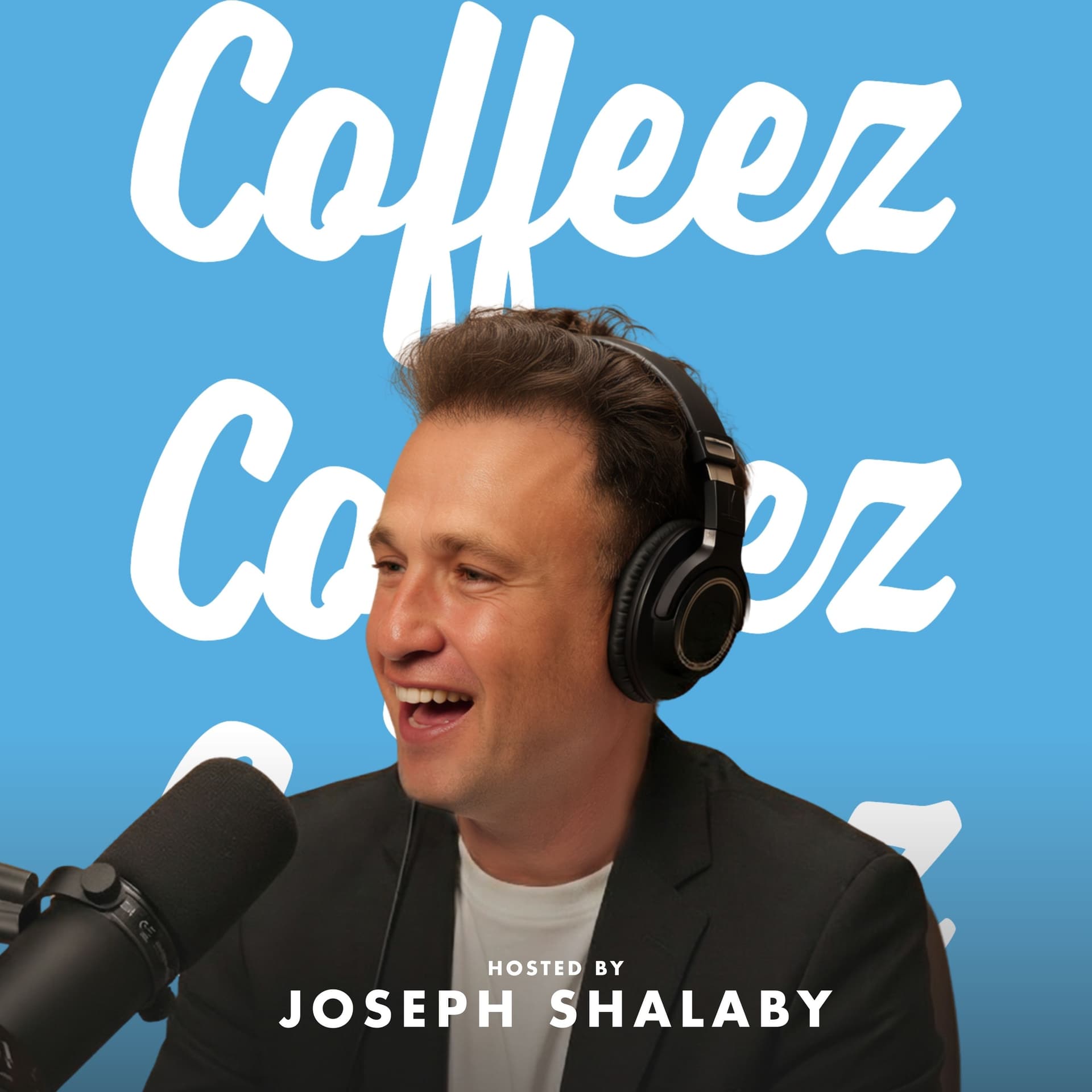
Coffeez for Closers Podcast Notes
Episode Title
Turning Liabilities Into Luxury with Pejman Ghadimi
---
Episode Overview
In this episode, host Joseph Shalaby speaks with Pejman Ghadimi, an entrepreneur and author known for his unconventional approach to finance and asset management. Ghadimi discusses how he transformed liabilities, such as luxury cars, watches, and art, into income-generating assets, fundamentally changing the way individuals perceive wealth and success.
---
Key Themes and Insights
- Transformative Mindset
- Most people are conditioned to live below their means rather than turning their means into wealth.
- Ghadimi emphasizes that many stay broke not due to a lack of money but rather a lack of the right mindset.
- Learning from Failure
- Ghadimi's personal journey includes significant failures, like losing money on cars before developing a successful strategy.
- He highlights the importance of learning from mistakes to create effective financial strategies.
- Innovative Financial Strategies
- Ghadimi teaches how to change the perception of luxury items from liabilities to assets.
- Example: Purchasing the right exotic car or watch can be financially beneficial, contrary to conventional wisdom.
- Education and Community Building
- Ghadimi founded Secret Entourage, an online education platform, to empower individuals through knowledge in alternative finance.
- His mission focuses on teaching financial literacy beyond traditional education, especially in understanding assets like cars and watches.
- Understanding Value and Depreciation
- Ghadimi explains how different luxury items behave in the market, highlighting that exotic cars and luxury watches often retain value better than standard vehicles.
- He encourages listeners to consider the long-term investment potential of these assets.
---
Practical Takeaways for Listeners
- Break Down Expenditures:
- Analyze living expenses between perishable costs (like food and travel) and large purchases (like cars and houses).
- Invest in items that can retain or appreciate in value to turn liabilities into assets.
- Mindset Shift:
- Challenge traditional views on wealth accumulation—focus on value retention rather than just spending less than you earn.
- Research and Knowledge:
- Educate yourself on the market behaviors of assets you wish to invest in; understanding depreciation and appreciation is key.
---
Personal Insights from Pejman Ghadimi
- Daily Routine:
- Ghadimi does not adhere to a strict morning routine, valuing personal freedom and the ability to choose daily activities.
- Curiosity and Learning:
- He stresses the importance of remaining curious and open to learning from others, regardless of their background or expertise.
- Life Philosophy:
- His goal is to constantly prove himself wrong, which promotes continuous growth and improvement.
---
Closing Remarks
- Future Projects:
- Ghadimi is working on a revolutionary concept—the "prenup" for cars, which guarantees their future resale value based on specific use cases.
- Audience Engagement:
- The episode encourages listeners to view their financial decisions through a lens of opportunity rather than limitation, promoting a mindset of wealth creation.
---
Conclusion
This episode of "Coffeez for Closers" provides valuable insights into how to rethink personal finance and asset management. Pejman Ghadimi’s experiences and teachings serve as a guide for anyone looking to elevate their financial literacy and transform their liabilities into luxury.
Written by AI. May contain mistakes. Listen to the episode to check what was said.
Transcript
Automatic transcript. May contain errors.0:00Most people learn to live below their means. Pejman Gadimi teaches you how to turn your means into millions. From being declined to clean floors, to managing a Fortune 500 bank at 18, to pioneering the online education space in alternative finance, PJ isn't your typical entrepreneur. Absolutely nothing. I don't hold plunge. I don't do shit. In this episode, we talk about the hidden math behind exotic cars, how watches can outperform real estate, and why most people stay broke, not from lack of money, but from lack of mindset. Do you know how many times I've lost money on cars before I realized how to not do it?
0:40Do you know how many times I've bought the wrong watch to tell my students not to buy that one because it was the wrong one? From McDonald's rejection to multi-million dollar collections, from immigrant hustle to industry dominance, welcome to coffee. Appreciate you having me on. It's a pleasure. It's an honor. I know you're a busy guy, two and around, probably your third podcast. We were in L.A., and I was like, you know what? We've got to try to make it out if we can, and I've heard nothing but great things, so I'm excited to be able to share some knowledge with your audience. Thank you. Thanks for coming on.
1:09So I like to start every show the same way with every one of my guests. PJ, what's your morning routine? None. I don't do anything. Nothing. Nothing. Like absolutely nothing. I don't cold plunge. I don't have a specific breakfast. I don't wake up at a specific time and build five businesses in five minutes in the morning and then go to sleep again. Nothing. Like, you know, I've found that creating structural boundaries like that usually is a state of the mind that needs discipline. And I have enough discipline that I don't need to follow a specific routine to have a great life experience and be able to still achieve everything I want to do.
1:53As a matter of fact, I like the freedom of not having an obligation by any means for anything. And if I wake up and I don't want to do something on my schedule or calendar that day, I just don't do it. like I literally piss off everybody because I ignore like my obligations sometimes because I'm like I'm just not in the mood so I'm just not gonna do that and I know it sounds like a really bad business practice sometimes to be like oh well you had all these things here and you don't want to do them but I feel like what people pay for when they pay for a service or they want to work with me or anything else is they're paying for the experience they're having like they're gonna have an experience and it's about getting them to that next level regardless that it's about cars watches or anything else.
2:31And so if they don't have the best version of me, because I'm in a bad mood that day, or I don't feel like doing something, they're not going to have the best experience with me. So I'd rather piss them off for the moment and get them better results, rather than try to force myself to do something I don't want to do that day. So no morning routines, no, nothing. I actually had a reel that went viral on Instagram when I was like, I don't do shit. I love that. I love that. You know, I love to ask that question, because everybody, every single guest has a different answer like the guest before he was like i take a drive i mean i've had guests tell me cold plunges i've had guests tell me the most elaborate you know zen moments and i'm like yeah different things work for different people you know like there's people that need to sit in front of a tree and meditate for like 20 minutes in the morning to feel good about their life and it's like that's good i mean i'm not telling someone how to live or what to do but i just feel like so you know about the the real life tree where you meditate in front of it it has like a no i I was just guessing.
3:28There's a whole thing. I've heard someone actually does that. I believe someone does that. I'm sure. That's a thing. That was actually someone told me that on a podcast too. The tree has some sort of frequency that they can feel during meditation. I would say there's a cartoon for every TV. So you're in the online coaching space, but it's not just online. You dominate that space. You started as the first person in that space. So I really did. And a lot of people don't realize that because they see me on the Internet and they're like, oh, you're doing coaching. So first off, I never sold coaching.
4:07In 2007, I started before the podcast was around, before people were doing these things. I started doing interviews with really successful people under a brand called Seeker Entourage. And I brought together an online academy of the best in each industry and everything else. And people would basically share their stories. and I would build community around the young people who didn't have access to formal education because I never went to college. And I was like, here, you can learn from great people online who have done great things regardless of what you want to learn. There's a guy who's an expert.
4:38So I would vet people, bring them in, and that was it. That was the story. That business became a big thing even though it took three years to really figure out how to get an online business going because it was my first online business. I had a background in finance, in investments, in cars, watches, and art. And I, at the time, just decided to teach entrepreneurship, help people just have a better way as a pet project hobby. That turned into a super lucrative business three years later, and I realized how to unlock basically selling education online. So this is where that transition happened to say, hey, I do this as a project where I like to help people learn business, entrepreneurship, awareness, consciousness, but I don't want to make money doing it.
5:18So I said, I'm an alternative asset guy. I know cars, watches, art, values, beyond anything people know. And I had a lot of experience in that space. So I said, what I want to teach is I want to teach people finance, which is alternative finance, things they don't hear people on TV talk about, things they don't hear their teachers talk about. And I've been very successful doing that. So I was like, I'm only going to teach what I'm super experienced at. And that's what I started teaching online as it pertained to coaching and building communities and brands around cars, watches, art, as far as making money with these things.
5:52Not flipping cars, like how to actually buy an exotic car or a luxury car, drive it for free, get rid of it, and get rid of this idea that you have to pay to own a car. And the same thing with watches, how to actually turn watches like they like into a profit center to actually wear them, enjoy them, but when you don't want to make money off of them. So the whole goal was since I grew up poor, how do I teach people basically how to live 10 times better than they live today and have the expenses they're going to have anyways, but how to turn those expenditures into actual like parked money that turned into profit.
6:27So turn your liabilities into assets basically. And so having been in finance my whole life, I was like, that's what keeps people poor. They just spend money. But the answer we keep hearing is always like, well, the way you get rich is you spend less than you make. You eat less than – I'm like, this is bullshit. This is the stuff that no one wants to spend less than they make. Everybody wants a ton of shit. Nobody wants to actually sit there and be like, I'm going to wait until I have$10 million to buy a yacht. No, and then I'm going to have nothing again and be broke? No, of course not. So there's an idea that we don't wait.
6:57As a human species, we're built in a way that we just don't want to wait for things. We're instant gratification monkeys. We want the car now. We want it before we even earned it. So I understood that human behavior was like basically a flaw in the way we've been brought up by society. So I said, if I can teach people that there's a way to literally use that flaw to your advantage and learn that instead of just buying a car because you really wanted a cool car, buy the right one so you can keep buying cooler cars and it won't financially hurt you. If you've always wanted a Rolex, buy the right one so that you can keep buying nicer Rolexes and park your money.
7:36So even though your income as your child obviously goes up into adulthood and you start making big boy money in your 30s and 40s and you start becoming a real guy, well, at that point, you don't want to be like, oh, every year I made 30. I spent 28, 35, and I'm in debt. You want to be in a place where, yeah, I learned to make$10 million, but I also learned that I only spend like 50 grand a month. That's it. Even though I'm making$10 million, because all my other expenditures, which are most people's like houses, cars, watches, and things they buy that are expensive, can actually be transferred assets that just park money.
8:11Like we do this with real estate already. We know this. We're like, I buy a house. It's a store of wealth, and it eventually goes up. But people don't realize this is out there for cars, watches, art, and all the other luxuries that they are conditioned to want to buy but look at as expenses. so i mean i know that you can't give this to me in an instant form but what's like a couple practical ways that someone can implement this right now on this show like without having to like go through you know a month of courses so the course is on a month it's six hours they're very short straight to the point that's why they're super effective and we've been that's it You just buy a course for six hours.
8:55Six hours. That's it. And this is why I'm really good at it. So my chosen purpose is to be a teacher, not a marketer. So I'm really good at teaching stuff. And this particular concept, I narrowed it down. And every year I improve it, and I don't even charge more money. So if you bought one of my courses in 2007 or 2008, that same course is still around today, which is insane. And it's now better because every year it's been improved. And you've never had to overpay or pay for it again because I improve it just naturally for all my students. That's why I have so many students globally. But, you know, I'm devoted to, like, teaching this.
9:29And I don't teach anything I'm not an expert in. I don't teach today crypto, tomorrow morning routine, next day I have something new because I think yoga is where the money is at. Like, I teach the same thing. I've done the same thing literally since I was, like, 19 years old. So, like, I'm 43 now, and that's all I know. I breed, live, and fuck alternative assets. Cars, watches, art. That's it. Buy, sell, trade, understand all the values, the futures, what's going on. I predicted during COVID that all the cars would be worth more money. Everybody said I was crazy. My car collection skyrocketed like five times.
10:03I basically made an extra$20 million. It was crazy. People don't pay attention to what's out there. Did you flip your cars during COVID? No, I didn't flip them. I bought an extra$6 million in cars before COVID, before the crash, meaning before people actually realized that the country was closing. because everything was on discount, and everybody thought the pandemic was going to take over. But I was like, supply chain in Europe is completely distorted. They aren't going to be cars when the country reopens. People are like, you have no idea what you're talking about. I was like, I've been doing this for like 15 years.
10:32I was like, I know what I'm talking about. Car dealers that have been in the space 20 years were like, you're wrong. I was like, fine. I put all my money where my mouth is. I started buying a ton of cars right before. I was like, here's all the rarest cool cars I can buy. I was like, I'll buy all this shit. People were like, this guy's crazy. He's going to just lose all his money. As soon as the country opened, all the shit went up like 300%. So I was like, yep. I was like, good. The same people that thought I was crazy were paying me 200 % on the same assets I was buying. So the reality comes down to this very simple concept.
11:04If you want to apply this to your life, you have to basically break down your living expenses into large expenses and small expenses. Perishable expenses are normal things like your travel, your food. You know, like these things you're going to do, great experiences you're going to have, your money is gone. When you pay for stuff, like if you buy it and you don't use points, and your travel is gone. Whatever you buy, it's over once you get off the plane, right? Like you used it. Same with food. You go to a restaurant, whatever you spend is gone. If you can divide your life into expenditures that are like your must-haves but that are large purchases, your house, your car, and your watches or jewelries or things you want that are large purchases, and make those purchases in a smart manner where the actual item retains its value by buying the correct one and stop chasing price, you can usually park money in these assets similar to savings accounts.
11:56And while they're not always going to go up in value because they have utility and you're using them every day, what they're going to do is they're going to store your wealth. And so if you can do that, you can basically cut down your expenditures by like over 80%. And what I try to teach people is which cars should you be buying, which watches should you be buying, which decoration on your wall should you be putting to ensure that the money you're spending isn't going away. So I'll give you a good example of this. You have a Range Rover. Most people like Range Rovers. They like those kind of SUVs, luxury SUVs we call them.
12:29You can buy a Range Rover for$100 ,000, for example. Slightly used. You think you've got a good deal. You're excited. it. That range over in three years will be worth$45 ,000. So you will have lost$50 ,000 divided over 36 months, and that's your cost of ownership for that particular item. Now, to someone, they might say, well, it's only$1 ,000 a month because most people are pre-programmed to only think monthly costs. Like, what does it cost me to own this per month? What I'm telling people is the more you follow the pre-programmed nature of what they've brainwashed you to believing that your monthly payment is your expenditure, the less you understand how life really works.
13:04Because what What if, I'll give you an example, if you bought that car for$100 ,000 and you ended up selling it for$50 ,000, you lost$50 ,000, right? There's a$50 ,000 loss. It's black and white calculation. What if you actually bought a Lamborghini SUV, which you want more, and your payment was$2 ,000 a month, but the SUV was$200 ,000 because it was double the price, but by the time you sold it, it was also$200 ,000. So what would happen is every$2 ,000 payment you put in that car would go in the equity of the car. So at the time you go sell your car and you go, okay, I don't want this, like, just like the Range Rover, I want to get rid of it.
13:40Let's say there is, out of that two grand payment, $1 ,500 of it was equity, the$500 was your interest, whatever that is. All those$1 ,500, they're not parked in the car like a savings account. So when you go sell that car suddenly, they're like, oh, yeah, here's your check for like 60 grand. You're like, wait, why? Like, I just made my payment. I drove my Lamborghini. Why are you paying me back? Well, I'm just paying you back because your car is worth the same money you paid for it three years ago two years ago and the argument is the depreciation schedules of exotic cars are significantly different than luxury or just normal cars normal cars depreciate to zero exotic cars don't historically a lamborghini depreciates 10 to 15 percent in its first two years and stays at the same value for the next 10 years.
14:25Wow. Right? So people don't understand that. So they just go, oh, well, a car appreciates every year because it's older, it's got more miles. But that's not true. Exotic cars have very different depreciation classes. And there's two reasons for that. A lot of people are getting richer every year than they were the year before. And they're not always making more cars to accommodate them. So and the price of new cars for Lamborghini, Ferrari and everything keeps going up every year. So even though today you could go in a dealership and say, I can buy this new Ferrari for$500K, the previous generation model can be bought for$250K and has an avid following of people who will still buy that and market with it.
15:03And so because you have such a high demand for each generation of exotic, you always have retention of value. And so people don't realize this and keep thinking when you talk about exotic cars or watches, oh, you know, my old cousin said that his Lamborghini used to break down because he had one back in like 95. And I'm like, yeah, cars are not what they were in 95. The industry wasn't what it was in 95. Audi wasn't making Lamborghini in 1995. So people don't understand how things work, and so they alienate what they don't think they can afford. And one of the reasons we have so many students is people come to me and they realize, I didn't know I could afford a Lamborghini at 23.
15:41I'm like, yes, you can. It's actually more financially responsible to own a Lamborghini than to own that Range Rover. And when they realize that, they're like, holy shit. That's crazy. I can actually go buy this Lamborghini. I'm like, yes. And then they're like, there's a bank that'll give me a loan even though I'm just 23 years old. I'm like, yes. And they're like, why would a bank give me a loan at 23 to buy a Lamborghini? Because the banks now know that those cars appreciate a lot less too. So they love investing in those assets in their portfolio more than they like doing a Honda Civic or a Honda Accord or whatever they call Honda's diesel.
16:17I don't even know what the models are, but you get the idea. So we just got the free course right now. Almost, but I didn't give you the secret, which is exactly how to calculate the values in the cars you need to actually buy. Yeah. No, but the gist, people can buy a Lamborghini and not worry about it as long as it's a couple years old. Correct. Well, assuming they're buying the right one because dealers are really smart, and they could make 30, 40K margins on those cars too. So if you don't know how to buy them, you're buying the dealer margin, and you're losing the 30, 40K anyways. So yes, there's a strategy to this.
16:46And to not fool people, is it simple? No, I wouldn't say simple. Is it easy? No, it requires you to actually do some research and to understand what I teach. A lot of people misunderstand what I do, and they think, oh, well, you're just teaching people how to buy low and sell high. No, because there's a usage component to a car that you're not accounting for when you buy low and sell high. A dealer for a watch or a car buys something and resells it immediately. We're telling you you have to buy something, drive it for 12 months, and then resell it. How will you know what it's worth in 12 months?
17:21How will you know what extra miles do? So all these things all play a role in the equation. And then you started your first job managing at McDonald's. And then you switched. You actually ended up being a manager at a Fortune 500 bank. Now, what did rejection teach you about the system and about yourself? So I got declined a job cleaning floors at McDonald's. I didn't actually have a job at McDonald's. I had no green card. They wouldn't let me clean the floors for$3 an hour. I got a remodeling job. I became director of the company by 18, and I became the youngest bank manager in America at 18.
17:58That was my big, like, real corporate move. and there is a there was a very interesting phenomenon of being that young in such a position as an immigrant and as someone that didn't earn that job it was more like I had a lot of sales background that's I got myself into that job and I think the most important thing that you know I learned from that crazy corporate America thing is that a lot of people look at jobs as a negative they're like you got to build your dream follow your companies and I'll do all that and I'm the opposite of that. I understood very young, and I still hope a lot of young people understand this today, which they don't.
18:37Jobs are incredible places to earn skills. And your market value is determined by your skill base. So if you have no skill, then go get a job. There's nothing wrong with it. But as soon as you get a skill and you've proven capable of that skill, then check the marketability of that skill, if you like doing it, against what it's worth in a better company, now that you're experienced, if your company doesn't recognize it. And then eventually, can you sell that skill by yourself to people without, you know, on your own, if you're willing to take that chance. But a lot of times people want to sell an unknown skill they don't have to people they don't understand in ways they don't know.
19:16And they think that having a morning routine talking to a tree will help them do that better. So there's this whole disconnect between the process part and the reality of what it takes to really make it. And that's where you've really mastered is the process. Yes, the willingness to understand that even if there is a longer dream or goal you have, there may be processes and steps you need to take to get to the starting line, not to the finish line. This is where there's a significant disconnect in human behavior towards success. People think they're at the starting line of everything they start.
19:58They're not. You see, in my life being an immigrant with no money, a single mother, and no green card and nothing at the very beginning, I was in a negative 100 stat, not at zero. And I understood that I was at a disadvantage. So I was going to have to earn my way to the starting line before I actually started working on something I wanted to work on. And a lot of people don't realize that. They think they're at zero. So they go, I'm at the rock bottom. I'm like, no, you're actually negative. You're like in the river on the side of the road. You're not realizing that you're not even on the road.
20:27You're not even playing the game. And they're like, well, what do I have to do? I'm like, go work a job for six months. And they're like, oh, but that doesn't pay or get me to my goal. That's not what I want to do. Well, you might have to do things you don't want to do to get enough data or enough money or enough skill to get in front of the line and to be like, I'm ready to play now. So, like, you can't go and gamble when you have no money. You have to get some money to come gamble. What do you do to get that money? Well, most people are like, I want to gamble without the money. or like someone give me money and I'll prove that I'm a good gambler.
20:55I'm like, no, you've got to learn how to gamble with your money first. So you have to prove you can make money to get at the table to sit there and play cards. So there's that huge disconnect with young people. They just don't understand that. It's fascinating because everybody's trying to get rich quick. And I'm sure you encounter that a lot. Every day. Because you're teaching people and you've made people very rich. And I think your thing is like I teach people how to make millions. Well, I create millionaires was my IG handle when I started Instagram because I felt like I had so many millionaire students I had created through watch trading or learning basically alternative assets or even about entrepreneurship that I was like, oh, I'll take that name.
21:40I thought it was incredibly cheesy, and it was so necessary because I understand that no matter how cheesy things may be, marketing is marketing, and it's necessary to get people's attentions. So at the time, you know, like that's what I did. But one thing that's really important in my brands and in my business journey is authenticity. And so if I hadn't had the track record I had, I wouldn't have picked that name. You know, if I hadn't actually created Millionaires, I wouldn't have cared. a lot of people are like well now it's like i create billionaires i'm like i haven't created a billionaire i'm not a fucking billionaire why would i care like about creating billionaires i can't do what is billionaires i don't know yeah the point is like i have if i haven't done something i'm not going to teach someone how to do it like it doesn't that that's fraud so to me the the concept was really simple like it's like i've made so many students rich over the years when i started on instagram i was like i'll make something catchy like this it actually hurt me more than it helped me in the long term because there were a lot of cartoon characters that didn't know me on the internet that were like oh another guy selling courses and i was like a lot of people actually don't realize we have one of the most successful course selling business in the country because we've had it for over 15 years and they don't see that you know so when they see a course they're like oh he's selling another course i'm like same course i've been selling since 2007 like nothing's changed and they're like oh i'm like yeah same one they're like oh so you actually have a community i'm like yeah there's like hundreds of thousands of people in the community so it's not like then And the thing we learned yesterday.
23:05Is that a community on school? No, none of them. We have our own platform that we founded back in 2007. And we custom code everything. So we have huge communities that are basically ran on our own websites. These are not third-party websites. These are not sold to new people that have come with their new bullshit. It's not like a high-level platform. No, these are not their bullshit. Like, look, school is great. Homozi is a fantastic guy. I think he's really smart. But at the end of the day, that's someone else's customer in teaching. you know, your stuff on someone else's platform. I was never interested in that.
23:36I was interested in teaching people and helping them get better. I wasn't interested in selling them courses. Courses were just an educational tool, just like you go to college. Like some colleges care about you succeeding. Some colleges are like, it's another student in the door. It's 40 grand a year. I don't give a shit. You know, hopefully he'll make something out of himself. My thing was I needed results. I needed students that had results because at the time when I started teaching don't forget that this was very early in 2007 2010 that era people didn't believe in cars and watches like i was 10 years ahead trying to talk to people about like there's money in this stuff and they were like crazy guy like talking about ferraris making money like are you insane and i was like yeah and i was like there's money i'm doing it they're like yeah bullshit i was like okay so that took 10 years literally to convince the world to like this is real 10 year track record online since they won what are you gonna say like it's not working i'm like i just showed you it's working for like all these people it's working for me so like people are now starting to since 2020 have really really opened their minds to like okay he's not crazy and he's saying something and he's been doing it so he has a background in it and it's been working and covid 5x our business you know so like it was a big thing because people were stuck at home they wanted to learn new things watches became mainstream they saw their friends driving ferraris and they were like something's going on in this world like something's happening and they wanted to join so they became a big big shift for us yeah you know even even now if you as you tell this like i can't imagine the amount of people even listeners like this is bullshit there's no way that watches can make me a ton of money there's no way that art can make me a ton of money i i said this on a podcast yesterday where it was a two-hour podcast we had a long time to talk about it wealth triggers two things in people there's only two things that it triggers envy or curiosity that's it so if you sit here and you're like okay i have a 30 million dollar car collection cool there's only two people two types of people that are going to listen to that what i just said right as a statement and say either fuck that guy i'm envious like i don't care what he says foolish shit a scam artist or two someone's curiosity is going to be triggered how who are you, what do you do?
25:52Like, I want to understand. You do have a$30 million. Yes, I do. But what I'm saying is that's the only two things that come from that. So anytime you share any information with someone and it comes from a place of something they don't have or they want, or you could stay here and be like, I'm worth this. I do that. I have this. Whoever's listening is only going to have those two reactions. Either it's an immediate, doesn't matter what you say. It's immediate envy. And it's like anything you say is void and I'm not going to hear it. Or two, it triggers curiosity. There's a reason there's a 1 % pool of people that are really rich.
26:25And when I started teaching online, I didn't understand that. I thought that reason was just like, oh, people just don't have information. They don't have knowledge. And then I realized over the years, because it was new to me to teach online too, I've realized that when you teach people around you, it's easy to be like, oh, look, I'm seeing you. You're here. You're real. You know, I'm like touching your car. I understand you're a real person. But when you teach people online, there's this degree of separation from like, is it real? Is it fake? How do I know it's your car? How do I know it's this place?
Read the full transcript
26:54How do I know it's your house? Like all these things are there. It's smoke and mirrors a lot. So there's this huge like opportunity that I had over 10 years to understand that no matter what I say, no matter what I do, I'm not going to appeal to all people. And there's going to be a large group of people who either don't want to change and are going to use every excuse in the book why it isn't their fault they're not changing or they're not rich it's someone else's fault somewhere their parents their teacher their governor their president something somewhere what was mean mentality something somewhere is preventing them from being able to do it and and like oh but you started you had some money thrown at you no oh but you started you went to a good school no but oh so there's something else that's a scam somewhere and that that's why i always say there's always envy or curiosity so curiosity and what matters is teaching people that if there is money on the table, it isn't your job to figure out, this is the dumbest thing young people do, is, hey, I'm going to get the next, you just told me what to do?
27:51Is that where the money's at? I'm going to go try that. That's the wrong mentality. Curiosity is important because all it does is it validates one more way some random person out there made it outside of yourself. So when I was poor, I would pay people 50 bucks. I'd be like, come talk to me for like 30 minutes. Tell me what you do. Guy was like, I'm in shipping logistics. So the guy was like, I'm a doctor. I'm this. I didn't care. I didn't want to become a doctor or go to shipping and be like, I want to ship freights. And that's how you make money. But he was like, there's a guy out there who I don't think is that much smarter than me that figured out how to make millions of dollars in freight.
28:26Another one that figured out how to go to school and become a doctor. Another one, a lawyer. And another one figured out how to sell cars as a car dealer. And he's making money. So I'm like, if these people, which I don't think have any competitive advantage over me somehow figure this out, then whatever it is I want to figure out, I'm sure I have a path to doing that. And four, three, 50, 100 people validated. They found their own path. And that's why curiosity matters. When do you think really that that level of curiosity spiked for you? From a very young age, because I was poor and there was they look when you have nothing, you have to understand this again.
29:02Let's go back to envy and curiosity. I'm a person that doesn't have that much money. I'm very young. I see a guy in front of me driving a$200 ,000 car wearing a $30 ,000 watch. I have nothing. My human value is dog shit. Like I'm literally going to work trying to create value so they can pay me$5 ,000 every two weeks. That guy is wearing 30 grand on his wrist and driving a$200 ,000 car. There is something unproportionately wrong with that in the sense that like not wrong in a bad way there's a lot of curiosity to that that i don't want the life i have i want what he has yeah so if you turn envy into curiosity then the more you see the more you believe you can too and that's all it was it was paying attention to the world around me and it was that the world around me was incredibly good and it was people were having a good time i wasn't having a good time because i was struggling working so instead of looking at it as envy, like, man, I wish I was that guy.
30:04I was like, I'm 10 years away from being that guy. I just got to figure out how to work extra hard so I don't have to be this guy anymore. And people don't understand that. They just look at that and they're like, I wish I was that guy because he has all. And look, you drive around here. We're in Newport Beach. It's the same thing. You drive around here. There's two worlds that exist. There's two worlds that exist around here. You go to a local steakhouse. I was at last time. There's like 50 exotic cars in the front, You go down the street to the supermarket, you know, exotic cars. There's two levels of lives going on right here in front of you every single day.
30:39It's like two different dimensions happening. And by the way, there are many levels. Yes, to that game. Yeah, exactly. 100%. Super poor or super rich and private jet and everything. Yeah, the people that are rich in those groups, they're like millionaires and then there's billionaires. 100%. And look, I've been at all scale of the game. I've been at the, I don't have$10 to use, you know, to the point where now I don't really have a million dollar problem anymore. You know, so like there are different variations of your evolution where you'll learn that your awareness enhances at each stage of the game.
31:12But you need to remain curious about the next stage. And if you don't know what you don't know, you need to make sure you don't judge what you don't understand. That is the number one reason I've been ultra successful in everything I do. it's because I never judge what I don't understand. If someone comes to me and they go, I made a billion dollars in aviation, I don't go, I have an opinion of that without understanding anything about aviation. I just shut the fuck up. And I go, I don't know anything about what you do, but I'm curious now. You know, like you just said you made a billion in aviation.
31:45What's the name of your company? Let me go like research that on my own and see if there's some way you've done something that it can either apply to my life today or that I can understand. Maybe there's a new industry I didn't know existed or something I wasn't paying attention to. But you clearly did it. I'm looking at your life and I'm like, okay, maybe I need to really pay attention to this. That's why I love doing podcasts because I had no idea that people could become millionaires flipping watches. Yeah, exactly. And me being an entrepreneur, now I'm kind of stuck and pigeonholed into my vertical.
32:17But I'm looking out for my kids. I live in Newport Beach. How am I going to keep my kids in Newport Beach without me flipping the bill? that's what like that's on my mind and listen arbitrage is not hard man like they understand i'm sure you told me earlier your kids do uh baseball cards or basketball yeah exactly yeah so that's the same thing it is you're just flipping a bigger but watches are more mainstream they have a larger audience and they have utility like if you asked 100 people on the street if they own the watch had owned a watch or would own a watch you would have 90 of people at some point or another say i've interacted with a watch but if you ask the same question do you have you interacted with sneakers or like to collect sneakers or a baseball card or some Pokemon card, you would have a much smaller percentage.
33:00So you go after the arbitrage that's much more likely to help you, especially when you're new in business. You go after the arbitrage that's much harder, such as like cards and things like that, when you're really experienced in business because you have a wider spread and you have more discipline around the engagement of buying and selling. So you never go to buy things to buy and resell that are hard to resell when you're new. You do that when you're an expert, and that's where the big money is made. It's like if you can flip a car for$50 ,000 versus buy a jet and sit on it for six months and maybe it works out and it doesn't, well, you can't afford that when you're new.
33:35You might do that when you're fucking loaded at the end because you're like, hey, I can go and buy a jet and be like, okay, did it work out? Fuck, nobody bought it from me. I'm going to wait like seven months now. Maybe there's a new buyer. I'm going to renovate it. I'm going to spend an extra 300 grand in it. And then I'm like, I flip it and I make$2 million on it. It works because I have the experience, the discipline, the patience, and I understand that I'm taking on a big project. And on the other hand, I could flip a Ferrari in 10 seconds, make 30, 50 grand. I could repeat that 10 times, make the same amount as the plane.
34:06But in due time, you have to keep evolving so you stay ahead of the trends. And if we know aviation becomes a trend in the next 10, 15 years where more people are now flying private, there's more planes on the road, on the skies, there's more opportunity. It's the same thing we looked at in 2000s when we looked at cars. People were like, who's going to buy Ferraris in 10 years from now? In 2008, I'll never forget the financial crisis. You know, you're an idiot, PJ. You're buying Ferraris in the middle of a financial crisis? Who would do that? Like, why? Same thing they told me during COVID. Because you can't stop money.
34:40and that's the power of capitalism you can't stop it so even if money has bumps where oh the markets are crashed trillions of dollars you're telling me people are going to stop trying to get rich you're going to tell me people are going to stop trying to live in bigger houses than neighbors you're going to tell me people and the way we are designed as humans we are going to keep saying we're all going to drive electric taxis and we're happy with that of course not that example that you said there's pretty much the same example i use for mortgages like people are like oh the market's tough like so you're telling me that you can't sell money because we're in the business selling money and uh we've had you know probably a we're right now there's only a hundred thousand active loan officers there was almost a million right 900 000 loan officers dropped because they can't sell money because the rates are too high as if people stop needing right of course they're always going to need it it'll change how it looks your customer profile will change but the game doesn't change it just evolves it just evolves excuse me now how is like technology change like because we're heavy on ai we're heavy on automation is that input is that changing your business at all it's still the same game zero because you don't market really you don't market for coaching you don't market your products no you don't advertise barely so and yet we're killing it because we focused on results.
36:05And because the students are having results, they're going to tell 10 other people that they need to jump in on this. So that's the key. That's why I said I'm a teacher first. I'm a marketer second, which means that I like teaching. So I focus all my effort on quality teaching that results in the future, like marketing from word of mouth or from people wanting to be part of this. And at the end of the day, think about it. I'm in the most beautiful, successful business in the world. I'm persuading people that they need to buy Ferraris and wear Rolexes? They'll do the shit on their own anyways. They don't need me to persuade them to do that.
36:39Before you knew me, at some point in your life, you're like, I'd like a nice watch. At some point in your life, you're like, I like that design of a car better than this car. Or I like a G-Wagon. I'd like a Ferrari. Whatever that is, you already have that in your head. That's why I'm everyone's favorite secret drug dealer, basically, because I'm facilitating their ability to get what they always wanted in life and do it without going broke and without ever overdosing. And it's a really powerful strategy that I knew back in 2007 I was ahead of time, and it would take 10 years to learn to position myself so that it would be in a position to really grow.
37:13So now, like, you were ahead of your time back then thinking about cars and watches. What are you thinking about now for the future? Like, what's an unconventional project coming up? Like, what do we have to look forward to? So I own a lot of businesses in this industry, from banks lending to car dealers, watch traders, and watch jewelers, et cetera, to one of the largest auction houses in the world for watches. I'm into this space in more ways than people can ever imagine. Like they think in their eyes because they see me on the internet promoting courses, they think I just sell courses. So, yes, we have one of the most successful course-selling businesses in America, but our main real, I would say, competitive advantage is we're inserted in every aspect of the business.
38:00And the next thing we're doing, which is going to be pretty controversial, is we have created the world's first – are you ready for this? Prenup. That's right, a prenuptial agreement between a car and a person in the world. That's right. Isn't that crazy? Like, why do you get a prenup for? You go get married, and you predetermine kind of what would happen if you got divorced, right? You'd be like, if things don't work out, we hope it does, but if it doesn't, this is what I'll pay. This is what you'll get. This is how things will play out. Fair? So you go, I feel better now going into this. So we understand that one of the biggest fears people have is what if I can't sell my car?
38:37What if I buy things, and I'm not good at doing some of these things, and I can't get it? So we created basically a contract between this new company we built and people. We say, if you want to buy a Ferrari, if you want to buy a luxury or an exotic car like we teach you to do, we will actually write a contract. Even though you don't buy the car from me because I'm not a car seller, you're buying the car from any dealer. You can actually get an exact prenuptial report for what that car will be worth based on an algorithm we created in the next 6, 12, 24 months based on the mileage you want to add.
39:10So, hey, I want to buy this Ferrari 458. I'd like to add 5 ,000 miles in it, and I'd like to keep it for two years. I'm buying it for$250. What will it be worth then? It'll be worth$265. Wow, I'm going to make money? Yes, we guarantee it. You do? You can actually go in and buy a contract that guarantees that my prenuptial agreement is real, or I'll pay you exactly what I said on there. So if you can't resell your car for what I promised you you'd get in two years with those states, like with X amount of miles, the way you told me you wanted to drive it, I will buy your car for that exact dollar.
39:43Wow. Isn't that crazy? Like to guarantee basically ahead of time that you know exactly. But you're going to need like private equity for that kind of – I'm really a lot richer than people think.
39:55Yeah, I mean you're going to have to – but that could blow up pretty quick. I'm telling you. You get a couple hundred people. No, no, no. We are hoping for – because remember, the exotic car market is not as big as people think. It's not like thousands of people buying cars that care about values or buying exotic cars that matter. We anticipate that if we can sell 500 to 1 ,000 contracts a month over the next five years, then we are going to reinvent the way people look at 12-month leases without having to rely on a bank. So our goal is to basically create a really large billion-dollar company around the idea that car values and predictable car values are something that don't need to rely on leasing and banking.
40:37And they can rely on a third-party company that isn't insurance but yet does a lot of the same thing, gives you peace of mind that you actually can determine what you're going to lose or gain on a car ahead of time, making better decisions when buying your next luxury or exotic car. you know uh pj we're wrapping up i have a couple last questions for you because uh you're recently married you got a beautiful daughter um now what's a personal goal that you have for yourself a business goal that you have for the business and a goal that you have for the family so three prong questions okay so my personal goal for myself always is to constantly prove myself wrong every single day I wake up.
41:20So that's, it continues to be my goal. It's the only goal I know in my life, which means that every day I wake up, I hope that today I can prove that I was wrong yesterday so I can be better tomorrow. That's my goal. Because if I can prove that I'm wrong, then I can improve. And if I can't prove that I'm wrong, then I'm living the best possible truth I have. And I think that's my key to how I look at life every single day. Now, a goal for our businesses is we've spent 20 years. I own collectively everything, but my team and I have spent 20 years, the same team from the very beginning. We have built an ecosystem so large that the world can't see.
41:58It's like an iceberg. They see the surface. They don't see the scale of what we built under. I'm hoping that in the next five years, people will start to see how large and how deep our roots go in the game and how high our valuation as an organization has become, not just because we don't want to sell what we've built ever, but the idea is how much influence we have in the space, much more than people will ever understand. We've kept that in the shadows. We hope in the next five years we've been able to bring it out in a way that really impacts all industries and keeps people accountable in those industries for good.
42:33And then as far as family goal, my goal is I have one daughter that's three years old. I have another one. I have another child that's hopefully on the way soon. And I hope that I can give them a much stronger baseline to start off of than I had so that they never have to. A lot of parents want their children to be start at the bottom, learn labor, learn hard work and everything else. I'm the opposite. If I built the world, I want my kids to start at the top of the world and go even further to other planets. I'm not really interested in bringing my kids to the bottom of the barrel and be like hard work the way I learned.
43:14So I want to compound success and compound knowledge. And it's not to push them to be in this industry. They'll do whatever they want in their life. But it's to give them that compounding knowledge that no one gave me because we didn't have it in my generations prior. So I'm the most successful person across all my generation of families. And what's most important for me is to have broken that cycle that we've had as a family, which is always to be poor, to be this and that, and to be able to sustain that and grow that the next 300 years. I love that. Now, my last question. When you're in front of the pearly gates, what do you think God's going to tell you?
43:54That I've lived the best possible truth I could have lived my entire life. And that while I can't, no one knows really the exact answer to what happens. We all have our own definition of what the next phase is. I made the best possible experience that I wanted to have authentic to what I believe I should have. And I make no excuses for it. And it doesn't have to be liked by others. It doesn't have to be acknowledged by others. but like I said if I wake up every day knowing my truth and knowing that I can prove myself wrong or not from the day before then I've lived the best possible variation of what I had the tools to live maybe in 10 years I'll know I was wrong maybe in 20 I will maybe there'll be a shift and that's the goal the goal is to have a shift in the direction that as you discover more information some people are set in their ways you know it's like what I know is what I know and that's where I'm going, my job is to know the least amount possible so I can learn the most the next day.
44:55So I prove myself every single morning if I was wrong the day before or not. Like, did I learn something new? Was I negating myself in my value system and my worldview and everything else? And there's a lot of exciting aspects of being wrong often because you know you hold your highest truth. So other people can't prove you wrong because you've already proved yourself wrong at the very beginning of the day. I love that, you know, as we grow in wisdom, we just realize we don't know anything. That's exactly, that's what I'm saying. And that's the powerful part. Even looking at my first videos back 10 years ago, you know, I'm like, a lot of people are like, wow, you look so weak or retarded or whatever.
45:33And I was like, but you know what? I was in front of the camera, so it's okay. Because I didn't expect to go and create a perfect product from the beginning. I didn't expect to wake up and be like, I just pulled out a perfect YouTube video, got like 10 million views. Woo, I got it. That's right. That's the path. No, I had to do a video with 10 views. I had to do another video with like 200 views, another video with like 10 ,000 to get to a video with 5 million. So these things come with time. And what we don't realize is we want the validation that we're doing a great job without putting in the effort.
46:06And that's what I've broken in my own life cycle. I don't expect that. When I held my first meetup for my community, two people showed up, bro. Two people. And I still did the meetup. Then five years later, the same meetup had 600 people show up. We didn't even have room in the venue. They were outside, like, trying to get in. It was fucking chaos. Like, we had one in Santa Monica. The fire department would show up and, like, shut down the restaurant because they were like, yeah, too many people in this restaurant. So, like, if I didn't do that two-people meetup, we wouldn't have had a 600-people meetup.
46:35And what I'm trying to argue is that so many people get discouraged because their efforts being so small yield such small reward. And they go, that's just not meant to be. It wasn't it. Do you know how many times I've lost money on cars before I realized how to not do it? Do you know how many times I've bought the wrong watch to tell my students not to buy that one because it was the wrong one? It doesn't matter. Everything we do is a progressive game. And if you're not good at it, it'll eventually really, really hurt you. But you have to still keep going. And that's okay. You still have to do it.
47:08If you believe you're on the right path, then you have to understand that the experience you bring to that path by practice is eventually going to make you efficient on that path and eventually put you in a position of power on that path. But that's all you can do. I love that. I love that. People want to get in touch with you. How do they find you? Real simple. Learnfrompj.com is my core website where I share all the different things I do. they can also go to of course exoticcarhacks.com watchtradingacademy.com or anywhere else where they can pick up my books on amazon love it thank you pj thanks so much for coming in flying in for the show we appreciate you man you're a legend you're a legend in this space i'm i'm i myself i'm gonna be a student i hope so i hope see you in a ferrari whatever Richard Melanie is in very soon.
47:53Thanks, PJ. Thanks for coming on. Appreciate it.
From the publisher
In this episode of Coffeez for Closers, we sit down with Pejman Ghadimi—entrepreneur, author, and founder of Secret Entourage. Known for pioneering the online education space around alternative assets, PJ has helped thousands rethink how they view money, status, and success.
We talk about how he went from working in a bank to building a multi-million dollar empire by flipping the script on traditional finance—turning liabilities like cars, watches, and art into income-producing assets. PJ also shares the story behind his underground bestsellers, how he built a global audience with zero mainstream backing, and the mindset shifts that separate the truly wealthy from the wannabes.
This one isn’t about flexing—it’s about financial mastery, creative thinking, and reclaiming power in how you live, earn, and invest.
Top producers at E Mortgage Capital are earning more per deal—with faster closings, better tech, and no junk fees.
👉 Learn more: https://joinemortgagecapital.com
