Ask ChatGPT
 Cold War Conversations
21 Nov 2026 · 56m · 23 chapters
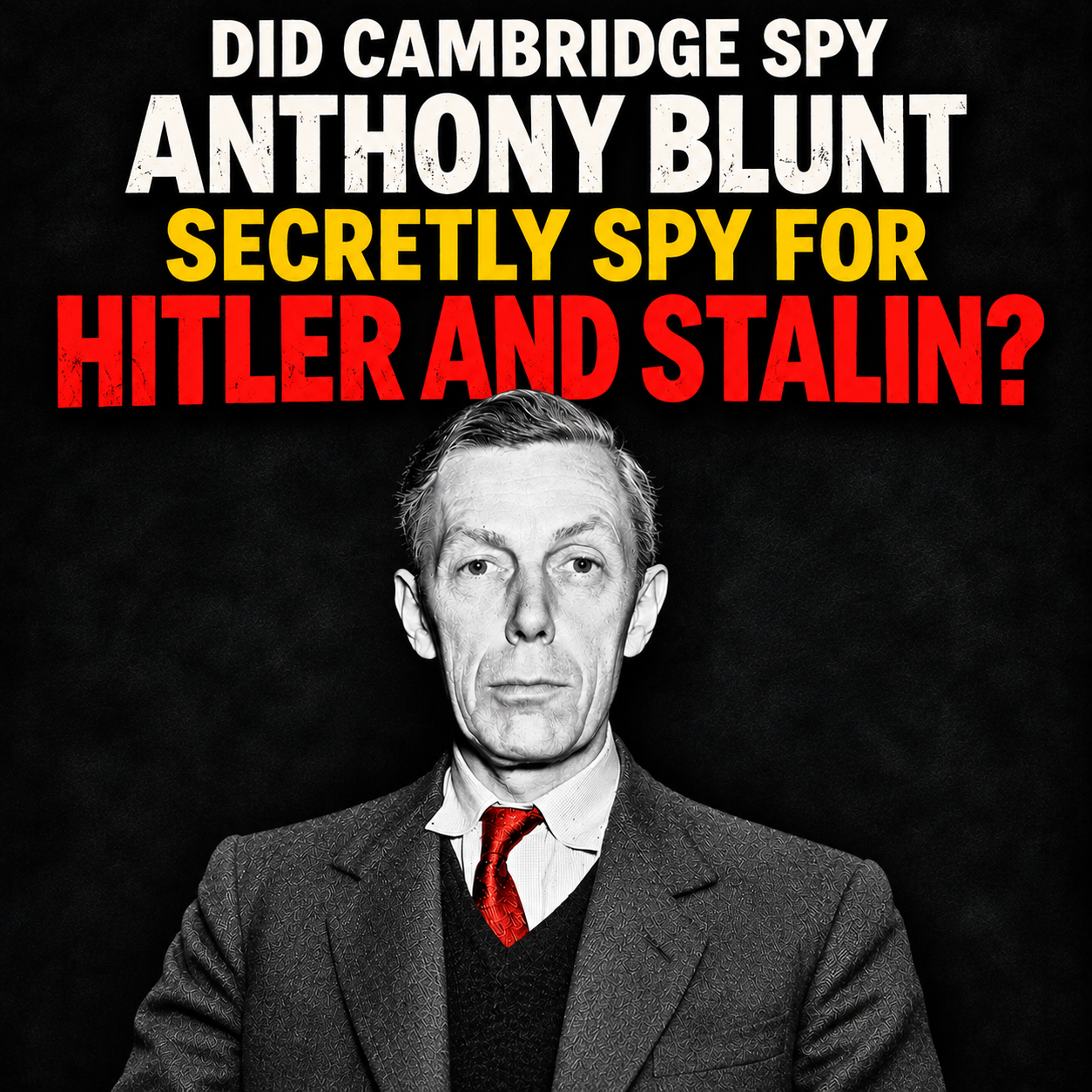
Cold War Conversations episode 483 argues that Cambridge spy Anthony Blunt (a Soviet agent) went beyond spying for Moscow and may have enabled or coordinated wartime intelligence that harmed Britain and helped Nazi Germany, including the D-Day deception and Operation Market Garden betrayal. Author Piers Blofeld (Master of Lies) bases claims on newly examined National Archives material, especially the McCullum Report, and on Blunt’s role in investigating the German agent “Josephine” (Abwehr source in Stockholm).
Blunt allegedly manipulated MI5’s search of Guy Burgess’s flat by having prior access, thereby setting up betrayals; he allegedly “exploded the ring” by ensuring Cairncross was exposed after 1951; and Josephine’s precise, timing-sensitive intelligence about Calais landings and FUSAG is hard to explain as fabrication.
Josephine’s D-Day Calais intelligence delivered four hours before Garbo; Market Garden betrayal; Blunt’s alleged involvement in FUSAG orders of battle; and Blunt’s later protection via secret immunity and royal connections.
Piers Blofeld, literary agent and author researching Blunt and the McCullum Report.
Written by AI. May contain mistakes.
Host introduces Piers Blofeld and discusses the Cambridge spy scandal.
“New evidence suggests his betrayal may have gone far deeper than previously believed.”
Discussion of new evidence regarding Anthony Blunt's espionage activities.
“Piers' book is called Master of Lies, How Anthony Blunt's Treachery Changed Our World.”
Blofeld explains the significance of the McCullum Report in WWII espionage.
“and agent Josephine, as this agent was known, betrayed Operation Market Garden.”
Discussion on Blunt's betrayal of his friends and the implications for espionage.
“They did an enormous amount of things together, both socially, sexually, although I don't think they were ever lovers, but their tastes aligned, so they went to the same sort of parties.”
An exploration of Blunt's background and motivations for his actions.
“So before that, McLean has fallen out with the Russians so badly that he insists that Blunt is his liaison with the Russians.”
How Blunt's childhood experiences shaped his adult life and worldview.
“Philby's blown, McLean and Burgess have left, and Cairncross is blown.”
Blunt's ideological journey towards Marxism during his university years.
“How can you just summarise how his early life shaped his adult life and how he, I don't know, interacted with people, I guess is the best phrase I can think of.”
Discussion of Blunt's pivotal role in the Cambridge spy ring and its legacy.
“I think there was a huge amount of sex in Paris.”
Explore Anthony Blunt's ideological journey and his recruitment into espionage.
“talks on the BBC about art, and he's really good at all that sort of stuff, and is very successful letter.”
Discuss Anthony Blunt's significant rise in intelligence during World War II.
Discuss Anthony Blunt's significant rise in intelligence during World War II.
“So we're moving into like the 1930s now and August 39, there's the big shock that Stalin has signed a non-aggression pact with Adolf Hitler.”
Explore how Anthony Blunt became a key figure in British intelligence during WWII.
“And he does, in particular, there's a case he does involving a Portuguese diplomat, which really gets him recognised within Whitehall.”
Learn about Josephine's role in D-Day deception and its implications.
“And that gives him carte blanche to stick his nose into absolutely everything.”
Understand the intricacies of the Garbo deception in relation to D-Day.
“And Garbo, who is the double agent at the heart of this much vaunted deception operation by the British, persuades the Germans that the real landings are happening near Calais, and so they hold their armour in reserve.”
Discuss Blunt's complex motivations and his dual allegiance during the war.
“army group, first United States army group, FUSAG.”
Delve into Blunt's role in investigating the Josephine case post-war.
“But after D-Day, and this is where the Operation Market Garden betrayal comes in, he wanted to slow our advance as much as he could.”
Examine Blunt's post-war career and how he maintained influence within intelligence.
“So he's been absolutely all across it from the beginning.”
Discover Blunt's mysterious missions in Germany after the war.
“During this time, he becomes very trusted by the royal household because he's dispatched on this mission to Friedrichshof Castle.”
Discover the uncomfortable connections of Prince Philip's family.
“No one talked about the Nazi sisters-in-law.”
Examine Anthony Blunt's involvement and influence in the spy community.
“I just think that it would be a massive, huge tabloid news story.”
Explore the reasons behind Blunt's immunity and the fallout of his exposure.
“why McLean turned to Blunt, Burgess turned to Blunt, and Philby turned to Blunt.”
The hosts invite listeners to engage with the community and recap the episode.
“thanks very much for listening and see you next week The holidays are busy enough.”
Important reminder for listeners regarding product safety information.

Get the gist, explore an idea or ask about something said.
 Claude
On Cold War Conversations, what are the key points of this episode?
Searching your listeningAutomatic transcript. May contain errors.
0:00Piers Blofeld: Welcome to Cold War Conversations, the home of real stories of the Cold War. A KFC tale in the pursuit of flavour. The Colonel never wanted to be the reason customers finished a meal unsatisfied. So he created the$20 build-a-bucket meal, with your choice of eight-piece chicken or tenders, four sides and four biscuits. That way, if you weren't happy, he could say, don't blame me, you built it.
0:23Iain McGregor: Or more succinctly, you played yourself. The Colonel lived, so we could chicken. The$20 Build-A-Bucket, it's finger-lickin' good.
0:32Piers Blofeld: Prices and participation may vary. Taxes, tips, and fees extra. Extra charge for breast piece substitution. Observe. The North American Dad.
0:39Iain McGregor: 50s. Great polo collection. He enters his vehicle information on Carvana. An offer appears in minutes. Remarkable. He squints, reads it again, smiles, and says, Dang, that's a good offer.
0:52Piers Blofeld: The highest form of approval. No haggling. No hassle. No one called him Boss. He's still on the couch. Astonishing. Sell your car today on Carvana.com. Pickup fees may apply.
1:06Iain McGregor: Blunt had realised that, a bit like being in the Mafia, once you're in, it's very hard to get out. And so the only way that he is going to be in a position to be left alone, and indeed left to live, is if he explodes the ring.
1:22Piers Blofeld: Anthony Blunt wasn't simply a Soviet spy inside the British establishment. New evidence suggests his betrayal may have gone far deeper than previously believed. Author Piers Blofeld joins me to explore the extraordinary life of the Cambridge spy who penetrated MI5, wrote intelligence reports for Winston Churchill and became surveyor of the Queen's pictures, all the while secretly working for Moscow. We examine Blofeld's investigation into the mysterious wartime agent codenamed Josephine, who passed remarkably accurate intelligence about D-Day and Operation Market Garden to Nazi Germany. We also discover his possible role in helping Kim Philby escape, his secret immunity from prosecution and the establishment connections that protected him for decades.
2:12Piers Blofeld: It's a story of espionage, privilege, deception and a traitor hiding in plain sight. I'm delighted to welcome Piers Blofeld to our Cold War conversation. Piers' book is called Master of Lies, How Anthony Blunt's Treachery Changed Our World. There's links in the episode information for you to buy the book and help support the podcast.
2:35Iain McGregor: In my day job, I'm a literary agent and I was working on a book by a client of mine, a guy called Robert Backe, who was writing a book about Operation Market Garden and its betrayal by a Dutch resistance fighter. And I joked with him that he was bound to come across a Cambridge spy, and he did. The book was already pushing its delivery schedule, and he had come across a document that's in the National Archives called the McCullum Report, which is buried at the bottom of an enormous quantity of untranslated abware documents from the mid-1940s. And there it lurks. And although I think it is something that people were aware of, I don't think anyone had given it the close attention that we gave it, and I in particular gave it, and I really drilled into that.
3:27Iain McGregor: And that's where my fascination with Blunt kind of emerged. And I talk about the McCullum Report at some length in my book because it's an investigation into a supposed high-level Nazi spy operating from the heart of the British war effort in the second half of the war, which was being investigated by none other than Anthony Blunt, a high-level penetration agent operating from the heart of the Allied war effort in the second half of the war. and agent Josephine, as this agent was known, betrayed Operation Market Garden. So that's the link. And so unpicking the McCullum report was the beginning, the first thread that I got hold of.
4:15Piers Blofeld: The opening of the book is excellent because the setting is Donald McLean and Guy Burgess have got their boat across to France and Anthony Blunt is standing outside Guy Burgess's flat with a set of keys, he's there to let MI5 in, to search it. But you argue that searching his friend's flat was actually Blunt's most profound act of treachery. Why do you think that?
4:47Iain McGregor: He and Burgess had been friends since Burgess was an undergraduate back in the early 1930s. and they had been, certainly throughout the 1930s, absolutely thick as thieves. They did an enormous amount of things together, both socially, sexually, although I don't think they were ever lovers, but their tastes aligned, so they went to the same sort of parties. But also, they were heavily involved in spying on the appeasement movement and the lead into the Second World War. Burgess became more and more erratic. There was something very odd about him. He could be brilliant, but at the same time, he drank and started to take drugs very heavily.
5:29Iain McGregor: And by the time that he defected in 1951, you have to remember, he'd returned from America, where he'd been living with Kim Philby, sleeping in his basement, much to Philby's wife's dismay. And he'd gone back to England because of all the incipient furores surrounding Maclean. and Philby's final words to him as he left were, don't you go too or else I'll be blown. And what does Burgess do? He goes. And the reason he goes, I think, and I think you can trace this quite clearly, is because Blunt manipulates him. So that Blunt is not just someone who portrays on a kind of abstract, moving pieces around on a board level.
6:14Iain McGregor: He's someone who betrays intimate friendship and i think that is a very particular kind of betrayal
6:22Piers Blofeld: yeah because with this flat you discover that he actually had four days prior unrestricted access to the flat so essentially blunt is setting up the flat to betray a number of people throughout
6:37Iain McGregor: the entire process when burgess comes back to england blunt meets him off the boat a month or So before that, McLean has fallen out with the Russians so badly that he insists that Blunt is his liaison with the Russians. So he is, in the lead up to the defection, entirely controlling it. The person who shares Burgess's flat with him in London, a guy called Jackie Hewitt, who was a sort of manservant and lover to both of them, Blunt ran Hewitt as an agent during the war. he was entirely in control of everything so when burges and mcclain leave on the friday blunt is entirely you can't prove that it happened but he definitely does ring up mi5 and say oh i've got the keys on tuesday morning one would assume that he got the keys on saturday morning and has the intervening days making sure that what they find is is everything that he wants them to find And they admit in the files, there's an admission that it was extraordinary tradecraft on our part.
7:42Iain McGregor: That's a direct quote to allow you to search the flat with us. And so, yes, he's absolutely across everything.
7:51Piers Blofeld: And I think one of the things that I found most surprising is he deliberately betrays Cairncross, the fifth man who MI5 have no idea is part of the ring.
8:04Iain McGregor: yes i mean my theory and this is again this is not a major part of the book but it's i go into it because i think it's honest to show my thinking the blunt had realized that a bit like being in the mafia once you're in it's very hard to get out and you don't ring up the kgp and say i've had enough i'd like to leave now that isn't how the process could work and so the only way that he is going to be in a position to be left alone, and indeed left to live, is if he explodes the ring. And that's what the events of 1951 do. Philby's blown, McLean and Burgess have left, and Cairncross is blown. That leaves him as the last man standing, and so he can control the narrative and manage to stay in the country, get a knighthood five years later, stay on as surveyor of the Queen's pictures and leading a charmed life.
8:58Piers Blofeld: The Soviets do offer him safe passage to Moscow during this period, but he turns them down, doesn't he?
9:04Iain McGregor: He does. It's such telling language. He says, I think, to Yuri Modin, I suppose you'll be able to offer me unrestricted access to the Palace of Versailles as well. I know how your people live, and I couldn't possibly live the same way. He was far too addicted to high living and rich friends to even think of it.
9:27Piers Blofeld: Indeed. And the book goes into quite a lot of detail about his early life. How can you just summarise how his early life shaped his adult life and how he, I don't know, interacted with people, I guess is the best phrase I can think of.
9:45Iain McGregor: I spent quite a long time trying to track down whether there was some sort of rosebud moment of something that was a kind of psychological trigger for him being the way he is. With Kim Philby, there are really significant psychological triggers that do an awful lot of explaining why he became the man he became. With Blunt, it's very hard to see. He's born into a fairly unremarkable family. They're quite posh, quite poor. His father's a vicar, but they're not amazingly posh. And the most interesting thing is that his father becomes the captain of what is effectively the embassy chapel in Paris.
10:27Iain McGregor: so Blunt spends a crucial part of his childhood in Paris but that really just gives him access to a lot of art he makes him bilingual and it also exposes him to Paris during the First World War and I think that in that one can begin to see something because I think it was a city it was the city of love which really meant it was the sex tourism capital of that era in the world really there was an enormous amount of prostitution. And with armies and young men on their way up to the front to die, I think there was a huge amount of sex in Paris. There was Mata Hari. There was revolution in the air.
11:10Iain McGregor: So I think it was a very heady mix. And then he goes to Marlborough to a classic English public school, brutal. Betjeman was there. He was there with Louis McNeese, who he was very good friends with. But it was tough. There were lots of beatings, and it was a pretty brutal environment. But it was the same for everyone. And I don't think that Blunt... Blunt was not very popular, because he had a very high opinion of himself. But by the end, he's so clever. He's become quite intellectually dominant. And then there's this strange tale where he feuds with the art master. He's developed his interest in art, and he starts to feud with the art master, who's a rather stupid, conservative man, who thinks that all art after the pre-Raphaelites is rubbish.
12:04Iain McGregor: And Blunt foments this long-running feud with him, which culminates in this man called Hughes giving a talk to the school or to the interested people at the school, in which he discusses his views on art. and he rambles and he loses his way. And Blunt, who's sitting in the front row, starts to giggle and stuff his blue silk handkerchief into his mouth. And Hughes loses his cool and attacks Blunt personally. And it's a moment of real humiliation for Hughes. And I think there you can see some of what motivates Blunt. And he was 17 going on 18 at this point, 18 even. so he was hardly a teenager but not really a child in him but you can certainly see the person he becomes in the way that he loved the feud yeah this sort of constant refrain is him having a
13:03Piers Blofeld: very high opinion of himself carries on into you know's university life when he arrives at trinity college in cambridge where he's debating with people like john maynard canes and wittgenstein as well and he thinks he's an equal of them yeah he almost is what he isn't is creative
13:25Iain McGregor: he doesn't have an ounce of creativity in him i don't think and actually he doesn't really have original ideas he's brilliant at pulling in ideas from other places and they find him out but he falls sore to the very high level so that when he then moves into rather more ordinary areas of society, so he's the art critic for The Spectator. He's friends with Victor Rothschild, and he's moving in these rather more worldly circles. He's tremendously successful at it. And of course, when Burgess, in the later 30s, becomes a producer for the BBC, he gets his friend Blunt to give talks on the BBC about art, and he's really good at all that sort of stuff, and is very successful letter.
14:12How does he find his route to Marxism?
14:17Iain McGregor: I think he wanted to be part of the fashionable group. And really from 1929 onwards, and really before then, but certainly once the Wall Street crash had happened, the capitalism was very widely perceived by most intellectuals as being something that was on its way out and it was going to be replaced by something new. And the debate was really, was that going to be communism or was it going to be fascism? And I think that he and most Cambridge students had no doubt in their mind that it was going to be the views of the left that were the predominant views. So you can see him moving in very left-wing circles really from 1929 onwards.
15:07Iain McGregor: And certainly by the time he becomes the spectator art critic in 1932, he is laughably, given that the spectators was then the house magazine of British conservatism, they decided to employ an art critic who was a Marxist. Why their readers would want to read the Marxist interpretation of the latest exhibitions, I've got no idea, but they didn't seem to mind. And so he adopted the mantle of Marxism. How much he ever believed is very hard to say. I think that at a certain level, he did think it was the right system for everyone else. But as it was going to take some time to come about, he could enjoy the fruits of not being a Marxist.
15:53Iain McGregor: Well, he made sure that he arranged it for everyone else, which is a fairly classic left-wing perspective, I think.
16:01Piers Blofeld: Yeah, there's so many great details in this book. I think one of the ones I really enjoyed was where he actually travels to the Soviet Union in 1935 and there's a load of idealists on this trip. Most of them are fascinated by tractor factories but Blunt is filling his notebook with historical and art history observations.
16:24Iain McGregor: Yes, indeed. And that leads into one of the questions, which is about when he was recruited. The in-tourist trips that were organized by the Comintern were pretty heavily policed. You were taken to the tractor factory because that was the only place you were going to that day. And it was expected that you would be interested in it. And most of the young comrades were, I think. It puzzled them greatly that Blunt was allowed to go off and look at the Poussans in the Hermitage. and numerous other things. And that then comes into play five years, four years later, when he is on his intelligence officer's course, having just joined the British Army, and he's able to demonstrate that his trip to Russia was really all about history of art, and he's not really interested in Marxism at all.
17:16Iain McGregor: Thank you very much.
17:19Piers Blofeld: In the debriefs with MI5, did he detail exactly how he was recruited or when he was recruited? Not that we can necessarily trust his side of the story. There was a huge dump of files, and this is some of the new material that the book is based on.
17:39Iain McGregor: Although, in all honesty, although there were thousands upon thousands of pages, there was very little that was really significant. There were some interesting details, but little in the way of really significant information. But there was this huge dump of files at the beginning of last of 2025, and they contain about 11 of the 70 or so lengthy interrogations, interviews that MI5 conducted with him from sort of 1951 to the early 1970s. and there isn't really there isn't a a clear understanding certainly in none of the interviews that have been released he doesn't describe how he was recruited and equally there was a period during the war when the russians were paranoid that both blunt and philby and burgess were a bit too good to be true and were therefore mi6 plants and so they were investigating them and they gave various accounts of how they came to be involved but blunt glosses over his recruitment with philby we have i think about nine they're all slightly different but nine different accounts of how he's recruited and with burgess there's a fairly good origin story with blunt it's a mystery And the commonly accepted one is that he's brought in 1937 by Guy Burgess, who has been brought in by Kim Philby.
19:19Iain McGregor: But there are numerous problems with that. But I don't go too deeply into it because we simply can't really say with any great certainty what did actually happen. and when he is recruited is he's seen as a talent spotter rather than somebody who is going to inveigle himself deeply within the british establishment possibly yes again that that is that's the story that we're supposed to believe i don't i think that the whole strategy alexander all of, who is supposedly the MKVD officer who came up with the idea that they should shift their focus and aim to attract recruits from the upper echelons of society.
20:08Iain McGregor: And that's what resulted in Philby, Blunt, McLean and Burgess, etc. being recruited. The point with all of them was that it wasn't really what they were doing in their year, two years, three years after they were recruited. It was where they were going to be in five years' time, in ten years' time. And so I don't think that you could predict where Anthony Blunt was going to end up. Certainly, although Maclean was intellectually brilliant, Maclean, Burgess and Cancross were all intellectually brilliant, Philby was fairly intellectually ordinary, in all honesty. He doesn't really, he doesn't shine at Cambridge in the way that the others do.
20:49Iain McGregor: Cairncross and McLean passed their civil service exams, which are really tough, in the top five, each of them. They're really some of the brightest people in the country. And Blunt's very much at that level. And so the expectation is that he would go on and do great things. And certainly I think that you can make a case, which I do make in the book, that he was preparing the ground in order to get into MI5s. the big hope was that they could get people into mi6 and into mi5 and initially they get burgess into mi6 but then he blows up by being such a loose cannon they get blunt into mi5 and then they get philby into mi6 as well so that kind of covers that that base so and i personally think
21:35Piers Blofeld: that was really always the intention cold war history deserves to be remembered and by listening to the next few adverts, you help us to do exactly that. Thank you.
22:12Piers Blofeld: It's finger licking good prices and participation may vary taxes tips and fees extra extra charge for breast piece substitution Ryan Reynolds here for mint mobile with a story about
22:20Iain McGregor: Deception beautiful little tin you open it expecting delicious butter cookies instead 40 years of loose buttons mint wouldn't do that to you What you see is what you get all plants even unlimited or$15 a month Unlike this blue box of lies give it a try at mint mobile.com slash switch
22:49Piers Blofeld: So we're moving into like the 1930s now and August 39, there's the big shock that Stalin has signed a non-aggression pact with Adolf Hitler. And apparently, Blunt, when he was asked a number of years later how that had affected him,
23:07Iain McGregor: he just roared with laughter yes it's one of the reasons why people in the security services couldn't believe that there could be people who are not just communists but stalinists because where an enormous number of people have been left-wing students and in the 1920s 19 in the 1930s and with spain and with everything else but with the purges with the news about ukraine which had really started to filter out, and then with the Molotov-Ribbentrop Pact, it seemed genuinely inconceivable to people that anyone intelligent could be a communist. But the fact is that they were. And actually, I think that was dangerously naive.
23:59Iain McGregor: People were judging communism by the standards of a liberal democracy. And that was a great mistake. They really didn't understand how ruthless Stalin was and how ruthless that communist mindset was. And it was really profoundly ruthless. And I do, and I think that it's certainly one could look at the history of Stalin and say that he absolutely understood that 10 people who are wholly and ruthlessly committed to the cause are far more useful than 100 ,000 students who stay up all night.
24:36Piers Blofeld: talking about him yeah yeah so 1939 lieutenant blunt um enlists in the army but his trip to russia causes some problems in an mi5 file and he gets removed from the intelligence course that he's on that is a red flag in all senses of the the phrase did that not cause problems when he was later recruited into military intelligence proper he was able to show the notebooks which you
25:13Iain McGregor: can still see there in the Courtauld Institute archive as we speak that the notebooks he made detailing his impressions of Poussins and the Hermitage so he had a cover story and he also had Dennis Proctor, who was a very high-flying civil servant at the Treasury, tipped to be a future cabinet secretary, and was able to say, yes, he's flirted with socialism and with communism. Who hasn't? And the fact is that the British Army in 1939 badly needed people who were fluent in French. and having got through that that particular whatever jumped that hurdled that fence it then meant the next time around when he was getting into MI5 a few months later and as Dunkirk was happening that red flag didn't really register but for all that Guy Little who was ultimately his boss and did he was verified by Dennis Proctor again high-flying civil servant by Victor Rothschild the peer of the realm and the richest one of the richest men in the country and also by the woman who had become Victor Rothschild's wife who was a very old family friend of Guy Liddle and he'd known her as a girl and was widely liked so Blunt was in fact triple certified and of course he was this charming art critic his first book came out a couple of months after he was employed by mi5 and it was about the renaissance how could a man who writes about the renaissance be some soviet spy it seems absurd
26:56Piers Blofeld: i think we forget the sometimes the world that blunt and philby and mcclain were in and the fact that all of these records there aren't computerized anyway so stuff can get lost misfiled all this all the all this sort of thing it's not all at your fingertips which we're used to today by 1943 he is writing reports for winston churchill so it's it's quite a rise up the
27:27Iain McGregor: responsibility ladder he's remarkably good at being a spy i think you can again see that in terms of his his feuds with people like you he's very good at at controlling information and and being very likable and he rises extremely fast and he gets given in particular this job to oversee spying of all the embassies and all representatives of foreign governments in london and in 1941-42 london is the center of the free world it is where it's all happening diplomatically so this is a huge job and it involves him being across an enormous range of activities from honey traps to splitting open courier bags to doing all sorts of putting in agents into embassies running a whole host of operations and he never gets caught and there isn't a width of scandal, which, given that there was endless scope for scandal, is remarkable.
28:31Iain McGregor: And he does, in particular, there's a case he does involving a Portuguese diplomat, which really gets him recognised within Whitehall. And it means he starts to have meetings where Anthony Eden, the Foreign Secretary, are at, or Herbert Morrison, the Home Secretary, are at. And so he becomes a known figure within Whitehall. And so when Churchill, who has always loved intelligence work, starts saying he'd like to have regular updates on what MI5 are up to, the person that gets asked to draft those reports is Anthony Blunt. And that gives him carte blanche to stick his nose into absolutely everything.
29:12Piers Blofeld: Incredible. We mentioned at the start the mysterious potential London source code named Josephine, who was operated by the Abwehr. And Josephine sends a message about the D-Day deception to Berlin. And what evidence sort of points to Anthony Blunt being this Josephine? Why would he still be passing information to the Germans once the Soviets have come in on the Allied side?
29:51Iain McGregor: I'll get to that question later. So it's worth going back to the McCollum Report, which is a report commissioned by MI5 in the early 1970s. It can be dated quite, it's certainly after 1970 and before about 1974. Beyond that, it's not clear. the reason for the report is never explicitly stated it's about 50 or 60 pages so it's quite detailed and she's a an experienced mi5 officer but the ostensible reason given in the in in her report for why this is being disinterred because by now josephine's been long forgotten and barely even makes it into a into the big official histories as a sort of footnote because josephine's been discredited as a mirage and a fantasy, except, as McCullum points out, there are two crucial bits of intelligence that she passes over that cannot be explained very easily as being something made up by the man who ostensibly ran Josephine, who's a German ad bear officer in Stockholm.
31:01Iain McGregor: And those relate to D-Day and Operation Market Garden. In other words, to possibly the two most iconic events from a British perspective of the war. When it comes to D-Day, your listeners may be familiar with the Garbo deception operation around Operation Overlord and Fortitude, as it was called, which was the deception operation around D-Day, which was involved in persuading the Germans that the real landings were not the Normandy landings, but were going to happen in the beaches south of Calais, and that therefore the Germans kept a crucial part of their army in reserve, rather than throwing them straight in to repulse the D-Day landings themselves, which had they done, might well have meant that D-Day had failed.
31:55Iain McGregor: And Garbo, who is the double agent at the heart of this much vaunted deception operation by the British, persuades the Germans that the real landings are happening near Calais, and so they hold their armour in reserve. What is forgotten, and really completely forgotten, is that Josephine gives exactly the same information to the German high command on exactly the same day, four hours earlier even. And from a German perspective, the fact that they're getting intelligence saying that the real landings are happening near Calais from Spain, which is where Garbo is based, or supposedly based, and Sweden, where Josephine is based, so at opposite ends of Europe, has huge impact.
32:45Iain McGregor: But it gets murkier than that. So that alone is remarkable. but one of the key points about the garbo deception is that the xx the 20 committee and tommy harris who ran garbo reasoned that if they passed over the information about the calais being the real landings too quickly the germans would smell a rap so what they do is they wait for three days after the D-Day landings, by which stage all the army that's up near Calais, the tanks are on the road, and then they submit the Garbo deception intelligence. And this forces the Germans into making a hasty decision. And they panic. They make the wrong decision.
33:34Iain McGregor: They decide that they've got to pull back. And so the tanks turn back, and they aren't thrown into the battle, and D-Day is saved. But that means that for Josephine, To mirror the day, it shows that the synchronicity of timing is remarkable, because it was a hell of a gamble to wait three days. It's a very impressive thing to do, and there isn't a rational way of explaining how that happened. And then as a final sort of note to that, part of the point about why this deception was so effective is because for the previous year, British and American intelligence had created this notional army group, first United States army group, FUSAG.
34:22Iain McGregor: And they created a phantom army, which existed in paperwork, and they were feeding stuff about FUSAG into the Germans. and the Josephine intelligence specifically refers to FUSAC just as the Garbo intelligence does. But as Roger Heskis, who was running the official T-Day deception, wrote in his report just after the war, they were utterly dismayed to discover that Josephine was playing with their toys. How did Josephine know about FUSAC? Because FUSAC wasn't public knowledge. The only people who knew about FUSAC were the people in British intelligence who created it, and the recipients of the product, the Germans.
35:07Iain McGregor: So for someone else to know was unthinkable. It had to be someone on the inside. And as a final note, Anthony Blunt, at the very end of his life, attempted to write. He gave up. But he wrote about 20 ,000 words, 30 ,000 words of a memoir. one of the very very few details he actually gives is that he was involved in the war in writing orders of battle for fusac so we know he was part of the fusac deception and then you add in all the other contextual stuff and there's so much contextual stuff the simple fact that the mccullum report which as i said this 50 or 60 page report into a high level deception agent at the heart of Allied intelligence, that it's being investigated.
35:52Iain McGregor: The lead investigator is Anthony Blunt, a high-level deception agent at the heart of Allied intelligence. And that is simply never mentioned. And it becomes a kind of glaring omission once you notice it. And of course, that leads on to your second question, which is, but he was a Russian agent, and why would the Russians tried to help the Nazis, because Stalin wanted to get as far west as possible. He wanted to win the race to Berlin. It wasn't so much the race to Berlin, he wanted to dominate Eastern Europe. He wanted to do all the things that happened at the end of the war, which was create an empire and divide up Germany.
36:31Iain McGregor: And so he wanted D-Day to happen. But after D-Day, and this is where the Operation Market Garden betrayal comes in, he wanted to slow our advance as much as he could. And so Blunt is in a situation where he has motive, he has means, he has opportunity, he has the classic kind of police trifecta of things that they look for. And it's very hard. There are many more, far too many contextual details to go into here, but it's very hard to think of another reason. If Kramer, the guy in Stockholm, he's regarded as a liar and he invents all this stuff. But to do the D-Day, to invent all that detail about delay in timing, FUSAG, that's stuff that couldn't be invented.
37:21Iain McGregor: And likewise, there are details about the Market Garden portrayal that really couldn't be invented. And so the list of possible answers becomes really quite short. And Anthony Blunt is by a distance the most rational answer to the question, who is Josephine?
37:41Piers Blofeld: Because at the end of the war, when Cramers arrested and brought to London for interrogation, Blunt manages to take over the official investigation into him.
37:51Iain McGregor: Yes, but equally in the files, he has been heavily involved in the investigation from the moment the British intelligence first find out about Josephine in late 1943. So he's been absolutely all across it from the beginning. And yeah, he inserts himself to lead it And then the Kramer is interrogated time and time again, and eventually a big note is put on his file to say, warning, this man is a liar and a fantasist. But even then, the Americans were not quite so satisfied by some of those answers. And so they kept on asking to look at the Kramer interrogations, and the British kept on refusing to allow them to see it.
38:32Iain McGregor: But then time passes and everyone forgets about it and Josephine just gets accepted as being this thing invented by a German and it doesn't really matter and it just gets lost.
38:46Piers Blofeld: As World War II draws to a close, Blunt resigns from MI5 and is appointed surveyor of the king's pictures. The Soviets must have been really disappointed at that because that's not going to give him the access that he's had over the war years to British secrets.
39:06Iain McGregor: That's true. He does try and get Leo Long into MI5 as a SOP. I also think that he's where he, again, he's been very clever. He has one of his jobs while he's also writing Churchill's intelligence briefings is that he gets, he's the liaison officer between MI5 and MI6 and he makes sure that Kim Philby is the liaison officer between MI6 and MI5. So they are liaising with each other officially, which is all very cozy. And there's a famous bit of office shenanigans where Philby works for a guy called Felix Cowgill, who is Philby's boss, and he's supposed to be taking over the newly formed Section 9, which is the head of Soviet counterintelligence.
39:58Iain McGregor: And the traces around this have been very obscured, but there's just enough contextual evidence to show that I think Blunt was all over this. And he helped Philby subvert Cowgill's ambitions and then become the person who takes over Section 9. So he's able to say, look, you're losing me, but you're getting Kim Philby, And as the war ends, MI6 is a much more attractive organisation to the Russians than MI5, which will go back to being about British subversives and a much more backwater organisation.
40:36Piers Blofeld: During this time, he becomes very trusted by the royal household because he's dispatched on this mission to Friedrichshof Castle. Can you just explain what he's up to there and why he's there?
40:51Iain McGregor: There are at least four missions he makes into Germany, and it's pretty mysterious. But the Friedrichshof, I think it's to get... There are a bunch of letters that one of Queen Victoria's daughters or granddaughters, I'm afraid I forget which, had written. There's also some rather valuable silver that he's trying to lay his hands on. It's not even actually royal family silver. Whatever it is, they have an interest in it. And so he turns up, it's a rather amazing scenario in itself, because the American troops who are stationed there are led by two officers who are busy stripping the castle of all its valuables.
41:33Iain McGregor: And they wind up going to prison for looting down the line. And so there's always been this mystery about what Blunt did. And I think my theory is that the most important thing that he could have done is that the king was unwell by the end of the war. He was known that he was unlikely he was going to live long. An enormous amount rested on the shoulders of the young Princess Elizabeth, who was still in her teens and was in love with or in a relationship with, although this had been kept secret, with the young Prince Philip. but Philip was unfortunate in that he had we had four sisters but three of them had married senior Nazis and one of them even called their child Adolf so this wasn't just a sort of passing dalliance this is really quite embarrassing and obviously with a royal wedding coming up in in 1947 I think it was Nazi sisters-in-law make Meghan Markle look like a piece of cake frankly And so I think that Blunt, I think that Blunt was there to make sure that went away, which it did very effectively.
42:48Iain McGregor: No one talked about the Nazi sisters-in-law. They didn't come to the wedding and it all went off without a hitch. and a month before the wedding, Blunt gets made a commander of the Royal Victoria Order, which is directly in the king's remit to give gift. And so he's able to help the royal family. And I think that also then explains why the queen has remained so loyal to him years later when she does definitely know that he has been a traitor.
43:22Piers Blofeld: It's time for a short break. These adverts help preserve more extraordinary Cold War stories. Thanks for listening and supporting our work. Starting or growing your own business can be intimidating and lonely at times. Your to-do list may feel endless with new tasks, and lists can easily begin to overrun your life. So finding the right tool that not only helps you out, but simplifies everything as a built-in business partner can be a game changer. For millions of businesses, that tool is Shopify. Shopify is the commerce platform behind millions of businesses around the world and 10 % of all e-commerce in the U.S.
43:59Piers Blofeld: From household names like Gymshark, Rare Beauty, and Heinz, to brands just getting started. Shopify has hundreds of ready-to-use templates that can help you build a beautiful online store that matches your brand's style. And you can tackle all the important tasks in one place, from inventory to payments to analytics and more. No need to save multiple websites or try to figure out what platform is hosting the tool that you need. And if people haven't heard about your brand, you can get the word out like you have a marketing team behind you. With easy-to-run email and social media campaigns to reach customers wherever they're scrolling or strolling.
44:35Piers Blofeld: Start your business today with the industry's best business partner, Shopify, and start hearing... Sign up for your$1 per month trial today at shopify.com slash realm. Go to shopify.com slash realm. That's shopify.com slash realm.
45:16Iain McGregor: lived so we could chicken the$20 build a bucket it's finger licking good prices and participation may vary taxes tips and fees extra extra charge for breast piece substitution those files uh about
45:30Piers Blofeld: his expeditions to germany are not released at all are they they're still very heavily redacted
45:36Iain McGregor: to be honest with you i have i'm not massively a monarchism but certainly not a republican i have a certain amount of sympathy with this i don't think that anything particularly sinister happened. I just think that it would be a massive, huge tabloid news story. It's the sort of thing that you can see why they'd want to cover it up. But I don't think that the Queen did anything particularly reprehensible. She was advised, as numerous prime ministers and home senators were advised, by the security services. And they told her what they wanted her to hear. And then you follow the advice. So I don't think that there was anything particularly sinister going on.
46:15Iain McGregor: it is one of the points when one goes strolls right ahead to when margaret thatcher outs denny blunt in 1979 those cabinet office papers are riddled with inaccuracies he gets she gets told that he was a captain when he was a major it's just there are there's a continual minimization of everything that he does because once once he gets that royal knighthood he's
46:42Piers Blofeld: bulletproof really isn't he because any criticism of that is a criticism of royal judgment and in the 1950s the royals were held in higher esteem than perhaps they are now yes absolutely and certainly i'd love to see the real documents about this because it fascinates
47:01Iain McGregor: me that there's a whole so you have the defections in 1951 and then you have kind of things go quiet because apart from everything else, McLean and Burgess disappear. No one even really knows that they're in Russia. They arrive and the NKVD just hide them away and interrogate them very brutally. McLean tries to commit suicide and Burgess has all his teeth knocked out. This is not the red carpet treatment. They were not happy to see them. But then Stalin dies in 1953 and Khrushchev begins, there's a bit of a thaw. And there is a press conference in which Burgess and McLean are suddenly revealed to the world in 1955.
47:48Iain McGregor: And this leads to a whole flurry of interest around Philby again. The Americans are still cross about what he's done and feel the British haven't tried hard enough to get him. And so this is where there's a famous clip, which is on YouTube, of Philby giving his press conference in his mother's flat. and at almost exactly that time Blunt manages to move up from being a commander of the Royal Victorian Order to being a knight commander of the Royal Victorian Order and he gets knighted just as things are hotting up and why and how is a complete mystery and I would love to know the answer to that, I must say.
48:30Piers Blofeld: Yeah, wouldn't we? We definitely would love to know the answer to that. So by late 1962, the net is closing around Kim Philby, who's in Beirut at that time. And Blunt makes three sort of quiet trips to Lebanon, ostensibly to see the British ambassador. But what do you think Blunt was really doing in Beirut in those weeks before Philby got on that freighter to Moscow?
48:57Iain McGregor: I think, again, because throughout that period, so shortly after Philby gives his press conference, he's finally properly out of MI6 and he's very short of money and he's very lonely. And Blunt has been his vicar, shall we say, or he's kept an eye on him. And he's a go-between. He goes and talks to the Russians. He tries to get the Russians to help him. And the Russians do wind up giving him several thousand pounds, back when several thousand pounds was a lot of money. And I think also Blunt, through the war, had catapulted Philby into the position of great success that he achieved by the end of the war.
49:39Piers Blofeld: And so I think that there were good reasons
49:43Iain McGregor: why McLean turned to Blunt, Burgess turned to Blunt, and Philby turned to Blunt. He was really good at being a spy. And so it was very natural that he would be a shoulder they would crown. And so as Philby is running out of room and the net is closing in, it makes complete sense that Blunt would be someone he would turn to. I also think that, and I've had this confirmed, one speaks to people in the security services you don't quite know, and they tell you, they left the door ajar for Philby. It was much easier if he went, frankly. He could go and have a miserable time in Russia, which is what he did have.
50:28Iain McGregor: And the thought of a trial or the whole thing would just get very messy and really not do anyone any favours. And that also chimes exactly with what Blunt wanted. He'd much rather Filby went. And yeah, I think that's why that's Blunt's motivation. And I think it's very understandable that Filby would seek advice from Blunt.
50:52Piers Blofeld: By 1964, the next closing around Blunt as well. But the British Home Secretary at the time grants Blunt full secret immunity from prosecution even before he's confessed. why do they decide to go down that route?
51:11Iain McGregor: Because Blunt's able to, again, because there are no witnesses anymore everyone's, he's the last man standing and he's also spent years preparing for this moment he was brilliant at thinking ahead and so he constructs what becomes the official narrative which is that he only spied for the Russians during the war while they were our allies And so that's, A, certainly not the capital crime of high treason, which is passing over secrets to the enemy. And because they weren't our enemy, they were our friends. He was helping the war against Hitler get won. So he hadn't really done anything wrong. And there were plenty of people in the British establishment who had either been left-wing, properly left-wing students, or were still secretly pretty left-wing or fairly openly left-wing, who thought, yeah, that's completely fair enough.
52:09Iain McGregor: They were our allies, and so he didn't do anything wrong. It's just a technicality. And he was incredibly well-connected. There were lots of powerful people who were able to put pressure on ministers and through Whitehall to enable him to survive. He was to bear the Queen's pictures. It would have been embarrassing to the royal family. he'd been knighted it was much easier to let him be than to nail him to any kind of cross
52:43Piers Blofeld: But in 1979 Margaret Thatcher has to formally announce that Anthony Blunt was a Soviet spy with the publication of the book The Climate of Treason Impact did that have on Blunt because he's He's now exposed. Everybody knows that he was a Soviet spy, and some people are probably less forgiving than the ones that you've just mentioned.
53:10Iain McGregor: He tried to get that book suppressed, injuncted. There was a book that had been supposed to come out a year before that he had succeeded in getting injuncted. I have lost count of the number of people who said, oh, I was a student at the Courtauld in the 1970s. Everybody knew. And it really was very widely gossiped about. There was no great shock. The process I've described of people covering up for Blunt, the small-town conservative, the Margaret Thatcher, was appalled by this kind of high-minded, reeked-of-an-old-school network. It was rather more complicated than that. It was more of a certain kind of Mandarin intellectual, I think, network.
53:54Iain McGregor: And she also arrived in government in 1979 as a believer in open government. So she thought it was intrinsically wrong that the state should be telling these lies. He blunt had to give his knighthood back, and there were some people who refused to allow him to darken their door ever again. But he was quite old and quite ill. He'd been a very heavy drinker, and he was 79. He'd had a cancer scare a few years earlier, so he wasn't in the best of health. But many of his wealthy and well-connected friends stayed loyal to him. It really didn't impact him very much, and I think he quite enjoyed the opportunity to twirl his moustache a little bit, so to speak, not that he had a moustache, but his metaphorical moustache, and take a little bow as this kind of Mephistophelian figure.
54:44Iain McGregor: I think he quite enjoyed the recognition. He certainly played up to it. There are numerous accounts of him. He continued feuds. He didn't, I don't think, experience a moment of remorse.
54:57Piers Blofeld: Other than Cairncross, he's the one that people forget more because the focus tends to be on Philby Burgess and Maclean. But after reading your book, he's more fascinating than I thought he would be. I certainly was fascinated, yeah. Yeah, and I really enjoyed it because we've been talking for an hour now, but there is a lot more detail in the book, and it's just mind-boggling, some of the detail. But hopefully we've given the listener a taste of what's in store when they purchase the book. Piers' book is called Master of Lies, How Anthony Blunt's Treachery Changed Our World. There's links in the episode information for you to buy the book and help support the podcast.
55:39Piers Blofeld: want to learn more about this episode don't miss the extras such as curated videos photos and other content just look for the link in the episode information special thanks to the generous efforts of our financial supporters who keep the show on the air if you'd like to join this select band go to coldwarconversations.com slash donate the cold war conversation continues in our facebook discussion group just search for cold war conversations on facebook thanks very much for listening and see you next week
56:41Piers Blofeld: The holidays are busy enough. Getting your home ready shouldn't be. From the perfect tree and twinkling lights to festive decor for inside and out, Wayfair has everything you need to get your home holiday ready. Find furniture, hosting essentials, festive serveware, and more all in one place. So you can spend less time getting ready and more time enjoying the season with the people who make it special. Shop Wayfair.com today to make holiday magic at home.
57:37Piers Blofeld: To stay informed about serious side effects, go to roe.co slash safety.
Anthony Blunt wasn’t simply a Soviet spy inside the British establishment. New evidence suggests his betrayal may have gone far deeper than previously believed.
Author Piers Blofeld joins me to explore the extraordinary life of the Cambridge spy who penetrated MI5, wrote intelligence reports for Winston Churchill and became Surveyor of the Queen’s Pictures — all while secretly working for Moscow.
We examine Blofeld’s investigation into the mysterious wartime agent codenamed “Josephine”, who passed remarkably accurate intelligence about D-Day and Operation Market Garden to Nazi Germany. Could Anthony Blunt himself have been Josephine?
We also uncover Blunt’s relationship with Guy Burgess, his possible role in helping Kim Philby escape, his secret immunity from prosecution and the establishment connections that protected him for decades.
It’s a story of espionage, privilege, deception and a traitor hiding in plain sight.
Buy the book here https://link.amazon/B0amldseM
Curated episode extras https://coldwarconversations.com/episode483/
Learn more about your ad choices. Visit podcastchoices.com/adchoices