Ask ChatGPT
 Cold War Conversations
2 Oct 2026 · 57m · 19 chapters
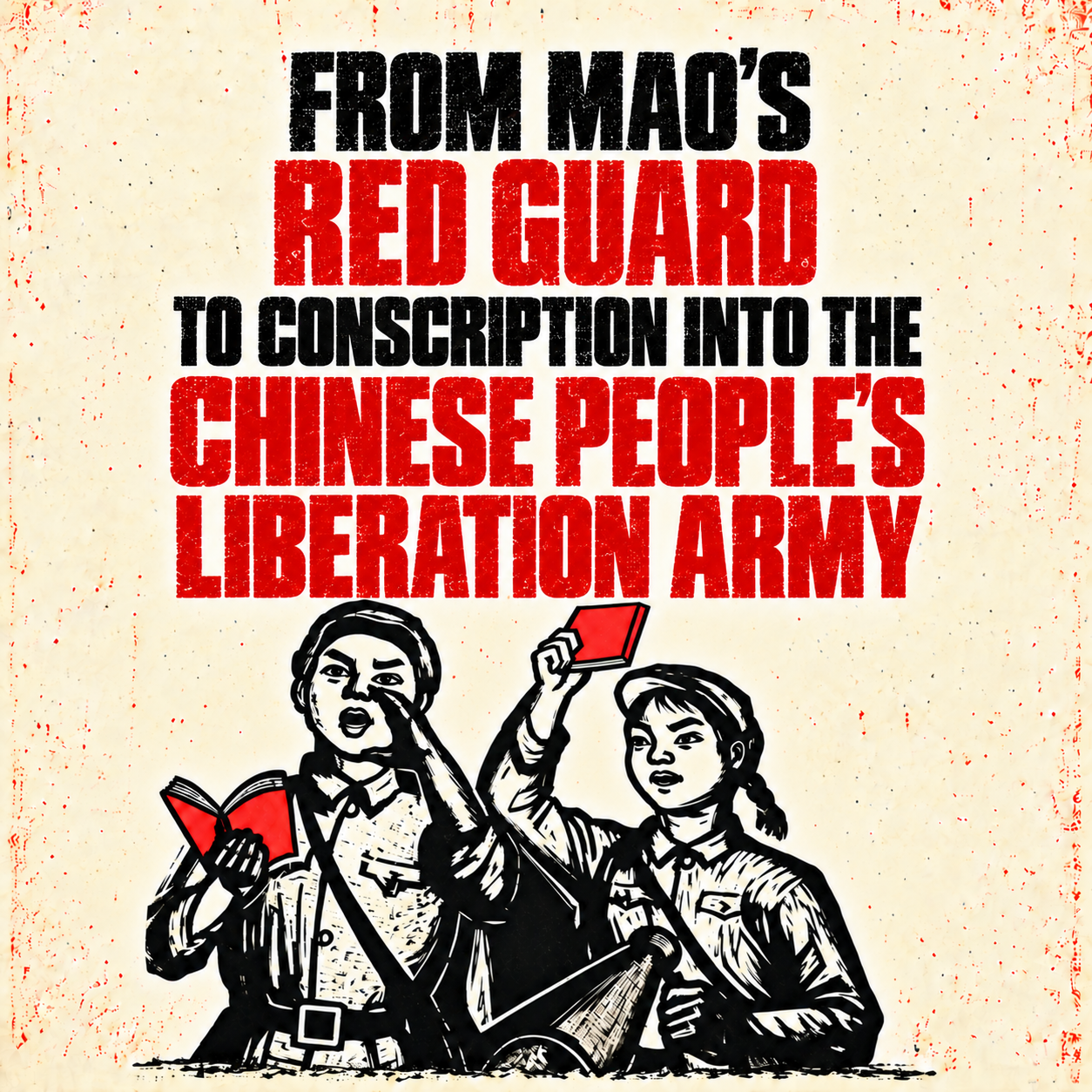
A personal Cold War-era history of China told by Bing Li: joining Mao’s Red Guards as a 12-year-old in Beijing, suffering family persecution during the Cultural Revolution, being conscripted into the Chinese People’s Liberation Army in 1969, training for a possible Soviet invasion near the border, later working at the Daqing oilfield, then studying in the U.S. and reuniting with relatives from Taiwan.
Bing Li was born in Beijing in 1954 to Western-educated (church-sponsored) engineers. His father’s family was split by the Chinese Civil War (uncles in Taiwan). He later earned graduate degrees at Carnegie Mellon and became a U.S.-based academic (University of Central Oklahoma).
Red Guards initially felt “invincible” with privileges, then turned violent and targeted teachers, officials, and intellectuals; Mao’s militarization (1967–71) used the army to restore order; conscription replaced college and employment; China’s strategic focus shifted from the U.S. to the USSR after Sino-Soviet tensions.
his sister’s leg was broken during a Red Guard raid; parents were sent to labor camps; he trained for Soviet tanks and helicopters; he describes a deadly furnace accident in Manchuria; he later worked in a refinery supporting Daqing’s gasoline production.
Written by AI. May contain mistakes.
Bing shares his experiences growing up in Mao's Beijing and becoming a Red Guard.
“She lost one of her legs during a Red Guard raid in the street.”
Discussion about Bing's family background, education, and the impact of the Civil War.
“I'm delighted to welcome Bing to our Cold War conversation.”
Bing explains the Cultural Revolution's triggers and his indoctrination as a student.
“So are you saying that they were educated outside of China?”
Insights into the organization of the Red Guard and Bing's experiences during this chaotic time.
“So I, just like most of the students, in middle school, high school and college, joined the Red Guard, followed Mao, engaged in the Cultural Revolution from 1966 to 1969.”
Discover the initial thrill of being a Red Guard and the subsequent harsh realities faced by families targeted during the Cultural Revolution.
“It must have been quite a challenge for you because your parents would have been seen as enemies of the people because some of the persecution was around intellectuals as well.”
Learn about the struggles of families during the Cultural Revolution and the re-education camps they faced.
“Cold War history deserves to be remembered, and by listening to the next few adverts, you help us to do exactly that.”
Explore how families were separated and forced to labor in camps, highlighting the personal stories of resilience amid hardship.
“So they work side by side with the peasants, suffered difficulties.”
Explore the conscription period in the People's Liberation Army and the service conditions faced by recruits.
“until government changed the policy, acknowledged it was a mistake, allowed those students to return to their hometown like Beijing, Shanghai, Tianjin, Nanjing, and big cities.”
Learn about the training practices in the PLA and the perceived threats from the Soviet Union during the Cold War.
“So we will train daily for a war against Russians, including drilling, shooting, target practicing.”
Understand the strategic shift in Chinese leadership's focus from the United States to the Soviet Union as a primary threat.
“Were you given any instructions as to what to do if you were captured by the Soviets?”
Learn about the harrowing experiences of individuals trapped in extreme conditions.
“zero temperature, we go to the furnace over tonight so we can have a heat.”
Hear about the dark realities faced by young girls under military leaders.
“And also, some of the leaders, not our company, abused the female girls.”
Understand the shift from military service to working in the oil industry.
“And Daqing oil field, how important was that to China?”
Explore the emotional impact of family visits during military service.
“Yes, I visited my family during my service.”
Learn about the opportunity for education post-Mao's regime.
“And we just feel so lucky we still hold each other at that time.”
Discover the path from education to emigration and family reunions.
“Yeah, I got a job in the Institute of American Studies in Beijing at the China Academy of Social Sciences.”
Reflect on the Tiananmen Square massacre and its impact on immigration.
“So before 2020, I visit them every year.”
Understand the significance of sharing personal and family histories.
“so I got to a green card through my marriage.”
Guests share insights on personal experiences during the Cold War.
“And is your wife a teacher as well or something else?”

Get the gist, explore an idea or ask about something said.
 Claude
On Cold War Conversations, what are the key points of this episode?
Searching your listeningAutomatic transcript. May contain errors.
0:00Welcome to Cold War Conversations, the home of real stories of the Cold War. Hey y 'all, Kelly Clarkson here with Wayfair You know my favorite compliment during the holidays? Your house feels so cozy That's when I know everyone's comfortable enough to kick off their shoes Grab more dessert and stay a little longer Wayfair makes it easy With everything from dining furniture to festive guest room essentials All in one place So whether you're hosting for an afternoon or all weekend Everyone feels right at home Get holiday guests ready at Wayfair.com or on the Wayfair app today
1:01Wayfair, every style, every home.
1:06There was a Red Guard raid. I lost her when I found her. They broken her leg. She lost one of her legs during a Red Guard raid in the street. So it was difficult for me, 12 years old. My sister was 9 years old, and I was in the hospital. Watch her. Really, really feel bad. At 12 years old, Bing became a Red Guard, and for a few intoxicating months he felt invincible. Growing up in Mao's Beijing, Bing was taught to worship Chairman Mao, recite the Little Red Book, and attack the old order. But the Cultural Revolution soon turned against his family. His parents were condemned and sent to labour in the countryside.
1:53his grandmother was driven from Beijing and Bing was left to care for his nine-year-old sister after she suffered a devastating injury during a Red Guard raid. Later conscripted into the People's Liberation Army Bing endured brutal conditions in Manchuria while preparing for a possible Soviet invasion just 20 miles from the border. His extraordinary journey would eventually take him from an oil field and a reopened Chinese university to America where he fulfilled his grandmother's dying wish by reuniting a family divided by the Chinese Civil War decades earlier. I'm delighted to welcome Bing to our Cold War conversation.
2:35I was born in Beijing, China, officially the People's Republic of China, in 1954. I grew up in Beijing. My parents were Western educated engineers. They worked in the Ministry of Petrochemical Industry during the 50s and 60s. I have a little sister. She is three years younger than me. Was your grandparents still around as well? My grandmother was still around during my childhood. Actually, I lived with my grandmother for a couple of years before the Cultural Revolution. And did your grandmother remember or talk to you about her experiences during World War II or the Civil War? Not that much, because my grandfather was arrested and executed after the civil war as a landowner.
3:47So she didn't talk about my grandfather and the family past. But I knew it because I heard that three of my six uncles were not in China. They were in Taiwan. The Civil War in China from 1946 to 1949 split Li's family, seven brothers, four on the mainland China, and three end up in Taiwan after 1949. Did you have any contact with them or not? That's the reason my parents sent me to study in America, because of the civil struggle and the long separation. There was no communication for this family or for any families in China between China and Taiwan. So after China opened up to the West, including America, my father told me, Xiaobing, you need to go to America to study, to find your three uncles.
5:01So that's my mission or family obligation to come to America, look for my relatives on Taiwan. You mentioned a little while earlier that your mother and father were Western educated. So are you saying that they were educated outside of China? No, there were a church sponsored university in Beijing. So they studied chemistry in a Christian church-sponsored college in Beijing. They met in college, and they got married after their graduation. And so your family are in China. They're living there through the Great Leap Forward. Did that have much impact on you in Beijing? Yes, a little bit, not that much, because my parents work in the ministry.
5:59That's in part of the central administration. So they were better off than the average Chinese. So I thought my classmates suffered starvation and other difficulties. But for me, for my family, it seems it's okay. But I know there's supply limits, daily needs, ration. So we didn't get what we want, like meat, egg, milk. Not enough. But we still get the basic need, like rice and flour. Were your parents members of the party? They were considered as outsiders. so they were not party members through those years. But they know the party controlled the resources including their promotion, pay raise and career.
7:02So they worked for the government or for the party as well in the Ministry of Petrochemicals. What was your home like? Where were you living? I live in a government compound apartment built by the ministry in Beijing, not too far from where my parents worked. And I made friends from neighbours, their parents, of course, my parents' colleagues. So it's a standard living condition during those years. And what was your schooling like? school is pretty easier at that time not like today a lot of pressure on the children back then was i don't feel too much pressure but it's hard during the cultural revolution from 1966 to 1969 during my middle school years it's difficult and what were your favorite subjects at school?
8:11The writing. I like Chinese literature, language, creative writing. Those classes are my favourite. And what was political indoctrination like in a Chinese school of that period. After my elementary school, Cultural Revolution began, so we were trained and told about a personality called Mao Zedong as a living god. We should show our loyalty to Chairman Mao. So we read his little red book every morning. We learned how to sing and dance to show our loyalty. And that's a political education had a pretty strong impact on the younger students like me. I'm not that familiar with the history of this period, but what triggered the Cultural Revolution?
9:17I learned after I came to America about the power struggle, about Mao's political agenda, because his economic plan failed during the Great Leap Forward movement, as you mentioned, from 1958 to 1960. So he resigned as the president of the People's Republic after the failure of the Great Leap Forward movement. So the new president from 59 to now, Liu Shaoqi, and the other leaders, pragmatic leaders like Deng Xiaoping, came to power and they changed the direction of the country. from a continuing revolution, radical movement, to economic growth, development, and industrialization. So there was tension, power struggle between Mao and Liu.
10:25So Mao eventually launched the Cultural Revolution to bring down the other headquarters, That was his word by Liu Shaoqi and Deng Xiaoping. But he had no position in the government, so he mobilized the people, the easier people, like the students. And he called them Red Guard to protect his headquarters. So I, just like most of the students, in middle school, high school and college, joined the Red Guard, followed Mao, engaged in the Cultural Revolution from 1966 to 1969. And did you believe that Mao was a god? At that time, I did, yes. I believe he saved China. Today, still a lot of Chinese people believe he saved China from the disasters.
11:34He was the one who ended what's called a 100-year century of humiliation. From the Open War, 1840 to now, 1940, the Civil War. So he really earned the trust and loyalty of many Chinese, even today. How was the Red Guard organized? Who was giving orders? That's pretty much a mob, a group. It's from school to school, different leadership style, different organizational structure. But they were pretty much as a mass organization intent to tear down the institution, the establishment. So we start from our teacher. We began to refuse to take a test and began to criticize teacher. She or he, the bad guys, we began to beat teacher.
12:42and then we go to department, go to the principal's office, began to destroy their desk, chairs, beat them up. Some of the teachers and principals were beaten to death, not by me, but in many cases. And then this rebellion or revolution in the school extended to other parts of the society, later on including the government. So the city, county, provincial government faced a tremendous attack by these mobs. So they called Mao king of the mobs. Well, he has a name. During the Chinese Revolution in 1920s, he was king of the mobs to mobilize the mobs in Hunan, organizing the Red Army. Today, 1960s, 40 years later, he rearmed the Red Guard against the establishment.
13:48So soon, the authorities, we're talking about the law enforcement, we're talking about the administration, we're talking about the public transportation. Everything else collapsed in 1966, 67. It must have been quite a challenge for you because your parents would have been seen as enemies of the people because some of the persecution was around intellectuals as well. Yes, yeah. But at the very beginning, we're talking about from June to September, in the summer of 1966, we were so excited. Like me, I was 12 years old. I put my red band of red guard on my arm. I could get on the bus without pay.
14:38Think about it. I can go to a restaurant, order a big dish, walk away. You don't need to pay. I can get a train, no airplane. Get on the train, travel, free. I can live in a hotel for a month, free. Became from a powerless elementary or middle school student to a superman, super power, super boy. So we believe, as Mao said, we're the master of the society, as the right guard now. We control the others. So we were pretty excited. But soon, as you mentioned, the revolution began to target from the officials. They were easy targets. They were there. The president, the mayor, the governor, principal, president, CEO, the easy targets.
15:29But soon, it shifted to their associates, to their secretary, and to the intellectuals. So my father and mother criticized, and they lost their job. They were sent to the countryside, a thousand miles away from Beijing, worked on the rice paddy. And also, I was kicked out of the Red Guard because they track your background. If your parents are bad guys, you are not allowed to serve any longer in the Red Guard. So that's just the old way from top down to the bottom. from the revolutionary force, trusted Red Guard to a bad guy's son, to the bottom of the society. So how did that impact you? Because I think you described you were about 13 or 14 at the time.
16:26Your parents are 1 ,000 miles away. Did you have to move with them? No, we are not allowed. So I had to take care of my little sister. but very hard. One time, there was a Red Guard raid. I lost her. When I found her, they broken her leg. She lost one of her legs during a Red Guard raid in the street. So it was difficult for me, 12 years old. My sister was 9 years old, and I was in the hospital. Watch her. Really, really feel bad. gosh and they i can't even imagine that how were you able to live how were you able to feed you and your sister during this period we still keep our apartment and we had the relative as a a niece older than us she came to once a while look at after us cook some meals so i just tried to stay uh in beijing with my sister later when i went to the service i sent my sister to my niece's family she lived with her for rest of the cultural revolution until my parents returned to beijing in 1972 wow wow and how did the cultural revolution end did it run out of steam or did the authorities manage to regain power because of the situation change during the first year 1966-67 Mao used the party to attack the government so after he brought down Liu Shaoqi, Deng Xiaoping there was a chaos party had no control of the Civil War.
18:27So 1967, Mao Zedong brought in the army to control the situation. Militarized China, martial law, from 67 to 71. So 6 million military move into government, company, school, business, village, anywhere militarized society controlled the situation. So during the militarization, Marshal Lin Bell, second to Mao, became a threat to Mao's authority. So in 1969, there was a new problem between Mao and Lin. And Lin lost his fight. In September 1971, he got on the plane with his wife and family, flew to Soviet Union. So September 13, 1971, they shot him down in Mongolia. So there is another purge after Lin's incident, purge of the PLA, military.
19:51So Mao brought back the government. That's why my parents resumed their position, brought them back from the countryside to Beijing because Mao re-established the government. They said, okay, all the bad things did by Lin. I'm sorry guys, now you're back to work. So Mao used government against the military, put the generals in jail this time. So this back and forth, up and down, really Mao tried to please one group against the other, but by the end, nobody happy. Party, government, army, nobody happy. so the movement declined but until Mao's death the final event actually ended the Cultural Revolution the death of Mao Mao Zedong died in September 1976 so that was the end of the Cultural Revolution 10 years 66 to 76 Wow Cold War history deserves to be remembered, and by listening to the next few adverts, you help us to do exactly that.
21:10Thank you.
21:33of crime in real time. Outdoor deterrence plans start at$49.99 a month. Visit simplisafe.com slash licenses for alarm license information. So you're not worried about hosting the whole family for the holidays? Why would I be? Wayfair had everything I needed to get the house holiday ready. What if Mike brings his cheerful dogs? My tree has tons of five-star reviews telling me how sturdy it is. But what if everyone's plus one brings a plus one? We'll see how extendable this extendable table really is. And extra chairs are on the way. Okay. What if there's a blizzard and everyone has to sleep over?
22:03Ready to go with extra bedding and towels. From guest-ready essentials to holiday decor you can trust, Wayfair delivers. What were your parents' experiences in the countryside? Were they forced to work out there or were they held in a prison or what was going on with them? They called it a reforming school, but it was like a labor camp. You're right. So they have the freedom, but they work long hours in the rice paddy, no protection or no enough supplies. So they work side by side with the peasants, suffered difficulties. Some of them didn't make it, but they survived reforming school and they returned back to Beijing.
22:52But today, China still has the reforming school in the frontiers like Xinjiang and other remote provinces. So like a re-education camp? Yes. And were they able to remain in contact with you during that period, or did you just not know what had happened to them? We still got mails. It took a long time, but we can send letters, and also we received letters from them. There's no telephone communication back then, but we can use a telegram. So when my sister lost her leg, I telegraphed my parents about the incident. But they could not return and come back to take care of her because of the strict rules in the re-education camp.
23:43for somebody of that age that you were having that responsibility there was your grandparent your grandmother still around then or not no the beginning of the cultural revolution when the red guard attacked the teachers principals mayors they also attacked the bad elements in the society, including the bourgeoisie, landowners, relatives of overseas Chinese, and relatives of the Taiwanese. So my grandmother, as a wife of the landowner, who was executed during the land reforming movement in the civil war, so she was expelled from Beijing. You can't live here. You have to return to your hometown in the countryside." So they forced her to leave her house and life and return back to her hometown in the country.
24:52She had nothing over there because she lived in Beijing for many years.
24:59so later she died during the cultural revolution but she wrote a letter to her four sons in China including my father make sure you guys survive and look for your brothers so that's my father got my grandmother's will and determined to send me to America and look for his brothers. Wow. So in 1969, are you conscripted into the People's Liberation Army at that point? Yes. We had no choice, actually, enlisted to serve in the Army Corps, what they call it, both serving as a soldier and also working as a farmer on the frontier. And what happens to your sister at that point? Because you're her sole guardian until your parents come back in 72.
26:08Yeah. So she stayed with my niece, and she went to middle school and later on high school. So she did not go to the countryside or serve in the military. and how did conscription work did they just send you a letter and say you need to report here yeah because of the during the cultural revolution from 1966 mao zedong stopped three things for the young people first stopped college no more university sorry guys no college So all of a sudden, after 1966, all the college universities closed. No higher education in China for 10 years. And then no employment. All the factory, company, and business stopped to employ, to hire anybody.
27:09So year by year, the school still graduated students. the Red Guard all over the places with no school, no job, no future. That's why the chaos and the militarization began. So Mao came up with the idea to send them to the military and to the countryside. Up to the mountain, down to the country, send to the tens of millions of young people. So we had a few choices. Either you... When you went to the countryside as peasants or you joined the army, sign up for the military. So most of my classmates, or 90%, agreed to serve in the military. And how long was that service period? How long were you signed up for?
28:05No end. We signed up forever. Some of them served for 8 or 10 years. Until Mao's death. until government changed the policy, acknowledged it was a mistake, allowed those students to return to their hometown like Beijing, Shanghai, Tianjin, Nanjing, and big cities. Tens of millions of them. Wow. I was lucky. I was transferred to the oil field, but Daqing is still in Manchuria, in Heilongjiang. When you were conscripted into the army, did you have a choice of what role you went into? I'm presuming not. No, we didn't. When we got off the train and we assigned to the 11th Regiment, 2nd Division, so we were led to, just like in the military, you have no say, and our classmates split.
29:10Some working in a farm company. I work in an industry company to make building materials, bricks and the fence, gates, thorns, making those construction materials for the house construction. And what was the training like in the PLA during that period?
30:00about 20 miles from Russian border. So we will train daily for a war against Russians, including drilling, shooting, target practicing. So we train probably half day for war preparation against Russians. Did you have any training regarding exposure to nuclear weapons or chemical weapons? No. We worried most at that time was Soviet tanks and helicopters. So even though the major cities, including Beijing, Shanghai, and they prepared a possible nuclear attack, they did the underground tunnel, they made all the kind of preparation for nuclear showdown. But not us. We are pretty much up to the front, and we worry about the Russian tanks.
31:00So what weapons were you trained on? Weapons like submachine guns and anti-tank weapons? Yeah, very basic, semi-automatic, and very few heavy equipment. Because we knew it, we were not the main strength to stop Russians. We were on the front, 20 miles, pretty much just slowed down. And so we invading troops. The mainstreams with heavy equipment, better equipped, behind us, about 80 or 100 miles away. They were the troops to destroy the Russians. We have, up to the front, just tried to slow Russians' advantage during the invasion. So you were like a road bump to slow them down. Exactly, yes. And in your training, was the training around the Soviet Union as the main enemy, or were there other enemies that were threatening China?
32:09When we were in Beijing, there was a mobilization, propaganda, preparation meeting before we were leaving our hometown. we were told that the enemy is American, preparing a war against the Americans. But when we traveled 800 miles to Manchuria, get off the train, all of a sudden we were told, Americans are not coming, Russians are coming. So we were confused. But we know we are so close to the enemy, Russians became immediate threat to China's security in 1969. Can you just explain why was that, that two communist nations were going to war with each other? Because this was over an island in a river, essentially, wasn't it?
33:04Yeah, that's just one of the incidents, but there's a long history. Probably, you know, the Cold War. There was a good time, a bad time. There's a honeymoon between Beijing and Moscow in the early Cold War years, including the 1950s Korean War. The friendship alliance of Beijing-Moscow became the cornerstone of the international communist movement in the 1950s. But after Stalin died in 1953, the new leaders in Moscow had a different vision about the communist movement. And leaders, including Khrushchev, criticized Stalin's mistakes, including personality cult and the dictatorship. And so some countries are happy, like those in Eastern Europe.
33:57Hungary, Poland, believe Khrushchev more laboral, open. They're looking for the possible reforming movement. But those like Kim in Korea, Mao in China, Hu in Vietnam, they were upset about Khrushchev. They believed he betrayed communist movement, especially Mao Zedong. They called Khrushchev revisionist, betrayed communist movement in the world. Because they followed the Stalin style, like Mao and Kim. So they can criticize Stalin. That will undermine their authorities. So now there's a debate and became a split between Beijing and Moscow in the 1960s. So this situation continued and getting worse during the Vietnam War.
35:02So, finally, during the Vietnam War, Chinese leaders, including Mao, realized that Americans declined, not control Asia. The direct immediate threat, new threat is the Soviet Union. So their theoretical debate soon became a strategic competition between two communist giants. So the border clash began, as you mentioned, in the small island, the Zhenbao Island, or the domestic islands, and somewhere in Xinjiang, the long borders. But those incidents showed China shifted their strategic focus from the United States to the Soviet Union as the most dangerous enemy. So that's the shift of Mao's strategy in the late 1960s.
36:06Were you given any instructions as to what to do if you were captured by the Soviets? No, we did not receive a lot of training about what happened. If we were supposed to fight to the end or fight to the death. At that time, we did not have... Later on, they do. In China's war with Vietnam, 1979, they have this little pill, glorious pill, for each soldier to take it, like the spy. Like a suicide pill. Right. You're not supposed to be captured. That's in 1979. But in 1972, we're supposed to fight to death. so the prisoners considered as a traitor and we are not supposed to think about give up the fight Did you discuss anything with your comrades in your unit about what you would do if you were attacked by the Soviets did you believe that you would fight to the death Yes we depended on there's a in our company about 300 soldiers.
37:28There's one-third, 100 veterans. We did not create the border forces. They were there before, since the 1950s. So we just as the reinforcement was sent to them, and we look up to those veterans. Those 30, 40 years old veterans, some of them fought in the korean war so they had real combat experience some of they didn't fight but they serve in the military they know the rules the roofs they know all the tricks so we look up to them we just follow them closely in each practice and operation the the other soldiers in in your unit did they come from all over china so it's a real mixture of people or were they recruited from certain regions?
38:27Mostly it's major cities. Like I mentioned, Beijing, Shanghai, Tianjin, Harbin, the province capital of Helongjiang province. So the soldiers from Harbin more than other cities. And a few more from like Wenzhou, Zhejiang, and other cities. So they weren't recruiting people from the countryside, it was more from the urban areas? Yeah, all those Red Guards, high school, middle school, college graduates, yes. And did you ever consider staying in the army and becoming an officer or anything like that? No. We were really upset about the treatment during those years because they made a lot of promises.
39:23In Beijing, what do you get is get that. You will get paid for your service. You will get enough food and clothing. But it didn't happen that way. So some of the kids deserted, returned to their hometown. And a few even crossed the border. They're swimming across the river to the Soviet Union. But many of us tried to be sick, tried to slow down our training and work, as protesting against treatment. And what was the officers' reaction to that? They were actually caught in the middle. So we thought the Red Guard as the king, master of society, You just beat up your mayor. You just get a free meal, get a free hotel.
40:21You're the super boy in the city. All of a sudden, you got down to the country, became nobody. So those veterans literally tried to calm us down, say, hey, guys, look, this is reality. We have to deal with this together. So we are not happy. They will treat us equally. We still thought we are right guard. weird. So there were some kind of misunderstanding during those years. And when you say there were bad conditions, can you describe what you mean by that? For example, Heilongjiang is very cold, Manchuria. So there were not enough fuel to heat the apartment. So we thought you got coal because we make a brick.
41:13We have a furnace to burn the coal and to make the bricks. But the company commander refused to use the industrial material for the living quarters. So it was an accident happened because we have separate furnaces. some of them after they produce one load, they wait to cool down tomorrow to bring in the new bricks to burn them again, to make new bricks. So there was heat in those and all of the furnace. Some of the guns believe that's a good idea since we have no heat in our room during this 40 below zero temperature, we go to the furnace over tonight so we can have a heat. We can survive tonight and then we can leave tomorrow morning before they turn back on.
42:15But several of them failed to wake up before they turn on the furnace. They will burn to death because nobody knows. There were people in the furnace. When they turn on the fire, all the brick, that's 4 ,000 degrees. all those kids just burned alive to death. We were so upset. And there are other suicides and accidents. A lot of accidents happened. It's time for a short break. These adverts help preserve more extraordinary Cold War stories. Thanks for listening and supporting our work. Starting or growing your own business can be intimidating and lonely at times. Your to-do list may feel endless with new tasks and lists can easily begin to overrun your life.
43:00So finding the right tool that not only helps you out, but simplifies everything as a built-in business partner can be a game changer. For millions of businesses, that tool is Shopify. Shopify is the commerce platform behind millions of businesses around the world and 10 % of all e-commerce in the U.S. From household names like Gymshark, Rare Beauty, and Heinz, to brands just getting started. Shopify has hundreds of ready-to-use templates that can help you build a beautiful online store that matches your brand's style. And you can tackle all the important tasks in one place, from inventory to payments to analytics and more.
43:38No need to save multiple websites or try to figure out what platform is hosting the tool that you need. And if people haven't heard about your brand, you can get the word out like you have a marketing team behind you, with easy-to-run email and social media campaigns to reach customers wherever they're scrolling or strolling. Start your business today with the industry's best business partner, Shopify, and start hearing. Sign up for your$1 per month trial today at shopify.com slash realm. Go to shopify.com slash realm. That's shopify.com slash realm. Kelly Clarkson here with Wayfair. I know holiday magic starts at home and Wayfair makes it easy.
44:19They have everything from Christmas trees and mantle decor to outdoor lighting and inflatables that I'll use year after year. Head to Wayfair.com today. Wayfair, every style, every home. And also, some of the leaders, not our company, abused the female girls. Those girls aged between 16 and 20. They were raped or gun raped by the military leaders in Heilongjiang. Many cases there. That sounds horrendous. How did you manage to survive that? How did you manage to keep going through a situation like that? Because we learned the machine making the building material, they sent me to a school in Harbin to study a new machine.
45:12and after my return, somehow the army called to build a refinery making the gasoline from crude oil. So they sent me to work in the refinery to the factories in Daching. They made a deal with the oil field. The army purchased oil from the oil field and made their own gasoline. But because of the problem of the management and technology, the refinery didn't work very well. So the army asked Daqing oilfield to provide the experienced workers, technicians, and engineers to help the army to run the refinery. But Daqing didn't want to lose the working force So they made a deal Three army soldiers for one experienced worker So I was traded from military to the oil industry As a laborer, 3 to 1, to Daqing oil field So all of a sudden, a left army became an oil worker in 1972.
46:42And Daqing oil field, how important was that to China? Was that the main oil field in China? Yeah, from 1950s, early 50s to 1970s. Today, it's still number one inland oil field, even though China depended on the imports. But back then, I was the leading number one oil producer for the country. And was that an improvement in your working conditions as well, being there? A little bit better. So since Daqing, as a business, as a heavy industry complex, I was working in a refinery factory, pretty modern equipment and better dorms, cafeteria, paved road, hot shower, public bathroom, all facilities available back then in the 1970s.
47:39yeah that sounds like absolute luxury compared to what you were dealing with before in manchuria yes when you were serving in the army did you get any leave any time off to go home and see your parents or your sister yeah i made one trip during my service from helongjiang to hubei my parents doing the re-education camp so i visit them there i spend a week and spent two weeks in Beijing with my sister. Yes, I visited my family during my service. Wow, that must have been pretty amazing seeing your parents after so long. Yeah, but we are so happy to see each other. Since we talked about so many people's families suffered, our neighbors lost their lives, or their colleagues committed suicide in the re-education camp.
48:39And we just feel so lucky we still hold each other at that time. Absolutely. So you're in Darking Oilfield from 72 to 77. What happens in 77? Do you leave and move on to something else? What's going on there? Yeah, that's again, like I said, Mao Zedong died in 76 and Deng Xiaoping came back to power in 77 and he reopened the university. All of a sudden, after 10 years, believe it or not, China began to offer national college entry examination to enrolled university students. So I took a test and enrolled in the Nankai University in the summer of 1978. So I left Dacheng and enrolled Nankai University as a college student when I was 24 years old, much older than other students.
49:48What are you studying there? I study history. Good for you. Brilliant. Well done. Thank you. Well, that's not the real reason, because I didn't go through the high school. I didn't know much about the science, math, physics, chemistry. I didn't know. No idea. But because of the political education, political doctrine, and I know, you know, the party history. I know the Taiping-Tianguo Rebellion, Boxer Rebellion. That's all the history major. They test you on those topics. So I majored in history because I think I can get it in. Do you graduate in 82 from Nankai? Yeah, I got a job in the Institute of American Studies in Beijing at the China Academy of Social Sciences.
50:52That's National Social Science Academy, number one. So I was pretty happy. But soon I got admission from Carnegie Mellon University in Pittsburgh, Pennsylvania. So I enrolled in Carnegie Mellon in 1983 for my master's degrees. In 1985, I finished a master's, continued my education at Carnegie Mellon, received my PhD in 1991. And you've stayed in the U.S. since then? Yes, that was after the 1989 Tiananmen Square massacre. So the situation in China was not very stable because I came from the academy of social sciences. Some of my leaders, which we stayed in touch, were jailed. And so my parents told me, no hurry, you may look for a job in America first.
51:52see what happened in China. Because at that time, I was prepared to return back to China. So I didn't return. I stayed here for a year or two. But later on, I got married, I have kids. So I decided here to stay in America. So you became a U.S. citizen? Yes. And did you find your uncles? Yeah. That's the number one job. When I got off the plane in Pittsburgh, so I looked, wow, there were Taiwanese students. So many students from Taiwan. And they were well organized. They have their school organization students. And they have a community association. Chinese overseas, Taiwanese overseas community.
52:44So they helped me to locate two of the three uncles. So in 1985, two years after I came to America, I made a trip to Taiwan to identify and to know two of my three uncles. The other uncle died, passed away. In 1986, two of them returned to Beijing to visit my father and other uncles. so finally the family reunion took place in 1986 without my grandparents but the brothers they reunion in 1986 after the civil war wow wow it's great that they fulfilled your grandmother's wishes yeah yes yeah i'm presuming you still visit china and that you still have relatives there Yes, my parents, they leave until 2023.
53:47They pass away during the COVID-19. So before 2020, I visit them every year. Is there anything that you miss about China living in the US? The family, relatives, the social environment. You get a lot of relatives and friends. You have your own circle. You have your own community. Here, the community pretty much by the nature, either professional or religion or public, educational. But in China, it's by person. you have your personal community the different people you like to spend time you like to do things together so that's a big difference i can imagine can you remember how you heard about the tiananman square massacre when you're in the u.s how you learned about that that time i'm still in Carnegie Mellon as a grad student.
54:58So I work in a restaurant as a part-time job. And they keep the TV on. They say, hey, look, Bing, there's an open fair on students. So, you know, that's a first time no. So there is a very strong protection from students and faculty against the government policy received support from faculty and students across the campus. and then later on the U.S. government offered the June 4th visa. All the Chinese, if you feel you will face government prosecution or threat, you can stay in America. So U.S. opened the door, offered 30 ,000 or 50 ,000 green cards to Chinese. But not me, because I married, my wife was a U.S.
55:48citizen. so I got to a green card through my marriage. And you're now teaching at Oklahoma University, is that correct? Yeah, University of Central Oklahoma, yes. Oh, okay, sorry. I got it wrong, I got it wrong. No, no. And is your wife a teacher as well or something else? No, she's working in a company, she's retired, stay home. And Bing, is there anything else you want to add? We've had quite a wide-ranging conversation, but it's been absolutely fascinating hearing about you and your family's experiences. I've learned a lot about the aspects of the Chinese experience of the Cold War, but is there anything else that you want to add to what we've talked about?
56:37No, pretty much yet, but I'm very glad to share my experience, family story with you. Want to learn more about this episode? So don't miss the extras such as curated videos, photos and other content. Just look for the link in the episode information. Special thanks to the generous efforts of our financial supporters who keep the show on the air. If you'd like to join this select band, go to coldwarconversations.com slash donate. The Cold War Conversation continues in our Facebook discussion group. Just search for Cold War Conversations on Facebook. thanks very much for listening and see you next week
57:45Hi there. I am fully charged and here to tell you, Toy Story 5 is now on Disney+. Woody! It's been too long, cowboy. Woody, Buzz, and Jesse are back for a brand new adventure with some seriously cool new tech. What? Holy butterscotch! You said it, Jesse. So, save your batteries and watch the global phenomenon at home. And the best part? It's perfect for the whole family. Power up your movie night and watch Disney and Pixar's Toy Story 5, Now streaming on Disney Plus, rated PG.
At twelve years old, Bing became a Red Guard—and for a few intoxicating months, he felt invincible.
Growing up in Mao’s Beijing, Bing was taught to worship Chairman Mao, recite the Little Red Book and attack the old order. But the Cultural Revolution soon turned against his own family.
His parents were condemned and sent to labour in the countryside, his grandmother was driven from Beijing, and Bing was left to care for his nine-year-old sister after she suffered a devastating injury during a Red Guard raid.
Later conscripted into the People’s Liberation Army, Bing endured brutal conditions in Manchuria while preparing for a possible Soviet invasion just twenty miles from the border.
His extraordinary journey would eventually take him from an oilfield and a reopened Chinese university to America—where he fulfilled his grandmother’s dying wish by reuniting a family divided by the Chinese Civil War decades earlier.
Curated episode extras https://coldwarconversations.com/episode476
Help me preserve Cold War history via a simple monthly donation,
You’ll become part of our community, get ad-free episodes, receive a sought-after CWC coaster as a thank-you, and bask in the warm glow of knowing you are helping to preserve Cold War history.
Just go to https://coldwarconversations.com/donate/
If a monthly contribution is not your cup of tea, we also welcome one-off tips via the same link.
Find the ideal gift for the Cold War enthusiast in
your life! Just go to https://coldwarconversations.com/store/
CONTINUE THE COLD WAR CONVERSATION
o BlueSky https://bsky.app/profile/coldwarpod.bsky.social
o Threads https://www.threads.net/@coldwarconversations
o Twitter/X https://twitter.com/ColdWarPod
o Facebook https://www.facebook.com/groups/coldwarpod/
o Instagram https://www.instagram.com/coldwarconversations/
o Youtube https://youtube.com/@ColdWarConversations
Learn more about your ad choices. Visit podcastchoices.com/adchoices