
 Ask ChatGPT

- Podcasts
- Creator Science with Jay Clouse
- #225: Jonny Miller – $800,000+ from six cohorts of his signature course [Greatest Hits]
Creator Science with Jay Clouse27 Oct 2026 · 54m · 19 chapters
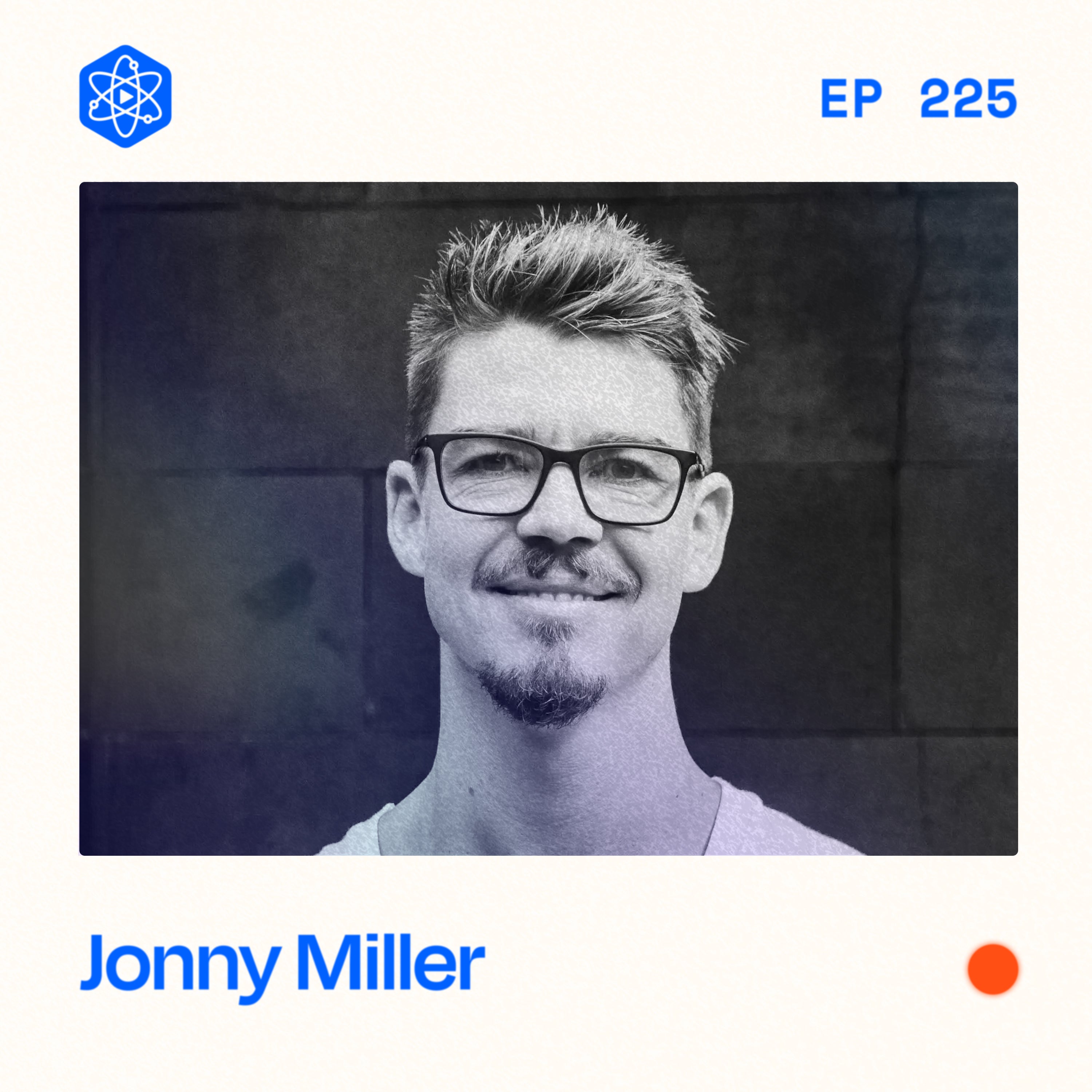
#225: Jonny Miller – $800,000+ from six cohorts of his signature course [Greatest Hits]
In short
How Jonny Miller grew Nervous System Mastery, a 5-week cohort course on evidence-backed protocols for calm, resilience, and “aliveness,” into $800,000+ revenue across six cohorts, using an experiment-driven marketing + curriculum approach and tracking AI “visibility” concepts via Ahrefs BrandRadar.
Guest backgrounds
Jonny Miller is a coach turned curriculum designer/teacher focused on nervous system and emotional resilience. He teaches from lived experience and “citizen science” rather than academic credentials. He runs two cohorts per year and has a part-time community manager; he also records content and manages marketing/ops.
Key claims
LLM-era discovery makes “AI visibility” crucial (BrandRadar tracks mentions across ChatGPT, Perplexity, Gemini, Google AI Overviews, Copilot). Cohort success comes from differentiated outcomes, trust-based partnerships (newsletter/podcast), free live workshops, and iterative feedback loops. Constraints (format, cadence, pricing) prevent indecision and burnout.
Notable examples
Cohort 1 launched from a Notion screenshot/tweet during COVID; Discord community stressed students. Newsletter sponsorships (e.g., Tiago’s) and small podcasts drove signups. Guest lectures and “week swaps” with adjacent teachers (e.g., Michael Ashcroft, Art of Accomplishment). Website redesign reduced conversion vs earlier Notion page; testimonials were less prominent.
Written by AI. May contain mistakes.
Chapters
0:00
Understanding AI Visibility
Learn about the importance of being visible to AI tools like ChatGPT.
“When somebody asks ChatGPT who are the best creators in your niche, does it say your name or does it mention your competitors instead?”
1:34
The Evolution of Nervous System Mastery
Explore the growth and metrics behind Johnny Miller's course.
“Today, I'm talking with Johnny Miller, the creator of Nervous System Mastery.”
3:09
Cohort One: Building on the Fly
Discover the challenges and successes of running the first course cohort.
“I've been so thrilled and inspired and impressed by what you have built.”
6:24
Teaching Without Formal Credentials
Understand the confidence and experience behind teaching without a degree.
“And obviously it's continued to improve because not only are you getting more students, but you're getting a ton of people returning and doing more.”
9:10
Reflections on Course Reception
Learn about the feedback and improvements made after cohort one.
“that's an intention you can have when you design this so that you think on this and come up with a name.”
14:00
Reflections on Cohort One
Jonny discusses the end of his first cohort, sharing feedback and key lessons learned.
“And it's something that I guess I learned a while ago and now has just become part of the way that I work.”
17:02
Planning for Cohort Two
Jonny elaborates on his strategies for marketing and filling cohort two, including experiments and approaches.
“Okay, I want to highlight a couple things.”
23:27
Leveraging Collaborations
Jonny explains the importance of collaboration and differentiation in building an audience.
“That gives you this whole new access to target potential students on.”
28:01
Designing a Sustainable Course Structure
Learn how a seasonal approach to course design can prevent burnout while maximizing effectiveness.
“And so there was a sense of like, can I just keep this going?”
29:16
Creative Constraints in Course Development
Understand the importance of setting creative constraints to enhance decision-making in course design.
“And then the cycle kind of gently ramps up about two to three months before the next cohort.”
Show all 19 chapters
30:59
Growth Through Feedback and Optimization
Discover how feedback loops can be used to continuously improve the learning experience in cohorts.
“I would imagine it'd be easy for somebody first to go down the route of, I should just make this self-paced versus continuing to do the exhausting thing of running a live course.”
33:54
Managing Community and Student Engagement
Explore how to foster engagement and manage student interactions effectively within cohorts.
“delivery of the experience as much as it does the marketing and promotion.”
35:39
Pricing Strategies for Cohorts
Learn about different pricing strategies and the impact of self-paced courses on premium offerings.
“So I think, you know, maybe if I was teaching LinkedIn mastery, it might be a different thing where I'd be like grading people on their LinkedIn profile or whatever it was.”
37:19
Reflections on Lifetime Access and Alumni Value
Understand the implications of offering lifetime access and how alumni contribute to community value.
“makes more sense as kind of as we continue to grow and I have more time to create separate standalone kind of side products.”
40:06
Website Redesign and Its Impact on Conversions
Examine the effects of website design on student registrations and the importance of conversion-focused design.
“And I think that's the model that I want to move towards because my experience of the last cohort was actually it was the most fun to run.”
42:05
Analyzing Course Launch Insights
Learn about the important lessons and challenges faced during a course launch.
“i'd had the previous landing page up actually if i would have converted more um so i think that's been a lesson for me around design feels good, but it wasn't designed with conversion in mind.”
44:36
The Impact of Podcast Appearances
Discover how appearances on popular podcasts can drive significant revenue and applications.
“Was there some sort of macroeconomic thing that was going on?”
46:34
Application Process and Student Selection
Understand the criteria and processes for selecting students in the course.
“revenue from one podcast episode and hundreds and hundreds and hundreds of applications.”
49:59
The Joy of Being a Creator
Hear about the fulfillment and community found in the creator economy.
“should have asked about this experience?”

Ask about this episode
Get the gist, explore an idea or ask about something said.
 Claude
On Creator Science with Jay Clouse, what are the key points of this episode?
Searching your listeningTranscript
Automatic transcript. May contain errors.
0:00When somebody asks ChatGPT who are the best creators in your niche, does it say your name or does it mention your competitors instead? Because a response will only share a few names. And with LLMs, if you're not sighted, you might as well be invisible. And that's at the exact moment when someone is deciding who to follow or what to buy. The first step is finding out just how visible or invisible you are to LLMs like ChatGPT. And Ahrefs built a new tool called BrandRadar to show you where you actually stand. It tracks your mentions across ChatGPT, Perplexity, Gemini, Google's AI overviews, and Copilot, and gives you an AI share of voice against your competitors.
0:39That means how often you get named when your topic comes up, and whether you're being mentioned or actually cited as a source. It's built on 481 million real prompts, making it the largest AI visibility database out there. This isn't about gaming AI, it's about finding out whether the work you're already doing, the content, the authority, and the backlinks are translating into AI visibility. Try a free preview of Ahrefs brand Radar at creatorscience.co slash radar. That's creatorscience.co slash radar.
1:10Jonny Miller: With online learning, there's so many different levers that you can pull. And I don't think there's necessarily a right or wrong way, but it's very easy to get stuck in the indecision and then just be paralyzed.
1:32Hello, my friend. Welcome back to another episode of Creator Science. Today, I'm talking with Johnny Miller, the creator of Nervous System Mastery. Nervous System Mastery teaches evidence-backed protocols to cultivate calm, build resilience, and increase aliveness in 45 days. It's a five-week cohort-based course that is just wrapping up its sixth cohort in the last three years. And in those six cohorts, Johnny has served nearly 1 ,000 students and earned more than$800 ,000. Here's the best part. Johnny doesn't have a massive audience. When he first launched Nervous System Mastery, he had a couple thousand followers on Twitter and a small email list.
2:13And he doesn't stress out about building his audience either. He runs two cohorts per year, and the course continues to grow. So how does that all work? This is the magic of a well-designed signature product, and Johnny is the perfect example. Johnny is a member of the lab, one of our most generous members, I would add, because with each launch of Nervous System Mastery, he's shared a detailed breakdown of his marketing plan, experiments, and their results. So in this episode, we get into the weeds about how he's grown NSM, what's worked well, what hasn't, and how he's found himself invited on large podcasts with people like Lenny Richitsky, Ali Abdaal, Chris Williamson, and more.
2:51I'd love to hear what you think about this episode. If you're on Spotify, you can leave a comment right here. If not, tag me at jklaus on social media and let me know. But that's enough for me. Let's talk with Johnny.
3:08All right, Johnny Miller, Mr. Nervous System Mastery himself. So excited to have you here. I've been so thrilled and inspired and impressed by what you have built. To kick us off, I would love to hear where we are right now in the evolution of Nervous System Mastery, what cohort we're in right now, what numbers have looked like historically, just to give us a starting point for people to understand the scale of this so far.
3:32Jonny Miller: Sure. Well, thank you, Jay. It's great to be here. So I'm currently in week three of cohort six. and this cohort we have I believe 186 students and 73 returning alumni so it's a pretty big cohort and the last cohort cohort five was 250 new students and I think about 120 returning alumni so it's kind of grown to a size which is beyond what I could have comprehended. So when you say 186 students, 73 returning. Would that be a total of 259? Yes. And then there's also a number of people that I've given scholarships to as well. So I think the total numbers are about like 175, 180, something in that region.
4:16Jonny Miller: And what has this done in terms of revenue in these six cohorts? I just pulled up the numbers in ThriveGuard here and the gross revenue is 819 ,000, which is kind of absurd to see that number. And that's been, yeah, over the six cohorts. When did you run cohort one? It was during COVID. The backstory was I'd been working as a coach initially and working with kind of founders and execs. And I then ran a series of workshops on emotional resilience. This was to kind of tech leaders. And in those workshops, the piece that really stood out was like the energy management and the nervous system work.
4:55Jonny Miller: And I was like, oh, I feel like there's like something here. And so one morning we were living in Bali at the time. I just sketched out a kind of backbone of like a five-week curriculum and what that could look like. And I shared that. This was in Notion. I shared that as a screenshot on Twitter. And I was like, I'm thinking about doing this thing called nervous system mastery. Would anyone be interested? And I remember a bunch of people replied and said like, this sounds really cool. And then two people said, like, where can I sign up for this? And so I did the thing of like, go to Stripe, make the payment link.
5:31Jonny Miller: It was like a hundred buck deposit or whatever it was. And two people sent me money. And I was like, wow, I wasn't expecting that kind of response. This was almost three years ago, I think, 2021. The first cohort ended up having like 70 people go through it, I think, which was also surprising to me because although I had an audience through Curious Humans and through my newsletter, it was maybe like maybe like two or three thousand people on the email list and i'd never really sold anything before this was the first thing that i'd actually like created that was a product so it was very fun very rewarding very chaotic i was like doing the curriculum in real time that kind of thing where like this is what i think it's going to be and then every week i was doing the pre-recorded curriculum and then teaching the live class so it was very intense the first cohort that i ran and pretty scrappy, but it also worked and got good testimonials and got enough feedback to be like, okay, let's keep this going.
6:24I love that because if you think about what you just said, we're talking about basically a four-year timeline to create a product that has done nearly a million dollars in revenue all time that started from a tweet that was built on the fly in version one. And obviously it's continued to improve because not only are you getting more students, but you're getting a ton of people returning and doing more. What were your expectations of this when you ran that first cohort, did you expect that this could be what it has become? I mean, no way.
6:51Jonny Miller: No way. I knew that I really enjoyed teaching and curriculum design. So several years ago, I taught a course on entrepreneurship in London with this company called Escape the City. And I knew that I really enjoyed the process of experiential learning design and also how do you convey complex ideas in a way that is fun, in a way that like lands for people. So I think in the back of my mind, there was this like, I really want to get more into like the teaching side of things. And at the time I was doing like some freelance marketing and some, a small amount of coaching as well. And so I was excited to kind of give it a try, but I really had no expectations of what it would turn into.
7:32Are there other people that are teaching the subject matter? Maybe there might be more now, but think back to the beginning. Were you aware of other people that were teaching this type of thing?
7:41Jonny Miller: No, no one at all. and particularly not to the audience that I was pitching to, which is more of like the typical, like high achieving person. From the outside, I would expect that that novelty is a big part of why it's been so successful so quickly. You know, obviously matched with great teacher, delivers on the promise, but this differentiation that you had out of the box, I think is a big part of the story that plays a big role. But feel free to push back on that and tell me if you think that's not the case. No, I think it definitely is the case. And I think that in some ways I got kind of lucky with the name as well.
8:17Jonny Miller: Like I think about like Rite of Passage, for example, which was like the kind of archetypal cohort-based course and the name, it's so, it like draws you in and you want to learn more. And I think Nervous System Mastery, the first time most people hear it, it's like, wait, you can master your nervous system? Like what the hell? Like I kind of like you want to lean in and learn a little bit more about that. And also in terms of timing, you know, towards the end of COVID, People had been indoors for a long period of time. There was like anxiety was at all time high, burnout. So I think there was a timing aspect of it as well.
8:50And I don't say that at all to undermine your credibility or what you've accomplished. And I don't want people to think like, oh, so timing and luck and these things are out of my control are a reason why things succeed. What I'm trying to actually say is when you think about these things intentionally, there are varying degrees of intention you can have in how you develop a product. saying, hmm, having a name that draws people in, that's an intention you can have when you design this so that you think on this and come up with a name. Maybe it comes to you really easily and it's the first thing to your mind.
9:18Maybe it's not. Did you have other names that were in the running? Oh my gosh, yeah.
9:23Jonny Miller: I think it was gonna be emotional resilience was like the first name, the first iteration. That was the name of the workshops. I realized that in the breathwork training that I'd done, the nervous system was kind of the central thread through a lot of the stuff I was interested in. And I was like, this is, it just seems interesting and it seems like very under talked about. And so, yeah, I just felt like a gut feeling basically. Yeah. I like the word mastery too, because it's very aspirational, you know, and it's, and it's outcome oriented. It feels like not only am I going to learn this, I'm going to be extremely good at it.
9:55I find that sometimes when people create product names, it feels like the name of the product is speaking more to a luxury than something people really want or want to stop in some cases, want to end some outcome that they want. So I'm glad we landed on nervous system mastery. I think it's really, really solid. Okay, so talk to us about cohort one. You said you were building this on the fly. Can you talk about the experience of that and maybe even start with the format of it? Because I'm curious to know if the format of the course itself has changed over the last four years.
10:28Jonny Miller: Yeah, so I built the entire thing in Notion and Super, the landing page, and then every curriculum was kind of like a private Notion page for each of the five weeks. I used Discord, I think, for the community in the first cohort, which I actually regretted because it was like the opposite of a kind of nervous system friendly environment where you have like emojis and notifications. And so many people were like, this community thing is really stressing me out. Like, I don't want anything to do with this. And this was during the time of like, NFTs gone wild. Yeah, yeah. So that would have been like the opposite experience for me, I feel.
11:03Jonny Miller: Yeah, yeah, exactly. So Discord and Notion was basically the teaching stack and then Zoom, obviously. I think on Monday, I sent this like core curriculum that was, I recorded the audio into a mic. And then I also provided the text for people to read depending on what they wanted to do. And there was some theory and some practices each week. And then Friday was kind of the call to experience it in a bit more depth and also ask questions and reflect. And that was kind of the loose structure in the beginning. Talk to me about your experience with the nervous system in the first place, because I could see a world where if you're not a doctor or studying this at a collegiate level, you might feel like, can I teach this thing that I have gotten some experience around but may not have the academic background for?
11:57Talk to me about your background, where this came in and how you decided that you were able to teach this.
12:05Jonny Miller: Yeah, thank you. That's a great question. And I think something that I definitely wrestled with in the beginning and still comes up sometimes in that other people in this space, you know, they have they have PhDs. They have affiliations with like Harvard or Yale or some of these these big academic institutions. And what gave me the confidence to kind of go through it is that I've been teaching from my own lived experience. and I've been learning practices, often not from academia directly. I've been kind of doing my own citizen science research to kind of back up as much as I can. But each of the weeks are something which I've found to be really supportive and helpful in my own life.
12:44Jonny Miller: And it feels like the curriculum has come from me. Because of that, I don't feel that I need any, I mean, other people might disagree, but I don't feel like I need a certificate or a kind of badge of approval from some institution. And I've met many people who have those badges, so to speak, and I'm often not impressed. So I personally place less weight in those types of accolades. Well, again, the point I'm trying to make is when you learn something, know something, experience something, you can teach your experience and other people can benefit from it. There is not some grantor of permission to say, now you have earned the right in my eyes.
13:25No, it's here's what I know and I'm willing to teach it. And if you want to learn it from me, you can do that. I had a similar experience when I made Creator HQ in Notion. At first it's like, am I allowed to do that? But then again, yeah, I mean, I'm using it. If you want to use the thing I'm using, here it is. And so I hope that people hear this and get permission to say my own lived experiences, I have the right to teach what I have learned through them.
13:50Jonny Miller: I love that so much. And it reminds me of there was an exercise we did in the startup tribe that I was a part of where we invited the students to write their own permission slip for whatever it is they wanted to do. And I think that self-permissioning is such a core part of the creative path. And it's something that I guess I learned a while ago and now has just become part of the way that I work. So let's talk about the end of cohort one. How was that received by students at the end of the experience? Yeah. So I, um, in the debrief that I did, I remember thinking on the one hand, it went better than I could have imagined.
14:24Jonny Miller: I think that was a key thing. I was like, I really wanted to find work that I just deeply enjoyed and cared about and felt rewarding. The response, I mean, just the fact that like that many people signed up and I got long, long like essays from people afterwards being like, this is both in terms of like the way it impacted them and also with ideas for feedback and improvements. There were a number of things I think I did wrong. I think I put too much information up front, particularly in the live sessions. That's been a key learning is that there's a tendency, especially when you're coming from a place of like, you know, not quite sure of yourself, especially in the beginning.
15:00Jonny Miller: There's like, well, if I just give them more information, then that'll like deliver more value. But actually what I've learned is that the real value is in the kind of deep distillation and the deep curation in what it is that you're teaching and how you share it. So I've definitely in many ways, like stripped back some of the content that I shared in the first version. And then, I mean, there've been so many, so many learnings, like there wasn't really a community aspect in the first version. It was like just kind of me talking. We switched a circle for cohort two, I think, and that was a huge change.
15:33Jonny Miller: And I basically rewrote the curriculum between cohort one and cohort two. Initially, it was more breath focused. It was many other aspects I was drawing in and it was too complex and it just, it was disjointed. And it took me a full year to kind of process what I went through, integrate the learnings and then create the time and space to rewrite the curriculum for cohort two. So I think a year elapsed between the first and second. Was it immediately clear to you that you were gonna run a second cohort? Yes. And did you have any worries about filling that cohort after getting so many people into cohort one?
16:08Yes.
16:10Jonny Miller: Say more. Yeah, a hundred percent. I mean, as I, as I said earlier, I didn't really have a big audience at that time. So I, you know, was fairly active on Twitter, had a few people who'd been through one-off workshops, but I didn't really have a platform, so to speak. So I wasn't really sure where these people were going to come from. And I certainly didn't have any experience marketing anything like this before. so it was all new to me and the approach that I took which is still the approach that I take now is all around experiment design so I attempt to form a bunch of like like what are the best ideas that I have and in this case kind of going back to cohort two like how could I fill another cohort of people like where might these people come from and then over I think it was like a four month period I was like okay how many of these experiments can I run in that period of time and will they work was basically what it was.
17:02Jonny Miller: I'll say the other thing that was really helpful about using Notion in the beginning is that I could make so many tweaks to the landing page and just redesign stuff so much in a way that I don't think I would have been able to if I was using Webflow or WordPress or something more complex. Okay, I want to highlight a couple things. One, you just re-highlighted that the initial web page for this was built in Notion, which I see web pages built in Notion, I see sales pages built in Google Docs. And I think that's brilliant. That's really great, actually, because in those containers, expectations change.
17:38We don't expect a Notion document to look like a website, but we expect websites to look to some standard of what we expect for our market, right? But we know there are natural limitations to a Notion document, to a Google Doc. So we actually don't expect certain visuals because it just isn't what we see there. But you also highlighted that you said I didn't have a large platform or audience. You said earlier you had a couple thousand people on an email list before cohort one. Sitting here today, you have about 13 and a half thousand followers on Twitter, which is a platform you mentioned. And I'm sure that was lesser at the time.
18:13So I'm sharing these numbers just to help people benchmark themselves and where they are and what is possible. Because again, not only did you run cohort two, but do you have any sense of the size of cohort two compared to cohort one?
18:27Jonny Miller: It was almost double. It was about 150 people, I think, back then. And the other thing I'll mention is the price point was quite a bit lower. So I think the first cohort, the price point was about$400. And then I increased it to 600. I kind of increased it by$200 every cohort was kind of like the way that I staggered it. So it felt like less of an ask in the beginning. But yeah, I think I had about double the number of students for cohort two. So what are these experiments that you ran, which I love that this is your approach, by the way, and you've shared a lot of your experiments in the lab, which has just been some of my favorite posts that have ever happened in the community ever because they're so well done and so in depth.
19:02So what were some of the experiments that you ran before cohort two to bring in people from outside of your own audience?
19:08Jonny Miller: Yeah. The overall strategy honestly has been pretty similar since, since cohort two. It's for me, it's been a combination of sponsoring newsletters. I read a lot of newsletters back then, and that was where I found out about interesting projects and online learning things that I was really immersed in as well. So that was a good way for me to kind of test different audiences. And I believe, I think it was cohort three that I first sponsored Tiago's newsletter. I forget the exact timing, but some of these newsletters, they delivered like a five to 15 times return on investment. Crazy. So I was like, wait a minute, like if I can just find enough newsletters to sponsor, then this will fuel the entire cohort.
19:51Jonny Miller: That was a big kind of like light bulb moment for me. Before we get to the next strategy, when we're talking about newsletters here, you didn't just sponsor any newsletter. How did you choose what newsletters that you wanted to pursue? It comes back to trust. I chose the creators who I had the most amount of like trust in what they shared. The way that I think about marketing is like, how can you create and leverage trust? And what I love about newsletters is the people reading them, they already have developed a relationship with that creator. So Tiago, for example, has been writing for years and years and years.
20:23Jonny Miller: And so people have a high degree of trust in what he shares. And Tiago wrote a kind of personal blurb in one of these as well, which just went straight to the landing page. And what I'm thinking about now is like, okay, I'm realizing you need things like lead gen and you need things like tripwire. I learned that word the other day, but I didn't have any of that. It was literally just a landing page and people were just going to the landing page that was built on notion and that was converting a large number of students so i'd say newsletters were a big one and then also podcasts which initially very small podcast you know people with a few thousand listeners i i got a lucky break and i was on the one you feed podcast i think around cohort two by pure chance the host followed me on twitter and reached out and that sent a fair number of students but it was really just like where do i pay attention basically i listen to podcasts, I read newsletters.
21:13Jonny Miller: So I was like, I'll try and use those. What you didn't say was that you went to newsletters that you knew your audience or target student read. Is that implicit or is your market so broad that that wasn't as important as just trust in the creator? It's only recently that I've attempted to be a bit more defined about who my target student even is. I think there is a very broad audience of people who could benefit from this type of training. I think the bottleneck is actually more of people who want to take learning experiences online and particularly through cohort-based courses. So one of my hypotheses was that if someone has already done a cohort-based course, let's say through Tiago's Building a Second Brain or Rite of Passage, then they are the sort of person who enjoys that particular flavor of learning experience.
22:03Jonny Miller: So that was kind of going back in time. I think that was more what I was focusing on. It's a really good insight. Johnny's built nervous system mastery in a way that uniquely opens him up to a lot of opportunity for collaboration with other large creators. And after a quick break, we'll dig into exactly why that is. So stick around. We'll be right back.
22:28As we approach the holiday season, it's time to start thinking about your Black Friday or Cyber Monday campaigns. I know it sounds early, But for years, I ignored this time of year because I thought it was for e-commerce and not for content businesses like mine. But then I ran a campaign in 2024. And do you know what happened? Not only was it my best month of revenue for the year, but it was my best month of revenue ever, nearly$98 ,000. I'm now convinced that Black Friday and Cyber Monday are a huge opportunity for creators like you and me. And we run a sprint in the lab every year because of it.
23:02We're about to reopen the lab to new members on our waitlist. If you're a full-time creator earning more than$100 ,000 per year or on pace to earn $100 ,000 this year, I invite you to join us. Head to creatorscience.com slash lab to get on our waitlist. We'll invite new members on October 1st, which is the perfect time to join our Black Friday sprint. That's creatorscience.com slash lab. You'll be glad you did.
23:31and now back to my conversation with johnny miller when you choose the niche you can either niche by type of person or the outcome i think a lot of people hear niche and they think i need to define clearly who this person is that i'm targeting but if you have a differentiated outcome which in your case you do you know we already mentioned there aren't a lot of people talking about mastering your nervous system. That gives you this whole new access to target potential students on. And, you know, as a newsletter creator, as a podcast host, the magic of you coming to me to say, can I sponsor your newsletter?
24:11Do you want to put a podcast episode together? Is once again, the subject matter you're teaching is so unique that I don't even know who else I would recommend if not for you. And you're going to pay me to do it? Great. Or you're, you know, you're going to come teach my audience something amazing. It's a win-win all around. And where people find trouble trying to sponsor newsletters or get on podcasts is they haven't done the very hard thing of differentiating themselves versus all the other people saying, let me sponsor your newsletter or let me be on your podcast. And so that host is inundated with what feels like the same story from different people.
24:47And it's not a very compelling pitch. Your pitch out of the box is more compelling because the nature of the work that you're doing.
24:53Jonny Miller: That's so true. And the other thing that I think I did, which I still continue to do, is offering free live workshops for private communities, which I found to be really, really helpful. So I kind of did a fairly deep dive of like, who are all of the different private communities that offer or they invite guest speakers in? And I was like, I would love to, you know, lead a 60 minute session for free for your community. And that felt like a, you know, another way of getting into a community that has a decent degree of trust and then also giving people a flavor because it's such an experiential thing that I teach and often it's quite hard to convey with just words.
25:29Jonny Miller: So that also, I think really helped, especially in the early days, again, when I didn't really have an audience to lean on. So smart, because again, I don't think there's going to be anyone that you approached who is competing with you directly. This is a hard thing about going into other communities and trying to do this. Like it's, it's pretty clear that, well, Johnny's probably offering to do this because he knows some people are going to have a great experience and they might want to join his course. But if you deliver a great experience inside my community and you're not taking customers from me because we're not doing the same thing again, everybody wins.
26:02There's not a problem here. When you differentiate very strongly, a whole world of collaboration opens up.
26:08Jonny Miller: You know, I've never really thought about things in terms of competition. And I think you're right that that's in some ways, I've just been fortunate because of the path that I've gone down, not many other people are really talking about this. So I've really had this view of like kind of the kind of rising tide lifts all boats and a lot of, particularly in the later cohorts, exploring collaborations and doing kind of like trading guest workshops and supporting other creators who are related and adjacent to what I'm teaching, like Michael Ashcroft is a good example. He teaches the Alexander technique and expanding awareness.
26:44Jonny Miller: And he came on as a guest lecturer. Many of his students have taken my course and the same with Art of Accomplishment, which is another successful cohort-based course, week two swaps and trades. And it's great because the students want to learn from all of these different areas and it doesn't feel competitive in a way. Totally. It's front of mind for me because the online business space is probably one of the most competitive, over-served markets that is out there. So in everything that I do and a lot of people that come to me, there's a lot of shades of gray of, are we selling the same thing?
27:17And it makes collaboration just inherently more difficult because you start from a place of distrust that you don't necessarily get over. Okay, well, let's go back to the end of cohort two. Nearly doubled that. I'll ask you the same question I did after the end of cohort one. Was it immediately obvious that you would do another live cohort after this? because some people might think, you know, let me turn this into a self-paced course. Let's put this thing on autopilot.
27:40Jonny Miller: Again, it was so obvious. And I think that, yeah, I think like this was the point where I realized how lucky I felt because I'd stumbled upon this intersection of something that I really cared about teaching. Like I was very passionate about the subject matter, something that I really believed helped other people, something that I really enjoyed putting together. As I mentioned, I just like love the challenges of curriculum design and like how to craft a meaningful learning experience and something that was bringing in, even at this point, more money than I'd made in like the last kind of two to three years when I'd just been doing freelancing and working for a fairly low hourly rate.
28:20Jonny Miller: And so there was a sense of like, can I just keep this going? How far can I take this? And how frequently were you running these at this point? How soon after cohort one did you run cohort two? And how soon after cohort two did you run cohort three? The aim was to do every six months. I think, as I mentioned, I took a year between the first and second because I just had to redesign everything and rethink it from the ground up. But I settled upon this six month cadence, which I really, really like. And I think a lot of cohort creators burned out because they just did too many cohorts. And it's exhausting.
28:48Jonny Miller: Like it's tiring when you're particularly in the marketing launch window and the teaching is like a lot of energy output. And so for me, having this like seasonal approach where I would like have the sprint of marketing, where I'm going on podcasts, I'm sponsoring newsletters, I'm writing more online and then having the teaching and then having a kind of reflection period and then like a rest. Like I really I've been taking two to three months off pretty much work like after these cohorts. And then the cycle kind of gently ramps up about two to three months before the next cohort. So that's enabled it to be sustainable for me.
29:24Jonny Miller: it's allowed me to travel and explore other interests and have my own podcast in between i think that's been a just a core part of what has allowed me to do six cohorts without getting exhausted the other nice thing about doing seasonal rotations like this i would imagine is it eliminates a lot of questions because you just kind of fall into a rhythm where you know this is the week that we're running the course this is when the application window starts this when we do this and do that. A lot of times as creators, we're just constantly living in a world of questions of, should I do this today?
30:00When should I do this? And when you have these two bookends to the year, I think it probably gives you some clarity over how you're spending your time.
30:09Jonny Miller: It does, yeah. And that ties into a really important point that I think, again, I was fortunate to discover early on, which is this idea of setting the creative constraints early on. I remember when I was first designing the first cohort, there's so many different ways that it could have been a$1 ,500 course. It could have been eight weeks. It could have been only live sessions, but making those decisions early on and creating that like container with these positive constraints allowed me to then create. And I think in another world, I could have very easily not had those constraints and then almost felt overwhelmed of like, you know, how much do I charge?
30:47Jonny Miller: Do I cap the numbers? Because with online learning, there's so many different levers that you can pull. And I don't think there's necessarily a right or wrong way, but it's very easy to get stuck in the indecision and then just be paralyzed. I would imagine it'd be easy for somebody first to go down the route of, I should just make this self-paced versus continuing to do the exhausting thing of running a live course. I would have also imagined that in between cohorts, it would be easy to fall into the mindset of what can I be doing to grow my audience right now so that the next course I have more students?
31:23Does your mind go there? Or if not, how do you avoid that?
31:27Jonny Miller: It does. And I don't view those kind of in-between periods as completely unproductive, but I think it's more that these ideas are percolating in my subconscious. And like, I might be journaling, I might be having conversations with like this last cohort I worked with, with Mark, who was my kind of YouTube general manager. In the downtime, I was like coming up with ideas of like, oh, this would make a fun video or thinking this. It's like when the next wave of experiments were kind of coming up, but I wasn't actively engaged in them, so to speak. Let's zoom forward a little bit through cohorts four, five, and now you're in six.
32:03What has changed? What has stayed the same? And how has growth been between these cohorts? Have you continued this pace of growing cohort over cohort or have things changed in some way?
32:14Jonny Miller: So in terms of the pace, they continued to grow even as I continued to increase the price, which was like every time I was like, oh, is this going to be too expensive? I was like, I felt nervous to charge more for what I was doing and eventually settled on$1 ,400 as like the main price point. And it was like 150 students and then 200 students and then this spring was 250 and then this most recent cohort has been like 200 new students and I was a little bit like optimistically hoping the numbers to keep growing I think for a number of reasons people are you know have zoom fatigue but in terms of what's changed and this is really the first time in my life that I've like optimized something I've been the guy who's just like always doing different experiments always running different things and I've always taken something to like 80 % and then just got bored and kind of like moved on.
33:06Jonny Miller: But with this, I've sought help and expertise as well to support with this. But I really wanted to craft the most compelling learning experience that I'm capable of creating. And a big part of Circle has been amazingly helpful for crafting spaces, you know, taking inspiration from communities like yours, really well organized, really well documented. Probably the most helpful thing is just asking students for feedback afterwards and then spending literally days and days and days going through all of the suggestions all of the things I didn't like this or this guest lecturer wasn't so good or I lost interest here and refining and it is just this kind of constant feedback loop both from my own intuition of like oh when I taught this this didn't feel very good or students were less engaged this time I wonder what we could have done differently so again the experimental mindset comes into the actual delivery of the experience as much as it does the marketing and promotion.
33:58Do you have other team members who help you run the cohorts?
34:02Jonny Miller: I have one part-time community manager. She's amazing. We have a cadence where she supports in the lead up in terms of kind of answering student questions. Then she's more or less full-time during the cohort. And then she helps with the reflections and the SOPs. Other people doing cohorts I know like have teams of like four, five or six people. and I'm fortunate that I'm able to do lots of different things. I kind of have a background in marketing so I can be doing the emails in ConvertKit. I can be refining the Notion page. I can be recording the audio in like a nice microphone. So I think I have a lot of different skill sets and at the same time, I've reached the point where I want to start bringing in more freelancers because I'm realizing that whilst I can do certain things, I'm not the best and there's other people out there that I can pay who can do a much better job.
34:52I think a lot of where cohorts move towards headcount is the experience is based on this like interaction outside of sessions where like you apply what you learned, you submit homework, now you need people reading your homework and giving you feedback. Is that part of your student experience? Yeah.
35:12Jonny Miller: So we have a student handbook, we have a workbook, and then there's a kind of a questions for Johnny channel in the course, which I'm usually answering four to five questions a day. I'm a bit behind right now. I was, I was away for the last few days. And then in the live sessions as well, there's usually a Q and A period too, but it's not because of the nature of what I'm teaching. There's not necessarily like homework per se. It's much more empowering students to run their own experiments and then sharing their experience and asking questions if questions arise. So I think, you know, maybe if I was teaching LinkedIn mastery, it might be a different thing where I'd be like grading people on their LinkedIn profile or whatever it was.
35:50Yeah, I think you've just designed such an elegant, differentiated, scalable thing, which is difficult to emulate in a competitive world, but aspirational. And I really encourage people to think about these things because if you are intentional about the experience to design, the promise that you're making, it opens up these possibilities that you've shared here. You mentioned you raised the price between each cohort about$200. Where does that end? How will you know when you've arrived at the right steady state price?
36:24Jonny Miller: I mean, this is probably a question for you, Jay. I'd love to have you coach me on that in a lab hot seat. I don't know. This cohort, I'm exploring different pricing tiers. So kind of like lifetime access, VIP pieces. I look at what other people are doing and I think having different options, maybe a self-paced version down the line as well. I feel hesitant around that because I think that at least my experience of doing self-paced courses is I just don't finish them and I buy them and then I just shelve them and it doesn't leave me with a good experience. So I think I'm going to stick with the current price as it is, but what I'd like to do is create a series of probably self-paced, but like lower tier products that are specific to challenges.
37:06Jonny Miller: So like a five-day anxiety course or a 10-day burnout exploration. I think that niching down and kind of giving people those early experiences, particularly speaking to the pain that they're having and then use that as an on-ramp to the flagship product makes more sense as kind of as we continue to grow and I have more time to create separate standalone kind of side products. This is a bit of a reaction, but I have a hypothesis that when you run a premium live experience, premium priced, and then you release a self-paced version that offers basically the same outcome, I think that pulls the audience demand of the price for the premium price thing down.
37:49I think it makes a scarce thing more abundant, which just naturally draws the price down. And so, again, I'm kind of reacting, so take it with a grain of salt. But my immediate thought is I would not offer the same outcome in a self-paced fashion unless I was trying to transition away from doing the live experience. We've heard and seen Tiago talk online about the impact of his book on attendance in the cohort-based course being a very negative impact financially. So it's an assumption I would make that, again, assumptions are assumptions. You just don't know until you test it. But the other thing I would think about in terms of pricing would be what is audience demand for that price?
38:30Where does the doubling of the cohort kind of stop? That means that you're probably getting to some sort of threshold. Could be audience-sized threshold. could be all kinds of things, but that's one measure I would look at. Anyway, I just wanted to see how you were thinking about it currently. What you have this tier that I think is interesting of people can pay to have lifetime access. And you mentioned that in this current cohort, you have something like 73 returning students, which comes at some sort of administrative cost to you running the course because these people are also sharing, they're looking for feedback from you.
39:03What's your experience been with offering the unlimited tier and having people come back?
39:07Jonny Miller: Yeah, so it's been a new experiment running Unlimited. But what I have noticed is that the returning alumni in many ways provide more value, the overall community, because they'll share their experience of the first cohort, the impact that it has, which I think increases motivation. There's already a sense of like trust and connection. And many of them, particularly the ones who want to return, are the ones that like really care deeply about this stuff. And so I've been wanting to incentivize people to come back for basically as like little as possible. If they can't afford it, then often I'll say, you know, just drop me an email and I'd love to have you back for free.
39:42Jonny Miller: Because I do think there is a value. And, you know, some students have taken the course like four or five times. I think someone's taken maybe all six. And I love that because they give me great feedback as well. I'm kind of in this interesting question around the lifetime access. Like I like what Daniel does with SmallBets where he just sells like a one time fee for lifetime access to his community for all time. And I think that's the model that I want to move towards because my experience of the last cohort was actually it was the most fun to run. And many of the students had the best experience, even though the size was kind of 300 plus people.
40:21Jonny Miller: And yeah, I have to answer more questions. And there's a little bit more admin in like Zoom room management and breakout rooms can be a bit of a nightmare. But we've kind of dialed the systems to the degree where it just works. so that's something that I actually want to think about more deeply once this cohort ends and think about how I'm gonna structure it moving forward after one last break I talk with Johnny about his new website and the surprising impact it might have had on registrations for his most recent cohort so don't go anywhere we'll be right back and now please enjoy the rest of my conversation with Johnny Miller.
41:01The Nervous System Mastery website has had a real glow up since your Notion days. It seems from the outside like you've been investing very strongly in design, aesthetic. Can you talk about that decision and what prompted it?
41:18Jonny Miller: So this last cohort, I both invested in starting a YouTube channel and also redesigning the website and doing an overhaul there. With the website, I was personally really proud of how the design came out. I felt like it communicated the right vibe and aesthetic that I wanted. And at the same time, particularly when I first launched it, the conversion rates were significantly down from the simple notion page. And part of me was kicking myself, you know, did I do the classic thing of like, create something really fancy and shiny that is just actually too complex, too long, people don't read it and they just kind of bounce and lose interest so um i'd like to do a deeper dive into the analytics again once this cohort ends and figure out because i i know that i've had i think i had about twice as much traffic this launch period and fewer students i wonder if if i'd had the previous landing page up actually if i would have converted more um so i think that's been a lesson for me around design feels good, but it wasn't designed with conversion in mind.
42:26Jonny Miller: So I think that's like, it's been a real insight for me. That's so interesting and frustrating because it's going to be really hard to know if that's true. Like how would you play out the counterfactual of that? Exactly. It'd be really hard to know because to me, I look at this and I think it's beautifully done. I think it lends a lot of credibility to the brand as a whole. I certainly would trust it more looking at this, but it may not be a trust thing. As you're saying, it may be the viewer, the reader experience. I don't know what type of like copy or structure changes you made. Did it mirror the structure and the copy pretty closely?
43:08Jonny Miller: I mean, there was definitely mirroring but i i added quite a bit more copy and the font i think is is less readable to some degree as well yeah i i think it was it's just so long and so lengthy that my sense is people lost interest easily and i i've actually made some changes kind of in the final couple of weeks to make particularly the header just a bit more bold and obvious it was more subtle in the beginning and as you say like i was questioning is it because people are bored of online courses do they have less money? Have I reached the kind of saturation point? Or is it just like the website is just not as compelling as it was?
43:45Jonny Miller: You know, it's hilarious in a way that something that you can do in Notion so easily actually can be even more effective than something that does look that polished and kind of well put together. Yeah. It's really interesting because this isn't even a long page. It's not a long page. And a lot of people would argue that longer sales pages are better because the people who want to purchase will purchase early and the people who are on the fence will keep reading further and further and further down. But I do think for products, there is sometimes this like threshold of there's enough information where people are be like, yes, that's enough.
44:19And then there's almost like this tipping point where maybe you introduce new questions into the mind and now you've like reintroduced questioning of the process and they think, oh, I'll come back and try this later. But again, super frustrating, hard to know without like true AB testing in real time, because we'll never know this moment in time where you marketed cohort six? Was there some sort of macroeconomic thing that was going on? Was it the time of year? Were there other forces at play? Really, really tough to know. Yeah.
44:44Jonny Miller: I think part of the success from cohorts two to five was that I just had a lot of really good testimonials that were highlighted. Like a lot of the initial notion page was just like testimonial after testimonial after testimonial. And I think those somewhat got hidden in the new version. But you can still find some of them, but they're not as punchy as I think they were before. And I think the testimonials in the first version were just like, especially with some of the highlighted areas, were probably what did a lot of the trust building and the selling. I agree with that. I would say that is an area of the page that feels like it feels easier to skim past in the way that it is.
45:23It feels like aesthetically nice, but it doesn't draw me in to read it.
45:27Jonny Miller: Exactly. Okay. Last question for you. You've been on a lot of great podcasts. You've been on Lenny Ricchiski's podcast. You've been on Modern Wisdom. You've been on Ali Abdaal's Deep Dive podcast. You mentioned the one you feed. These are large shows with large audiences that people would love to get on. We already touched on differentiation being a part of the reason why the package of what you do is attractive. But did these people come to you or did you do outreach to get on some of these shows? Yeah, great question. So with the Lenny episode, I wrote a guest post for Every, which is a kind of tech newsletter and magazine called The Operating Mining of Your Nervous System.
46:06Jonny Miller: Lenny happened to read it and share it. And then a few weeks later, he sent me a, I kind of like replied. So we just like developed a bit of a Twitter friendship. And he sent me a DM at one point being like, do you want to come on my podcast? I didn't even know he had a podcast at the time. I just thought he was this guy on Twitter with a large following. I didn't really know who he was. In some ways, I kind of went into that quite naively. When it launched, that catapulted the last cohort for me. It was a, I think like$80 ,000 worth of revenue from one podcast episode and hundreds and hundreds and hundreds of applications.
46:43Jonny Miller: And he was so like, he didn't ask for an affiliate fee or anything. He was just generously like, I want to learn about this and share this with my audience. So it was a moment for me of like, oh, wow, like this is possible. And so after that, I then made a more intentional effort to kind of reach out to people that had podcasts that I thought would be aligned. Ali, I met through some mutual friends and we happened to be at an event together where it made sense to record. And he's also been exploring this kind of work. And then he happened to be friends with Chris from Modern Wisdom, who was also in the process of exploring emotional and work.
47:16Jonny Miller: So in that case, the introduction really made sense. It wasn't a kind of a big ask. But yeah, I think the way that I've been, I haven't been doing the traditional kind of like outreach or like hold emails. I've just been, there's a few people who I think, oh, I'd love to have a conversation with that person and gradually building relationships with some of these people. Also knowing that in many cases, I think there's like, you probably get like one chance on a lot of these podcasts. And so I would be fine if some of the bigger episodes happen in like two, three, four years time, when they'll probably have more impact, honestly.
47:51Jonny Miller: If I like burn through the podcast in like a one or two year period, then I actually think that would be a bit of a waste, frankly. I completely agree with you. I don't think a lot of people would have thought that way or would have the patience to do that. And it takes things for granted to a certain extent, because you could make the argument like, well, if you could get on them now, you don't know that you will get on them in the future. But I agree with you that these are probably one hitters for the most part. And so being thoughtful about when you take that shot based on the experience you can deliver, the outcome you can deliver, I think is really, really smart.
48:27Okay. I lied. I have one more question because you just opened a loop in my mind. You said hundreds of applications and$80 ,000 of revenue from Lenny's podcast. I assume in your application, you ask, where did you hear about this? And that's how you're attributing students to that podcast?
48:42Jonny Miller: Yeah, so I created a kind of attribution model where if they either use the code, so all of the podcasters or newsletters have a specific$250 kind of coupon code, which they can apply. And there's also a question of where did you hear about the course? So I basically look at like either of those. Sometimes they're different and then I just kind of add them both in, but that's how the attribution has been working. Did you make a code for this podcast? I will. All right. Use code creator? Great. Use code creator. With applications, how do you decide who gets accepted from the application? Who does not make the cut on an application?
49:17Jonny Miller: Yeah, good question. So I initially read through all of the applications and replied personally to all of the type form notifications, which was a very long process, especially when we had like a thousand plus applications in spring. I've changed it. So it's now somewhat automated, but some of my red flags were, were like, if someone is, you know, taking a certain medication or that, you know, have like intense trauma and they have misaligned expectations. So what I've done is created a very thorough FAQ of like who this program is for and who it's not for. And now automatically people get accepted, but then I also kind of still read through just to kind of check for any red flags.
49:58Is there anything I haven't asked here that is a clear miss that I should have asked about this experience?
50:04Jonny Miller: Yeah. I mean, the final thing I want to share is it's just been so much fun. I mean, I imagine a lot of people listening to this, there are ways in which they could make more money doing other jobs than being a creator. And I feel so fortunate that I've I've been able to find a way to make much, much, much more revenue than I was ever making in any previous work I've been doing. And in a way that feels so fun and so enlivening and something that I genuinely like to look forward to. And so I think like, yeah, just for anyone listening, it's worth trying a bunch of different things until you find something that like really, really lands for you.
50:45Jonny Miller: I'm super grateful to have also just met a lot of other people in this world as well. I imagine this is a big part of why you do what you do. It just attracts really great people. And I've built a lot of friendships through this. And I say that's maybe the other thing we didn't touch on is the real importance of like camaraderie and community in this journey. Like I had three or four friends who were slightly further ahead in the journey than me, who were so supportive and championing and, you know, sharing when I did a launch and giving me feedback. And I think if I'd been doing this in a vacuum, I actually don't know if I would have made it this far.
51:20Jonny Miller: Like it's been so helpful to be around other creators in different teaching, different niches or doing different things. But that has like, it's just made it fun and made it feel like I'm like part of like a tribe in a way, a tribe of people doing similar things and wanting to help each other out. And that spirit of like generosity and kind of like giving first, which I, you know, I really feel from you as well has been so, so much like a part of the journey.
51:54If you enjoyed this episode, please let me know. Leave a rating or review on Apple Podcasts or Spotify. In fact, if you're on Spotify, you can leave a comment on this episode. Otherwise, those reviews on Apple Podcasts go a long, long way in helping us to grow the show. If you want to learn more about Johnny, visit his website at nsmastery.com. And if you want to join Johnny and I in the lab, visit creatorscience.com slash lab. Links to both are in the show notes. Thanks for listening, and I'll talk to you next week.
From the publisher
Jonny Miller is the creator of Nervous System Mastery. It teaches evidence-backed protocols to cultivate calm, build resilience, and increase aliveness in 45 days. It’s a five-week, cohort-based course that is just wrapping up its sixth cohort in the last three years. In those six cohorts, Jonny has served nearly 1,000 students and earned more than $800,000.
Here’s the best part – Jonny doesn’t have a massive audience. When he launched Nervous System Mastery, he had a couple thousand followers on Twitter and a small email list. This is the magic of a well-designed Signature Product – and Jonny is the perfect example.
In this episode, we get into the weeds about how he’s grown NSM – what’s worked well, what hasn’t, and how he’s found himself on large podcasts with people like Lenny Rachitsky, Ali Abdaal, Chris Williamson, and more.
→ Join Nervous System Mastery
Full transcript and show notes
Jonny's Website / Twitter / Instagram / LinkedIn
***
RECOMMENDED NEXT EPISODE
→ #221: Ryan Hawk – Anatomy of a $12,500 membership earning $400,000+ per year
***
ASK CREATOR SCIENCE
→ Submit your question here
***
WHEN YOU'RE READY
📬 Creator Science Newsletter
🚀 Get CreatorHQ (creator operating system)
🧪 Join The Lab (private membership community)
🧞♂️ Get a Personalized Offer
***
CONNECT
🐦 Connect on Twitter
📸 Connect on Instagram
💼 Connect on LinkedIn
📹 Subscribe on YouTube
***
SPONSORS
💼 View all sponsors and offers
***
SAY THANKS
💜 Leave a review on Apple Podcasts
🟢 Leave a rating on Spotify
Learn more about your ad choices. Visit megaphone.fm/adchoices
More from Creator Science with Jay Clouse
All episodes
We use cookies.They keep VO running smoothly and help us improve it. Privacy policy