
 Ask ChatGPT

- Podcasts
- Creator Science with Jay Clouse
- #320: Earning $300K+ Per Year Without Social Media
Creator Science with Jay Clouse6 Oct 2026 · 51m · 21 chapters
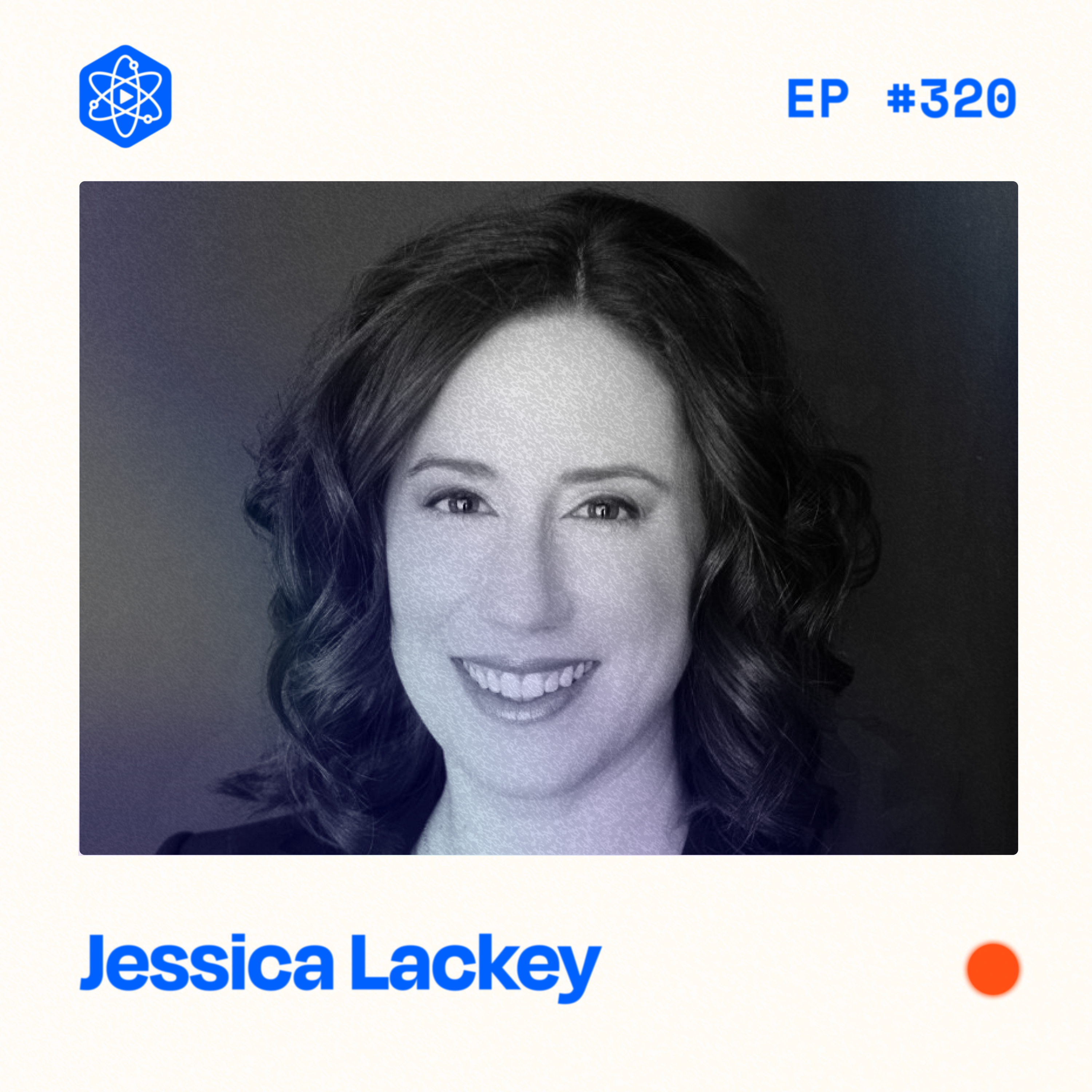
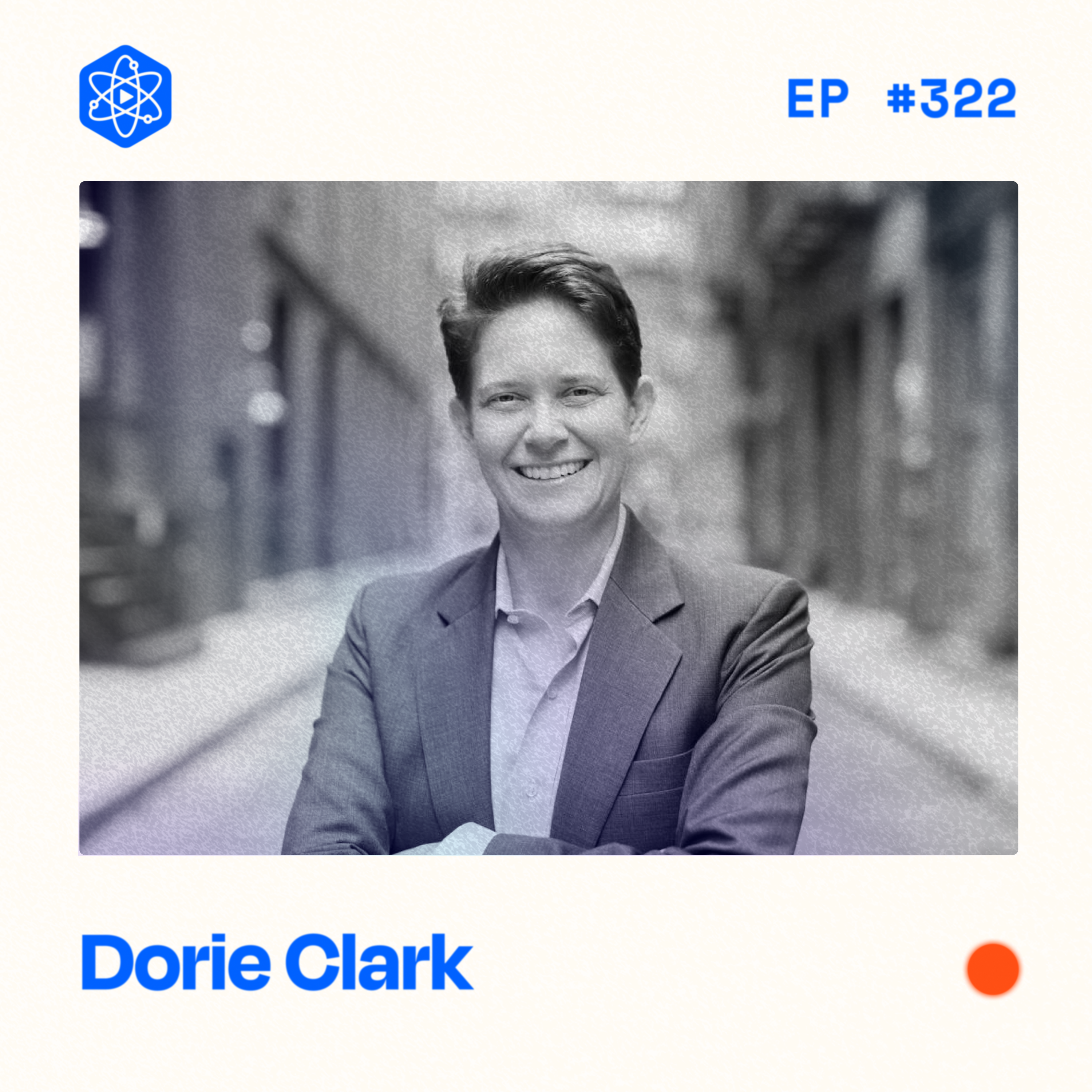
#320: Earning $300K+ Per Year Without Social Media | Jessica Lackey's Relationship-First Approach
In short
Relationship-first business building without social media virality; how Jessica Lackey grows and retains customers via email, podcast guesting, and recurring offers.
Guest background
Jessica Lackey is founder of Deeper Foundations and author of Leaving the Casino. She previously worked as a fractional COO for seven-figure organizations. Her business has ~200 paying members and a ~2,000-person email list, converting ~10% into customers; revenue has exceeded $300K for the past three years.
Key claims
- Don’t optimize for top-of-funnel follower growth; optimize for renewals and retention.
- Almost no offers are one-and-done; the model is built for recurring value.
- Social media didn’t work for her (couldn’t break through on Instagram/LinkedIn), so she used relationship-based visibility instead.
- Email stays strong via deep weekly essays and long-running workshops.
Notable examples
- 50 podcast appearances and ~50 guest-teaching stints in ~4 years; each visibility event added 10–20 email subscribers.
- A 30-minute welcome call for every member at $50/month (economically “doesn’t make sense” alone, but supports retention).
- “Sacred Sales Hour” weekly outreach KPI framework (seeds/sprouts/fruits/roots).
Written by AI. May contain mistakes.
Chapters
2:16
The Importance of LLM Visibility
Discover how visibility on platforms like ChatGPT affects creators and offers a new tool for tracking it.
“When somebody asks ChatGPT, who are the best creators in your niche?”
4:00
Jessica's Journey Away from Social Media
Explore Jessica Lackey's experiences with social media and her focus on email for business growth.
“And how did you come to this place where you're like, you know what, email is what I'm doing, and I'm actually just going to get really good at the percentage of folks on my email list being clients or customers?”
5:31
Building an Email List Through Networking
Learn how Jessica grew her email list through podcast guesting and networking instead of traditional social media.
“Well, I couldn't figure out the social media game.”
7:22
The Structure of Jessica's Offers
Understand the different services Jessica offers and how they relate to each other.
“That sounds like its own brand of exhausting though.”
11:08
The Evolution of Jessica's Membership Program
Hear about the development and growth of Jessica’s membership program over time.
“And I've started adding more foundational curriculum to just say, this is why we do what we do.”
14:00
Membership Structure and Economic Sense
Explore Jessica's membership model and its economic viability.
“People said, hey, there should be a Europe call.”
15:01
Designing a Sustainable Business Model
Discussion on balancing business growth with personal satisfaction.
“Well, it doesn't economically make sense for that particular offer.”
17:41
Cohort Scheduling and Program Structure
Insights on how Jessica structures her cohorts and courses throughout the year.
“I mean, the cohort is a very time-bound program.”
18:39
Building Email Engagement and Retention
Jessica shares her approach to creating valuable email content.
“I think a lot of people hearing this who might be called to take a similar approach where there's like, ah, the social media game is so hard.”
21:44
Key Performance Indicators for Business
An overview of the KPIs Jessica emphasizes for measuring success.
“Come hang out with me as I dive into building an expertise business.”
Show all 21 chapters
23:17
Alternatives to Social Media Growth
Discussing the potential limitations of avoiding social media.
“If you don't play the social media game, are you putting a ceiling on your business?”
25:05
Revenue Growth vs. Client Ceiling
Exploration of the perceived ceilings in revenue growth without social media.
“Ceiling of revenue growth or ceiling of clients?”
28:00
Exploring Game Theory in Business
Learn how a philosophical approach to game theory can influence business decisions.
“to come up with some new angle three times a week on Instagram.”
29:10
Choosing Business Ceilings
Discover the intentional choices behind setting limits in business for personal fulfillment.
“And his point is a lot of times we end up playing games implicitly that aren't actually games we want to play.”
30:55
The Concept of a Business Diagnostician
Understand how to analyze and improve your own business strategies effectively.
“because of some of my personal situation.”
32:45
Navigating Industry Games
Examine the challenges of navigating business prestige and how to play the industry games wisely.
“I think there's the what's not serving me now and what's not going to serve me in five years.”
34:39
Visibility vs. Niche Markets
Learn about the trade-offs between broad visibility and sustaining a niche market.
“And this is one of the best tweets that I've seen Justin Welch say is like, everyone knows the game is rigged And the people who win are the ones that are like, I'm going to go win that game.”
36:30
Ethical Pricing Strategies
Explore the importance of ethical pricing in service-based businesses.
“It's, you know, building an expert business.”
42:09
Membership Models and Customer Retention
Explore innovative membership models and customer retention strategies.
“But even now, folks who are certain people who aren't on a fixed income, that increasingly seems to be something to think about.”
46:04
The Impact of Book Publishing on Business
Discuss how publishing a book can drive business growth and membership conversions.
“People buy the book because it was recommended to them by a friend.”
49:56
Building Meaningful Relationships in Business
Learn how to cultivate genuine relationships to support business growth.
“Like I'm coming to Columbus, I'm organizing brunch.”

Ask about this episode
Get the gist, explore an idea or ask about something said.
 Claude
On Creator Science with Jay Clouse, what are the key points of this episode?
Searching your listeningTranscript
Automatic transcript. May contain errors.
0:00I'll never have a million dollar launch. I won't cross six, seven figures. That keeps me out of rooms.
0:19Hello, my friend. Welcome back to another episode of Creator Science. Today, I'm talking with Jessica Lackey, founder of Deeper Foundations and author of Leaving the Casino. stop betting on tactics, and start building a business that works. Jessica's work is rooted in helping you build strong business foundations that make running your business more profitable and easier over time. Jessica is a longtime member of the lab, and she walks that talk. She has 200 paying members in her Deeper Foundations membership with a 2 ,000-person email list. That means that 10 % of her email list is customers, and in many cases, repeat customers.
0:56And for the last three years, Jessica's business has earned over$300 ,000. The typical creator math is that you grow a big audience and convert 1 % to 3 % of them into customers. And yet Jessica is here converting 10%. A lot of creators, myself included, get pulled into playing the top of funnel audience growth game. Jessica has resisted that siren song and has found ways around it. Almost nothing she sells is one and done. Her business is built on renewals and retention, not growth and virality. That decision changes your math significantly. If you sell a one-time program, you have to keep refilling the top of funnel forever.
1:32And that's when discovery platforms can really help. If people stay for four years, 2 ,000 people on an email list might be enough for you. In this episode, Jessica walks through exactly where those 200 members came from. She explains the webinar she runs over and over again. She tells me why she does a 30-minute welcome call with every new member at$50 per month. and she's honest about the trade-offs this strategy has come with and why she's okay with making them. By the way, this is the one-year anniversary of the release of Jessica's book, Leaving the Casino, and it's also Jessica's birthday today.
2:04So if this conversation has you interested in her book, there's a link in the show notes. It's a nice happy birthday gift to her as well. We'll get that full conversation with Jessica right after this.
2:16When somebody asks ChatGPT, who are the best creators in your niche? Does it say your name or does it mention your competitors instead? Because a response will only share a few names. And with LLMs, if you're not sighted, you might as well be invisible. And that's at the exact moment when someone is deciding who to follow or what to buy. The first step is finding out just how visible or invisible you are to LLMs like ChatGPT. And Ahrefs built a new tool called BrandRadar to show you where you actually stand. It tracks your mentions across ChatGPT, Perplexity, Gemini, Google's AI overviews, and co-pilot and gives you an AI share of voice against your competitors.
2:55That means how often you get named when your topic comes up and whether you're being mentioned or actually cited as a source. It's built on 481 million real prompts, making it the largest AI visibility database out there. This isn't about gaming AI. It's about finding out what the work you're already doing, the content, the authority, and the backlinks are translating into AI visibility. Try a free preview of Ahrefs brand Radar at creatorscience.co slash radar. That's creatorscience.co slash radar. Finding a doctor is hard enough. Finding the right doctor, even harder. Someone who takes your insurance, has an available appointment when you need one, and feels like someone you can actually open up to.
3:37That's where ZocDoc comes in. Download the ZocDoc app to search and compare doctors by specialty, insurance, and availability. Read real patient reviews, Find the right fit for you and book instantly because getting seen by the right doctor matters. ZocDoc. Ready to be seen? Download the ZocDoc app today.
3:59Maybe to give us a starting point, did you play the social media game? Were you trying that? And how did you come to this place where you're like, you know what, email is what I'm doing, and I'm actually just going to get really good at the percentage of folks on my email list being clients or customers? So I started my business actually in 2021 as a high touch services business. So I was a fractional chief operating officer for seven figure organizations. So I was doing the services as my primary source of income. I tried the viral threads. Actually, that's how I found you was the tweet 100 challenge.
4:37So I tried the viral ship 30 for 30 challenge to grow on Twitter. I tried Instagram. I hired a social media team for roughly two years to help get the word out and never cracked 1 ,700 Instagram followers. I'm on LinkedIn as a user, but not as someone who's creating content, content forward on LinkedIn. I'm more of a let's hang out with my friends on LinkedIn. So I didn't need an audience to grow my revenue when I started the business, at least for the first few years. So my audience has always been relatively small. So you're suggesting that this is kind of just a place of necessity or like an invention of circumstance that you were like, well, the audience building thing isn't really working for me, but I want to build this type of business.
5:29So I just got to figure it out. Well, I couldn't figure out the social media game. I tried. I really did try. I don't find myself to be particularly charismatic or funny or able. That was right when we were crossing from the follower era to the for you era. And that required a different game. That was right. I was on LinkedIn trying to grow right as the hooks started taking over. And I found that I just couldn't break through. I was busy growing a services business. So I actually switched and had all of my, what we would consider top of funnel, be podcast guesting, joining programs, building relationships, guest teaching in other places.
6:10And so my audience grew very linearly from about 200 people on my email list in 2022 to 2000 now in 2026. And when we think about linear email growth, they got to be coming from somewhere. So are you saying that most of that is from this podcast guesting strategy? It's a mix of all the things. So I counted because this is what I did. I did 50 guest podcast appearances in about four years. I guest taught in about 50 different communities in about those four years. When my book came out last year, I did five to 10 additional podcasts. I've been participating in 20 to 30 different programs or communities over the past four years.
6:58So I'm in the lab, I'm in a couple other different communities from around the internet, and I joined a lot of programs. And so every time I would do some kind of guest appearance, 10 to 20 people would show up on my email list. So I was doing some kind of visibility opportunity that was in small groups, usually off platform, a hundred times in four years and continue that trajectory today. That sounds like its own brand of exhausting though. That sounds like a lot of work. Did it feel like a lot of work? Yes and no. I mean, the trade-off is like, okay, I could try to do social media, which for me was a lot of work, or I could talk about a couple of topics with people that I trust and like reusing intellectual property without having to figure out a new way to say it every time.
7:48So that's what I would do. I would make friends with people on the internet. I would ask them or they would invite me to tell what I was working on because I had those relationships and repeat ad nauseum for four years. It was slow and arduous, but also super rewarding and endurable, I think. That's why I think I have such a high penetration of buyers on my list is because when it was growing linearly, I'm recognizing names on the list. I know where many of them came from. I see the names. I see people opening and responding. My list is relatively small, but I almost know when people showed up based on what podcast or guest teaching opportunity brought them into my world.
8:34Explain your current offer stack so folks listening can understand, okay, what are the different offers that Jessica is selling through these means? So I have one-on-one consulting for established expertise business owners. I have a cohort program that's six months that is a relatively intensive dive into building the foundations of an expert-led business. And when I say expert-led, coaches, consultants, service providers, those who primarily sell services through authority and through relationships. And then what's new and evolved is the membership, which is the foundational concepts and the place to practice being an expertise business owner.
9:15When I say practice being an expert business owner, there are regular routines and habits and practices that I think anyone selling through relationships and authority should have, a weekly practice to do outreach to your network, a weekly planning time to get yourself organized. We review our metrics once a month, and those are different metrics than maybe a creator-forward business would have, and then expert trainings. So that membership started as a video library and has evolved to really be the essential foundational curriculum and essential habits of running your business. So the way you're talking about that membership, it sounds like folks come in and the expected behavior or way to engage with it is with these routines that you do.
9:59Yep. How do you think about the relationship of these three offers to one another? Do you see them in any type of ordering or is it kind of meeting people where they are? So I didn't used to have an order. They've kind of evolved from one-on-one. I started, that was the first thing I did. And I said, you know, how do I codify the work I'm doing with my one-on-one clients to something that I can teach in group? And then what I discovered is that a lot of practices that are required for my one-on-one clients, for my group clients, like doing these outreach, looking at the metrics under their business, those are required for any stage of the business.
10:36So I started adding that to the membership saying, regardless of what level you're at, one-on-one group, new to my world, these are sort of the essential habits I want you to build and maintain. So the membership became the practice gym. So if people want to go deeper in their business, they can for different levels and stages of their business. But if they say, yeah, I generally know what my business is and what I'm doing, but I just don't always have the accountability to do the, when we would call on the business work, the membership is the place for that. And I've started adding more foundational curriculum to just say, this is why we do what we do.
11:13This is how we do what we do. But the membership is almost like the gym for being an expert business owner. Would you share the proportion of how these three products contribute to your revenue each year? So my one-on-one is roughly 50 % of my revenue. My cohort and membership, they combine make up the other half. Cohort is, it has shifted in the past 60 days, but the cohort is$80 ,000 a year total. The membership is a little bit less than that now. So it's about 50%, 25, 25. I also have two foundational courses that I've offered as standalone chunks. The membership started at $30 a month and is now$50 a month after my latest price increase.
12:00But the goal is to make it so accessible that even if they can't participate in a given season, it's a charge that still makes sense for their business, regardless of the stage of revenue they're at. That did not make sense at all. Two years ago when I launched the membership, like I had 30 people in it. It was basically not even enough to cover the circle fees. But now it's actually an entire revenue stream, which just kind of evolved from people saying this was awesome and spreading the word of mouth to their friends. That's interesting. That's a chasm that I feel like a lot of people pursuing memberships don't cross, where they start something and they kind of expect it to be a significant revenue stream pretty quickly.
12:43And if it's not, they get really antsy and won't see it through. So talk to me about your journey with that membership specifically when it started with something that quote unquote didn't cover the circle bill yet to say, actually, I'm going to keep doing this because it's not an insignificant time investment. for somebody running a membership too. It started off being a video library. I would add a video library. I would have a Q &A once a month and I would add a new training every month. But then after a few months of running it, someone said, hey, you have a lot of trainings here. Do you have a roadmap?
13:15So I added a roadmap. And then I launched my first course. It was right around the time I lost my last fractional COO client. Like it was a planned transition. I hired my backfill and I said, oh, I need to close this gap. You know, I should teach a course on relational sales, which is what I've been talking about. So I launched that course. It had a weekly practice habit to it. And someone said, hey, can we keep doing this weekly practice habit in the membership? And I said, sure, that sounds like a great idea. And then more people started coming in. Then in January of this year, I launched another course, which is all about time management.
13:49And I had a weekly planning session in that. And they said, hey, can we keep doing this weekly planning thing? And I said, well, if you want to run it, awesome, because I can't commit to every Fridays. So we started adding that. And then people continued to join the program. People said, hey, there should be a Europe call. All right, well, let's add a Europe call. And then June of 2026, I said, hey, we're going to raise the price from 30 a month to 50 a month. Last chance, get in. My copywriter actually said, where's the last time we launched the membership? I'm like, we never launched the membership.
14:20We just kept adding things. And people kept telling their friends because the value was relatively unprecedented for what you get. I do a welcome call with every member who joins at$30 a month for 30 minutes. Again, like no one does this because it doesn't economically make any sense. But I wanted to meet everybody who was in my membership. When you say things like it doesn't economically make sense, do you not care? Or do Do you have a belief that, but it will economically make sense if and when some threshold or turning point happens? Well, it doesn't economically make sense for that particular offer.
15:04And it's not designed to be an upsell offer. But it is, I was supporting my business for four years through 20 different clients because of one-on-one. So the membership on its own and the cohorts on their own didn't have to carry the business. So it didn't make sense as a standalone product for four years. neither the cohort or the membership did. And in fact, actually paying the social media team and paying the YouTube editor and paying the team to help me develop these leveraged bodies of work, I actually didn't make any profit on anything that you would consider leveraged one to many offers for up until 2025.
15:42So it didn't make sense economically for each individual offer, but it totally made sense. I can cover my own bills and make the revenue I need to make to have a relatively stable top line, just the mix has shifted underneath over time. So if we look at this business today, and you told me it earns over$300 ,000 in total, and 50 % of that is the services, as you said, the cohort and the membership make up the other 50%. Is this where you are happy, just like being? Or are you striving for some other thing? I'm trying to get a sense of your enoughness, what you're striving for, and how you've arrived at this overall design?
16:24I love the business I've built at the revenue I've built it at. Like, I know every single member in my membership. I don't really want that to change. I mean, I would love it to be a little bit bigger, but I don't, I have no ambitions for thousands of people in this membership. I love my one-on-one clients. I love my cohort participants. The business, now I get to face the wonderful challenge of how to keep meeting my members where they are as they continue to grow their businesses. And how do I construct things in the back end of my business to say, you were started here at the cohort, but now it's not they graduate into one on one because that's not how really it works.
16:58It's more how do I keep meeting them with the advanced next steps for their business in the right container that makes sense for them. But my business pays me well. I don't need a lot of team to run it. I don't have a lot of moving pieces. It like covers my household bills. It allows me to save. It's a great business that I love. I have no desire to make it a whole lot bigger. I have dreams of book number two. I have dreams of my own different podcasts than the one I currently run. But that saying like the dog caught the car. I'm like, the dog caught the car. Now it's about how do I continue to make it an exceptional experience for everyone who has decided to step into this like way of building their business.
17:40If I look at the calendar year, and you have these three offers, do you have any type of seasonality. I mean, the cohort is a very time-bound program. So how do you think about the cohort within the calendar year and how that then relates to these other two offers? So the cohort opens March and September during the Equinox periods. There's a course, a standalone course that is run right on the front of the cohort in the spring and the cohort in the fall to say, if you liked the course, you should either upgrade to the cohort or stick around in the membership. So self-paced course. No, it's a it's live.
18:16OK, so it's a four week time management operations boot camp I call building blocks that runs in January. And then it's a live relationship building and relational sales series that runs over the summer and the membership. I did a launch, but I've never launched it before. I'm not entirely sure when I'll launch it. It'll probably launch on the back of these different courses. And one on one, I never launched just referrals as I get them. How often are you publishing emails? Once a week, every Sunday, 10 a.m. Eastern. I think a lot of people hearing this who might be called to take a similar approach where there's like, ah, the social media game is so hard.
18:49I mean, I'm sharpening my ax. I'm like, I'm a learner again. I'm not good at this current incarnation of social media, but I've resolved, I'm gonna play this game. I'm gonna figure it out, at least for now. But this approach certainly resonates with me when I'm frustrated with results on social media. But the challenge that I hear from folks often who are very email forward is if they're not filling top of funnel new subscribers pretty frequently, and they have one, maybe two programs that they sell pretty frequently, they churn through the number of buyers on their list, or the people they're introducing their stuff to who haven't bought it, who are on the list, have considered it and passed on.
19:32So what prevents this approach from getting stale or even going backwards? So I think it's three different things. One, I aspire to have emails that are so good, people want to stay subscribed. And so some emails are more of like a marketing my program or marketing my social media or marketing my podcast. Mine is a deep dive essay every week. It's like 1500 to 2000 words with some kind of framework, some kind of insight. People are like, I bought from you years ago, your newsletter is one of the only newsletters that I open. So that's one. So people forward my newsletters. I want that to be the forwardable asset.
20:15Two, I taught for free for four years, a new workshop every single month for about four years. I called it deeper business dialogues and it was open to everybody. At that time, the webinar disguised as a sales funnel was everywhere, where it was like 50 minutes of backstory, 10 minutes of pitch, and you were sold into something. And I said, what if I flipped the script? What if I did 50 minutes of pure teaching, workshopping concepts out in the open, and then 10 minutes of a soft get on my list? So I flipped that. And then three, because I was services for such a long time. So I went fractional chief operating officer down to more advisory with small cohorts.
21:03I've never had to sell so hard. So my, you know, I have eight to 12 clients on my roster one-on-one at a time. I've had some clients in my roster for four years now. I have max of 15 people in my cohort program every six months. And then I've started growing the membership. So most of the people in my newsletter audience haven't seen the same offers in the same programs over and over again, because for five years, primarily wasn't selling to my audience. I was making my sales through referrals, filling my cohorts through a little bit of word of mouth and a little bit of launching to my list, but mostly not selling to them.
21:42It was all a, this is what I'm learning. This is what I'm exploring. Come hang out with me as I dive into building an expertise business. I want to reopen a door or step through a door that you opened earlier where you said the KPIs that you recommend your clients measure are different than what other people might measure. So what are those? So it's number of outreaches. So every week of the membership, we do what's called sacred sales hour. So we're reaching out to clients, collaborators, connectors to build relationships, to expand our networks, to invite people in closer to us in a relational outreach capacity, five emails a week, two people in your network.
22:21So how many outreaches did you do? How many connection calls did you have? How many visibility and distribution opportunities did you secure? So you guest teaching in someone's audience, going to a conference, swaps and bundles and things like that, whether it makes sense for your audience, keynote speaking. So how much exposure did you get to other people's audiences? Did you produce any long form content that would be like an authority asset? So those are what I call seeds. Sprouts are inquiries and proposals sent. We do track follower count, but just more as the, is it growing? If it's not growing, it means we're not getting in front of enough new people.
22:58We track revenue and profit and cash, new clients as well. Those would be what I call fruits. And then we track roots, which is the business building projects that you are doing every month to make planting seeds, tending your sprouts and stewarding your fruits more effective with the time you have. If you don't play the social media game, are you putting a ceiling on your business? After a quick break, Jessica and I dig into that very question and how she makes her business work for her, not the other way around. So stick around. We'll be right back.
23:32As we approach the holiday season, it's time to start thinking about your Black Friday or Cyber Monday campaigns. I know it sounds early, but for years, I ignored this time of year because I thought it was for e-commerce and not for content businesses like mine. But then I ran a campaign in 2024. And do you know what happened? Not only was it my best month of revenue for the year, but it was my best month of revenue ever, nearly$98 ,000. I'm now convinced that Black Friday and Cyber Monday are a huge opportunity for creators like you and me. And we run a sprint in the lab every year because of it.
24:06We're about to reopen the lab to new members on our waitlist. If you're a full-time creator earning more than$100 ,000 per year or on pace to earn$100 ,000 this year, I invite you to join us. Head to creatorscience.com slash lab to get on our waitlist. We'll invite new members on October 1st, which is the perfect time to join our Black Friday sprint. That's creatorscience.com slash lab. You'll be glad you did. Finding a doctor is hard enough. Finding the right doctor, even harder. Someone who takes your insurance, has an available appointment when you need one, and feels like someone you can actually open up to.
24:43That's where ZocDoc comes in. Download the ZocDoc app to search and compare doctors by specialty, insurance, and availability. Read real patient reviews, find the right fit for you, and book instantly. Because getting seen by the right doctor matters. ZocDoc. Ready to be seen? Download the ZocDoc app today.
25:04and now back to my conversation with jessica lackey what's the ceiling on this approach i'm thinking about it's pretty time intensive and so is the idea for people listening to this who are saying like okay social media this is an alternative path does this path dictate a certain ceiling then that otherwise social media would be able to blow past? Ceiling of revenue growth or ceiling of clients? Probably revenue growth. I don't think this has a ceiling to it. I mean, the ceiling is dictated by the price point of your offers and truly the construction of your offers. The reason my business works is because these are not one-time purchases.
25:49The construction is, this is a practice of business ownership. And that practice, no matter you know, the membership is really constructed around not a content drop necessarily, but repeatable habits that run in your business that you'll never really stop. Like I put some of these habits in place for my business in the membership because I need to do the same habits too. The cohort ends, but then there's the offer that extends. You can stay in that for a long time. Same for one-on-one. You could stay one-on-one or you could drop to a recurring offer. So I think the challenge being that almost nothing in my business is one and done.
26:25It is all meant to be recurring value for a recurring charge. If you're just trying to sell a one-time program, then you do have to continually feed the top of funnel because people don't renew. like that's a barrier to growth that I have seen in so many other businesses. So I said, okay, well, what would people be excited to continue paying for on a recurring basis that I can help them with? So I built my business on renewals and retention, not growth and virality. But, you know, especially if you run services, how are you, again, not creating like a codependency concept here, but how are you always thinking about what comes next?
27:10What comes next? How are they growing? How are you expanding your time with that customer? That's appropriate for a services business. That's also appropriate for a coaching business. Part of the reason I think, you know, I love what you're doing so much is because the lab gets better year after year after year. So how did I design products in an ecosystem that gets better year after year after year? So I don't think it has a ceiling to it. I have chosen a ceiling because of the price points I am playing at, but I don't think it's inherent to the type of business I've run. And frankly, the more you, like social media requires almost new hooks and new content every time.
27:49But now that I do a couple of signature topics, I can guest teach without coming up with new material. I can guest on podcasts without coming up with a ton of new material. So it's become compounding in my business versus having to come up with some new angle three times a week on Instagram. Yeah. And I don't necessarily mean to frame the idea of a ceiling as something that is inherently bad because I don't think enough of us think about what enough or our goals are. I'm reading this great book right now. It's the best book I've read in a long time called The Score. Have you heard of this book?
28:28No, but I want to. It's by a guy named C. Tai Nguyen, I believe is his name. He's a philosopher and he's also a big nerd and he loves games. And so he had this obsession with understanding why there seemed to be an inherent trade-off between easily measurable things and value capture with these things. He's basically like, the more we add metrics to especially like businesses and organizations, the more it seems like the people inside those organizations hate their work. Why is that? It's a wonderful, wonderful book. The punchline for a lot of it is basically like, he has this really bold idea, which is basically like the meaning of life is choosing games that you love to play, that you can play infinitely.
29:13And his point is a lot of times we end up playing games implicitly that aren't actually games we want to play. I mean, And I'm sure this speaks to you with your casino analogy. And so like ceilings aren't inherently bad if that's a game that you have chosen and this is what winning that game looks like. But you mentioned the way you think about recurring subscriptions is you need to provide recurring value and that creates sort of a inherent ceiling. I mean, that is true in this design, but if you are creating content that is infinitely scalable and recurring, then that removes some level of ceiling, but it's a different design of the product.
29:52So all of this is just like interesting stuff for me to think about and poke and prod. I mean, like I have chosen a ceiling on purpose. When members join, they get a welcome card. I send birthday cards. I've taken, you know, unreasonable hospitality, that book sort of to the - Love that. How can I know people so that I can make connections for members? There is a world in which that I could see that someone else does that connection making for me, But like that's depriving me of some of the joy of knowing what happens in everybody's business. I'm a relatively nosy person because that's part of my job as a business diagnostician.
30:28But I love I love connecting people. I love saying you should meet so-and-so. You should meet so-and-so. So I've chosen caps because it covers my bills. It covers my enough numbers. It allows me to invest in projects. And honestly, I chose some of these design constraints for my business because I saw some real gaps in the marketplace that I wanted to fill. Like very few places offer what I'm offering at the price point I'm offering it at. And I recognize that I can do a lot of what I do because of some of my personal situation. I don't have children. You know, I have time and intellectual intensity that I can spend on this business and the humans that are in the business.
31:07I love what I do a little too much sometimes. And so, you know, I came from corporate, have some, you know, that like corporate horsepower to what I do. And so I say, how can I use my skills and what I'm gifted at to really be of deep service? And I've never been happier playing the game I've chosen, but I recognize that I'll never have a million dollar launch. Like I won't cross six, seven figures that keeps me out of rooms, which people look at price and people look at revenue as a status signal. I've chosen a business model that will never let me play those games unless I qualify through a third door.
31:47That's so real. It's the same with social following too. So honestly, a lot of times it is, sucks to say, but if you're playing the social media game for the purpose of like top of funnel and it's not working, it actually might be optically better to stop playing that game entirely and just like eliminate that external mark for people to look at, especially if you don't enjoy doing it. Now, if you enjoy doing it and you're like, I'm going to get good at this game and I'm not good at it yet, but I'm going to figure it out, different story. But if you're like, I hate this game and I'm just doing the bare minimum to try and it's not working, you might be better off just not trying at all.
32:25I like this phrase you just used, this business diagnostician. If you were to point that at your own business? Where would you say, you know, if I separate myself from my own business and look at this, here's where I think there's room to grow or changes that could be made or design decisions that are not serving me? I think there's the what's not serving me now and what's not going to serve me in five years. What's not serving me now, I have a lot of welcome calls, but I love them all. But I do recognize that my brand is kind of casual. How I show up is a little casual in a great way. I think that allows accessibility, but it does, I think, prevent me from really spreading the message about how we can grow businesses differently to, I have essentially sidestepped traditional markers of prestige, price, how I show up, where I show up.
33:17The price points I set at are not prestige markers. For this work, What I want to do is helping people really build a business around their expertise. That's going to require, you know, not just staying in my little bubble of the 250 people that I know, like, and trust. I'm going to need to go on different stages. I'm going to have to build authority and build relationships with people that were people that I looked up to substantially when I started my business. Like, how do I step into a different peer group? And I recognize that I have chosen to play that particular game on hard mode. because of the way you design the business?
33:52Yeah. So I look at the author's retreats in Nashville. I look at the gatherings that people have in Atlanta. I look at who gets invited to the speaker dinners before the conferences. I like pay attention to those. You have to earn your way into those rooms and either by time, tenure, relationships, visible signals of authority. and I have chosen to sidestep playing some of the, like choosing to get some of those markers. So it means I have to go about it a different way and I'm not entirely sure how I do that. Yeah, it is hard. I mean, I obviously pay attention to a lot of the same things and I'll be honest, a lot of my success is like, I see the game, I play the game.
34:34Sometimes I win the game. A lot of it is BS. Most of it is BS, you know? And this is one of the best tweets that I've seen Justin Welch say is like, everyone knows the game is rigged And the people who win are the ones that are like, I'm going to go win that game. If you want to play that game, the tragedy is when people are like, I hate this game. I don't want to play by these rules, but they enter the same field of play. It's as if you're playing an NBA game against the Golden State Warriors and you're just refusing to shoot three pointers. You can do that, but like your odds aren't great. I would probably find a different form of the game, but it is so much of it.
35:12The reason that I've been so interested in Instagram lately, you've seen me talk about this in the community is that halo effect is so unreasonably strong for there's just doesn't have to be much there there and you get so much opportunity with wide visibility on instagram that it just feels so overpowered if you are able to play and win that game but it's so frustrating to not win that game it's like wow i'm playing i'm getting my ass kicked in this game right now, but I keep trying. I may choose not to play that game at some point, but right now I'm trying and failing and learning a little bit all the time.
35:51And I mean, you have your goals are to have a traditionally published book. In order to play the trad publishing game, you need to have a big audience. If you want to hit the New York Times bestseller, you have to do that. For me this week, I actually put out a LinkedIn post to say, hey, I'm giving away 10 free books and I hand signed and hand shipped and hand paid for. It's not a cheap proposition, but people are like, I've heard about your book and I wanted to buy a copy and I shipped 20 books out, right? So my book is never going to be a trad published bestseller. I'm also, it's pretty niche.
36:30It's, you know, building an expert business. It's not going to apply to everybody. So wide visibility and broad visibility isn't what I need to make my business be successful. And my worry is that if I try to do the Instagram game or any short form social media game, I'm kind of leaning back into YouTube because I can do some teaching that I want. I've got to figure out my camera situation so I can draw on things. My video where I tried to draw economics of cohort-based courses, I'm like trying to like get my good notes out. And I was like, God, I want like Jay's overhead camera. So long form really works for me because I can think deeply about a couple of things every week, wrestle this in my head.
37:07I can't do that when I'm on short form and I can't afford a team to help me with it. So again, I've chosen trade-offs. I can't afford a team because of where I put my business prices. That's the really hard thing about the game you're playing is like you're exactly in the chasm where I actually feel like I'm in the same chasm, but like maybe closer to breaking through this chasm where most of the time when I'm investing in a team to do a lot of video stuff, if you have the skill, If you have the skill to do soup to nuts video production, especially short form where it's like scripting, editing in CapCut and doing B-roll and effects, like the bar raises all the time.
37:41If you have the skill, that's great. I don't have that skill. I have not allocated the time to develop that skill. I'm not sure I can allocate the time to develop that skill. Hiring out those things, expensive proposition. Really hard to do that if you're not earning into like the mid to high six figures, it seems. So I can't invest in video because it requires too much. I can't do it myself because I'm still delivering roughly 50 % of the time because I'm still heavy in services. You know, my group cohorts meet and there's a lot of delivery for that. So my 20 to 30 % of my marketing time is relationships, visibility through those relationships, writing my long form post and just hitting singles for four years.
38:25Eventually, maybe I'll hit a home run. Again, it's a choice, right? I recognize that by making so much of my money be coming from services, that means I have to be very, very focused on my marketing time. And again, we can't do it all. So I said, okay, well, what are the things that I can do uniquely well? And how can I engineer my business so that I don't have to do some of the marketing that I'm not particularly good at or cost me too much money. So it seems like your services capacity is full most all of the time. Yeah, I mean, if you consider my cohorts, I'm doing two calls a week with them.
39:06My membership, there's usually two calls. I have 10 clients on my roster right now and my cohort participants, I am hands-on with things in their business, reviewing copy, reviewing worksheets and things like that. So I call that services, even though it's a one-to-many service model. This is a heavier season right now just because the membership has just grown so much. But I'd like that to be 30 % to 40 % max of my time being client delivery or managing and running programs. Because if I hear this, and I'm not advocating for this, I'm just like playing here. If I hear everything you've just said, there's a case to be said like, well, if you're at capacity for services, why not raise your services prices?
39:45or similarly, like, okay, if you have a cap on your membership, what would a increase of 50 people on that cap do? Would that allow you to invest more in video? Is that worth doing? And I'm sure you thought about it. So talk to me about that. So I'm looking at, you know, they always say you should never be in your client's pockets, but I'm actually in my client's pockets in the sense of I look at what in money they're making. I'm like, all right, if you most, you know, services, businesses or creative businesses take your revenue half that's going in your pocket 20 of that's going to taxes a third of that's your operating expense I know what that operating expense number should be I have a pretty strong point of view on how much of that operating expense I should be especially if I want to work with you in the long term so you know there are a lot of programs that say okay for we're going to work with you for three months or some programs I saw one recently was like it's a five day intensive for like$30 ,000.
40:43I'm like, that's some of my client's entire operating expense budget for the entire year. And so my whole philosophy is about this stuff takes time. So what's a price point that at your business level, based on kind of the revenue you come in at for some of these programs that you can sustain without feeling like your business can't cash flow you what you need. Like, I can't be ethically in a position where you're going to pay me money, which means you can't pay yourself. I know where my fees need to live in someone's ongoing budget line, at least at the cohort and the one-on-one pricing. The membership is just, it's so low because so many people have been burned by high-priced programs or memberships where they They were lost in a crowd.
41:31And I just want to be the antithesis of that. But I want to be in people's pockets in the sense of I'm putting my prices where I think that your business can absorb it without keeping you from doing the other investments that you need. Yeah, I like this approach. I feel like it's especially timely right now. I serve a prosumer, as do you. And I'm seeing that I'm getting more reports from my customers that they're struggling because their customers are struggling. And so it feels like this is a particularly difficult time to not be pretty cognizant of what people are able to spend at all levels of the spectrum.
42:08I think that's always been true when you're working with someone on a fixed income. But even now, folks who are certain people who aren't on a fixed income, that increasingly seems to be something to think about. So I had Liz Wilcox on the show recently, and she has this$9 per month membership, which I've just never seen something that's not just like a premium newsletter succeed or rebuilt in the way she's doing. But it's a really compelling conversation, and it's really got me thinking about different models and price points and meeting people where they are. So I love what you're saying about this, and I think it's a very ethical and smart approach for somebody who's saying, I want a high percentage of my overall audience to stay working with me over the long term, because this is also something that's awkward with memberships.
42:50People who join your membership tend to be some of your biggest fans and supporters, but most relationships are designed to end at some point. So like, it's a weird mechanism to be like, all of my best and like closest people are going to end up here. And at some point they're going to break off that relationship. And that's just a bummer. They don't want to do it. You don't want them to do it. You understand why they're doing it, but it's just weird. Well, I think this one is for me, two things. One, it was really funny when I did my big Prices Going Up launch, I had people from, I had past clients and past cohort participants join the membership because again, it's a lot of the focus is about the habits, the practices, the rituals and things like that.
43:34I had someone who bought for me in my very first planning retreat in 2022, came back and bought. So it was very much like a Jessica, this is your life moment of I recognized 50 % of the names that bought. I just never haven't given them a reason to buy anything for me before. That wasn't a compelling reason to be in my world. Again, like because this is small, you know, I had people say like, I'm getting a job. I'm leaving the membership. But kudos to everything that you're doing. I've had a lot of people go get jobs this year and say, I love you and I want to support you and I'm not in business anymore.
44:11So can you pause my subscription? I also, this is probably, again, anti-best practice because most of the things I do are anti what most people would do for best practices, but I think a really strong retention play for me is I handle my own inbox. I handle all my customer support. So when people's credit cards fails, I'm the one saying, hey, your credit card failed. By the way, how's XYZ? How's the move? How's this? You know, let me know. That's a level of when you're at that kind of scale, when you have to be at that kind of scale to make the money work, you know, it's usually handed off to somebody else.
44:48I have the time, because I'm not doing so much marketing, I can do a fair amount of like inbox management. So again, I'm playing trade-offs to say, what can I do to make this an amazing customer experience so that I don't have to have so much top of funnel. Like I've, the math works for my business. I've been a stickler about that for, since I started, you know, it's been 300K for the past three years with a little 250 under that. But the total percentage of what has made that up, the composition has completely shifted. So I've been straddling two or three business models for three years now saying, how can I keep the trains running for my financials in my life, which has allowed me to really titrate up the number of people that are in my world without making it feel like anyone got lost in the shuffle.
45:35And I also built a ton of systems around this. So I worked with someone to build my onboarding system. So they're getting emails. I worked with Becky to redesign the onboarding experience. So everyone really felt taken care of in the new version of the membership. We've talked about your book a couple of times. Happy anniversary and happy birthday. Thank you. How has the book impacted the business? Obviously, the development of the IP and the frameworks has fully permeated the business and the brand, which is great. How has the book itself as an artifact impacted the business? People buy the book because it was recommended to them by a friend.
46:08And then a lot of them join the membership or they join my email list. I sold roughly 200 copies to my fans at the very beginning when I launched a year ago. And I put it on Amazon in November of last year because when you do a book, you have to get it. The Kindle edition is like a conversion process. And so I couldn't get that all done at the same time. I went with a custom publisher versus a fully self or fully trad. So we launched in September. I had about 200 people buy it People have been telling their friends people have been buying copies for their friends People have been asking me to teach on it to talk about it.
46:43I've been giving some books away And so it's one by one two by two People are discovering and buying the book. So I get about 20 to 30 sales of the book every month And I get some people coming in. They're like I love everything you do. I love your book Thank you for providing a different way of building an online business and join the membership. With the time we have left, you've mentioned a couple of times that one of the practices and it's been a driver for your business has been outreach. And in my research, I saw this line from you that I loved, which was follow people you admire around the internet, like a puppy, not a stalker.
47:21And I think you're really good at this. Like you're really good at this. And there's a fine, important line between the two. And so how do you teach that? I assume these two things go hand in hand. So I think a lot of people listening to this who are saying, okay, yeah, I don't wanna play the social media game. I do wanna do more of this guesting, outreach, building my email list. How do I do that effectively? Part of it is being just interested in other people. So the person I was following around the internet is a lab member. And when I see their face on someone else's sales page or I hear them in another community, I'm like, oh, they have great taste.
47:58I bet the people they are learning from and listening to are great people that I can learn from. What you do is then it's basically the six degrees of Kevin Bacon map. What I found when I started was that there was these internet silos. There was the YouTubers. There was the Twitter people. There was the consultants. There were a fan of the podcast, Paul Mollard's group of people on Twitter, which is different than a different subset of people on Twitter. Like everyone has their internet silos. And so I was like, well, who's the most interesting person saying interesting things in that section of the internet?
48:31And how can I go learn from them? And at some point I started connecting dots between, oh, so-and-so, no, so-and-so, and so-and-so, no, so-and-so. Because you're interested in what they have to say. That's where all these, the visibility opportunities, I mean, you know, we heard about this from Chanel when she was at the Craft and Commerce a couple of years ago, where even behind the viral social media growth of all the LinkedIn people and all the Twitter people was the fact that they had a little pod, Not an engagement pod in the spammy, let me just like, you know, comment on your stuff for reach.
49:01Or in some cases, yes. Yes. But these people were a peer group that promoted each other. So how can you find and lock arms with some of the collaborators and peers in your space and really help you grow as a cohort instead of trying to go on your own? And you only get those friendships by actually being friends with people. And you don't be friends with people by saying, can I go on your show? You make friends with people by saying, how can I support you in your goals? What do you care about? What are you interested in? How can I be of service to you? How can I, quoting one of my favorite people, Mo Banel, how can you give to get?
49:42But it's not about being transactional. It's about truly, how can I be of deep service, recognizing that what flows out will flow back in some form, be it revenue, be it followers, be it karma, just be it being a good person. And I think that that has been the underlying treat of it all, right? Like I'm coming to Columbus, I'm organizing brunch. I don't have to do those things, but I do it because I, those are the relationships that are going to carry my business. And you're all people that I deeply actually care about and want to support you in whatever way I can. And to take it a step further, a lot of times it's not, what can I do to support you?
50:20It's, I know what I can do to support you. and I'm just going to start doing it because people notice at every scale, people notice. People notice. If you want to make friends with someone that's a creator that's maybe a little more advanced than you or someone that's more established than you, repost their stuff, tell them that you like their work, buy their programs. And again, you're not trying to buy their friendship, but you are saying, I'm invested in you and I'm going to use what I can to make this relationship flourish. that is the unscalable work that people say don't scale. And I say it actually does scale as long as you don't need hyper growth.
50:58You need linear growth.
51:07If you enjoyed this episode, please consider leaving a rating or review on Apple Podcasts or Spotify and letting me know those reviews go a long way to help us grow the show. I really do read every single one. I appreciate them. Thank you, thank you, thank you if you've already taken the time to do that. If you want to learn more about Jessica, visit her website or pick up her book, Leaving the Casino, at deeperfoundations.com. There are links to both in the show notes. Thank you for listening. I'll talk to you next week.
51:42At ZocDoc, we know you care about your health. You wouldn't do that early morning cardio if you didn't. So the fact that your annual physical is overdue just shows how hard it can be to get seen by a doctor. Sorry, that doctor's not in network. Press 1 for more options. You've reached us outside normal business hours. The next availability is in three months. But ZocDoc makes finding the right doctor easy. Download the app and search by specialty, insurance, and availability. Read real patient reviews, then book instantly. ZocDoc, ready to be seen?
From the publisher
My guest is Jessica Lackey, founder of Deeper Foundations and author of Leaving the Casino: Stop Betting on Tactics and Start Building a Business That Works. She helps coaches, consultants, and service providers build expert-led businesses on strong foundations.
Jessica tried the social media game. She hired a social media team for two years, ran Ship 30 for 30 on Twitter, tested Instagram. She never cracked 1,700 followers. So she built her business a different way: 50 guest podcast appearances, 50 guest teaching spots in other communities, 20 to 30 programs joined and participated in over four years. Every visibility opportunity landed 10 to 20 new people on her email list. It was slow, linear, and intentional. Today she has 2,000 people on her email list and 200 paying members in her membership. That's a 10% conversion rate on her list, against the creator industry standard of 1 to 3%.
Her business has earned over $300,000 for three consecutive years. Almost nothing she sells is one and done. The whole thing is built on renewals and retention, not growth and virality.
In this episode, we talk about:
How she built from 200 to 2,000 email subscribers through relationships and guest appearances, not social media
Her 3-offer stack (1:1 consulting, 6-month cohort, and membership) and how each piece supports the others
Why she does a 30-minute welcome call with every new member at $50 per month — and how she thinks about the economics
The KPIs she tracks with clients instead of followers and views: outreach count, visibility opportunities, and what she calls seeds, sprouts, and fruits
The trade-offs she's made by choosing this model and why she's made peace with them
By the end of this episode, you will have a clear picture of how a small, deliberate audience can support a thriving six-figure business — and what it actually costs to build one that way.
Deeper Foundations
Leaving the Casino
Deeper Foundations Membership
Aggressively Human
Community as a deliberate Business Model
“For You” or “By You”: The K-Shaped Content Era
The Zone of Enoughness
Sacred Sales Hour
Full transcript and show notes
***
TIMESTAMPS
(00:00) Cold open: the trade-off Jessica has chosen
(00:19) Introducing Jessica Lackey
(02:34) Why the social media game didn't work for her
(04:05) The relationship-first growth strategy
(06:53) Her offer stack: 1:1, cohort, and membership
(09:39) Revenue breakdown and pricing
(10:52) How the membership grew from 30 members to 200
(12:52) The 30-minute welcome call that doesn't make economic sense
(18:29) Free monthly workshops for 4 years: the Deeper Business Dialogues
(20:21) The KPIs that actually matter for an expertise business
(22:26) Is there a ceiling on this approach?
(26:45) Why Jessica has chosen her ceiling on purpose
(43:53) How to follow people around the internet like a puppy, not a stalker
***
RECOMMENDED NEXT EPISODE
#319: How Tamara Grominsky Predictably Grows Her Membership Each Month
***
ASK CREATOR SCIENCE
Submit your question here
***
WHEN YOU'RE READY
📬 Creator Science Newsletter
🚀 Get CreatorHQ (creator operating system)
🧪 Join The Lab (private membership community)
🧞 Get a Personalized Offer
***
CONNECT
🐦 Connect on Twitter
📸 Connect on Instagram
💼 Connect on LinkedIn
📹 Subscribe on YouTube
***
SPONSORS
💼 View all sponsors
Learn more about your ad choices. Visit megaphone.fm/adchoices
More from Creator Science with Jay Clouse
All episodes
We use cookies.They keep VO running smoothly and help us improve it. Privacy policy