
 Ask ChatGPT

- Podcasts
- Creator Science with Jay Clouse
- #322: How Dorie Clark gained 500K+ Instagram followers in 5 months
Creator Science with Jay Clouse20 Oct 2026 · 1h 3m · 20 chapters
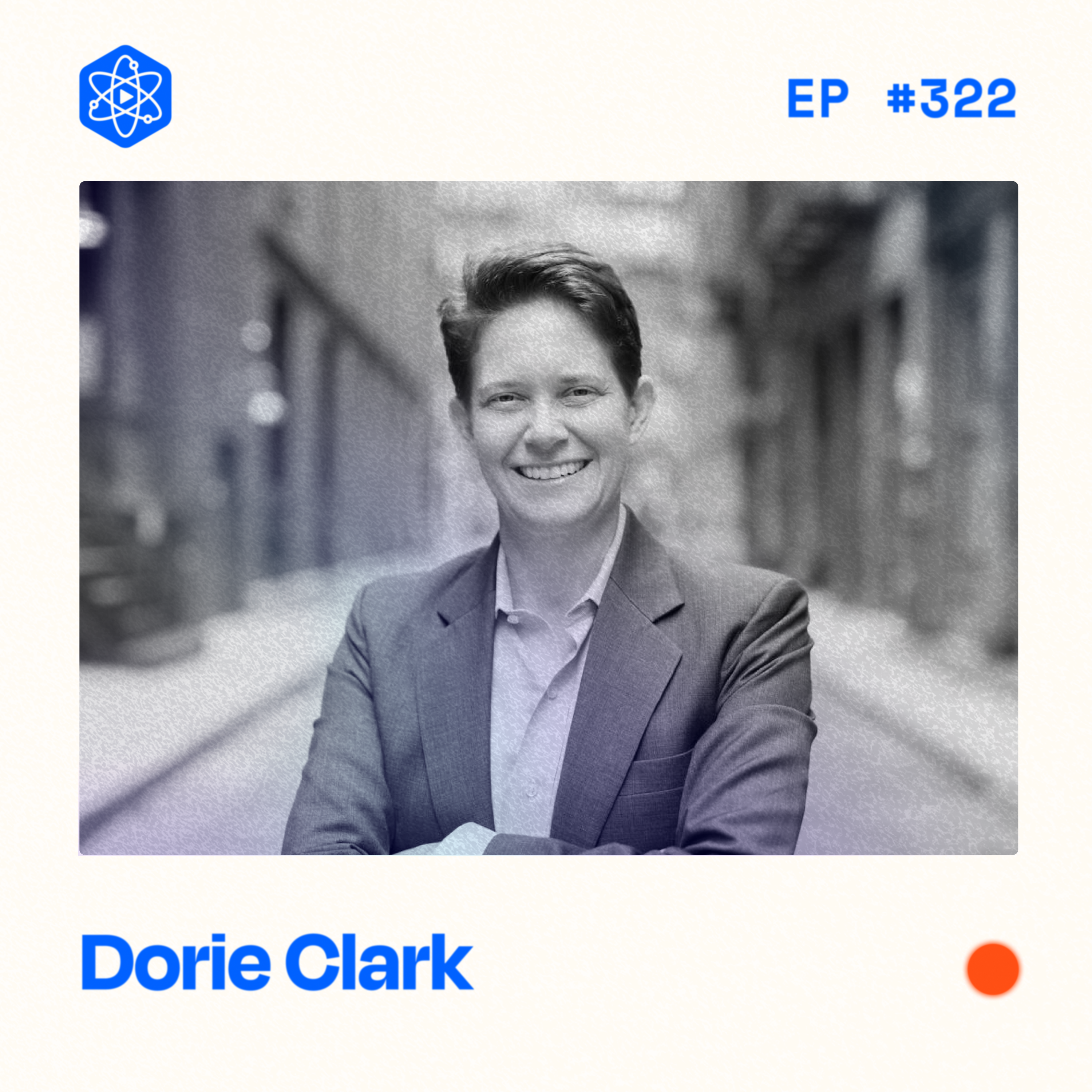
#322: How Dorie Clark gained 500K+ Instagram followers in 5 months
In short
Dorie Clark explains how she grew an Instagram account from ~22,000 followers (Jan 2026) to 500K+ in about 5 months, after months of near-zero results. The episode covers why she switched from LinkedIn to Instagram, what changed when growth finally “turned on,” and her end-to-end workflow (batching, scripting, editing, hooks, captions, and AI-assisted planning).
Guest backgrounds
Dorie Clark is a Wall Street Journal bestselling author, a four-time Thinkers50 honoree, and a longtime faculty member at Duke and Columbia Business Schools. She’s known for business/strategy thought leadership and LinkedIn instruction.
Key claims
Instagram growth can be non-linear (months of “nothing” followed by exponential spikes). Celebrity reaction videos can act as an entry point for strangers. Production value isn’t the main driver—she films/edits herself and uses teleprompters and scripts. She uses AI (Claude) plus structured “voice” and hook guidelines to generate video angles.
Notable examples
An early Atlantic-based breakdown that reached ~50,000 views and drove ~250 followers; celebrity reactions; a Dolly Parton video that led to a CNBC article and a WGN Chicago TV appearance; her 99-reel stretch with ~350 net followers.
Written by AI. May contain mistakes.
Chapters
0:00
The Value of Success Beyond Money
Explore how success in social media isn't solely dependent on financial investment.
“I have multiple author friends that pay a firm seven grand a month, and they have beautiful looking content.”
0:45
Dorie's Journey to Instagram Success
Dorie shares her experience transitioning from LinkedIn to Instagram and her initial struggles.
“I was on an author trip earlier this year where everybody there, bestselling authors, really impressive people, and they were all using Instagram to sell their books.”
4:29
Dorie's Instagram Transformation
Dorie discusses her rapid growth on Instagram and the lessons learned.
“A couple of LinkedIn learning instructors sat down to have a podcast.”
5:00
The Challenge of Building an Audience
Dorie elaborates on the initial slow growth and the persistence required.
“So I think the big question is, why Instagram at all?”
8:00
Cultural Cachet of Instagram vs. LinkedIn
Discussion on the perceived value of Instagram compared to LinkedIn in professional circles.
“And how do I create something that would be relevant for them?”
11:00
Strategies for Cross-Posting Content
Jay and Dorie explore effective strategies for using Instagram content on LinkedIn.
“I will help you out, man, however I can.”
14:00
Transitioning Content from Instagram to LinkedIn
Learn how Instagram video strategies translate into LinkedIn engagement.
“How does a successful reel translate to LinkedIn?”
17:20
The Importance of Posting Frequency
Discover how posting frequency impacts engagement and algorithm favorability.
“myself out of some of the rabbit holes I really want to go down, which is you mentioned that, for several months there was depressing results, but then it was kind of everything all at once.”
20:40
The Content Creation Process
Explore the challenges and strategies of content creation as a solopreneur.
“Do you think that video per day made a difference?”
24:00
Breakthrough Moments in Audience Growth
Understand the pivotal moments that led to increased follower engagement and growth.
“and there was one that I got that was 50 ,000.”
Show all 20 chapters
28:00
Understanding Dorie Clark's Growth Journey
Explore Dorie Clark's significant Instagram growth and its implications.
“And I thought, oh my God, that's, that's wild.”
31:50
Opportunities from Social Media Success
Learn how social media success can lead to various new opportunities.
“So this has led to new opportunities and probably, I think what you're saying with that last comment is probably there is an opportunity to integrate like many chat into this.”
35:21
A Day in the Life of Dorie Clark
Dorie shares her process for managing and creating Instagram content.
“Yeah, you definitely need to batch for it.”
42:00
Filming and Batch Production Strategies
Learn how to effectively film content in batches and optimize visual variety.
“And so I will move sequentially from one to the other.”
44:44
Editing and Posting Process Insights
Explore the editing workflow and strategies for posting content effectively.
“If I'm doing a direct-to-camera video shoot and I haven't messed up too badly, usually it'll take, you know, five or ten minutes to just blitz through because Really, you're just cutting the beginning and the end.”
47:41
Crafting Effective Video Captions
Understand the importance of captions for engagement and SEO.
“thinking about that because not only is it the first thing that people see, it informs everything.”
50:18
Analyzing Audience Engagement for Growth
Discover how to leverage audience data to enhance Instagram content strategy.
“Are you filming front-facing and using a teleprompter app on your phone, or do you have a different workaround?”
56:00
The Importance of Education and Quality in Content Creation
Learn why understanding the content creation process enhances control and quality.
“how to stand out in a job interview if you're a quiet one, how to argue your point effectively, even if you're a quiet one.”
1:00:00
Dorie's Instagram Growth Strategy
Dorie discusses her experience creating an introductory carousel for new followers.
“you've learned that we haven't covered here.”
1:01:08
Navigating the Challenges of Consistency and Growth
Explore the balance between consistency and the need for creative risks in content.
“I had a conversation with somebody about podcasting, which podcasting like notoriously difficult to grow.”

Ask about this episode
Get the gist, explore an idea or ask about something said.
 Claude
On Creator Science with Jay Clouse, what are the key points of this episode?
Searching your listeningTranscript
Automatic transcript. May contain errors.
0:00I have multiple author friends that pay a firm seven grand a month, and they have beautiful looking content. But my growth has been better than theirs. And it's empowering to realize that money is not the variable that is buying you success.
0:27Hello, my friend. And welcome back to another episode of Creator Science. Today, we have a banger. My guest today is Dori Clark. She's a Wall Street Journal bestselling author, four-time Thinkers 50 honoree as one of the world's top business thinkers, and longtime faculty member at Duke and Columbia Business Schools. First, a little backstory. I was on an author trip earlier this year where everybody there, bestselling authors, really impressive people, and they were all using Instagram to sell their books. I came home knowing that I had to figure this out, but it's been really hard. I personally have not cracked this yet.
1:01But I've really been studying the platform and the creators growing on it. In particular, I noticed that Dory had really started gaining traction and fast. Dory is, by her own description, a LinkedIn person. She has close to 500 ,000 followers on the platform, which I'd estimate to be in the top half of a percent on the platform. But in January of this year, she decided to learn Instagram. And she started with 22 ,000 followers on an account she'd had since 2015 that was mostly personal photos. For the next four and a half months, she treated Instagram like a part-time job, 10 to 20 hours a week and 99 reels.
1:37But she says her net gain was about 350 followers. 35 % of those videos earned her exactly zero new followers. But in June, it turned around. Her videos brought in more than 146 ,000 new followers across June and July, and by September, she was past 400 ,000. That's obviously a really big number, but there's a bigger reason why I was excited to talk to Dory in particular. She didn't win by buying production value. Dory films and edits all of her videos herself. All of it is self-taught over the last couple of months, and her approach feels like one we can all learn from. So in this episode, we talk about the stretch of time where nothing worked and why she didn't quit, including the single data point from another creator that gave her permission to keep going.
2:21We get into the first video that did break out, why celebrity reactions are an entry point for strangers, and the Dolly Parton video that actually got her on TV in Chicago. We also get deep into her workflow, including the documents she created to make all of this easier by working with AI. I really love this episode. I hope you do too. We'll get to that full conversation with Dori Clark, right after this.
2:46When somebody asks ChatGPT, who are the best creators in your niche? Does it say your name or does it mention your competitors instead? Because a response will only share a few names. And with LLMs, if you're not sighted, you might as well be invisible. And that's at the exact moment when someone is deciding who to follow or what to buy. The first step is finding out just how visible or invisible you are to LLMs like ChatGPT. And Ahrefs built a new tool called Brand Radar to show you where you actually stand. It tracks your mentions across ChatGPT, Perplexity, Gemini, Google's AI overviews, and Copilot, and gives you an AI share of voice against your competitors.
3:25That means how often you get named when your topic comes up, and whether you're being mentioned or actually cited as a source. It's built on 481 million real prompts, making it the largest AI visibility database out there. This isn't about gaming AI. It's about finding out what of the work you're already doing, the content, the authority, and the backlinks are translating into AI visibility. Try a free preview of Ahrefs brand Radar at creatorscience.co slash radar. That's creatorscience.co slash radar. This episode is brought to you by Palmolive. Family time isn't just the big moments. It's weeknight dinners, sitting around the table, everyone talking all at once.
4:06So when the plates are empty and the sink is full, use Palmolive Ultra. Palmolive's most powerful formula removes up to 99.9 % of grease, leaving your dishes sparkling clean. And the new convenient pump makes cleaning even easier, so you can spend less time tackling dishes and more time together. Shop now at palmolive.com.
4:29Dory, hello. A couple of LinkedIn learning instructors sat down to have a podcast. That's right. Hey, Jay, I'm so glad to be here. I'm excited to have you. And I've been just like so blown away watching the transformation into Dori Clark, Instagram celebrity over the last few months. And I'm really excited to chat about this. I think probably the best place to start, I first became aware of you because of our tie to LinkedIn. And I saw your courses on LinkedIn. And I know you have a big presence on LinkedIn. So I think the big question is, why Instagram at all? Why not just continue cruising on LinkedIn and double down there?
5:09So I spent a kind of disproportionate amount of my time and energy over the past decade on LinkedIn. And I think that was a good bet in a lot of ways. I mean, the work that I do is with business professionals. And so I think I wrongly dismissed Instagram as a place that certain industries it would be great for. You know, if you're something visual, if you're a wedding photographer, if you're a cake maker, if you're a florist, I thought, oh, okay, that's the place for the pretty pictures. But I didn't really understand the ubiquity that it has in contemporary life. There are plenty of people who are getting business advice and guidance from it.
5:54And I hadn't really tapped into that. But what kicked it over for me was this past December, I signed a book deal, which is for my next book. It's called The Definitive Guide to Becoming a Coach. I'm writing it with my colleagues, Marshall Goldsmith and Alyssa Cohn, and it's going to come out in fall of 2027. And so I asked myself the question, what is one thing that I could start doing now that I would be grateful to my future self that I had done in fall of 2027 around the book launch. And I thought, you know what, I'm pretty well connected or I have ways of reaching people who are like executive coaches or leadership coaches because they're on LinkedIn.
6:33But there are so many different kinds of coaches and they're on Instagram. They may not actually be on LinkedIn. So the book was the forcing function. And I thought, all right, let's see what I can do to learn how to expand there. So that became my New Year's resolution for 2026 was to try to learn as much as I could and try to master the medium. And the first time you tried, it just took off and it was up and to the right from there, right? That's how all the creator lab stories go, right? Isn't that?
7:06It did not quite go that way. I started January of 2026 with about 22 ,000 Instagram followers, which is not nothing. It's certainly not nothing, but I had had an account for 11 years. I had had it since 2015. So it had kind of grown through accretion, but I hadn't really ever put any effort or strategy into it. It was kind of a mishmash of like personal photos and like, oh, I was on a podcast and just kind of random things. And I think it was, you know, probably interesting for people to follow that knew me or had some connection to me, but I don't think there was a lot there for people who were strangers.
7:50And I think that's kind of the critical distinction was I needed to train myself to start thinking of it as I need to create value for people who don't know me or don't have any connection, don't really care about me as an individual, but care about the information. And how do I create something that would be relevant for them? So I started doing that. And for the first five months, basically until May of 2026, I was working, it felt like relentlessly. I was spending 10 or 20 hours a week doing this. It was like a part-time job learning it. And there were so many subskills that I didn't even realize that I have to learn in order to figure this out.
8:34and I had literally almost nothing to show for it. I gained, you know, I don't know how many followers. Oh, I do. I have the note. I have the math. That's amazing. But then you lose some. So I think I netted it out so that I gained like 300 basically. But maybe you know better than I do. I think this came from a previous interview you did. And the note that I had was you spent four and a half months and hundreds of hours making 99 Instagram reels for a net gain of 350 followers. There we go. It felt like a very depressing investment. But the cruel joke in all of this is that my most recent book and something that I spend a lot of time talking about is called The Long Game, How to Be a Long-Term Thinker in a Short-Term World.
9:15And so I knew from the outset that this was probably going to be, in many ways, an exercise in frustration and kind of almost like a Zen discipline for me. I'm like, eat your own dog food, eat your own dog food, keep doing relentlessly the thing that shows no progress. Because I know intellectually that for a lot of things that we do, there's almost no growth for a very long time. And then suddenly you get exponential growth and it kicks off. And it might seem like, oh, you know, you got hundreds of thousands of followers in this period of time. But the key thing is it's not up and to the right slowly over that period of time.
9:55It is absolutely nothing with nothing to show for it and just an embarrassing kind of tally in terms of the ROI. And then all of a sudden there's a spike within a few weeks or a month. And I knew intellectually that was often how it was with social media growth. But you never know if it's going to work for you personally. So I had to just kind of keep putting in the reps and have the faith to do it. But I'm curious, Jay. I mean, I know you have done some stuff with Instagram. I don't think it's been a kind of primary focus for you. And if I remember correctly from one of your shows, you had, I'll put in air quotes, kind of like almost like a random thing, like go viral.
10:34Talk to me, how are you thinking about Instagram these days? Oh my gosh. It's like my muse, my obsession, and it does not love me back. It really, really does not. So I had a moment where a few months ago, I somehow weaseled my way into an author's trip with Nathan and James. And like literally everybody there has literally wrote in a book and I have nothing to show in the world of writing a book. So I'm like, why am I here? Come talk to me when you do. I have lots of thoughts. I will help you out, man, however I can. I appreciate that. But I was there and I was struck by, wow, all of these folks are really using Instagram to sell their books.
11:12I got to figure this out. And the sooner the better. And I saw the same thing you did, which was, I don't know if this is something I just didn't notice or if this is increased over time. but there seems to be real cultural cachet with having a large Instagram presence. Yes. And I don't think all of it is warranted, but I think it is true. And I would like to have that. And so far, I do not. Yes, it is really interesting. And I agree with you. I don't think it is either fair or justified. I mean, I've spent years, you know, having a very strong following on LinkedIn. It's like, you know, right now it's like 450 ,000.
11:54And in the business world, that's a cool thing. But the apotheosis of this, I'm married now, thank goodness, to a really fantastic woman. We've been married for two years. But back when I was single, you know, you try everything, right? You try all these things. And one of the things that I was thinking was like, oh, maybe this will work is there's this website called Raya. I don't know if you've ever heard of it. Oh, I've heard of this, yes. Yeah, it's like - Before my time, before my dating, or after, should I say, I was before the time of Raya, so I never had any opportunity to check into it.
12:24There we go. If I even could. Ultra elite, like, you know, top singles, like meaning accomplished people who have done something in the world. And I thought, oh, well, that would be perfect. Like, I would love somebody who's, you know, smart and accomplished and has really done something. Like, maybe this is the vehicle. And when I put in the application, literally all they like want, they're like, okay, do you have references from other people? And actually I did. So, okay, great. I put that in. And they're like, and give us your Instagram account. I'm like, I'm like, what? And they're, they're wanting to check your validity based on your following on Instagram.
13:00I'm like, I have a lot on LinkedIn, but they'd like 100 % did not care. And similarly, I can't even tell you how many people comparatively have been like, oh, I saw you on Instagram as compared to I saw you on LinkedIn. I think LinkedIn is a fantastic platform. I would like more people to be paying attention to that. But it is very interesting, to your point, the cultural cachet that somehow has become associated with Instagram. Are you cross-posting your reels to LinkedIn? I don't see them. I do cross-post, not at the same time, literally, but I will subsequently cross-post them, yes. Because I am told that, I mean, for reference to folks who don't know, almost 500 ,000 followers on LinkedIn, like you've got to be in the top half a percent of accounts there.
13:46And I was just told by my handler at LinkedIn, like, hey, the brand link thing, we're really pushing video. You should post more videos. So maybe I'll check into this later. Oh, yeah, I see them. Yeah, you're posting all them. Amazing. So tell me, how does, I'm getting a little bit off track, but I'm just so curious. How does a successful reel translate to LinkedIn? Is it like a cheat code? So in many ways it is. I, for a long time, was doing video on LinkedIn. I mean, for years, not exclusively, but I would frequently record batches of videos and do it. But I was doing it in what I now realize is not the kind of systematic way that I would want.
14:32I was not really aggressively checking the analytics to really drill into what was working versus what isn't working, which I've started doing now. And also, I was not using scripted videos. I would have a premise and I would have a few bullet points laid out. And I would basically just hang them behind the camera. And so I would riff. And I could do a decent job of that. But what it meant was that the videos were a little bit longer. They were maybe three minutes or more even sometimes. And they were more, I mean, they were authentic, but they were kind of baggy, I now realize. That's a good word for it.
15:13Yeah. What I've started doing with these Instagram videos, you know, there's sort of a discipline of it, is using a teleprompter and writing scripts. And it is amazing now looking at the before and after and realizing, oh, you know, it was kind of boring. Like it would just drag because, you know, I was fumbling around for my point. And so I definitely think that I've up-leveled it as a result of that. And so I think I'm making better videos now in general. And that is translating to LinkedIn audiences. What is fascinating, though, is that different topics will hit. A video sometimes that will do kind of poorly on Instagram might be a surprise hit on LinkedIn.
15:53And so that actually heartens me because I'm like, oh, it wasn't necessarily that it was such a bad idea in general, but it was maybe a bad idea for this audience, but not for these ones. So is your perspective that that is a product of being different audiences on the platforms? Or do you think there's a meaningful degree of luck involved? I think that sometimes there are topics that are maybe more LinkedIn appropriate. I've done a lot of things around like job hunting and like interviews and things like that. And some of them have done well on Instagram, but I would say percentage-wise more of them do well on LinkedIn because in a lot of ways that's the raison d 'etre of LinkedIn.
16:33So I think that that's part of it. Also, there's different – I'll do like celebrity reaction videos. Sometimes there'll be a celebrity who does a thing and then I'll analyze it. And there are demographic differences in terms of what will pop well on LinkedIn versus Instagram versus Facebook. And so that's interesting to watch as well. As you can imagine on Facebook, what crushes is female celebrities over 50. They love that on Facebook. And sometimes there's a Venn diagram of overlap with Instagram. I mean, for instance, I did a video about Dolly Parton that did really well on both platforms. but other ones won't kind of necessarily connect in the same way.
17:17Interesting. Okay. I want to get us back a little bit on the track that I was starting on and pull myself out of some of the rabbit holes I really want to go down, which is you mentioned that, for several months there was depressing results, but then it was kind of everything all at once. Do you think there was underlying algorithmic residue that was building up to give you a better shot? Or do you think it was the accumulation of skills from practice? It is unclear to me, and I think it is probably unclear to everybody, you know, maybe including Adam Masseri, who's the head of Instagram, what some of the buried things are in the algorithm.
17:59Everybody knows that the more you post, the better. But the part that has not been really teased apart appropriately to me is, is it on a pure level that you have more at-bats, and so therefore you just have more chances that something will hit? Or is it possible that the algorithm is actually positively biased toward people who are posting more? And I don't know the answer to that. But regardless of what is behind it, it is true that when I was posting with more frequency, I was certainly both enhancing my skills, having more chances that something would connect, and perhaps tipping the algorithmic scales in my favor.
18:46So how often are you posting right now? So right now, and I mean, this is an interesting thing to talk about as well, because, you know, I know a lot of your audience is people who are, you know, like me, either doing this on their own in terms of running a solopreneur business, or maybe they have a small team, but it's not, large-scale enterprise in terms of content creation. And so I have deliberately in the past six weeks, let's say, ratcheted back the production rate. And it's not because I think that that's a great idea. If I had unlimited time and resources, I would keep going full steam ahead.
19:22But the reality is that at the end of August, I had a book deadline. We had to submit the first draft of my book to the publisher. And immediately after that, I went for a week on a honeymoon, which you'll notice I got married two years ago. This is a very belated honeymoon that we finally scheduled, followed by organizing a 100-person conference. And again, I want to thank you for the two episodes that you've done after each of your retreats that you've hosted. Because the breakdowns that you did, I thought were just so helpful, kind of your analysis of everything. I feel like I learned a lot from it.
19:58So I'm grateful. But we just finished this 100-person event called the Recognize Experts Summit. So having to do all of those things meant that I basically made a conscious choice to try to do as much content production as I could so that I would be able to release a video a day, but not more than that. I want to go back up to two or even three a day if I can. That would be optimal from my perspective. but life has intervened. And so as a solopreneur, I've just been focusing on those needful activities. And when you were in this period of things weren't quite working, was the frequency fewer than one video per day?
20:42Do you think that video per day made a difference? It was, I actually was doing, I think more than that. Well, actually, no, let me think about this. it was, we can even break this down. So I guess it probably was a little bit less because it was over a five-month period, which would be about, let's call it 150 days. I did roughly 100 videos. So not quite one a day. I was doing batches of one a day. And then there would be like sort of waiting periods where I was like trying to film and edit and coordinate. I think one of the biggest steps forward that I had actually that I think was really helpful to my development was initially because I felt very overwhelmed by all of the different skills that I would have to learn for this.
21:31I outsourced my video editing to my assistant, to my chief of staff who, you know, has a background with AV and is comfortable doing it. And the sort of forcing function was that I didn't like some of the edits that he had, like in particular thumbnails. I know you just did an episode about the importance of thumbnails for YouTube, but it's also true for Instagram. You need to have a decent thumbnail. And I was just like, oh, you know, I don't sort of love how that's done. And he's like, well, you know, like that's how your face is basically. And I'm like, but you've got to be able to find a different thing.
22:09And so it sent me down the rabbit hole of basically trying to prove that I was right where it's like, no, it doesn't have to look like that because I look like a maniac. So I typically think of like thumbnails is, this is probably going to be the first frame where you could scroll through it. Are you editing in a software and placing a false first frame in the video? Sometimes I am. So the big problem was that if I was somehow starting it and I was like starting to form the sentence, like my mouth would be kind of off to the side, which is not a great look. So I actually went in and it's not that it's that hard to learn, but it felt overwhelming to me.
22:43I've learned Instagram edits, which is, you know, Instagram's app so that you can be editing things yourselves. And I've learned about things like a freeze frame where you can actually grab a still, pull it forward and make the thumbnail and just small things like that. I didn't understand in terms of an ask, like what was an easy thing or what was a hard thing because I wasn't doing it myself. But once I learned, it also opened up a lot of creative possibilities for me because it was things like, you know, oh, I could try this like split screen thing or I could try this cutout thing or, oh, I could substitute some B-roll in here.
23:18And I think that just building my facility with that and doing it myself, even if I don't always do it myself, has given me a lot of knowledge that I think made a difference for me in what I was able to produce. When do you think things turned around and why? So I started to actually get traction on my account in late May of this year, sort of early June. And, you know, then really just went on a growth spree. And all of a sudden, the first things that started to connect were, I mean, the very first one, which was kind of an early signal. I was mostly getting 2 ,000 or 3 ,000 views for a video, which was not that impressive.
24:01and there was one that I got that was 50 ,000. So, you know, you're sort of looking for like, what is the 10X outlier? And it was a little bit random, but it was an interesting proof of concept. I had read an article in The Atlantic that I thought was really interesting about, you know, sort of like why an Ivy League education is valuable. So this was kind of nerdy, right? It was like, you know, a study that was done. And so I was basically breaking that down and explaining it. And that one got me like 250 followers, which was huge for me at the time. Because, of course, for that five months, I had barely gotten that.
24:39So I thought, oh, okay, this is proof that if I have the right thing, something will click. So that gave me a little bit of hope. And then I did a couple of celebrity reaction ones, which I think was a useful device. I mean, yeah, I certainly didn't want my account to turn into like, you know, whatever, E-news or something. Yeah. But what I realized is that when you have a celebrity, it's an entry point. Because fundamentally, if you are trying to get new followers, they don't know who you are. They are new. And so it's very easy for people to just scroll by because like, you know, who's this?
25:21Unfamiliar face. Why would I stay? Exactly. But if you see somebody, you know, oh, it's Jennifer Lawrence or oh, it's Julia Roberts or oh, it's Ben Affleck or whoever it is, they're at least interested enough to give it a few seconds. And if you have something valuable to say at the end of it, they might stick around, which is cool. So that was sort of the first breakthrough. And then the thing that I really started to feel good about was when my own video or just me direct to camera was getting a million views. And then I felt like now I'm starting to really get this. if I can capture them on my own.
25:54Before this like traction happened and you're sitting there and you're putting all this effort in, did you ever think that your account was cursed? Like maybe it's too old. Maybe the growth by like slow increments from everything else, maybe that didn't lead to a following that was working. Because sometimes I'm, I actually believe this is not true anymore. But for a long time, I was like, it's because all my friends from high school follow me. They're the ones that see what I post first and they're like, I'm not engaging with this. Did you ever feel that way? I watched a lot of videos early on because one of the pieces of the learning curve was I wanted to understand the platforms and I wanted to understand the algorithms because it just felt very mysterious.
26:38And so in particular, I didn't find content around this for Instagram, but I was simultaneously watching things about YouTube growth. And I did hear a number of sort of, creator advisors do videos saying like, look, we've got this account that has been posting all kinds of random things and it's stuck in the doldrums. You know, it's so much easier. Just start clean, just start fresh. And that I wondered if that was true for Instagram. And it felt very daunting to me because again, 22 ,000, you're, you're almost in this like danger zone because if it was, you know, 500 people, I'd be like, okay, great.
27:14I'll just scrap it. You know, I'll start fresh. But I had enough that I was like, oh, well, I don't want to part with the asset that I already have. Like, I feel like I need to make it work with the account that I presently have. But yeah, I was a little bit nervous that somehow the algorithm would be clouded or the message wouldn't get through properly. That definitely was a concern. I'll say that one of the pieces of information that was most useful to me and most hopeful to me. There's a woman named Noshin Chen. I don't know if you know her. Yeah. We had a conversation and she had, you know, had had and continues to have very strong Instagram growth.
27:55And I had heard from a third party that in eight months, she had gone from 3 ,000 followers to 300 ,000 followers. And I thought, oh my God, that's, that's wild. You know, how did she do that? And I wanted to understand. And one piece of our conversation was the one that really clicked for me, where she said from months zero to five, she grew from 3 ,000 to 10 ,000, which is good. I mean, that's nice progress, right? It shows something. But then from months five to eight, she grew from 10 ,000 to 300. And that was when I realized, okay, exponential growth really can happen. And it had happened for her the year prior.
28:36You know, I think that sometimes we tell ourselves a narrative about anything, you know, whether it's about building an email list or building a YouTube channel or LinkedIn or an Instagram. And it's that, oh, I didn't get in soon enough. The people who were the first movers were able to take advantage of the exponential growth, but it's not available to me. And it showed me that that was possible, which gave me the desire to persevere to see it through. Because I thought, you know what, if it's algorithmically possible now, then I'm a reasonably smart person. I should be able to figure this out.
29:14So Noshin gave me a lot of hope. Obviously, the book doesn't come out till next fall. So we don't know what impact this has on that book. But at this point, do you have enough time to have data to say, okay, this growth has happened. It's lift the business in this way. There's early markers for sure. There have been interesting opportunities that have come from it. Just as one example about one thing that paid off in different ways. I mentioned earlier, I had a video about Dolly Parton that was popular. And as a result of it, there's a woman who follows me on LinkedIn who is a CNBC editor. She saw the Dolly Parton video and said, well, you write an article based on your Dolly Parton video.
30:02It's kind of interesting, right? It's like, oh, okay. So the social content comes first and then you turn it into an article. Interesting. But so I did. And that article did really well. She said it was, you know, for like a week or something, one of the most popular articles on the site. It ended up bringing me nearly 2 ,000 new email subscribers as a result of it. And the article on CNBC got seen by the producers at WGN TV, which is one of the major TV stations in Chicago. And they invited me to do a TV appearance on WGN to talk about it. So, you know, just thinking about kind of the media ecosystem, that's one small example.
30:42But additionally, I have certainly gotten a lot of kind of remarkable amount of inbound inquiries for coaching, for speaking, things like that. So it definitely has had a positive impact on the business. In fact, I mean, you know, for creators, something that is worth calling out and mentioning is that it's a little bit of a problem sometimes because you're working so hard, right? For five months, you're doing a thing and nobody's paying attention whatsoever. So everything is optimized toward, okay, I've got to just make the content, make the content. And then because it comes very fast, there's often not time to put in place proper infrastructure to even respond.
31:25I guess it's a good problem to have, but it is still a real problem because you've been optimizing for one thing and now it's like, oh my God, I have to figure out this completely other thing. And I did get pretty overwhelmed by it. Yeah. just have to say people in audio, the poise with which you're answering questions, they have no idea a cat just walked across your desk. Yes. Yes. I'm going to tail right here in my possession. Incredible. Incredible. Okay. So this has led to new opportunities and probably, I think what you're saying with that last comment is probably there is an opportunity to integrate like many chat into this.
32:01So like on a per video basis, there might be even greater left than maybe you're capturing right now, but it sounds like you're very pro. Like this has been worthwhile while so far. Yeah, definitely. Definitely. I mean, I'll also mention yet another possibility. It opens up sponsorship possibilities that were not really there before. I mean, it is true, and people have lots of good things to say. Justin Moore, I think, is a friend of yours. I've read his book, and he and a number of other great folks that I know, a colleague of mine named Terry Rice talks about this as well, that you can absolutely land sponsor deals even if you have a smaller following or kind of a niche following.
32:40But it's true that more opportunities are available if you have a larger platform, because part of what they're looking for sometimes is reach. And so I've gotten more inquiries about that and have been able to land a couple of deals that have come in where they may have come in and said, like, for instance, oh, well, we want you to do a LinkedIn post. And then I could say, oh, but wouldn't you also like it on this other platform? and then that becomes an additional income stream. After a quick break, we talk about a day in the life of Dori Clark and the process that has led to her stunning Instagram success.
33:16There are many very practical, very actionable tips here. So stick around, we'll be right back.
33:24As we approach the holiday season, it's time to start thinking about your Black Friday or Cyber Monday campaigns. I know it sounds early, but for years, I ignored this time of year because I thought it was for e-commerce and not for content businesses like mine. But then I ran a campaign in 2024. And do you know what happened? Not only was it my best month of revenue for the year, but it was my best month of revenue ever, nearly$98 ,000. I'm now convinced that Black Friday and Cyber Monday are a huge opportunity for creators like you and me. And we run a sprint in the lab every year because of it.
33:58We're about to reopen the lab to new members on our waitlist. If you're a full-time creator earning more than$100 ,000 per year or on pace to earn$100 ,000 this year, I invite you to join us. Head to creatorscience.com slash lab to get on our waitlist. We'll invite new members on October 1st, which is the perfect time to join our Black Friday sprint. That's creatorscience.com slash lab. You'll be glad you did. This episode is brought to you by Palmolive. Family time isn't just the big moments. It's weeknight dinners, sitting around the table, everyone talking all at once. So when the plates are empty and the sink is full, use Palmolive Ultra.
34:37Palmolive's most powerful formula removes up to 99.9 % of grease, leaving your dishes sparkling clean. And the new convenient pump makes cleaning even easier, so you can spend less time tackling dishes and more time together. Shop now at palmolive.com. Want to be the one who's always in the know about the game, the scores, the plays? Here's a tip. The Apple Sports app. Just pick your favorite teams and get automatic live updates without even knowing their schedules. And when your team scores, it shows up right on your iPhone lock screen, making it easy to check in anytime. So rule the group chat and download Apple Sports for free on the App Store or find it on your new iPhone.
35:21and now back to my conversation with dory so walk me through a day or a week in the life of dory doing her instagram today like help me understand what the process looks like beginning to end and i was tempted to say like on a per video basis but it seems like the volume is so high you're probably doing some batching and so maybe it's best to just talk about like a larger chunk of the process? Yeah, you definitely need to batch for it. So the kind of level of triage here, first thing that I would do, and when you're first starting, you might not have this, but pretty soon, you know, within your first 10 or 20 videos, you will have something as a basis.
36:03You can pull your data from meta and see which posts are performing best. And you can plug that into Claude or whatever your preferred AI system is and have it do an analysis so that you can look at it and say, all right, what topics are resonating? What themes? What are we working with here, basically? What should I definitely do more of? What should I definitely stop doing? And so you've got some material there. You also hopefully have been saving ideas from other things that you're watching on your own Instagram feed. So you might see somebody else doing a thing where you're like, oh, that's such a cool format.
36:39I like that, you know, save, save, save. And so you bring it in. And are you literally, I'm going to get really, really nitty gritty because I feel like I'm getting a little selfish. I feel like I'm really close to cracking this, but like, I'm just missing a few workflow things that the unknown of it is preventing me from getting enough at bat. So are you saving to a folder in Instagram? Do you have a notes page that you're saving ideas to? How do you actually capture your ideas? Yeah. So for me, I usually treat my email inbox as kind of a central repository because I know that I'm looking at it.
37:13So if I see something interesting, I will email it to myself and then I'll grab it from email and I'll put it into a folder. I also have a great tool that I use called Sandcastles and Sandcastles, it's run by Callaway who I think you've interviewed too. Yeah. I think, I think we just released that episode like last month. Yeah, yeah. So anyway, I think that that's really useful because it'll analyze your channel, it can analyze other channels, and you can sort of see what's trending. So that gives you other ideas as well. And it connects through Claude with an MCP so that you can ask questions in Claude and have it run an analysis.
37:49So you can begin to surface some ideas about what you want to do. All right, so then I've got like raw ideas. How many? I have a page that I keep, which is like kind of the raw idea page. Oh, and there's also another source, Jay, which is that I will grab comments off of my posts because people will often say, okay, you know, this is great, but what do you do in a situation where blah, blah, blah? And so I'm like, oh, well, that's an interesting idea for a video. So I will paste that over there. So that document has gotten up to probably 30 or 35 pages, like just a Word document. So there's a lot of raw material there.
38:29And I will then go through and pick what I think are the most promising ones. And I have developed over time a skill in Claude that is basically a positioning. Like it's basically like helping me formulate a hook and like an angle for it. So I will feed in, okay, here's some rough ideas. And then the Claude skill, I've trained it over time. So I have like a voice document basically, and it's guidelines for all of this that I keep refining and have been refining for all of these months. And so the skills themselves have to be relatively short, but they refer to a source document that is probably 30 pages of specs about voice and ideas and this kind of hook, not that kind of hook, et cetera.
39:20So it goes through that and comes back with me and is like, oh, well, here are some possible ways. Like it comes up with 10 hooks for each topic. And so I'll go through and I'm like, okay, you know, number three for A, number four for B, and we'll go for there. And that document, that source document, if it's like 30 pages, I'm guessing you have like over time, you're like, here's example scripts of videos that have done really well that I really liked. Yeah. Or maybe not. It doesn't actually have example scripts, but it will have like, it's got a band phrase list, you know, like of like, you know, the AI words that are annoying to everybody.
39:56So some of the information in this document is tonal because I want to make sure that as I'm creating content, it's for the right people psychographically. I don't really want to attract an audience of people that, you know, feel like people are out to get you and you need to, you know, have your comeback or, you know, you need to be angry about that. I mean, that certainly is a sentiment that could mobilize people, but that's not what I'm doing. And so I want all of the frames to be about, okay, here is a way that you can have information that will be helpful to you, but it's not about a kind of victim mindset or whatever.
40:38So, I mean, those are some of the pieces, there will be guidance about particular things like here's how long the hook should be. Like, you know, the hook shouldn't be more than 10 words because if it is, it gets long, it won't fit on the screen. It can be things about phrases that I want to specifically avoid, not because they sound like AI, but that they're off brand. Like, you know, if you're talking about winning or crushing, it's a little bit more bro energy than I want to be putting out. And so we have different phrasing that we would use. This is so good. See, this is the level of, this is so helpful to me.
41:12I'm glad. What I'm going to do is I'm literally going to take this transcript and I'm going to be like, help me start this document, Claude, based on what Dory is saying. And then I'm going to fill in some of my stuff and then I'm going to make a templated version that I'm going to give to folks in the audience. Just go to the show notes. Love it. That's amazing. Okay. So you have this long list of ideas and it's very freeing to me to hear that it sounds like it's a fairly like just long word doc and it's not like this it's so unwieldy yeah in its raw form my wife will send me things that she's seen she's like oh you should talk about this this would be a great idea so i'll put that in the document and you probably check things off like as you say like okay i did a video on this yeah i have three sort of canonical documents and one is like the raw ideas the next is the scripted you know ready to film and then the third is I've filmed this.
42:03And so I will move sequentially from one to the other. This is also an obvious thing that I just need to get myself past. I'm such a linear completionist that I get stuck all the time. And like, I need to finish the thing in the same motion as starting the thing. What I think you're saying is you have this large list that you're capturing as it happens. And then probably as you get time, you're picking some of these ideas and running it through the process and getting it close to the point of scripting. And so at some point you have a pile where you're like, this is a large enough pile that I can start filming.
42:37Is that right? Yeah, absolutely. Because filming is the constraint in some ways, because at least for me, I mean, you have a nice studio all set up, but you know, right, right at the moment, I split my time between New York and Miami. And when you're in New York, space is at a premium. I don't have a kind of permanent studio setup where, you know, with lights and things like that. So you have to sample that. Or you need to go outside and film it in the natural light and do that at an appropriate golden hour or whatever it is. So I want to have a batch of things that I can do all at once to capitalize on the efficiencies of being able to film a bunch of things rapidly.
43:16And I will literally go out into the streets of New York, it's kind of ridiculous, with a backpack and like six sweaters because you need to change your workout. I was gonna ask this. So you do think about this. You don't wanna do a batch in the same uniform. Yeah, absolutely. Because the problem then is that if you release those videos, people often might scroll by because they'll say, oh, well, I've seen this one before, even if it's a completely different topic. So it needs to have a different visual look so that they'll pause long enough to say, oh, I haven't seen this one yet. So yeah, I'll have a bunch of different sweaters or jackets or shirts and just go out and I'll be changing angles.
43:51You know, I might be in the same park, but I will take the tripod and just shift it around, on 45 degrees and 45 degrees so that they're seeing different backdrops. This is interesting. I've thought about this. I'm like, oh, I have this amazing studio, but I'm actually wondering if it's better to have something that feels less produced and more variable, or if I'm just hiding from the work of filming and recording. I mean, I think there's probably a lot of ways that it can work. For me, the balance that I've struck is that I have a better setup for this in Miami, but when I'm doing a celebrity reaction video, I will do it at the desk, sort of looking a little bit more formal because that's where it's like, oh, I need the authority.
44:31Here, I am a pundit and I am explaining this thing. Whereas if it's me talking direct to camera, I feel like that's a little bit meant to be more accessible. And so for that one, I'll be out in the wild, so to speak. Tell me about your editing process. Do you also do that in a batch? Yeah, I do. although it doesn't necessarily have to be batched in quite the same way because if you are doing a video format that doesn't require heavy editing, you can kind of do that almost like when you're waiting in line for something. If I'm doing a direct-to-camera video shoot and I haven't messed up too badly, usually it'll take, you know, five or ten minutes to just blitz through because Really, you're just cutting the beginning and the end.
45:19You're watching it through one time to make sure there weren't any kind of stops and starts or something like that. You might trim a little bit of the silences. You add the captions. You add the text hook at the beginning. And that's really all you have to do. So that can be done very, very quickly. So sometimes if I have filmed a batch of a dozen or something like that, I'll knock out the edits on a couple just to get them posted. But the rest I will leave for myself as little chores when I have a spare five minutes. Talk to me then about your posting process. For posting, I am not the most scientific in the world.
46:01I'll cross post to Facebook and I will often like dump a bunch of them. I mean, I think it's probably better to, you know, to stagger them. You can schedule trial reels now, which is really nice. But honestly, when you schedule trial reels, they become like sort of hard to see based on the UX of Instagram. And it always worries me that they're not going to do it properly. This is probably just my own paranoia. But because it's not easily visible, I'm like, did that actually happen or did that like vanish into the ether? So because I'm skeptical, I don't necessarily use it. I think what would be optimal is to post, you know, let's say your goal is doing daily videos.
46:42probably every day you post a new trial reel, and then every day you advance a new trial reel into your feed so that there's new content for the new folks and there's new content for your followers. But oftentimes, I will pour a bunch into trial reels, which means - At the same time. Yeah, exactly. And then I'll sort of ration them out to my followers during a busy period. that's really just a practical adaptation for things. Like last week was, as I mentioned, this 100-person recognized expert summit. And so I knew it was just gonna be wall-to-wall. So I wanted to have it all teed up so that all I had to do in the morning was just press, okay, share to your feed so that that was the only thing I had to think about.
47:29Talk to me about the captions that go below the video. So not like the literal captions on what you're saying, but how much time and thought do you put into the captions for the video itself? So I will spend a fairly disproportionate time thinking about that because not only is it the first thing that people see, it informs everything. Ideally, I like to have the text hook and the verbal hook aligned so that it's kind of unified. Occasionally, I will write a script and then later I will think of a better text hook. And if that's the case, I will just say, all right, well, they probably won't mind.
48:07And so I will update it to the better text hook and keep the verbal hook different. But it's usually not my intention to do so. But yeah, I want to create something that strikes a balance. And this is part of my voice document as well. One mistake I will say that AI likes to do, at least initially, was that it would like give away the answer. And the whole goal of an Instagram video, if you're talking about retention, is you need to create curiosity. So they would come up with titles that would just give away the answer. It would be like, the reason you're not a good entrepreneur is you don't sleep enough or something like that.
48:43Well, okay, why do you need to watch that video? So I've baked in language about, all right, it has to create curiosity as an element, for instance. So, I mean, that's one piece of it. But I definitely have been playing with that a lot. So just to clarify, you're saying the on-screen text hook you put a disproportionate amount of time into. I was asking about the description below the video, not even in the edit itself. The caption. Yeah. Do you put any effort into that? Relatively little. The caption is important for SEO. So you want to make sure that there's relevant keywords. I mean, all of these, like AI is so smart now, right?
49:20Like it's using all of these factors. So even if it was completely blank, it probably still wouldn't be that much of a problem. but you know that in terms of who it's being distributed to, they're drawing from your literal captions of what you've been saying. They're drawing from the text hook. And so, you know, it understands who to feed it to. But your written caption is just one more element that you can control to make sure that the appropriate keywords are in there. So I don't belabor it. Some people put their entire script in there, which I don't really bother to do, but largely because I am doing this on my telephone And, you know, you could copy and paste it, but it's a little bit of a bear.
49:59So I will just make sure that I'm giving people enough information so that they understand what the video is about and why they should watch. And then, you know, a CTA, a call to action to encourage people to follow me. But, yeah, I'm usually writing it on the spot and not thinking incredibly deeply about it. I can't believe I didn't ask this already, but you mentioned at one point that you use a teleprompter now for your scripts. Yes. Are you filming front-facing and using a teleprompter app on your phone, or do you have a different workaround? I am using the front-facing camera. This is definitely in the camp of, like, done is better than perfect.
50:33I know that the back camera is, like, way nicer, and I'd love to film with a back camera. But I have tried different arrangements. I bought a separate external teleprompter, and it was just too complicated to use. It was optimized for a DSLR camera. I thought, oh my God, that seems complicated to me. So I film all of this on my iPhone and it was hard to use and kind of janky with an iPhone. So ultimately I was like, you know what? That's definitely just too hard. I wanna make it easy enough that I can actually keep doing this and that I have the ability to do it myself because I'm filming this without a team.
51:14Sometimes my wife is around to help me out but sometimes she's not. So I needed it to be manageable for someone who is not a technical person like me to be able to get it done. What teleprompter app are you using? Just within the Instagram edits app. So you're filming within edits as well? Yes, correct. Okay, wow. This is all very empowering, very freeing. Yeah, I feel like I have a much clearer sense of how to do a lot of this. What we didn't talk about a lot is, it seems for me from the outside that you have like three-ish sort of buckets or categories for your videos that you return to time and time again?
51:50Do you think that's meaningfully important? Do I think it's meaningfully important for people to have multiple buckets that they return to or which element? Meaning it seems like it's gotten kind of structured where it's like you have the how to blank, like how to answer this question, how to do this type of or respond to this question. Then you have here's the celebrity trick to do this type of thing. and you have some like what to say when this happens as well. So do you think that's important for growing the account that it's consistent with those three questions or is that just helping you narrow the aperture of what you could create around and it helps you get more at bats?
52:30Yeah, I think the key thing for me in kind of coming to that, and it probably won't be the case forever, right? Because different trends emerge on platforms about what people want or what they're looking for. That's why I always start with the data analysis first to understand what is it that people seem to be interested in now so that I'm not stuck in some past model. But that is definitely what seems to be working right now. It emerged ground up. When I started the Instagram journey, I really wasn't sure what the audience would be interested in. And the problem, you could say it's a strength, but also a problem with me, honestly, is that I, in my work, don't have a very specific area of focus, right?
53:22It's not like I've only ever done one thing. My first book is about professional reinvention. It's called Reinventing You. I have another one called Stand Out about how to become a thought leader in your industry. My third book is called Entrepreneurial You. My most recent one, The Long Game, is about strategic thinking. So any of those could have been potentially viable paths to explore. And I tried videos initially about all of those things. You know, it's like, oh, okay, you know, should it be more entrepreneurial content about like, you know, here's how to make money as an entrepreneur? Or should it be more about like, here's how to be strategic and develop long-term vision?
53:56I didn't know what would resonate. And so where I've landed is as the result of sort of seeing of the potential universe of my content. I'm clearly not doing like random things like, oh, I'll throw in cooking and fitness or whatever. But of the potential universe of topics that I could talk about, these are the veins that seem to resonate most with people. So I've shaped it accordingly. If you were to address me as someone who has the burgeoning success that you have on Instagram and you were to pass along Dory's immutable laws of Instagram, what would be on that list so that we can take that and put that into work?
54:34Aha. Well, thank you, Jay. I appreciate it. I think that what I have learned, and I hope can be helpful to other people in terms of growing on Instagram, is number one, responding to the audience, like we were talking about a moment ago, is really crucial. I was never an analytics person before. I was a philosophy major as an undergrad. I have a graduate degree in theology. I'm not a data cruncher, but I've come to appreciate how important it is to actually look at the numbers. And when you see a meaningful spike in reaction, that should be noticed because that is the thing that you can double down on.
55:21And you have to develop almost scientific hypotheses. Like I had a post that did very well for me called how to stand out in a meeting, even if you're the quiet one. And it was like completely disproportionate. It got, you know, a million plus views or whatever. And in no way was I expecting that to do so well. And so I decided, okay, I have to test this. Is it about standing out in a meeting that people are interested in? Is it about the identity of being a quiet one? And so I almost like an algorithmic thing, you know, like a decision tree, I started making other videos around that to see, all right, you know, what about if you do X, you know, if you, how to stand out in a job interview if you're a quiet one, how to argue your point effectively, even if you're a quiet one.
56:07And all of these things were experiments off of these things to try to get closer and closer to the idea of what is it that's working? And it might not even be the premise. It could be the hook. It could be the visual of where you are or what you're doing. And so it becomes like a mystery that you can unfurl if you treat it the right way. And so that's been very empowering. The second piece of advice that I'd give is regardless of what people end up doing, I do think from my own experience that there has been real value in learning the process from the ground up myself so that I understand how it works.
56:47And I may outsource certain elements later, but I have so much more control about it and I can move so much faster being able to film and learning how to do that, being able to edit and doing that. So I think it's a mistake to pay someone. You could easily pay someone, you know,$3 ,000 or$5 ,000 or$10 ,000 a month. I mean, I have multiple author friends that pay a firm$7 ,000 a month, and they have beautiful-looking content. Like, it's very beautiful. But my growth has been better than theirs on the platform. And I think it's empowering to realize that money is not the variable that is buying you success.
57:22Or production value. Yeah, absolutely. And then, you know, I guess as a third piece, I would say you bring this up frequently about your listeners and, you know, members of the lab, that it is education first. And I think that is a really important frame. we all know, especially with AI, I mean, God help us, there is so much slop that is being produced and it is noisier. So if we can make sure that whatever we are producing is something that genuinely feels like an insight, that, you know, really is something that you, if you received it, would say, oh, that's cool. I want to pass that on. that is what is going to stand out.
58:11You know, it's just the threshold of not what would other people like, but would I like it? You know, does it meet your quality threshold? The other day, I did something that I had been wanting to do for a while and just had put off, honestly, because it felt very intimidating in terms of the time commitment and how to do it, which was I knew that it would be a good idea to, you know, have 500 ,000 followers in to create a carousel that was like an about me introductory carousel, because presumably a lot of people who started following me, they might watch the videos, but they haven't necessarily taken time.
58:49I mean, why would they to like go to my website or learn any information about me? So they might literally just have no data, but this would be a way that I could introduce myself to them. So I knew it was useful, but I didn't even really know how to make carousels. And it was like, oh, you know, how do you tell your story that, you know, in a short, succinct way? So it took me probably six or seven hours to work on, but it was like this very big project figuring out what are the exact right images to use and how do I tell the story? But I was really proud of it at the end because I felt like, okay, I feel like this captures my vibe in a nice way.
59:26And I put it up and it's actually been so lovely and so gratifying because in About Me Carousel, you would think, you know, It's like maybe limited reach for something like that. It's not as immediately useful to other people because it fundamentally is about you. But right this minute, it is up at 132 ,000 views, which is so awesome for just something like that. And to me, that feels like evidence that I did it the way that I had hoped I could do it. That's amazing. Man, is there anything glaring that I missed or is non-obvious to your approach or what you've learned that we haven't covered here.
1:00:05Oh my goodness. I think we've covered a lot of ground. This is really fun to talk about. I'm curious for you, how are you thinking about this? Like, do you, do you want to sort of dive in and recommit or like what's, what's your vision for yourself with it? A hundred percent. We got to the point where I was, I think I was trying to overcomplicate it and I've been like bringing on more folks onto my team to help me with content creation. And so I was trying to involve them, but then I was becoming the filming bottleneck. And so like out of guilt, I was filming stuff that like wasn't that great.
1:00:34And so I think I'm going to put it back in the bucket of like, this is a skunk works project assigned to just me. The challenge is getting enough throughput fast enough amongst the other things that I've committed to. So as we're talking, I'm literally thinking, I'm like, maybe what I do is after this episode drops, I put out another episode that says, be right back. I'm going to figure out Instagram and I just don't upload to the podcast or YouTube for a couple months and figure this out. Because at the end of the day, like if I can figure it out and I can report back and be like, this is what I did.
1:01:10That's going to be good content too. Totally. I had a conversation with somebody about podcasting, which podcasting like notoriously difficult to grow. Viral podcasts aren't really a thing unless you're on YouTube, but he had a really good point because he was like in the old school podcasting world. He was like, consistency still matters in podcasting, but you should always be working on some episode or series that you think is a really big swing because your growth isn't going to come from consistency. Your growth is going to come from one of those big swings actually connecting. Yes. And I'm not putting enough effort into enough like big swings.
1:01:46I'm kind of like really riding the consistency train and have been for a long time. And that has started to come at the detriment of time to do some of these bigger swings. So that's what's been coming up for me as we've been talking. That's really interesting. Yeah. When consistency becomes a problem, it's like the terrible downside of doing exactly what everyone tells you that you should be doing. Yeah. Consistency is great as long as you're getting better. But I think in post-fatherhood season, when I'm trying to be as consistent as I was before we had a kid and a compacted amount of time, what is likely to come from that is pretty obvious.
1:02:29You know, it's just like, it's, it's hard to be better than I was with less time. Of course, like skills get sharper, you get faster at doing things. So the drop-off isn't as extreme as the loss of time might be, but it is easy to step backwards in terms of even your own standards of pushing yourself to get better. So this has been really inspiring to me. Well, thank you. I appreciate it. And I certainly support your Instagram journey. Although as a podcast fan, don't cut it back too much because I keep learning a lot from your show. So I'm so happy to be able to come on and share some of what I've been learning because I really find it genuinely beneficial.
1:03:08So thank you.
1:03:15if you enjoyed this episode please consider leaving a rating or review on apple podcast or spotify we're close to 500 on apple please help me get there come on we need you i need you here they helped me grow big and strong as a podcaster those reviews go a long way to help us grow the show if you will learn more about dory visit her website at doryclark.com there's a link to that and her instagram account in the show notes thank you for listening i'll talk to you next week.
1:04:08Rule the group chat and download Apple Sports for free on the App Store. Or find it on your new iPhone. Mr. Monopoly here. Miss me? Monopoly is back at McDonald's with millions of prizes. A 2027 cheap charity. A Carnival Cruise vacation. Gift cards from DoorDash and Best Buy. He'll then play in the McDonald's app. Get your bag. No purchase necessary. 50 U.S. and D.C. age 18+. See play at mcd.com for rules and play at mcd.com slash AMOE for info and playing without purchase by mail by November 2nd. Chance card game ends November 8th. Game ends November 22nd, 2026. See rules for prize details. Monopoly is a registered trademark of Hasbro.
From the publisher
My guest is Dorie Clark, a Wall Street Journal bestselling author, 4-time Thinkers50 honoree as one of the world's top business thinkers, and longtime faculty member at Duke and Columbia Business Schools.
Dorie is, by her own description, a LinkedIn person. She has close to 500,000 followers there, which puts her in the top half a percent of accounts on the platform. But in January 2026, she decided to learn Instagram. She started with 22,000 followers on an account she'd had since 2015 that was mostly personal photos. For the next 4.5 months, she treated it like a part-time job: 10 to 20 hours a week, 99 Reels. Her net gain was about 350 followers. Thirty-five percent of those videos earned her exactly zero new followers.
Then in June, it turned around. She gained more than 146,000 new followers across June and July. By September, she was past 400,000.
The reason I was excited to talk to Dorie specifically: she didn't win by buying production value. She films and edits all of her videos herself, all of it self-taught over the past few months. Her approach feels like one we can all actually learn from.
In this episode, we talk about:
The 4.5-month slog where nothing worked and the single data point that gave her permission to keep going
Why celebrity reactions are a growth hack for strangers, and the Dolly Parton video that got her on TV in Chicago
Her complete workflow: from raw idea capture to batching, scripting, filming, editing, and posting
The 30-page AI context document she built to keep her voice consistent and her hooks sharp
Why she outgrew her team's video editing and what taking it back herself unlocked
By the end of this episode, you will have a practical, doable framework for building a high-growth Instagram presence without a production team, a big budget, or a hot take machine.
Dorie Clark — dorieclark.com
@dorieclark on Instagram
The Long Game (Dorie's book)
Nausheen Chen — Instagram growth story referenced
Sandcastles by Kallaway — research tool Dorie uses
Recognized Expert — her flagship course and community
Full transcript and show notes
***
TIMESTAMPS
(00:00) Cold open: money is not the variable buying you success
(00:27) Introducing Dorie Clark
(03:29) Why Instagram after a decade of LinkedIn dominance
(05:37) The 4.5-month slog: 99 Reels, 350 followers
(07:21) Eating her own dog food: The Long Game in real life
(12:30) Cross-posting Reels to LinkedIn and what transfers
(21:53) When things turned around — and why
(23:24) Celebrity reactions as an entry point for strangers
(27:36) Early business results: CNBC, Chicago TV, sponsorships
(32:11) The full workflow: idea capture to posting
(35:10) The 30-page AI context document and how she built it
(39:48) Filming in batches with wardrobe changes in New York
(50:59) Dorie's immutable laws of Instagram growth
***
RECOMMENDED NEXT EPISODE
#316: Kallaway’s EXACT System For Going Viral (Almost Every Time)
***
ASK CREATOR SCIENCE
Submit your question here
***
WHEN YOU'RE READY
📬 Creator Science Newsletter
🚀 Get CreatorHQ (creator operating system)
🧪 Join The Lab (private membership community)
🧞 Get a Personalized Offer
***
CONNECT
🐦 Connect on Twitter
📸 Connect on Instagram
💼 Connect on LinkedIn
📹 Subscribe on YouTube
***
SPONSORS
💼 View all sponsors
Learn more about your ad choices. Visit megaphone.fm/adchoices
More from Creator Science with Jay Clouse
All episodes
We use cookies.They keep VO running smoothly and help us improve it. Privacy policy