Ask ChatGPT
 Creator Science with Jay Clouse
3 Nov 2026 · 55m · 26 chapters
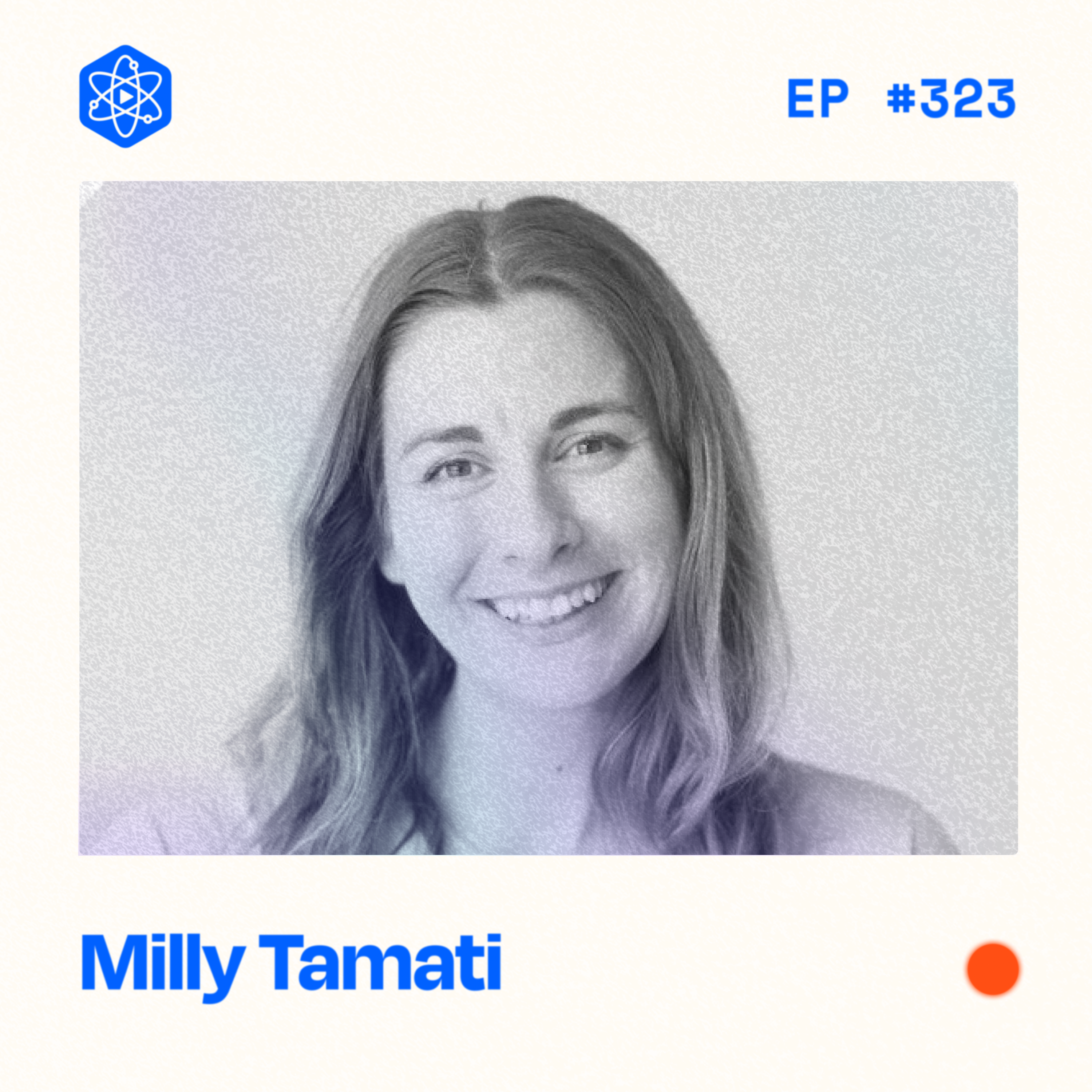
Millie Tamati explains how her generalist-focused career community (Generalist World) grows via LinkedIn-to-email flywheels, community-first products, and long-term partnerships—while prioritizing a “regulated nervous system” over vanity metrics.
Millie Tamati is founder of Generalist World (launched 2022 on a Scottish island with ~191 people). The newsletter has 55,000+ subscribers; she posts on LinkedIn nearly daily for ~1,400 days. She created International Generalist Day, which in September had 100+ volunteer-led meetups across 40 countries. She runs the business with one full-timer plus contractors hired from her community.
LinkedIn’s bar is low; honesty and personality (plus humor) beat AI-templated hooks. She never schedules LinkedIn posts. Email format matters: Tuesday is a curated jobs email; Friday is a member-only podcast. Lifetime memberships improved alignment; recurring revenue was deleted to make members long-term. X is where sponsorships can close quickly (often within 30 minutes).
Beehive creator-in-residence (year-long) replacing recurring revenue; Netlify partnership for International Generalist Day hackathon; “selfie reset” on LinkedIn to recover engagement.
Written by AI. May contain mistakes.
Learn how to stand out on LinkedIn amid overwhelming content.
“The truth is that the bar for LinkedIn is extremely low.”
Explore the structure and operations of Generalist World with Millie.
“As a longtime generalist myself, I feel like this is a homecoming of sorts.”
Discuss the platforms Millie uses and their impact on engagement.
“Can you give us a sense of the overall generalist world footprint as a starting point of what you operate on and what you sell, how big your team is?”
Millie reflects on which social media activities bring her the most joy and value.
“Oh, I think I misunderstood the question of where I'm spending most of my time.”
Discover how Millie tracks her mental well-being and productivity.
“to go down, which is this idea of your number one KPI being a regulated nervous system.”
Understand Millie's strategy for integrating social media and email marketing.
“what time do you typically start your day?”
Discussing the audience and revenue aspects of the business.
“I try to keep that more just after breakfast.”
Analyzing the relationship between LinkedIn and email marketing strategies.
“Of course, you send the generalist world email once per week.”
Exploring the format and content of the weekly newsletter and podcast.
“So we go and curate at least 40 different jobs, and they're all made for generalists.”
Insights into the value and challenges of job boards in business.
“And he had this perspective that job boards are some of the most valuable businesses you can build, but also some of the hardest.”
Examining the motivations behind subscribers to job listings versus content.
“I would say that the job board and the jobs newsletter for me isn't about being like a revenue generating asset.”
Discussing the importance of honesty and authenticity in LinkedIn posts.
“they get to see the vibe and the spirit and the culture of GW.”
Focusing on reputation building rather than getting caught up in analytics.
“A lot of that is these like boring ass AI templated, everyone's literally using the same hooks.”
Contrasting content strategies between LinkedIn and X, discussing their cultures.
“Am I booking speaking deals from LinkedIn?”
Exploring Millie's approach to writing posts on LinkedIn and maintaining energy.
“You think that the deals would happen more there, but like, it's more like founder to founder.”
The importance of sharing honest and vulnerable moments in content creation.
“For me, it doesn't work with my brain or like how I approach the platform at all.”
Jay introduces Millie Tamati and sets the stage for their conversation.
“which ones are not, and the cringe yet undeniable power of the selfie.”
Millie discusses her strategy of using selfies on LinkedIn to build recognition and trust.
“And so carousels don't vibe with me because I've got to stop and be like, all right, what's the visual?”
Millie shares her thoughts on engagement strategies and the importance of consistency on LinkedIn.
“I do what it's called a selfie reset when I feel like my LinkedIn is starting to go into the crapper.”
Jay and Millie analyze which links on LinkedIn profiles get the most clicks and why.
“In fact, like even if someone has been like following me for a while, it might take days, weeks, months for them to become a subscriber.”
Millie reflects on the different stages of her business journey and the concept of comfort vs. growth.
“So we've got a couple of like, I would say, core like lead magnets that depending on the posts, we would like put that lead magnet in.”
Millie explains her controversial decision to transition from recurring memberships to lifetime memberships and its impact.
“So it's challenging because like there's wisdom in both of these approaches.”
Learn how Milly Tamati applied community principles to Generalist World.
“well, you know, we don't know if we want to like massively invest in these other people because, you know, their membership's up in May.”
Discover Milly's approach to partnerships and her experience with Beehive.
“One of the first documents I ever wrote for GW before I came up with the Regulated Nervous System KPI was the Calm Community Doc.”
Understand how building strong relationships impacts business success.
“Where Beehive is like, girl, you know your people.”
Milly encourages creators to be more authentic and unique in their content.
“that you want to pass on to our audience?”

Get the gist, explore an idea or ask about something said.
 Claude
On Creator Science with Jay Clouse, what are the key points of this episode?
Searching your listeningAutomatic transcript. May contain errors.
0:00The truth is that the bar for LinkedIn is extremely low. There is a lot of content flooding it. A lot of that is these like boring ass AI templated, everyone's literally using the same hooks. And so if you just have an inch of personality, and if you have like a little drop of humor, you're instantly going to stand out.
0:38Hello, my friend. Welcome back to another episode of Creator Science. My guest this week is Millie Tamati, the founder of Generalist World, which is a newsletter, job board, and community for people whose careers don't fit in a box. She loves to use this word, people with squiggly careers. Millie started Generalist World in 2022 from a Scottish island with the population of about 191 people. And today, the newsletter has more than 55 ,000 subscribers. She's posted on LinkedIn just about every day for roughly 1400 days. And this September, International Generalist Day that she started had more than 100 volunteer-led meetups across 40 countries.
1:17And she runs it all with one full-timer and a couple of contractors hiring straight out of her own community. I've been a journalist my whole career, so I love what Millie is building. We agree on a lot. We're both big on email and building community, both online and offline. We've also taken some different approaches. Millie loves Beehive. I love Kit. Her membership is a one-time purchase. Mine is recurring. She wants to augment her membership revenue with partnerships. And I want to build more of my own products with fewer partnerships. This episode is in the same vein as my recent conversation with Jessica Lackey.
1:49While most creator advice assumes the goal is more, more, more, more subscribers, more products, more revenue. Millie's goal is a regulated nervous system. Millie's business does about$400 ,000 per year. And when another podcaster recently asked her about her dream for generalist world, she told them she's already living it. So in this episode, we get into how that shows up in her work, why she will never schedule a LinkedIn post, the two fill in the blank formats that took the stress out of a twice weekly newsletter, why X not LinkedIn is where she actually closes her sponsorship deals sometimes within a half an hour, why she deleted all her recurring revenue to make every member a lifetime member while her founder friends told her she was crazy, and how a year-long creator-in-residence partnership with Beehive now brings in her recurring revenue instead.
2:35If you enjoyed this episode, tag me at jklaus on X or Instagram. We'll get to that full conversation with Millie right after this.
2:45When somebody asks ChatGPT who are the best creators in your niche, does it say your name or does it mention your competitors instead? Because a response will only share a few names. And with LLMs, if you're not sighted, you might as well be invisible. And that's at the exact moment when someone is deciding who to follow or what to buy. The first step is finding out just how visible or invisible you are to LLMs like ChatGPT. And Ahrefs built a new tool called BrandRadar to show you where you actually stand. It tracks your mentions across ChatGPT, Perplexity, Gemini, Google's AI overviews, and Copilot, and gives you an AI share of voice against your competitors.
3:23That means how often you get named when your topic comes up and whether you're being mentioned or actually cited as a source. It's built on 481 million real prompts, making it the largest AI visibility database out there. This isn't about gaming AI. It's about finding out what of the work you're already doing, the content, the authority and the backlinks are translating into AI visibility. Try a free preview of Ahrefs brand Radar at Creatorscience.co. slash radar. That's creatorscience.co slash radar. Millie, hello. Welcome to the show. As a longtime generalist myself, I feel like this is a homecoming of sorts.
4:05I'm so excited to be here, Jay. I was just looking back through my DMs, and I had originally messaged you in 2023. And I loved the audacity of my message because then I barely had an audience. And I was like, Jay, I think that our audiences overlap and I must have had like a thousand followers. So it was a big, bold message. And so it feels also like a homecoming or maybe a full circle moment to actually get to be here. You know, I get so many pitches. I miss a lot of them. I also don't look at a lot of them super, super closely unless they really grab me. A little inside baseball for folks listening.
4:41It's maybe non-obvious when you're pitching a podcaster, that you're asking that person to actually invest in the asset because you have to create the thing. It costs time, money, a lot of other people's capacity. So it's not a small thing and the filter gets pretty tight, but always shoot your shot, shoot your shot. And a year later, two years later, three years later, it happens. And this time I came to you, I wasn't even like, okay, well, the clock was ticking on that DM. So I better get back to Millie. It was like, I want to talk to Millie. And here we are. I'm excited to talk to you because I think, number one, most creators are generalists.
5:17I actually think being a generalist is a superpower for creators today and really anybody today, especially given that we have this magic button in the form of AI where we can do a lot of things to augment pseudo-strengths into super-strengths. But I'm really interested in your business because you have what seems to be a really strong long flywheel from where you're discovered to email to your community. And you've got partners on top of that, a pretty fully fledged ecosystem. And from what I understand, a pretty lean team. Can you give us a sense of the overall generalist world footprint as a starting point of what you operate on and what you sell, how big your team is?
5:59Yeah. So we are a tiny team, in fact. So I I have one full-timer who's been with me since nearly the beginning. And then I have a couple of contractors who are part of the team, but really they've just become like my really good friends. And actually part of the flywheel is I hire people from the community. So it's like an endless flywheel of fantastic talent coming in. When you kind of like zoom out and look at what the generalist world world is, I love that it is like the domain is generalist.world. And that is the case because it was just like a cheap domain at the time. I put zero thought into the brand or like what this was going to be.
6:37I was just like, I just need something live. And it is so fitting because it has turned into a world. So the community is our core product, always has been, always will be. It's like my truly my favorite corner of the internet. I'm so grateful that it exists and that I get to go and hang out there every day. We have our newsletter, which we send twice a week and that's hosted on Beehive. We throw lots of events, including International Generalist Day, which I can nerd out on that. We recently did it in September. And this year we had over 100 meetups around the world in 40 different countries.
7:14And that's entirely volunteer led and so much fun. It's like Christmas for generalists. We probably do more things, but that gives you a flavor of the world. So I hear community. I hear events. I hear Generalist Day, which is sort of an event, sort of not. I know you have your email list on Beehive. I know you operate on TikTok. I know you have a podcast, a YouTube channel. So like lots of arms here. You're on LinkedIn as well. Where do you find yourself spending most of your time as like the lead generalist of generalist world? LinkedIn. LinkedIn for sure has been the channel. And over the years, I've kind of branched out.
7:56It's interesting you mentioned TikTok because because that was big for me for maybe like 18 months. And now I can't remember the last time I opened TikTok. Really? It is really not a channel. I will cross post things from Instagram. Instagram for me is much, much stronger than TikTok now. This is so interesting. And I think this is, I mean, this is my viewpoint on platforms as a whole is like you have this layer of discovery and LinkedIn, TikTok, Instagram, YouTube, they all live in this discovery layer. and it's not necessarily wise to try to split your time across all of them all of the time but it is nice when one of them kind of shits the bed that you can just swap in another one and say I'm going to lean in over here a little bit more strongly because you know one of the core pieces of research I did for this episode is the podcast you did with Chanel and growth in reverse rest in peace the growth in reverse podcast I'll link to that episode in the show notes because it's great and you talked a lot about TikTok on that one because that was a surprise hit for getting people to your generalist quiz.
8:55So it's interesting you've moved more towards LinkedIn, although I guess it makes sense because generalists, it's not quite a professional identity, but it's kind of adjacent. And LinkedIn being such a professional platform, it does seem like a pretty good fit. So when you say that you're mostly on LinkedIn, that was a very quick answer. I thought you might say like email or the podcast or in the community, but LinkedIn is where you're spending most of your time week to week, you think? Oh, I think I misunderstood the question of where I'm spending most of my time. So LinkedIn would be my main channel.
9:27Where I'm spending most of my time, I mean, it would be up there. I think people are like, Millie, you're everywhere. I'm seeing you everywhere. And that happens because I'm like, yeah, guys, I actually spend a lot of time, both like creating content, but then also amplifying and like commenting and engaging in our community's content. So I would say in terms of channel, LinkedIn would be where I spend most of my time. But in terms of actual day to day, it would probably be between the community would come second and then email, I would say. So of all of the activities that you're doing, this is a fun question I like to ask people.
10:05If you had to eliminate one activity that you're doing pretty consistently right now, but like you just had to get rid of one thing, where do you think you're getting the least return on your effort right now? I think it's pretty easy. I think I would eliminate Instagram and not necessarily because I'm getting the least return, but because it brings me some of like the least joy. And this is kind of a metric. This is like my North star and it's something that I frame my whole life around. Like my literal number one KPI for my business is a regulated nervous system. And so everything I do, all my decisions I make come off the basis of, is this going to give me a regulated nervous system?
10:45Is this helping me create a calm life. And in turn, that trickles down to become a calm business. And Instagram is the one, I mean, it's short form video. So it's a very different format to like posting on LinkedIn. LinkedIn for me is kind of like Dear Diary. Dear Diary, whatever's happening that day. I think I posted now for about 1400 days, almost in a row, like every weekday I have a LinkedIn post. So now it's such a muscle that it just feels like a really fun way to like sharpen my thinking. It's almost like a reflective tool more than anything where Instagram, you got to put some more like graft into Instagram, right?
11:21You got to be like, all right, okay, I got to get the hook. I got to get like, come into the frame. And, you know, like there's so much more like silly things, I think that you have to think about. So I think I would drop Insta. I'm going to follow that rabbit hole here in a second, but you open up another door that I have to go down, which is this idea of your number one KPI being a regulated nervous system. is there a way that you measure and adhere to that outside of just vibes? I mean, vibes, vibes matter, Jay. Vibes are important. I'm not saying they don't matter. I'm just saying that's the most obvious way.
11:55Is there a non-obvious other way that you think about opportunities in terms of how this will affect your nervous system or how it did affect your nervous system? Yeah, I'm a big journaler. I'm a big writer. And so it often will come through in my writing if something feels off. Another way I can kind of measure it is what time am I finishing each day? So if I'm finishing, usually I try and finish around 2.33. Another way I can measure it is how much time this week have I had to go and play in the woods or play in the garden? Or as we were just talking about, I was painting my tiny home floor all morning and dehydrating apples that I picked.
12:29So how much time of my week, if my week was a pie, how much time am I spending doing other things that bring me joy and other things that regulate my nervous system? And because I write every day and I'm fairly self-aware, I can kind of like tell, you know, if things are going a little bit too much. And sometimes you need to, right? So like for International Generalist Day, there was a big push. It was a couple of weeks where we were like, right, we're going to push. And I wasn't finishing at 2.30 the day before International Generalist Day. Like I can recognize, I like the analogy of like working like a lion.
13:05Okay, here's a big thing. The lion is on the savannah and there's like a, there's a big meal coming. And so I can go and run, I can sprint at that meal. But then I see that the rest that comes after that, I actually see that as part of the work. I see that as part of my responsibility as a founder, as a community builder, I've like committed to these people that I'm going to be building this world for the next 10 years. You know, I want this to continue to get bigger and bigger and deeper and deeper. And so to do that, I have to be well rested. If you're ending your day around 2.30, your local time, what time do you typically start your day?
13:40Well, I usually wake up around six. I'm an early bird. I'll usually write, meditate in the morning, and I can be at my desk by like eight. I usually try and do like my creative work in the morning. And then I'll take some breakfast, usually go for a walk and then come back. And in the afternoon, I try stack more like meetings and admin and replying to inbox and hanging out in the community. I try to keep that more just after breakfast. Okay. Well, I want to spend a little bit of time talking about the audience side of the business. And then I'm going to talk a little bit about the revenue side of the business.
14:14After that, we've talked about LinkedIn being your main channel. Of course, you send the generalist world email once per week. Is that correct? Twice per week. Okay. So that's not an insignificant amount of time. How do you think about the interplay between the two of these platforms? Between LinkedIn and the email? Yeah. Like, do you see LinkedIn as a channel where you're trying to get people from LinkedIn to email or is the goal of LinkedIn something different? The goal of all socials is to get people to email. That is the goal of all socials. So all roads for me lead to email. This has been said a million times, right?
14:47You can't, I mean, look at TikTok. Great example. Like if that was my only channel, I'd be in trouble right now. And for folks who aren't familiar, tell us what the content of the emails that you send out each week are. Yeah. So my biggest learning from growing this newsletter to 55 ,000 subscribers also has been format. I think format is so underrated. And when I first started writing, I was like, each week I'd look and it'd be a blank page and I'd be like, oh my goodness, like, what am I going to write about this week? And it became quite a stressful thing, which doesn't contribute to the number one KPI.
15:23And so we ended up experimenting, iterating on a bunch of different formats, and we landed on two. And now each week, it's kind of like a fill in the blank. So our Tuesday email is a jobs email. So we go and curate at least 40 different jobs, and they're all made for generalists. We also created like, I spun off a weird job board, which I think had like 900 ,000 people see it in the first couple of weeks. So the newsletter is the asset. And then from there, my job is to spin off fun, like marketing things to get people to that asset. And then the Friday email is a podcast. And I have a very strict rule.
16:00I only record with members. And so much like yourself, I get pitched every day, every day to come on the podcast. And my answer is always the same. It's not open for external guests. It is only for members. And I I could probably, to be honest, I could probably get way more reach if I just brought in, you know, these big names. But I was like, that's not the point of the podcast. The point of the podcast is to showcase and amplify and highlight our generalist world members to show who is a generalist. What is a generalist? What are they up to? and it's again kind of like a little mini flywheel in there that when people listen to the podcast they get to know I guess like the spirit of the kind of people who choose to become GW members and then it makes it easier for them to either opt in and say oh yes like these are my people or actually they're not my people.
16:56I've always been really interested in job boards because I had a conversation, I want to say it was like 2017 with a guy who he's building tiny with Andrew Wilkinson, like a pseudo private equity fund where they buy and hold businesses that they think are valuable and they can make more valuable. And he had this perspective that job boards are some of the most valuable businesses you can build, but also some of the hardest. He's like, basically it's a suicide marketplace. So it's really hard to get going, but once you do, You have network effects and it's really strong. And from a revenue perspective, it's really great.
17:31I've also talked to now several folks. We have someone in our community named Votek and his main lead magnet into his email list are the job listings that he puts in his newsletter as well. And I've always wondered if people are joining the list for job listings, if that is a different type of subscriber and relationship than someone who's joining for like your writing, what's your perspective on that? It can be. I find that a lot of the people who are reading that job ops newsletter aren't necessarily even looking for a job. They're just curious about what kind of jobs we're finding. I would say that the job board and the jobs newsletter for me isn't about being like a revenue generating asset.
18:15In some ways, it's actually an educational asset. So we are surfacing jobs and different roles and different companies that people wouldn't easily be able to otherwise find. But there is totally difference because we also have, you know, the economy right now, and there are a lot of people on the job market. And so there is a subset of person who is, I don't know, maybe it's like, what do you come for and what do you stay for? So of course, there's got to be some subset of people who come for the job and they only want the job. And if they don't get a job, they'll leave. But there's a lot of people who they come for the job, they get to see the vibe and the spirit and the culture of GW.
18:54And then they come further and further into the world. Yeah. I'm sure it's not all that different than somebody who joins for any type of lead magnet where they came for the thing and are they going to stay or are they not? I guess we'll find out. Well, I want to talk more about LinkedIn then. You said you've posted just about every day for 1400 days, which I heard as you post once per day. What else would you say are Millie's Immutable Laws of LinkedIn? My number one is, I think, to be more honest. So when people are like, oh, LinkedIn is so cringe and I can't be myself on there and I get stuck and paralyzed, I don't know how to post.
19:35My theory is that you are only feeling that cringe because you're trying to be someone you're not. So the first and the best way to the antidote to being someone you're not is to simply be more honest. And so if I'm about to write a post, if I'm about to publish it, I will like give it a little lens and I'm like, how can I be more honest? How can I be more honest in this post? And being honest doesn't mean you have to share everything and like all of my life is on show. It's actually, I have very, very strong boundaries and constraints about what I don't share, but be more honest would be one.
20:10The truth is that the bar for LinkedIn is extremely low. It's extremely low right now. There is a lot of content flooding it. A lot of that is these like boring ass AI templated, everyone's literally using the same hooks. And so if you just have an inch of personality, and if you have like a little drop, of humor, you're instantly going to stand out. And this is what I'm seeing. And I think everyone's like freaking out about, you know, the analytics are going down. My views are going down. And I'm like, guys, who cares? Literally, who cares? The only reason I'm here, I'm building a reputation.
20:55Is my reputation going up and to the right? Generally, you know, you can get a sense for that, right? So are people finding me and is my reputation increasing? Am I meeting people that are turning into actual relationships rather than just numbers? Again, these like analytics dashboards on a screen. Yes. And can I tie this back to revenue? Am I making sales? Are sponsors coming into my DMs? Am I booking speaking deals from LinkedIn? Yes, yes, yes. So all of those things. And maybe I go too hardcore on the like, who cares about the analytics, but I feel like that's how I stay sane. Like, I think you, you could go like a little bit bananas if you got really caught up and like internalized that one post equal me bad, not worthy.
21:46And I'm like, that's not true at all. I'm just here like writing my dear diary post. And then I'm just going to go play in the woods. It's interesting to hear. I have follow-up questions on this, but it's interesting to hear because I feel like I see your content on X more than I see it on LinkedIn. I spend a lot more time on X than I do on LinkedIn. But I feel like I see a lot of you sharing wins related to like email analytics. So you've always struck me as a pretty analytical person. It's interesting because if you compare my X and my LinkedIn, it's like two different parts of the same coin, really.
22:21So LinkedIn is much more story driven. It's much more, I guess it's more the whole Millie. I feel like I can show up and share like the multi-dimensions of myself where X, honestly, I've never figured it out. I've been on there for a couple of years. I had this hiatus of maybe two years where I was like, this sucks. Like, I just, I don't know how to post here. It's such a different culture and way of posting. And so the only thing that I've found a little bit of my groove, and it's been quite recent, maybe only in the last six months on X is sharing less of the story and more of the like tactical data analytics.
22:59And I think it works ish, but my heart isn't in it. Like my heart is totally more in the story and relationships that I would build on other platforms. Yeah. It's interesting. I would say the culture on X is definitely more like male, which isn't like a word to describe culture, but like it's kind of bro-y, it feels very much like everyone's seeking alpha, you know, like they're, they're, they just want to get that little, little edge. There's a lot of negging that happens on X these days, a lot of peacocking. I've had a harder go of it on X lately also, because it doesn't feel like it's actually where I create content for my typical audience.
23:41It's just like other builders who are listening in and want to try to pick up a tidbit here and there. So that makes some sense to me. That's exactly it. So if that's the case, like if someone's listening and they just heard everything I said, they're like, all right, Millie, so why bother on X? Because there's other builders. I'm not trying to reach my generalist people on X. I am doing it to build my reputation as a founder. And so whenever I need a sponsorship or if I'm looking to do a partnership or a collab, it's wild. X is where it's at. You will put something out within half an hour, I'll have someone in my DM being like, yep, send me your Stripe link.
24:20And I'm like, I don't know why this doesn't happen so easily on LinkedIn. You think that the deals would happen more there, but like, it's more like founder to founder. And that's why I spend time on X. I think there's an element of just speed. That's a part of the X culture. Like I think there it's a lot more like let it rip, move fast, break things, try things where every other platform just feels a lot more measured. Maybe some people learn how to dial up some sort of urgency lever on other platforms, but just the culture of X is very, it's like breakneck pace at the edge, moving as fast as possible.
24:58So if we go back to LinkedIn as your main like audience and customer acquisition channel, you're posting every day. Do you write the day of? Do you do any batching? Like what happens when Millie sits down at the desk and says it's time to write on LinkedIn? I have never and I will never schedule a post ever. And that's an intentional decision because for me, when I publish, I see it, this is gonna sound a little bit woo-woo, but stick with me. I literally see it as like a transfer of energy. And if I'm feeling like a bit low or like not creative, that's completely gonna come through in my writing.
25:37And I don't know, maybe someone's figured out how to like smash some coffee and like write 10 posts and keep that energy transfer. I haven't, and I don't really have any interest in doing that. And as I said earlier, like one of my motivations for publishing on LinkedIn, it's a reflective tool. It's about sharpening my own thinking. So when Millie sits down at a desk, I sit down and I'm forced, it's a forcing function to be like, what is my take? What is my opinion? What have I got to share with the world today? and the more you do that, the more you see there is like so many takes and so many opinions that you could possibly share.
26:15And so, yeah, I understand that like for some people, scheduling works great. For me, it doesn't work with my brain or like how I approach the platform at all. It's always sporadic, spur of the moment. Strike when the whimsy strikes is the quote. I very much resonate with this. This is the way I create as well. But what do you do then when you are having like a down day or you're feeling low energy and you have this 1400 day LinkedIn posting streak? Do you say I'm having a down day and just like pass on that honesty or what do you do with that? Yeah, that's the richest content, right? The richest content is in the full spectrum of being a human and a creator and someone who's working in this world.
26:59And it's not to say that, like, again, if I'm having a down day and I'm actually like, I need a day off, grand, I'll take the day off. No problem. It's not like a Duolingo streak that I'm married to. but if I think that there is value in sharing the process of where I'm at and also what I do on those down days to get through those down days and that's probably where some of like the deepest connections and the deepest resonance comes from my audience because they're like they trust that when I am posting these wins because like no one wants to just read someone be like I'm killing it every day, right?
27:40Like, wow, I'm so perfect and life is fantastic. It's like, okay, well, that's not very trustworthy. It's not very honest. And so you have to sprinkle in, and I'm not saying like artificially, but if you're feeling down, that's fine. It's absolutely fine to like communicate that. After a quick break, we talk about what formats are working for Millie right now, which ones are not, and the cringe yet undeniable power of the selfie. So stick around. We'll be right back.
28:12and now back to my conversation with Millie Tamati how do you think about formats are you very text heavy are you very adamant about using images or videos or carousels how do you think about formats on LinkedIn I'm too lazy to make carousels basically my whole strategy is like oh if I get like an electric thought I'm like right sweet, post it, publish, gone, see ya, out to the woods. And so carousels don't vibe with me because I've got to stop and be like, all right, what's the visual? Like, no, not for me. Video, I tried video on LinkedIn and for a little while it was like a vibe and there was like the video tab.
28:51I think they're rolling it back. It never quite clicked for me. So I don't bother with video, I'm sorry to say that most of my posts will come with a selfie, will come with some kind of me image. And very rarely I would do text only. And I think the selfie one is funny because it's a little bit like even I roll my eyes at myself, like, okay, all right, Billy, we get it. We know what you look like, but it is effective. And I think that it also, if we come back to like building that reputation and building trust, that's exactly what it's doing. And like, it's amazing how that translates into in-person things.
29:28Like I can walk into an event and it's crazy. People are like, oh my God, like you're Millie, like I recognize you. And I'm like, wow, it's so crazy. Just from posting these like funny little pictures on this funny little platform, people really feel like they know you. It is undeniably effective. I've shared this with a lot of folks. I do what it's called a selfie reset when I feel like my LinkedIn is starting to go into the crapper. It's like, okay, let's use a selfie. Let's just give a general update, good and or bad. And that always just like lifts the next couple of days because generally LinkedIn is not unlike other platforms.
30:10It's a little bit behind algorithmically. So it's still in the world where if somebody engages with a post that you've had recently, then they're more likely to see the next one. And so you can get into this downward area of my engagement is garbage. And now no one's seeing anything because they haven't liked anything I posted in a while. And the selfie reset is just a nice little wipe the slate clean, get started again. So if LinkedIn is the channel and email is where you're trying to direct everybody, that leads me to believe that in In your LinkedIn posts, you are putting literal links to your email address.
30:49Is that true? And if so, how do you think about that to make that as effective as you can? Yeah. So I wouldn't put a link in every single post. It feels a little bit much for me, but I will link maybe once or twice a week. That's about the right cadence. And then also on the LinkedIn, you can have the custom button. And so we do drive, I don't know exactly how many, but I do know people are coming through that custom link button as well. So I would say like, if it makes sense, if it makes sense in the post to link it, then by all means link it. But LinkedIn for me is also a way of just being like top of mind for people.
31:26So it's amazing how long things take. In fact, like even if someone has been like following me for a while, it might take days, weeks, months for them to become a subscriber. And then I sometimes go and just like geek out by how long it takes someone to be a subscriber, then to become a member. Some of these people are getting like 200, 300 emails there and they read every one they're reading, they're clicking every one, but there's something that happens in their life that they say, okay, and now, now is the time that I want to become a member. So LinkedIn, yes, I am pushing people to my email, but it's also a way of just being like in the top corner of somebody's mind.
32:08Okay. So you mentioned you're not sure which link on your profile is more effective. I've done some testing and tracking of this. Do you want to play a little game? Yeah, let's do it. Okay. So I have been tracking. There's the custom button on your profile, which in your case, and in mine as well, we use the visit my website custom button. There's also a custom link that you can put in your bio, which you don't have. And I would really recommend you add this by the way. It used to be you could only have one or the other, and now you can have both. And then you have the links in your featured section.
32:41So of these three surfaces, we've been measuring which one gets the most clicks. Would you like to guess which one gets the most clicks? Oh, I love that you're doing this, Jay. I need you to come and interview me more often so you can give me some more data stuff. I would take a guess that it's the one, like my featured posts. If I had to guess, it would be the featured post on my profile that would drive the clicks. Your results may be different than mine, but I can tell you from my profile, the number one link is the custom profile link followed by the button. And a distant, distant third is the featured links.
33:22Interesting. Interesting. Because I guess with the custom link, people can be just in the feed right and see that. They don't have to click through to your profile to get there. Actually, no. this is the crazy thing. The custom button is what shows up in the feed. So the custom profile link is only viewed on your profile. And this is also what's crazy to me. So yeah, we've measured it. I don't have the numbers right in front of me, but my memory says the sample that I had, there was like 60 links on the custom profile link, 40 clicks on the button. And then it was some crazy like five or maybe even three on the featured post, like way, way, way lower.
34:00So yeah, we've been playing around with like, the nice thing about the custom profile link is you can add whatever text you want there. You can make whatever call to action. Like you could say, take the generalist quiz. Yeah. Oh, I need to go check that out. Yeah. Which is my next question, which was when you do have a call to action in a post, is it join the newsletter because we have this jobs board or is it go to the generalist quiz, which I know is like your main front door for a long time? It will be whatever is most relevant. So we've got a couple of like, I would say, core like lead magnets that depending on the posts, we would like put that lead magnet in.
34:35So for example, one is absolutely the quiz. And another one would be more like so if I'm more talking, say about helping someone get a job, then I'd be like, hey, go to generalist.world, sign up. And on Tuesday, I'm going to send you 40 curator jobs. So it just depends. And I think like having a variety of those lead magnets that are like tried and tested, we probably have about three or four that I would typically use now and about 40 that I tried and just flopped or like didn't work, didn't convert as strongly as I wanted. So I think that's the whole job as the founder, right? It's like having these ideas, throwing them out to the world and seeing which ones really, really stick and then just doubling down.
35:16And I think I'm in this funny stage of business. I don't know when this happened. I don't know if you resonate with this, but the first stage of business is like survival. I was selling my stuff on eBay to like make payroll and to like keep this thing alive. And it was so, God, I do not miss those days. I just can feel it in my body being like this like survival stage. And then something clicked, something changed. Like we got past this stage. And now I feel like we're in the stage where it very much feels safe. and I'm saying that as like, I don't know if that's like, there's a good and a shadow to being in the safe phase, right?
35:51So it feels safe, it feels secure and it feels very much like we're just operating. It's like, we know what works. We're just in the operating stage. And I think my challenge in this is like basically reining myself in as someone who is like the generalist, the tinkerer, who loves new ideas, keeping myself like, okay, got to keep the ship sailing, got to keep us focused. I do resonate with this to a degree. I had a conversation with a coach of mine. Again, this is like in 2018 or 19. And I had gone from like surviving to now I'm comfortable, but I wanted to like chase these nice, new, shiny financial goals.
36:29I wasn't hitting six figures yet. So like in my mind, I was like, that's the goal. $100 ,000 a year should be like the obvious next thing. But I just wasn't actually motivated by a pretty arbitrary number. And what he told me, he said, you will rise to the level of your comfort. So if you are comfortable, you're going to kind of stay there. And so if you want to hit this goal or some other goal, you need to create some positive tension or discomfort to actually get you there. So we've gone through a couple stages now and I could certainly scale the team back to a place where it's like, we're good.
37:10We're operating. this is fine. And we were kind of there, but the things I wanted to do, we just didn't have the capacity. So now we're in this new place where I feel like I'm in like a new season of survival with payroll because it's like, we've hired more. We're trying to do more. The business is working, but cashflow becomes more nuanced and challenging to navigate. And I think that's kind of a good thing, but I don't know. This is, this is the tension I often feel with this idea you brought up earlier of like a calm nervous system because I could have a calmer nervous system, but I don't know if that would grow this business.
37:49Maybe it would. Maybe like it would follow through in some ways where the content actually resonates better and I take a less but better approach and that works. The shape of things that I put in place now, it's kind of like the, what is it? A lobster they talk about where like the lobster will get to a point where it has to shed its own skin to become a bigger version of itself. It like has to feel uncomfortable in that shell for a second. So it's challenging because like there's wisdom in both of these approaches. Yeah. I think a lot about this idea of like, what's the right size of business, you know?
38:28So for example, I was on a podcast a couple of weeks ago and the interviewer asked me, what's your dream for generalist world? And I could tell that the angle that they were hoping I would say is like, we're going to double revenue and add a zero and we're going to triple our email list. And I kind of sat back and considered it, really considered it. And I was like, do you know what? I think I'm in it. I think I'm in the dream. I think this is it. And it really helped me see and helped me kind of reflect on like, what is the quote unquote right size of a business? And there is no doubt that I could like grow the team, add more products, push.
39:08But I think like when we are like the solo founder of something, business growth is just one possibility of growth in our life. And I feel like I'm going through, in my personal life, I'm going through a big growth transformation. Like the lobster is being shared. Yeah, a big growth transformation. And so I think this is a privilege that we get to do, that when we are the founder, we have that ability and agency to put the brakes on a little bit. And just to be like, right, we're just going to coast. The business is going to coast for a little bit. Everyone's getting paid great. we are still like growing steadily but it's not like hyper growth and in the meantime I'm going to go and work on myself and it's cyclical so that once I come out of this maybe then I'll be feeling in a place where we're like right let's level up but for now I'm so happy with where things are and I feel like that's not spoken about enough it's like it feels like taboo to be like I'm stoked.
40:12I'm stoked. This business is a great size. We make about$400 ,000 a year. I get to finish work every day at two. I love the people I work with. My community members, some of my best friends, and they're starting businesses together. And I'm like, great, it's enough. This leads me into an area I wanted to explore, which is the model of your membership is a lifetime purchase. And when I heard you talk on Chanel's podcast, it sounded like that was a decision that you made at some point and then said, I'm going to then augment our revenue with sponsorship and partnerships. Both of these models, well, I suppose on the partnership side, ideally there is a long-term relationship that renews with that partner many, many times.
40:57But a lot of times for folks listening to this, they have a lot of sponsors that don't renew either because the sponsor chose not to because it wasn't performative or maybe they didn't enjoy doing that. Talk to me now, a year or two removed from the decision to go away from recurring memberships about the implications of that decision, good or bad. To date, it's my favorite decision I've ever made in the business and one of the most controversial. Like I remember at the time, everyone, all of my founder friends were like, you're mad, what are you doing? You don't delete your recurring revenue.
41:28It's like the only rule of business, Millie, come on. but it was a gut feeling and based on some data as well that the community on the surface it's a professional community but inside it's so much more it is people have described it as a lifeline for them and so I'm like okay it feels a bit shite you know if someone you know maybe they lose their job and then their membership renews and then they can't afford it or you know what I was observing in the community is, and what people were feeding back is they were like, well, you know, we don't know if we want to like massively invest in these other people because, you know, their membership's up in May.
42:11And so maybe we won't see them again. And I was like, that's so fair. And I had built Generalist World from this island, right, of 191 people. So I was, I was literally living in a very, very small, tight knit community. And so many of the principles that I was observing of being this community member in a very small, rural, west coast of Scotland community, I was applying to Generalist World. And I was like, okay, so one of the principles is that everyone is aligned long term. That's why everyone's volunteering on this island. Like, we were all on two or three different boards. Like, it was a really volunteering, giving back culture.
42:51And that's what I wanted to create in GW. So all of this to say, one day, I deleted all of our recurring revenue and I made everyone a lifetime member. And then I kind of, well, there was nerves doing it, but ultimately my brain, my body, everything was like, look, it's going to be fine. A big part of that confidence came from, we had just passed at the time, I think it was 20 ,000 email subscribers. It was around that level. And so we were starting to get sponsorships and those sponsorships, I went the opposite way. So lots of sponsors on like one-off deals. I wanted to have long-term recurring multi-channel partnerships.
43:32And that's what we have always done. And so I work with a couple of brands each year. I've actually, I'm just about to announce it today, have just signed on with Beehive as their creator in residence. And so that's a year long partnership, which essentially is just like sets GW up, right? And so the recurring revenue, I would much rather get that from like companies and then be able to have some flexibility when it comes to like the B2C side, as a lot of people are paying for their own membership. One concern I've had about lifetime memberships when I've like considered the model in the past is yes, you have this long-term alignment, but also I've just seen time and time again that a lot of people pay attention to what they pay for.
44:18So I would love to hear like a counterpoint or some level of like in between if you've seen it. If you have somebody who joined as a lifetime member like a couple years ago, maybe it's not even somebody, how would you describe the continued engagement into year two or three if you have it for somebody who made this investment years ago? One of the first documents I ever wrote for GW before I came up with the Regulated Nervous System KPI was the Calm Community Doc. And this Calm Community Doc, it lays out, and I've barely changed it since writing it, and it lays out that life happens, you will ebb and flow through the community, whether you're here annually or eventually whether you're here for a lifetime.
45:03And that is the take that I have adopted for all of our members. So I am very explicit in like engagement for me is not the goal. If you need to disappear and go on paternity leave or if you're going through a really hectic period of your life, there is no expectation to show up. GW is a resource to be there and to support you if and when you need us. and in terms of like over the long term, I think giving people that flexibility to be like adults and be like, when you need us, you can come in has only kind of like deepened that relationship and that value. I'm curious about this creator in residence opportunity and your take on sponsorships generally.
45:45What have you found to be your favorite and best reciprocal relationship in terms of how you're showing up for these partners? Yeah, that's very easy. My favorite is Beehive. They are the best that I've worked with for a couple of reasons. The first is that Beehive and GW started not at a dissimilar time. So they were like the first subscription I ever paid for when I didn't really have, you know, a thousand dollars to pay for it. But I was like, I recognized that I needed a way to email people. And I remember reading Tyler's kind of founding story and how he'd built Morning Brew. And I was like, okay, I could go with someone, another provider who's a bit more established, but I am willing to take a bet on this guy and this product.
46:31So in some ways, I feel like our businesses have grown up together. And then I think when it comes to the actual relationship, I was just organically posting about them. Because again, my Dear Diary approach, like I'm sending a lot of emails. That's how I'm also selling. So they were organically coming up in a lot of my content. And so then that led me to just becoming pals, like friends with a couple of folks on the team, which then led to like kind of smaller creator work, which then led to, you know, I was on my way actually to Columbus, Ohio for a keynote earlier this year. Yeah. Hello. It was awesome.
47:11Yeah. I saw on your LinkedIn. I was like, oh, my God, I didn't know Jay was in Columbus. So I was there in April doing a keynote. And I was on this plane. And as I was on the plane, one of their team, Tony, like text me and was like, hey, you're coming to America, right? Like we're doing this like big filming day for this huge launch we're doing. Do you want to be the face of it? And I was like, heck yeah, that sounds so fun. So around New York, I had like a full film crew the whole day. And it was like, again, telling the story of Generalist World. And so there's been such a reciprocal benefit because as they've grown and as they have amplified me and my story, generalist world has had loads of eyeballs go on it as well.
47:53And so the more successful I am and the newsletter is, the more people that find Beehive. And I think it's so relevant for generalists because whether it's a newsletter or a podcast or a community or a digital product, it's kind of like the generalist tool. Choose whichever thing you want to do. The last thing I'll say is Beehive is different from like the creator perspective because they give me so much freedom. So like sometimes when you work with brands, they're like, we trust our creators to like create. But then they're like, oh, we got to change that. And we got to change that. And can you write it this way?
48:29Where Beehive is like, girl, you know your people. We are just here to support you. And so it's been honestly like a joy to work with them. Yeah, that's what I was kind of alluding to is partnerships often take very different forms, company to company. So I was curious with having put so much emphasis on that now in your business, if there's kind of a go-to shape that you have found for these partnerships that fits you best and has led to renewed contracts or long-term success with these partners. Now that I have kind of landed on this shape with Beehive, I would love to replicate that with a few other partners where sometimes a partner will come in and they're mostly interested in the newsletter.
49:13Or like, for example, we just ran International General Estate. We partnered with Netlify. And so they were very interested in being in front of these IRL events. And now we're talking about a bigger, longer, deeper partnership. So I think it just really depends on the brand. but then it's up to us as founders to have these different assets and to be able to kind of pitch it and mold it to be like hey so you're really interested you know netlify was such a a no-brainer because as part of international generalist day we were running our first hackathon and so it's like sweet let's give everyone credits and you can build live so and again that relationship came about on x where i was like i was actually just looking for a food sponsor and then i ended up speaking with KP and we were like, actually, this could be really cool.
50:01Like what if we did something bigger together? And that came over the course of like just two Zoom calls. The first one, we just talked about community building for so long, we forgot to talk anything about the deal or anything about a partnership. We had to do another call to be like, oh yeah, we should like probably talk about what we were going to talk about. And I think maybe this is one of my underlying, repeating things that keep coming back. It's like, it is truly all about relationships. It is the deeper you can create these relationships, the more integrity you can have in these relationships to be someone who does what they say that they said they would do.
50:40And who I think is like also selective in who they work with. So I say no to most brands. If I haven't heard of them or if I don't know them, if I'm not using them, it won't make sense for me to like represent them. It all comes back to this like reputation idea, right? So everything I'm doing out there, everything I'm putting online, it's like tiny bricks of this wall of the reputation of Millie. And yeah, it's my job to make sure that I'm like really looking after that. Last question then, Millie, thank you for your time. Is there anything that you have strong conviction and believe as it relates to being a content creator that you want to pass on to our audience?
51:22Be more weird. Be way more weird. I don't care what platform it's on. I think that lo-fi is in. I have this theory. It's funny to have this theory and say it on a podcast, but that podcast listening for me has gone down. I used to listen to maybe four or five hours of podcasts a week, and now I'm lucky if I get in half an hour. My podcast listening has gone down. And I think when I look at why that is, it feels like so many podcasts now are scripted or like so much of their like topics, it feels like they're like surface level kind of like AI. And the same for social media. So this is a sandbox we're all playing in where everyone is using AI.
52:08AI is not a bad thing in and of itself. but if you're not using it to give yourself space to become more weird and stand out, then you're really missing a trick. So I'd say, yeah, be more honest and lean more in to what makes you, you.
52:29If you enjoyed this episode, please consider leaving a review on Apple Podcasts or Spotify and letting me know we had a batch of new reviews on Apple Podcasts last week. Yes, it got us back up the charts. We are now being recommended next to some of the biggest shows on the planet. So please take a second, review us on Apple podcasts, help us keep the momentum. Those reviews go a long way in helping us grow the show. If you want to learn more about Millie, visit her website at generalist.world. There's a link to that in her LinkedIn plus X account in the show notes. Thank you for listening. I'll talk to you next week.
53:08See you next time.
My guest is Milly Tamati, the founder of Generalist World, a newsletter, job board, and community for people whose careers don't fit in a box.
Milly started Generalist World in 2022 from a Scottish island with a population of about 191 people. Today the newsletter has more than 55,000 subscribers, she's posted on LinkedIn just about every weekday for roughly 1,400 days, and this September, International Generalist Day had more than 100 volunteer-led meetups in 40 countries. She runs it all with one full-timer and a couple of contractors, hired straight out of her own community.
The business makes about $400,000 a year, and Milly finishes work most days around 2:30. Her number one KPI is a regulated nervous system. When another podcaster asked about her dream for Generalist World, she told them she's already living it.
In this episode, we talk about:
Why she will never schedule a LinkedIn post, and the cringe but undeniable power of the selfie
The two fill-in-the-blank formats that took the stress out of a twice-weekly newsletter
Why X, not LinkedIn, is where she closes sponsorship deals, sometimes within half an hour
Why she deleted all of her recurring revenue to make every member a lifetime member, and the year-long beehiiv partnership that brings in recurring revenue instead
By the end of this episode, you will have a new way to think about what the right size for your business actually is.
Generalist World
The Generalist Archetype Quiz
Generalist World newsletter
Generalist World community
Milly on LinkedIn
Milly on X
beehiiv
Milly on Growth In Reverse
Full transcript and show notes
***
TIMESTAMPS
(00:00) Cold open
(00:39) Introducing Milly Tamati
(09:07) A regulated nervous system as a KPI
(13:51) Two fill-in-the-blank newsletter formats
(18:12) Milly's immutable laws of LinkedIn
(22:38) Why she still bothers with X
(24:03) Why she'll never schedule a post
(27:15) The undeniable power of the selfie
(30:58) Which LinkedIn link gets the clicks?
(37:12) The right size of business
(40:05) Deleting all recurring revenue
(44:46) The beehiiv partnership
(50:12) Be more weird
***
RECOMMENDED NEXT EPISODE
#320: Earning $300K+ Per Year Without Social Media | Jessica Lackey's Relationship-First Approach
***
ASK CREATOR SCIENCE
Submit your question here
***
WHEN YOU'RE READY
📬 Creator Science Newsletter
🚀 Get CreatorHQ (creator operating system)
🧪 Join The Lab (private membership community)
🧞 Get a Personalized Offer
***
CONNECT
🐦 Connect on Twitter
📸 Connect on Instagram
💼 Connect on LinkedIn
📹 Subscribe on YouTube
***
SPONSORS
💼 View all sponsors
Learn more about your ad choices. Visit megaphone.fm/adchoices