Ask ChatGPT

 Decouple
6 Nov 2026 · 1h 9m · 23 chapters
Whether South Korea can help “rescue” America’s nuclear renaissance by exporting reactor technology and construction capacity, framed through Korea’s historical nuclear “odyssey” (Atoms for Peace to APR1400 exports) and current U.S.-Korea nuclear/IP developments.
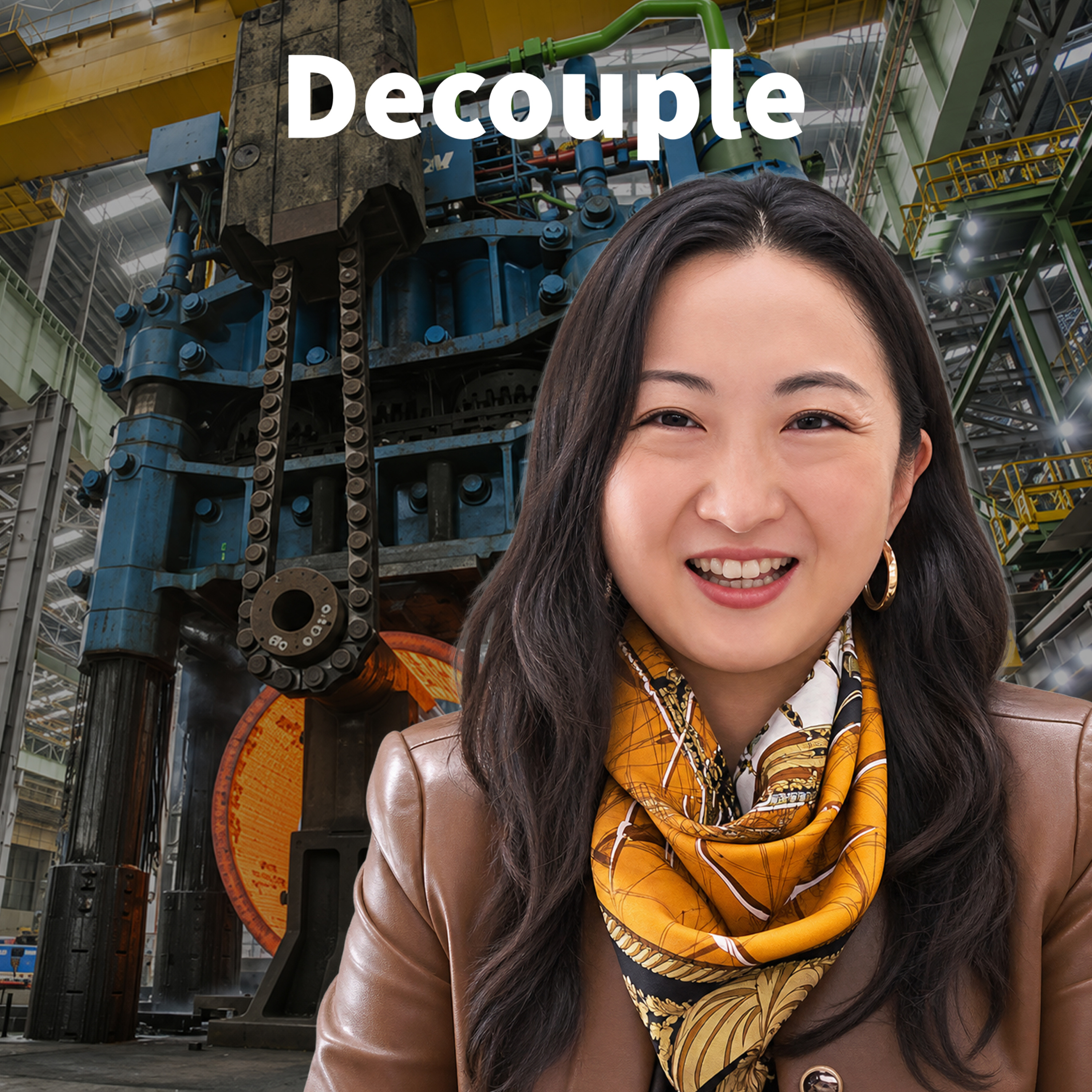
Dr. Eunjung Lim, professor at Kongju National University; visiting scholar at Stanford’s Asia Pacific Research Center. An IR scholar (not an engineer), born and raised in South Korea; studied international relations at University of Tokyo (IR), Columbia (master’s), and Johns Hopkins (PhD). Her research focuses on nuclear policy, siting/fuel-cycle decisions, and the geopolitics of nuclear energy.
Korea’s nuclear success is tied to developmental-state planning under Park Chung-hee, survival of a nuclear industrial ecosystem due to never fully stopping construction, and “ecosystem” cost control. Public support is positive because Korea is an energy-import “island” with energy-intensive industry, despite nuclear controversy linked to the developmental model.
KEDO/KEDO “Keto” (Korean Peninsula Energy Development Organization) reactor project in North Korea (terminated after ~35% completion); UAE Barakah APR1400 selection over Westinghouse AP1000; IP disputes tracing to Combustion Engineering lineage; possible ~$120B Korea-U.S. investment to build AP1000/APR1400 units, amid a prior global settlement restricting market access.
Written by AI. May contain mistakes.
Explore the strict leadership style of Park Jung and its impact on South Korea's economy.
“Because Park Jung, he actually governed the country for almost two decades.”
Eunjung shares her interdisciplinary educational background and research focus on nuclear energy.
“I do look for guests who are not in industry because generally they're a little more free to speak.”
A historical overview of Korea's journey in nuclear energy from imports to indigenization.
“because I really want to explain how, again, international partnership can be emerging.”
Understanding the political landscape and leadership in South Korea during the 1950s.
“I'm using, again, the CP methodologically.”
Discussing the roles of Lee Seung-man and Park Jung-hee in shaping nuclear policy.
“And number two is, again, the military junta, Park Jung-hee.”
Explores the development and controversies surrounding South Korea's approach to nuclear energy as part of its broader industrial strategy.
“But anyhow, Park Jung-hee's approach was more like audacious probably, right?”
Discusses the unique factors contributing to South Korea's success in industrial growth compared to other nations with state-directed economies.
“So, well, of course, it was efficient, I think.”
Details the history of nuclear power in Korea, including technology transfer and the evolution of domestic capabilities.
“What's this magic mix of, again, state-directed industrial policy and economic growth that we don't see in the Soviet Union or in China?”
Learn about the early days of Korea's nuclear industry and its key players.
“who really devoted their lives, I mean, to that industry, to that field.”
Explore Korea's success in keeping nuclear costs down and the implications.
“So again, we have this early days of import turnkey technology and a lot of foreign involvement.”
Discuss the challenges of an aging workforce in Korea's nuclear sector.
“Ecosystem was created naturally over time, and it still survived.”
Discover the history and implications of the KEDO project with North Korea.
“We're not talking about a diet, but we're talking about a very bizarre episode of nuclear cooperation between North and South Korea.”
Understand the challenges faced while building reactors in a war-torn context.
“It's qualitatively, quantitatively different from the project at home.”
Analyze the lessons learned from the KEDO project's successes and failures.
“Well, yeah, from today's point of view, it was like, what did we do, right?”
Learn about the challenges and insights gained from South Korea's nuclear endeavors.
“But still, I want to emphasize what we learned from that so-called failed project.”
Explore the reasons behind the UAE choosing South Korean nuclear technology for their projects.
“So this is interesting, and we're going to frame it against the later competition between the Europeans, Westinghouse and Korea for Duchovny in the Czech Republic.”
Understand the cultural complexities faced by Korean managers in the UAE.
“But he's another, like, a very interesting guy because, again, he was the CEO of the Honda Construction.”
Delve into the intellectual property dynamics and cooperation between Korean and Western firms.
“So earning foreign currency was that much important, of course, for any country, but especially for a South Korea-like country.”
Examine the political controversies surrounding market divisions in nuclear energy.
“We've discussed a little bit about the history of combustion engineering as the kind of IP basis for the OPR and later the APR 1400.”
Discuss the implications of South Korea's investment in U.S. nuclear projects.
“This does come on the heels of, you know, a big news splash last year of a Japanese investment, even larger, you know, coordinated by the Trump administration, by Howard Lutnick.”
Explore the potential for South Korea to build nuclear reactors in the U.S. and the sentiment within the Korean industry.
“So we're hearing big numbers,$120 billion.”
Discuss the controversies surrounding Alaska LNG and South Korea's position on gas investments.
“or even, of course, by the government as well.”
Analyze the impact of demographic decline on nuclear energy's future and the importance of skilled labor.
“And I feel like both sides have a loose consensus on that.”

Get the gist, explore an idea or ask about something said.
 Claude
On Decouple, what are the key points of this episode?
Searching your listeningAutomatic transcript. May contain errors.
0:00The Korean case is more strict, right? Because Park Jung, he actually governed the country for almost two decades. Weekly, he did have a regular meeting, which is called the Economic Planning Board. He was like a kind of figure of CEO of Korea Incorporation. He says like a Hyundai, OK, you're going to go to the automobile. POSCO, you're focusing on steel making. And Samsung, you go to electronics, right? It sounds like a communist party. But again, the strong leadership literally dictated and guided and all that. It was efficient, but it created a lot of problems too. A warm welcome back to Decouple.
0:47Today I'm joined by Eunjung Lim, a professor at Kongju National University and a visiting scholar at Stanford's Asia Pacific Research Center. I have been looking to cover Korea's nuclear program for many years now, and I've just really been struggling to find a guest to do it justice. And Injung, I came across your work recently, and you're giving a talk actually next week. We're going to wait to release this until after the talk is out, but called Korea's Nuclear Odyssey Beyond Borders from Keto to the Age of AI. So that came across my attention. And the more I looked into your background, the more I thought that you'd be an ideal guest.
1:27There's a huge amount of interest right now in Korea from certain announcements, the Korea-U.S. nuclear framework, a possible$120 billion USD investment in some way, shape or form from Korea into the U.S. to build six AP-1000s, possibly two APR-1400 reactors. And, you know, we have last year's global settlement agreement. Some have called it sort of a Monroe Doctrine, which was trying to sort of sort out this intellectual property dispute between Capco, the Korean nuclear company and Westinghouse. So there's a lot to unpack there. And I've been really looking forward to, again, getting a Korean perspective on this.
2:12I talked to a lot of folks in the sector, a lot of folks in finance who are very interested in sort of untying the Gordian knot of how the U.S. can move forward and actually start deploying reactors and achieving some of the ambitions of this U.S. nuclear revival. And I think there's a lot of hope that Korea can step in and sort of do what it did perhaps in the UAE at Baraka and help the U.S. get off its feet and deliver nuclear reactors on budget and on time. So there's this sort of dream team idea, at least in Western circles. But I think very important to get the Korean perspective. And as we like to do on Decouple, become really historically informed in terms of the context so we can best understand the actors and the politics involved.
2:53So before we jump into all of that, I've given you a very brief intro. Tell us a little bit more about yourself. I do look for guests who are not in industry because generally they're a little more free to speak. You have, you know, very impressive academic qualifications, but you've also been involved in a lot of policy development. So take a minute or two and tell us a bit more about yourself. Again, thank you so much, Chris, for having me. This is a great chance for me, too. And thank you for finding me through LinkedIn and other social media. Again, I truly appreciate this opportunity. Again, I'm Eunjung Lim.
3:29I'm actually an IR scholar. I'm not an engineer, and I'm not working for any company. And actually, I'm a public servant of Korea, too, because I'm a professor at one of the national universities, Gongju National. But I actually, well, I was born and grew up in South Korea, but I went to Japan, which is pretty unique. I mean, because I went to Japan for my college, not for post-graduate, again, education. But I studied, again, IR from the University of Tokyo, and I went to Columbia for my, again, the master. And then I went to John Hopkins, I mean, for my PhD. But all these educational backgrounds were very much interdisciplinar.
4:15I, of course, studied international politics, but not only politics, economics, or law, because international relations is such an interdisciplinar field by its nature. So that's my educational background. But for my PhD thesis, I started researching on the nuclear policy of my country, South Korea and Japan, my secondary home-like country, because these two are very naturally, how I would say similar, very similar, industrial structure or even geographical condition or like a population is shrinking now, right? So in many ways, I mean, those two countries are very similar, but nuclear has been treated as a kind of national project in both countries.
5:04But of course, nuclear is not really a panacea for everything. It does have its own problem as well. So my PhD thesis was about actually a siting decision process of not just in a nuclear power plan, actually a nuclear fuel cycle related, again, the facility, which is actually more troublesome, I think. So that was my beginning, how I got interested in, again, the nuclear policy. Ever since then, until today, I'm focusing on, again, energy policy in general, but nuclear more specifically. And now I'm working on my first single author book. I published, I think, a pretty many article and many book chapter, but this is a very ambitious and big, again, project, which is about, again, the tentative title is Geopolitics of Nuclear Energy in the Era of War, Climate, and AI.
6:07because I really want to explain how, again, international partnership can be emerging. Again, usually the countries who are trying to start or expand the nuclear power, they need an international partnership. So I'll try to explain the complexity of each country's, again, the decision. So that is why and how I'm here now at Stanford. And Korea has a pretty fascinating story in terms of that technology transfer, initially importing a couple of turnkey reactors from Westinghouse, also from my country, from Canada, the Walsong -1 and then later Walsong-234 reactors. and then working to build up its own capacities, supply chains, moving past a turnkey model, and finally acquiring combustion engineering, IP, and indigenizing, and then moving into the export market.
7:06So it's really, you know, your title of your upcoming talk, this odyssey, there's something to it. It's a long journey. And we're going to talk about where that sort of arrives. But before we do, again, I'd love to sort of situate ourselves historically and move all the way back to kind of 1950s South Korea, because I think it's really extraordinary. I was just looking up a couple of stats. You know, South Korea was devastated by the war on the Korean peninsula. Very, very poor. Fifteen hundred calories a day for some period. And then it had this incredible period of economic growth, sort of 10 percent GDP year on year.
7:43Maybe kind of like China's rise more recently. But into this milieu of fifteen hundred calories a day, very small sort of GDP income, embarked on really ambitious nuclear projects through Atoms for Peace. So I'm speaking and saying way too much. Tell us a little bit about that experience and situate us in 1950s Korea. Sure. As a CP, again, comparative politics, I'm using, again, the CP methodologically. So as an IR scholar, as an IR scholar and CP person, Let me just, you know, highlight two very controversial figures, political figures. One is Dr. Lee Seung-man, who was the founding president of the republic.
8:29And the second is General Park Jong-hee, again, the military junta and the dictator. Very controversial figure, these two, even until today. Number one, Dr. Lee, he's a well-known, again, independence activist. and he was educated in the United States. You know, he was very close to the General MacArthur, well-known as anti-anti-anti-communism. So, yeah, another thing is, again, the Christian, of course, well-known Christian. But anyhow, when he met again Mr. Walker Lee Sisler, who was a well-known, again, the nuclear power industry executive and a well-known, again, the advocate of the nuclear energy.
9:24He came to Korea and he explained, you know, this is the potential of nuclear energy. And reportedly, according to the historical recording, Lee Seung-man, Dr. Lee was like literally, you know, his eyes were like lift up, right? He was like literally, his eyes were like opening up and he said like, whoa, what is that? Right. We want that. So that kind of reaction. As you mentioned, again, the Korean Peninsula is divided, was divided by, again, how this ideological conflict, Korean War, which was a civil war, but at the same time, international war. But I'm not, again, don't get me wrong, but I'm not advocating, you know, Japanese colonial rule.
10:10But by, again, the imperial Japan, again, though, when the whole Korean peninsula was occupied by the imperial Japan, it was more like used, of course, for their own purpose, used by the geographic condition. So southern parties, especially southwest, is more suitable for the agriculture. and or like a south and then east coast line is more suitable for of course mining or fishery industry too. Korean Peninsula in general is very mountainous but northern part is more mountainous so it was developed for manufacturing mining industry those kind of things and all this hydroelectricity facility for example was more like a concentrated in the northern part So after all this division, the South Korea Republic of Korea became insulated from all the things.
11:06So it was literally like an island without real industrial base. So from probably Lee Seung-man's point of view, if there is that kind of magical technology, let them just come into our country. But probably he has that kind of reaction. So one probably evidence is, again, our first national research institute, CERI, again, the Korean Atomic Energy Research Institute, which is, of course, still there in Daejeon. Daejeon is like a Silicon Valley-like city in Korea. Cary was actually the first, the first national, again, the research institute, even though we were that poor, as you mentioned, right?
11:51But still, I can't feel like how back then, again, the leadership or back then the engineer were desperate for the energy source or the end and more. They probably thought, you know, this can be not only just an electricity source, it can be a, you know, a stepping stone for further, again, industrialization. But Lee Seung-man is very controversial. So this is number one guy. And number two is, again, the military junta, Park Jung-hee. Park Jung-hye, even until today, of course, is a very controversial guy. He was trying to get a nuclear weapon, too, which was stopped, right, again, of course, by Washington.
12:35But anyhow, you know, his development story is another like a very unique and exceptional in the field of international political economy or developmental study. His approach is categorized or labeled as like a comparative advantage defying model. It was not an accepting model, right? Because, you know, we were not accepting what we can do. Rather than that, we dare to have a very different model. have another level, again, the heavy chemical industry, these were not really the competitive advantage area back then. It would have been, what, rice and fisheries, right? Okay. Yeah. Exactly. Or very labor-intensive, of course, products, like even wigs.
13:28I mean, we export a lot of wigs. Of what, sorry? Of wheat? Wigs. Wigs. Wigs. Yes, yes, yes. Got you. I'm proud of that, actually. I'm proud of that. So many girls were in Cheonggyecheon and they made all this very labor intensive, but value added, the demand of value, right? I mean, the added was much more limited, but still, still they were hard, right? To make a seed money for the country's economic growth. But anyhow, Park Jung-hee's approach was more like audacious probably, right? So from his point of view, heavy chemical industry and even nuclear cannot be just a, how would you say, a weapon for just market.
14:19Rather than that, he or his leadership, they treated it as a really strategic asset. But again, Park Jung-hee also a very controversial figure. So that is one big thing, I think, that made such a, how would you say, strong controversy surrounding, again, the nuclear energy in the South Korean society, which can be a little different from other countries. So South Korea, you're saying it's a peninsula, but it becomes a functional island because of the civil war and energy poor in the south. The coal, I believe, is mostly in the north. But let's dive a little bit more into the political economy that sort of unleashed the Korean nuclear miracle, if we want to call it that.
15:08But describe the, I think it's called the Jai Bol. Again, if you're resisting this comparative advantage pull of just doing sort of what your kind of natural resource advantages are, et cetera, and embarking on such an aggressive industrial policy, it strikes me there's certain political economies that are really conducive to big infrastructure, megaprojects like nuclear energy. And authoritarian, developmentalist capitalism seems to be, state capitalism seems to be a really successful model. And I think that was a commonality between probably Japan, Taiwan, modern-day China. Yeah. And I believe Japan has some similarities to the Jai Bol system.
15:50But describe what that is. You know, Hyundai, Samsung, etc. What is that manner of the state sort of organizing production in that model? Yeah, that's another like a controversial dimension in the context of South Korean economic development. Again, the so-called developmental state, you know, Japan can be categorized as one of the developmental states in Asia. But Japanese model was, of course, it was also very much top-down. There are many different opinions. You know, my, for example, PhD supervisor whose name is Dr. Ken Carter. According to him, his approach is a little different from all this developmental state model.
16:38He was emphasizing more like a strategic capitalism. But anyhow, Japanese model, you know, is more guided by elite meritor slash technocrats who graduated from my Armahata University of Tokyo and who became the public servant who are smart. And they're designing all this industrial policy. And the government is guiding, right? Guiding some direction. The Korean case is more like a war strict, right? Because Park Jung, he actually, you know, governed the country for almost two decades, 18, 19 years. And weekly, he did have a regular meeting, which is called the Economic Planning Board, literally planning.
17:30So he was like a kind of, you know, figure of CEO of Korea incorporation. He says like a Hyundai, okay, you're going to go to the automobile. POSCO, you focus on steel making. And Samsung, you go to electronic, right? Yeah, yeah, yeah. Very... And five-year plans as well. It sounds very Soviet, right? Of course, of course. It sounds like a communist party. Yeah. But very, again, the strong leadership literally dictated and literally guided and all that. So, well, of course, it was efficient, I think. However, but it created a lot of problems, too. You mentioned Jebel, right? So, Korean conglomerates, so-called conglomerates.
18:23In any country, conglomerates can exist, but, you know, Korean conglomerates, all those connections between political elites and then Jebel people, and usually Jebels, even until today, their ownership, the family ownership, all this issue, which is not even comparable in today's Japan. Actually, Japan's so-called zaibatsu, the same term, right? Zaibatsu was, again, dismantled during the American occupation that period. So the story is a little different, but seemingly, again, the government was really kind of, you know, commanding heights for all this, you know, guidance. But having said that, you know, the careers back then, again, we did have only very limited resource.
19:17So probably our leaders were trying to be efficient with the limited resources and making those companies as like how just a national champion for competitive market right in the international market. However, again, there are some problems even until today, too. So that is even further, I think that is why, you know, Korean public can have some negative or mixed feelings about nuclear energy as well, because that's another like a kind of symbol of, right, symbol of all this, you know, developmental state, right? So model. But if you see any public pore data these days in South Korea, you will see a pretty positive number about nuclear energy.
20:08Because I think, you know, our people, Korean people, we all know our situation. Again, as you said, again, we are a de facto island-like country and everything should be actually imported through the maritime route. again, the sea lanes, we are disconnected from the continent, again, the Russian continent. Yeah. And our industries are so energy intensive, you know, industry, again, heavy chemical. Oh, semiconductor, of course, you know, is swallowing electricity, right? But without semiconductor, again, our whole economy will be crumbling down. So we all know, right, we are not just extra bargain.
20:51Rather than that, our industrial structure makes it really difficult to really diversify, even though we are trying to expand further on renewable. Of course, we do that. And of course, people support the renewable too, but nuclear cannot be just, you know, neglected from this portfolio. Right, right. We'll get into sort of public attitudes a bit later on. Just one more question before we get into tracing this nuclear odyssey in regards, I guess, to this state planning model. I mean, we saw obviously disastrous state planning in the Soviet Union and in communist China prior to the economic reforms of the 80s and 90s.
21:34So what's the secret sauce here in terms of these kind of Asian tiger models? I guess maybe Asian tiger is more the neoliberal moment, but to have these kind of five-year plans and very much directed industrial policy, but for it to be so successful in terms of the astounding economic growth South Korea saw. What's this magic mix of, again, state-directed industrial policy and economic growth that we don't see in the Soviet Union or in China? That's a very, actually, fundamental question, right? Fundamental question. We ask light questions here on Decouple. That's a very fundamental and good question.
22:12Because, again, I'm doing comparative politics and, you know, all these Asian exceptional cases. Japan is exceptional. And Korea was even more exceptional. Taiwan is very exceptional, too. Singapore, of course, super, super exceptional. For a Korean case, I cannot but emphasize the existence of external threat. You know, those actually used to be wealthier than us, according to my parents' generation. They still remember back then, again, 1960, 50. Again, as I mentioned, I mean, they did have a factory. They did have an electricity facility. they did have a backup from Soviet or some other of those communist folks.
23:01But of course, we did have our lie in the United States. But again, our industry base was super weak, and the whole territory was ruined by the massive killing. So we literally didn't have anything. So I think that desperate really made, I think, a momentum. psychological momentum for the people. You know, we are just desperate. We should survive. That kind of survivalism, right? Survivalism, I think, worked. And another point, you know, I'm a student of Dr. Francis Fukuyama. Again, he is here, too. So he was actually the one who encouraged me to come to Stanford. But back then, he was a professor at John Hopkins, my alma mater.
23:53But everybody remembers his end of history book. But, you know, he wrote another fast, really, really meaningful book, again, political order and political decay. And Confucian legacy, this can be a little controversial, but Confucian legacy, because, you know, we basically we are very familiar with strong bureaucrats. We here, we means not only South Koreans, Japanese, Taiwanese, or even Chinese, Singapore. Basically, we are, yeah, we are very familiar with that culture. So even until today, we feel like still government should guide, right? But probably not many Americans do think in a similar way.
24:40How about Canada? I mean, it is interesting. And I don't want to leap ahead too much. But, you know, we joked about this concept of sort of MAGA industrial socialism in terms of some of the attempts at industrial policy that the contemporary Trump government is exercising in the nuclear sector, even, you know, critical minerals. And so, you know, maybe there's an attempt to try and copy that because it just has been so successful. But of course, we lack, as you're mentioning, some of these deep cultural and philosophical backgrounds, such as Confucianism. And from what I understand, you know, real emphasis on excellence in the public service, that these jobs and these roles are worthy of a lot of respect.
25:19You know, the difficulty of the Chinese entry exams into the civil service, et cetera. So we won't jump there just yet, as interesting as it is. Let's walk through a little bit of how Korea, again, moves through this nuclear odyssey in terms of those early days. So they participated in Atoms for Peace and poured a research reactor. But moving into commercial power production, what does that look like in terms of that process, going, I guess, from sort of the turnkey era towards increasing indigenization? So we basically, you already mentioned, we have, of course, combustion engineering one and Westinghouse and, of course, the Canadian, right, the CANDU.
26:03We imported some French technology as well, but we localized those technology and we built up so-called the Korean standard, right, nuclear power, which was actually, was, of course, the whole project ended with a sad ending. But the reactor which was trying to be built in North Korea, that was KSNP, right, Korean Standard. Later, it was renamed OPR-1000. But later these days, I mean, the most advanced version is APR, right, 1400, which was built in the Baraka, the United Arab Emirates. So we learned, of course, from different reactor technology and we localized, endogenized. And then we made our own standard and then it evolved.
27:05But if you dig into the oldest root, you're going to meet the combustion engineering, which was merged later into the Westinghouse. So that's the origin of all this disputes over the IP issue. We can probably discuss later, right? But anyhow, yeah. So, but again, the nuclear was such a special project in the, again, the South Korean political economy context. As I mentioned earlier, it was not just an energy source. Rather than that, we combined our industrial policy, our national strategy, security strategy, right? So we combined everything else into this one. So it's more like a kind of melting pot of, you know, all this national strategic calculation.
27:58So I think of people, I really need to emphasize the experts, engineers, labor, who really devoted their lives, I mean, to that industry, to that field. And I'm proud of them. But again, if you go to that IP-related issue, it's not that simple. Right.
28:41Now, back to the show. Right. So again, we have this early days of import turnkey technology and a lot of foreign involvement. And then, as you mentioned, acquiring combustion engineering. And it's interesting. I mean, there's four big PWR builders in the U.S. Maybe three. Sorry. Westinghouse, combustion engineering in Babcox and Wilcox. And Palisades nuclear power plant is just being restarted. That's a combustion engineering facility. San Onofre. Palo Verde is the big famous one in the U.S. But combustion engineering arguably had more success in Korea. More of its sort of technology lineage reactors have been built in Korea.
29:22And so that's a very interesting story. So let's, and I think one other thing to stress here is there's a lot of admiration for the Koreans. There's a famous analysis of cost escalations and cost control. Lovering, Yip, and Nordhaus, I believe. And it seems to show that, you know, unlike basically every other country that's deployed a fleet of nuclear reactors, Korea really kept the cost down. What do you think were sort of the secrets there to do that? Was that just sort of standardization and state control? Or do you have any insights into that sort of Korean nuclear miracle of cost control?
30:00Sure. Well, I think it's basically ecosystem. Ecosystem was created naturally over time, and it still survived. But I'm actually worried about the future, because it's consequently speaking, aging issue. You know, whole population is anyhow, as a super-aged society, according to the UN's criteria. But all this so-called blue-collar job or like very, how I would just say, intensive, right, those works. I mean, it's really difficult to find really the replacement, I mean, for those people who are retiring, who are very skilled about retiring, right? So, you know, these days, even in Korea, we are talking about, why don't we just, talking about a kind of, you know, scenario, why don't we just bring back all this, not all, but some retired people, if they are willing to and if they are capable enough, right?
31:11So, you know, the oldest shortage of human resources really emerging looming larger and larger. But as of today, again, October 20, 2026, so far our ecosystem has survived because I think, and arguably many others will agree when we, again, that we actually never stopped the construction. So that's a really big thing. And even during the period of President Moon Jae-in, President Moon Jae-in is not like a controversial figure. All Korean presidents seem to be controversial. They all seem to end up assassinated in prison, committing suicide. It's wild. It's wild. I'm sorry about that. I'm really, yeah, it's a politics of vortex, which is an old book, but I think still the title is timely enough to describe all the things.
32:08But anyhow, President Moon is especially controversial among the nuclear folks because he declared the so-called, even though his real policy was not even close to the face out. But he was pursuing that direction. But even during his term, I mean, actual, the generation didn't really go down that much. And even during his term, again, the new construction was resumed. He was trying to, again, stop the construction of Shin Gori 5 and 6. But after all this public discussion and deliberative process, again, the construction were resumed ultimately. So we never actually stopped. And including the construction abroad, including even Keto, right?
33:00Keto and Baraka, right? So over the decades and decades since we start our first, again, the nuclear reactor, which is Kori I, which was closed permanently during the Moon Jae-in period. But anyhow, we never stopped new construction. So that is why all this indigenous, small, medium-sized manufacturing also could survive. Again, not only just all this Jai Bol company, but Jai Bol company, of course, they do have many those, you know, so many subcontractors. Right. And they do make components or they do make parts. And they, of course, they're going to go to those parts and components go to the bigger company.
33:48So all this ecosystem, right, did survive. I think that's a really big difference if you compare Korea and, for example, and Japan. So keto has come up a few times. We're not talking about a diet, but we're talking about a very bizarre episode of nuclear cooperation between North and South Korea. Tell us a little bit about that, because this was the precursor and what gave South Korea some of its chops and why ultimately the UAE selected it as its first major international export. But there was this aborted failure in the form of keto. What did keto stand for and what exactly was it? I think it's an extraordinary story.
34:28I should mention the gentleman's name, whose name is Mr. Pyeong. Pyeong is the last name, Pyeong Joon-yeon. He's a very important figure. I interviewed, I have known him for many, many years, but he was really the one who is in charge of Kado. He literally lived there again in North Korea. And later on, he was in charge of the Baraka Project as well So yeah, he's a really, really important figure in the Korean nuclear history And I interviewed him officially for my own book as well But he wrote a lot, actually So according to his, all this explanation He literally, you know, experienced both Again, the building nuclear power plant in the middle of somewhere is really difficult and challenging mission.
35:26It's qualitatively, quantitatively different from the project at home. But for example, at Kido, of course, Kido per se is an international organization. right of course the u.s joined japan joined europe later joined so this is more like a multilateral international organization but uh but who was really leading the project was the and again this is to build um opr technology inside north korea to stop the north koreans from pursuing the bomb just to give that that background context for people who aren't familiar with keto oh sorry because it was after the first nuclear crisis right first the nuclear crisis And after that, the agreed framework between Washington and Pyongyang, so-called the Geneva framework, was agreed again by the two party.
36:19And following that agreement, again, agreed framework in Geneva, the U.S. actually promised again that we're going to, if you are that much eager to have again the nuclear for your energy, right, if so, we can help you. So stop whatever you are doing, right? So that kind of deal. And then as an interim source, we're going to supply the crude oil. I mean, so after that, I mean, it's only transitional, you know, solution. But after that, again, you will have nice nuclear reactor for electricity generation. So that kind of deal. So stop what you are doing. So that was the first, again, the nuclear crisis and then agreed framework between the two.
37:05So following that, again, the Kido was established. And under the Kido, again, the Kepco became the one who really, like how would you say, project manager. So Kepco was the one who was leading everything. And then Mr. Pyeong was literally there, who was guiding all this, managing the project over there. Almost 35 % of the whole construction was completed. But again, all this drama did happen in 2002 and 2003. And then permanently, the Kido project was, again, just terminated. Okay. So one episode of that drama, which I find extraordinary. So you have South Koreans are building reactors in North Korea with all the difficulties that involves with two countries that are officially still at war with this heavily militarized border.
38:00And somehow South Korea is building these reactors in North Korea. And during that time, there's a full pitch naval battle in the Yellow Sea. I think six South Korean sailors are killed in action. And I believe the next day there's North Korean delegation in Seoul doing some like nuclear reactor operations training stuff. So this is bonkers. It may, you know, you're very familiar with the story, but for an outside listener, Keto is a wild, wild program. I know, right? Well, yeah, from today's point of view, it was like, what did we do, right? What did we do? But back then, still, it was, you know, even before North Korea conducted its first, again, the nuclear test.
38:49Yet. So we thought like, we all, I think, were seeking for some help. They might stop, right? And this North Korean case still provides some policy implications for today. Again, why some countries are that much eager to have a nuclear energy? They can just have gas, for example, even though it might not be really the perfect source. I mean, if you consider the climate change issue, but still gas is cleaner than coal. So gas is one option. Or solar is the another. like hydro is another, and why some specific countries are that much desperate with the nuclear? And if so, presumably you will guess, I mean, oh, they might have a different mind, right?
39:41So that kind of probably policy implications can be still applied, I think, even for today. But back then, again, we might have been too naive or we might have been too optimistic. you know, it was a different time, I think. Well, it's interesting as well, because South Korea under Park Chung-hee, he wanted nuclear weapons, obviously, and tried to get reprocessing equipment from the French, but South Korea was convinced just to go the route of electricity production and not weaponized. So maybe there was some, you know, naivete that we could convince the North Koreans to do the same. I know, right?
40:18But, well, it was, again, the more like a multilateral approach, not only just South Korea's approach. Yes. Yeah, even Japan joined. Again, even Europe joined. So we all, I think we all, in the 1990s, after— There was a more optimistic time, yeah. After the collapse of Soviet and so-called the end of history, again, my mentor, again, Dr. Fukuyama, right? So we were probably in a very different mood. Yeah, that's interesting. But again, we were deceived. And ultimately we found that we were just played or like deceived or I don't know. It's a long story and I don't really want to simplify everything.
41:02So North might have their own excuse. But again, the 2002, another like all this suspicious or like a bad behavior. We merged. And after KEDO was terminated, again, they conducted, again, the first nuclear test. That's so-called the second nuclear, right, the crisis, which was followed by the six-party talk, which was chaired by China. And, you know, we did have another like a crisis in 2018, right, 18 and 19. So they did have another six nuclear tests. And after that, at Pyeongchang, again, the president, Moon Jae-in, was trying to, you know, make an opportunity for dialogue between Washington and Pyongyang.
41:52So that is how and why we saw the Singapore, Hanoi, those dialogues. But anyhow, we are now in another like a different, very different stage. So, again, retroactively speaking, again, the kettle might have been a very stupid decision. But still, I want to emphasize what we learned from that so-called failed project. Again, all this logistics is basically crazy. So building a nuclear power plant is not just about the design or not is about whatever those blueprint. How to make it real on the ground, right? But that's a totally different task. And in North Korea, according to Mr. Pyongyang's testimony, of course, North Korean workers, South Korean employees, and there were some Uzbekistan laborers as well.
42:53So there were at least three different, you know, nationalities on the war ground. And so, of course, their customs are different. And, of course, North Korea, they are severely, you know, watched by their own government or by their own, again, there's leadership. So we need to be very cautious about all the things, not only just building the thing. So all this logistics was very much challenging. And or making the documents. Think about all the thousands and thousands of documents in English because this is more like a multilateral project. So every, those documents were written correctly in English.
43:38So experiencing that kind of thing. According to, again, Mr. Byung or many others who experienced that moment, they said, like, you know, that was actually the first time for South Korean industry to really experience all this multilateral approach or writing all these important documents in English or official, this like international licensing, IAEA, right? All this guideline. And again, mobilizing all these people together and building something, right? So again, even though the whole project was incomplete, but still some lessons, again, we earned. So that was what I was trying to again to highlight.
44:26Right, right. So this becomes the precursor for Baraka when the UAE decides to embark on this very bold plan of building 5 ,600 megawatts of nuclear. So this is interesting, and we're going to frame it against the later competition between the Europeans, Westinghouse and Korea for Duchovny in the Czech Republic. But at that period, it's in the early 2000s. And what's interesting to me is that a number of entities bid in to the UAE, but very quickly, the Emiratis disqualify Westinghouse. Yes, you have this fantastic new reactor technology, a real innovation in terms of passive safety features, elimination of diesel backup generators and things like that.
45:11But the Emiratis strike me as being, I've had the pleasure actually of going to the United Arab Emirates and actually interviewing and personally meeting with Mohammed al-Hamadi and some of the team down there and very shrewd people. And so this decision to reject maybe the most cutting edge technology and say, listen, what we really care about is a demonstrated construction track record, technological maturity, demonstrated cost controls, and I guess some export experience. And obviously, the story is written. The United Arab Emirates chose Korea. And Westinghouse ended up being okay with it.
45:49They got some scope. They got some royalties. They got some money. They got some nice risk-free revenue. So let's talk a little bit more about the UAE and that decision and Korea's sort of big move in terms of a very successful international export. This is another like a very, I think, developmental state style approach. Yes, yes. Because, again, think about the president back then. And again, the president, Lee Myung-bap himself, he was the CEO of Hyundai Construction. So this is the president of Korea? Lee Myung-bap. Lee Myung-bap. Okay. Yeah. Yeah. The deal was during his time. And he's, again, I'm not trying to really defend any political figure.
46:41Actually, I'm not a really big fan of him either. But he's another, like, a very interesting guy because, again, he was the CEO of the Honda Construction. And he became a CEO when he was, like, 35-something, when he was very young, very capable man, very business entrepreneur-like businessman. He was a mayor of Seoul Metropolitan. So he was very, again, the entrepreneur-like Very entrepreneur His entrepreneurship was very Probably almost the first president, I think In the Korean political history as an entrepreneur But anyhow, he was again the one, the president back then And again, I should mention Mr.
47:35Pyong's name again because he was, I heard a fascinating story from Mr. Pionez, but he was literally in the Baraka and he was talking on the phone to the president all the time and he reported everything. So it's very, again, another like a very top-down approach. But I feel like UAE or some other Middle East countries in the Gulf area, they know South Koreans can do this because we already showed So many construction projects, successful construction projects in the Middle East. Because construction in the Middle East, that was one of our really the seed money for our industrialization. So what kind of projects are we talking about?
48:26Korean projects in the Middle East. In the Middle East, yeah. Construction, yeah. Oh, you know, but sometimes road or literally buildings or like a bridge. So these kind of things, we, how would you say, our, that generation, right? The generation of so-called the industrialization generation. Yeah. Because we, South Korea back then, we really didn't have currency, right? Foreign currency is really the problem, right? The weakness of our economy. So earning foreign currency was that much important, of course, for any country, but especially for a South Korea-like country. So building something in the Middle East and on the sand, you know, you went to the UAE, so you know how hot it is.
49:16One of the things that one of the ENEC officials told me was, for instance, the concrete for the containment structures had to be very specific. There's huge temperature swings in the desert. There's a lot of salinity, you know, salt in the air that could affect the concrete. And so, you know, it's very different. And there's not a ton of nuclear power plants built in a region quite like that. And so I guess if as a Korean EPC, you'd poured concrete on a bridge or something, there'd be some tacit knowledge that might move there. So, again, it seems like a very wise choice by the UAE and ENEC to choose who it did choose for those projects.
49:55Sure. Yeah. According to, again, Mr. Byung, the nationality of the labor who worked for the Baraka project, according to him, 34 from everywhere. So they don't really speak common language. It's like the Tower of Babel, right? They eat many different things. And, of course, Muslim walkers, they need to, of course, pray regularly or they need to leave. So all these cultural, religious things really were the huge challenge, again, for the Korean managers. But, again, according to Mr. Byung-like people, I mean, they said, like, you know, we already experienced that, I mean, in North Korea. It was least complicating than the Baraka.
50:50Baraka was more complicating. But again, the Korean in general, that generation, they experienced the construction in the Middle East, Saudi, for example, anyhow, right? So I think those experiences provided some, I think, confidence in ourselves and in the UAE as well. Or some others will probably emphasize other cards like military cooperation. But the French actually did provide us a similar card as well. So military cooperation, more like a general comprehensive partnership, not only just nuclear power projects. But anyway, we exported many Cheonggong, those air defense systems, to the UAE later on.
51:34And so, actually, Cheonggong did work actually during the attack by Iran these days. I mean, so, you know, since then, I mean, all this relationship between UAE and us has really developed and improved rapidly and deeply, I think. Right, right. We've discussed a little bit about the history of combustion engineering as the kind of IP basis for the OPR and later the APR 1400. Combustion engineering bought by ABB and then eventually mixed in with Westinghouse when Westinghouse was bought by British Nuclear Fuels Limited. So there's this IP entanglement issue. And this is very different in the, let's say, the Baraka era compared to the more contemporary Duchovny era.
52:24So tell us a little bit about those, the kind of IP, maybe cooperation at this time with Baraka, which will set us up nicely for looking at how that's evolved and how that's changed. So again, in Baraka, the Emiratis very quickly knock out Westinghouse and say, we're not interested in the AP1000. It's technologically immature. The design's not done. And we're going to go with a more tried and true and trusted partner in the Koreans. And Westinghouse and Kepco sort of made this work despite this IP issue. So tell us about that era of the IP, I guess, more cooperation. Yeah, well, but to be honest, I really need to be cautious, I think, about these things because so many things are confidential.
53:09So we only have very limited information about what really did happen. And I find a lot of what we know is because it's been leaked in the South Korean press. Yeah, yeah, I know. In terms of more contemporaneously, yeah. So I was also trying to figure it out what really was agreed between us and Westinghouse. But still, you know, industry people also are very much cautious about mentioning anything related to this issue. So I feel like, you know, Korean industry people really don't want to ruin the relationship between them and Westinghouse. That's my impression, just personal impression. But as you said, again, the Korean media or National Assembly, you know, we have all this, you know, hearing things and the National Assembly.
54:04usually opposition party will attack, right, with the, why did you agree on this kind of thing, that kind of thing. And the most controversial part was the market division, right, in South Korea. It seemingly, it looks like we agreed on that. Again, the European market will be by, will be, how would you say, taken. It might not be really good work, but, you know, Westinghouse will take the European market and will take the others. That's But it's, yeah, reportedly, right? I don't know real truth, what really was agreed between the two parties. But anyhow, those kind of things were really controversial in South Korea.
54:46Why did you give up, right? You know, the market, I mean, precious market in Europe, that kind of political agenda, controversy and debates. But I don't know. Again, I only have very, very limited resource and information, too. I only do see publicly open information on me as you do. So my understanding is during Baraka, Westinghouse has been disqualified, so they're not competing and they get a good chunk of revenue and royalties and participation and I think future fuel contracts for Baraka. And when we move to Czechoslovakia, or sorry, the Czech Republic Duchovny bid, Westinghouse is now in the game.
55:28They want to sell their reactor. And I think they're disqualified, again, very early. And they're pretty upset about it. And that's sort of what launches this IP conflict. And so as you said, there's this global agreement, this sort of division. I think South Korea gets Africa, Latin America. They get a carve out for the Czech Republic, maybe some Asian countries. But Westinghouse gets the gold in terms of countries that actually have the money to pay for the reactors, I think. So very, very controversial. Why don't we skip ahead then to our contemporary scenario where there's been this announcement of$120 billion investment from Korea into the U.S.
56:07This does come on the heels of, you know, a big news splash last year of a Japanese investment, even larger, you know, coordinated by the Trump administration, by Howard Lutnick. So we're hearing big numbers,$120 billion. And we're hearing something very interesting, which, as you mentioned, this global settlement agreement had basically barred South Korea from the American-European markets. And now we're hearing talk of, you know, maybe the South Koreans are going to be able to build a couple APR 1400s in the U.S. What's your analysis of this most recent agreement? Well, again, this is another like a very, yeah, I don't know yet.
56:47Yeah, we'll see because, you know, America is now very absent-minded, I think, with many things. Again, all the struggle, conflicts in the Middle East or the midterm is only two weeks left, only, right, two weeks left. And the ruling party, Republican parties, reportedly, again, I don't know yet, but they are not in a really good position. So all these news reports are the news reports, so we'll see. But, of course, obviously, Korean industry people are all very enthusiastic with this new opportunity. As you mentioned, you know, if we really agreed on the global settlement, again, European market will not be our market if we really agreed on that kind of thing.
57:45If the American market is really the market, we should really pursue, right? So that kind of, how do you say, general understanding is, I think, is shared by nuclear people in Korea. So even the finance people, too. So if the new constructions will go on and go on in the United States, we should definitely engage in. Otherwise, I mean, the other options might not be really that broad. So that kind of, you know, understanding. And again, America, of course, Westinghouse is a great, they do have a great technology. Bechtel is, of course, very strong, too. But steel construction is a really bottleneck here in this country.
58:35Another bottleneck is, of course, forging like, you know, that kind of industry, right? The reactor pressure vessels. Yeah. Yeah, making that vessel, that large vessel, it's really difficult, right? And it's not just difficult. It's not even possible these days. I mean, in this country, of course, they can restore that capability, but it cannot be that soon, right? If so, you know, of course, they need a partnership. ship. So that is why, for example, Tucson Anability, which used to be public enterprise, but later on it was merged by Tucson Group. It was called like a Tucson Heavy Industry. But later on, the company changed their name and Tucson Anability is today's name.
59:29But they do create all the things, again, from like a gas tub in like windmills, that turbine, or like a reactor. They make all the things in the one site and they do have their own shipping yard as well. So it's a one-stop facility really. That kind of thing is really kind of competitive advantage, I think, of South Korea. So again, all this nuclear renaissance mood in the United States is largely welcomed by Korean industry people or by finance people or even, of course, by the government as well. So we are trying to make this opportunity as useful, as much as, again, possible. But we'll see.
1:00:25But we'll see. All these details are still there. But one quick note is actually the news actually that became more controversial in Korea was actually Alaska LNG rather than nuclear. Right, yeah. Yeah, because we have a kind of general consensus about the nuclear, like shipbuilding, nuclear, masuga, manuga, right? So make America shipbuilding great again or like make America nuclear great again. Those Masuga, Manuga, those are our comparative advantage, South Korea. So we can do that and we'd love to help that. But gas from LNG, gas LNG from Alaska, that's our reaction. You know what I mean? Does South Korea make a lot of the modules for liquefaction though?
1:01:16Like is there a benefit to them investing in that project because their supply chain will be resolved? For the shipbuilding industry or for those steelmaking industry, it can be an advantageous opportunity. But the thing is, gas in general, the demand for gas in general is little, we don't know. We really have some doubts about it. How rapidly, not rapidly even, how sustainably the demand for gas can be maintained or even can be expanded in South Korea. Many people have many different ideas. Some people will say absolutely gas will be needed for AI, for example, or like a data center, for example.
1:02:07Anyhow, gas is necessary. That group is one, but the other group will be, because Koreans' economy anyhow is not really growing that rapidly any longer. The population is shrinking anyhow. If so, the gas demand might not be that large any longer. If so, do we really have to invest in Alaska? So, you know, it's still controversial. I personally do think we should engage in that project, but, well, I'm not really representing anyone. Sure, sure. What's your sense of the relative negotiating position of comparing that moment of the global agreement between Westinghouse and Kepco, where it really seems like Kepco was wanting to hold on to this Czech bid and willing to sacrifice a lot more just to stay laser-focused on, okay, we've won another export bid in the Czech Republic, versus now where, again, the U.S.
1:03:08is, I think, leaning really heavily on Korea to help sort of salvage its nuclear ambitions. It needs a credible constructor. It needs a credible deliverer of heavy components. And I think, again, I hear from my contacts in the nuclear finance community, this is a dream team. Like if we can get the Koreans who delivered Baraka so well to help us do that in the US, you know, using our excellent technology, you know, there's real hope here. So do you feel that, you know, there's controversy right now in terms of Korea getting a significant stake in Westinghouse in the event of their confidential IPO moving forwards?
1:03:43And there's debate about should they get 5%, 10%, 25 %? Do you feel Korea is in a good negotiating position right now with the U.S. in this moment compared to where it was last year with the global settlement? Well, I think it became better, at least compared to the past. It became better. And I feel like both sides have a loose consensus on that. Again, they should not fight over and over and over for every project, right? Because, you know, basically the relationship between the two is more complementary. And again, Canada is involved in this game as well, right? Because the ownership, if you think about the ownership of Westinghouse, right?
1:04:35Canada origin, again, the entrepreneurship, right? So they own the Westinghouse. But anyhow, if you think about other stronger, more powerful players like Rosatom or Chinese, again, the state enterprise, I mean, should we really fight over and over for every project? So I think that kind of consensus is shared these days. I mean, between, again, the Westinghouse and Korea and, again, the nuclear-related industry. But, well, we'll see about the negotiations. Okay. I guess in closing, you've brought this up a couple times, this sort of anxiety about the impending demographic collapse within Korea.
1:05:26It's not unique to Korea. Obviously, Japan's in a similar situation. Sure. And when I look at the Japan nuclear deal, I mean, they have the disadvantage you mentioned in Korea. There's not, despite efforts for a quote unquote nuclear phase, there's not really been a huge pause in nuclear construction. Obviously, post Fukushima, the Japan nuclear industry has been on deep freeze for 15 years. No young people, there's not many young people and no young people go into nuclear engineering in Japan recently. I mean, China is facing a bit of a, well, a serious demographic collapse as well. And they're the most competent builders of nuclear at the moment.
1:05:55Russia's demographics suck. Just more broadly, it strikes me that nuclear energy is in trouble if it's so dependent on highly skilled human resources, whether that's in the skilled trades or in project management or in regulatory affairs. If we're just not producing enough people, this seems, you know, Korea is the big hope here for reviving the U.S. nuclear sector, but it's, you know, teetering on the edge of demographic collapse. Or am I being, you know, overly dramatic here? Well, I think that is why when we build an international partnership, for example, like between Korea and the UAE or between Korea and the Czech, for example, definitely all this localizing is important.
1:06:36You know, transferring our know-hows, know-hows of operating, of course, or like monitoring or everything. Building the local human resource, skilled labor is, I think, very much important. And of course, as AI developed further and further or even humanoid robots develop further, I think many things can be replaced by those, again, the humanoid robots kind of machinery. But still, we need, again, the very well-skilled and decent-minded people, labor, to really operate all this very complex facility. That is why, again, the President Moon Jae-in, he was criticized a lot, especially by the nuclear people in Korea, because of his slogan, political slogan, really the, how do you say, popularity for the nuclear engineering, for example, at the very distinguished university, it declined pretty severely.
1:07:46So that kind of reaction, we already observed that. So, you know, we should not really repeat that kind of things. But anyhow, we should really appreciate all this professional ethics and their skills. of the, I think, yeah, and I think, again, I need to re-emphasize the importance of the international cooperation to build very decent human resource and host countries as well. Okay, I think we're going to have to wrap it up there. I feel like I could talk to you for hours about this topic. You know, I'm a bit of a weirdo, but I do find it really, really fascinating, this intersection of industrial policy.
1:08:30Nuclear energy is a sort of stress test of the industrial capacity of a country. Really interesting and Korea, fascinating, fascinating history. So thank you for joining us today and sharing some of those perspectives. Thank you for having me again. I'm looking forward to the further discussion about the conversation in the future. Absolutely. And we will link to your upcoming talk again, Korea's nuclear odyssey from keto to the age of AI. Okay. Thank you very much. Thank you. Today's episode was made possible through a generous donation from the Xerxes Foundation and from listeners like you making pledges on our sub stack.
1:09:06If you'd like to join the tribe, please do head over to our sub stack, smash that pledge button, or if you would like a tax deductible receipt, you can hit the donate button and make a contribution to our fiscal sponsor. We genuinely appreciate your support. It is only through your generosity that we're able to continue to offer energy literacy on demand.
South Korea emerged from the devastation of the Korean War as one of the world's poorest countries. Within a generation, it had become an industrial powerhouse, mastering nuclear technologies originally imported from the United States and Canada. Today, Korean firms are among the world's most capable nuclear constructors, having delivered four APR1400 reactors at the UAE's Barakah nuclear power plant. Now the tables may be turning. With Washington pursuing an ambitious nuclear revival, the United States is looking to South Korea for the manufacturing expertise, skilled workforce and construction capabilities needed to turn its nuclear ambitions into reality.Chris Keefer is joined by Eun Jung Lim, professor at Kongju National University and visiting scholar at Stanford's Asia-Pacific Research Center, to explore Korea's extraordinary nuclear odyssey. They trace its origins in the developmental state of Park Chung-hee, the unlikely collaboration with North Korea through KEDO, and the industrial achievements that made Barakah possible. They also examine the controversial intellectual property dispute and global settlement between Westinghouse and KEPCO, the proposed $120 billion Korean investment in American nuclear projects, and whether demographic decline threatens Korea's hard-won industrial advantage. Can the former apprentice help rebuild the nuclear industry of its American teacher?Listen to Decouple on:• Spotify: https://open.spotify.com/show/6PNr3ml8nEQotWWavE9kQz• Apple Podcasts: https://podcasts.apple.com/us/podcast/decouple/id1516526694?uo=4• Overcast: https://overcast.fm/itunes1516526694/decouple• Pocket Casts: https://pca.st/ehbfrn44• RSS: https://anchor.fm/s/23775178/podcast/rssWebsite: https://www.decouple.media