 Ask ChatGPT


The origins and evolution of Israel’s nuclear weapons program, focusing on how leaders justified it as deterrence to prevent another Holocaust, and how secrecy/opacity were maintained while building the Dimona complex and navigating U.S. and French constraints. It also connects nuclear ambiguity to key Middle East crises (1967 and 1973).
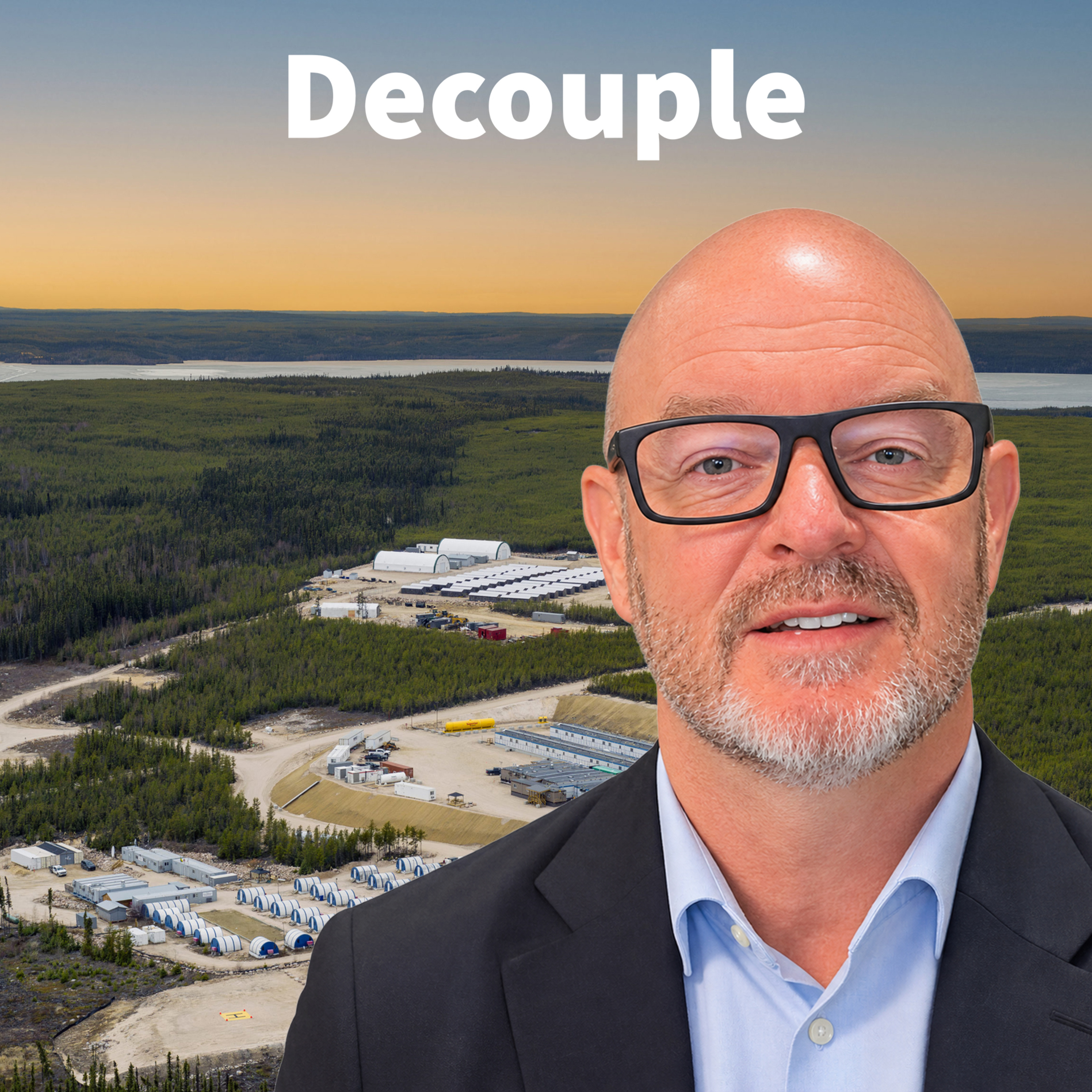
Dr. Avner Cohen, professor at the Middlebury Institute of International Studies at Monterey and senior fellow at the James Martin Center for Nonproliferation Studies. Trained in philosophy of science/epistemology; became a leading historian of Israel’s nuclear weapons program. Known for Israel and the Bomb and Israel’s Bargain with the Bomb.
Written by AI. May contain mistakes.
Explore the underlying motivations for Israel's nuclear capabilities.
“This was the rationale, hardly ever explicitly put in writing, put in words, but the rationale was to prevent another Auschwitz.”
Understand the context of Israel's nuclear program amidst geopolitical crises.
“We had a board of earlier recording, and you're very gracious to come back and give us a second chance now that I think we've figured out the technology.”
Learn about Israel's early demographic and economic situation in the 1950s.
“something that really strikes me is that Israel was the sixth country to get the bomb.”
Discover Avner's background and his approach to studying Israel's nuclear history.
“You are a moral philosopher by training.”
Delve into Avner's philosophical training and its impact on his research.
“Thank you so much for the pleasure and for the opportunity that you gave me to talk about those issues.”
Examine the societal taboo surrounding nuclear weapons in Israel.
“The early 80s was a time that nuclear weapons were questioned by large people in the Western civilization, in the West, what we called.”
Understand the conflicting feelings Israel has towards nuclear weapons.
“about my own country, Israel, it's not like any others.”
Follow Avner's struggles to document Israel's nuclear weapons history amidst censorship.
“To prevent Auschwitz, you have to have that kind of capacity.”
Learn about Avner's unique access to key figures in Israel's nuclear history.
“And that's what I've done in the last few decades.”
Discuss the implications of Ben-Gurion's concerns regarding nuclear weapons.
“All of them are dead of the first generations.”
The host introduces the complexities of Israeli nuclear policy and its historical context.
“I kept discretion and I kept it outside.”
Exploration of Ben-Gurion's motivations and strategic thinking regarding Israel's nuclear program.
“So without further ado, let's jump into that story.”
Discussion on Shimon Peres's contributions and the importance of French-Israeli cooperation.
“So it was in that context when the idea started to, in the summer and the fall of 1956 that Shimon Peres was excited about it and he thought that would be a leverage for Israel to get a full package from the friends.”
Analysis of the political challenges and the necessity for secrecy in advancing Israel's nuclear ambitions.
“Bergman was part of that, and then he was put aside because he became less and less effective.”
Explore the motivations and strategies behind Israel's nuclear program funding.
“Ben-Gurion was committed to prevent internal debate in Israel itself.”
Learn about the significance of the Dimona complex in Israel's nuclear ambitions.
“And when it come out to present it as if it was peaceful usages, all about to take the element of the dual aspect of nuclear energy and to put all the emphasis, this is just a peaceful project.”
Get insights into the infrastructure of the Dimona nuclear facility and its purposes.
“You need, you know, uranium to start the process.”
Examine how Israel maintained its nuclear secrecy amidst international scrutiny.
“So we had, as you mentioned, international Jewish financiers who sort of maybe with a wink and a nudge had some idea of what they were funding.”
Discover the complexities involved in keeping Israel's nuclear program hidden.
Explore the deception surrounding Israel's nuclear capabilities at Dimona and the myths propagated over decades.
“while I started to study that, I was trying to reach out to some of those scientists.”
Discuss the Arab perception of Israel's nuclear ambitions and its impact on the lead-up to the 1967 war.
“Okay, well, let's switch gears a little bit.”
Analyze the miscalculations on both sides that led to the outbreak of the 1967 war, especially regarding nuclear fears.
“But the Arab factor was always there because essentially Nasser realized that he cannot match with a nuclear project of his own.”
Examine how Israel's nuclear program progressed leading up to the Yom Kippur War and the strategic considerations involved.
“But again, at this time, the Israelis maybe took it a little more seriously.”
Investigate Israel's readiness to consider nuclear options during the Yom Kippur War and the political implications of such decisions.
“We had his interview open in the Woodrow Wilson Center in 2017.”
Discuss Seymour Hersh's allegations regarding Israel's nuclear strategy during the 1973 war and its effects on US-Israel relations.
“Let's move on to the next major war, the Yom Kippur War.”
Explore the dynamics of U.S. pressure on Israel regarding nuclear capabilities.
“I understand Kisic had refused to talk to me about that.”
Learn about Israel's landmark peace deal with Egypt and its implications.
“Now we're going to skip six years ahead to 79.”
Delve into the Vela incident and the speculation surrounding Israeli nuclear tests.
“Well, the Vela incident, which happened on the 21st of September, 1979, I think it was 3 a.m.”
Examine Israel's nuclear arsenal, strategy, and its approach to deterrence.
“But he said that his view was that it was a test.”
Learn about the historical deal between Nixon and Meir regarding Israel's nuclear status.
“He said it a few years before he passed away, 2002 or 2003 or something like that on CNN.”
Explore Israel's nuclear policy and the Begin Doctrine's impact on Middle Eastern stability.
“So in interest of time, I think we'll largely skip over Vanunu.”
Delve into the implications of a nuclear-capable Iran for Israel's security and foreign policy.
“its ability to go and assassinate nuclear scientists in Iran?”
Understand Israel's nuclear philosophy and reasons for not pursuing nuclear energy.
“And in the last 10, 15 years, Iran is the issue of concern, actually, for the last 20 years.”
Discover Israel's ambivalence towards its nuclear capabilities and the societal implications.
“But for the next 20 years or so, I don't think it's likely.”
Explore the complexities surrounding Israel's nuclear program and its global implications.
“You mentioned Mordechai Fanunu, which we're not going to discuss, but it was really consolidating certain kind of Israeli attitude.”

Get the gist, explore an idea or ask about something said.
 Claude
On Decouple, what are the key points of this episode?
Searching your listeningAutomatic transcript. May contain errors.
0:00Avner Cohen: This was the rationale, hardly ever explicitly put in writing, put in words, but the rationale was to prevent another Auschwitz. Israel must be equipped with the capacity to inflict, not to do, to inflict Hiroshima and Nagasaki.
0:20Daniel O’Connor: A very warm welcome back to Decouple. Today, I'm joined by Dr. Avner Cohen, who's a professor at Middlebury Institute of International Studies at Monterey and a senior fellow at the James Martin Center for Nonproliferation Studies. He is widely regarded as the preeminent historian of Israel's nuclear weapons program and is the author of Israel and the Bomb and the worst kept secret, Israel's Bargain with the Bomb. Avner, thank you very much. We had a board of earlier recording, and you're very gracious to come back and give us a second chance now that I think we've figured out the technology.
0:57Avner Cohen: Thank you so much. A pleasure.
0:58Daniel O’Connor: So this podcast is largely an industrial policy podcast. We talk about nuclear energy a lot, but we also like to talk about geopolitics and I guess the dark side of nuclear, which would be the weapons side. In the context of the current geopolitical crisis in the Middle East, We've had some great conversations, Secretary Ernie Moniz, and we had Farhan Sabat on to give us a sweeping history of the Iranian nuclear program stretching from atoms for peace efforts under the Shah up until breaking news essentially in the Middle East now. I've decided, of course, that we need to sort of tell the other side of that story, but we need to look at the nuclear history of one of the other primary belligerents in this conflict.
1:44Daniel O’Connor: A country whose nuclear program is, if not clouded in secrecy, clouded in Amimut, which we will define for the listeners later. So I'm very excited to have you on. And I think just, you know, in opening, like as I've thought more and more about this topic and, you know, had a second and third chance to think some more as we prepared for some recordings that didn't work out. something that really strikes me is that Israel was the sixth country to get the bomb. I believe there's nine or 10 that have achieved that. It was so very early in the pack and it was nothing like the other countries, like the U S the USSR, the UK, France, you know, China, not a very developed country, but Israel was tiny at the time.
2:31Daniel O’Connor: We're talking the 1950s state established in 48, I think with something like 600 or 800 ,000 inhabitants, accepted an enormous amount of post-war refugees, had a lot going on, not much foreign exchange. And I heard one of the primary sources of foreign exchange was Jaffa oranges. That gives you a sense of the Israel of the 40s and 50s versus the Israel now. And I think it's really important that we situate ourselves there to gain a full appreciation of just what a unique and interesting story this is. Before we get into that, I'd like to get a little bit of your personal background. You are a moral philosopher by training.
3:06Daniel O’Connor: You did a master's degree actually down the road for me here in Toronto at York University. But I'm curious, I think there's something special about your background. I'm not sure, and I'm not just trying to fluff your feathers. I'm not sure there's anyone else who is as well positioned to write a book, a history of a weapons program for which, you know, it was a deliberate thing for that history not to be written down largely and not to be accessible. So tell us a little bit again about how a moral philosopher came to be the world's preeminent expert on the Israeli nuclear weapons program. And briefly about some of the methodology and why you as an individual were able to write the story so well.
3:44Avner Cohen: Thank you, Chris. Thank you so much for the pleasure and for the opportunity that you gave me to talk about those issues. I'm not exactly a moral philosopher. I was trained in philosophy of science, in epistemology, in history of atheists. And actually, my PhD was about skepticism, was about to revolve against the belief in foundations. And out of that, including some ambivalence about our ability to gain knowledge, I came into this issue. And indeed, there is something very, very unique to Israel as a very ambivalent country about nuclear weapons. So I found philosophy many years ago. I was not very satisfied with, actually, I had a book that I edited with a friend of mine called The Institutional Philosophy, A Discipline in Crisis.
4:40Avner Cohen: That book came out in 1989, by now, many, many years ago, almost four decades ago. And out of that, I felt what philosopher could do something or people who train, which is relevant. So my introduction to this interest was very much in the early 80s. The early 80s was a time that nuclear weapons were questioned by large people in the Western civilization, in the West, what we called. It was perhaps the first time that the issue was out of the classified domain and into the mainstream, into physician, physician for social responsibility, people in clerics, religion, and even philosophers. So my first intro to this was while I was my first year of teaching after finishing the University of Chicago in 1981.
5:38Avner Cohen: This was 1982. My good friend Stephen Lee called me almost out of the blue and says, Avner, what about us doing a volume of philosophical essays about where we are? And it fits my own view about philosophy, that philosophy could be a bridge and could be some kind of helping to interlocute conversation, to facilitate conversation. and I felt almost excited to do something new, even though my plan was to finish my PhD and to have it as a book. This was a traditional thing that people who finish PhD do. And I put it aside and for the next few years, this was 82, I put myself into everything that involved nuclear weapons, history, anthropology, sociology, of course, political science, and of course, philosophy.
6:33Avner Cohen: And we came out with this book, Nuclear Weapons and the Future of Humanity, that Stephen Lee and myself edited. And at that time, I went back to Israel. I was teaching first at Begurian University at the Negev in 82 to 84. And then I moved to Tel Aviv University, philosophy department. And I was started to teach classes about, indeed, ethical questions involve nuclear deterrence. And the more I realize there is something very weird about my own country, Israel, it's not like any others. First, there is very obvious societal taboo talking about the issue. 1986 was also Mordechai Vanunu who came out with the story about the first whistleblower, the first and only.
7:22Avner Cohen: And actually, my first piece in the New York Times David's op-ed page was at Bad Vanunu in 1987, and we started to talk about myself and Benjamin Frankel, a person who wrote with me that piece about the uniqueness of Israel. The fact that Israel, there is this society, societal prohibition against talking about it, which already I used the word at that time, reflects a profound ambivalence about the bomb. on the one hand you want it very very much as a way to ensure that no holocaust will happen again but at the same time there is something profound, damn and wretched about it, there is something terrible about it, so this is the proximity of the sublime on the one hand to prevent another holocaust but also what caused Hiroshima and Nagasaki and then you come to the land to the landmarks of World War II, Auschwitz and Hiroshima and Nagasaki by saying that indeed this was the rationale, hardly ever explicitly put in writing, put in words, but the rationale was to prevent another Auschwitz, Israel must be equipped with the capacity to inflict, not to do, to inflict Hiroshima and Nagasaki.
8:47Avner Cohen: To prevent Auschwitz, you have to have that kind of capacity. given the basic asymmetries between Israel at the time, you mentioned how tiny it was, and the address. So that started to bring me to the issue. And then it was my own struggle to have a voice about it. First to write and to research. Very soon when I started to talk to people and to interview those people who are the pioneers in that enterprise, security services were after me. First kind of conversation, and then become tougher and tougher. So I had like more than a decade of cat-and-mouth fight with those people, including a Supreme Court petition that led to my earlier manuscript was completely banned by the Israeli censor.
9:38Avner Cohen: I submitted it to the censor and then it was Supreme Court. And it was interesting, even this was 1980, 1996 or so, to see how much the judges, the justices, the three of them, were uncomfortable with the case, begging us, the two parties, the censor and Prime Minister Yitzhak Rabin behind him, one party, myself and my lawyers, reach a settlement, reach some kind of compromise. I was trying to. I resubmitted it. It was rejected. And then I decided I'm going my own way. And it took me to a full confrontation with those authorities. At one time, it was quite tough. One time, arriving to Israel and people from security service were waiting for me and interrogated me.
10:25Avner Cohen: And later on, when the book came out, there was a question of what to do with me. And there was very lengthy interrogation, like three, four weeks. Ultimately, it took years until the case was dropped, ultimately. But it was 15 years of struggle.
10:42Daniel O’Connor: Wow.
10:43Avner Cohen: And I told that story, that autobiographical story in the French edition of Israel and the Bomb that came just at a time of COVID. And there was not much publicity, but it came. So it added that the personal story behind it. Yeah. So that's what brought me. I was indeed a philosopher who was intrigued by the nuclear age, starting with moral questions, looking at his own country, realizing there is something uniquely different with sociological, anthropological, historical oddity, and then an effort to uncover, to understand what it's all about. And that's what I've done in the last few decades.
11:24Daniel O’Connor: So obviously there's many reasons why you're the right man for the job. And one of them has got to be personality in terms of being able to put up with, you know, harassment, interrogation, you know, legal conflict. But also I understand you grew up in a neighborhood in which you were sort of exposed to some of Israel's elite. you were able to, again, in terms of the methodological challenges of assembling this history, a lot of it's based on oral history and cross-checking. Just don't go into too much detail there, but just give us, again, a sense of how you can write a book when so much is shrouded in secrecy and still is not publicly available.
12:00Avner Cohen: Well, indeed, I was lucky enough to grow up in a neighborhood that was very much the elite of Israel in the 60s. My classmates were the children of half of the generals of the Israeli army, the winning army of 1967. The person who took me to school every day was the number two of the army, former commander of the Air Force, Ezeb Vizman, later on he became Minister of Defense, later on he became president. So I had access. And people were talking to me. And in the 90s, when I started to interview people, I realized that as much as I can find outside Israel, in the United States, in Norway, in France, and elsewhere, a great deal in Israel.
12:41Avner Cohen: I knew that there is no way, much of the history was in Israel. There is no way for me to get to documents. So I interviewed over hundreds of people, and I got people in a very, very good time in their life. They were still not too old. There were people in their mid-late 70s. They had great stories to tell. and here somebody who appears right and wants to hear their stories. And gradually, many of them were telling me some of their stories. And so I had access, a unique opportunity. This was the time to reach out by now. All of them are dead of the first generations. And indeed, personal connections was very much the way to do it.
13:32Avner Cohen: And part of the anger of the authorities was indeed that I was able to reach out to so many people. And, you know, I never presented myself as if I have any special way to get in the material. People were ready to talk to me because they felt this is the time was right. This was the right age. The memory was still alive, was active. And just as I wanted to hear, so they wanted to give me some of that information. And much of that information did not even appear in the book. I mean, a great deal. I kept discretion and I kept it outside. I felt that I have to draw myself the line, what can be told and what should not be told.
14:15Avner Cohen: Technical and some other operational things were put out. Everything else that doesn't have any bearing on security today can be told. But of course, the way I told it was against the very way that the Israeli censorship allow the Israeli discourse in Israel to run. And that's what got me into trouble.
14:36Daniel O’Connor: So without further ado, let's jump into that story. So we've already pulled on a couple threads here, one of which is obviously David Ben-Gurion's concern with preventing another Holocaust. And his own helplessness during the time of the Holocaust.
14:51Avner Cohen: I mean, the memory of how much he was helpless at that time.
14:56Daniel O’Connor: Yeah, yeah, yeah. So there's more there as well. There's Ben-Gurion's ideas around some of the uniqueness of the Jewish people, of what he called the Jewish brain. You had this country that was nascent, that was weak, that had very little foreign exchange, that was demographically overwhelmed by the Arab states around it, that had no strategic depth, really, in terms of the actual territory of the country. So a huge vulnerability. And he was very interested in science and fascinated, I think, particularly that the great physicists of the Manhattan Project had been Jewish. And there was this idea, I think, of needing to overcome this asymmetry.
15:37Daniel O’Connor: And at first, I mean, I understand there was investigations into chemical, biological weapons. Cast Thy Bread may have used some of those biological weapons at some point. But obviously, nuclear came onto his consciousness. So tell us a bit more about Ben-Gurion. And hopefully I haven't sort of stolen your thunder with overly introducing the topic.
15:57Avner Cohen: You did a little bit. Well, Ben-Gurion was the father-founder of the program. The inspiration, the person who thought with an aid of his own scientific advisor, a man called Bergman, Aaron David Bergman, chemist, actually organic chemist, not even a physicist. but he was the one who was saying it's feasible, it can be done. Later on, many younger scientists, physicists say he doesn't know what he's talking about, but he planted it, he helped to plant in Guren's mind the idea that by reaching out to the bomb, at least aspiration towards the bomb, Israel could compensate for its lacking in terms of competition with its Arabs, more population, more space, more resources, So the only way to compensate these asymmetries in territories and all that is Terrence by having access to the bomb.
16:56Avner Cohen: And he thought about it from essentially by that time of the end of the War of Independence, 1948. Certain steps were towards it were already made, but it was a vision. But when he came back to power in 1955, after a year and a half of being in early retirement, there were certain changes in the world that made him to think this is the time that maybe the time is ripe to start a project, to move from a vision, abstract vision, a hope, inarticulate, into a concrete project. What happened in the world was Atom for Peace, but Atom for Peace declassified a lot of stuff, and it became available, programs to sell, various kind of things.
17:41Avner Cohen: So there was explosion. Can we take advantage of that? There was a conference, Peaceful Users of the Atom, 1955, the first one. Thousands of scientists met in Geneva, and this was the first Israel-centered large delegation at the time, something like 15 people, many of them young, not even with PhDs. And there was a very ambitious young man, at that time 31, 32, named Shimon Peres, with a desire and obsession to get it. And it was also a unique moment of joint interest in a very fateful historical moment between France and Israel. And it's interesting that the origins of opacity, the fact that no clear decision, no explicit decision was made, and yet people, bureaucrats, military people, scientists were pushing without declaring what's the final objective.
18:46Avner Cohen: This was the modus operandi in France until the very, very late in the Fourth Republic before the goal took over. And Perez, while he was back and forth between at that time 55, 56, 57, 58, between France and Israel, he learned that modus operandi, it was shaping the way that he and Begurian started the business. Without saying, without declaring what is the final, even in the classified forum, talking about the project and infrastructure, putting all the emphasis on having a full infrastructure, leaving question for the long term aside, somewhat ambiguous, somewhat undefined. And with that kind of modus operandi, the seeds of opacity were planted.
19:34Avner Cohen: And then there was a moment of opportunity in the Suez crisis where the British and the France wanted to get back the Suez Canal after Nasser, the president of Egypt, Jamal Abdul Nasser, nationalized the canal in July 1956, and the idea to have some kind of operation that would allow to have access to the British and the French to the canal to get it back, and that Israel would start the pretext by letting some regiment or paratroopers to land in the Sinai. So it was in that context when the idea started to, in the summer and the fall of 1956 that Shimon Peres was excited about it and he thought that would be a leverage for Israel to get a full package from the friends.
20:25Avner Cohen: It took a while and just to finish this thing and by September 1957, a full package that includes not just reactors but including reprocessing plant. It was the heart of the heart of the secret and other elements were made into the Dimona package.
20:45Daniel O’Connor: So prior to this, I think there was some idea from Bergman and Ben-Gurion that, you know, perhaps Israel could even do this alone. There was some hubris there. And obviously it was cooperation with the French that made the program either possible or certainly accelerated it through that very narrow window of time before the Non-Proliferation Treaty, this window of time that Israel had to actually get weapons.
21:08Avner Cohen: It was also before French would change its relationship with Israel and get another approach back to the Arab world and all that. So this was a very unique moment of historical opportunity.
21:20Daniel O’Connor: Like when you think about the Manhattan Project, and I'm going to botch the statistics, but a certain percentage, I think single digits of all the electricity production of the US, I think three or four percent used in the Manhattan Project, some small percentage of GDP, but still a large country. As I've mentioned, you know, a country whose main exports are Jaffa oranges and cut diamonds without much foreign exchange. It's almost comical to think that it could have done it on its own. But I think there was some idea. And obviously, fairly quickly that shifted to we have to align with someone.
21:50Daniel O’Connor: So both talk a little bit about that hubris and also the natural alliance between Israel and France, even before Suez crisis.
21:57Avner Cohen: Well, Bergman, who was not really expert in physics, let alone being engineer, had this hubris. And it was very much Shimon Peres, who was this young man with very limited background in science and technology, who was the one who grounded it into the ground by saying, we're not going to reinvent the wheel. We must get as much as possible from the experience of others. And who are the others? Friends to him was very much the first option. And he was right about that. There was a backup, which even today it's not fully clear or known, the fact that Norway was thought to be if the deal with France is not going to work.
22:39Avner Cohen: And it was not that easy, the deal with France. It took all kind of tricks and efforts to try to get it. Actually, it was signed after the French government fell of the First Republic of Bourgeois-Munarie fell out of office. and the date was changed as if it was signed while it was still in office. This was Shimon Peres and years later, decades later, he acknowledged that in the biography about him and he referred to it even in his own autobiography. But it was a backup. Norway was a backup and it's possible that there was even a backup in the United States itself to get some kind of help in a different way by having contact to Jewish connections with a plant in, this is, I'm saying a little bit in tentative fashion, but it's the story of the Apollo plant, Apollo Pennsylvania, the Numic plant, which may have been another way to think about a backup to get enriched uranium, even if you don't have a reactor, even if you can, and that idea apparently was also made separately, but at the same time in 55, 56, 57.
23:55Avner Cohen: So I'm just trying to say, how much was this small clique of Ben-Gurion and Paris? Bergman was part of that, and then he was put aside because he became less and less effective. But the commitment of those few people with a few scientists around them was a very strong one, the determination and the sense of resolve. Ultimately, that would be balanced by a sense of caution and political caution and opacity will be that kind of compromise between resolve and caution.
24:28Daniel O’Connor: So why this link with France, again, prior to Suez? What aligns Israel and France's interests here?
24:34Avner Cohen: Well, the alliance was a reflection of a very unique historical moment. French was backed in Algeria. It was still a French colony. There was going on and on rebellion in Algeria. French soldiers were killed.
24:55Avner Cohen: Jamal Abdul-Nasser and Egypt were involved in helping the Algerian, the FLN, which was the name of that group. And Israel wanted to provide some kind of help to French from its own sources in Egypt. And there was a sense that since French has not yet decided formally to go to the nuclear, and yet there were many, many parties within France who were interested in that, there was this convergence of interest between lobbies in France and lobbies in Israel, and these are the people that can do business. And it was very much under the shadow of Soviet ultimatums during, I think it was November 4th.
25:37Avner Cohen: They told the British, the French, and the Israelis to withdraw from the Swiss Canal. And if not, Bulganin said, even before Khrushchev, that the Soviet might use even the veiled threats of using nuclear weapons against those countries. Israeli delegation went to France. France did not have nuclear weapons. Israel, of course, did not have nuclear weapons. But it was that moment Under that kind of mutual threat from the Soviet Union, Eisenhower was not ready to do anything, that both programs, the French and the Israeli, borne almost together. It took almost another year until it was formalized into a deal with a lot of ups and downs in that year, but essentially the full package to Israel was under the shadow of the Sueds.
26:33Avner Cohen: First, it was in a severe meeting, the meeting that planned towards, it was in early October, early mid-October, and then it was under the Soviet threads. And ultimately, the deal was signed on, it was the date that was changed, but it was September 30th of 1957. Actually, it signed really in early October. But this was the package that created Dimona.
26:58Daniel O’Connor: So, again, I've harped on this a number of times, but Israel of the 50s is very different than Israel now. a poor country, very limited in foreign exchange. And this reactor package from France is going to cost a lot of money. Israel is spending a lot of time resettling refugees, major works project, I'm not sure about the water carrier project when that was done, the port of Ashdod. But these were major projects as well, arming a conventional military in the IDF, a science project on the side that would consume, I'm not sure what the inflation adjustments all was terrible, but let's just say a lot of money.
27:34Daniel O’Connor: How did Ben-Gurion and Shimon Peres get this past the IDF, the Knesset? How on earth did they come up with the foreign capital and also sort of keep this on the down low at the same time?
27:49Avner Cohen: Well, the right verb is not to pass, but to bypass. Essentially, the Knesset was bypassed. Much of the IDF in the formal sense was not consulted, was bypassed as well. So the very need to have this opacity, not just secrecy, but opacity in the sense of not articulating the long-term objective, but the obsession and the concentration on getting the package, the initial package, which was a very wide, broad-based package, was a very strong one. Ben-Gurion was committed to prevent internal debate in Israel itself. That would be the end of it, so he wanted to bypass that. He did it essentially by, today of course, it couldn't be done in any way, by simply by bypassing all the other institutions that normally are involved in those kind of decisions.
28:42Avner Cohen: Essentially, it was really audacity of his, Pingurian, as the leader at the top with the political and moral authority, and his chief executive officer, Shimon Peres. And then they got a guy who built Dimona, the czar who built Dimona, a unique engineer and a very pedant man called Manes Prat. And it was essentially these people with a few others who were involved, actually, the other side of the weapons side, the creation of Dimona, the Israeli Weapons Authority, Weapons Development Authority was created to complement Dimona, Dimona official material, Rafael for essentially the weapons group, weaponization.
29:24Avner Cohen: This was in 58. And it was done in a great deal of secrecy and opacity. Very few ministers never brought, apparently, to any cabinet meeting, let alone any element of the Knesset. The Knesset only in the early 60s. 62, a very unique ad hoc committee started to look into that, but Begurian avoided, and he was trying to avoid as long as possible and to have something on the ground. And also he wanted not to have, even if it's going to be discovered, not to have any controversy, any dispute with any foreign leaders such as Kennedy. So it was very important to him to try to plan the first to have utmost secrecy.
30:05And when it come out to present it as if it was peaceful usages, all about to take the element of the dual aspect of nuclear energy and to put all the emphasis, this is just a peaceful project.
30:17Avner Cohen: and just to prevent a dispute either in Israel itself or with foreign leaders, in particular the United States, let alone the Arabs, to prevent the Arab knowledge about it.
30:31Daniel O’Connor: So where did the money come from?
30:32Avner Cohen: Part of his interest to prevent that kind of dispute was not to take a penny out of the Israeli official budget. So the money initially came out of wealthy Jews that Perez and others makes quiet fundraising among very wealthy Jews in the United States and elsewhere, essentially telling them that we want your help to prevent another Holocaust. I think they told them that Israel is engaged in major nuclear projects, but not any details, and we need the help, we need the money, we need to do it outside the normal channels. and apparently later I'm saying apparently even though by now there is historical almost certainty that the rest of the money to have a more stable money came from a major grant multi-year grant that Ben-Gurion was able to get from Germany from Chancellor Adenauer without telling Adenauer what the money was for I believe that years later the Germans understood some of them understood what it was all about But it's interesting that both the German and the French and the Norwegian, those people who helped Israel, the issue of the Holocaust and what happened on the Holocaust and Israel as a unique, exceptional case was very much in mind.
31:59Avner Cohen: This was in France. So it was not just real politics interests, Algeria and the interests of the young industrial nuclear industry in France, but it was also a sense of shame and guilt and embarrassment about what happened in World War II. And I think that the help of Chancellor Adenauer was also that, even though I've written recently a long article, historical article about that. Initially, it was very important for the Germans and for the Israelis to keep a certain kind of plausible deniability that they wouldn't know what's the money for. But I believe that that multi-ten years grant, I believe that much of it historically was used for Dimona and gave a stable source of money to finish the completion of Dimona until essentially until the 70s.
32:51Avner Cohen: So gradually it became part of the budget and generally it became institutionalized over time. But initially, it was a unique way of fundraising, first from wealthy Jews and later on from, I believe, the German major grant was essentially it was considered to be loaned with a very low interest. Ultimately, for all practical purposes, it was a grant.
33:16Daniel O’Connor: So help us understand what is Damona? A weapons program, you need, you know, fissionable material. You need IP in terms of weaponization. You need, you know, uranium to start the process. I understand Israel had an itsy-witsy bit of uranium mixed with some phosphates and the Negev, but basically it brought all of this technology. And so walk us a little bit through that and also just give us a sense of what the Dimona complex looks like. It's, I don't know, its size. I understand there was some unusual explanations for what it was, but what is it? What are we talking about?
33:50Avner Cohen: Well, I've never been there, so most likely I will never be there. It would be interesting one time to give them a talk about their own history. but I never had a chance to be there and I don't think that I will ever be there as a visitor. So Dimona was the site in the Negev. It's about 30 kilometers south and east of the fourth largest city in Israel, Beersheba. It was chosen that site because of its essentially distance from borders for a certain kind of seismographical survey, geological survey that was made, essentially. And the package that includes the infrastructure, the nuclear infrastructure was built there.
34:40Avner Cohen: It includes a reactor. The secret of the secret was the recrossing plan that was part of that. It was the most sensitive element of that and that Israel had never acknowledged to this day. It became known by Vanunu in 1986. And it was other elements that essentially gave Israel access to most aspects of the nuclear fuel cycles in terms of waste, in terms of various aspects of the nuclear fuel cycles that were made at Dimona. At the same time, and the beginning of the excavation was in mid-late 1950, It started building in 59. It was discovered in December 1960. First time Americans came there was in 1961, in May.
35:31Avner Cohen: But at the same time, and it was all under Shimon Peres, and his name was not public, but he was the chief executive officer of the entire project. He, McGurian, authorized to reorganize the research aspect of the nuclear establishment, created a new institution, a new organization called Refael, Israel's Weapons Development Authority, and the missiles and nuclear was a big part of the initial mandate. And this was in 1958. And for a while, until essentially the mid-60s, there was not much connection between these two aspects of the nuclear project. The work at Refael, which is in the area north of Israel, but around Haifa, and the Dimona, And only by 1965, 66, that you need to have the convergence and the two sides need to talk.
36:27Avner Cohen: Israel reestablished the Atomic Energy Commission that took care of the whole thing, and it moved to the present time.
36:36Daniel O’Connor: Let's talk about how Israel is able to keep this a secret for so long. A couple things here. So we had, as you mentioned, international Jewish financiers who sort of maybe with a wink and a nudge had some idea of what they were funding. Those are people in the know to some degree. Obviously, the French government, private contractors building the reactor, assisting building the reactor and the reprocessing plants. I understand when the Fifth Republic came about and Charles de Gaulle came to power, there was a real freeze in terms of relations, nuclear relations to some degree between Israel and France.
37:09Daniel O’Connor: And yet the work continued. So walk us a little bit through how this secret was kept from, for instance, the U.S., what was really going on at DeMona and this really breakneck pursuit of a nuclear weapons capability.
37:24Avner Cohen: Well, it was a very complex kind of activity. There was multi-aspect of that. In France, I call it audacity. Ben-Gurion and Perez took a gamble. I mean, the fear, and Golda Meir, the time foreign minister, she warned, and she was quite assertive about it that the whole thing could become a white elephant. Israel would start the whole thing, the French would abandon it, then it will never finish. It will be a fiasco, national fiasco. So how to manage the whole thing, it was not easy. Indeed, the window of time with France was a short one. And when the goal took over, it took time until he learned the full extent of that.
38:12Avner Cohen: And the whole effort was to slow down. It took him almost a full year to learn the full extent of what was going on. He was very angry. But for a while, it was hidden, or some aspirin were hidden from him. By 1960, he was trying to end it. Shimon Peres was dispatched to France to tailor some kind of compromise. And the compromise was that gradually French official government-to-government support would end. But they allow French company to continue with the work. This was the quiet aspect of that. And that's why Israel was able, indeed, even though the reactor was ended sometimes in 1963 towards 64, the reprossing plan, the secret within secret, this was ended in 65 or so.
39:02Avner Cohen: And it started, it was not an easy and smooth movement into operation. There was an accident. And by 1966, it started to produce its plutonium, the weapons-brain plutonium. But it was a complex issue. Now, with the United States, Israel was playing the dual aspect of nuclear energy, committing this project at the present time. McGurin said its present time in his conversation with Kennedy is for peaceful purposes. The United States knew that at the least it would put Israel ahead if it would change its mind. They did know that from the very beginning, the project was all about to create the infrastructure for a nuclear military option.
39:50Avner Cohen: They missed the reprocessing plant. Kennedy insisted very soon after taking office to have the first inspection. Ben-Gurion reluctantly agreed, and that allowed for a meeting between Ben-Gurion and Kennedy in May 30, 1961. And by 1963, when the reactor was about to be completed, Kennedy started a very gradual pressure. At the end, it came almost to ultimatum to have American access to the Mona to verify that the Mona is indeed for what Israel said it is for peaceful purposes. So it was a very real challenge to allow American visitors, scientists, to come every year. Kennedy asked twice a year.
40:39Avner Cohen: He's really never allowed that. But to come every year to visit the site and to keep them with the same cover story that prepared for the first visit in 1961, as if the whole thing is essentially for peaceful. Yes, it's broad-based. There are elements that at one point could be used, but a certain thing had to be concealed. It took a lot of ingenuity, intellectual, physical, to make sure that Americans will not find out, will not uncover the real purpose of the mona. And indeed, until 1969, when it was the last visit, and Goldemir and Richard Nixon ended it by their own deal, the United States had suspicions, had wonders, but they never had smoking guns.
41:31Avner Cohen: So it was—and Israel and the United States, to these days, even by now we know because we have a lot of the report, the official report that American scientists wrote after that, and we know they have suspicions, asking questions, but they thought that there is no, I mean, the final finding was no weapons-related activities were found at the Dimona facilities. So I can tell you a little anecdote that at one point in the 90s, while I started to study that, I was trying to reach out to some of those scientists. By that time, they were in their 80s. And one of them was not aware of Vanunu, and it was difficult for him to believe He was so confident in his professional skills that he was deceived along.
42:20Avner Cohen: His two was three visits in Dimona. Years later, about that particular person, I heard from the Israeli, by now he is deceased, the Israeli former head of the Atomic Anker Commission, Islai Dostrovsky, told me, that guy that you're referring to was the one that I worried about him most
42:37Daniel O’Connor: because he was with his flashlight going here and going there, and I was very concerned about him. Right. I think it's from the Venunu revelations, but there was things like, you know, bricking over the elevator entrances and like highly choreographed visits and a lot of preparation.
42:52Avner Cohen: Well, a lot of it remained to the employees. I mean, at the noontime, there was not that many people who were there in the 60s. But I think the lore, the story is about, was the myth that was passed from generation to generation because it was a very big deal in the 60s. It was a major operation of deception. It's what you call a pumpkin village that you create a village look like as if it's one thing, but it's another thing.
43:21Daniel O’Connor: Right. Okay, well, let's switch gears a little bit. We're going to get into 1967 when Israel developed a rudimentary weapons capacity. But before we do, what were the Arabs thinking? They were aware of Damona from what I understand. How concerned were they? Were they, I mean, And this would seem like an opportune moment to do some kind of preemptive strike and create that white elephant moment you're mentioning, if indeed it was vulnerable like that.
43:47Avner Cohen: The Arab factor was always a factor in the making of Israeli opacity, in Israeli concern. And possibly, we're not even sure today, as far as research goes, we're not fully conclusive evidence to what extent that factor was the leading to the 1967 war. When Nasr learned about it, he said that if we learn that Israel indeed is about to produce nuclear weapons, we will wage a preventive war. And his warning was very much in the mind of the Israelis. So it was keeping the Arab guessing. For a while, the Israelis agreed that the U.S. would provide, Shimon Peres objected it, but it was that the U.S.
44:33Avner Cohen: would provide positive reports that the U.S. found nothing. In other words, the U.S. believed that Dimona is peaceful. Because there was a concern to prevent a nuclear race, a regional nuclear race. There was a concern that the Soviet, that the Arabs, Nasser may ask some kind of nuclear umbrella from the Soviets. So it was very much a concern that shaped the Israeli entity towards this issue. One reason why Kareh's initial interest that Israel would follow France, would be an open nuclear weapon state, ultimately was rejected, rejected even by Ben-Gurion in 1962. There were other reasons. And essentially, in 1962, Ben-Gurion made some kind of compromise that led to the seeds of opacity, the compromise between the resolve and the caution.
45:26Avner Cohen: But the Arab factor was always there because essentially Nasser realized that he cannot match with a nuclear project of his own. Apparently, he himself never believed that Egypt could fit that kind of job at the time, Egypt of the mid-60s. There were others who had some ideas, including possibly his deputy, number two, Phil Marshall Amer. And Amer might have been the culprit that led to the aggression that led to the 1967 war. And it may well be that Dimona was in his mind because in 1967, there was already some publications in the world that Israel might have reached the threshold. And indeed, during the crisis of 1967, when Egypt had a twice reconnaissance flight over Dimona for the Israelis, it was a way that the crisis was escalated because there was a concern that maybe it's all about Dimona.
46:33Right.
46:34Daniel O’Connor: In your book, you describe the 1967 war as potentially just massive miscalculation really by both sides and that Nasser wasn't necessarily interested in starting a war, but more, you know, doing big public mobilizations through the streets of Cairo, partially to beef up his image in a moment of maybe political vulnerability himself and that the war almost happened accidentally, that there had been an earlier foray into the Sinai where everything was de-escalated. But again, at this time, the Israelis maybe took it a little more seriously. Possibly the Damona overflights led them on this preemptive bombing campaign to take out these Egyptian air force.
47:10Daniel O’Connor: Talk a little bit about that.
47:12Avner Cohen: By and large, I accept the mainstream narrative that the 1967 war was a miscalculation on both sides, in particular on the Arab side, with some nasty role of the Soviet Union leaking false rumors, let's see if there are truths, that Israel concentrated tens of brigades, 14 brigades on the northern borders vis-a-vis the Golan Heights. Nasser started to amass troops in the Sinai. Israel had to accommodate that, and it led to the crisis. But I add the nuclear dimension. Even if it was not about the nuclear issue, And again, my view is that we don't have the final word about it because we do not know what was going on in Amr's mind.
48:02Avner Cohen: And I think Amr, much more than us, he saw Dimona as a casus belli from Egyptian point of view. And it may be that Dimona was one of the reasons why he moved to amass troops in the Sinai. But even if we put this aside, it was, Dimona played two roles. One, it escalated the perception in the Israeli side due to this reconnaissance flight over Dimona. And the concern that could be a surprise attack, a preemptive attack on Egypt at Dimona, was something that Israelis at the level of Yitzhak Rabin, the chief of staff, and the chief of intelligence, Aaron Yariv, they started to talk about it from 65, 66, and so forth.
48:50Avner Cohen: But more important, the 1967 war, or what led to the war, was also the moment that the Israeli program moved from an idea, from preparation, from building infrastructure, capacity, into, for the first time, creating, improvising some kind of a real package. It was not yet a bomb. It was a device. but given the circumstances given the three weeks of the crisis between May 15 to June 5 when the war started there was a pressure from below and it couldn't be stopped by the top the prime minister wanted to stop it to have something and that something was improvised some kind of device that in the worst case scenario maybe was never tested before there was an operation to to bring it to the eastern part of the sinai and to be able to demonstrate capability never never came close to that but it was some preparations and that issue was secret for years for decades and only essentially by 2017 after the man involved regular general yitzhak Yaakov told me about the story.
50:10Avner Cohen: The story became public. We had his interview open in the Woodrow Wilson Center in 2017. There was a story, big story, in the New York Times. I published a story in the Politico, and all that got attention. But it was a secret until essentially 2017. And when the trial of Yitzhak Yaakov took place in Israel in the early 2000s, people did not know it's all about. It was all about that event that he conceived this idea that he was supposed to be the commander of all that. It never came to that, not even close. And nobody called whether it would be working or not, but the idea was that Israel would have a capacity.
50:52Avner Cohen: In the worst case scenario, if Israel loses the Israeli Air Force, if everything else fails, to have some kind of demonstrations, not to use it as a weapon, but to move the superpowers to make everybody to stop. So this was the idea.
51:10Daniel O’Connor: Independent analysis only works if it's independently funded. If Decouple provides you with energy literacy on demand, please consider supporting it. Become a paid subscriber on Substack or make a tax-deductible donation on our website, decouple.media. Join the community. Keep the lights on. Preferably nuclear. Now, back to the show. Let's move on to the next major war, the Yom Kippur War. At this point, the Israeli nuclear weapons program has had a number of years to progress. And this time, the Arabs surprised the Israelis. And in 67, the Israelis surprised the Egyptians and wiped out their air force.
51:52Daniel O’Connor: What were the objectives, Arab objectives of 1973? There was, I think, fear in Israel that this was, you know, again, we don't have strategic depth. We could be overrun. This could be the end of our country, potentially. But there were real limitations on the Egyptians in terms of leaving this umbrella of surface-to-air missiles that protected them from the Israeli Air Force. So walk us through sort of what's going on there.
52:14Avner Cohen: Well, it's a complex story, but to give you the very essence of that, Egypt said that wanted to break the status quo and to force some kind of arrangement. And for him, the only way since nothing moved was to take a military operation.
52:28Daniel O’Connor: This was to get back the Sinai, get back the territories lost in 67?
52:31Avner Cohen: I mean, 20 kilometers is enough. Ultimately, Israel was able to cut off to have some parts in the other side of the canal. And ultimately, that led to peace after some interim agreement. It led to the 1977 Sadat missions that the peace was signed in 1978. But during the 73 war, because of this surprise, because of the panic, because the Israelis were overwhelmed, including the very top, there were moments that, especially the second day, that Dayan was in the morning, he was in the Golanite, early dawn hours, and it was a fear that the entire Golanite would be taken over by the Syrians. It didn't happen, but there was a fear.
53:17Avner Cohen: he saw that the Egyptians could go all the way as if this was not the case but there was a fear that the Egyptians could advance and he wanted to make the nuclear options more ready not to use it but to make it very much available what does that mean? putting devices on missiles? well Israel always was Israel said that it would not be the first to introduce So Israel has capacity of, for all practical purposes, nuclear weapons, but it's not in the form of nuclear weapons. So you need various kind of activities to assemble and to make it ready to go. Yeah.
54:29Avner Cohen: timetable that if there would be a need for a demonstration, not use, demonstration. Okay. Israel thinking was always first use ever would be only demonstration to give political message. And apparently it was that time that it was a clash between various ministers, Dayan and other ministers, Goldimir. Apparently that meeting did not give the go ahead. She may have given it some other times. The point is that in retrospect, the 1973 war only shows how much Israel, the site of caution, was prevailing. And some descriptions made people to believe as if Israel was very close to use nuclear weapons.
55:15Daniel O’Connor: In my view, this is not the case. One such description is the work of Seymour Hersh, the Pulitzer Prize-winning journalist. And he alleged, you know, very consequential of this war in 73, again, for an energy-focused podcast. This was the Arab oil crisis, which occurred because the U.S. armed Israel conventionally. And Sy Hirsch, tell us about his allegations here and whether they hold water. He has a number of allegations.
55:43Avner Cohen: One of them is as if Israel was using the nuclear issue as a pressure, almost a blackmail, the title of that chapter is blackmail, to put on the United States to provide Israel this air transportation of weapons immediately. Pressure on Nixon and Kissinger. Nixon was out for his own reasons. Kissinger was taking over. I understand Kisic had refused to talk to me about that. I was trying to reach him for an interview, but from what he said, he always denied that. At the same time, I know that the United States did pick up some activities that took place in Israeli-relevant nuclear sites. So they knew that if Israel would push very much to the corners, that option available, and the people who advocate that option would be in a stronger position.
56:40Avner Cohen: So I believe it plays some role, even though Israel did not put the pressure. As you know, at one point, Golda Meir raised the possibility of flying herself to Washington to meet Nixon and to ask for that immediate airborne transportation to Israel, like what happened in Berlin in 1948, the airlift. Kissinger was, oh God, she shouldn't come, and indeed she did not come, but the airlift started very, very soon. whether the nuclear issue play a role or not, we do not know for sure. And apparently from the documents that are available today, not all of them are still available today. This is not the case, but I'm almost certain that it plays some role in the American mindset that if Israel would push too much and it would not have a resupply, they may have no choice but to go to the nuclear option to demonstrate with nuclear, and nobody wanted that.
57:36Avner Cohen: So it may have played some role, even though we have not found, I do not know of any direct document who suggests that. So that's one aspect. The other aspect is about what Sy Hirsch says about Israeli preparations. He is right up to a degree. There was some activations that were made at various places in Israel, but it did not come to the point that Israel was very close. At that time, the Israeli missiles, the MD-660, the French Jericho-1, they were not of Russian. I know it for a fact from the people who commanded that base. And so Israel did not have a real capability to use it with missiles.
58:23Avner Cohen: Those missiles were very inaccurate. It didn't make sense. Syhersh claimed that Israel did certain kind of disposition that the United States would pick it up. That's possible. but it was to provide a signal not to use. So I believe that Sy Hirsch exaggerates some of the claims about the pressure on the United States, about what took place in Israel itself, and makes it much more dramatic than what it was. It was dramatic, but it was not as dramatic as Sy Hirsch led his reader to believe. That's my reading. You asked me to respond, so that's my reading as to Sy Hirsch. claims.
59:04Daniel O’Connor: Okay, we've been moving forward in six-year increments from 67 to Yom Kippur in 73. Now we're going to skip six years ahead to 79. Israel has done something momentous here. It has signed a peace deal with its primary belligerent, Egypt. And actually, I would like to add something about that.
59:22Avner Cohen: It's interesting that Egypt wanted to put a nuclear issue as part of the peace deal, that Israeli's signature on the NPT would be part of the formal peace treaty. Right. Israel said, no way. Yeah. President Carter said, no brainer, no way. And ultimately, Egypt gave it up. So it was a great deal of achievement. It was done, ultimately signed in 78, 79. And what you're about to allude to could have been disrupted very much. And now you'll tell what you allude to. We're that predictable.
1:00:00Daniel O’Connor: So Israel puts this all at risk potentially with maybe a nuclear test in the South Atlantic, maybe working with the South Africans. So tell us about the Vela incident. What is it? What was detected? And what's your read on what happened there?
1:00:15Avner Cohen: Well, the Vela incident, which happened on the 21st of September, 1979, I think it was 3 a.m. Greenwich, meantime, was that U.S. Vela satellites, the only one that covered the southern hemisphere, picked up something that looked like, not exactly, but it looks like a nuclear explosion. Somewhere it covered a great area, and there was no clarity exactly where it was, all the area between South Africa, Indian Ocean, Antarctica. Later on, it was more precisely detected to a little tiny island called St. Edward Island, Prince Edward Island. And if it was a test, it was a very low-yield test. The United States, Jimmy Carter at the time the president, it would come in a very bad time to acknowledge that somebody tested, let alone Israel or South Africa.
1:01:24Avner Cohen: Since the evidence was not fully clear, the scientific evidence was not fully clear, there was various committees that were looked into that, including outside committee under MIT scientist Jack Ruina. and they ultimately come to the point that we cannot say for sure. Most likely it was not a test. That issue was contested by many scientists, including the U.S. labs, both Livermore and Los Alamos. I looked at it on the Israeli side and even though I cannot come to a firm conclusion, I tend to believe and I cannot provide all the evidence It's why I believe that way, that most likely indeed it was a test.
1:02:11Avner Cohen: And I think that Israel did have a reason to have a test. What was that reason? The reason was somewhat technical. Israel was involved at that time in modernizing what it has, move from first-generation fission to more advanced weapons, either boosted or two-stage weapons. And at that point, you need to have some empirical results. I think the belief was that that area would not be covered And I think that the circumstances It was a big decision And I have a full array of circumstantial evidence to talk about it But I would prefer not to it this time But my own personal view is most likely it was an Israeli test It would have been very uncomfortable for anybody The United States never put public allegations or even private allegations, to the best of my knowledge, that it was a test.
1:03:10Avner Cohen: And in doing so, Brzezinski was the national security advisor. He was years later, decades later, Jimmy Carter's at two different occasions would say that he thought that it was an Israeli test. He got some evidence that most likely it was a test by Israel. He said it, you know, in his diaries when he published much after he left office. And given the fact that he is the president of the United States, the normal rules, I mean, somebody else who former official could have been disciplined for saying that even if he's out of office with Jamie Carter, it would let it go. But he said that his view was that it was a test.
1:03:52Avner Cohen: And my view is that probably he's right.
1:03:55Daniel O’Connor: So the peace deal is signed. This is really huge for Israel's security. It still has to worry about Syria, Iraq. I don't believe, well, maybe Iran in 79 was starting to become a problem, probably way too early. It had its own problems. It had the Iran-Iraq war. But with the removal of that threat with that peace deal, Israel doesn't relax on the weapons front, from what I understand. It goes on to really modernize and create, I think it's estimated about 90 devices. Does it get a full nuclear triad and a second strike capability? Did your research give you any insights there?
1:04:30Avner Cohen: Well, the common view today is that Israel has a full, essentially a full triad. I want to emphasize that my understanding is that Israel did not run AMOC with its nuclear program. It was a modest program that was highly advanced in terms of R &D and in terms of technical accomplishment. But in terms of actually production, it was never moved aggressively ahead of itself. If indeed the claim today is that Israel has 80 to 100, this was one DIA report several years ago, and let's suppose it's true, I have no idea of my own, I think Israel could have produced many more. I think they have some more weapons-grade material for other weapons.
1:05:17But I think that they have a reasonably not huge size of arsenal.
1:05:24Avner Cohen: And it was always a program that was viewed and understood, unlike Pakistan, possibly like India, unlike even North Korea. it was never used and especially as the program more and more mature, it was never viewed as a weapons program. It was viewed as a political symbol to give a sense of where Israel sees itself and where it wants others to see itself as a major geopolitical power with that capacity. But I don't think that Israel, the way it built it, the way it created command and control system, the way that delegations of responsibility were divided between the IDF, Ministry of Defense, and the Prime Minister, who is ultimately the supreme leader on those issues, not alone, but supreme.
1:06:26Avner Cohen: I think that Israel made a lot of elements of caution into the system not to view it and not to think about it as weapons. For my understanding, the IDF does not have custodianship on any nuclear material. Nuclear materials is not in the domain of the IDF. IDF may have platforms, missiles, submarines, and others, but it does not have possession, custodianship of nuclear material. Of course, to marry platforms with nuclear assets could be done very, very quickly, and there are procedures and ways to do it. People know how to do it. But I think normally there is a separation, in my understanding, both physical, geographical, but also functional, organizational, between military assets, military platforms, and nuclear assets.
1:07:27Avner Cohen: They are normally not together. And this, if true, and I believe it's true, give credibility when Israel says that it's not going to be the first to introduce, because the act of introduction is the act of marriage. So even though it's very, very close, exactly, to full assemble to make it as a weapon. But it's also in terms of mentality, way of thinking, perceptions. I don't think that Israeli military leaders all the way to chief of staff view nuclear weapons as another form of weapons. It's not the case. It's viewed as something that the captain, the national leader has it, but it's viewed as his own capacity as a political weapon rather than a real weapon.
1:08:16Avner Cohen: And I think it was very important that other nations, including Arabs, understood that that's the way that Israel treats its capacity, with that element of caution and responsibility, unlike, for example, Pakistan or North Korea and others, essentially. And that highlights the fact that Israel is a very, very unique, very different nuclear weapon state, unlike any of the others.
1:08:44Daniel O’Connor: And is that because, again, Again, Soviet Union, the US, India, Pakistan, to my understanding, to have a secondary strike capability, meaning you can be hit by nuclear weapons and maybe completely destroyed, but you can extract the serious toll on whoever did it to you, requires having those pits inside those devices. Submarines are a great platform for that because they can hide out and very difficult to destroy in a first strike. So are you saying Israel doesn't really have a secondary strike capability or it would prepare that if the situation arised? I think it has the capacity.
1:09:17Avner Cohen: It's not built to be ready to go that kind of capacity. In other words, you need various kind of authorizations. And this is part of opacity. And one thing that you miss, Chris, and I want to bring us to the issue, you miss 1969. Oh. In 1969 is the time that Israel and the United States for the first time, Golda Meir and Richard Nixon reached some kind of, at a time they thought it's short-lived, but some kind of understanding, some kind of a way to reach leadership understanding about that and to end the cow-to-mouth relationship that went on in, you know, in the Kennedy and Johnson and early Nixon.
1:10:00Avner Cohen: And the idea was that essentially Nixon, and years later, he said it actually on CNN interview, that he knew he cannot say from whom, I believe from Golda Meir, that Israel has nuclear weapons. He said it a few years before he passed away, 2002 or 2003 or something like that on CNN. But I think the arrangement that Israel still does not want to see itself as nuclear power, it has the capacity, but it doesn't want to nuclearize the Middle East for its own strategic reasons, for reasons of non-proliferation, for its relationship with the United States, for all sorts of reasons. Israel would like to keep the Arab-Israeli conflict not at the nuclear level.
1:10:47Avner Cohen: and I think that the arrangement was made between Golda Meir and Nixon that the United States would look the other way, would not formally acknowledge that Israel has nuclear weapons, would not fight with Israel, Israel would keep it invisible, this was the word that Kissinger used in some of the documents was a way to create a compromise which fits a compromise that already was came into being from 1962 on the Israeli side. And I believe that it was that deal, that arrangement, that bargain between Nixon and Golda Meir in 1969 that laid the foundations for the posture that Israel would develop after 1969, the posture of capacity.
1:11:38The United States would endorse it, not publicly, quietly.
1:11:44Avner Cohen: doesn't want to know too much about it and allow to keep the issue outside regional and even global politics to make Israel an exceptional, an exceptional case. There are some liabilities about it, but I think the sense was this is the best way to deal with it, at least for now. Right, right.
1:12:04Daniel O’Connor: So in interest of time, I think we'll largely skip over Vanunu. Yes. And because I really want to discuss the contemporary Middle East and the situation with Iran. We've talked a little bit about Amimut. What I'm interested in is the Begin Doctrine and Israel's idea that we won't be the first to introduce nuclear weapons into the Middle East, but we're certainly not going to allow anyone else to do that. And in doing so, we will keep the Middle East
1:12:31Avner Cohen: outside the nuclear domain, outside the open nuclear domain, that nuclear policies would not contaminate the conflict in the Middle East. This was the idea.
1:12:43Daniel O’Connor: So there's attacks on the Iraqi Osirak reactor that I believe the French were helping out with, strangely enough, those Frenchies, on a Syrian reactor, which the North Koreans were helping out with. But let's talk a little bit about our contemporary situation. And I mean, it goes back many years. Netanyahu has been trying to convince numerous American administrations to knock out Iran's nuclear capabilities to the degree that that's even possible. What would a nuclearized, a nuclear weapons capable Iran mean for Israel in terms of, I don't know, its freedom of action, its ability to go and assassinate nuclear scientists in Iran?
1:13:25Daniel O’Connor: How would that change things, in your opinion? And why is that such a focus of Israel's foreign policy to prevent that?
1:13:32Avner Cohen: Well, of course, it depends what we mean by nuclear Iran, whether Iran would go the Israeli way or Iran would go, actually would detonate, would test, and would declare to conduct a test and to have nuclear weapons. For the same arguments that took place in the Israeli internal debate in 1962 between the pro and the con people on the nuclear issue, when the con people, the people against it, claimed that if Israel would introduce nuclear weapons, the other side would have it too sooner or later. The other side was at that time. Egypt later on, it would become Saddam Hussein. Ultimately, it's Iran, the other side, the hostile side.
1:14:20Avner Cohen: Then Israel would be in a vulnerable situation because Israel would be much more vulnerable because of its... All these asymmetries that led Israel to develop, once you flip, it's become adversarial because Israel is small. As Raph Sajani, the former president of Iran, used to say, Israel is a one-bomb state. It could be. Zionist enterprise could end if, God forbid, one atomic bomb falls in Tel Aviv. So the fear of another Holocaust, the fear that the other side would have, and the sense that they are not as cautious as we are. Again, we do not have evidence for that, but the always attitude was, we may have a lot of inhibition, we Israel, and we cannot see ourselves using it.
1:15:16Avner Cohen: As I said, the Israeli doctrine always thought that even in the worst case scenario, first use will always be only demonstration, not actual use. But the fear was if others had another Holocaust could happen. So it was very much Menachem Begin with his own personal sense of the Holocaust that he witnessed himself. You know, he ran away from Europe when he arrived to Palestine during and after World War II in 1945, I believe. so it was he with the images of the Holocaust and Jewish children being moved to Auschwitz that he authorized to take the action against Osirak in 1981 you know in 1991 it was the United States I'm not sure if Israel alone could have done what the United States did and the United States did not know at that time in 1991 the first Gulf War that how advanced was the Iraqi program.
1:16:15Avner Cohen: But it was Menachem Begin, this dictum, never again, that Israel is committed not to allow to do its best, to do what it can, to prevent from hostile power to have that capacity. And in the last 10, 15 years, Iran is the issue of concern, actually, for the last 20 years. In my view, Iran in many ways has been trying to imitate Israel itself, to get closer and closer to the bomb by mimicking Israel without declaring, possibly not even leaving the NPT. By now they're reconsidering. There is voices more and more in Iran to leave the NPT after what happened, including what happened earlier this year in February.
1:17:01Avner Cohen: But I believe that much of the Iranian nuclear behavior was to try to push the envelope as far as it can the way that Israel did in the 60s. It was much easier for Israel. Israel did not sign the NPT. The NPT was very young. Iran did sign the NPT. Israel had this unique thing with the United States, with Nixon. It was the Holocaust that allowed other Europeans and others to say Israel maybe deserved to be a special case. Iran is not viewed this way. But I think there are many indications that Iran, if it could, wanted to follow mimicking the Israeli opacity. Obviously, Israel, Benjamin Taneo, is committed not to allow that Iran to happen, and others in Israel.
1:17:59Avner Cohen: And we'll see what will happen. You know, right now we are, you know, big, big questions what will happen with Iran, to what extent Iran has some capacity. That capacity was not fully gone, even though there was a great deal of damage that was made in June 25 and to a less degree in February 26. But that issue, it still remains. It's still there.
1:18:24Daniel O’Connor: So a couple of questions, which I think I know the answer to probably or how you're going to respond. But do you think there's any scenario in which Israel uses a bomb on Iran, a nuclear bomb on Iran, if Iran was getting very close or declared a weapons capacity, or would use their nuclear program as a form of blackmail to ensure that the U.S. takes further action to eliminate Iran's weapons potential?
1:18:47Avner Cohen: It's very difficult for me to see any Israeli leader. I think the Israeli, over decades, the sense of inhibitions by Israeli leaders, people in positional responsibility, prime minister, minister of defense, against using nuclear weapons are very, very strong. And it's part of the culture of capacity. It's part of the culture we don't talk about this issue. I think to me, and I had a few close to conversation with people who used to be in power, not with all of them, but by and large, it's very difficult for me to see any Israeli leader using nuclear weapons under any circumstances short of Israel still being attacked.
1:19:33Avner Cohen: And even then, I think Israel would like to use it, if God forbid, will come to that with another country, with the United States. And it may be that the retaliation for that would be by more than one country. Just not to carry the sense of violating the nuclear taboo return or retaliation alone. But it's very difficult. I think the Israeli inhibition, the Israeli element of caution are so embedded into the system, the command control system, into the mindset of both top military leaders as well as civilian leaders, prime minister and minister of defense. Very few people in the Israeli military establishment have access to that kind of knowledge.
1:20:19Avner Cohen: Very few. Tiny little bubble, and that bubble is well contained from the rest of the IDF. and it's it was done in very intentionally to insulate it, insulate that kind of bubble so I think that it's to me it's extremely unlikely, I cannot see circumstances and of course Israel conventionally is very very strong, so the answer to your question is, short answer is no yeah
1:20:50Daniel O’Connor: shifting off of the weapons topic in our closing question here we again tend to focus on nuclear energy. Israel has a pretty extraordinary intellectual investment in nuclear, certainly I think could pursue nuclear energy, but hasn't. What are the underlying reasons why we don't have nuclear power reactors in Israel?
1:21:12Avner Cohen: Well, the reasons are obvious. Israel could not get it once there was an NPT or could not get it even before that before the United States, unless it would give certain kind of concession on the demono program, on the other side of the program. And there was always from the time Ben-Gurion, I mean, Ben-Gurion from his own days in the mid-late 50s already, he already wanted to go both directions for the weapons options, but also for energy. And when the choice came that you cannot go both ways, the existential deterrence, the response to a worst-case scenario was much more important than energy.
1:21:58Avner Cohen: So it was put aside. Later on, the NPT put formal barriers for that. And as long as you don't make some kind of deal in the open diplomatic deal about Israeli capacity, maybe something like what was made for India a while ago to give a certain kind of public status for India, the American Indian deal, 15 years ago or so, I do not see Israel, unless Israel can build the infrastructure on its own, it's expensive. And so I don't think it's likely.
1:22:38Daniel O’Connor: And Israel has large gas fields in the Mediterranean. There's not an urgent energy reason. That's right.
1:22:44Avner Cohen: Without that, this calculation might be different. But for the next 20 years or so, I don't think it's likely.
1:22:51Daniel O’Connor: Okay, I think that wraps up a pretty exhaustive and detailed...
1:22:55Avner Cohen: But maybe one thing I really want to emphasize.
1:22:57Daniel O’Connor: I was going to say, if you want to add anything, please do. And actually, there was an urgent request to add something to our last botched recording, so maybe this is it. The moment I've been waiting for. Okay.
1:23:09Avner Cohen: You know, people do not appreciate how much... I mean, people often think that Israelis have nuclear weapons, just simply doesn't say that. It's a kind of you know, wink and a nod in a way that it's just a smile but this is not the case Israel built operationally in terms of way of thinking in terms of societal reactions, a very unique reaction to nuclear weapons it has profound ambivalence and in that case Israel is a very unique case in the nuclear age and nobody was behind this as a blueprint. It was not some kind of engineering idea that Ben-Gurion laid to others and it came by itself in relation to circumstances, political, societal.
1:24:02Avner Cohen: You mentioned Mordechai Fanunu, which we're not going to discuss, but it was really consolidating certain kind of Israeli attitude. And by now, Israel is a really unique case among all the nine nuclear weapon states. it's the only one that it has the full capacity, and yet it doesn't want, it cannot see itself as a full nuclear weapon. State does not want to see itself. So it has it. It's a profound ambivalence, and I think it's really worth studying, and that's what I've been trying to do for the last few decades, to try to highlight and understand the uniqueness of this particular case.
1:24:43Daniel O’Connor: If I may just add something and maybe one final question. I do find it extraordinary, Amimut, or this opacity and how it endures, again, despite the Mordecai Venunu revelations, you know, photographs of the plutonium reprocessing plant. 57 or 58 pictures of them, yes. Yeah, yeah. You know, a fiction like this or pseudo fiction requires the consent of others. It requires the consent of the U.S., of the Arab states, maybe the IAEA, the U.N., to endure the way that it has. So why is it convenient for so many major powerful actors in the world to play along and to allow this fiction?
1:25:21Avner Cohen: That's a fantastic question and wonder. My view is, you know, it's all tacit. It's not there is some secret master plan that everybody, all these parties, and you mentioned various levels of the international arena, IAEA, the United States, Israel itself, its neighbors, it's all are somewhat players within this amazing invisible game of opacity. And I think that opacity created a sense of two things. One, it's the interest of everybody to keep it low profile, with low salience, and to treat it as something which is not threatening, which is there. It's known it's there. But given the Holocaust and given everything, we understand why Israel has it.
1:26:15Avner Cohen: It's better not to raise it. And I think for the Israeli society to create a very unique way of dealing with a subject like that, it's quite remarkable. And yet it was never planned. It became almost a natural response to a very profound sense of influence. And it comes to this axis between survival and disaster and catastrophe, this axis, nuclear weapons could be catastrophe, but also nuclear weapons give the Israelis in a very tacit way, in a very quiet way, a sense that we ensure our existence. We are few in the region, but it may have helped us to get a peace with Egypt. It may have helped us to get the Abraham record.
1:27:07Avner Cohen: It may get us a place on the table. We're treated with respect. We don't need to talk about Everybody knows it. So there is this tacit agreement to treat this complex issue almost as the king has no clothing, almost as if it doesn't need to be spoken, even though everybody is fully aware of that.
1:27:28Daniel O’Connor: How is it beneficial to the Arab states for them to play a part in this fiction or at least not object loudly in terms of their leadership?
1:27:36Avner Cohen: To consider Israel, it's allowed them not to see Israel as a nuclear threat. It's allowed all the, you know, Egypt, Egypt at one time, especially towards the, when the NPT came into indefinite extension in 1995, there was an effort to push it. And Israel refused. Other countries supported Israel. And ultimately, the Egyptians left the issue alone. I mean, they don't raise the issue anymore that much. It's allowed to ignore, to look the other way to others. And I think people feel in a very instinctive way, that's the right way to deal with it. Yes, it creates some difficulties. It creates a difficulty of double standards.
1:28:20Avner Cohen: Why Israel? Yes, in that way. Why Iran? Why not? Why we trust one particular country? but it's a collective way of many people from different parties to feel we don't have any better solutions, so let's stick to what we know, and it gives us a sense of comfort because we feel comfortable about that in more than any other way.
1:28:44Daniel O’Connor: So there is something quite intriguing about it. For sure, for sure, which makes this subject fascinating. Avner, thank you so much for making the time. Twice, we mentioned we had a bunch.
1:28:55Avner Cohen: This time it was different than what we talked about at that time. Completely different.
1:28:59Daniel O’Connor: It was. It was. It was still very interesting. And thank you for having the courage to do this. Again, I think, as you mentioned, there was a lot of harassment to tell the story. 15 years. Yeah. Extraordinary. I'm not sure if you ever feared for your life, but you never know. Well, it was all kind of funny incidents. Oh, my goodness. Okay.
1:29:21Avner Cohen: It has been a pleasure, Chris. Okay. Okay. Perfect. We'll talk again soon, I'm sure. Thank you so much.
1:29:29Daniel O’Connor: Today's episode was made possible through a generous donation from the Xerxes Foundation and from listeners like you making pledges on our sub stack. If you'd like to join the tribe, please do head over to our sub stack, smash that pledge button, or if you would like a tax deductible receipt, you can hit the donate button and make a contribution through our fiscal sponsor. We genuinely appreciate your support. it is only through your generosity that we are able to continue to offer energy literacy on demand.
How did a tiny, impoverished country whose principal exports included Jaffa oranges become the world's sixth nuclear power? Nuclear historian Avner Cohen, author of Israel and the Bomb and The Worst-Kept Secret, joins Decouple to tell the extraordinary story of Israel's clandestine nuclear weapons program. From David Ben-Gurion's determination to prevent another Holocaust to Shimon Peres's secret dealings with France during the Suez Crisis, we explore how Israel acquired the technology, financed the construction of Dimona, bypassed its own democratic institutions, and deceived American inspectors determined to establish whether its nuclear ambitions were peaceful.We examine Israel's improvised nuclear preparations during the Six-Day War, the alleged nuclear alert of 1973, the mysterious 1979 Vela incident in the South Atlantic, and the secret understanding between Nixon and Golda Meir that institutionalized Israel's policy of nuclear opacity. Cohen explains how Israel has maintained an arsenal that everyone knows exists but nobody officially acknowledges, and how this extraordinary arrangement has shaped Middle Eastern geopolitics for more than half a century. Finally, we turn to Iran, Israel's determination to preserve its regional nuclear monopoly, and the terrifying strategic vulnerability captured in former Iranian president Rafsanjani's description of Israel as a "one-bomb state."Listen to Decouple on:• Spotify: https://open.spotify.com/show/6PNr3ml8nEQotWWavE9kQz• Apple Podcasts: https://podcasts.apple.com/us/podcast/decouple/id1516526694?uo=4• Overcast: https://overcast.fm/itunes1516526694/decouple• Pocket Casts: https://pca.st/ehbfrn44• RSS: https://anchor.fm/s/23775178/podcast/rssWebsite: https://www.decouple.media