Ask ChatGPT

 Decouple
12 Nov 2026 · 56m · 22 chapters
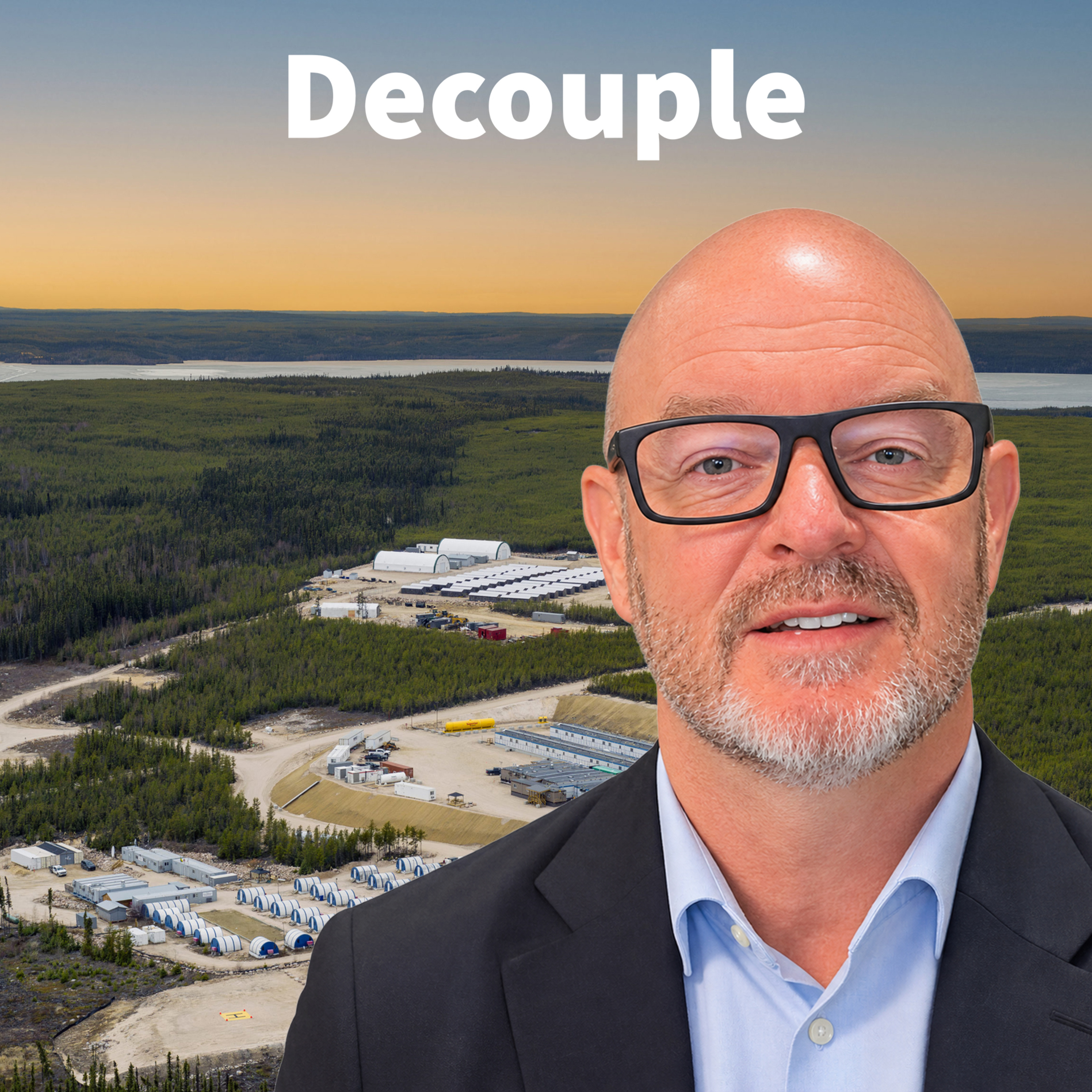
NextGen Energy’s Arrow uranium project in the Athabasca Basin, Saskatchewan—why it’s a “contrarian” bet after Fukushima, the technical approach (crystalline basement rock vs sandstone), permitting and build status, and the market case for uranium supply tightness.
Arrow could supply ~20% of world mine supply and >50% of Western supply from one mine; it will remove ore equivalent to one double-decker bus per day; production cost is about $10 US/lb with modeling sales around $90/lb; the project has a natural “floor” because it’s fully exposed to spot uranium prices at delivery; shaft sinking and initial 100–150m freezing are the critical path; mine life is initially 11 years (permit life 24 years) with potential to extend to ~50 years including PCE.
21st drill hole within a 4.5 km radius struck the deposit; 3,000-foot airstrip commissioned; underwater water diffuser installed with a narrow annual window; Cigar Lake’s past freeze/inflow issues used as contrast.
Leigh R. Curyer, founder and CEO of NextGen Energy (Australian; previously in private equity in London; 10 years prior uranium-deposit experience; moved to Canada to start the exploration company).
Written by AI. May contain mistakes.
Learn about the significant potential of a new uranium mine.
“It's an incredible aspect of this whole story.”
Discussion on the bold decisions made post-Fukushima regarding uranium mining.
“I'm just flexing some of my travel muscle recently.”
Insights into the geology and mining conditions of the Athabasca Basin.
“And so when you look at if you're going to do exploration, my sense is if you're going to spend a dollar, you need to be looking for the world's best.”
Understanding the complexities of mining in the Athabasca region.
“So before we get into the aero deposit and describing Rook 1, you've brought up Athabasca.”
The importance of a stable regulatory environment for mining projects.
“is in a pretty wild place, pretty remote.”
Discussing the benefits of mining in the crystalline basement rock.
“That reflects my level of disposition towards the geological setting, but also the regulatory framework in Canada.”
Updates on the progress and activities around the mining site.
“So we have some natural advantages due to that technical setting being in the crystalline basement rock.”
Exploring the critical path items and risk management in the mining project.
“And it's been built to scope on time and to budget as we speak.”
Learn about the extensive planning and technical de-risking involved in the uranium mine project.
“we've actually drilled pilot holes down the middle in and around those shafts.”
Explore the challenges associated with mining high-grade uranium ore, including radiation control.
“prior to bringing it out to surface and the grades are very high, consistent with the high-grade zones at MacArthur River and Cigar Lake that they've successfully mined over many decades.”
Discuss the challenges of staffing and resource availability in the uranium mining industry.
“And again, getting to go overseas and, you know, tour the Karghouli super pits and just see the scale of it.”
Insight into the process of hiring and project planning in uranium mining.
“But as I said, we've been inundated with job applications and we've got CVs on file already for when those jobs do arise along the way.”
Discussion on NextGen's commitment to building a unique uranium mine with an experienced team.
“We've got an incredibly dedicated team of people who have demonstrated that they're delivering the industry's best.”
Overview of NextGen's financing strategy and views on corporate partnerships.
“So if some industry participation comes along, that's going to mean that it's on extremely sound financing terms for the company.”
Exploration of the future uranium market and demand dynamics.
“And so when you're setting new standards, it does come with a level of skepticism, because I think it embarrasses some of the current operators that we have had the courage to design something better.”
Examination of NextGen's low-cost production strategy and pricing philosophy.
“Yeah, it's an incredible aspect of this whole story.”
Discussion on the long-term viability of uranium production and market conditions.
“There were contracts written at that time at over$140 a pound.”
Insights into exploration opportunities and potential future discoveries near Arrow.
“but we are after exceptional returns and the likelihood of that is very, very high.”
Discussion on estimated mine life and the potential for further uranium discoveries.
“So something that struck me looking at the investor materials is the mine life is estimated 11 years.”
Insights into rising capital expenditures and engineering complexities in uranium mining.
“NextGen's capital estimates increased a little bit between 2021 and 2024.”
How historical mining projects inform current strategies and risk management.
“It's a project that we've studied very, very closely.”
Discussion on NextGen's innovations amidst industry skepticism and competition.
“And what we're particularly proud of is if we're restoring sometimes the, the general public's perception of mining by saying just how environmentally elite it is.”

Get the gist, explore an idea or ask about something said.
 Claude
On Decouple, what are the key points of this episode?
Searching your listeningAutomatic transcript. May contain errors.
0:00Jason M. W. K. H. McMurray: It's an incredible aspect of this whole story. We will be 20 % of the world's mine supply, over 50 % of the Western world's mine supply from one mine and removing ore the size of one double-decker bus a day.
0:16Leigh R. Curyer: A warm welcome back to Decouple. Today, I'm joined by Leigh Courier, who is the founder and CEO of NextGen Energy. Lee, I've been down your neck of the woods a few times over the last few years. We've met somewhere, whether it was at the Minerals Council, maybe the Global Uranium Conference in Adelaide, diggers and dealers. I can't remember. I'm just flexing some of my travel muscle recently. But I love Australia, and I was thinking of another way to introduce you that would honor some of the cultural fluency I picked up on my southern adventures. And maybe you could be better described as a gutsy bloke having a fair dinkum crack at the Iranian business.
0:58Leigh R. Curyer: Would that fit the bill?
0:59Jason M. W. K. H. McMurray: It certainly would down here in Australia. Exactly. No, that's very, very kind. And yeah, it's been an incredible story thus far of a dedicated group of people in the sector coming together and having the courage to go and find a magnificent deposit and take it forward.
1:27Leigh R. Curyer: So speaking of that courage, you made a pretty, I've heard it described as a spectacularly contrarian bet. But how soon after Fukushima melted down did you go, let's go shopping for some mineral rights in the Athabascan Basin? It's pretty quick. It was less than three months.
1:47Jason M. W. K. H. McMurray: And you're quite right. Look, my father even questioned the validity of doing it. I was working in private equity in London at the time. And as everyone knows, private equity, the salaries are pretty healthy. but I took the view that the world still needed nuclear energy and given my 10 years prior experience in the sector looking at deposits all around the world and I thought, well, the world was devoid of A-grade assets and even with the reactors closing in Germany, America was still going forward with respect to the use of nuclear energy China was building reactors at the time and committing to nuclear even post 2011 and that was also validated by Kazakhstan ramping up production 11-fold in the years following Fukushima so look in terms of a bold bet I think it was that experience that I'd had 10 years leading into 2011 where I saw that the quality of uranium projects worldwide was pretty thin.
3:06Jason M. W. K. H. McMurray: And so when you look at if you're going to do exploration, my sense is if you're going to spend a dollar, you need to be looking for the world's best. And the Athabasca Basin, Saskatchewan, is clearly the world's best. But I think the boldness of incorporating the company then and looking at claims in the Athabasca Basin was looking at the other side of the basin as opposed to where the producing mines were. So on the simple pretense I'd worked with a lot of geologists and simply took the view, after I'd spoken to a lot of geologists, that the geology was no different. It just hadn't been explored.
3:52Jason M. W. K. H. McMurray: And, you know, we were in the right suburb and we went to a new street. and lo and behold, on the 21st drill hole or the very first drill hole within a four and a half kilometer radius, we struck the aero deposit.
4:08Leigh R. Curyer: Okay. Okay. So before we get into the aero deposit and describing Rook 1, you've brought up Athabasca. It is true. It's astounding how few mines supply the world's nuclear power plants and how few Canadian mines do. Cameco's production right now, I think it's about 25 million pounds. The world consumes about 175 million pounds per year. So that's something around 15, 20 % of world supply coming from two mines in the Athabascan region. It's tricky mining though, in a lot of this country. I was just looking at some stats because from what I understand, you have a bunch of sandstone sitting on top of this unconformity with some crystalline bedrock underneath.
4:50Leigh R. Curyer: And that sandstone is kind of waterlogged. When you go down deep in that sandstone and it's mushy and squishy, the pressures are kind of insane of the kind of slurry of sediments down there. I heard something like 500 PSI, or to put that in terms I can understand, 15 times that of a car tire. And those who followed the uranium market for a while and were there for that blip when Cigar Lake's production was delayed by seven years from an inflow of water, sand, sediment rushing into the newly excavated shafts. They know this is tricky country. So I just wanted to kind of get that out of the way first.
5:27Leigh R. Curyer: Athabasca is in a pretty wild place, pretty remote. You mentioned it kind of, it got your attention because most of the world's deposits, I guess, are sub 1 % and there's some pretty wicked concentrated ore in there. So just tell me a little bit more. I mean, you're Australian. I I don't know if you'd traveled in the area before, but what was your impression of this part of Canada?
5:48Jason M. W. K. H. McMurray: Yes, you're quite right. Those current operating lines are very tricky considering those ground conditions. And Luke Cameco have done an incredible job technically in terms of successfully extricating that ore body in those ground conditions. What first led me to the Athabasca Basin was the size and grade. But I would say a huge factor, and this is just a personal preference of mine, I can accept exploration risk, finance risk, market risk, all of those things, but I don't have a risk disposition for sovereign risk. And the Athabasca Basin, Saskatchewan specifically within Canada, has just an incredible framework in which to explore, develop, permit a mine within the Canadian Nuclear Safety Commission framework as well.
6:49Jason M. W. K. H. McMurray: And so I like that personally because once you've gone through that process, you do have a project and the sovereign risk is removed.
6:58Leigh R. Curyer: What's funny is when you say sovereign risk, I'm thinking about, you know, in Niger, someone's going to come and take your mine. But in Australia, it could be just that your mine's made illegally. You're not allowed to produce. It's against the law.
7:06Jason M. W. K. H. McMurray: Yeah, that's right. And I'd permitted a mine on the back end of it in Australia in the 2000s, and I deliberately moved myself and my family across the globe to Canada to start this exploration company. That reflects my level of disposition towards the geological setting, but also the regulatory framework in Canada. And look, I've got to say, Premier Mao and the former Premier Brad Wall really deserve a lot of credit for setting up exploration success in Saskatchewan. Our success or unique factor, though, compared to those operating mines in the Athabasca Basin is that we're actually not in the sandstone.
7:53Jason M. W. K. H. McMurray: We're actually in the crystalline basement rock. and so we don't experience a lot of those challenges that exist in the current operating mines. The other aspect is that it's got an exceptionally clean metallurgy so once you extract the ore to surface the processing of it is very straightforward and doesn't produce like deleterious metals of arsenic or selenium or that type of deleterious metal and so So we have some natural advantages due to that technical setting being in the crystalline basement rock. And we have about 100 meters of overburden to excavate prior to getting into the basement rock.
8:38Jason M. W. K. H. McMurray: But once you're in that basement rock, it's almost like an underground cathedral. It's incredibly competent and doesn't require that freezing, which occurs at the current operating mines. And the freezing does add a lot of complexity. As I said, Cameco and Irana have done it very well over the decades. Our project's just not that complex from a geological or an operating perspective. So we have some, that results in a lower capex, a lower opex, and a far faster payback of the capital once deployed.
9:18Leigh R. Curyer: So again, to describe this deposit, you've got this overburden, you've got some sandstone, you've got to freeze it to sink a shaft, and then you get into this crystalline rock. The hydraulic conductance is not too bad. You're not too worried about some of that high pressure, 500 PSI water squirting into the stopes that you're opening up in the crystalline rock. what are what's the state of the site right now i understand um you got your license in march um and i started building things and airstrips in what's what's going on i couldn't make it to the uh the investors uh groundbreaking uh would love to get up to northern saskatchewan but had a mountain trip with my son and i got i always pick mountains over over flatland so
9:59Jason M. W. K. H. McMurray: that's fair enough um it look it there's a we've got 376 people outside as i speak enormous amount of activity and as you said we we received our final permit in in March the 5th on March the 5th of this year after a seven-year permitting process and so we've been planning this we've been ready for this for over seven years and the moment we got our federal permit the final one, we immediately launched into action. And the airstrip has gone in, operating airstrip, 3 ,000 feet was successfully commissioned in early August. We've done an enormous amount of ground excavation ready for the surface infrastructure.
10:53Jason M. W. K. H. McMurray: And the other aspect is we put in the water diffuser, water pipe into the lake. Now, that might sound a little innocuous, but it's actually a critical path item, which we had a 45-day window once a year over the course of mid-July to the end of August to successfully execute. And we had underwater divers. We had over 10 different contracting firms involved in that process because it's very, very important to get right. and we successfully completed that on time and budget and to an exceptional standard. That water diffuser now allows shaft excavation to commence in mid-2027. So 376 people on site as I speak, enormous amount of activity.
11:44Jason M. W. K. H. McMurray: And as I said, a lot of people have been surprised as to how quick we've mobilized. As I said, we're building a very conventional mine. I will make one point that we have very little water ingress into our ground conditions. But a lot of people were surprised just how quickly we were able to mobilize. But as I said, when you've got seven years to prepare and you're building a very simple conventional mine, we were able to execute quickly and we're on track. Importantly, very much, you know, this gets overlooked. We are building to our design scope. We will not compromise that ever. And it's been built to scope on time and to budget as we speak.
12:35Leigh R. Curyer: So what are the main bits of infrastructure that need to get done? I understand you need to build a mill, the shaft. what's the critical path? What's sort of the highest risk in terms of getting it right to keep on budgeting on schedule?
12:47Jason M. W. K. H. McMurray: Yeah, exactly. And that's something we think about a lot and review every day. The critical path item is the shaft sinking. And prior to that is the preparation around the initial 100 to 150 meters of ground freezing. That's where the rock's the most variable. And so commencement of freezing at the end of February of 2027, we're on track for that as I speak and expect to be so on track because the ground foundations for the freezing plant are currently underway. And then once ground freezing starts in end of February 2027, we'll then be in a position to start sinking the exhaust shaft in July of 2027.
13:35Jason M. W. K. H. McMurray: And that first hundred meters of overburden is the most variable. So within a low risk environment, that is the area which, and when we say risk, it's not as to whether we can complete the excavation or not of the shaft, It's, is it in line with the original budget and schedule that we've got in terms of the critical path? Now, we won't need to wait for the full 100 metres of excavating that overburden because we've actually drilled pilot holes down the middle in and around those shafts. We know every millimetre of it. No project prior to going into construction has ever had so much preliminary technical confirmation prior to the actual construction of the project.
14:23Jason M. W. K. H. McMurray: And so it's heavily de-risked before we even commenced. Having said that, once we're 20 metres into that overburn from surface, we're going to know what our development rate is per day and also the cost per metre at that point in time. And we'll be able to extrapolate out. Once we hit that basement rock, the ground conditions are exceptionally consistent. And once we're in that basement rock and the freezing is removed forever, the development rate will accelerate. And so that is the critical path. That's also the most highly variable conditions we're going to experience in the whole construction process.
15:11Jason M. W. K. H. McMurray: And we'll have a very good understanding of that by September of 2027, which is only about 10 months away. After that, as I said, ground conditions are extremely competent and consistent. The mill is actually a very tiny mill as well. I know there's only two mills in Canada. But as I said, we've been planning this for seven years. I've assembled what I believe is the industry's leading experts. They've been with the team for a long time and we've got a very simple mill. We're processing ore about a quarter of the grade of what exists on the eastern side of the Athabasca Basin and we have an exceptionally clean metallurgy.
16:00Jason M. W. K. H. McMurray: So once we get that critical path item is the initial parts of sinking the shafts And we're going to know within 10 months from now that how that looks in terms of the overall schedule and cost. But any variance, yeah, we're still going to overcome it. It's a simple fact.
16:21Leigh R. Curyer: Can you just help me understand a little bit better? I understand that, again, there's these sort of five fingers of ore going down, I guess kind of not quite vertical, but sloping downwards. A2 is kind of the mother load, 15 % or something like that. And then obviously it's getting diluted because you're blasting rock around it. It's getting mixed in. So I think you have a 2.7 % sort of reserve estimation in terms of what that mill is going to be processing. Tell me about the challenges of dealing with such high-grade ore, especially like the radiation control, and then some of the shaft design considerations because you've got to move people up, waste rock, and ore up.
17:01Leigh R. Curyer: I think you're putting the tailings back down. You've got to protect people from decent radiation fields when you're dealing again with such a great resource. So we won't spend too much time on it, but just give me a little bit of sense of those challenges.
17:14Jason M. W. K. H. McMurray: Sure. Yeah. Look, it's a geological phenom in terms of the intensity of the grade. We do have a high-grade heart within the A2 shear, one of five shears that we've identified, vertical shears. So it's ideally positioned for efficient extraction of ore. and within that is that high-grade heart. So we will be doing an element of ore sorting prior to bringing it out to surface and the grades are very high, consistent with the high-grade zones at MacArthur River and Cigar Lake that they've successfully mined over many decades. And so we're using long-haul stoping and we're bringing a whole new level of automation of the underground mining method to the industry.
18:11Jason M. W. K. H. McMurray: There's going to be remote sensing and remote operation of equipment because we have a philosophy, even though it will be incredibly safe underground, just the fact that you're going to go underground elevates risk and we're about reducing risk as much as possible And so we've put a lot of work into the technological development of the underground operating of equipment from surface. And so there's the traditional ways to ensure that everyone's safe. The ground conditions mean that it's going to be incredibly safe. But then we're going even further around the safety. And there's no doubt it'll be far more efficient, cost efficient to have remote operating equipment extracting that ore.
18:57Jason M. W. K. H. McMurray: So it's going to be a combination of factors, but all of them extremely well understood. And as I said, we've been planning it for seven years. We're very excited about bringing a whole new level of technological innovation to the mine. You mentioned the underground tailings, 100%. that is world-class design perspective. It does cost extra in terms of upfront CapEx and we're incorporated ongoing reclamation in the actual operating costs of our project. But I think from an accounting point of view, and I was once upon a time an accountant, you've got to take into account those liabilities left at the end of a mine life.
19:43Jason M. W. K. H. McMurray: And this method is going to avoid that liability at the end of the mine life and proactively reclimate it. So it's very exciting and that really does reflect we've got a view of doing everything we do at the industry-leading standard and that's going to be another example of it. It was one of the aspects of the permit which was very resoundingly endorsed by both the regulator but also the local communities with respect to their approval of the project.
20:21Leigh R. Curyer: Independent analysis only works if it's independently funded. If Decouple provides you with energy literacy on demand, please consider supporting it. Become a paid subscriber on Substack or make a tax-deductible donation on our website, decouple.media. Join the community. Keep the lights on. Preferably nuclear. Now, back to the show. So you mentioned eight years of planning. I've heard reputationally that you put a lot of stock in that and trying to hire some of the best people. I've been sort of thinking about mining a lot, prepping for this episode. And again, getting to go overseas and, you know, tour the Karghouli super pits and just see the scale of it.
21:03Leigh R. Curyer: But, you know, I've spent a lot of time thinking about reactors. And so I make category comparisons, potentially category errors. But I do see some commonalities between the building of reactors and the building of mines. Even if you're doing something that's, let's say the PWR equivalent of doing some vertical stoping inside of some crystalline base rock, every site imposes really different conditions and requires a lot of engineering attention to detail. But the other thing that really stands out to me is because of the nature of uranium as a commodity and how undervalued it was because of all the secondary supply that was coming in from the Ruskies or because the Kazakhstanis were just dumping their uranium onto the market.
21:48Leigh R. Curyer: There isn't really much of an investment case for building new mines. And so we haven't built a greenfield uranium mine, started construction since Cigar Lake, I believe in 2005. We haven't built a new uranium mill since McLean 1997, I believe, something like almost 30 years. And so one of the concerns I have is similarly in the nuclear world, a lot of the people that were there building are grayed out and maybe we're pulling them back out of retirement, but they're not as productive as they used to be. And so there's a certain amount of risk there in terms of kickstarting an industry again and sort of with limited human resources, partially because of that demographics.
22:29Leigh R. Curyer: So how do you think about trying to mitigate that risk, given that there's also other, I believe Paladin's starting on a mine a little bit different than yours, but in the same area, also wants to build a mill. There's a lot of competition, it would seem, for limited human resources, which are so important, I think, both in the mining and nuclear world.
22:47Jason M. W. K. H. McMurray: Yeah, no, look, it's another one of the challenges of developing a mine. Look, there's very few companies that have discovered a project and taken it all the way through to production. Look, I've researched building mining projects all around the world over the last 30 years. that element of the very few of them that have discovered the same company that's discovered the project defined it permitted it constructed it operated it is very very few but the aspect is of those very few companies over the construction period to production there's been over a minimum and 500 % return to investors. And why is that?
23:31Jason M. W. K. H. McMurray: The important aspect is that we've, as a management team over this project, we've instigated every study, we've designed it ourselves, we've brought the right people on over, you know, when we discovered this 12 years ago, I've been bringing the right people on board across that timeframe, particularly in 2017 after the first engineering study, in readiness for this particular moment. Our mine is very unique in the sense that there's never been a mine discovered like this. It's an incredibly competent basement rock. It's more analogous to a copper, hard rock, copper or gold mine than it is one of the current Cigar Lake or MacArthur River, which is under incredible ground pressure, water pressure conditions.
24:23Jason M. W. K. H. McMurray: So we have incorporated a lot of skills and experience from copper and gold hard rock mining. And then from the processing side, we've attracted the very best of the industry. And as I said earlier, we have a very simple metallurgy. So it's not complicated. The mill is very small relative to those other mills in the east. And it's dealing with ore that's less than 25 % of the grade of those mills in the eastern side of the basin. And so we have some natural technical advantages. In terms of attracting the right staff, we've never had an issue with that. We put out for 13 positions earlier in the year and got over 600 applicants.
25:04Jason M. W. K. H. McMurray: We are attracting people from around the world wanting to get on board this project, given its technical strength, given its economic strength, and also given the philosophy of the company in terms of delivering what is going to lead the industry. We've done that every step of the way to date. Construction is going to be no different. And so we haven't needed to go and target any staff. We've had it presented to us. And so from the highly, you know, the guys in charge of the mill, we've got that relevant experience both in Canada and elsewhere with respect to metallurgically processing the ore in terms of ground conditions we have a very tiny mind to begin with we are moving the equivalent of one double decker bus of ore a day that's why it's not like the Kalgoorlie super pit which is an incredible site I love going there I'm just blown away by the scale of that that pit which I believe you can see from space but we have a very tiny mine it's actually one of the world's tiniest underground mines and so when you're dealing with uh incredibly competent ground conditions simple metallurgy and you've got the best from the industry that have come um and and then also again I know I've said it but over seven years of planning on execution we've we've been looking forward to this stage because we get to control it and so it's an exciting period at the company and one which we will do.
26:45Jason M. W. K. H. McMurray: The other aspect is that because of this, I haven't seen a project with such incredible economics and payback for a project, even with the aspect of construction, four years,$2.2 billion. The payback period at the current spot price is less than 11 months. So even if there is a variation in terms of time and schedule, the economics are not going to be impacted materially whatsoever. And we've been waiting for this moment. We're immediately surprised everyone with how fast we're executing. And that will continue. And we're very, very, we've planned ahead. And we've been running training programs in the local community since 2022.
27:41Jason M. W. K. H. McMurray: A lot of the people from the local community have gone to the oil patch in Alberta and working there. They can't wait to come back, be able to live in the community and work in the community where they're operating. So we have a philosophy, we train, we offer employment and we wait for the people to apply. But as I said, we've been inundated with job applications and we've got CVs on file already for when those jobs do arise along the way. It's an aspect though that I don't want to seem as though it's simple and without challenge. It's something which requires a lot of planning, which we commenced back in 2022 with the training programs.
28:28Jason M. W. K. H. McMurray: And it's something that we've mitigated extremely well.
28:33Leigh R. Curyer: In terms of analogous junior miners taking the process all the way through to construction and development, I can find a couple, I believe Artemis gold, Atlantic gold, more in sort of the open pit environment. There's international examples, obviously, of, mine's a little more analogous to your own, that follow that trajectory through. What are sort of, I guess, some of the best practices in terms of seeing that, right? There's a lot of speculation, you know, is Cameco going to buy you guys? Is Orono going to buy you guys? There's some, I think, questions around BHP sniffing around and having some interest.
29:06Leigh R. Curyer: And I think people talking about maybe someone earning in, for instance. Is that something you plan on sort of resisting, like carrying this vision through to the end? What's the thinking?
29:18Jason M. W. K. H. McMurray: Yeah, look, the company was started in 2011. We've got an incredibly dedicated team of people who have demonstrated that they're delivering the industry's best. And I don't really put a lot of emphasis on what may happen. And I don't think about a lot in terms of what's going to happen, you know, corporately down the road or whatever. What I focus on is doing what we do extremely well. And we understand this project better than anyone out there from a technical and execution perspective. And we are the best team to build this project. whilst NextGen as a brand hasn't built a mine, the team that I have at NextGen and had for many years has over two and a half thousand years of experience in building and operating these mines.
30:13Jason M. W. K. H. McMurray: So we don't need any external expertise to help us with this. Even at Cameco, their experience is irrelevant to this ground setting. It's completely different. So there's no expertise out there even from Cameco on the other side of the basin that we would even seek with respect to the construction and operation of this mine. And I say it all the time, people should expect better. And that's what NextGen's delivering in terms of mine. This will be the most environmentally elite managed mine on the planet and have the smallest footprint given the output that it's going to have. and with that you've got the best team in place you're able to raise the finance yourself the need for external industry participation turn into the project is is diminished now I've still looked at that as my responsibility to get the best financing package in place to build this mine, and it's one of a number of avenues of financing that we may execute on.
31:27Jason M. W. K. H. McMurray: But I believe it's not the highest probability, though, for those reasons. We don't need the technical expertise, and we can raise money externally. So if some industry participation comes along, that's going to mean that it's on extremely sound financing terms for the company. And that's something that we've done all along. We've always attracted a very high caliber of investor dating back to 2016. And the support we have from our top 20 shareholders to take this project through construction into production is extremely strong. And look, our other unique aspect is that we will always maintain our exposure to the future price of uranium at the time of delivery.
32:22Jason M. W. K. H. McMurray: And that is quite unique in the uranium sector. Traditionally, a lot of the legacy producers have put in legacy contracts at fixed prices or partially fixed prices, floating prices. but they only get very limited exposure to the future price of uranium over the next seven years. We are keeping fully levered to the price of uranium at the time of delivery. And that is something that our shareholders really want and don't want to see this project delayed by another corporation coming on board, relearning all the information, bringing in a big company philosophy in terms of slowing down the project and increasing the cost of the project.
33:22Jason M. W. K. H. McMurray: We drill in the Athabasca Basin at two thirds of the cost of the current major producers. Why? It's just that we're a more nimble, focused organisation and that's been applied to the construction and operation of this project. So I know there's speculation out there. I think that reflects perhaps what those industry participants would love to hear, that we want to sell the project. Well, no, we don't. If we thought they could do it better, we would have already approached them. And so when you're setting new standards, it does come with a level of skepticism, because I think it embarrasses some of the current operators that we have had the courage to design something better.
34:11Jason M. W. K. H. McMurray: And so if that comes with the territory, so be it. It doesn't impact anyone at the company or our focus. I think that's clearly been demonstrated.
34:20Leigh R. Curyer: I understand the particular conditions in the eastern part of the basin in particular needing to work more in that messy sandstone environment we were describing earlier and freeze things. But in terms of the expertise with, you know, radiation management, both in the mining and the milling and how that impacts construction, you know, potash or gold mining engineers won't have that relevant experience. So I guess I'm pushing back a little bit, mostly again, maybe it's a category or coming out of the reactor world where, you know, I do have real concern about how many people are growing out. And again, that top tier talent, like thankfully, you know, this area is heating up again and there's young people going in.
34:59Leigh R. Curyer: And, you know, there was a big break, I think, in people going into, you know, mining education for a while and into the nuclear sector, into health physics, etc. So hopefully that's bouncing back. But it sounds like it sounds like it'd be an interesting challenge. But it sounds like you've got a great team together. So looking forward to seeing how that pans out. In terms of 30 million pounds coming out per year, again, that's an extraordinary quantity. That is just about, I believe, what Cigar Lake and MacArthur River put out together. It's 20 % of current global usage. Hopefully that global usage is going to go up as more reactors come online and uprates happen and things like that.
35:35Leigh R. Curyer: And you mentioned this different approach to contracting, to have exposure to that upside. And I think there's a lot of speculation that there's going to be real crunch in the early to mid 2030s in terms of uranium availability. There's a lot of under-contracting by utilities. I believe Cameco has locked in a lot of contracts and doesn't necessarily have the production to make those contracts happen currently anyway. I know they like to get those contracts first to then justify bringing more capacity online and having that discipline. So what are the risks or do you see it that way of bringing that$30 million online in terms of long-term uranium price?
36:15Leigh R. Curyer: Do you think that's an issue or Or are we just so short on primary uranium that that's not going to have a big impact on the future prices you'd like to help this project be viable in the long term?
36:25Jason M. W. K. H. McMurray: Yeah, it's an incredible aspect of this whole story. We will be 20 % of the world's mine supply over 50 % of the Western world's mine supply.
36:35Leigh R. Curyer: From one mine. From one mine.
36:38Jason M. W. K. H. McMurray: And that's, again, removing ore the size of one double-decker bus a day. It's quite a phenom. And with respect to, you know, currently the demand and supply gap is the equivalent of around 60 million pounds per annum. That's the equivalent of two arrows. And we're seeing a steady decline in mine supply over the past years. Because Adapron has been very transparent. Come 2030, their production is going to reduce substantially. and they've come out and said, well, look, we're not going to sell as much as expected to the Western world because there's a very heavy demand for it in Russia. China is one of Kazakhstan's biggest clients and within the industry, they're saying that China have been allocated all they're going to receive.
37:38Jason M. W. K. H. McMurray: We've got huge demand for offtake from the Asian region, that next gen. And, you know, we've heard that through them. Look, we are short uranium. We need exposure to the Arrow project. So in terms of you look at the risk, market risk, it's more like market opportunity. And the aspect for us is, you know, we have a very low operating cost. So we can produce 30 million pounds. It will cost us roughly$350 million a year, which is very small in the scheme of things.
38:17Leigh R. Curyer: What's your production cost per pound, just to put that in perspective?
38:20Jason M. W. K. H. McMurray: It's$10 US. Wow.
38:24Leigh R. Curyer: And you're selling at, your economic modeling is selling at 90? Okay.
38:28Jason M. W. K. H. McMurray: Yeah, exactly. And the current producers, you know, the marginal, the current cost of production across the major producers is averaging the mid-60s. So we have a very, and that's been verified by Alderman Financials. So we have a natural floor ahead of us when we have such a low cost. And so our job is not to get a good return on capital. If we sold it at$65 a pound like the others, we would make a great return or I would say a good return. But our job is to make the most return possible no matter what that price will be. So having that natural floor in place, we are just keeping exposed to how far this uranium price can go to.
39:12Jason M. W. K. H. McMurray: And we've seen it in the past in 08, it went to$136.50. There were contracts written at that time at over$140 a pound. Now, I've seen that environment before in 08, and the difference between today and back in 08 is that the world had these mega deposits ahead of them. There's only one now, and those producing mines are expending coming to the end of their useful life. So I, based on that technical and financial fact, I see the likelihood of the uranium price going substantially higher as very, very real. Yeah. And our job is to, if the price goes to$200 a pound, we want$200 a pound. Now, with our philosophy, I hear also that some of the majors have said, oh, they're going to dump 30 million pounds on the market.
40:06Jason M. W. K. H. McMurray: No, we're not. because we are tied to the spot price. We obviously want it as high as it can be. So we are signing contracts that are not going to hit the spot market, but be tied to the spot market pricing. I think that's as simple for everyone to say that is the right strategy. And I know it's different to what the legacy producers have done in the past. I don't care what they've done in the past. I'm about what are we going to do in the future? And the environment has changed. There's never been such fragility of mine supply in the uranium world. And there's never been such baked in demand for nuclear energy in the environment.
40:51Jason M. W. K. H. McMurray: And that demand with all the countries around the world committing to tripling nuclear energy by 2050, the world needs three arrows. So one, the price is going way higher. It's going to be good for anyone in the uranium sector who is operating or bringing a mine into production from an economic opportunity perspective. And I'm just glad I did start three months after 2011. And I think in some respects, I didn't anticipate the market opportunity being as significant as it is today. That's what I didn't anticipate. It's gotten way better than what I even expected. That's the other thing. We're not chasing a commodity price in terms of quickly getting in production because the price is great for the moment.
41:45Jason M. W. K. H. McMurray: We're going into production under any pricing scenario. We have a natural floor ahead of us, which provides a good return or a great return. but we are after exceptional returns and the likelihood of that is very, very high.
42:00Leigh R. Curyer: So something that struck me looking at the investor materials is the mine life is estimated 11 years. When we look at mine lives in general, that tends to be conservative. I guess you stop drilling and exploring once you actually start constructing and generally speaking, more resource or reserve is found. I'm curious though about the PCE, which is another area that you guys own, I think about three kilometers away from the Aero site. I'm not wanting to sort of speculate or sort of engage in that, but it does seem interesting that there's potentially more nice cookies in the vicinity of this cookie jar.
42:38Leigh R. Curyer: What are your expectations in terms of the actual production life and whether you'll be able to use that mill for other deposits nearby.
42:46Jason M. W. K. H. McMurray: Yes. Well, we discovered Arrow with the 21st drill hole on 190 ,000 hectares. It was the 21st drill hole, but it was actually the first drill hole within a four and a half kilometer radius. Now, we obviously know our geology and run a good program, but are we that good that we found the world's best with the very first drill hole? No, we're not. I think all that does is speaks to the prospectivity of our land package. And, you know, three and a half kilometres away on an entirely separate conductor, we've hit PCE, which is looking, well, it's probably the most exciting discovery yet to be defined in the world at the moment.
43:34Jason M. W. K. H. McMurray: Three and a half kilometres away, entirely in the basement rock as well. Given the odds of exploration success, we are finding these deposits way too quickly and way too easily. It's not all of our technical expertise which is leading to these discoveries. The area is very well endowed with uranium mineralization. And I think there's still a lot to be discovered, potentially even better than Arrow. You said we've got 11-year mine life as per the feasibility, and that's the measured resource. We have another 80 million pounds in the inferred category and then we also have mineralisation outside of those grade shells at depth at Arrow as well where we have intersected mineralisation over a strike length of 500 metres.
44:27Jason M. W. K. H. McMurray: That plus PCE, look, this has an initial mine life or permit life of 24 years. I think this project is going to be in operation 50 years from now based on just what we know at Arrow, the mineralisation around it that's yet to go into the resource statement and PCE, which is still in the definition stage. We will look to have an initial resource on PCE mid-2027, but I'll stress it's initial because Arrow is still growing as well. And, you know, when you tag into these high-grade parts or sub-zones within the area of mineralisation, it changes the resource statement very quickly. So, yeah, incredibly exciting.
45:20Jason M. W. K. H. McMurray: You look at, you know, Paladin are seven kilometres away. With their mineralization, there's a 150 million pound deposit as well at Patterson Lake South. The area is the future of the world's uranium production. It will be, I believe, for over half a century from 2030 onwards.
45:42Leigh R. Curyer: So, I mean, I think there's zero doubt that this is an incredible deposit and that it's going to be very profitable. And I think the question that remains is, again, this question of budget and schedule. NextGen's capital estimates increased a little bit between 2021 and 2024. I guess about 70 % from$1.3 billion to$2.2 billion. Engineering's advancing. Have there been any updates there? one would expect potentially as engineering develops that those costs might go up. And I think the market's kind of ready to pay that given how good the returns are on this. What's the latest in terms of estimates on CapEx?
46:23Jason M. W. K. H. McMurray: Yeah. So at August 2021, the$2.2 billion estimate, and we recently signed the contract for construction for the shaft excavation and Underground Engineering. Now, that's two-thirds thereabouts of the overall cost. And that came out right in line with what we had in August of 2021. What does that say? Now, costs have risen over that time. Labor has gone up. Labor will continue to go up. But what it has validated is our healthy dose of conservatism that we ask the engineering firms to employ with that 2021 estimate. Now, that contract, as I said, has come out right online. Cost may increase. Labor is effectively influencing half the capital cost.
47:18Jason M. W. K. H. McMurray: Wow. If labor goes, yeah, because it's not a lot of equipment. A lot of it is the shaft excavation and the labor around surface works and construction. Now, if labor goes up, we will pay it, but it is absolutely insensitive to the NPV of the project. And so I know it's been elevated as a potential risk by other industry participants, but when you look at the incredible economics, a cost increase, as you said, the market will pay it. I think any major investor of NextGen realizes we are in that environment. NextGen controls the cost as well as they can and has demonstrated to do it better than most and we'll continue that.
48:04Jason M. W. K. H. McMurray: But if the price goes up, we will pay it, but it will not impact the economics of the project or our ability to finance the project. So I think that level of all the scaremongering around that by certain industry participants is simple and not all that sophisticated when you look at the economics of the project. A cost increase isn't going to stop this project. the cost increase isn't going to stop us building it to schedule. And I would say this, any cost increase, I would say certain that the price of uranium is going to, or the increase in the price of uranium is going to go substantially higher than any increase in the cost of the CAPEX.
48:56Jason M. W. K. H. McMurray: So over the next three and a half years, I would say it's highly likely that we'll be on the positive side of a uranium price increase as opposed to a cost increase. I'm very certain of that based on all the financial and technical fact that I've reviewed and reviewed over a very long period of time. And if our costs go up, the other producers' costs go up. It's not like it's only going to happen to us, that will happen to everyone.
49:30Leigh R. Curyer: If that's, yeah, if it's a labor issue, I guess, yeah, yeah.
49:32Jason M. W. K. H. McMurray: Correct. So it's a mute point.
49:35Leigh R. Curyer: If, I mean, if it's other issues, like I'm thinking about BHP's Janssen potash mine, which is in the neighborhood about 150 kilometers, I believe, away from you guys. And they've run into some real challenges. And it's sort of this like death by a thousand cuts. Like it seems so mundane in terms of, you know, construction productivity, additional engineering scope, additional materials required as you, again, And we see this in nuclear plant construction as well, obviously. Do you think there's lessons to be drawn from that? It seems like you're paying attention to a lot of historical and contemporary projects.
50:09Leigh R. Curyer: Looking at that project, how does that impact your thinking about your own?
50:13Jason M. W. K. H. McMurray: Yeah, you're quite right. It's a project that we've studied very, very closely. We've studied, I would say, near on over 200 mining projects right across the globe. Similar ground conditions as well. We've put a lot of focus on that. and just, you know, we pride ourselves on research and lessons learned from other people's experiences and by being honest about those, we are able to put strategies in place to risk mitigate those potentials happening. I think, as I mentioned earlier before, having discovered the project, let every technical environmental study on this project, we know the data ourselves.
50:54Jason M. W. K. H. McMurray: We're not inheriting that data from someone else and then realizing it's not at the level of validation that we would like. As I said, we've discovered this project, we own this project, we've done every study on it. We haven't inherited anyone else's cost estimates or all of a sudden bought a project and, oh, well, I wish they had done that study. We've done it all and that's been reflected in our permitting. It was considered the best permit application ever submitted to the CNSC. So I think the risk around that is much lower with us. It's not minimized to zero. It clearly isn't. It's a mining project.
51:42Jason M. W. K. H. McMurray: Things can often be variable. But as I said, we have enough data on this project to know the potential of major variability is near on zero or a major material variability is near on zero. And basically, we will deal with anything that comes our way, as we always have. I think we've experienced greater risk environments previously in our history when we were looking to find a deposit in the first place. One in every 1 ,500 exploration holes only results in success. We're not dealing with anywhere near that type of odds as we speak. Um, so, um, we've learned a lot from everyone, those before us, people will learn from us as well, uh, when they look back on our project and, uh, we encourage everyone to, uh, watch this project because it's a, an incredible story in the resources space.
52:41Jason M. W. K. H. McMurray: And what we're particularly proud of is if we're restoring sometimes the, the general public's perception of mining by saying just how environmentally elite it is. Um, well, I think that's a great aspect to, to our approach.
52:58Leigh R. Curyer: So I wanted to, you know, I had a grant Isaac from chemical one, and we got sort of more of the incumbent perspective. So that was part of the motivation of wanting to have you on Lee. Um, I think, um, some of the criticisms or, uh, questions that, that, um, you know, came up in that conversation were around, you know, next gens underestimate, well, I didn't mention next gen, but we can sort of assume what we're talking about here, you know, um, underestimating sort of first of a kind risk or, you know, the peculiarities of, uh, and, and the, you know, expertise required in terms of, you know, nuclear specific or Athabaskan based or, you know, uranium based expertise, which is, which is short.
53:33Leigh R. Curyer: Um, and, you know, there were critiques around your guys approach in terms of how you want to sell your product. Uh, but I wanted to give you, um, the opportunity, not necessarily to respond to that, respond if you want. Um, but more in general, I just want to really make sure I'm getting the perspective of, you know, know, the junior miners in this industry, this deposit is really important to get online, obviously, in terms of keeping the world's reactors online. So, have Adderley, you got the final word. Yeah, well, look, I've heard that from Grant.
54:00Jason M. W. K. H. McMurray: I think it really reflects, you know, my earlier comments that I think we've, you know, delivered a far better standard in everything we've done. I think, you know, whenever others are speaking about you, they're validating you. because if we were doing it so poorly, he wouldn't even be speaking about us. And so I think that his actions ultimately validate that NextGen is on the right track. Just because it's different and better doesn't mean it's wrong. And I think, look, I'm okay with that. People say, does it upset you? And it's never upset me. It's basically told me that we're on the right track.
54:39Jason M. W. K. H. McMurray: And, you know, I don't, you know, that our actions at next year aren't dictated by what the majors say. It was very similar back when I started in 2011. What are those idiots doing over the other side of the basin? They'll never find anything. Well, we found the world's best. So that's never dissuaded me. Cameco, Urano and all that will do what they do. That's fine. It really is. We'll do what we're doing. And just because it's different, it doesn't mean it's better. In fact, the investor said to me, because a number of our investors have also heard the same rhetoric from the horse's mouth. One of the investors said it sounds very similar to when Blockbuster criticized Netflix.
55:30Jason M. W. K. H. McMurray: I thought that had some pretty good analogy to it.
55:34Leigh R. Curyer: Okay, Lee. Well, listen, it was a pleasure having you on. Thanks for making the time and telling us about your project. And I've certainly learned a lot prepping for this and chatting with you. and look forward to watching how this project develops. So thanks again for coming on Decouple. Appreciate it.
55:48Jason M. W. K. H. McMurray: Appreciate your interest and your support, Chris, and look forward to coming on again and giving another update in due course. Sounds good. Bye for now.
55:58Leigh R. Curyer: Today's episode was made possible through a generous donation from the Xerxes Foundation and from listeners like you making pledges on our sub stack. If you'd like to join the tribe, please do head over to our sub stack, smash that pledge button, or if you would like a tax-deductible receipt, you can hit the donate button and make a contribution to our fiscal sponsor. We genuinely appreciate your support. It is only through your generosity that we are able to continue to offer energy literacy on demand.
In the aftermath of the Fukushima disaster, when much of the world was turning away from nuclear energy, Leigh Curyer made a contrarian bet on uranium. He founded NexGen Energy and began exploring the largely overlooked western Athabasca Basin in Saskatchewan. The result was Arrow, one of the world's most extraordinary high-grade uranium discoveries. Now, NexGen is attempting to turn that geological prize into a producing mine capable of supplying roughly 20% of global mined uranium and more than half of Western production. With an estimated annual output of 30 million pounds of uranium from a remarkably small underground mining operation, Arrow could fundamentally reshape the global uranium market.Decouple host Chris Keefer speaks with NexGen founder and CEO Leigh Curyer about the discovery of Arrow, the unusual geology that makes it so valuable, and the formidable challenge of bringing a new uranium mine into production. They examine construction risks, engineering and labour constraints, escalating capital costs, and the lessons of troubled megaprojects. Curyer also explains his unconventional approach to uranium contracting, his expectations for future uranium prices, and why he believes NexGen can succeed where established producers have struggled. With nuclear power expanding and concerns mounting over future uranium supplies, the stakes extend well beyond a single mining project.Listen to Decouple on:• Spotify: https://open.spotify.com/show/6PNr3ml8nEQotWWavE9kQz• Apple Podcasts: https://podcasts.apple.com/us/podcast/decouple/id1516526694?uo=4• Overcast: https://overcast.fm/itunes1516526694/decouple• Pocket Casts: https://pca.st/ehbfrn44• RSS: https://anchor.fm/s/23775178/podcast/rssWebsite: https://www.decouple.media