 Ask ChatGPT
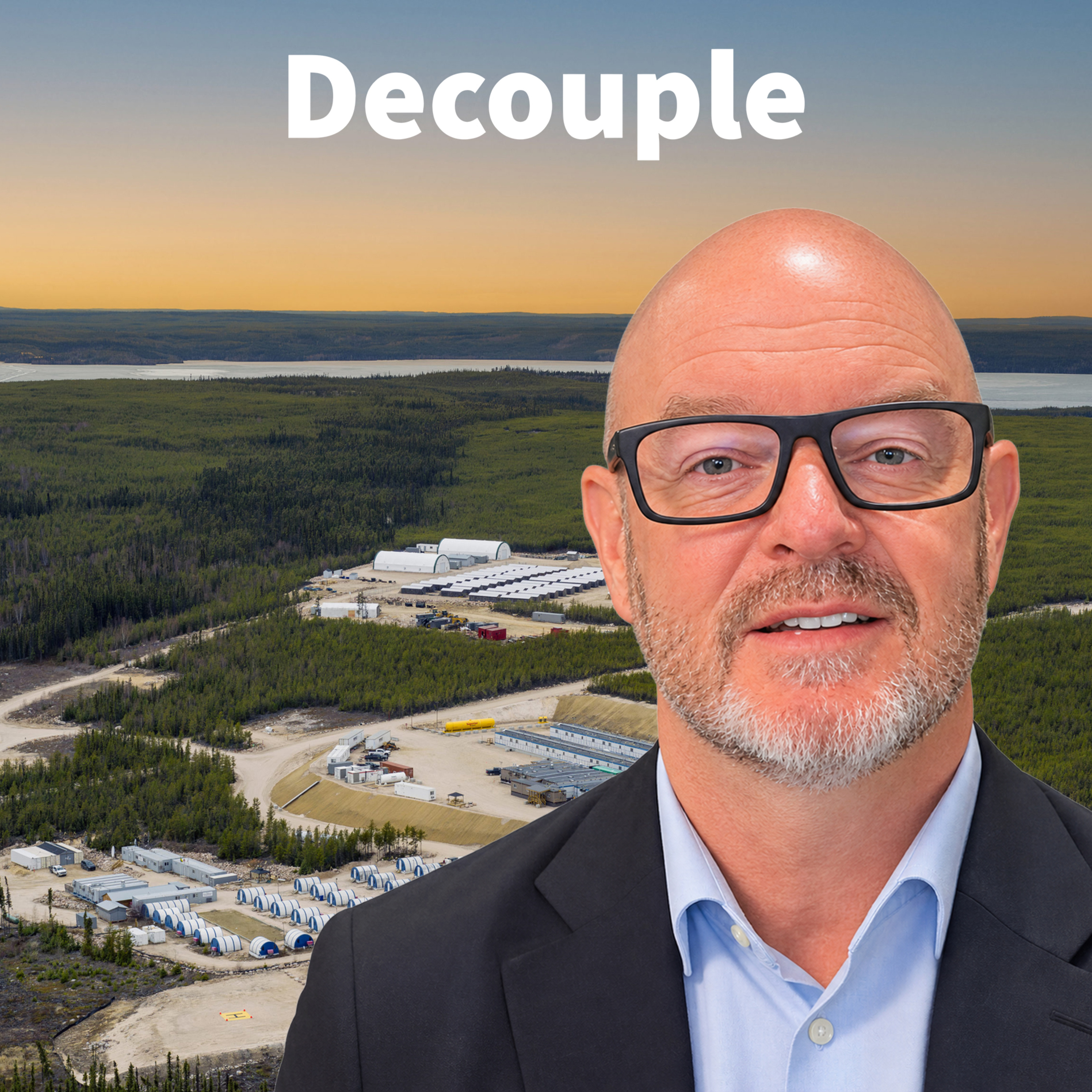


Megaproject planning and delivery through Ian MacGregor’s experience building the Northwest Upgrading Sturgeon Refinery in Alberta, including bitumen upgrading, CO2 capture integration, hydrogen production via gasification, and the major technical and project-management failures and fixes.
Ian MacGregor is a veteran Alberta mechanical engineer, entrepreneur, and industrial project developer. He built technically complex energy businesses and infrastructure, including the Alberta Carbon Trunk Line and the Northwest Upgrading Sturgeon Refinery. He also previously appeared on the show for a carbon capture and storage deep dive.
Megaprojects almost always run over budget and schedule; early engineering is usually insufficient; expediting and workforce productivity are chronic weak points; and private firms avoid mega projects because risks and long payback tails (100-year assets) don’t fit discounted cash flow. Government involvement is necessary for nation-scale infrastructure.
7,000+ pieces of equipment in ~1,400 modules; a gasifier burner failure that lost hydrogen and nearly stopped the refinery; the burner was redesigned and fixed in 279 days; the project later reached stable, above-design performance under CNRL.
Written by AI. May contain mistakes.
Discussion on the conception and planning of the Sturgeon Refinery project.
“I'm pretty old now, so I haven't got too many more mega projects left in me.”
Exploration of the challenges in refining bitumen and associated processes.
“So, bitumen in, diesel out, and then I decided that the climate agenda was important enough that we should design the refinery.”
Overview of gasification and its role in hydrogen production at the refinery.
“So diluted bitumen arrives and what sort of processes are we going through?”
Learn how gasification is used to produce hydrogen in refineries.
“So we chop them up into short pieces in a really high pressure, high temperature reaction that's catalyst enabled.”
Discover the scale and complexity of the refinery project and its components.
“And that's the start, you know, diesel is a short molecule with hydrogen on the ends.”
Understand the common challenges faced in mega projects and why they often exceed budgets.
“In terms of, um, the, the planning work and, uh, the estimates, um, what was that process like?”
Explore the conflicts between engineering completion and construction initiation.
“Once you release the, you know, once you press the go button on this baby, you're stuck.”
Learn about the labor mobilization issues faced during the refinery construction.
“I guess because I'm trying to get a sense of construction cadence and with the nuclear industry, things are quite atrophied.”
Examine the difficulties in team building and project management in large projects.
“was essentially done and the issues with the gasifier.”
Understand the complexities and challenges of managing supply chains in construction.
“What was one of the biggest supply chain challenges that you had?”
Learn about the intricate setup of a gasifier and the initial challenges faced.
“And so we bought the process module for the Gassifier from them, and we relied heavily on what they were telling us because they were the most experienced guys.”
Explore the financial implications and pressures during the construction phase.
“At this point, you're many years into construction.”
Discover how creative problem-solving led to solutions for the gasifier failures.
“And you're sweating a few bullets as the days pile up here.”
Understand the manufacturing challenges of achieving precise tolerances in engineering.
“To me, it doesn't sound like it would have a high probability of success.”
Discuss the importance of local processing of raw materials for economic growth.
“And we don't know how a lot of that lasts.”
Examine the challenges of financing megaprojects and the necessity of government involvement.
“Now, you know, this is the best time in the last, in my lifetime, probably to get some good, reliable customers that want to get disconnected from the Middle East.”
Learn about the financial complexities and challenges in large-scale projects.
“Every time you got more definition, it costs more.”
Understand why government involvement is crucial for megaproject success.
“and that if second-of-a-kind refinery of the style you designed were to be built, it would be substantially easier or cheaper or faster?”
Explore the benefits of refining oil products in Alberta for local control.
“Currently, about 4%, I believe, 4 million, 5 million barrels per day out of Alberta.”
Discuss the viability and challenges of small modular reactors in Ontario.
“I don't know if I can say it on here, but we call it chicken shit AI.”

Get the gist, explore an idea or ask about something said.
 Claude
On Decouple, what are the key points of this episode?
Searching your listeningAutomatic transcript. May contain errors.
0:00Ian MacGregor: These assets last for a hundred years. So what you should be interested in is the tail, but no one running a private company is going to be here when the tail comes in. The only organization that's going to be here for sure is the government. So they have to be involved in these things. a warm welcome back to decouple today i'm joined by returning guest ian mcgregor ian is a veteran alberta engineer entrepreneur and industrial project developer who spent his career building technically complex energy businesses and infrastructure including the alberta carbon trunk line and the northwest upgrading sturgeon refinery we had ian on a little over a year ago for a deep dive on the topic of carbon capture and storage and having built one of the world's premier projects.
0:48Ian MacGregor: It was a great show, so I'd encourage people to look back through the archives and give a listen to that episode. I had the pleasure of getting a second in-person visit with Ian this July at his beautiful museum in the foothills of the Rocky Mountains, the Canadian Museum of Making. A real pleasure to get to spend some time there. And we ended up talking about energy, talking about nuclear. And through actually some of the objects in that museum, I gained a really deep appreciation for some of the work that Ian has done over the years. As someone with a very interesting educational background, a trained mechanical engineer, but also the son of a machinist and someone who has got his hands dirty on, I think, kind of all levels of project management and project delivery.
1:37Ian MacGregor: So without too much further ado, the topic of today's interview is maybe your signature project, if we can call it that, the Northwest Upgrading Sturgeon Refinery. But first off, Ian, how you doing? Give us a quick little addition if I've missed anything in that intro. No, I don't think you missed anything. I'm pretty old now, so I haven't got too many more mega projects left in me. I like building stuff, and I'm not really happy unless I am, so I spend my life trying to find things to build. I've been lucky enough to build some things at decent scale and have fun doing it. So I'm smiling, still smiling, and I'm looking for the next one.
2:15Ian MacGregor: All right. All right. So, I mean, it's been a long time since we've built a brand new nuclear reactor. There are some small modular reactors under construction at the Darlington new nuclear site at the moment. But it was the early 1990s when we commissioned the final units of the the Darlington A nuclear station. And, you know, in being in this environment, your museum where you have actually some of the, or one of the key parts from the gasification side of this diluted bitumen refinery. And through the conversations that we had, I gained, you know, a little bit of an appreciation. And I thought, you know, as you said, you're an old guy, you don't act like it, but you've done a lot of mega projects.
2:57Ian MacGregor: It's a bit of a kind of generational thing where we're losing this brain trust of people that have seen through large megaprojects. And I thought there was just a lot of commonalities in terms of the little that I know about nuclear megaproject planning and delivery and what you had experienced in terms of having moved through the full cycle of literally conceiving of this idea of a gasifier, a diluted bitumen refinery that spits out low sulfur diesel going right from a napkin to having a plant now that's been online, I believe, for almost a decade, if I'm not getting my timelines completely screwed up.
3:35Ian MacGregor: Maybe set the scene a little bit and tell us a little bit about this refinery, about the conception of it. You have a little jar on your desk with a lot of bits of paper on it. You like to sort of pencil down ideas. So how did the idea all begin? uh so i i'd had a bunch of you know businesses and you can my life is i i get an idea for a business and then i tell everybody about it and they'll tell me what's wrong with it and then the idea proves is i hear all the criticisms of it and so i had built up a bunch of businesses and uh and i sold them all off and i tried to retire for a while being retired is uh you know not something i recommend uh the main thing is you're going to die aborted if you're retired so it's not a really good thing to do.
4:22I like building stuff. I don't like golfing. And so when you start people, when you think of all the things you do when you're retired, we're usually things you don't like that much. So I went back to work. And when I went back to work, I decided, well, you know, done okay and got enough of your power nuts. I had to try and figure out something else to do. In Alberta, I'd been hearing the story of diversification for my whole life. So everybody was talking about, you know, we got to diversify this and diversify that. No one ever did anything, but since Lougheed, Lougheed was there when I was in university.
4:51So since Lougheed, there haven't been any real diversification, just a bunch of talk about how we're going to do it, when we're going to do it, who's going to do it, and all that. So I got the idea, what could you do to diversify the Alberta economy? And I decided we should quit making raw stuff and we should start shipping finished goods. So to me, that meant, you know, like right now we've got, some people say the third largest reserves in the world. They're bitumen reserves, so they're very boil. And we've got 180 or 190 billion barrels of volstic in the ground. We have a 75-year reserve life at the current production.
5:31So we're going to be producing at the current level for 75 years, and they're all raw. So we make this stuff, we mix it with some light stuff called diluent, and then we pipeline it somewhere and somebody else converts it. So I thought, that's dumb. why don't we do it here and we can capture the margin between a low value raw material that swells when you ship it because you put this diluent in it. You could, instead of shipping big things that weren't worth very much, you could ship small things that were worth a lot and you could do a lot better for the place when you did that. So that led me down the road of building the Sturgeon Refinery.
6:06And so I didn't realize how dumb I was when I started. I drew the flow sheet on a napkin. It only had four boxes on. So, bitumen in, diesel out, and then I decided that the climate agenda was important enough that we should design the refinery. Really, when you're building these things, you're building something that's going to last, you know, I thought it'd still be here 100 years from now when I was building it. So, I was trying to say, well, what does the world look like in 10, 20, 40, 50 years? And I decided you wouldn't be able to emit enormous quantities of CO2. So the refining process or the upgrading process is adding hydrogen in a chemical way to the heavy oil and making it closer to refined products.
6:51When you make hydrogen, you make CO2 in all the industrial processes. So when you make a molecule of hydrogen, you've got a molecule of CO2. And the refinery I had in mind was going to make about 4 ,000 tons a day of CO2. So that was a lot. And I thought, well, we should mitigate that and use it for something. and I decided we should build the CO2 capture system as an integral component of the refinery. So the two were being built together. And it was its own mega project, the pipe and the stuff to do it. I think the refinery was about$12 billion and the pipe to move the CO2 was a billion or something like that.
7:29So these were enormous. I call them mega projects. If they get bigger than a billion dollars, then I think they're a mega project. Okay.
7:36Ian MacGregor: So we're talking about, I guess, a different or more special resource in Alberta. In Venezuela as well, there's very heavy oils. But can you just describe again the challenge of taking that bitumen? If we're going to export it, we need to add a diluent to it. Just for those of us who are less familiar with the hydrocarbon world, explain some of the challenges that come with Alberta's bitumen production and actually turning that into refined products. You can get it out of the ground by heating it up. It's pretty thick when you get it. So you can heat it up and then it will flow and then it will come out of the ground.
8:11And that's called SAG-D or you can mine it. So if it's at the surface, you can mine it and you dig it out of the ground and then you wash the oil off the sand. If it's deep, you have to put steam in it to get it out. And that raises the temperature and reduces the viscosity. So then you get it out and then you can't pipeline it until you make it light when it's cold. And so to make it light, you put something called diluent in it, which is essentially light, really light oil. So you put really light oil, you mix half a barrel of diluent with a barrel of bitumen, and then it'll flow in a pipeline.
8:45And so one of the things you have to do that is you made the basic thing you have to ship 50 % or 30 % bigger because you get a barrel and a half of stuff you're shipping around now. So you have to think about, well, I'm shipping things that are way bigger now. It's going to cost way more to ship them. Right. And where does the diluent come from? The diluent comes out of like natural gas. So if you're producing natural gas, there'll be liquids in the natural gas stream. So we've had, you know, in the States and here, we've had lots of gas exploration and there is lots of light oil here. We use about, I think about six or 700 ,000 barrels a day of diluent in Alberta currently.
9:23and there's about two-thirds of that is produced in Alberta and about one-third of it is imported from the States right now. The import pipelines are both running at capacity. We're using all the diluent we got right now pretty close and if you're going to build new stuff, you're going to need new diluent supplies.
9:40Ian MacGregor: I think it was a conversation with you where I heard that when we export diluted bitumen, say, to a refinery in Japan, we end up bringing that diluent back home to Canada to mix it back in again to sort of create a closed loop. Is that accurate? Yeah, I mean, I don't think it's clear yet because that hasn't been happening lately. We've been exporting. When Trans Mountain has been sending bitumen away, the diluent has been going with it. And you can think of the sort of the, there's a differential between heavy and like crude. That differential is determined by the cost of the diluent. So if you're short and you ship it away, you should think that that differential is going to go up.
10:21and that's been happening a bit over the last short of a while.
10:24Ian MacGregor: Okay, well, let's get back to your refinery. So diluted bitumen arrives and what sort of processes are we going through? We don't need to go into the depths of hydrocarbon refinery, but just to get a sense of the machinery that's involved in this place. It's pretty large, there's a lot of systems. I'll start with a little bit of refining background. There's two types of refineries. There's a hydrogen addition refinery And so that refinery has more severe processes in it, and you're breaking up the really long molecules, the really heavy molecules, so that the whole barrel is used in that refinery, and you add hydrogen to it that you bake.
11:02So that's one type of process. And then the other type of process, which is more common and cheaper, is called coquet. You come in and you've got a barrel and a half of dill bit, bitumen with diluent in it. The first step is you take the diluent out. Now you've got a barrel of heavy stuff left. So both the hydrogen addition and the coker do the same thing. They take the diluent out as the first step. Then the next step in the coker is you get rid of the really high carbon stuff. You make it into something called coke. And so about 15 % of the barrel that comes in, the barrel of bitumen, is made into coke in a refinery like that.
11:42In a hydrogen addition refinery, it's all converted into finished products. So there's a choice to make when you build a refinery. The one I built is a hydrogen addition refinery because I didn't want to waste 15 % of the bitumen barrel. I wanted to convert everything. I thought that made economic sense.
12:00Ian MacGregor: What happens to that petroleum coke if you don't do that hydrogen addition to it? The problem with the coke is everything bad in the barrel of bitumen ends up in the coke. So when the barrel of bitumen comes in, it's got sulfur in it and it's got metals like vanadium in it or a bunch of stuff like that all of that stuff ends up in the coke and so if you're making that kind of material in alberta you take it back to the mine and bury it because it isn't worth anything and you cannot burn that here you'll you'll exceed you know that's where acid rain comes from is that sulfur in the coal so this is like very high sulfur coal so that works in alberta if you're exporting that to some other place like in the Pacific Rim there's 10 million barrels a day of refining capacity 2 million barrels of that is cokers and 8 million barrels is light oil refineries so a light oil refinery can't handle this stuff it's like you know it's like putting tar in your truck it ain't gonna run when they do this so there's 2 million barrels of that stuff there's cokers in the far East, they make Coke.
13:08And over there, when you get to Coke, there's a limited range of things you can do with it because anybody with strict environmental regulations won't let you burn it. So there's two places you can currently burn it, China and India. And China is starting to tighten up the regulations, but India still allows you to burn it. So when you're burning that stuff, you're getting acid rain and you're getting a bunch of vanadium metal oxides that no one knows, I think what the effects of that are.
13:35Ian MacGregor: And this stuff like looks like coal, is it, it's almost a solid, is it that? It looks like coal dust. Dust, okay. And so it's about 90 % of the BTU content of coal. So it's not as good as coal is, but it goes right into a coal plant. So if you got a coal plant, you can put, you know, it's just cheap fuel because it's environmentally discounted it. Okay. And so at your refinery, rather than producing that petroleum coke, you are taking what we call those heavy bottoms, those kind of asphaltines, the really long hydrocarbon chains. And what are you doing with them? We crack them. So we chop them up into short pieces in a really high pressure, high temperature reaction that's catalyst enabled.
14:14And then you cut them up into small pieces and you put hydrogen on the end and that's called a hydropacker. And that's the start, you know, diesel is a short molecule with hydrogen on the ends.
14:23Ian MacGregor: And so tell me about the gasification part of the refinery. That seems to be something that's kind of special about what you built. The gasification part, usually when you make hydrogen in the refineries that you're familiar with, you make it from natural gas in something called steam methane reforming. You put steam in and you put natural gas in and you pull the two molecules apart and you get carbon dioxide and hydrogen out of it and you need the hydrogen for the refining process. But you're essentially adding carbon because you're taking the carbon in the natural gas, and you're kind of adding that back into the carbon footprint of the facility.
15:01So we decided that we would take the bottom of the barrel and use that as a feedstock for the gasifier to make the hydrogen. And so the gasification process allows you to take carbon and steam and pull the molecules apart again, and you get hydrogen and pure CO2 out of that. So we're taking the bottom of the barrel and essentially replacing the methane that would be in a normal steam methane reformer.
15:29Ian MacGregor: So now that we've got a basic understanding of how the thing works, what does this place look like? What's the footprint? I understand it's modular. Give us a sense as a project manager of the size and scope, the moving parts involved in putting this together. We spent about 100 million man hours building the whole thing in shops and at the site. It's a big site. It's about a quarter section of stuff. It's got about how many? The modules are about, I think, 20 by 20 by 105 feet law. I think we had 1 ,434 of them at the site. One statistic I like is there were 7 ,000 pieces of equipment that cost more than 100 ,000 bowlers in it.
16:17So, you know, there's a lot of stuff in there and, uh, you know, need all the stuff to do the job.
16:22Ian MacGregor: In terms of, um, the, the planning work and, uh, the estimates, um, what was that process like? Uh, I think there was a fairly optimistic budget going into it and, and, uh, things spiraled somewhat. So, uh, what, what was the story there? So I tell you my story of mega projects, maybe, you know, mega projects, something always goes wrong. So that, that's what you should start with. When everybody starts talking about something that has mega project qualifications, just assume that something's going to go wrong. And it's things that are, they all run over. Every mega project. So I went back and I looked at$150 billion of different mega projects.
16:59Every one was over. The best one, I think, was 69 % over. And we were in that group. We were that much over, but we were in that group. The worst one that I found was Trans Mountain. It was five times over, 500 % over the original positive estimate. And all the rest of them were partway in between. And so there's probably two or three reasons why that happens. The first reason is you spend a bunch of money on engineering and you think, well, I should know what I'm doing. I've paid all these expensive people to help me do an estimate. I get an estimate and I've probably spent, you know, in a 12 billion project like we did, we probably spent$100 million getting the first estimate.
17:42And so you think, well, geez, that's a lot of money. It's not nearly enough money to understand what you're doing. So you start with very poor project understanding, and that means you have a very low-quality estimate. And you convince yourself, no, it's pretty good, and I've looked at all the other ones. And so I looked at, you know, they built one here and they built one there, and I compare what I'm doing. And if you try and do the best job you can of that, but you're wrong. Every one is wrong. So that's the first thing that goes wrong with them. The next thing that goes wrong is you don't really appreciate there's 7 ,000 pieces of equipment in there, and they've got to make it, each one of those pieces of equipment has to make it into this, into one of the 1 ,400 modules on the site.
18:27And when you release the field for construction, essentially, you know, you've got a few thousand people out there that are putting these things out. So if they need module number 332 and it's not quite finished in the shop, you ship it anyway because you're delaying the whole sequence if you stop that module. So then what happens is you end up with a fair number of the 7 ,000 pieces of equipment that didn't arrive on time. They're missing when the refinery is like eight stories up. You got to get a heat exchanger down in the middle. It's like having an apartment building. And so you got something missing in the, you know, on the 12th floor of the apartment building.
19:06How are you going to get it in there? Because it was never designed for that. So those kinds of things happen repeatedly when you're doing this. You don't, I, you know, I think anybody who's done it would go back and say, I should have had the most important department in the company was the expediting department. Is this stuff going to get here when I need it? And you don't behave that way when you're doing it. So, I mean, I got to look in the mirror when I see that one. I didn't do that right. And then the third thing that goes wrong with them is you make your own weather. So we're building this thing in Edmonton.
19:36We need, you know, we have 7 ,000 people at the site at the peak of it. So I need every electrician in Edmonton. I need everybody that's here. Everybody who's an electrician in Edmonton to come to the site. We can employ it. Only problem is they're doing something else. So maybe I could get a third of the electricians in Edmonton if I'm lucky. So now I start looking around saying, where am I going to get the electricians from?
19:57Ian MacGregor: How about Saskatchewan? How about BC? How about Manitoba? What about Ontario? Finally, you go to Newfoundland and you get some there. So they're tremendously, not their fault. It's just a tremendously unproductive system when you do that. They get there. They think they've landed on Mars when they come. And you've got to say, no, it's not that bad on Mars. We just do this and do that. And by the time they're getting productive, the job is just about over. So you have very poor productivity. You have a bad estimate, bad expediting, and poor productivity. And there isn't a hell of a lot you can do about it.
20:31Once you release the, you know, once you press the go button on this baby, you're stuck. Figure out how to finish it.
20:37Ian MacGregor: So in terms of the difficulties doing the estimates, you mentioned spending something like a hundred million on the engineering and still things felt undetermined. So like how first of a kind was this refinery compared to other refineries that exist in Alberta or, you know, has this exact type of refiner been done anywhere else in the world? You know, they're built up of big process blocks. So you got, you know, a crude unit and you got a hydrogen baking part and you got a hydrocracker. You could look around and find something that's similar to each one of those pieces. But, you know, they're combined in unique combinations.
21:12And I don't think anybody who's ever built one of these things is building the second of a kind. You know, you're really building the first of a kind. I don't think that's so much the problem. Well, I think the real problem is I didn't finish the engineering before I started construction. and I could have never afforded to do it. It was impossible to do it. So I'm engineering as I'm constructing all the way through. In our refinery, the engineering cost about a billion dollars. If I went to somebody and said, hey, why don't you give me a billion dollars to do the engineering and then we'll start building it, 10 years from now we'll be finished.
21:47Ian MacGregor: They would laugh me out of that room. You just can't get that much capital up front. You can't get it. It's too risky. No one knows what the answer is. What happens if it's not what you say it is? We lost our money. No one's signing up for that. You have to have a project that you're signing up for. Right. What were the dates in which the refiner is actually under planning and construction? I started on the idea probably 10 years before we figured out how to do it. So I'd had okay success doing some other stuff when I was able to raise money on the strength of my previous commercial experience.
22:22And so I raised about 400 million bucks and we spent that on engineering. And then we were able to secure a contract to process the crown bitumen and CNRL became our partner during that process. And so they put in another close to 400 million bucks and that was enough to get far advanced on the engineering and get, you know, we had a contract. So we knew that we had a, you know, we had a customer and we could fill the refinery and all of those things went away in that process. And that happened, I think, in about, I'm going to say the contract was in 2012 or something like that. And I think we were starting to get into operation around 2018, something like that, 19.
23:04book.
23:05Ian MacGregor: Okay. I guess because I'm trying to get a sense of construction cadence and with the nuclear industry, things are quite atrophied. Was this project occurring within an environment where there had been a lot of similar activity or similarly complex mega projects, or was this really a big departure for Alberta? Yeah. Alberta was the promised land for this kind of thing. There's lots of people. There still remains here, lots of capacity to build things, although it's getting old now. A lot of the construction guys look like me, they don't look like you. Even in that environment, still a lot of challenges, as you mentioned, in terms of mobilizing the workforce, those crunch moments where you need every electrician in not just Edmonton, but in Alberta.
23:48Whoever does one of these things is going to have labor problems of some type. It's probably supply, skills, can I get them at the times I need them, you know, all of those things. And then there could be, we never, in Alberta, we haven't had labor problems of the, of, you know, sort of the disputes between labor and management for a long time. And we never had anything like that. The labor was really good to work with on our project, but in other places you might have that because it's a highly evolved, was a highly involved system here.
24:19Ian MacGregor: We're going to get to the challenges that came, you know, once the, once the refinery was essentially done and the issues with the gasifier. But prior to that, what was sort of the greatest unanticipated challenge that you came across? You're assembling these teams to do this thing. They're so large that there are a bunch of people you put together that have never worked together before. So you don't have a functioning team when you start. You're building the team during the process of actually building the unit. And you're trying to build a managerial capacity that needs to be deep. Well, it's people that haven't worked together before, so you're going to make a few mistakes on that.
24:57I'm guilty of that for sure. That's one problem. You lack the systems to do it, so I'm used to a really robust cost control system. We didn't have that there when we started, and I was always trying to get it, but I could never catch it. And so I feel like we were using a conventional accounting system that should have been a cost control system and giving us weekly estimates, so percent complete, things like that, comparing to value. We didn't have that as far as I could tell. You're working with very sophisticated EPC contractors. And so, you know, you could think of any of the big names that you can think of in that world.
25:35I won't use any of the names because they might get mad at me. But we worked with all of them. And what I would say is they are very expert at maximizing their margin on these projects. And they've been doing it for 40 years. So somebody like me shows up. I haven't worked with them before. I treat them like what I treat like a contractor who's building my house. And they're very sophisticated and they can out-negotiate you at every turn of the road as far as I'm concerned. So it turns out to be expensive just because you don't have the power that you think you do.
26:13Ian MacGregor: Independent analysis only works if it's independently funded. If Decouple provides you with energy literacy on demand, please consider supporting it. Become a paid subscriber on Substack or make a tax-deductible donation on our website, decouple.media. Join the community. Keep the lights on. Preferably nuclear. Now, back to the show. What was one of the biggest supply chain challenges that you had? You mentioned you had many hundreds of modules coming in, some built all over the world. I wouldn't say there was a big one that's memorable. Everything was a problem. Somebody promises you a heat exchanger, and it's coming from Italy.
26:51and you think they say it and you see, you believe them. And then you check on, it's not quite, it's a little bit late. And they say it's a little bit late, like a couple of weeks. And then pretty soon a couple of weeks turns into a month. And then pretty soon it turns into three months. And I needed it for sure at two months, no matter what. If it was critical, sometimes I'd say, well, put it on a goddamn airplane and get it here because we've got to have it. Sometimes you'd say, well, we'll figure out, we'll figure out how to get it in the module when it's up in eight stories up. And you're managing that in a tremendously complex environment.
27:22And so no matter how smart you are or how experienced you are, you're going to make mistakes.
27:27Ian MacGregor: So the refinery is essentially built. You're ready to turn it on. And you've ordered some really special parts from Germany. First off, what are these parts? Why Germany? What happens? There's a process block in there called the gasifier. Gassifier makes the hydrogen and makes the pure CO2. And so we bought the processor for one licensor, I won't say their name, and they were the most experienced. They've been in business since. I think the Nazis used them to make the hydrogen for making the oil in the Second World War. So these guys have been around forever. And so we bought the process module for the Gassifier from them, and we relied heavily on what they were telling us because they were the most experienced guys.
28:13They know way more about than this. And so they supplied the gasifier and we got it there. And the heart of the gasifier is there's three reactors where you put in, two of them are running all the time. And one of them is on a hot standby. And inside the gasifier is something called a burner. And there's a 10-inch liquid oxygen line. So if you think about welding hose on a normal welding torch, there's a 10-inch hose supplying two of these burners. Half a 10-inch pipe is supplying oxygen. And then the other thing you're putting in there is really heavy residual bottoms that you've heated up so they're a liquid.
28:52And I think you have to heat them up to about 300 degrees C before they're a liquid. So you put them in with the liquid oxygen, and then you put water in there too. And that's called a gasifier. And what you're making is carbon monoxide is what you want to make out of that process. And then the carbon monoxide is called syngas, and that's used to make hydrogen and pure CO2. So we have a gas spire, we have the burner, and you have three reactors, two of them on hot standby, two of them running, one on hot standby. And so the one on hot standby gets turned on when the burner fails in one of the ones that's running.
29:33And so the burner is supposed to last a couple of thousand hours. When we started the thing up, a burner lost 40 hours. So it's like, that's not so good because we can't even get the thing cooled down in 40 hours to change a burner. You know, it's like, you got to wait if it's hot. It's at 1100 degrees or something like that. So it's bad because we don't have any hydrogen. And if you don't have hydrogen in a refinery, you don't really have a refinery. You've got a crude unit.
30:00Ian MacGregor: Right, right. At this point, you're many years into construction. You've got a lot of capital that's been spent. You have significant interest during construction accumulated. What's this looking like financially for you? It's looking bad. It's looking like a disaster. It's looking like maybe I should change my name and move to California. At this point, there's been some pretty mean newspaper articles written about you, I believe, right? Yeah. Oh, yeah. Everybody's making funny in the free world. It's like drive-by shootings. There was one a day there for a while. and it's like, you know, Ian's an idiot.
30:35He had tricked somebody into doing this. He doesn't know how it has to make causes, all this stuff, you know. And you just, I'm fortunate because I have hearing aids and so I can turn them off and that starts happening and that's, you know, I focused on the problem. We got to get the burner working.
30:50Ian MacGregor: Without this gasifier, without this burner, the product coming in is in diluted bitumen. Can you refine that at all or do you have to? No. You just wasted$12 billion. Okay. Okay. So your whole refiner's at a standstill over this part that came from Germany and they're the experts. We ran the refinery on light oil, so we can run it, but it's not economic. It's just keeping the people busy until we can get it to be economic. Okay. So you're losing lots of money every single day. You've got this broken part. Are there other competitors you can reach out to around the world that have similar expertise in gasification technology?
31:28Yeah, we talked to all of them. And finally we decided, you know what, we don't think we're going to get what we needed. So we took on the job and did it ourselves. And so I got, I knew lots of smart guys because I worked here for a long time. I got them all in a room. I got the, I don't know, six or seven smartest guys I know, computer guys, engineering guys, heat transfer people. Because this is essentially a rocket engine inside a vessel. and uh and then the the the i guess the if i did have any flash of genius on it is i brought a really smart guy who's a welder and we go through all these computer guys and do all this stuff and do all these calculations and then we look over at brent i say you think you can build this he'd say i don't think so so then we'd say to the computer guys go back and do some more work because this isn't going to work and and eventually we got to a place where he's he nodded his head And then he took it on and it's really working as a testament to his creativity and intensity.
32:30He made it work.
32:31Ian MacGregor: How long does it take to sort this out? 279 days. Okay. Okay. And you're sweating a few bullets as the days pile up here. How confident were you that you're going to figure it out? I don't know. I have an unreasonable sense of confidence. Okay. Okay. But a day in the life of Ian McGregor at that point was, was this kind of the full-time thing? Oh, totally. Full-time, yeah. We used to have a meeting at, I started off, we'd have a meeting at 7 o 'clock in the morning, and then we'd have another one at 5.30 in the afternoon every day until we got it to work right. And so, you know, that was intense.
33:14That never ended. and Brett, the guy who was in charge of all the manufacture of the thing, he just had twins and we were building in Edmonton. So Brett would be in all the meetings. Then he'd have to drive up to Edmonton sometime during that process of run the shop and then he'd have to come back and apologize to his wife for why he didn't see the twins that day. And that went on for like three quarters of a year. It was as close to people like me can get to the Manhattan Project as ever existed in my life.
33:44Ian MacGregor: Because, again, you have a company with its origins, its intellectual property, its human capital and resources stretching back 80 years in this niche technology, and you're trying to recreate that in a machine shop somewhere in central Alberta. To me, it doesn't sound like it would have a high probability of success. I mean, the computing power that you've got to understand these things is incredible. And we use that fully. I think we spent about 12 million bucks doing FEA and CFD computer runs. And we were tweaking stuff right at the edge of what people can do all the time. And so this thing is like an assembly of half a dozen things that are near impossible to make.
34:34But if you could do them all, and it's like tightrope walking. As long as you can do them all, you're okay and work. But if anything gets just a little bit off, you're lying on the ground.
34:43Ian MacGregor: I remember one of the anecdotes you told me was that Brett had some constraints in terms of what his welding torch would do to the piece of machinery that you had and you had some tight tolerance. So tell me about the interplay between, because I think that's something that's interesting about your career is that you've got a mechanical engineering degree. You've been a project manager, but you've also really worked on the floor of a machine shop. You've run a lot of tools. you have an appreciation for that whole cycle of what's involved to deliver a mega project or deliver a critical part. So what was the challenge there between the computer guys and your welder?
35:13So when we got this all figured out, there's a water jacket that cools the burner and it's a certain width and we have to keep the water, I think the velocity of the water in that small space, it's about 25 millimeters wide, the space. We have to keep the water velocity at about 80 meters per second. And if it's lower than that, it burns up. And if it's higher than that, it boils and burns up. So it's got to be exactly what we said. And the space has to be controlled within a tenth of a millimeter. So that's like a small part of a human hair. And if it gets outside of a tenth of a millimeter, it's going to burn up.
35:57And all the numbers tell you that. So can you make it within a tenth of a millimeter? And it's not that hard, but just machine all the parts and everything. But we have to weld this thing on the end. And the thing we weld on the end, the weld shrinks six millimeters. So we have to control the thing when we're making it within a tenth of a millimeter, but we know that it's going to shrink six millimeters plus or minus a millimeter so it's shrinking a lot and so brad figured out a way to to keep track of the shrinkage during the manufacturing process and then we got like the leonardo da vinci of welders putting it together so he'll weld a little bit here and then he welds a little bit over there and then he welds here and after he does that he's done a lot now he knows how to weld these things so he can paint the he can paint the you know the mona lisa but if you give anybody else the drawings they're going to look like a paint by numbers.
36:50Ian MacGregor: Wow. Wow. Okay. And so eventually you fit this part on and what happens? Runs good. I sold my interest in the refinery in 2021, so I don't really know that I talked to Brett every now and then. I think we get between 8 ,000 and 10 ,000 hours out of a burner now that used to last 40 hours. And we don't know how a lot of that lasts. I think he takes it out but it's okay. So he prices it up and puts it back in. What's been the reception? You mentioned there were definitely some difficult times. You took the hearing aids out. You got your hearing aids in now. This idea of value add, we're in an era here in Canada, we're in the midst of a trade war.
37:28Ian MacGregor: We're thinking seriously about how to diversify our economies. I think some of the impulses that led to this brainchild of yours. In terms of doing further work, in terms of these nation building projects, Do you think more refining at home is or should be a part of that vision? My opinion is Canada's law on raw materials. And raw materials are big until they're processed and they're low value. And so we waste a lot of the potential value in those materials when we ship them. And the longer we ship them, the more value we sacrifice. So I think we should be making finished goods wherever possible.
38:10And we should be shipping finished goods because we waste less money on shipping and more of the money sticks here. And that's where jobs come from. The best jobs are in the manufacturing. They're not in the digging this stuff out of the ground. The best jobs are in converting it into something. So we also have the ability here to mitigate our environmental impact. And we have systems that function here. And so when we ship this stuff to somebody else, they don't have the ability to mitigate their environmental impacts. So I don't know. I think CO2 that comes out of China is bad for Canada. I don't care where it comes from.
38:47And so I think we shouldn't be doing that. But that's, you know, that's my opinion. I think what we should be doing is processing everything we can here. If somebody wants our stuff, they'll buy finished goods. We can make them buy it because they're worried now. Now, you know, this is the best time in the last, in my lifetime, probably to get some good, reliable customers that want to get disconnected from the Middle East.
39:09Ian MacGregor: I've had the privilege of spending a good amount of time in Australia, which I believe is the most diesel dependent country on planet Earth. They've got, you know, sparsely populated, you know, concentrations of population, but vast distances apart and rely on a lot of trucking to get goods around that country. you know we're sisters sort of commonwealth nations what would it take in terms of trying to convince someone to finance a project like this if Canada were to pull the trigger and decide hey it's a good idea let's get some value out here let's capture some carbon let's reduce our emissions and produce a product which you may not you may not like carbon emissions but diesel is the life blood of modern civilization so what do you think that would look like having gone through and taken the slings and arrows and the bruises.
39:55There's a reason why these things don't get done. And they're so big that, I'll give you an example. I'm running a big oil company and I'm making 10 million bucks a year running it. And one of my guys working for me comes in and says, we ought to build a refinery. Have you seen the margins we can make doing that? And you look at it and say, well, that looks pretty good. Go ahead and do some work. How much money do you need? And he says, 50 million bucks. That's what I need to do with the initial engineering. So the guy says, go ahead, do it. Let's see what comes back. Guy does it. He comes back six months later.
40:29He says, wow, this looks great. You know, these margins are old enough. It looks like they're durable. We've got a good carbon angle. Our stuff will be a premium product. We've got to do some more work. Guy says, how much money do you? Guy says, probably$100,$150 million. Okay, go ahead and do that. Guy spends$150 million. He comes back again. He says, this is looking great. wait, have you seen this? It's going to be good for the country. We can make lots of money. Look at all this. That guy says to the boss, how much money do you need? He says, what about 500 million bucks to go to the next one?
41:01Boss goes home that night and he thinks, you know, how long is it going to take to build this thing? It's probably about seven, eight years. When are all the troubles going to be occurring? About four or five years from now. How long have I been working here? About, say, four years. What's the average life of a senior executive around one of these things in Canada? About six or eight years. Sounds like all the troubles are going to be occurring on this thing. When I'm reaching the end of my career, I don't think I want to sign up for that. So they don't get done because a guy running a private company can't take that risk.
41:39It's too damn big. It wipes them out. So that's the first reason they don't get done. The second reason they don't get done is you build them, they're all over. They're all way over their original cost estimate. You won't find one. It doesn't matter if it's a refinery, the channel, the St. Lawrence Seaway, the CPR. They're all the same thing.
41:58Ian MacGregor: You didn't know exactly what you're building. Every time you got more definition, it costs more. It never went down in price all the way through. They last so long that inflation is in there. You don't know that when you do it, but seven years, there's a lot of inflation. So all those things are going wrong, and so you don't do it. And then the final thing is they don't obey the rules of discounted cash flow. So I look at this thing and I say, well, you know, I got to get my money back in what, 10 years? So if you do a discounted cash flow, and they say you use PV10, the value of a dollar in year 20 is 14 cents.
42:35So when you add that in, that's not very much. These assets at last for 100 years. So what you should be interested in is the tail. But no one running a private company is going to be here when the tail comes in. The only organization that's going to be here for sure is the government. So they have to be involved in these things. And everybody's saying, oh, you need government support. You're goddamn right. There wouldn't be a railway without government support. And the railway and the St. Warren Seaway are two of the best examples. So the railway, when they built it, was the biggest construction project in the world.
43:12The original estimate was$25 billion, and that got increased to about$50 billion during the course of construction. And I think they quit publishing good numbers. I think it was close to$100 million when it was finished. So it was disaster. It just about brought down the government. Everybody's saying these politicians are a bunch of idiots. What they build this thing for, what a disaster. If you look at the railway today, hey, before the Kansas City merger, CP's worth$50 billion. They spent$100 million. It was 100 years ago, but they spent$100 million, but the value of it today is$50 billion.
43:53And can you imagine what Canada would look like with no railway? It's like it wouldn't be Canada.
43:58Ian MacGregor: It wouldn't be Canada, no. We have to do these things to convert the raw materials that we were lucky to get. we have to convert them into what the world needs. And we have to do it with the minimum environmental impact, as cost-efficiently as we can, and we have to quit shipping raw materials. It's too expensive. Would you say that the first-of-a-kind pain has been paid largely and that if second-of-a-kind refinery of the style you designed were to be built, it would be substantially easier or cheaper or faster? Everybody focuses on the cost. of the thing and they should, you know, but it's, it's the thing that you're not really, you're not really in control of, but you can pretend you're garbage.
44:43You're not really the external forces are going to make the construction expensive. Then what happens is you start it up. So you got the refinery, it's got 7 ,000 pieces of equipment in it. When you start that thing, it doesn't run well. There's 7 ,000 things that are big going wrong all the time. You don't understand them and you're trying to figure out. And it takes you about two turnarounds and about five years before you know how to run it. And then all of a sudden, magically, it starts running really well. And we were lucky because this one is in the hands of CNRL. They're the preeminent operator of this stuff.
45:22There's nobody better than them to operate it. So the refinery we built now is running like a Swiss watch. It's running above its original design capacity because the people, all of the engineers that figured out those 7 ,000 pieces of equipment said, you know, if I need a one, I'm going to put a 1.2 in it because I don't want it not to work. So there's 7 ,000 of those opportunities to get more through it in there. And they're gradually going through it. I think it's running now about 15 % above design. I'm not part of the numbers anymore, but I can, you know, I got a four button calculator. I could figure out how it's doing.
46:00but it's printing money right now, and it'll do so for the next 100 years. So you have to have a tolerance for the pain. You're going to have it. It's just like you can't, you know, you can't eat this kind of food without getting the toothache. Just get over, pull the tooth out, and keep going, and you'll be okay in the end.
46:19Ian MacGregor: So just to bring things kind of full circle, we were starting having a look at, you know, what was unique about the large part of the oil product that Alberta produces in the form of bitumen. Currently, about 4%, I believe, 4 million, 5 million barrels per day out of Alberta. The vast majority of that goes to the US through established pipeline networks down to refiners in the Midwest. Let's say 4 million barrels per day. A million, a little bit more, I guess, now is going out to the Pacific via pipeline. And we have this anxiety with our neighbors to the south and a desire to extract more value to our own resources and have a bit more control over it.
46:59Ian MacGregor: So in a world in which we're refining a lot more products in Alberta and getting, I guess, smaller volumes of higher value products, we're not as dependent on pipelines. Is that true? If we make diesel products, can we use rail to ship those and avoid some pipeline use and diversify markets that way? Yeah, I mean, you know, Now, diesel typically, inside North America, diesel moves by rail. It doesn't move by pipeline because it's going to a distributor. It's going from a refinery to a distributor where the raw materials are going to a refinery and then it'll go to a distributor. Gotcha. But that's not a commercial against pipelines.
47:39We need pipelines. In the oil sands, if you think about it, people say we have the third largest reserves in the world. The bottom part of that is SAGD and the top part of it is mining. in between the two parts is 1.7 trillion barrels of oil. So we're counting, I think, 186 billion or something right now. There's 1.7 trillion between those two places. We'll figure out how to get it out of there. It'll take, I don't know, another 20 years to get it out. But that is coming out. It's like the biggest reserve on the planet. It's sitting there. We know how to do it. We got the people to convert it.
48:18And it's great for Canada because it sends money. and we can mitigate the CO2 emissions, we got the best places in the world to put CO2. So it's like we got the dream here. We just have to execute. And we don't have to do it by rail. We want to do it by pipe. The bigger the pipe, the better, because there's 1.7 trillion barrels up there to give to the world.
48:39Ian MacGregor: What's on your plate these days, Ian, leaving this conversation aside? We're doing a lot of stuff with, I don't know if I can say it on here, but we call it chicken shit AI. And so we're really working a lot in that area. And what we've done is we think it's a new approach to it, I think. And so AI typically involves getting a whole bunch of data from something that was collected for some other purpose. So you're looking to do something and you start thinking, I've got all this data. There must be something in there that will be informative about what I'm trying to do. And so I call it a data lake.
49:14And then it's like a haystack. and I mindlessly statistically searched through this haystack to find something of interest. And most often there isn't anything in there or maybe there's a half a needle or something like that. We've decided that the subjective information in the operator's brain is a substitute for the data that you need to train the model. And so we're working a lot with, I'll call it subjective of analog, really experienced operators. And then we collect the type of information that the operator would normally experience when he goes into the place where the equipment's operating.
49:53So sensory information, vibration, temperature, ambient information, sound, all those things, visual information we collect. And then we assemble that in a way where we can say, hey, operator, what do you think of this? Do you think something's going wrong here? And it's amazing how often they can predict some really complicated problem in the process by the senses that they have if they're experienced. And so we're trying to use that as a substitute for training the models. And then it happens way quicker than trying to do the mindless searching through this stuff. Trying to harvest that esoteric knowledge.
50:28Ian MacGregor: Totally. I'm old, so I think I got it some of it. Very cool. I guess, you know, nuclear focused podcasts, um, as a, as a project manager who's, who's delivered a, you know, 14, is it 12,$14 billion mega project? 12. 12. Okay. Okay. I guess it's 13 with the pipeline. So with the pipeline, it's actually. Any insights that you have, um, particularly in Ontario as we, uh, we look at, um, you know, we're working on a small modular reactor. That's not very small and look at deploying other large projects. Any words of wisdom? You know, a couple of things. I think small doesn't make sense to me. This does not make sense.
51:07It never made sense to me from the start. I think the, you know, the claim to fame with small modular actors is I can build them in a factory. Maybe that's true, but I don't think you save that much. You might save 20 % on the cost, but these things are scale sensitive. And so when you start building them smaller, all the other, all the, all the, all the elements of overhead don't scale down. like how many safety people do I need on a small one? I think I need as many as I got the big one. How many security guards? How much fencing? How much, what do I do with the stuff that comes out of it? All of those things don't scale linearly.
51:44They get more and more expensive as a proportion of the operation as I get smaller. So I'm saving cost if I can make the same thing over and over again, exactly the same. I agree with that. But that's where the argument ends for me. I just think, Chris, bigger the better if you build these things. And then you're in mega project lab. Get ready for the problems of mega projects. Also get ready for 10 years from now, inflation will fix the problem, and they'll be the cheapest sources of power on the planet if you build big ones. The little ones, I don't know. And then you've got this little stuff all over that's dangerous.
52:21Like, who runs them when you put them? We can't run a water plant in some of these communities. We're going to put a small modular reactor there. I don't know. That doesn't solve for me.
52:31Ian MacGregor: Okay. And we'll leave it there for today. Thanks for coming on, sharing some of your wisdom and perspectives. Again, I think it's just at least out in this side of the world. I guess we've got Gordie Howe Bridge built now. But it does seem like a rarity that I get to speak to someone. I had Ken Petrunik on. He was a real legend of Canadian nuclear project delivery, delivered to large nuclear reactors over in China as the lead project manager. Um, so real, uh, real pleasure and opportunity I've had to, to be able to chat with someone like him and like yourself who've, uh, actually seen through these big projects.
53:07Yeah, we can do this here. You know, we can do it today. The same genetics, the same people that do this kind of stuff for Canadians, we can do this stuff. Just get out of the way and let us do it. And you're going to have to have government involvement because the projects are so big We're so important for the Canadian universe that they have to be done and no single private company can do it. So get out of the way and let us do it. And there's a bunch of young guys that want to muscle me out of the way and do it themselves.
53:37Ian MacGregor: Amen. Amen. Alrighty. And thanks again for making the time. Today's episode was made possible through a generous donation from the Xerxes Foundation and from listeners like you making pledges on our sub stack. If you'd like to join the tribe, please do head over to our sub stack, smash that pledge button. or if you would like a tax-deductible receipt, you can hit the donate button and make a contribution to our fiscal sponsor. We genuinely appreciate your support. It is only through your generosity that we are able to continue to offer energy literacy on demand.
Canada is once again attempting to build nuclear megaprojects after a long pause, making the experience of people who have actually delivered recent large industrial projects increasingly valuable.
Ian McGregor is a veteran Alberta engineer, entrepreneur and industrial project developer who helped conceive and build the $12 billion Northwest Sturgeon Refinery and the Alberta Carbon Trunk Line.In this episode we use that project to explore the realities of megaproject delivery: incomplete engineering, supply-chain delays, labour bottlenecks, cost escalation and the challenge of coordinating thousands of critical components across a vast industrial site.
We also dive into the refinery’s near-disastrous gasifier burner failure, where a mission-critical component designed to last thousands of hours failed after just 40, forcing McGregor and a small team of engineers and tradespeople to redesign it themselves. From there the conversation broadens into the economics of nation-building infrastructure, why governments often have to play a role in projects with century-long paybacks, and what Canada’s nuclear revival can learn from one of the country’s most ambitious recent industrial megaprojects.Listen to Decouple on:• Spotify: https://open.spotify.com/show/6PNr3ml8nEQotWWavE9kQz• Apple Podcasts: https://podcasts.apple.com/us/podcast/decouple/id1516526694?uo=4• Overcast: https://overcast.fm/itunes1516526694/decouple• Pocket Casts: https://pca.st/ehbfrn44• RSS: https://anchor.fm/s/23775178/podcast/rssWebsite: https://www.decouple.media