Ask ChatGPT

 Design Better
17 Jun 2025 · 28m · 8 chapters

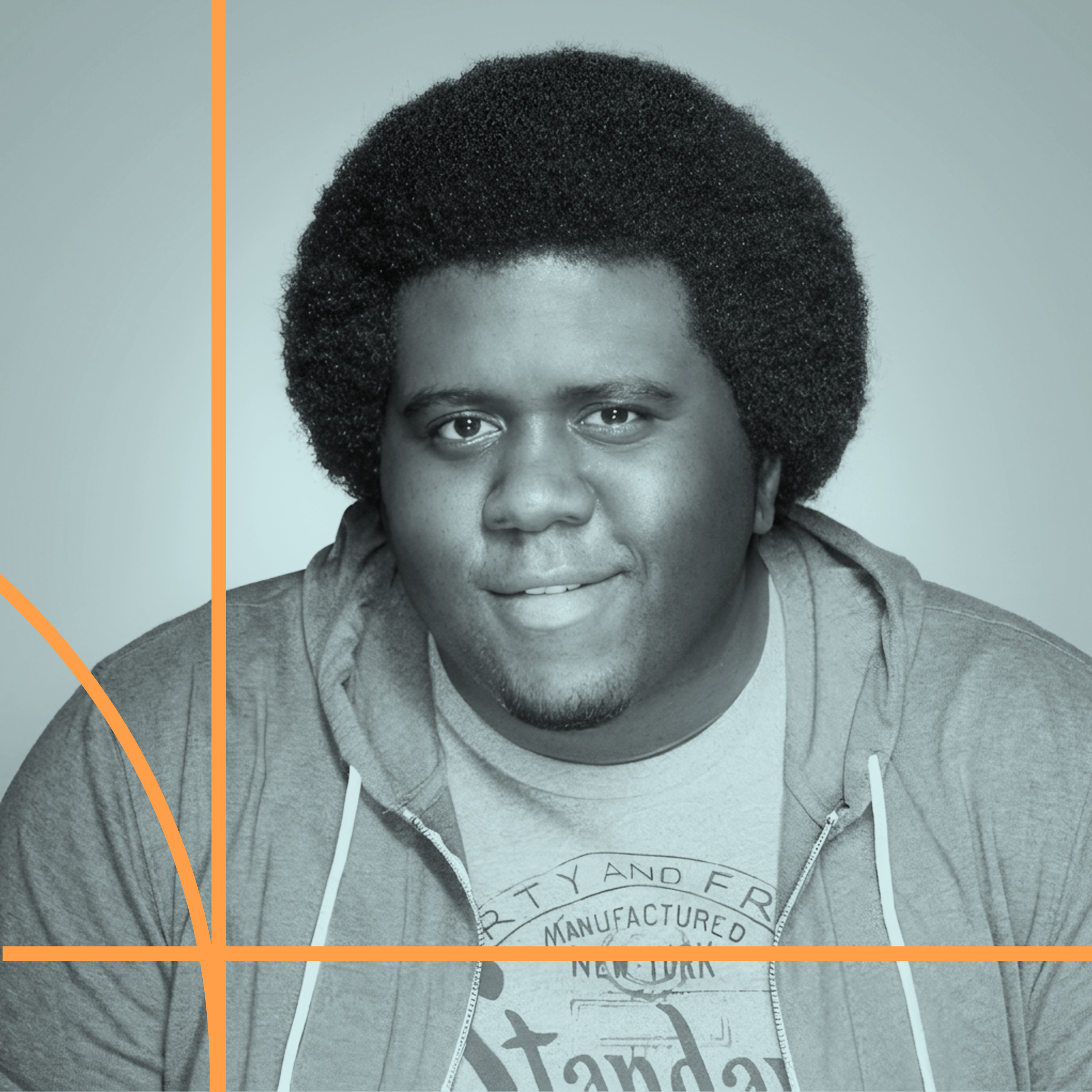
Shani Sandy (IBM VP Experience Design) discusses designing AI-era products by centering the “human problem to be solved,” separating “design with AI” (workflow/tooling) from “design for AI” (user-centered AI experiences), and making trust a core design requirement. She argues AI outputs can’t be assumed reliable, so designers must add explainability, confidence signals, and user research to detect where mistrust arises. She also covers staying connected to users via shadowing, co-creation, and in-person sessions, and the blurring of design/engineering roles in multimodal work.
Shani Sandy, VP Experience Design at IBM; leads UX work supporting IBM hardware/software services with 24/7/365 client support.
Trust requires explainability and confidence ratings; AI won’t fix broken processes; IBM design principles include explainability. Example: she shadowed support agents fixing client data centers; co-creation sessions used empathy mapping and “day in the life” insights.
Written by AI. May contain mistakes.
Discover Shani Sandy's insights on AI in user experience design.
“We are talking with Shani today about how her team stays connected to users to design great products, design's role in the new era of AI, and how IBM is evolving.”
Explore how AI is changing the workflow within design teams at IBM.
“Talk to us a little bit about how your team's workflow is changing.”
Understand the importance of trust in AI experiences and user interactions.
“But the uptime, availability, resiliency, all these factors that our clients count on us for are even better.”
Learn about strategies for engaging users in the design process through co-creation.
“Because trust, I think, for a long time has been a pretty significant issue.”
Explore the importance of involving users in design processes in a co-creative way.
“Maybe the things that you see someone in the corner who's quiet and you're curious to hear what they have to say.”
Discuss how blurred lines between disciplines create opportunities for collaboration.
“I want to play around a little bit, but I'm not subscribing$150 a month for it.”
Understand the current job market challenges and the importance of soft skills.
“being able to collaborate with teams that are going to be more and more increasingly, increasingly diverse in role types, right?”
Learn about the dynamics of team ownership and leadership in a new team environment.
“I mean, I'm trying to not convince him not to, but...”

Get the gist, explore an idea or ask about something said.
 Claude
On Design Better, what are the key points of this episode?
Searching your listeningAutomatic transcript. May contain errors.
0:01Shani Sandy: What's the human problem to be solved? That's the first question. That does not go away. We're going to go through waves of new technology. AI is the thing right now. Whether you think it's hyped or now, it's real. It's now. So our question still remains, what is the human problem to be solved? Dot, dot, dot. How may AI help solve that problem?
0:26Maybe you've already heard, but we're in the midst of a significant global technological change. It'll be a struggle for many businesses to adapt, but IBM's a company that's no stranger to change. Time and again, they've reimagined, restructured, and refactored their business to stay relevant. Our guest today, Shani Sandy, is playing an important role in IBM's current transformation as Vice President of Experience Design. Welcome to this episode of Design Better, recorded at This Connect, presented by User Testing in New York. We are talking with Shani today about how her team stays connected to users to design great products, design's role in the new era of AI, and how IBM is evolving.
1:07This is Design Better, where we explore creativity at the intersection of design and technology. I'm Eli Woolery. And I'm Aaron Walter.
1:18Shani Sandi, welcome to Design Better.
1:20Shani Sandy: Thank you, Aaron. Thank you, Eli. Thank you, user testing. Thank you, everybody. So here's some irony for you. Shani, we met you at another live event in New York a year ago, and here we are again. And here we are again. You're one of the brave people to ask a question, actually. So that's a lesson for you out here. If you ask a question, you might end up on the show. I think it was an AI question, wasn't it? It may have been. Sadly, yeah. I didn't mean to bring that up then, but it's back at it again. Oh, well, guess what? We've got some AI questions for you. Okay. Talk to us a little bit about how your team's workflow is changing.
1:52So you lead a team at IBM, a user experience team. You've kind of shifted roles recently. How is AI and the various tool sets that are emerging, how is that changing the way your team works?
2:03Shani Sandy: Yeah, you know, I'm of two minds with this space. I'm both optimistic about the tools and the ways in which it'll help us do our work better and yes, be more productive, also be more creative. I'm also mindful that each person has to kind of charter their own path with their comfort level and what agency they still have and what agency they give to these tools, right? So I candidly haven't been pushing as much as I think some other leaders are around, you must adopt this AI tool. I've been more so pushing our critical thinking when it comes to the AI experiences we're designing. So what we're finding is that there's this design with AI, which is the former piece of like how we're incorporating our tools into our workflow.
3:02Shani Sandy: And then there's design for AI. And it's us as designers, as researchers, thinking about what are those AI experiences look like in a way that still centers the user. And so that latter piece is really where we're spending more of our time. But I will say that I think in the second half of the year, we'll probably get more rigorous on how we're incorporating the tool sets into our workflow. I just think for my point of view and the kind of work we do, which I'm in the, I should mention, I'm in the business where we do support and services of our hardware and our software. So this is a 24-7, 365.
3:41Shani Sandy: There's no rest. If something happens with one of our clients' environments, we have to be there. There's no, oh, it's the weekend. That doesn't cut it. And so I think because of the type of work that we do, it's been extremely important to make sure that But the uptime, availability, resiliency, all these factors that our clients count on us for are even better. So that means bringing designers into that work. So that's why I've been pushing more in that space as opposed to workflows and tools. Given that IBM actually has quite a long history with AI, with Watson and other projects like that.
4:18Watson, yeah.
4:19Shani Sandy: Deep Blue. Deep Blue. The Chess and, yeah. Absolutely. Jeopardy. Jeopardy, yeah. So given that, I wonder if I could... We're back, by the way. That gives you sort of a longer-term view of these technologies and both sort of their potential and limitations as you're designing products with and for them. It does. And it's great because it's a room full of researchers and designers, right? You all know your stuff. And I think the difference now, though, in the work that we're doing, we very much always focus on kind of the three areas of desirability. Is this something that our users actually want?
4:51Shani Sandy: and doing the research around that usability. Of course, understanding that what we're creating has to be usable and in a way that folks actually enjoy it. So the delight piece. So those three pieces don't go away. There's still dimensions we care about. I think what's different now is, especially with these AI experiences, can we create experiences that people trust? I think this is now the new paradigm that design is in where what the outputs are that a user can get, frankly, shouldn't be trusted. Right? So designers have to figure out how to put into that experience, how to put into that engagement, guidance or cues to help us build greater confidence around what we're getting from these AI assistants or agents or tools.
5:37Shani Sandy: One thing I've been very adamant about with my team is not just saying we're going to create an AI tool or an assistant, really asking first, like, what is the question? The question is, what's the human problem to be solved? That's the first question. That does not go away. And so I think for all of us in the room, we're going to go through waves of new technology. AI is the thing right now. Whether you think it's hyped or now, it's real. It's now. So our question still remains, what is the human problem to be solved? Dot, dot, dot. How may AI help solve that problem? And I think when we come to the table with that framework, it allows us to still tap very much into understanding our users, their challenges, their motivations, getting very deep into that space before we start to slap on, here's another AI thing.
6:34Shani Sandy: That's a space that I'm still deeply committed to, especially because of the type of work that we do where we're trying to help our teams, particularly our support agents and then our clients, be able to do their work better. AI can do that, but it's not the fundamental answer each time. Sometimes, like, the process is broken. Sometimes you actually got to revisit the process because you realize the process steps are actually the foundational ways that we get things done. And if the process is broken, applying AI to that doesn't fix the problem now, does it? It might make it seem like it does temporarily, but it actually fundamentally doesn't.
7:13Shani Sandy: So for me, going back to the question, what is the human problem to be solved, for which AI may be the solution, is a framing that I like to bring up anytime possible. Team is probably sick of me saying that. I like this idea of bringing it back to the human. Think about this relationship to human and the machine, and we've got to figure out what our relationship is and the idea of trust. Because trust, I think, for a long time has been a pretty significant issue. All of us here have lived through this very optimistic, free social media, kind of the ecstasy of like, we're creating great things that are going to change the world.
7:52And yes, it did change the world, but in a lot of ways that we didn't expect or intend, And I'm optimistic and hopeful and been burned before. Don't want to revisit those bad outcomes. How are you thinking about trust? How are you thinking about designing for trust? How are you getting insights about your customers to know where they are mistrustful or where things fall apart?
8:16Shani Sandy: Yeah, Aaron, I feel very much like you. I'm quite ambivalent in this space because I think, of course, there are benefits to technology. In this case, we're speaking specifically about AI and oftentimes automation. That's also a part of it. But I think that the downsides, frankly, are underplayed. And I think that for us, particularly those of us in design, I really think our work is to strip off a lot of the layers of the seemingly exponentially amazing technology that in certain in rooms and spaces we all now have some form of access or familiarity with and really get at the deeper root of the consequences of technology.
8:58Shani Sandy: So if we're supposed to be the ones that understand our users, if we're supposed to be the ones that advocate for our users, then that means that as we're designing these experiences for our users, we need to be thinking about what does that look like for them and what are the potential consequences and unintended consequences. I will definitely give a shout out because our IBM design team has done a fantastic job with actually creating these principles around how do you design for things like trust, making sure that there's explainability involved when you're creating these AI experiences. So can you actually explain how the AI came up with output?
9:35Shani Sandy: Can you design that? Can I see as I'm interacting with an assistant, how did you actually come up with this so that I know whether or not I can trust it or not? Especially with the types of clients that we deal with, we cannot afford to put out information that is erroneous. And I think probably anyone in this room could say the same thing. Things like having, you know, confidence ratings in the responses. So when a response is then given to a user, they're able to see, okay, this particular response was scored about an 85%, right? So that also is a way to imbue these qualities of, okay, as a user, I can have a bit more consideration that this might be a more accurate answer.
10:16Shani Sandy: But you shouldn't take it off the premise of it's right Because it came out of the machine. And so I think these types of things, as designers, as researchers, we need to think about how do we do this for our users? And how do we also make sure that we continue to evolve those types of experience checkpoints? Because it's going to change as the technology changes. I'm cautiously optimistic that many more designers and researchers are thinking this way. My concern is the technology is changing so fast. And it's hard to keep up. And so that's why I keep saying, if we come back to like a very basic question of what is the human problem to be solved, I think that's a way to help calibrate us back to the humanity piece.
11:00But I do think that there are aspects of this work that we're just still learning, we're still figuring out, and we're trying to catch up sometimes.
11:09Shani Sandy: And so that means that designing for trust is going to mean literally every time we're putting out an experience, we have got to understand what that means for the user. Whether it's ethnographic research, whether it's qualitative research, quantitative, we have to get literally in the shoes of our users to figure that out. And we've done that within our teams and really shadow teams and are now putting in more behavioral analytics to figure that out. but I would absolutely say to each and every one of us who are in the room today, it is our responsibility to design for trust. It's not a nice-to-have in the kind of work that we're all likely now doing.
11:48I think the trust thing is huge, and we run into it in our own work, maybe in a smaller-scale way, in that occasionally we'll be writing an article and we want to pour through like 200 pages of transcripts and extract some themes and time codes from a certain episode. But I have to go back and check, did it hallucinate? And often it did. And then it tries to blackmail me. Then I tried to shut it down and it won't shut down. So we run into all these kinds of issues. But for a company operating at scale, where it's not just two people working on a podcast, but you're trying to stay connected to your users and sort of assess their level of trust.
12:22You mentioned ethnographic research, but are there ways, or can you go deeper on that? Or are there other ways you stay connected to your users?
12:28Shani Sandy: Yeah, so last month, our team had a gathering in person, an in-person gathering. And as part of the gathering, it was really primarily around us as a team getting together and forging certain principles around ways of working for our team and with our cross-functional team members in development and in products. But it was also an opportunity to be on the ground with our users and do co-creation sessions with them. And our users, they run the range. So they're internal agents who are dealing with support cases in volumes that are just unwieldy sometimes. and then there actually are clients who have issues and are coming to us to get their issues addressed, but we're also looking at doing things in a preventative way so they're not having to come to us for these issues.
13:14Shani Sandy: Nevertheless, one of the things we did is I was adamant that once we're there, we have to carve out time to meet with our end users and conduct a session with them around their needs. So we did need statements, we did empathy mapping, and we just like connected with our folks and understood what a day in the life looked like for them. I know that was the first time that ever happened. Now, it won't be the last, but it needed to happen. And so I think these types of things, I'm definitely a fan of like hybrid ways of working and different approaches. However, you cannot replace the in-person, nuanced look on people's faces, the way they may reserve some of the comments they want to make because of the impact or the consequences it may have.
14:01Shani Sandy: Maybe the things that you see someone in the corner who's quiet and you're curious to hear what they have to say. These types of things we're able to get at when we're in the room together with our users. And so I think those are ways in which bringing our users into the work and not in an extractive way. I have to say this. I think sometimes in our profession, it's like, OK, I need to do some user research so I can validate X, Y, Z. That's extremely extractive. And I don't care for that approach. And so whenever possible, I know it's not always possible. But whenever possible, we can do this in a co-creative way.
14:34Shani Sandy: That's my preference. And I will say, you know, my first few months in the world that I'm in now, I shadowed people. Like, I went on site visits with one of our agents who was in the field, like, changing hard drives and fixing different parts of the client data center. And Jess was an observer. And so I think wherever we can do more of that, it builds a deeper appreciation of the work and then bringing our users in to do the co-creation. There's no replacement for that. One fascinating thing that we're seeing as a theme as we talk to more and more teams is that there's this blurred line between disciplines.
15:12So the phenomenon of working on very complicated things like we all work on, it requires a lot of specialties and deep knowledge and expertise. with that deep knowledge comes its own specialized language. As we have more specialized language, it is harder to communicate, and we have different value systems. Engineers, designers, et cetera, there's different value systems, and sometimes those collide in very uncomfortable interpersonal ways at work. Everyone here has some story like that. But one thing that's really interesting to us is that we keep hearing designers say, hey, I can do this engineering stuff now.
15:50I can vibe code some things to prototype very quickly. And we're hearing engineers say stuff like, hey, now I can design a UI and get pretty close pretty quickly. And I can't help but think that we are accidentally creating this brackish water between our teams where there's this opportunity for us to understand one another in new ways. Is that something you've seen?
16:13Shani Sandy: It resonates. It resonates. I think that it's okay. I think it's okay that the lines are blurring because I think the type of work we're doing now is work that is so multimodal. It's moving at a clip that's so unwieldy that you need that cross-functional, cross-hybrid, multi-hyphenate type of person. Like I think just to be in one lane, frankly, and just to have that specialty, it's limiting in the type of experiences that need to be created. So I think that it's uncomfortable. I think there's a feeling like, oh, that's my turf and now, you know, a developer is doing something that they did in Figma and now they think that they can design and et cetera, et cetera, right?
16:59Shani Sandy: Or vice versa. But I do think it's the way of the future where we're going to have more folks who are just multi-hyphenate in their professional role. And I actually think it's healthy because it reflects the multi-hyphenate ways that we're living and working in the world. You wake up in the morning, you might look at your phone and then you look at your laptop and then you're off and you might look at your watch on your wrist that's like checking your biometrics and you're still in the world and you're still living you're having environmental experiences and spaces and moving throughout space and so I think that just the reality is that our modalities are just more and more evolved and will be more and more varied and so to me then professions should just reflect that So it's going to be uncomfortable, but I think that if you want to remain engaged, you should consider being a bit multi-hyphenid.
17:50Yeah. It's interesting in the prior conversation, the panel before there was a comment about being digital native or not. Feels like AI creates this opportunity for us to be native in almost any discipline if we wanted to be.
18:03Shani Sandy: I'm probably going to screw this quote up. But the idea is that like the AI we're experiencing today is the worst AI we'll ever experience. I think that's exactly right. They were kind of all in it. We're all kind of figuring it out as we go. And as the weeks and months progress, the technology is changing, right? Just this past weekend, VO was released, which is the ability to use text to generate video. Yeah. Really legit. Yeah, pretty legit video. I want to play around a little bit, but I'm not subscribing$150 a month for it. But these types of things are happening in real time, right? And I say that a little bit facetiously, too, about the cost, because in reality, not everyone is having access to these tools.
18:48Shani Sandy: And so there's another piece of this, not suggesting that this has to be the space for designers, But I am suggesting that if you care about users and democratizing access, that, you know, that's another space we might want to consider playing in or understanding how can the access to these types of tools be made more accessible to more people. Because right now, frankly, if you want to play around with maybe a tool set of three, I won't name names, but a tool set of three, you're going to pay a couple hundred dollars a month for that on top of just anything else you have, right? So I do think there's part of this that is a conversation that's privileged in your ability to access these types of tools.
19:31In addition to the kind of multidisciplinary changes that are happening and roles collapsing or the types of things you're expected to do, expanding, it's a tough environment out there for folks that are maybe looking to change jobs or find a job. We do a survey every year and 41 % of the respondents this year said that their biggest challenge was finding new work, not necessarily maybe a job that they wanted more, maybe they're not out of work, but in any case, career is a top of mind. Companies are tightening their belts, folks are looking for jobs. In my class, I teach graduating seniors, and this is the hardest job market they've faced in the 13 years I've been doing it.
20:06I'm just curious, how does this sort of shape the work at IBM and your team, and how's it affecting you all?
20:12Shani Sandy: First, I want to recognize that it's tough times. I will add to that. Friends and colleagues that I have been talking to in the last few months, especially, who are looking for work, have expressed how just darn hard it is. Like, it's just tough right now. and it's not a reflection of people's skills. The reality is that places are not hiring as much anymore. The rub is you have these amazingly talented people in the marketplace that aren't able to find the right opportunities. And so I think about this in several ways. For me and my team, and also from an IBM point of view, there has been a lot of focus on gaining the skills, gaining particularly the skills around AI, understanding data and data structure and architecture, understanding the basics of what it means to build for AI.
21:04Shani Sandy: I think we all need to understand that. It doesn't matter what role you're in. I think it's important to have an understanding of what that world looks like in terms of when people say AI, what they actually say versus what it actually means. And having enough ability to call BS when people say things is hugely empowering. So I think just for your own benefit, that's important. So I think, yes, acquiring the skills is going to be important. What skills does that look like, though? I think a lot of folks talk about prompt engineering and how you have to be the best prompt engineer, and that's going to make you viable.
21:39Shani Sandy: I think there's validity to prompt engineering, but frankly, like, AIs can now create amazing prompts. So like, okay, so you learn how to prompt engineering now, like an AI can do it. So I think that to me, what's more foundational or maybe a return to is the so-called like interpersonal skills. Sometimes people call them soft skills. I don't like that term, but I'll use it because I think when you say soft skills, people will know what you mean. But I think these are the skills around being able to communicate in ways that are compelling, being able to convey your message, being able to negotiate, being able to collaborate with teams that are going to be more and more increasingly, increasingly diverse in role types, right?
22:17Shani Sandy: Now we work with linguists and data scientists, not just developers and engineers and product folks. So my read is that what we've been doing within our teams is thinking about how to, yes, do the technical work of building these AI experiences, but also what are the soft skills we need to also be able to develop and advance in the world and the way it's changing right now. And I think for folks like looking for work, first off, wherever you can help folks. That's the place we should be in. That's the gap we should step into. Like talk to folks who are looking for work. Be there to say, you know what, if something comes up, I'm going to put your name in first, or I'm going to make sure that, you know, I connect the dots to someone I might know.
22:59Shani Sandy: I think now's the time to like really dig deep into community and for each of us to help each other, especially when we're in situations where we're looking for work or wanting to make a career pivot. And I think the last two things I definitely want to say on this topic, because is such a big one and there's so much more to talk about because of how much it's impacting professionals across the board. I think one, I would love to see more designers go into like the space of like building these AI companies. Pi was one of these. It was supposed to be like a personal assistant that had emotional intelligence, right?
23:30Shani Sandy: Like I don't know how well it caught on because I stopped using it. But I would love to see folks who are, again, focused on understanding users, understanding human behavior and having those folks really get into worlds where they're founding these businesses. Because I think they're going to bring a different lens that's missing to the space. And I think the last thing is like, maybe it's a time for the overused word pivot. It might be time to say, you know what? I'm not really finding the thing for me or I hear all about this AI space. Okay, cool. I know about it, but I don't want to go all in.
24:05Shani Sandy: So maybe it's time to pivot into something entirely different that you put on the back burner, but may be right to do. Aaron's thinking about becoming a baker. I mean, I'm trying to not convince him not to, but... Listen, listen. Baked goods, done. Everybody always wants that. Talk about putting the human back in the technology. Yeah, yeah. You got it. You got a customer right here built in. Yeah. I like what you're saying about helping people out to find work. And just a quick plug, designbetter.directory, there's a ton of talent there of very talented, experienced people if you're looking to hire.
24:37and if you have job openings, same place, you can post your job opening for free. We have had people hired off. Yeah. So as we wrap up here, I'm curious, you've had an amazing career and you're doing a lot of interesting things at IBM. What are you most proud of what you and your team have done?
24:54Shani Sandy: I guess I'll just use the most recent example because to be fair, there's so many proud moments. But I had shared that last month our team was doing a gathering and it's a newly formed team. So there are some experienced folks, but some folks who are brand new. And we did it in Sofia, Sofia in Bulgaria. We had a three-day session. And the second day, guess who gets food poisoning? Yeah, it was me. No baked goods for you. No baked goods. And so I was done. I didn't even know if I could make it through the rest of the trip. And so that Wednesday, I let my team know, you know, I'm not feeling so great.
25:33Shani Sandy: hey, let's touch and go. I'll see how I'm doing in the afternoon. But was like, I'm here. I can't not figure this out. Like, I gotta figure something out. So I was doing everything I could to get better. Eventually made it into the office that afternoon. Again, nowhere near 100%, but did the best I could. And I got there and I was like, they didn't really need me. They did an amazing job. Second day was all about, it was actually, I was leading the second day and revisiting our retrospective around areas that we wanted to improve on, what are some of the solutions we could create to address those problem areas.
26:03Shani Sandy: and had an entire program around what I wanted to make sure was accomplished. And I got there and they just did it. They led and they made it happen. I came in and they were already thinking about solutions and owners and how they would approach the challenge space. It might sound like really like, oh, that's what you're most proud of? Like that seems just like normal or small. But what you have to recognize is like, this was the first time I met in person. I just hired half of the team. It's a very, very small team. I had just hired half of the team a few months ago. And so the very fact that they just assembled themselves and figured it out, to me, was reflective of them understanding that they have as much ownership in where the team goes than I do.
26:50Shani Sandy: And that was icing on the cake for me. So I think that would be it. Chani, thank you so much for being on Design Better. Thank you for having me. It was way too short. Next time we'll have to do a part two. We'll do a part two. Okay.
27:07This episode was produced by Eli Woolery and me, Aaron Walter, with engineering and production support from Brian Paik of Pacific Audio. If you found this episode useful, we hope that you'll leave us a review on Apple Podcasts, Spotify, or wherever you listen to finer shows. Or simply drop a link to the show in your team's Slack channel, designbetterpodcast.com. It'll really help others discover the show. Until next time.
Maybe you’ve already heard, but we’re in the midst of significant global and technological change. It will be a struggle for many businesses to adapt, but IBM is a company that’s no stranger to change. Time and again, they’ve reimagined, restructured, and refactored their business to stay relevant. Our guest today, Shani Sandy, is playing an important role in IBM’s current transformation as VP of Experience Design.
Welcome to a live episode of Design Better recorded at THiS Connect presented by UserTesting in New York. We’re talking with Shani today about how her team stays connected to users to design great products, design’s role in the new era of AI, and how IBM is evolving.
***
Learn more about UserTesting
***
Bio
Shani Sandy is a visionary design executive whose ethos—DESIGNING FORWARD—reflects a career dedicated to propelling businesses, communities, and cultures through intentional, people-centered innovation. With a powerful blend of strategic leadership and creative insight, Shani has led transformative initiatives for Fortune 500 companies, including pioneering roles as the first Executive Creative Director at S&P Global and the first Design Executive at IBM Systems. Her expertise lies in integrating multidisciplinary design, AI, and emerging technologies to elevate user experiences, drive measurable business outcomes, and cultivate design maturity across organizations.
Known for aligning design strategy with C-suite objectives, Shani excels at translating complexity into clarity and forging collaboration across functions to deliver lasting impact. She is a sought-after keynote speaker, having shared her insights at premier conferences including 3% Conference, AIGA National, and Adobe Creative Jam. A passionate mentor and advocate for underrepresented creatives, Shani is equally committed to shaping the future of design leadership as she is to delivering on today’s innovation. Whether guiding enterprise transformation or nurturing the next generation of designers, Shani leads with bold vision, strategic execution, and an unwavering focus on outcomes.