 Ask ChatGPT
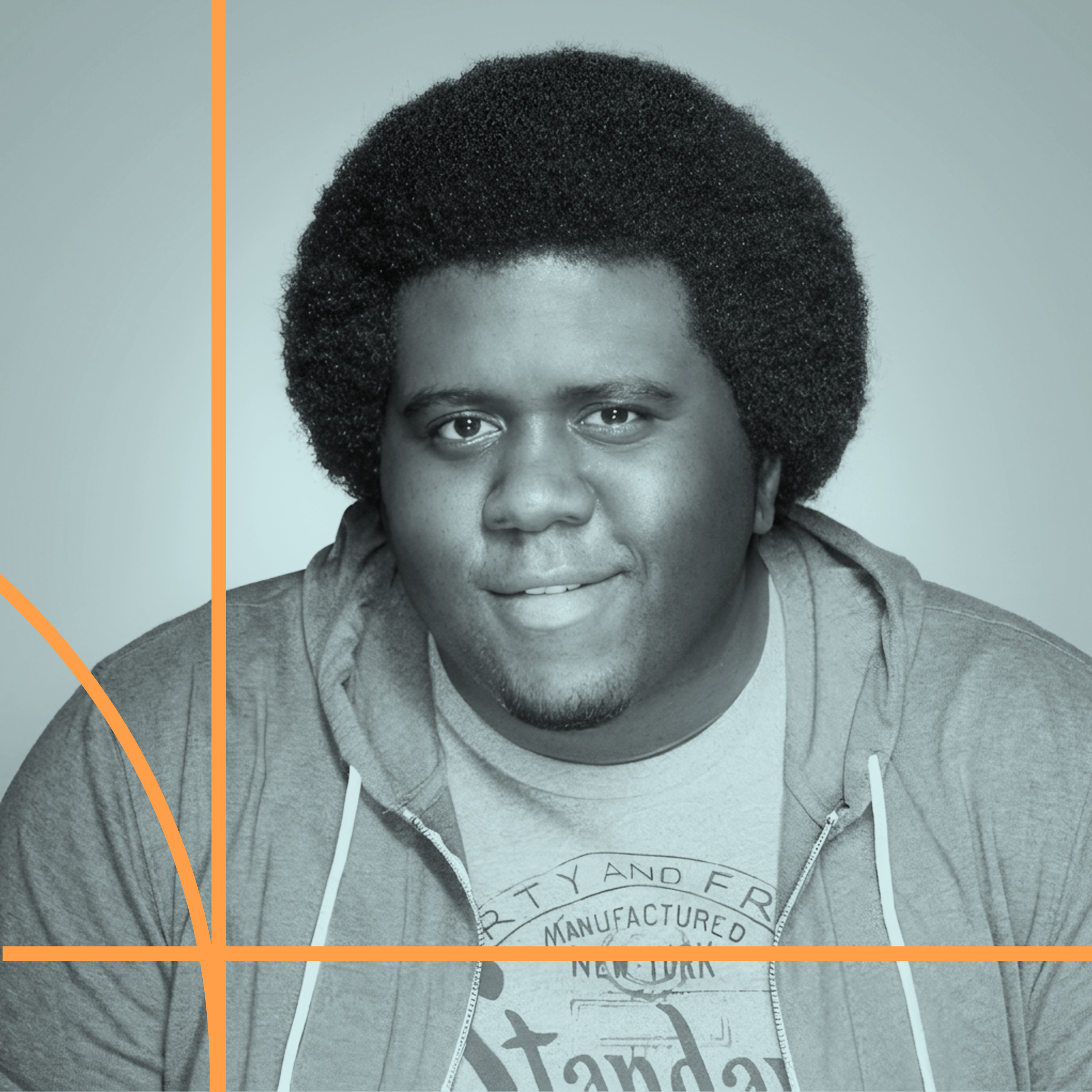

Creative Leadership Retreat episode featuring Lucy McRae, focused on coalition building and creative leadership through speculative futures. McRae discusses “future nostalgia,” using familiar, soft materials to make emerging biotech feel understandable, and how she collaborates across science, art, and design.
sci-fi tropes should be challenged (avoid sterile, shiny transhumanism); audiences can be less polarized when technologies like genetic engineering and growing children outside the body are rendered with domestic, biological materials (jelly, textiles, her own body). She emphasizes early, iterative collaboration, vulnerability with teams, and research via messy experimentation and conversations.
Phillips “body architect” work using filed patents (e.g., textiles that shiver); films screened at the retreat including Delicate Spells of Mind (choreography-led, with Jasmine Albuquerque) and Futurekin (documenting a compressing-body sculpture shipped to the Venice Biennale).
Lucy McRae is a body architect/futurist filmmaker/designer; led far-future research at Phillips; worked in Hollywood writers’ rooms including Blade Runner 2099; trained in classical French chiquetti ballet for 14 years; also consults on other creatives’ stories.
Written by AI. May contain mistakes.
Introduction to Lucy McRae and her role as a body architect.
“Erin and I asked where her lived-in retro-futurist aesthetic comes from and how she orchestrates costume, choreography, camera, and music.”
Discussion on the partnership with September Works and their design philosophy.
“If you only listen to the podcast, you're missing the best part of Design Better.”
Discussion on Lucy's creative process and her retro-futurist aesthetic.
“We're going to get started here again with our final and wonderful guest, Lucy McRae.”
Lucy's exploration of materials and their transformation in her art.
“I felt like I was really, I knew I wasn't good at colour.”
Exploring the concept of future nostalgia and its impact on design.
“It's not, you know, you called me a designer and sometimes I'm like, am I a designer?”
How Lucy engages with emerging technologies and their societal implications.
“I wondered if that's part, is that subconscious or is that part of a broader line of thinking?”
The importance of collaboration in Lucy's filmmaking process.
“You have your own body of work projects that I assume you conceive and direct and then you also consult on other projects like Blade Runner 2099.”
Discussing challenges in creative projects and the importance of transparent communication.
“There's, of course, all of the costume design that's part of that, the storyline, the choreography, and the camera work felt like a character in the piece as well.”
Explore the impact of vulnerability on teamwork and project dynamics.
“The relationship between the costume and the dance dancers built that world, really.”
Understand the relationship between dance, choreography, and technology.
“I'm finding that when I'm vulnerable, it opens the door for other people to be vulnerable.”
Discuss the challenges and successes of working with large tech organizations.
“From the first film you showed last night, there was choreography.”
Explore the early innovative culture at Philips and the challenges faced by the probes team.
“So I can't believe that you were at Philips?”
Learn how storytelling and design influence corporate futures and innovation.
“And when we were there at the time, Philips worked in three horizons.”
Discover the messy and creative research processes behind innovative design.
“And it's about connecting dots that haven't been connected before and coming from a different point of view.”
Understand the impact of sci-fi literature and films on creative thinking and world-building.
“Like I would want to dig through your laptop and what's in your scrapbooks or what sort of weird collections do you have in your home?”
Examine how a creative upbringing influences one's professional identity and work.
“Side note, but if you're a Gattaca fan, and if you were coming from San Francisco, you would have driven past part where they filmed it at the Marin Municipal Center Court.”
Engage in reflections and shared insights from the creative leadership retreat.
“and now incorporating, which is a surprise.”
Explore how surprise can transform creative discussions and reviews.
“Because if you're not performative, then maybe you're going to succeed in a different way.”
Understand the importance of being part of a supportive design community.
“I just like being reminded that being around designers is just so good.”
Discover the unique atmosphere of inclusivity and optimism at design gatherings.
“But I also wanted to echo what Kristen was saying, is this felt inclusive in a way that wasn't done before.”
Learn about the importance of embracing change and diverse disciplines in creativity.
“Well, Aaron and I also have a thank you to Tom and Brandon for really making this happen, bringing us in.”

Get the gist, explore an idea or ask about something said.
 Claude
On Design Better, what are the key points of this episode?
Searching your listeningAutomatic transcript. May contain errors.
0:01This episode continues our special series recorded live at the Creative Leadership Retreat in Sonoma, which we co-hosted with our friends at September Works in late September. There we gathered 40 leaders from design, business, and the arts for two days around the theme of coalition building. We're skipping around a little bit as we air these episodes. Lucy McRae was our final guest. She calls herself a body architect and spends her days getting scientists, artists, and designers to work together. She led far future research at Phillips and has worked in Hollywood writers' rooms, including Blade Runner 2099.
0:30Her work looks at technologies that bring as much terror as hope, like genetic engineering and growing children outside the body. She makes them feel familiar by building them from soft, everyday materials such as jelly, textiles, and her own body. The night before this conversation, we screened two of her films. Erin and I asked where her lived-in retro-futurist aesthetic comes from and how she orchestrates costume, choreography, camera, and music. in a film. She told us she used to bring in collaborators too late and how changing that improved her work. Our guests asked how she decides what to pull from real science and where to push into fantasy.
1:04A former Phillips colleague asked how to convince an organization to invest in speculative, provocative work. Others asked how 14 years of classical ballet shaped her process and which company's patent library she'd raid if she could. We also talked about her research process, the sci-fi she keeps coming back to, and how growing up with a math teacher and an art teacher as parents made her a polymath. This series is presented in partnership with September Works, a product design studio. They envision, evolve, and reinvent digital products. Learn more at september.works or reach out to them at hello at september.works.
1:45We'll return to the conversation after this quick break.
1:52Hey, it's Aaron. If you only listen to the podcast, you're missing the best part of Design Better. That's our community. Annual members get access to our private Slack with talented designers and former guests like Brad Frost, Bob Baxley, and Meredith Black. Slack members share their work, they trade feedback, and they help each other find jobs. Every other Wednesday, Eli and I meet with members on Zoom for Design Club. We critique work, we do a show and tell, and we talk through career questions with expert guests. Members also get ad-free episodes, our weekly newsletters, our full ebook library, and job alerts, all for just$72 a year, which is just$6 a month.
2:34And pro tip, most companies will let you expense it. You can learn more and become an annual member at designbetter.com slash join. That's designbetter.com slash join. We'll see you in Slack. Design Better is supported by Framer. These days, anyone can generate a website in about a minute. The first 80 % is easy, but that last 20 % is a headache. The spacing's off, there are dozens of design mistakes, the CMS isn't wired up, and before you know it, what seemed easy has eaten tons of time. Framer closes that gap. It's a pro website builder with AI agents working right on the canvas with you in the same place the real site is designed and published.
3:17The agent drafts a page. You inspect it, edit, publish it. Agents bring speed and scale. You bring taste, judgment, and your control. By the way, Miro and Perplexity build their websites in Framer. Learn how you can get more out of your website from a Framer specialist or get started building for free at framer.com slash designbetter for 30 % off a Framer Pro annual plan. That's framer.com slash designbetter for 30 % off. framer.com slash designbetter. Rules and restrictions may apply.
3:53And now, back to the show.
4:01All right, all right. We're going to get started here again with our final and wonderful guest, Lucy McRae. It's probably a good thing this is the last one. I've been losing layers between each guest, and this would quickly become a podcast nobody asked for if we kept going. So Lucy, as you saw from her amazing film work last night, is a futurist, filmmaker, designer. And I thought it would be fun to just start off with, you have this wonderful aesthetic that Aaron and I were talking about being kind of retro futurist. and maybe share some parallels, some other films we talked about yesterday, like Aliens, where it's this very lived in world, even though it's in the future or maybe the earlier Star Wars.
4:41Maybe talk about why that aesthetic works for you or is important for you and how you accomplish it. I think I don't design. I'm not sort of saying I'm going to go and make this type of aesthetic. It's really the creative process that leads me to making that kind of work. I remember, I guess when I left Phillips as a body architect and moved to Amsterdam to experiment, I felt like I was really, I knew I wasn't good at colour. And so to find colour, I would make jellies and use food dye and water and powder and heat to find the palette. And I think even with textiles, I do a similar thing. And I don't know why, but maybe the challenge is like, can I make these things that kind of look disgusting, make them look pretty?
5:44Why start there? I mean, there's a lot of different ways you can approach color. is there something about the substance itself? You said jellies. Is that like jello? Yeah. Like a gelatin type of thing. Is there something about that substance that feels maybe biological or relevant to the work? I think at the time I was making body parts, like giant torsos made out of jello,
6:17and I had left Phillips and I didn't know what to do. And I was trying to discover and work out what I was going to do next. And so being in the kitchen and kind of experimenting with the material to make something transform, I think I'm really attracted to transforming something that didn't exist before And starting with something like powder and water and heat, heated water, and then the fridge, it just felt, I don't know what attracted me to it. A lot of this is unconscious. It's not, you know, you called me a designer and sometimes I'm like, am I a designer? I think it's really instinctive.
7:11And that kind of feeds into everything that I do. And then the process of doing it again and again and again gets me to the clarity, which maybe is why the aesthetic feels sometimes otherworldly or unusual because I'm not going about it in a typical way. What's fascinating to me is that it doesn't feel unworldly. It feels familiar. And what Eli was touching on there, I would call this future nostalgia of like, it is the future. It's not now. These are strange, uncertain times and the behaviors and things we see are unexpected and yet familiar. and even a color palette like the top that you have on that's a desaturated color palette it's kind of sand desaturated colors are something that's been exposed to the sun for a long time something that has a history to it which is interesting if we think about futurist visions star trek or kind of traditional sci-fi the future looks polished and perfect and there are some visions of the future that look rugged, sometimes dystopian, sometimes just weathered.
8:28I wondered if that's part, is that subconscious or is that part of a broader line of thinking? I think I'm definitely pushing against the trope of sci-fi. We were talking about this this morning, the kind of like masculine, sterile, shiny, metallic, cyborg transhumanism and I'm interested in fleshy, visceral, ephemeral, squishy, domestic, soft, familiar fictions of the future. Yeah. And I'm not writing or creating fantasy. I'm looking at emerging technologies that bring a lot of hope and terror and I'm trying to explore and understand them myself personally through very familiar materials to uncomplicate how it is complicating our future.
9:21And part of using familiar materials is then hopefully audiences don't feel so polarized by genetic engineering and what happens when science and technology become surrogates and we can grow kids outside of the body and bypass the womb, which just sort of, it's, that sounds incomprehensible in a way, but to be able to make that technology felt. I did a show 2019 at the Milan Triennale called Broken Nature and Paola Antonelli was the curator and she was sort of suggesting that we want audiences to fill it with their body first and I think that's part of what I'm trying to do with frontier technology.
10:17You have your own body of work projects that I assume you conceive and direct and then you also consult on other projects like Blade Runner 2099. Do you feel similar to Andrew who we talked about earlier where the constraints are actually helpful and it gives him a starting point and a place to aim towards or is it more complicated for you? I love consulting on other people's stories because I can just be like what about this what about this and just throw stuff out and I think when I start my own projects I'm trying to use what's already around me so what's what materials I have or I typically use my own body because it's always available.
10:58But yes, starting a new project and kind of tolerating the discomfort of not knowing where it's going, it's a muscle. And we were talking at lunch today that younger generations who can, they're not facing the blank canvas there's an immediacy to being able to make that how is that affecting their resilience to discomfort because there's always something that can happen so we got to see two really incredible films of yours last night which was interesting and very insightful to be able to see the work so we have that in our mind to talk about it today what i was struck by was just this the scale of what you have to have in your mind across different types of media to be able to pull something like that together.
11:55There's, of course, all of the costume design that's part of that, the storyline, the choreography, and the camera work felt like a character in the piece as well. There's a lot of dolly work. There's always this movement, this progression. The music is also very much a character that's setting the mood and kind of telling us a little bit about the space. How much of that is all of your orchestration and where do you invite collaborators to be part of that? I like that you saw that these elements of making movies are almost protagonists in the story. And in the first movie that we saw, I also like treating the building or the location as a body that can be moved and transformed and changed.
12:47When I was living in Amsterdam, Peter Greenway was such a huge influence to me and the way that the dolly would move through the kitchen and all these things were revealed. And that like having a dolly when I first started making, we used to make them with a skateboard and like some conduit. And then when I worked in music video and we could get a dolly, it was like, oh my God, we can. So that sort of, it starts to impact what the set is, what you're revealing. And I think that early on in my art career, I used to bring in people too late because I didn't know what I was making. and I'd be making, for example, with Make Your Maker, which is these torsos made out of jelly, I was still making the body parts and I didn't really know that it was going to be a movie or what was the story and then bringing in a cinematographer or a sound designer sometimes or just a bigger team, I would leave too late and that was not a good idea.
13:57So, yeah, I think particularly with the first movie, Delicate Spells of Mind, Jasmine Albuquerque, the choreographer, was a huge part of that atmosphere. She chose the dancers. The relationship between the costume and the dance dancers built that world, really. And also our relationship with each other, with dear friends. But when I was starting this project, I remember we went for coffee and I just said, I was like, Jazzy, I'm just not feeling this project. I don't have any energy. I just got back from a big show and I felt bad because I'd recruited this whole team, but I wasn't feeling it. And by putting that on the table, it was out of my body.
14:46and then we had an incredible time because I'd removed this thing that was sort of no one else knew about. So I think that's the kind of relationship when I'm working with teams is to have that kind of vulnerability and sensitivity. Yeah. Audience questions?
15:15We'll return to the conversation after this quick break.
15:42help us broaden our perspectives. Unlike other learning platforms, Masterclass puts you in the room with the people who define their fields, not just experts, but I'm talking the best of the best in the world at what they do. You can learn art from Jeff Koons, architecture from the late Frank Gary, film from the late David Lynch, entrepreneurship from Sarah Blakely, and storytelling from the Duffer brothers. With Masterclass, you can learn from the best to become your best, With plans starting at just$10 a month, billed annually, you get unlimited access to over 200 classes taught by the world's top minds in design, business, and leadership.
16:20Plus, there's no risk. Every new membership comes with a 30-day money-back guarantee. Masterclass keeps adding new classes, so there's never been a better time to get in. Right now, as a listener of Design Better, you get at least 15 % off an annual membership at masterclass.com slash designbetter. That's 15 % off at masterclass.com slash designbetter, all one word. Head to masterclass.com slash designbetter to see their latest offer. Building a website in a team environment can be so challenging. There's all the copy changes from lots of different people. Someone needs a case study up by Friday.
16:59A section that looked fine on the desktop mock-up, it falls apart on a phone. That's where most teams stall, and it's usually not a design problem. It's more of a collaboration and coordination problem. Framer's a complete website platform, not just a builder. It's got responsive layouts, handles the hosting, and a CMS are built right in. So the work is production-ready from day one. Agents on the same canvas creating custom code components, managing the CMS content, tuning the SEO for you, and audit the site for issues. Your team works on the same page in real time and publishes instantly, so changes take minutes instead of days.
17:39It's pretty powerful. Learn how you can get more out of your site from a Framer specialist or get started building for free today at framer.com slash designbetter, and you'll get 30 % off a Framer Pro annual plan. That's framer.com slash designbetter for 30 % off. Framer.com slash designbetter. Rules and restrictions may apply. Sam's Club is the club for every holiday club. Guess who's joining the club this season? Walmart Plus. Yep, Sam's Club Plus membership now comes with Walmart Plus at no extra cost. Two memberships, one great price. Just$120 a year can save you time and over$700. Want to get in on the membership duo of the century?
18:17Visit samsclub.com. Come join us. Sam's Club. Annual plan only. Auto renews. T &C apply. Estimate based on average. Combine Walmart Plus and Sam's Club Plus savings among members of both for one plus year versus non-member or club member pricing slash fees. Excludes membership fees. See Walmart Plus terms and Sam's Club terms for more info.
18:30Lucy McRae: This holiday, all plans, even unlimited, are just$15 a month. A holiday deal this good obviously deserves an enormously expensive holiday song. Like, all I want. Right. Okay, we can afford that. You know what? Forget the music budget. We're going to stick with whatever's in the public domain. Give it a try at mintmobile.com slash switch. Upfront payment of$45 for three months,$90 for six months, or$180 for a 12-month plan required. $15 per month equivalent. Taxes and fees extra. New customer offer for initial plan term only. Greater than 50 gigabytes may slow when network is busy. See terms.
19:04And now, back to the show.
19:11actually with that last moment when you did have that vulnerable moment and start bringing that to the team that you had recruited how did it change even the project because you're talking about how the vision is almost like incremental on how it actually comes to life of did you just completely relinquish the vision as soon as you shared that with your team and I guess could you share more about that process? I'm finding that when I'm vulnerable, it opens the door for other people to be vulnerable. And that changes just the dynamic. And I remember the top down shot, the, I had a, you know, incredible producer and cinematographer and they were saying, is that it?
19:53Is that? And I was like, I don't know. I don't know. And I felt the pressure that I needed to make the decision because obviously you're shooting in such a small thing. But I think by saying I don't know, let them know that they could help with the decision. So I think by saying to Jasmine I'm really not feeling it, make the movie what it is because otherwise I felt like I was just faking it. And I don't believe that you can make work from that place of pretending.
20:38Oh, she would have like, yeah, don't worry about it. I'm tired too. Yeah. And I think, yeah, when you find collaborators who have the capacity to hold you when you're not feeling it, you feel it. Yeah.
21:04I think with your work, it's very clear there is that, you know, inspiration from emergent technologies. There's like a tether to the present, but there's also a lot of imagery that it's like impossible. It's dreamlike. There's, there is elements of like fantasy to it. So I was wondering how you balance those two sides of things. I guess the science and the fiction figuring out what to kind of like pull from reality and where to really just like push it
21:34been asked this before and yeah I don't have it's all yeah I don't have like a measure I think the swalble perfume was sort of like a good example of at the time I heard about Ray Kurzweil who's like a utopic technologist and he was talking about how this was in the 2000 and how technology was becoming the size of a blood cell. It would enter our body. I started thinking about what happens from technology.
22:16Lucy McRae: Sorry, break up. Does the body become technology? And I think what's important is working with the people like synthetic biologists who can steer you in a way that keep you on the track of this could be possible. So I think that's the kind of that, this movement between fantasy. And when I was at Phillips, it was we were definitely using patents that they had filed. So we weren't creating, you know, flying dresses. We were creating textiles that shivered because that was what Phillips had filed in the past. Thank you.
23:04Hello. Hello.
23:06Lucy McRae: Hello. From the first film you showed last night, there was choreography. There was modern movement in it, dance in a way. You mentioned ballet background. The second didn't have that. I was waiting for it and it didn't show up. Was that because the brief you were given and the way you were reacting to the ask that you brought in choreography? Or is choreography the notion of movement in that more dance form way versus just cinematography? Is that actually something that you would prefer to do and would keep going? And the one thing that we saw, the two things we saw were just happened to be different.
23:45Lucy McRae: Where's your take on movement, I guess, dance movement? body movement in that choreographed way between your work yeah so we made future kin before we made delicate spells of mind and i'd done music videos 10 years ago that used dance mostly friends and so future kin was made and now i'm not answering your question but i'll get to it was made because the next day the big sculpture that you see compressing the body was being shipped to the Venice Biennale and I knew that was my last chance to kind of capture it on camera and when I'm working with young creators who are artists I always talk about the importance of documenting the work before it leaves the studio because when it comes back either you just don't have the energy or you've moved on and so Futurekin was documenting that sculpture but also creating a kind of look and feel at that time for a TV show that I had in my mind.
24:45And then Delicate Spells of Mind came in and I had been wanting to collaborate with Jasmine. And I've said this in the past that sometimes commissioners and clients don't know that I'm experimenting on their time. But I think that's how you get something unique when you're like, let's see if this works and also she's an extremely talented choreographer and it was a commission from a theater director and it's great thank you
25:26Lucy McRae: so quick follow-on to that is how if at all that your training in ballet has affected your work and your process i did classical french chiquetti for 14 years and when i wasn't doing ballet, I was running a hundred meter hurdles. And so it was like a very active, tailored childhood of going from one to the other. And I think not knowing that was also an optimization of the body, how fast you can run, how precise you can run over the hurdle, how can you stay in sync with other dancers. And I think that sort of engineering of the body I can say this with a lot of hindsight, is now what I'm interested in is CRISPR technology.
26:15If you're not familiar, if you imagine a pair of scissors so small, you can't hold them. And the only thing that can operate them would be a computer. And those scissors can go into human DNA, cut, delete, replace disease. It can create the kind of superior superhuman. And so there's a link between using my body as a kid and now what I say is like exploring the biological edges of the body. Yeah, and I think that there is a certain amount of world building in dance that happens now when I'm world building in film. Yeah.
27:04hi i'm really interested in your work with phillips for context i was at i was working at phillips in amsterdam at the time you were doing those projects i remember hearing about them and i was so impressed that a company like phillips has somebody called like a body architect Right. And also that they invest in those kinds of speculative futures provocations. And I guess I have like a question that's sort of two parts. So first, I'm curious about what you thought maybe was successful or less successful about a collaboration with like a large technology organization like that. And secondly, I'd love to see more big organizations invest in that kind of work.
27:55And I'm curious about what you would recommend in terms of like convincing like an organization to take on that kind of provocative work. Thank you. So I can't believe that you were at Philips? We can talk about it later. Okay. Yeah, we can talk about it later. I, if you remember being John Malkovich and he worked on the seventh floor and he would get out of the lift and like the, it was all tiny. And that was kind of, we were called the probes team and that was kind of, we weren't really meant to be there. We were right at the back in a Faraday cage. And I think we were disliked because people didn't really understand what we were doing.
28:39We weren't making anything that went to market. And we had two directors, Clive Van Heerden and Jack Mummer, who were kind of visionary in their knowing of the importance of being innovative in a company. And Stefano Mazzano was the CEO at the time, and he also took a leap. And I was living in London at the time, and I went over and set up the department in Eindhoven. And so it was, it kind of felt like the whole time we were having to prove ourselves to sort of come back the next year. I was there for four years and we won, I showed it last night, the Babel Dress One-A-Time Fashion Award. And that was kind of when we were accepted at Philips.
29:29It was like, oh, we can sort of see what they're doing now. They're not because we had like sonic welding machines and sewing machines and we were hiring fashion designers and engineers and trend forecast. And this was in 2006 when that wasn't really happening in a consumer electronics company. And then we started, we were, the main sort of goal was to try and sense emotions. And then we started moving into atmospheres and architecture and food and interiors. and I'm not suggesting that we solely had an input, but Philips is now a health tech company and they already were making sort of health technologies.
30:08And when we were there at the time, Philips worked in three horizons. You probably know this. So we were in horizon three, which was 15 to 20 years into the future. Next Simplicity was five years. And then the consumer electronics was first to the consumer. And so part of our role was to put provocations out into the world that were expressing or expanding the kind of patents that Philips or products that they could consume. And then using their sociocultural department, which was a huge department within Philips, would take all of the insights from the audiences who had given us feedback on electronic tattoos and they would put it into their kind of magic machine and then create outputs for next simplicity, which was Horizon 2.
30:57So it was kind of like this ecosystem of futuring and speculation. And to your second question, I'm so passionate about how storytelling and art and design should be within these other companies, corporations who are deciding our future. And I used this example this morning that Minority Report produced, they consulted to an MIT expert, I forget his name, But Minority Report created so much of what we know, gesture interfaces and the technology that we know now. But those world builders have no stake in that market. And I think it's a really interesting way to look at how we're innovating, who's in the room.
31:56We've got a magician. this is like a really good example of bringing the mindset of a polymath to not even to solve problems but just to ask impossible questions and I think I that for me and I'm trying to work that out how do I convince because I think sometimes companies don't know what they need until you go in and they're like, oh, is that what you can do? Huh? And it's about connecting dots that haven't been connected before and coming from a different point of view. So yeah, slowly, slowly. If you could gain access to any other company's patent library or even more broadly, like any institution's idea bank, like what would be most exciting for you to dig into?
32:50That's such a great question. I think, wow. I tried like a wearable skeleton that I'm blanking on the name, but. Like exoskeleton? Yeah, an exoskeleton. And I think that I would be really interested in that kind of exploration. Pharmaceuticals. Wow, this feels like the golden question. I'd go into a fashion brand and look at all of their designs and come out with something. And maybe the XPRIZE has a competition and they're looking between cancer research and freezing organs. So I think something around biotechnology and disease. Maybe DARPA? I mean, that's just hit the spot.
34:08I'd be very curious to learn more about your research process. I was thinking about this when I was watching the films last night. Like I would want to dig through your laptop and what's in your scrapbooks or what sort of weird collections do you have in your home? You're finding interesting props and textures and you're reading scientific papers. Like you're all over the place collecting a lot of different things and stitching that into new stories. What's research like for you? All over the place, it's a really great visualization. I think it's messy. I think it's like you're over here sewing and then I'm reading a book about the developing mind.
34:55I'm recollecting the books that I've been reading recently. I'm writing a paper with a professor at the Royal College of Art about consuming futures and the responsibility of authors telling future stories because some of these stories are dystopic but they could become real and people see them as a real kind of scenario but as an author once you put it out there you don't own it anymore I think the research is also with who I meet and the conversations that I have. It's, I think one of the most important things is experimentation. That's, that feels like a really important thing to keep doing and make time for.
35:43On the topic of books, are there any sci-fi authors or books that you go back to? Paul was on the show we talked about Endymion which is a Dan Simmons book which I hadn't read in a long time but just recently went back and it was rereading has a very interesting take on super intelligence and how we might see ourselves three or four hundred years in the future are there any books that you go back to or that stick with you in that realm well strangely I didn't watch sci-fi growing up I don't really read sci-fi books my favorite movie still is Gattaca that's sort of like one of my all-time favourites.
36:22I remember a university professor saying when I was studying, I guess, like the realms of architecture, just don't go to architecture books. Go to something over there that feels, that still keeps recurring, that I'm drawing on things that are not related to what I'm looking at. And that brings more possibility somehow. Or it's the challenge of how can I make this connected? Side note, but if you're a Gattaca fan, and if you were coming from San Francisco, you would have driven past part where they filmed it at the Marin Municipal Center Court. It's at Brick Lloyd Wright Building. Is that right?
37:08Oh, wow. Yeah, so it's in this area. Yeah. Yeah, on the topic of locations, I assume that this is part of your collection process. The locations that were in the films you showed last night were really interesting and beautiful, which the second one, Futurekin, that weird concrete structure, it made me think of Stranger Things, of like these weird, austere, there's a story here what happened here why is it like this why is it in this space how do you find really interesting locations for films sometimes it's budget a lot of the time it's budget but that it's called the mushroom building on blacks beach in san diego and a professor built that when there was like a long time ago when there was no requirement to have planning permission for the beach.
38:09And then there's a funicular that runs up to his house and it was his studio. And I was traveling with some girlfriends on a surf trip. And it was maybe like six months later when I was like, oh, maybe we need a beach scene. And then it's sort of like, oh, we could use that, um, the mushroom building. And then the other site, the other location was a school in Highland Park or Glussel Park. um both of my parents are teachers and I think there's like an attraction to sort of gymnasium education paper school which I pushed against as a kid and and I feel like yeah there's a there's sort of things that are turning over now that I had aversion to that I and now incorporating, which is a surprise.
39:01Yeah. So you're the second person today who is a polymath who had two teacher parents, Andrew's parents, same. How did that upbringing shape who you are today? Well, since we're recording, so my dad taught mathematics and he would teach mathematics through the lens of a storyteller. He would create puzzles and objects and he was a hugely adored teacher. And my mum was a art, drama, PE, textiles teacher at my school. And she would teach all of her classes in her netball skirt, which my sister and I got teased about. she'd be like in the sewing room with her sports gear on and so I feel like I'm kind of in between the mathematics and the science and the formulas and the graphs I wasn't a maths kid but I appreciated the aesthetic of it and with my mum I feel like there's a lot of that entanglement around the body and creativity and experimentation and growing up we I would like make clothes before I went out.
40:23So I was always making things and trying to transform our home into something that was different than what it was. And at ballet, there was a lot more freedom in myself than when I was at school. I feel like it was almost two different genres of myself. is maybe why I started world building as a kid to try and find belonging where there wasn't. More questions. Everyone's probably a bit tired. I think, yeah. We've been going since 8am. I wanted to see how the introverts were going over there. Run it over here. Yeah. I think we'll pause it there, but before we end the session here, we actually have a little, we have something to give and something to ask.
41:18The give first is that Aaron and I wanted to give everybody here a year of design better. So you can, if you aren't already a premium member, you'll get that. And what that will do that I think y 'all will appreciate is give us access to our Slack community and we will make a special channel for this particular conference. So you You can keep up with each other afterwards if you so choose. Jump in there and keep the conversations going. And then we would also love it if you're brave and would just give us right now one or two quick takeaways that resonated with you from what we saw here today and yesterday.
41:56Can you build on that? Yeah. What are you leaving with? What is the thing that stuck with you the most?
42:05Lucy McRae: as a human i am not drawn to magic like the least bit it was my favorite the thing that the reason i think that it stuck was i mean you brought it up it was that surprise is sort of disarming and within my own team one of the things that comes up is the performative nature of creative reviews. And that can be seen as a bad thing. Because if you're not performative, then maybe you're going to succeed in a different way. But it gave me a different perspective that maybe some of the not performative nature of it, but the ways you can engage with others that might evoke surprise or change the conversation, while they may not need to be performative in a way, can be helpful to the discussion.
42:53Lucy McRae: And I had no guess. I would never would have guessed that the magic part was what sort of um i had the most notes about and maybe i know nothing about it so maybe so but that was it i was very surprised by that i think surprise was the point well done yeah so magic and more magic to come there was a lot that i loved i the one idea i'm looking at my notes because there was there was so much to capture let me stand up actually i think the idea that i'm gonna that i need to sit with and like spend more time with but i think is ultimately going to prove to be one of the most um useful for me is the notion of a clock problem versus a cloud problem and i just let like some things are mechanical and you can take apart the pieces and you can figure out does this step work next and some it doesn't work that way and it's the forces and the the interactions and you have to take a look at the whole thing and i just i love that notion and i think what i wrote down is like we often assume something is a clock problem and it's a cloud problem so i i really love that notion of even categorizing problems before I try to solve them.
43:52Lucy McRae: I just really love that. Hi. I just like being reminded that being around designers is just so good. It feels so comfortable and feels like you're just with your people, even though most of us, or I didn't know most of you. And also just being reminded of the vastness and the hugely, just the variety of fields that we can be in and things we can do. Yeah, it's just a really good thing to remember. And I feel like that's what makes this particular, like designers and creators in the best space on the planet. And we could do anything in any industry and we keep like getting inspired by each other all the time.
44:35So it's really cool. Thanks for being, for hosting.
44:41So we talked about this at lunch a little bit. We opened with Story and have been thinking about that ever since. and the commitment to this location and being outside and this beautiful hotel, that may be the main character of the story. And it just applaud the creators of this to commit to that, even though you have to deal with things like birds and falling in sun and all that. It just, I knew a lot of events over many, many years but we'll remember this because of that. Having listened to Design Better for a long time, one of my aims I was telling you, Eli, was to see Aaron and Eli in action in person.
45:31So, you know, big take on that. But I also wanted to echo what Kristen was saying, is this felt inclusive in a way that wasn't done before. and having listened to the Design Better podcast for such a long time, I want to compliment and praise. You guys bring a certain type of respect. There is so much respect for your guests and your audiences as well that is visible throughout the community and it impacts us all, impacts me. and so yeah it's just great to be included and be part of such a great group so thank you
46:18I think one thing I've been really struck by is the level of optimism in everybody and like the willingness to just make a thing happen and I feel like right now the world is really not optimistic in anything but and I come from an industry that's extremely skeptical in media. So it's been really healing and inspiring just to hear people talk about trying something and asking for permission later and doing it. Yeah.
46:44Lucy McRae: I think I'm tremendously inspired by the inspiration that's come from all the adjacencies that I didn't expect. So again, I applaud the creation, just the vulnerability, the connection between magic, story, futures. Just thank you for it all. It's been tremendously inspired. Probably add to everything that has been said so far, but I think just like the diversity of the talks, one-on-one conversations, the speakers, the panelists, you know, we all have been to other design conferences and gatherings and it's just such an echo chamber in many ways. It's just heartening to see, you know, designers kind of applying design in different fields and walks of life.
47:31I think very inspiring, yeah, because sometimes, you know, especially some of us who work in corporates, we kind of do a lot of boring stuff. So it's just a reminder that, you know, there are other things that we should be thinking about. And thanks, Jenny, for the session on mindfulness as well. I think that was a good add-on to the whole day. Well, Aaron and I also have a thank you to Tom and Brandon for really making this happen, bringing us in. It's something that we've been wanting to do, and they really pushed it forward. So thank you guys.
48:08I'm grateful that you all have been so open and willing to share and be open-minded because this is a little different, right? Abhijit was saying it's a little different that we're gonna mix all of this stuff together. What I get really excited about is people like Lucy, people like Andrew, people like all of you who are thinking about a lot of different things simultaneously and don't see them as separate disciplines, but just see it as a continuum of knowledge and the human experience. That is what it is. That's what we believe at Design Better. We believe change is the only constant, so we got to keep learning.
48:47So thank you all. Thank you for being here. It's not done. It's not goodbye, but it is now time for a little rest and recharge and then wine, a meal, and some magic. Thank you so much.
49:06This episode was produced by Eli Woolery and me, Aaron Walter, with engineering and production support from Brian Paik of Pacific Audio. If you found this episode useful, we hope that you'll leave us a review on Apple Podcasts, Spotify, or wherever you listen to finer shows. Or simply drop a link to the show in your team's Slack channel, designbetterpodcast.com. It'll really help others discover the show. Until next time.
49:47Sam's Club is the club for every holiday club. Guess who's joining the club this season? Walmart Plus. Yep, Sam's Club Plus membership now comes with Walmart Plus at no extra cost. Two memberships, one great price. Just$120 a year can save you time and over$700. Want to get in on the membership duo of the century? Visit samsclub.com. Come join us. Sam's Club. Annual plan only. Auto renews. T &C apply. Estimate based on average. Combine Walmart Plus and Sam's Club Plus savings among members of both for one plus year versus non-member or club member pricing slash fees. Excludes membership fees. See Walmart Plus terms and Sam's Club terms for more info.
This episode continues our special series recorded live at the Creative Leadership Retreat in Sonoma, which we co-hosted with our friends at September Works in late September. We gathered 40 leaders from design, business, and the arts for two days around the theme of coalition building.
Visit our Substack for bonus content and more:https://designbetterpodcast.com/p/creative-leadership-retreat-lucy
We’re skipping around a little bit as we air these episodes —Lucy McRae was our final guest. She calls herself a body architect, and she spends her days getting scientists, artists, and designers to work together. She led far-future research at Philips, and has worked in Hollywood writers’ rooms including Blade Runner 2099. Her work looks at technologies that bring as much terror as hope, like genetic engineering and growing children outside the womb. She makes them feel familiar by building them from soft, everyday materials such as jelly, textiles, and her own body. The night before this conversation, we screened two of her films.
Aarron and I asked where her lived-in, retro-futurist aesthetic comes from, and how she orchestrates costume, choreography, camera, and music in a film. She told us she used to bring collaborators in too late, and how changing that improved her work.
Our guests asked how she decides what to pull from real science, and where to push into fantasy. A former Philips colleague asked how to convince an organization to invest in speculative, provocative work. Others asked how 14 years of classical ballet shaped her process, and which company’s patent library she’d raid if she could. We also talked about her research process, the sci-fi she keeps coming back to, and how growing up with a math and art teacher made her a polymath.
This series is presented in partnership with September Works, a product design studio. They envision, evolve, and reinvent digital products. Learn more at september.works or reach them at [email protected].
Learn more about your ad choices. Visit megaphone.fm/adchoices