Ask ChatGPT
 Design Better
7 Oct 2026 · 40m · 17 chapters
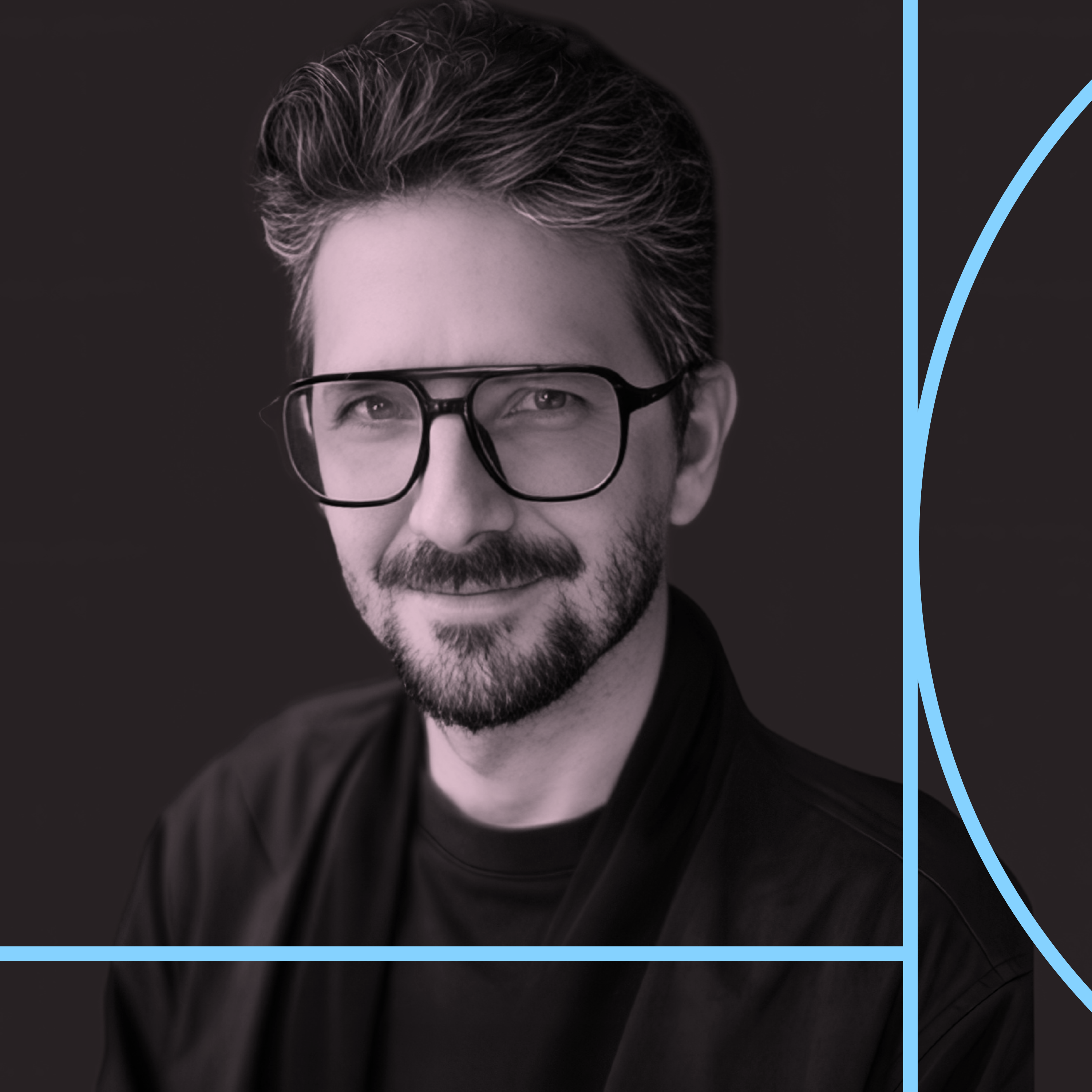
Randy Hunt discusses how to build and lead design teams that stay small on purpose, arguing that limited bandwidth forces prioritization and that great teams avoid “work around the work” (extra process, titles/levels, and bureaucracy). He also explains “whole design” (treating every touchpoint—like push notifications—as carefully as core screens) and how technical, code-shipping design teams and AI research/insight agents change product design at Notion.
Randy J. Hunt apprenticed with Milton Glaser in graduate school; later led design at Etsy (including IPO/launch experience work), worked at Grab in Singapore, led design at Notion, and previously led a department at SVA (School of Visual Arts).
small teams reduce communication overhead and preserve shared understanding; designers should ship code in production apps; hospitality/service design inspires “whole design”; retention depends on agency, responsibility, and making things that people love.
Milton Glaser’s blunt poster critique; Etsy IPO materials/Times Square marketplace; Notion UX writing agent; Disney-inspired service details (trash can spacing) and studio fruit bowl.
Written by AI. May contain mistakes.
Discussion of Randy's journey and the importance of high standards in design.
“This is Design Better, where we explore creativity at the intersection of design and technology.”
Randy shares his experience apprenticing with Milton Glaser and the lessons he learned.
“If you only listen to the podcast, you're missing the best part of Design better.”
Randy discusses how his experiences in different locations shape his design perspective.
“Randy, you're someone I've known for a little while now, and we last crossed paths in New York.”
Randy discusses the value of design in organizations and the challenges faced when it is undervalued.
“And for her, it was amazing how much of that ended up coming to be.”
Explore the significance of intentionality in design work and team dynamics.
“I've sought out opportunities that felt like there would be good conditions under which to do good work.”
Understand the advantages of smaller design teams over larger ones.
“We should just say the thing, agree on the thing, and do the thing, go.”
Learn about strategies for hiring and maintaining a high-density talent team.
“there's another version of building and growing a team that almost looks like it's education.”
Discover key strategies to retain talented team members in design.
“I think another one I have seen, not so much in Notion, but I agree you lose conviction about the vision of the thing.”
Examine how the role of designers is evolving with technical tools in organizations.
“So to get some context, Aaron and I have been building some internal tools using things like Claude Code.”
Learn how designers can leverage organizational insights for better product design.
“So they're coming at it from another angle and then skill sets are changing.”
Explore the importance of specialized roles like UX writers in design teams.
“I think we're seeing a similar thing happen, actually.”
Learn how childhood experiences, particularly with Disney, shape design thinking.
“And it's interesting, it sounds like you have maybe a similar philosophy, this idea that a good design kind of makes sure everybody's cared for.”
Understand how hospitality principles can enhance design practices.
“But the gift of fresh fruit or something is really powerful.”
Discover the concept of 'whole design' and its relevance in various contexts.
“or is that a different approach to design altogether?”
Explore Randy's admiration for Rick Rubin and the impact of music on design.
“All of that's true, but it skims across the surface.”
Learn about Randy's role in designing the IPO experience for Etsy.
“I mean, I really was sort of showing up as like the creative director of that role or that work.”
Randy shares what brings him joy in design and creative collaboration.
“It was like a SPAC merger and all this stuff.”

Get the gist, explore an idea or ask about something said.
 Claude
On Design Better, what are the key points of this episode?
Searching your listeningAutomatic transcript. May contain errors.
0:01Look, you're not going to come here and get some training and career path. This is not about what level you get to. We don't talk about like titles or levels internally on this team. You're here to be on the team and like make stuff happen. We want to compensate you fairly for doing that. When we do great work, we're all going to win together. Like, let's go. This is about building stuff, you know. I think you're going to really like sell that idea and that vision and then do it. In graduate school, Randy Hunt poured his heart and soul into a poster for Milton Glaser's class. It was a picture built entirely from hand lettering that read as an image from across the room and as words up close.
0:37Glacier glanced at it and said, well, that's not very good, and moved right on to the next student. It's brutal. Randy tells that story fondly. What stayed with him wasn't the sting, but the standard. Keep the floor high and the ceiling keeps rising. He carried that idea from Glacier Studio, where he apprenticed, through a career leading design at Etsy, at Grab in Singapore, and until recently at Notion. At Notion, that standard meant a design team smaller than anyone would expect, on purpose. Randy argues that limited bandwidth forces a company to prioritize, and that great people have little patience for what he calls the work around the work.
1:15The team doesn't talk about titles or levels. designers ship code in the production app something Randy built teams around at Etsy in 2010 long before design engineer came back into fashion. We also get into what he calls whole design which means treating a push notification with the same care as the main dashboard. He explains why hotels and restaurants inspire him as much as any software and traces that back to growing up near Disney's carefully spaced trash cans in Orlando and to the bowl of fresh fruit that always sat in Milton Glazer's studio. This is Design Better, where we explore creativity at the intersection of design and technology.
1:50I'm Eli Willery. And I'm Aaron Walter.
1:58We'll return to the conversation after this quick break.
2:05Hey, it's Aaron. If you only listen to the podcast, you're missing the best part of Design better. That's our community. Annual members get access to our private Slack with talented designers and former guests like Brad Frost, Bob Baxley, and Meredith Black. Slack members share their work, they trade feedback, and they help each other find jobs. Every other Wednesday, Eli and I meet with members on Zoom for Design Club. We critique work, we do a show and tell, and we talk through career questions with expert guests. Members also get ad-free episodes, our weekly newsletters, our full ebook library, and job alerts, all for just$72 a year, which is just $6 a month.
2:47And pro tip, most companies will let you expense it. You can learn more and become an annual member at designbetter.com slash join. That's designbetter.com slash join. We'll see you in Slack. Design Better is supported by Framer. A prompt can get you a website, but it can't tell you whether that website is any good. It still takes a designer's experience, noticing that the headline runs long, the grid is drifting, and maybe the call to action is buried below the fold. Framer is built around that idea. It's an AI website builder with agents working right on the canvas with you in the same place the real website is designed, reviewed, and published.
3:30Prompt a page, inspect it, edit every detail, and then you can publish it when you're ready. Agents bring speed and scale. You bring taste, judgment, and control. Brands like Perplexity and Miro build their websites in Framer. Learn how to get more out of your website from a Framer specialist or get started building for free today at framer.com slash designbetter for 30 % off a Framer Pro annual plan. That's framer.com slash designbetter. Rules and restrictions apply. And now, back to the show.
4:12Randy Hunt, welcome to Design Better. Thanks for having me. Randy, you're someone I've known for a little while now, and we last crossed paths in New York. I think we were at a Wirt & Co function and caught up and chatted. You've got a lot of really interesting experience in your background. You've been at Etsy, you're currently at Notion, and SVA, School of Visual Arts in New York, leading a department there. But let's start from the early days. You actually apprenticed with Milton Glaser before any of these big company chapters that I'm alluding to. What did you learn from that experience that you carry around?
4:52You know, I think the parts of Milton Glaser that will endure most is almost him more as a philosopher and almost like communication philosopher. You know, there's this how people feel about things, how they respond to things, and how things ought to be. You know, take away some of those things. The other is maybe the simplicity of the operations there, actually. It's like really lasting cultural impact, incredibly serious body of work. But the whole operation is pretty straightforward. You know, it's a relatively, like, modest studio in its size. Built and very much kind of, like, creative-directed everything.
5:26Like, he was very close to the work. He was very much a craftsperson. He was very consultative with his clients. And that was something that was really new to me when I was there. You could hear him on the phone talking with a client and talking through things. And he was a very confident, I would say, both thought partner and business partner to his clients. It's that same kind of almost like communication philosopher thing, but channeled in a very particular way. That was really effective. It seemed effective. And I think that definitely helped me round out a perspective on what really explaining or selling design is like.
6:04There's a certain flavor of client engagement or partner engagement that they were very much on the same team in a way, or they had the same goals. Milton was very persuasive because he would have strong conviction about how the work would help achieve the goals. What was he like as a person? And you said that he was also one of your teachers. How did he talk about your work? You know, a lot of these things kind of blur together over time, but then certain things stick out, right? And one of the things that sticks out, as I just remember, I don't even know the context of this assignment. This is a very graphic designing assignment.
6:40I effectively designed some poster with a lot of like hand-on lettering. And in fact, all of this lettering, this is not a new idea. So if all this lettering was composed in such a way that it too is sort of a larger illustration. So if like you looked at it, it was a picture. If you were to walk up close and look at it, it's a bunch of writing. It's kind of the idea, right? And I remember I worked very, very hard on it. It was a very like laborful kind of idea. And then I remember just pointing to it and being like, well, that's not very good. And then we just moved on to the next person. As if he was like that dismissive all the time to everything.
7:13But I think there was truly a kind of like, we will give time. There's sort of a floor. like a quality floor to the things in which we're going to like give time to. And so in some way that felt almost like a teach to the top of the class kind of behavior or something. I mean, that landed well with me, even though that moment sounds funny and maybe hard because I've come to appreciate this that like maybe many chapters over my professional life, really good people just thrive being around other really good people. There's other environments, not the only way it can work, of course, but gosh you just put five or six incredibly good people around each other especially if they have reasonable control of their like ego you know like lilia that is the fire you know to see people who are incredibly good getting better because of that environment there's appreciation for like keeping the floor really high so that the ceiling can get higher i think some of those scenes were planted then we had debbie milman on a while ago and then she wrote about experience she had in his class where he asked students to write a five-year plan or maybe a 10-year plan.
8:17And for her, it was amazing how much of that ended up coming to be. Did you go through that exercise? I'm curious. Or did that part of his philosophy influence you? Yeah, a different class with kind of a different purpose. I'm aware of that. I think many people have had a really transformative experience in this vision-setting exercise. That kind of exercise in the context of like a design education or any kind of professional practice kind of education, I think, was pretty novel at the time Milton was doing that. You know, these are almost methods that come out of other disciplines of coaching or even therapy, or, you know, they're coming out of somewhere else that hadn't, at that point, seeped their way into something that might feel more common in a design practice.
8:55I think he was quite innovative in that way. I think he related probably to some of his personal life. I mean, he had a deep interest in, like, Eastern religion and stuff. I don't know if he was really, like, practicing or not, and things he would reference, ephemera he would collect and things like that. So that made its way into, I think, how it was on the teaching decisions he made. You grew up in Orlando, which is sort of an interesting place for a childhood. And you ended up in New York, which is where you are today. You've also worked in Southeast Asia, like in Singapore. How much does place shape the way that you see design problems?
9:31Design always happens in context, so that's a really must. but I think that one is the people of the place. And that's probably, I would say, my strongest factor, just like how people behave, what their norms are. That's probably the most impactful context that we think then about design problems or opportunities, solutions. And that's why certain versions of paying attention, you know, whether it's deep ethnographic research and longitudinal studies or just like walking around the world with your eyes open and trying to see the world as it is, you know, rather than the way you want it to be or something, but only your parts of it.
10:05So I think that's one. The second is, I think, the aesthetic of a place or the identity of a place, I think, has an impact on you. A place like New York draws a lot of people to it because of some characteristics, you know, and things like that. The third, I think, is then at a very much more personal level. It's like, where do you derive your inspiration and energy from? And I think the physical environments have a huge impact on that. I mean, from your desk setup, you know, to what you see on your morning walk, to who you have daily interactions with or something. Those things end up driving personal motivation and inspiration.
10:43So I think, you know, location impacts all those things.
10:48We'll return to the conversation after this quick break.
10:56Design Better is brought to you by Masterclass. For years, I treated design reviews like debates, thinking if my rationale was sharp enough, I figured I'd win. But I kept losing to leaders who just didn't like the direction we were heading. Here's what changed that for me. Nobody can hear your argument until they feel heard. So now before I defend anything, I try to identify the concern out loud. It sounds like you're worried that we're going to push the launch back. Then I just stop talking, and more often than not, the tension drops, and we start solving real problems together. That came from former FBI hostage negotiator Chris Voss and his class on the art of negotiation.
11:35He calls it labeling, and it works as well on stakeholders as it does across a negotiating table. That's one lesson from one class. Masterclass has 200 plus more, taught by people who define their fields in business, writing, creativity, wellness, and more. Audio mode turns your commute into a classroom and plans start at just 10 bucks a month, billed annually, and every new membership comes with a 30-day money-back guarantee. Masterclass keeps adding new classes all the time, so there's never been a better time to get in. Right now, as a listener of this show, you get at least 15 % off on any annual membership at masterclass.com slash designbetter.
12:16That's 15 % off at masterclass.com slash designbetter. Head to masterclass.com slash designbetter to see the latest offer. Design Better is supported by Framer. A prompt can get you a website, but it can't tell you whether that website is any good. It still takes a designer's experience, noticing that the headline runs long, the grid is drifting, and maybe the call to action is buried below the fold. Framer is built around that idea. It's an AI website builder with agents working right on the canvas with you in the same place the real website is designed, reviewed, and published. Prompt a page, inspect it, edit every detail, and then you can publish it when you're ready.
13:00Agents bring speed and scale. You bring taste, judgment, and control. Brands like Perplexity and Miro build their websites in Framer. Learn how to get more out of your website from a Framer specialist or get started building for free today at framer.com slash designbetter for 30 % off a Framer Pro annual plan. That's framer.com slash design better. Rules and restrictions apply.
13:29And now, back to the show.
13:36You've led design a lot of places like Etsy, Grab, and Notion. These are companies where design really shapes culture to a large degree. A lot of designers don't necessarily have that situation or luxury or however you want to think about it. What do you think what designers do when the organization doesn't really value them or believe in them the way they might hope that design would be valued? I really struggle to answer this because the first part of your statement is something that I've done very intentionally. I've sought out opportunities that felt like there would be good conditions under which to do good work.
14:12I've been very intentional in kind of my evaluation and like what I choose to invest in. and also the things that I say no to or don't engage with. Those conditions are like, oh, you've been very lucky. I mean, I do feel very lucky, unfortunate. But what that means is I haven't really stepped into something where I'm either surprised that design is undervalued or appreciated, like you have a pretty clear eyes on what I'm going into, or where it isn't and I had to really wrestle with it. Now, what's interesting is maybe Grab as an example was a little different. It really wanted design. It definitely needed it.
14:51It was willing to fund it. But I don't think that organizationally it knew what it meant to value it or put it to work well. You know, it's an interesting thing to be like, oh, we've allocated budget. We've got a plan. We think this is important. And it's another to almost like metabolize that. You're like, I'll take the food, but am I taking the nutrients? So maybe that gets closer to your question. I think that working examples of things and strong partnerships speak better than anything else, than trying to have some compelling story or pitch or like shape their perception through communication means.
15:26I'd rather like shape it through the visceral reaction to something being very good. And I think those things are either successful case studies or working partnerships and relationships that are like really valuable. So you end up getting people to speak on your behalf. Rather than saying like, hey, we need design to do this thing, you have someone else who's trusted, influential, who says, hey, I've been working closely with Randy and his team, and it's working this way, and it's good. We should do more of that. I would look for opportunities to create that kind of momentum or those kind of relationships ground up more so than to try to deliver it from the top or something.
16:04What makes smaller teams stronger than bigger teams? I think number one is lower communication overhead. So much gets loft in translation and trying to traverse just the layers of an organization. Even if everyone's great, it's just the mechanics of it that make that challenging. But then there's a bunch of other stuff that comes in. You know, every person has another set of interests and motivations and challenges and conflicts and things. The other is I think it's easier to hold shared understanding. You can do more of the work itself rather than the work around the work. Once you start to get to like sort of scaled up things, you got to do a lot of work around the work to even tell people what the work is.
16:41We have extremely talented people. I have found that they have low tolerance and low patience for bullshit for the work around the work. We should just say the thing, agree on the thing, and do the thing, go. When you start to get more people, working that way is harder. Not only people on a design team, cross-functional and things like that. But it's good to have those small team experiences and be like, okay, how do we protect this energy even if we do need to grow or have bigger teams or whatever? But I definitely have a preference for small over big. After doing many permutations of both. I think you maybe used the word talent density to describe that.
17:18How do you hire for that or set up the right conditions for hiring for that kind of talent density? I mean, one is about clarity of intent and being really clear about that, meaning this team will be smaller than one might expect by historical reference points or outside reference. That is intentional. And that works. There's the bad version of this, which is the team's too small, doesn't have enough bandwidth. They get pushed to kind of the delivery end of a timeline of a project workflow. and you end up in this production engine mode and that's kind of like a fail state. The other version, I think the better version, this is very much like the Notion version, they say actually the constrained bandwidth is a forcing function for prioritization and therefore the Talendens team, in this case like Talendens design team in Maine in particular, has a relative to many other things an outsized influence on what we do by virtue of being the scarce resource that has critical participation both at the beginning and throughout the making of things.
18:25We can only ship as many things as designers can deeply participate in. You know, it's just a natural tendency to want to have more and entropy and all the noise. But back to the other point, we talked about talent dense, reinforces the other aspects of the small team mechanics. So you kind of got to get the flywheel going in that direction and then I think it works. This plays then into like hiring and talent and stuff as well. because the people with a similar mindset see that and they're like, yes, please. So again, the flywheel kind of moves in that direction. Put it in contrast, there's another version of building and growing a team that almost looks like it's education.
18:59It's almost like this is a uplifting talent development, bring less experienced youthful energy, early career, often in larger numbers up and you have mentoring, education, career progress, et cetera, by design. And that can be done well. and you can have like a hierarchy that you can imagine the shape of. Can totally work. And I think we've seen very successful organizations do good jobs of that and have nice legacies. But what happens then is there's a lot of work around the work to make that work well. You know, there's your real like trade-offs there. And when you kind of assume that your team operates in a way without needing those things in the same explicit way.
19:38Look, you're not going to come here and get some like training and career path. This is not about what level will you get to. We don't talk about titles or levels internally on this team. You're here to be on the team and make stuff happen. We want to compensate you fairly for doing that. When we do great work, we're all going to win together. Let's go. This is about building stuff. I think you can really sell that idea and that vision and then do it. I mean, that's the other important part. The other conditions around the team work such that that's true. Meaning the product organization at Notion, the engineering organization at Notion, have been around this approach to doing the design practice and are, for the most part, very willing collaborators and accepting of that approach.
20:18If you were to have this isolated only in a pocket of the organization and try to interface with other people, it becomes very frictionful because it's not the default way. It's not entirely unique to Notion, but I would argue that it's somewhat rare. The idea of talent density is like, no, people latch onto these terms and circulate them around. I'm sure you can find 50 job descriptions today for some role that's open and they would say, we're a talent-dense team, which I think they just mean They want to have people who are good and the team small. But I just described a bunch of other stuff about those conditions that make it properly dense.
20:49When you have a talented, small, very capable team like that that's empowered, what are the top reasons why people leave? One is truly like next chapter of career. And this is typically because they've accomplished a number of things before. And then in the context, if you imagine like a notion or something, this sort of becomes the apex version of that version of their professional experience. it's kind of like, okay, they've been designers inside several companies, lots of good stuff. Maybe they've found a small company that was acquired. We acquired them. You know, we're like, okay, they're doing this version of the role.
21:21And it's like, okay, because they're so experienced, they're pretty deep in their career, but great at being close to the work. So executing and building. And then maybe they reach a chapter changer. Like, okay, I've kind of done that for 20 years. There's another chapter. So I think that's one. Because this mode of working isn't like, now do that next chapter thing inside this organization. Like now this organization kind of has one mode. I think another one I have seen, not so much in Notion, but I agree you lose conviction about the vision of the thing. In some other environments, I think there's more resiliency around something like that because there's these other like culture ones.
21:52You're like, I'm learning so much or I feel indebted to this team because I'm mentoring them. You know, and that experience is meaningful to me. I want to continue that even if this other part is, I don't know, on the downswing for me or something in terms of its relevance or meaning. I think often in this talent density is where you've attracted people. They're like, vision, got it, let's go. it's pretty singular you know and so if the singular thing that you had the buy-in and momentum on changes we can feel like ah i don't buy it anymore you know it's almost like a strategy vision misalignment and then i would say the other is like when they see the opportunity to like build from zero builders and makers that's why they're so good and then sometimes people just have the itch to be like all right i gotta do it from the ground again so of those three reasons only one of them is one that you really have some control over.
22:39Are there things that you've learned as a leader that tend to improve your ability to retain that talent density and those great team players? The experience of making things, getting it out in the world and have people like it is very sticky. It's like you reduce the friction around that as much as possible. Part of that is that limit the work around the work kind of thing. The other is give people both agency and responsibility. Again, these are quite experienced practitioners and Godwin. Trust them. You can just do things, but also when you do things, you have an ownership sense about the thing you've done.
23:15You don't turn off great stuff and be like, have fun, company. And I think that when you maintain those conditions for quite some time, it's extremely satisfying to people. Wake up and you're like, okay, let's do the sport today. It's kind of like pro-level sports, but it's like, okay, let's do it. You put in the reps and you get some stuff out in the world and you get the dopamine hit and you're like, all right, let's go and then maybe it didn't land the way you thought or something's not sticking you like wake up the next day and make it better and i think that's like extremely helpful to allow people to have the space to initiate drive push through get out the work and then allow them to maybe it's like enjoy having the responsibility of making the stuff successful what's changing around the parts of the product design process that a designer might own just given how all the tools are changing so quickly.
24:03So to get some context, Aaron and I have been building some internal tools using things like Claude Code. And it's pretty amazing what you can spin up. And in fact, right now we're using one of the tools that Aaron largely built to help run this interview. And we can imagine making this into sort of a consumer or public pacing product, but we haven't yet achieved that scale right now. It's just, I mean, I'm curious how this plugs into a company like Notion where you may have hundreds of thousands or millions of users and how does the role change? How does the process change with the tools right now?
24:37One part that I think is changing in some organizations but hasn't changed all that much inside Notion, which is just the designers being more technical and also shipping more code in the production application, really working in the production application. The reason I say it hasn't changed much in Notion is we were working that way before coding agents and tools, just the flavor and shape of the team. In fact, most of the teams, the core skill set or close to their core skill set and preferred way of working may be as well described by what is now a re-emerging term of like design engineer or something.
25:10For years, I would just call that person a designer. Increasingly, I started calling the team a software design team, actually. You know, like, okay, we understand how software is made and built and we're designing for software. But very technical. That's changing in lots of organizations or you see pushes for that to change. You know, design Twitter, that's the rage, right? if you're in like AIE design conversation, everybody's doing that. But there are pockets of the profession that I think have really been thinking and working that way for a long time. I very confidently talk about how long we've been doing that.
25:38You know, it's like building a team that did exactly that, you know, at Etsy in like 2010. But I don't say that in the sense of like, oh, we were early or ahead or anything like that. More that it's hard for me to imagine building a software product without doing that. It's just always felt like the way, even though I know there are many other people that do it other ways. It just makes sense to me. And so we build teams around that idea. But I think that's changing in lots of places where even people who have not built that way are like, this seems like it's kind of a thing that maybe we should be doing.
26:06So they're coming at it from another angle and then skill sets are changing. Maybe they built a team with a different profile. The other is aspects of customer insights, aspects of positioning, aspects of even like go-to-market comms are also closer and more available to the designers. In the same way that lots of things are kind of blurry and edges. If your product marketing team makes some skills that you can use with your AI agents, you can now quickly tap into some of the best practices from your product marketing team along the way of building your product experience. And so this is a more integral way of working.
26:41I think that we've been able to dramatically reduce the amount of ineffective research. And by that, I mean research that is sort of done well from a research practices standpoint, but struggles to make its way into really impacting the product work. in part because some of the kinds of insights or the things you might want or need are fairly light. They might be derived out of a pretty heavy process, but the insight is important, but maybe sometimes simple. At this point, we can kind of ask these insight agents and research agents that have access to all the context of historical research that people have done about the thing you're working on or the customer you're designing the thing for.
27:16What's been done before? Why didn't it work? What did we learn about? Are there any customer interviews about this? And so a designer can quickly get some meaningful input in their process, kind of in real time, right? And you're just kind of, oh, I'm about to work on this. I wonder, or I'm working on this thing. I feel kind of stuck. Have we ever talked to customers about this thing? But it used to be like a very slow process. Ask the research team in Slack, oh, that person doesn't work here anymore. Oh yeah, we never did finish that research repository that everybody wanted to like make, you know?
27:41And you're like, now that's just kind of sitting there, you know, available. And I think that's allowed the designer to pull as much of that into their working process as they want more easily. It's actually what it used to be like when I think some designers were hesitant about the idea of touching code, but in attempts to do things like, maybe I'm going to just build the front end, like hand code this. They also came to better appreciate the craft of what their engineering partners do. I think we're seeing a similar thing happen, actually. At least in like, I don't know, healthy cultures or organizations where you also respect craft.
28:09We had a UX writer, team of one. We had no writer for, I mean, basically ever until maybe a year and a half or two years ago. But the view that like well-rounded designers could deliver that kind of work. We chose to like invest in someone specializing in that, which is somewhat out of the common mode at NetNotion. But their first job was to make this UX writing agent so they could scale themselves and best practices, kind of self-healing. They kind of are able to monitor and observe the recommendations that the agent's giving so they can also kind of tune it and help it improve. And fairly quickly, within two months or something, we're getting a lot of feedback.
28:38This is my favorite agent to use. I mean, from people all around the company, you're like, this is my favorite agent to use. It's super helpful. Also, it helped me understand what this person does. and I have a better idea of when to reach out to them to work on something. And there's something interesting happening there about what the kind of guidance that deliverable is. And like sometimes when you need to get deep in it, the fact that you've done some other runs yourself at that same kind of work gives you an appreciation for the serious pros. So this is sort of shifting a little bit over to a more creative process and how it influences design and design work.
29:11And a few years ago, we had Jonathan Heffler on the show, The Typographer. and he talked about hospitality as being important to the way that he approached work. And it's interesting, it sounds like you have maybe a similar philosophy, this idea that a good design kind of makes sure everybody's cared for. When did that idea come to you? Maybe you could talk a little bit more about it. I think I probably started to internalize some things like that, even from the, almost like my childhood days, growing up in Orlando, which you mentioned. I didn't think about this at the time, but in hindsight, I think Disney and the theme parks really influenced me a bunch.
29:43I was very lucky to live in proximity to that, so we would go and experience those things. I think I love just how wholly done they were. And as I understand how and why that is over time, like, okay, wow, the rigor around how frequently garbage cans are placed such that it reduces the amount of likelihood of garbage on the ground. You know, it's just all kind of service design systems thinking, preempting the possibilities of aberrant, you know, human behavior or anticipating need that exists in And those things are like, wow, that's really powerful. The other, I would say, at maybe a more intimate level, but no less important, and actually goes back probably to the Glacier experience.
30:17Funny, I didn't think that would come up, but there would always be like a bowl of fruit in the studio. Sometimes fruit and cheese would get delivered on like Thursday afternoon. And it sounds very like domestic and home-like and orange is very inviting. But the gift of fresh fruit or something is really powerful. It looks beautiful. It tastes great. It's nature beats us every time. And I think that gesture of like introducing that to someone's kind of day or life is really meaningful. I think the other is sort of increasingly over time, I mean, this has to do with urban environments you live in and like from time to time, maybe increasingly, I don't know, it's like restaurants are in hotels or something like that.
30:51You know, they're attached to hotels. Fine dining experiences. You start to encounter, you travel a bunch, you go through airports, you start to see all these mechanics of how dealing with people work in these situations. You see patterns of the ones that do it well and the ones that don't. And I find that very inspiring. These kind of wholly considered experiences that have to do with logistics and operations, but they're also very much about feeling. The hospitality experience, they're kind of like hotels and dining, are just incredible design experiences for inspiration for me. Architecture matters.
31:21Programming of the space matters. Lighting matters. The typography on the menu sets the tone. There's all of these things that happen in those environments that are just really complete. I find it extremely inspiring. You also have this notion of whole design that's an important part of the way that you see the work. does that relate to how you think about hospitality or is that a different approach to design altogether? No, I think they're very much related. I mean, in a simple sense, I think the whole design is really, it's this aspiration or pursuit of literally trying to design all of the things.
31:53It's just like every single touch point, every single angle. Through these professional lenses, some might call that service design or some might look at that and just say it's really good brand work. I've worked a lot inside technology companies, so certainly a software product is usually like the center point of a bunch of those touch points. But I think the examples that often work well here, you know, the through lines between how people, you know, discover a product or feature and social, what happens when you get a functional or kind of like service email from an experience or a push notification that pulls you back into like the core digital experience.
32:26Those are all incredible product touch points, but also like brand touch points. Treating all of that as like the full canvas. You know, push notification isn't a thing to tell you about the thing. It's just as much of a design opportunity as a core screen when you log into the dashboard. That's all one thing. It makes all the world very fun to me, too. It's a playground. So you're a fan of music and a musician yourself. Is that right? Yep. And a while back, you had this dream of doing a documentary on Rick Rubin, who Aaron and I are both fans of as well. What were you seeing back then in 2013?
32:58This is before he had written his book on creative process that kind of influenced or felt relevant to what you're doing. Today, Rick Rubin has got very much celebrity status, and people reference all the time. You're like, oh, that's the Rick Rubin of this. And you're like, I don't think it is, actually, at all. I don't think you misunderstand maybe how this person shows up in the world, but sure, they said it with a calm tone, or the guidance was vague but directionally incorrect, and you liked it. Cool, okay, you know, like, sure. And in fact, I remain quite a fan and appreciate what he's doing today, for the most part, like quite a lot, so that's not to discredit that.
33:30But what drew me to his work, in a funny way, kind of like back to it, I think I didn't realize that I was like a fan of so much music I've been involved in until later. I think it was probably just like late night Wikipedia diving, as I still like to do. I mean, I love the depths of any of that stuff. Like I can spend two hours reading about the mergers and acquisitions that led to, you know, the Woolworth grocery store chain in Australia or something. It's like collecting baseball cards when you were a kid or something. It's just like all this information. I enjoy that a lot when it comes to music production, just like other creative practices.
34:01Who was the director of photography on the music video at DoubleTel? Well, at one point, I just ended up on the Rick Rubin deep list in discography. And anyone should go read that. It's better than the article that comes up somewhere every three months. It's like, did you know Rick Rubin produced Slayer and Run DMC? And now look at his podcast. All of that's true, but it skims across the surface. So much work that he did actually helped some really incredible artists at late stage points in their career when they were not as appreciated. I mean, probably the most iconic versions of this is the work he's done with like Johnny Cash.
34:34But also later Wallflower stuff, Black Sabbath came to him in this moment, like Metallica did a couple of records. Moments when people maybe feel like they've peaked, and I think that's really interesting. And some of that work is phenomenal. I mean, the Johnny Cash stuff for sure is incredible. I think a lot of people are critical of the Metallica records. I think they're not as bad as people make them out to be, but they're maybe not as great as someone would hope for them to be. What I think is also interesting is just the genre hopping, and it's sort of all over the place. I mean, he's masterfully put things together more than once.
35:02It's Johnny Cash doing the Nine Inch Nails cover, Hurt, then just like, well, tear your heart open. Like, it's extremely powerful, you know? But it's like the Aerosmith Run-DMC thing that really was a major vector introducing hip-hop culture to non-urban people. You know, just like rock music fan. And, you know, like that kind of mode has happened several times over, which I think is cool. There's a little bit of a playbook there, but it's a very durable playbook because it's always different. You're always putting like, you know, different things together. I like that a lot. I also like that even throughout all of that work, there were some real like durable relationships and stuff.
35:35You know, he's pretty much produced everything that Red Hot Chili Peppers had put out from Blood Sugar Sex Magic on. And there was a lot of good material in there. And I think that's really interesting because they clearly have like a relationship, you know, deep, durable relationship. It's like chapters of lives happen across that much making. I just think there's a lot of interesting things in there. And I like that he seems to really appreciate and respect that creativity is an important part of the human experience. And so if you kind of create environments or situations that respects that or nurtures that, that that's a good set of conditions.
36:10I find that very motivating. You got to design key pieces of the IPO for Etsy, which presumably was a very educational experience. What was your role there and what did you take away from that? I loved that work so much. It was so interesting. I mean, I really was sort of showing up as like the creative director of that role or that work. We actually had a wonderful creative director who was running our brand team. I brought in and her name's Julia Hoffman. She's awesome. I mean, she does all the global creative for OpenAI now. I mean, for anyone who has been close to one of these processor experience, where you limit the audience, you know, who is aware of it and participates in it for a whole bunch of reasons.
36:50And we needed to sort of like peel off a team and focus on this work. So the approach we took is like, Julia kept running all the brand stuff, kept everything moving great, like the real actual business. And I kind of stepped in and pulled one designer off the team that I was able to like work really directly with and then house team. And then brought in one outside agency for some key pieces of it at a point and a couple of others. and led us to the vision of our launch day experience. There's a lot of components of this. So basically we designed all of the materials around your Esplan document.
37:22So this is really like a business performance, financial performance, but also a brand storytelling communication moment. It's expressive, but it's also like data viz. It's also just like get the facts right. And you kind of do live versions of these. Basically we're like building decks and presentations for like an in-person roadshow. Then you do like a video roadshow of this thing. That has a bunch of like motion graphics, animation. I mean, interesting things kind of happening in it. Everything I just described, you can go to the SEC website and end up seeing versions of all of it. But then also, like, the launch day, the moment you become a public listed company, is often, like, a huge marketing moment.
37:53We ended up choosing the list on NASDAQ, maybe for a number of reasons. But one of the reasons was that at the time, NASDAQ was still, like, in Times Square. And New York Stock Exchange was on Wall Street, which is, like, dumb-tumb. And we're like, when you imagine seeing Etsy, like, out in the world like this for the first time, is it on Wall Street? or is it sort of like at the crossroads of the world in this kind of like wild environment that's like for the masses? And I was like, oh yeah, this is like a Times Square brand. And we took over this wedge in the center of Times Square and brought in Etsy sellers from all around the world, shut down the street overnight, bring in some semi-trucks, built up this whole marketplace overnight so that by the time we were like preparing for the markets to open in the morning or being launch events happening in the building, there was a Etsy marketplace like live happening on the street sort of representative, like the full breadth of what Etsy had to offer.
38:43It was so fun. You know, you kind of like work in secrecy. You're like, it's all multimodal. There's just so much delivery happening. And I really enjoyed for a little stint of it, I was probably going and working from the Goldman Sachs office two days a week. So I just got to be like really around the launch team constantly. This is where we were shaping the messaging and this roadshow content and stuff. I think because our leadership team, our CEO and CFO, believed in and trusted design. And we were just great partners on that. They invited us straight into the process. And so we just worked kind of side by side with everyone.
39:15And it gave me a lot of appreciation for what really happens in those moments too. Really cool work. I was able to apply a little bit of that later when like Grab became like a listing company. And it was a different process. It was like a SPAC merger and all this stuff. But I was able to bring some of my lived experience to help us make some confident decisions more quickly about vendors to use, things to do and not do and stuff like that. And it was fun to get to apply those lessons later. I'm a big fan of Etsy. I know it's changed a lot over the years, but I still go to it for, I've gotten into Halloween costumes.
39:43Actually behind me right now, you can see probably sort of a Spartan helmet back there on my bookshelf. And my daughter saw the Odyssey before I did. She's like, Dad, you should be Odysseus. Like, okay, I could get into that. And so I've gone way overboard. But yeah, I like to build parts myself, but I'm not going to make a helmet. So there's some really talented, craftspeople on it. Yeah, totally. Pretty cool. Well, as we get close to the end here, you've described yourself as a designer, an artist, author, musician. Of all the things you've done and that you make, what's given you the most joy or what's most inspired you lately?
40:16The most joy is probably twofold. One, it comes back to this idea of kind of like the whole design. I think whenever we've participated in something, whether it's something I've directly crafted myself or like really leading a team towards something where we've really handled all of the touch points like really well, I just find that so fun and rewarding. It feels like you're really contributing something to culture. And those are the moments where it gets lasting and really, really impactful. I love that so much. And then at a much more intimate level, just the emergent, matched energy and collaboration of a good jam with some people.
40:50Just two or three people making some music together. That feels really, really good. It goes straight to my heart. For sure. What are you watching, listening, reading right now that's got you excited or looking at things a little differently? I am reading a book. It's interesting. It's not the most exciting read, but the facts of it are interesting. It's like the history of Jose Cuervo, the person. But by doing so, you're kind of learning about the history of the entire tequila industry, which is very much related to a lot of political changes and shifts in Mexico and the relationship between Mexico and America and train lines and business deals.
41:27It's great. Randy, where can people learn more about you and the work that you're doing these days? I mean, my website and me on pretty much anything social is all just Randy J. Hunt. Fantastic. Randy, thank you so much for being on the show. Yeah, you bet. Thanks for having me. It was a treat.
41:47This episode was produced by Eli Woolery and me, Aaron Walter, with engineering and production support from Brian Paik of Pacific Audio. If you found this episode useful, we hope that you'll leave us a review on Apple Podcasts, Spotify, or wherever you listen to finer shows. Or simply drop a link to the show in your team's Slack channel, designbetterpodcast.com. It'll really help others discover the show. Until next time.
In graduate school, Randy Hunt poured his heart and soul into a poster for Milton Glaser’s class, a picture built entirely from hand lettering that read as an image from across the room and as words up close. Glaser glanced at it, said, “Well, that’s not very good,” and moved on to the next student.
Get bonus content and more on our Substack: https://designbetterpodcast.com/p/randy-hunt
Randy tells that story fondly. What stayed with him wasn’t the sting but the standard: keep the floor high, and the ceiling keeps rising. He carried that idea from Glaser’s studio, where he apprenticed, through a career leading design at Etsy, at Grab in Singapore, and until recently at Notion.
At Notion, that standard meant a design team smaller than anyone would expect, on purpose. Randy argues that limited bandwidth forces a company to prioritize, and that great people have little patience for what he calls “the work around the work.” The team doesn’t talk about titles or levels. Designers ship code in the production app, something Randy built teams around at Etsy in 2010, long before “design engineer” came back into fashion.
We also get into what he calls “whole design,” which means treating a push notification with the same care as the main dashboard. He explains why hotels and restaurants inspire him as much as any software, and traces that back to growing up near Disney’s carefully spaced trash cans in Orlando and to the bowl of fresh fruit that always sat in Glaser’s studio.
Bio
Randy J. Hunt is a designer, artist, and author based in New York City, with more than 20 years of experience building products, brands, and businesses. Most recently, he was Head of Design at Notion. He also chairs the MFA Design program at the School of Visual Arts, a graduate program focused on entrepreneurial designers. Earlier, he led design at Etsy, Artsy, and Grab, co-founded the designer-made marketplace Supermarket, and served as Chief Product Officer at the coffee-tech company Morning. He apprenticed at Milton Glaser's studio, founded the design studio Citizen Scholar, and wrote Product Design for the Web (New Riders, 2013).
Books & Links
Randy Hunt on LinkedIn
randyjhunt.com
The Hunt
Design Week: “A lot of this is about rituals”
MiltonGlaser.com
The Creative Act, by Rick Rubin
Johnny Cash Project
Julia Hoffman
Tequila Wars: José Cuervo and the Bloody Struggle for the Spirit of Mexico
Widow’s Bay
***
Premium Episodes on Design Better
This ad-supported episode is available to everyone. If you’d like to hear it ad-free, upgrade to our premium subscription, where you’ll get 4 ad-free episodes per month. Premium subscribers also get access to the documentary Design Disruptors and our growing library of books. New premium subscriber benefit:
Get design and career support in Design Club
Weekly Portfolio Club calls this summer helped our paid subscribers build portfolios that land great jobs. Experts joined us weekly to provide feedback, and we compiled lessons from each session into a portfolio design guide.
We’ve launched a private Slack workspace…join now to connect with designers, product leaders & creative practitioners in our community.
And get a behind-the-scenes pass to every episode with The Roundup, where each week we bring you insights and actionable tactics from recent episodes.
You’ll also get access to our monthly AMAs with former guests, ad-free episodes, discounts and early access to workshops, and our monthly newsletter The Brief that compiles salient insights, quotes, readings, and creative processes uncovered in the show.
Upgrade to paid
Learn more about your ad choices. Visit megaphone.fm/adchoices