Ask ChatGPT

 Design Better
28 Oct 2026 · 51m · 20 chapters
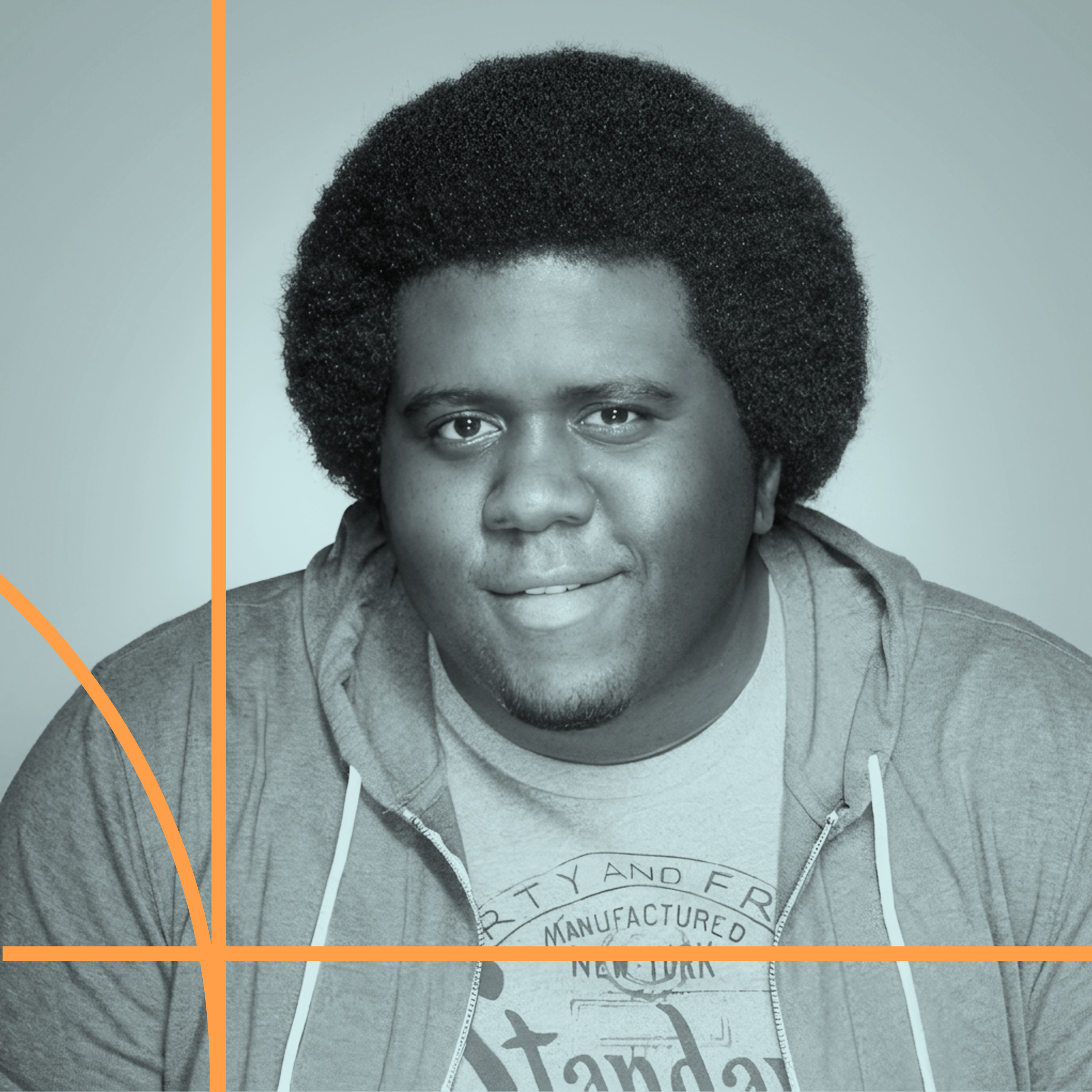
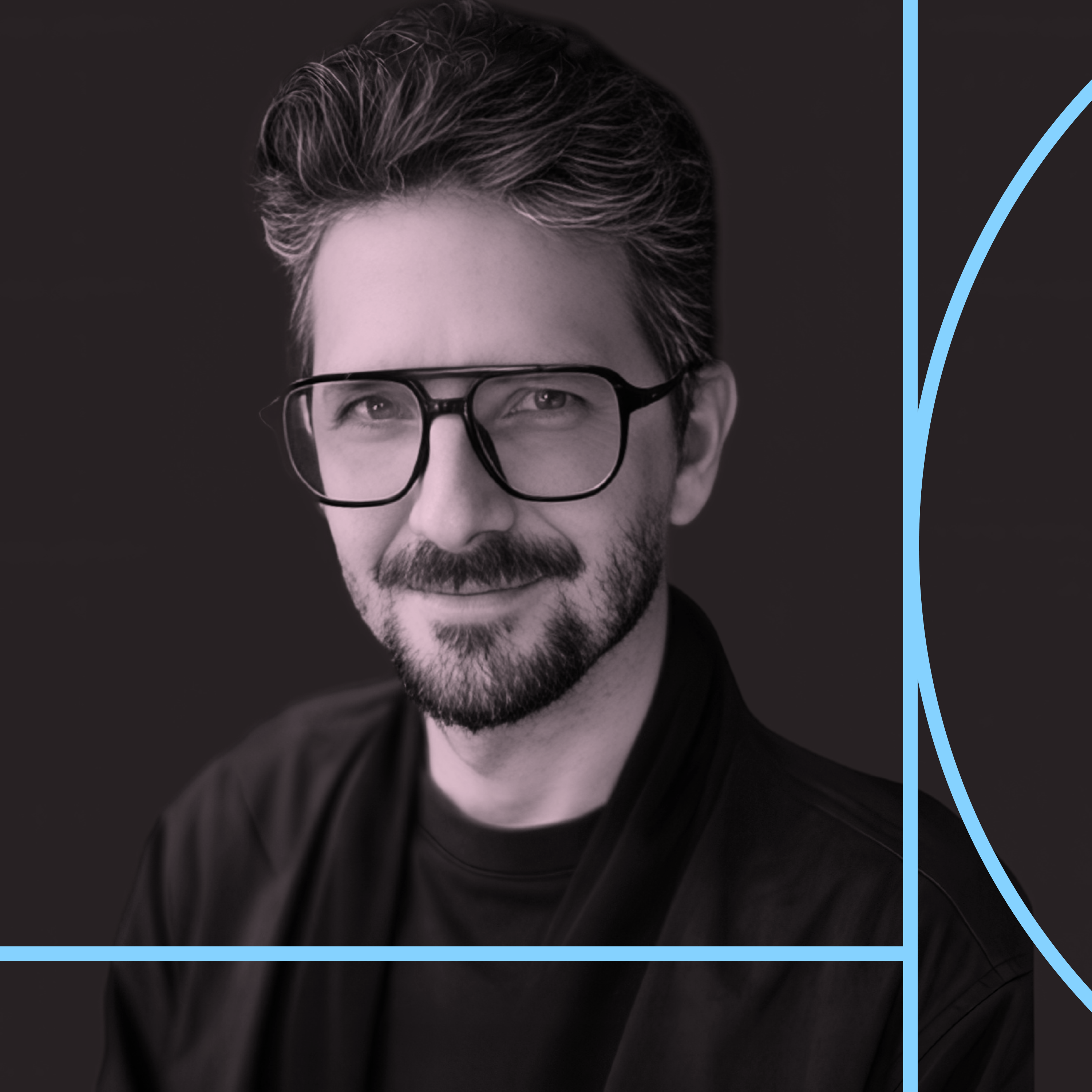
Maurice Cherry, creator of the Revision Path podcast, discusses how to enter design without a single “correct” path; why he says attention isn’t the same as impact; and how AI is accelerating long-standing design-industry problems (especially shrinking junior roles and unclear career ladders). He also reflects on growing up in Selma, Alabama, and on Revision Path’s funding, ending, and Smithsonian archiving.
This episode’s “guest” is Maurice Cherry himself. He is a Black designer and podcaster who studied math at Morehouse (after initially starting computer science) and taught himself Photoshop. He ran a studio (Lunch), worked as a web designer at AT&T, and later built Revision Path (500+ episodes, six continents). Notable guest examples mentioned: Whitney Robinson (product designer), Hannah Bickley (production designer for Black Panther).
No singular way to be a designer; validation matters; modern designers have outgrown traditional design organizations; AI speeds up existing issues; attention (e.g., Smithsonian recognition) may not translate into real-world impact.
Selma’s civil-rights history as “living stories”; Smithsonian’s 2019 permanent archives (11 episodes); Revision Path ending due to money; demotion after Smithsonian recognition; episode 300 featuring Hannah Bickley.
Written by AI. May contain mistakes.
The hosts introduce a break before the advertisement.
“We'll return to the conversation after this quick break.”
The hosts welcome Maurice Cherry back to the show.
Explore Maurice Cherry's academic background and transition into design.
“Maurice Cherry, welcome to Design Better.”
Learn how growing up in Selma influenced Maurice's view on storytelling.
“Math is really about how to solve problems and what is designed, if not also solving problems.”
Discover the reasons behind the creation of the Revision Path podcast.
“Selma is, for all accounts and purposes, a living ghost town.”
Discuss the themes of validation and identity within the design community.
“Because, I mean, when I think about design and design history in the United States, I think about W.E.B.”
Learn about the significance of validation for designers in their creative journey.
“Yeah, my wife is going in a week to go study.”
Explore the challenges and lessons learned from running a podcast and creative projects.
“Talk to us about some of the things you learned just about living an independent creative life and about podcasting during your time with Revision Path.”
Hear impactful lessons learned from interviews with various designers on Revision Path.
“I mean, Eli and I, we are working every day on producing new shows, writing articles, producing videos, doing all kinds of stuff.”
Understand how the landscape for Black designers has changed over time.
“Do you think that things are different today for Black designers than when you started Revision Path?”
Discuss the difference between gaining attention and making a real impact in the design world.
“You say that one thing you've learned through your years at Revision Path is that you learned not to confuse attention with impact.”
Explore the disconnect between public recognition and personal career impact.
“Not only is it great in talking to people all over the world.”
Discussing the significance of the podcast and its effect on visibility for Black designers.
“But I say all that to say, you know, attention confused with impact is it got that attention, which was great.”
Journey through the process of having podcast work archived at the Smithsonian.
“Like I still have the website up for archival purposes, but I had to pull down all the interviews because I found out somebody was scraping them and using them and didn't ask me for permission about it.”
Analyzing what traditional design organizations lack and the need for evolution.
“Aaron and I have been thinking a lot about the design community and how we can be more helpful for many years.”
Insights on the qualities and curiosity needed for a successful creative journey.
“You've talked to hundreds of people and seen so many different career pathways.”
Explore how curiosity drives creativity and innovation in design.
“And that's not to say that you can't use that as a basis for something else, but be curious about how you can apply that to something new.”
Discuss the implications of AI and the importance of using it responsibly.
“about what skills you can use and how you can use them for something different.”
Hear about various TV shows and books that inspire creativity and thought.
“But there's no reason you have to run that specific type of AI without guardrails, even though they somehow chose to do that.”
Learn how to connect with Maurice Cherry and his ongoing work.
“And for whatever reason, I didn't read Steinbeck in school.”

Get the gist, explore an idea or ask about something said.
 Claude
On Design Better, what are the key points of this episode?
Searching your listeningAutomatic transcript. May contain errors.
0:00There is no one singular way to be a designer. Certainly now with technology as it's been growing and advancing, knowing that there's so many different ways to exercise and use your creativity in ways to solve problems, to express yourself, to put ideas out into the world. We had people who were writers, doctors. We had people who had done all sorts of other types of things and still found their way into design. For 11 years, Maurice Cherry made a weekly podcast called Revision Path, showcasing black designers from around the world. He recorded more than 500 episodes with designers on six continents and built a community around the show.
0:43And then in 2019, the Smithsonian's National Museum of African American History and Culture added 11 of those episodes to his permanent archives. And in 2025, the Eames Institute named him to its Curious 100.
0:59Maurice Cherry: Maurice never went to design school. He wanted to study English, but a STEM scholarship put him in computer science at Morehouse, where an advisor told him the internet was a fad. He switched to math, graduated a semester early, and taught himself Photoshop for books he read in the aisles of a nearby Barnes & Noble. Years later, he was running his own studio with real clients and a payroll, and people still told him he wasn't a real designer. So in 2013, he started Revision Path to show the work black designers were doing. We talk about growing up in Selma, Alabama, where civil rights history is part of the everyday landscape, what a math degree taught him about solving problems, and why Revision Path ultimately ended.
1:36Maurice Cherry: Maurice explains how AI is speeding up problems the design industry always had, including the shrinking junior role, and argues that modern designer has outgrown traditional design organizations. This is Design Better, where we explore creativity at the intersection of design and technology. I'm Eli Woolery. And I'm Aaron Walter.
2:01We'll return to the conversation after this quick break.
2:08Hey, it's Aaron. If you only listen to the podcast, you're missing the best part of Design Better. That's our community. Annual members get access to our private Slack with talented designers and former guests like Brad Frost, Bob Baxley, and Meredith Black. Slack members share their work, they trade feedback, and they help each other find jobs. Every other Wednesday, Eli and I meet with members on Zoom for Design Club. We critique work, we do a show and tell, and we talk through career questions with expert guests. Members also get ad-free episodes, our weekly newsletters, our full e-book library, and job alerts, all for just$72 a year, which is just$6 a month.
2:50And pro tip, most companies will let you expense it. You can learn more and become an annual member at designbetter.com slash join. That's designbetter.com slash join. We'll see you in Slack.
3:08And now, back to the show.
3:15Maurice Cherry, welcome to Design Better. Thank you for having me. It's great to be here. Maurice, you have spent 10 years running a podcast called Revision Path, where you interviewed black designers and presumably learned a great deal about design and the way that people approach their creative process. We want to jump into that, but let's start from the beginning. You went to Morehouse and you studied not design, but math. How did you get into math and then how did you go from math to design? Well, Morehouse doesn't have a design program, So that's kind of the easy answer to that. But prior to going to Born House, I actually wanted to major in English.
3:58All through school, I was a writer. I had done poetry, short stories, etc. But I was also a musician. I was a trombonist, so I played a lot as well. And so I sort of had the idea that I wanted to go to college to study English and write and write books. And my mom was not having it because this is the 90s. This is like post a different world. and I was very much into computers and the internet back then as well, even in its kind of nascent stages. And she's like, you're not majoring in English. You need to major in something that's going to make some money. Like you like those computers. You spend so much time on those computers.
4:33Why don't you major in computers? And one of the scholarships that I got to attend Morehouse was that I had to major in a STEM field. That was one of the criteria. So I initially majored in computer science. So when I first got there, I started in a dual degree program, which is a joint thing with Georgia Tech, where if you do three years at Morehouse, two years at Georgia Tech, and then you graduate with a bachelor's and a master's degree. And so the dual degree program was computer science, computer engineering. And I started, I'd say, that first semester learning C++. And I was like, this is not what I want to do.
5:09I wanted to make web pages. Like I thought, oh, if I major in computer science, I can make web pages. It's the 90s. They didn't have like a web design curriculum. And I remember my advisor at the time telling me, if that's what you want to do, if you want to get into the internet, that's just a fad. You don't really want to put all your eggs in that basket. You don't want to go that route. And if that's something you want to do, then you should really think about changing your major. And so I sat down with the course catalog and mapped out my credits based on summer classes I had taken and like AP credit that I got.
5:40And math was the logical choice, not just because I like math. It's always the logical choice. I was also a captain of the math athletes in high school, so there's that. But my credits added up to the point where I could actually graduate early if I majored in math. I could graduate like a semester early. So I said, you know what? Math it is.
5:58Maurice Cherry: Is there anything you took from your math degree that you brought into the world of design and when you moved more into web design? You know, in hindsight, I'd say I took a lot, which is mainly just how to think through problems. Math is really about how to solve problems and what is designed, if not also solving problems. A lot of stuff, especially once I got into the more theoretical math, like advanced calculus and differential equations and topology and things like that. I think it just taught me how to really take a problem and turn it on its head, turn it inside out, think of it in a different way, or realize that maybe the problem doesn't have a solution.
6:35You'd be surprised what you get in those higher levels of math where people are just like, you know what? We give up. There's no solution. There's still unsolved math theorems and such for a reason, but I'd say that's kind of the main thing that I feel that it taught me was that we did do some graphic 3D work, but not to the point where I felt like, oh, I really want to map conic solids and parabolas and hyperbolas and stuff like that. But in hindsight, the math taught me how to process, how to think, how to be really analytical. I'm not going to say I don't know if I would have learned that if I went into a design curriculum because I never studied design on that level, but it definitely taught me to approach problems in a very systematic way.
7:14You mentioned earlier that as a young person, you were interested in writing and telling stories, and you grew up in Selma, is that right? Selma, Alabama. Yep. Yeah, and Selma is a place that is steeped in history, and stories are just part of the setting. I'm curious what growing up in Selma taught you about the importance of stories and storytelling. Selma is, for all accounts and purposes, a living ghost town. It was like that when I was a child. It's, I'd say, probably even more like that now, you know, some 40 plus years later. So the importance of stories is very integral to the city because one of just the history that went there, you know, Bloody Sunday, etc.
7:58But so many of those locations are literally untouched, still preserved. I remember my fourth grade social studies teacher would take us on a field trip downtown and show us the spot on the pavement where her blood still was when she got assaulted as a child.
8:14Maurice Cherry: The Edmund Pettus Bridge, which a lot of people know is like the famous symbol that goes across the Alabama River. I've walked across that bridge so many times, it's not even a story. There's a bait and tackle shop on the other side. It's not a big deal, I guess, in that aspect. But there's so much of the city, the names, the street names, the locations that are still just as they were in some capacity like they were back in the 60s. So storytelling is really important because every location, every place has a story. My family has a story. My family name. People who I went to school with. It's all steeped in this really rich history of what has happened and what has transpired.
8:53So stories were just always a big part of growing up there. And the reason that I also mentioned that it's kind of a living ghost town, aside from just the kind of archaic aspect of it, is that Selma actually does have its own ghosts. People think of Casper, the friendly ghost. Selma has Jeffrey, the ghost. and you can look it up on Wikipedia. There's like 13 Alabama ghost stories featuring Jeffrey from Catherine Wyndham Tucker is her name. So it's like a whole thing, ghosts and stories and talk of the past. It's commonplace. It's every day.
9:26Maurice Cherry: Let's talk a bit about Revision Path. You've said that you started Revision Path for kind of, this is your quote, but I believe petty reasons. What were those reasons? Tell us about the genesis of the show and why you decided to start it. Petty beginnings of the path. I say that because, okay, we talked about how I went to school for math and I sort of got into design as a hobby. I've had a cracked version of Photoshop that I probably downloaded from, you know, LimeWire or something like that. I was learning how to design by going to a Barnes & Noble that was near my apartment, getting one of those Photoshop tips and tricks books, and just basically turning Barnes & Noble into my own personal lending library.
10:11Just like, okay, I'm going to write this stuff down. I'm going to go home and use my cracked Photoshop and figure out how to use opacity or how to use filters or something like that. So I always kind of did it as a hobby on the side. And I would say probably in the mid to late 2000s, I started getting better. I had actually gotten a design job based off of my image blends and things that I made off Photoshop tutorials. I found that I wasn't being taken seriously as a designer because I didn't go to design school. For example, I worked at AT &T. And at this point, I don't mind naming names because it's whatever.
10:45But I worked at AT &T as a web designer. And most of the people that they had on my team and on other teams went to one of the local art schools. They went to the Art Institute of Atlanta, which now no longer exists. But there was such a stark divide between we went to art school and you didn't. We got this job because we know the mechanics and basics of design that we learned at school, and you got this job because you were lucky. And that feeling kind of persisted for me a lot as a youngish designer, trying to just sort of figure out like, well, where is my place in the design field? Like I would go to design events, I would go to design meetups, and I would still sort of get that feeling, you know, oftentimes directed at me verbally, just like, you're not a designer, what are you doing here?
11:34Even my local AIGA chapter, I sort of still got that feeling from trying to attend events and things of that nature. And so I started Revision Path because at the time when I started it, I was like five years into my studio that I began called Lunch. And I had big clients. I had a small staff. I was making payroll. I was like, I know what I'm doing as a designer and as a business person, but yet I feel like I'm not getting the respect that I think I should get because I didn't go to a design school or an art school. So that was part of it. And then also I think there was just a discriminatory aspect to it of Black designer.
12:13What does that I mean, you design church flyers or club flyers or something like that. And so when I say I started out of petty reasons, it's because I knew that there were peers of mine, Black peers of mine that were designers that also were sort of feeling that same way from their jobs, from their families, from their friends, et cetera. And I wanted to try to find a platform that would showcase like, hey, here's the kind of work that Black designers are doing. And I say it's out of a petty reason, and that is part of it. Prior to that, I had a project that I did called the Black Weblog Awards that I ran from 2005 to roughly about 2010, 2011.
12:51And that's why I also encountered a lot of great black designers that were making WordPress themes and movable type themes and expression engine themes and stuff like that. But just weren't getting any kind of attention from the design industry, any kind of recognition. And so they just sort of felt like it was always something they did on the side as a hobby. and even the ones that had sort of made it their career, it almost felt like they were ashamed of it. They couldn't talk about it. They couldn't be in spaces where them being a designer and being Black could coexist. So starting Revision Path was my petty way of saying, we're here, we exist, here we are.
13:31That's sort of how it all kind of came about. Where do you think that comes from? Because, I mean, when I think about design and design history in the United States, I think about W.E.B. Du Bois did amazing hand-drawn charts in the early 20th century. There's a great book out there that's one of my favorite data visualization books, Gee's Bend, some of the most beautiful quilts that have been on stamps. I've been to Gee's Bend. Yeah, my wife is going in a week to go study. Oh, there is. Yeah, to make quilts. I mean, there's a rich history of African-American design in this country that we could go on and on about.
14:11So what do you think it was at that time where you felt like, or maybe you heard from peers, friends, colleagues, where they didn't feel like that fit into their identity well? Honestly, when I really think about it, I think it boils down to validation. It's one thing to maybe not be recognized for the work that you do because it may not be seen as serious or things of that nature. And because that's not being validated by someone else that they know, whether that's a person of authority or just a peer, etc., that's kind of feeding into that feeling of not necessarily not taking it seriously, but certainly not exhibiting it to the level that would make someone want to stand out as a design practitioner.
14:56So I feel like a lot of that is coming from that lack of validation. And the good thing about Revision Path is that it was that platform to give them that validation. I would talk to designers every week. I sort of gave them the mic to say, hey, tell me your story. Tell me about your process. Tell me about your work. And they could do it in their own words. There's no gatekeeping or censoring or anything like that. It's not only just from designers here in the States, but across the world. Like I've been fortunate to talk to folks on six out of seven continents. I did not find a black designer on Antarctica as much as I tried.
15:32Or any designer. But I was very fortunate to be able to talk to people, black designers all across the world, about the work that they do. And so that's something that I am really fortunate about being able to do.
15:47We'll return to the conversation after this quick break.
15:54Design Better is brought to you by Masterclass. For years, I treated design reviews like debates, thinking if my rationale was sharp enough, I figured I'd win, but I kept losing to leaders who just didn't like the direction we were heading. Here's what changed that for me. Nobody can hear your argument until they feel heard, so now before I defend anything, I try to identify the concern out loud. It sounds like you're worried that we're gonna push the launch back. Then I just stop talking, and more often than not, the tension drops and we start solving real problems together. That came from former FBI hostage negotiator, Chris Voss and his class on the art of negotiation.
16:34He calls it labeling and it works as well on stakeholders as it does across a negotiating table. That's one lesson from one class. Masterclass has 200 plus more, taught by people who define their fields in business, writing, creativity, wellness, and more. Audio mode turns your commute into a classroom and plans start at just$10 a month billed annually, and every new membership comes with a 30-day money-back guarantee. Masterclass keeps adding new classes all the time, so there's never been a better time to get in. Right now, as a listener of this show, you get at least 15 % off on any annual membership at masterclass.com slash designbetter.
17:14That's 15 % off at masterclass.com slash designbetter. Head to masterclass.com slash design better to see the latest offer.
17:26And now back to the show.
17:33Maurice Cherry: Talk to us about some of the things you learned just about living an independent creative life and about podcasting during your time with Revision Path. I know Aaron and I, we've been doing this about nine years now, so not quite as long as you did, but it's a struggle. You know, you've got to build an audience. You got to get sponsors. You got to do other things just to keep the thing going. And people will come to me sometimes and ask about starting a podcast. And I'd say, it's great, but don't plan on making money for at least two or three years. If then, you have to have other reasons for doing it just because it's such a saturated place and it's tough to build an audience and all that.
18:06Maurice Cherry: What were some of the things that you learned or maybe struggled with or kind of reflect on during your time with the show? Oh, I'd say the main thing was money. it was always a struggle to keep it going because I would joke that every year this is going to be the last year we do Revision Path because even with sponsors that we had, oftentimes I was still paying out of pocket for everything. And especially as the show started to grow in scope, I think even just like as podcasting in general grew, there were just so many more things that I had to try to account for and pay money for and things like that.
18:40And as the community built around the show. I also wanted to make sure to provide an experience and a platform for them as well. So whether that's having events or merch or Patreon or things like that, to be honest, money is why ProfitioPath ended. Like I ran out of cash. Now, I will say that podcasting in general has changed a lot since I started. So I started the show back in 2013, ended it in 2024. And And podcasting now, as we are talking in 2026, is so different even from 2024, definitely from 2013. It's now very much largely a visual medium. Not only that, most people are consuming podcasts as visual shows and not necessarily as audio only.
19:26The audio experience is still there, but the way the majority of people are now ingesting shows, even the platforms. I think I was seeing a report from a podcast movement this year that some of the top platforms that people are discovering podcasts on are like YouTube and Netflix. You know, Netflix is like a completely closed ecosystem. So try to get your show on Netflix if you can. It's going to be impossible. Most people are now viewing through smart televisions. They're viewing on their monitors, on their phones, etc. I'm old fashioned, so I still use a smart speaker because I think of it like the radio.
19:58Even with that, the podcasting experience has changed. It's not enough to just offer a audio experience. You have to offer like a multimedia visual experience. What does your set look like? How does it look like if you're talking to people in person versus on a digital screen like this? How do you brand yourself? What's your audio signature, et cetera? So there's so much more now that goes into podcasting. But to bring it back to your original question regarding the independent creative life, it's funding. I don't want to get political, but like we know the economy that we're in right now. Everything is more expensive.
20:31Things are getting up there in price. And then with a lot of what we do with technology, just the actual hardware itself can be scarce and be expensive and cost prohibitive. So it's tricky now. I think certainly for me throughout my independent career, any project that I've done, whether it's the Black Weblog Awards or Vision Path or even smaller projects that only lasted for a short period of time, like the year of T, et cetera. At the end, it all boiled down to if I had the funds to really make it work. truth. It's really hard. I mean, Eli and I, we are working every day on producing new shows, writing articles, producing videos, doing all kinds of stuff.
21:12And it's a lot of work. It's also really fun and wonderful. And the reason why we do it is because we learn a lot. We're very curious people. And I know that you are, having done so many podcasts as you have. I'm curious, you wrap up Revision Path. You work on that for so long, interviewed so many people. What are some of the lessons that you walked away with where you feel like somebody said something or shared some wisdom that changed your perspective? There's a couple of things. One I actually wrote about on my website not too long ago. It was an interview that I did with a product designer named Whitney Robinson.
21:52I want to say it was episode 470, maybe 468, 470. But I interviewed Whitney Robinson. I actually earlier had her sister on the show. She's a designer at Facebook at the time. And Whitney and I had like this really great candid conversation. And there's a part of the conversation where she mentions that like her as a black designer, as a black woman, as a mother, et cetera, whenever she goes into a situation that she feels like she may not be right for or is still trying to test the waters, she feels like she shows up equipped. She shows up on the shoulders of her ancestors and the people that came before her that fought and scrimped and saved and sacrificed just to have her be where she is right now.
22:35And so she never feels like when she's coming into an experience that she's at a deficit. Imposter syndrome doesn't exist. I'm ready. That's one major thing from the show that I took away. And I would say another thing, and this is probably of no surprise to either of you, given how many designers you've interviewed, there is no one singular way to be a designer. Certainly now with technology as it's been growing and advancing, there are even more ways now to be a designer, whatever designer means and whatever aspect that might be applied to. So knowing that there's so many different ways to exercise and use your creativity and ways to solve problems, to express yourself, to put ideas out into the world, every episode that I did, this was sort of like a retroactive thing that I did with the name of the show, is that there's more than one path into design.
23:26There's more than one path. We had people who were writers. We had people who were doctors. We had people who had done all sorts of other types of things and still found their way into design, whether as a practitioner or as a student of some sort or an educator. So those are probably the two biggest things that I took away from my whole time doing Revision Path, those two lessons. Do you think that things are different today for Black designers than when you started Revision Path? You started it feeling like, I want more Black designers to be seen and to feel comfortable in their profession and creative process.
24:04Is anything different or does it feel the same to you? Oh, short answer, yes. It's different. Long answer is it's different for different reasons. So initially when I started the show, and I'd say maybe through like the first four to five years, there was a lot of conversation in the design and tech industries around diversity, around DEI, whatever they wanted to call it. And so you saw companies that were providing these opportunities for people, whether they were pipelines or internships or apprenticeship programs. You found ways that the industry was starting to open itself up to a more diverse set of designers, which is great.
24:49That's wonderful. That's the dream. Ten years later, not so much. And granted, I think a lot of that has come from, again, not to be political, but I think a lot of that has come from whatever the prevailing culture is of who happens to be leading the country at the time. That has seeped into corporate America, which has then seeped into organizations, which has then seeped into smaller businesses. And so now you don't have that same level of openness with apprenticeships and internships as things as you did before. It just doesn't exist. So I think that's one way that it's different. I think the second way that it's different, of course, is because of technology and AI.
25:26As someone who has lost a job to AI, I can tell you it's not even in as much the fact that AI is replacing people. I think what AI is doing is surfacing problems that always existed in the design industry much quicker. Junior roles were always on the outs. There were always going to be problems with marketing in terms of putting things together. There was always going to be issues of time, of trying to get things done, etc. The issue of trying to find certain practitioners. And what AI has been able to do is magnify those issues and accelerate them in a really super gross way. I mean, I know a lot of people are anti-AI because the designs don't look great.
26:05The data centers strip natural resources. And that is true. But when you look at the design industry itself, a lot of those opportunities that might have existed are gone now to those who might have, again to bring it back to that sort of path allegory, followed a specific path to becoming a designer. And now they realize that it's run out because there's no endpoint now. Now there is no job to go into. There is no path that they can take to level up. So you have to sort of pivot. And I think what's happening now is even with those resources, it's harder to make that pivot into what you kind of should be doing with your design skill that maybe again, five or 10 years ago, it was much clearer.
26:46And now I think it's not.
26:48Maurice Cherry: You say that one thing you've learned through your years at Revision Path is that you learned not to confuse attention with impact. Tell us a little bit more about that. Yeah, man. I really look back on it fondly, even like it was ups and downs the whole time. I look at the whole experience fondly. It put me in rooms I never would have been in. It allowed me to meet people I never would have met. It provided me a platform to really talk to people all over the world from this very room that I'm sitting in right now. That's amazing. Never going to discount that. Between like 2015 and 2020, Revision Path was on a, I feel like, on a hot streak.
27:25Facebook recognized us. We were one of the first podcasts they sponsored in general. Facebook design was like, here's some money. And then Google was like, oh, great. Here's some money. That's great. Like you're getting funds to do the things you need to do. And I'm able to sort of grow things out. I hired a staff of writers. I made merch. I was able to really build things out to a big point of turning this podcast into more of a general community for designers. And then being in the Smithsonian's archives in 2019 was the cherry on top. No pun intended. It's like, oh. It's the Maurice cherry. Yeah.
27:59It's like a podcast you're doing. Not only is it great in talking to people all over the world. It's a part of history, of African-American history. That's amazing. I never, never starting this would have thought, oh yeah, this podcast that I make out of my office slash bedroom is going to be something that's that monumental and historic. And it's great that it's getting that attention. In terms of impact, I can tell you in the real world, like outside of this rectangle, nothing. I got demoted at my job the very next day after I got put into the Smithsonian. They were pissed.
28:32Maurice Cherry: Yes. Yes. Um, look, I don't want them to line anyone. So I'm not going to name names with them. And this has happened sometimes at places where I've worked where they don't feel like an individual employee should be bigger than the company, especially if you're like a startup. They're like, look, we started this. We know what we're doing. You work for us. And this is not to say that by getting that accolade that I thought of myself as bigger than the company, but I can't tame tech egos. OK, I didn't major. I'm a math problem solver, not a people problem solver, at least not in that way. So I can't do anything about that.
29:08If you feel some kind of way because what I was able to do, put myself on a pedestal that the company is not able to do. that has nothing to do with me. But I say all that to say, you know, attention confused with impact is it got that attention, which was great. And I think certainly in corners of the design industry, it meant a lot. But the impact of the show kind of just kept running into different barriers. Like one, of course, like I mentioned with the job, that's one thing. Other ways that it would sort of run into issues is just sometimes trying to find guests. The bigger the show got, the harder it was to get people to come on the show.
29:44And then like near the end, people wanted to be paid to come on the show. And I'm like, I'm not paying you to come on a podcast. Are you crazy? I'm not doing that. But like the impact didn't match the attention that the show itself was getting. I mean, like the very year that Revision Pad turned 10 and we were hitting our 500th episode, I was out of work that entire year. Could not get a job, could not get an interview. I've got this podcast and I was at the Smithsonian. Doesn't that mean anything? Nope. Nothing. And then when the show ended, it was kind of interesting how that attention that I got for the show, as soon as I stopped doing it, gone.
30:19Poof. Gone. Maurice who? Revision what? I think I heard of that before. Completely vanished. You know, in hindsight, I'm not bitter about it or jaded or anything, so I hope it doesn't come off that way. This is not the first long-term creative project that I've done for a number of years and then stopped it. It's like, oh, OK, time to move on to the next thing. So like personally, creatively, I was fine with it. If anything, I was like, I get my nights and weekends back. Great. Doing the show weekend, week out for 11 years. Not great for the social life, let me tell you. So I was glad to be able to get my time back in a way.
30:54But in terms of that impact afterwards, I feel like certainly it's kind of waned. And even in the years now, since I've stopped doing the show, I've kind of pulled back in some ways from even like how much of a revision path I have visible. Like I still have the website up for archival purposes, but I had to pull down all the interviews because I found out somebody was scraping them and using them and didn't ask me for permission about it. And it was someone who I had on the show. And it's like, you could have asked me if you were going to use them for some project or something. And now I just found out that you're stealing them.
31:28Maurice Cherry: So now I have to take them down for everybody. I think of it that way in that I feel like Revision Path was able to do a lot with really putting Black designers on a pedestal and putting them in a level of visibility that perhaps they hadn't had before. I don't feel like it singularly did that. I'm not the sole person, but I'm glad that I was able to provide that microphone and that megaphone for a lot of people. But I won't mince words about the personal and professional impact it's had on me that now, Now, years later, I'm still piecing it together, you know, in a way. I want to just go back to the Smithsonian thing, because that is pretty amazing and must feel amazing to have a corpus of your work enshrined like that.
32:11What does that look like? Did they say like, oh, just send us all the files and we'll put it in our archives? How do people access it? How is it preserved? I have no clue what that's like. I would say the archival process took a year, but the entire start to finish process took maybe four years. Started 2015 at Harvard University. They were doing a design event. The Harvard Graduate School of Design did an event called Black in Design. And I went there, one, because I had never been to like a black design event before. This is the first time I was going to something like this. and they had some curators there who were just about to open the National Museum of African American History and Culture.
32:55And so they had curators at their event the year before to kind of ask people like, hey, if there's things that you want to donate or stuff like that, let us know. And I remember talking to one of the curators there and telling her like, hey, I've got this podcast that I'm doing. I just started it. It's only got like about 100 episodes, but if you want to check it out. And they're like, yeah, okay, fine, whatever. And so the event, they have it every other year. They have it. It's a biennial. So I go back in 2017, same curator is there. And I'm like, remember me? The podcast has now reached 250 episodes and we've got these people on here.
33:32I'd love for you to check it out and let me know what you think. At this time, it wasn't about me trying to get it in the museum. I just wanted to see what they thought about it. It was the year after that, 2018, when they reached out to me, which I guess at this time they had heard about it. And they were like, oh, we love what you're doing. We think this is great. We want a selection of episodes that we would like to include in our permanent archives. And so they came with a list of about, I think it was 10 episodes they came with. And I was like, okay, we can keep these. And there are some others that I said, you know what?
34:05No. I don't think they should go in a museum, but maybe these other people should. So, like, I'm trying to work with them to put a good list of folks together. Because, to their credit, initially I think they were only looking at designers in and around D.C. And I'm like, well, it's not really a D.C. I mean, it's a D.C. museum. It's in D.C. But I wanted to have international representation. I wanted to be, like, a broad swath. I know it's an African-American history and culture museum, but the diaspora is worldwide. We contain multitudes. Let's spice it up a bit. We came together and had a list of 10.
34:36They spent a year obtaining museum rights. So I think they had to reach out to the people, get their permission to be on the show. And during that time, two things happened. One, one of the people that was included on the list had passed away. So we had to get permission from their estate to include it in the collection from his widow. And then the second thing that happened is they were going to publish this, I think, right around episode, I think it was right around episode 300. And I had just did a live show in New York at the Green Space. And episode 300 was with Hannah Bickley, who's the production designer for Black Panther.
35:13And she was the guest on the show. And so I was like, hey, Black Panther's about to come out. Why don't we include her? And they were like, you know what? Great, let's do it. So then they had 11 episodes. I know that they have it online. If you search on the online archive, I have heard people tell me that there's some, I don't know if it's like a display or something in the museum. I've only been to the museum once, and that was in, I think it was 2019. I want to say it was not too far after the acquisition. So I don't know if it's actually in there physically, but I do know if you go and search online in the archives, it's there.
35:49And they have a black design part of their website. My biography is up there. So that's pretty nice. But yeah, overall, it took like four years to put everything into motion. And three of those years was just me sort of being persistent with talking to them about it.
36:06Maurice Cherry: Aaron and I have been thinking a lot about the design community and how we can be more helpful for many years. It was sort of one to many or two to many where we were broadcasting, but we weren't creating a lot of opportunities for people to maybe learn from each other, connect from each other. We're trying to create that. and you have said that traditional design organizations are missing some things right now. I'm kind of curious, what do you think is missing from the design community, design organizations that maybe we might be helpful with or other organizations might be helpful with? Oh, how much time do we have?
36:39I think, you know, I'm saying this from a position of one, being skeptical of design organizations, but then two, also having put that skepticism to the side and like worked with design organizations internally to kind of see, you know, how the sausage is made. As people probably know,
36:58Maurice Cherry: if they look at my background for a number of years, I was on AIGA's Diversity and Inclusion Task Force. I was on there for a number of years and I was skeptical about joining. Antoinette Carroll had came on my show. I think she's like episode 32, 33, something like that. At the time, she had just started Creative Reaction Lab in St. Louis and she was joining the task force. I think she had done a stint with AIGA St. Louis. And I was on the show talking about, yeah, you know, my AIGA chapter in Atlanta, I tried to do some stuff with them. I don't feel like it really worked out. And so I was kind of skeptical about this whole design org thing anyway, because they kept coming at me like, well, you're not a designer.
37:38So why do you want to be a part of this? And she said, you know, why don't you put your money where your mouth is and join the task force? And I said, you know what? Bet. We'll do that. So I joined the task force and did that for a number of years and got to really work super closely with people internally at AIGA, got to work closely with the executive director at the time, Julie Anikster. And so I got to see how things operated. It got to be like how slow everything was. At the time, AIGA is not a large organization. I'd say maybe like 20, 30 people. The levels of bureaucracy and time it took to get simple things done was just like, it didn't make me feel like as a member of the task force that we were being very, not even proactive, but just not being active.
38:23It just kind of felt like we were there in name only. And I didn't want to be a part of something in name only. I wanted to make a difference. And there were sort of also a lot of Ginternesen debates about, well, are UX designers really designers? And it's like, yeah, they are. That's such an AIGA question. And so after a while, I ended up parting ways with the task force, I kind of with AIGA as a whole. And granted, that's one design organization I've worked with closely, but there have been others that have contacted me in the past, like Graphic Artists Guild has contacted me. I think IDSA has reached out before, et cetera.
39:00And so when I say this, I'd say this honestly largely through my lens of work with AIGA and not so much with Graphic Artists Guild or with other organizations. But I think now design organizations really need to reckon with what does it mean to be a designer in 2026. I feel like the modern designer has outgrown design organizations. And the best thing design organizations can do right now is throw a conference. And it's like, that's not enough. Like, oh, we can provide community. Okay, what does that mean? Is it a conference where you're selling$1 ,000 tickets, where we're hearing from the same two or three dozen designers that we always hear from about inspiration.
39:36Is that helping the modern designer? Also, I think what you've got are product companies that have really stepped in to fill that void. Figma's got a conference. Adobe's got a conference. The tools now are dictating that design community and not the organizations. It would be good to see if design organizations now loudly advocated for the human designer. And that's not to say that they can't mention things about AI. AIGA, I think they had a statement about how to use AI or how they're using AI or something like that. I don't know as a designer, and again, I'm not close to the organization, so maybe they've done something more concrete about this, but what do design organizations really feel about how AI is being used?
40:18What are they doing around talking about how designers in the industry need to stake their claim in this current atmosphere. I would like to see design orgs be more proactive about those things because I see the layoffs that are happening. I'm pretty sure everyone does. I've seen the layoffs that happen from design companies or from tech companies, et cetera. And then of course, what you've got on the other end of that are people using these design tools to make all these shitty AI flyers and things that might work functionally, but don't have design polish. So it's almost like the learning curve is flattened because of AI.
40:54But then for those who are designers, it's a harder hill to climb because you've got to now get over the speed at which someone else can do it using a tool with no design discretion. So to boil it down to design orgs, I think, again, it's just like really loudly advocating for the human designer. What does that mean? How can we help them with opportunities? How can we be there in a way, and again, not just in a community sense, but what can we do to really feel like the modern designer in 2026 is gaining value from being part of our organization outside of a conference? You've talked to hundreds of people and seen so many different career pathways.
41:36And you've also had a very nonlinear career, probably very unexpected. You can't really predict it or plot it forward. What have you learned about building a great creative career? What does it take and what are the qualities that people should bring to it? I think you always have to be curious. I think it could be really easy to rest on what you know or what you think you've known or what you've learned over the years. And that's not to say that you can't use that as a basis for something else, but be curious about how you can apply that to something new. You mentioned sort of my nonlinear career path.
42:14Now I do a fair amount of work as a commercial voice actor. A lot of that was honed through, I mean, one, podcasting, but also from having so many conversations with people. I'm a good conversational voice actor. Like I can have a good, believable, every man, genuine quality to copy that I can bring to it. But that came out of being curious about how can I take the skills that I've learned before and use them in a new way in this new world that's out here. I also do podcast consulting because, yes, I've run a podcast for a long time, but I've also produced other shows. I produce branded podcasts.
42:53I've worked with companies before on making podcasts. So I'm also helping out the current and next generation of podcasters who want to tell their stories or build their own platform. So those things come out of being curious on how I can take what I know and use it in a new and different sort of exciting way. Like for me now to be entering into voice acting at this age is exciting because I mean, granted, yeah, there are people that are like, you know, half my age that have done this for a long time or even people slightly younger than me that have done this for much longer. But now I can go into it with like an enthusiasm and excitement that builds on the rest of the experience and knowledge that I have that I can bring to the table.
43:39So that sort of thing really, I think, is what designers need to have now is just be curious. If you really want to have a creative life, think about what's something you're curious about and how you can work on that to do something else, how you can use that to make something else. I'll give you another example. When I was a kid, I did a lot of origami. I grew up in like real Alabama. This is pre-internet. I had a lot of paper around. and so we get books from the library on origami and how to make cranes and hats and stuff like that. That, I think, ended up transforming into just like a love of stationery.
44:13And so now one of the other things that I like to do now, and this is sort of an offline creative practice, is I do a lot of Japanese paper craft work, making folios and folders and little notebooks and things like that. It's really fun. And it's interesting because even when I talk with people on the show, a lot of digital designers had some sort of a tactile hobby that they did outside of digital work just to ground themselves. And that, for me, is one of those things. So stay curious about what skills you can use and how you can use them for something different.
44:45Maurice Cherry: On that topic of curiosity, the Eames Institute named you to their Curious 100 in 2025, which is... That's pretty dope. That's very cool. That's a great segue. Way to go. Yeah. What are you curious about right now, apart from the Japanese papercraft? Are there other things you're curious about trying or experimenting with? I am really curious to see how far things are going to go with AI. There's been a lot of, I'd say within the past six months, a lot of doom and gloom around AI. You've got these rogue agents. You've got people that are saying that AI is going to kill us all. And I'm not saying that I'm curious about it in some sort of morbid way, but the solution to the problem is very simple.
45:28Just stop using it. Just stop using it. There's a skit on MADtv with Bob Newhart where he's talking to Bo Collins and he's like a psychiatrist and he says, oh, yeah, you know, I'm a psychiatrist and I do this special method and it only costs three dollars and I don't make change. And so she's like, OK, well, OK, so what do I do? And he just says, stop it. Just stop it. I feel like with all this with AI, there's been this huge push to put it into every product, create these features, et cetera. agentic AI, things of that nature. You could roll all of this back like a faulty software update if you really wanted to.
46:01If you feel like it's gotten to the point of no control, just stop using it. I know that's easier said than done because people have hedged a lot on this, which is a whole other issue. But I'm curious to see just how far things will go with AI because that wasn't too long ago when people were head over heels about NFTs and the metaverse and we see how that turned out. So I don't know, man, how far down the rabbit hole are things going to go.
46:24Maurice Cherry: On that topic, there's sort of a subset of what you're talking about, which is that the AIs that have gone out of control are a very specific type, which is sort of this open-ended agent, which you don't necessarily have to implement, which companies like Anthropic and OpenAI have decided to experiment with. But there's no reason you have to run that specific type of AI without guardrails, even though they somehow chose to do that. So there's an episode with this guy, Cal Newport, where he talks about that, which is kind of an interesting way to say, like, there's a lot of useful AIs out there.
46:53Maurice Cherry: you don't have to explore every direction with them necessarily. Maybe some require more guardrails. Yeah. I see AI usage, or at least the way that I feel like it should be used, is just as a tool. That's like saying, you know, you use Dreamweaver, you use Figma, like you use AI as a tool to achieve a task as a human. Letting it completely run amok, I'm not cool with that. That's where we run into the problems that we're having now. Maurice what are you reading or watching or listening to that has given you new perspective or maybe got you excited about something? I'm watching a lot of really good TV right now.
47:31So I'm so glad you mentioned that. I love Great British Bake Off. I am obsessed with the fact that Nigella Lawson is a judge this year. I've been watching Nigella since the early 2000s. I've got three of her cookbooks. So excited she's on the show as a judge. So watching Great British Bake Off, there's a show on HBO called Youth by Sharon Horgan. She's this Irish comedian. And Sharon's on some great shows. She did Bad Sisters. She did Catastrophe with Rob Delaney. That was super funny. And so her new show, Youth, is really, really good. You should check it out.
48:08Maurice Cherry: She was in that movie Game Night, wasn't she? She was in Game Night. She was in Game Night. Yeah, yeah, yeah. Abbott Elementary's back for its sixth season. That's always a fun watch. The new sort of reboot of Scrubs is surprisingly very good. I know that a lot of Hollywood is kind of banking on nostalgia right now, but the new Scrubs is pretty good. It's pretty good. The Terrors of Jordan Mendoza is this really short horror comedy series on Adult Swim. I've been inspired by a lot of really good TV lately. I have a lot of books around that I'm always picking up, reading a few pages, putting it down.
48:43One book, and I actually gave this book to my best friend. And I gave it to him on his birthday not too long ago. It's this book called Meditations for Men Who Do Too Much. Because I am a man who does too much often. And it's just like a daily treatise of stuff that you should think about implementing. It focuses on life, on business, on family, health, career, finance, etc.
49:05Maurice Cherry: It's like different stuff. But in general, television is kind of where I'm really drawn to at the moment. Because there's just so much good stuff on TV right now that I like having stuff to catch up on. I'm going to just make a plug for East of Eden, the Netflix series. Oh, I heard of that. Florence Pugh is in that, right? That's right. Yeah, she's one of the main characters. And John Steinbeck, that is his opus. And for whatever reason, I didn't read Steinbeck in school. So I went back and caught up with that stuff. It's just a tremendous story. It's a very rich, layered, big, epic story. And it's well done in the Netflix series.
49:41Maurice Cherry: I haven't seen it yet, but I'm towards the end of reading it. Great book. And it also, I happen to live in the Salinas area or near Salinas. And my neighbor, his grandfather, actually John Steinbeck's neighbor. So there's some history there. And you get to learn a lot about the history of this area, which is pretty cool too. So yeah. Very cool. Maurice Cherry, it's been such a delight to have you on the show. Where can people learn more about you and the work that you're doing right now? Well, you can always go to my website, mauricecherry.com. That's got the whole kit and caboodle. Everything is on there.
50:13I've mentioned a few times that I'm writing some things on the site. So I have a little blog section called Tiny Thoughts where I write some essays here and there. Sometimes it's about podcasting. Sometimes it's about the past, revision path, Facebook, etc. So check that out. I'm also on LinkedIn. You can just search Mari Sherry, but there's a link to that on my website as well. And I mentioned podcast consulting, which is something that I'm now doing. And there's a link to that on my website. But if you go to everyexpert.com forward slash Maurice Cherry, you can book me and I can help get your show together.
50:49Maurice, thanks for being on the show. All right. Thanks so much. It was great to be here.
50:57This episode was produced by Eli Woolery and me, Aaron Walter, with engineering and production support from Brian Paik of Pacific Audio. If you found this episode useful, we hope that you'll leave us a review on Apple Podcasts, Spotify, or wherever you listen to finer shows. Or simply drop a link to the show in your team's Slack channel, designbetterpodcast.com. It'll really help others discover the show. Until next time.
51:35Thank you.
For eleven years, Maurice Cherry made a weekly podcast called Revision Path showcasing Black designers from around the world. He recorded more than 500 episodes with designers on six continents and built a community around the show.
Find bonus content and more on our Substack: https://designbetterpodcast.com/p/maurice-cherry-revision-path-creator
In 2019, the Smithsonian’s National Museum of African American History and Culture added eleven episodes to its permanent archives. And in 2025 the Eames Institute named him to its Curious 100.
Maurice never went to design school. He wanted to study English, but a STEM scholarship put him in computer science at Morehouse, where an advisor tol him the internet was a fad. He switched to math, graduated a semester early, and taught himself Photoshop from books he read in the aisles of a nearby Barnes & Noble. Years later, he was running his own studio with real clients and a payroll, and people still told him he wasn’t a real designer. So in 2013 he started Revision Path to show the work Black designers were doing.
We talk about growing up in Selma, Alabama, where civil rights history is part of the everyday landscape; what a math degree taught him about solving problems; and why Revision Path ultimately ended. Maurice explains how AI is speeding up problems the design industry always had, including the shrinking junior role, and argues that the modern designer has outgrown traditional design organizations.
Bio
Maurice Cherry is a designer, podcast producer, and commercial voice actor. From 2013 to 2024, he hosted Revision Path, a weekly podcast featuring Black designers from around the world. Eleven episodes are in the permanent archives of the Smithsonian’s National Museum of African American History and Culture. He also founded the Black Weblog Awards and ran the design studio Lunch. A math graduate of Morehouse College, he was named to the Eames Institute’s Curious 100 in 2025. Today he consults on podcasts and writes essays at mauricecherry.com.
Show notes
mauricecherry.com
blog.mauricecherry.com
Maurice Cherry
linkedin.com/in/mauricecherry
mauricecherry.com/speaking
W.E.B. Du Bois charts and infographics
W. E. B. Du Bois’s Data Portraits
Quilts of Gee’s Bend
Whitney Robinson on Revision Path
Youth HBO series
Meditations for Men Who Do Too Much
Books & Publications
The Black Experience in Design: Identity, Expression & Reflection (2022)
Extra Bold (2021)
***
Premium Episodes on Design Better
This ad-supported episode is available to everyone. If you’d like to hear it ad-free, upgrade to our premium subscription. We’ve launched a private Slack workspace…join now to connect with designers, product leaders & creative practitioners in our community.
Learn more about your ad choices. Visit megaphone.fm/adchoices