Ask ChatGPT
 Design Better
10 Jun 2025 · 17m · 8 chapters

Why emotional intelligence (EQ) matters more than IQ for creativity, relationships, and building the future—especially as AI and modern tools make creation easier.
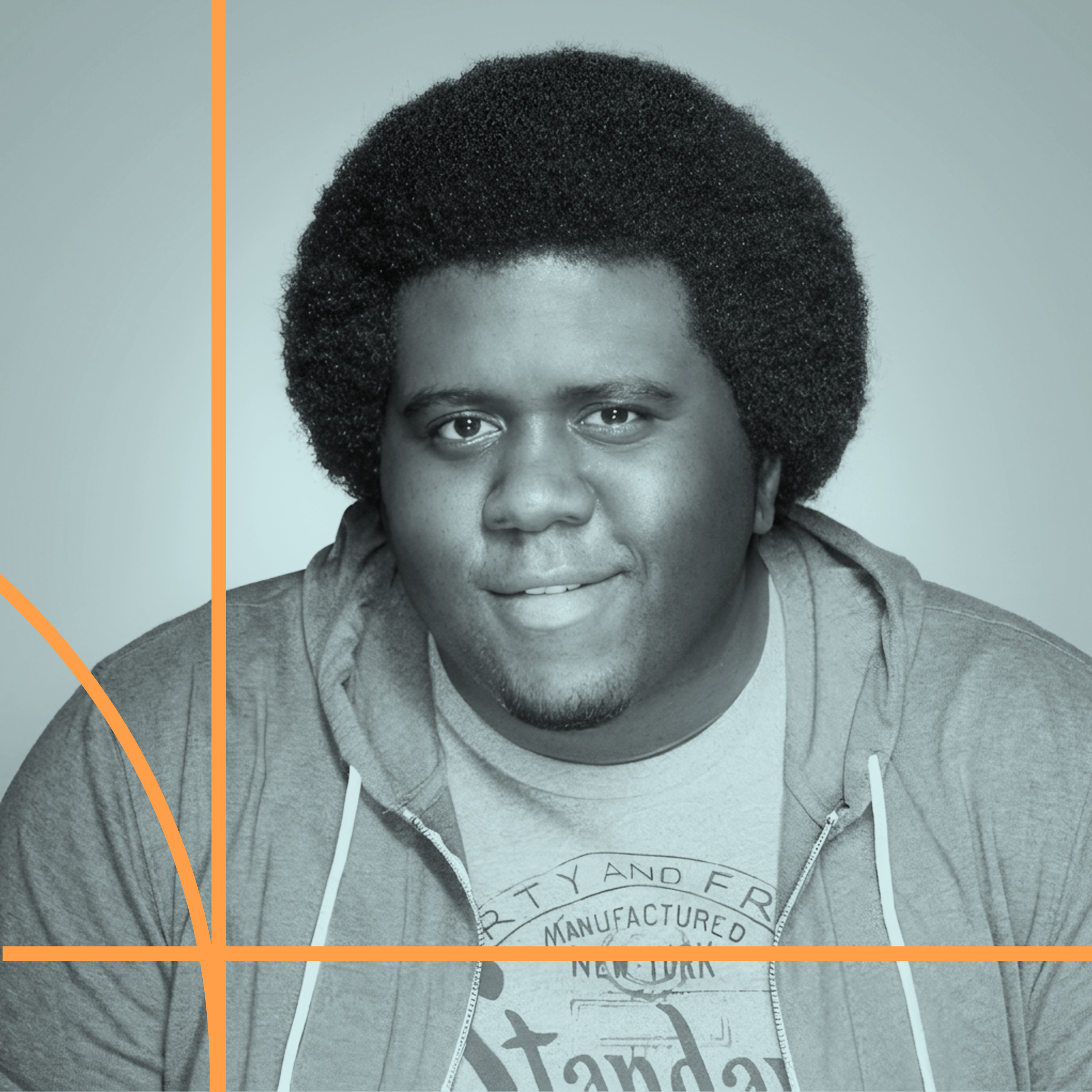
Christopher Lyons, formerly a music producer working with Jermaine Dupri (SoSoDef Records, Atlanta). Later joined Andreessen Horowitz, where he helped create the Cultural Leadership Fund connecting creative talent to business opportunities; he became a general partner.
EQ drives relationships and being relatable; IQ alone can’t teach that. Creative production and venture both require spotting “stars” and translating creative potential into business. Modern technology lowers barriers, so the differentiator shifts to creativity and EQ.
Soulja Boy recording in a bathroom and distributing online; AI music tools like Udio; Google’s video platform; “War of Art” (self-doubt/procrastination).
Written by AI. May contain mistakes.
Explore how emotional intelligence (EQ) surpasses IQ in significance.
“Some of the most important things in the world don't come from IQ, they come from EQ.”
Learn about Chris Lyons' unique career path from music to venture capital.
“That is not something that IQ can teach you.”
Host welcomes Chris Lyons and discusses his career insights.
“We'll return to the conversation after this quick break.”
Host welcomes Chris Lyons and discusses his career insights.
Chris discusses how creativity and emotional intelligence shape success.
“We're super interested in talking to you about your career and specifically about the work that you do connecting creative people.”
Chris explains the parallels between producing music and venture capital.
“foundation for the next wave of businesses and creativity and companies and individuals and consultants, you name it, are going to be scouring the earth for people that aren't just smart, but are creative.”
Learn how Christopher Lyons leveraged emotional intelligence in his career shift from music production to venture capital.
“But then translating that into seeing the star and the entrepreneur, it gave me the mental framework to say, OK, like, I can do this.”
Explore effective negotiation techniques influenced by FBI practices and their application in business.
“Nobody can hear your argument until they feel heard, so now before I defend anything, I try to identify the concern out loud.”

Get the gist, explore an idea or ask about something said.
 Claude
On Design Better, what are the key points of this episode?
Searching your listeningAutomatic transcript. May contain errors.
0:01Christopher Lyons: Some of the most important things in the world don't come from IQ, they come from EQ. One of them being relationships. From professional relationships to personal relationships, being able to get in touch and understand somebody for who they are, what they care about, and be able to be relatable and relate. That is not something that IQ can teach you. That's all 1000 % EQ.
0:30Some careers have clear through lines. Pick a college major, get a job in that industry. But others take serendipitous turns. Chris Lyons is the latter, but with some surprising twists. Chris started his career as a music producer with Jermaine Dupree, founder of SoSoDeaf Records in Atlanta, a role that honed his eye for recognizing talent and helping them reach their potential. But then he joined renowned venture capital firm Andreessen Horowitz, where he helped connect talent to business opportunities by creating the Cultural Leadership Fund. Eventually, he became a general partner at the firm.
1:07We talked to Chris about why he thinks EQ is far more important than IQ in a successful career. how he connects creative thinkers to business opportunities, and the common threads he sees across all creative disciplines. This is Design Better, where we explore creativity at the intersection of design and technology. I'm Eli Willery. And I'm Aaron Walter. If you're hearing this, you're not currently on our premium subscriber feed. Design Better premium subscribers enjoy weekly episodes. You get four episodes per month rather than just two. All are ad-free. and you get invited to our monthly AMAs with the smartest folks in design and tech.
1:43You'll hear a preview of this episode, but if you'd like to hear the full conversation, please consider becoming a premium subscriber at designbetterpodcast.com slash subscribe. That's designbetterpodcast.com slash subscribe. It's just seven bucks a month and it supports not only your personal growth, it also supports your design community. The podcast is available to everyone through our scholarship program. If you can't afford a subscription right now, just shoot us an email at subscriptions at the curiositydepartment.com and we'll help you out.
2:25We'll return to the conversation after this quick break.
2:32Hey, it's Aaron. If you only listen to the podcast, you're missing the best part of design better. That's our community. Annual members get access to our private Slack with talented designers and former guests like Brad Frost, Bob Baxley, and Meredith Black. Slack members share their work, they trade feedback, and they help each other find jobs. Every other Wednesday, Eli and I meet with members on Zoom for Design Club. We critique work, we do a show and tell, and we talk through career questions with expert guests. Members also get ad-free episodes, our weekly newsletters, our full e-book library, and job alerts, all for just$72 a year, which is just$6 a month.
3:14And pro tip, most companies will let you expense it. You can learn more and become an annual member at designbetter.com slash join. That's designbetter.com slash join. We'll see you in Slack.
3:31And now, back to the show.
3:38Chris Lyons, welcome to Design Better. Hey, how are you guys doing today? Doing great. We're super interested in talking to you about your career and specifically about the work that you do connecting creative people. That's a fascinating place that you occupy and you kind of made for yourself in your career. But first, I wanted to ask you, what does the quote, thinking is the true business of life? What does that mean to you?
4:04Christopher Lyons: As a kid, I read this book called The Key to Yourself. One of the first lines that it said is, thinking is the true business of life. And what that really means is that at the end of the day, this entire world, this camera we're talking into, the art behind me, the microphone that you're speaking into, all came from somebody and all came from a thought and all came from an idea. And when you understand the true essence of what and how important your thoughts are and how important being aligned and having the right frequency that you're emanating and that you're attracting really is the core foundation behind whatever type of creativity and output that you want to put into the world.
4:53Christopher Lyons: and so my family really instilled this into me and I practiced it and I've seen the results and I've also seen the results when it doesn't go well of how important your mind is I'm always grateful whenever a good idea pops into my head or even now in the world of AI and being able to have the smartest person in the world at your computer that you can just talk back and forth with in order to get feedback and bounce things off of. It really puts creativity at the forefront. Thinking is the true business of life. And on top of that, we live in a world of everyone else's ideas. And as we're thinking about what else can be done, we're the same people that can build.
5:38Christopher Lyons: We're also the same people that can hold ourselves back when it comes to an idea. technology is probably one of the coolest mediums of creativity mark andresen calls it modern day alchemy where you can literally sit in front of a computer and build digital gold you know you can build the ethereum project you can build jad gpt and open ai you can build any of these startups from just a computer and an idea and understanding knowing how to code fast forward to today and tomorrow with companies like Cursor AI, you just create and the code will come already right there, pre-baked. And I think that there's so much opportunity that we are going to see in this world.
6:27Christopher Lyons: I've been working in technology since 2000, well, formally since 2010, but I've always loved it as a kid. But we used to live in a world where you had to be a software engineer. All we did was promote getting a CS degree. And because you needed to be able to code, you needed to be able to be in the building on that side in order to actually create. And I think that we are really just changing the narrative and we're getting into a new era that is actually powered by creativity empowered by your ability to know, not necessarily the infrastructure, but to be able to leverage the applications. I think that that's what's going to happen with the future of blockchain technologies.
7:17Christopher Lyons: I think that's what's going to happen with the future of AI. I see that in what's going on and how music is being created, digital art. There's so many mediums that are about to be explored. The creative for the longest was always the person asking for support because we didn't know how to use the tools. But now I think that the world is shifting to the point where the tools are infinite. If you wanted to create an audio book, you can insert 11 labs and just type out what your dreams are and what you think it's going to be and have an audio book come out. You don't need to go talk to a publisher.
8:01Christopher Lyons: If you want to get an idea for a trailer for a music video or a movie, I mean, what Google just released in terms of their video platform is revolutionary. You had to go and pitch a script, go combine an idea, go talk to someone, hope somebody listened, take out a half a million dollar loan, get the trailer out. Now you can literally just spend 45 minutes and get that output there. But the difference, because now that the tools are available, is really going to rely on the creativity. and what is it that people are going to be creating that you can still enjoy to consume and that you can empower people to get behind because the ability to create is endless.
8:56Christopher Lyons: And I think that the best example that I could give is from my background, which is in the music industry, when my dream was always to work in a recording studio. The only thing I love more than in a studio is a beach. And those are my two favorite things, right? Seeing an SSL board and seeing waves just crash right behind me. And so those are my two favorite things. But being in a studio was the ultimate dream. But it was the dream because it was so hard. It was so hard to, I mean, one, to get into a studio because it was expensive. Two, you had to be a music engineer, and you had to have the whole software set up, the hardware set up.
9:37Christopher Lyons: It was an expensive project. But the second that the software started getting good, where you could just record right there from a laptop, what Soulja Boy did in his bathroom to create a random record, you know, and not needing to go to the studio, but now distribute it online. all it did was increase the amount of people that could become creatives in the music industry and then you add streaming on top of it you add the quality of not needing to have an engineer and just can press three buttons and have your music sound incredible I mean we just had a whole conversation on whether or not I need to use a mic anymore so like that is how far the evolution is gone, whether that's music, whether that's audio.
10:23Christopher Lyons: Now you fast forward companies like Udio, where you'll have AI and music coming in together. And where does that kind of lead? And so thinking is not only the true business of life, but it's actually going to be the foundation for the next wave of businesses and creativity and companies and individuals and consultants, you name it, are going to be scouring the earth for people that aren't just smart, but are creative. So Chris, you spoke to why creativity is important and I think Gary and I both agree, but you also touched on EQ, emotional intelligence. Why do you think that paired with creativity might be foundational?
11:10Christopher Lyons: Well, I think EQ is extremely important. I think one of the things that always kind of separated or allowed me to kind of be different is living in a world where IQ was the sole driver behind what people were looking for. But some of the most important things in the world don't come from IQ. They come from EQ. One of them being relationships. From professional relationships to personal relationships. You name it. being able to get in touch and understand somebody for who they are, what they care about, identify their interests, and be able to be relatable and relate and have content and product that also is on that same variable, that is not something that IQ can teach you.
12:02Christopher Lyons: That's all 1000 % EQ. EQ is about feeling and being able to have that harmony that you are putting out there into the world. That resonates. It's an art and it's not a science. There is science that is equipped behind it, but I think that it really does boil down to the art. One of my favorite books is called The War of Art. Not The Art of War, which is also good, but that's used for a different situation. But The War of Art, which is kind of that combative self that as a creative, you go to war with every day because you know you have to get this thing out there. But you're fighting with the demons of procrastination and the self-doubt.
12:53Christopher Lyons: The combination of having eq that can balance out a world that was you know specifically talking into the technology and broader venture capital industry that still needs iq i mean look i'm grateful that i get a chance to work with the smartest people in the world every day and it is the reason why i'm always scouring the earth to find new information and stay up to speed because everyone is geniuses Literally. But I think that the thing that's natural on my end is just the ability to have that emotional component to it and being able to have that feeling of knowing that this is a good idea. This is a good product.
13:38Christopher Lyons: Even for me, when I started working in venture, I didn't necessarily know how to do venture capital. But once I learned that the idea was very similar to a producer identifying a star that can sing and saying, hey, that's the person right there. Like, that's the sound I've been looking for. But then translating that into seeing the star and the entrepreneur, it gave me the mental framework to say, OK, like, I can do this. And so that took an EQ approach to an IQ solution. Now I just needed to learn the IQ. And I think that we're going to be in a fun world where a lot more people are going to need to learn the EQ of things.
14:22Christopher Lyons: And I think that that actually is going to create a much more harmonious place to live in and something that I'm actually really excited about. It's an interesting connection you make. You have this background where you were working with Jermaine Dupri in Atlanta, producing, making music, which is a fascinating career in and of itself. Like if you just kept going in that direction, that's super cool. People would love you as a party guest. They want to hear your stories. He's the man. But then you make this transition into venture. And when you explain it, I totally see the connection there. One of those skills, in addition to EQ, is this lateral thinking, being able to see like, oh, this is like that.
15:05But there must have been some serious leverage of that EQ that you talk about in going from the music industry to, all right, now I'm talking with Ben Horowitz, and now I'm chief of staff with Ben Horowitz, and now I'm a general partner at Andreessen Horowitz. I mean, that's a fascinating journey. Give us the rundown on that story.
15:27Christopher Lyons: I mean, well, it's still going. And it was a story. And I think it all came from an energy of trying to bring ideas into life. And the idea of having a thought to a thing started off in the music industry, right? and that's kind of my passion is like this having an idea being able to sit in front of a piano or an NPC and hammer out a song that the entire world can potentially resonate with and enjoy and you can sell out stadiums off of like it's crazy because a couple minutes ago that didn't even exist if you'd like to continue listening to this conversation you'll need to subscribe at designbetterpodcast.com slash subscribe Once you do, you'll get access to every full-length episode, all ad-free, monthly AMAs with inspiring people in design and tech, and recordings of all our past AMAs.
16:23The podcast is available to everyone through our scholarship program. If you can't afford a subscription, just email us at subscriptions at thecuriositydepartment.com, and we'll help you out. Your support makes design better possible. Invest in yourself and the design community by subscribing at designbetterpodcast.com.
17:06Nobody can hear your argument until they feel heard, so now before I defend anything, I try to identify the concern out loud. It sounds like you're worried that we're going to push the launch back. Then I just stop talking, and more often than not, the tension drops, and we start solving real problems together. That came from former FBI hostage negotiator Chris Voss and his class on the art of negotiation. He calls it labeling, and it works as well on stakeholders as it does across a negotiating table. That's one lesson from one class. Masterclass has 200 plus more, taught by people who define their fields in business, writing, creativity, wellness, and more.
17:45Audio mode turns your commute into a classroom and plans start at just 10 bucks a month, billed annually, and every new membership comes with a 30-day money-back guarantee. Masterclass keeps adding new classes all the time, so there's never been a better time to get in. Right now, as a listener of this show, you get at least 15 % off on any annual membership at masterclass.com slash design better. That's 15 % off at masterclass.com slash design better. Head to masterclass.com slash design better to see the latest offer. Count the steps it takes to launch one landing page at most companies. A design file, a ticket, a spot in the developer's sprint, a CMS, a hosting dashboard, and a Slack thread asking when it'll go live.
18:32Every handoff ad stays. Framer puts it all in one place. It's a complete website platform with responsive layouts, a CMS, and premium hosting built right in. So the work is production ready from day one. Agents work alongside your team on the same canvas. They build custom code components, manage CMS content. They tune the SEO and audit the site for issues, you review what goes live, and changes take minutes instead of days. It's built to scale too. Framer has enterprise-grade security and 99.99 % uptime, and thousands of businesses use it, from early-stage startups to Fortune 500s. Learn how you can get more out of your website from a Framer specialist or get started building for free today at framer.com slash design better for 30 % off a Framer Pro annual plan.
19:26That's framer.com slash design better. Rules and restrictions may apply.
This is a preview of a premium episode. To get access to the full episode, head to our Substack: https://designbetterpodcast.com/p/christopher-lyons
Some careers have clear through lines: pick a college major, get a job in that industry. Others take serendipitous turns. Christopher Lyons is the latter, but with some surprising twists.
Chris started his career as a music producer with Jermaine Dupri, founder of So So Def records in Atlanta, a role that honed his eye for recognizing talent and helping them reach their potential. Then, he joined renowned venture capital team Andresen Horowitz where he helped connect talent to business opportunities by creating the Cultural Leadership Fund. Eventually, he became a general partner at the firm.
We talk to Chris about why he thinks EQ is far more important than IQ in a successful career, how he connects creative thinkers to business opportunities, and the common threads he sees across all creative disciplines.
Bio
Christopher Lyons is a visionary leader and President of Web3 Media at a16z crypto. Since joining a16z in 2013 as chief of staff to Ben Horowitz, he has helped shape the firm’s strategic direction—most notably by launching the Cultural Leadership Fund (CLF) in 2018 and co-founding a16z’s $400M Seed Fund in 2021. The CLF broke ground as Silicon Valley’s first venture fund with an all-Black LP base, bridging cultural leaders from sports, music, and entertainment with the tech world while advancing opportunities for Black builders and creators.
Lyons began his career as a sound engineer, working with Grammy-winning producer Jermaine Dupri before founding PictureMenu, a mobile menu platform. He now serves on the boards of Yuga Labs, the James Beard Foundation, the Black Economic Alliance, and New Story Charity. A Kauffman Fellow and founder of Lyons Wine, he brings a spirit of craftsmanship and mentorship to everything he does, including his continued involvement with Kappa Alpha Psi Fraternity, Inc.
***
Premium Episodes on Design Better
This is a premium episode on Design Better. We release two premium episodes per month, along with two free episodes for everyone. Premium subscribers also get access to the documentary Design Disruptors and our growing library of books. You’ll also get access to our monthly AMAs with former guests, ad-free episodes, discounts and early access to workshops, and our monthly newsletter The Brief that compiles salient insights, quotes, readings, and creative processes uncovered in the show.
Upgrade to paid
***