Ask ChatGPT

 Design Better
5 Oct 2026 · 56m · 17 chapters
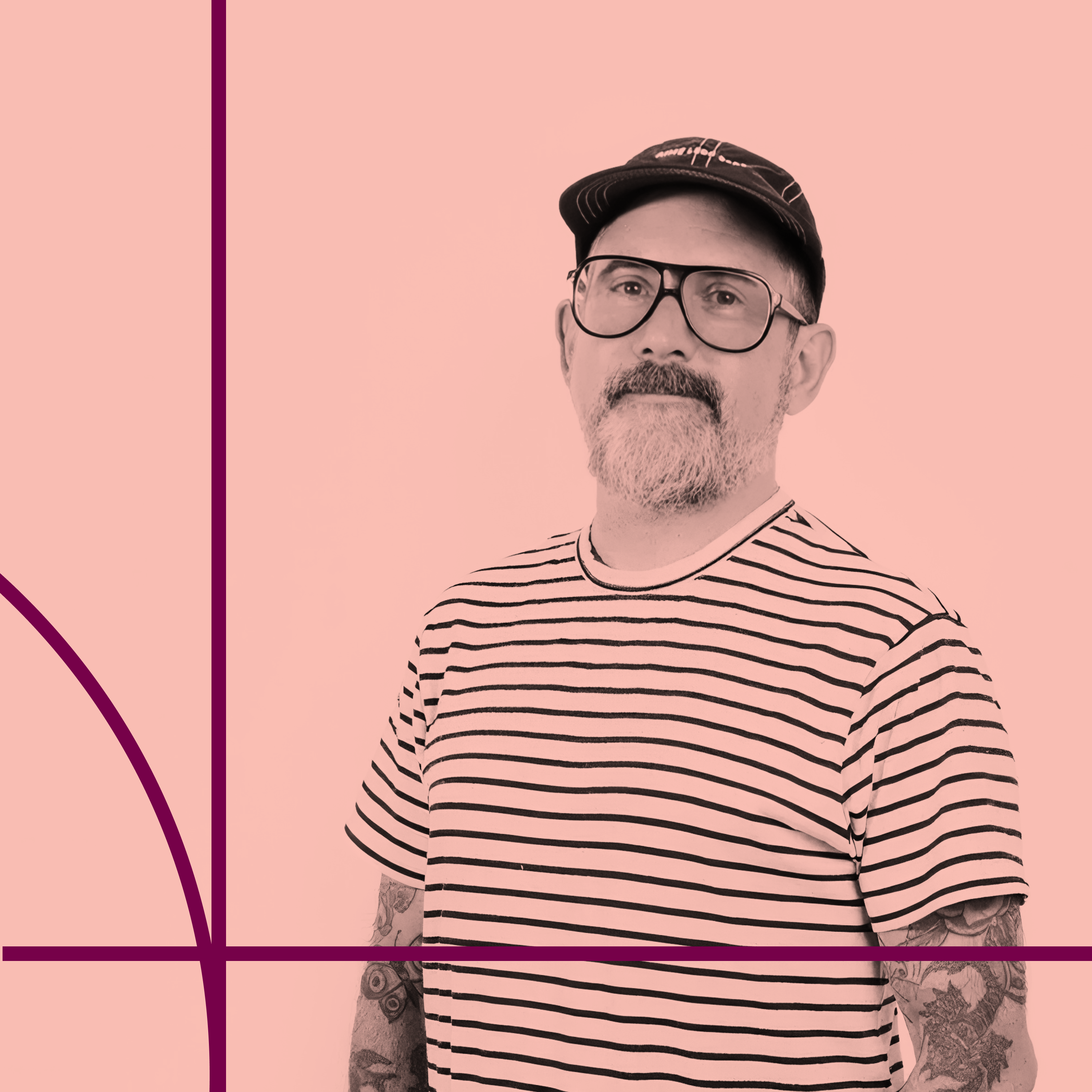
Matt Owens discusses “rebel optimism” for designers, how to keep creative momentum across tech shifts, and how Athletics evolved from a punk DIY studio into a 30-person brand/experience agency. He covers early web experimentation (Volume1.com), the punk/skate mindset for starting without overthinking, Flash’s rise/fall, and using AI as an additive “ingredient” rather than a replacement. He also shares agency leadership principles: surround yourself with capable people, stay hands-on (“most capable intern”), track finances, and ship with consensus.
Matt Owens is co-founder of Athletics (started 2004; now ~30 people). Before that he launched Volume1.com in 1997 (now in SFMOMA’s permanent collection). Earlier: a Texas punk/skater who ran a record label with his twin brother, studied at Cranbrook (1993–95), and worked in early web/startup environments in New York (including Method 5).
mindset/attitude matter most; Flash enabled creative weirdness but its demise forced adaptation; AI should be deliberate and outcome-driven; “high-fidelity slop” is detectable and should be avoided.
Volume1.com’s 3D/experimental interactivity; Athletics’ clients (Google, IBM, Stripe, Major League Soccer); iPhone/Jobs letter ending Flash support; AI tools integrated with Figma/Cloud Code; his book A Visible Distance.
Written by AI. May contain mistakes.
Matt Owens shares his journey from punk rock to founding a design studio and its impact on his work.
“So I want listeners to know how important Matt Owens was in my very early days as a designer.”
Matt discusses his time at Cranbrook and how it shaped his approach to design and the digital world.
“And at the end of 95, Kathy and Michael McCoy left.”
Exploring how creative environments fuel innovation and learning.
“getting out of school where we were in a small startup that was growing and I was able to hire people, work with them, collaborate.”
Discussing the chaotic but innovative spirit of early web design communities.
“Talk to us about the spirit of that time and what was happening technically, collaboratively, creatively.”
Reflecting on the creative energy of New York and its influence on startups.
“was so little of it that what was out there was very known and very noticed.”
Examining the impact of the iPhone and the decline of Flash on design.
“There was the absence of analysis paralysis at the time.”
Explore the bittersweet lessons learned from the decline of Flash and its creative implications.
“It was enough of a scramble that we weren't hanging our hat on one technology and being like, oh, shit, this is going away.”
Learn about the shift in design philosophies and the value of brand systems through experiences.
“And then when it changes, be stoked to adapt.”
Discover the evolution of Athletics from a small agency to a full-service firm over two decades.
“So if I'm doing the math right, you're past the two decade mark.”
Understand the principles of adaptability in business and creative services during challenging times.
“You're only as good as the people you encircle yourself with.”
Learn how to navigate the tension between creative quality and business performance in an agency.
“And I would separate the work itself from the business.”
Explore the balance between management and hands-on creative work in a leadership role.
“I think we all had to collectively learn that project to project, quarter to quarter, year to year, and bringing in really good people that help us see slightly differently, you know, and give us insight.”
Learn how embracing challenges fuels creativity and keeps the passion alive.
“And it's like, oh, that was very unpleasant.”
Discover the benefits and frustrations of integrating AI into design workflows.
“You mentioned you have a love-hate relationship with AI.”
Explore the motivations behind writing a book and the creative process involved.
“Surfing the Jagged Frontier on Substack.”
Discuss the influence of music on creativity and the importance of lineage in art.
“So you might have a special answer to this, but are there any albums that could be from that period up through now that are particularly inspiring to you, that you've been listening to a lot lately?”
Matt Owens discusses his philosophy on sharing knowledge and supporting others in the design field.
“I write stuff on Substack from time to time.”

Get the gist, explore an idea or ask about something said.
 Claude
On Design Better, what are the key points of this episode?
Searching your listeningAutomatic transcript. May contain errors.
0:01You have to have a rebel optimism to forge ahead. I tell all my students at SVA, this is as good a time as any to be a designer. It will be okay. Human beings are still human beings. They still want creativity and beauty and smart ideas. And all of that is not changing. Your mindset and your attitude are everything. When I was fresh out of grad school, working at an agency outside of Philadelphia, my coworkers and I used to crowd around to monitor to study Volume1.com. Most websites back then had a picture or maybe an image map, like very simple website design. But Matt Owen's site had 3D animations and experimental graphic design interactivity that none of us could figure out how he made it.
0:50Matt launched Volume 1.com in 1997 and it now sits in SFMOMA's permanent collection Before that, he was a skater and a punk kid from Texas who ran a record label with his twin brother then went to Cranbrook and landed in New York just as the web took off In 2004, he and his friends rented an old boxing gym in Williamsburg in Brooklyn and started a design studio called Athletics Today, it's a 30-person brand studio working with Google, IBM, Stripe, and Major League Soccer. We spoke with Matt about how punk rock taught him to start things without overthinking them, what designers lost when Flash died, and how athletics grew from a punk house into a proper agency.
1:36He also explains why he calls himself the studio's most capable intern and still takes on projects of his own to keep his skills sharp. We get into how his team uses AI as one ingredient rather than the whole recipe, and why good creatives can smell polished slop. Wrap up with his book, A Visible Distance, and the rebel optimism he passes on to his students at SVA. This is Design Better, where we explore creativity at the intersection of design and technology. I'm Eli Willard. And I'm Aaron Walter. At Design Better, our mission is to produce work that helps people like you refine your craft, improve your collaboration skills, and learn from the creative process of others.
2:14If you enjoy what we do here, the best way to support us is to become a paid subscriber at designbetterpodcast.com slash subscribe. You'll get access to our Slack community where there's amazing people helping one another, our library of eBooks, and every podcast and post that we publish. Visit designbetterpodcast.com slash subscribe to learn more.
2:49We'll return to the conversation after this quick break.
2:57Design Better is supported by Framer. A prompt can get you a website, but it can't tell you whether that website is any good. It still takes a designer's experience, noticing that the headline runs long, the grid is drifting, and maybe the call to action is buried below the fold. Framer is built around that idea. It's an AI website builder with agents working right on the canvas with you in the same place the real website is designed, reviewed, and published. Prompt a page, inspect it, edit every detail, and then you can publish it when you're ready. Agents bring speed and scale. You bring taste, judgment, and control.
3:37Brands like Perplexity and Miro build their websites in Framer. Learn how to get more out of your website from a Framer specialist or get started building for free today at Framer.com slash design better for 30 % off a Framer Pro annual plan. That's Framer.com slash design better. Rules and restrictions apply. Fall has never looked or tasted this good. Sweet Greens Fall Harvest Menu is back with seasonal favorites dressed to impress and made to be devoured. Warm roasted sweet potatoes, crisp apples, maple glazed Brussels, and crave-worthy flavors in the autumn harvest bowl, maple glazed salmon plate, and roasted bacon Brussels side.
4:20The season's most desirable menu has returned to Sweetgreen, featuring fall's best dressed. Make your move. Order on the Sweetgreen app.
4:31And now, back to the show.
4:38Matt Owens, welcome to Design Better. Thanks for having me, guys. So I want listeners to know how important Matt Owens was in my very early days as a designer. I was a young guy coming out of grad school, living in Philadelphia. I studied painting and drawing, and I got my first gig at an agency in Jenkintown, Pennsylvania, where we constantly looked at Matt's work. volume1.com. It was like a mystery. We were all standing around looking at this thing. Like, how the hell did he make that? It was like 3D stuff, animation stuff in a time where it was like people were building websites. If it was fancy, it had like a picture and it was really fancy, had an image map.
5:24But Matt's website had animation, cool graphic design. There was so much happening. I want to talk about volume one, but first you are the co-founder of Athletics, which is a legendary design studio. And before founding that, you ran a record label. You were involved in skateboarding and art galleries and punk rock. And I have a hunch that those pursuits shaped a lot of the work that you were doing early on and probably still today. Oh, for sure. I mean, going to Cranbrook for grad school at 22, right out of undergrad, all of that swirled together. Definitely a child of the 80s and skateboarding was so instrumental.
6:10Pal Peralta, Santa Cruz skateboards, Jim Phillips artwork, all of that stuff was so instrumental. And, you know, I had a radio show in high school, so making flyers and all that kind of stuff. And then punk rock and Discord records and record covers done by Jason Farrell from Swizz that was a year older than me. And seeing all of those things when you're 17, 18, it's like, this is possible. This is a thing. and I think that really hooked me and then going into undergrad and Austin and being there in the early 90s before the internet was anything and just seeing how music and culture and weirdos could all be together and produce amazing music and amazing culture was so huge and then going to Cranbrook at 22 to 24 was like oh okay I can see the application of these ideas in hippie modernism.
7:02At the time, I was really getting into technology and early web stuff. So for me, all of that translation from skateboarding and punk rock and independent publishing and DIY and going into grad school and understanding what that was about and traditional graphic design, and then coming out of the web as the web was sort of exploding, it all kind of made sense to me. And I think maybe for a lot of people, it wasn't like that. I'm not sure. But all those things sort of sandwiched together to give me the mindset to be really creative and make, make, make, make, make. I would say the punk rock aspect of it gave me kind of a fearlessness to start stuff, meaning like, oh, let's put out this record by our friend's band.
7:43Okay, let's do that. Oh, let's go do this. And there was never a no. It was more like a how do we. All of that happened between the age of 16 to like 24 and really laid the foundation for my worldview and my decision-making once I got out of school, you know. Tell us a little bit more about Cranbrook. So we had another guest on Urasoga named Mekon Van Gastel, who's a founder of Sibling Rivalry. He was also a Cranbrook grad. And then my favorite design professor as an undergrad went to Cranbrook. He actually technically didn't graduate, but somehow became a tenured professor at Stanford. I think probably the only one that didn't graduate college to do that.
8:24But he was amazing at giving critiques. And I think that was largely because of his experience at Cranbrook. So walk us through what that was like and what it enabled for you once you entered the studio and started running your own practice. I met a few people like Dan Olson, who was one of my undergraduate professors, came out of Cranbrook. Diane Grimala, who was there in the early 90s at UT, was really into technology and she got me into all that early, early stuff like HyperCard and weird stuff like that. And so when I was 22, it wasn't like I was a great designer or anything. And it wasn't like I was really had any, I'd done some internships, but I was really into the digital crossover and I was really into like zines and making and silk screening and all those things.
9:10And so Dan was like, you should look into Cranbrook. And so I applied to RISD, Cranbrook, and CalArts, and I got into all of them, thankfully. I would have been in Jeff McFetridge's class if I had accepted it, which was kind of a bummer. But when I went to Cranbrook, I met Kathy and Michael McCoy, and I met Elliot Earls, who's the head of the program now. I was just spellbound. I mean, it's in the middle of Michigan, outside of Detroit, and it was this beautiful campus. Charles and Ray Eames met there and it has this amazing legacy. But seeing all the work that was coming out of Cranbrook from say 89 to 92, 93, the Macalas and all this stuff, it was the connection between what cool was and what was in books and graduate study.
9:53They were right there. They were right there in the crucible of all of that along with CalArts. And so when I applied, I later learned that I did not actually get in and somebody bailed on them and I was one of five of my class. But I think it was just the vibe and the fact that there's no grades and it's all self-initiated and you have critiques twice a week and all of that really excited me. And I think ultimately the work that was coming out of the program at the time and how connected it was, was in the immigrate and all of that stuff. It was that moment where it was on the internet, was in those magazines.
10:28This is a place that's really magical and special. And I think what those two years did for me coming out of central, you know, Austin, Texas, some sort of kid, maybe a little too young to be going to grad school. It just taught me so much about speaking about my work, defending my work. It gave me like a workhorse mentality or a workhorse ethos, because I think at that time, Cranbrook was really, really well respected. And everyone I was with were a little bit older than me. It was like the brunt of the litter, if you will. I just got there and I was like, this is what I had to do. This is what I want to do and really tried really hard.
11:04And then Doug Bartow, who's my studio mate, Doug got really into like web stuff and he and I joined forces and ran phone lines through the ceiling to get our own internet and all that old cool stuff. And I just thought it was really liberating. And it was like the best of the wild west of graduate study. And I think it complimented all the things I had been doing. And, you know, hats off to Dan, who I don't think if Dan had been my professor and he had come out of Cranbrook, I loved all the little books he was doing and just the thinking. And if he hadn't recommended it, I probably would never have gone.
11:36What years were you at Cranbrook? I was there from 93 to 95. And at the end of 95, Kathy and Michael McCoy left. So I was their last graduating class. And then of course, you know, 95, boom, the internet becomes a commercially viable thing and studios start to erupt. And so it was good timing. I was getting out. I got out when I was 24, right before I turned 25. And I already had built my own website and done weird stuff. I had an email address. I had all these things that other people didn't have. So that gave me a little bit of an advantage. So I think what a lot of folks today might not understand is getting technical chops at the time, it was challenging.
12:23There were no programs for like, go here and learn HTML, CSS. There's no YouTube. There's no A List Apart. You can barely even find a book on the topic. And if you found that book, it was outdated in a very brief amount of time. How did you build the chops to go from graduate student at Cranbrook, where I'm sure they're probably very focused on physical creation rather than digital creation and get those technical chops that towards the end of the 90s, you're creating volume1.com. Those three or four years were so huge. When I was in grad school, Doug and I were just figuring it out. We would just research as much as we could, learn books, whatever, trial and error.
13:08And then when I got out and I got to New York in really December 95, January 96. I worked with Adeo Resi at a company called Method 5, and he hired me as a designer. And within a year and a half or something, they went from seven to 45 people and grew, grew, grew, grew, grew. And I was just there 14 hours a day, every day. And I think that pressure cooker after grad school was kind of a blessing because what I was learning at graduate school was so creative and so compressed. You're with your peers, you're iterating. And so when I got to method five, it was totally different, but it was the same level of pace.
13:51And I was around amazing designers and developers also in a new business guys that it's like all figuring it out as well. That was the magic was I was able to put myself in an environment very shortly after getting out of school where we were in a small startup that was growing and I was able to hire people, work with them, collaborate. And that's when Flash came out. And so I think that's the crucial part, whether it was in graduate school or was it when I first moved to New York, I wasn't alone. You know, it's like, would Bob Dylan ever have been famous if he hadn't gone to the West Village, right?
14:25I put myself in the way of what was happening in New York, maybe by accident, but that was the secret. The secret was to put myself in an environment where this was happening. And I think that was the fuel that allowed me to keep that pace up and learn. And also, I think at the time, if you think of early Razorfish and stuff like that, there was a little bit of egotism in that world. Everybody wanted to like show how awesome they were. And there was a certain kind of, I don't know what that is, but there was definitely a certain I want to prove myself that came out of that first dot-com boom that I think fueled a lot of creativity in weird ways as well.
15:02We'll return to the conversation after this quick break.
15:09Design Better is brought to you by Masterclass. For years, I treated design reviews like debates, thinking if my rationale was sharp enough, I figured I'd win. But I kept losing to leaders who just didn't like the direction we were heading. Here's what changed that for me. Nobody can hear your argument until they feel heard. So now before I defend anything, I try to identify the concern out loud. It sounds like you're worried that we're going to push the launch back. Then I just stop talking, and more often than not, the tension drops, and we start solving real problems together. That came from former FBI hostage negotiator Chris Voss and his class on the art of negotiation.
15:49He calls it labeling, and it works as well on stakeholders as it does across a negotiating table. That's one lesson from one class. Masterclass has 200-plus more, taught by people who define their fields in business, writing, creativity, wellness, and more. Audio mode turns your commute into a classroom and plans start at just$10 a month billed annually, and every new membership comes with a 30-day money-back guarantee. Masterclass keeps adding new classes all the time, so there's never been a better time to get in. Right now, as a listener of this show, you get at least 15 % off on any annual membership at masterclass.com slash designbetter.
16:29That's 15 % off at masterclass.com slash designbetter. Head to masterclass.com slash designbetter to see the latest offer. Designbetter is supported by Framer. A prompt can get you a website, but it can't tell you whether that website is any good. It still takes a designer's experience, noticing that the headline runs long, the grid is drifting, and maybe the call to action is buried below the fold. Framer is built around that idea. It's an AI website builder with agents working right on the canvas with you in the same place the real website is designed, reviewed, and published. Prompt a page, inspect it, edit every detail, and then you can publish it when you're ready.
17:14Agents bring speed and scale. You bring taste, judgment, and control. Brands like Perplexity and Miro build their websites in Framer. Learn how to get more out of your website from a Framer specialist or get started building for free today at framer.com slash designbetter for 30 % off a Framer Pro annual plan. That's framer.com slash designbetter. Rules and restrictions apply. Fall has never looked or tasted this good. Sweet Greens Fall Harvest Menu is back with seasonal favorites dressed to impress and made to be devoured. Warm roasted sweet potatoes, crisp apples, maple glazed Brussels, and crave-worthy flavors in the Autumn Harvest Bowl, Maple Glazed Salmon Plate, and Roasted Bacon Brussels Side.
18:01The season's most desirable menu has returned to Sweetgreen, featuring fall's best dressed. Make your move. Order on the Sweetgreen app. Somebody asked me how I define myself, and I didn't know what to say. Because how can someone be defined when we're always evolving? I've been so many things. I'll be so many others. Because identity is not a performance. It's an exploration. Never the same, but always myself. That's the paradox. Paradox Intense and the new sweet chemistry by Prada.
18:43And now, back to the show.
18:49Talk to us about the spirit of that time and what was happening technically, collaboratively, creatively. I just want to throw out a few references for you. At the same time, you're doing volume1.com. So there's K10K, which was a website that all designers visited religiously. There was hell.com, which was a website that you visited and you might just get a black screen and not even know what you're supposed to do there. There was Joshua Davis doing all sorts of crazy stuff. Shortly thereafter, you've got Casey Reese and all of these code artists creating really interesting, bizarre things. And it's really a Wild West scenario of technology and design.
19:38Talk to us about the spirit of the time, what that felt like, and how's it different from today? What was funny is when I started Volume1.com, I know because I looked it up, I'm pretty sure it's within one of the first million websites on the planet. It's early 97 or something. And when I started doing it, it was like being in a miniature punk scene. It's like, who's doing this? This is still weird. And so I think at the time, it was really, really small. And so what that allowed to happen was you would have people that are shredder, people in code, people that are into what would later be deep processing, nerdy graphic design people like me, people that had no business knowing each other.
20:21And just the rickety, weird nature of the web and the fact that a lot of people weren't doing what I would consider straight up creative work online that had no client application. It brought us together. It's a weird cast of characters. The vibe that I felt at the time was like, oh, this is a little community. This is a little scene. And that scene didn't really last that long. Maybe late 90s. I think it probably started to fracture by 2004, 2005. It's really a little scene that's born out of the technological maturity of a web. What you're seeing is that vibe and that culture was one of complete camaraderie.
21:01The one thing that I was telling my 16-year-old was this was a time where you would do something on the web and they would make a book with the stuff in it, which is so strange, right? You're doing weird crackpot graphic design and then somebody asks you to be in a book and then you go to the bookstore and buy that thing that was on the web. It was so strange. And then the conference aspect of it, the fact that we're still in the death throes of Clinton-era optimism. You're right before the dot-com bust. The economics were right. The cultural moment was right. This technological uncertainty was right.
21:35It's not dissimilar to the AI world we're in now. It was just so much more small. And to your point, you know, we were talking about before the chat, which is like there was so little of it that what was out there was very known and very noticed. Precious. Very precious. Yeah. So that's what's changed. You know, it's like now everything's not precious. I think that's the real tragedy of maybe the contemporary moment, which is there's people out there that are doing work that's infinitely harder and more challenging than what I did in 97 or 98 that just don't necessarily have the forum or the specialness just because the medium and the scale is so massive now.
22:17Creatives, designers, they always seek authenticity, very much like music. It's like, I want to tell you about the band you've never heard of. I think there's something about those qualities that we were able to tap into that I still seek out in my own life. I'm always looking for that specialness and that weird world that pops up and you discover it and you get excited by it. While all this is going on kind of around the world through the web, you've also moved to New York after graduate school. where you're working there. I love New York, but I can only take it in certain doses. I'm more of a country mouse and love to surf and things like that.
22:54My wife would have probably moved us there if I would have agreed to it. You know, I get the creative energy side of it, but I imagine there's challenges in trying to create a business there. Talk to us about that part of the story, moving there, and how that influenced your direction too. I've been in New York for over half my life, and I love it here. I can only compare it to living in Austin back in the day. When I was living in Austin, I could wrap my hands around it. I could wrap my hands around the culture and geographically, I felt that I could navigate it as a person. And I think when I moved to New York and I moved to Williamsburg, I felt the same way.
23:27And I was able to keep that, let's call it a scene. Between the ages of 25 and 35, I was part of a scene. I went to shows. I had friends in bands. I got to see the hot snakes and awesome stuff. I was working for an agency that was great. And then I was freelancing and then I started my own agency. I think at the time, New York was so creatively inspired and the economics were as such. It wasn't like it is now. You could live reasonably in Bushwick and have a cool job and go see shows and all that kinds of stuff. And you didn't have to drive anywhere. I think New York at that time was such a really awesome place to live and place to be.
24:10And it was just right place, right time. And it's very much startup culture. There was a fearlessness with the people I was working with. You know, one of my first bosses, he was a year younger than me. And I saw what this guy was capable of. And I'm like, I can do that. Starting your own business should not be mysterious. If a guy can start a record label, a guy can start an agency. And I just saw that it took the right level of energy. And you just don't overthink it. I'm committing to this. I'm going to do this. and I think it comes out through the effort. There was the absence of analysis paralysis at the time.
24:42People were figuring it out and so there was enough to go around. That was a very specific kind of condition that was happening. I mean, I hate to say it, but it's like the dot-com bubble bursting the first time was the best thing that happened in the world. Everyone that was awesome splintered and started new stuff. I still know people to this day that are running massive agencies that came out of that world I don't think they would have started other agencies if they hadn't come out of that world. It is that kind of like fearlessness and the momentum that New York provided was just so great.
25:17And then I would say now, you know, with athletics is 22 years old. We started in 2004. Same thing. Staying medium sized, reinventing, learning by doing, taking your lumps. Hats off to Malcolm Buick, our ECD at athletics. He taught me more than anyone else ever about creativity. And it's about the mindset. It's all about being up for it and doing it. That's a real superpower to keep for long term. So moving forward in time past the dot-com bubble, there's another formative moment that you lived through and presumably had to go through a challenging transition. And that's 2007. The iPhone comes out and Steve Jobs writes his famous open letter to Adobe saying, we're not going to support Flash on this new device.
26:06That, of course, changed the world. And designers at the time, Flash was the center of the universe. It was an open canvas where we could design anything. We could script a lot of interactivity. And that central tool was axed pretty much overnight. and a lot of us were left scrambling for like, how do we do this creative work? What was that experience like for you and for athletics? Well, at the time, athletics was pretty new. Like we were maybe three years old or something like that. And we were in Williamsburg on North 10th. There was probably four or five of us in a room doing different stuff.
26:48The blessing of all of that is Flash wasn't the thing that we held our hat on as a studio. We were doing all kinds of different things from the get-ill, just because when we had assembled our little crew of friends, it was almost like a co-working space early on. We rented, I think it was$1 ,300 a month. We rented a crappy, like a homegrown boxing gym next to Kellogg's Diner for the first year. We were a cast of characters that were all buddies doing different things. And we were like, we'll get a studio space together and we'll hire one another. and that's going to be how we do the studio athletics is on the door because of the boxing jam.
27:24We were already kind of scrambled by the time the iPhone came around. I had been working with BBH for the last two or three years doing flash related things. I had worked for DDB on some stuff. When the iPhone came out, I was like more excited by the fact that this was a new era. Not that we were burning out, but we were also hungry for something new. And I think the fact that I was with a crew at Athletics that we all had different kind of points of view. You know, Jason Genevacoff, my business partner, was really doing record covers and had been doing stuff with Michelle Gondry. It was enough of a scramble that we weren't hanging our hat on one technology and being like, oh, shit, this is going away.
28:07and for me personally I did my last volume one piece the year before my daughter was born so in 2009 and because of flash I got more into motion graphics so I got into new and shit on green screen and even some of that later volume one work was more video than it was flash because I was like this is something really interesting the demise of flash was a little bittersweet because I think what's ended up happening with responsive design generally is we have yet to really see since the demise of Flash, what Flash was able to do on the web as a plugin. If anything, what Flash allowed for, strangely, was more creative people to do more weird shit, agnostic of version control and code and all of that stuff.
28:55For me, that was maybe the thing I was the most bummed by. Of course, it is what it is. I mean, YouTube changed everything. All of the things that we've experienced in the last 20 to 15 years. It's just a different world. That's the lesson I learned from the demise of Flash is enjoy it while it lasts. Savor every moment. Rebel optimism. Be stoked for what you have. Don't be dismissive of what you don't. And then when it changes, be stoked to adapt. AI is the same. I love and hate AI on so many levels. It's sort of a love-hate relationship that we had with Flash. Its limitations was also its liberation in a way.
29:31Apart from the technology, did you have any beliefs about design 20 years ago that you've had to change or let go of to stay relevant? I would say Malcolm Buick taught me everything there is to know about brand systems. You know, when I came out of Cranbrook, I thought I was a designer and designers made record covers and did projects for people. And maybe he did a website, maybe he did this, maybe he did that. In 2011, Malcolm came out of Wolf Hollins. He lived down the road and was friends with all of our buddies and shared space with us and became a partner. And he just educated me on what a brand firm is capable of, which I think is fundamentally different than a designer making designs.
30:13It's just not the same. That really gave me a lesson in brand experience as a holistic term for every touchpoint, digital being one of them, the value of strategy. all of those things I only really came into contact with and started to get educated on since 2010 or 2011. So that's a fundamentally new way of thinking for me. I love being quote-unquote recognized in meetings when I'm in some giant meeting and people are like, oh, he won. That's so cool, man. I also realized that brand building and non-digital and the interconnective tissue between strategy, creative, experience, digital, all of those things are so integrated and interrelated.
30:59And I would say it's been a blessing to be able to be a part of a business that not through me, but through the influences of other folks in the firm have educated me on that. And they've given me permission to ride along and be educated through that. That's been a true blessing because I think if it left on my own devices, I probably never would have gone in that direction, you know, on my own. Athletics. So if I'm doing the math right, you're past the two decade mark. Is that right? Yeah. Summer of 2004, we got our first space. I ran a small agency called One Nine for four and a half years with two guys and it was amazing, but it was like, I was so burned out.
31:37And Jason was parting ways with his partner at the time. And we were like, what do we do? And it's like, well, let's just get a studio space and make stuff and not really worry about any of those things. and that was just the best thing is just to be able to start something new and kind of have enough people around to be able to afford to do it. Specifically when Malcolm came in 2010, 2011, Jason and I and all of our folks in the studio, we were doing work and I think the reason Malcolm liked us is that we made shit. We would build whole websites, make things and when he came out of Wolf Ollins, I think maybe he was hungry for a little bit more of that materiality.
32:132004, it was like a punk house And then by 2010 or 11, it became a proper studio. And then probably four or five years after that, it became a proper and delicate agency that had all the pieces. And then more recently, within the last five to seven years, a proper agency that has all the things that you would imagine a normal agency has. It's really homegrown. And we had to reinvent many, many times and make a bunch of mistakes along the way because none of us were MBAs and had started to do this as a traditional sense of the term. Athletics as an organization, as a business, it's a startup story, figuring it out every step of the way.
32:51There's a red thread that runs through your work, your background, and the story of athletics, which is very high quality from the very beginning. You've always been someone who's very focused on high quality and pushing the bounds and adapting. What we've described is a career that kind of hits at a really seminal time where the world is changing, culture is changing, technology is changing, and you've reinvented yourself, as has athletics, through the decades. How do you do that? How do you approach that? You're only as good as the people you encircle yourself with. The partners are all pretty self-made and very willing to get into the nitty gritty.
33:39I think that was helpful, being able to really do the work. You know, many, many agencies where the owners don't actually know how to do anything anymore. That was never really the case with us. So that helped. And then also just an openness. And I would say not dissimilar to a graduate program. I don't know how many people have come through the doors of athletics in the last 22 years. A hundred? I don't know. But I can tell you for every one of those people, the door is always open. Every year, somebody that was a former intern or worked with us for five years went on somewhere else, they'll show up at the door and hang out for a minute or they'll show up at the holiday party.
34:16I think we produced a good energy. once you came into the fold and did work with us, the doors always open. And I think that allowed us to really adapt. Even to this day, we have a really great, strong freelance roster. We have really great internal team. We're always like new blood, new energy. Oh, yeah, let's try that. Let's do that. That kind of openness, it's a certain kind of courage to be able to be curious and be like, oh, you know, we're not just going to do this again exactly like we did it before. or I don't know how it works. It's just in there. It's in the water of our studio. And I think fortunately, because we never really got massive, we're about 30 people now, you still have permission to go off script.
34:57Malcolm and I will, you know, and Jason and Jameson will sit down and we'll be like, we want to do that. We know it's not going to make money, but we want to self-invest. We do things that we are like, that's a great opportunity. Working with the Figma team and learning all the crazy tools for the Config Conference this year. It was hard. Those tools were not ready for prime time in areas. And we had to really figure it out and work with those guys to make something compelling. And it was uncomfortable and it wasn't perfect. And I think you have to leave room for that every step of the way. And that's how you adapt.
35:32You have to have one foot in the possible and you have to build a business that gives people permission to do that. I don't think we planned it. I think it just happened. And it's just part of our philosophy, if you will. Anecdotally, it seems like some agencies or some types of agencies are struggling right now. I can think of maybe on the larger side, agencies like IDEO are having some challenges. And maybe that continues down the sort of spectrum. but it sounds like you've been able to face a lot of these changes with adaptability. What are some of the principles you have that you think let you thrive in a challenging time like right now?
36:07We told everybody we had to be up for it. We had to be up for it. And I would separate the work itself from the business. But one thing that we learned the hard way was that financial tracking matters. Being able to forecast and understand where the money's going and where the work needs to go and where the opportunities to grow accounts in business, all of those internal workings of a business are very, very important in a tumultuous ecosystem like creative services, right? And so what we've learned is as a small agency, everything is episodic. You'll have an amazing big project, and then that'll go on for a while, and then that'll go away, and then you'll have some something else.
36:50And so I think for us, the adaptability came through taking a beating, taking the lumps. We've thrived and struggled and everything in between. And I think what we did as a team, and I would include myself as one small player in this, having the fortitude to pick yourself back up and move forward. Kristen Nord, who's our managing director, She's been with us for almost a decade. She's there every step of the way, helping us understand and helping the team understand what's going on. Why is it this way? What's up? All those things, moment to moment, day to day, quarter to quarter. And I think it's having that transparency and having a team that gets that, but it's not driven by that.
37:36We're driven by good work. We're driven by creativity. We're driven by making shit that looks awesome and behaves awesome in the world. All of those other things are in service of that. I think what often happens in a business is you believe you're in it for do great work, but ultimately something along the way happens in a business where the work becomes a fulfillment of a financial mandate, where I think there's always that tension. And I think as an agency, you have to believe what you're doing every day is you're getting up every day to learn, challenge yourself, challenge the client, challenge the team, do awesome work, put craft and design at the center, put the great story and the great strategy at the center, and that all those other things are in service to do more of that.
38:22That is nothing I ever learned in graduate school. No design book ever taught me that. I think we all had to collectively learn that project to project, quarter to quarter, year to year, and bringing in really good people that help us see slightly differently, you know, and give us insight. And I'm blessed to have a pretty good peer group. I can text Josh Davis right now if I need to and catch up with him, as can I a bunch of other people that are around my age that are at different altitudes and different levels of seniority. And I think that's helpful too. It's like the culture you build internally, the young people that come in, and then a group of peers so that you have a certain degree of objectivity because nobody knows what they're doing.
39:04Nobody knows what they're doing. There's always some level of ambiguity. It doesn't matter the scale of business. How do you know when it's time to keep pushing on refinement and quality and when you just need to say, I think we're done here and we need to ship it? I leave that to the team. I don't think it's an individual mandate anymore. I think there was a time in the past where you could decide you as the creative director or the ECD could be like, we're done, move on. I think we're in a different era now where, I mean, of course you have a scope of work. Of course you have a project manager.
39:41Of course you have a rate card and time. So all of these are healthy constraints that allow you to not design a million logos forever and never stop. I think the most important thing is the team that is in charge and accountable for the work needs to work together and they need to know when is when. The best work comes when everyone feels empowered to say those things and everyone feels the agency to say those things. At least in my world, the one person's voice goes kind of thing. It's never really been like that at athletics because we've had multiple partners and it's always a discussion, right?
40:19It's all about consensus building. You know when it's done, when everyone says it's done and all the variables are looked at, time, money, sanity, creativity. Luckily for us, we've been doing this a long time and And I would say Daniel and Allison are creative directors. They're good at what they do. They know how to do it. They are professional, compelling, visual people that will not accept crap, but they also are realists. They're young, but they understand that. That's something you learn by just doing it at the level that we're trying to do it at and continue to shoot for. As we understand it, you still stay involved in the day-to-day work, illustration, 3D work.
41:02How do you make that balance between managing and making as a leader at an agency like yours? I like to tell everyone, I mean, I do it as a joke, but I totally believe it. If we go around and you're like, oh, I'm Matt Owens. And I'm like, I am the most capable intern you will ever have. That is my favorite title for myself. Because what it means is I will support you in any level at any time. If you need After Effects, I can do that if you need it. Oh, you need me to write this proposal for you? I could totally do that. Being the most capable intern is kind of what the Cranbrook ethos teaches you, which is no one is coming.
41:40No one is coming. You are stranded on the side of the road. You have to figure out how to put that tire on. That's the way I come at life. I'm here to facilitate and help. And within the last year, I've taken on entire brand project side hustles for myself just to force myself to see how hard is that still for you? Can you do that? And it's like, oh, that was very unpleasant. But it was like, I did it because I don't want to lose the muscle memory. I don't want to be the person that's sitting around making lists and proclamations and thinks that's their job. That is totally uninteresting to me.
42:16Feeling the burn is the reason you get into creative work, period. That's why you do it. It's like, you think I love action script? One or two? Fuck no. That's horrible. I hated ActionScript. But without that pain, without that struggle, it's the same with Claude Cowork. It's like you're grinding through it trying to get the right outcome. It's the same thing. For me, that's the secret sauce is like always put yourself in a position of tension and challenge and don't get too soft. It sounds kind of crummy, but what it does is when you get through the other side, whether it's a little Cinema 4D piece or whether it's learning whatever, it gives you that spark again that you had when you were 19, right?
43:01That's what you want. That's what you want in every era of your design career. You don't want to be like, oh, yeah, I got to the top, top, top, and then became a talker. A little challenge, a little suffering is very healthy. It's like Malcolm Buick, he did a whole brand for a local soccer thing, and it was like, he didn't need to do that, but he wanted to do that because he knows that there's something inside of him that needs that challenge, needs to struggle, needs to problem solve. Whatever that is, that's the secret. Whatever that fire is, keep it around as much as possible. You mentioned you have a love-hate relationship with AI.
43:38And I can't help but think that a person like you who's so multidisciplinary, this would open a lot of doors and a lot of possibilities. What are you doing with AI and what is it you love? What is it you hate? It's rickety. And I would say the things I dislike most is there's too much choice. You can get it to 85 or 90%. Getting it to the 99 percentile is really hard, sometimes impossible. It's sort of like a slot machine. It can be really satisfying, but then somewhat of a waste of time. Like anything I've learned in my life, you have to be deliberate and you have to have an outcome you have in mind.
44:15For example, if we're using Cloud Code connected to Figma MCP, we're doing it because we have an idea in mind, we have an outcome in mind, right? If we're using Weavey and using licensed 3D work from an illustrator and we're training a model to be able to create a certain output, it's deliberate and we have an idea in mind. And that's been the most productive way of using AI for us. Creating a skill that allows me to ingest certain data for a client and then be able to produce certain outcomes that I can then get into a presentation more quickly and then iterate from there. All of those things have been infinitely, infinitely helpful, especially for me at least.
44:59Distillation sense making, summarization, proposal writing, all of that stuff. And then from a brand systems perspective, it's like sriracha. It's a nice additional ingredient that's integrated into the whole recipe of what we're doing. And it's not replacing something. It's an additive element. I still need a shredder after effects person to make a sizzle reel that's going to be face melting and compelling. And maybe some of the assets in that sizzle reel are AI generated due to time or whatever it might be. but again, it's another ingredient and it's not a replacement necessarily. For me, I love it.
45:39I'm totally on board. And I just wrote an article called Surfing the Jagged Frontier on Substack. Surfing the Jagged Frontier is exactly that, which is you just have to surf it. It's not going to be perfect. You could do a million things in Figma Agent and almost all of it is garbage, but then they'll be like, oh, that one thing, I'll remember that. I'm saving that for later. That's the secret to it is deliberate practice, specific outcome in mind and then giving yourself the time to do it right. I think the key thing about all of this is we're in the era of the new orchestration layer. That's what we're doing.
46:16And I don't think people necessarily grasp that, which is there's old school project managers doing it in the old way. There's new school project managers doing it the new school way. It's all about the orchestration layer and seeing the component parts. How does this interrelate? How can we make it rigorous while also preserving creativity? And where does it fall off and isn't a full replacement? In my mind, it's no different than a lot of the other things I've done in the past. It's the same kind of challenge, different tools. It's funny to me how obstinate these systems can be sometimes too, even when at their sort of advanced stage.
46:51So Aaron and I do a lot of research and writing, editing, that kind of thing that it's helpful for. But even when we build a skill, let's say we both, I think, separately asked it to ingest the strunken white kind of style guide as sort of a base for helping us edit and giving us feedback on the stuff we've written. But it still wants to say, it's this, not this. And anything it edits, you just have to go back and re-edit. So in the end, is it really saving me time? Is it not saving me time? I don't know. I mean, at least it's not starting with a blank page necessarily. But there is that slot machine element to it for sure.
47:22Yeah, I mean, I think the most simple thing, and again, social media is terrible. It's like, are we cooked? I don't know. we have my cooked. It's like, you're not cooked. It's intent. It's all intense. It's like, are you trying to make a workflow to automate your new business pipeline? Sure. Your goal is to automate something that is normally not automated. Cool. Are you trying to like make this presentation really sick and amazing without you having to touch it? Well, you're never going to do that. You will get close. You might get a little further along, but if your goal is to make a amazing, thoughtful, beautiful presentation that rationally, strategically, and romantically makes a creative argument to sell a brand idea.
48:07AI might just help you mechanically get there quicker, potentially, but it's up to you to make it a crafted, beautiful human thing that other people appreciate and resonate because high fidelity slop is a thing. And a high fidelity slop narratively, visually, or otherwise orchestrationally, you can smell it. You can smell it and you will dismiss it. If you aren't visually and narratively acute enough to smell that, then you should not be doing this anyway. Ultimately, it's about that. I love AI. It's not going anywhere. Is it going to be able to make cars faster? Sure. Is it going to automate certain processes, great.
48:48Is it going to recommend better shit on Spotify? Maybe, sure. But for the purposes of my life, I need to see it as part of the recipe. I'm never at it to replace something. It's not the ozempic of brand building. You're like, oh yeah, it's going to be awesome. I'm just going to make this awesome thing that is totally idiosyncratic and perfect. And I didn't actually do any work. I don't know if ozempic of brand building is something that we need to be syndicating on this podcast, but it's kind of funny. You wrote a book in 2024, A Visible Distance, Craft, Creativity, and the Business of Design, which is part personal memoir and part professional manual.
49:28Who's that book for and why did you write it? Consider it an extension of putting out a record in a weird way from like back in the day. During the pandemic, I wrote a ton, you know, making sense of a man of a certain age, what does it all mean? How can you take a lifetime of opportunity, frustration, and everything in between? It's like, what do you do with all of those things? You certainly don't come home every day and complain about it to your significant other. It has to go somewhere. And I think for me, a visible distance was complete graphic design, therapy, sense-making, codifying, getting things off my chest in a productive manner, all of those things.
50:11It was a little bit of like the punk rock record thing. I was like, I'm going to put a book out. I'm going to try and do that again. I'm going to see what that's all about. I've never done that. And, you know, Set Margins were generous enough to publish it. Set Margins are way more radical and maybe more progressive than my book is. But I come from the same ethos. I'm a self-made human being that believes deeply in the agency of the individual and that creativity is within all of us. And I think a visible distance is not a perfect artifact at all. The fact that I got it done, I wrote it, I got it edited, I got it published.
50:46I completed something. It wasn't just a half-baked idea that's sitting on a shelf or in a hard drive. It's a real thing. and I think that was sort of the point. The point wasn't to make the perfect book. It was to make something that captured as many of the ideas as I had at that time and I'm happy I did it. Is it perfect? No. I don't know if you guys are Descendants fans and the Descendants documentary, Bill Stevenson, the drummer. He says, why should it be shameful that five people show up to your rock show? You should be stoked that five people just saw your band. That's how I feel about my book.
51:23I'm just stoked that there's this thing out there in the world that somebody might read some page that's 20 or a version of me now. And it's like, that's good. That's going to inform this thing in my life. And it changes their life ever so slightly or gives them a little bit of information that helps them make a better decision or avoid a mistake or whatever it is. I feel like that's the reason I did the book. You know, it's a good tool. It's like, I can give it away. I can talk about it. And I do pick it up from time to time and say, like, is this garbage? Am I an idiot? And it's like, I'm like, oh, it's not too bad.
52:01It's true. I don't want to be mean to, like, all the other designers that are like, I have a book out and I'm going to do a thing at the AIGA about it. It's like, I don't really feel like that. You know what I mean? Consider it more of like a really high fidelity cassette of my band at the time. and I recorded it and paid the money to get it in the studio. And I don't really know if it's that great, but I'm glad I did it. And I definitely learned a lot. There's definitely another book in me if I need it. Plenty to complain about. Plenty to unpack. So you ran a record label for a number of years with your twin brother, I believe.
52:41So you might have a special answer to this, but are there any albums that could be from that period up through now that are particularly inspiring to you, that you've been listening to a lot lately? Solid Brass just released five new songs by Regulator Watts that were amazing. And probably Alex Dunham from his singer-guitars to Hoover, probably one of my favorite creative voices ever to exist. For me personally, just because Hoover and Regulator Watts were still important to my childhood. For me, music is always a lesson. Music, and I think what's about music and about putting out records, it's a lesson, but it's also the liner notes.
53:23It's not just about the music. It's about where was it? Why was it? Why did it happen? A label reissued some of the Hall of Shaddad records from the Atlanta band that I put out back in the day. The Shaddad are an amazing mathy three-piece. They are amazing, amazing human beings. That's an amazing record. And the fact that some dudes I don't even know in the world found that record and reissued it is completely a validation that that music is amazing. The Hall of Shaddad is a good example where they're short-lived, amazing band, high quality, great math rock, sophisticated, I think, in music and in life.
54:04I seek that out. Slightly weird, not quite right. Contemporary music is challenging. It can be really, really amazing. Do I love Phoebe Bridgers? I don't know. Do I love Phoebe Bridgers? Or do I understand Phoebe Bridgers for what Phoebe Bridgers is doing and why they matter? It's more like that. It's almost I'm a little too musically educated where I'm like, I'm not sure if I love it, but I understand it. And I definitely went through a decade of I over listened to music. I definitely over listened to music. and now I'm just coming back into it for the first time ever in early September. I'm going to go see Hammered Hull's Alec McKay's lead singer.
54:47He was in The Faith. He was in Ignition. I saw Ignition when I was 16 or 17. He's still in a band. It's kind of heavy and weird. I'm definitely into that. I'm definitely going to that. I just seek out weird stuff. I have a 16-year-old. She is about to be a junior in high school. I was like, what is on your Spotify? What should I be listening to? and she's like, I'm listening to Slint, Spiderland. I'm like, what? Like, how did you find that? She's like, oh, Slint's cool. Like, they sound awesome. And I'm like, I didn't have anything to do with that. So I don't seek out music anymore, but I'm always appreciative when people send cool stuff my way.
55:24You know what I mean? Yeah, I have a 16-year-old daughter, almost 16-year-old daughter as well. And she will pull up things that I've never even played for her. And I didn't have particularly great taste in music, I think, as a teenager. but things like Alice in Chains. It was like, where did you hear that? It's like stuff I listened to in high school. It's funny that I guess it all comes around. Yeah, totally. Matt, where can people learn more about you, your work, athletics? Where's the best place to direct people? Well, you definitely go check out athleticsnyc.com. That's our website. If you want to know all about me, I would definitely check out mattowens.com.
56:00If you go to Matt Owens and go into about, I write stuff on Substack from time to time. I really enjoy Substack. I think it's a good form. I wrote on Medium for a period of time, but I've discovered nobody in this day and age reads 3 ,000 words or rarely. But yeah, check out AthleticsNYC and definitely MattOwens.com. And I would say to your listeners, for good or bad, reach out anytime. I'm always here. I talk to other agencies. I speak to other agencies. I speak to potential clients, students, all of that. I feel like my job at this point in my career is to give as much of my knowledge away and be as available as possible.
56:41Because when I was young, everything was an ivory tower. I was like, I'll never be able to talk to that person. I never want to be that. I always want to be the person that's just like you and is here to help you build a career and give you all the insight, ammunition, good, bad, and in between that's needed to succeed because it should not be scary. You should have rebel optimism through it all. It's graphic design. We are not building a suspension bridge. This is not that big a deal. And I had to learn that the hard way. I had to learn that and I thought it was everything. And I thought if I didn't do an amazing job, the world would collapse around me.
57:21It's not true. You have to have rebel optimism to forge ahead I tell all my students at SVA, this is as good a time as any to be a designer. It will be okay. Human beings are still human beings. They still want creativity and beauty and smart ideas. And all of that is not changing. Your mindset and your attitude are everything. Matt, it's been amazing having you on the show. Thanks for having me. I really appreciate it.
57:53This episode was produced by Eli Woolery and me, Aaron Walter, with engineering and production support from Brian Paik of Pacific Audio. If you found this episode useful, we hope that you'll leave us a review on Apple Podcasts, Spotify, or wherever you listen to finer shows. Or simply drop a link to the show in your team's Slack channel, designbetterpodcast.com. It'll really help others discover the show. Until next time.
58:33Fall has never looked or tasted this good. Sweet Green's fall harvest menu is back with seasonal favorites dressed to impress and made to be devoured. Warm roasted sweet potatoes, crisp apples, maple glazed Brussels, and crave worthy flavors in the autumn harvest bowl, maple glazed salmon plate, and roasted bacon Brussels side. The season's most desirable menu has returned to Sweetgreen, featuring fall's best dressed. Make your move, order on the Sweetgreen app.
When Aarron was fresh out of grad school, working at an agency outside Philadelphia, he and his coworkers used to crowd around a monitor to study volumeone.com. Most websites back then had a picture, maybe an image map. Matt Owens’s site had 3D, animation, and experimental graphic design, and none of us could figure out how he made it.
Find bonus content and more on our Substack: https://designbetterpodcast.com/p/matt-owens-athletics-co-founder-on
Matt launched Volumeone.com in 1997, and it now sits in SFMOMA’s permanent collection. Before that, he was a skater and punk kid from Texas who ran a record label with his twin brother, then went to Cranbrook and landed in New York just as the web took off. In 2004, he and a few friends rented an old boxing gym in Williamsburg and kept the word on the door: Athletics. Today it’s a 30-person brand studio working with Google, IBM, Stripe, and Major League Soccer.
We talked with Matt about how punk rock taught him to start things without overthinking them, what designers lost when Flash died, and how Athletics grew from a punk house into a proper agency. He explains why he calls himself the studio’s most capable intern and still takes on projects of his own to keep his skills sharp.
We also get into how his team uses AI as one ingredient rather than the whole recipe, and why good creatives can smell polished slop. We wrap up with his book, A Visible Distance, and the rebel optimism he passes on to his students at SVA.
Bio
Matt Owens is co-founder and Chief Design and Innovation Officer at Athletics, a Brooklyn brand studio whose clients include Google, IBM, Stripe, Square, and Major League Soccer. He holds a BFA from UT Austin and an MFA from Cranbrook Academy of Art. From 1997 to 2009 he self-published the experimental design quarterly Volumeone.com, now in SFMOMA’s permanent collection. He is the author of A Visible Distance: Craft, Creativity, and the Business of Design (Set Margins, 2024), teaches at the School of Visual Arts, and writes on Substack. He lives in Brooklyn with his family.
***
Premium Episodes on Design Better
This ad-supported episode is available to everyone. If you’d like to hear it ad-free, upgrade to our premium subscription, where you’ll get an additional 2 ad-free episodes per month (4 total). Premium subscribers also get access to the documentary Design Disruptors and our growing library of books.
New premium subscriber benefit:
Get design and career support in Design Club
Weekly Portfolio Club calls this summer helped our paid subscribers build portfolios that land great jobs. Experts joined us weekly to provide feedback, and we compiled lessons from each session into a portfolio design guide.
We’ve launched a private Slack workspace…join now to connect with designers, product leaders & creative practitioners in our community.
And get a behind-the-scenes pass to every episode with The Roundup, where each week we bring you insights and actionable tactics from recent episodes.
You’ll also get access to our monthly AMAs with former guests, ad-free episodes, discounts and early access to workshops, and our monthly newsletter The Brief that compiles salient insights, quotes, readings, and creative processes uncovered in the show.
Upgrade to paid
Learn more about your ad choices. Visit megaphone.fm/adchoices