 Ask ChatGPT


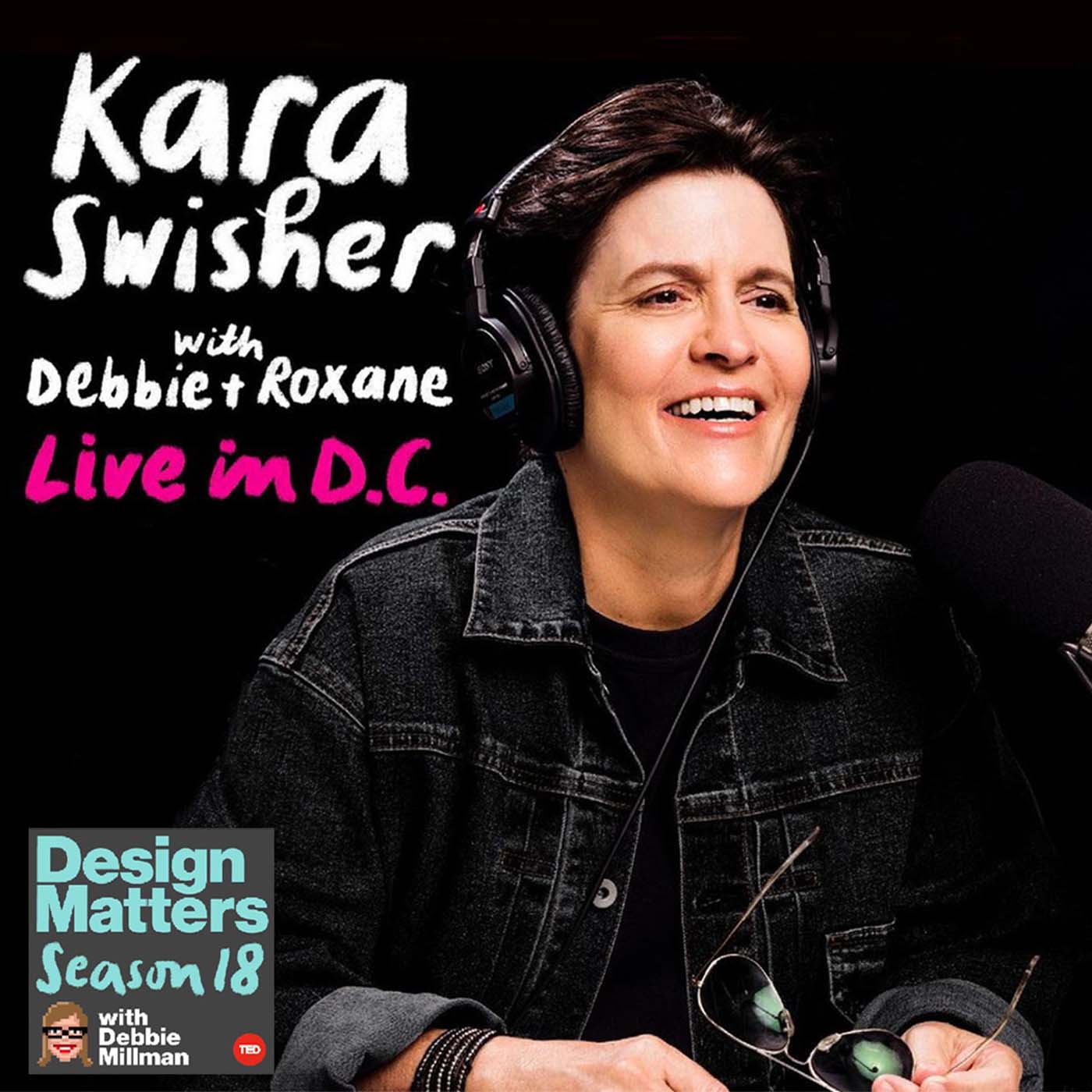
In this archival episode of "Design Matters," Debbie Millman interviews Kara Swisher, a prominent tech journalist known for her incisive commentary on the tech industry. The conversation, part of the Design Matters live tour, captures Swisher's journey in journalism, her perspectives on the evolution of technology, and personal anecdotes that shaped her career.
Written by AI. May contain mistakes.

Get the gist, explore an idea or ask about something said.
 Claude
On Design Matters with Debbie Millman, what are the key points of this episode?
Searching your listeningAutomatic transcript. May contain errors.
0:00This archival episode of Design Matters originally dropped in October of 2023. I actually still have sperm left. I got pregnant on the first pregnancy and my ex-wife got pregnant, so I have a lot of sperm left. It's excellent sperm.
0:18From the TED Audio Collective, this is Design Matters with Debbie Millman.
0:26For 18 years, Debbie Millman has been talking with designers and other creative people about what they do, how they got to be who they are, and what they're thinking about and working on. On this episode, Kara Swisher talks about her career in journalism covering tech moguls and about her sperm. I bought it for cheap and now I can sell it. It was very inexpensive way back when because no lesbians were having children.
0:53This interview of Kara Swisher is part of the Design Matters live tour presented in Washington, D.C. on September 20th, 2023 by On Air. Debbie was joined on stage to conduct the interview by Roxane Gay, who introduced Kara Swisher. Kara Swisher is truly a woman with her finger on the pulse of all things tech. She has written for countless publications, including the Wall Street Journal and the New York Times. But now she hosts the podcast On with Kara Swisher, and she co-hosts Pivot with Scott Galloway. with inimitable style. She covers breaking news, opines on technology companies and the mercurial people who lead them, and is always, always ahead of the curve.
1:37Tonight, she joins Debbie Millman and I on this live episode of Design Matters. Cara, welcome to Design Matters Live.
1:54Hello, Cara. Hey, they totally all saw us come in on the side. I know. The secret's out. We were like, wow, that's an anticlimax. Cara, I think that you might enjoy this first question. Sure, I might. You might, given the conversation we were having backstage about cars. Yes. Is it true you have a special affinity for the Ford Fiesta? Yes, I do. I do. I had a Ford Fiesta Turbo, let me just say. People made fun of me and then I took them in it, which was a very different experience. It was also a manual. I drive manual when I drove gas cars and I love manuals. My 12th grade boyfriend taught me.
2:36That was a long time ago. Taught me how to drive a manual and I love it. And I love driving it in San Francisco down hills. And I pretend I was going backwards with my kids and they'd be like, mom, stop. But then I did it anyway. And then I, since I have now a Chevy Bolt, in my ongoing series of sexy cars, I have a Chevy Bolt and a Kia Sorento. So I am one hot lady. Good logo on the Kia. Nice new logo. I love my Kia. It's a hybrid. It's nice. Kara. It has three seats, three sets of seats. Oh. I always enjoy a third row for activities. Yeah. I have four kids, so I need it. Yeah. Yeah. when your dad was 34 years old, he died from complications of a brain aneurysm.
3:26Yes. He was fresh out of the Navy. He had three kids. He and your mom had purchased their first house. He had landed a job as the head of anesthesia at Brooklyn Jewish Hospital. You were five years old. Indeed. And have said that his sudden death has informed everything you've done since. Yes. And I'm wondering in what way? Well, in every way. I think when your parent dies at a young age, there's a great book. I think it's by Irving Yalom or something called The Lost That Is Forever. It's one of, I love this book. I just, a friend of mine lost her daughter who has this young child, and I sent this to them or advised them to get it.
4:06And when your parent dies at a young age, it's as if half your friends have died, right? Because that is your touch point at that age. and at that time when it happens it's devastating but you get through it you do you just do and so a lot of things don't matter as much as because you realize one you get a sense of mortality at a very early age and two is you can survive a lot of stuff you know and a lot of people have gone through worse things but it certainly was tough and uh it was accompanied by the fact that my mom married someone who wasn't very nice my father was incredibly kind so i felt like i mean i was essentially living Cinderella or something.
4:45Like it was like that. And so it makes you think every time I think about death a lot, not in the way I'm going to die tomorrow. It's that I'm always like, should I do this? Oh, I'll be dead in 50 years. Yes. And so it tends to give me a positive spin on every, I don't have as much, I just don't have that kind of time and neither does anybody else, but I have a very good sense of that. The other thing is when I had my first child, who's now 21, when, you know, I have a, right now also a four-year-old, someone about to turn four, daughter, and a son who's about to turn two. And when my oldest, who's now 21, turned five, I realized the devastation because we were, we were incredibly, I'm incredibly close to my little, my two-year-old, like knows me well, walks home, hi mama, and hugs me.
5:35And just, it just informed everything. So I think it made me bolder and highly functional, I would say, highly functional. And my brothers are highly functional. So it's not great, but it's, that's not a great way to learn that. But. You know, you've noted that when you survive something that awful, very little is going to bother you over the course of the rest of your life. And it seems like that has held true this many years later. And so why do you think that holds true for so long? And do you ever foresee that changing where things might start to rock your world again? Well, only around my kids, I think.
6:12And that's the only time I get panicked about something happening to them and traveling. That's the only thing I think. I think I had kids because I didn't want to become one of those people that nothing bothers, right? And I think probably a lot of my earlier relationships, I was like, yeah, we break up. Oh, well, so what? Like, you know what I mean? You get like that. Yeah, it'll be fine. Everything will be fine. I'll be fine. And I think having kids does give you a sense of vulnerability that you can't avoid. Not everybody has kids. Like I get it. There's different ways to do that. But for me, that's really that that's the one thing that gives me a sense of terror sometimes, you know, or scaredness.
6:52I'm not scared for myself. I'm care for them. Especially because I knew, you know, it does give me insight into what happened to me too at the same time. So I guess that would be, it doesn't leave me though. Every time, you know me, I leave things like when I don't like, if I don't like getting enough money or if someone just bothers me. We were talking about someone we know jointly. And when I left this particular thing, they said, why are you leaving? And I said, I don't want to talk to you anymore. and they sort of were like what and i go i i just don't want to see you anymore also and or encounter you or i just i gotta go and so it was and it was because of that feeling of like life's too short it's not a it's more than life's too short it's like i have this many minutes on the planet i don't know what it is but you're taking up far too many of them and you need to move along out of my sight.
7:42I have to say, yes, please clap. When I hear something like that, it feels a bit mythic because I'm not, even though I'm on the page, yes, I'm absolutely that bitch. But in my day-to-day life, I don't have that thing that allows me to just say, I don't want to ever speak to you again. How do you develop that? It's easy. Just start doing it and it's like because I do a lot of yeah no no I don't think so I was going to do a series of books and it still might we just thought of a podcast together it's going to be amazing it's going to be epic it's so unlike what you think it would be it's not badass ladies it's something much worse but I was going to do I am going to do a book and it's called no is a complete sentence and the second book in the series is called Yes, I'll Take That because I don't think women say it.
8:42It's a book for women and other people who need it, essentially. And the third is Maybe I'll Call You Back. Yes. I don't know. I never regret saying things. I don't. People are like, did you regret that? I'm like, no. No, I like that. That was fun. Wow. Yeah. Someone's going to shoot me someday. One time I was in, because I'm kind of mean to some of the tech bros and they have a lot of money. I was in New York and I was crossing the street and a car made a 180 in front, a big black car, like one of those big Ubers, whatever, and stopped in front of me. And I literally thought the time has come for Peter Thiel to kill me or Elon Musk slash Mark this that they have sent in the Israeli secret people that are going to now take me.
9:30I'll be caught up into little pieces and spread around the ocean and stuff. And I thought, oh, God, one too many insults of these adult toddlers. And I just did it again. And it was a fan. It was a fireman from Queens. And he's like, he wanted a selfie. And he goes, did I scare you? And I'm like, yes. Now you have to abduct me and cut me into tiny bits. Now, this is taking a step back. but I know that your mother is very stylish and so was your Italian grandmother. She was. And at one point your mom worked at the great old department store, Bonwit Teller. She did. I was there a lot. Amazing. And later had her own store and would coordinate fashion shows.
10:14You've said that you are her greatest disappointment in that regard. And I can relate because my mother is also very fashionable. And every time she looks at my wardrobe, she's just like, no. So has your mother truly never appreciated your style? No, never. She hates that. Sometimes she's like, that was okay. But no, she's a fashion person and really quite fashionable. And I have no interest. And interestingly, if we were talking about on the podcast today, because of the John Fetterman controversy, like who the hell cares if he wears shorts, honestly. My favorite tweet about this, or it might have been tweet was, Joe Manchin, thanks for wearing a suit.
10:51Well, you voted against the child. I saw that. And I agree. All of these old men who frankly don't know how to tailor a suit are talking about a dress code. Leave him alone. No, I agree. I think it's a bad thing. I think John Fetterman's handled it really well. I mean, I get their point vaguely, but in general, no, my mom really hates my clothes. And since the pandemic, it's gotten worse because I'm wearing hard pants right now, but I'm usually in soft pants. I hate hard pants, but I'm wearing them for you. But soft pants are my thing. Oh, thank you. I think both Debbie and I are honored that you brought out the hard pants.
11:26I don't like hard pants. I hate hard pants. They're terrible. You know, it's really funny because I was thinking I was going to put on like heels and the whole thing. And I was like, I think Kara prefers the more casual. Yeah, you look good though, but it's fashionable. My mom would approve. You know, the shoes. She'd like those. I think those are expensive, I believe. Correct? Not really. But I actually wore these for you. Oh, thank you. So women dress for each other. Okay. That's what we do, right? Or go. And I just want to tell you, I didn't notice.
12:01I didn't. I did. I didn't. I wear the same things. I literally wear the, like, I have had, I went back and saw some friends of mine that have known for 50 years, really, and they're like, you're still dressing the same. And I'm like, it's the same shoe. Like, it's like, I have clothes that I've had for 40, 50 years, and I love them. Well, we found out that. I get them stitched up again. You still have a lot of the clothes you wore in eighth grade. Yeah, I have a lot of them that I wore in eighth grade. Do you still wear them? Well, now, yes, I do. Of course I do. And then, of course, now I wear my oldest son's T-shirts from when they were in eighth grade.
12:32So I just had one. It was too long because he was taller than me at that time. So I just had them hemmed a little bit. And there was a big stain I couldn't have unknown origin. So I had it just cut. And now I'm going to wear it. Yeah, it's real old. My mom will hate it. My mom will hate it. It is yellow. She likes the color. One time, it's an ongoing war, a fashion war with her. But one time she bought me some, she buys me clothes all the time. To this day, I'm like, there's got to be an end to this. What kind of things does she buy you? Oh, like expensive clothes. Like, you know, whatever happens to, just very expensive fashion forward clothes.
13:08And I'm literally like, have you met me? Never. But one time she bought me something that was yellow. And I don't like the color yellow. I don't like wearing it. I mean, it's fine. It's a color, but I don't want to wear it. And she goes, I bought you this. And I go, Mom, I hate the color yellow. And she goes, no, you don't. Like, that's our relationship in... That's our entire relationship right there. Tell Karen the audience. She's going to listen to this. And she's like, stop talking about me. I said, at least I didn't talk about your ridiculous obsession with Fox News. Ooh. Well, I think you should share with Karen, the audience, the conversation you had with your mom last night.
13:47For Christ's sake. Well, Susan brought up the book, so you know as well. So my mom is, I love her. We talk every day. She's very special. She's Haitian and she's 74 and she just does not give a fuck about anything. She will say whatever she wants to say. And this is not like an elderly thing. This is just who she is. She's always been this person. And I was like, yeah, I was telling her about some good news about one of a movie I wrote that's actually going to get made. And she was like, oh, good, then maybe now people will learn your name again. Because it has been five years since I published a book.
14:26And I was just like, thank you for having the appropriate reaction. I was just like, oh, I was so stunned. And I was like, do you not read the Times? Like, I publish all the time. Oh, no. And you're still doing it with your mother. You're like, I really am famous. I know. And then I'm like defending myself. And the thing is, she comes up with us to my events all the time. And so it's so funny. And then my dad will be like, you know, Roxanne, I saw a bad feminist in the store and I would like to see something else next to it. And I'm like, well, we have the same last name. So perhaps you should write something.
15:05Yeah. Yeah. Yeah. I appreciate it. I mean, you know, we've had our struggles, but she escaped from an assisted living facility. I put her in a very nice one, the nicest one in America. But she left. She just left. She somehow got my neighbor in San Francisco to help her. And then she was on the Queen Mary with her going to England. And I was like, where are you? She goes to the Queen Mary. I'm like, what? What happened? So I'm just saying. But she's always been, you know, it was nice to have her actually when I was doing big events because she would also insult billionaires without a drop of a hat.
15:42That's a handy skill. Yeah. One time we used to give out swag to people that came to the conference and Bill Gates was in line and it was, I think, a guitar hero at the time or whatever, a free guitar hero. And my mom helped give stuff out. I used to make her work for showing up because she got to stay in the nice hotel rooms. And she looked at him and she goes, can't you afford this on your own?
16:08And then one time the guy of Intel with Andy Grove, he goes, I am Andy Grove. I created Intel. She goes, never heard of you.
16:19And then she went on to like eat a like pig in a black cat. You know that podcast idea you had? I actually think it would be better for your mothers to do it together. Yes, that's true. I'm sure they would have quite the time. Yes, exactly. Well, speaking of mothers, Cara, I understand that you knew you were gay when you were four years old. four years old bravo by the way yeah um but didn't come out to your mom a little later right 50 50 wow come on very different up come on i don't believe you it's like i swear wasn't there like a field hockey coach you're like oh well i mean i think she'll admit she came out at 50 but dabbled pre-50 yeah i call it dabbling i dabbled but yeah and i mean you and i have the same age.
17:03So I think you know how it was sometimes scary to... No. No? For me, it was scary. And I grew up in a somewhat homophobic environment. Yeah, me too. Yes, I know. When you told your mother, she told you... Well, you said that you told her in a spectacular way over the phone. Yes, I did. I want to know what that spectacular way was. But at that point, she told you she would never speak to you again and then wouldn't stop speaking to you for the rest of your life. Yes, exactly. I knew it was an empty threat. She's full of empty threats. So that's why I'm like, yeah, whatever. Sure. So what spectacular way did you tell her?
17:42You know, I always said she was, every now and then, and I think I'm going to forgive her, but one of the, because, you know, people grow up, you know, you have to at some point say, okay, this is how they grew up. Although my grandmother was fantastic. She's like, yeah, I knew. And then she was like, yeah, whatever. And then I was going out with someone, and she's like, she's too pretty for you. My grandmother said that. And I was like, you know, she is. Yeah, that's fair. But what about the boy in 12th grade? He was a nice guy. He was a good guy, actually. And I had a lot of boyfriends, actually.
18:18But what happened was she'd say little things, like, if you were gay, I won't speak to you. That was the kind, like, you know, that kind. I was like, mm-hmm, okay, got it. And I always promised if she said it to me, asked me directly, I would answer directly. And I was going to dinner with someone, I think it was 22 years old or something, with the person I was seeing at the time. And we were just going out to dinner for my birthday. And she's like, what are you doing for your birthday? I said, oh, I'm going out with this woman. And she goes, alone? And I go, yeah, that's right. This is this phone call.
18:51You can hear that. And she goes, it's almost like you're going out. That's what she said, like you're going out. And I go, Mom, you have won the Chrysler Cordoba. You finally had the guts to ask the question you've always wanted to ask, and you've been spinning around. You win. Fantastic. And then she said the most horrible things to me. It was terrible. And said she wouldn't speak to me and this and that. And I had had to go up to New York for a family thing that weekend, which was really uncomfortable. And what happened is it's an Italian family, There's a lot of strategy going on with this group of people.
19:24And so I immediately called my brothers, my grandmother. I got everyone in line on my side. And she was too late. I was too fast with the phone. And so I went up and I had to see her. And she tried everything. Like, you don't like men. I'm like, I love my brothers. I've had boyfriends. I like men. You know, why would I, you know, there's an old joke, you know, lesbians don't hate men. They don't have to sleep with them. and I said that joke she didn't like that it didn't go over well and then I I did tried a bunch of things like hey man I've got these I don't know we just want to people will never speak to you I was like everyone's talking to me they're kind of irritated by you like I was like I was you know when you're in that kind of relationship you know where you have to have your ammo essentially and over time she got better because she was actually getting a divorce from my stepfather and she needed me.
20:17And so very soon after, um, she, she needed my help. And so I think that was better, but it's been a struggle until I had kids. And even after I had kids, um, we were, um, you know, she was, she was difficult, I would say. And she would buy that worse presents for my girlfriends, which drove me crazy. And I would make her take them back and get a better present. And, you know, whenever she did something nice, she goes, see, I've been nice. I'm like, we don't negotiate with terrorists. You have to behave, you know, the whole thing. Like I would do that. I was really tough on her. Um, and even, you know, when I had, um, I had one of my kids and, you know, obviously adopted the other, my, my ex had the other one.
20:59She, before the kid was born, she was like, I'm not a grandmother, that kind of thing, like stuff like that. But she loves all the kids. Like she, it just didn't stick right. Once you start to get the familiarity. And then the only time we really had a very bad situation, two times, was when the New York Post wrote about my pregnancy and I hadn't told her. And I had to tell her because she's a very big reader of the New York Post. And it was on page six in the J-Lo's marrying someone else position. And it said it had things about sperm donors and this and that. And then the Post called me and said, you know, we've heard the father is Jeff Bezos.
21:36I was like, I can't accept anything more than$25 from anyone I cover. So no, that's not the case. And so I had to tell her and she wasn't particularly nice. She thought, she goes, you know, she blamed me for the item because all her friends would find out essentially. And then one other time we were, Rick Santorum, remember him? He's now just on CNN or maybe not anymore. Collective. I remember the alternative definition of Santorum very fondly. I don't know that, but you can tell me. It's really unpleasant and it involves semen. Okay. There you go. So she lived in Pennsylvania. She had a Pennsylvania voting.
22:21She voted in Pennsylvania and was born there. And he was doing very anti-gay stuff, including around adoption. I had one kid I adopted, and Megan adopted the kid I had. At the time, it was so much worse. We had so many legal papers. It was ridiculous and still not guaranteed parental rights. And so I said, you really can't vote for him. You cannot. She was a Republican voter, and I said, he is against our family. You don't have to vote. You can write in my grandmother's name. I don't care, but you cannot vote for him. This is a very hard thing because he's trying to pass this legislation. So we were at Thanksgiving dinner in San Francisco, actually, and we were talking about the election that just happened.
23:04And for some reason, we were talking about voting, and she goes, well, I voted for Rick Santorum. And I said, excuse me? I said, you could not do that. You had to stick with our family and not this ridiculous, you know, tribalism that you have. And she's like, well, I can vote for whoever I want. That's what she said, which was incredible. And I said, and I can give pumpkin pie to whoever I want. Get out of my house. And so I did. I made her leave. And I wouldn't let her see the kids for several months until she apologized to them. But since then, she's been great. She's been a great grandparent.
23:38And, you know, she's got her quirks like everybody else. But she's been really wonderful. I've had two more kids since then. She's been a wonderful grandparent. And speaking of grandparents, your grandmother was one of your favorite people. My favorite person. And you said that she was encouraging of your confidence. You've said it delighted her when you were yourself. How did that help you to stay confident, especially as a woman, as a gay woman, growing up in a world where women are often told, as you well know, to make ourselves smaller? You know, she was a housewife. She didn't really do, you know, she stayed in the same town, Old Forge, Pennsylvania, her whole life.
24:17She didn't go very far. You know, she didn't like going very far. She was always watching the Weather Channel. She's like, in Vegas, it's bad. I'm like, you're never going there. What do you care? just giving you the update, Kara. I was like, thank you, grandma. Um, you know, and she watched football and she's Italian. Um, and I just, she was always loving. She always constantly loving, not educated. I would say, you know, we were very educated and I think she didn't get, she may have graduated high school. I don't think she got past ninth grade. Um, you know, just a simple person and a person of their time too.
24:53Um, she kept calling my sister-in-law the Irish. Like, where's David with the Irish? I was like, all of them? All of them. Like, stuff like that. But she'd laugh, ah, what are you calling me that for? She'd sneak cigarettes. But she was very, she was always there for me in a way that was absolutely loving. And I think, I just always felt that she had my back in a lot of ways throughout. And having your dad die and stuff like that, to have a love, a very loving, no holds barred, unconditional loving person is critically important, I think. And she's just, she was funny. She was a funny, she was funny when she got, she was so sweet her whole life.
25:28And then when she got older, she got kind of mean, like something happened and she didn't care, not mean, but like in a good way. And so she would only eat chicken wings, black coffee and donuts toward the end of her life. And I always go, grandma, you got to eat something healthy. She goes, am I going to live 10 more years? I'm like, no and she goes i'm gonna eat my donuts and i'm like okay fair and when she died we put you know they have an open casket italians love to do an open casket which i don't love but we put a chicken wing under her knee wrapped um my cousin did it so she couldn't reach it so it's there now if you want to go get something to eat she's above ground so it probably is just a little desiccated.
26:13Yeah, I know. I know, right? It was fantastic. It was like so good. We have good funerals. We put the fun in funerals, our family. Kara, I have one more question for you about your early years. What is this, therapy? In addition to running the playground, I understand you were the sort of headmaster of the playground. Yes, I was. Once in elementary school, you were assigned some reading in class, and then you stood up and declared, I've already read this and I'm bored, so I'm leaving. That is correct. Which you did. Yes, I did. You've always been this version of Kara Swisher. Yes, exactly. This is who you are.
26:54But I had already read it. I was bored and I left. I think that's fair. Where'd you go? I just went and found another book and stuff. I don't know. Mrs. Jonathan was like, she didn't, at this point, she's like, that's Kara. She's right. She read it. She's bored. Get her another book. And so I read early. You know, I was considered very, very smart at a young age, one of those kids. And then everyone caught up to me. I didn't stay that way, unfortunately. But I was good at math. I was good at reading and stuff like that. And so I just was like that. My nickname among my family members, my Italian family members, was Tempesta, which I thought was good.
27:32but insulting too. Like that's what they would, you know, call a girl who knew what they wanted. And so have you felt like you've always known what you've wanted? Yeah. Yeah. I'm sorry. I know I should be like, no, I regret this. Well, I know that you did want to work in the CIA. Yes, I did. And in fact, you declared that you would have been as good as Claire Danes in Homeland. Yes. But with 100 % less mental illness. Yes. Now. As charming as that was, yeah. Was being gay the only thing that stopped you from applying? Yes. Yeah. Would you apply now, for example? It was so interesting because I went to a wedding weekend of people I've gone to school with since sixth grade, and one of the teachers was there, and they said, oh, you used to tell me you were going to be really famous someday.
28:20Like, you didn't know what it was. But I really did want to serve. My dad was in the Navy. I did want to go into the military. I have a patriotic streak. A lot of my family on that side is in the military. And I thought it was important. I just, I don't know why, I just did. And maybe because of my dad or something. And I couldn't go into that because of don't ask, don't tell at the time. Thank you, Bill Clinton. Appreciate that. So that was a problem for me. So I couldn't do ROTC. I couldn't do early, you know, I couldn't go to West Point, whatever. I was going to probably go in the Navy. But, and then I thought the CIA, and it just was at the time, you don't, maybe you remember it.
28:59Remember Clayton Lone Tree? There was all these issues around the CIA and blackmail and this and that. And it was, you know, I had a friend who was in the Soviet Union who was gay and then got questioned and then thrown out of the country because it was like blackmailable or whatever. And so I didn't want to have those conversations. And so it wasn't, it didn't feel open to me without being closeted. And I have a real problem with the closet. I just think it's such a nasty, toxic place. You know, I hated it. You know, I think we all were in that, right? Well, that's what kept me from... Yeah. And so it was just, I can't believe we did.
29:35I'm like, today, you know, it's sort of like when I was with one of my sons when he was young and we ran into a pay phone. You know, it was a dead pay phone, essentially. And my son was like, what's that? And I said, it's a pay phone. And he's like, what's it for? I go, calling people. And like, he's like, well, how? I go, you put money in it and then you talk on it. And he went, that's filthy. And I was like, it is. So it reminds me of that. Like, I can't believe we did all this skullduggery and all the like hiding and the second, the two, at one of my apartments, I think I had a fake room for my girlfriend.
30:08Like, right? Like at the fake room, like what is like the hours of your life you wasted doing that? It was so stupid. So people wouldn't know. It was dumb. Yeah. And you know, it's interesting to see how some people are able to just do that and then others stay in that place until they're ready or until they're shoved out. Yeah. And it's interesting. Yes. I respect that. I get people should come up. It was the AIDS crisis for me when I was in college and, um, you know, I was here in Washington and I did, uh, I, after I was here after too. And I remember doing the quilt on the mall. I was one of the folders, you know, and I wasn't a particular activist, but it just, at that point, I was like, fuck these people.
30:57Like, they're killing us. They're killing our community. And it just made me furious. And when I saw, like, Angels in America, a lot of art, a lot of the plays that are going to happen, I was like, what the hell? Like, this is a, this is a, these people are dying for no good reason. and this is the United States of America. Like, what is wrong? What is going on? And so I think that really, that got me. I was like, that's enough. That's enough with that. So you are out. You have seen the AIDS crisis during college. And I think for many of us, that was formative. I went to school on the East Coast and we would go to New York on the weekends and ACT UP was very active at the time.
31:42and it was amazing to see that there was this way of fighting back and that there were people who were willing to tell those stories. After college, you ended up going to Columbia School of Journalism to get your master's degree. And you've said it was a waste of money. And I think most of us who have graduate degrees could probably say yes, 100%. Why did you think you needed a master's degree to get into journalism? Because I got job offers from cities I didn't want to live in as a gay person. You know what I mean? Like I didn't want to go to Alabama. I didn't want to go to most states. I felt unsafe.
32:15And I thought it would help me. I don't know why it was stupid. If I had that money, if I go back in a time machine, I'd take that money, invest in Apple stock and I'd own an island right now. Just like seriously. I wonder how much it would have been worth. Oh, like I know. Oh, you do. Tell us. It's like$60 million. It's some crazy amount of money. Like then again, I've turned down jobs at every internet company. So I shouldn't, I've lost billions of dollars that are owed to me, Kara Swisher. But it was a waste of money. I just was stupid. I could have gone work. Working is the best way to do well.
32:47Did you learn anything useful in grad school? No. Okay. When you first started as a journalist, you immediately started covering the internet. No, I did not. No, I was an intern. I actually delivered mail. That was in college at the Washington Post. I worked my way up at the Washington Post from a news aide in the style section. I worked at the McLaughlin Group. You can read about it in my upcoming memoir. I worked at the city paper here in Washington. It was great. When I was 22, 23, worked at the McLaughlin Group, testified against him in a sexual harassment trial that he never paid for, but he's dead, so it's all good.
33:29Actually, you did say you were glad he died. I was thrilled. Thrilled. I think at one point I said to him, you can't die soon enough. He liked it. He thought that, ha, ha, ha. I was like, I really hope you trip. Yeah, I should say that. What the hell? Yeah, I worked my way up. I worked my way up. I filled in for people who were on maternity leave, and I started covering a family. Some people may recall the Haft family. They owned Crown Books Track Audio. He had a big pompadour. His son, a gray pompadour. His son had a brown pompadour. they were billionaires and I started writing about their fights it was sort of like King Lear here in Washington anyone who's of a certain age well you wrote it like King yes I did I wrote it like Shakespeare and it got me very well known at the post so that was retail I was covering retail and I got so sick of them because they were really loathsome that story was loathsome and especially Herbert Haft himself he's dead too good and works for me but he was terrible to his family.
34:30He was terrible to his wife. And it was one of those stories of people of so much means that all they could do. And it was really born by him in many ways. It was a great business story and everything else and a great personal story. And I wanted to get off of this beat more than anything. And so of all people, David Ignatius, who's now a columnist, was my boss in the business section. And I said, you have to get me off this beat. And he said, well, there's this company out in Virginia called AOL and you're a young person. Like I was the, I was the young person. Uh, usually it's the internet thing.
35:03Like not, it wasn't even internet was digital services, online services. And so that's where I started covering it in the nineties, in the early nineties. But when you started doing that, you really felt that. Oh, immediately. Yeah. So what gave you the sense? I mean, there were a lot of journalists at the time that thought the internet was a Ponzi scheme. You understood the transition between the telegraph and radio and television. What gave you that certainty that it was going to end up being what it ended up being? I had studied propaganda at Columbia. And also as my, it was my piece that my, I had, I wrote a paper on it.
35:40And also at Georgetown, that was my, I was at Foreign Service School. And I was really interested in communications means. And I, the minute I saw it, I was like, oh, I see what this is. This is everything. And it was very easy to see that it was like the telephone television, but it was supersized, you know? And when you saw the Mosaic browser for the first time and you could click on it and get any piece of information, and I say this in my memoir coming up, the thing that occurred to me at that moment was everything that can be digitized will be digitized. I just, that was it. That was it. I was like, oh, and I downloaded a book and there's a famous story of me downloading a book and messing up the thing.
36:16But I was like, oh, wow, wow, wow. And then I could see, you know, because I wanted to be and I wanted to be in military intelligence or CIA I was going to do scenarios and I was like oh this goes to this and this goes to here and this will this business will be over and so I was at the Washington Post and someone I have great regard for Don Graham was the owner at the time um Catherine Graham also but she was older and he was running it and I was like you are so fucked like I just saw it like I was like there's gonna be it's not subscription because news will be free. This will be a problem. It'll collapse that business.
36:49Your classified business, which is shitty for customers and expensive is over. Cause this guy named Craig, who I just had dinner with the other night, actually, he goes, I'm the guy with the list. I'm like, stop it. Stop that, stop that joke. Um, but he does that all day. He still does it to this day. I can't believe he's doing that joke this many years later. It's okay. It's his thing. He's Craig of the list. Um, so, but I did say, stop it. Um, uh, and he's a lovely guy. He's actually given away a lot of money to journalism and all kinds of good causes. And so I saw that and then I thought subscriptions, digital news, classifieds.
37:26And then at the time, the brand advertising was dying, display advertising in newspapers. I just saw, I was like, oh, this is going to change everything. And so I moved to the Wall Street Journal pretty quickly because I thought it was on a higher floodplain, but it was still on a floodplain. And so I just kept seeing it and saying it to people. and I carried around a suitcase phone that the Washington Post had and I was like, you're not going to have a phone at your desk. I was like John the Baptist of technology. I was like, why are you sitting there when you couldn't go anywhere? And they were like, get away, lady, with the suitcase phone.
38:00And then I had the big Gordon Gekko one. I'm like, no, it's Littler. And they're like, that is a big fucking thing. I'm like, it's going to be even Littler. It's going to be like Star Trek. And I stood in line to see the Star Trek like an idiot. that was the flip phone, the first really impressive phone. And I just was like in love with it immediately. And you could just see it. You could just... Do you still have the same phone number you had back in the 90s? I have my phone number for a long time. No, when I moved to San Francisco, I have the same one, 97. I've had the same phone number since 97.
38:28Wow. 93. 97, yeah. Well, of course, you know me. Yeah, that's true. That's true. You enjoy holding on to like these important things. Now, you've been doing this for like almost, not almost, more than 30 years, and you've written for any number of publications. You've been talking to, for, and about these tech leaders. And many people in many publications refer to you as the most feared and the most liked journalist in tech. I'm not sure about the liked part, but okay. How do you walk that line? I don't think I'm feared. I just, I think - Oh, you are. Okay. Yeah, you are. You are. That's scary.
39:07It's like, give me a great voice. Well, you're being wonderful and and you are I think what I do is I think I approach it like yeah no I don't get that like you know what I mean I think a lot of people you either in tech either have people who are fan boys and there's tons of them and they're all boys let me just say it's all boys who just love it like you know oh my god Bill Gates your giant brain is so astonishing and he's smart like okay but come on like there's a lot of advantages he had and so um you know i just i approached it like yeah i don't get that like explain it to me like i'm an idiot kind of thing and i also question them when you know they sort of act like magicians and everyone reveres them so you have that group which is they can do no wrong which i think went on for far too long and then there's the people that are too snarky towards it because i really think it's amazing technology has been astonishing over the past couple of decades.
40:05And just amazing. It's just amazing. And, you know, I use an example in my upcoming book where I said, you don't want to be the person in Kitty Hawk. Like, they take off, they fly whatever amount of feet they fly. It's correct in the book. But they fly a certain amount and they land and you go, well, they were supposed to do 15 feet and they did 13. Like, that's not the person. They flew. But Roxanne's mother would have done that. They said 20 and they did 13. It's a failure. They flew. I do have that great regard for tech in that, like the things it could do. And so I have a great hopefulness about tech as a tool and in good ways.
40:44And I am very aware of it as a weapon too. And so I think I did that and I kept pointing out the weapon part. And especially when it got more weapon-y, I was like, just a second, misinformation and things like that. And I would say it to them because I didn't, I did have a lot of access, but I didn't do access journalism. Sometimes I did, but I tried not to. I tried to always sort of say what the problem was very clearly. And I think the confident people, like Steve Jobs actually, he talked to me 8, 10, 12 times on stage, never did that with anyone else, along with Walt Mossberg. I think the smart people were able to, or adults, I say, were able to handle criticism.
41:28Not always. He could be super thin-skinned. And the children, the toddlers, were not. They threw fits when you didn't lick them up and down all day. Do you think... They like that. I'm sure they do. Not that there's anything wrong with that. I'm from San Francisco. It's fine. Do you think that the kinds of people who are succeeding in tech are changing? Yes. that sort of man child or woman child to a lesser extent um into like smarter people people who are perhaps genuinely more socially aware and understanding of the dangers of the weapon no i think we're in a very bad period i mean look who's the hero right now yeah i know bill and elon musk so someone i've interviewed more than anyone on the planet actually uh someone i liked quite a bit actually and thought god at least he's doing interesting you know most people are doing like digital laundry services.
42:21They're like, I'm doing a digital laundry. I'm like, oh my God, really? I couldn't think of anything less creative. And he was doing some really amazing, the electric vehicle stuff, the space stuff is really interesting and really important, I do think. Even some of his kind of wackier schemes, the Hyperloop and the boring and the Neuralink, interesting, like really interesting. And then there's part of him that has now taken over his brain almost completely. Well, what happened? Why do you think it turned in this way? I'm not a psychiatrist. I think he's just turnt. I don't know. Turnt bad, rancid.
42:59He had that part of his personality, you know, juvenile memes and silliness. And I think he had a tough life growing up. That said, lots of people did. It's not an excuse. Yes, I was going to say. You know, I think I just had a wrangle with Walter Isaacson about that. You know, he likes to use Shakespearean. Well, he's a complex person. I'm like, maybe he's just an asshole. Like, now he's like, and, you know, well, he had a difficult childhood. I'm like, really? This is what we're going to, oh, he has demons. So did Oprah. Yeah, exactly. Oprah. Hello. Oprah's lovely, as far as I can tell. I think they've gotten worse because their money is so vast and the people, their enablers are so obsequious and nobody tells them they're wrong.
43:40You know, I was talking to Elon about Twitter. I thought maybe he could help it, right? You know, because it had all kinds of business issues. It had all kinds of management issues. And I had hopes that, okay, here's an interesting person who could maybe do something. And then the first thing, you know, and he actually and I texted about it. And then he tweets the Paul Pelosi thing with, you know, and a bunch of things. And I just, what had been a small part of his personality, I would say, which was a little dark, really got all of it. It just invaded his entire brain, it seems like. And, you know, maybe he's being performative.
44:18I don't know. It seems like the act is going on for far too long. But my issue with people like that is the power they have. Not like, I'm not going to get tweaked because he like decides Russell Brand needs defense. But okay, sure. Whatever. You know, of course he did. Of course he went to Russell Brand's defense. It's because of the power. And you saw that in the Starlink thing. Yes. That he didn't, Walter got it wrong. In fact, the story, I actually called Walter. I said, a Ukrainian defense official just came up to me at an embassy party and asked me to help un-geofence Crimea. And I was like, I felt like I was inappropriate for the person to be asking to do this, right?
45:03And at the same time, I wasn't talking to Elon at that time because we had it falling out over a number of things he was tweeting. um and uh but it was the falling out we had was over the starlink thing because i i thought it was dangerous it is dangerous and he's unaccounted and he's can decide what to do i do blame our government and the ukraine government for not having options but he was there with what they needed at the moment which was very generous actually um but now he just gets to decide and you know and then he started sort of parroting what i felt were putin talking points which was you know i mean you can have your opinions about too much war absolutely but you this is not a person you want to put in charge of anything i agree now is there a way to keep these kinds of billionaires in check i mean you mentioned like the government is at fault which for many things but it seems like the more wealth these men mostly accumulate oh the less yeah are there any women in that no mackenzie bezos has some money because yes but she seems to be willing to like do a little bit and a lot of philanthropy she has indeed and so like what are the consequences of unchecked it's not the innovation that i'm worried about but the unchecked access the unchecked power making these rash decisions what's the people are unaccountable it's the robber barons all over again you know what i mean i think it's these people who have unchecked power unchecked you know wealth that's beyond belief it's crazy amounts of money um influence over government influence over governments you saw benjamin netanyahu just sort of paid fealty to elon to try to help him out of the anti-semitism issue maybe don't say anti-semitic things that might work like the prime minister of israel is helping him out of a jam like are you kidding me are you kidding me like so he will go over there and invest put a tesla plant there or whatever they want.
46:56And so, you know, I think that's the, that's what scares me is even, even, and I thought they should have taken Trump off long before I had written columns saying that, you know, I had made a, I was at a party and I said, and I put this to the people there and I said, what if after, if he loses the election and he says it's the election was fraudulent and he urges, he keeps doing it for weeks on end. And then he urges his followers to attack the Capitol. I said that in a column in 2019. It was just a scenario that I built. What would you do? And I felt like he'd broken rule after rule on these platforms and should be taken off temporarily or whatever.
47:34Just everyone else gets kicked off, shouldn't he be? I didn't love that one or two people made that decision. You know what I mean? Like that made me super uncomfortable that, you know, it was at the time Jack Dorsey, although he tries to pretend it wasn't his decision, or Mark Zuckerberg. That also makes me deeply uncomfortable. Although I don't think these are public platforms, so they're just private squares. They're not public squares, but they certainly aren't important. Where do you see the future of social media going? I think it's sort of starting to crack. I don't think people are quite as engaged and interested.
48:12I don't think they'll have the same power. AI is really where the action is right now. And that will have implications not just on social media, but healthcare, on finance, on publishing for sure, on entertainment. So it will have widespread. It's the internet on steroids. I don't know how else to explain it. Like it's really - Is that a good thing or a bad thing? It could be a good thing. It could be, you know, healthcare. You could have drug discovery. You could have, you know, drug interactions, drug discovery, gene, genome stuff, all kinds of things. Education, you could really bring education all over the place.
48:49health care in particular is a particularly promising area um you know figuring out climate change stuff patterns there's all kinds of things it could do it's also you know a copyright thief as usual which these people are um it's controlled by the same companies it's microsoft meta apple amazon elon musk it's the same people same same powerful people getting a hold of tools that our government, you know, you can say all you want about the government, but it's called elected officials. They may be incompetent, but they're elected. Yes. So incompetent people put them in. No, but they're elected.
49:29Like at least there's some governor on it. And in this case, there isn't. It's just that these companies are making decisions that will have grave implications on the rest of it. I'm not someone that's like, oh, it's Terminator time. I don't think that's really what the issue is as some of them are saying but i do think it's it's it's enormous power in the hands of a very small group of people and i'm not scared of ai and generative ai i'm scared of people using generative ai which it's always the humans that fuck things up i'm curious about that because oddly enough today and i haven't even told you this yet but today i got an email from a man who said that he had made an ai chat about by teaching it all my books and interviews and essays, et cetera.
50:13Yeah, Scott's doing that now. And he was like, I think you should use it and it will amuse your followers. And I was like, no, you need to delete this right now because I exist and I don't need a bot to do me. But you kind of do, actually. It could be interesting for you. Yeah, I recognize that this is the way of the future. So how do we learn more? I think you should, actually. You should do it yourself. Well, interesting. I just did an interview with Martha Stewart, who's always up on things. She really is quite an astonishing lady. She's a real entrepreneur. Uh, people don't give her credit in that regard.
50:44Um, but she's doing Martha AI, get it? Oh, I thought that was funny. Um, well you could do the same thing. Yeah. Yeah. Right. Right. She almost bought Kmart. It was going to be Martha art or something like that. Um, I think she's taking, she's not going to remember all the things she's done and she has, she owns a lot of her IP. So do you. So I do now. And so she's taking all this IP. She doesn't remember every time she figured out how to get a stain out of a cloth, right? She doesn't remember every one of them. And she's put out so much content about where to put the plate and this and that. This is in her area, right?
51:21In her area of gardening and home. And if you brought it all in one place, it could answer for her, right? She's not going to be able to do it. Yours is the same way. It could be, but it's in, it's based on your thing. So it could be very interesting for a lot of people who have a lot of content. Absolutely. I think. That's interesting. That's because I, after I sent off the email, that was like my gut reaction. Then he was like, can we talk a little bit more about this? Yeah. But it should be yours. Be careful. Why did he put your things in without your permission? Exactly. He didn't even consult me and then thought he was doing me a favor.
51:54And I'm like, you're a white man. Like I would never choose you to like lead me into the promise One time, years ago, I was walking with Larry Page around Google, and we ran past a room that was full of televisions, and they were going. And I was like, what is this crazy fucker doing? And I said, what are you doing, crazy fucker? And he said, well, you're taping all of television. And I was like, what do you mean? He was using closed captioning to search it, to search video. And it was brilliant, but I was like, do you own the copyright? And he's like, why do I need that? And I was like, because it's copyright.
52:26And same thing they did with books. They learned the hard way. They were just copying them without any kind of rights to them. And so, and they were met with a real problem when they went to visit. I happened to be with them when they were visiting the book publishers. And they're like, we're going and asking them for all to be able to search, to put everything in our thing. I'm like, they're going and saying no. And they're like, why wouldn't they? It's so great. I was like, because when you do it, you control it. And they're fucked. Like, that was, they just were like, we're trying to help people get all the information.
52:54I said, but it's their information. And it was, you would have discussions like that constantly. and they were like, well, yes, but all information needs to be free. I said, oh, that's a really nice shirt you have. I think I'll just take it. I like your money, your billion dollars in the bank. I think I'll just take it because money needs to be free to Kara Swisher. And just like they just didn't, they literally don't think like that. Everything is fair game for them. All the information is for sure. But you should do it anyway. You have given me food for thought. I'll put you in touch with a few.
53:25Okay. That would be great because I know nothing about it and I just need, everyone's going to have one of these. It's going to be a plug and play for everybody in that regard, but it's going to, you have to have provenance and who owns it and this and that. There's going to be a lot of lawsuits. Barry Diller and I just did an interesting interview where he's going to sue everyone. He owns a lot. I love Barry Diller. He's just like, fuck you. Well, it's only going to be possible for people to sue if they have the money to be able to sue for the people that don't have the money. Yeah, that's what they hope for.
53:53No, copyright, our copyright laws are really quite good in this country. They need to be updated, But that's what happened to YouTube. And then they had to pay everybody after they stole everything, right? So it can be done. Copyright is a very, very good law in this country. But still, they'll try to take it because that's what they do. This is a question that Roxanne was going to ask you, but it was a little bit further down in the interview. And I think it's an appropriate time to ask it. So if you don't mind, Roxanne, I'm going to just go for it. Um, in many interviews, you speak openly about money, which is rare, particularly for women.
54:32Yeah. Um, and you've said, you know, your worth. I do. How do you determine what you're worth? By knowing what you're worth, is it like knowing where your leverage is? I think about leverage a lot. One of the things that I always noticed was, uh, especially women as a boss, I noticed this. And as a person of myself trying to get money, um, they, women almost continually undervalue themselves. Like, and men way overvalued themselves. There was one point where I was firing two different people and one of them, you know, we were going to give a severance and it was a number, you know, it's the same severance kind of thing.
55:06And it was generous. And the guy asked for double the severance. And I was like, I don't even want to give you this. Like, no, like, and the woman just took it and could have asked for more. Right. You know what I mean? It was really, I was thinking, huh, that's interesting. This son of a bitch is, you know, Anyway. Now, do you think it's because historically we've just made less than men or is it because we just value ourselves less? I don't know. I'm not, again, not a, I don't know. I've always thought, give me that. Like I did that. I made that. Give me the money kind of thing. I was in a discussion with someone I was working for and they were like, I was making a certain amount of money at the, I'll say it's Jim Bankoff, who's great, who I love, by the way, who's really great and entrepreneurial and really great.
55:50But at the time, he wanted me to take less money and then we'll, it was, I made a lot of money at the journal because I had a piece of the profits. I always took a piece of the, if I made it, I wanted a piece of the winnings, essentially. And we got it. We did get that. And if you ask for it, you tend to, you often can get it. And so he wanted me to take less. And at one point, and he's never done this again, he goes, he goes, just take more stock and less cash. and then, and less guaranteed cash. And then, you know, we'll go out, we'll be pals. I said, I don't need any fucking pals. Like, I like you, but at this time you're not my friend.
56:28So no, I would like the money and then I will pay for drinks. Like, you know, and it was preying on a thing for women who want to get along, right? Like, just be nice, be a nice girl and then everything will be good. And I'm like, I'm not that nice a girl. So I think I'll just take the money and then you'll like me better, I know it. And so it's not money for money's sake. I'm not like, I just, I'm like, why, if I make something, if I make a conference that makes say$4 million in profit, I thought it up out of my head. They're not helping me that much. Why should they get all of it? Why shouldn't I get half of it if they are my partner?
57:08Like I, it doesn't, it doesn't occur to me not to take the money. And I always take the money and ask for it. And I think people should, I don't know why I think women don't, That's for sure. Quite a long time ago, I interviewed a designer and we were talking about money. And he said, no matter what he's offered, he always asks for more. Yeah. And he always goes back and says, no matter what, even if it's a great offer, is there any more you can get? Yeah. And he always gets more. Yep. Always gets more. And I've told that to designers ever since. Like, this is something he does. I'm doing that right now.
57:42Yeah. I just got more. Yeah. Can you get me a little bit more? Sometimes, though, I don't. If I feel like it's fair, I don't like to be like, now give me triple. I don't think you have to be a jerk about it. Well, he always says just a little. Yeah. Yeah. I just know what I can make. Like, if I make this much money, I will take this much. And I think most, then you have an incentive, then everyone's incentives are aligned. I like when incentives are aligned. I don't like, I had someone at one point, I was making tons of money for this particular entity. And you could see it there. It was coming in.
58:15Like, I could see it. And at one point, they're like, well, you're the most highly paid person here. I'm like, I don't give a fuck. I made the most money here. Like, give me the money. And so, and I sometimes been in meetings where they're like trying to make me take less. And I just keep going, give me the money. Give me the money. I'm not leaving until you give me the money. So, or else I'll leave, you know, and then I'll get more money somewhere else. Like, so it's, I mean, I have the ability to do that now because I'm lucky because I have a good career, but I just, I don't know. People do, I don't know.
58:51I just want the money. So when you - Money's power. That's why. Because money is power. Before you got lucky though, I mean, because everyone starts somewhere. Were you still able to do this? Yes, I did that. I did that back then. Yeah. When I was offered less, although I did make, I just remembered$14 ,000 at city paper. That was a shitty salary. But it was kind of okay for the time. What year was it? I made$16 ,000 at CableView in 1983. Probably in that. No, a little later, maybe 86, something like that. Yeah. Yeah. Yeah. It was like, it wasn't, it wasn't unfair for the moment, but I do think what I do think is important is if you, if you're an entrepreneur, just like, and this is what I've learned from the tech people is if I make something, I want a piece of it.
59:33Right. And I think too many people, people work for salaries. I think that's what it is. If you, people should, all people should be participating in the upside. That's what's happening in the UAW strike right now. You know, they want to participate in the upside. Same thing in Hollywood. And if you make things, you should benefit from what you make and you shouldn't just sit there. And especially if you're creative and entrepreneurial, you deserve that extra. If you create something out of nothing, you should benefit. And that's one thing I do like love about the tech people they they make things they take the take the windfall of it and they take the risk if things don't work I'm perfectly willing not to take any you know like to not win um one time we were with a very famous I was with a very famous Hollywood producer who made hit shows and Instagram had just sold uh for an enormous amount of money and Kevin Systrom another lovely guy got 300 million dollars and Facebook's like it's a lot more now or something like that, some enormous amount of money.
1:00:33And he had just started the company like three days before. And so it was great. Good job, Kevin. And so this guy was like, why did he get so much? Why did he get so much? And I go, well, he, he owned it. He owned it. That's why. And then he sold it. And that's how he got so much. Like, it's not that hard, sir. And he's like, well, I make a lot of money. And I was like, no, I know how much you make. It was, he was making shows for, for one of the networks. And I said, but I bet you don't make as much as they do off the things they make of yours. Like you get the$100 million and they make$3 billion at the time.
1:01:06Not anymore. These networks don't. I said, so you are really just a cheap date. I said this to him. And he's like, I make a lot of money. I said, I bet they sent the plane for you for the Emmys. Was that nice? Why don't you own your own plane? That's the kind of things they did. Or you got the Oscar, congratulations on the Oscar flowers. Or they did all this petting stuff of these people and then took most of the value out of it. And I was like, the reason this network is in the place it is is because of you, because of your creativity, even though your shows are shitty, but they're still popular.
1:01:38So I don't know what to say. And so that's what I was, you know, I was always urging people to, if they're the entrepreneur, they should take things. I think that's fair. Speaking of creative output, Debbie, I think we should ask about the memoir. The memoir. I do, but I just want to ask one more question about money. Money, you like money? Have you ever made a bad money decision or money decisions that you've regretted? Probably not taking every job that I've been offered from internet. I would be very extraordinarily wealthy right now. You actually said disturbingly wealthy. I'd be disturbingly wealthy.
1:02:11But, you know, I did. My ex-wife is Megan Smith. She became the CTO of America. But I convinced – she got it. When I was covering – not covering Google. I knew the Google guys. And they were very much interested in her working there. I said, you should go there. You're going to make a lot of money. You're going to make, go there, go there. And she did. And she did make an enormous amount of money. And not as much if she had gone when I told her to. But nonetheless, she made a lot of money. And then when we got divorced, I didn't take anything. Like an idiot. I'm such a bad gold digger. So I, you know, yes, I don't regret that.
1:02:52No, she should have. She made it. It's her money. but I got a nice house out of it. But I did. I just, it was my house. Well, didn't you get the house from the money that you got from your grandfather? Yes, I did. So then how did you? Well, I know, but we paid for it together. Whatever. You don't want to go into the details of my divorce. Thank you.
1:03:12But, but she has a lovely house here in Washington. I'll say that. I think about what would I have, if I had said yes to AOL, those many years ago, if I had said yes to, I had offered a job at Amazon. on. I was off her job at early Facebook, early all of them. And I just was like, I just didn't want to work with them. I know it sounds dumb, but I was like, oh, do I have to look at you all day again? Same thing. Same thing. Now I could be wrong about this, but sometimes I wish I had all that money so I could do political things. But that's why I think you didn't take those jobs because I do think, I mean, I don't want to.
1:03:51I liked what I was doing. Yeah. I mean, it just seems like there's a lot more integrity in what you were doing. I liked what I was doing. And that's the one thing I'd say is that whenever you do anything, you should like what you do. And when I don't like something, I quit. I think a lot of people stay in the same place because they think they have to. And most of us, especially in this room, are very lucky. They have a lot of choices. I'm fully aware that I have choices all the time. There's people around the world that have no choices whatsoever, all around the world. And it seems wrong if you have choices not to take them, especially when you're educated, you live in America, you know, all kinds of things that you have advantages of.
1:04:31So I, I just, I just, I just can't, I just can't, I just can't do it. Just the same reason I had kids at, at, you know, in my late fifties was like, I want some more kids. That's what I want. That's what I want. And plus they'll be taking care of me when I'm super old. That's a good thing. Totally a reason. I'm sorry. I'll admit it. but I wanted to have kids. I love kids. Everyone was like, really? And some mornings, like this morning, when they get up at four o 'clock, I'm like, what the hell did I do that? But otherwise, it's really something I want to do. So I'll do it. Am I right in thinking that during your interview with the astrologist Chani Nicholas, you said you wanted seven children?
1:05:13I did. I did. I did. I did. So you have three more to go? Yeah. I'm like Elon Musk in that regard. I'm trying to populate the planet. Now I'm trying to populate the planet with the kind of kids. Like my sons are astonishing. I mean, I always joke about this, but lesbians should raise all the men. They're like confident and feminist. And at the same time, they're kind of like tough and cool. And like, you know what I mean? Like they're just great kids. They're just, you can listen to my son, Louie on my podcast this summer. I had him on. It's a fantastic kid. All of them are. Yeah, I did. I would have, I've wanted kids since I was 18, 17, 18 years old.
1:05:54I bought a onesie when the IKEA opened here out at wherever the hell it is, and you just drive in Virginia for a while and you run into it. Where is it? Potomac Mills. I should know that because I covered the openings. Potomac Mills. I bought, I guess I covered that mall when I was with the Post. But, yeah, I bought a little onesie that all my kids have worn when I was 18 years old, which is incredible. Yeah, I love kids. I think it's great. I think they're great. I know you're not supposed to have more than whatever. You know, I'm making up for everybody else because nobody else is having kids.
1:06:28And I do think, I joke, I have a stupid gay joke, but I'm like, I'm building the militia etherage. So I had an argument. That idiot J.D. Vance, who I'm so glad Mitt Romney also agrees with me about, he started strafing me on Twitter, which I was like, don't you have a Senate campaign to run, you dumbass? And I knew him before he was this version of this, but he was just a tech person with Steve Case. And his book was interesting. You know, his book was interesting. And he insulted me about how liberals don't like the future. And so I tweeted back, I go, I have double the kids you have. And so first, what's the problem with your life and your wife?
1:07:10Two, I believe in the future twice as much as you do. So get on it, JD. Let's start to have some kids if you really believe in the future. It's so ridiculously insulting. Let's get busy, Roxanne. I've been trying. And somehow I haven't impregnated you yet. Lord knows I put in the effort. You don't need that anymore. No, we don't. I mean, I think we both... I actually still have sperm left. I got pregnant on the first pregnancy and my ex-wife got pregnant so I have a lot of sperm left this is going in places I never expected I bought it for cheap on a podcast that I have done I bought it for cheap and now I can sell it it was very inexpensive way back when because no lesbians were having children and now all of them are I can sell it at a great profit for example yeah because you have examples I would give it to you.
1:08:07Like, look what it makes. Yeah, look what it makes. They're handsome and they're fantastic. Lesbians, I sat in the sperm clinics. You can't figure, I had a no donor, and I shouldn't have done this, but I sat in the lobby there just looking at the men come in, and they were all California 10s, every one of them. And I thought, of course, they're vain, and they think they should go on. That's what I thought. Oh, yeah, this is what's happening here. And I thought, fine, I'll take that. Yeah, I mean, a California 10 is really high. Yeah. So that's appealing. I have a son that is 6 '4", almost 6 '5".
1:08:40So here I am at 5 '2", so it's fine. It works out. Works out. All right, let's talk about your memoir before we open. Again, you can have a sperm if you want it. Okay. I mean, we will have a little discuss. We all heard it here first. Anything can and will happen in live radio. I have a lot. It's in a cryo-whatever-the-fuck in California. I pay$300 a year and I can't stop paying$300 a year for it. That's interesting that you're holding on to it. I don't know. I shouldn't. She wants seven children, Roxanne. That's true. And so TikTok.
1:09:16Did you just say TikTok? I did. I did. You know, we have one last question. All right. With your memoir coming out, it's called Burn Book, A Tech Love Story. Yes. And so I'm curious because you've also said that you hate the people that you write about. I don't hate all of them. So how do you balance hating them and then wanting to write a memoir? Hate is a strong word. I'm tired of writing about a lot of them, and I'm very disappointed. It's a book about a love gone wrong, I guess. That's what I would say. You know, when you see someone that you love, turn in a way. Some people, I do have a whole chapter.
1:09:51There are people I like. And then I write a whole chapter about people I like a lot. And most of them act like adults and are really trying hard. I happen to like Sam Altman, who's doing a lot of this. I think he's a really thoughtful person. I've known him for a long, long time. And I think a lot of them, I like Reid Hoffman, another person very involved in AI. I very much like Tim Cook. I like Sacha Nadella. There's all kinds of people I like. I mean, they're not my friends, but you know what I mean? Yeah, definitely. I don't have a problem with their personal lives. And we disagree, but it's fine.
1:10:22They're adults. But it's a lot of like what happened to these people. They started off with these great hopes and dreams of connecting the world with each other. And instead, you know, I can't say what the first line of the book is. When you read it, you'll understand. It's a story of heartbreak is what it is. But it's funny. It's really funny. Good. Well, I think we'll all look forward to it in March 24th. March, yeah. Well, once the book is out, I'd love to talk to you more about it and have another conversation. Yeah, it's good. You'll like it. It's really fun. I can't wait. It's a little bit different than Walter Isaacson's book.
1:10:55Oh, good. Walter. Kara Swisher.
1:11:03Roxanne Gay Deborah Millman Carol Swisher Thank you so much for making so much work that matters and thank you for joining us tonight on Design Matters and remember, we can talk about making a difference we can make a difference or we can do both I'm Debbie Millman and I look forward to talking with you again soon This interview was presented by On Air in Washington, D.C. on September 20th, 2023. Design Matters is produced for the TED Audio Collective by Curtis Fox Productions. The interviews are usually recorded at the Masters in Branding program at the School of Visual Arts in New York City, the first and longest running branding program in the world.
1:11:47The editor-in-chief of Design Matters Media is Emily Weiland.
Tech journalist, opinion leader, and disruptor—Kara Swisher has hosted hundreds of newsmaking interviews tracking tech and media's changing power dynamics, often going head-to-head with the most prominent figures in the technology industry. She joins a live studio audience to talk about her inimitable career covering the ever-evolving world of technology.
Hosted on Acast. See acast.com/privacy for more information.