 Ask ChatGPT


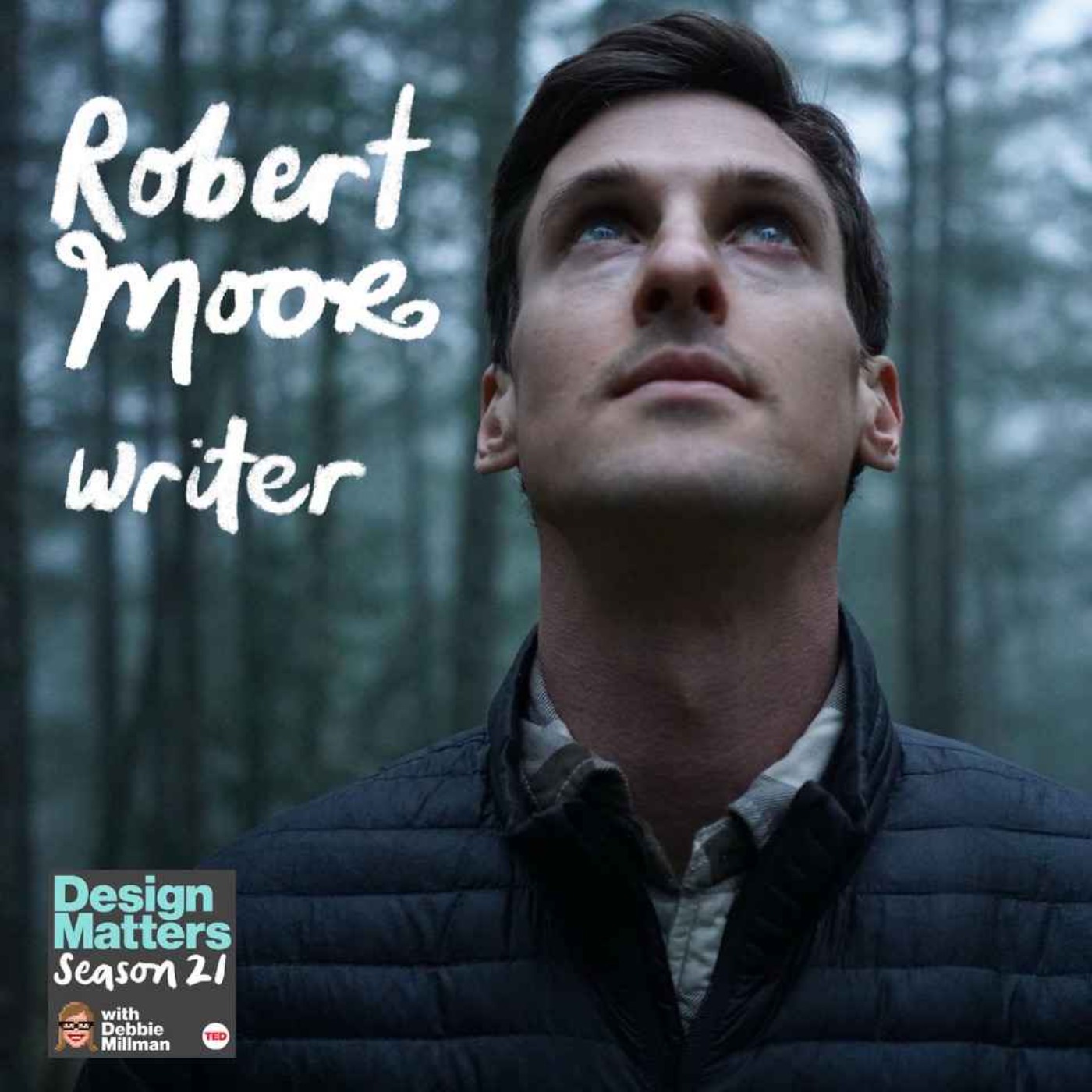
Robert Moore discusses what trees teach about life—flourishing with others over time, trees as processes (branching, pruning, gnarling, rooting), and how complexity and imperfection can support survival and creativity. He connects trail-walking and tree biology to human growth, arguing that identity is shaped by slow, rooted development rather than straight-line optimization.
Robert Moore is an award-winning journalist, essayist, and author. His first book On Trails (NYT bestseller) studied how trails shape animals, civilizations, and thought. His new book In Trees and Exploration blends natural history, philosophy, and personal narrative. His writing has appeared in The New Yorker, The Atlantic, Harper’s, and The New York Times. He grew up in suburban Illinois, later studied experimental/postmodern fiction at Brown, lived in a Buddhist monastery in Burma, and hiked the Appalachian Trail after moving to New York.
Trees are better understood as a verb/process, not a static object; human lives similarly “branch, prune, and gnarle” around constraints; nature shows both cooperation and competition; “waste” can be drafts/branching.
Bodhi tree cloning and sacredness; Pine Island’s rustic Mount Washington trip; Appalachian Trail “long green tunnel” and trail trust; trees that poison neighbors, strangler figs, and a tree that channels lightning; Calvino’s reaction to Mexico’s Arbol del Tule; bonsai as living sculpture.
Written by AI. May contain mistakes.
Explore the concept of flourishing with others and its significance.
“The key in my understanding of what the meaning of life is, it's to flourish with others over time.”
Discussion on the philosophical connection to our environment.
“There's something really deep and philosophical about that notion of being so deeply rooted to a place that you are a part of it.”
Robert discusses his background and the early influences on his writing.
“explores the hidden structures of our world and the surprising ways they shape our lives.”
Exploration of Robert's childhood reading habits and early writing.
“Robert Moore, welcome to Design Matters.”
Robert shares his impactful travel experiences and their significance.
“You grew up in suburban Illinois, the youngest of three children, with two sisters who were nearly a decade older.”
Discussion of the joy and tactile experience of language in writing.
“But you wrote it based on what you'd seen on television.”
Robert reflects on the role of experiences in shaping his writing.
“And I'll read them for pleasure, even if I'm not in love with the storyline or the characters.”
Exploration of how nature influences Robert's understanding of resilience.
“What is the criteria for a skull opening experience?”
Robert discusses his interest in experimental fiction and spirituality.
“By high school, you decided you wanted to become a writer.”
Discover the author's early experiences with Buddhism and how it shaped his identity.
“And so I was left to just sort of explore.”
Learn about the author's shift from fiction to travel writing through Bruce Chatwin's influence.
“And I think other people have their own ways of finding their way back to the tradition and hybridizing it.”
Explore the motivations and experiences of hiking the Appalachian Trail after college.
“After graduating, you moved to New York and worked a series of low-paying jobs while preparing to hike the entire Appalachian Trail.”
Understand how a humorous essay about cultural language helped launch the author's writing career.
“You began writing for your friend Sandy Allen's new literary magazine at the time, WAG's Review.”
Hear how returning to the Appalachian Trail as an adult changed the author's perspective on hiking.
“This was the same trail that you first encountered as an unhappy, inexperienced 10-year-old backpacker.”
Discover the author's reflections on the significance of trails and paths during his hike.
“And that, the way that we evolved to our environments is something that I've been fascinated with ever since.”
Learn about the author's method and narrative approach in researching his book on trails.
“This work became part of seven years of research for your first book, On Trails, wherein you traveled widely to study paths created by animals, by humans, natural processes.”
Explore the impact of moving to British Columbia on the author's relationship with nature.
“I'd sold on trails and entries together.”
Learn about the significance of the Bodhi tree and its cloning history.
“And I think we all, you know, or most of us grow up among some sort of trees as kids.”
Explore personal insights on trees and their impact on human perception.
“Near your cabin was an enormous big leaf maple growing from the side of a cliff.”
Discover the awe-inspiring features of a big leaf maple tree.
“I just love, I mean, first of all, it's vast.”
Learn how trees operate as processes and the philosophy behind their growth.
“And so it's got this continual process of branching and pruning and then gnarling around the things that work.”
Examine various definitions of trees and their philosophical implications.
“So before we talk about anything else, I want to ask you about your definition of a tree.”
Investigate the aggressive nature of certain trees in their ecosystems.
“That's something I've sort of borrowed from this indigenous philosopher, this new channel philosopher named Umik.”
Explore the dual nature of trees, balancing self-interest and cooperation.
“but they're better than us, that they have a sense of self, but also they're selfless.”
Discussing Calvino's insights on complexity in nature and creativity.
“What does his response to that tree help you understand about the relationship between complexity and survival?”
Understanding bonsai as a metaphor for shaping creativity and living art.
“You know, there's probably tens of thousands of words that are on the cutting room floor.”
Insights from the author's experience studying chimpanzees and their nests.
“And so there's something philosophically very interesting in there because it's reflecting what we think wilderness is.”
Reflections on the cultural significance of treehouses in Papua.
“It won't really bother the chimps because they've already left the nest.”
Exploring Julia Butterfly Hill's impactful tree-sitting protest.
“In the book, you revisit the story of the activist Julia Butterfly Hill, who lived in a redwood named Luna for more than two years.”
Details of the author's involvement in a pipeline protest through tree-sitting.
“So as long as you can keep the tree occupied, you will halt the construction of whatever you're trying to stop.”
Explore the dynamics of protest movements and factors affecting their success.
“And until the very end, when everything came crashing down, it was very peaceful, I have to be honest.”
Discuss the effects of wildfire smoke on personal perception and environmental health.
“How has living through those fire seasons changed your relationship with the forest?”
Learn about the concept of scientific animism and its implications for human-nature relationships.
“It's a really scary thing for me that the trees are actually acting against us environmentally.”
Analyze the relationship between capitalism and environmental degradation, and explore solutions.
“And I think other people have different notions of spirit because I think for some people it's tied back to its etymology and the notion of breath.”
Examine indigenous philosophies and their relevance to contemporary environmental practices.
“both by moving away from carbon energy and also hopefully evolving beyond this crude form of capitalism that we live within, which just eats up everything.”
Reflect on the meaning of life through the lens of flourishing and interconnectedness.
“It's just grown so alien that we almost can't imagine what it's like.”
Exploration of the meaning of life, particularly the concept of flourishing with others.
“It's like what is the point of life to get to heaven and to maybe maintain some of these traditional structures that make life stable, something like that.”
Discussing personal responsibility to future generations and the concept of hope.
“You conclude the book by thinking about responsibility to future generations.”
Reflecting on the ecology of time and the responsibility everyone shares towards the future.
“I mean, it's kind of strange to be, you know, a gay guy with no kids and thinking about the environmental crisis because a lot of the way this is framed is about our kids and grandkids.”

Get the gist, explore an idea or ask about something said.
 Claude
On Design Matters with Debbie Millman, what are the key points of this episode?
Searching your listeningAutomatic transcript. May contain errors.
0:00The key in my understanding of what the meaning of life is, it's to flourish with others over time. Those three pieces are key. When you put them together, what you get is this really beautiful, organic form of growth that allows for us to feel fulfilled and other people as well, right? That's what it's all about, to flourish with others over time.
0:23From the TED Audio Collective, this is Design Matters with Debbie Millman.
0:30On Design Matters, Debbie talks with some of the most creative people in the world about what they do, how they got to be who they are, and what they're thinking about and working on. On this episode, a conversation with Robert Moore about what trees can teach us. There's something really deep and philosophical about that notion of being so deeply rooted to a place that you are a part of it.
0:58Debbie Millman: Verizon knows that holiday math can be complicated. Okay, let's see. We got the four kids, four gifts each, six teacher gifts. Wait, oh, what did we get in? Sandy and the dogs. Oh, I can't forget the dogs. Know what doesn't need math? Simplicity Plan from Verizon. One plan, one price. Just$30 a line per month for you or the whole family. The holidays are complicated. Shopping our best deals and switching to Verizon is simple. For new customers,$30 per line includes auto pay and switch discount. Additional taxes, fees, and terms apply. Outdated technology isn't going to improve a disconnected healthcare system.
1:33Next.
1:34Debbie Millman: So what will? At Optum, we wake up every day and work for better. We call it healthy optimism. It's how we use insights and technology to help providers focus less on paperwork and more on patients. Will we fix it all overnight? No. But we'll wake up trying again and again. until healthcare works as one for everyone. That's healthy optimism. Learn more at Optum.com. Optum. Hi there, it's Adam Grant from Ted's Rethinking Podcast. And this episode is brought to you by ServiceNow. I get to spend my days studying how people think and what it actually takes to change our minds. It's work I find deeply meaningful.
2:11Debbie Millman: But even in meaningful work, there's still busy work. The admin, the repetitive processes, the invisible load that pulls attention away from what really matters. That's where ServiceNow's AI specialists come in. They don't just tell you what you should do about your busy work. They actually do it. Start to finish. Cases closed. Requests handled. No extra work for you. To learn how to put AI to work for people, visit servicenow.com.
2:40Debbie Millman: My guest today is Robert Moore, an award-winning journalist, essayist, and author whose work explores the hidden structures of our world and the surprising ways they shape our lives. His first book, On Trails, was a New York Times bestseller and investigated the paths we make through the world, revealing how trails shape the movements of animals, the course of civilizations, and even the architecture of our thoughts. His new book, In Trees and Exploration, takes us in another remarkable direction, upward and into the intricate world of trees. Part natural history, part philosophy, and part deeply personal journey, the book explores what trees can teach us about intelligence, creativity, resilience, mortality, and the complicated business of being alive.
3:32Debbie Millman: Robert's writing has also appeared in The New Yorker, The Atlantic, Harper's, The New York Times, and many more. Robert Moore, welcome to Design Matters. Thank you so much for having me, Debbie. Robert, I understand that one of the very first things you ever wrote was a book that you also designed and illustrated, and it was all about trolls. That's right. It's true, yes. I think it was a school project. They gave us these blank hardcover books, you know, with these little white covers, and I was obsessed with trolls. You remember the 90s fad for the trolls. Yes, yes. With the hair. With the big hair.
4:08Debbie Millman: Yeah, exactly. I think it may have been sort of alphabetized. And so, you know, A is for this, B is for that. And yeah, and I just I love the act of making a book. It was it was so tactile. And it made your thoughts real in a way that I hadn't experienced, you know, my other projects. That was one of my favorite early projects. Do you still have that book? I'm sure my mom has it somewhere in a box. Yeah. You grew up in suburban Illinois, the youngest of three children, with two sisters who were nearly a decade older. And you've written that you spent much of your childhood reading alone in your room, and that one of the books you became obsessed with was a flimsy paperback copy of Little House in the Big Woods by Laura Ingalls Wilder.
4:54Debbie Millman: Why that book? It was a book that spoke to me in part because it felt like where I lived. It was from, I believe it takes place in Wisconsin. I was in northern Illinois, right near the Wisconsin border. And so there was a way in which I could imagine myself in that time. There are still little pockets of relict forest and prairie around in the Chicago suburbs. And I think I just had a lot of romantic attachment to the idea of living in that time, in that place. I also love the adventure aspect, a very quiet adventure of those books. It's much less macho than a lot of the other sort of pioneer type of stories.
5:33And it's wonderfully written. I mean, it really holds up. You can go back and revisit it today and the writing is just so crisp and delightful.
5:42Debbie Millman: Well, when you were in elementary school, I understand you entered a poetry contest in the local newspaper and wrote a poem about a mouse hiding under an aloe plant in the desert, despite the fact that you'd actually never been to the desert. But you wrote it based on what you'd seen on television. How did you do in the contest? I ended up winning that contest. Yeah, it was like a child's poem contest in, I believe it was the Chicago Tribune. Yeah, I remember it was so delicious. It was the first time I really experienced language in a tactile way. That feeling, I wrote, I think the phrase was spears of green, something like that.
6:18And I don't know why, but I could picture the aloe plant so clearly. My mom had an aloe plant in our sunroom. And something about the plumpness of it, it just was, I suddenly felt the pull of poetic language. I mean, I think that a lot of writers have this experience early in life where suddenly the two disparate parts of your brain connect and you feel the sensuality of language. And then when you start reading, you feel it as well. You're reading for language. And this is something, you know, I still do. Every writer I know does this, where I'll have books set aside that I just love the sentences.
6:52And I'll read them for pleasure, even if I'm not in love with the storyline or the characters. that's a joy that stays with me. And if I ever lose it, I think I would just stop writing.
7:02Debbie Millman: When you were 10 years old, your mother took you to Bali where you witnessed an elaborate cremation ceremony and you had wanted to stay in the hotel reading comic books but she insisted that you go with her. What did that experience look and feel like to you at the time? Well, this was really my first time outside of the country besides going to beach towns in Mexico or something. and the whole experience was so eye-opening but it was also very surreal because I was profoundly jet-lagged. We'd just gotten off of the plane and it was my first time experiencing jet-lag and so I was tired and grumpy and as you say, I just wanted to stay in the room and read comic books and my mom said, no, this festival is going on down on the street so we have to go.
7:45We have to check it out. This is what travel is all about. You don't get to just stay in your room. And so she took me down to the street and there was this procession going on with these large figures, These sort of, as I recall, kind of demonic looking figures made out of paper mache, kind of like mojigangas, if you're familiar with that in Mexico. And they were marching them down the street and there was music and this sort of clanging sound. And then when they got to the end of the street, they would set them on fire. And so this beautiful, you know, surreal image of these demons burning at the end of the street was kind of seared into my memory.
8:18Debbie Millman: You've said you've been traveling and seeking skull opening experiences like that ever since. What is the criteria for a skull opening experience? I don't know if there is a criteria. You can't really predict it. You know, it's almost if you go seeking it, you've already foreclosed the possibility of it being mind expanding in that way. I think that's what's amazing is that it's so other, right? It's so other from your frame of reference that it really does blow your mind and makes you realize how strange and wonderful the world really is. That same year, you went to Pine Island, an old fashioned summer camp in Maine on your first backpacking trip up Mount Washington.
8:53Debbie Millman: I read that you were so miserable that you considered escaping. Yet that trip eventually changed your life. What happened? What changed your mind? Well, yeah, so Pine Island is an amazing place. It was founded, I think, in 1902, and it's really never changed ever since. So there's no electricity. There's no running water. The kids sleep in canvas tents and kerosene lanterns and just very, very rustic and old fashioned. And it still is to this day. But one of the big things about Pine Island is they send out a lot of trips. They send out a lot of hiking trips and a lot of boating trips, canoeing trips and such.
9:27And the very first trip I took was up Mount Washington. And I'd never been on a hiking trip before. It was my first time and I really did not understand what the appeal was at all. It seemed horrible to me. From the very first moment when you lift this, I had an external frame Kelty, you know, those big metal rods. And it was so uncomfortable. It was like a torture device. and I had these big leather boots that were grinding my feet up. You know, I had these terrible blisters. And I just thought, my God, why would anyone do this? Really? This is awful. And I remember as people were coming by me on the trail, I would make these faces at them like I was a kidnap victim.
10:03You know, it's like, save me. What are we doing? And, you know, we got up to the first lean-to, which, I mean, I don't even know how. We probably walked three miles that first day. You know, it was like nothing now. But it felt like just a heroic and horrific undertaking. It was like a death march. And that night I was lying in this lean tanger saying, I got to get out of this. Like, I have to get out of here. This is torture. And then the next day, fortunately, was not a day when we had our packs on. We were taking a day hike. And so then I got to experience walking with no pack. It was actually raining that day.
10:37I remember sort of a foggy, rainy day. We didn't even end up summiting because it was too unsafe. So we just sort of went on this day hike around the peak and had this rain poncho on. And so I wasn't really feeling the rain on my skin, but I could appreciate it. I just felt like I was floating, you know, and it was it was such a beautiful otherworldly experience that it clicked for me. And then I started as I hiked more and more, I started to appreciate the other parts of it as well, including the suffering part.
11:06Debbie Millman: By high school, you decided you wanted to become a writer. What were you writing then? Were you still writing poetry or making your own little books? I was mostly writing short stories at that point. I was probably writing some poetry as well, but I was on a big, big fiction kick at that point, which would carry me through pretty much my last year of college. Well, I know that you went to Brown University, and that's where you became really interested in experimental fiction. And I'm wondering what was it about experimental fiction that appealed to you and what kind of experimental stories were you writing?
11:41It was a lot of metafiction and a lot of sort of postmodern fiction. I had a really remarkable English teacher in high school named Karen Kapriva, who's kind of a historic figure in a way. She was the first trans teacher to transition while teaching in a public high school in America, I believe. and she would always you know give me these these books to read extracurricularly in addition to the stuff that i was reading for her class and i remember one of them was john barth's lost in the fun house which is you know one of the classic works of metafiction which is fiction that kind of deconstructs itself as it goes on so it's often writing about writing or it's writing within a sort of genre of writing that's taking it apart as you're going so so another classic example would be telling a fairy tale but telling it in a different way so that that fairy tale starts to sort of interrogate its own assumptions.
12:28And so once I got to Brown, there was this real experimentalism in the air, not just in terms of the postmodern, you know, theory that was all around us at that time, but also formally. Someone I remember was telling short stories on lost dog and found dog posters that he was posting all over the city. There was a class called cave writing where you were writing for this three-dimensional space they called the cave. a lot of this was being shepherded by Robert Coover who is one of the forefathers of metafiction and also who is an early proponent of writing off of the page you know so for example hypertext fiction and so that was all incredibly exciting to me and I then you know when you're in immersed in that genre regular old-fashioned writing on a page starts to feel a little flat but the problem that I experienced was that there was so much emphasis on innovation that eventually it became I'm kind of paralyzing.
13:23You know, there was like this allergy to cliche and convention and tradition that actually becomes a kind of weight on you artistically, you know, because everything has to be new. It has to be perfectly new every time. And I eventually kind of burned out. I couldn't I couldn't do it anymore.
13:40Debbie Millman: During college, you spent time living in a Buddhist monastery in Burma. What inspired you to make that journey? It's hard to say, really. I mean, I don't know when my interest in Buddhism began. And I was thinking about this recently because I've been thinking back on my sort of spiritual upbringing. I was raised essentially atheist. I was never baptized. I had no spiritual guidance at all from my parents. And so I was left to just sort of explore. And I would read. I remember even as maybe 10 years old stealing my sister's college textbook from her religions course and pouring through it. And I first fell in love with the Taoism.
14:14And then I was very intensely studying Buddhism in my early years in university. and so I decided to go to first India. There was a program run through Antioch College that was a Buddhist studies program where you lived in a monastery. You followed the five precepts of a Buddhist pilgrim and then you had the option to ordain as a Buddhist monk. So you'd be following all of the rules of a Buddhist monk and then after that I ended up going to Burma to live in a monastery there in a place called the Sagan Hills which was a kind of a teaching. It's called Situgu Monastery. There's a teaching monastery for Burmese monks to come over here.
14:52So they spoke English, which was great because I didn't speak Burmese. And that was really eye-opening. I mean, in some ways it was a great experience. In some ways it was a very alienating experience. Me and my friend Sergei were the only two white monks for hundreds of miles. And so we were kind of freaks and curiosities in town. But at the same time, I got a really close look at what it really means to be a monk, with a lot of the romance stripped away. And also a lot of the cultural, I don't want to say the cultural baggage, but there's a way in which Buddhism has grown out of a lot of local cultures and indigenous cultures.
15:24There's a lot of beliefs that are baked into it that I simply don't share. You know, there's a belief in ghosts, for example, and hell realms, you know, that I just can never take seriously. And so it actually, in the end, ended up alienating me more from my Buddhist practice because I simply thought I just, I'm not a real Buddhist, you know. And I think other people have their own ways of finding their way back to the tradition and hybridizing it. But I sort of started to move away from it at that point.
15:51Debbie Millman: You took a travel writing course with Lauren Stanley when you encountered Bruce Chatwin's book In Patagonia. You've described that experience as revelatory. What happened and what did you discover in it? Yeah, so I was talking earlier about how I burned out with fiction. That was my senior year. I was supposed to be writing this honors thesis, which was actually a book of linked short stories built around the notion of karma and rebirth. I just couldn't do it. I was just I just all the fiction just started to feel so empty to me. And thankfully, at the same time, I'd signed up for this travel writing course with this really remarkable professor, as you say, Lauren Stanley.
16:25And one of the first books he showed us was in Patagonia, which have you read in Patagonia? I have not. It's a remarkable book in part because it's so hybrid. He's bringing together all these different forms of writing, history. you know there's like little tiny profiles in there you know it's obviously a lot of travel and sort of nature writing and he's weaving it all together in the most beautiful prose and I realized that this was something I could do that you know that all of the things I loved about fiction that omnivorous quality that fiction has it's also there in non-fiction I just hadn't seen it being done like this before and so I just broke the whole idea of what non-fiction was wide open for me.
17:03Debbie Millman: After graduating, you moved to New York and worked a series of low-paying jobs while preparing to hike the entire Appalachian Trail. Why? Well, why did I work the low-paying jobs or why did I hike the Appalachian Trail? Low-paying jobs, I kind of can assume, in New York, living here my whole life. But what inspired you? What even gave you the thought about hiking the entire Appalachian Trail? Yeah. I had had that thought in my head for a long time. I mean, when you're a little kid and you're hiking in the Appalachians, as I was in Maine, you're often meeting through hikers coming through. We would be staying in a lean-to and this guy would wander up, you know, who would, at that point when they get to Maine, they've been hiking for four or five months.
17:45and to me they were just these these mythic figures they were they you know heroic but also so strange i mean they had these long scraggly beards and they were really scrawny they often had these strange trail names they would go by and i started to to want to emulate them it was like could i do this could i be one of these people and i knew that there's a funny quality to the appalachian trail where it people tend to do it during big breaks in their life you know you do it right when you get out of college, out of the military, or maybe you've retired. Or some big trauma like Cheryl Stray. That's true.
18:18Different trail. Yes. No, it's absolutely true, though. I mean, a lot of people do go to try to heal themselves. I didn't have that particular challenge. I just had this moment of time. You know, I was in between my undergrad and my graduate degrees, and I knew I had this break. And I knew enough about sort of adult life to know that once you get started in your career, those doors start to close really rapidly, you know, and you're kind of locked in. And so I had this moment of freedom. And I said, you know what, if I'm ever going to do it, I should do it now.
18:47Debbie Millman: At the same time, you were beginning to write more seriously. You began writing for your friend Sandy Allen's new literary magazine at the time, WAG's Review. And I believe your first piece was a long, semi-serious deconstruction of the word douchebag. That's right. It was called On Douchebags. Tell us a little bit more. I mean, so at this point, I discovered the writing of Mark Greif. Yes, absolutely. Wonderful essay. N1, N plus 1. Exactly. He was an editor, foundering editor of N plus 1, a really brilliant writer. He has a book called Against Everything. It's one of my favorite books of essays.
19:25And so I was thinking about this notion of the douchebag. This word was everywhere at the time. I don't know if you remember around 2008, everyone started saying it. And yet they were applying it in weird ways, you know, and they were applying it to certain figures, you know, who are being called a douchebag. I remember back then Jimmy Fallon was one of the frequent targets. And I was thinking, what does it really mean? And one of the things I love about Mark Reich's work is he will often apply his enormous intellect to things that seem kind of inconsequential or peripheral. And so I decided to think about what it meant to be called a douchebag.
20:00It's also something I had experienced at one point when I went off to India. One of the people I met said, you know, when I first met you, I thought you were kind of a douchebag. And, you know, that stings when you hear someone say that, it stings. And yet, why? Why does it sting? What does it mean? And the conclusion I came to is it has something to do with legibility, with sort of cultural legibility. That when someone is too legible as a certain type of guy and they have a sort of unearned confidence, those two things, that confidence combined with that kind of mediocrity and legibility makes them seem douchebaggy to us.
20:34And so I unspooled this maybe 12 or 13 ,000 word essay. I mean, one of the beautiful things about being a young writer whose friends run literary magazines is that you have a lot of time on your hands and there's no spatial constraints. And so I would have never been able to write that piece as long as I did at any other point in my life. But it ended up opening doors for me. It ended up being anthologized in a little pamphlet called What Was the Hipster? My own plus one and sort of started my relationship with them and kind of got my writing career going, oddly enough.
21:02Debbie Millman: But you set out on your hike. It was 2009. This was the same trail that you first encountered as an unhappy, inexperienced 10-year-old backpacker. What was your experience of the trail like when you returned as an adult? Oh, I mean, I loved it. It was, for one thing, by that point, I was an experienced enough hiker to a lot of the suffering had fallen away. It didn't feel like drudgery or marching anymore. It just felt like this very, very light, sensual movement across the landscape, at least, you know, for the first part of the day. There's usually, you know, by the end of the trail, I was moving pretty fast and going long distances.
21:40So, you know, my longest days were around 30 miles. And if you go 30 miles with the pack on, you're hurting by the end of it. But most of it was just a joy. You know, I'd paired my pack weight back to be very light and I'd gotten rid of the leather hiking boots I was wearing and running shoes at that point. And so I was just moving much faster than I was used to. And I got my body just evolved. It was incredible to see how my body was changing to suit this singular pursuit of hiking to the point where I kind of couldn't do anything else. I mean, it was funny. At one point, I was staying at this house of a woman.
22:14It was like a farmhouse. And she asked me and my friend to swim out into her pond and retrieve this swim float that had floated away. She's like, you know, you're too young, strapping lads. You go do this for me. And so we said, sure. And I could barely swim. I really, honestly, I could barely swim. And my body, first of all, I had no body fat left. But also, I was just a walker. That's all I was. I had no other ability physically. And so it was a really surreal experience, too, to feel myself physically and mentally, to be honest, evolving to suit this thing I was doing. And that, the way that we evolved to our environments is something that I've been fascinated with ever since.
22:48Debbie Millman: During that hike, you also became interested in how paths develop over time. What were you beginning to notice about the trails themselves? Well, so when you're walking every day and you're just staring at a trail, you start to think about it a lot. Like, what is it? What am I doing? And who built this for me? And why does it go here? And so once I started noticing the trail as something that was interesting, that was kind of philosophically interesting to follow a trail. Why do we follow trails? Why do we follow paths? Then I started to notice other trails. I was noticing these little ant trails, you know, little pheromone trails on the ground.
23:23Or I would notice game trails, you know, deer paths. Sometimes they would be sharing the trail with us. You know, one time there was a bear that was in front of me around a place called Nuclear Lake in New York. And so I just started to think more broadly, not very sharply, but just in a curious way about what does it mean to follow a line that someone else has created for you, but that you're also kind of shaping it by walking it. It does require some trust. I mean, it does. Yeah, it does. Absolutely. In that case, I didn't even have a map. You know, I was just following the trail. I had a trail guide, which was just this book that had where all the lean-tos were.
24:00But it was just a line. It was literally just a line on a page. And I would tear out each page at the end of every day to save weight and I would burn it. And so that book got smaller and smaller until I had no book left. And I was just putting all my faith in the trail builders that they would get me to where I needed to go.
24:15Debbie Millman: This work became part of seven years of research for your first book, On Trails, wherein you traveled widely to study paths created by animals, by humans, natural processes. how did you decide where to go and what to investigate? Oh, I mean, that's a messy process. I don't know if I can summarize it because by that point, I had started to work in journalism and magazine journalism. And so I knew enough. I had enough journalistic instincts to know that a lot of it had to do with narrative. It had to do with story. So I had to find, if I was going to, for example, talk about Cherokee trails, I knew that Native American pathways were really fascinating because I'd read that a lot of our roads are laid down directly on top of these old Native American trails.
25:00Well, then I need to find someone who's going to be my guide, my sort of Virgil, and would lead me through that chapter. And so then it's almost like a casting decision where you think, who's the most interesting person to help me tell this story? And so I went through a lot of different people. I had a lot of conversations. And eventually, one of the things that I settled on was I wanted the book to be sinuous. I wanted each chapter to be linked to the next chapter. And so often what I was finding was one character in one chapter would introduce me to the character in the next. And that way it would be a really seamless flow from one chapter into the next.
25:32And I really liked that. Those sorts of structural games really appealed to me.
25:37Debbie Millman: On Trails became a New York Times bestseller. It won the National Outdoor Book Award, the William Soroyan Prize, the Pacific Northwest Book Award. How did the success of On Trails influence your thinking about what you wanted to do next? It's interesting. I didn't actually have much of a choice. I sold the two books as a two-book deal. I'd sold on trails and entries together. I actually had it in my mind as a kind of trilogy. So there would be on trails, entries, and then the third book about constellations, which, you know, I'm at the very, very earliest stages of writing. I think it'll be called Of Stars, something like that.
26:11But I wanted these three books to be kind of matching in a way because I saw them as different structures. And once I saw the trail as the sinuous line, you know, and when you're walking across a field, there's like infinite choices you could make. But we all make the same choices enough time to create the single line. As soon as I saw that, I saw that there was another structure, which is the branching structure of the tree. And then, of course, there's this sort of totally decentralized and kind of mythic idea of the constellation where we're just projecting our understanding onto the cosmos, our sort of myths and our imagination.
26:42I don't know why these things all came together, but I was actually, I was walking down East 7th Street and I remember it distinctly, it all just clicked together. And it's fascinating to me that now, 16 years later or something like that, I'm still pursuing this project that cohered in a single instant. But it was just very clear to me that this is the kind of thing I wanted to write.
27:01Debbie Millman: In 2013, you and your husband, Remy, moved from New York City to a cabin in the woods of British Columbia. How did you arrive at the decision to build a life there? So what had happened was my husband's Australian, and he'd gone over, as any good Australian does, to go snowboarding in British Columbia and sort of never left. And so he got in his residency there, and we'd met here in New York City. And he said, you know, at some point, I have to move back there to keep my residency. And so we were going to give it a trial of a year or two to see we liked it. And at this point, I just got in my book deal.
27:36And so it was really appealing to me to have sort of quiet little cabin in the woods to work from. And that was 13 years ago. We haven't left since. We just love it there.
27:45Debbie Millman: You've written that trees had largely existed in the periphery of your life in New York, but living in the forest fundamentally changed your relationship with them, which is not really surprising given that you're now surrounded by them and living among them. What began to happen to your psyche in that environment? Yeah. And I think we all, you know, or most of us grow up among some sort of trees as kids. And so we have this notion that trees, you know, we climb trees, we sit underneath them in the shade and we love them. And then in my early 20s, I'd had this experience with the Bodhi tree. I'd gone, you know, and lived in this town in Bodhgai in India and visited the Bodhi tree every day and was really in awe of that tree.
28:23I still am. I have a great amount of love for it.
28:26Debbie Millman: Isn't it a clone, though, of the original tree? It is. That's one of the fascinating things I learned. Yeah, it's probably something like a clone of a clone of a clone. How does that happen? Well, the ficus religiosa, the Bodhi tree, doesn't live that long, typically. Some of them can, but most of the time they die after a couple hundred years. And this is something, you know, stretching back 2 ,500 years. And so what they think is happening is they're taking cuttings, which you can clone any tree just by taking a cutting and planting it and sort of reestablishing the root base. and each time the old bodhi tree dies they replant it and that becomes the new bodhi tree which in a way seems very buddhist to me you know the the idea of this sort of anathman they call it no self they're not overly attached the idea of identity um but it's an incredibly sacred tree to buddhists at one point uh there was a huge scandal because someone broke off a little twig to try to sell it and it created this uproar you know that the idea of that was so sacrilegious so it's held very dear by buddhison and indeed by me so those trees were in my mind but the truth is most of my life i hadn't been thinking very much about trees and even on the appalachian trail right it was they call it the long green tunnel it's just sort of this green green screen this green backdrop and you don't you don't think much about it i think there's a term for us they call it plant blindness most of us just wander through the world not noticing plants they're just there they're they're kind of static and it was only once i was immersed in trees and i started to see the same trees every day and grow to appreciate their individuality and think about the ways they were shaping the environment, shaping me and my life, that I started to see them in a new way as being really powerful in sort of shaping human cultures and human lives.
30:06Debbie Millman: Near your cabin was an enormous big leaf maple growing from the side of a cliff. And you described spending nearly an hour lying beneath it, gazing into its branches. What made that tree so extraordinary to you? I just love, I mean, first of all, it's vast. And if you've ever seen a big leaf maple, they have, leaves are about the size of your head. I mean, bigger than your head. And so they cast this wonderful shade on summer days. And it was something to do with its resilience. You know, it's stubborn clinging to life. It's not the most stable tree. It looks actually quite precarious. And yet it's clearly been growing there for centuries.
30:44And what I love about trees is you can lie underneath them and you can just follow the line of the trunk with your eyes. By doing that, you're sort of following the life story of a tree because trees, you know, when they make a turn one way or the other, they keep that turn for their whole lives. They don't straighten out. And so I was lying beneath it and thinking of a tree as a story, as a kind of living book, and it just created this sense of awe in me.
31:06Debbie Millman: In the prologue to your brand-new book, In Trees, you write that a tree is better understood as a process than an object. and I'm wondering if you can share what you mean by that. Yeah, the point I make in the book is that trees are so, they grow so slowly that we don't perceive them as moving. They seem like static objects to us. Because we are these animals who flit around constantly and they're so slow. Everything they do is so slow. And yet if you could speed up the lifespan of a tree, you'd see it erupting out of the soil. And what you'd see is this really beautiful process of growth that it's branching out in all directions and the places where it's finding sunlight it's keeping those branches.
31:46And when it isn't, it's dropping them. And so it's got this continual process of branching and pruning and then gnarling around the things that work. So what about gnarling? What is the process of gnarling? So gnarling is my way of describing the way in which a tree can sort of grow crooked and stay that way. So the basic way that a tree grows is that it's growing a new layer of skin, essentially, every year, one atop the last. And as that skin gets sort of compressed and pushed inward, it becomes the core of the tree. and it actually dies. So most of the tree is dead. It's essentially as if the skin becomes the skeleton.
32:20But what that means is, as each new layer is layered down atop the next, the way that some people liken it to a candle being dipped in wax over and over again, all those turns, those weird turns that take place in a tree's life get locked into place and you can see them. You can see these twists and turns. They won't ever straighten out. One of my favorite things that a bonsai artist told me is that young trees are really boring because nothing's happened to them yet. You know, they haven't experienced all those storms and, you know, snowfall and things happening that give the trunk that texture and give the branches that texture really what we would call character.
32:55You know, that's what happens. It's a tough thing for us to accept, I think, because it's deeply imperfect. And yet if you think about our lives, they're very similar. You can't go back in time and change the painful parts of your life that shaped you. You just have to learn to grow around them and then hopefully outgrow them.
33:16Debbie Millman: Verizon knows that holiday math can be complicated. Okay, let's see. We got the four kids, four gifts each, six teacher gifts. Wait, oh, what did we get in? Sandy and the dogs. Oh, I can't forget the dogs. Know what doesn't need math? Simplicity Plan from Verizon. One plan, one price. Just$30 a line per month for you or the whole family. The holidays are complicated. Shopping our best deals and switching to Verizon is simple. For new customers,$30 per line includes auto pay and switch discount. Additional taxes, fees, and terms apply.
34:12you should do about your busy work. They actually do it. Start to finish. Cases closed. Requests handled. No extra work for you. To learn how to put AI to work for people, visit servicenow.com.
34:25Debbie Millman: The quarter pounder with cheese is made with 100 % fresh beef cooked when you order it. Add hot crispy fries and an ice cold Coke and hopefully a lot of napkins. All for$8. Ba-da-ba-ba-ba. Outdated technology isn't going to improve a disconnected healthcare system. Next. So what will? At Optum, we wake up every day and work for better. We call it healthy optimism. It's how we use insights and technology to help providers focus less on paperwork and more on patients. Will we fix it all overnight? No. But we'll wake up trying again and again until healthcare works as one for everyone. That's healthy optimism.
35:06Debbie Millman: Learn more at Optum.com.
35:12Debbie Millman: So before we talk about anything else, I want to ask you about your definition of a tree. Throughout your book, you share a number of different descriptions and a number of definitions from others. The first description is yours. At its core, a tree is not even really a noun. It is more like a verb. A tree is what a tree does. And here's another. In one sense, they are nothing more than very big plants. And then later, you write this. One of the first things my professor, Patrick von Atterkast, impressed upon us is that it is surprisingly difficult to define a tree and states that a tree is really just a growth form, a phenomena known as convergent evolution.
35:56Debbie Millman: Incidentally, he also calls a plant essentially a water-cooled solar panel. The biologist Colin Tudge developed a working definition when he defined a tree as a big plant with a stick up the middle. And finally, the ecologist Tom Langen shared what he was taught to define a tree as a self-standing woody plant that a person can climb. I learned so much. There's so many different definitions of trees. And it's so funny because we think the average person walking down the street thinks they know what a tree is. You know, it's like you know one when you see one. And then you talk to a tree biologist and they say, well, it's not really that simple because plants keep evolving into trees, different lineages of plants.
36:38It's not one thing, really, a tree. It's really a way of being. This is what my professor of tree biology, Patrick Winodocus, was trying to drive home to me when he called it a growth form. It's a way a thing grows so that it can grow really tall and live a long life.
36:55Debbie Millman: You described three essential processes in the life of a tree, which you talked a little bit about one of them, branching, pruning, and gnarling. How did you recognize these processes as a way of thinking about human life? And can you share a bit about each process? Sure. Yeah. I mean, this is a strange, I came to this by a strange avenue, which is, for my first book, I'd gone to talk to a neuroscientist. His name is Jeffrey Lichtman. He works at Harvard. And he makes these amazing things called brain bows, where he takes mouse brains and he will encode the neurons with genes taken from other animals, a jellyfish, for example.
37:34And it makes the neurons kind of glow in these rainbow colors called brain bows. Then he slices them really thin into micron thick slices. He scans them into a computer and he maps where all the neurons are. And so I had gone to him originally thinking that I would talk to him about neural pathways. I said, you know, this is, you know, in the early days of maybe halfway through researching on trails. And I was kind of disappointed because right away he said, you know, actually neural pathways are a really bad metaphor. They're not pathways. What is happening in your brain is nothing like a pathway because a pathway is a dead thing that living things are walking along.
38:10Your neurons are living things. They are organs or organisms in a way. And he said in that way, they're really much more like the branches of a tree. And the point he was trying to drive home was that pathways, as I learned, have a tendency to evolve over time. The word I use over and over again is they sleek in. They sleek in out. If you have a really curvy trail and people are walking it or animals are walking it, they'll tend to shave down those inside curves and it will straighten out over time. And our neurons don't do this. Our neurons are actually really crooked, really inefficient, which seems strange because our brains are so powerful.
38:44And I was getting at that question saying, why are our brains so inefficient? What is wrong with our neurons? Why don't they straighten out? And he said they're like the branches of a tree. You know, the branches of a tree can be very gnarled, but as long as they reach that patch of sunlight, that's all that they need. And a lot of life is like that. It is not optimized. It's not perfect. It's imperfect. And in some ways, that imperfection is what leads to its beauty and its character. And so I think once I started thinking about gnarledness, I mean, the branching and the pruning is pretty easy.
39:18It's actually, you see that language in neuroscience as well. They call it blossoming and pruning. You see it, I saw it with trails, you know, sheep fanning out across the landscape and trying different things and dropping the ones that don't work. It was the gnarledness that kind of came as a shock to me is the one part I kind of didn't want to accept.
39:36Debbie Millman: There's also a fourth, which is more like an epilogue in the book, which is rooting. And I'm wondering if you can talk a little bit about that. Yeah, I mean, it's interesting. That occurred to me fairly late. I mean, even after I'd really written the prologue, you know, I'd written many drafts of the prologue, was that there was this other fundamental feature of arborescence, of the soul of a tree, which is rootedness. And in some ways, it's not a coincidence that it was hard for me to realize that because I'm a very unrooted person. You know, I don't have deep roots in any one place. And so I wasn't recognizing that this is something really deep and really powerful that we see in trees and in arborescent structures.
40:18They're deeply tied to the local land where they live, but also to the community of life where they live. And I think there's something philosophically really, really quite beautiful about that. Do trees have a soul? I think, well, it depends what religious tradition you ask. In my opinion, I don't think so. I don't really believe in souls at all. I don't really believe we have a soul, but I do think that they have a characteristic or an animating way of being, I guess I would say. I think that there's also quality where even though they maybe don't ontologically have souls, they speak to us in a way.
40:55They have a sense of suchness that makes us feel it's a crime to cut them down. It makes us feel that we need to respect them. And in part, that's because they have, I guess, a power. Maybe that would be the word I would use. That's something I've sort of borrowed from this indigenous philosopher, this new channel philosopher named Umik. They have a power to them that we need to respect, I guess.
41:18Debbie Millman: As your research progressed, you began encountering trees that poisoned their neighbors, attracted lightning, and strangled other trees. How did these discoveries alter your understanding of what a tree is and its place in the natural world? Well, so something funny happened over the course of me writing this book. You say it took me almost a decade to write it. And what we saw during that decade was a kind of a sea change in how people perceive trees. You know, there were all these books that came out. There was The Hidden Life of Trees by Peter Volubin. There was The Overstory. There was Finding the Mother Tree by Suzanne Simard.
41:56Maybe even before that, you could trace it back to Avatar and The Tree of Souls, I think it's called. this notion that trees are socialist saints, I guess I would say, you know, they're like us, but they're better than us, that they have a sense of self, but also they're selfless. They share their resources through the Michael Reisel network. They work together with other trees. This notion that just caught on in the last decade. And I think in some ways it's us projecting our own anxieties about the way the world is going and wanting to get something out of trees, some sort of spiritual guidance from them.
42:26But when you look closely at tree biology, what you find is, first of all, of course, trees are always balancing cooperation with competition, as everything in evolution is. And in some ways, in really quite grotesque ways. As I point out in the book, there are trees that poison other trees. The most colorful example, in some ways, the most ironic example is the Bodhi tree, which grows by taking root in the branches of other trees. It's a ficus. And so it will send its roots down the trunk of that host tree and actually tear the trunk apart. You've probably heard of strangler figs, which do something similar, but they strangle the host.
42:59And, you know, there's other trees. There's one that, yeah, that channels lightning bolts to surrounding trees and kills them. They are trying to out - That's kind of cruel. I mean, that feels like really bad behavior. But there's no consciousness there. Yeah, I don't think it's intentionally cruel. I think cruelty requires an intentionality. They're just competing against other trees. They're trying to outgrow them and steal their sunlight. And in some ways, they're also cooperating with those trees, right? I mean, there is evidence that they are sharing resources with other species through the Michael Rison Network, and they are all helping create a shady, moist environment and slow erosion.
43:35And so both of those forces, the light and the dark, the cooperative and the competitive, are always kind of balanced in a way.
43:41Debbie Millman: In entries, you recount Italo Calvino's encounter with the 2 ,000-year-old cypress in Mexico, and he was startled by its enormous, unruly complexity. What does his response to that tree help you understand about the relationship between complexity and survival? Yeah, I love that chapter. That's an essay in a book called Collection of Sand, where he goes to visit the Arbel del Tule in Mexico, the largest tree in Mexico, which I've gone to visit myself. And it's really just a monster of a tree. It's enormous. I mean, it's the size of a house. The trunk is so huge. And it has this kind of grotesque texture to it.
44:22It's really kind of mythic in a way. These little boys will walk around it as guides with laser pointers and they'll point out all these figures you can see in the bark. You know, here's a crocodile, for example. And there's a sense in which it's very inelegant, right? We like to see a tree, I think, that has a sort of balance between the branches and the trunk. And it's not doing a lot of wasteful growth, right? And this is what Calvino was struggling with is it feels so wasteful. It feels like it's just putting out so many branches and amassing so much tissue that it doesn't need. And I think he, like me, was using nature to reflect upon his own creative process.
45:00And he was thinking the beautiful work of art is something where someone has this conception in their mind that's very pure and simple and they pursue it and they achieve it. we don't tend to love the idea of wasting a lot of time making things that aren't useful that, you know, we throw away, we throw into the waste bin. And yet he was asking, is this how life works? Is actually the secret to creativity in some sense that wastefulness, that profligacy, I think is the word he uses.
45:26Debbie Millman: Well, I don't know that it's necessarily, I mean, I would see it more as drafts than waste. Or branching, right? I mean, branching and pruning, like that is it. It's the secret, at least in my own creative experience, is branching wildly and then pruning rigorously, right? Write in white heat and revise in cold blood. And there's whole chapters of this book that are not in the book because I pruned them away. You know, there's probably tens of thousands of words that are on the cutting room floor. And I think most writers work that way. At least, you know, most writers that I admire work that way.
45:57Debbie Millman: Well, speaking of pruning, one of my favorite parts of the book is your exploration of the practice of bonsai, in which a living tree is carefully shaped and pruned over many years. Because what did learning about the bonsai reveal to you about the act of shaping another living thing? Yeah, it's such a fascinating art form. It's incredible. I mean, I learned so much from reading. I love your book. It's a beautiful book. Thank you. And I love bonsai in particular because it's so magical and paradoxical. I mean, it's living sculpture, right? So in some ways, it can seem to some people really monstrous.
46:29I've heard it compared to foot binding, you know, practices like that where you're stunting this little tree. And really, it's not hard to do. You just restrict the root base. You put it in a shallow pot. That's what bonsai means is, you know, a tree tray. You put it in a little tray and it'll stay small. And then really the art of keeping a bonsai is how do you prune it? How do you shape those branches? How do you bend those branches? And how do you keep it alive? The hard part is really keeping it alive. And yet the beauty of a bonsai comes from, at least in the Japanese context, this very interesting notion of nature in miniature or wildness in its essence.
47:05You know, I wrote a piece for The New Yorker about bonsai where I say bonsai is bullion. It's really reduced down. It's not, it doesn't look like a wild tree and it evokes a wild tree. And so there's something philosophically very interesting in there because it's reflecting what we think wilderness is. And it's also in return to nourishing us. You know, people in Japanese households were keeping these bonsais inside their house so they could have a little bit of nature with them. They could see the seasons reflected in the tree and they could feel connected to a world that was increasingly remote.
47:36Debbie Millman: You traveled to Tanzania and spent time at a remote research camp studying chimpanzees. And I believe you spent a night in a chimpanzee nest with chimpanzees? No, thankfully not with chimpanzees. chimps build new nests every night. So they build a nest, they abandon it. As I say in the book, it's really no harder for them to build a nest than it is for us to make the bed. They just do it automatically. And actually, as someone who likes design, I bet you'd be fascinated to see the design of a chimp nest because it is so intricate and I have no idea how they do it. I could not recreate one if you asked me to.
48:13But I would go on there because I was interested in arboreality. We are an arboreal species. We're descended from arboreal apes. and yet we left the treetops to go fan out across the world while all the other great apes stayed back in the treetops and i was wondering sort of what was gained and lost by us abandoning arboreality and so i went there specifically because there was a scientist named fiona stewart who sleeps in chimpanzee nests this is her research she sleeps up there she counts her bug bites she takes her takes her temperature counts how many times she wakes up in the night and then she compares that to what it's like sleeping on the ground and so i was talking with fiona and i said would it be okay if I slipped in a chimpanzee nest?
48:51I'd like to know what it's like. And she said, yeah, that's fine. It won't really bother the chimps because they've already left the nest. It'll just be kind of inconvenient for you.
48:59Debbie Millman: So new chimps don't go into old chimps' nests? No, no. It's an awful wasteful experience. It is, although if you think about it, they're breaking the branches in order to make these nests. So the branches are becoming more brittle every passing day. So the greener and fresher the nest, the more stable it is. There's also some theories that it may be that freshly broken branches are emitting some sort of chemicals, some aerosols that are actually keeping bugs away. We don't totally understand why, but it is a little bit wasteful. But, you know, the trees put out new branches and everything's fine in the end.
49:33Debbie Millman: You then traveled to Papua to visit a community known for building homes high in trees. What did you learn about the sort of practical and cultural significance of living above the ground? I mean, that's a really complicated story because we, you know, did you have a treehouse growing up? No. I didn't either, but I always wanted one. I thought they were so romantic, so cool. You know, I just imagine having this little sanctum. Well, you also climbed trees as a kid. That's true. I was a big tree climber, but I never had that little space away from the adult world up in the treetops where I could go hide away.
50:09And I really wanted that. I mean, some of my friends had it. And so I was a kid and I was about 10 years old and I got this copy of National Geographic that had a story about this tribe in Papua called the Korowai who live in tree houses. And these are beautifully constructed tree houses. The one in the book was like 100 feet off the ground or more at the very top of this ironwood tree. And it was really seared into my imagination. And so years and years later, I came across that old issue of National Geographic again. And I thought, well, it would be really quite fascinating to travel there and see what it's like to spend your life in the treetops, to live up in the trees all the time.
50:45So I traveled to Papua. And one of the things that I learned is that those tree houses that I had in my mind were actually not the tree houses they were living in. They were living in a different kind of tree house that was lower to the ground. and it was built off of multiple trees that had sort of been cut like stilts. But the problem was that we have these cultural associations with treehouses that go back to our childhood and also go back to notions like, you know, stories like Tarzan, stories like Swiss Family Robinson. There's this notion of the tropical treehouse, the primitive, quote-unquote, primitive treehouse that has a really deep place in our culture and it informs our childhood treehouses.
51:21I sort of trace this history in the book And it's a fascinating kind of interplay between those two things, childhood and these tribes and four-off countries. And so long story short, we showed up to Papua expecting to see a certain kind of treehouse. And they didn't live in them. There were very few of them. So they started building more for us. So actually we were shaping their architecture through our dreams and fantasies and childhood reveries.
51:45Debbie Millman: In the book, you revisit the story of the activist Julia Butterfly Hill, who lived in a redwood named Luna for more than two years. You first learned of her protest as a teenager. What did her story mean to you then before you knew that at some point in the future you were going to include her in this book? Well, I think I learned about her first through a television program, a news program my mom and I were watching. And, you know, she was just such a heroic figure to me. This woman who had gone up into a tree, you know, one of the stories she tells is that she'd intended to go for like four or five days.
52:19They said, we need someone to live in a tree for four or five days. She said, well, that sounds like a long time to me. And then two years later, she was still living up there. It was really – 738 days. Yeah, that's right. And it's remarkable. I mean, the things she went through, she went through winter storms and, you know, being harassed by police and all of these horrible challenges. And also she, you know, had this beautiful connection to the tree that she was living in. She writes about it beautifully. She speaks about it beautifully. And so I was very inspired by that. And I, you know, as I think a lot of kids were, I always remembered Julia Butterfly Hill as a sort of great, great American hero of the environmental movement.
52:53Debbie Millman: Well, you eventually became involved with activists resisting the construction of an oil pipeline through the forest in British Columbia and describe a remarkable treehouse built to obstruct the pipeline's construction. So a whole bunch of questions around this. First, how is it designed to prevent work from continuing? So the basic idea of a tree sit is that you keep the tree standing because if you're living up in the tree, they can't cut it down without injuring you. So as long as you can keep the tree occupied, you will halt the construction of whatever you're trying to stop. And it's not just deforestation.
53:27I mean, that's what Julie Butterfly Hill was doing. But it can also be the expansion of a coal mine. For example, in Germany, there's a movement called the Hombok Forest Movement where they saved that forest for years and years and they constructed dozens of tree houses to try to stop it. You know, as you heard recently, they've constructed, they had constructed one along the border wall in Texas. There are many types of environmental protests that can be achieved through tree sitting. Ours are trying to stop an oil pipeline, this pipeline called the TMX pipeline. And so the basic notion was that people would live in this treehouse and sort of cycle out every four or five days.
54:02And then by doing that, as long as someone was always in the tree, they would stop the construction of the pipeline until they were willing to come in and really arrest everyone and cause a big ruckus, which hopefully would cause a lot more of an uproar and a protest movement would start to build. You get that feedback loop between arrest and repression and then more people showing up in outrage. And we hoped to stop the construction of the pipeline entirely.
54:24Debbie Millman: You initially approached the protest as a journalist, but eventually became a participant and spent time living in the treehouse as a tree sitter. You were there for quite some time. You had to bring your own food and Red Middlemarch while you were there. You never left. I mean, you did visit another tree sitter through an elaborate little fence or bridge that he'd made between the trees. What was an ordinary day like for you up there? Well, it was very uneventful most of the time, I have to say. Yeah, so the way it typically worked was I would show up and I would stay five or so days. And so you had a week of just sitting around in the treehouse and there was a little balcony on the back.
55:10So I'd sit out there, I'd meditate. As you said, I would read. We had a little library that had all these books in it. There was a book by Naomi Klein and there was a book by Plato. And there was a bunch of things up there that were to read. And other than that, you really just monitored the forest. You're trying to see if any construction was going on. But as you say, at some point, we got a little bit more ambitious. We built a second tree house. We built a rope bridge between the two. I, at that point, had been doing technical tree climbing with ropes for quite a while. I'd gone and worked on a BBC crew with David Attenborough climbing giant sequoias.
55:42And as you say, I'd slept in a chimpanzee nest with ropes. I was very comfortable in rope systems. So I was happy to help out in that way. And so we had this very elaborate kind of a roped up little world up there. And, you know, it was really scary to cross the rope bridge, but we would do it sometimes and visit with one another and go back to our treehouse and sleep. And until the very end, when everything came crashing down, it was very peaceful, I have to be honest.
56:07Debbie Millman: There wasn't enough of a feedback loop in this protest. So there wasn't enough outrage from the public. Why? You know, it's hard to say. That's really what that chapter of the book I'm asking myself again and again is why is it that some protest movements catch on? You know, they catch on, they catch fire and some don't. Some just will always stay small and obscure. And the answer, it's a fascinating case in this case because there was another protest movement called Fairy Creek, which was trying to stop the felling of an old growth forest, which became enormously successful. It was the largest act of civil disobedience in Canadian history.
56:44And so at the same time that our protest movement was drawing dozens of protesters or less, theirs was getting just this enormous wave of publicity and a huge following, a very ardent following. And the truth is, I think there's a couple of things going on. One was that their movement had a lot more romance to it. You know, it was more attractive. It was about these people living in the forest for something they believed in. They were trying to live in sort of according to indigenous values. It was an indigenous led movement by a man named Elder Bill. I think that really spoke to people. And also I think there's a degree to which the forest itself was kind of saving itself through them.
57:29Theirs was an ancient forest. It was an old-growth forest with this deep moss and these huge trees. It was beautiful. And ours was this scraggly little forest that was smushed between a freight rail line and a six-lane highway. And it was loud and smoggy. And it just wasn't beautiful enough to seem worth saving, I guess.
57:46Debbie Millman: What did those two different types of encounters teach you about the people willing to risk their freedom to protect trees? I think they're remarkable people. I mean, I have enormous respect for anyone who's willing to put their life on the line to save a being that's so different from themselves. And there are people, you just find them. I don't know. It's a certain breed of person who is really empathetic, very socially engaged and really brave. Last month, you published an essay in The New York Times titled Our Forests Demand a Sacrifice and described the unsettling experience of watching the sky outside your home turn yellow from wildfire smoke year after year.
58:29Debbie Millman: How has living through those fire seasons changed your relationship with the forest? Well, I'd never really experienced wildfire smoke until I moved to Canada. I imagine it's similar for you. I mean, it wasn't wafting down into our cities until fairly recently on the East Coast. And it also went through the L.A. fires where I was okay and our house was okay. But so many people I know had their homes destroyed. Yeah. And I think you'd probably agree with this that one of the hallmarks of it is it's really surreal, right? It really changes your relationship with the Earth because it starts to feel like an alien planet.
59:04And you're looking up at this like yellow-orange sky, this blood-red sun. And the air smells wrong and tastes wrong and you feel wrong. You start to get these headaches and your lungs feel heavy. And this is if you're one of the lucky ones who isn't fleeing from the fire. But what really disturbs me about these fires is the environmental impact of them. Because what started happening in Canada is that our forests are now releasing more carbon every year than they're sequestering. So they're actually pumping out more carbon than they're managing to draw down, which means they're becoming a kind of gasoline on the fire of climate change as opposed to water being doused on it, which is, I think, how most of us sea trees, right?
59:42They are these environmental saints that are going to help us. They're going to give us shade and they're going to give us, you know, good stable soil and they're going to pull all the carbon out of the atmosphere and give us oxygen. And the truth is in Canada, because we have, well, it's a couple of things because of climate change, because of our forestry policy, the trees are burning hotter and wider every year and on a tighter timescale. So they don't have time to regrow and start sequestering the carbon that the old trees have released. That's a really scary thing. It's a really scary thing for me that the trees are actually acting against us environmentally.
1:00:15And I started to think, well, there's a sense in which they're punishing us. There's a sense in which we have failed to respect them. We have failed to pay the proper respects to them and to make the proper sacrifices to make sure they can survive. And so now this is the comeuppance that we're getting. And this is something that, in my mind, is very closely tied to the kinds of stories you see in a lot of indigenous traditions where you fell a tree and the spirit of that tree survives and haunts you and actually will make you sick. And so when I'm made sick by wildfire smoke, when I can feel it, you know, in my lungs and in my brain, I think about these old stories, these old animist stories, and I can feel a new kind of animism rising in me, what I call scientific animism, that I see the world as an inspirited place, but not inspirited in the old ways, inspirited in a way that, for me at least, is inflected by scientific research.
1:01:08And as I say, you know, has to do kind of with power, the notion of the power that these places have to shape the environment, to shape our lives. That's something we need to respect.
1:01:18Debbie Millman: You explain that scientific animism recognizes forces in the natural world as active, self-organizing powers. And I'm wondering how that understanding has changed the way you think about the relationship between human beings and nature. I mean, I think that what it does is it should put us in a humbling position because suddenly we can see, yes, we are very powerful. We are. I mean, as a species, we're enormously powerful. We're the most powerful species on Earth, probably. Almost certainly. I mean, I can't think of any other that has a more transformative effect on the planet globally. And yet, when you think about the power of, for example, the oceans to sequester carbon and control the weather, when you think of the power of our forests or you think of the power of our grasslands to propagate fire and to withhold certain things from us, withhold rain, withhold food, those are things we cannot do.
1:02:13We still can't really control the weather. We can mess it up through climate change, but we can't control it. We don't have those godlike powers that the spirits of nature, that the powers of nature do. And so we should learn to be in – one of the words that you see again and again now in indigenous philosophy, and I'm seeing it elsewhere too, is relationality, that this is a really powerful notion that we need to be in right relation with these powers rather than seeing ourselves as separate from them and sort of above them.
1:02:42Debbie Millman: Well, you talk about in the article, you refer to the philosopher Unmeek, and you mentioned him before, who sometimes uses the word powers in place of spirits. And you describe that change in language as transformative. What does power help you understand better than spirit? I think the difference for me is spirit to me and my associations. And I think other people have different notions of spirit because I think for some people it's tied back to its etymology and the notion of breath. And there's something more sort of ethereal about it. To me, it seems like a kind of human projection. Our projection of our own personalities, our own selfhood onto nature.
1:03:21And I'm very reluctant to do that. and I'm not speaking for indigenous traditions here because I think they have all sorts of different ways of knowing that I can't fully access but within my own upbringing you know I mean think about us and how we are raised how I was raised as I said I was you know this little atheist I was a 10 year old gay atheist you know I didn't have a lot of spiritual respect I didn't see spirits around me but what I did see was power I saw power relations I saw power moving through the world we all understand this instinctively That power just courses through our world and it shapes things.
1:03:54And I think once we start ascribing that to natural phenomena, it gives us a new sense of respect, reverence and fear. I mean that the fear should be balanced against the love. It's not all just kumbaya that these things need to be the light and the dark need to be reconciled.
1:04:11Debbie Millman: You argue that we need to sacrifice something you term carbon capitalism. That stopped me in my tracks. What do you mean by that? And what would such a transformation require? I mean, it's an enormous transformation and it's something that is, I think, happening right now. We're seeing it as there's a move towards net zero carbon emissions, but also it's not happening fast enough. And so really carbon capitalism, I mean, there's two pieces. There's the carbon aspect, which is that we are living parasitically upon, you know, this energy source that's buried underground, coal and oil primarily, which allows us to live in a really extractive and damaging way.
1:04:54and then the other side of it is the capitalism which is that you know the pursuit of profit above all else when you put those two things together you get something incredibly dangerous and i think most of us now recognize this at least most of your your listeners and yet we feel kind of trapped within it you know we feel trapped within this system that feels so difficult so gnarled right it's gnarled around us um and and even if we want to do the right thing even if we want to be good ecological stewards, we sort of slide back into these paths of least resistance that have been formed through this system.
1:05:25So we need to start thinking about reforming the system, both by moving away from carbon energy and also hopefully evolving beyond this crude form of capitalism that we live within, which just eats up everything.
1:05:37Debbie Millman: Well, you write in trees that there's not a single human society that does not warp nature to its needs, whether through fire, hunting, gardening, or aquaculture. To a certain extent, we must warp it to survive. And you go on to state that the question then becomes, how do we contort other living things and, just as importantly, contort ourselves around other living things in a way that respects their unruly essence? What philosophy could we follow? How do we create of the earth a piece of careful, collaborative, and ever-living art? Yeah, I mean, I think what you just stated there is sort of my mission statement as a writer.
1:06:15That's the question I'm asking myself again and again and again because my environmental upbringing was largely within the notion of, you know, the conservation and the preservation movement, which is set it aside, right? Set the forest aside, leave it alone. It will take care of itself and we'll live over here. We'll live in the cities or we'll live in the suburbs and there'll be these big tracts of wild land. And that's basically what it means to be a good environmental steward. And as I'm saying, this notion of relationality really challenges that, which is that we need to be in right relation with the more than human world.
1:06:45And what that does is it kind of relieves or it takes away that easy out, which is, well, let's just create more and more national parks or something. And really what we need to thinking about more intensely is how are we living right here in our daily lives and how are we managing these lands in ways that are entangled. And so one of the most beautiful expressions of this philosophy I've seen is a place called Haida Gwai in British Columbia. There's a chain of islands there and one area is called Guayhanas, the Isles of Beauty. And the Kuayda people stopped the logging of that forest by performing road blockades.
1:07:18And they reached this agreement with the government that they called the Guayhanas Agreement, where it's a 50-50 power sharing agreement between the First Nation and the government. So they have to come to an agreement about how that land is managed. And then the land itself is managed by the Hida people. So instead of park rangers, they have what are called watchmen. So as you're traveling through this land, you're seeing the indigenous stewards of that land. You're learning from them. And they're going out and they're still interacting with it. You know, they're harvesting cedar bark. They're, you know, from time to time, I believe they will, you know, fell an old tree and make a totem pole from it.
1:07:51it's funny how that feels wrong to us right it's like no that should be set aside that shouldn't be touched and yet they've been living like that for you know more than 10 000 years in these forests um they would say since since time immemorial and when you start to there's something really deep and philosophical about that notion of being so deeply rooted to a place that you are a part of it and it's grown up through you it's grown up through your way of seeing the world and your language and your lore everything you are a part of that place and this is so alien to us It's just grown so alien that we almost can't imagine what it's like.
1:08:22And yet I think that we need to start growing back in that direction.
1:08:26Debbie Millman: In chapter three, you write about the purpose of life. And it's titled Ascending. And you write, What, I wondered, was the sammam banam of a life well-lived? Was it to cultivate virtue or to maximize power? To create beauty or experience pleasure? To get into heaven or to escape from samsara? Thinking about Ben Atkinson risking his life to protest climate change and that old, old man who kept his bonsai alive for 70 years, I felt I had found the rough outline of an answer. The overarching aim of a good life, I thought, would be to foster the flourishing of oneself, of other people, and of other species.
1:09:11Debbie Millman: Anytime I found myself lying in bed in the oceanic blackness of the night, paralyzed by that all-consuming question, What's the point of it all? I tried to reorient myself back to this goal of co-flourishing, like a sailor aiming for a pinprick of a distant light in the darkness, to grow and to help grow. Could there be any other calling? I love that you zeroed in on that, because that is such a central lesson that I learned. I think the notion of what is the meaning of life, you know, is something that is kind of, we stopped asking it for a while. And it started to feel kind of old-fashioned or something.
1:09:53And I feel now that a lot of people are asking this again, that we're feeling an emptiness and we're looking for what – especially on the left, right? On the right, it's kind of easier – or on the religious right, at least. It's like what is the point of life to get to heaven and to maybe maintain some of these traditional structures that make life stable, something like that. But really it's about religious reverence. If you're someone like me who's sort of on the secular left, what's the meaning of life? We don't really have a good answer. And the reason why is because we're children of the enlightenment and the notion of individualism.
1:10:22And so everyone gets their own answer. But what we don't have is a collective answer that is strong enough to really orient us as a culture. And so when I finally started thinking about what is the meaning of life for a tree, what is the meaning of life for a forest, my eyes were opened. And I realized it has to do with flourishing. This is a word that you see in philosophy a lot. It comes from the Aristotelian tradition to grow in a way that makes your life feel full, to feel the full flowering of your powers as a person, but not just alone. That's the key. The key in my understanding of what the meaning of life is, it's to flourish with others over time.
1:11:02Those three pieces are key. When you put them together, what you get is this really beautiful, organic form of growth that allows for us to feel fulfilled and, you know, other people as well. Right. That's what it's all about, to flourish with others over time.
1:11:17Debbie Millman: You conclude the book by thinking about responsibility to future generations. Julia Butterfly Hill has spoken about our role as ancestors of the future. how has that idea changed the way you think about your own responsibility to the world? Yeah. Meeting Julia was one of the most powerful experiences of reporting this book. And it's kind of a funny story. It took me years, actually, to get her to say yes to talk to me. She's a very private person. When I initially reached out, she'd been in a car accident, I believe, and she wasn't feeling well. And so I said, OK, that's fine. And I waited a year.
1:11:51And then I wrote to her again. I said, how are you feeling now? Could I talk with you? And she said, well, you know, actually, talking with someone about trees for a book that's printed on dead trees doesn't really make a lot of sense to me. So if you can get your publisher to agree to print the book on 30 % or more recycled paper, then I'll talk with you. And so I wrote to my publisher. And long story short, it took me two more years to get them to agree to that. It's much harder to print books on recycled paper than it used to be. And finally, I came back to her, you know, after three years of emailing and said, OK, I've gotten this agreement.
1:12:23She said, okay, you can come talk to me. And so I went down, she lives out of a sort of solar powered van and I met with her in Sausalito and we went for this walk down to the seashore and she started talking about that, the notion of being ancestors of the future, you know, and one of the most beautiful things she said was, I asked her about hope. You know, this is a question I think a lot of us have on our mind these days. I said, do you have hope for the future? And she said, you know, I hate when people ask about hope because if you say that there is no hope, then people won't get off their butt and do anything.
1:12:52But if you tell them there is hope, then they won't get off their butt and do anything. She said hope is what we make in this moment. Are you creating hope or not? That's the key point. And it's a sort of organic thing, right? It's something that lives and grows. And I think that's how she sees herself and how I've come to see myself is that we should be doing things in the present that are helping foster this growth for future generations. I mean, it's kind of strange to be, you know, a gay guy with no kids and thinking about the environmental crisis because a lot of the way this is framed is about our kids and grandkids.
1:13:26You know, it's always we have to leave a habitable planet for our kids and grandkids. Well, I don't have kids and grandkids. Does that mean I am relieved of any responsibility? I don't think so. In fact, I think it would feel incredibly empty and nihilistic and sad to live that way. I call this the ecology of time itself that we've I think a lot of people now feel cut off from the ecology of time. You know, they're drowning in debt and the world seems like it's falling apart and doing something for the future, sacrificing for other people in the future. It's like, what's the point? And yet if you don't do that, you are you're unrooted from this growth of life over time and you're kind of floating around in a void.
1:14:06And so I think that we need to begin, again, fostering that sense of connection, both to the past and to the future.
1:14:13Debbie Millman: Robert Moore, thank you so much for making so much work that matters. And thank you for joining me today on Design Matters. Thank you so much for some amazing conversation. Robert's latest book is titled In Trees and Exploration. And you could read more about Robert on his website, robertmoore.com. This is the 21st year we've been podcasting Design Matters. And I'd like to thank you for listening. And remember, we can talk about making a difference, we can make a difference, or we can do both. I'm Debbie Millman, and I look forward to talking with you again soon. Design Matters is produced for the TED Audio Collective by Curtis Fox Productions.
1:14:50The interviews are usually recorded at the Masters in Branding Program at the School of Visual Arts in New York City, the first and longest-running branding program in the world. The editor-in-chief of Design Matters Media is Emily Weiland.
1:15:09Debbie Millman: Verizon knows that holiday math can be complicated. Okay, let's see. We got the four kids, four gifts each, six teacher gifts. Wait, oh, what did we get in? Sandy and the dogs. Oh, I can't forget the dogs. Know what doesn't need math? Simplicity Plan from Verizon. One plan, one price. Just$30 a line per month for you or the whole family. The holidays are complicated. Shopping our best deals and switching to Verizon is simple. For new customers,$30 per line includes auto pay and switch discount. Additional taxes, fees, and terms apply.
1:16:05They actually do it. Start to finish. Cases closed. Requests handled. No extra work for you. To learn how to put AI to work for people, visit servicenow.com.
1:16:34Debbie Millman: Wealth Management. Mix, match, and change your mind whenever you want. Because at Schwab, you can invest your way. No matter your goals or appetite for investing, Schwab has everything you need, all in one place. Visit schwab.com to learn more. Still waiting in line? Again? That's time you will never get back. Save time and money with stamps.com. Over 4 million businesses have skipped the line with stamps.com. Join them to save up to 90 % off carrier rates from your computer or phone right now. Print postage for certified mail, registered mail, and packages in seconds. Get$20 in free postage when you sign up for the pro plan at stamps.com slash Black Friday 2026.
1:17:18Debbie Millman: Terms and conditions apply. Outdated technology isn't going to improve a disconnected healthcare system. Next. So what will? At Optum, we wake up every day and work for better. We call it healthy optimism. It's how we use insights and technology to help providers focus less on paperwork and more on patients. Will we fix it all overnight? No. But we'll wake up trying again and again until healthcare works as one for everyone. That's healthy optimism. Learn more at Optum.com.
Award-winning journalist and bestselling author Robert Moor has spent his career exploring the natural world and what it reveals about us. In his new book, In Trees: An Exploration, he considers how the lives of trees mirror our own, and what their imperfections can teach us about the passage of time and the experiences that shape who we become.
Hosted on Acast. See acast.com/privacy for more information.