 Ask ChatGPT


Description: One of the world’s first podcasts, Design Matters has been running for over 15 years, focusing on how creative individuals design their lives.
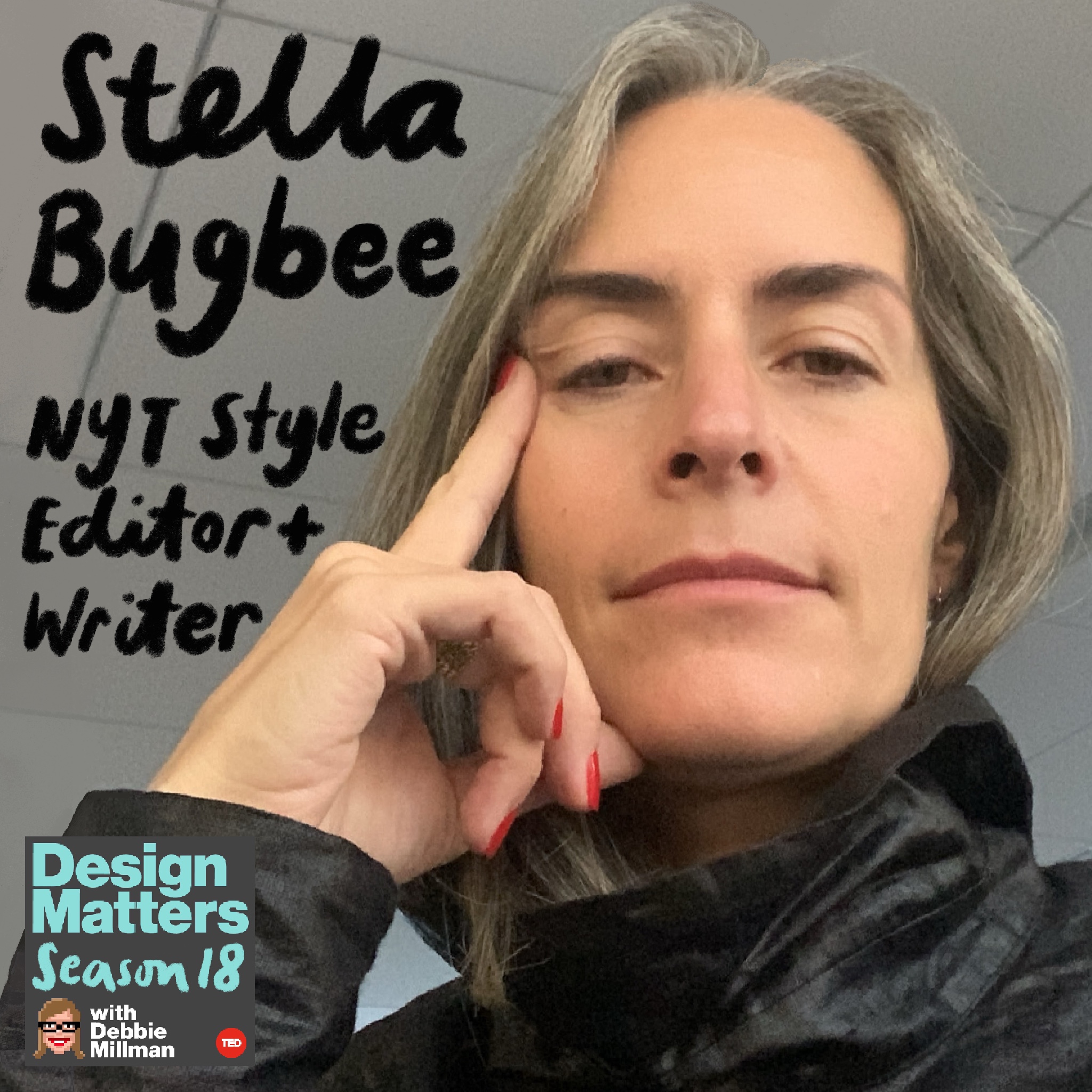
Featuring Stella Bugbee, former Editor-in-Chief of The Cut and current Styles Editor at The New York Times, this episode explores her impactful career in media covering fashion, beauty, and culture.
Written by AI. May contain mistakes.

Get the gist, explore an idea or ask about something said.
 Claude
On Design Matters with Debbie Millman, what are the key points of this episode?
Searching your listeningAutomatic transcript. May contain errors.
0:00This archival episode of Design Matters originally dropped in November of 2023. three. When I was in design school, I started seeing the world through design and it enriched my life. I got, oh, and this is why a chair looks the way it looks. And this is why Coca-Cola cans look the way they look. And for me, fashion has that same thing. It's like, well, you can choose to look however you want. Let's think about that.
0:27From the TED Audio Collective, this is Design Matters with Debbie Millman.
0:34For 18 years, Debbie Millman has been talking with designers and other creative people about what they do, how they got to be who they are, and what they're thinking about and working on. On this episode, Stella Bugbee makes the case for why fashion should matter for all of us. You're invited to this conversation if you want to be on your own terms, and you should want to cultivate a relationship to fashion and style for yourself, for your life, because it's part of life. It's really fun.
1:02Stella Bugbee is the Styles Editor at the New York Times. How does one get to be the Styles Editor at the New York Times? Well, if you are Stella Bugbee, it has been a winding road through the world of New York media. Stella got her start in advertising and later became the design director at Domino magazine, just as print was getting overtaken by all things digital. She then led the relaunch of New York magazine's The Cut, which became a wildly successful online style and culture site. Now at the Times, Stella joins me today to talk about her circuitous journey through the terrain of contemporary media.
1:43Stella Bugbee, welcome to Design Matters. Hi, thanks for having me. Stella, I understand you were born in a giant mesa with no electricity or running water in New Mexico. Yes. Why there? They were living in Los Angeles, my parents, and looking to go back to the land. And my father tells the story that they rolled out a map of America and sort of looked for a spot that seemed remote and interesting. I did then go back and find a whole earth catalog. I think it was from like 1975. Great whole earth catalog. I said you should move to New Mexico. And I thought, I wonder if it was really their idea or they were just responding to the zeitgeist.
2:29They ended up moving to Washington, D.C. and then moved to Brooklyn as you went into fifth grade, I believe. Sixth grade. Sixth grade. Sixth grade. But I understand you felt like a New Yorker well before that, when you found your spiritual resting place standing outside Canal Jeans on Broadway. What happened when you did that? Right. So my mom had met my stepdad while we were living in Washington, and we came to visit him. And I was really into fashion. I don't know what that even meant, but I was really into clothes. I was 10. And he took me to Canal Street outside of Canal Jean. But there also used to be this incredible flea market on Broadway right across the street and also up the block.
3:18And there was Antique Boutique. And it just – I had never seen such a concentration of people, youthful people dressed up in cool clothes. And I thought, I have to just live right here forever. I felt the same way about the collection of stores right by Washington Square Park off of 8th Street. All the shoe stores. Capizio, Reminiscence. And Reminiscence was my all-time favorite store. And I saved up. My dad lived in Manhattan. My mom lived on Long Island with us. And I saved up to get a kind of not quite turquoise blue, a little bit more green in it, jeans and canvas shirt set. Mm-hmm. So there I was in these sort of turquoise, bluish-greenish jeans, the same color short-sleeved shirt and white Capizios.
4:19Mm-hmm. And that I just felt like that was it. Like there was no higher I could go fashion-wise. I had a fashion for you, yes. Yeah. You've written that you felt that you could carry the black and white striped bags stuffed with vintage clothes from Canal Jean up and down what you considered the Riviera of style spanning Broadway from Canal to Houston and that everything wrong in your life would be okay. What wasn't okay at the time? Was it just being in sixth grade or parents getting divorced or? I don't know where to start. Yes, my parents were getting divorced. I'm an only child. We had moved around a lot.
5:02I didn't feel particularly settled. I had some family, some substance abuse issues in my family. You know, it was rough. I had a bit of a rough time early on. And there was something so soothing and escapist about seeing all this fashion and just kind of fitting in. And the other thing is that Washington, D.C. at that time, I mean, I don't know what it's like now, but it felt very financially segregated, I'll just say, right? So you kind of, you had to pick a lane and you had to stay in it. And it was very preppy. And even then, I didn't really particularly identify in that way. And I was just instantly felt like I'll find some people here that will like me for the way I want to be.
5:49And that was pretty obvious, just waltzing up and down that particular stretch of sidewalk. And at that point in New York, it felt really expressive. You know, you just saw people walking around in wild outfits all the time. I really had the sense as I was starting my research for today's show that you were a native New Yorker. And I went into my research thinking that and then found out that, no, you were born in New Mexico. and then lived in Washington, I just had this sense that you were a true blue native New Yorker, as I am. But I'm glad that you're honorary. I think wherever you spend junior high school is who you are.
6:32I think that's true, too. Absolutely. That's so formative. That becomes you. Your grandmother worked at Bonwit Teller. For those that might not know or remember, was the Barneys of Los Angeles in the 1960s and 70s. And your grandfather always carried around a beautiful Ralph Lauren bag, which I now know you carry. Oh, no, it was Weetan. Oh, Weetan. Oh, so interesting. He loved Weetan. And he was very, very showy in a funny way, but also kind of dandy. You're thinking, I think what you're remembering actually is a story I might have told you about carrying his Weetan bag always to the Ralph Lauren show.
7:14So he's no longer with us, but I carry that bag just as a kind of wink to myself and to him because I think he would have really enjoyed attending that show. So that's my honor to him. But yeah, it's beat up and destroyed, and I carry it anyway. When you were in high school, you and your poetry were featured in Sassy magazine. How did Sassy discover your writing? So I had attended Bennington College's summer program for writers, and I thought I was going to be a poet. I really legitimately thought that was going to be my life. And I had a teacher, and she got me very involved in a program that worked with deaf poets.
8:00And we would translate each other's poetry. And through that, I got into the New Yorican poetry scene. Poetry cafe. It's quite a moment. Did you do slams? I did. So I wasn't very good at them, but I did participate. And then I don't actually know how Sassy came about, but I think somebody saw me there and they were doing a whole story about teenage poets. So I was one of maybe three or four people featured. And I was, you know, very, very certain that that was my career. I was adamant. What kind of poetry were you writing? Um, not very good poetry, actually. You know, I mean, teenage poetry. I was really interested in poetry, actually.
8:42I think it's still something I'm actually quite interested in and have become interested in anew even in the last five years or so and thinking about the way that poetry applies to what I'm doing now. I know that sounds really pretentious, but it does in terms of headlines and things like that. And I was just interested in forms. I got really into very technical, formal poetry, sestinas, things like that. You can send those to McSweeney's. That's the only poetry they accept. Oh, really? Yeah. Sestinas in particular, the very hard form. But I also, I loved concrete poetry. And I think that actually that's what led me into thinking about typography and was one of the reasons that I ended up choosing design when I ended up choosing design.
9:30Magazines were abundant in your house growing up. Your parents had a subscription to Interview Magazine and Vogue, which you started reading when you were young. You also had a subscription of your own to Martha Stewart Living. What did you think of these magazines at the time? I think that I'm someone who very much bought into the idea of aspirational lifestyle as a young child. And it was very real. You know, you sort of felt like if I get Martha Stewart living and I learn how to make cookies and make people happy and have a nice home, my life will be better. And I think a lot of that did stem from the tumult of my earlier childhood and wanting stability and things like that.
10:13But I really, I loved imagery. I think there's something about the kind of imagery and the styling of editorial imagery that I bought into 100%. I really loved it. And whether it was Vogue or whether it was Interview, which was super cool, or whether it was Martha and food and I don't know. I wanted to live in those images. Did you have any favorite models at that time? I didn't. Models have never been the thing that interested me. I was always really interested in styling. And, you know, I spent a lot of time thinking about Vogue and thinking about old Vogue, you know, later on in my career. Grace Mirabella Vogue or Diana Freeland?
10:54No, Anna Vogue. Oh, Anna Vogue. Because that was my Vogue. And I think she was really speaking to a kind of perfectionism that had a certain appeal to me at that time. Like the idea that you could be perfect, that you could aspire to be perfect now. Of course, I know that that's not true. But at the time, it was alluring. I understand you really fell in love with design when you first saw Ray Gunn magazine. What intrigued you most about that, aside from the glorious typography and everything that was happening in that magazine? I think it broke every rule. Yeah. I was a first-year art student at Parsons and trying to pick a major.
11:36And I could have gone any number of ways. You know, I was really interested. And, you know, I was also studying writing at Eugene Lang. So I thought, well, what do I want to, you know, do I want to be an illustrator? That was really fun and briefly toyed with that. But then there was such a magazine moment happened. It wasn't just Ray Gunn. It was Wired was wild. Wired was like just doing the most experimental, interesting stuff with language. And I think, again, getting back to that concrete poetry side of things, I was fascinated by how far you could push language and still have it maintain readability and what it felt like as a reader to be encountering language all blown up.
12:17And it just felt like this really experimental rule-breaking moment for typography, for language, for editorial, for creating a scene. And though you really loved fashion, your parents didn't think it was a valid thing to study or to devote your life to. How come? Yeah, I have said that before, but I think it just wasn't part of our consciousness. It wasn't that they actively would have said, like, don't spend your time doing that. It just. Well, if they were hippies, it might feel. We didn't know anybody who did that. They were school teachers and came by life in a very different way. And just they were very literary.
12:58My mom, you know, has two MFAs in literature. And it just wasn't something that they thought it was a career in exactly. They had no context for it. So they didn't look down on it or something. It just, you know, now that I'm a parent, I have a little more sympathy for where they were coming from. like they were probably just totally unable to imagine what a person does in fashion, you know. You mentioned that you went to Parsons as well as Eugene Lang. So you double majored in design and writing. Aside from poetry, what other kinds of things were you writing? I initially thought I would study poetry and creative writing as intensely as I studied the art.
13:40But what happened was I got into the art and I just fell in love with design, like really and truly, it was like I didn't know that a person could spend their whole life thinking about this stuff. And once I realized that not only could you, but you could live doing that, you know, you could make a living. It was like a real job. I kind of abandoned thinking about poetry because it felt so much less connected to what was happening in the world. And I just really wanted to be at the center of what was happening and kind of in the center of culture, though I loved the writing and the poetry, it felt much more niche to me at the time.
14:20So I was sort of, I sort of abandoned it, to be honest. I didn't end up graduating with the double degree. I only ended up with the BFA. You worked for Kate Spade when she and Andy Spade opened their first store on Thompson Street. And you said working there was a revelation. And when you were a sales girl at the original hatbox-sized store, you felt like you'd been invited into a dreamed-up world of creativity and old-fashioned wholesomeness. I'm wondering what's the biggest thing you learned from Kate Spade working for Kate and Andy? Well, every detail mattered to them, and that was an important lesson.
15:02But also, you know, you have to remember that in the 90s, there was no Internet, And so all your references, all your visual references, they came through hard work. You had to track them down. You had to accumulate a knowledge base that was yours. And they were so aesthetic and so knowledgeable and so tasteful, actually, you know, in their own personal lives. And they were trying to take all of that knowledge and translate it into a brand, a fashion brand. And that was really cool to watch somebody do. And it was early days, small, tiny little store, and you didn't really know what was going to come.
15:45And now it all seems inevitable, but at the time it just felt very creative. Well, it was so different than anything else. There was so much context to the way they were creating their store and the aesthetic of their clothes and the whole Kate and Andy Spade experience. I have so much more respect now even than I did at the time for how difficult it is to start a brand from scratch, especially a fashion brand, and have it resonate with people. And as quickly as that brand did, I mean, she had a background in editorial as well. And he had a background in design and advertising. And so I can look back on that and realize exactly the levers that they were pulling and all the tools they were using.
16:31And they had a ton of experience going into that building of that brand. But it was not a sure thing. You know, I mean, it's an amazing endeavor to take on and have the confidence to try something like that. And then for it to succeed as wildly and as quickly as it did just speaks to how sure-footed they were right out of the gate. And I think I got to see that up close. And it was very natural to them. It seemed very natural to everybody who worked there. I'm glad that that brand still is around. Yeah, and to see how it's weathered these massive changes, you know, versus the small, you know, indie production that it was initially.
17:13You worked seven days a week when you were in college. You also had an internship with the legendary magazine designer Roger Black while you were at Parsons. And you worked on publications including Men's Health and Reader's Digest. And you said it was there that you learned graphic design was good training for decision making. And I'm wondering if you can talk a little bit more about that. Somebody was asking me the other day, like, what did you like about art school? Why did you study design? And I said that I thought a design education shows you how to solve problems. Like, it shows you that there's always more than one answer.
17:50and that freeing your mind up to have more than one answer for every single problem just makes you, I think, more empathetic to every problem they're trying to solve. And it makes you a better decision maker. You have to make decisions really quickly sometimes, especially in editorial. And you have to sort of thought through all the other possible outcomes in order to make those decisions. So I think design really makes you realize you shouldn't be too precious, I think. And working in magazines at a very fast pace, so you're just making quick choices and then you're on to the next magazine. And it's also very subjective.
18:25You know, there's not only one answer to every question, but there are many that are really viable. Totally. And that's what I loved about the critique class process. You know, and eventually I ended up teaching at Parsons, but I loved these classes where you would have a problem and everybody had the same problem and nobody had the same solution. Right. And you had to, we had to at that time in those kind of classes present three ideas and have valid reasoning behind why all three of them could work. And I saw that process play out, you know, in the actual workforce later on. But I treasure that lesson.
19:04I think it's one of the most important things that design school and all those internships and working at all those various magazines taught me, you know. Yeah. And there's something so interesting about going into a crit thinking your work is really solid, really good, feel really proud of yourself, and then see other people like blow you away. And so you always have that like, what would that person have done? And keeps you really striving, I think. Yeah. And I think working on different magazines made me think about different audiences. And when you think about there being a different answer or a multitude of answers for any particular problem, you're also, you know, it makes you think about solving the same problem.
19:46that like let's just say you're basically solving the same problem for Reader's Digest as you are for Men's Health but maybe for a totally different audience. So how do you speak to, you know, what does the reader of Men's Health need and how does the information you're trying to design in that space speak to that reader, you know, and how is it different than a... Especially with Reader's Digest which at the time had like a bazillion subscribers. It always amazed me how many people read and subscribe to Reader's Digest. Yeah, it was wild. The other thing is I didn't care about either of those two publications personally, right?
20:19I wasn't invested in their content that I was working on, which I think was also a good lesson because I didn't have to be necessarily to dissect them as problems to be solved, right? Yeah. So right out of college, you said that you got a job doing the exact thing you wanted to do, but within six months, you realized you did not want to do that job. And so you called your mother and said, I picked the wrong profession and it's too late. Now I'm stuck for the rest of my life. And she said, Stella, you're 22. You have plenty of time to change. You disagreed and told her she didn't understand that you had at that time invested so much in your career.
21:03You don't have to tell us what the job was, but was that when you thought you should have gone to culinary school instead? Well, let me be clear. I loved that job. Okay. And I loved those people. It was really, I didn't think I picked the right profession, period. It was not that any job would have been the right job for me. So it was working in design. Yeah, I was worried that being downstream from the decision-making process was upsetting to me at the time, which I'm sure is a relatable thing for a lot of young designers. And I knew even then that the design part of it was only satisfying to me when I had some say, at least, in the content part of it.
21:46And I didn't really know how to translate that into what a job. I didn't know how to take all this stuff that I'd been doing, all this work I'd been doing, all these internships I'd had. And I loved design, but I didn't really know how to solve that problem. Did you have that much confidence in design decision-making at that point to feel that you could do the bigger job? I didn't know what the bigger job was. So, yes, I did. I had enough confidence to go start a company with my two colleagues and friends from college so that I could have a little bit more control and be a little less downstream.
22:21I don't know if that was confidence or just willfulness or what. Drive. ambition. Yeah, I just, I think what you're describing and what I called my mom to try to articulate and not super successfully was just that I wanted more control over what I was doing. And I was worried that I wasn't going to get it for a long time in this profession. And I didn't know how to fix that problem. I think that's a conundrum that a lot of people come up against in design. Yeah, I briefly started a company, I believe I was 26 or 27, for much of the same reasons. But though I had the drive and the ambition, I didn't have the experience.
23:05I mean, we did it and we did it fairly successfully for four or five years, but I was never proud of what we were making because I didn't have the skills yet to understand how to make things that were better. I absolutely ran up against a similar personal, just sort of a lack of skills or just even experience in general. Like wanting the control doesn't mean you have the judgment yet, right? So I knew that after that, even after doing that, even after trying to gain control over it, I actually had to go back into the workforce and get more experience and learn from others some more. Yeah. One of my favorite anecdotes that I read about you was when you were a very little girl.
23:46You went to a job fair and somebody asked you what you wanted to be when you grew up and you said in charge. I can so relate.
23:57So you've had a number of really interesting jobs in that first decade of your career. You worked for Drew Hodges at Spotco, the agency that does most of the theater campaigns for Broadway. I believe you worked on 52 campaigns that first year. You also freelanced at the New York Times Magazine. You worked at Ogilvy and Mather's Brand Integration Group and also began teaching, as you mentioned, at Parsons. You also worked at two independent magazines, Bene and Topic. Now, during this time, you also got really sick. Can you talk about your diagnosis and what happened after? Yeah, I got sick right after college.
24:36And so that phone call that I made to my mom was also part of that. You know, I thought, I don't know exactly how I'm going to work this hard being sick. I was diagnosed with Crohn's disease. And so I spent a lot of years just trying to figure out how to balance the ambition that I had with the truth, which is that I was not feeling well a lot of the time. You know, that did affect a lot of decisions that I made, including the decision to have children earlier than I might of necessarily had I not had Crohn's disease. But other than that, I mean, you know, I just trucked along. Like, you know, it's not, I wouldn't say that I let it get me too down.
25:20You said that it was really intense to be sick in your early 20s because people didn't understand you, that you were so different and in such a different place, you weren't able to go out and party as much. How did you manage the ambition with the illness? Well, also, to be fair to other people, it's not something I was talking about with anybody. So, you know, if people didn't understand, it's also just not something that I was super open with. It wasn't something anybody was open with back then, I don't think, as much as it is now. Now I meet people who tell me they have Crohn's disease all the time.
25:53It's sort of a common diagnosis. But back then I felt very embarrassed. Why?
26:03I don't know. because I didn't want to be sick, you know, and I didn't want that to define my life at all. In fact, I resented that it was there at all. You say, how did I balance it? I just didn't really want to deal with it at all. So I just, you know, Todd, my husband, Todd St. John, he's also a designer. And, you know, sometimes we look back on that time in our lives and think, why didn't we travel more? Why didn't we do this or that? But a lot of it, I think, was that there was work and then there was time where I needed to rest. Well, you also found yourself unexpectedly expecting twins when you were 28 years old.
26:40Yeah. So that sort of changed everything. On the travel. Yeah. But, you know, I mean, I think he also worked really hard and the two of us worked really hard in our 20s. And so we didn't leave a lot of other time for socializing, especially if you count in the illness. You know, there was a lot of time where after work. I was tired. You ended up having to go on bed rest when you were pregnant. How were you feeling about where your career was going at that point? I was not particularly hopeful at that point. I read that you thought it was a career apocalypse. Yeah, I thought it was over. I thought my career was over.
27:15I thought I didn't really know what to expect, actually. And I think a lot of people I've spoken to feel that way on the cusp of their first child of radical insecurity about whether or not they're going to want to come back to the way that they had been working or whether they will be invited to come back into that pace. You know, I at the time was working at Ogilvy and it was really intense. Oh my God. I heard when Brian Collins used to bring in bags of donuts, it meant that everybody was staying overnight. I never stayed overnight, but I did eat a lot of candy. And it was, I mean, like, I also really, like, enjoyed that.
27:55And I had incredible colleagues there and people that, I mean, for me, that was like grad school almost. It was an amazing experience. But it was very intense and not something you could go back to with Crohn's disease and twins, clearly. Yeah. I look back at the pace that I had in my 20s and 30s and don't know how I managed to stay alive. actually I look back on it now I'm like how is that possible to stay up like that night after night after night although it was really invigorating to work there and you know I David Israel and Weston Bingham and Alan Dye and it's a dream team yeah and Brian was incredible so I just felt like I was in a very lucky place and I wouldn't you know if it took a lot that's what it took because I just wanted to be around those people.
28:44So you then unexpectedly get pregnant. You're on bed rest. You file for disability. You are considering the possibility that you're in this career apocalypse. And there you are at 30, sitting in a sandbox with your two children, your twins, thinking you had to figure out your career, which you thought was pretty much over. And Domino Magazine calls you asking you to come in and meet with Deborah Needleman. And what job did she end up offering you? She needed a design director because Michelle Outland was leaving. And I had thought to myself, I haven't done, I haven't actually done editorials since college.
29:27I had done sort of independent projects that you mentioned, but not at a high level. I really thought I needed to learn that. So I was scared to go and meet with her, but we got along right away. And, you know, I loved the magazine. And I remember calling Todd and saying, I think this is going to maybe be really hard, but it's going to change our lives and my life. And we've got to do it. So that was that. You know, it started right away. You worked at Domino for three years and oversaw the design of every editorial page. You designed and directed the Domino book of decorating. You managed the art department, every aspect of the creative creation of the magazine.
30:12The magazine shut down and you left. And at that point, you got pregnant again. And at that point, you truly thought that you weren't going to do anything ever again. Why? Why? When Domino shut down, that was a very insecure moment, I think, for everybody who worked there. It was just heartbreaking. It was such a great magazine. Yeah. And it was very heartbreaking to see a whole entire staff get locked out all at once. That was sort of when I went to work in fashion for the first time. I went to work for Raul Martinez. that year that I spent working there or a little more than a year actually was my PhD let's say if Oakley was my master's then AR media was like a deep course in fashion and fashion photography and fashion branding and I spent an entire year hanging out reading Vogue magazines in their library coming up with campaigns and so that was really a seminal unexpected turn you know it was back to branding away from editorial, but it was at that time Raoul was also going back to be the design director of Vogue.
31:24So it felt like this perfect hybrid of the two worlds, you know, branding and design and editorial, some more worlds and fashion. And it was my first kind of real foray into the highest level of fashion. And then I got pregnant. And yeah, then I thought I I just, you know, every time a life change like that happens, I think it's very destabilizing. For me, it has been. Maybe some people are more prepared for things like that. I was not expecting that to happen, and I was a little destabilized, and things were going great at AR. So why did I think it was the end of my life? I just couldn't, I didn't see the path.
32:08I didn't know. I think some people see their careers and their lives as a linear. Yeah, I don't know anybody like that. Yeah, I didn't. And I couldn't quite imagine what the next step would be. In an interview with Molly Fisher, she asked you if it was possible to be ambitious and happy. And you said you didn't think so. Yeah. Do you still feel that way? I think that the last couple of years have been a real reckoning with ambition. Culturally, the whole culture has looked at what we think of as acceptable amount of hours to work, acceptable amount of time to spend with work, whether is work your family or is work work, you know.
32:50And we've thought a lot more about boundaries than I think we ever did when I was coming up in any of the professions that I got to work in. So, yeah, I think I would revise that. Yeah, there's a certain amount of misery that comes with ambition because you're just always wanting something. You always want a little bit more. Whether you want it for yourself or you want it for the project or you want it for the world, you know, that's a good thing, right, to always be striving to try to get something better, you know, make something better, bring something out of a group of people, whatever it is, may leave you a little wanting in the end because you never quite achieve the ideal.
33:36But I'm trying to be both. I'm trying to be both happy and ambitious, though. Same. Same. Yes. But I think culturally we've adjusted our expectations a little bit as a whole entire culture. And that's been really interesting. And I think healthy and good, actually. I do, too. I think there's something really wonderful about the idea that you don't have to go into the office every single day. Yeah, or just like the horizon for what's possible. You know, when you have a pandemic or you have – we had to shut down for so long. That had never happened. in my lifetime. And it raised all these questions like, well, what is the horizon for success of anything, like of a project, of a lifetime, of a relationship, of a job?
34:23If you have to put everything on hold for two years, well, that just stalls everything that you thought you were going to be doing. And maybe that was okay. And it gives you a moment to reconsider what you should be thinking the horizon is for something. I don't know if I'm making any sense. Yeah, no, absolutely. That adjustment or the correction we are now in because of the ability to take that adjustment, I think, was really one of the most important things that's happened in my lifetime to the whole world. I can't think of anything that's had that big of an impact on how we think about time and how we spend it.
34:58During COVID, I remember, or during the roughest moments of COVID, I remember thinking, I'm changing my life. I'm going to do things differently. I'm having different priorities. I'm going to organize my time in a different way. And that didn't last. What have you held on to? The desire to do it. I felt a pretty profound change in that horizon. I think it's okay to take a little bit longer to do things. It's okay to be kinder to yourself and others about the time it takes to do things. and I think that's helping balance that thing that you're talking about is ambition and happiness. Absolutely.
35:38Because I think that that's really the tension is the time frame. Yeah. And I'm also aware of when I feel really happy. And it's very rarely centered around achievement. That's good. Yeah. So the knowledge is power, right? So let's talk about The Cut for a little bit. You started working at the New York Magazine's The Cut as a consultant in 2011, first to help relaunch New York Magazine's Digital Vertical. You ended up agreeing to join as the editorial director the next year. And in the 10 years you were there, you essentially reconstructed what was originally a Fashion Week blog and created a full-fledged magazine brand in its own right.
36:25What gave you the sense that you could do that, aside from just always wanting to be in charge? Well, so New York Magazine has actually a precedent for a project like this, and that is Ms. Ms. Ms. Magazine. And Adam Moss, who was the editor at New York Mag, I think that he thought there was space to push this whatever he was calling, we were calling it a women's vertical or whatever, into a vital internet publication. conversation i stress the internet part of it because i think there was this permissiveness to give somebody maybe untested a chance and that was the writers that was the editors that was the photo team like it wasn't a whole bunch of experts coming in who'd already done a bunch of stuff it was a bunch of young people and we didn't necessarily know exactly what the rules were so that was good i'm not sure that i had the confidence necessarily to come in and do that but there was a lot of interest in pushing things and Adam was very experimental and I had worked with David Haskell who is now the editor-in-chief of the magazine on Topic which was his project that you mentioned earlier and then when we worked on Topic I remember thinking like I just actually want to be picking the topic it was Rob Gampicchio and me and David and while I was of course, interested in the design.
37:47I was so much more interested in thinking about assigning stories for a specific topic or picking the topic and then thinking about how to represent that. And so David, he knew that that's sort of where my interest lay. Plus, I'd been working in fashion then for a year at that point before that. And it just was a strange job and I had a strange resume and it enabled me to pull upon everything I'd done up to that point. It let me pull the branding and the, you know, art direction and the editorial ideas and put them all in one place, which lucky, so lucky to be able to, you know, to use all these weird experiences that didn't necessarily add up to anything until that moment.
38:37So it wasn't necessarily that I had the confidence, just I had a really strange group of skills that applied in this particular instance. And then I ran at it head on. I found this quote, something that Adam Moss said about you when he hired you. The very unusual thing about Stella is that she has this big, important editorial job and has never been an editor before. He went on to state that he would have been unlikely to appoint a design director to run the cut had he not already gotten to know you when you consulted. And he stated, what we saw then was that Stella was a natural editor with a crystal clear vision, an incredible sense of story, and great news judgment.
39:19Stella, what I love so much about this is that you succeeded by creating a magazine and a brand that you've described at various times as a smart, funny, clear-eyed look at fashion, beauty, and issues that matter most to women that also blends a literary feeling with a punk feminist sensibility. Like, what could be better than that? How were you able to sell that and figure that out in such a, figure it out and then sell it in such a clear-eyed way? I mean, that's what he said, in a clear-eyed way. My main goal was to create a space where the people working on that project could say whatever they wanted to say in the tone they wanted to say it in.
40:07So it was always very much about the community. I used to make this arm motion where I put my arm kind of in a circle and And I said, like, I'm just keeping the space open so that we can do what we want and say what we want and that we're not being forced into a silo by some advertising category. I think that's really, you know, if you look at most magazines, they were created for the purpose of advertising categories. And you created this for a certain sensibility, it feels, like an attitude almost. Yeah, psychographic. But, you know, I firmly believe that there were people who wanted to talk about serious things and silly things at the same time in the same place.
40:55And that was fine. And I defended that urge more than anything. And, you know, it changed dramatically year over year over year. And so it wasn't just that I had that vision from the beginning. It was sort of like, well, I got that done. What else can we do? and how else can we grow and who else can we bring on and what other voices can we put forth and what other challenges and ideas. And while that was all happening, the magazine was also, you know, feeding me incredible pieces and I was working with the people who worked making the print magazine all the time and the editors on that. And I had an incredible partner in Lauren Kern, who's now at Apple News, and she was like sort of my editorial partner on the magazine, on the print side.
41:38And, you know, once that came about, when she joined, I think that we all saw the real potential for it to be something very impactful. And again, we just all ran at it. For me, I didn't want to squander that opportunity ever at any moment. I thought, what if no one ever gives me this opportunity again? I'm going to run at this. And I wanted to give everybody else that sense that we've got to run at this because we don't know that this is a guarantee that we'll always have a place to say and think and be ourselves, even with the precedent of Ms. having come out of that publication, which is really powerful.
42:20And I was operating a lot on other publications' backs. You know, like I think you mentioned Mirabella. The actual Mirabella was an incredible magazine. Sassy. Like there was a precedent for some of what we were doing. Remember New York Women? New York Woman. New York Woman, yeah. And in fact, I met with the editor of New York Woman early on in my time at the Cut because Pam Wasserstein knew her. We went out for lunch. And it was important to me to note that we were part of a pretty healthy legacy, actually. And we were just doing it on the internet for a new audience and building an audience in that space.
42:55But a lot of people have tried to do what we were trying to do. In fact, I have the very first issue of Mirabella, and I got it when we were relaunching the cut in 2018 just as a kind of reference. And I couldn't believe how contemporary it was and how it felt like it could literally be running now. Yeah. I want to talk about fashion a little bit. I love fashion. Um, you've said that from the time you were little watching your grandmother at Bonwitt Teller, you remember understanding that fashion was a form of social currency and that people who had money looked really different from people who didn't and that they were treated very differently depending on what they wore.
43:37As a result, you've been fascinated with the way in which fashion and power overlap and the way in which fashion and self-expression overlap. So my question is, how have you incorporated expressing that fascination in the way you approach fashion and fashion journalism? Mm-hmm. I think that a lot of fashion journalism is prescriptive, or at least it has been historically, and exclusionary. That's why a lot of people have resentment toward fashion. They feel talked down to and excluded, whether it's because they don't fit in the clothes or they can't afford the clothes or they're, you know, for some reason excluded.
44:21it's an industry and an art form that thrives on hierarchy and caste systems almost and I don't like that about it at all I sort of reject that and I kind of want everybody to feel like it's something that they can and should embrace for themselves the way they would enjoy food or the way they would enjoy a great book or music so that it's very personal approachable part of your life You know, and to go back to being in design school, for example, when I was in design school, I started seeing the world through design and it enriched my life. I got, oh, and this is why a chair looks the way it looks.
45:03And this is why Coca-Cola cans look the way they look. And for me, fashion has that same thing. It's like, well, you can choose to look however you want. Let's think about that. You know, and I would hope that certainly at the cut and perhaps less so at the times just because of what we're doing at the times. It's very, very different. But I really wanted to start to like open up a conversation for people and say, you're invited to this conversation if you want to be on your own terms. And it's fun. And you should want to cultivate a relationship to fashion and style for yourself, for your life, because it's part of life.
45:36It's really fun. So a bit of like taking away that power that fashion tends to have over people because it makes them feel excluded. That was important to me. One of the things that I've loved in quite a lot of your fashion coverage over the years is how you sort of democratize some of what we think about when we think about fashion and also the range that you in the way that you put things together. But I really loved how obsessed you were for a little while there with Birkenstocks. And this was before Birkenstocks were back being Birkenstocks. And I loved that you embrace both high and low at the same time.
46:22And it's not just a matter of here we're going to go high, here we're going to go low. You can match this up however way you want to as long as you feel good and comfortable in whatever you're doing. I mean, I think one of the things that we were told, like, the magazines that I absorbed and loved so much that were so aspirational and exclusionary as a child didn't always allow you to hold the complexity of the high and the low, of wanting to both talk about fashion and politics, of wanting to be able to indulge in something expensive, but also wear Uniqlo. Like those complexities, those dichotomies, those contradictions are life.
46:59It's what everybody has inside of them. And I think I was really interested in just letting all those things exist together. And I think that that's when fashion becomes meaningful to people. Like one of the reasons why I cover the red carpet and what I think is interesting about, let's say, a red carpet event is that's where most people see the highest fashion come alive. It's where they understand a gown. It's not on a runway. And it's not in their closet. It's on their favorite star, wherever, you know, movie star, musician, reality TV star, whomever it is. And that's a very fun space, you know.
47:38I mean, it's not stupid. It's very fun. It's very important that we think about the ways in which those intersections happen. So I was very interested in collapsing some of the hierarchy around what was good and what was bad, what was high, what was low, what was accessible, what was off limits, and to whom. It's really important. Is there a difference in covering a Met Gala versus going as a guest to the Met Gala? Oh, sure. Definitely. In what way? Well, I've never been a guest at the Met Gala, to be clear. I mean, I think the most interesting thing for me about working at The New York Times is really thinking about those differences.
48:17What is the difference between covering? What is the objectivity that you bring as a reporter or an editor at The Times? You know, how does that change your relationship to power, to the people in the room? How do you hold those people accountable when you know they're not being honest? How do you? How do you? How do you do that? By keeping yourself not a guest at the Met Gala. You know, you have to be a little bit outside of that. And that's the price that you have to pay. You know, you get to sit in the room and enjoy some of those spoils. However, you have objectivity. You see what's really going on.
48:52So it's a real, you know, that kind of dynamic. You know, once you're a guest at the table, you can't be a journalist. How do you decide what you want to cover? At the times, the way the style section works is sort of broken down roughly. We have a fashion team. We have a kind of generalist team. So there's news. There's just stuff that's happening. We got to cover this. It's happening. and we try to set ambitious targets for that in terms of like well who's interesting who do we think is pulling all the levers let's go after that person in terms of let's get a story about them let's let's introduce them to a reader and then there's just like what is a reader interested in what do we think is going to light their minds on fire what are they what do we think they're going to share in their friend group chats that's a big thought that's always in my mind And I don't know, there's also just a certain, you know, intangible instinct.
49:52You never really know, but you just sort of develop over time, especially if you're really looking at patterns over time of Internet traffic. I mean, we have so much information available to us, you know. And that's the thing. It's like, well, you have to really read the tea leaves. You sort of think, well, why did that story do really well and not that one? And, you know, what's the learning from that? And not let that affect what you're assigning too much, right? You have to think about what you think is interesting, what's moving the conversation forward. And that's the sensibility. That's an intangible thing, actually.
50:24You know, before any publication went online, you didn't know what people were necessarily interested in most. You know, yes, you know, can this marriage be saved from Ladies Home Journal and so forth? But now you know how many people are actually reading every single article that they're reading and the direction that they're going and so forth. And in some ways, when you're going through the paper, I still get the Sunday paper. you go through and there's a lot of opportunity for discovery because you're just seeing things as they pass by on the page. When you're online, you tend to look for things like, oh, Thursday night into Friday morning, modern love will be up.
51:04Social cues. You know, you know when to find things and you don't have as much opportunity to discover unless you're being fed, you know, you might also like this, which, you know, you have to then decide whether or not you think it's worth clicking. How much do stats actually matter to you? And I'm not talking about the times. I'm just talking about you and your taste and what you believe should be published. They don't matter to me. You know, I'm looking at them. I'm curious to see them. But I'm not going to not do a story that I believe in based on that at all. We came out of a decade, those of us who worked online where a lot of decisions were made based on that.
51:50And I'm not sure that that was to the benefit of the content always. And luckily, the Times really doesn't dictate what we do in that way, which is really helpful. But, you know, there are, like, I've developed certain instincts. I know what, I have a sense of, I think, what's going to be interesting to people. And, you know, is there tension in the story? Is it a widely known subject matter? You know, we just did a story about Barnes & Noble. I love that story. And I love the images. It was so great to see all the different Barnes & Noble styles. Well, that is a design story, right? A total branding and design story.
52:29And several people on my team were, like, very surprised at how big of a hit it was. But I knew it was going to be because I think there's this huge interest in that brand, right? An innate interest in Barnes & Noble, why it's not succeeding. I think actually people want it to succeed, right? So what were they doing? And they're doing something really weird, actually. And I kind of thought, oh, that one will probably be a hit. And you just develop instinct for what you think people will want to read. And I'm certainly not always writing by any means. But that's kind of the way I use that information that I get every week is like, and actually every day, is just a sense of like people really are interested in things that they already have emotional investment in.
53:17You know, like you write about Victoria's Secret, like people are going to read it. They're curious about that brand. Yeah. Regardless of what you say about it. So there are certain topics that you sort of recognize will be interesting. You've written that runway show going requires stamina. Is that because of the pace? Yeah. There are people who just love going to fashion shows. And I think they're really interesting, especially if that's your beat and that's what you cover. But the grind of going to maybe like 50 in a row, especially if you're a visual person, you have to pace yourself. Because really, it's a lot of images if you're thinking about it that way.
53:56I'm sure it is experiencing that just on Instagram when I'm not, let's say I'm not in a, I didn't go to Milan or something. I'm experiencing it as a reader and as a viewer. It's a lot to watch other people experience it. Imagine being there. It's a lot of images. How do you feel about your own fashion when you're watching shows or in the midst of the fashionistas? Yes. Probably like most people, I have a fraught relationship with fashion. You know, if we're talking about what I wish I could have, this is what I have. But this season, I tried a different approach, which was while I was walking around and going to shows, I started keeping a list on my phone of reminders of things that I actually like, so that I wouldn't lose sight of my own desires and my own taste.
54:51Just to remind myself, you know what? You really like this, and you really like this, and this is a hard-won, decades-long project to develop what you actually like. Don't be too swayed just because everything is shiny. And that's a different approach than I've taken in the past, and I think that that's been healthier. Because otherwise you can get very wrapped up very quickly in kind of the dizzying aspect of all of this new, beautiful, luxury, very distorted reality. Which most people, you know, I don't think most people change their fashion every six months. Well, it's just that and technology that have that sort of forced obsolescence embedded in it, which is so hard to manage emotionally because you want to sort of be stylish or in style or have the latest, greatest, whatever, but that's a lot of pressure.
55:46It's a lot of money. It's a lot of consumption. I mean, the real hardcore fashion is for the very young who change their fashion all the time and are trying to figure out who they are and are using style as a tool to do that, or the very wealthy who can afford to do that. For the vast majority of us. And the very skinny. Yes. The body that can handle that kind of change I couldn't afford to handle that kind of change. The vast majority of us will buy a code in 1990. I'm looking at you. I know you still have a code that I admire from 1990. And keep it, right? And so how do you bridge that continuity of self year over year?
56:28That's not something that you can sustain changing all the time, most of us. So then you have to develop your own personal taste, which I think gets back to my goal for all of us, which is like cultivate your own taste. Have confidence in what you like. Make your list. This is what I actually like so that you're not feeling swayed all the time or insufficient because you can't participate for whatever reason, money, age, body, any of those reasons. It helps to have a strong foundation and understand what you actually like. And then I think you should just totally lean into that. No trends, nothing.
57:06Find yourself and enjoy yourself. with fashion. That's the main, my main goal in life. Just have fun with it. Is to divorce it of its power over our minds, you know, and to gain some control over that and say, like, I really love this. I love it the way I love this couch that I bought 25 years ago, and I keep recovering this couch. Well, you know what? I love this coat I bought in 1990, and I'm going to keep wearing it. You know, I think that that's really important both for the earth, for our minds, and for some semblance of control over that industry. You said that we can't fix how anybody feels about their body, but we can disabuse people of the idea that certain styles are only for certain people.
57:52Do you think that designers are really paying more attention to that now? There was a moment where I think we saw this little window open up and it seemed like that was going to be a priority. I've actually seen incredible backsliding in the last couple years. This season was abysmal for body inclusivity. You know, you'll have one or two people in each show. And some brands are doing great. I should, you know, say that. But then I think, you know, with the introduction of Ozempic, it's like everybody just gave up. I don't know. I mean, you know, it felt very... I think of it that way. Yeah, I felt like market change all of a sudden.
58:37And, you know, fashion is cyclical and it's not that deep as we would like it to be. So, you know, some of these changes that were kind of promising and exciting, we'll see if they stick. Well, Eve, you had a lot of ability to help reframe the way people think about style and beauty and size at the cut. Do you feel you're able to do that at the Times as well? The Times project is super different. In what way? Well, it's not a luxury sales project. Like, we're not making fashion shoots. We're not really telling people what to buy so much. I mean, there's Wirecutter, but we're not a luxury fashion magazine.
59:19We're a news organization. We're part of a news organization. I don't see my role as sorting through and telling people what to purchase. You know, even our critic, Vanessa Friedman, she's not doing that. We're not doing that. You know, we're taking what's happening and we're explaining it to people. But we're not saying, you know, here's the 10 greatest coats you can buy right now. That is not part of the project. So it's really different. And I don't really even see that as part of my job as much as it is to document what's happening in fashion right now. Right. You know, as we've been talking, I realized what it was that I loved so much about your leadership at The Cut, which was I never came away from reading The Cut feeling bad about myself.
1:00:08And I'm not really in the same position when I'm reading The Times because it is more journalistic and it's not as whimsical, I guess. But I hope that your voice can come through those pages as you continue to work there. Well, I would certainly hope that you would never read the style section and feel worse for wanting to know about any of that information. That's important. And to treat the subject matter seriously, I think that's a big important characteristic of the style section is that we take it seriously as seriously as anybody takes anything that they do there. But we also still have a lot of fun.
1:00:48Yeah. Yeah. And I wouldn't want anyone to come away reading one of our stories feeling worse about themselves or bad for wanting to know about it. And, you know, I think a lot of what we do actually is give people permission to enjoy the stuff that we're covering. And within the context of The New York Times, that's pretty important because there's a lot of very serious gut-wrenching stuff that happens in the sections other than mine. And that's okay to then turn to us and enjoy yourself over here. I think it's really important to say it's okay. It's okay. Come on over here and enjoy yourself.
1:01:24Yeah. Stella, this is my last question. You've had a long, illustrious, circuitous career, but you've also had some painful, harder times. And you've written about how when you look back, it looks like it was intentional, but you're old enough now to admit that that was not the case. It seems like it was premeditated, but it was all accidents the whole time. I think that's really helpful for people to hear as they're navigating their own ambition and their own career paths. It seemed like at the time you had no idea whether you would recover from the various obstacles in your path. How do you think you were able to overcome those obstacles?
1:02:06And what has it taught you about control? Yeah, I have said that I felt like it was an accident. But actually, you know, one of the things I've been thinking a lot about in the last couple of years is that I looked at all these things as opportunities. So they felt accidental or they felt like they felt like unexpected is maybe a better word. But I was always able to look at each opportunity or each experience and say, well, this will complete a little puzzle piece that I'm missing. I don't know about fashion. Not really. Not at the level that Raul Martinez knows about it. What can I get by working with Raul Martinez?
1:02:50Like, that's the highest level, right? He's really good at it. What will I learn from this man? And it wasn't necessarily clear to me what I would do with that, but I knew that it would give me this critical piece of knowledge and a way of looking at the world. And the same for Adam and the same for Drew Hodges. Like, I saw these people and these opportunities, not necessarily in a connected way that was obvious at the time, but that they each offered opportunity for growth and to complete a sort of thing I was lacking. And so I think that's how, you know, in retrospect, it makes more sense to me.
1:03:32It's like, well, and I would hope that that's still the case. Like, I still sort of think of that. You know, I look at these incredible colleagues that I have and these people at The Times who've worked there for 35 years and just know so much. And I think like, well, what does it feel like to put myself next to the people in this room and what can I learn from them? So that's how it's made sense. It's less that, oh, it's all been accidental and oops, here I landed here. It's more that if you see an opportunity or if you are given any opportunity, find the little core inside there that's going to give you the most knowledge that you can then take and apply to something else.
1:04:16or try to find the thing within any experience that completes a missing part of your education. Stella Bugbee, thank you so much for making so much work that matters. And thank you for joining me today on Design Matters. Thank you for having me. Absolutely. It's been a pleasure. To see more about what Stella does, all you need to do is read the style section of the New York Times. This is the 18th year we've been podcasting Design Matters, and I'd like to thank you for listening. And remember, we can talk about making a difference, we can make a difference, or we can do both. I'm Debbie Nellman, and I look forward to talking with you again soon.
1:04:54Design Matters is produced for the TED Audio Collective by Curtis Fox Productions. The interviews are usually recorded at the Masters in Branding Program at the School of Visual Arts in New York City, the first and longest-running branding program in the world. The Editor-in-Chief of Design Matters Media is Emily Wynand.
1:05:15Thank you.
Former Editor-in-Chief and President of New York Magazine’s The Cut and current Styles Editor of The New York Times—Stella Bugbee joins to discuss her remarkable career in the media industry, covering fashion, beauty, and culture as a journalist, editor, and creative director.
Hosted on Acast. See acast.com/privacy for more information.