
 Ask ChatGPT



Why movement matters in the digital age; how screens and sedentary habits affect attention, health, and “interoception” (how the body senses itself). The episode also traces Manoush Zomorodi’s career from international journalism to audio storytelling and her research-driven projects on boredom, attention, and digital well-being.
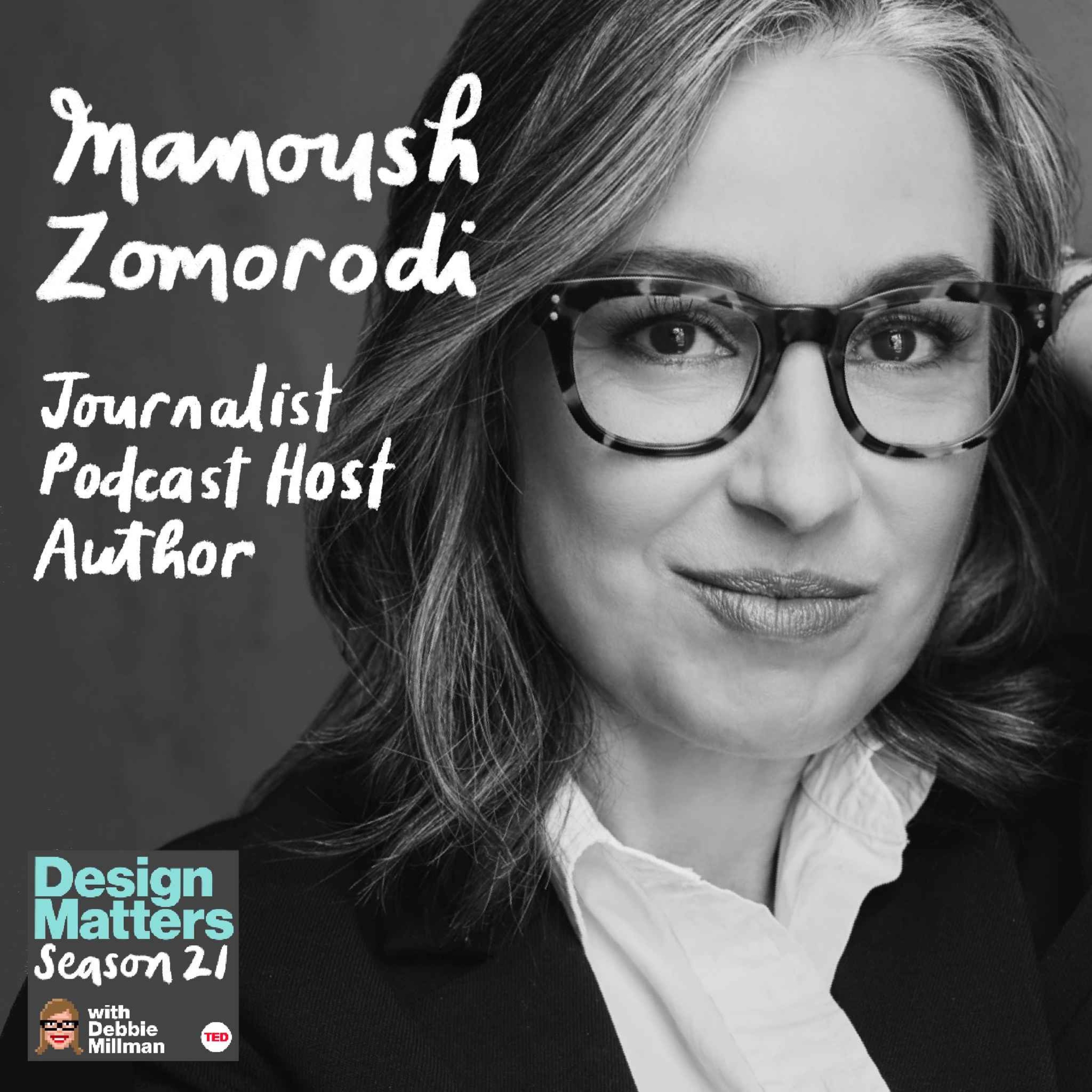
Manoush Zomorodi is an NPR journalist, author, and audio storyteller. She hosts NPR’s TED Radio Hour and previously created/hosted podcasts including New Tech City, Note to Self, ZigZag, IRL, and Body Electric. Her books include Bored and Brilliant and her new Body Electric, The Hidden Health Costs of the Digital Age.
Short, boring movement breaks can offset harms of prolonged screen sitting; standing desks aren’t enough. Five minutes of movement every half hour can improve blood sugar, blood pressure, mood, and concentration. Screens may disrupt bodily signals, weakening interoception.
Her Columbia study experience with Dr. Keith Diaz (8-hour desk day vs. 5-minute walks every half hour); her “boredom” citizen-science project (22,000 participants tracking phone checking); and her TED Radio Hour pivot during March 2020 lockdown.
Written by AI. May contain mistakes.
Discussion on the significance of physical movement in modern life.
“To me, there is nothing that a short, boring walk can't fix.”
Interview with Manoush about her upbringing, career, and insights on identity.
“But you know, I don't really understand physics.”
Learn how fine arts inform storytelling and journalism.
“follow argument, metaphor, structure, and voice.”
Discover Manoush Zomorodi's unconventional path to journalism.
“So I have to explain how I ended up working for the BBC for a decade.”
Explore the intense experiences of foreign correspondents.
“And every time I went somewhere, I was like, whoa, we have just been put into the strangest subculture.”
Understand the lessons learned from high-pressure situations.
“What does training for kidnapping situations entail?”
Examine how early internet access shaped journalistic practices.
“And when they would send me into places, I went, you know, like into the Balkans and Israel and peace would break out.”
Investigate how technology empowers but also presents challenges.
“But I was on fire for like the six months that no one else knew how to use the computer.”
Learn about Manoush's self-education through multimedia projects.
“you've written about how because you didn't get a master's degree, you felt slightly behind in the digital space.”
Discover how motherhood fueled personal and professional growth.
“Yeah, but it still took you a year to do.”
Explore the inception and goals of the New Tech City podcast.
“So I went out for lunch with a friend, Charlie Herman, who was a news editor at WNYC.”
Discover the origins and vision behind Manoush's tech show.
“podcasting is that it's more intimate, like you're talking directly to people.”
Explore the transformation of Manoush's show and the concept of boredom.
“to something that was much more intimate.”
Discuss societal perceptions of boredom and its effects on mental health.
“And just what do you think the reason is that so many people are so curious about these behaviors that they sign on to do these projects with you?”
Learn about the transition to hosting TED Radio Hour and pandemic challenges.
“do, we run the risk of not developing those abilities in ourselves.”
Exploring personal experiences with authority in media and gender dynamics.
“ideally voicing the question in their minds just as it arose.”
Discussing the evolution of podcasting formats and audience preferences.
“But very quickly, what happened was people wanted to listen to shorter things and media became more niche.”
Exploring the intriguing findings of Dr. Keith Diaz on movement and health.
“in your beautiful new book body electric you first yes let's give her a hand a round of applause us.”
Describing an experiment on the effects of movement breaks on productivity and health.
“And so I was like, well, maybe those most, I guess they're related.”
Examining the concept of interoception and its importance in health.
“It was self You know, we couldn't measure everyone's glucose.”
Analyzing how screens affect our bodily awareness and interoception.
“He doesn't know when he has to go to the bathroom, forgets to eat all the time.”
Discussing the challenges of misinformation in the wellness culture.
“I mean, one of the things that completely blew my mind was the idea that your legs are doing so much of the pumping of the blood to your heart and that moving your legs actually helps your heart.”
Explore the discussion around health trends and personal experiences with raw milk and COVID.
“It's like lots of tech bros who are talking about peptide stacks and psilocybin.”
Delve into the debate over personal responsibility versus environmental design in the context of technology use.
“They looked at me like I had just farted.”
Learn about the significance of movement for health and mental clarity, and how to integrate it into daily routines.
“Parents who don't have mental health issues that aren't being dealt with as well, like so many other things.”

Get the gist, explore an idea or ask about something said.
 Claude
On Design Matters with Debbie Millman, what are the key points of this episode?
Searching your listeningAutomatic transcript. May contain errors.
0:01Somebody told me the other day, like, they're like, yeah, did you know that we didn't used to talk about being in nature until the Industrial Revolution came along? Because we were always in nature. I was like, that's kind of like how we have to talk about movement. Like, did we ever say, like, did you move your body today in 1750? Probably not. Everyone was moving their bodies, but that is where we are today.
0:23From the TEP Audio Collective, this is Design Matters with Debbie Millman.
0:31On Design Matters, Debbie talks with some of the most creative people in the world about what they do, how they got to be who they are, and what they're thinking about and working on. On this episode, a conversation with journalist Manoush Zomorodi about why it's so important to move your body in the age of screens. To me, there is nothing that a short, boring walk can't fix.
0:59hey it's page disorbo from giggly squad okay wait have you ever had one of those moments where you're like i should be doing something fun tonight and then you just don't because you don't have what you need because same but recently i've been trying to be more of a yes person and honestly amazon prime has been enabling that energy like the other night i randomly decided I was going to host a last minute girls night. No planning, no groceries, nothing. And instead of spiraling, I just ordered everything I needed and got it that day. Snacks, drinks, even like random hosting things I absolutely didn't need, but emotionally I did.
1:33And suddenly it went from maybe next time to yes, tonight. That's what I love. Prime Same Day Delivery makes it so you can say yes before the moment slips away. Because let's be real, the only thing worse than a bad plan is a plan you never make happen. Same day delivery, it's on Prime. Available in select areas, terms apply. So if you're trying to be more spontaneous or just less chaotic, go to amazon.com slash prime to find millions of items delivered fast. You have the vision for your business. You have the plan. And you just got handed a huge opportunity. But is your business connectivity reliable enough to make a move?
2:08Spectrum Business delivers fast, reliable internet, phone, TV, and mobile services. so you're always connected when it matters most. Get connectivity packages built for your business with savings that keep your budget in check. And with fast, reliable internet and 100 % U.S.-based customer support, you'll stay connected and ready to bring your vision to life. Learn more at spectrum.com slash business. Restrictions apply. Service is not available in all areas. This podcast is supported in part by Bill, the intelligent finance platform that helps businesses and accounting firms scale with proven results.
2:45We often talk about the habits and systems that help people do their best work. For many leaders, that might include building processes that reduce friction and create clarity. That is exactly why so many finance leaders turn to Bill. With AI-powered automation, Bill isn't just moving money. They're simplifying financial operations for nearly half a million customers. They're even trusted by over 90 of the top 100 U.S. accounting firms to get it right. That trust is built on scale. Bill has securely processed over a trillion dollars in real transactions, supporting teams and handling payables, receivables, and expenses.
3:19When financial tasks are organized and visible, it can free up time and energy to focus on what matters most, whether that's your team, your mission, or your community. Visit bill.com slash proven and get a$250 gift card as a thank you after speaking with a Bill expert. That's bill.com slash proven. Terms and conditions apply. See offer page for details. Manoush Zomorodi is a journalist, author, and longtime audio storyteller whose work explores how technology is reshaping our minds, our bodies, our attention, and our sense of what it means to be human. She is the host of NPR's TED Radio Hour, and over the course of her career has created and hosted podcasts including New Tech City, Note to Self, ZigZag, IRL, and the acclaimed NPR series Body Electric.
4:13Her book, Bored and Brilliant, began as a public experiment with listeners and became a widely resonant investigation into boredom, creativity, and the power of reclaiming our attention. Her brand new book, Body Electric, The Hidden Health Costs of the Digital Age and the New science to reclaim your well-being extends that inquiry from the mind into the body, asking what our screen-filled, chair-bound lives are doing to our health and how small science-backed changes can help us feel more alive. Debbie recently interviewed Manoush at her book launch at PNT Knitwear in New York City in front of a live audience.
4:53Can we just, can I say something? Of course. You guys, huge bucket list moment. Like going on Debbie's podcast means you've like fucking made it. So it's also therapy free. You have to do it publicly. All right. Manoush, is it true that Bridget Jones Diary is your favorite book? Oh, it was. There was a moment where I thought I was Bridget Jones. Like, please don't think less of me. It was the 90s, and there was a lot of trying to be a journalist. And I worked for the BBC, and I smoked cigarettes and went out a lot and maybe tried reducing at times. And, yes, there was a hot minute. Again, this is a terrible way to start this conversation, Debbie.
5:43We've set the floor down here. We can only go up, I suppose. I actually was really impressed. I love Bridget Jones. Oh, right there. Okay. No, I totally love that book. It was, I still really feel like I... I mean, Bridget Jones' baby didn't really need that one, but... I didn't see it. Yeah. You're missing a movie. Okay, here we go. Manush, you're half Persian and half Swiss. First generation New Jersey born daughter. Born in New York. New York, New York? New York, New York. All right, well, you were raised in New Jersey. That is so true. daughter of psychiatrists working in private practice and academia.
6:25What did those early layers of identity teach you about belonging, observation, and moving between worlds? Where's my sister? Okay, there she is. So thanks for starting an argument that will probably go. I've been thinking about this a lot, actually, because I do listen to your show, and I have thought, you know, how do I make sense of this? I think we had a very unusual upbringing in that we were not part of a church or even any kind of community. So there was no sense of hierarchy or that certain people could do certain things. Like my parents came to the United States because they were each going to do a year at a hospital.
7:09And that's where they met. And then she didn't want to move to Tehran and he didn't want to move to Geneva. So they ended up in New York, as you do. And I think they're both kind of black sheep in their families. So when they settled in New Jersey, in the wilds of New Jersey, I think there was a sense that you just do your work and you go to school and you do your things. And there was not any sense of like the homeland. Both of them are not nostalgic people. They're not religious. They're not political. And so in some ways, that was hard because we didn't have a community. We had to make our own way.
7:45But on the other hand, I think it gave us a freedom that like, well, you can do whatever you want, just figure it out. So I'm grateful to them in some ways for that. But it's also been very, I realize it's very unusual. I understand that when you were in the fourth grade, you wanted to be an actress. Who doesn't in the fourth grade, right? Yeah. No, I felt special on stage. It was fun. What kinds of theater were you doing back then? Oh, I played the Wicked Witch. I played all the old mean characters, which were my favorite, because then you get the best roles. You get to be evil. You get to treat people terribly.
8:23You get to pretend you're old. It was really a delight. Then in high school, you were on the varsity ice hockey team, but you said that it wasn't because you were any good. No, I sucked. How did you make the varsity team? Well, so I went to a prep school that this was the first year that they had any girls at the school. So they had to populate all of the athletic teams. So if you could skate, you were on the varsity ice hockey team. I sat on the bench the entire time. But I could skate, just not in an aggressive way at all. I was like, take the puck, dude. Like, it's fine. I don't really care.
9:01So evil on the stage, but not on the ice. No, not on the ice. No. you've written about how you were a diligent student in high school and did well but that you didn't realize that you needed to manage up and manage your teachers in order to get A's instead of B pluses and minuses when did I say that um I can give you the no no it's all good So I was wondering what you meant by managing up your teachers. Okay. I do know what this means. I will never forget at graduation where I was talking to one of my teachers who was all pally pally with another one of the students. I was like, you know, she's friends with all of you.
9:49Why is that? And she said, the teacher said to me, oh, she talks to us just like we're normal adults. And I was like, oh. Oh, so in some ways, the deference that my parents had taught me to those who are elders, those who are senior, those who are, you know, teaching you didn't count in the United States. In fact, I think it almost was a mark against you. And if you could hang, that gave you access in a way that I had to learn by watching people. It is not something that was seen as acceptable by my parents who very much you do things a certain way and the teacher's always right. And I learned a lot because this was a person who didn't have great grades, but boy, could she hang.
10:39And she got into a lot of places because of that. And there was an ease that she had that I was like, oh, okay. Like stop trying to be right and do the right thing and respectful. Yeah. So her personality really pushed her forward. Yeah, definitely. You attended Georgetown University. You studied English and fine arts. At that point, you had given up your aspirations to be an actress? Yes. Yes. What did you think you wanted to do professionally at that point? I had no idea. It was the 90s. Again, back to Bridget Jones. I something I like to read and I like to draw so that's what I did I mean how privileged does that sound in this day and age but that's kind of what it was I went to college and tried to just learn I really liked observing people it took me a while to find my people though I thought college was when I got there it felt like very much the same of the prep school that I'd gone to.
11:42There were a lot of people wearing baseball hats and I was like, oh no, not this again. So I thought I was going to leave. I applied to transfer and then I ended up staying and it just took me longer to find those people. In an interview with CNN, you were asked what advice you would give to your 18-year-old self and you stated, take an economics class. Oh, yeah. Why that particular advice? I mean, everything is economics, Debbie. Let's face it, planet money is on the bestseller list. Um, that I think honestly, as we have seen over since I was 18, the last 30 years, if there's anything that has shaped our lives and the way we work and the way we live, it's capitalism and like basic economic concepts I think are something.
12:28And also how to handle your personal finances. Those are the macro and micro micro should be the two things that every student has to learn. I still stand by that. Do you regret having a major in fine arts and English? What's the point of regrets, Debbie? Well, I mean, if we had to redo it, would you? I often think if I had the chops, the intellectual chops, I would have loved to have been a scientist. But you know, I don't really understand physics. That's a problem. Yeah, no, Me neither. Totally. That's a really interesting question. I mean, I did a whole semester on one poem. That just seems so indulgent and yet kind of delicious.
13:16Who gets to do that? Nobody. My major is English. My minor was Russian literature. I have a college degree in reading. Yes. And we are really good at it, Debbie. We are really good at reading. Clearly. after it's about thinking right like that's all those things were to me it was like to me the art was like looking at something and seeing it a different way and then the reading thing was like well trying to read between the lines and it's sometimes a little too much I think um but I mean in an effort to understand my guests I I try to envision why they did certain things so I was thinking about, well, why did Manoush do that?
13:59And I was thinking, well, English teaches you to follow argument, metaphor, structure, and voice. Fine arts teaches you to look closely, notice composition, material, negative space. And that's sort of the way you tell stories. Exactly correct, Debbie. That was why I wrote that and I thought, you know, I just nailed her right there. That's Manoush. After graduating from Georgetown, you began your career as a reporter and a producer. You worked early on for Reuters and BBC News. And some of your, this, this really surprised me in finding this about you. Your early assignments included flying into Belgrade in a rickety ex-Soviet military jet with a forged visa, carrying a bulletproof vest across borders, training for kidnapping situations, and learning to decode warning signs from guerrilla fighters.
14:50Give us some background. Okay. So I have to explain how I ended up working for the BBC for a decade. And the way it started was I literally, there was still such a thing as the white pages. I looked up BBC. I called the bureau. The bureau chief happened to pick up the phone. And I was like, hey, I want to be an intern. He was like, cool. What's that? And I was like, I come and work for you for free. He's like, sounds good. Can you come Monday? I was like, yes, I will. I mean, it was that simple. And I was lucky that I didn't need to be paid. And then every time I was like, I don't know what I'm going to do with my life.
15:26They were like, well, you could stay here. And that went on for 10 years. And I think part of what, why did I call the BBC? Because I thought I was going to be a documentary filmmaker. I was like, that sounds cool. But this was a news organization. And that was actually really interesting because it was the best people watching, just the drama that was going on behind like the hard to charging correspondence. And like, they were all British and all the producers were American. And there was this weird sort of semi-class warfare going on in the office itself. And then the editor was crazy. She could go off at any moment.
16:05Like the whole thing was fascinating. And then occasionally they would all look at me and I would do something for them. And then they would look away. So like the whole, And then it just sort of kept going like this to the point where I just was part of the furniture. And they kept offering me jobs. And I kept doing them. And I was cheerful. And I asked a lot of questions. And I was curious. And I never wanted anything. And that's very, I think, British not to be too thrusting, as they say. And so I ended up being a journalist. And then they started sending me to all these weird places. And I just worked really hard.
16:41And every time I went somewhere, I was like, whoa, we have just been put into the strangest subculture. Whether that was like, you know, farmers out in Iowa, story about Monsanto, or going to Serbia and, you know, the Civil War about to happen. Like every time I went somewhere, it was the same thing that I'd seen happening in the Bureau, that there was this sort of microcosm of life. And all the ways that people talk to each other fascinated me. And I would also add, oh, this goes back to English and fine art. Yes. At the time, this was really, I think, the golden age of broadcast television. Like every piece that we made was beautiful.
17:24The cameramen were amazing. They were artists and they paid so much attention to the audio. and I was a bimedial producer, which meant that I also made radio pieces. And there was a real sense of storytelling and letting the audio or the video tell the story as much as the writing. It was like a collage. So I really appreciated the art, artistry of the journalism. And that was fascinating to me as well. What does training for kidnapping situations entail? Well, so that meant we lived in a mansion out in the English countryside and literally one day, like we're learning how to drive Jeeps in case we need to be stuck in the Alps or whatever and they threw bags over our heads, put us in the back of a Jeep and then drove off and then put us on the ground.
18:11Did you know it was a simulation? I knew it was going to happen at some point. They don't tell you when it's going to happen. They have since changed the rules around this. I don't think they can do this like they used to. For the longest time, I had a scar across my nose because the day that we left from the training, my friend and I, a car backfired and she threw me to the ground and her engagement ring ripped across my nose. And she said to me, you know what I learned? I learned I'm never doing this. And she quit the next week and became a florist. Wow. Yeah. Well, what did that early experience teach you about fear?
18:51And what did it teach you about your own composure under pressure? I was down. I never actually saw any of that because 9-11 happened. So I moved back from Berlin and that was its own, this, you know, New York was a, its own war, sort of war-torn place and a different kind of war-torn place. And then after that, I was like, I, I don't want to do this breaking news thing anymore. So I never went to Iraq or Afghanistan. And when they would send me into places, I went, you know, like into the Balkans and Israel and peace would break out. I literally was the dove of peace. Like I would show up and everything, suddenly things would be fine.
19:39So clearly that was a mistake dropping out because they could have used me in the Middle East. You imagine? Yes. You'd be like going all over the world at this point. I know, Hormuz. in 1996 you were the youngest producer in the BBC News Bureau in Washington DC and you were the only person in the office using the one computer connected to the internet and you described it almost like having a secret reporting power nobody knew what to do with the computer so what what did it feel like before it became ordinary for you to have this secret power well I didn't really know what I was doing either, but I was like, all right, let's see what's going on over there.
20:19And I would just find sources like on chat rooms. I would be like, oh, this is an easy way to book people. I don't know who they are, but I would be like, they'd be like, we need a real American. And suddenly I would be able to find one, a real American without having to hit the phones. And then the Internet came to everyone and my superpower was gone. But I was on fire for like the six months that no one else knew how to use the computer. But what did those first online searches teach you about this sort of intimacy and reach of digital life? That's something that's actually been a through line for all of your work now.
21:00So true, Debbie. It was that intimacy was exactly like what I was seeing in the bureau, that people were talking to each other and you could drop into these subcultures, which is what I really loved doing. So it felt like you were eavesdropping on the world, essentially. It was great, delightful. It was what the internet was meant to be. At what point did technology stop being something you used as a journalist and became something you wanted to investigate as a journalist? Yeah, it was really clear to me. It was, so I like to say that my son and the iPhone were born three weeks apart in 2007, June 2007.
21:42And I didn't get an iPhone to start because I was like, I don't know, whatever. I had a baby. But when I got it, I was bewildered. I was like, this is crazy. I can be in multiple places at the same time. I can be standing here in the like playground, but also checking what time the library opens and taking a call and checking my email. This is wacky. And like my brain couldn't hack it, but the problems came later. At the time I was like, this is extraordinary. I can be a parent and I can have a job and I can like check in on my, my parents. And, um, again, I felt superpowers once again. It really was fascinating to me.
22:30But then I also started to wonder, well, with every good thing, there's a shadow side. But that didn't become apparent, I think, for a little while. Well, even with all of your early adoption of the internet, you've written about how because you didn't get a master's degree, you felt slightly behind in the digital space. And you use that as an opportunity to, in your words, skill up. And you wrote a multimedia ebook to force yourself to understand publishing. Deep cut, Debbie, deep cut. Yeah, well, so there was this moment, it was 2012, I think. Yeah. I was like, well, I had two kids. I didn't know what I was doing.
23:15I couldn't work in breaking news because I had two kids. And so I was like, well, what am I going to do? I guess you can do anything now because of the internet. So I started to think, oh, more people are doing video. I know how to do video. I know how to coach people to do video. Maybe I should try to write a book like that. But then I wanted to integrate multimedia into it. It just felt like to me, I wasn't going to go back to school, but I could learn by making something. And I still think that's the best way to learn. Just make it yourself. So I recorded videos and I made a book. Anybody I heard of a book?
23:50No. Okay. Publishing people on the front are all like, yes, it wasn't good. So I made one of those and self-published it before that was even a thing. And I mean, it didn't really go anywhere, but like, boy, did I learn a lot about like writing for short form, integrating video, how you publish it, ways of marketing it. Like I just, it really did give me a master's degree. And you self-funded this entire venture. Oh, it didn't cost me very much. I mean, at all. Yeah, but it still took you a year to do. Yes, that's true. That's quite a commitment. So it was called Camera Ready, How to Present Your Best Self and Ideas on Air or Online.
24:34You built the website, you did your own social media marketing. What did you learn in the process of doing this? I liked being a little mini media entrepreneur. It was fun to put it all together. It wasn't that different from anything else I'd done, just smaller platform. It was collage again, text and visuals and audio. And it just, I liked building these worlds where like, come and enter my world and we'll learn something together. And I really did. I mean, he was a dear friend of ours, Ian Hardy, he said 20 years ago, he said to me, he's like, everyone is going to be on video all the time. And I was like, really?
25:13He's like, really? So I was like, okay, well, this is a good skill to have then. So I know how to do that. I think I was 10 years early, though, with that book, actually. I think it shows quite a lot of your being able to see things before people actually see them. And I think that's one of your superpowers. Or just listen to the people who do see it, I think. Nobody's listening to them, but I'm listening. One of my favorite things that I found out about you was this. After you published Camera Ready, you said that you developed both self-confidence and an ability to not care what people thought.
25:52Oh, that was because I had two small children. Yeah. Was that really the reason? Oh, that's really the reason. Like I didn't sleep for a few years there and you will be surprised at how little you give a shit and what anybody thinks when you have not slept except perimenopause has helped that I didn't think there was any shits left to give but now the last one is gone so so so that's sustained itself through all these decades yes it's beautiful it's like that that filter power yes well and you see that like at every stage like good girl deferring upwards doing the right thing and i defer to you older white man who's actually doesn't know all you're talking about in our history class but you're the boss right and like every time through each one you learn more you feel more confident you give fewer shits and then you're like a whole human it's amazing the book opened up several new opportunities for you and you started to do a very short tech report for wnyc news and this coincided with the growth of podcasts and then they offered you the opportunity opportunity to run your own podcast and be you in the process, which was a real change for you.
27:04Yeah, that was weird. So I went out for lunch with a friend, Charlie Herman, who was a news editor at WNYC. And he's like, so what should we be doing in our business coverage? I was like, dude, the tech economy, it's taking over New York City. You should be reporting on that. He's like, well, I don't have any reporters. So why don't you report on that? I was like, fine so um I'd like what a bird I know I the nonchal the things that I like really care about if you grab it's the buddhist thing right if you grasp too hard it slips out of your grasp but if you're just like okay then things you're you're you're real self and so I went and it was super fun I got to you know it's hard to imagine but 2012 like this was new this like google didn't have offices here.
27:51It was a whole thing. But what happened with podcasting was they were ahead of the curve. Well, you know what was going on then. And they were like, yeah, the difference with podcasting is that it's more intimate, like you're talking directly to people. So like, talk about the things that you find interesting, like as a parent. And so when I started talking like myself, that changed everything. Yeah. Yeah. Your first major technology show, New Tech City, began in WNYC in 2012, before smartphones had fully colonized every corner of our lives. And New Tech City was not simply a gadget show. It was already asking about how technology was changing behavior, work, attention, relationships.
28:37What was the original idea for the show? How did you come to bring this to life. Yeah, no, it really was like tech economy. It was a business show. Like what is happening as we change from financial services to looking more at tech, which is like, sounds ridiculous now because everything is financial services and tech all baked in together. But at the time it felt like, oh, digital, the digital vertical and like, which sounds ridiculous. But that was the original idea, yeah. You have the vision for your business. You have the plan, and you just got handed a huge opportunity. But is your business connectivity reliable enough to make a move?
29:17Spectrum Business delivers fast, reliable internet, phone, TV, and mobile services, so you're always connected when it matters most. Get connectivity packages built for your business, with savings that keep your budget in check. And with fast, reliable internet, and 100 % U.S.-based customer support, you'll stay connected and ready to bring your vision to life. Learn more at spectrum.com slash business. Restrictions apply. Services not available in all areas. This episode is brought to you by Choiceology, an original podcast from Charles Schwab. Hosted by Katie Milkman, an award-winning behavioral scientist and author of bestselling book, How to Change.
29:56Choiceology is a show about the psychology and economics behind our decisions. Hear true stories from Nobel laureates, authors, athletes, and everyday people about why we do the things we do. Listen to Choiceology at schwab.com slash podcast or wherever you listen.
30:30the repetitive processes, the invisible load that pulls attention away from what really matters. That's where ServiceNow's AI specialists come in. They don't just tell you what you should do about your busy work. They actually do it. Start to finish. Cases closed. Requests handled. No extra work for you. To learn how to put AI to work for people, visit servicenow.com. We asked you here because we care. And your car insurance doesn't. They've raised your rate every year and you haven't even checked. I thought that was normal. A lot of people do. That's why there's Jerry. Jerry pulls up to 20 quotes from top insurers in minutes, shows them side by side and lets you switch in the app.
31:12No jumping sites, no reentering info, no spam calls. It helps you cancel your old policy and keep checking for better rates. We want better for you. Jerry does too. Don't settle. Visit jerry.ai slash ACAST. When New Tech City became note to self, the title shifted from a citywide technology beat to something that was much more intimate. Yeah. Almost like a private memo. What changed in the show's ambition when the name changed? Yeah. So what really changed it was Bored and Brilliant, the first engagement project that I did. So that was my own sort of feeling like every time I had a spare moment, like times when I would have just been like thinking about my life.
31:58I was now looking at this thing and I was being productive. Allegedly, I could check the headlines. I could text my husband. I could check the weather. And I just started to wonder what was happening in those moments before I was looking at my phone. I was like, I guess I was bored. Was I bored? What is boredom? Like literally I was, I was like, so if we're never bored, is that bad? That was the question I had. And then that sort of kicked me off like, well, I'm, you know, everybody must be feeling this weird thing. So I came up with this scheme to like explain what boredom was neurologically and like recruit people.
32:38There was no research, zero research on how smartphones and being online all the time was affecting our cognitive ability at that point. Because research takes time, right? And this was happening fast. We were experimenting on ourselves. So there were no answers. So WNYC, like to their credit, they were like, cool, do it. So we put out the call. I was like, do people want to try to get bored for a week? And I found this app. This guy named Kevin had made an app for his wife to see how many times a day she checked her phone. So I called Kevin and was like, Kevin, can you like white label this for our project?
33:18And he was like, sure. I mean, like ridiculous. And then so we had 22 ,000 people sign up for this thing who wanted to get bored and were willing to like track their data and report back on this whole thing. And it was wild. and mind wandering was actually becoming a hot research topic at that point, which is kind of interesting. So just understanding what happens in the brain and explaining to people the default mode and how that's actually related to original thinking and problem solving and something called autobiographical planning, understanding the story of your own life. These are things that happen when you use boredom as a window to what they call positive constructive daydreaming.
33:59There was something about creating a community around that idea and giving everyone permission to do it together, even if it wasn't IRL, that seemed to get people super excited. And we had challenges every day, like try to keep your phone off your body today or don't take a photo for one day. And it wasn't about judgment or shaming people. It was just like, see what it's like. Like, this is the world we live in. See what it's like to change it. And I was astounded at the response that we got. But in the end, we only people only shaved off six minutes on average, which I was like, oh, well, we failed.
34:42Well, what does that say about our addictive relationship with the device? I've changed my mind on that. I think it's more about being intentional when you are on it. At the time, I was like, we failed. And the behavioral scientists were like, do you know how hard it is to change people's behavior? You tried to do it in five days. I was like, OK, fair. But I now think that what we did was when people went on, they were present and they decided how they were going to use that time as opposed to being passive with it. And I think that is actually was really powerful in and of itself. And to me, I was like, well, people are clearly craving this.
35:20So that was like sort of my signature was these big engagement projects. And we went on to do another one the next year about information overload. 30 ,000 people did that. We decided to do one about privacy, which I was like, no one's going to sign up for this. 45 ,000 people signed up for that one. And just what do you think the reason is that so many people are so curious about these behaviors that they sign on to do these projects with you? I mean, at that point, no one was talking about any of this or if they were, it felt very obscure. It felt like it was like only in like the tech, you know, the verge maybe was covering it, but it wasn't mainstream to talk about how focus, attention, privacy in a sort of philosophical and a data way.
36:10That felt very new at the time. But there were people who were observing themselves and thinking like, this is weird. I don't quite understand it. And we weren't treating it as a tech thing. We were like, we would give you the history and the biology and talk to designing elements and ask you to be part of finding the answers because we don't know. So you help us. The citizen science thing, I think people like, they want, you know, especially public radio people, they want to figure it out with you. They're excited to be part of the solution and they're very generous with their time and with their feedback.
36:47How are you feeling about how people feel about boredom now? Oh, wow. It's crazy. Again, 10 years early. I was too early. Boredom's having like a crazy moment right now. Finally. Yeah. Gen Z is all about getting bored. Whenever I post anything about boredom, it does the best. And I'm like, where were you in 2017? Like they were 10? Yeah, they were 10. They were 10. Exactly. It's amazing. It's like, yeah. So this will just keep happening that boredom will keep reasserting itself but i love that like boredom is now good isn't that amazing like when i was a kid it was like only boring people get bored or angry people people that are bored are angry they're angry that's what i had always heard that they can't grew up in new york city they can't find something to do they're bored they're angry, they're cut off.
37:46But do you think that people, okay, maybe Gen Z is more attuned to the upside of boredom, to the potential that boredom can bring you. How do you think most other people view boredom still? I think so many people still see busy as a badge. They don't want to be in a position where they are having to really think deeply about the choices that they make, which is what happens when you're bored. How did you get to this place where you're bored and then suddenly the world drops out from under you? Yeah. I mean, I think we feel very uncomfortable with feeling uncomfortable and that's a big bummer. Like as much as I accept the rising rates of anxiety and depression and all of those things and absolutely believe those are real.
38:37I do think we have run the risk of diagnosing things that are just human feeling sad and uncomfortable and bummed out and finding your way back from that feeling is a skill that every person needs to develop. And if you are self-soothing with screens, which is I think what a lot of us do, we run the risk of not developing those abilities in ourselves. And we hear that from a lot of parents, but I think parents also should look at themselves. Yeah, of course. They're socializing that behavior. In November 2019, NPR and TED announced that you would be succeeding Guy Raz as host of the TED Radio Hour.
39:26Your first episodes as host began airing in March of 2020. March 13th, the day that the city shut down, was my first episode. Like, anyone gave a crap about my first episode. Yeah. Well, I mean, we were spending a lot more time listening to the radio, listening to podcasts, watching TV. I personally watched all 10 seasons of Columbo. Wow, Debbie. I know. Roxanne had never seen it. My wife had never seen the show. I've never seen the show. Oh. Okay. There you go. Gosh, get that one on the list. Yeah. Yeah, no, the first episode was titled Reinvention. Yeah. They'd been very smart. They were like, we want you to come on six months early and we're just going to bank a lot of episodes.
40:15And every episode we had made made no sense after March 13th. At all. So I was like, shit. So what did you do? We churned and burned, pivoted. We did best of with curators. What brings you joy? A whole episode talking about the TED Talks that bring you the most joy. We attempted to really get into vaccine, the cultural and history of vaccines. We just went, went, went. We just tried, tried, tried. and it was exhausting. But you know, everyone, we all, everyone, it just felt so minimal compared to everything else that was going on. Poor me, I need to fix my podcast. Like, you know, it was fine.
41:03I was going to stop. I was actually going to stop because at the time I was only doing episodes face-to-face. Oh, wow. Until that point, till 2020, for 15 years, I'd only done shows face-to-face. Whoa, that's a big change. And I hightailed it to California to be with Roxanne We had just gotten engaged and I was going to take a break because we thought it was going to be like two weeks. Yeah. And then I'll come back. And then Curtis, my producer, was like, I think maybe it's going to be longer. And then I had to learn Zoom and Canvas through school. And it was very challenging. Yeah. But one of the things that I read that I thought was so interesting when you began, you said you understood that the format would still be built around TED Talks and conversations around speakers.
41:52but you wanted to make the organizing idea feel more like a thesis than just a theme and stated that you were looking forward to bringing in your own perspective as a woman, a mother, and a child of immigrants and wanted to act as a proxy for listeners, ideally voicing the question in their minds just as it arose. Wow, that's a real, who did I think I was? My God, that is, that's crazy. What are you talking about? I was like, wow, check. She did it. You know what? I think I was annoyed that like, so Guy Raz and I go way back. Should we just have some, air some tea here or whatever it is. So I, yeah, right.
42:37So I knew him in, when we were both in Berlin and he was the hotshot young reporter and I was a producer. And I felt like everywhere I went, Guy was just a little ahead of me. You know what I mean? Those people. And then I had kids and then I was really set back from like that crop of men. And this says more about the chip on my own shoulder than really anything. But it was that NPR voice of authority that I was exhausted by. I felt like dudes could say whatever they wanted and everyone assumed they were right. And the minute I said the same thing, everyone was like, oh, that's nice, but she's not Leonard Lopate.
43:20Do you know what I mean? And it annoyed me. And so I was like, fuck it. I'm doing it my way. And I was totally wrong about the first part, though, the thesis running the way through the episode. This is very in the weeds. But very quickly, what happened was people wanted to listen to shorter things and media became more niche. And really having a thesis, people didn't want to listen to 52. Like that's asking a lot from them. And so that was the wrong direction to go. In fact, we should have split the show apart at that point and made shorter, smaller things. Across New Tech City, Note to Self, some of your other podcasts, ZigZag, IRL, and the TED Radio Hour, your work keeps returning, I think, to a central question.
44:10How do we remain human inside systems that are changing faster than we are? Yeah. and it often turns private discomfort into public inquiry. You do these wonderful projects where you bring in people to help understand something that we're grappling with. So digital distraction becomes bored and brilliant. Bodily depletion inspired your brand new book. How do you recognize when something you're personally struggling with is also a cultural story? it's this weird like this sounds kooky but there's this weird feeling i get super uncomfortable i'm like oh shit shit i'm uncomfortable everybody else is probably really uncomfortable too this is not good and then you're like do you feel this way and then you you know you do you're like yes the ps32 moms do you guys feel this way and they're like yes or and then you start to like look on social media oh people are talking about this well this isn't good we need to figure this out and then I don't know the answer though but I know how to go find the answer I think I'm that's what I'm good at and make it interesting for other people to want to find the answer to well let's talk about some of the answers that you've found and discovered and written about in your beautiful new book body electric you first yes let's give her a hand a round of applause us.
45:41So you first encountered a body of research by Dr. Keith Diaz from his Columbia University research through the journalist Alison Aubrey. And at the time, the world was just emerging from the pandemic. Can you share the main thesis of Dr. Diaz's research and why you found it so intriguing. Well, Keith is here, so he might take issue with the way that I describe it. Please say hi to Keith, everybody. He's amazing. I was walking my dog and I heard Allison on Morning Edition talking about this new piece of research that we know that working out in the morning isn't enough in terms of our health and standing desks, sadly, are not the answer.
46:25and this guy at Columbia had figured out that five minutes of movement every half hour like largely offset the harms of us sitting on our asses and looking at our screens all day and I was like what that's it how is that possible that that's skeptical as a journalist were you like how is this well no because it was so obvious in some ways I was like you know you're like oh of course that's it we just have to move but like really I I it seemed like it made sense to me and I that was the thing had been that I had been wrestling with I was like why am I so freaking tired all the time I don't understand I'm sitting on my laptop doing nothing but looking at my laptop why can I not move except to get to the couch like I could not figure out the problem And then this guy's like, this fixes the actual health, you know, the medical side effects in terms of hypertension and raised glucose levels and high blood pressure and all those things.
47:29And so I was like, well, maybe those most, I guess they're related. I don't know. I hadn't really thought about it. Right. So I called him and I emailed you. I can't remember. And I was like, this is amazing. And really? and do you think people can do it and Keith like is a total pragmatist he was like I actually don't think anybody can do this and I was like oh but it's so easy and he said well come up and try it out for yourself so I went up to his lab and um well first for a week I wore like multiple things to measure my step count my glucose all the things and then I went up to his lab which I thought was going to be like filled with like people in like white coats and everyone's on treadmills and yeah I have this vision of like mice and little cages yeah you know white gloves you know plastic gloves they were just like oh hey come on in and then they put me in an office that looked like an office and I was like that's it um so I sat at a desk for eight hours and like had a normal day on my laptop but they also measured all my vitals and my mood and um ability to concentrate.
48:37And I got like a couple of breaks. I got to go to the bathroom. I had lunch. I was exhausted when I got on the subway as per usual. And then I came back another day and they had me walk for five minutes at two miles per hour. So like not a New Yorker strut, you know, like just stroll for five minutes every half hour. And I'm a relatively healthy person. And he came back. I was like, so you probably didn't see very much of a difference. He's like, actually your blood sugar was cut in half and your blood pressure dropped by five points. And the way you measured the value of your work was much higher.
49:15You weren't as anxious. You could concentrate again and you were more positive. I was like, okay, this thing works. And I was like, we got to just ask people if they can try it and figure it out. And he was totally game. And to him and his team's credit, they decided that this was going to be, this meant a lot to me as somebody who doesn't have a PhD, but also has a big chip on her shoulder. It meant a lot to me. He's like, no, let's do it as a proper scientific study. So they went through all the IRB channels to make sure that this was a clinical trial and 23 ,000 people signed up and crashed Columbia servers.
49:54So they had to close it. And the goal was like, do it on your own. It was self You know, we couldn't measure everyone's glucose. You had to, we would send you forms or text you. You could choose to either take movement breaks every half hour during long periods of sedentary screen time, every 60 minutes or every two hours. And people did it. 80 % of those who decided to commit to it stuck with it for the full two weeks. 82 % liked doing it. Fatigue levels were cut by up to 28%, which was amazing. But the best part to me was that productivity actually rose, which I think really speaks to the culture that we have, which is like butts in seats, looking at a screen, in some cases software, watching your every keystroke.
50:43We're measuring that as like what good work looks like, what productivity looks like. And we're getting it wrong. Like that's how computers work. Humans don't. and we need these breaks to, I learned so much about biology and how our leg muscles work and why they need to be stimulated and how they suck in the glucose and the lipids from your blood and how you oxygenate your brain. And then another really interesting, reminded me of like what mind wandering was a decade ago, interoception is kind of at the same point where neuroscientists are studying the body's sending the brain like what it needs, telling you what it needs.
51:24And they're now also starting to study how screens mess with the messages that get sent from your body to your brain. And can you talk about that a little bit more? Okay. So interoception, that is, so I was talking to someone who has an autistic kid and she was saying, oh my God, we talk about interoception all the time because her kid's interoception is very dialed down. He doesn't know when he has to go to the bathroom, forgets to eat all the time. Why is that? Well, autism, they don't know exactly why, right? But his body can be sending signals that his brain just doesn't get them. Other people, maybe the signal is turned up too high.
52:01So like someone who's really anxious, if their heart is beating really hard and really fast, they think like, oh my God, I'm having a heart attack. As opposed to like, okay, well, hang on. Did you just run up some stairs? Maybe it is beating hard, but you know. So everyone has more interoceptive or less intercept. We're all different. but I should say also that the people who are studying it mostly what they're looking into is um people who have eating disorders and anxiety disorders because they believe that interest there might be a mismatch with interoception uh they also measure interoception for people who are in cardio rehab it's called the heartbeat test there's some debate over whether it's accurate or not but like can you sense your own heartbeat do you know when to take it easy and back off or push yourself if you've had a heart attack and you're in rehab, that kind of thing.
52:50So I called this guy Saeed Khalsa. He's now at UCLA and he's been studying floats, which is, you know, you, you lie in like a saltwater thing and there's no sound and sensory deprivation kind of as a treatment for people who do have interoceptive disorders, like anxiety eating disorders and are seeing amazing results. Like this idea that maybe you can recalibrate how the body sends its messages and how the brain takes them in. So to me, I was like, but I feel like screens are messing with my interoceptive ability that I will stand up and I haven't peed for hours and, um, oh, my left foot's asleep.
53:29And like, what the hell? Like, it's like, I completely ignore the fact that like, I'm attached to this bag of flesh that needs tending to. And it just kind of freaked me out that I could ignore it so much. And it turns out that at the University of Barron, these scientists are studying, you know, what is the difference between adding movement interruptions versus not adding it and how it helps or hinders your interoceptive ability. And they have concluded that, yes, your sense of embodiment, obviously, I mean, I love when science proves something that we all know, which is that if you move more, your interoception improves and therefore you feel more, you feel better.
54:11You feel more human. You feel like you can think again. And so that just was fascinating to me. I was like, I don't, do we, do people talk about interoception? That's really cool. I mean, one of the things that completely blew my mind was the idea that your legs are doing so much of the pumping of the blood to your heart and that moving your legs actually helps your heart. and and I I think about this now every single day or here's another good one this one's also courtesy of Keith which you will never be able to unsee which is that think of a garden hose Keith god bless you for this one uh a garden hose that's kinked right when you sit you kink your body at your torso and your knees and you know how with a garden hose their backs up the pressure builds, etc.
55:01Same thing is happening with your blood flow. Try to not imagine that one every time you sit for hours and hours. And you need that blood flow because that is the thing that is pushing the oxygen up to your brain, letting you think properly. It's taking in the fats, the lipids, and the glucose. And Keith's TED Talk is out in a couple weeks where he goes more deeply into that biology. You also write about a different kind of maha, not make America healthy again, but misinformation, assumption, hype, and alarmism. And in a wellness culture where fear seems to be traveling a lot faster than nuance, how did you decide what kind of health book you did not want to write?
55:45Yeah. Wow. I just went on Summit at Sea, if any of you have ever been on that? Holy shit. I did not know what I was getting into. It is a conference on a boat with people. Yeah, I know. I should have stopped at that at that moment. It's like lots of tech bros who are talking about peptide stacks and psilocybin. And then this guy was like, told me I needed raw milk. And I was like, okay, but what about the bacteria? And he's like, oh, no, you need clean cows. I was like, Oh, I need clean cows. Okay, cool. Um, anyway, uh, so that did my head in. Cause I was like, Whoa, we have got like this whole, but that's not, I have to accept those are not the people that this book is for.
56:37In fact, I was brought on the boat to talk about this book and they, that was not a good fit because they're in their own little universe. I brought up COVID in a conversation on the boat. Did you have to swim back to shore? Oh my God. They looked at me like I had just farted. So they were all like, I was like, what? I had COVID. They were like, I was like, no, I did. I really did. I had it. It was bad. They were like, none of the people in that group had ever had COVID. Oh, the sniffles? You don't think so? Uh-huh. By the end of the Body Electric study, the question that you were considering was no longer simply, can people take movement breaks, but what kind of life makes those breaks possible?
57:27Yeah. What did the project teach you about the difference between personal responsibility and environmental design? Well, it's frustrating, right? Because on the one hand, it annoys me that once again, it's our personal responsibility. It's on you, the individual, to figure out how to live with this stuff that Sam Altman has decided should be part of your life. Like, that annoys me. On the other hand, the more I think about how we use this technology, each of us uses it very differently. On average, a person uses 11 different software tools at work. 11 different ones. And I know the way that I use Slack is different from someone else, is different from Google Docs, is different from all the other things.
58:10And so it does kind of this personalization of our tools means that we have to personalize our own. I love that that guy's gotten up to move over there, by the way. Hell yes, you are on brand. We're so dancing after this. I was wondering a little bit about practicing what we preach here. your garden hoses. Um, so I think it has to be a balance, right? I think there's a cultural change that has to happen where like people accept that productivity doesn't mean grinding it out. I think that, uh, there, the science needs to get out there, like really basic science that like, here's how your brain works.
58:47And here's why you feel so like you can't pay attention. It's not just because you're on Instagram. It's because you are not moving your body for hours. Let's not blame everything on the content and the scrolling. It is basic human function that we are neglecting as well. And so before we, you know, ban, oh God, I'm getting on my high horse here. Before we decide that we're going to ban kids from being on social media and then pat ourselves on the back and say, see, we fixed it without fixing all the other things that kids need, which is places to go in real life. And oh, healthcare would be nice.
59:26And safe schools, safe schools, hell yes. Parents who don't have mental health issues that aren't being dealt with as well, like so many other things. So I think this integration, especially as AI, makes this more and more intense. I mean, on the boat, people were telling me that they're working 16, 18 hour days, They are running eight AI agents at once that they then need to go back and check all the work of all of their agents. They're like, this is not setting me free in any way. This is giving me more work. The expectations are higher. And they're spending so much money wherever I'm working.
1:00:05Or I, as an entrepreneur, I'm spending so much money on these tools. I need a return on investment. I'm desperate for a return on investment. So we're just spinning our wheels faster and faster. As a design element, I think we need to make interruptions beautiful. Manoush, I have one last question. Dr. Diaz wrote the foreword to Body Electric and described you as a scientist at heart, someone who wants to understand the research deeply rather than just pull out a headline. So without it being headline-like, I'm wondering if there's a piece of advice besides our both urging everyone to read this wonderful, groundbreaking book.
1:00:53What could people do right now, aside from just getting up and leaving, but what can people do right now to improve the quality of their life through movement? Oh, I would just say to me, there is nothing that a short, boring walk can't fix. It is a beautiful magic. When I go for a walk around the block and I leave the dog at home and it just resets. And like, I'm able to think again and my body feels better and I'm more patient and I breathe. And I just think it's that simple. like somebody told me the other day, like, they're like, yeah, did you know that we didn't used to talk about being in nature until the industrial revolution came along?
1:01:37Because we were always in nature. I was like, that's kind of like how we have to talk about movement. Like, what did we ever say? Like, did you move your body today in 1750? Probably not. Everyone was moving their bodies, but that is where we are today. We need to remind people to think and to move. We need to use the language. We need to be intentional. And I think people, even just a little bit of joy that they get out of that, that is something in 2026. Manoush Zomorodi, thank you so much for making so much work that matters. Thank you for joining me today on Design Matters.
1:02:14Manoush Zomorodi's new book is Body Electric, The Hidden Health Costs of the Digital Age and the New Science to Reclaim Your Wellbeing. To learn more about Manoush Zomorodi, you can listen to NPR's TED Radio Hour or see more of her work on her website, ManoushZ.com. Design Matters is produced for the TED Audio Collective by Curtis Fox Productions. The interviews are usually recorded at the Masters in Branding Studio at the School of Visual Arts in New York City, the first and longest running branding program in the world. The editor-in-chief of Design Matters Media is Emily Weiland.
1:02:58Hello, it's Ed Gamble here from the Off Menu Podcast. And James Acaster here, also from the Off Menu Podcast. Imagine a backyard tradition. A sun-drenched afternoon, a massive vat of bubbling oil, and a man named Big Dave wearing goggles. It's a lot of effort for a bird. Well, what if I told you that Boar's Head has brought that exact backyard tradition right to the deli counter? Well, I'd say, James, you've finally lost it. Boar's Head brings to the deli the taste of deep fried turkey. It's all the seasoning and that golden fried glory of the Friar's Turkey Breast, but without Big Dave having to set up a perimeter in your garden.
1:03:36Oh man, that sounds genuinely incredible. The Friar's Turkey Breast in stores now. Discover the craftsmanship behind every bite at your local Boar's Head deli. Boar's Head, committed to craft since 1905. Hi there, it's Adam Grant from Ted's Rethinking Podcast. And this episode is brought to you by ServiceNow. I get to spend my days studying how people think and what it actually takes to change our minds. It's work I find deeply meaningful. But even in meaningful work, there's still busy work. The admin, the repetitive processes, the invisible load that pulls attention away from what really matters.
1:04:10That's where ServiceNow's AI specialists come in. They don't just tell you what you should do about your busy work. They actually do it. Start to finish. Cases closed. Requests handled. No extra work for you. To learn how to put AI to work for people, visit servicenow.com. If you've got a teenager, it's time to have the talk. You know, about investing. With the new Schwab Teen Investor account, teens can gain hands-on investing experience and build positive money habits. It's an account co-owned by you and your teen, so you can monitor and engage with the account while your teen learns how to invest and manage money.
1:04:45Learn more at schwab.com slash teen. Hey, it's Paige DeSorbo from Giggly Squad. Okay, wait, have you ever had one of those moments where you're like, I should be doing something fun tonight, and then you just don't because you don't have what you need? Because same. But recently, I've been trying to be more of a yes person, and honestly, Amazon Prime has been enabling that energy. Like the other night, I randomly decided I was going to host a last-minute girls' night. No planning, no groceries, nothing. And instead of spiraling, I just ordered everything I needed and got it that day. Snacks, drinks, even like random hosting things I absolutely didn't need, but emotionally I did.
1:05:23And suddenly it went from maybe next time to yes, tonight. That's what I love. Prime's same-day delivery makes it so you can say yes before the moment slips away. because let's be real the only thing worse than a bad plan is a plan you never make happen same day delivery it's on prime available in select areas terms apply so if you're trying to be more spontaneous or just less chaotic go to amazon.com slash prime to find millions of items delivered fast when you manage procurement for multiple facilities every order matters but when it's for a hospital system they matter even more granger gets it and knows there's no time for managing multiple suppliers and no room for shipping delays.
1:06:01That's why Grainger offers millions of products and fast, dependable delivery. So you can keep your facility stocked, safe, and running smoothly. Call 1-800-GRAINGER, click grainger.com, or just stop by. Grainger, for the ones who get it done.
Manoush Zomorodi is an award-winning journalist, author, and host of NPR’s TED Radio Hour whose work explores how technology shapes our minds, bodies, attention, and sense of humanity. She joins Debbie Millman live at the launch of her newest book, Body Electric, which examines the physical and psychological consequences of our increasingly screen-centered lives.
Learn more about our flagship conference happening this April at attend.ted.com/podcast
Hosted on Acast. See acast.com/privacy for more information.


