
 Ask ChatGPT



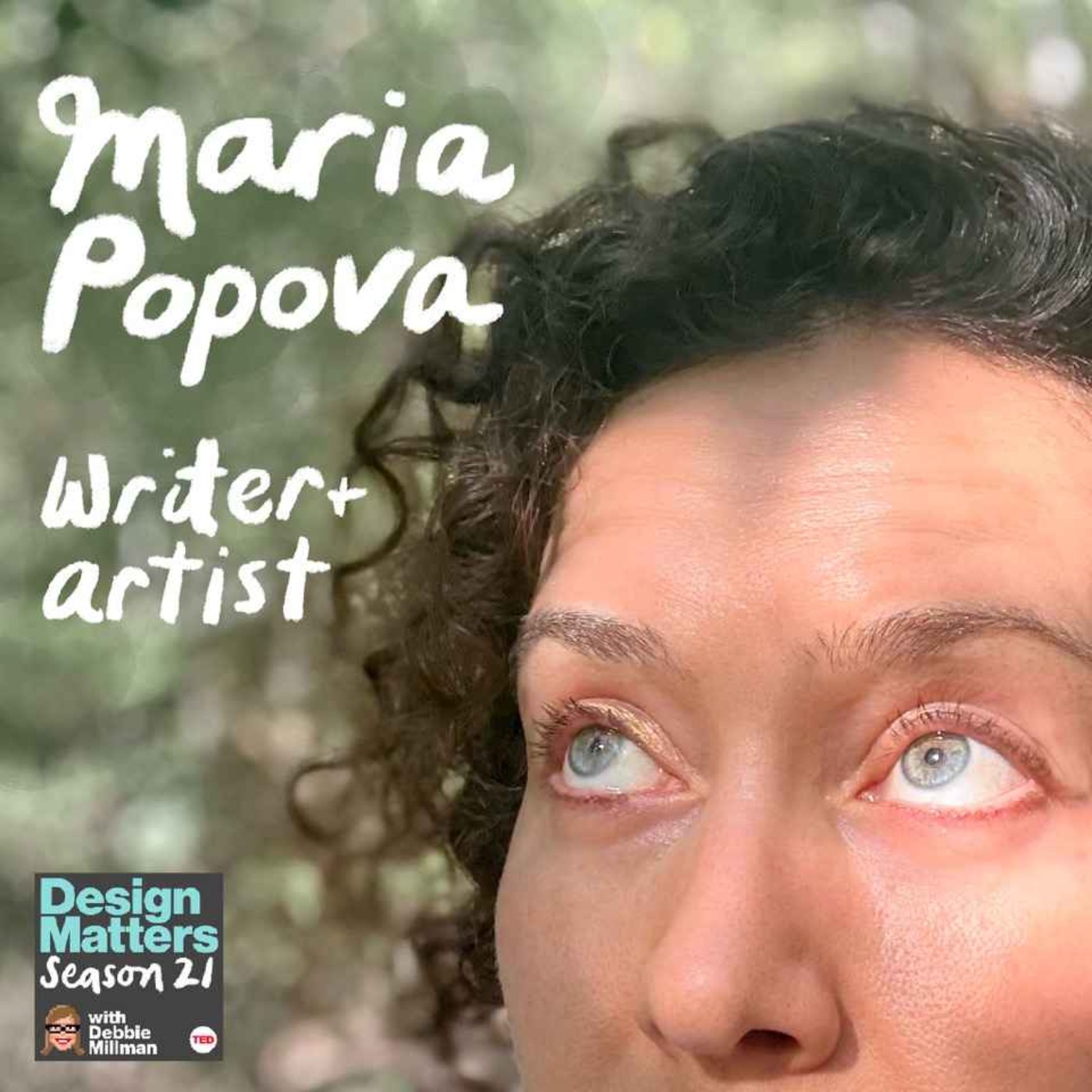
Maria Popova discusses how to make meaning in an indifferent universe through attention, wonder, dreaming, and love; she connects science and poetry, argues against mind/body dualism, and explains her creative worldview of “combinatorial” recombination across disciplines.
Maria Popova is a Bulgarian-born writer and editor (raised during the final years of communism). She immigrated alone to the U.S. at 19, worked multiple jobs while studying at the University of Pennsylvania, and began a weekly email that became Brain Pickings and later The Marginalian. Her work traces links between science and poetry, astronomy and love, nature and consciousness.
The self can imprison us; wonder arises from being present in nature. Meaning can’t be sold or outsourced—people are generous and hungry for meaning. Books should have “shelf-life,” not “banana shelf-life.” Mortality fuels art; love is a coping mechanism and also “cosmological.” Science and poetry are complementary ways of knowing.
her “Jeremy” snail story (left-coiling shells); Universe in Verse events pairing poets with science (e.g., Patti Smith and dark matter); An Almanac of Birds divinations inspired by avian REM dreaming; Figuring’s focus on finitude (Rachel Carson, Kepler’s children, Emily Dickinson’s losses, extinction).
Written by AI. May contain mistakes.
Explore the nature of identity and personhood in our culture.
“I think the self is such a tedious place.”
Discussing the intersection of science and poetry with Maria Popova.
“On this episode, a wide-ranging conversation with Maria Popova about science and poetry, about how to make meaning in an indifferent universe, and about the value of dreaming.”
Maria shares her journey from Bulgaria to founding Brain Pickings.
“That email eventually became Brain Pickings, which became The Marginalian, one of the most beloved and enduring literary and philosophical projects on the Internet.”
Discussion on the nature of creativity and its impact on life.
“Maria Popova, welcome back to Design Matters.”
Maria reflects on her childhood experiences with wonder.
“The gathering and recombination of experiences, ideas, and memories into something new.”
Maria describes the origins of Brain Pickings and its growth.
“You've written so beautifully about wonder throughout your work, but I'm curious about your earliest encounters with it.”
Discussion on the deliberate pace of Brain Pickings compared to online culture.
“I mean, the shortest version is that I had come to the U.S.”
Maria shares her philosophy on meaning and monetization in her work.
“to study communication because I lived through the fall of communism.”
Discover the evolution of Maria Popova's writing and the significance of her work.
“And I thought, it's already a reward enough for me to do this, to read and to write and to try to learn how to live.”
Explore Maria Popova's thoughts on creating lasting works versus transient content.
“I think perhaps the same three things that make it motivating to continue being alive, which is to learn something, to help someone, and to just feel it all.”
Understand how exploring mortality influences creativity and art-making.
“I think that says more about our culture than about the book.”
Learn how deep research impacts writing and the responsibility it carries.
“And we make art to try to bear it, to try to bear our mortality.”
Examine how engaging with historical figures affects personal consciousness and creativity.
“I think we are all to some extent very porous.”
Learn about the importance of primary sources in biographies and the philosophical depth of children's books.
“With biographies, I just always go to the primary source material.”
Explore Maria's journey from essays to poetry and her deepening relationship with the written word.
“are already spiraling with festival and summer plans.”
Explore the evolution of The Universe in Verse and its impact on audience engagement with poetry and science.
“But it's not biographical, informational, any of that.”
Discussing the intersection of science and poetry, and the need for emotional and intellectual integration.
“One of the beautiful ideas at the center of the project is that science and poetry are not opposing disciplines, but complementary ways of knowing the world.”
Unpacking the role of the unconscious in creativity and the significance of attention in artistic expression.
“That's a good book title, From Contempt to Curiosity.”
Exploring the philosophical inquiries about life, death, and love as fundamental aspects of existence.
“You know, I mean, I say this playfully, but also not.”
Debbie and Maria discuss the nature of love, meaning, and the concept of omens.
“When did love become for you not merely emotional, but cosmological?”
They delve into curiosity as a bridge between the known and unknown, reflecting on the emotional costs of knowledge.
“the kind of reality I make, because my intention is now different.”
Maria shares her thoughts on impermanence and how it relates to her writing and life experiences.
“But curiosity is this idealistic, optimistic orientation that the universe can be known, even by creatures that are a function of it.”
Debbie and Maria wrap up their discussion with reflections on meaning and a reading of a poem by Maria.
“Well, this is one that kind of fits with your final couple of questions.”

Get the gist, explore an idea or ask about something said.
 Claude
On Design Matters with Debbie Millman, what are the key points of this episode?
Searching your listeningAutomatic transcript. May contain errors.
0:00I think the self is such a tedious place. We live in it, and especially in our culture where people lead with identities and opinions, which are the most superficial, malleable, changeable, uninteresting parts of personhood. It's very easy to become imprisoned in the self. From the TED Audio Collective, this is Design Matters with Debbie Millman.
0:30On Design Matters, Debbie talks with some of the most creative people in the world about what they do, how they got to be who they are, and what they're thinking about and working on. On this episode, a wide-ranging conversation with Maria Popova about science and poetry, about how to make meaning in an indifferent universe, and about the value of dreaming. How incredible that evolution gave us a safe place to practice the possible. This episode is brought to you by Pura. You know how even a subtle shift can change the way a space feels? After a long winter, I start craving a sense of lightness, the feeling of opening the windows and letting something new in.
1:09Pura makes that reset simple. You can explore scents inspired by real places, bright citrus terraces, blooming lavender fields, and layer them into the rooms where you live and work. It's a small detail, but it can completely transform the atmosphere of your home. That's an easy, thoughtful way to refresh your space. No overhaul required. Explore the collection at Pura.com. This episode is brought to you by Bill, the intelligent finance platform that helps businesses and accounting firms scale with proven results. With AI-powered automation, Bill removes the busy work from your accounts payable workflow.
1:51They handle capturing invoices, routing approvals, and syncing with your accounting software so that your team can focus on growth instead of paperwork. Bill is so reliable, according to Bill, 98 of the top 100 accounting firms in the U.S. trusted to simplify and secure their bill payment processes. Bill's handled over a trillion dollars in secure payments and is ranked number one overall on G2's 2025 list of best accounting and finance products. So stop the guesswork and start scaling with the proven choice. Go with a company whose financial infrastructure is trusted by nearly half a million customers.
2:34Ready to talk with an expert? Visit bill.com slash proven and get a$150 gift card as a thank you. That's bill.com slash proven. Terms and conditions apply. See offer page for details. This episode is sponsored by Kohler Smart Toilets. The objects we interact with most are often the ones we notice least. The Kohler Smart Toilet challenges that assumption. What if the most overlooked space in your home could become the most considered? Their Vail Smart Toilet is a sculptural silhouette that isn't just intentional. It's a philosophy that design changes everything. The Kohler Vail Smart Toilet is sleek with a rounded shape that's more like architecture than just plumbing.
3:24And it goes beyond looks. The touchscreen controls and customizable cleansing features offer a level of comfort and cleanliness that exceed expectations. It's all about elevating those ordinary daily rituals into something extraordinary through thoughtful design. Kohler has been pushing these boundaries for over 150 years, mastering that balance of stunning form and high-performance function. That's a long time to get it right, and it shows in every detail. Experience the difference of Kohler Smart Toilets. Find out more at Kohler.com. Maria Popova is a writer and reader who was born and raised in Bulgaria during the final years of communism.
4:14At 19, she immigrated alone to the United States, worked multiple jobs while attending the University of Pennsylvania, and began sending a weekly email to a handful of friends containing the most interesting things she had discovered that week. That email eventually became Brain Pickings, which became The Marginalian, one of the most beloved and enduring literary and philosophical projects on the Internet. For two decades, Maria has devoted herself to tracing the connections between science and poetry, astronomy and love, nature and consciousness, all while building a body of work animated by wonder and rigor.
4:56She is the author of Figuring, Traversal, The Universe in Verse, and several beautiful children's books. Threaded through all of her work is a sustained meditation on attention, wonder, and what it means to be fully alive. Maria Popova, welcome back to Design Matters. How wonderful and strange to be back here some 15 years later. Yes. Yes. Our first interview was back in 2012. And in that conversation, we talked quite a bit about your origin story. So I want to encourage people to listen to that, to hear all about how you first became you. But I still want to touch on some things about your early life that I didn't ask you about earlier, before we talk about all you've done since.
5:43Well, first of all, I should probably listen because we become in every retelling of who we are, right? This is true. This is true. So our avid listeners can go back and compare. In our first conversation on Design Matters, you described creativity as combinatorial. And I've talked about that many, many times on the show since with lots and lots of different people. The gathering and recombination of experiences, ideas, and memories into something new. All these years later, I feel that this is not just a creative methodology for you. It feels more like a worldview. you? To the extent that the world is only rendered real in the mind, it is a mind view, meaning it is how I experience my own mind working.
6:33I think most of our minds work that way naturally. And when we are able to kind of perceive the process, we call it creativity, this kind of aggregation, combination that is creation. You've written so beautifully about wonder throughout your work, but I'm curious about your earliest encounters with it. What first astonished you as a child? You know, it's interesting. Wonder is one of those things that is so elemental and so universal, soul, you might actually miss it, meaning you might experience it but not know what it is. And I certainly didn't have the word for it until only recently looking back on my life and seeing that common denominator.
7:23I don't have many early childhood memories, but the ones that I do have all have an element of being very present in a moment in time, usually in the natural world, and this feeling of a great peace and a great surprise at the same time. And to me, that is wonder. I love that. I haven't really thought about it in that way. Your website, Brain Pickings, the original name, began as a weekly email to seven or eight friends while you were working at a creative agency in Philadelphia. At the time, did it feel more like an act of generosity or self-education or survival? Well, it was a total act of hubris, actually.
8:14I hadn't considered that one. I mean, the shortest version is that I had come to the U.S. sold on the promise of liberal arts education, which I thought was going to teach me how to live. And, you know, my family cobbled together the fortune, the great fortune of$800 that was supposed to last me sort of first year. And instead I got here and by the time I had bedsheets and textbooks, it was gone. So I ended up working on nice bedsheets. Well, no, nice textbooks. I had just touched the military industrial complex of higher education. Yes, yes. And so I ended up instead finding myself in this factory for minds where you were tested on testing, meaning you were taught how to memorize and take tests, not how to live.
9:04So I kind of not knowing what to do, started scrapping together my own little morsels of meaning. I would go to the library or, you know, go to a talk in downtown Philly and whatever. And so then one of the jobs I was working to pay for this very unsatisfying education was at this little creative agency. And at the time, the guys, there were all these young idealists who had, the founder had run the first successful anti-smoking campaign in history and was kind of inspired to try to use the communication arts to do such things. And I had gone to the U.S. to study communication because I lived through the fall of communism.
9:45And I went from, you know, we had the dictator on TV every night at 8 p.m. delivering one channel, obviously, delivering the propaganda, the message. And overnight, so-called democracy came and with it came advertising. And I as a child thought, wait a minute, this is the same message. It's just selling a different ideology. So I grew up and wanted to learn how to use the communication arts to move minds, but maybe for good and not for totalitarianism. So anyway, here I am in this agency and the guys are circulating around the office emails of what other cool creative stuff is coming out of other agencies.
10:23And I, at age 21, decide that I'm going to tell them how to do their job. And I'm like, guys, no. So you and Maria even then. I was just stubborn always, I guess. I mean, looking back, I think I've realized that every time I've been told these are the options on the table, I haven't just said, oh, let me show you another option. I've said, let me build you another table. And so not by any kind of moral high ground, because I just didn't like what was available. So I didn't like what they were circulating. I said, actually, if you want to do something really creative, take things from different disciplines, not your own, neuroscience and medieval painting and street art, and see what, you know, happens in the mind when these things converge.
11:09So I said, let me send you three things I learned on my own, in my own kind of meaning foraging this week. Every Friday I'll send it. And then they were like, sure. And then they started asking me to add, oh, can you add my dad? Oh, can you add my girlfriend? And I was like, guys, I have a full college course load and four jobs. I can't administer an email. And so I thought the most obvious thing to do would be to build a website. There were no blogs then. And I took a night class. I saved for three weeks, eating store brand tuna and oatmeal, the most nutritious, cheap food you could get. And I took a night class and I built the ugliest website in the world.
11:49Oh, can we find that in the Wayback Machine? Oh my God. You know what? I think there are images because there were static pages that There were no blogs. There were no databases. You would literally put up like a bulletin on a court board, put up the weekly edition, and then next Friday, take it down, put up the new one. So I think there are screenshots of it somewhere. Oh, no. Terrible. Anyway, so that is how it started. In the early internet era, much of online culture rewarded speed, hot takes, aggregation. And brain pickings felt radically different even when I first started reading it, which was probably 2010, 2011.
12:31Contemplative, literary, slower. Were you consciously resisting the velocity of the Internet at the moment, or was that just the way you approached it naturally? I mean, I think because I only ever wrote for me to process my own life. I mean, it was and is the record of what I'm thinking about, reckoning with. it didn't make sense. We don't live internally on those timelines. We don't. The inner life is not a hamster wheel. And also, partly, I was putting it out into the world and I was very conscious of I as a person don't enjoy clickbait and ads and snippet kind of shallow things. Why would I perpetrate that on other people if I'm making something in the world?
13:18Why not make the world they want to live in. Your work is a refuge for people seeking depth and meaning online. And as the site eventually became more and more and more influential, you resisted all traditional models of monetization and growth. What have you been trying to protect in doing that? My faith in humanity. In what way? Um, fundamentally, people are generous and people are hungry for meaning. And when we value something, we show it. I really believe that we don't need the middleman of advertising to turn us into data points and eyeballs in order to show someone else how much we value some kind of sellable commodity.
14:11And I thought, it's already a reward enough for me to do this, to read and to write and to try to learn how to live. I'm still learning how to live 20 years in. You know, that's why I write. And I already have my reward. If other people find it valuable, then they should decide how much they value it and in what way. I should not enforce that or sell it. You can't sell meaning. After 15 years of publishing as brain pickings, you renamed the site to Marginalian. I was very happy. Marginalia is one of my favorite concepts and undertakings. Why had the original title stopped feeling truthful for you?
14:53Oh, it's so gross. It's so gross. I mean, just as a PS, I can't stand it when people ask if they can pick my brain. Can you imagine when people asked me if they could pick my brain? They must be like, she started that word. No, I mean, you have to take into account the fact that in Bulgarian, we don't really have wordplay and puns. It just doesn't quite exist, this notion, this use of language. So when I came here, I was really excited about these kind of strange idioms and wordplay. And I will say also, I studied multiple things in college in addition to communication arts. I also studied psychology and was very interested in neuroscience.
15:41And I am not proud to say I was a kind of neo-Certesian. I really thought the mind is all there is. How we think is who we are. And over the years, as I befriended the life of feeling, the life of the body, and it reflected in the writing, I came to see that, first of all, it was not just a brain thing. this thing, this search for meaning, it can't live just in the brain. And also, I was just disgusted with that very cheap pun. But mostly, you know, I look back at some point, I think it was somebody had asked me after I'd written my first book figuring why I write about women in science or queer people, and I had never thought about those categories.
16:25And I realized that I have been very influenced, moved, inspired, interested in people who existed in the margins of their time and place by whatever variable. And because of that, because they were already other in some way, they had the kind of self-permission and freedom to think in ways others didn't think, to see what others didn't want to look at, and ended up coming up with the ideas that have moved this world forward, the so-called marginal people. And on top of that, I was writing about their lives and the kind of margins of the books I was reading. It was just everything I write is my own marginalia on this search for what it means to be alive.
17:05You're nearing your 20th anniversary of the Marginalian. You have never accepted any advertising. You only write what interests you. And still, 20 years in, you are one of the most visited sites on the web. What keeps you excited, motivated, and inspired by doing this? I think perhaps the same three things that make it motivating to continue being alive, which is to learn something, to help someone, and to just feel it all. You just mentioned your first book, Figuring, which was published in 2018. Initially, you were dismissive about ever writing a book and turned down the many offers that came your way and often stated, why would I want to write something that would have the shelf life of a banana?
18:12And thinking back on that statement, I find it interesting that when you did eventually write books, and I'm talking about your library of work now, your books are explicitly anti-banana books. They're sprawling, they're archival, interdisciplinary works designed for longevity, really rather than topicality. What changed your mind about writing a book? Well, I never changed my mind about writing the kind of book that I was being offered a lot. I mean, publishers were approaching me all the time with the very surely marketable idea of doing a kind of best of brain pickings or, you know, a compilation on a specific theme that I often write about.
18:53I mean, it could be anything, you know, diaries of great writers, daily routines, I mean, whatever, very kind of superficial, self-help-y kind of thing. And those do have the shelf life of a banana. Books are just a vehicle for thought and feeling and ideas. And the only thoughts and feelings and ideas worth putting into the world are the ones that have the shelf life of a shelf, right? And those are certainly the books I read and love. And I thought if I were to put in the time, I mean, these things take years to write, these, you know, 600-page books that I ended up writing. If I were to put in the time, it should be for something I would enjoy as a reader, the kind of thing I want to exist.
19:35Figuring did both, actually. It was exactly what you wanted to write, but it was also an instant New York Times bestseller. Did that surprise you? I know you don't really think about things and measure them with those metrics, but it is an interesting conundrum. I think that says more about our culture than about the book. I think people were excited about the first book of the site they read. I would be very interested how many of those people finished the book. My own mother recently informed me that she never finished figuring. There you have it, which was translated beautifully into Bulgarian.
20:15Figuring is saturated with mortality, not just literal death, but the awareness of finitude as a condition of creativity, intimacy, and meaning making. And the book repeatedly returns to the brevity of human life against cosmic time. It includes the deaths of central figures, including Rachel Carlson, Kepler's children, Emily Dickinson's losses, extinction, disappearance, the tension between ambition and impermanence, and the idea that love and creativity are meaningful precisely because life ends. Did writing figuring change your relationship to mortality? I think we spend our lives changing our relationship to mortality, trying to befriend it, right?
21:04Yes. And we make art to try to bear it, to try to bear our mortality. If we were not mortal, we would not make art. We wouldn't. Why? Why do you think that? Because I would like to live forever, and I know I'm not going to, But that doesn't change my relationship to art making. But you don't know. That's true, too. My urgency is changing as I get older and older. Let me put it this way. I do think every artist's art is their coping mechanism for their suffering, whatever that is, and for their joys, too. But much, much of it to metabolize our suffering. And most of our suffering is at bottom some sort of response to the fact that we're immortal.
21:52regret, heartache, loss. It's all a confrontation with the finitude and the irreversibility of life. I thought you were going to say that it all had to do with love, not mortality. So it surprised me a little bit. Well, love is a coping mechanism for mortality as well, isn't it? I don't know. I would say it was a coping mechanism. I would say maybe it's the reward. Oh, that's beautiful. At least I'd like to think that. To me. But hold on. Okay. Let's do it. Let's do it. So every love story is a tragic story. How? Because every love ends with a loss, either of the person or of their love, right?
22:35It ends with death or indifference or divorce or whatever. But it ends. There's no eternal love because there is no eternity allotted us. There isn't. I mean, maybe it is the reward, more like the recompense than a reward. When you're writing your books, you do enormous amounts of research. And most recently, you told me that when you were writing about Walt Whitman, you read seven biographies, all of his surviving notebooks and letters, countless accounts by his contemporaries, scattered across myriad books of memoirs of notable people. And you did this level of research for all of the figures and figuring and your most recent book, Traversal.
23:18How does this level of information inform what you write about? Well, I think if you're going for illumination, which is, of course, the point of writing, you need the information to make that truthful and possible. But I also, I think it's so dangerous. There's such a responsibility in trying to represent another person who can no longer speak for themselves, from whom you're separated by centuries and sensibilities and unimaginable cultural paradigms. We cannot imagine what it was like to live in Kepler's day, a time when Satan was more real to the average person than gravity. People lived to 40.
23:59There was no knowledge of genetics and hygiene and human rights. I mean, unimaginable world. This It's just like a handful of things. And I don't write biography, but I write highly biographically informed, I guess, portraits of the traits of those people that speak to me and that entwine with the traits of the other people. These books are each a kind of tapestry with these different lives woven together to paint a larger picture of something else, right, that's not about the people. And I do think the responsibility of the writer speaking for and about someone else cannot be overestimated. Does living inside these minds for as long as you do impact your own consciousness?
24:49Oh, absolutely. I think we are all to some extent very porous. And I think the more sensitive a person, the more absorbent they are of the tone and way of seeing and way of worlding that another mind has. Right. And so for me, spending seven years with Mary Shelley and Whitman, they taught me how to see, they taught me how to feel, of course, and then I miss them. I mean, the most tragic thing about these books for me is that when I'm done writing them, I mean, I've been living with these people daily, right? When I'm done writing them, I feel this tremendous absence and grief. It's like a real person left.
25:29I know how I'm impacted by doing research for a podcast and the weeks that I spend preparing, how that changes me, how that influences me. And in many ways, the research influences me more than even the conversations because I'm just able to take in everything that they're saying and thinking without having the responsibility to respond or to figure out what I want to ask next. I can just, as you said, porous and take it all in. I can't imagine what living with characters for seven years does to you. Well, but, you know, it's interesting because that's a bit of a chicken rug or a self-selection issue because, I mean, you do, you start at Design Matters in order to learn how creative people orchestrate and govern their lives, right?
26:21So there is a kind of hunger to be modeled, different ways of seeing, different ways of being, to be inspired. And so, of course, that will feed you even more than the conversation. Yeah. I mean, I think that the one thing that does keep me going, even when I'm feeling burnout or strain, stress, etc., is this endless fascination with how people create their lives, not just their art, but how they choose to live in the world. And I also feel like you do that a lot in your work, which is what keeps me coming back to reading it every day. But the comforting thing about the dead, who are my subject, yours is the living or not my forte, the comfort thing, greatly comforting thing about the dead is that it can choose your dead by virtue of their lives being foreclosed, meaning they can't surprise you.
27:10They can't suddenly turn out to be total assholes, you know. With sufficient information and biographical records, we have a pretty good sense of who someone was in their life, in the world. And something about the finality of their life, the notion that you can have it down. I mean, you can never, of course, understand what it's like to be anyone else. It's so misleading. But there is a comfort to me to kind of know how their lives turned out. But what do you do when you find contradictory information where one interpretation might fly in the face of another interpretation and you have to figure out what the actual truth is?
27:54Well, first of all, I don't believe we can ever figure out what the truth of a person is. It's often obscure to the person themselves, right? With biographies, I just always go to the primary source material. I mean, these biographers took it from somewhere, right? So I would go and find the surviving notebooks and diaries and letters, which are, of course, incomplete and also self-mythologizing. I mean, some people, a big part of why I chose some of the people in traversal, particularly Whitman and Frederick Douglass, is that they were tremendous self-mythologizers. For all the good that they did, they also co-created their own myth, right?
28:30And that comes through even in the diaries and letters of people. But you go as close to the bone as you can, as the death of the flesh allows. You've also written several children's books with unusually philosophical tones. The Snail with the Right Heart is rooted in real scientific anomaly, but emotionally it's about belonging and uniqueness. And The Coziest Place on the Moon feels deeply concerned with loneliness and tenderness. These books don't simplify existential ideas so much as render them emotionally accessible. What do you think children understand about reality that adults often forget or miss entirely?
29:15that it continues to exist whether or not we believe in it. And this is partly why my move with the children's books is that I read, I don't intend to, but I read a lot of science. And every once in a while I would come across a piece of science news that would strike me as this profound lens on something very intimate and emotional part of our kind of human inner universe. And then I would write a children's book based on the scientific article or a fact or whatever. And I do think there's a kind of reverence for reality. I mean, children's imagination is actually a response, a deep response to actuality and what can be made with the creative constraint of reality.
29:59Inasmuch as The Snail with the Right Heart is about a scientific anomaly, it's also a love story. And I'm wondering if you can just share a little bit of the plot with our listeners in case they haven't dipped into your children's books yet. So some years ago, a retired researcher in the UK came upon a snail whose shell coils in the opposite direction. The vast, vast, vast majority of snails coil clockwise. And he found in a pile of garbage how he noticed. That's another, it's a little homily on the art of noticing, right? First of He saw the snail, saw that it coiled the other way and thought, hmm.
30:41So then he mailed the snail with some, you know, dirt and sustenance to a snail researcher. I love that there are people that just research snails, by the way. Oh, God, the lovely thing about science is that it is this refuge for the strangeness and the multiplicity of minds. I mean, the most wonderful thing about being human is how many minds there are. So anyway, one of those minds was studying snails and received the snail, named it Jeremy, for some English politician who was on the left. I guess I'm not versed in British politics. And said that the odds of this happening are about one in a million to one to a billion.
31:27It's so rare, they can't even estimate how rare it is. And it's caused by a condition called citizen versus where the internal organs by a genetic variant that's very rare, obviously, are flipped. So humans have this. I know someone who has his heart on the right side. He has citizen versus. But with snails, the tricky thing is that because of how they mate, please, everybody, go on YouTube and look up Sir David Attenborough snails. I'll just tell you that. and your life will be transformed. It's a treat. Your life will be transformed. But because of how they mate, it is a kind of puzzle piece.
32:07So their reproductive organs have to fit. And so if your organs are on the other side, you can only mate with a snail that's on the other side. Also, you know, inverse. So then this world search began for another lefty snail. And it was eventually found in Australia and mailed to it. snail mailed to Jeremy. And then it's a drama. Then a drama ensues that will let people find out in the children's book what happens, but it's not what you expect. And it is absolutely wonderful. Why are you drawn to writing for children at this stage in your life? I think great children's books are works of philosophy in disguise.
32:56I grew up with The Little Prince and Alice in Wonderland. They taught me how to think. They taught me how to feel. I still reread The Little Prince about once a year. And every time it gives me something new and acutely relevant to something I'm grappling with that year. And I think also it's often in this simple language of children that we get to the deepest truths, that we're embarrassed to think and talk about otherwise, and we cloak with all these convoluted theories and bells and whistles, but really it is a way to get to the elemental. This episode is brought to you by Pura. You know how even a subtle shift can change the way a space feels?
33:40After a long winter, I start craving a sense of lightness, the feeling of opening the windows and letting something new in. Pura makes that reset simple. You can explore scents inspired by real places, bright citrus terraces, blooming lavender fields, and layer them into the rooms where you live and work. It's a small detail, but it can completely transform the atmosphere of your home. That's an easy, thoughtful way to refresh your space. No overhaul required. Explore the collection at Pura.com.
34:13With no fees or minimums on checking accounts, it's no wonder the Capital One bank guy is so passionate about banking with Capital One. If he were here, he wouldn't just tell you about no fees or minimums. He'd also talk about how most Capital One cafes are open seven days a week to assist with your banking needs. Yep, even on weekends, it's pretty much all he talks about. In a good way. What's in your wallet? Terms apply. See CapitalOne.com slash bank. Capital One N.A. Member FDIC. You have the vision for your business. You have the plan. And you just got handed a huge opportunity. But is your business connectivity reliable enough to make a move?
34:53Spectrum Business delivers fast, reliable internet, phone, TV, and mobile services. so you're always connected when it matters most. Get connectivity packages built for your business with savings that keep your budget in check. And with fast, reliable internet and 100 % US-based customer support, you'll stay connected and ready to bring your vision to life. Learn more at spectrum.com slash business. Restrictions apply. Service is not available in all areas. Hi, this is Becca Moore of For the Girls Podcast. All right, a quick shout out to our presenting sponsor, Apple Cash. Summer is here, which means the group chats are already spiraling with festival and summer plans.
35:29And we all know the worst part of being the one who fronts the money for the passes or housing. That's why this year we're only using Apple Cash. It's a super easy way to settle up because you can do it right in messages. Just tap the plus sign to get started. And the best part is you can spend the money you get right away anywhere Apple Pay is accepted. Every payment is secure and protected by Face ID, Touch ID, or passcode, and your transactions are never shared on a public feed. Set up your Apple Cash today in the Wallet app. Apple Cash services are provided by Green.Bank, member FDIC. Terms apply.
36:01One of the things that I've really cherished watching you evolve as an artist is where your work goes next. And first you were writing very essayistically on The Marginalian. Then you started writing books for adults, books for children. Now you're writing poetry. Tell us about your relationship to poetry. I know initially, you actually didn't like poetry. You sort of curled your nose up at poetry. So tell us what it is for you. Absolutely. So I'm a refugee for mathematics. I grew up doing a lot of science and never, I guess, was properly educated in literature. And of course, the way we humans tend to have of dismissing what we don't understand, and Debbie's raising her hand, and, you know, calling useless what we don't know how to use, I dismissed poetry.
37:04And then across the aisle on a transatlantic flight, across 50 years of age difference, I became very past friends, much to the discontentment of the entire coach cabin, with a lovely woman named Emily Levine, who was a comedian, a philosopher of science, deeply erudite, deeply sensitive, funny as hell. And she took it upon herself to educate me in poetry. She started sending me a poem a day, reciting poetry. With that magnificent voice she had. She has a magnificent voice. In fact, I mean, you asked about figuring and mortality. Emily, a few years into our friendship, I really loved her so much.
37:48She was a kind of mother figure to me and friend. And she became terminally ill and was actively dying while I was writing figuring, which was dedicated to her. In fact, she died the day it was published. And I didn't know because I had turned my phone off. I just didn't want to deal with the book stuff. And when I turned it on close to midnight, I learned. And it was, yeah, I mean, I won't belabor it anyway. But Emily is also the reason the universe in verse exists because we, as she was dying, we started going on these poetry retreats, as you remember. Yes, I was part of one. Yeah, and we would spend the weekend on the sort of promise of reading poetry, but really talking about the universe and Hannah Arendt and the singularity in ancient Greece, because Emily's mind was so fractal and so, I mean, combinatorial in the most beautiful, enchanting way.
38:52And in the course of it, I started seeing how poetry and science are these side doors to the same reality, to befriending reality. And I started reading poetry, writing about poetry, and eventually, you know, studying with very good poets, Marie Howe and Ellen Bass, and eventually writing poetry. I'm wondering if you would share one of your poems with us today and share a bit about how you came to writing it. So this is a poem that I wrote in the state of heartbreak, I thought. And it's a little bit more tongue-in-cheek, begins a little more tongue-in-cheek than the rest of my poems. But I think it's one we all need at some point in our life or the sentiment in it.
39:46This is called Corrective for a Broken Heart. Why all the threadbare drama, the stale catastrophism of calling it broken? It still beats, doesn't it? Still trembles at the sight of fog flowing through the forest like a slow dance song. It was only dislocated, lost its locus for a while, popped out of the socket of good sense. There is no one to pick up the pieces, because there are no pieces, only the firm, fastidious hand of time to slide it back into place. And after all, who can fault the wayward compass When the magnetic north pole is in constant motion Drifting by 50 kilometers a year And reversing itself altogether every few centuries While every 26 ,000 years A different north star comes to shine its guiding light Above all the confusion We are here to lose our way Thank you.
40:57Talk about, if you can, the different muse that might occur between writing poetry and writing essays or prose. My prose tends to be quite analytical, quite focused on thinking through something. Not always, but fundamentally it is a kind of thought process. And the poetry is more about feeling, befriending feeling. How do you know when something wants to become poetry rather than an essay? Oh, I don't. In fact, I plagiarize my poems all the time and put them into paragraphs of prose. And in fact, my wonderful editor, Eric, noted. So the prelude of my book, Traversal, both of the big books have a prelude, a short chapter, zero in the beginning, that kind of in a very abstract way makes a promise of what's to come.
42:05But it's not biographical, informational, any of that. It's very kind of abstract. And so I had poached a poem that I had written in a workshop with Marie Howe and Ellen Bass and literally erased the line breaks and put it as a paragraph in the prelude. And Eric in the editing manuscript had written in the margin, you know, this could be a poem. Your public project, The Universe in Verse, began in 2017 as a live event pairing poetry with science. But over time, it seems to have evolved into a communal ritual of wonder. All of your events have immediately sold out large venues. Did you understand from the beginning that audiences were so hungry for that kind of collective meaning-making from poetry and science?
42:56Oh, not at all. I thought no one would come. I just wanted to do it. I think part of it is, you know, the universe and verse was born in the wake of the first Trump election. And many factors were present. First of all, it was the age of alternative facts. And science was being defunded, devalued. And I thought we need a way for people to befriend science that is welcoming and hospitable, you know. And poetry also, you know, the National Endowment for the Arts was being massively defunded, which is the main funding body for poets. Poets are the lowest paid artists in our world. And the NEA was how, you know, a lot of their funding came from.
43:38And that went away. And I thought maybe there are others like me out there who curl their nose at poetry because they don't understand it. They're not literate in it. Maybe we can invite them in. And so the concept was to get people, friends who are creative people of other walks of life, musicians, actors, artists, to come read poems that I choose. And then I would talk some science behind the poems that have an element of science. So, for example, Patti Smith reading a Rebecca Elson poem about dark matter. And then I would talk about Vera Rubin and the discovery and the confirmation of dark matter, that kind of thing, and as a way of welcoming people both into art and science.
44:21And every year I used the proceeds towards something that was threatened. So the first three or four years, it was the Natural Resources Defense Council, then it was the Academy of American Poets. So this kind of active resistance and also active support of what was losing support. One of the beautiful ideas at the center of the project is that science and poetry are not opposing disciplines, but complementary ways of knowing the world. Do you think that modern culture artificially separated intellect from feeling or that they currently still do? I mean, I think Descartes is the most damaging man in the history of our species 400 years later.
45:05I knew you were going to say that. Yes, I mean, because it's the truth. That was a prompt. He has scarred us to the bone, you know, with this extraordinary Western dualism of the mind being separate from the body and higher up somehow. It is so damaging. We spend our lives discovering over and over that it is not true. When we feel joy, it's a full body experience. When we suffer, it's a full body experience. When we create, it's a full body experience. There's everything. There's no clear demarcation between thought and feeling. Feeling is an instrument of thinking. I really recommend philosopher Martha Nussbaum's book, The Intelligence of Emotions.
45:48Yes. Let's talk about another one of your combinatorial creative endeavors, your box collection of divinations titled An Almanac of Birds. This is your first project wherein you're both creating the art alongside writing poetry, yet another expanse of your body of work. Can you share how this project came to be? one november day i was walking through brooklyn bridge park in the rain and i saw a night heron sleeping on a branch perched over the pond its head tucked into its chest and i thought is it dreaming do birds dream and i thought surely you can google that turns out you couldn't so i found myself on a three-week rabbit hole in these obscure scientific journals, kind of alarmed to discover that we've only been studying the avian brain, sleep in the avian brain for about 20 years, if that.
46:51And there's only a handful of published fMRI and EEG studies of what happens when they sleep. And I was so surprised by what I found that I ended up writing about it. I wrote a piece for the New York Times about REM and the evolution of sleep. And the short version is basically they do dream. Not only do they dream, but evolution invented REM, the dream-rich REM state in the avian brain. And when they sleep, so for example, pigeons during REM sleep, areas of their brain associated with wing motor action and spatial navigation light up. And songbirds, young songbirds who have to learn their repertoire while they sleep, you can map the activity of particular neurons to particular notes in the melody they were learning that day.
47:40So birds dream, they dream of flying, and they dream of singing, and they're practicing in their sleep. And I thought, how incredible that evolution gave us a safe place to practice the possible. And so then, after this immersion in the bird sleep world, birds started coming to my own dreams, which is very unusual because I tend to have hyper-realistic dreams, mostly anxiety dreams about missing trains and things like that. Teeth falling out and so forth. So much fun. Oh, God. I haven't had that one yet, but now that you've planted the seed in my unconscious, I look forward to losing my teeth in my sleep.
48:19That's one of the most common anxiety dreams. Missing finals, missing trains, missing planes. Teeth. Why are teeth so primal? Well, that's so interesting. Isn't it? Well, there you go. Well, I've never had in my large repertoire of anxiety dreams, the tooth has not appeared or disappeared for that matter. But what did appear was a great blue heron carrying the sky on her back and a million sandhill cranes unspooling from the horizon becoming the Milky Way and a magpie speaking to me in my mother's voice. And I thought, what does it all mean? And meanwhile, I was discovering that a number of people in my life that I love and respect intellectually were using tarot cards.
49:03Now, I mentioned I come from the world of science, so I have spent my life dismissing those types of things as anti-scientific, residual medievalism from that world Kepler lived in where Satan was more real than gravity. And then, of course, this tends to happen when I replaced contempt with curiosity, which we don't do as often as we should. That's a good book title, From Contempt to Curiosity. Oh, that's a good tombstone title. She went from contempt to curiosity and died. Anyway, I came to see that people need these languages of interpretation of our own experience because we're living with so much uncertainty.
49:52We're so opaque to ourselves and we could use these aids, right? But what allowed you to move from skepticism to curiosity? because the people I loved, like my friend Tom, who's the closest thing I have to a brother, actually uses tarot. And I was like, Tom is not an idiot. Yay, Tom. But you know, these are the judgments we make about people. We think people are idiots because they don't see things the way we do. And it's so habitual we don't even catch it. But anyway, I, of course, though, being very stubborn and wanting the other table, wanting to build the new table, decided I was going to make a kind of anti-tarot deck of my own of divinations from the birds.
50:44Because I was still thinking, well, what does it all mean, these birds coming to my dreams? And I would make 41 of these little decks and I would give them to friends for my 41st birthday. For my birthdays, I prefer giving presents to receiving. And so I started, who knows why, I have a long history of cutting up things and making new things out of them. For example, for you, I had once cut up a little golden book and made a poem. I have cut up. You also cut up the graphic, little graphic films that I was making and made a brand new one. That's right. That was one of the very first things. Listeners, just so you know, while we are best friends now, Marie and I were also a couple for five years.
51:27So that might be why you hear some of that sort of recognition in our ways of dealing with each other. You should also know Debbie made these incredible films with hand-drawn typography and pencil, mostly pencil art, based on movies that she was watching. I mean, I'm doing a very poor job of, what were they called? Well, graphic movies. Graphic movies. Look for them. They're so moving. They're so tender. Anyway, the point is, with my long history of cutting up things, I like creative constraint. I like language. I woke up one day with a very clear, mysterious idea in that combinatorial way the mind has of, you know, putting things together.
52:07You don't know how the new thing came. of taking my favorite 19th century ornithological books. I love 19th century illustration, natural history, astronomy, ornithology, all of that. And so what I would do is every night I would look through one of these books and let a bird call out to me visually, the arts. And I was using, obviously, John James Audubon's Birds of America, John Elizabeth Gould's Birds of Europe, and other, you know, but most of these two. Then I would read the ornithological description of that species in the book, in the same book, and let the language percolate in my mind and go to sleep and see what the nocturnal unconscious would do in shuffling.
52:50And then in the morning, I would reread it and pull out words and phrases and rearrange them into this little koan or, you know, the divination from the bird. And it was always so surprising what came because it was my own mind making it. But somehow it surprised me. I mean, that's a strange thing about consciousness, that you can surprise yourself. You described the birds as collaborators, that they were writing you. Yes. Have you increasingly come to trust the unconscious as a creative partner? I mean, it's more that I've increasingly come to recognize how it's always played such a huge part.
53:27And then I have hubristically taken credit for it as conscious decisions. And you also write that anything you polish with attention becomes a mirror. And I'm wondering what has sustained attention taught you about yourself? That the world beyond myself is far more interesting than the self. You know, I mean, I say this playfully, but also not. I think, our most rewarding experiences. You asked about wonder. Wonder is only possible in a moment of unselfing. Talk about what that means. That means, I mean, it's a term I've borrowed from Iris Murdoch, who used it as a kind of aside in an essay about what nature and art do for us.
54:13She called them occasions where unselfing, where this illusory package of narrative and interpretation and memory that we call a self comes disbanded for a little moment and the world comes in, the world, the otherness of the world, and also the belonging with that otherness. I think the self is such a tedious place. We live in it. And especially in our culture where people lead with identities and opinions, which are the most superficial, malleable, changeable, uninteresting parts of personhood, it's very easy to become imprisoned in the self. You have described the unconscious as possessing secret knowledge that the analytical mind cannot access.
55:01Does that have any connection to selfing or unselfing? I think what we call self is mostly the conscious self, the one doing the narrating of who we are. And the unconscious self is who governs how we conduct ourselves a lot of the time without us realizing it. How do you become more aware of those two storylines? Therapy. Therapy twice a week.
55:37Let's talk about your brand new book. Your brand new book is titled Traversal, and it feels like the continuation or even culmination of many concerns that have threaded through your work for years. Astronomy, mortality, love, consciousness, and the search for meaning. And very early in the book, you suggest that humanity keeps asking many versions of the same essential question. What is life? What is death? What makes a body a person? What makes a planet a world? And the answer may simply be love. When did love become for you not merely emotional, but cosmological? Hmm. Wow. What a beautiful way to put it.
56:26I think the hardest thing about being alive is that we exist as accidents of chance. And the universe does not hand us down meaning. There is no meaning. I mean, this is also about the divinations. It's related. I don't believe this impartial universe is giving us transient motes of stardust, personalized instructions about how to live our tiny, perishable lives. It doesn't care, you know, but I do believe in omens, which is the significance we confer upon the chance events of our lives. And this is part of our restless hunger for meaning, which is our own responsibility. Nobody and nothing will give us meaning.
57:16We have to make it. And I think love is an instrument for how to do that. Talk to me a little bit more about what you just said about omens, because in many ways, you are a scientist, a scientist of the mind. And the idea that an omen falls into your reality in some ways feels very unlikely. But that's the point, though, that that's the difference between signs and omens. Omens are internally generated. We are pattern recognizing animals. We have to make sense of what is happening to us. And the fact is much of what is happening to us is the product of randomness. but we need to create a pattern in order for it to make sense and we call that an omen so for example oh a great blue heron appeared on my morning walk the day that i was gonna make a cross-country move you know that great blue heron is fishing it is hunting it is there many times over the course of many days i just happened to come upon it in that moment and I make of it an omen about the concerns of my own life.
58:32And I think we need that. It's not just some silly kind of byproduct of consciousness. I think it is the crux of consciousness that we interpret and give story and give meaning. Do they hold any credence, any real credence? I mean, that's a question about reality. What is reality? Right. Right. That encounter holds no significance in the life of the heron. It has no bearing on the reality of this hunting bird. But if I choose for it to mean something to me, if I say, well, this is now a good omen and I'm making the right decision moving to the other side of the continent, that changes my own orientation to my own life, which in turn changes how I inhabit this reality.
59:20the kind of reality I make, because my intention is now different. My openness, my receptivity is different, solely by an act of interpretation. So how much scientific credence would you put into those omens? Zero. But I may still need them to live my life. That's the point. Yeah. I love the idea of seeing meaning in an encounter, however random it might be. And isn't that what love is, too? Yeah. The meaning you confer upon a stranger. One of the most striking things about traversal is the way you braid together astronomical discovery, romantic longing, and existential uncertainty until they begin to feel like expressions of the same impulse.
1:00:08Did you come to think of the book as partly about the human hunger to locate ourselves literally as well as figuratively? Well, not consciously, certainly, but now that you ask me this, I am realizing I am a person who has been dislocated since very early childhood. My early childhood was marked by me being sort of sent. Abandoned. Interpretive. You know, I don't want to do the kind of, you know, competitive suffering we live in now. But I was sent, I was apart from my parents a lot. I was in many different places. And then I, by choice, at 19, dislocated myself across the ocean. And even now, I live different parts of the earth, very faraway places.
1:01:01I do think place and personhood entwine in a meaningful way. We become who and what we are. I mean, we're animals who are still shaped by their habitat, and we are different animals in different habitats. There is a kind of compass of searching for how to be by where to be. Many of the figures in the book seem animated by a kind of impossible yearning to measure the heavens, transcend the self and understand or outwit time. Do you think curiosity is ultimately an expression of longing? Hmm. Yes, I think it's the bridge, our only bridge between the known and the unknown. And it is a ramshackle bridge, because a lot may just be unknowable.
1:01:49But curiosity is this idealistic, optimistic orientation that the universe can be known, even by creatures that are a function of it. That's interesting that you bring up optimism because again and again in traversal, scientific discovery is accompanied by loneliness, obsession, exile, grief. Were you consciously exploring the emotional cost of devotion to knowledge? Very much so. I think it's so important to understand the price at which knowledge is obtained and also the fact that the hunger for truth is always more powerful than all of these difficult, dark forces in us. In many ways similar to Figuring, Traversal feels haunted by mortality, but it also expands upon the ideas presented in Figuring.
1:02:44Traversal also explores extinction, as I mentioned, disappearance, historical erasure. Was the book also a way of reckoning with impermanence? Of course. How do you think about impermanence now, having written these two books so much about time and mortality? I think the desire for permanence or immortality, they're all a function of this, I think, rather destructive desire to have it all, desire for everything. And I think the challenge of life, the task of life is to have enough. I have one last question for you, Maria, and a request. First, the question. Across the universe in verse, traversal, the margin alien, an almanac of birds, you keep returning to two central themes.
1:03:42Rescuing meaning from fragmentation and inspiring people to look and live more meaningfully. After everything you've read, written, lived, and experienced, what do you believe most helps human beings remain fully open to one another and the world? More wonder, less certainty. And now my request. Would you share one more poem with us, please, to close out the show? It's for you. Anything. And when is the book of poems going to happen? Oh, God. I've been such a closet poet for so long. It's not a small deal to share this right now. Okay. Hence my inclination to do this. I know. I know. All right.
1:04:33Well, this is one that kind of fits with your final couple of questions. This is called The Wildest Bet is the Winning Bet. You wouldn't have bet on it. The battered rock orbiting a star from the discount bin of the universe wouldn't have guessed that it would bloom mitochondria and music, that it would mushroom mountains and mines. And the hummingbird wing, wearing a hundred times faster than your eye can blink. And your eye that took 500 million years from trilobites to telescope. And the unhurried orange lichen growing on the black boulder 200 times more slowly than the tectonic plates beneath or drifting apart.
1:05:21and the marbled orca carrying her dead calf down the entire edge of the continent, carrying the weight of consciousness. And consciousness, how it windows this tenement of breath and bone with wonder, how it hovers over everything, gigantic and unnecessary, like music, like love. Maria Popova thank you for making so much work that matters and thank you for joining me today on Design Matters absolutely wonderful Maria's most current book is titled Traversal and you can read more by Maria on her website themarginalian.org this is the 21st year we've been podcasting Design Matters and I'd like to thank you for listening and remember we can talk about making a difference, we can make a difference, or we can do both.
1:06:20Maria never liked that phrase, but I keep using it anyway. I've come around. I'm Debbie Millman, and I look forward to talking with you again soon. Design Matters is produced for the TED Audio Collective by Curtis Fox Productions. The interviews are usually recorded at the Masters in Branding program at the School
1:06:54That was so much fun. I hope you liked it. You're intense. This episode is brought to you by Pura. You know how even a subtle shift can change the way a space feels? After a long winter, I start craving a sense of lightness, the feeling of opening the windows and letting something new in. Pura makes that reset simple. You can explore scents inspired by real places, bright citrus terraces, blooming lavender fields, and layer them into the rooms where you live and work. It's a small detail, but it can completely transform the atmosphere of your home. That's an easy, thoughtful way to refresh your space.
1:07:31No overhaul required. Explore the collection at pura.com.
1:08:05what you should do about your busy work. They actually do it. Start to finish. Cases closed. Requests handled. No extra work for you. To learn how to put AI to work for people, visit servicenow.com. With no fees or minimums on checking accounts, it's no wonder the Capital One bank guy is so passionate about banking with Capital One. If he were here, he wouldn't just tell you about no fees or minimums. He'd also talk about how most Capital One cafes are open seven days a week to assist with your banking needs. Yep, even on weekends, it's pretty much all he talks about in a good way. What's in your wallet?
1:08:41Terms apply. See CapitalOne.com slash bank. Capital One N.A. Member FDIC. I cannot tell a lie. My sinuses are blocked. George, you crossed the Delaware. You can cross congestion. Here, try clear. Ah, freedom. Smells like victory. Celebrate 250 years of American independence with better breathing. Use code AMERICA250 for 20 % off checkout at clear.com. That's X-L-E-A-R dot com. Clear. Breathe in the independence. One might think that gemstones are static and immutable, but the reality is rather different. In this season, you will traverse the layers of the earth with a diamond, wander oriental trade routes in search of lapis lazuli, explore the seas and the hunt for precious coral, and discover a strange peridot fallen from the sky.
1:09:40Listen now to Voice of Jewels, a podcast by Le Colle, School of Jewelry Arts, with the support of Van Cleef and Arpels.
Maria Popova is the creator of The Marginalian, where for two decades she has traced the connections between science and poetry, astronomy and love, nature and consciousness, all while building a body of work animated by wonder and rigor. She joins to discuss her new book Traversal, the search for meaning in an indifferent universe, and what poetry, astronomy, love, and wonder can teach us about being alive.
Hosted on Acast. See acast.com/privacy for more information.


