In short
The episode “Unsteady state: Somalia in disarray” (The Intelligence, Economist) focuses on why Somalia’s state-building progress against jihadists like al-Shabaab has stalled and why Mogadishu’s federal government looks weak. Host Jason Palmer speaks with Tom Gardner, The Economist’s Africa correspondent.
Key claims
a March 2024 constitutional change centralized power in the executive, replaced indirect voting, and critics say it undermined federalism—poisoning relations with Puntland and Jubaland. This internal political conflict distracted the national army and foreign backers, contributing to reversed gains against al-Shabaab. Examples: delays over funding an African Union peacekeeping force; U.S. aid cut from $1.2bn (2023) to < $400m (2024). Optimism comes from Puntland’s reported success against Islamic State in mountain caves, with U.S./UAE airstrikes.
Written by AI. May contain mistakes. Listen to the episode to check what was said.
Chapters
Tap a time to open that second in VOSomalia's Fragile State
0:30 to 0:43
Exploration of Somalia's state-building challenges amidst jihadist violence.
“The therapist you want takes your insurance on Grow.”
Somalia's Fragile State
1:56 to 3:10
Exploration of Somalia's state-building challenges amidst jihadist violence.
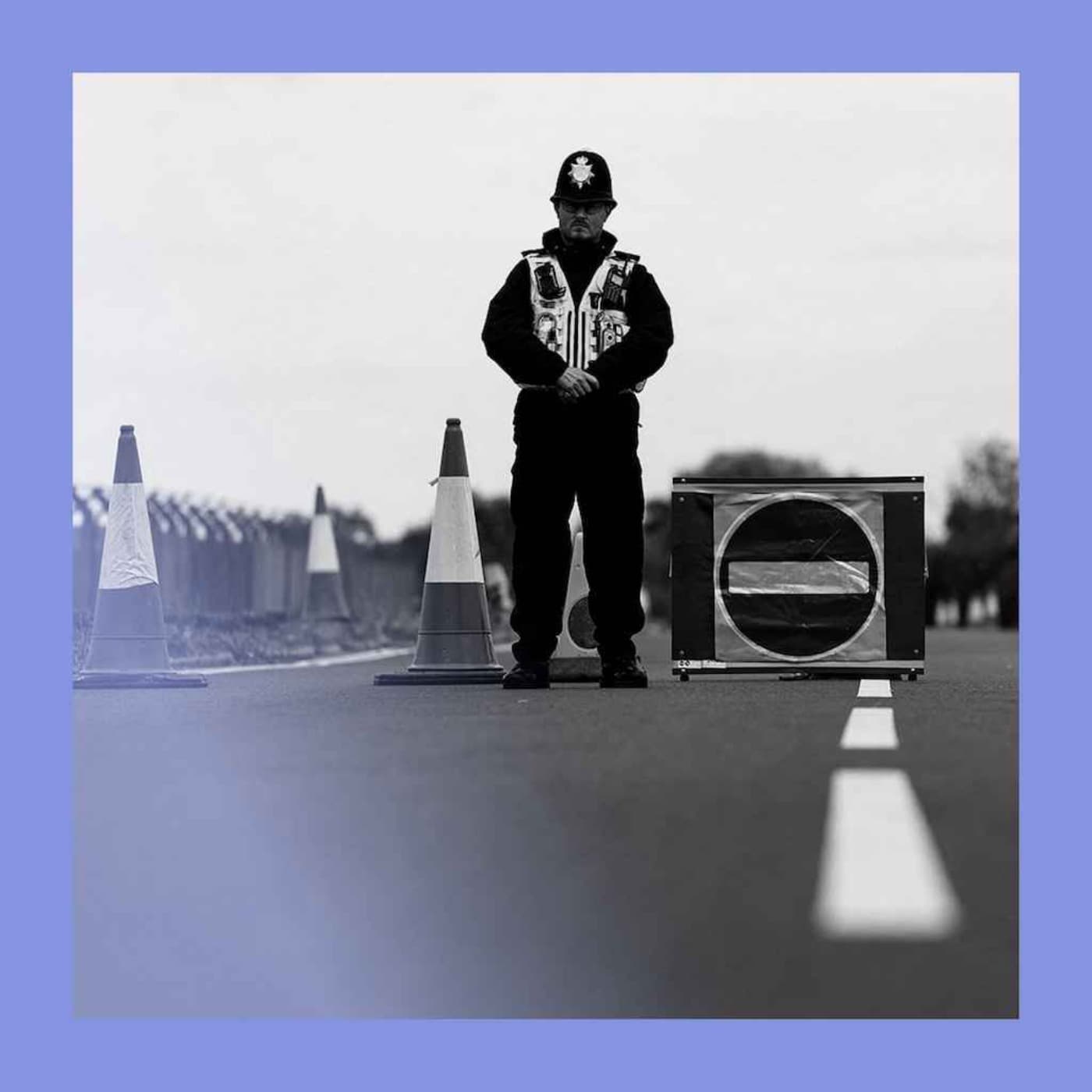
“Good news and bad news about crime in Britain.”
Historical Context and Recent Changes
3:10 to 5:30
Discussion on Somalia's political history and recent constitutional changes.
“The capital Mogadishu and the federal government of Somalia is looking weak at the moment.”
Security Implications and Local Forces
5:30 to 8:30
Insights into the security dynamics and effectiveness of local forces in Somalia.
“Jubaland in the south, and sparked a kind of intense debate about the country's future.”
The Future of Somalia's Statehood
8:30 to 9:56
Analysis of potential shifts in international aid and state recognition in Somalia.
“In fact, I was able to travel around Puntland pretty safely, which would not be possible If I flew to Mogadishu, you can't really leave the airport zone, certainly can't leave Mogadishu itself.”
The Challenges of Modern Policing
14:01 to 19:33
Explore the complexities facing police in solving modern crimes and societal changes.
“So really what that means is sort of blessing and a curse that you mentioned.”
Reflections on the Atomic Bombings
19:33 to 26:12
Discuss the historical context and impact of the atomic bombings of Hiroshima and Nagasaki.
“On the 2nd of August, 1945, the Potsdam Conference, the meeting of the leaders of the big three Allied powers, America, Britain and the Soviet Union, came to an end.”
Reflections on the Atomic Bombings
26:15 to 27:27
Discuss the historical context and impact of the atomic bombings of Hiroshima and Nagasaki.
“And you should definitely check out the four-part special on our sister show, Babbage, the deeply reported dive on the past, present, and future of atomic weapons.”
Transcript
Automatic transcript. May contain errors.0:28Summer's supposed to be the easy season. your time. The therapist you want takes your insurance on Grow. Grow accepts over 125 insurance plans. Sessions average$21 with insurance and some pay as little as$0 depending on their plan. Visit growtherapy.com slash ACAST today to get started. That's growtherapy.com slash ACAST. growtherapy.com slash ACAST. Availability and coverage vary by state and insurance plan. This intelligence podcast is sponsored by Backmarket, the leading global marketplace for refurbished tech. When the kids need phones, laptops, or tablets for school, buying refurbished tech makes sense for families trying to save money without sacrificing quality.
1:15At Backmarket, tech costs up to 50 % less compared to new. All devices have been professionally refurbished and come with a one-year warranty and 30-day return policy. Start saving money. Visit Backmarket.com or the Backmarket app to shop now.
1:34The Economist
1:40Hello and welcome to The Intelligence from The Economist. I'm your host, Jason Palmer. Every weekday, we provide a fresh perspective on the events shaping your world.
1:56Good news and bad news about crime in Britain. There's less of it, but a smaller fraction of cases are being solved. We look into why. And, as the world marks 80 years since the atomic bombing of Hiroshima, we return to our Archive 1945 project, reliving the end of the Second World War through The Economist's coverage from the time.
2:35But first...
2:43Somalia is one of those places that frequently attracts the modifier fragile alongside state, which is already a step up from the years when the modifier was failed. With international and regional partners playing a part, It's become one of the world's longest-running state-building projects. And a project it is, keeping its constituents, statelets and breakaway regions held together in the face of jihadist violence on multiple fronts. It's a lot to ask of a fragile state. The capital Mogadishu and the federal government of Somalia is looking weak at the moment. Tom Gardner is an Africa correspondent for The Economist.
3:24Some recent gains against al-Shabaab, the jihadist group which controls much of central Somalia and has ties to al-Qaeda, those have been largely reversed in recent months. And indeed, a growing number of observers fear that Mogadishu could eventually fall to the jihadists. So that's the disheartening side of the ledger, though I should stress that I do think there is a more positive story as well to be told. Let's wind back a little bit in history and talk about the early gains that you mentioned. When was the disheartening side of the ledger more empty? About three years ago, when President Hassan Sheikh Mohammed was elected for his second term in office, and he made early strides against al-Shabaab.
4:07He also chalked up diplomatic victories, such as the lifting of the UN arms embargo, which was imposed on Somalia when the state collapsed in the 1990s. In 2023, creditors granted$4.5 billion in debt relief, which paved the way for Somalia's re-entering to the global financial system. And then last year, much of the world backed Somalia in its feud with neighbouring Ethiopia, which had been triggered by Ethiopia's bid to lease a stretch of coastline in Somaliland, the breakaway state next door. So what's changed? Why has the tide turned? Well, I would date the change really to about March 2024, when the federal government passed a law to amend the Constitution.
4:49This concentrated power in the executive, introduced universal suffrage for national elections scheduled for next year, and replaced the existing system of indirect voting. Critics across the board, actually, have been swift to denounce this as an attempt to dismantle the fragile system of federalism, which currently gives statelets like Puntland in the north, largely untrammeled control over their territories, including over powers such as taxation and security. Now, this constitutional dispute, if you will, has really poisoned relations between Somalia's central government in Mogadishu and the federal states such as Puntland, such as Jubaland in the south, and sparked a kind of intense debate about the country's future.
5:37And the constitutional question has some security implications, I'm gathering. Internal conflict, political conflict within Somalia has always had security ramifications. So early gains against al-Shabaab, as I mentioned, have been reversed, in part because of these fractured relationships with the federal states, which have distracted the national army and the federal government, and also, I think, discouraged some of Somalia's foreign backers as well. So for example, the peacekeeping force convened by the African Union, that was supposed to be replaced by a slimmed down force in January. Yet eight months later, there's still no agreement on who should pay for it.
6:17The European Union, which reluctantly paid for the previous mission, may stump up 60 million euros or so, but that still leaves a big gap. And then Qatar, the Emiratis, Saudi Arabia are all said to have declined the African Union's request for emergency contributions. And then meanwhile, America, which is a big donor to Somalia, slashed its aid budget from 1.2 billion in 2023 to less than 400 million this year. No budget at all for food, fuel, and salaries for Somalia's special forces. And at the start, you mentioned there were some reasons for optimism. Tell me where they are. Yeah, so I was in Puntland, this semi-autonomous statelet in the north in July.
7:01And this is territory which is occupied by two of the world's most notorious jihadist groups, al-Shabaab, but also in the remote mountains to the east, an outpost of Islamic State. Now, for the past eight months, local forces from Portland, backed with airstrikes by America and the United Arab Emirates, have been waging an all-out war against Islamic State and are planning a similar offensive against al-Shabaab soon, that campaign does seem to have been pretty effective. And that actually shows, to my mind, that not all of Somalia's state-building efforts have been in vain. There are quite effective local security forces.
7:42So Mohamed Mubarak, the head of Puntland State Security Coordination Office, he claims his forces a pretty much cleaned up Islamic state in the mountains with the last remaining fighters holed up in a single cave complex. So they're confident that they have been quite successful. And I think that is a glimmer of hope, at least for the country as a whole. So the lesson here for you is to focus again on that federalism idea to devolve power from the capital. I think if you look at Somalia over the last 30 years, there are two clear examples of relatively, comparatively successful state-building efforts.
8:23One is this breakaway state of Somaliland in the far north, and the other is Puntland. And they are much stronger in security terms than the central government. In fact, I was able to travel around Puntland pretty safely, which would not be possible If I flew to Mogadishu, you can't really leave the airport zone, certainly can't leave Mogadishu itself. Whereas I was able to drive, you know, 400 kilometers across the country in Puntland. Somalia isn't all a failed state. And I think that's what some donors, particularly the Americans, seem to be thinking these days. They are, in fact, toying with the idea of redirecting military aid really through Somaliland.
9:04Somaliland wants America to build a military base on its Red Sea coast, ideally in exchange for recognition as an independent country. And that would be a big shift. From Mogadishu's point of view, that's pretty worrying because it would leave the federal government further exposed, where security is fast deteriorating. And people worry that it could contribute to further fragmentation of the country, resurging clan violence. That is the negative outlook. Ultimately, I think the international community does need to rethink its approach to Somalia and start thinking about supporting state-building efforts where they are already successful or underway.
9:44And that might mean recognizing Somaliland, or it might mean redirecting more aid to semi-autonomous states like Puntland. But I do think the current approach, which has prevailed for at least two decades now, fundamentally isn't working. Tom, thanks very much for your time. Thank you, Jason.
10:30I'll see you next time. thousands of high-quality licensed therapists across the U.S., offering both virtual and in-person sessions, nights and weekends. There are no subscriptions, no long-term commitments. You just pay per session. Grow helps you find therapy on your time. The therapist you want takes your insurance on Grow. Grow accepts over 125 insurance plans. Sessions average$21 with insurance, and some pay as little as$0, depending on their plan. Visit growtherapy.com slash ACAST today to get started. That's growtherapy.com slash ACAST. growtherapy.com slash ACAST. Availability and coverage vary by state and insurance plan.
11:15If you've got a teenager, it's time to have the talk. You know, about investing. With the new Schwab Teen Investor account, teens can gain hands-on investing experience and build positive money habits. It's an account co-owned by you and your teen, so you can monitor and engage with the account while your teen learns how to invest and manage money. Learn more at schwab.com slash teen.
11:511995 was a terrible year for crime in Britain. Burglaries and joyriding skyrocketed, and there was a big spike in violent crime too. Hello and welcome to what is the first Crime Watch UK of 1995, and the 106th programme altogether. As a result of those programmes, thanks entirely to information from viewers, police have now made a total of 393 arrests, and most of those have been for serious crimes. One of the policemen I spoke to told me that when he started out on the beat in 1993, he remembers picking up multiple burglaries a day. What he didn't know at the time was that he had started his job just before the crime peak.
12:35Thankfully, Britain is no longer in the midst of a crime wave. But although fewer crimes are being committed, fewer crimes are being solved. So, bit of a mixed blessing there. There are fewer crimes happening. Yeah, that's right. Right. So what the data shows is there's been this really big reduction in overall levels of crime in the last three decades. So if you look back to 1995, when that crime peak was, there was about 20 million crimes committed in England and Wales. That's now down to less than 5 million. Those really voluminous crimes like burglary, joyriding, that kind of thing have really dropped off.
13:15But most people don't feel that they're not seeing much crime. And that's partly because we've seen a bit of an uptick in crime in the last couple of years. But it's also because of the nature of those crimes. So we've seen a spike in quite visible crimes like shoplifting, like phone theft on the street. And the police don't seem to be doing too much about it. And the bigger issue, I guess, is the other part of the mixed blessing, which is the fewer of the crimes that are committed are being solved. Yeah, that's right. So we don't have data going quite as far back on this. But if you look back to 2015, about one in six crimes in England and Wales resulted in a charge or a summons.
13:53Last year, it was down to one in 20. So that's just 5 % of crimes are being solved by the police. The vast majority of crimes aren't. So really what that means is sort of blessing and a curse that you mentioned. You're much less likely to be a victim of crime. But if you are a victim of crime, you're actually much less likely to see justice. The big shift in terms of the reduction in crime, the thinking on that is that was really driven not so much by policing, but by improvements in security technology. So things like better security in cars, better detection of burglary at home. So that drove that crime down.
14:31We saw pretty steep cuts to policing in the 2010s. So up to about 2018, there was about 20 % cut in police budgets. And the public started to notice that. They were seeing fewer bobbies on the beat. And that's often put forward as the main explanation for why we've seen some of this reduction in effectiveness of crime solving. I think a better explanation actually is that crime has got a bit harder to solve. I think it's a mixture of things. I think it's a change in the caseload. So we've seen a reduction in those large volume crimes that were actually quite easy for the police to investigate.
15:07The classic whodunit where someone's broken into a house and you've got to work out who's responsible. But we've seen an increase in more complex crimes and really the police haven't quite kept up. What do you mean when you say more complex crimes? So I'll give you three main examples. So one is sexual offences. So those have tripled in the last 20 years And strangely, that is actually largely a good thing because it's mostly to do with people coming forward and reporting those crimes much more often than they did in the past. But those are really difficult and complex crimes for the police to investigate.
15:39They take huge amounts of resources. They take a very long time. You have to go through a lot of different evidence to do that. So that's taken the police away from investigating other crimes. But two other examples which captured this growing complexity. So one is street theft. So if you look at back in 1995, the majority of thefts were burglaries. They were quite simple and straightforward. There was a location. Often there were some clues left. Nowadays, the really difficult theft crime that the police are dealing with is phone theft on the streets. London's actually become called the phone-snatching capital of Europe.
16:12And in the last year, there were 70 ,000 phones stolen on the streets. Police! Stay where you are! Stay where you are, police! Adam, is your phone missing? You've got people wearing balaclavas, riding electric bikes, yanking someone's phone out of their hand, going and selling it on to a broker or some other gang, which is then transporting it, often exporting it abroad. And that's a really difficult thing for the police to try and break down. It's quite a complicated criminal supply chain there. The same is true of vehicle theft. There's been a 75 % rise in vehicle theft in the last decade in Britain.
16:48and that is really to do not with these joyriders that you would have seen in the mid-90s who hotwire a car, drive it around for a bit, quite easy for the police to catch. What is now happening is you've got big organized groups involved in nicking cars and then exporting them abroad and that's again much more difficult for the police to investigate. I guess the question is why policing hasn't caught up with these different kinds of crimes as these decades have passed. One way to think of this is as a cat and mouse game between the criminals and the police and I think one of the trends beneath all of those crimes that I was just describing is a way that criminals and the police have adapted to changes in technology.
17:26So you would think that the mass adoption of smartphones gives the police lots more data and evidence to help secure convictions but actually what we see is the police are pretty poor at using that data, sifting it, developing evidence from phones and at the same time the criminals have got very good at using encrypted communications to operate and cooperate at a much bigger scale. So it's much easier to sell stolen goods, for example, to distant markets. The other trend that I think we're seeing is the burden of proofs has risen. So again, to go back to the 90s, the police officer I interviewed, when he started out, a police officer would stand up in court and say, I saw them do it.
18:07And it was as simple as that. Now you really need CCTV, you need DNA evidence, you often need what's called phone forensics to secure a conviction. And again, that makes things harder for the police. If these trends continue, then we're heading for a world where even fewer still get solved. Yeah, I think that's right. I think the police really need to think hard about how they're going to respond to this. In Britain, it's interesting. We've seen Nigel Farage, whose Reform UK party is leading in the polls, come out with his big plan for tackling crime. And his solution is more what his party calls big strapping male officers.
18:42They want bulky bobbies on the beat who can scare people into not committing crime and who can crack down. I actually think that's interesting because it's precisely the wrong approach in my view. I think actually what we need is a much smarter police force. If you look at phone theft, for example, the way to tackle that is going to be to look at the online resale markets that's really encouraging this sort of theft to happen. The same thing is true of shoplifting, actually. The big spike in shoplifting has happened because it's very easy for people to resell stuff. So you really need the police to have the skills to look at those online markets and crack down on them.
19:19And I don't think it's going to be about just having more brawn. But the government is working on a white paper on this, so we'll have to wait and see. Smaller, nerdier bobbies off the beat is what we need. That's what the economists would call for. Tom, thanks very much for joining us. Thank you, Jason.
19:53On the 2nd of August, 1945, the Potsdam Conference, the meeting of the leaders of the big three Allied powers, America, Britain and the Soviet Union, came to an end. Fraser McGillraith is the author of The Economist's Archive 1945, an account of how The Economist reported on the end of the Second World War. The division of Germany, Europe's new borders, and German reparations had been decided. The unconditional surrender of Japan was demanded, but it did not come. Then, 80 years ago today, at 2.45 a.m. on August the 6th, The Enola Gay, an American B-29 bomber, took off from Northfield in the northern Mariana Islands.
20:41Its target, Hiroshima, a city on the south of Japan. The flight took around five hours. On their approach, the bomber's crew armed Little Boy, the nuclear bomb they were carrying. At 8.16am, they dropped it.
21:03The power of the blast was equivalent to 12 ,500 tons of TNT Its core reached nearly 3 ,000 degrees Celsius Between 60 ,000 and 80 ,000 people were killed instantly Nearly that number again would die from radiation poisoning or their wounds The Americans had intended to drop the second bomb, Fat Man, on August 11th but poor weather forecasts meant they brought forward their plans to August 9th. Fat Man was, by some assessments, nearly twice as powerful as Little Boy but it landed about a mile from Nagasaki. Hills partly shielded the city from the blast. It is thought that around 50 ,000 people were killed though in the case of both bombings, estimates of the dead vary widely.
21:53On August 11th, The Economist reported on the bombings. they highlighted a stark contrast. On the one hand, the bomb embodied a feat of scientific prowess, but on the other, a new and deadly force. The successful production of a bomb relying on the splitting of the atom for its explosive force is, no doubt, a triumph for sustained and coordinated scientific research. If this new and enormously potent source of power can now be harnessed to something more useful than the devastation of cities, It may make possible strides in material welfare larger than any yet dreamed of. But to the great mass of ordinary people, it is just one more, the largest and most terrible of the horrors of war.
22:39One more weapon of destruction to which there is no answer. One more terror which it is better to have on our side, but best not to have at all. The demonstration of the bomb's power prompted awe and fear. Nuclear technology, which could produce vast amounts of energy, promised constructive civilian uses, but finding ways for these to work would be hard. If a quantity of the active substance as big as a pea can make a crater large enough to hold a house, it will obviously not be easy to find an explosion chamber strong enough to retain the energy released and make it turn wheels. It also was not clear that the same resources would be put towards nuclear energy.
23:22as have been lavished on it as a weapon of death. The bombings had immediate consequences for the war in the Pacific. Soviet generals had been planning for months to invade Japanese-occupied Manchuria. Japan was already reeling from one atomic bombing. Now, hours before America would drop the bomb on Nagasaki, they saw their moment to strike. The present moment is clearly ideal. The Japanese are so weakened and desperate that a Russian declaration of war may be the last straw necessary to break the back of their resistance. It may not entail a heavy military commitment. It places Britain and the United States under an obligation they are only now ready to acknowledge.
24:05And it moves Russia from the role of observer to that of principle in the settlement of the Far East. The days following the atomic bombings and Russia's entry into the war in the Pacific were fraught with uncertainty. It could not be ruled out that Japan, whose defeat was all but assured from the beginning of the war, would still withhold its surrender. Yet, the economist wrote, There is evidence to show that the utter devastation, four square miles of it at Hiroshima, caused by the atomic bomb, has convinced Japan's leaders that a way out of the war must be sought. In the days following the bombing of Hiroshima, Japan's leader, Emperor Hirohito, received updates on the scale of the devastation done to the city.
24:50He and his advisors were forced, at last, to prepare for Japan's surrender. The Economist also noted that the invention and use of the atomic bomb gave the wrangling over post-war Europe, initially settled only days earlier at Potsdam, a different hue. One may wonder what future historians will make in such a context of the victorious statesman's conception of security. If one bomb can annihilate Konigsberg, do the Russians gain much by annexing it? What possible defensive importance can be attached to a frontier on the Erda or anywhere else? Can the ban on German production of aircraft and seagoing vessels have any bearing on war-making power in the atomic age?
Read the full transcript
25:36Once again, we are reminded of the appalling gap between man's adult scientific mind and his political infantilism. As such, in the decades since the bombing of Hiroshima and Nagasaki we can count ourselves lucky that political infantilism has not led to the use of nuclear weapons again Today's anniversary, commemorated every year in Hiroshima at its peace memorial ceremony is a reminder of their devastating threat To find all of Archive 1945, subscribers can just open up the Economist app or visit economist.com slash interactive. And you should definitely check out the four-part special on our sister show, Babbage, the deeply reported dive on the past, present, and future of atomic weapons.
26:39That's all for this episode of The Intelligence. We'll see you back here tomorrow.
27:02Self-directed investing, trading, full-service wealth management, automated investing, financial planning, thematic investing, retirement planning. And to think, that's just a small taste of what Schwab offers. Because Schwab knows that when it comes to your finances, choice matters. No matter your goals, investing style, life stage, or experience, Schwab has everything you need all in one place. So you can invest your way. Visit schwab.com to learn more. Thumbtack presents Tile Trouble. Every single time I use my sink, I make eye contact with the uneven grout of my kitchen backsplash. the crooked corners eye me and i'm haunted by more tiling questions than i thought possible what kind of pro can fix a backsplash can i replace one cracked tile or should i replace them all what what if i just use thumbtack i can hire top-rated pros read reviews and compare prices with a tap all on the app thumbtack knows homes download the app today
From the publisher
The country had been on the rise: beating back jihadists, strengthening its federal structure and gaining international stature. That has all reversed. In Britain levels of crime have fallen—but the changing nature of criminality has meant a smaller fraction of crooks getting caught. And 80 years on to the day our Archive 1945 project revisits the atomic bombing of Hiroshima.
Get a world of insights by subscribing to Economist Podcasts+. For more information about how to access Economist Podcasts+, please visit our FAQs page or watch our video explaining how to link your account.
Hosted on Acast. See acast.com/privacy for more information.