
In short
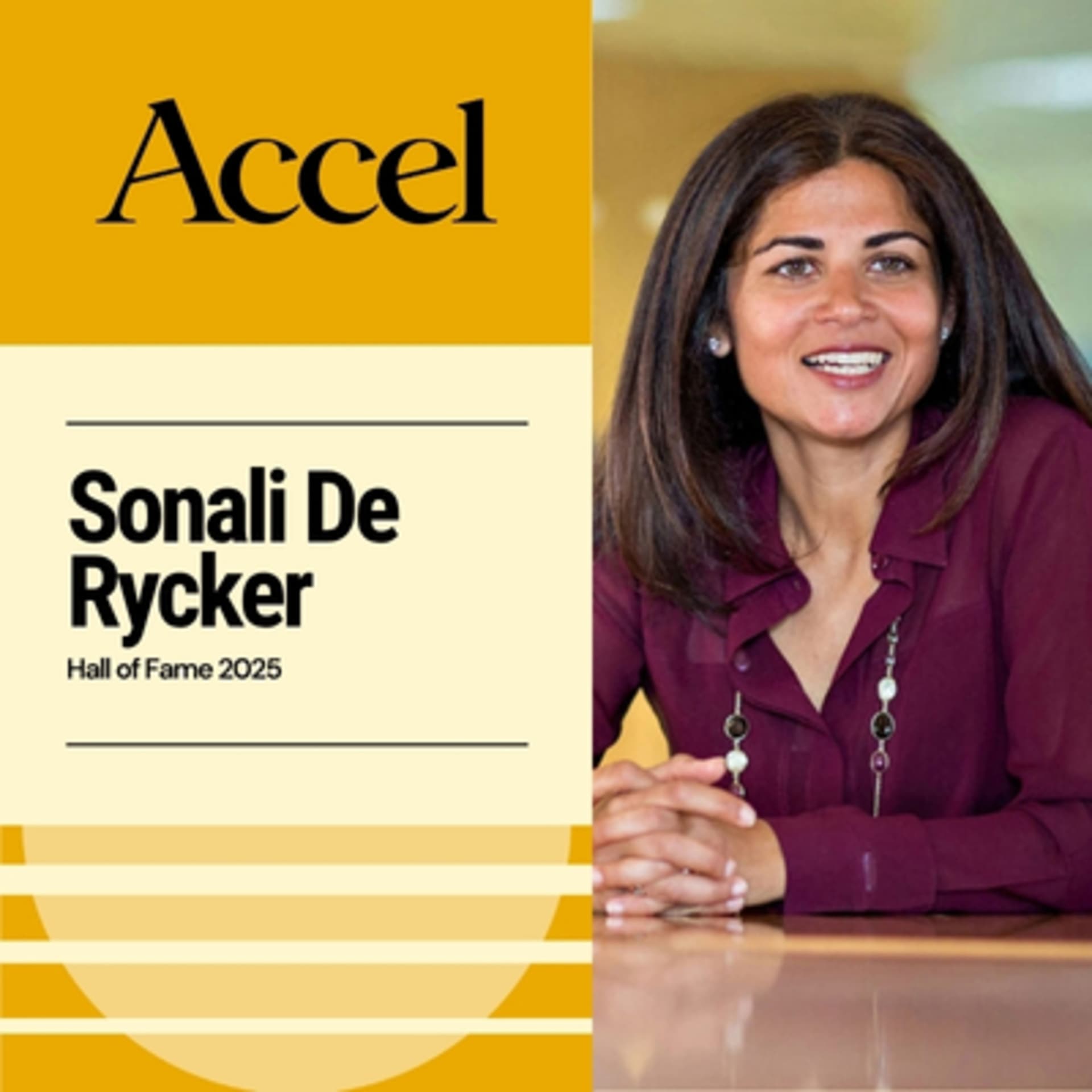
Accel’s Sonali De Rycker receives the Hall of Fame 2025 award from the EUBC, discussing how European venture capital was built, why founders matter, and why Europe’s fragmented ecosystem and “recycling” of talent/capital are driving global-scale companies—especially as AI adoption accelerates.
Guest backgrounds
Sonali De Rycker is a long-time Accel investor (joined around 2000) and a leading figure in British/European tech investing. She credits earlier European entrepreneurs and supportive LPs like Catherine at Horsley Bridge.
Key claims
European founders are not fundamentally different from U.S. counterparts; resilience and grit win. Europe’s fragmentation creates multiple hubs (not just Silicon Valley). Founder “recycling” explains growth to ~400 unicorns and ~2,000+ new startups from them. AI is the next application layer where Europe can lead globally.
Notable examples
Spotify, Monzo, Hoppen; Vinted (Vilnius), UiPath (Bucharest), Miro (founded in Perm), Supercell (Helsinki); DeepMind and Mistral; AI startups 11 Labs, Lovable, Synthesia, AnyTune.
Written by AI. May contain mistakes. Listen to the episode to check what was said.
Chapters
Tap a time to open that second in VOCelebrating Sonali De Rycker's Impact
0:18 to 1:10
Discussion of Sonali's pivotal role in European venture capital and her recognition.
“If you look back to 2002, she herself called it the nuclear winter of European tech.”
Humbled by Recognition
1:10 to 2:16
Sonali shares her feelings on receiving the award and her philosophy on entrepreneurship.
“And I didn't expect it, but I'm already relishing it.”
The Rise of European Entrepreneurs
2:16 to 4:10
Sonali reflects on her early career choices and the entrepreneurial spirit in Europe.
“feeling humble was really the most dominant sensation.”
Identifying Exceptional Talent
4:10 to 6:06
Insights into what makes European entrepreneurs unique and successful despite challenges.
“So I mean, this was the body of work by our team, right?”
The Fragmented European Ecosystem
6:06 to 7:46
Exploration of Europe's unique entrepreneurial landscape and its opportunities.
“But it's also the opportunity that you find these individuals in Vilnius, in the case of Vinted or Bucharest in the case of UiPath or Perm, which is where a company called Miro was founded from.”
The Role of Founders and Investors
7:46 to 9:43
The importance of founder support and the evolution of investment strategies in Europe.
“And it's the belief that Europe has these incredible pockets of talent, regardless of where they come from.”
AI as a Catalyst for Change
9:43 to 11:47
Discussion on AI's impact on European tech and the future of startups.
“And then we had to wait another year, another three years for the second one in 2008.”
Belief in European Founders
11:47 to 14:00
Sonali emphasizes the importance of belief and commitment in building a successful venture.
“In fintech, we've done that in e-commerce, we've done that in gaming, we've done that in open source.”
Advice on Decision-Making for Investors
14:00 to 14:27
Learn the importance of reflecting before making decisions as an investor.
Transcript
Automatic transcript. May contain errors.0:00We are live.
0:00Sonali De Rycker:We are live. In five. We are live. Four. We are live. Three. We are live. Two. We are live. One.
0:17Sonali De Rycker:There's a version of European venture that almost didn't happen without Sonali. If you look back to 2002, she herself called it the nuclear winter of European tech. and her family members were asking her why she was doing this career. She stuck it out. She joined Accel and has become one of the most important women in British technology. But more importantly, she's the one that founders want in their corner. An investment by her is a seal of approval. Spotify, Monzo, Hoppen, company after company that defined what European tech success stories could look like. She made the Hall of Fame because it's not about her portfolio.
0:54Sonali De Rycker:It's the ambition for the ceiling for the ecosystem in Europe. She consistently argued that European founders look no different to their U.S. competitors or counterparts. She spent 17 years, maybe 25, we heard, putting money behind what she believed. And we're delighted to recognize her today. Thank you to you and the EUBC team. It's really an honor. And I didn't expect it, but I'm already relishing it. And I'm very sorry I won't be there live.
1:27I had to sort of read it three times, which I don't know what that says about what, you know, I expected either from Chris or kind of my own expectations. I think my feeling was one of being truly humbled. Very much think of myself and our role in the industry as really enabling and sitting behind the people who do the very hard job, the founders who are the center of it all. And they are the ones at the coalface sort of, you know, taking the blows and kind of living to fight another day and just doing something that's beautiful even when it doesn't work. from a standing start. And so I think to have any recognition is sort of not how we look at the business.
2:13The business is really all about the founder. So I think feeling humble was really the most dominant sensation. And yeah, I guess excited for what that might mean.
2:28When I was looking for a summer job in the summer of 99, you can imagine this is the heyday of the dot-com kind of hype, I had decided that I would try to just see what Europe was all about. And that is what made me make the decision to sort of join in 2000. And I'll tell you, it was incredibly counterintuitive because of every one of my colleagues and my peers at business school and at Goldman Sachs were saying, go the other way, you know, go west. Why are you kind of going east? I had this realization in the three, four months that I spent here and the time has been trying to understand the European venture capital or European entrepreneur mindset was that the reasons people said, you know, Europe is hard.
3:12There just isn't an ecosystem. It's fragmented. It's decades behind Silicon Valley. It's just complex really at every level. What I saw in the founders that I met were the individuals who actually with no scaffolding, with no support, were able to create something out of nothing, despite all of those difficulties, all those complexities, they really, A, were true entrepreneurs. And I mean that. This is all they wanted to do. So they were made and built to do this. It was their life's mission, which I think continues to be incredibly important when you think about backing entrepreneurs. And the second is the resilience, the grit, the passion, the vision was truly exceptional.
4:02So my thesis was, if I'm going to have the ability to back people who are exceptional, why not do in a market where you truly can see the people who can rise to the top and not just exceptional, but have all the makings to be generational.
4:22So I mean, this was the body of work by our team, right? Not all myself, but we very much think of it as a team sport. I think the common thread was individuals who wanted to build something on the global stage, who had kind of an ability to see around corners and join dots in a way that we felt was incredibly insightful and incredibly smart. But a determinism that we found just, you know, a spirit that was indomitable and a determination that was almost mind-blowing, which is against the odds to build a music company competing with an Apple sitting in Stockholm, very far from kind of the center of Hollywood where all the labels were and the power center was.
5:19it was just counterintuitive in every sense. And that's why you really had to believe that somebody who wanted to do something and go against the grain did it with the level of determination. I'll use that term again, resilience and grit and passion that was sort of, it wasn't going to be conquered anytime soon. So I think we saw just incredible individuals with a vision and grit that we were just magnetically attracted to. And I think the other element to talk about is people who talk about Silicon Valley as being kind of this centralized ecosystem, you know, which is really a flywheel in many ways.
6:02Europe, and the thing that we love about it, is incredibly fragmented, which of course creates the challenges. But it's also the opportunity that you find these individuals in Vilnius, in the case of Vinted or Bucharest in the case of UiPath or Perm, which is where a company called Miro was founded from. And of course, Helsinki, which Nokia was there. But at the time, there was not that much going on in Helsinki when Ilkha started Supercell. And if you think about this is the opposite, right, of Silicon Valley, that you have this fragmentation of geographies and these various kind of hubs or clusters.
6:40and the ability to navigate and really try and find great individuals regardless of where they are and not sort of do the paintbrush of either in the valley or not, I think has always been very central to our thesis, which is it's not just about the valley, hence Europe. And in Europe, it's not just about the couple of obvious places. We go wherever it says on the 10, formidable entrepreneur. So I think that is something that really I've really absorbed because in many ways, somebody said once, I think, you know, culture is software of the mind. It takes time for these ecosystems to build. So it has to start from somewhere.
7:19And bringing it back to the discussion of how did I feel, I felt humbled when I got the email from Chris, because in many ways, I think we owe a lot to these first, second, third generation of entrepreneurs who really paved the way, right? Because if you don't see it, you can't be it. And that's exactly what they did. And they did this in very far-flung places. So I think it's the belief in the individual. And it's the belief that Europe has these incredible pockets of talent, regardless of where they come from.
7:58I mean a person that I don't know how familiar her name is to everybody especially on the entrepreneurial level is Catherine at Horsley Bridge I think as an LP she has been an incredible believer in the strength of the European ecosystem and the strength of the European founder Investing in this geography early required conviction, but then it really required a lot of commitment to stay the course. Not only did she stay the course, she supported funds like us, funds like Index, and many others, and gave us just incredibly thoughtful and wise advice along the journey because we all have our J-curves, we all have our ups and downs.
8:45And so thinking about reminding us that this is a power law business, This is about the generational founders. And hearing that from a supportive investor, the same way we like to be supportive investors to our founders, I think she's been incredibly invaluable. And that's at the LP level. And to me, I think the rest of the repeat founders that we've talked about, the Ilkers of the world, the Martin and Daniel X of the world, the founders of UiPath, the Daniel Dines. And, you know, the scores of others I'm not mentioning. And the reason I say that is because in the first generation, a lot of the founders, they didn't give back.
9:27But since then, all Tavit, all of these founders have consistently given back with their time and their capital. And now we really see the recycling, right? We have 400 unicorns. I think our first unicorn was in 2005. So we had to wait five years. And then we had to wait another year, another three years for the second one in 2008. So there were two. And now there's 400. It's incredible. It's changed. But what's more exciting and what's more validating is that of those 400, I think about 280 of them have created more than 2 ,000 new startups. And that's the software of the mind. That's the culture changing, right?
10:08Where in all of these cities, this is happening because of the recycling of talent and capital. And I don't think it would have happened without these founders.
10:21I think it's everyone's moment in some sense. There's a lot of questions being asked around AI. It is the most powerful technology force and change that we've seen, I think, in our kind of lifetimes. Not least because it's a confounder of everything that comes before it. Everybody's online. Everybody understands the language of AI. It's human language. And hence, the distribution has been meteoric. And I think we see about it. We see this and we read about it every day. This is part of the thesis of coming here 25 years ago. It's never been about talent. Europe has the talent, has the research talent, has the elite universities.
10:59Of course, it took time to build kind of the muscle around commercial and product talent, but we have that too, and we have that in a number of cities. So it's everyone's moment in some sense, and it's Europe's moment. I think we will be shining on the application side for a whole bunch of reasons, even though we do have DeepMind here and we have a few frontier labs that are doing well, Mistral, et cetera. I think we've been always very strong on the application layer. And my view is that the customers, the design customers, the enterprises are moving really fast, whether that's in Germany, whether that's in France, whether that's the UK.
11:38I wouldn't have said that a year ago. So it's really about building a global leader in Europe across categories, which is what we've done, right? In fintech, we've done that in e-commerce, we've done that in gaming, we've done that in open source. And we've done that, of course, in automation and other areas of application software. So AI is just the next, if you will, fabric that we're going to build on top of. And so that's where we're really seeing some incredible talent, whether it's 11 Labs, Lovable, Synthesia, Anytun, and many more. And I think we're still early in terms of seeing that because the real adoption at the enterprise level is happening literally as we speak.
12:19I mean, everyone's talking about Agenda, KI, and Enterprise Harness. And so I think we're incredibly well positioned to make sure that we take that on. We take that on at a global scale.
12:35Well, again, I wish I was standing in front of everybody. I think the number one thing I will say, and it's the one thread that I keep pulling in my career, is the belief in the founder and in the founder coming from Europe to build something magical and make a global impact and do it in a European way. And never stop doing that, never stop believing. And it's all about belief and commitment. And And it's what's allowed me to be here in front of you. And I hope everyone can usually feel it and adopt it.
13:18It's frustrating, but it's also heartening to see that the elderly always have better advice for you than you think you have for yourself. But I think we're all about pattern recognition. and it's really important when you see a special founder you fall in love immediately right you fall in love because people are great storytellers and for me I really allow my job my own joining of the dots and the pattern recognition the pattern to form when I've had some time to think about it and there's nothing better than having a night of sleep and waking up and saying what do you really feel because what you feel right after a meeting versus what you feel in the morning it's great if it's the same thing but more often than it's not and I find myself giving the same advice to my team members and to my founders is you know what sleep on it and then see what you think because in the cold brightness of the day that's what you really believe and if you're ever going to be a good investor or a good conciliary to your founders you really have to do what you really believe.
From the publisher
Sonali De Rycker, Partner at Accel, is inducted into the EUVC Hall of Fame 2025 in this awards presentation from the EUVC Summit & Awards Show 2026.
The award recognises individuals who have shaped European venture over more than a decade through the founders they backed, the firms they helped build and the ideas they advanced.
Sonali joined Accel in 2008 and invests across consumer internet, software and fintech. Her investments include Spotify, one of the companies that helped establish what a globally significant European technology business could look like.
In her acceptance remarks, she reflects on choosing Europe at a time when the ecosystem was fragmented and widely considered far behind Silicon Valley.
What she saw instead were founders building without much infrastructure or support, often far beyond the continent’s established technology hubs.
She also discusses how Europe has strengthened as founders recycle talent, experience and capital into new companies, and why AI gives the continent another opportunity to build global leaders.
Throughout, she returns to the belief that has shaped her career: exceptional European founders can build companies with global impact.
The EUVC Summit & Awards Show returns in 2027. Find out more.


