
In short
EUVC Podcast Episode Summary
Episode Title
E372 | Tarek Khalil and Mohamed Elbadwihi, Rasayel | Startups in Focus by Seedcamp: Revolutionizing Customer Engagement via WhatsApp
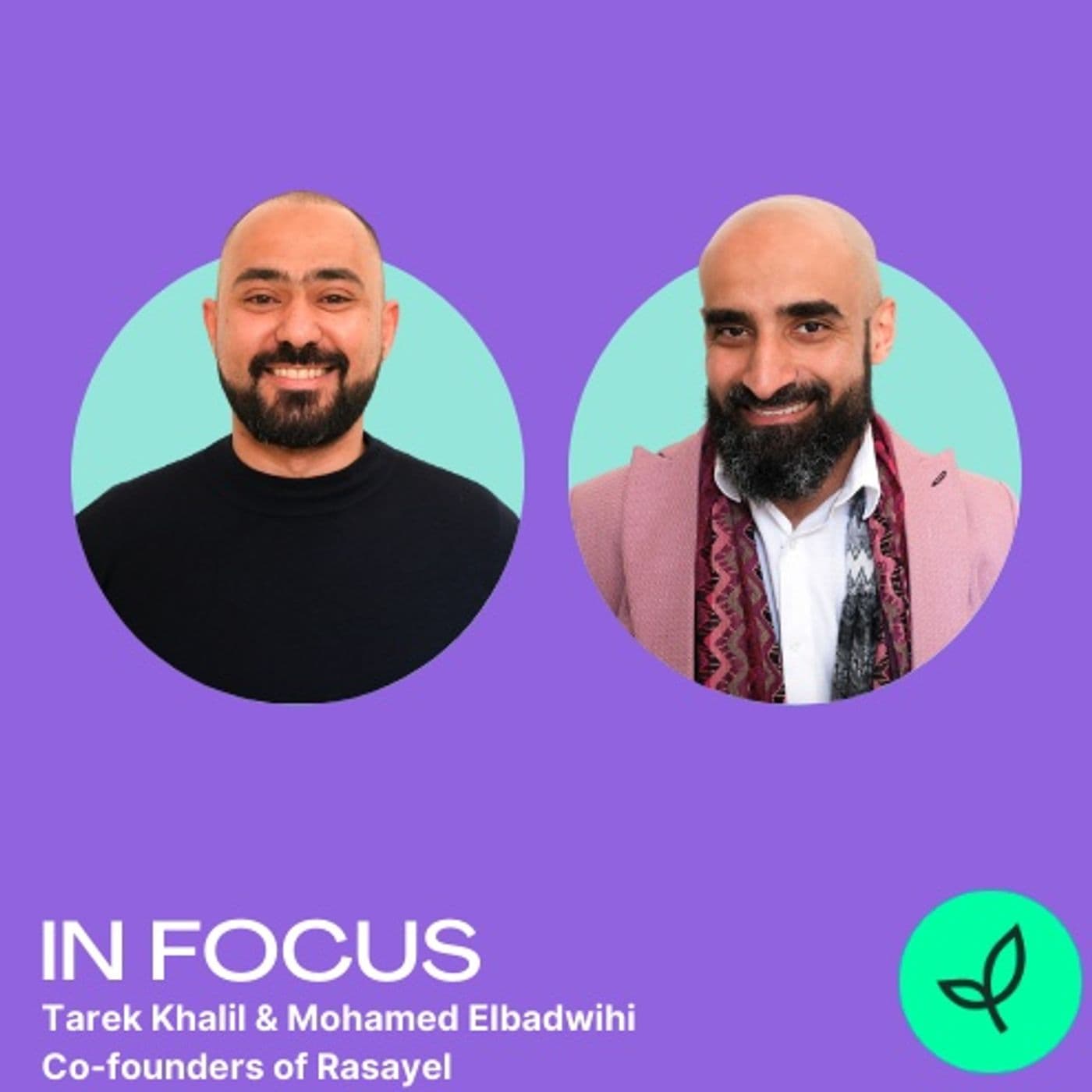
Episode Overview In this episode, co-hosts Carlos Espinal and Felix Martinez engage with Tarek Khalil and Mohamed Elbadwihi, co-founders of Rasayel, a business communication platform utilizing WhatsApp to enhance customer engagement. The discussion covers the evolution of messaging platforms, the importance of WhatsApp in business communication, and the innovative strategies adopted by Rasayel.
Key Concepts and Sections
- Founders' Backgrounds and Journey (00:35)
- Tarek Khalil: Background in software engineering; experience in interactive software development. Worked at Intercom where he developed ideas related to business messaging.
- Mohamed Elbadwihi: Has a diverse tech background, moving from startups to the corporate world before co-founding Rasayel with Tarek.
- Lessons Learned from Previous Startups (02:42)
- Top Lessons:
- Importance of teamwork and collaboration.
- Timing for fundraising matters; it should align with business needs.
- Prioritize revenue generation early on.
- Invest in sales and marketing from the outset.
- The Birth of Rasayel (04:59)
- Rasayel emerged from Tarek’s realization while at Intercom that communication is shifting from web chat to messaging platforms like WhatsApp.
- The focus is on creating solutions that allow businesses to engage customers on their preferred platforms.
- Understanding Rasayel's Product (07:35)
- Rasayel functions as a communication tool for businesses to enhance customer interaction over WhatsApp, offering a suite of features tailored for sales teams.
- WhatsApp as a Business Platform (10:08)
- WhatsApp has transitioned from a messaging app to a robust platform for business communication, capable of handling complex interactions and transactions.
- Global Adoption of WhatsApp (16:00)
- WhatsApp boasts 2.7 billion users, with significant messaging volume, establishing itself as a primary mode of communication for both personal and business use.
- Platform Risks and Meta's Incentives (12:59)
- Discussion on potential risks of relying on a single platform and how Meta’s monetization strategy aligns with supporting businesses using WhatsApp.
- Navigating Multiple Messaging Platforms (18:37)
- Businesses often need to manage communication across various platforms, with WhatsApp being a dominant player due to its user trust and engagement rates.
- Trust and Confidentiality (24:12)
- Emphasis on WhatsApp’s strong privacy controls and end-to-end encryption as factors contributing to user trust, which is critical for business communications.
- Compliance and Data Management (32:41)
- Rasayel ensures compliance with regulations like GDPR and offers tools for businesses to manage customer data securely.
- The Future of WhatsApp Integrations (37:01)
- Potential for expanded features and capabilities within WhatsApp, as businesses continue to seek effective communication solutions.
- Conclusion and Contact Information (44:28)
- Encouragement for listeners to engage with Rasayel through WhatsApp and other platforms, showcasing the accessibility of their team.
Key Takeaways
- Messaging Evolution: WhatsApp is becoming a critical platform for business communication, moving beyond traditional email and phone calls.
- Customer-Centric Communication: Businesses are increasingly required to meet customers where they are, which is often on messaging platforms like WhatsApp.
- Importance of Adaptation: Companies must adapt their strategies based on regional preferences and regulatory environments while leveraging WhatsApp’s capabilities to enhance customer engagement.
Contact Information
- Rasayel Website: [rasayel.io](https://www.rasayel.io)
- Follow on LinkedIn: Available through their website.
- Substack for Insights: [justmessaged.substack.com](https://justmessaged.substack.com) - for deeper insights and articles on WhatsApp and customer engagement strategies.
This episode presents a compelling look at the future of customer engagement through innovative channels, emphasizing the importance of adaptability and leveraging existing communication platforms.
Written by AI. May contain mistakes. Listen to the episode to check what was said.
Transcript
Automatic transcript. May contain errors.0:28Welcome, everyone. Ahmed, feel free to take whoever wants to go first. How, like, tell us about your background. So how did you get to 2024? What did you do? Lovely to be here, Carlos, and thanks. Thanks so much for this. We have basically started as an engineer, as a software engineer. I met Mo in university. We basically started together for a couple of years and we graduated. We got our first job together. We worked with these huge, big multi-touch walls and tables. We built all of these interactive software. and year in, year out, we took different paths. I basically focused a lot more on the software engineering path, classic programming path.
1:08I've worked in Malaysia. I've worked in Dubai. I've worked in Oman. I've also finally ended up in Ireland joining Intercom. This is where the story with business messaging started. Mo, would you like to? Yeah, thanks so much. And I'm so happy to be here. Carlos with you and Felix. Well, I'll give you a bit of background on me. I was born in Egypt. Both of us are from Egypt, but we met in Malaysia. That's almost 15 years ago now. And ever since I was little, I was fascinated with building stuff. And I got into software pretty early. In my teen years, I found some source code and played with it.
1:43And that really just began my entire journey in the tech world. And so by the time I met Tarek, we were both getting into this idea of wanting to build something. And that's when we had our first jobs together. We worked in a startup while studying. That was in Malaysia. And like Tarek said, we split ways. I continued in the startup world for a little bit. I started a company that didn't go well at the time. I very carefully drove it into the ground, but learned a lot from it. And then I got into the corporate world for a couple of years doing digital innovation and enterprise architecture and stuff like that.
2:18And I learned a lot from that, but it wasn't really what I wanted to do. And then about five or six years ago, I moved to Canada. And that was around the time when Tariq was starting everything that we're at now with our sale at Octopods. And that's when I joined him. He had to chase me a little bit, but that's how we got here. Nice. Well, before we go straight into the background is why you started Raseal, I want to ask you guys, feel free to collaborate on this answer or to give independent ones. but top three lessons that you learned from the challenges of the previous startups that not only you worked at, but also at Octopods, things that you would not do again.
2:59Things I would not do again. I think one is that as a person, I can do everything. You basically got to go out there and get great people to help you out. And I guess two is we haven't done that. We have done it the right way, I think, but we have seen so many around us that have done it, and we have said that this actually was a good choice or a good decision, which is raising money when you need it or when the time is right. When you actually have something that you yourself believe that can make good business, you know, not forgetting about the foundations. We have done that with Octopods, which we were basically bootstrapped and we didn't raise and we didn't need to raise.
3:34We've seen so many examples around us going really badly because of that. The third thing is making money as fast as we can. With Octopods, it was a little bit of trying a few things before we realized that we've only got to do the thing that actually gets in money. And that's a really important product and solving problems and technology and all of that is amazing. But unless you get money in, you're lying to yourself and that's really important. These are just top of mind. Maybe Mo, you have some more. Yeah, for me, the one thing that stands out is not investing in sales and marketing from day one.
4:11And also assuming that when you build something and that's what the journey of distribution looked like, then you're going to be able to replicate it on this other thing. It's every single company, every single journey is different. And that also then kind of tracks to when listening to other stories or learning from other people, I've learned to be mindful of the fact that every single one of those have a different journey. And just because it worked for someone else or worked for even me before doesn't mean it's going to work again. It was a hard lesson to learn, but it's something that sticks out to me.
4:45Yeah, well, it sounds like you've polished off a lot of ideas into something that hopefully you've brought into the company. So on that note, I want to get a little bit of your background to why you started Rossail. I mean, Tarek, you talked a little bit about your time at Intercom, which is like begging this. So I'll let you talk about that. And yeah, basically, conclusion is you came up with this company, but there's always a context that brewed. Yeah. In Intercom, I was basically much younger than I am now. Not much, but like younger. So I had a lot of time. Basically, all my time was for work.
5:17And I would come up with all these ideas on the side. I would go into Intercom. They had this show and tells and so on. And from there, it birthed some side projects that happened to be on the Intercom roadmap. And the interest started from there. I basically noticed that Intercom is really kind of a source of truth for messaging, for communication between your business and your customers and Intercom bet big on web chat or live chat. But what I've seen in the world, what I do when I go back to Egypt and see my mom sending the supermarket a WhatsApp message or, you know, getting services over all of these messaging channels is that web chat has a place in the world, but there's like wave 3.0 for business messaging is coming.
6:02From there, I basically decided that I'll just quit Intercom and I'll go out there and I'll build something. And that was Octopods. The idea is let's go out there, let's connect Intercom to all of these different messaging channels. It's not just web chat or email, it's all of these other different channels. And this actually solves a problem for businesses who care about being there for the customers, wherever their customer is. And from there, we've basically seen a lot of growth. We actually have proof that businesses care about that. Businesses care about where the customers are. And from there, we have seen something even more insightful, which is specifically WhatsApp as a channel.
6:38If you are coming out of earth today and you've landed on and you've asked someone, hey, how do humans communicate with each other? They are probably going to tell you they use WhatsApp. And from there it's like, okay, do we actually need to support all of these different channels? Do the businesses really care about that? What do most humans care about? That's where, okay, they actually care about WhatsApp. This is the next big thing and it's nowhere near utilized right it's nowhere near to speak it's nowhere near how open it can be or is and so this basically led us to okay octobots was a great success we bootstrap it let's get in and let's see how businesses actually will build their teams and their communication over whatsapp this is what birthed resale this is just the events timeline but there's lots lots in there so yeah i think let's pull that thread so we've set the scene obviously your guys' backgrounds and the why behind Russ.io.
7:32Yeah, let's get into what it is that you actually do and maybe explain it from, I mean, however you want, but maybe from a customer standpoint, how are they actually using the product? What is the job to be done that Russ.io is actually filling? Yeah, every business today communicates with the customers in a certain way. WhatsApp is just another messaging channel or communication channel, right? You have phone calls, you have SMS, you have web chat and so on. And it happens to be that businesses are moving to where the customer is usually comfortable, right? So you don't have to offer them a web chat on the website that they will leave the website and come back later and so on and so forth.
8:09They have WhatsApp, they open their phone, and you are there as a business. So Versailles is basically a way for businesses to communicate with their customers over WhatsApp, very specifically for sales teams to accelerate their sales over WhatsApp. if I have a sales team today and they basically are made of SDRs, account executives, and there's like a bunch of process ops folks around them, they want to accelerate their sales with whatever means possible. And specifically if it's a delightful mean, right? So why not get something that's much faster in real time than email, but also not so much demanding in terms of time as a phone call, something in between that basically can accelerate and get them to nudge their leads and prospects and move these sales deals.
8:58This is precisely how Resale helps. It's a suite of tools baked into one product that enables this engagement. Basically, think about Aircall, but for WhatsApp. I also want to touch a little bit on something that Tarek mentioned there on email and phone calls and stuff like that. I think the usage of WhatsApp, the reason, the rise is not just that it's not a result of WhatsApp's success as a product alone, but it's actually coming from customers, from the demand of how people want to talk to businesses today. They no longer want to sit on your website and wait for the live chat response. They no longer want to use your contact page or use their email inbox.
9:42A lot of people who had businesses talking to us saying people don't use email anymore. They don't have an email address. And so people are demanding that businesses be where they are. And for a lot of people today, it's on platforms like WhatsApp. Well, I think that takes us actually pretty nicely into the next section, which I think we should cover, which is the kind of why now here. Obviously, WhatsApp, it's been around for a long time. A lot of businesses have used WhatsApp in different ways for a long period of time, whether it be for sales or support or any kind of customer service and so on.
10:15and Tarek you wrote a blog post recently which we'll link in the in the show notes where you talk about you know this notion of whatsapp moving from becoming like a pure play messenger product to actually more of a platform so maybe this is one for you Tarek like what exactly do you mean by that by whatsapp becoming a platform and specifically why is that happening now right Right. WhatsApp has basically reached kind of mass usage. We're talking about 2.7 billion people are using it. We're talking about 100 billion messages exchanged every day, 100 million voice calls being done every day. So we have established that this is how people communicate around the world.
10:58And when people communicate around the world, when they talk to each other, that communication extends by default. The expectation is like, if I talk to my friends and family and everyone I know over WhatsApp, why don't I just talk to that mini market? And then eventually, why don't I talk to that bigger business and so on? So when that happens, these smaller businesses and then the bigger businesses after them, they face difficulty in managing that communication, specifically when it gets bigger than the smaller businesses or the micro businesses. And when they face difficulty is that they look for ways to do this at scale.
11:31If you take phones, for example, how can I respond to phone calls for customer support on scale and so on and so forth? And this is where the opportunity lies for me, right? They have very much unrealized or unused real estate that's way kind of like virtual real estate. And to utilize that, it's virtually untouched or it was before, right? And to utilize that, how about we open up and we let builders come and we let businesses and builders and everyone come in and build their tooling. And we open up reasonably to everyone to scale these businesses, operations and so on, utilize the actual opportunity.
12:11And that's what I mean by being a platform. It's not a messenger anymore. That's not really what they sell anymore. more. What they sell is the opportunity for all of these businesses to do transactions over WhatsApp and WhatsApp only. And when these transactions happen, I don't want to compare it to a bank, but you basically have to do the transaction over there. And whoever facilitates that transaction will get a piece of it. And the platform obviously gets a big piece. And the business and the customers are also satisfied and happy. These are just like, I'm really touching the surface, but these are the elements of it.
12:49Cool, that's helpful. Mo, I don't know if there's anything you wanted to add to that but otherwise we can go on to the next question which is kind of tied to it. But yeah, I mean basically a lot of businesses that are built on top of other businesses in the sense that you guys are building on top of WhatsApp, there's always this notion of like the risk that comes with that, right? There's a platform where you're kind of reliant on them to hopefully not switch you off in some respects. And so maybe it's worth debunking that a little bit and speaking about the platform risk here. And then specifically, I guess, to your point, Tarek, now that you were just chatting about what the underlying incentives for Meta are when it comes to monetization of WhatsApp as a platform.
13:31Right. This is a question that I've asked myself many times before. And in the very first times I've asked this question, my bias kicks in and I freak out. But then I basically settled in and how, let's think about this logically, right? I've actually went all the way to building a formula to fight this question. So, and to answer it reasonably. So basically the biggest part of this question is where are meta incentives, right? What do they, meta is never going to go in and build a dentist CRM that uses WhatsApp as a communication channel. That's never going to happen. Unlikely, right? They're also not going to go in and build many, many other things.
14:11They have a very specific there are so many other kind of problems or layers that they are likely not touch. And every layer that's built on top of this increases their chances of having this channel as established channel for business transactions or business transactions being done on it, and also increases their incentives, the ways they can monetize this. And there are good examples of that, actually. For example, Meta have gone in and bought a customer with a K and they have very quickly sold it back. They wanted to get into customer service and they wanted to get into omnichannel customer service specifically.
14:52And they basically backed up very quickly because they realized our best bet is to open up this platform, let all the builders come and build. Let us have this pyramid of layers that is very, very hard to move. They have something that's immovable now, how people use this channel, right? How about we add more layers on top of that by having all these businesses being built over WhatsApp and scale over WhatsApp and so on? So it's a disadvantage for them to actually come in and change or do something that will harm that. What I would be worried about to be reasonable is they are very clearly are in the very first part of the spectrum, which is we want to help businesses get started over WhatsApp.
15:31So all the micro businesses, all the very small business, they offer them many, many tools and so on. I wouldn't go and build for that. That's part that they have clearly established that they own. And that's part of the risk, but it's part of also understanding how beta strategy is and what do they plan to do and so on. Mo, if you'd like to add something on that. Yeah, maybe not directly tied to the question, or it is related to it in some way. Whenever I think about this, I always think about how early we actually are in the journey of WhatsApp and what it will become. And although there are close to 3 billion active users, these are not just numbers of users, but active users, monthly active users, or maybe even daily, 2.7 billion daily active users on WhatsApp.
16:18this is just the beginning. We haven't reached anywhere close to the peak. And it's kind of like, if you think about, say, email or phone calls, the early days of these tools, asking the question of, well, what if email is shut down? And today, that's just unimaginable. What if we shut down email? I know that's a different state now because meta controls WhatsApp, essentially, all of it. But it's very similar because it's so ubiquitous. Everybody's using it that it would take a monumental catastrophe to take it down. So unless Meta shuts down as a company, that's just not going to happen. And it's similar with its infrastructure, its communication infrastructure.
17:01So that's kind of the way I think about it. And then another thing that I think about is WhatsApp and how it has taken off in other countries, and especially developing countries is tied to... So what tends to happen in some places is that as technology develops, say in the US and in Canada and in more developed nations, certain other countries skip stages. So for example, the US got free phone calls and free SMS and businesses were using phone calls everywhere. But we didn't really get free phone calls, say in Malaysia, when we were living there. And so people immediately skipped that step and moved on to WhatsApp.
17:40So WhatsApp is actually the phone calls. I think some of us don't realize how prevalent it is and how it's just the default mode of communication. People say WhatsApp me. I once called a business when I visited Egypt last year and I said, I need help with this. He said, WhatsApp me. Like he hung up on me because that's not how people communicate. That's just a little story of how. That's helpful. I think that also then, again, ties quite nicely into the next question, which is just on the conversations that you've had with, be it like the actual customers that you've got today or prospective customers and so on.
18:19Where is it within their stack that they're actually using WhatsApp? Like you mentioned starting with sales and going into support. If you keep pulling that thread, where does that actually lead? What is the evolution of some of these use cases? Right. So the way we describe inside of our sales to the team, we usually basically always imagine there is like a horizontal line and that line cuts through the business, cuts through the different business functions, basically sales later on, onboarding, activation, support, retention, et cetera, et cetera. Also marketing lies somewhere there. So when it depends on where you are in the world, what we have seen is the spectrum, right?
18:58We have seen the very early part of the spectrum, we have seen companies or businesses use WhatsApp as a nudging and buzzing channel, right? they're not running their business entirely over WhatsApp but it's very essential to nudge them and buzz them because that's the personal way to do it I've sent you an email I don't know what's going on I'd buzz you and you know get things going and then the very end of the spectrum is I cannot operate without using WhatsApp in all my business functions that's a real thing that happens every day in many countries in the Minda region for example many of our customers in the south of europe in india and in latin this is a reality right if i start a business i need to take care of how do i talk to my customers and that's going to happen over whatsapp so usually it starts with sales naturally right you sell something the transactions starts there and you carry on the conversation but very quickly specifically for businesses we sell to b2b software businesses today they tend to have onboarding and activation so the activation and onboarding team has to collaborate with the sales team.
20:01And then later on, the support and the success team have to collaborate with both of them. And then later on, I have like 100 prospects in the last one week that, you know, having gotten back to me. So I want to send them an engagement campaign. Where would I send it? Email or WhatsApp? Definitely not email. I'm going to send this over WhatsApp. So for me, it's always a spectrum. And it depends on which part of that spectrum. And the majority of WhatsApp users are actually on that other part, on the I run my business over WhatsApp part. and that's what makes a company like your side exists it's actually a 360 it's not just one little problem that we're solving and that's really important it's a bunch of problems or different categories of problems that we have to solve equally well and that's why the software is actually offering a lot of value and there's depth in the value as well i think this brings up a very good transition to the discussion around the broader context in which you guys operate in And you mentioned how different countries use services and you didn't really name check any other services other than WhatsApp.
21:06Although I presume that you are well aware of the different services that other countries have as a popular service. So I wanted to unpack that a little bit because we've had this conversation so far heavily leaning towards WhatsApp. But as you go to countries where other services are being used, you'd be daft as a company doing sales, which is the first place you mentioned, not accessing whatever it is that's popular. So walk us through a little bit about how does a company in a region that isn't, let's say, where WhatsApp is dominant, manage multiple ways of vectoring and product stacking? And how does that work?
21:41The way people kind of live their normal lives is really so much affecting their usage of the messaging app. and I've seen this in person. For example, I used to go and do some mountaineering in Indonesia and in Taiwan and in different other parts like Turkey and so on. And I've seen people over there, for example, would be using WhatsApp or WeChat in Taiwan. WeChat online are very, very popular for certain things, but they would use another messaging channel for voice calls, for example, Viper. And the way people have tried things and figured out this is the best way to do X through that messaging app, And this is, you know, they would just kind of rotate around these messaging app.
22:21What I have seen consistent across cultures or even countries or geos is that they usually use what they trust the most. Trust is not just I trust this app, but it's I trust that it's always working. I trust that it's there. I trust that it doesn't fail me, et cetera, et cetera, et cetera. There are some exceptions, China, for example, because of not allowing services outside of WeChat and so on. What I have seen is that WhatsApp is actually the exception. It applies to most countries. It is very deep into the fabric of many different countries. For example, very early on in Indonesia, we used to sell internet packages with access to Facebook and WhatsApp.
23:02That's your internet, basically. That's how you pay your internet package to access WhatsApp and Facebook. So it's very deeply ingrained in WhatsApp as a channel. It's very deeply ingrained into the fabric of many societies. But the interesting thing is that when we started Octopods, we have actually went on and supported all these messaging channels. So we have had customers from different parts of the world, and each of these parts would favor one channel over the other. And what we have seen from talking to these thousands of customers has led us to the conclusion of, yes, that exists. Yes, there's an opportunity.
23:38But WhatsApp is like 80 or 90 % of what's actually important out there. and you know that's why we focused on it so much in our sale and so on so i'm gonna either push on you tarik or muhammad you want to jump in here i feel like you've given me a three-quarters answer i feel like you're probably right in the sense that whatsapp is a leading platform for very specific things but you touched upon a couple of really interesting points first of all you touched upon how different countries have different platforms that are popular for different things But then with the important word that you said there was trust.
24:12In other words, trust on what platform for what? And then you focused a lot on what I would call availability. Like you trust the availability of the service. But there's another element of it, which is confidentiality or integrity. And so those elements are also very important when it comes to a platform that is used for buying either groceries or sharing medical records or whatever. And so help me understand that a little bit more because I still don't fully understand how RASIL scales globally in a sea of different platforms competing for customer trust. And the company who's deploying something like RASIL having to struggle which platform, how, the strategy of which trust to leverage where and what geography.
25:01Unpack that for me. Sure. Mo, do you? Go ahead. You go ahead first. I'll add to it. Sure. I think we are basically working on the established benefit of Meta and before WhatsApp, not touching this app in any way that would hurt breaking that trust. WhatsApp has been running for so, so many years with no ads, with no monetization, barely, like barely no monetization. It has actually taken the time. It didn't get that from day one or day two or so on. It has taken the time and it has weathered so many different storms. If I go through the history with WhatsApp with you and tell you like, there's all these like fake lines that went in and they floated back, there's all like that spam.
25:40They have played it so carefully. I think personally, I think like from the moment Meta bought WhatsApp till the moment Meta has announced its API, this buffer time, I think it's genius. It's like someone has said, I'm not going to touch WhatsApp for this X amount of years, because we need to do a lot of work on the foundation and the infrastructure and so on, and the trust gaining with end-to-end encryption and so on, until the right moment is there. And that right moment is usage and irreplaceability. I call it irreplaceability factor because you just can't take it out, basically, out of daily lives of people and so on.
26:17So to answer your point, that one quarter, it's the time that WhatsApp has taken to develop that trust. And it's a strategic and very intentional action not to touch it, as in like not to realize it, monetize it and open it up until the right moment. And I think this is why it basically triumphs over all of these different messaging channels. Give you an example. If you go to East in Europe, you'll find Viper is very much used there. If you go to certain communities, like the Bitcoin community and the crypto community in general, you'll find that you're using Telegram. But for specific functions only, you will still find them falling back to using WhatsApp as the de facto kind of communication channel.
26:56Right? And why is that? Because that's your basically go-to, that's the established method. The other ones, in my opinion, are very utility-based. Yeah. To add to that, Carlos, I think part of your question was for customers who are seeking to get into this, how do they pick? How do they navigate? And how do we help them with that? And there's so many channels for them to pick from. To what Tarek mentioned about octopods, when we started Rasail, we also took that approach where we thought, okay, different regions have different priorities. So some parts of the world focus more on Telegram. Some parts of the world use Viber much more and sometimes for a specific use case.
Read the full transcript
27:40There is a significant part of the world that uses WhatsApp. Some prefer SMS. Some prefer Line, Viber, WeChat, KakaoTalk. There are 101 of them. there are a few reasons to why we focused on WhatsApp. But also, I want to say that all of these channels are actually, like the reason we wanted to do all of them is because we saw the value in all of them. But then we also noticed that WhatsApp was the fastest growing one everywhere. And it's also the most widely trusted one. And so compared to all the others, the investment that Meta is putting into it, and the rate of growth, and the change and the speed with which people are adopting it.
28:21So that was one factor. The other factor is, of course, just a business reason. We focus on it because it is much easier for us to have one single focus than to try and build for all of the channels at the same time. Now, when it comes to a customer looking at this, they will, of course, have to consider whether WhatsApp is going to be useful for them in the region that they operate or not. And if not, then what are their options? And in some places, the answer is just no, WhatsApp is not yet prevalent enough in that region. However, it is spreading quickly. So for example, in the United States, WhatsApp just hit 100 million users over there.
29:00And that's a milestone that Meta has been pushing for. And so that adoption is still something that they're pushing for, but it means that compared to say the Middle East or compared to say certain parts of Europe or North Africa, businesses will not use WhatsApp in the United States in the same way as they do in the Middle East. That's just not the case yet. We see signs of it. There's certain types of businesses that do use it in that way, but not yet quite that way. I don't know if that answers your question fully. Feel free to talk further. I mean, it sounds like there's a combination of points that I take away from your answer.
29:36One of them is that WhatsApp has risen above the rest and that it is most trusted and that that allows you to do quite a bit of things on top of whatsapp even if you know that there's other things that are happening in other platforms which is good it helps you with focus right there's another thing that you mentioned which is you acknowledge cultural use cases are slightly different and and maybe you can touch upon this with my next next question um before i hand it back to felix which is that you know tarik you went through the stack of adoption right which is starts with sales and you mentioned onboarding activation.
30:08And I know that this is only for a subset of your customers, but let's just go with it for a second. So starting with sales and going to onboarding activation, then support and success, and you're going deeper into their stack. Different countries use these stacks differently. Some people will use voice memos. Some people will do menu selection, whatever. In addition to that, the deeper you go in that stack, the more you start rubbing up against compliance challenges, data retention, GDPR, risks associated with file transfers, and then registration of complaints or, for example, tracking for auditability down certain countries have regulation about how many years you need to retain the communication between financial services.
30:49And so walk us through how not only different countries use your product, but how your product allows for this deeper and deeper stack and where are the limits of it? I mean, is there a limit to this or is this something you guys can help solve? Right. As I was kind of describing, if it's a spectrum, that's half the spectrum where the businesses depend over WhatsApp and it really penetrates their business. We really help them with all kinds of operations inside of the company. They think about it as, I remember working with a customer where they had a role of a WhatsApp specialist. So this communication channel is so baked into their product that they needed this role.
31:26Our product basically looks at what are the jobs to be done for sales? How can we actually help them accelerate their sales, for example? There are secondary jobs to be done for other support, onboarding, activation, marketing, service retention, and so on. But we basically take each of those and sometimes we come up with answers that spans more than one use case or more than one business function. What actually helps us do this is that, and this is maybe an answer to part of your last question. If you look at other communication channels besides WhatsApp, you're unlikely to find the thoroughness in terms of the APIs and the actual platform capabilities that they offer.
32:05Without those, we can't really do much. It's also the willingness of that platform to come up and tell you, hey, we're going to offer you WhatsApp calling as an API, right? There's a lot of foundational work that this platform has to do. We're going to offer something like groups as an API. And many, many of the features that you see over WhatsApp today will likely become an API. What that does is that it empowers us to eventually empower these businesses, including taking care of all compliance needs. Give you an example. CRMs, you know, you have a big sales team, a big company, and individual salespeople would use their personal WhatsApp.
32:44That's a compliance nightmare for the company, right? So, and this is one of many, many issues, right? We can talk about this all day. So we come in and we actually give them the tooling that is built on top of the WhatsApp business platform, which is the GDPR compliant approach. It's the approach where we can build layers that allow them to solve this problem. So instead of personal WhatsApp, we're going to give you one number for your business, and you're still going to maintain the personalization factor. You're going to have a whole inbox that allows you for your sales team to build relationships with their customers.
33:15Your data is going to automatically be synced with your CRM. You don't have to do all that manually. I have sat with customers where sales team of 50 or 60 people, every one of them takes one or two hours every day to manually log in their WhatsApp conversations to CRM. that's hundreds thousands of hours wasted every week and every month and that's how we we basically help software basically got to do all this work that that the agents will do personally and by default it will ensure your compliance of all of these different areas yeah i want to add to that a little bit that's an important part is removing the personal use when it comes to business right because whatsapp business platform is actually a completely separate product and it is that infrastructure layer that Meta is building.
34:03We are building on top of the infrastructure. There is WhatsApp Messenger, WhatsApp Business App. Those are the personal use case apps or micro business use case. And so that's one very important thing. And for those, for the infrastructure, for WhatsApp Business Platform, you have then Meta, of course, because they serve enterprises and businesses, have to build security and compliance and all of that into the infrastructure themselves in order to be able to serve those businesses. Then, of course, we provide businesses with another layer of control over what they want to do with that data. It's like your AWS, basically.
34:41You need that for WhatsApp. You just can't go in and just hire a server and outside AWS and be okay. That's right. Yeah. And one very important thing to talk about here is then customers, because they are using WhatsApp business platform, they have control over that data themselves. Their sales sits on top of the infrastructure, but at the end of the day, they are actually connected to meta directly. So they themselves get to manage their phone number. They are in full control over that account. And so they then can decide what they want to do with that data, how they want to retain it, whether they need to comply to certain regulations and things like that, they will take care of that or they're in full control of that.
35:27There was one other point that I wanted to add on before I continue on the compliance note is, and that's to Tarek's point about the maturity of the platform. When I think of WhatsApp compared to other platforms, WhatsApp allows you to pretty much build apps over the platform, which is something that maybe is another reason why it's more suitable for businesses. You can have forms in there. You can do payments on WhatsApp. You can build entire experiences on WhatsApp. And so you don't need a website, basically. You can have the entire experience for the customer running on WhatsApp. And the investment from them is much, much greater than others.
36:06The new things that come out every single day is that they're building web. Think of it as just web, worldwide web, world WhatsApp web kind of. Contrast that to something like Google Business Messages. Google Business Messages and a funny story in the early days when we were deciding, okay, we need a focus. And Google Business Messages was coming out strong, super powerful. Google built this huge roadmap around it and we were excited. And then we would ask each other, what if we're making the wrong call? Why not focus on Google Business Messages? Just two weeks ago, we got noticed that Google Business Messages is shutting down on brand for Google, I suppose.
36:40But that's And that's the big, massive difference between a communication channel that's ingrained in how people talk and work and a new one where it can potentially work because Google has a lot of scale and so on and so forth. Yeah, that's right. Guys, and so just to pick up on that, I mean, obviously, you've been talking a lot about kind of meta really investing a lot in the building blocks to enable people to build on top of them, businesses to build on top of them. would love to spend some time just understanding your views on you know just what kinds of businesses we're going to see is it as simple as saying like okay anything that was built on top of email you're going to have this kind of like whatsapp-esque version of that so you might have a you know a mail shrimp over whatsapp or a shopify that's run over whatsapp and obviously these are all equivalents so yeah we'd love to spend time on that and then secondly you know if we play that out again and you're right about WhatsApp being this real kind of platform maybe speak a little bit about where you see Rostyle going some of the obviously the product direction that you want to take it in and so I'll leave it open to you to take it whichever direction you want.
37:49Yeah landscape so first off I think for the first time and I don't want to make it like a big thing but WhatsApp is actually a very different channel than email or phone calls and so on right they're very different and so when you build on it you are building on something that the form itself of the communication is different it's like if uh i don't know like apple vision becomes a thing and we all kind of are hooked on it and you know the kind of apps you build on it are going to be very different right and that's the case for whatsapp so yes the patterns will repeat itself you're likely it's if it's a landscape and kind of spoke about that in a very long article and if it's a landscape, you'll find like use case based scenarios.
38:34You'll find that companies in the customer service, they will build the WhatsApp or support WhatsApp as a channel. You'll find sales engagement companies probably doing that and so on. You'll basically find use case based companies. You'll also find vertical companies like an HR company completely built over WhatsApp, right? I'll send you employee salary seats over WhatsApp, et cetera, et cetera. So you'll find vertical-based companies. You will also find, like our company before, Octopods, it was a very lightweight integration on top of an existing platform. You may find companies that allow you to send WhatsApp messages through Slack.
39:09You'll find companies that go in and build integrations over CRMs. So there are many different ways of this manifesting. And the reason for that is that it's a communication channel, right? The tricky part about all of this is that the nature of the channel will make some use cases more challenging than the others. And what I'm talking about is something as simple as a voice note, right? When you look at any CRM today and how they integrate communication channels like email or SMS, you don't have to worry about that stuff. But the interactivity and the engagement that makes this channel, makes WhatsApp the way it is today, if you don't bring that into wherever you embed WhatsApp as a channel, if you don't bring that in, you kind of lose what makes it really special.
39:53So that's where it becomes really tricky for some use cases. And that's why the difficulty about our product is that it's horizontal, right? Who exactly can use this? Well, everyone can use this. You can use it every type of businesses, whether it's B2B and B2C, they can use it for sales support and so on. So we had to make our pick. And the reason for that is that the jobs to be done around for these companies are going to be, it's going to manifest itself very differently over WhatsApp, than all other types of companies. So to answer your question, you will see all kinds of companies. There are already existing all kinds of companies, all kinds of use cases and so on.
40:28And this will be exponential. The more WhatsApp actually adds more capabilities because it's more opportunities and more things that you have never imagined before that will happen. Give you a simple example. All the AI companies that are doing awesome stuff over phone calls or over, you know, phone calls as a channel, that's likely very repeatable or you can replicate that over WhatsApp when they support voice. Take you to a very different example. WhatsApp groups opens a whole other avenue for you are managing a community over WhatsApp, but the tooling that you have need to be compliant. So you've got to use that tool that basically sends information inside just a whole different world.
41:10I'm not even talking about using WhatsApp on your desktop to support your customer. So opening up a video call and actually supporting, that can be also an SDK and an API. right? So again, we're not at the peak yet. There's so many types of companies that you'll see already existing today. And as more capabilities open, the more varieties that you'll see. Some will struggle as always, some will prevail. And that takes me to the next question, which is, what do we want to do, right? What do we want to be oversight? This may sound not very believable, but for me, it is. I think like any platform, there will be a company that will be the first $1 billion in valuation or whatever over WhatsApp, right?
41:52There will be a company that will be that. And I think per se will be that. And that's what we want to be. And it's not just, you know, what does that look like, right? What's the road from here to that place? You know, when we describe it to our team, we kind of put circles that are nested in circles, right? And we are in this little circle now. And the path is, you know, opening up our ICP a little bit and a little bit after the other and that's all normal but i guess the widest circle for us is like being a whatsapp powerhouse whatever you're doing over whatsapp today whether you're an enterprise or a very small business whatever your use case whatever you need your communication need it can be done over a side that may manifest itself in so many crazy different ways but i think the question is can this platform sustain a billion dollar company i very much think it can sales Salesforce did.
42:46Many other platforms did. Everyone is building over everyone. And if there's a billion-dollar company that's built over Shopify or over the App Store, these are two platforms. WhatsApp is not at all different. It's even bigger, right? Because it's unchangeable. Mo, anything to add? There is one small point about compliance that you had asked and I didn't complete answering on. And that is, aside from people having full control over their own data with WhatsApp, because they're directly connected to Meta, to their account, they also get to do that on our platform, on Resaya. So you get granular control over who sees what data on your team, based on the regulations that you need to meet.
43:29So for example, if you're a healthcare company, and the people who communicate with you will share private and personal information, you can decide that only the person who is handling this case gets to see that conversation. That's just one example. But basically, you get full control over how your team uses customer data, how everyone else sees it, who gets access to it, and so on. And of course, WhatsApp, because of their focus on privacy, doesn't actually reveal anything to us about end users except their phone number and nickname. So security privacy is already baked in to the platform. And that is part of WhatsApp earning people's trust by protecting their data and by not attempting in any way to give us a little bit more because the businesses want it.
44:19Because as soon as they lose that user trust, it's all gone. Yeah. Well, let's hope they keep that up, right? Let's hope they keep that up. So with that, guys, just want to thank you for your time. Thank you, Felix, as well for joining us. It's really inspiring to hear your story. I do think that, as you said, Tarek, we're at the beginnings of this. As I think about even ideas that we used to live with, let's say 15 years ago, like Groupon. What would Groupon look like as a WhatsApp community purchase? I mean, that's so strange. You know, it's like you could do all these really cool things that your platform could be the anchor for.
44:51So I look forward to seeing your continued success. and Tarek, if customers or investors or anybody else wants to get ahold of you, what's the best way to do it? WhatsApp. There we go.
45:07Nice, nice. I always loved going through your WhatsApp when I want to reach the hold of you guys. So anyway, I stitch you guys up for that one. If you go to resale.io or resale.com, there is in fact a talk to us on WhatsApp button. You can just click on that and you'll reach the team, you'll reach one of us. If you ask for us by name, someone will definitely find their way through. You can also find us on LinkedIn. On LinkedIn. Nice. And we write as well. We write on Substack. So we basically break down everything about WhatsApp. And yeah. Sounds good. There's some really interesting stories that Tariq has written, justmessaged.substack.com.
45:48And hopefully we can include that in the show notes for people listening. There you go, guys. Subscribe. excellent well with that see you later thank you so much carlos thank you felix
From the publisher
The latest episode of Startups in Focus features Carlos Espinal and Felix Martinez from Seedcamp, dive deep into this topic with Tarek Khalil and Mohamed Elbadwihi, co-founders of Rasayel, exploring how they are leveraging WhatsApp to redefine business communication.
Go to eu.vc for our core learnings and the full video interview 👀
Chapters:
00:35 Founders' Backgrounds and Journey
02:42 Lessons Learned from Previous Startups
04:59 The Birth of Rasael
07:35 Understanding Rasael's Product
10:08 WhatsApp as a Business Platform
12:59 Platform Risks and Meta's Incentives
16:00 Global Adoption of WhatsApp
18:37 WhatsApp's Role in Business Functions
20:52 Navigating Multiple Messaging Platforms
23:25 Global Customer Insights
23:41 The Dominance of WhatsApp
24:12 Trust and Confidentiality
25:12 WhatsApp's Strategic Development
26:42 Regional Messaging Preferences
27:10 Navigating Multiple Channels
31:07 WhatsApp Business Platform
32:41 Compliance and Data Management
37:01 Future of WhatsApp Integrations
44:28 Conclusion and Contact Information