
In short
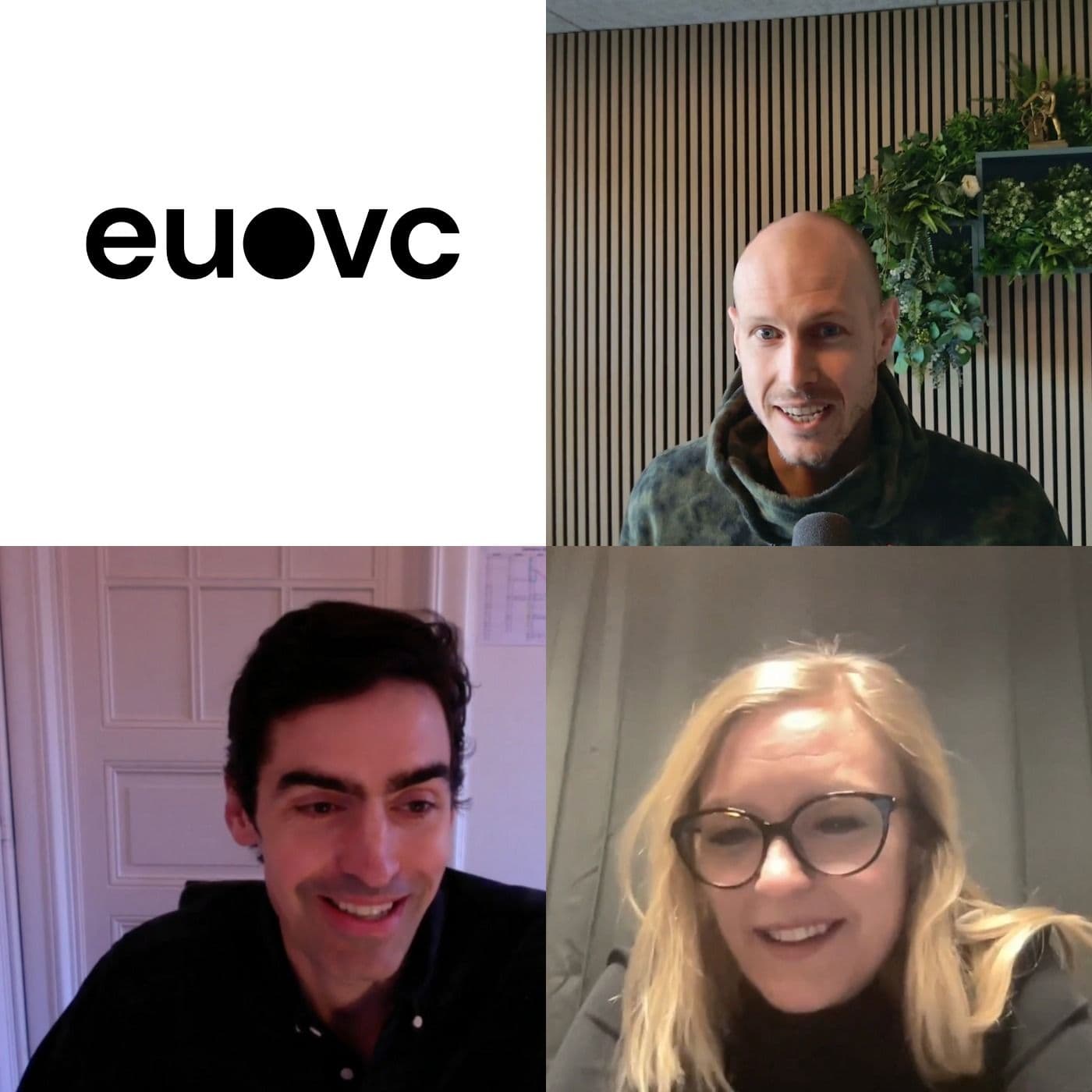
EUVC Podcast Episode Summary: E458 | Sara Kappelmark & Willem Vriesendorp
Episode Overview In this episode of EUVC, co-host Andreas Munk Holm engages with Sara Kappelmark, Co-CEO of the Norrsken Foundation, and Willem Vriesendorp, Founder of Sustainable Public Affairs. They discuss the intersection of venture capital, sustainability, and EU policymaking, particularly focusing on how to bridge the gap between mission-driven founders and regulatory frameworks.
Key Themes
- The role of regulation as an asset rather than a barrier for startups.
- The establishment of the Norrsken House in Brussels as a hub for climate tech and public policy.
- The importance of sustainability in technology and its implications for venture capital.
Key Takeaways
- The Importance of Regulation in Venture Capital
- Regulation is viewed as a critical growth lever for European founders, especially those in climate tech.
- The dialogue emphasizes that engaging with regulators can facilitate scaling for mission-driven ventures.
- Excitement in Brussels: Tech and Policy
- The past few months have seen a surge of optimism regarding the alignment of tech innovation and public policy in Brussels.
- The current political environment is characterized by a promising framework that supports sustainability and innovation.
- Norrsken House's Role
- Norrsken House serves as a physical hub to connect entrepreneurs and investors with EU policymakers.
- It aims to facilitate dialogue and collaboration to shape regulatory frameworks that support innovation and sustainability.
- Engaging in Policy as a Small VC Firm or Startup
- Small VC firms and startups are encouraged to engage with policy early in their development.
- Collective action is highlighted as a more effective approach to influence policy rather than individual efforts.
- Sustainability in Tech
- The discussion emphasizes that sustainability is not merely an ethical obligation but a significant business opportunity.
- The framework of the Clean Industrial Deal is presented, which outlines upcoming initiatives supporting sustainable practices.
- The Role of VCs and Founders in Shaping Policy
- Founders and VCs must take an active role in contributing to policy discussions and decisions.
- There is a call for the startup community to step up and provide insights to policymakers to ensure that regulations evolve alongside technological advancements.
Notable Quotes
- “Regulation has been a long forgotten asset for funders and founders.”
- “To build world-changing climate tech, you need more than just great technology. You need to rewrite the rules of the game.”
- “Europe is not them, it's us. Everyone should contribute.”
Conclusion The episode underscores the pivotal role that collaboration between venture capital, technology, and policy can play in driving sustainable innovation. It encourages founders and investors to actively participate in shaping policies that not only support their business models but also contribute to broader societal goals.
Listeners are invited to engage with the Norrsken House and join the movement towards a more sustainable and innovative Europe.
Written by AI. May contain mistakes. Listen to the episode to check what was said.
Transcript
Automatic transcript. May contain errors.0:00In the global tech race, the rules have always been clear. They say that the US innovates, China replicates, and the EU regulates. Let's also not try to shy away from it. But what if regulation isn't a barrier, but it's your biggest untapped advantage? Meet Sara, co-CEO of Norskin Foundation, and Willem, founder of Sustainable Public Affairs, who discovered what European climate founders are missing. And if you're a climate tech challenger, you better have the regulator on your side. Otherwise, it's going to be very difficult to scale. For decades, European founders have ignored a crucial growth lever that's been hiding in plain sight.
0:39Regulation has been a long forgotten asset for funders and founders. But we're quickly getting into a new reality. While tech companies pour millions into Brussels lobbying to protect old models, climate innovators are leaving billions on the table. It's a huge business case. It's a huge opportunity. And we need a regulator to be paving the way. That's why Norskyn Foundation has created something revolutionary. A permanent home for climate tech in the most unlikely innovation hub. It also seems like an incredibly dull place, but it is super exciting and certainly now it's the place to be. The message is clear.
1:17To build world-changing climate tech, you need more than just great technology. You need to rewrite the rules of the game. Europe is not them, it's us. Everyone should contribute. Join us for a masterclass on turning regulation from your biggest obstacle into your competitive edge. Sarah and Willem on how climate founders can make Brussels their secret weapon. Only on EUVC.
1:45Here's a few words from our beloved sponsor. Make an impact with a bank made for the innovation economy. We always take a relationship first approach. bringing passion, dedication and unparalleled international connections to everything we do. Our specialised, flexible solutions for founders, firms and funds are built on deep expertise that are designed to facilitate growth and enhance your prospects for success. HSBC Innovation Banking, connecting you with what's next.
2:18Tear down this wall. It's more than just an ally. This is a union of values. Let's start acting. This show is not investment advice, and the hosts of this episode may be invested in the funds and companies featured. Welcome back, everyone, to another episode of the European Easy Podcast. This is, as you know, the show for everything European venture, and we're here to connect and champion the people, ideas, and capital that is shaping the future of European tech. And today's episode sits right at the intersection of two worlds that truly need each other more now than ever. The venture capital and the public policy space.
2:58You all know that we're very dedicated to this at EUVC. So I'm excited about doing an episode with the Norsken Foundation team here today. And I have to tell you, if anyone is leading building the next economy, whether it's in climate, deep tech or AI, it is our founders and our funders, meaning you guys, our dear VCs that are listening in today. But I really think it's so important that we get into the policy making process as well. And we've seen how in the US that our tech investors or their tech investors and entrepreneurs are becoming deeply embedded in the halls of power. And I think that the European playbook could maybe learn a little bit from that.
3:36And to do that, to bring us into that conversation, we've brought Sarah Kaplmark and Willem Rissendorp. And Willem, my big apologies if I'm pronouncing what I'm sure is a Dutch name incorrectly here. But we're bringing them here to talk about the Norsken House in Brussels that they've set up, which is a new hub designed to bring together Europe's impact community and EU policy makers. And also in this connection, Willem, you're also the founder of Sustainable Public Affairs, who helps the house with programming. And we should, of course, talk about that as well. So to do this, to make everyone better understand who you are, where you come from, let's just get an intro by yourselves instead of by me.
4:19Okay, cool. I'll go first. So I'm Sarah. I'm co-CEO globally of Norskjön Foundation. And perhaps like a couple of words just about Norskjön is that it is a nonprofit foundation, but that are backing entrepreneurs who are working on solutions to the world's greatest challenges. founded by Niklas, who was one of the co-founders of Klarna as well. So really, we're coming from this heritage of seeing the power of entrepreneurship, the power of investment as something that can be put to use to solve the world's greatest challenges. And we do that both through investment funds. So we have five different funds across the world, Nordkamp VC2 being the largest impact VC fund in Europe and through different initiatives to raise awareness about impact entrepreneurship, like podcasts and top lists and so forth.
5:15And then also via physical hubs. So we have physical hubs in Stockholm and Barcelona and Kigali. And now so happy to be joining forces together with Willem to set up a hub in Brussels to bring together the ecosystem of founders and investors with the policy world on Brussels. Let me try and also tell a bit about myself. Andreas, thanks for having us. I'm really looking forward to the conversation. I think you're spot on. Regulation has been a long forgotten asset, I think, for funders and founders. But we're quickly getting into a new reality. So I'm very excited to be talking about it later on.
5:57My excitement comes from the fact that I'm the founder of Sustainable Public Affairs, as you said, which is a public affairs agency. And it is doing what it says it's doing. It's working, it's doing public affairs, but only for cases that advance sustainability. So we only take on cases that we think have a positive impact on the climate, on the environment. We're not big believers in working for incremental innovation. We're big believers in working for challengers. and if you're a climate tech challenger, you better have the regulator on your side. Otherwise, it's going to be very difficult to scale.
6:39But more about that later. So that's what Sustainable Public Affairs is all about. We've been in existence for five years. We're working with 25 very kind, very intelligent colleagues, punching way above our weights. I think there's around 30 ,000 lobbyists in Brussels. And I think we've been, with R25, able to create and fight for very positive policy outcomes that are business cases. and next to that, next to the consultancy and that's also why I'm so glad to be here and to be here with my friend Sarah we have set up this Norsken House which is really I think a landing place maybe for the funders and the founders to be finding their way into Brussels to be getting engaged and to be making sure that if you're operating on a regulated market that you're also able to speak with the regulator to contribute to the regulation, to break those silos, because you said very rightly, Andreas, that it feels for many of your listeners, I guess, as a different world, but it really isn't, right?
7:52We're all operating on a regulated market. Brussels seems like an incredibly dull place, but it is super exciting. And certainly now it's the place to be. And having within Europe and then within the capital of Europe being Brussels. And within that capital, having the North King houses, I think is extremely exciting. So more about that later. Maybe I can ask both of you to tell us a bit about what it feels like in Brussels these days in this intersection point between tech and policy. But I imagine also, especially when we're thinking about sustainability, which is, of course, your core area.
8:33I imagine that you said it just before, it's the place to be. It's extremely exciting. Everything is moving. Everything is in a flux right now. What has the past four months felt like? Well, yeah, I was hoping you would answer that question, thanks for making my life easy and for just speaking about what I really want, what I really deeply care about, but also I'm passionate about. Listen, it's just great to be here at the moment. I think we see a certain surge of optimism. And dare I say, maybe we are at the beginning of the age of European exceptionalism. I think the stars align. There is just a very solid framework, regulatory framework, that is able to internalize environmental externalities.
9:25That is hopefully able to stand the course and give regulatory predictability. that is now operating in an environment where Europe gets also strategic importance. So there's a lot of factors or vectors moving towards Brussels and an opportunity for Europe. So it's an incredibly exciting moment to be here. It's also, as you said in your intro, for public affairs afficionados, an interesting moment to be in Brussels because we've seen in the US, for example, how powerful alignment of regulation with ventures can be. We've seen it after the last 10 to 20 years. You mentioned tech, right? It was, when you look at Silicon Valley, there was just a perfect alignment between sort of the public regulation, standard-setting bodies, and the development of tech and entrepreneurship.
10:22I think now it goes to a next level where sort of some try to become the government. I think we need to have a certain separation of powers. Whatever, no judgment plays. I don't think this is the podcast and judgment on that. But what I do think as a public affairs aficionado is that it makes the case for the importance of public affairs. It makes the case for the importance of government affairs. It makes the case for how important regulation is and how not a different world regulation is. So we see a massive influx of interest in public affairs, in regulation, in government. When you look at Europe, the EU, it's a larger internal market than, for example, the US.
11:08So there's a lot to play for it. Just to ask you, maybe underline what you're saying. In the States, of course, A16 set are one of the hallmark firms. And Mark Andreessen recently said on a podcast that if you'd asked him 10, 15 years ago, what do you think is going to be the largest platform team within the A16 set platform? He said, I would never have guessed that it would be what it is today because right now it's policy. And he also spoke about in that podcast about the importance of policy and the fact that he thinks that when we look at the normal adoption curve for tech, where you normally have societal adoption, technology readiness and financial readiness to back it, we got to now overlay a fourth vector, which is policy.
12:02Are you going to be able to get public and political support for the disruption that you want to bring about? Which I think is a great move to you, Sarah, because Norsk can, of course, come with a very strong incentive, so to say, to bring tech forward. I imagine that we can also consider this house a Norsk equivalent to the increasing tech prominence in the capital in the States. to bring also the like big picture if you will of like why we're doing this so i mean where i'm coming from is that i mean we live in a world where we know that right now the way our economies are run are overshooting seven out of nine planetary boundaries so they're like there is like there isn't a any value chain in the world that would look like it does right now 50 years from now like we will need to totally reinvent our economies and for that to work and for that to happen fast we need to have both people who are like playing within that playing field if you will and people who are regulating it and it needs to like work in tandem and you know if you're playing soccer like everyone who loves soccer you know that you need to have rules of the game right you have the players you have the ones setting the rules of the game but like soccer has like yeah you update the rules uh now and then but but it kind of like it looks pretty same as it as it did like 100 years ago but like what if it was in an environment where like all of a sudden like the players were like growing wings or developing like kangaroo legs uh you know uh that that the players and maybe like the playing field or like all of a sudden the goalposts start to fly i mean then you also need the rules to develop with that and it also doesn't really work that they're like rules develop before that if the soccer uh judges were like yeah what if someone develops wings then we need to have those rules i mean that becomes silly but but therefore you need to have the people setting the rules and the people playing within those rules sitting really close together right so it can develop in tandem that right now we are at a place where this tech actually exists.
14:18So we need to evolve our rules to make the best out of it and make sure that we avoid the potential harms of it or have a conversation how to use this jointly best in the best way and what things that may have been good regulation in the past, but now it's completely obsolete because the people and the companies playing within it have evolved beyond it. If we could just get super concrete, the Norsken house in Brussels, how do you use it? How can founders use it? How can VCs use it? Is it a place for everyone? Or is this Norsken backing their own agenda there? And we're all happy about that, but it's not for the rest of us.
15:01No, thank you for asking that. And it's really that we've decided that right now, like Nordskjärn as an organization is not going to push any specific policy issue through this house. This is really, we want to create a platform for as many values aligned people and founders and investors as possible to like lower the barrier for getting into that conversation. because I think that like you know while there are some things that are cross-cutting we just have so much respect for that yeah like what the specific policy methods need to be if you're in like electric vehicles or green cement or novel foods like that will differ and we need to have people who work in those specific fields and and are experts in their specific realities to come closer to policymakers on a broad scale.
15:53So the more we can make that happen, the better. So really with your amazing group of listeners, the best thing that could happen after this, Andreas, if my mailbox is just flooded with people who want to join this movement and have ideas for what they would like to do and how we can work together, that is really the best thing that could happen. Maybe I can just add to that a little bit also from a Brussels perspective. Andrei said how Sarah and the rest of my friends at Northland thought about this is really sort of two-way street. First off, we want to bring those funders and its founders to Brussels to give input to the regulation.
16:39For example, you wanted to get very concrete. In a couple of months from now, the European Union will come up or the European Commission will come up with a policy on startups and scale-ups. It's called the use startup and scale-up strategy. We don't want it to happen that this is only crafted by people that are sitting behind their desk and have never been leading a venture or have never been inventing anything. Not to their disdain, but I think a collaboration, bringing in reality, bringing in successful funders and founders into this discussion, inputting in what a strategy for startups and scale-ups could look like.
17:21I think that's incredibly useful. And the second thing, so it's inbound, right? We want to bring the world into Brussels. The other thing that I think is almost equally important is what you've been hinting out at the beginning, is bringing the Brussels sort of ecosystem into the funders and founders ecosystem. For a lot of time, I've been seeing that it's only after, I don't know, a series B or whatever that people start to look and seriously look at regulation. If you're an entrepreneur, certainly an entrepreneur in climate tech, you're going to have to factor in regulation at a much earlier stage.
18:02Is it going to be a maker or is it going to be a breaker for your business case? That stays all along your investment and startup journey. That doesn't really change. If you're making low carbon cement, you have to know that the emission trading scheme is working for you. That the price on conventional cement is going to increase. that your business case is hence going to be improved. You need to be in the know of that. We hope also with this Morskyn house, which is really a policy house, right? It's a bit different from the other houses. It's really about the policy people. It's a powerhouse.
18:38It's about power dynamics. It's about Brussels. It's about regulation. How can we bring that knowledge into the houses in Stockholm? How can we bring that knowledge into the houses in Barcelona where these founders are developing brilliant ideas, but how can we make sure that they put regulation earlier on as a factor on their P &O? I think that is the sort of outbound effect of the North Canal. So I think it's a two-way street. That's the way I see it, at least, and I hope it's helpful in people's understanding. So venture and startup land is defined by being small. So how does a VC firm with two partners and a few employees or a startup that's seed stage, how do we most effectively get engaged in policy?
19:29love that i mean with first of all the like humbleness to that i mean as you say like being a founder is already before policy like being a swiss army knife that yeah you're head of sale you're head of fundraising you're head of product you're head of hr yeah you know so like full respect for that it is a lot already and i think that that is exactly why we think that like yeah like individual startups it's we have a better chance of cracking that puzzle if we try to do this together uh if it's not like a like every individual startups needing to crack it on their own then humbleness to that exactly what that would look like and like what type of interventions and what type of connections that is like where we sometimes call ourselves like a startup among the startups that's what we're going to iterate on for the coming years to see exactly what type of meeting classes, what type of knowledge sharing is said that in the end was a good use of time.
20:34I think we also need to be super straight about this, Andreas, is that if you want to do a really tailor-made, in-depth public affairs strategy, that requires a lot of work, right? It's just making sure that you fully understand the regulation, go very deep into the details of the business case, see where that world of the founders meet the regulatory world, see what the policy levers are that you can influence, how you can make amendments, how you find the right people to talk to. It's an amazingly interesting game, but it requires a lot of footwork. So we also don't pretend with Nord Streamhouse that we're doing that for everyone.
21:13It's a place of connection. It's a place of awareness raising. It's a place of public affairs 1.0. It's a place where we can actually, as you said in the beginning, really make sure that this is not another world, right? That it is just the other side of the same coin of entrepreneurship. I think if we already get to that stage, we have won a lot because it's completely absent. And I'm seeing it from here. The interest, I founded Sustainable Public Affairs five years ago. It has grown quite quickly. But I now foresee a huge surge in work because people now finally understand that this is not a different world.
21:50And there, I think the platform, and that's what North Canhouse really is, the platform, the physical platform for that is the North Canhouse. It's the landing place really for, we call it the permanent representation of sustainability and entrepreneurship to the EU, right? So when you have the European Union, you don't talk about embassies, but permanent representation. So Sweden has a permanent representation, but also very small island states. Everyone has a permanent representation. But the cause for entrepreneurship and sustainability didn't have up till now a permanent representation. So we are dead and everyone is welcome.
22:29Everyone, as Sarah said, can join the movement because we're on to something exciting, something new, and it comes at the right time. You just said everyone is welcome. Norsken is known for the sustainability side. Is this house for sustainability or will it be for tech in general? It's an interesting question. And I think we've been super focused on saving humanity and going green, et cetera. But ultimately, it's also about just doing more with less, right? Being smarter, being more resource efficient. And I think that it comes pretty much to you for in what maybe your readers should have a summary of.
23:10If they want to get to know what Brussels is all about these days, it's called the Clean Industrial Deal, which is a key policy piece that's sort of an IKEA catalogue of all the initiatives that are upcoming in the next five years. They also hammer hard on, for example, things like circular economy. Well, everyone thought it was dead. They don't do that because they're just tree hoggers and because green is great. Although it's great to be hogging a tree. What they say about it is about it's key to maximizing the EU's limited resources, reducing dependency and enhancing resilience. I think that is a mindset shift that we've seen over the last, I don't know, year or so.
23:57It's about being smart, doing more with less. And I think it's a huge opportunity, Andres, if other big economies deprioritize their attention to this. That's an opportunity we should not miss. So I think also when I say join in the movement, it's everyone that are your listeners, everyone in the ecosystem of North can help the EU to gain enough confidence to stay the course. and to not change and to keep the predictability and the climate goals and the decarbonization objectives and the fact that it says that the EU wants to become a world leader on the circular economy by 2030. Those milestones are incredibly important for your ecosystem, Andreas, for the people that want to get certainty on what they put their money at.
24:45To conclude, maybe they say that the US innovates, China replicates, and the EU regulates. let's also not try to shy away from it it's let's let's live up to that honor let's try and do it well let's try and stay the course let's do what we're good at because we're going to be making all the great stuff that the rest of the world wants whether you are a climate believer or not whether you're i think it's going to be very very bipartisan if you frame it around the edges of just doing more with less being smarter about things being more resource efficient so i just wanted to also nuance a bit the whole sort of thing about doing this only for the sake of of being seen as righteous etc etc this is just it's a huge business case it's a huge opportunity and we need the regulator to to be paving the way for us because humanity is is is smart enough to come up with the solutions uh but uh we all know a bit of behavioral psychology that sometimes it's difficult to get attention and to get enough momentum behind the movement because we are, in behavioral psychology, anyone that has read Daniel Kahneman knows that people are loss-averse, right?
26:10It's a prospect theory. And that very much holds true for Brussels. There's a lot of money going into lobbies of people that stand to lose, right? Because people are laws of fear. So if you are on top of an industry, but legislation comes in that makes that you're less profitable, you drum up a lot of resources in order to make sure that that legislation stays the same or doesn't become more ambitious so that you can keep on being profitable. But if you are in a position where you need the legislation in order to gain, then the appetite for bringing on more resources for public affairs is rather limited.
26:55And I feel that that is now currently changing a bit. People see that there is a lot of gain that they're potentially missing. And therefore, I think resources for public affairs will be ramped up. And I think also the last thing that I see is that currently we are seeing numbers out there that are just going through the roof. 800 billion for defense overnight. We need to see how much of this is fresh money, right? And we need to take it with a pinch of salt. But it is numbers that we haven't seen before. Things like really Zeitung Wende moments, Germany just opening up its possibility or its willingness to be borrowing on capital markets, 500 billion for defense and transport, by the way, and infrastructure that people often forget.
27:50I think those are also increasing the odds of being active in Brussels because there are just a lot to play. I'd love to ask you both a question. This is something that I am pioneering a bit, spearheading, trying to get people behind. And I know it's probably a little bit divisive for many. What I see is that we've actually been okay at getting involved in public policy and best practice making. And we have a lot of reports that come out with good intentions and good guidelines as to how to create a better ecosystem for startups and for the funding environment and so on. What I have seen having arisen in the States is that the VCs have very much, and the tech founders have very much openly picked aside.
28:46And they're very much leaned into not just policy, but also politics. That is not something I've seen in Europe from many. And I think honestly that we have to pick sides. Some places is going to be one party. Another place is going to be another party. I don't really care, but I think, you know, which side VCX or VCZ picks. But I think that the fact that you do go out and support publicly the candidates that further your case will have important ripple effects into the policy area as well. But I don't think everything is done behind the lines anymore. I really think that it is important that we get behind publicly the politicians that are speaking our case.
29:37Our assumption in Norskjö, I mean, let's see how it plays out, is that we are actively non-partisan. We have really, because we've thought that to some extent you can say that we're political, right? Because the things that we're driving, as you said, like we're working for a world where humanity thrives within planetary boundaries. And there is a lot of politics within that. But I think that that aspiration, we don't think that it kind of cuts in the same way as the current parties cut the cross. In many ways it does not, but in some ways it does. In some ways it does, but in some ways it doesn't.
30:19And we rather think that, well, it's super interesting that with the cuts of party lines, if you can have a broad tent conversation of people coming with slightly different takes on what is important on that journey, because we need to find solutions that have collaborative advantages. We cannot create the Europe that only works for a sub-segment of people, right? We need to innovate in a way that creates a better society for not just the voters of Party X, but for us all. And that is the kind of, we think that so far we've seen that most parties have something to contribute to that journey. And that it's good that we can bring that conversation to life.
31:12that what are the exact like ways that your party would like to contribute to this future. So, so far with rather soon, that has been a benefit of being broad. You know, I spoke to a person a while back who was like a non-political actor within the Swedish government. And he was like, yeah, it's good with Norskjö. Everyone likes you a bit and everyone hates you a bit across the party lines because we don't fully agree with anyone, but we also don't fully disagree with anyone and have really some benefits with collaborating across party lines. Any take, Willem? Are you going to get into the phrase?
31:56Of course, as a co-founder of the Nord Stream Housing Brussels, I very much agree with Sarah. I have many other heads. And if I put out the head of Sustainable Public Affairs, I'm completely in agreement with you Andreas I think we need to make sure that we rally behind the people that we think are doing what we think is needed so sustainable public affairs is really about trying to, I think help is the right word so help the progressive pockets in lawmaking be it in the European Parliament and the European Commission with the right examples, right? So if you are willing to, I don't know, drive an agenda that phases out PFOS out of batteries, lithium ion batteries, well, we'll get you an example of a venture that is able to make lithium ion batteries without PFOS, okay?
Read the full transcript
32:55So, and of course, such a venture will need such regulation in order to come onto the market. Otherwise, nobody will change, And value change won't change, right? People are accustomed to things, things work, and why would they? So I think we try to arm the progressive pockets in the European Parliament and in the European Commission with examples as to why making more climate ambitious legislation is actually very good and essential for the business case of what we call sustainable frontrunners. So we do focus a lot on helping those lawmakers to stand out and do their work better. Sarah, if I can ask you the same question in a different way, because it's one thing rallying behind a specific party.
33:47And I get that that is something that's very difficult and can be very dangerous. I do. If I should just interject one thing on that, I would say, well, Well, the fact that we have the media calling the tech ecosystem around Trump and the Trump administration, the tech oligarchs, and they're saying that they've almost built the administration. I think, you know, in one way, you can definitely look at it and say, I don't like that because you don't agree with them. But you could definitely see how it has shifted the landscape completely. and assuming that we like tech and we like and we think that the perspective that the tech crowd brings to how we further and build the world, we should, I think the natural next conclusion would be, well, isn't that a better world than having it be museum directors and so on that are in that are members of parliament.
34:43And for that reason, I think that there is a lot of importance in being vocal and actually going into politics. And sometimes you then have to pick a candidate where you don't agree with everything. But if you lean heavily, you might be able to form a lot. I won't ask you to comment on that. What I would ask you to comment on, though, is VCs and tech founders are role models in today's society. Everyone looks to them. They are invited on all kinds of different talk shows and they're listened to in the media. the big personalities. They typically are also very good on social media. That is, of course, a skill set and a set of assets that is incredibly powerful when it comes to driving forward public opinion.
35:31So even though you might not get behind a specific party, this leaning into taking a public stance on what is actually not just policy. So it's not just this percentage of, you know, whatever detail regulation we think is great. It's not just the big work behind the scenes, but it's also being very public about driving forward an agenda. How do you think about that at Norsken? I mean, one of the reasons why we want to do this is because I think that, you know, sometimes when the debate like happens on like you know a social media format it so easily gets so simplified that it gets silly it becomes like regulation over regulations versus no regulation like and like no one wants no regulation right I mean we all want to have a like working you know societies i think that we want to get like deeper into that so that it we don't like spread those type of just silly memes if you will and then i think that another like dimension of what what you were onto is that i think that we in europe have a really great heritage of you know having business building uh that takes societal responsibility and i think that that is important you know we've never really bought into this super simplistic view of that uh you know the way that businesses contribute to society is that you know you you only optimize shareholder value and that's it uh because like yes of course if you're a business you need to make your pnl work you're there to like if you're building something that is important you're there to grow like yes that is part of the game but you are you also have moral obligations as a business and i think that that is really something to hold on to because I think that that is when we can get like a like constructive dialogue between the investor and startup community and the policy community because I mean if all policymakers were just you know narcissistic Machiavellians who were only looking to grab tax money you know then we wouldn't trust them right and if all like business builders were only you know psychopaths who were only looking to like exploit the world for their own personal like profits that like yeah if I was a regulator I would heavily like over regulate them but like that is not that is not the community I'm seeing I'm seeing you know people who have left their super high paying jobs because they're swore a real challenge in the world that they say well I can build something that can address this and it's when we can get into that space of saying that, well, yeah, there's some assholes in both policy and in investment and in startup building.
38:28Most of us are people who are like, yeah, have some friends that we need to adhere to, but also really trying to do our best to contribute to the world and let's lean into solving things together. I actually think you're 100 % correct with what you said there, because the magic that is in the hands of tech founders and tech VCs is exactly that we do most often have God on our side, progress on our side. And that is also why I think it's so important that we get public because I think that is our strongest asset. We will never outbeat Big Oil when it comes to having most lobbyists in Brussels. But Big R will never be able to go on LinkedIn or go on Twitter or go on anywhere and scream from the rooftops about their case because everyone will look at them and say, yeah, good on you.
39:26We know what you're driving at. Whereas I think that most founders actually come with a very high integrity and trust. What I now see and read and feel is we're all happy to be here, right, in Europe. It's a great place to be. Let's also just pause and be super thankful for where we are. There's no war we can eat. We have good wine. We have forests. We can go out hiking. People are healthy. People are happy. Good social systems, high social mobility. In most countries, you can make it within one generation. So I think we have just a lot to be grateful for. And Europe has given us a lot. And I also think it's time for those funders and founders to just step up the plate and just help to conserve and to keep those values and that continent that we're living in.
40:26And I think that we shouldn't take that for granted. So I think if you say what those people with a huge reach can do. There's one thing about whining why some people with an agenda do that and are extremely successful about it. But I believe in the power of individuals and optimism, and we shouldn't be whining about what's going wrong. That's just to reassert what we can do right. I think in that sense, sometimes when I'm, I don't know, when I'm out running, I have this dream of some sort of a team Europe, right? Sort of a league of extraordinary funders and founders that can come to the rescue, that can come to Brussels, that can come and help save the day and just give back to the country that they come for and for the failures that they believe in and that can help the bureaucrats in crafting meaningful legislation that's going to work new ventures into being.
41:24And I think it's it Europe is not them right it's not those folks in Brussels it's us okay and everyone should contribute and that can be done through Norsk and House that can be done with sustainable public it can be done in your free time join your local I don't know community council whatever but Europe is not them it's us and we're responsible for keeping it cool and I think that that is just needs to be out there. I want to close the podcast on that very strong statement because I think we could talk for another 10 minutes because we have that in the calendar. But I do think that this is the closing line that will close the podcast at the most important time.
42:06So let's all hearken that call. Let's go and get involved. Thank you, Sarah. Thank you, Willem, for joining me today. Thanks.
42:21It's more than just an alliance. This is a union of values. Let's start acting.
From the publisher
In this episode, Andreas Munk Holm talks with Sara Kappelmark, Co-CEO of Norrsken Foundation, and Willem Vriesendorp, Founder of Sustainable Public Affairs, to explore the powerful intersection of venture capital, sustainability, and EU policymaking.
In this episode, Sara and Willem share how they’re bridging the gap between Europe’s most mission-driven founders and the often distant world of regulation, starting with the launch of the Norrsken House in Brussels.
From climate tech to deep tech, they unpack why now is the moment for VCs and startups to engage with policy, how smart regulation can unlock real scale, and why Europe may be on the brink of its own era of exceptionalism.
Here’s what’s covered:
- 04:15 The Importance of Regulation in Venture Capital
- 06:04 The Excitement in Brussels: Tech and Policy
- 12:27 The Role of Norkin House in Brussels
- 16:55 Engaging in Policy as a Small VC Firm or Startup
- 20:26 The Importance of Sustainability in Tech
- 26:07 The Role of VCs and Founders in Shaping Policy


