
In short
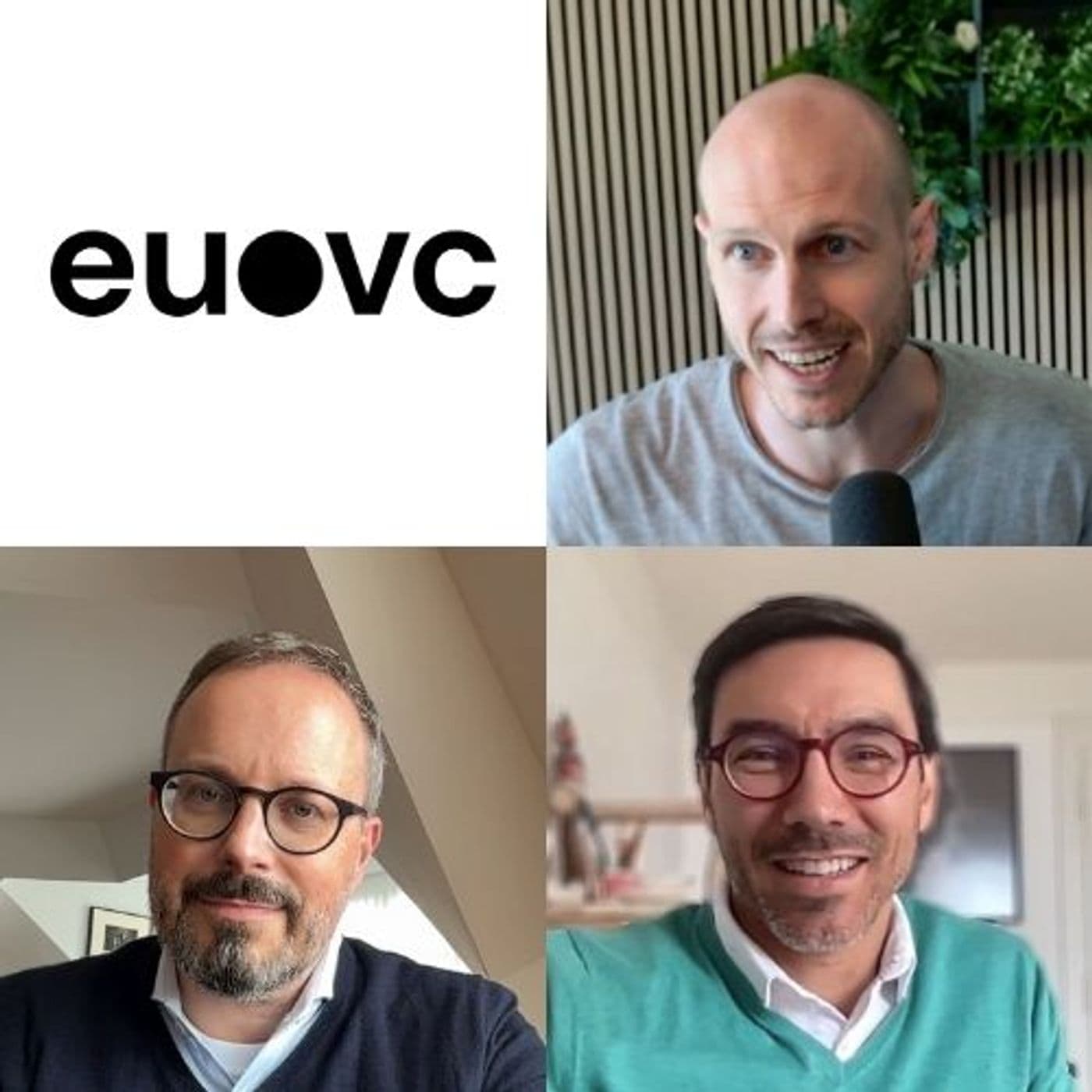
EUVC Podcast Episode Notes: E474 | Guenther & Enrique, Chi Impact Capital: Redesigning Capital for Circular Futures & Europe’s Systemic Sustainability Shift
---
Episode Overview
In this episode, co-hosts Andreas Munk Holm and David Cruz e Silva engage with Guenther Dobrat-Saldapen and Enrique Molina from Chi Impact Capital. The conversation explores how venture capital can be purposefully allocated to accelerate the circular economy. The discussion emphasizes the urgency for systemic change in Europe amid the sustainability movement’s challenges.
---
Key Topics Covered
- Qi Impact Capital’s Holistic Investment Thesis
- Focus on conscious, holistic, and impactful investing.
- Aim to support businesses that embody a systems-thinking approach across industries like food, materials, and energy.
- Guenther’s Journey: From PwC to Circularity Champion
- Transition from a legal leader at PwC to championing circular economy initiatives.
- Emphasis on the importance of personal motivations driving investments in sustainability.
- Capital as a Catalyst for Circular Innovation
- Importance of capital in enabling circular business models.
- The necessity for proper funding to support innovative solutions that challenge traditional wasteful practices.
- Narratives, Regulation & the Sustainability Backlash
- Discussion on how storytelling influences capital flows.
- Acknowledgment of regulatory headwinds that could challenge sustainability efforts.
- Storytelling, Identity & Investment Decision-Making
- How personal narratives and values shape investment choices.
- The role of emotional connections in promoting sustainable practices within the VC landscape.
- What ‘Conscious Capital’ Really Means
- Definition of conscious capital as a means to raise awareness regarding the deployment and creation of capital.
- Balancing profitability with sustainability.
- Case Studies: OceanSafe, Vital & ID Genève
- Examples of companies leading the way in circular business models.
- Vital’s innovative approach to reusables at events, minimizing waste and promoting sustainable consumption.
- Designing Products for Reusability & Impact
- Importance of creating products that support a circular economy.
- Discussion on product lifecycle and the importance of rethinking materials and production processes.
- The Financial Returns Behind Circular Success
- Debate on profitability within the circular economy.
- Challenges in demonstrating financial success in early-stage sustainable ventures.
- Tensions in Consumer Behavior: Circular vs. Fast Fashion
- The dichotomy between consumer demand for sustainability and the allure of fast fashion.
- Exploring how narratives can reshape consumer behavior towards more sustainable choices.
---
Key Takeaways
- Redesign, Not Incremental Change: Emphasis on the need for a fundamental shift in how products are conceived and utilized. Incremental changes are insufficient.
- Conscious Capital: Understanding that capital should not only seek profit but also promote sustainability and ethical practices.
- Systemic Change Urgency: The conversation stresses the need for immediate action to reverse the current take-make-waste economic model.
- Importance of Storytelling: Effective communication and narratives can inspire action and engagement in sustainability initiatives.
- Consumer Education: The need to inform consumers about the consequences of their choices and the alternatives available.
---
Closing Thoughts
Guenther and Enrique highlight the intricate relationship between venture capital and sustainability, emphasizing that financial returns and environmental responsibility can coexist. Their experiences and insights provide a hopeful outlook on the future of the circular economy in Europe, despite challenges posed by prevailing consumer behaviors and economic pressures.
The episode serves as a motivational reminder of the pressing need for systemic change and the role that venture capital can play in fostering a sustainable future.
---
Follow-Up
For listeners interested in learning more about European VC and sustainability, follow the EUVC podcast at [eu.vc](http://eu.vc) for updates and insights.
Written by AI. May contain mistakes. Listen to the episode to check what was said.
Transcript
Automatic transcript. May contain errors.0:00What if everything you buy could simply disappear back into nature when you're done with it. It's not just a watch. It becomes so elegant. It changes the way you think about it, right? That's not science fiction. It's happening right now. But first, we need to confront an uncomfortable truth about how we live. The big challenge that we are facing right now is that we've all been erased and we've grown up to live in this take-make-waste economy. But the main challenge is to get people to actually think about it. So how do we break this cycle? According to our guest, it's not just about better products.
0:31It's about reimagining the very purpose of money. Conscious capital, right? Like it's capital that helps raise consciousness also on the way it is deployed, on the way it is created, on the way we are creating more value, more growth. But there's one critical obstacle standing between this vision and reality. Well, the question of capital is always the one that moves everything. And if there's one thing I've learned in 20 years of working in the wider sense in the VC world, it's very difficult to actually get it. Yet, when the right funds flow to the right founders, the results are transforming experiences we thought were fixed.
1:07When you go to a concert, to a big event, right? Like, so then you go and you drink something and then that becomes waste. Vital is doing this in a way that close and plays. With the system, you actually are part of the whole administration of that device. And you are actually getting in contact with other people that will also reuse these devices. Join us for a groundbreaking conversation on how venture capital is quietly funding a revolution in how we make, use, and unmake everything around us, where financial returns and planetary renewal aren't competitors, but partners.
2:00This show is not investment advice and the hosts of this episode may be invested in the funds and companies featured. Welcome back to the European VC Podcast. As you know, our mission is to connect and champion the European ecosystem. And today's conversation is a perfect expression of that mission, as we're thrilled to join forces with the Qi team, Qi Impact Capital team, to co-host a special series focused on driving systemic change through venture and private capital. Few topics are more pivotal for Europe's future than sustainability, and few ideas are more powerful than the shift toward a circular economy.
2:33Today's guest, Gunther Dobrat-Saldapen. Tell me if I got that somewhat correct once I pass the mic to you, Gunther. Partner at GE Impact Capital, private ambassador, thought leader, and former PVC partner, is a true pioneer at the intersection of circularity, systems, innovation, and capital deployment. So I'm looking very much forward to dive into this with you because you've also authored a book on this topic, which I personally have not read, but I know is a bit of a playbook for Enrique. Enrique, you told me, let's bring Gunther on for this first episode. So could you just tell me why you thought Gunter was such a great guest for this?
3:08With pleasure, Andreas. It's always cool to see you and to speak about these things together. I mean, despite that, I really like Gunter as a human because he's a very nice person. I think he's a top leader in this topic of circularity. Circularity is some of the key elements that will change the way we are consuming and producing things in Europe. I think regulation is going to come very strong in the next years. And who else than Gunter to give us an idea of where we will land and how we can prepare for that. Gunter, before I pass the mic to you, Enrique, could you give us an introduction to Qi Impact Capital and what you're up to, the size of the fund, those core metrics that people use to place VC managers in their mind?
3:59Sure. I mean, you put it very beautiful, right? But let me break down what Chi means. Chi is coming from conscious, holistic, impactful investing. And basically, it's what we try, right? Like to make businesses or support businesses that are having that holistic approach. What we see is really ourselves as system thinkers. That is more than just like looking green or through face. It's really like shifting the entire sector and working with entrepreneurs who are really playing that as a role in their businesses, right? Like either in food, materials, energy, built environment. What we try is really to be a change maker on those industries and make it something that inspires others to continue.
4:53And I guess this is a great transition into then asking you, Gunther, what is your personal why for dedicating your mission and all your time and energy to Circularity and Systems Change? Well, thank you very much. It's great to be here. And the name is Gunther Todbrottsalder Pinna. It's a very complicated name, I know. That sounded like something similar to what I said. Exactly. anyway so so there's the name uh but the more important thing is as you rightly asked the why right and um for me before i worked for pwc where i was 13 years leading the legal part i already was in venture capital so that is also what brought me to switzerland originally to help build one of probably the first swiss venture funds which were not about circularity but while I was at PwC, I started to build up my own investment practice there with two friends.
5:49And there it was really about, as you cunningly put it, the why, right? What we want to invest in. And back then we said there is three things we want to focus on. On the one hand, it's exponential technologies. And on the other hand, it's circularity and indeed things that would fall into the longevity ideas. And then I was approached by my good old friend, Christine, who is the founder of G, originally. And we go all the way back to university. And before, we've been very closely connected and in touch. And she knows that I was in particular geared also towards the circularity theme. And when she was thinking about creating the next stage of the fund, i.e.
6:31the second fund, which we're currently as a team working on, we started to think about how we could put it all together. And at the time, I was indeed publishing the book on circular economy and was very closely connected to many people around the scene. So I was able to bring this one why that really moves me and that keeps me awake sometimes to really put it into the center of what we're doing. We, of course, as VCs, are all very aware of the power of capital, But I would love to maybe expand a bit on the importance of capital when it comes to circularity in particular. Well, the question of capital is always the one that moves everything.
7:11And if there's one thing I've learned in 20 plus years of working in the wider sense in the VC world, it's very difficult to actually get it behind you. So we're currently raising the second fund. And I know there's a couple of others out there who are kind of trying to raise their own investment structures. and we know it's very difficult. And I think we also have to be very honest about that. And obviously the current climate, starting from the US and also what is happening in many countries in Europe doesn't help. So you really need to go and find those people who believe in the idea and to really go after that.
7:45And once you have them, then you can go to the next stage, i.e. then think about more structured investors and ultimately some potentially institutional investors to back here, right? And this is what we're currently working on and many others are as well. and they won't go away. But that doesn't stop us, right? We believe in the idea. We really, really believe in it as a team and we're quite positive that we'll make it. There's probably not, at least for a good while, been a harder time to be trying to shape a strong narrative around circularity and sustainability and all these things that, as you described it, are receiving some headwinds.
8:24Some are even talking about them dying out not being important anymore. And now it's all about just the pure business side of it. I'd love to ask you, where do you fall on this? How important do you see the narrative of doing good being versus only the narrative of, well, there are some, there are pure value adds from the products that are made in this category and all the other stuff is not important at all. That is not an easy answer to be honest. So when I started to invest in circularity with my previous company and where we were still investing, we didn't care about it at all. We just said, look, this is our personal money, which came from the three founders.
9:10And we said, we only invest in the things that we really believe in. And a couple of minutes ago, we briefly got to see your little son, right? It was kind of the same with me when I got my son. And I know that Enrique also became a father very recently. And I guess both of you will hopefully agree that it changes your thinking, right? And it did so for me. Now, my son was born 15 years ago, so it didn't happen immediately. But over time, and especially now since he's growing up, because he's always asking me, so how circular are you really? Are you moving there? And so forth. I think for me, it's really, really important.
9:44But I do understand that the bigger narrative which you need to bring to the market stands there. And I think if you're doing away with it, saying we only do what we believe in, you may be missing the point. So I think it's very, very important how you present the story. And that means also what the team looks like and how and where you're going to present it, right? And that's exactly what we're doing right now. But first of all, it has to start with you. You have to be honest about it. You have to know why you do that. And then you have to bring it into the team context and bring it to the people out there.
10:16Enrique, how do you verbalize it? How do you, what do you see both when it comes to your own fundraise, but also when you, when it comes to your founders fundraise, how are narratives reshaping these days? I think there is two elements on that. Like one is your personal values. So what you really look for, what is actually touching your heart and your interests in the long term. And I'm going to put myself also on that, right? So a few years back, and also Goulter is part of this amazing journey, I supported a company that is doing watches. It's a different industry, but it's doing circular economy watches.
10:59What was interesting for me at that time is that it's the only thing that actually I can wear and it can represent the values that I have to circularity. circularity, right? Like I can show to people, like said, like, hey, you know what? I never wear a watch, but I just use it because I think that it's the only way I can explain to people what circularity is in a way that it is understandable, especially in this financial world. And, you know, like these kinds of meetings where you meet a lot of interesting people and also people that are really focused on capital and et cetera. But when you really focus on your values and you try to share them, family values, the way you live and etc.
11:43Things like this is stuff that you can use actually to keep incentivating others to do. And the other one, second point, is the trend, right? So there is existing trends that come and go, especially in moments like now, what is happening in the US and in other countries and what happens right now in Europe, the circularity trend is something that everyone is getting involved and seeing it as a more interesting way of presenting products. Also because brands now see the opportunity to get more value of the data that they have from clients due to that, right? Like, so what are they interesting to exchange.
12:28How do they use their products? They are now more exigent on what is happening with the product after the life cycle. So these trends are the two ways I would like to say that explain the way we are going on this circularity. Conte, in your book called The Circular Economy, Redesigning Our Future, you talk about redesign, not incremental change. Could you describe a bit here why it is important to focus on redesign rather than just the incremental changes? The big challenge that we are facing right now is that we've all been A, raised, and B, grown up to live in this take-make-waste economy. So all the things we're wearing, we're using all around us, they're basically waste.
13:16So in general, all the things you wear, at some point you have to throw them away and they become waste. So before we actually had a world that was different. So it's not that we are reinventing something totally new. We're trying to get what we have right now transferred into something new. So basically you have to rethink about, I don't know, the material used for your pullover or your shirt or your jeans and so forth. You have to rethink where you do that, right? whether your shirt is produced in Asia and shipped all around the world just so you can wear it or whether it's done more locally or, say, in Europe or even in your country and so forth.
13:54So what it really does, it's a change in your mind, right, which isn't really complicated the moment you start to think about it. But the main challenge is to get people to actually think about it. And that is what we are working on, right? And Enrique made beautiful examples there. That's why it's very, very important. You know, you have things like either Genevieve, the watch company or other companies we invested in, which are very much in the closing or in the dressing or in the other associated worlds that are very, very close to what we actually do. So you need to get people to really just spend two minutes or five minutes thinking about and rethinking the world they're working in there.
14:33But that is more difficult than it sounds, right? So that is the big challenge. And reflecting a bit on capital, you have the topic of or the wording that is conscious capital. Could you tell me a bit about where that comes from, what it represents for you, how it ties into this whole avenue of thinking and working? When we are speaking about venture capital, long-term vision in terms of GEO, in terms of how we are really creating value to companies, the factor of really looking after an investment that is growing or helping us to reshape the way we support nature or the way we support our society, is that kind of concept of conscious capital, right?
15:25Like it's capital that helps raise consciousness also on the way it is deployed, on the way it is created, on the way we are creating more value, more growth. We can all agree we are still living in this capitalistic world and it's the only way we know how to, for the moment, perform. so having this concept of conscious capital as an advisory firm that we are that we give that sense to our investors and that they understand that and they recall with this help us a lot to actually keep the relationship with them right like they love these things they understand it from that perspective it's like okay we are going to make growth we're going to make some wealth but at the same time it's in something that is consciously develop, right?
16:17Like a type of business, a type of industry that requires some support. I think it's beautifully said. If I have to bring it down into one sentence, it would be using again, the watch example from before, right? To really consciously think about what you want to invest in it and put it in front of people so they can look at it and just do this two minutes of thinking. And hopefully then they go like, oh no, I understand it. How do you square this with institutional masters that have a very clear mandate that is return money to their pensioners or whoever is their interest base? Well, first of all, I think it's very clear we want to make money and it's not a contradiction at all.
16:56I think if you look into the investments we've made so far, say in my previous structure, which is still ongoing, it very clearly makes money. So I think that is not something we need to debate. We can show them. The main question is really how do you actually get to present it to them. So right now we are going through various stages of fundraising. So the really institutions are not the ones we're talking to right now. That will be later in the year. And there you need to overcome many, I would say, conceptual ideas. You're kind of trying to get around. And that's the bigger problem. So you really need to be able to sit in front of them, look them in the eye, and say, this is what we want to do.
17:38This is the why. And this is the money we're going to make by doing it like that. And that is tricky because they're not used to that yet. Could you give a concrete portfolio example that matches this storyline perfectly? Well, EJNF has been mentioned already, so I have to use the ones I've done before, right, rather than the G Capital Fund, the Circularity Fund, which we're currently trying to put together. Another example would be OceanSafe. So that is one of the Swiss companies really producing the material that is being used for everything that we wear, right? Vital is another example. And Enrique will be happy to talk about this one because that is from the first fund of G Capital and many, many others.
18:21I can give you a full explanation because Vital is really touching my heart in many different ways. As you can maybe see, I have a piano because I love music and I like to create some pieces of electronic music here and there when I'm working sometimes. But the point of this and why I related to something very personal, Vital is a company that is really disrupting the way we see reusables. They started doing this in canteens and for small gathering places, small events. These devices, so it's basically the cups, the blades you use when you are eating. So those are the kind of packages that they are reusing it in a system that actually helps not just the cleaning, but the reusability of the whole devices by the people that are organizing the event and also by the fans, the people that are part of the crew of the event or whatever you are organizing in that sense.
19:27And so Vital is doing this in a way that plugs and plays circularity as a system. So they are now growing more and more in these mega events, now going to the US in this year. The idea is with these devices that you avoid completely the take and waste kind of thinking when you go to a concert, to a big event, right? Like so that you go and you drink something and then that becomes waste. With the system, you actually are part of the whole administration of that device and you are actually getting in contact with other people that will also reuse these devices. It's touching my heart because of that, right?
20:10Like when I go to an event, a concert or whatever, and I see all these waste, I'm always like, what are we creating? I mean, like, is this really what we are aiming for when we go for an event? Like just recreation and not like conscious? So Byten touches that points and help me on understanding also and helping people to get engaged into those kind of systems that are working in order to change the way we see product life cycles and the way we see consumption. It's a beautiful way of how you actually tell the story, right? So I think the only way to really, really convince anybody from a private investor to an institutional is to really show them the stories behind it, right?
20:55And maybe if I can also give you one, and I'm again using the IT Genève where we invested in, right? It's not just a watch. Everything is different about that watch, right? So for example, I got myself the Circular C, it's called. And it's a beautiful watch because it starts with the strap. It looks like leather, but it isn't. It's done by a firm in England. And basically, if you don't like it anymore, unlike with this beautiful watch here, which is not the IT Genève, which I'm wearing today, you take off the hysteria You just take it off, right? And this thing is waste, right? It's been worked on so much.
21:32So you basically turn somewhere, somewhere else, whereas the one from the Circular Sea, you take it, throw it into your garden and it becomes soil again. And the same thing is true about the movement and so forth, which is done basically by bits and pieces from windmills and so forth, which means that it also becomes self-healing, which is the first one, at least to my knowledge, in watches, right? So if you put something in there by not being careful, you basically heat it up and then it is self-healing and so forth. So it's a totally different way of doing it. And everything else from the packaging and so forth is totally re-solved.
22:05So basically you take out your watch and other than my other watches, which are over there, all in a cupboard. You basically take it and throw it, all of the packaging into the garden and it becomes soil again. And that is really circular. This changes everything. But it's very easy if you're at a meeting and you can say, look, I'll show you, knowing that a watch won't change the world, but it changes the way you think about it, right? And then people go, ah, there is a difference, right? And there's two ways of doing it. You can do it from inside the watch industry world, which is very, very complicated because they have value chains and they're really, really well done.
22:41And importantly and rightly done, the classic old-stake-make-waste model enters the new way of doing it, like Peter Genev is doing it, right? So we're hoping that those examples basically speak to people in a way that will also make them, hey, support us and others by investing, but also have them change their thinking and basically have them go into a way that will hopefully help to heal this planet. You're talking a bunch about story. You said yourself, Gunter, well, look at my portfolio as an angel or your passive vehicle. You know, there were great returns. You came up now with two examples, Vital and the Watch Company Edition F or something like that.
23:24Can you give me some hard numbers to those that are listening in that are sitting here thinking, come on, guys, put the money on the table? And I ask you this because it is the crucial critique of everything circular, of everything sustainable, of everything green. and is only rising more to prominence. Could you give me the pure blood financial argument? On those examples, not yet, because they're still going through their financing and they have not exited yet. But what you can see there is already how they have developed, right? If you take Ida Genève, for example, which I mentioned, which is not part of G Capital, right?
24:08So I'm only picking it up since I think he brought it up. But that obviously got a huge bust when, for example, Leonardo DiCaprio invested in it. So that basically led it from one round to another. And they are doing one A round now around this year. And I haven't seen the final numbers yet, but my guess is it's going to be way above 25 million-ish. So having grown from a startup company to that level. And by the way, they are making profit. So it's not that you have to throw in money that is going to be taken up and spent like in many other companies. So if they manage to exit it at whatever, 25, 50, whatever million, then that is the money you can create within five, six years.
24:52We've done some other things which are, again, not yet G-related. did. So I don't know if you want to take some of those in Rikke but which we did originally in kind of the family office set up under Exilixis for example Yami was a company in Estonia which we invested in and which then got exited to I think the second biggest VC company in and now you have to correct me because I can't spell their name I think it's a Danish VC and that was very successful it was after 8 months so that probably in 10x. So that was quite interesting a deal for us. So it's very clear cases, I would say. Still venture capital, don't get me wrong, there's risk in there.
25:34But the way you're developing it, the moment the market gets it, you're unlocking the money. Vital, I love to speak about it because it's also a case that you can really Google it. They have a Harvard business case. They've been analyzed from many different angles. The last round, and it's public, you can go on LinkedIn and just check it out. It actually passed the valuation that we had in mind. It's really interesting the way they are growing the venture capital interest. They joined us, Emerald Technologies Ventures joined us on this call, and NRW also. So I would say that the current idea of growth of VITAL from Europe to the US market with these festival events, they are even going to double again the numbers for this year.
26:34The really interesting cases for us is also that this is a type of investment that replicates the interest of investors, right? Like, okay, this is an industry, you get there, you can disrupt that industry. then that industry can be used in other different things, right? Like, well, that kind of business can be used in other different industries. Like, for example, and this is something that I really like, Vital did a small first test in the city of Schaffhausen in Switzerland to do it in a whole town, right? So you have all the system, the whole system of reusability, but for the whole city, the whole town, the little town itself.
27:19So this means that whenever you buy something from a cafeteria, it doesn't matter which, you take the device, you take the cup, and then suddenly somewhere around the city when you're walking, you can leave it back. You can leave it there and you can get your points or money with your mobile phone so you get their took back, you get your money back, and then the system is already working in the city, you know, like on the whole town. So when you see that replicability, the numbers speak by itself, right? Like, so for now, we can say that more than 5 million devices, meaning CUPS and other type of plates, have been removed or not used because of the usability of the system of Bytel.
28:04But maybe to bring it down into one sentence, so Excel exists, that was our original, or still is our original family office setup that is very much focused on seed stage to maybe E-round, whereas G2 is focusing on later stages, right? But in each case, I think the thing we're trying to work on is not super fantastic somewhere out there. It's very close, right? If I tell you, I don't know what the shirt is you're wearing, I hope it's already a circular one, but in reality, it's probably not, right? And the truth is that a huge percentage of everything being produced, I'm not even talking about where they're shipping it and blah, blah, blah, and all of those things, it's ending up being waste.
Read the full transcript
28:44So if I just give you a t-shirt, which you can, a return, which gets turned into another t-shirt again and again, or at some point gets turned back into soil. You will probably say, oh, that's actually good. And if it costs the same, you will probably buy it, right? Rather than buy something from somewhere in Asia, which you just have to throw away. And the same is true with other things. So it's very clear cases that have a very short timeline to actually convert. Can you both try and help me and the audience square the fact that at the same time as we see a strong movement towards circularity and sustainability in our consumption, we're also seeing, and I actually think I've read quite a few places that is from the same people, an increase in the use of sites like Shine and Timu and so on.
29:38What is this thing that is going on in our society right now? I imagine that you guys are thinking a lot about that and you have a pretty good understanding of what's driving such schizophrenic behavior. Well, it's not schizophrenic. It's purely human. People like something that is nice that gets to them delivered via the internet and you know that looks nice on them so it's not something i hold against people it's just you have to show them the alternative and you also have to tell them look if i'm having a very honest moment with them i say there's two ways where this planet can go it can become so overpopulated with waste that at some point it will just collapse right and this will not be paid by us but by our children hence as i said before what really triggered me was the birth of my son, right, to think about it.
30:31Or we can try to change it and we can just keep everything we have, you know, just do it in a different way. So we're not trying to take anything away from people. We're just trying to give them an alternative. And the main thing is to overcome this, whatever you call that schizophrenia or not thinking about it and to say, look, you have those two options. And with shirts, you can get it, you know, done by ocean or based on ocean-safe materials, which are taken up by the Swiss army already and being produced by many, many people out there. But you just have to tell them that they can do this. And in most instances, I would say people are not schizophrenic enough.
31:09They actually say, oh, okay, if it's the same kind of money, I will actually go and buy that. And the story I always tell, and I think it's also in my Circle A economy book, is I had 65 t-shirts in my cupboard. So whatever anybody says, that is way too much. You don't need 65 t-shirts, right? So it's just this waking up sometimes. But again, I'm not trying to tell people if they're stupid, because I know I was just his whatever you want to call his stupid or whatever before until I started to think about it. So don't take anything away. Offer them an alternative and explain why you're bringing it to them.
31:43And then usually they go for it. I will maybe use an example of how do I see it on the side. So I think Christine is a great inspiration. I mean, it's our lead on cheap at Capital, and she's amazing on the way of thinking and the way to create also a community-based approach around this. I mean, in discussions, we brought to our board of the new things that we're doing at Qi, Oliver Brunswick. Basically, he's one of the founders of Freytag. Freytag is one of these companies that actually really committed to the use of new products that are involving other type of materials or materials that were already in use.
32:33They grow the company so well. The company really become an example on how to use that. And they create a community around it. And I believe on this, right? So now him also being a global advisor of Patagonia and all these brands that, you know, like they're really making a change. That community that make us feel part of. Himself being also an advisor for us and, you know, creating these networks, this community is at least what inspires me a lot. And makes out of this craziness of, yeah, being the weirers that we are trying, really making sense out of it. because it's that storytelling, right?
33:14Like it's a story that we're telling to ourselves, the story of our lives, the story of how do we put our circularity as the first thing for the way we live. Myself, I have a composta at my garden and I go every day and I plant a tree this weekend with my partner. And she was like, okay, well, let's bring all the stuff from there. And it was, you know, to see live ground there and bring it to be another tree was super hard feeling. So I'm throwing that as real examples of how we do it. I was doing notes here for our DRA editing team for this episode. And I said, when you do the introduction video for this and do all the social media around this episode, I said, please use the narrative that in a time when sustainability and circularity is in strong headwinds, this episode is a truly welcome regrounding to the importance of the mission and how it ties in with venture capital and how it's possible for VC to actually play an important and good role in this.
34:26Enrique, Gunta, I think you both experienced in the beginning of this episode how I was just trying to reset my mind around the importance of this and how it fits with the venture model. And I thank the both of you for helping me square that and hopefully also for many in the audience. So thank you both of you for joining me today. Thank you. It has been a great pleasure, Andreas. You play it very well and honored to be with Gunther. He's amazing. Lovely to have this chat. Thank you.
35:07Let's start acting
From the publisher
In this episode,
is joined by
and Enrique Molina from
to explore how capital can be deployed with purpose to accelerate the circular economy. From personal stories to portfolio-level insight, this conversation shows how values-based investing can be compatible with venture returns.
and
unpack the urgency of systems change, how storytelling shapes capital flows, and why they believe Europe’s sustainability movement is at a critical inflection point, despite the headwinds.
Here’s what’s covered:
- 02:18 Qi Impact Capital’s Holistic Investment Thesis
- 03:27 Guenther’s Journey: From PwC to Circularity Champion
- 05:34 Why Capital is the Catalyst for Circular Innovation
- 06:37 Narratives, Regulation & the Sustainability Backlash
- 08:50 Storytelling, Identity & Investment Decision-Making
- 13:30 What ‘Conscious Capital’ Really Means
- 17:17 Case Studies: OceanSafe, Vital & ID Genève
- 22:53 Designing Products for Reusability & Impact
- 25:41 The Financial Returns Behind Circular Success
- 29:45 Tensions in Consumer Behavior: Circular vs. Fast Fashion


