
In short
EUVC Podcast Episode Notes
Episode Overview
- Title: E489 | Philippe Petitpont (Moments Lab) & Gökçe Seylan (OX): Moments Lab Raises 24M USD
- Hosts: Andreas Munk Holm
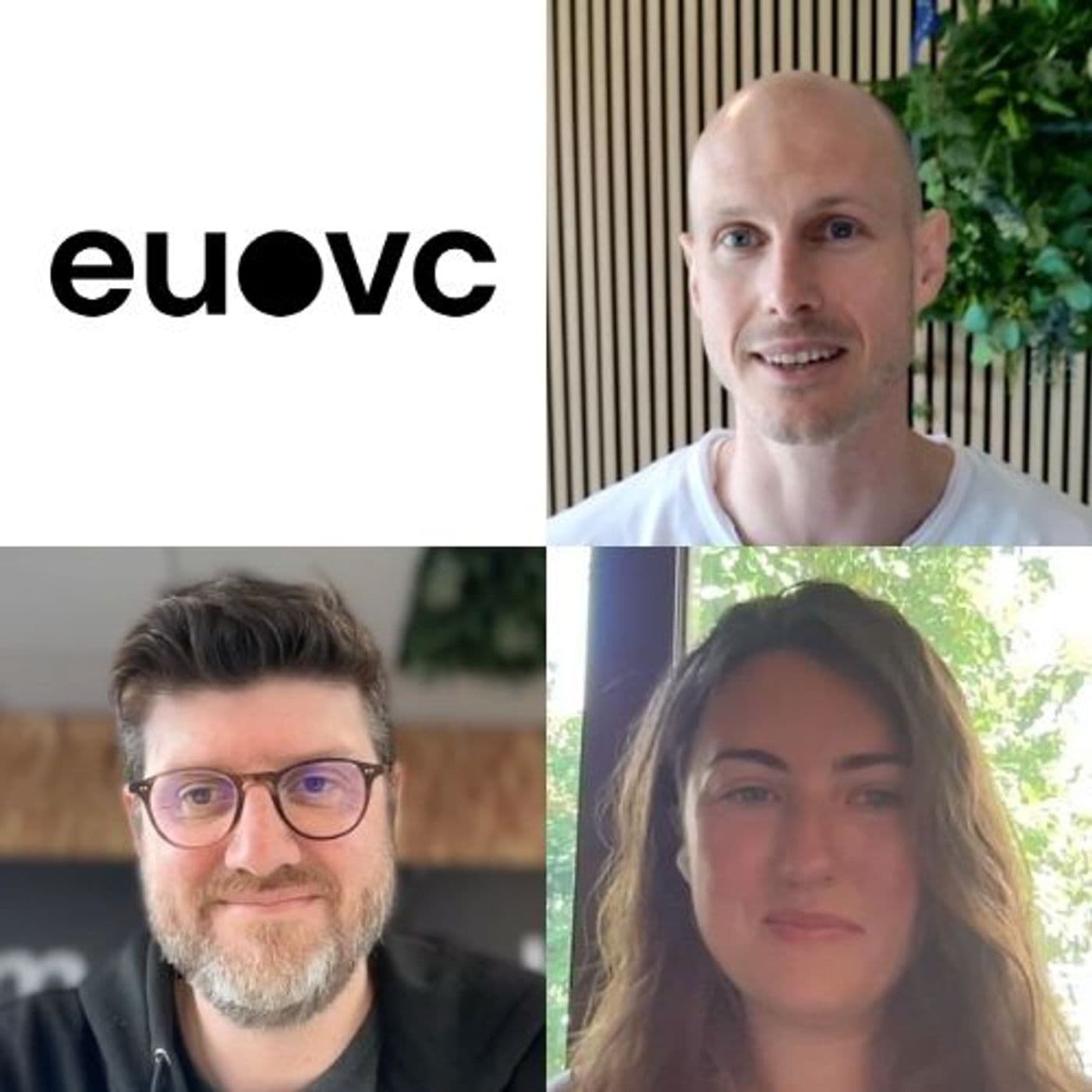
- Guests: Philippe Petitpont (CEO & Co-founder of Moments Lab), Gökçe Seylan (Principal at OX)
- Release Date: [Insert Release Date]
- Description: Discussion on Moments Lab's $24M funding round, the evolution of video AI, and insights on product-market fit and vertical AI platforms in Europe.
Key Takeaways
Introduction to Moments Lab
- Founding Vision:
- Aimed to solve the problem of video content retrieval and indexing faced by media professionals.
- Transitioned from a focus on metadata indexing to developing AI-powered video solutions.
Funding and Growth
- $24M Scale Round:
- Fresh funding aimed at accelerating growth and advancing video AI capabilities.
- Highlights the increasing investment and interest in vertical AI platforms within Europe.
Video AI Market Insights
- Complexity of Video Processing:
- Video is a complex signal that requires advanced AI for proper indexing and understanding.
- The human eye struggles to analyze vast amounts of video data quickly.
Challenges with AI in Video Creation
- Real vs. Synthetic Content:
- Key distinction: Real content is needed for emotional resonance, whereas synthetic content has different use cases.
- Concerns about AI-generated content potentially diluting the authenticity and emotional connection of real videos.
Rights Management
- Navigating Ownership Issues:
- Moments Lab integrates rights management into its platform to ensure compliance and ownership clarity.
- Acknowledges the complexity of rights management in video content.
Agentic AI Concept
- Definition:
- Agentic AI allows users to interact with extensive video libraries, enabling efficient content creation and retrieval.
- Use Cases:
- Capable of processing thousands of queries per second, facilitating faster content production.
European Market Dynamics
- Scaling from Europe:
- European startups face unique challenges in penetrating the US market, including brand recognition and competitive dynamics.
- Emphasizes the importance of a strong go-to-market strategy and understanding of local markets.
Investor Perspective
- Gökçe Seylan's Insights:
- OX's investment rationale centered around Moments Lab's product depth, customer understanding, and market demand.
- Emphasis on emerging product-market fit and sustainable growth indicators.
Discussion Points
Key Moments in the Conversation
- 04:00 - Understanding 1 Million Hours of Video: The necessity of AI.
- 07:00 - ChatGPT's limitations in the video AI space.
- 10:30 - The value of real video content vs. synthetic content.
- 16:00 - Rights management in video AI.
- 21:10 - The concept of agentic AI.
- 27:30 - OX's rationale for investment.
- 31:00 - Transitioning from startup to scale-up.
- 36:30 - Pricing model based on hours of video.
- 44:00 - Building infrastructure versus just growth.
- 49:30 - The European deep-tech startup landscape.
- 54:30 - The rise of vertical AI in Europe.
Highlights of Moments Lab's Journey
- Transitioned from a focus on metadata to creating tools that enhance video production efficiency.
- Positioned as a leader in a niche market, leveraging deep technical expertise and strong customer engagement.
- The journey reflects the evolving landscape of AI in media and entertainment.
Conclusion This episode provides a comprehensive look into the evolving landscape of video AI, the challenges and opportunities for European startups, and the strategic insights that come from both the founding team and the investors backing them. The discussions highlight both the potential and complexities of integrating AI into video content creation and the imperative for companies to innovate continually in this fast-paced market.
---
For more insights and updates on the European VC landscape, follow EUVC on [eu.vc](https://eu.vc).
Written by AI. May contain mistakes. Listen to the episode to check what was said.
Transcript
Automatic transcript. May contain errors.0:00In a world drowning in synthetic content, one startup is betting everything on something radical, the truth. You need to have real content. And real content is not working exactly the same way as artificial content. But here's the problem no one's talking about. Video is a complex signal. And the human eye is not very fast to understand what's going on. While tech giants chase artificial everything, Moments Lab cracked a different code entirely. So agentic AI in our definition is the capacity for a user to interact with a massive amount of video. Is the result something that sounds impossible?
0:33An agent has the capacity to do 1 ,000 search queries per second. So it's like having 1 ,000 people working at the same time, probably with more quality and more expertise. For years, everyone knew video AI was the holy grail. But until now... Since the invention of AI, we knew video discovery, video indexing, is a very high-value AI use case. But simply the solutions until almost left didn't deliver. What Reuters discovered changes everything, and it's happening faster than anyone expects. Editorial decision is going to be something that will arrive way quicker than what anyone can expect now.
1:09Join us for an exclusive deep dive into the$24 million bet that's rewriting the rules of video intelligence and why the future of storytelling just got very real. This is the EUVC podcast.
1:32This is a union of values. Let's start acting. This show is not investment advice and the hosts of this episode may be invested in the funds and companies featured. Welcome back everyone to another episode of the UBC Podcast. I hope by now this is the go-to show for connecting and championing the European-Montarico ecosystem. And today we are zooming in on the intersection of AI and video. obviously something that's higher in our mind. We're paying far too much money to agencies helping us with that. It's a frontier that's not just reshaping media, but also defining how we tell stories, build brands, and monetize content.
2:10We're joined to do this conversation with Philippe Petit-Pont, and I'm struggling always with French names, CEO and co-founder of Moments Lab, and Gürtse Ceylan, principal at Ox. She's giving me thumbs up here for doing a beautiful Turkish pronunciation. They're fresh off of a$24 million raise to scale Moments Lab's authentic AI technology. This is a deep dive into one of Europe's most promising B2B SaaS scale-ups and the VC perspective on why now is the time for video AI. So Philippe, let's start with our origin story. Tell me, what was the problem that you and Fred set out to solve when founding Moments Lab and how has that vision evolved to what you're building today?
2:49So usually a lot of founders are starting their journey by the previous work where it's probably during working in a big company that you find the best pain points on the on my side I was working in big media and communication group tv networks on the during my last job I had as an engineer the mission to be able to help journalists and content creators from this big network to produce video faster it was back in 2016 and where AI was not really a thing yet, but the pain point was already there, is where you are, as a media, investing a lot in videos. And most of the time, these videos get lost and you cannot really find them.
3:33And the problem is that when you are a journalist and you need to build streaming stories, you need lots of video. And it was very difficult in my previous job as an engineer working in a media company to really build the tech. and it's not really the mission of a TV network to digital technologies. Well, actually, Fred, who is not only my co-founder, but also my twin brother, is also an engineer, but more in big data on AI. And during a family lunch, I shared kind of the pain point I had. Well, I'm struggling to help these folks working faster. There's not really technology existing to be able to do that.
4:10So we both quit our jobs on team that together are creating a team. on the, you know, you're starting to have an idea about where our goal is to make sure that people are going to build video faster. But actually the issue is not really this. The problem when you deep dive is that video is a complex signal. Video is at raw pixels and audio frequencies. And the human eye is not good. It's not very fast to understand what's there in a one hour video. For you and me, it will take like one hour to understand what's there in one hour video. So very early, we identified after bootstrapping that the main issue was to be able to have machines understanding video.
4:53So the pain point was really how to make sure that you can be able to understand like vast volume of video to be sure that then you can unlock new use cases. And of course, building video faster is one of these use cases you can achieve when you know exactly what's just inside one million hours of video. So let's take some raw number, but if you have a look on YouTube, there's 500 hours of video uploaded in YouTube each minute. So that means that you need to be able to do that, which is probably the most intense and dense upload rates in the world. You need to have a technology that is able to understand way faster than human, better than human, and add a speed on other code that is not possible to achieve by human.
5:39So our goal was really to be able to develop that as really the first layer, like a foundational layer, to be able to develop application around that. And the application we've been developing now around really being able to build this video faster, relying on this approach. So one of the things you'll be working a lot on about release is an agent is able to take any text input from the users and to turn this text input into a video of already existing content. When I opened my JadGPT a couple of days ago, I saw for the first time Sora in there. I haven't even used it yet. Tell me just both from your perspective, Gautja, and also yours, Phil, why is it that this market is not won by ChatGPT and Gemini?
6:30First, there's two ways of building video. There's one way, which is synthetic video, and we're just very well-known players. And so, V03, there's Runway, Synthesia. when they are working about creating video that does not really exist, which is part of the use case when you're building video. But when you're building video, you also, in some market, whether it's entertainment, advertisement, tutorials for makeup, for instance, or even news, you need to have real content. And real content is not working exactly the same way as artificial content. From artificial content, you are taking a prompt on building something new that does not exist.
7:16When you are working in a vertical, you need most of the time to start from real video and to build a video from real video. On this, both the world would coexist together. I will never generate a video of my kids that will be synthetic. That would be point. I hope we'll never get it. That's a bit weird. So that's a very relevant question because when we started fundraising one year ago, It was like a common question about is artificial video is going to take the lead over real video? And the answer is probably more like, no, it's going to coexist together. So we need to have unified tool that can both work with real video and artificial video, I would say.
8:01I don't know if that was a question you had when we first met, but I guess, yes. Yeah, no, I actually wanted to chip in with, if we take a step back, I think the question Andreas you asked is very relevant, but it also comes up in every like vertical AI solution that you look at. Why is JetGPT not doing this or why isn't this a case for JetGPT? Whether it's legal AI, for instance, you have the likes of Legora, Robin AI, or whether it's industrial AI and you have an AI-powered maintenance solution. You can raise the same questions to chat GPT or perplexity and get somewhat of a working answer. And now they're also releasing video AI or image to text or image to video solutions as well, where you might think that's going to address the issues to a certain extent.
8:57But I think the real use case is we look for companies and founders who really understand the customer needs and can release AI products that can be adopted and used for specific use cases and their business use cases. so when we engaged with moments lab we were for instance incredibly impressed by the product depth and breadth that they built and their deep industry knowledge and how well they understood their customers and their customers specific use cases so for instance we spoke to customer after customer and we raised the same question to moments lab customers as well and they said if you want to, for instance, analyze a single file of video, yeah, you may be able to do that to a certain extent through maybe hyperscalers.
9:52But if you want to deploy it at scale and seamlessly integrate that into your ways of working and have a proper B2B self-solution that basically gets the job done for you and you don't have to deploy an army of engineers in-house to take care of that, then something like Moaman's Lab comes to the rescue. And I think it goes true for other vertical AI solutions as well. Phil, maybe you can just hammer home the point to everyone about how synthetic video creation, I guess is the word, is different from real video creation. Just be completely down to earth about how are these two different. And I also am sure with the use case, as you described, I probably don't want to create a synthetic video with my kids doing an artificial activity.
10:45We're not going to reminisce about that 10 years from now. So let's see which kind of use case you can use one or the other. So let's say your brand, you're building a 20-second advertisement. You need a pack shot at the end. There's no point of shooting a pack shot with your video. It's nonsense. sense. And by the way, that's interesting to see that one of the latest feature that these synthetic AI video startups have just added the capacity to import 3D models directly into the system so that you can take, I know, let's say it's a yogurt pack shot. You take the 3D model of your yogurt pack shot and then you start generating the pack shot with a prompt.
11:28Perfect use case, similar use case in, I don't know, Hollywood movies, you need to generate B-rolls. You need to show or to generate like artificial background. That's really perfect use cases. When you want to drive emotion, there was, let's take the champion sling final. You cannot really have the same emotion if you're using artificial content. So if you want to have impact and drive emotion, real video will be forever the best media to use for sure. But what But we see that if you want to... Sorry, is that because the thesis there being we will continue to have a stronger emotional response to something we know is real than something that's synthetic?
12:17Absolutely. On one part, you are like telling a story with scripted content that know exactly like character doing some stuff. In the other hand, we're not speaking about character. We're speaking about people, real people, about humans. and that, of course, a human is driving more emotion. An athlete, a journalist, politics, any documentary stuff, you want to have access to real content. And I think real content, because it's going to be rare, actually, because artificial video is very easy. So on social media, there are going to be a lot of artificial video. It's already the case. People are asking, is it real or not?
12:59and when you see that it's artificial, the impact is not as good as if it's real content. So there's a lot of speak about that on kind of institutions that start to authenticate real video versus synthetic video. But that's for real emotion on impact, real video will remain forever because it's not about video. It's about an event that is currently really happening. And if we jump a bit to some of your giant customers that everyone would recognize. One of them is Reuters, which I imagine is very much driven by the fact that, well, we see every week, I think in some major outlet, someone has made a blunder putting in something that was made with Genitive AI, not a picture, but most often it's facts or it's background stuff that's just not correct.
13:55And it's clearly because it was done with Yana Tubei. I guess that's why someone like Reuters is a key customer for you and a key use case. Yeah. So I cannot detail officially exactly everything about Reuters. But first, Thomson Reuters is really a big company. And most people see Thomson Reuters as an agency. It's one of the biggest agencies in the world. But actually, a big part of the business is not only this agency, but there's also part of the business. let's say or not i can generalize to uh this kind of of big player on on big agencies whether it's afp or ep which are really some big players in in this industry they are here to relate facts whether it was if it was all facts and i think the oldest video from thompson reuters is uh the coronation i think of uh the tsar alexander the second or something like that like probably at the end of i would say it's the 19th century so it's it's very very old at the 18th century sorry so it's it's it's about how do you navigate into a hundred years of video when you don't know what's inside the video i i can't mention more accurate details but some of our customers they have like that hundred years of archive and people and that seen this events are not there anymore.
15:18We have a customer in soccer, in football, women football from the 1920s. You want to build a documentary around women football in the 1920s. No one is still living today, know what happened at this time. So you need a way to kind of build a documentary around that and you need to be an expert around that. What these customers are looking for is a way to discover, is a way to create new revenue streams based on this understanding of what they have into their legacy, into their IP, whether it's very old archive like that or fresh content from a game that happened last Saturday. I'd love to ask you, because everyone, whenever we talk about generative AI, and especially now with something like yours that so heavily draws on real stuff.
16:12How do you solve the ownership part of the equation? Because I guess there's a lot of property rights. It's always that it's on their own, or do you run it as a platform? Do you have a plan to run a platform? That's a very relevant question, and that's a lot of the question we have from journalists because they know that it's a nightmare. Rights management is very, very complex. So for us, it's quite easy, actually, because we are not B2C, we are B2B. So when we are deploying our product, the customer most of the time already know what kind of rights level he has on his content. And of course, it's not like that easy saying that I have the rights on all the content.
16:51It's never as easy like that. Even on Getty, you know, there's like lots of different rights management possibilities. But we integrate natively this rights management level directly into the platform so that you can query, I want only sources where I know I have the rights. Or you can think about even... Kind of like, you know, from Google, where when you do a Google search, image search, you could go in and either say, I want something that has, you know, free property rights. Yeah, absolutely. Yeah, it's exactly the same mindset, but here it's kind of a closed pool of media assets. So we have this knowledge.
17:30And sometimes, of course, lots of right owners, they don't know what kind of right they have. And so for them, it's I am taking the risk, yes or no. A lot of them sometimes are taking the risk because they know, actually, if I don't know, I don't see how someone could know when I would publish this video. So most of the time, it's not really an issue, but that can happen. To be clear, you know, this kind of rights management level that no one doesn't really know if we have the rights or not. So that's not really our issue because we are more like a technical solution. But it's more like the end decision for a human to say, OK, I am clear on the right.
18:05I am taking the risk or am I paying? I asked you the ChatGPT question before, which is why is ChatGPT not going to do this or SORA do this? We have a very clear answer to that. Now I have another question, which is in a similar vein, and you kind of touched on it. YouTube is a huge player in this. No one, like 500 million hours of content uploaded every hour. I would imagine that having a tool that would very quickly allow them to scan across everything, both when it comes to empowering their search, but also in terms of allowing creators to tap into it and so on and so forth. Like you can imagine so many use cases here for someone like Google.
18:47Is this something that you know that they're working on? Is this something that you're already talking to them about? So we have a lot of discussion with Google. And I mean, one of the holy grail in video is being able to access the YouTube database to build new videos. Yeah. Doing video understanding. The main issue that Google had here is a rights issue, actually. and they don't have the rights on all these videos. They belong to content creators. Content creators won't be very happy to see that Google is trying to build new videos based on already existing videos. So we could think about, you know, business model where there can be some revenue share or stuff like that.
19:29But that's not really what's happening today. You could imagine a blockchain model on Google where if your video was used as a substrate of something that's created using Moment Slap or similar, then you'd automatically get whatever small part of the revenue that is made with that video. Well, and that's totally a fair point. You know, lots of our customers that don't have lots of technology around their video production tooling, they are storing their video on YouTube. And so when we are deploying our technology, we are scrapping all these videos from YouTube to recreate and do exactly what could be doable directly into YouTube.
20:09So the main issue was kind of this messy rights management process that makes it very complex. Blockchain could probably deal with that. And actually, there are a few startups that started to do it. It's complex. Jalismax started to do something similar. It's a French unicorn that was really specialized into content creator market on a really great company. The problem they had actually was that they were missing a critical part of the technology that was video understanding. Be able to understand which kind of video can work and which kind of video cannot work. But what you are, I think, describing here is something that will happen in the future for sure.
20:49No doubt about that. Incredibly exciting. I think you guys are doing something that's so exciting. Let's talk about the identic AI in the context of Moment's Lab. Could you just describe completely clearly what is it, Identic AI, in this context? And why do you believe that this is going to be content or a game changer for content teams? So, Identic AI, in our definition, is the capacity for a user to interact with a massive amount of video. So, it's like me asking my knowledge base of video, let's say, I know, 1 million hours, 1 ,000 hours, whatever, the capacity to start a conversation with all my assets, my video assets.
21:31So for us, it's like customer or user asking, build me a three-minute video about Luis Enrique on the PSG during the Champions League final. And so there's answer from the prompt. It's a prompted experience at GPT, but that is taking all the information from videos. because we've been able to index video in a massive way with very, very accurate details. And the prompt then is able to say, okay, let's see on the web what was the last highlight about Luis Enrique. Okay, it just won with the PhD as a Champions League last Saturday, okay? Here's some highlights. And here's which highlights that are going to be present into your video archive, whether it's fresh, live, or very old.
22:21then the prompt on the agent is able to directly find all the moment that I will need to build this video. So most of the time today, it's human work on people searching when there's a search. But most of the time it's like, OK, there's a three hours game. I'm going to have a look to where I can see this in the week. Doing some instruction, you know, to the team on being able to understand what he's saying. So here it's like going way faster to sort the content, which is 70 % of the time of a content creator to build this kind of video. That's the first thing. So it's about like building video faster.
22:59It could be extracting insight faster. Anything that I can prompt, I can have an answer. Either a video answer, either an answer about, I want to see where the likey logo was seen, how much time. So the agent has this capacity to do that. The second thing is being able to do what humans cannot do today. Let's say you're a financial media and you want to build a documentary about the evolution of Apple stock over the last 30 years. To do this today, you will probably need an army of people, financial experts, analysts, financial journalists, senior journalists, because you need to pass a lot of data.
23:40If you're a financial media, you already have all this existing data, and it will require an amount of time that probably won't give any return on investment on this documentary. That won't be possible. Now it's possible to do it. An agent has the capacity to do 1 ,000 search query per second. So it's like having 1 ,000 people working in the same time, probably with more quality and more expertise. So there's the capacity to build a new story that may not be possible before. And the third thing, and the last one, is when you have this amount of video, video is knowledge, right? It's probably the best way to start.
24:18Yeah, that's a good point. You have the capacity to transform this knowledge into insights. And it's about giving you a new meaning to your data, extrapolating prediction, for instance. So that's further on, but probably what's going to happen in next year. I have one crazy curveball. Surveillance. You're smiling, you're looking away. Have you ever thought about that use case? When you start working on computer vision, you're being approached very quickly by companies that are doing that, Palantir, Airbus Defence, Dassault System. Especially in France when we started, there's a lot of companies like this.
25:04And sometimes we are, you know, I would say institution that, how do you know I exist? How do you know I'm doing that? Wow. Anyway. And so we started to have a look at the very beginning of the company because, wow, there's probably a tremendous market to do border control. And, you know, and the thing is when you're working with content creators and journalists, it's very difficult to have also a market in security and defense. So that's the first thing. And it's on the same audience. but also it's not exactly the same use case. In the market, we are media entertainment, sports, brands. Our customers are considering video as an asset.
25:44In defense, in border control, you don't consider our patient monitoring, for instance. You don't consider video as an asset, but that's just a way to exchange information. The kind of AI you need to analyze a border, for instance, is not exactly the same. In video, for asset and creators, you need to avoid too much noise. So you need to concentrate on what's important. So you don't care about like a small bottle that is at the back of you in the background, which is totally the opposite when you are working in security. You cannot afford to just miss a small detail in the video. So the way AI is working is not exactly the same for these different use cases.
26:29One is you need some noise to be sure that you don't miss anything. In the other one, you need to be accurate, but to filter only the data that might be interesting to tell a story, for instance, to tell a design insight. Goethe, I'd love to ask you about the whole journey of scaling from Europe to global and focus on product market fit and so on. I want to ask you a bit about the magic that you felt when you first saw the product working in front of you. I'd love to ask you, what was it about this experience that made it an absolute must invest for you guys at Ox? I actually did have a jaw drop moment when I first saw the product demo, but tried to keep it cool in the meeting.
27:13No, it was super impressive. I think in B2B SaaS, it's relatively more rare to actually see the future unfold in front of you. And I thank Bill for letting me have that moment. No, but that's a very good and valid question, I think, especially now that every pitch that a VC sees is the next big AI company that is transforming something. So how do you separate the signal from the noise? And I think what really stood out for us when we saw moments that was the product depth and breadth and a founding team, so Fred and Phil, who have such deep technical knowledge, but also such deep understanding of their customers and their core use cases.
28:01So they've really built a product that is fit for purpose, that fits all the requirements for customers. And I think this goes back to the why CHPT can't do this question. And at Ox, we always look for companies that have nailed product market fit and have emerging signs of go-to-market fit. And Mom's Lab checked all the boxes. and what does clear evidence of product market fit looks like. So they had a very well-defined customer profile and a very well-defined use case. Companies are using Walmart staff to run their core businesses and they're experiencing a clear market pull. So they have a very strong cadence, a consistent and accelerating cadence of new customer acquisition and also excellent retention metrics which is actually hard to see in high-growth AI companies these days because you won't even have two years of history to test retention.
29:05We also spoke to so many customers and why they are using Walmart's Lab. Interestingly, every one of them said, since the invention of AI, we knew video discovery, video indexing is a very high-value AI use case. but simply the solutions until moments lab didn't deliver they didn't deliver on accuracy they didn't deliver in terms of cost or scalability they were addressing a need that customers already knew about so moments lab doesn't need to educate the market or explain to the customers like the potential return on investment from this from this product the customers already know the pain already feel the pain.
Read the full transcript
29:51Again, it's that seamless integration into the customer's ways of working to make the product really sticky. The many things, I know I counted multiple, like many things, but all of them holds true. Yeah, but a VC doesn't only fall in love with the product, so I know why you go white. I'd love to ask you, Phil, you have giants like Rortus and Claire Amazon ads. Did you start there? Did you start with the enterprise clients or did you start further down and then built your way up? So that's a big part of the story, actually. We started with smaller customers, but since the beginning, we started to very early to work with big ones, with very advanced traditional sales lead motion.
30:38And so we needed customers that have a tremendous amount of video to make sure that we have the best technology. And our approach was to say, well, if you are able to work with one million hour, then you have the technology that can work for like 1 ,000. So we started in the beginning, not really going PLG, but going sales led. Even if we believe that both are the best way, actually having both, it's not one or the other, especially the one you mentioned are the one that's all US based. And it was even harder because we started from Europe going there on, well, you don't really have any references and you need to start working with them.
31:15But the playbook is very similar most of the time. I think that you need to have the best product for sure. You need to be able to show it. You need to show that you have enterprise features to be able to be work listed. I can share a bit of an anecdote when we started the first meeting we had with one of these big ones. It's not one of them actually. It's one we can mention. and I arrived into the office of the CIO, first meeting, and he's starting like nearly shooting at me, you know, yet another AI product. We have seen that already so many times and why I should listen to you? And he said exactly that.
31:54And that's maybe American way, I don't know, but I was, wow. And so he pushed me like, no, but our tech is really working. It's not. You've seen this one thing. And I was like a bit on my mind. I'm very calm most of the time. And I was not happy with that. I mean, it's just a matter of respect. I mean, just listen to me before saying anything else. And so I convinced him and then it was a test. And I think you need to be able to show very concretely that you have the best product very quickly. You have people then taking time to test your product. And with these big companies, there's a lot of assessment you need to do, not only about InfoSec, but also about having users testing the product.
32:37And that's the difficulty when you are sales led is that you don't have users testing your product and then asking to buy it. You have top managers asking to managers, asking to their users to say, is it a good solution or not? And when the user are testing a solution that is probably going to help them, they can feel that this solution is going to replace me. So it's even more challenging. But you need to have probably to be able to achieve that big domain expertise. All these big companies you mentioned, most of the time we were competing with the big tech in front of us. And it's back to your original question about GPT.
33:14How can you compete with Gemini? How can you compete with OpenAI where you are in front of these big giants? It's when you know and you're the domain expert. You know exactly what users need. You know exactly how to speak to them. and when you have a chance to meet with the users and to show your technology, the deal is won for sure. Because the big tech are selling to IT guys. They're not selling to final users. On the IT guy, most of the time, I used to be one of them. So the challenge is to be able to understand your users. On whether if you are an external company, the IT department, you have the same challenge, being able to understand users.
33:47We made really this part of the mode for us to win this big customer and to work with them is to have a relationship with their users and all around the company that is very strong and having a salespeople that knows exactly also how to navigate into an enterprise deal that is very different to any kind of mid-market company that you can do a deal in three weeks. That's not how it works. So you need skilled people and you need a lot of mentorship, a lot of training, a lot of coaching to make sure that there's resiliency because these deals sometimes take a year to be closed. And so that could take time.
34:29Maybe another anecdote about the US market, but this one is very cliche. So we were one of our first show in Las Vegas, like it was a few years ago. And one of the big networks we cannot mention, but no one knows about them. The guy came, he saw the demo on the booth. He took off his wallet from his pocket and say, okay, I want it now. Actually, and you know what happened? the deal takes probably two years to be signed. And this cowboy side is very, very kind of when you don't know the American market, you need resiliency to make sure that no, don't take that as a yes. It's just a style. As with so many things, it's just a style.
35:12Let me ask you, Phil, I've been thinking through this. I'm super curious, your business model, How do you charge for this pricing? Is it a seats model? Is it a tokens model? What is it? So the best model could have been a seat model. But actually, you can evaluate the willingness to pay based on the amount of video that a customer has. A big media network in the U.S. has probably between 1 to 7 million hours of video. A small post-production company or a soccer club in Europe would have probably just 2 or 3 ,000. So that was kind of the perfect metrics to evaluate and to fix our business model.
35:54So it's basically based on the number of hours. Agentic is shifting a bit on restoring other kind of business model. But for now, it's how it works. It's just based on the volume of hours that you can query into the agent. So nothing on how much you create. It's purely based on the number of hours you have to query. So far. We are thinking about the approaches with our partners, but for now, it's how it's working. I'd love to ask both of you about the future of video intelligence. Phil, you're probably more home court advantage here than Goethe. Despite you having invested, I'm sure that at OX, it's not the one and only thing you guys are thinking about.
36:34But I'd love to ask you, you're moving just from indexing to full video understanding and creation with AI agents. I'd love to ask you specifically, you, Phil, what use cases have you seen come that you had not expected when you set out? So I can speak about what we're not expecting. It's the first time we started a partnership. We started a partnership. It was a long time ago. It was a big player, a big media player. We were received by users surrounded with a union saying, oh, these are the guys that are going to replace us by robots. and so and that was the start the first day in the company we are like it was a kind of an accelerator and we say okay wow um how can we deal with that we're just here to generate metadata and that was the very beginning of the product was not so good but people were afraid the the shift now is it's exactly the opposite it's like people are asking us can the agent tell me what kind of video should be able to.
37:37See, it's crazy. I mean, it's like, wow, this should be probably the most interesting part of the job. And actually, you want the AI to be able to do that for you. And they're not really afraid of being replaced. It's not really the thing. It's what's exciting is being able to use the tool to build some more creative initiatives on video. So the model shift is very, very impressive. I think when chat GPT and all the elements on chat helped a lot, I think, to have people that have the good mindset. They see that it's working and they need to adapt. And that's why I think it's going also faster because people are ready now.
38:14And so about the future, I can only say what's going to happen in one year, but I think no one knows exactly what's going to happen in five years. It's very hard. But having not only the agent that can go faster and help people working with video faster it's just the first step it's just a way to bring efficiency and that's what everyone is looking for but actually when you started here on some of our customers are starting the agent beta that was released a few weeks ago asking the agents of stuff that we don't really anticipated on this example about help me to build a video for this kind of audience about this and what compared to what happened last year is something that we are not expecting.
38:58It's not about efficiency. It's about to be able to build video that are going to target an audience and that they're going to perform super well. So editorial decision is going to be something that we have arrived way quicker than what anyone can expect now, I think. In video intelligence and using AI to build automation into video creation workflows, I would say it's one of the industries where we as investors, we've seen the least resistance from creators to adopt this because it's not the fun part of their job. They are not scared that they are going to get replaced by AI. And I'd like to share an anecdote with you.
39:41My really good friend, he studied media, then started in media after graduation, where his first job was to watch hours and hours of TV shows just to blur cigarettes and alcohol from the scenes. And when we were engaging with Wellness Lab, we've, of course, also spoken to multiple people in the industry. I'm shocked that this still hasn't changed that much. There are people who are watching, you know, reality TV series 24-7, even when the cast start sleeping to manually tag scenes as now you know someone got up now this might be interesting oh there is a kiss scene here and all that all those tags get lost when the movie moves post production so you can imagine it's not really fun to watch a video 24 7 to just say okay this is a scene now where someone is wearing a bikini and creatives are you know jack of all trades they want to do more creative stuff and this is not where their creativity thrives.
40:51I completely agree. So I'm a content creator, obviously, right? And AI has allowed me to not spend any time on all the boring stuff anymore. It is such a joy today compared to three years ago. And the breadth and the things we can do is completely out of this world compared to before. and even as an entrepreneur because I'd never thought about doing as many events as I do now but I do because it's like all the grunt force is taken care of by an AI agent so it's absolutely beautiful all right now I'd love to ask you about the seed to scale and I know we're running out of time here but I want to ask you a bit about the journey that's ahead of you Gertje if we start with you you invested at the scale of stage I'd love to ask you what you saw at Moments Lab that indicated that they were ready to hit the gas.
41:43We've done other episodes with the team at Ox. So those that want to hear more about how you think about the scale, velocity, and so on, they can definitely listen in there. But I'd love to ask you specifically Moments Lab, what did you see inside the team and the company that told you this team is ready to move? They're ready for 24 million. It's a lot of money. It's a lot of money to deploy efficiently and smartly. And they are ready to do so indeed. The company, as I mentioned, has very clear evidence of product market fit and that's evidence, you know, anecdotally by the customers in the company's metrics in how the go-to-market motion is, you know, tracking.
42:24So you can see that consistent cadence of new customer acquisition as well as excellent retention metrics that show products thickness. At the same time, now you know that there is clear product market fit. The company is also demonstrating what we call emerging signs of go-to-market fit. So that's the phase where we increase that sales and marketing spend. We know that we won't be using that money to test demand for a new product or experiment finding a new ICP. And that increase is actually fueling sustainable growth in the business. And that's exactly where I would say Mom's Lab is. But at the same time, always being ready for the next phase of growth includes something more than just spending more in sales and marketing.
43:17It's having the right foundation, setting the right processes and structures in place so that the company can scale from a strong base. And even though that sounds boring, it's very much to make sure that your sales team can scale. And even if the founder is not in the room to answer a question, everyone knows what to do or everyone understands the KPIs, the leading indicators of success, and just building in the right amount of processes, not for the sake of a process, but to make sure that now you can go to become a hundred million dollar ARR business and not have the same hustles, I would say, that you would as an early stage startup.
44:03Phil, you shared in the beginning here that you came up with this idea working as an engineer at a media company. Now, fast forward a bit, you have 24 million to scale a company as one of the founders. That's an incredible journey. Tell me about the transition to founder and what it's like to all of a sudden have this money and be planning out the next phase of the company. I think the amount of money is not really the, even if it's kind of a public matrix we're showing, it's it's it's it's not really uh whether if you are 100 on five or 25 it's not really changing a lot of things but what's uh i think one of the things that just go to its head on share is that we are very cautious you know about making sure that we have the perfect organization to scale on on that but we've been building on the it's not about investing like 20 million right now and see what's going to happen after which is probably what you do when you're seed or maybe series a Here it's more about to see what is the next step and what are the strategies to go to the next step and to kind of having a lot of flexibility to adapt and to find really this perfect, what Ox is calling the go-to-market fit.
45:26And I like this idea of you have the product market fit, making sure that your go-to-market fit is being optimized as much as possible. So there's a lot of decisions that are being able to kind of replicate as much as possible, because then when you replicate, your product is starting to be even better. You start to have a network effect. And that's really about way more than before. Know where you are going to be in one month, in 12 months and in two years. The big difference now is how clear the vision on the execution is, which is very different to the previous step of a company where when you are looking for your product market fit, you need to be very open and you need to change.
46:13And it's like a roller coaster every time because a big customer can totally shift the strategy of your product on your go-to market. Here, it's way different because we know where we are going. there's a lot of certitude and there's a lot of plans on strategies that is very clear so that's why the amount is not so important, what's important is to know where we are going and how we are going to make it, I think if I can sum up maybe part of the strategy. Phil, one other question you're building out of Europe and I'd love to ask you a bit about being a European company founded here I'd love to ask you about the advantages, the disadvantages, the challenges, kind of some of the learnings that you'd share with other founders building in Europe.
47:01That's an important point. And I'm complaining a lot about, you know, when you are creating a company in Silicon Valley and you are going to YC where everyone is knowing what you're doing. When you're starting in Europe, that's not exactly similar. And depending on the country, it can be even more difficult. I think there's a few advantages and I will start probably by that. research and development, I think we have probably one of the best talents in Europe and especially now. It's super, I mean they're going fast, not very expensive and it's easy to find talents and to create a culture, a really deep tech culture.
47:39So that's I think one of the first. The second point is probably minor but when you are in Europe, you're reflex and depending on which country you're starting off you need to sell internationally very quickly and it's even more true when you are like in estonia you know probably in denmark when the market is not big enough for just your company so you need to expand very quickly and i think that's a great opportunity and there's great successes based on smaller countries that decided to go abroad since day one and i think that's a good thing the issue is some companies are not going abroad since day one when they are in a bigger market but not so big like in France or in Germany, for instance, where the market seems big, but actually it's not that big.
48:22And depending on the market you are, it can be a terrible idea to start just sending to your country first. And that's the difficulty. Then going to the US, to me, it's totally another game. It's like starting over from zero. You cannot use any of the big reference you have. Okay, let's say you've signed the BBC or Sky. Maybe that could work, but that's probably the only one. If you are saying, well, I'm working with TV2 Denmark, well, they don't know anything about TV to Denmark or they don't know anything. Thank you for knowing them, though. Even it's a big, it's really a big one. And it's a great reference in Europe, for sure.
48:55I can assure that. But the NRK in Norway, no one knows about that in the US. And even if they know, it's like not real reference. They don't care about it. So you need to start again from zero, like having no references. Learning based on that, do you think you went to the US at the right time? Do you think you should have gone earlier And maybe just for the context, when did you go? So we started really two years ago on signing our first customer one year ago. So I think it was a good timing. It was just after Series A, but it was way more expensive than we were thinking it was. And we were kind of lucky to find the perfect deals really, really fast.
49:35But when you see the success rate of your European startup in the US, it's like 5 % after the first year. So it's very, very small. and it's very linked to the amount of money. I mean, when you see salary, especially in the East Coast and in New York, it's very, very high. So you need to, I think we would have probably done it a bit earlier, but that's not, you need to have the good alignment. So I think it's difficult to do it later than what we did, for sure. It's even more expensive and the mode you build with your tech is not as good as when you are Cedar Series A. So I think it's good to do it early or very late, I would say.
50:15But when you have your product market fit, it's probably difficult to do it after. So you need to have your product market fit with the US so that you're sure you're on the success. And then the other challenge, and especially now, brand awareness is very, very tough. Being able to announce like a fundraising where you don't have any more American outlets in Europe. I mean, TechCrunch is not here anymore, for instance. It was a bridge between the two continents. And it's very hard. So you need to be there actually to create your brand awareness and invest a lot of money. I can tell you, actually, 20 % of our subscribers are US-based.
50:53Awesome. You're the new tech crunch. Well, I doubt it, but I want to be Mike Butcher. I don't know comments there. I love Mike. let's let that hang let's go to a final reflection here Goethe, I'll ask you the final question what's your take on the rise of European vertical AI champions like Moment's Lab? I would say that I do feel there is a real momentum in Europe I do feel like Europe is catching up to the US and I think certain verticals in Europe have been you know, leading and mature for some time there have been global champions in fintech, climate tech. And I think now with the new way, there are also new niches that are coming up as leading industries or leading niches where Europe is very strong.
51:48That's nothing in legal tech, industrial tech or cyber. And that is very much enabled by, I think, new innovative go-to-market motions like PLG, increasing investment into BC and the market maturing where you have more serial entrepreneurs, more success stories. I do think it's a positive outlook in terms of the new wave as well for the likes of Moama's Lab. Beautiful. Thank you for both of you closing on our beautiful note and I close on not wanting to be my butcher. That was quite an episode. Guys, thank you so much for joining me. Thank you. This was their final show. Tear down this wall. It's more than just an alliance.
52:38This is a union of values. Let's start acting.
From the publisher
In this episode, Andreas Munk Holm sits down with Philippe Petitpont, co-founder & CEO of Moments Lab, and Gökçe Seylan, Principal at OXX, for an insider conversation on the future of video AI and how Europe is producing vertical champions with real traction.
Fresh off a $24M scale round, Philippe walks us through the evolution of Moments Lab from metadata indexing to full AI-powered video agents. Gökçe shares why this was a must-invest opportunity for OX and what the company’s journey reveals about product-market fit, global GTM, and the rise of vertical AI platforms in Europe.
This one’s a must-listen for anyone building at the intersection of AI, SaaS, media, and enterprise.
Here’s what’s covered:
- 04:00 Understanding 1 Million Hours of Video: Why AI was the only answer
- 07:00 Why ChatGPT Can’t Win This Market: Vertical depth vs. horizontal power
- 10:30 Real Video vs. Synthetic Content: Where emotion, IP, and accuracy still rule
- 16:00 Rights Management in Video AI: How Moments Lab handles ownership at scale
- 21:10 What Is Agentic AI? From prompt to production, with real content
- 27:30 The VC Perspective: Why OX backed this team at scale
- 31:00 From Startup to Scale-Up: Going enterprise, going US
- 36:30 Business Model Design: Why they price by hours, not seats
- 44:00 Scaling from Seed to Series A+: Building infrastructure, not just growth
- 49:30 Being a European Deeptech Founder: Talent advantages, GTM challenges
- 54:30 The Rise of European Vertical AI: Legal, industrial, cyber—and now video


